



Abstract
Studies on female sex offending have been limited for a number of reasons, such as societal perceptions that females are incapable of engaging in such behaviors because of their role as caretakers and nurturers in society. However, over the past few decades, studies examining female sex offenders have increased, revealing that females do commit sexual offenses and differ from their male counterparts. We examined offender, victim, and offense characteristics of female sex offenders who were convicted from 1995 to 2013 (N = 223) in Arkansas and were sentenced to serve time in prison or placed on probation. We focused on the similarities and differences of solo and co-female sex offenders because we know from previous studies that the pathway of offending can differ between solo and co-female offenders, yet few studies have exclusively compared the similarities and differences among female sex offenders. Our data were collected from offender files that included basic personal offender information, offender survey and social history, criminal history, incident reports while incarcerated, court records, police investigation reports, initial offender and victim statements (prior to offender incarceration), and probation/parole reports. We believe the results of this study will provide further insight into the types of female sex offenders as well as the possible differences between co- and solo-offenders in relation to their victim preferences, risk levels, rehabilitation amenability, and recidivism propensities.
Introduction
The majority of attention on sexual offending has focused on male offenders, which has limited our knowledge on female sex offenders. The lack of research on female sex offenders may be due to societal perceptions that females are incapable of engaging in such behaviors because of their role as caretakers and nurturers in society (Saradjian, 2010). Typically, acts that are inconsistent with societal perceptions of women are denied, minimized, or reconstructed to fit societal norms (Denov, 2001; Giguere & Bumby, 2007; Hislop, 2001; Saradjian, 2010). For example, when a woman sexually abuses a minor, the behavior is often misconstrued as a confused form of love between the female and the victim. Another method of minimizing female responsibility is by placing blame on male accomplices, who are thought to force, coerce, and manipulate females into committing sexual abuse (Banning, 1989). These societal perceptions have previously hindered research on female sex offenders; however, there has been a growing realization that we need to examine the prevalence, characteristics, typologies, and offending patterns of female sex offenders (see Gannon & Cortoni, 2010).
Over the past few decades, the number of studies examining female sex offenders has increased, revealing that females do commit sexual offenses (Sandler & Freeman, 2009; Vandiver & Kercher, 2004). Such crimes include sexual stalking, sexual assault, rape, child sexual abuse, and molestation (Duncan, 2010). These crimes are often independently perpetrated by females, contradicting the assumption that illicit sexual acts are coerced by male accomplices (Atkinson, 1996; Duncan, 2010; Faller, 1995; Kaplan & Green, 1995; Nathan & Ward, 2002; Syed & Williams, 1996; Turton, 2010). Although prior works on female sex offenders have been insightful, only a handful of studies have exclusively examined the similarities and differences between female sex offenders who act alone and those who have accomplices (Gillespie et al., 2015; Muskens, Bogaerts, van Casteren, & Labrijn, 2011; Rush Burkey & ten Bensel, 2015; Vandiver, 2006; Wijkman, Bijleveld, & Hendricks, 2011). These studies found solo and co-offenders are similar on a number of offender characteristics such as age, race, and time of offense, but differ in their victim propensities, the nature of sexual assaults, and place of victimization. We know from previous studies that the pathway of offending can differ between solo and co-female offenders (Decker, Wright, Redfern, & Smith, 1993; J. Miller & Decker, 2001; Mullins & Cherbonneau, 2011), yet few studies have exclusively compared the similarities and differences among female sex offenders (Muskens et al., 2011; Vandiver, 2006).
The purpose of this study was to add to the existing literature on the variations between female sex offenders who commit their crimes alone and those who commit their sexual offenses alongside a co-offender. We extended the works of Vandiver (2006) and Muskens et al. (2011) by focusing on offender, victim, and offense characteristics that may provide insight into female sex offending. Our study contributes to the existing literature in a number of ways. First, the majority of studies on female sex offenders were products of clinical, prison, and arrest data, which only depict a percentage of the female sex offender population (Gillespie et al., 2015; Muskens et al., 2011; Vandiver, 2006; Wijkman et al., 2011). Our data included every female offender who was individually assessed for sex offender registration and community notification in the state of Arkansas from 1995 to 2013 (N = 223), close to two decades of female offending. Second, prior works used data that were one-dimensional (i.e., interviews, arrests records), while we gathered data from multiple sources (i.e., offender survey, criminal history, incident reports while incarcerated, court records, police investigation reports, initial offender and victim statements, and probation/parole reports), thus allowing a more accurate reporting of information and triangulation techniques.
Third, we augmented theoretically relevant variables, such as offender–victim relationship and nature of offense (i.e., consent vs. forced) to more accurately parse out offense characteristics. We identified positions of trust within the offender–victim relationship, which was not accounted for in previous works (Gillespie et al., 2015; Muskens et al., 2011; Vandiver, 2006; Wijkman et al., 2011). Position of trust, as outlined by the Arkansas Criminal Code (§5-14-03), distinguishes offenders who use their authoritative relationship over their victim to engage in sexual activity, such as a teacher or caregiver. In previous works (Muskens et al., 2011; Vandiver, 2006), the nature of offense was delineated between consensual and forced offense; however, we were able to identify consensual, forced, and (a third category) “age prohibits consent.” In the state of Arkansas, children 13 years old and under are unable to legally give consent to a sexual activity. In offenses where explicit force was not involved, this categorization differentiates between those who are able to give consent versus those who are not legally able to give consent. Last, with the exception of Vandiver (2006), our study consists of a relatively robust sample size in comparison with other studies that have focused on female sex offenders.
Background: Female Sex Offenders
The majority of female sex offender literature focuses on general information regarding the characteristics of offenders and their victims. On average, female sex offenders are between 20 and 32 years of age (Faller, 1995; Lewis & Stanley, 2000; Miccio-Fonseca, 2000; Nathan & Ward, 2002; Rowan, Rowan, & Langelier, 1990; Vandiver & Walker, 2002) and overwhelmingly Caucasian (Faller, 1987; Lewis & Stanley, 2000; Vandiver, 2006). To date, there have been mixed results regarding marital status (Faller, 1995; Kaplan & Green, 1995; Lewis & Stanley, 2000), educational performance, and IQ (Bumby & Bumby, 1997; Lewis & Stanley, 2000; McCarty, 1986; Travis, Cullen, & Potter, 1990; Wijkman et al., 2011). In addition, female sex offenders are typically unemployed, have unstable work histories, or employed at minimum-wage positions (Faller, 1987; Green, 1999). Studies have also found many female sex offenders were sexually, physically, and emotionally victimized and neglected as children (Christopher, Lutz-Zois, & Reinhardt, 2007; Faller, 1995; Gannon, Rose, & Ward, 2008; Kaplan & Green, 1995; Lewis & Stanley, 2000; McCarty, 1986; Miccio-Fonseca, 2000; Pothast & Allen, 1994; Strickland, 2008; Wijkman et al., 2011); have a history of drug and substance abuse; exhibit poor coping skills; and struggle with depression and personality disorders (Faller, 1995; Johansson-Love & Fremouw, 2006; Kaplan & Green, 1995; Lewis & Stanley, 2000; H. A. Miller, Turner, & Henderson, 2009; Muskens et al., 2011; O’Conner, 1987; Rosencrans, 1997; Strickland, 2008; Tardif, Auclair, Jacob, & Carpentier, 2005; Wijkman et al., 2011).
Prior Studies on Solo and Co-Female Sex Offenders
From the limited comparative studies on solo and co-female sex offenders, we know they differ in their victim propensities, the nature of sexual assaults, and place of victimization (Muskens et al., 2011; Vandiver, 2006; Vandiver & Kercher, 2004; Wijkman et al., 2011). For example, Vandiver (2006) conducted a cross-national study comparing 123 solo offenders and 104 co-offenders. Using the 2001 National Incident-Based Reporting System (NIBRS) data, she found the two groups of offenders were not significantly different with regard to their demographics such as age, race, and time of offense. She did, however, find solo offenders were more likely to have male victims and co-offenders were more likely to have female victims. The majority of co-offenders in her sample were accompanied by at least one male. Vandiver hypothesized one possible explanation is that the male accomplice chooses the victim, a female, where the female offender participates less in the choice of the victim and the actual abuse. In addition, she found co-offenders were significantly more likely than solo offenders to abuse relatives and hypothesized females who have children are chosen by their male co-offenders, thereby making victims more accessible. After the male gains the confidence of the female, he may then begin forcing her to participate in the sexual behavior with the children. It was suggested females may participate in such behaviors out of fear or willingness to please the male co-offender. As posited by Vandiver (2006), these motives may differ significantly from those motives and cognitions of solo offenders. In addition, Vandiver and Kercher (2004) found sexual assault with an object, forcible fondling, and statutory rape are more prevalent among solo offenders, and they, often times, commit their crimes in their place of residence (Vandiver & Kercher, 2004).
In addition, Muskens et al. (2011) examined 60 female sex offenders (solo = 12; co = 48) between 1999 and 2008 who were sent to the Netherlands Institute of Forensic Psychiatry and Psychology (NIFP) for mental health evaluation prior to conviction. They found no significant differences between solo and co-female sex offenders with regard to the number and age of victims, but they did find that 80% of their sample committed sexual offenses with at least one male and/or female accomplice. Their results also revealed co-offenders were significantly more likely to victimize females, whereas solo offenders were more likely to victimize males. Because the majority of females in their sample were co-offenders, Muskens et al. (2011) postulated this might be an indication that the gender of the victim could be dependent on whether or not the female was accompanied by a male accomplice.
In many cases, female offenders and their accomplices are married or romantically involved (O’Conner, 1987, Syed & Williams, 1996). Some of these relationships are abusive, with male accomplices coercing participation of the female (Lewis & Stanley, 2000). The victims of these offenders are normally a family member or the couple’s child (Faller, 1995; Rowan et al., 1990). In fact, Muskens et al. (2011) found solo offenders were more likely to have unrelated victims when compared with co-offenders. Some male accompanied female offenders, however, are not forced or coerced by male accomplices (McCarty, 1986; Syed & Williams, 1996). These types of offenders are often considered individuals who allow the accomplice to abuse a child/relative for the purposes of education or pornography or to gratify the male accomplice. Last, Muskens et al. (2011) found co-offenders were more likely to exhibit “antisocial, avoidant/and or dependent personality disorder or traits” than solo offenders (p. 55); however, based on the low sample size of this study, it is difficult to generalize the findings of this study.
Moreover, Wijkman et al. (2011) focused on 135 Dutch female sex offenders who were prosecuted between 1994 and 2005 in the Netherlands. Using court record of cases that were either prosecuted or dismissed, they generated three classes of female sex offenders: one sex offense only, generalists, and specialists. The “one sex offense only” group consisted women who have no criminal history other than the current sex offense. “Generalists” were women who had one sexual offense, but multiple other offenses such as stealing, receiving stolen materials, and traffic violations. They typically started their criminal career early in life and sexually offended against victims who were unknown when compared with the other classes of female offenders. Wijkman et al. argued this group “resembles most clearly the profile of adult male rapists” (p. 42). Last, “specialists” were a group of female sex offenders who committed several sex offenses over long periods of time. Although, these women also committed other types of crimes, those were typically minor, at best. Specialists were more likely to target victims who were acquaintances or related family members than the other classes of offenders. Wijkman et al. (2011) found no statistical differences between the three groups in terms of background, personality, and victim characteristics, which could be the result of a low sample size.
Last, Gillespie et al. (2015) assessed 40 female sex offenders (solo = 20, co = 20) who were sent to the Lucy Faithfull Foundation (LFF), the United Kingdom, by an agency in the criminal justice system. The sample consisted of female sex offenders who were either convicted of an offense, admitting to an offense, or at the request of the judge. They found no differences between solo and co-offenders in terms of developmental (i.e., parental relationships, childhood environment, and various types of abuse) and psychological characteristics (i.e., offense-supportive cognitions, self-control, and management). These females did differ in what the authors claimed as “environmental niche factors,” such as “distal personal factors” (p. 14). Solo offenders were more likely to exhibit strong indications of depression, sexual dissatisfaction, substance abuse, and other mental illnesses (distal personal factors), which contradicts the findings of Muskens et al. (2011). They found co-offenders were more likely to exhibit “antisocial, avoidant/and or dependent personality disorder or traits” than solo offenders (p. 55); no differences were found in offense history (self-report), family problems, and relationship issues between the two types of offenders. These findings, however, are limited due to the sample size of the study.
In sum, previous research focusing on the similarities and differences between solo and co-offenders has been insightful, but limited due to sample size, one-dimensional data collection, and data collected from only arrests and clinical assessments. The current study contributes to the limited literature on female sex offending by examining a more comprehensive data set, collected from multiple sources, on all female sex offenders convicted in the state of Arkansas. We believe that by understanding the variations between these types of offenders, we may be better equipped to assess and treat these divergent groups of offenders.
Data and Method
Sample
We used data collected from the Arkansas Department of Corrections (ADC). This data set included all female sex offenders who were individually assessed for sex offender registration and community notification in the state of Arkansas from 1995 to 2013. Information was collected from offender files, including basic personal offender information, offender’s social history questionnaire, offender assessment survey, criminal history, incident reports/disciplinary charges while incarcerated, court records/judgments, police investigation reports, initial offender and victim statements (prior to offender incarceration), and probation and parole reports. Our final sample included 223 adult females.
Dependent variable: Offender type
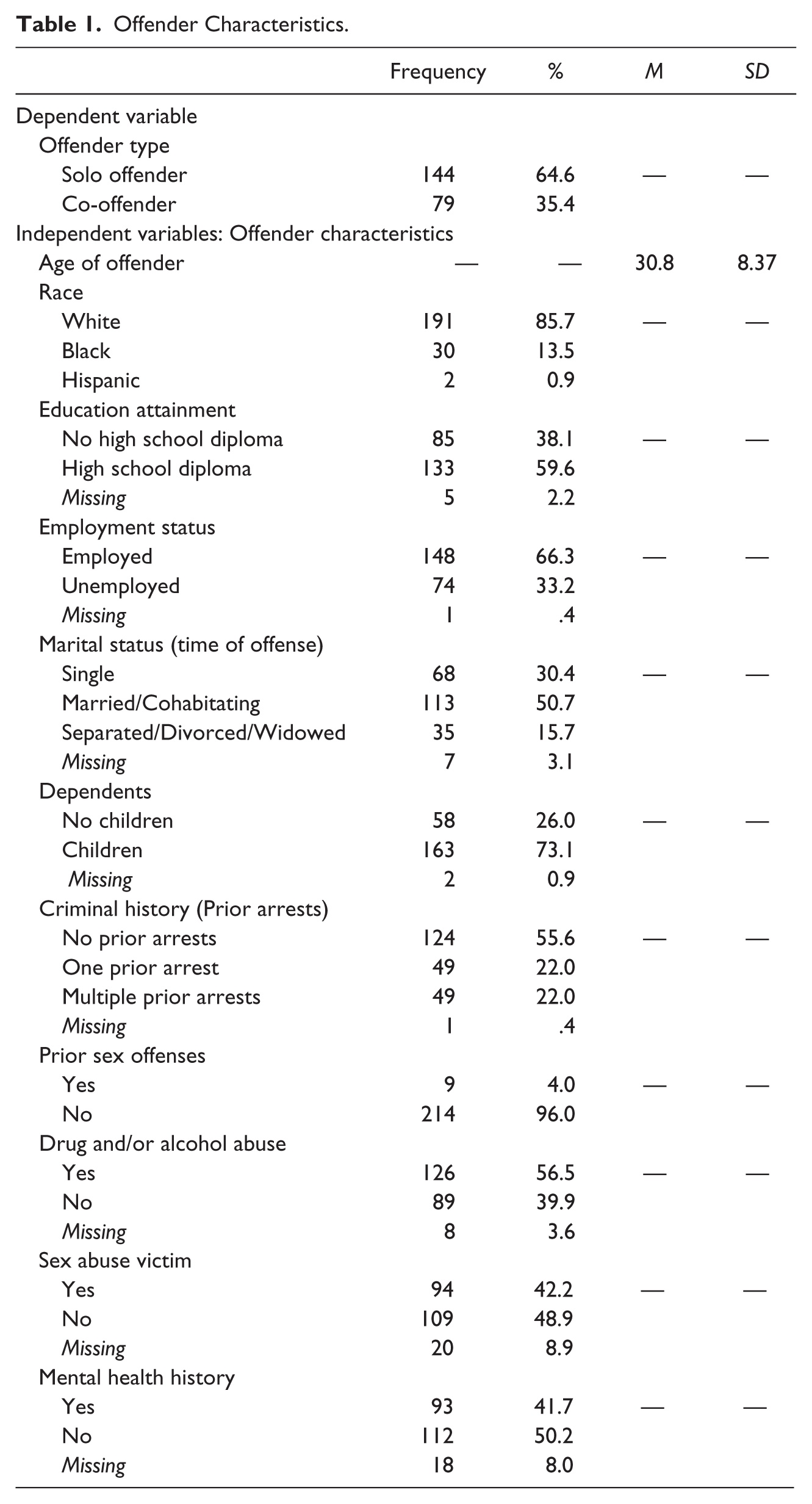
Our dependent variable, offender type, was a binary measure (solo offender = 1, co-offender = 0). This variable indicated whether the observations in our sample committed their crimes alone or with a co-offender. Approximately, 65% (n = 144) of our sample were solo offenders, while the remainder (n = 79; 35%) committed their sex crimes with an accomplice (see Table 1).
Offender Characteristics.
Independent variables
We identified 19 independent variables and classified them as either offender or offense characteristics (see Table 1 and Table 2). Many of the offender characteristics were considered control variables, having little theoretical relevance, but frequently found in criminological analysis. The offense characteristics provide greater explanatory value toward the female sex offender phenomenon.
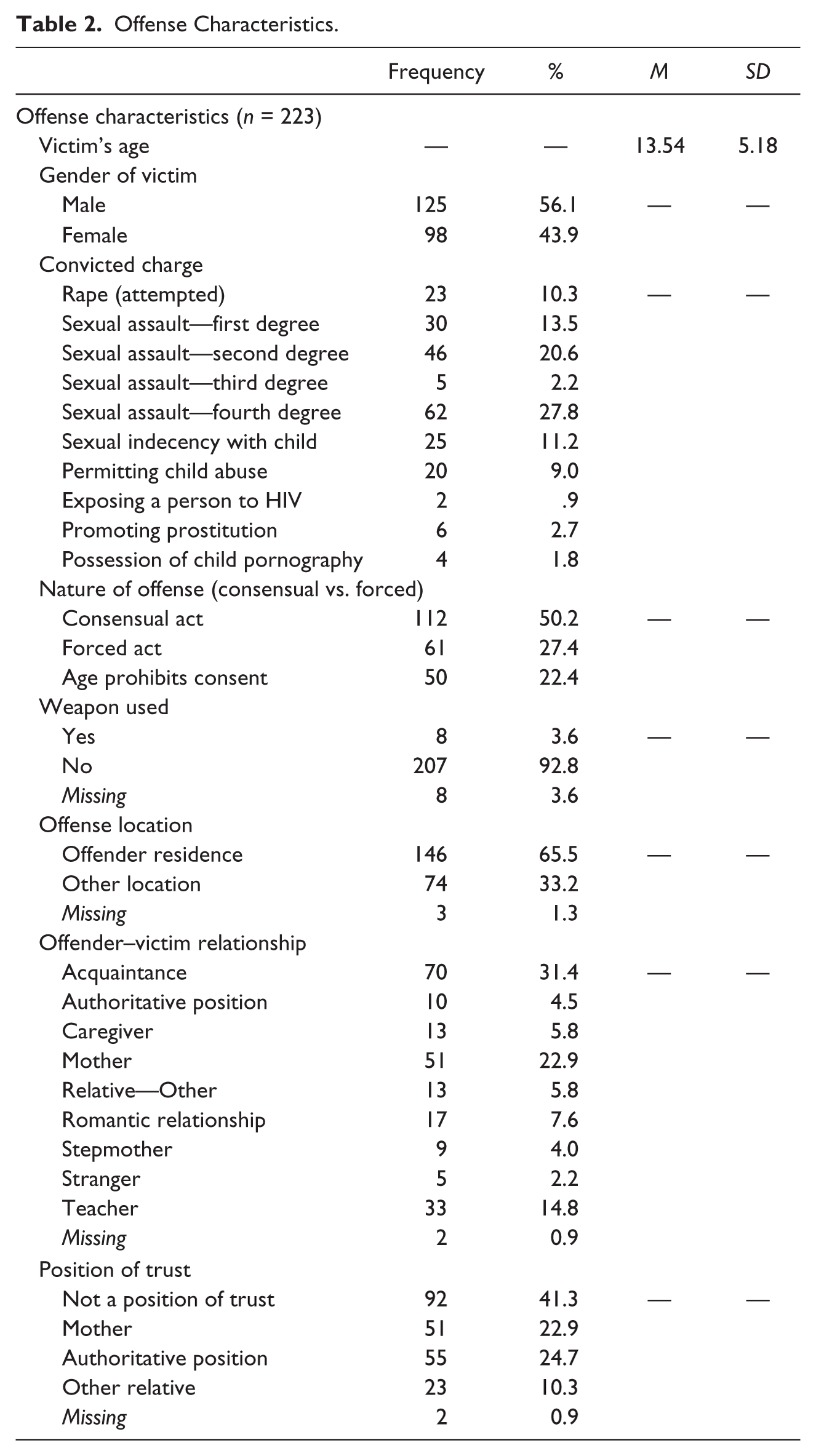
Offense Characteristics.
Offender characteristics
Table 1 describes the personal attributes of the offenders included in the sample. The ages within the sample ranged from 18 to 56, with an average of 30.8 years and a median of 30 (SD = 8.37). The overwhelming majority of the sample was White (n = 191; 86%), while nearly 14% (n = 30) identified as Black, and less than 1% (n = 2) as Hispanic. Both level of education (less than high school diploma/GED or below = 0, high school education or above = 1) and employment (employed = 1, unemployed = 0) were coded as dichotomous variables. The majority of our sample had a high school diploma or above (n = 133; 60%) and were employed (n = 148; 66%) at the time of offense. Half of our sample were married or cohabitating (113; 51%), and 73% (n = 163) of them had at least one child at the time of their offense.
In addition to the above demographics, we were able to include data pertaining to the observations’ criminogenic characteristics. The majority of offenders had no criminal history (n = 124; 56%), while another 22% (n = 49) of the sample had only one prior arrest according to the Arkansas Crime Information Center (ACIC). Very few of these females are recidivists, as only nine (4%) of them were convicted of a prior sex offense. Information pertaining to offenders’ alcohol and drug use, mental health history, and sexual abuse victimization was self-reported and collected from offenders’ social history questionnaire. Fifty-seven percent (n = 126) of the sample reported an issue with alcohol or other drugs. In addition, just over 40% of them reported experiencing mental health issues during or prior to their offense. Last, 42% (n = 94) reported being a victim of sexual abuse prior to their own offending.
Offense characteristics
Table 2 describes elements of the crimes, including the convicted charge, the consensual nature of the offense, and the offender–victim relationship dyad. Victims’ ages ranged from 0 to 42, with an average age of 13.5 years and a median of 14 (SD = 5.18). The majority of victims were male (n = 125; 56%). We identified 10 distinct convicted charges within the sample. In many cases, offenders were convicted of more than one offense; subsequently, we implemented a hierarchy rule in accordance with the severity of punishment associated with each charge based on the Arkansas Criminal Code (§5-14-101). Due to our sample including offenders convicted in states other than Arkansas 1 and alternatively defined offenses spanning nearly a 20-year period, it was necessary to re-categorize certain charges in accordance with the 2014 Arkansas Criminal Code. We matched definitions between states of conviction and previous criminal codes to the most current Arkansas Criminal Code and relabeled offense types accordingly.
Sexual assault of the second (21%) and fourth (28%) degrees occurred most often in the sample. These offenses are distinct between one another by the age of the victim and nature of contact. Second degree sexual assault is defined through sexual contact, no penetration, with a child under the age of 14 years old. In most instances, Sexual assault fourth degree is analogous to statutory rape. Legally, there are two elements to this offense. First, an adult engages in sexual intercourse, absent of force, with a 14- or 15-year-old. Second, there is consent between offender and victim. Twenty-three (10%) females were convicted of rape or attempted rape, while 20 (9%) offenders failed to report known sexual abuse of a child and were subsequently convicted of permitting child abuse (Table 2).
We generated three categories for the variable nature of offense—consensual act, forced act, and age prohibited sexual consent. Half of the sample (n = 112) committed consensual sexual acts with their victims, while another 27% (n = 61) of the offenders used force or threats to coerce their victims into sexual activity. It should be noted, consent is considered in the charging decision, but the act is still illegal due to victim’s age, or the offender’s position held over the victim. The third category, age prohibited sexual consent, is operationalized as any type of sexual contact with a victim under the age of 14, where force or threat of force is not explicitly documented in the offense narrative. 2 Fifty cases (22%) fall into this category.
We identified nine distinct relationships in the offender–victim relationship (Table 2). Acquaintance was the most frequently occurring relationship between offender and victim (n = 70; 30%), followed by mothers victimizing their biological children (n = 51; 23%). Nearly 15% of the offenders (n = 33) were teachers who victimized one or more of their students. In a similar vein, caregivers (n = 13; 6%) and persons in authoritative positions (n = 10; 5%) made up more than 10% of the sample combined. Approximately 8% (n = 17) of observations claimed to be in a consensual romantic relationship with their victims. Despite the violation of law, victim statements within the offenders’ files were used to confirm the nature of these relationships.
Our position of trust variable characterizes the relationship between offender and victim differently from the offender–victim relationship. Although similar, position of trust was operationalized according to the Arkansas Criminal Code (§5-14-03). 3 We generated three categories of trust, mother, authoritative position, and other relative. 4 The fourth category (reference) includes all females (n = 92; 41%) holding no position of trust between themselves and their victims. Mothers victimizing their children, again, comprised 23% (n = 51) of the sample, while those who held authoritative positions over their victims made up nearly 25% (n = 55).
Analysis and Results
We carried out our analysis in two stages using STATA (Version 13.1). First, we compared the differences between solo and co-offenders and offenses through bivariate analyses (see Table 3). Our analysis used both chi-square and t tests as dictated by the level of measurement of the independent variable. Second, we conducted multivariate analyses through logistic regression models. This strategy was appropriate to analyze offender and offense characteristics against our categorical dependent variable, offender type.
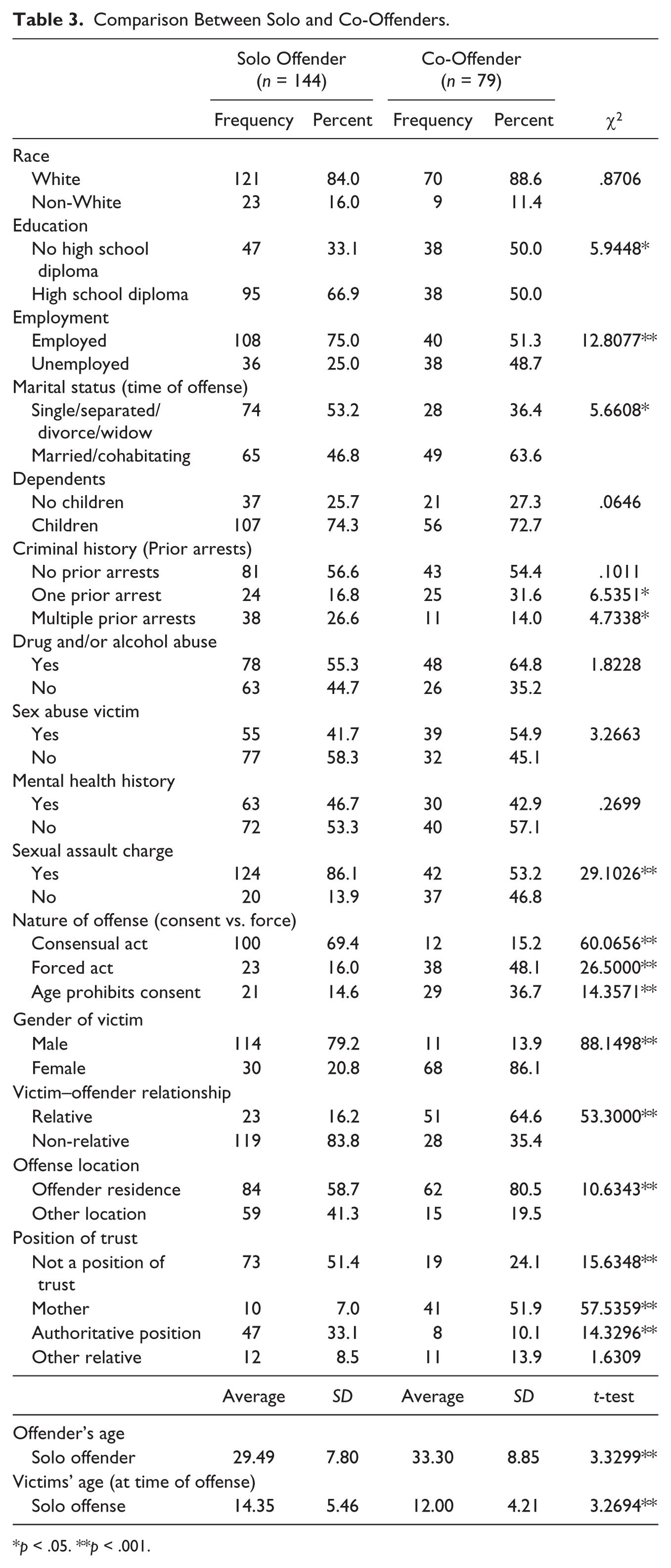
Comparison Between Solo and Co-Offenders.
p < .05. **p < .001.
Bivariate Analysis: Comparisons Between Solo and Co-Offenders
There are significant differences between solo and co-offenders, as well as the contextual elements of their offenses (Table 3). Those females who perpetrated sex offenses alone were, on average, nearly 4 years younger than those who offended with accomplices, t(221) 5 = 3.3299, p < .001. Solo offenders were more likely than co-offenders to have a high school diploma, χ2(217) = 5.9448, p < .05, and employment, χ2(220) = 12.8077, p < .001. Co-offenders tended to be married, χ2(214) = 5.6608, p < .05, but no more likely to have children than those who offended alone, χ2(220) = .0646, p > .05. There were fewer differences between the two groups when it came to criminogenic characteristics. Both solo and co-offenders were equally as likely to have clean criminal histories, χ2(221) = .1011, p > .05; however, for offenders who had prior arrests, solo offenders were more likely to have multiple rather than just one arrest, χ2(221) = 4.7338, p < .05. There were no statistical differences in the self-reporting of drug and alcohol abuse, χ2(214) = 1.8228, p > .05; prior sex abuse victimization, χ2(202) = 3.2663, p > .05; or mental health history, χ2(204) = .2699, p > .05.
Solo and co-offenses differed on all analyzed offense characteristics. It should be noted the variable weapons used was dropped due to limited cases where a weapon was used in the commission of the offense. Moreover, convicted charge and offender–victim relationship were both collapsed to provide greater distribution between attributes. Convicted charge was recoded as a dichotomous variable, categorizing offenses according to whether the offender made physical sexual contact with the victim. This variable was renamed sexual assault (1 = yes, 0 = no). 6 Physical sexual contact was more likely to occur in solo offenses, χ2(222) = 29.1026, p < .001. Offender–victim relationship was also collapsed into a dichotomous variable (relative = 1, non-relative = 0). Co-offenses were more likely to be characterized by a familial relationship between the offender and victim, χ2(220) = 53.3000, p < .001. Violations of positions of trust differ between groups based on specific position categorization. Mothers committing criminal acts against their own children were more likely to have a co-offender, χ2(220) = 57.5359, p < .001, while those operating in authoritative positions, such as teachers and caregivers, were more likely to act alone, χ2(220) = 15.6348, p < .001.
There was a stark contrast between solo and co-offenses when considering the consensual nature of offense. Victim consent to the sexual act was predominantly a characteristic of solo offenses, χ2(222) = 60.0656, p < .001, where force, χ2(222) = 26.5000, p < .001, and age prohibiting consent, χ2(222) = 14.3571, p < .001, occurred at a significantly greater rate within crimes with multiple offenders. The location of the offense also differed between the two groups. Co-offenses were found to have a greater propensity to occur in the home of the offender, χ2(219) = 10.6343, p < .001, than that of solo offenses. Last, victim characteristics differed between solo and co-offenses. Females were victimized at a greater rate within the context of multiple offenders, χ2(222) = 88.1498, p < .001, where solo offenses tend to have males as victims with an average age nearly 2.5 years older than victims in co-offenses, t(216) = −3.2694, p < .05.
Multivariate Analysis—Logistic Regression
Before completing our multivariate analysis, multicollinearity was assessed through a Pearson’s correlation matrix, variance inflation factors, and standard error assessment. We found a strong correlation between the variables offender–victim relationship and position of trust (r = .7265, p < .001); thus, offender–victim relationship was omitted from the model. This variable was chosen for exclusion because we felt position of trust captured the relationship between offender and victim in greater detail. In addition, we identified potential collinearity issues with the variables offender’s age and victim’s age. Subsequently, both variables were excluded from the multivariate model.
The dependent variable was offense type, where the crime was committed by a solo female offender (one) or if a co-offender was involved in the crime (zero). Our full model was comprised of 18 independent variables as described in Table 3, minus the variable offender–victim relationship, offender’s age, and victim’s age. Despite a significance in the analysis, χ2(173) = 139.65, p < .001, we pared down this model to only include the offender and offense characteristics that were statistically significant in the bivariate analysis. This decision was made primarily to limit the effects of list-wise deletion, increasing the number of observations and improving the model fit. Subsequently, we omitted dependents, prior drug and/or alcohol abuse, prior sex abuse victim, and mental health history, leaving the final model with 13 independent variables (see Table 4).
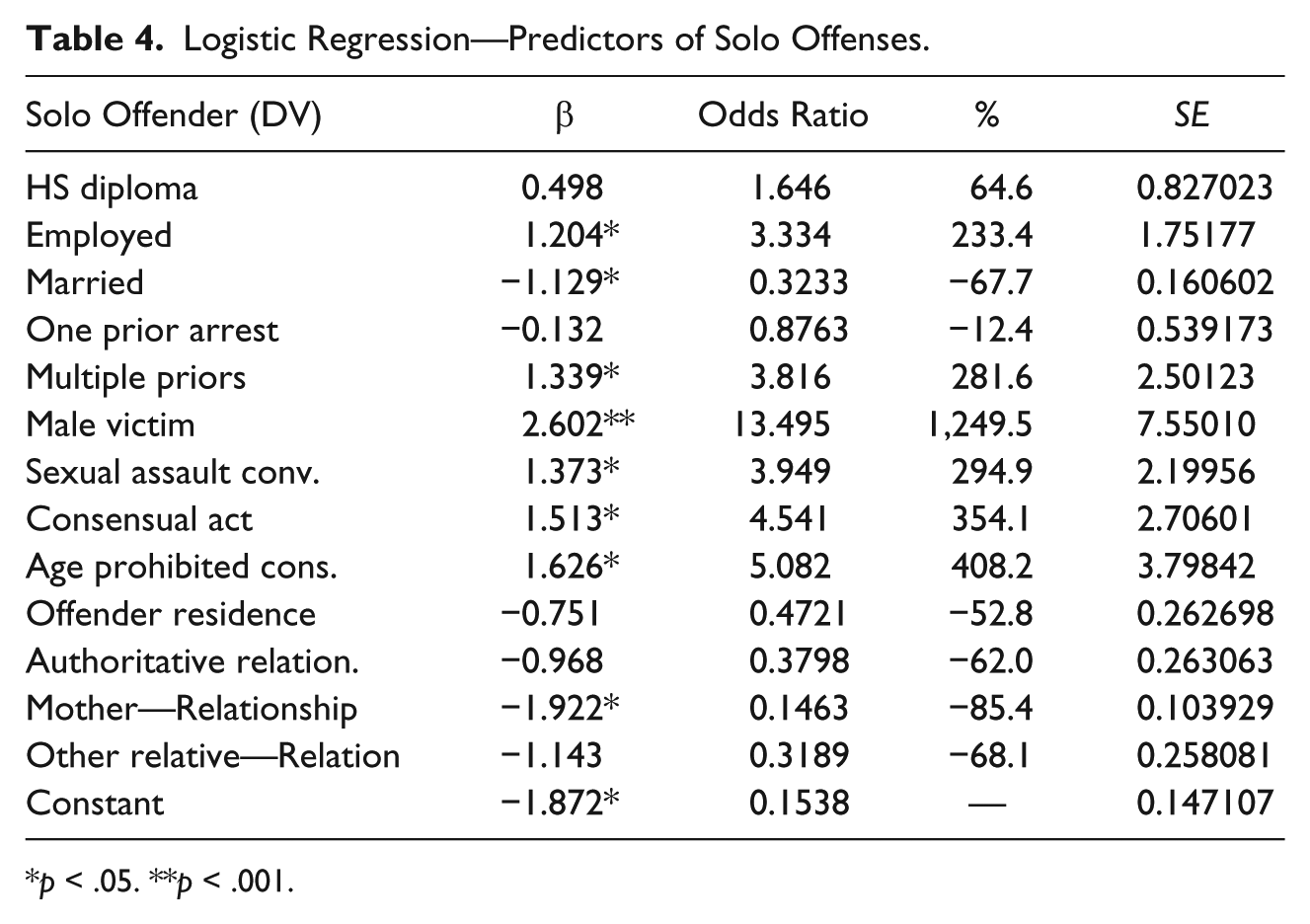
Logistic Regression—Predictors of Solo Offenses.
p < .05. **p < .001.
We were able to improve upon the full model, χ2(196) = 145.23, p < .001, McFadden’s pseudo R2 = .5346. Eight of the 13 independent variables were significant (Table 4). Of the offender characteristics, employed, married, and multiple priors were significant predictors of a solo offense. Offenders who were married at the time of their offense were less likely to act alone, while those employed and those with a more extensive criminal history were more likely to be involved in a solo offense.
Five offense characteristics, male victim, sexual assault conviction, consensual act, age prohibiting consent, and mother as a position of trust, were also significant predictors of a solo offense. The strongest predictor in the model was gender of the victim. The odds of males being victims of a solo offense were 1,249.5% more likely than females being victimized by a solo offender. The odds of sexual contact being an element of the convicted offense (sexual assault) were nearly 300% more likely to occur in solo offenses than no sexual contact being reported in similar offenses. Not surprisingly, consent to the sexual act was more likely to occur in solo offenses. The odds of a victim consenting were 262.8% more likely to occur in a solo offense, rather than force being used in a similar type of offense. Moreover, offenses absent explicit force, but involve a victim who is not of the legal age to provide consent, are significantly greater to occur in solo offenses, compared with cases involving explicit force (β = 1.626). Mothers, who offend against their biological children, generally did so with an accomplice. The probability of a mother victimizing her own child within the context of a solo offense decreased by −2.366 compared with an offender who maintained no position of trust within a similarly situated offense.
Discussion and Conclusion
The current study garnered a number of noteworthy findings. Similar to previous studies, the average age of our sample was 30.8 years, and the majority of female sex offenders were White, with at least a high school diploma (Bumby & Bumby, 1997; Faller, 1995; Lewis & Stanley, 2000; Miccio-Fonseca, 2000; Nathan & Ward, 2002; Rowan et al., 1990; Vandiver, 2006; Vandiver & Walker, 2002; Wijkman et al., 2011). There has been mixed results regarding marital status and education in previous works (Faller, 1995; Kaplan & Green, 1995; Lewis & Stanley, 2000). We found solo offenders were more likely to be single and have high school diploma. In addition, research has found female sex offenders are typically unemployed or employed at minimum-wage positions (Faller, 1987; Green, 1999). This was consistent with our findings in which 66% had employment; however, the majority of those who were employed at the time of the offense held minimum-wage jobs.
We did find variations between solo and co-female sex offenders. Solo sex offenders were more likely to victimize a non-relative male, and investigation reports were more likely to indicate the sexual contact was consensual as compared with co-offenders. Even when separating out the nature of offense (i.e., consensual, forced, age prohibits consent), age prohibits consent was more likely to occur than forced in cases involving solo offenders, when compared with co-offenders. In essence, our findings indicated consent between the offender and victim was more likely to occur in solo offenses, regardless of the age of the victim. Sexual contact was more likely to occur with solo offenders than cases with multiple offenders. This makes sense as situations with co-offenses include permit of abuse and possession of pornography.
Another interesting finding was solo offenders were more likely to be employed and held a position of trust than co-offenders. Positions of trust included teachers, babysitters, mothers, and other relatives—individuals who had some type of authority over the victim (see Footnote 1). Due to the recent attention in the media and research on the teacher/student phenomenon (Plumm, Nelson, & Terrance, 2012), we wanted to further explore the offender/victim dyad by examining whether there was a statistically significant relationship between an offender in a position of trust 7 and victim characteristics. In our sample, 25% (n = 55) of the female sex offenders had a job in which they were in a position of trust. In addition, the majority of offenders in this group were solo sex offenders; therefore, we focused on solo offender and victim characteristics to better understand offending patterns.
Primarily, we found solo female sex offenders, in an authoritative position (i.e., teacher, correctional officer, babysitter), were more likely to victimize males who were 4 years older than the victims of solo offenders who were not in an authoritative position. This is consistent with the widely known female sex offender typology proposed by Mathews, Mathews, and Speltz (1989), which included the teacher/lover phenomenon. Within this classification, a female offender in the teacher/lover category usually targets adolescent boys with the intention of teaching them about sex, views it as a consensual relationship between the offender and victim, and denies the abusive nature of their behaviors. For the solo female offenders in an authoritative position in our study, their acts, although criminal, were considered consensual where the majority claimed to have feelings for or relationships with their victims.
In our multivariate analysis, we found variations between solo and co-female sex offenders existed with regard to male victim, employment, mother, consensual act, age prohibited consent, sexual assault charge, married, and multiple priors. Victim selection among solo offenders (i.e., male victim) was somewhat consistent with previous findings (Muskens et al., 2011; Vandiver, 2006). Some studies have found solo female offenders typically victimize young males, while others have found that female sex offenders have a disproportionate percentage of female victims (Beech, Parrett, Ward, & Fisher, 2009; Faller, 1995; Giguere & Bumby, 2007; Vandiver & Kercher, 2004). Muskens et al. (2011) argued that the gender of the victim was dependent on whether or not the female was accompanied by a male accomplice. This is consistent with our findings as the majority of our solo offenders were more likely to sexually assault male victims, while co-offenders who had male accomplices were more likely to have female victims. 8 In fact, approximately 31% (n = 30) of solo offenders had female victims, while 69% (n = 68) of co-offenders had female victims.
In addition, we found offenders who were married were more likely to offend with an accomplice, likely a significant other. Moreover, mothers who victimized their children were more likely to be involved in a co-offense. This finding was not surprising given that previous research found similar results (Muskens et al., 2011; Vandiver, 2006). In fact, Vandiver (2006) found co-offenders were significantly more likely than solo offenders to abuse relatives. She hypothesized “that females who have children are chosen by their male counterparts because they have children, making victims more accessible” (p. 351). To further support this hypothesis, 52% of the co-offenses in our sample were mothers who victimized their children, and of the mothers who victimized their children, 80% acted with an accomplice. Therefore, we can argue that because the vast majority of mothers who victimized their own children did so with a male accomplice, it is likely there must be an external factor (such as male accomplices) that affected victim selection.
In previous works, solo offenders have been portrayed much more like predators, while co-offenders have been viewed as being victims themselves (McCarty, 1986; Syed & Williams, 1996). Many times, female co-offenders are situated as victims of domestic, sexual, and emotional abuse by a significant other who forced them to participate in sexually criminal behaviors. It may be easier for members of society to believe that females are forced to abuse children, rather than believe that they are capable of such behaviors. However, in our study, we found females who sexually assaulted with accomplices victimized younger children, who were often their own family members, making them just as predatory as their solo counterparts. We are not suggesting that one group is more dangerous than the other, but based on the variations we found between solo and co-female sex offenders, it seems they may need different treatment modalities.
The majority of solo offenders in our study viewed their sexual activity as consensual; however, the victims in our sample were not in a position to give legal consent. Offenders, who believe their victims are capable of consent, may need treatment focused specifically on this issue. These offenders may have issues of self-worth, lack of confidence, and antisocial behaviors that prevent them from seeking healthy relationships with other adults. In fact, Gillespie et al. (2015) found solo offenders were more likely to exhibit stronger indication of depression, sexual dissatisfaction, substance abuse, and other mental illnesses. These may be reasons why solo female sex offenders are attracted to or target younger males. Further research is needed to understand what conditions or circumstances in life leads to such behaviors. In addition, it may be fruitful to examine whether female sex offenders strategically place themselves in situations (position of trust) to gain victim access or whether these crimes are opportunistic in nature, especially given that solo offenders are more likely to victimize a non-relative than co-offenders.
Female co-offenders, however, may need treatment regarding their dependency on others, willingness to victimize their children, or allowing others to victimize their children. At times, female co-offenders are victims of domestic, sexual, and emotional abuse by a partner who forces them to participate in sexually criminal behaviors (Rush Burkey & ten Bensel, 2015). For these offenders, treatment must focus on repairing the physical, psychological, and emotional abuses endured by the offender. Their victims are younger, more likely to be a relative, and victimization is likely to occur at home. Through the limited research on female sex offenders, we know these situations do exist and we must be careful not to assume that all female co-offenders are coerced or intimidated into such offenses. Last, we had a small percentage of offenders who were convicted of “permitting abuse.” In all of these situations, educational training on legal ramifications and the consequences of sexual victimization may be crucial in communities. Perhaps some mothers were scared to report known victimization in fear of repercussions on her and other family members. Perhaps some did not know the law (i.e., 20-year-old boyfriend with a 15-year-old girlfriend). Regardless of the context, more educational trainings about sexual abuse, especially for females, may be needed in our communities.
All studies have some limitations, and our research is no different. First, we only examined female sex offenders in Arkansas; therefore, we are cautious about generalizing our findings beyond this study. However, our sample included all female sex offenders who have faced criminal justice sanctions between 1995 and 2013, which is close to two decades of offending. Although we did not follow each offender over the 18 years, we still have a more comprehensive data set than previous studies. In addition, our sample only captured those who have been convicted as opposed to those who are still undetected by the criminal justice system; therefore, we cannot generalize our findings toward all female sex offenders, especially those yet to be detected. Our study did include data from multiple sources, thus allowing a more accurate depiction of the offender, the victim, and the offense.
To further understand female sex offenders, more research is needed looking specifically at the context in which they offend and how they vary in life histories. Perhaps it may be fruitful to conduct life history interviews with this population to understand why these women commit such crimes and the manner in which these offenders neutralize their behaviors. Qualitative interviews with this offender group would shed light on the pathways of offending as well as provide a more accurate understanding of the treatment modalities needed for this offender population. The results of the current research garnered some insightful findings and shed light on the variations between female sex offenders who commit their crimes alone and those who commit their sexual offenses alongside a co-offender. We believe this study not only added to the limited research on female sex offending but also expanded our knowledge on the similarities and differences between female sex offenders who commit their crimes in isolation and those who commit their crimes with another.
Footnotes
Declaration of Conflicting Interests
The author(s) declared no potential conflicts of interest with respect to the research, authorship, and/or publication of this article.
Funding
The author(s) received no financial support for the research, authorship, and/or publication of this article.