




Abstract
Existing literature exemplifies the relationship between alcohol and overt aggression, especially for adult males. Less clear is the relationship between alcohol and aggression among male and female college students, in particular, the nature of this aggression and the co-occurrence of drinking and aggression on the same day (temporal proximity). This study examines the chronic and temporal nature of males’ and females’ alcohol-related aggression among college students. Two hundred fourteen students completed a web-based 7-day event-level survey measuring alcohol consumption and perpetration of physical aggression, verbal aggression, anger, and relational aggression over 4 weeks, resulting in 4,256 observations (days). The global analysis revealed students who are heavy drinkers are more likely to perpetrate all four forms of aggression, whereas the event-level analysis revealed that specific forms of aggression are associated with drinking at the time, while other forms were not linked to drinking occasions. Cross-tabulation revealed males and females were more likely to use verbal and physical aggression when drinking. For females, drinking was also associated with relational aggression and anger. Despite often being overlooked in research on aggression during emerging adulthood, relational aggression was prevalent. Discrepancies between the global and temporal analysis revealed factors other than alcohol might explain the relationship between chronic alcohol consumption and specific forms of aggression. This is one of the first event-level studies to show the temporal relationship between alcohol and relational aggression. The distinctions in the current study, exemplifying the diversity of alcohol-related aggression, are critical for understanding aggressive behavior, potential gender differences, and for developing interventions. The temporal relationship between alcohol and aggression suggests health interventions should target drinking and aggression simultaneously.
Keywords
Background
Alcohol is a serious and well-established risk factor for aggression; however, the role of alcohol in the nature of younger adult’s perpetration of aggression is in its infancy. This study aimed to identify the nature of alcohol-related aggression among emerging adults, focusing in particular on first-year university students. Emerging adulthood is defined as a period in which individuals develop autonomy and their identities, typically between the ages of 18 and 25 (Arnett, 2000). Of particular relevance to the current study, emerging adults are susceptible to taking risks and abusing substances, due to their stage of brain development (Bava & Tapert, 2010) and because of the new contexts and freedom they typically experience during this life stage (Arnett, 2004). Substance abuse, including binge drinking, peaks during emerging adulthood (Naimi et al., 2003; Stone, Becker, Huber, & Catalano, 2012) and shapes later adult development (Stone et al., 2012). Of particular concern is the drinking behavior of college students, among whom drinking has been found to be the heaviest (Carter, Brandon, & Goldman, 2010) and thus a serious public health concern (Ham & Hope, 2003; Kypri, Langley, & Stephenson, 2005; Stone et al., 2012; White & Hingson, 2014).
Students who drink heavily experience numerous problems including health risks, academic problems, legal consequences, and interpersonal problems (Mallett et al., 2013; Perkins, 2002). Such heavy drinking has been associated with externalizing behavior including less concern for others and less compliance for laws or societal standards (Nelson & Padilla-Walker, 2013). Relatedly, alcohol-related aggression has been reported as a serious and enduring problem among college students (Hingson, Zha, & Weitzman, 2009). In the United States alone, more than 600,000 students between the ages of 18 and 24 are assaulted each year by another student who has been drinking, with 95% of all violent crime on college campuses involving the consumption of alcohol by the assailant, victim, or both (National Council on Alcoholism and Drug Dependence, 2011). Understanding risks associated with negative health behaviors such as aggression is an important component of prevention science (Coie et al., 1993).
Notably, in the academic literature, although we know students engage in alcohol-related aggression (e.g., Hingson et al., 2009), we know less about the various types of aggression (the nature of aggression) male and female students perpetrate (Dumas, Wells, Tremblay, & Graham, 2013). Most research to date has focused on overt aggression (e.g., Swahn & Donovan, 2006). In a review of recreational drug use and aggression, Tomlinson, Brown, and Hoaken (2016) discuss that the way aggression has been measured might capture male aggression more so than female-perpetrated aggression, and as such, the relationship between alcohol and aggression among female adolescents remains unclear. In accordance, some research reveals young males and females might engage in differing types of aggression, with males more likely to engage in overt aggression, while females are more likely to engage in relational aggression (e.g., Nelson, Springer, Nelson, & Bean, 2008; Putallaz et al., 2007), although findings have not been consistent (Loudin, Loukas, & Robinson, 2003). Thus, to understand the nature of alcohol-related aggression during emerging adulthood, it is important to extend the various types of aggression examined as well as identify the types of aggression more common to males and females.
Theoretical Grounding and Literature Review
Theories of Sex and Aggression
To understand sex differences in alcohol-related aggression, it is important to consider dominant theories on sex and aggression, namely, sexual selection theory (SST; Trivers, 1972), social role theory (SRT; Bettencourt & Kernahan, 1997; Eagly & Steffen, 1986), and social learning theory (SLT; Bandura, 1973). SRT postulates that historical sex divisions in labor, with women working inside and men outside of the home, led to expectancies in sex-typed behavior, which continue to be transmitted through socialization (Archer, 2004; Eagly, 1987). Expectancies include men having more masculine agentic traits, while women are expected to have communal traits, and as a result, boys learn that responding aggressively is appropriate (Archer, 2004). Similar to SRT, SLT also focuses on the socialization of cultural values (Bandura, 1973), and aggression is argued to be learnt through exposure to violent role models, peers, and programming (see Côté, 2007). Sex-typed differences in aggression are said to arise because the socialization of boys and girls differs. For instance, the tendency for girls to value and play in small close friendship groups offers opportunities to develop alternatives to physical aggression such as negotiation skills (Maccoby, 1998); however, the importance of these groups has also been suggested to provide a context in which indirect aggression develops (Galen & Underwood, 1997). However, the socialization of boys, which often involves competitive physical play, has been argued to encourage aggressive behavior (Archer, 2004; Côté, 2007; Maccoby, 1998). SLT predicts that sex differences in aggression should increase throughout development; however, research does not support this trajectory (Archer, 2004; Côté, 2007).
Another evolutionary model explaining sex differences in aggression is the SST, which argues that sex differences in aggression are an adaptation to parental investment (Trivers, 1972). According to SST, males are less invested in their offspring, experience more competition for mates, and use overt aggression to fight off competitors (Archer, 2004; Hess & Hagen, 2006). Females, however, might be expected to use more indirect aggression because they need to protect their own lives for the survival of their offspring (Campbell, 1999). Indirect aggression might also help to remove a rival from competition (Archer & Coyne, 2005). Indeed, indirect aggression has been conceptualized as an intrasexual competition strategy (Vaillancourt, 2013). Based on SST, sex differences will be largest when reproductive competition is highest, during the peak of sexual activity (Archer, 2004).
Empirical research has found partial support for the dominant theories and, in particular, for SST. In a large meta-analysis, Archer (2004) found males were more likely than females to use physical aggression and that the use of physical aggression peaked during the sexually reproductive years, aligning with predictions from SST. However, findings regarding indirect aggression did not support SST, with sex differences either absent or only slightly in the female direction. Similar findings have been reported with children and adolescents (Card, Stucky, Sawalani, & Little, 2008). Experimental evidence with adults, however, revealed that when provoked, women show a greater desire than men to want to retaliate through the use of indirect aggression (Hess & Hagen, 2006). Thus, in the context of social alcohol consumption, where students are most likely to “hookup” (Grello, Welsh, & Harper, 2006; Paul & Hayes, 2002), and in fact premeditate hooking up (Paul & Hayes, 2002), it is possible that provocation and competition is at its highest and sex differences in aggression might be evident.
Theories of Alcohol-Related Aggression
Theoretical explanations of alcohol-related aggression reflect the fact that aggression is associated with chronic and temporal consumption. The temporal relationship between alcohol and aggression is theoretically underpinned by the proximal-effects model (aka acute effects model) that posits that there is a direct relationship between alcohol and consequences; the acute effect of alcohol impairs information processing leading to decreased inhibitions (Leonard, 1984) and a distortion of cues (Steele & Josephs, 1990), although it is most likely that a disposition toward aggression (Eckhardt & Crane, 2008; Giancola, 2006) and the expectation that alcohol leads to aggression (Barnwell, Borders, & Earleywine, 2006) must also be present. The chronic-effects model, however, suggests that individuals who engage in chronic alcohol consumption are more likely to be aggressive, regardless of whether they have consumed alcohol at the time (Lipsey, Wilson, Cohen, & Derzon, 1997; see White, Jackson, & Loeber, 2009, for an overview of the two theories). Research exploring both drinking at the time of the incident and global drinking behavior finds support for both models (e.g., Neal & Carey, 2007), reinforcing the importance of both theories for understanding alcohol-related aggression. Given the theoretical underpinnings of alcohol-related aggression, a global analysis examining the relationship between typical alcohol consumption and aggression will be employed to examine the chronic-effects model, while an event-level analysis examining the co-occurrence of drinking at the time and aggression will be employed to examine the proximal-effects model. Event-level analyses offer strengths over global analyses because the method enables inferences regarding the temporal link between alcohol and aggression among students and young people (Margolin, Ramos, Baucom, Bennett, & Guran, 2013; Neal & Fromme, 2007; Wells, Graham, Speechley, & Koval, 2005; Wells, Mihic, Tremblay, Graham, & Demers, 2008).
Focus on Overt forms of Aggression
The tendency of past event-level research to focus on physical and verbal aggression has meant that less is known about the links between alcohol and other forms of aggression. Authors have noted that the characteristics of emerging adulthood, in particular developing ones identity and developing new and diverse relationships, might form part of a context in which relational forms of aggression are likely (Nelson et al., 2008). Indeed, relational aggression is apparent among students (e.g., Basow, Cahill, Phelan, Longshore, & McGillicuddy-DeLisi, 2007; Loudin et al., 2003; Storch, Bagner, Geffken, & Baumeister, 2004; Werner & Crick, 1999). The dearth of event-level research between alcohol and relational aggression is surprising given that the risk factors for overt and relational aggression have been found to overlap (Herrenkohl et al., 2007). Furthermore, relational aggression has been linked to global (i.e., typical) alcohol misuse (Dahlen, Czar, Prather, & Dyess, 2013), especially among women (Storch et al., 2004) and is argued to be similar to physical aggression in terms of perceived harm (Archer & Coyne, 2005; Williams, Richardson, Hammock, & Janit, 2012). Relational aggression has been given various names (e.g., indirect, social), each associated with slightly different behaviors; however, it is generally accepted that the different forms are similar in that they all involve aggression intended to harm social relationships (Archer & Coyne, 2005) through such behaviors as gossiping, spreading rumors, and social exclusion (Crick & Grotpeter, 1995). In line with leading researchers in the area, we also considered hostile electronic messages as a form of relational aggression given it is only the medium that differs rather than the act itself (Kellerman, Margolin, Borofsky, Baucom, & Iturralde, 2013). There is a lack of research on relational aggression perpetrated via electronic media (Bennett, Guran, Ramos, & Margolin 2011), despite growing concern in the widespread use, and associated negative consequences, of such aggression (Kowalski, Giumetti, Schroeder, & Lattanner, 2014; Vieno et al., 2014), especially among college students (Kellerman et al., 2013). Indeed, electronic victimization is apparent among student samples and for females, alcohol use is associated with being the victim of electronic aggression (Bennett et al., 2011) and the perpetrator of electronic aggression (Selkie, Kota, Chan, & Moreno, 2015). However, the temporal association between relational electronic aggression and alcohol is not known. Moreover, given that indirect aggression has been referred to as “the sword of a woman” (McAndrew, 2014), relational aggression needs to be considered as a separate type of aggression in addition to more commonly examined forms of aggression (i.e., verbal and physical aggression).
Knowledge regarding the specific forms of aggression associated with alcohol has been limited by the way aggression has been operationalized in past event-level research (Tomlinson et al., 2016), typically analyzed as an overarching aggression score encompassing multiple forms of aggression (Neal & Fromme, 2007). In fact, the dearth of information on the types of aggression associated with alcohol has been argued to be a limitation across the field of alcohol-related aggression (Sheehan, Linden-Carmichael, & Lau-Barraco, 2016). Thus, questions remain about the specific types of aggression that are more likely to be associated with drinking.
The way aggression has been operationalized might also account for reported variations in findings across studies, especially with regard to sex differences. For instance, some find male and female students are equally likely to perpetrate alcohol-related aggression when aggression is measured as “getting into a physical fight” (Barnett et al., 2014). Aggression measured as “became angry or engaged in verbal/physical fights,” has been found to be more likely to be reported by females than males (Neal & Fromme, 2007). Similarly, females have been found to report more alcohol-related arguments than males (Dumas et al., 2013). However, when aggression has been measured as an overarching item, based on different types of aggressive behavior, associations have been found for men but not women (Margolin et al., 2013). Sugarman, DeMartini, and Carey (2009) recommended future event-level research be conducted to examine the relationship more closely. Thus, the present study aims to clarify sex-specific relationships between alcohol and aggression, addressing diversity in aggression and extending the hotly debated topic of sex and interpersonal aggression (Grych & Swan, 2012). Thus, the present study extends the field by examining the relationship between alcohol and specific forms of aggression for a sample of male and female New Zealand university students. A recent study of New Zealand university students found more than 70% reported engaging in heavy consumption within the past 4 weeks (Connor, Psutka, Cousins, Gray, & Kypri, 2013). Similarly, in Sweden, 77% of a student sample reported engaging in binge drinking at least once a month (Andersson, Wiréhn, Ölvander, Ekman, & Bendtsen, 2009). University students’ hazardous alcohol consumption is a serious concern in New Zealand (Kypri et al., 2009), and is similar to that in other western countries, for instance, North and South America and Europe (Karam, Kypri, & Salamoun, 2007). Thus, New Zealand provides a reasonable context from which to draw conclusions regarding alcohol-related aggression. Gathering such information is necessary for effective research-informed interventions (Gerbaud et al., 2015).
Present Study
The present study drew on the proximal-effects model and chronic-effects model to extend past research by examining the association between alcohol and different forms of overt aggression separately (e.g., physical, verbal, anger) as a function of global alcohol consumption and drinking at the time. Anger was included as a separate form of aggression in the current study to extend and tease apart past research findings, which have examined aggression as an overarching behavior encompassing anger and other types of aggression together. Moreover, although anger is a precursor to other forms of aggression and has been argued to be the “accelerator pedal” for aggression (Cross & Campbell, 2014), anger differs to verbal and physical aggression in that it is not necessarily discharged (Campbell & Muncer, 2008).
In addition, this is one of the first studies to conduct an event-level analysis between alcohol and relational aggression (face to face and electronic). To serve as a control, students were asked to report their drinking and aggression independently of each other, regardless of whether the two coexisted, addressing limitations noted in previous research (Wells et al., 2008). Identifying specific forms of alcohol-related aggression may provide important information for future interventions; according to temporal construal theory (Hall & Fong, 2007), more immediate and salient risks are more likely to deter behavior. Thus, we asked,
Method
Sample
A total of 239 university of Otago first-year students took part in the study. Participants were recruited through verbal announcements made in five residential colleges, asking for volunteers to take part in a study looking at behavior and alcohol. First-year students entering university in New Zealand predominantly reside in residential colleges; thus, the sample was not limited by sex, socioeconomic, or ethnic differences, and was representative of first-year students in terms of the range of study areas. The study involved completing a 7-day web-based diary at four time points. Twenty-five participants’ responses were incomplete and removed from analysis. Of the remaining 214 participants, the majority completed at least three of the four surveys. Demographic data revealed the sample were predominantly New Zealand European (80.7%), the average age of participants was 18 years, and 60.3% of participants were female. In total, 4,256 observations (days) were obtained. Participants were incentivized by a prize draw to win vouchers or small confectionary items. This study was reviewed and approved by the ethical review committee at the university of Otago. All participants provided written consent after reviewing an information sheet about the study.
Procedures and Measures
A link to an anonymous web-based weekly diary, measuring alcohol consumption and aggressive behavior was emailed to participants every fortnight for a period of 2 months. Data were collected using a 1-week retrospective diary, in which students were required to report their drinking and behavior for each day of the past week. Retrospective reports of up to a week have been used successfully by other researchers in the field (Neal & Fromme, 2007). Participants were sent two reminder emails if they failed to complete the questionnaire.
Alcohol consumption
Participants reporting consuming alcohol were asked to state the brand/type, volume, and alcohol percentage of the alcohol they consumed. A researcher calculated standard drinks from participants’ self-reports using the Food Standards Authority NZ (2004) formula (volume of container in liters × % alcohol by volume [mL/100 mL] × 0.789). This method for estimating standard drinks aligns with recommendations from past researchers in the area (De Visser & Birch, 2012; Greenfield & Kerr, 2008).
Classification of drinking
To describe the sample and to enable the global analyses, instances of alcohol consumption were classified into two categories based on standard drink consumption: moderate consumption (females ≤ 4, males ≤ 5) and heavy consumption (females > 4, males > 5) using the guidelines of the New Zealand Health Promotion Agency (HPA, 2014) for single occasion consumption.
Global analysis of drinking
Participants’ global drinking behavior was determined by dividing the total standard drinks they consumed by the total days the participants consumed alcohol and then classifying participants as moderate or heavy drinkers using the HPA criteria above. Participants who did not drink during the study were not included in the global drinking classification.
Aggression
Participants were asked to report whether they had engaged in seven aggressive behaviors for each day of the past week. Following reports of aggression, students reported whether or not they were drinking at the time to enable the event-level analysis. For the purpose of interpretation, the seven aggressive acts were also categorized into four main types of aggression, specifically, anger, verbal aggression, physical aggression (physical and severe physical), and relational aggression (rumors, exclusion, and electronic aggression). Verbal, physical, and severe physical aggression were measured using items from the Revised Conflict Tactics Scale (CTS2; Straus, Hamby, Boney-McCoy, & Sugarman, 1996; verbal—“insulted, swore, shouted, or yelled at someone”; physical—“pushed, shoved, slapped, or threw something at someone”; severe physical—“punched, hit, or kicked someone”). To measure face-to-face relational aggression, two items from the Indirect Aggression Scale were used (Forrest, Eatough, & Shevlin, 2005; social exclusion—“intentionally ignored or excluded somebody”; rumors—“gossiped, spread rumors, or made fun of someone”) and one item developed for this study was used to measure electronic relational aggression (sending someone a nasty message). Anger was examined using one item developed for this study measuring becoming angry around someone.
Analysis
To explore the nature of aggression, the percentage of participants perpetrating aggression at least once during the measurement period was calculated and examined as a function of sex. Cross-tabulation and chi-square tests were performed to examine whether aggression varied between men and women or as a function of global alcohol consumption. For the purposes of event-level analysis, panel data were used and cross-tabulation chi-square analysis completed. When cell sizes were less than five, the Fisher’s exact test was used.
Results
Sample Analysis
Alcohol consumption
Of the 214 participants, 87.4% (n = 187) were recorded as having consumed alcohol during the data collection period. Using the HPA classification, 77.6% (n = 166) engaged in heavy and 52.3% (n = 112) engaged in moderate drinking at least once during the four measurement weeks. The extent of heavy consumption is similar to that found in other western countries (Karam et al., 2007). Because participants could report up to 28 days of drinking behavior, it was possible for participants to be classified as being a heavier or a moderate drinker at different time points.
Nature of aggression over the 28-day measurement period (independent of alcohol consumption)
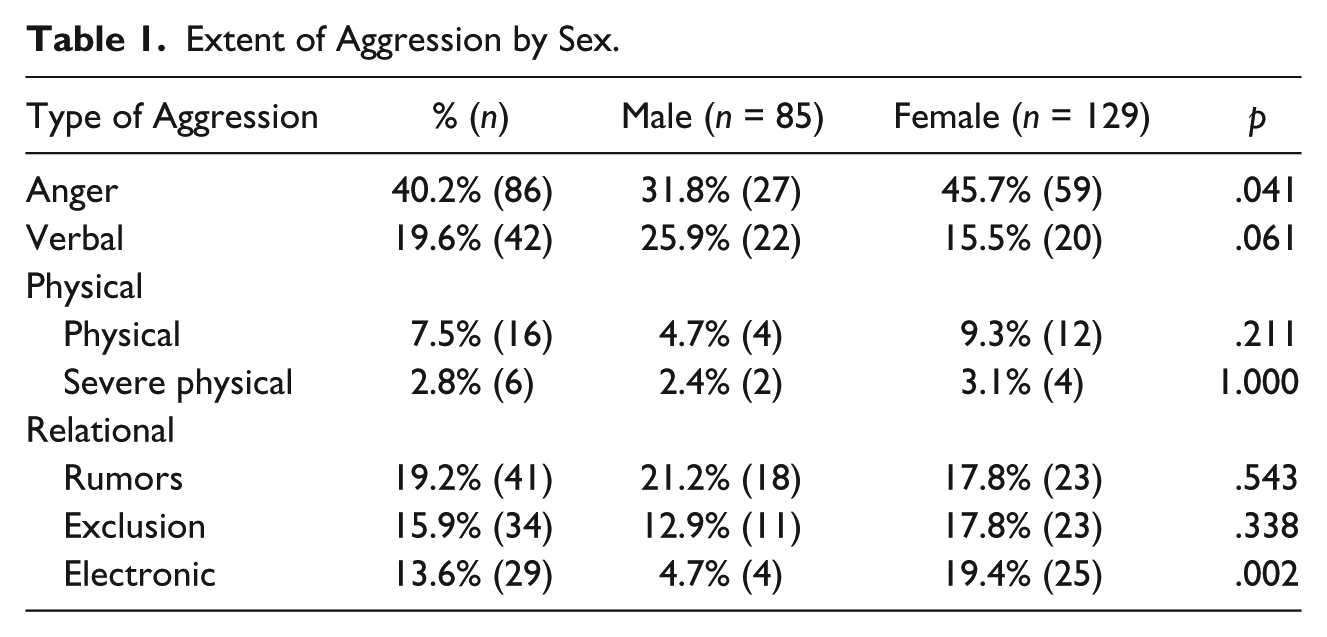
Anger was common (40.2%), while the least common form was severe physical aggression (2.8%). A cross-tabulation and chi-square test revealed more females reported anger (χ2 = 4.161, df = 1, p = .041) and electronic aggression (χ2 = 9.418, df = 1, p = .002) than males. No other significant sex differences were found. Refer to Table 1 for percentages.
Extent of Aggression by Sex.
Average alcohol consumption and aggression
As shown in Table 2, participants classified as heavy drinkers were significantly more likely than moderate drinkers to self-report all types of aggression.
Percentage of Participants Engaging in Aggression as a Function of Their Global Drinking Status.

Event-level alcohol analysis
Among the 4,256 observations, 17.9% (n = 763) involved a report of alcohol consumption. Table 3 shows by sex, the frequency distributions for each type of aggression as a function of drinking behavior (drinking or not drinking at the time). Males and females were more likely to report verbal and physical aggression when they were drinking compared with not drinking. Females were also significantly more likely to report anger, and relational aggression (electronic and rumors) when drinking compared with not drinking at the time. No significant differences were found among males for anger or electronic aggression. Males were more likely to report severe physical when drinking compared with not drinking, although the overall instance of severe physical aggression among the sample was low (n = 6). No significant differences were found among females for severe physical and drinking. Males were significantly less likely to report rumors when drinking compared with not drinking. There were no significant differences for exclusion as a function of drinking behavior for males or females.
Instances of Aggression by Sex as a Function of Whether Participants Were Drinking at the Time.
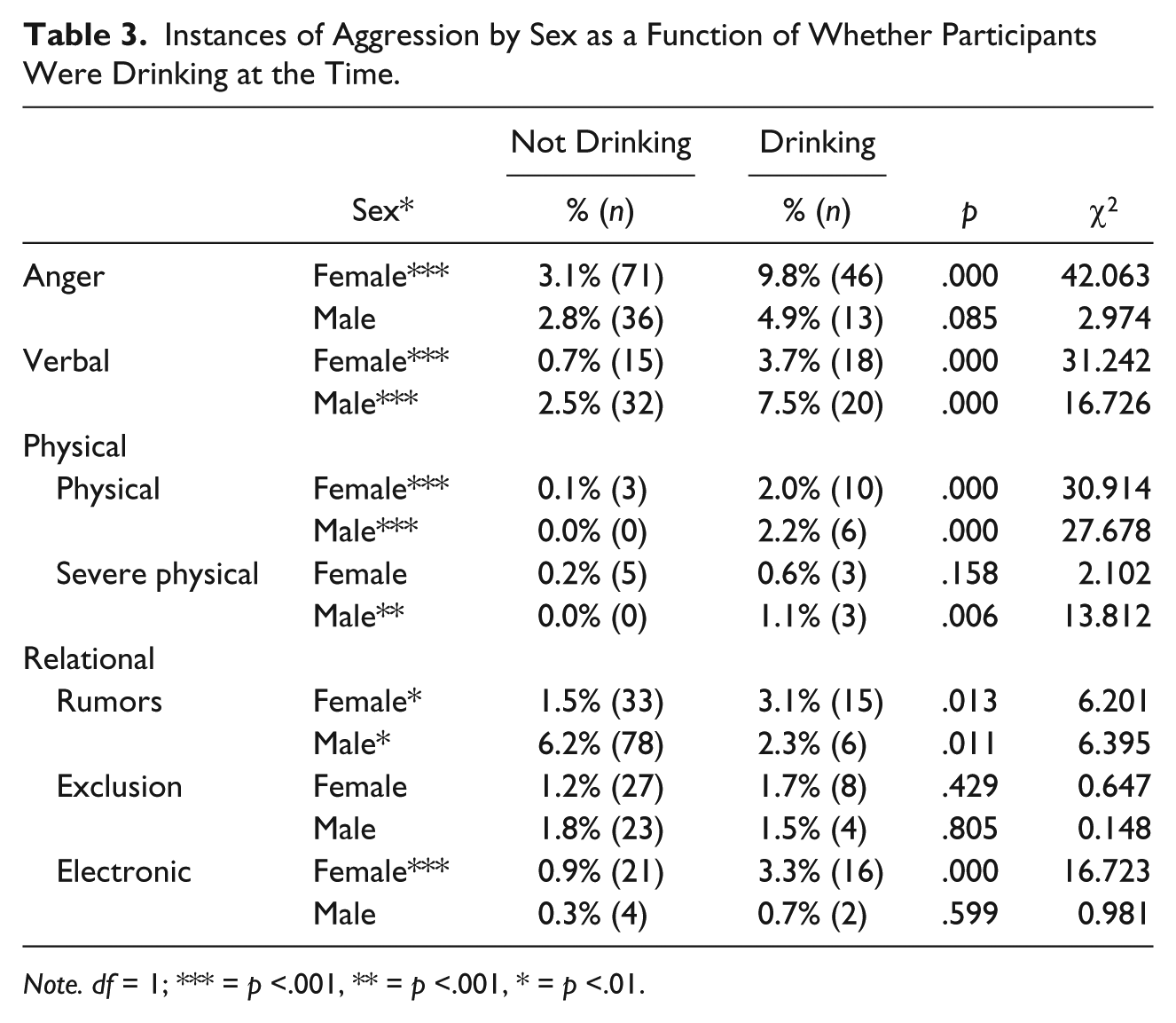
Note. df = 1; *** = p <.001, ** = p <.001, * = p <.01.
Discussion
The aim of this study was to provide unique insights into the nature of alcohol-related aggression during emerging adulthood and, in particular, to address diversity in aggression by expanding knowledge on the similarities and differences in males’ and females’ use of alcohol-related aggression. The findings revealed aggression is pervasive among college students. Anger, and verbal, physical, and relational aggression were endemic within the college sample: 40.2% reported becoming angry around someone, approximately 20% reported engaging in verbal aggression and rumor spreading, and 7.5% reported perpetrating physical violence at least once over the 28-day period, exemplifying the need for research and interventions to target aggression among these emerging adults. Despite often being overlooked in research on aggression during emerging adulthood, relational aggression was prevalent. In fact, the prevalence of rumor spreading was similar to that of verbal aggression, and electronic relational aggression was more prevalent than physical aggression. Thus, to capture the true extent of aggression among emerging adults, it is essential to consider relational aggression, in addition to the more traditionally examined forms of aggression that are typically examined among this population (e.g., verbal and physical aggression).
In the absence of alcohol, there were few sex differences in the perpetration of aggression, similar to findings from the field of intimate partner violence (Robertson & Murachver, 2011; Straus & Gozjolko, 2014). Contrary to popular beliefs on sex and aggression, females were as likely as males to report perpetrating physical aggression, and males were as likely as females to report perpetrating two types of relational aggression (exclusion, rumors), contributing to the debate on sex and aggression. Of note, females were more likely than males to report using electronic relational aggression and to become angry. In fact, electronic aggression was the most commonly reported type of relational aggression reported by females. This finding emphasizes the necessity to include electronic relational aggression in future measures of relational aggression. Females’ greater experience of anger in the absence of increased verbal and physical aggression provides support to the notion that anger does not necessarily result in verbal and physical aggression (Campbell & Muncer, 2008) and should be considered as a separate item in measures of aggression.
Global and Event-Level Relationship Between Alcohol and Aggression
The examination of Research Question 1 revealed alcohol to be related to all forms of aggression examined and provided support for both the chronic- and proximal-effects models, similar to past research (Neal & Carey, 2007; Neal & Fromme, 2007). Students who are heavy drinkers are more likely to perpetrate aggression. However, global associations between alcohol and aggression could be due to common risk factors. Indeed, Nelson and Padilla-Walker (2013) identified heavy drinking as a pattern of floundering behavior associated with other externalizing and internalizing behaviors. Speculation that factors other than alcohol might explain the relationship between alcohol and aggression is further exemplified by the findings of the event-level analysis, which revealed that although specific forms of aggression are associated with drinking at the time, other forms were not linked to drinking occasions. Furthermore, the event-level analysis revealed that drinking influences men’s and women’s aggressive behavior differently. The present findings reveal the strength of event-level analyses over global analyses. Based on our findings, and supported by past research (Margolin et al., 2013; Neal & Fromme, 2007; Wells et al., 2005; Wells et al., 2008), we recommend that, where possible, future research examining alcohol-related aggression should employ event-level analyses.
The event-level analysis examining the relationship between specific forms of aggression for men and women provided unique insights into the forms of aggression more likely to be exacerbated by alcohol. Specifically, drinking at the time increased males’ and females’ likelihood of engaging in verbal and physical aggression. Although there was also an increased likelihood of severe physical aggression for males, the overall incidence of severe physical aggression was low. For females, alcohol exacerbated the forms of aggression that were found to be more characteristic of females in the absence of alcohol, specifically, anger and electronic relational aggression. It also led to an increase in rumor spreading. Thus, the change in females’ drinking behavior becoming more similar to the drinking behavior of males (White & Hingson, 2014) might partially help to explain why female aggression is increasingly coming to the forefront of public attention. Males, however, were less likely to spread rumors when drinking than not drinking. Interestingly, excluding someone showed no relationship with alcohol for either sex and highlights the differences in the relationship between alcohol and different types of relational aggression. The lack of a relationship between drinking and intentionally excluding someone is possibly due to the context in which people consume alcohol: It may be difficult to exclude someone when socializing in a confined area, for example, a licensed venue or private residence.
The finding that males and females were similarly likely to use physical aggression, both in the presence and absence of alcohol, contrasts to dominant theories on sex and aggression (SRT, SLT, SRT), which predict that males would be more likely to use physical aggression. Although males were more likely than females to use severe physical violence when drinking, we are tentative about offering conclusions based on this finding due to the low prevalence of severe physical aggression overall. The findings did show females to be more likely than males to use relational aggression, as would be expected from SLT (Galen & Underwood, 1997) and SST (Campbell, 1999). Of importance, this greater use of relational aggression was amplified in the context of drinking alcohol, a context in which students are most likely to “hookup” (Grello et al.,2006; Paul & Hayes, 2002), and thus, sexual competition would be greatest. Thus, although not conclusive, our findings align most closely with SST in which indirect aggression has been speculated to be used as a sexual competition strategy (Vaillancourt, 2013). Future qualitative research is recommended to delve into this finding in more detail, specifically exploring females’ self-reports for their use of relational aggression when drinking.
Limitations, Future Research, and Conclusion
We acknowledge limitations and sources of potential bias of this study. The reliance on students’ self-reports of their drinking and behavior carries the usual vulnerability associated with self-report data, with the possibility that certain behaviors were under- or overreported. However, the anonymity assured by the Internet-based questionnaire would have facilitated honest responses. Indeed, online surveys have strengths over more traditional methods, especially when collecting data on alcohol and drugs (McCabe, Boyd, Couper, Crawford, & D’Arcy, 2002). Furthermore, the extent of consumption reported in the current study was similar to that reported in previous New Zealand–based research (Connor et al., 2013), providing support for the validity of the findings. However, ascertaining the accuracy of self-reported aggression is difficult. The findings might not reflect the true extent of aggression because perpetration rates tend to be lower than victimization rates (Bell & Naugle, 2007) and perpetrators, in particular men, tend to underreport their aggression (Chan, 2011). Future research could extend the current findings by examining both the perpetration and victimization of alcohol-related aggression or by employing peer reports of alcohol-related aggression. Future research could also employ a larger sample and over a longer period to capture a higher incidence of severe physical aggression and enable inferences to be made. Although we collected a large number of behavioral observations over a 4-week period, the prevalence of severe physical violence was low and, therefore, limited our conclusions.
Furthermore, it was outside the scope of this study to analyze the relationship between perpetrators and victims (e.g., partner, acquaintance, friend, stranger); however, we acknowledge that sex differences in the types of aggression perpetrated are likely to vary based on the relationship between the two parties and, thus, we recommend this as an area for future research. Moreover, students were able to opt in and out of completing each week’s survey, which could have limited the strength of the global drinking analyses, however the majority of the students completed at least three of the four measurement weeks and, thus, we feel that this was unlikely. Our measure of electronic aggression included “angry and mean messages,” therefore, further research should look at electronic aggression in more detail and, in particular, separate angry from mean messages. Finally, the study focused on first-year students because this is a transition period where behaviors form and difficulties arise; however, this limits the extent to which the findings may be generalized to the wider emerging adult body.
The extent of heavy consumption, coupled with the increase in aggression when drinking, strongly supports the need for policies for greater control around access to alcohol for young people. In addition we recommend interventions directly targeting alcohol-related aggression. According to the temporal construal theory (Hall & Fong, 2007), an individual’s perception of the risks of a behavior is influenced by the perceived time frame in which they will occur, with more immediate and salient risks being more likely to deter behavior. Thus, the nature of aggression temporally associated with alcohol consumption identified in the current study will help to optimize future public health initiatives. For instance, although interventions aimed at men and women could focus on the increased risks of perpetrating verbal and physical aggression when drinking, interventions aimed at women could also focus on the increased risk of anger and relational aggression.
Overall, our findings extend past research by illuminating the types of aggression most likely to co-occur with alcohol consumption and begin to build a typology of sex-typed alcohol-related aggression during emerging adulthood. Of importance, females’ increased use of anger and relational aggression when drinking, and in particular electronic relational aggression, has furthered our understanding of females’ alcohol-related aggression. Our findings exemplify the need for future research to include these forms of aggression to capture the true extent of female-perpetrated aggression. Teasing out the similarities and differences between the sexes, particularly in light of the individual forms of aggression, provides further insight to assist with public health initiatives and to inform future research.
Footnotes
Declaration of Conflicting Interests
The author(s) declared no potential conflicts of interest with respect to the research, authorship, and/or publication of this article.
Funding
The author(s) disclosed receipt of the following financial support for the research, authorship, and/or publication of this article: This grant was supported by a University of Otago Research Grant.