




Abstract
Offender specialization—the tendency to repeat specific offenses—is the basis of practical orientations toward managing offending by the criminal justice system. Alternatively, dominant criminological paradigms postulate that offending versatility is the norm. We consider this incongruity by, first, considering “practice” in action, through the examination of the designations used by the Canadian criminal justice system to categorize offenders based on the assumption of specialization, and whether these determinations accurately reflect the offending behavior of offenders who have committed violent interpersonal crimes. Second, we compare several other measures of specialization among our population to investigate whether different measures produce similar findings regarding the repeat of specific offense types. Official criminal record data, from first offense to the end of the study date (2014), for a population of offenders in a western Canadian city who were convicted of violent interpersonal sexual and nonsexual offenses (N = 110), were used to examine the tendency toward specialization. We employ three measures of specialization: the specialization threshold, mean percent specialization, and the diversity index—across this group of career criminals. Results indicate that evidence of specialization depends on the way in which it is measured. Although there is some support for the treatment of individuals who sexually offend against children as a distinct group compared with those who are violent (sexually or nonsexually) toward adults, there is greater evidence of versatility among all offenders than there is of specialization. Our findings suggest that establishing the risk of future offending using models other than those geared toward offense specialization may be more effective for addressing offending patterns.
Although some research lends support to the assumption that offenders specialize (D. A. Harris, Mazerolle, & Knight, 2009; McGloin, Sullivan, Piquero, Blokland, & Nieuwbeerta, 2011; McGloin, Sullivan, Piquero, & Pratt, 2007), traditionally, criminological theories opt for general explanations of offending and predict versatility in offending as the norm (Blumstein, Cohen, Roth, & Visher, 1986; Gottfredson & Hirschi, 1990; Miethe, Olson, & Mitchell, 2006; Piquero, Farrington, & Blumstein, 2007; Simon, 1997; Sullivan, McGloin, Pratt, & Piquero, 2006). Specialization in offending is broadly defined as “the tendency of offenders to follow an offense of a particular type with an offense of the same type” (Armstrong, 2008, p. 367; see also Blumstein et al., 1986). The investigation of specialization contributes to theorizing the causes of crime, but may also inform policing strategies, specific sentencing options including treatment, postrelease management, as well as help direct agencies and develop policies to more effectively control crime and enhance public safety (Sullivan et al., 2006; see also D. A. Harris et al., 2009; Mazerolle, Brame, Paternoster, Piquero, & Dean, 2000; Miethe et al., 2006).
At the same time, establishing the existence of offending patterns may contribute to erroneous stereotypes about how engaging in particular offenses is a reflection of the proclivities of offenders (Miethe et al., 2006). The public and legislators tend to respond to sex offending, for example, with substantial condemnation. Much more than for the commission of other violent or property offenses, sex offending prompts heightened levels of moral outrage and promotes the application of the label “sex offender” to any individual who commits this type of offense (A. J. Harris & Socia, 2014). Furthermore, as criminal justice policies in the United States suggest, the view “once a sex offender, always a sex offender” is evident in policies and management strategies that have sex offenders monitored for life—well after their sentences have been served (Humphrey & Gibbs Van Brunschot, 2015; Miethe et al., 2006). Offender typologies, as McGloin, Sullivan, and Piquero (2009) observe, retain intuitive appeal, especially for lawmakers and the public, in spite of mixed empirical support for specialization. If individuals do not specialize, then treatment programs and management strategies directed toward “sex offenders” or specific types of offending may not be most effective for preventing further sexual (and nonsexual) offending (Miethe et al., 2006).
As suggested by responses to sex offending, Armstrong (2008) submits that specialization may be “revealed” by the policies aimed at dealing with particular types of offending. For example, observed specialization in drug offenses may be due, at least in part, to differences in the responses by the criminal justice system to drug offenses. In a context of heightened attention to particular crimes over others, evidence of specialization may be impacted by policy-driven attention. Highlighting the impact of policies geared toward specific offenses reminds us that evidence of specialization may be a product of both structural and individual-level factors.
In this analysis, we focus specifically on individuals in the Canadian context who are court designated as “high risk” given the serious and frequent nature of their offending. These offenders have come under the purview of Section 810.1 or 810.2 of the Canadian Criminal Code and are designated as a high risk to reoffend by way of application to the court. A judge determines whether an individual warrants the application of a preventive order, or peace bond, as a way to restrict movements and behavior to prevent the future commission of crime.
It is important to note that the types of offenses an individual has committed guides which section of the Criminal Code is used for the basis of an application for a preventative order. As such, assumptions about the tendency to specialize are inherent within the criminal justice system. An application under Section 810.1 of the Canadian Criminal Code typically results in a peace bond issued when there are reasonable grounds to believe that an individual will commit a sexual offense against a person below the age of 16 years. Section 810.2 often involves the imposition of a peace bond that focuses on the reasonable fear that an individual will commit a serious personal injury offense against any person (this may include crimes of a sexual nature against an adult; Martin’s Annual Criminal Code, 2011).
The court designation of these individuals as high risk to commit a future sexual or violent offense is based on historical factors, such as criminal record, that may be indicative of specific (and, perhaps, preventable) future offending. This designation is also used as a way to manage offenders in the community. For example, individuals who are placed on a Section 810.1 peace bond must submit to conditions that often contain geographic restrictions, which prohibit them from attending schools, playgrounds, or recreational centers where children below the age of 14 are reasonably expected to be present (Public Safety Canada, 2015). It is clear that in the day-to-day operations of the criminal justice system (CJS), offenders, especially high-risk offenders, are treated as specialists who are likely to recidivate with the same types of crimes for which they earned their designation. However, an incongruity between practice and theory exists, whereby, theoretically, offenders are treated as versatile although the majority of extant research indicates that the majority of offenders do not specialize (see, for example, Blumstein et al., 1986; Piquero et al., 2007).
The first goal of this article is to assess specialization within these court designations to determine whether these designations actually reflect the offending behavior of those deemed high risk. A further, and related, issue is how specialization is measured and what these measures indicate when applied specifically to serious, chronic, and persistent offenders. Whether offenders are versatile or specialize may be partially the result of the many different ways specialization has been measured and analyzed (Miethe et al., 2006; Sullivan et al., 2006); thus, to establish whether there is specialization, methodology must be taken into consideration. Specifically, attempting to establish specialization without considering methodology raises the question of what exactly specialization is, how it is operationalized, and how it is measured. The second goal of our article is to, therefore, compare several different measures of specialization among this population of high-risk offenders to investigate whether different measures produce similar findings regarding repeating specific offenses within this group. If various measures provide evidence of specialization, this will validate the treatment of particular segments of the offender population by the CJS as specialists. Before turning to a discussion of measurement, we consider evidence of versatility and specialization in offending patterns.
Versatility and Specialization
Criminal justice agencies tend to organize themselves and their programming according to specialization assumptions. In policing we see, for example, economic crime units, child abuse units, domestic violence units, vice units, and sex offending units. Treatment for offending is also often based on what is considered the most significant offense committed (in most cases, this is believed to be a violent or sexual offense) and courts play a role in mandating treatments. The assumption underlying these policing and treatment distinctions is that particular factors are paramount and there are efficiencies to be gained by dealing with certain types of crimes (and those who commit them) as a group or category.
This specialization assumption has come under significant scrutiny in the criminological literature, especially in light of the predominant finding of offending versatility. Investigations into specialization focus most often on the repeat of violent (both sexual and nonsexual in nature) offenses (Piquero et al., 2007). Longitudinal research using the Cambridge Study in Delinquent Development (Piquero et al., 2007), the Montreal Two-Sample Longitudinal Study (Tzoumakis, Lussier, Le Blanc, & Davies, 2013), and the Second Philadelphia Birth Cohort Study (Mazerolle et al., 2000) found that violent offenders are those who offend most frequently and persist in offending. Accordingly, persistent offenders commit a variety of offenses, and violent offenses are simply more likely when an individual frequently commits crimes over a long period of time.
Research focusing specifically on the continuity of sex offending also echoes the finding of offender versatility. Zimring, Piquero, and Jennings (2007) used data on three birth cohorts from a community-based sample out of Racine, Wisconsin, to examine the ability of juvenile sex offending to predict adult sex offending. Results indicate that a history of juvenile sex offending did not have a significant effect on sex offending in adulthood. Furthermore, and similar to the findings discussed above, frequency of offending was the best predictor of committing a sexual offense as an adult. Using the Second Philadelphia Birth Cohort Study to replicate and extend the Zimring et al. (2007) study, Zimring, Jennings, Piquero, and Hays (2009) also found that juvenile sex offending had limited predictive utility for adult sexual offending. Their results indicated that youth with a history of at least one sexual offense were more likely to commit nonsexual offenses in adulthood and that the probability of committing a sexual offense as an adult was low.
Alternatively, research has shown a history of sex offending was a key predictor of sexual offense recidivism, especially among those who have committed sexual offenses against children (see, for example, Hanson & Bussière, 1998; Hanson, Scott, & Steffy, 1995; Proulx et al., 1997). Investigations into this relationship have tested whether low self-control (Gottfredson & Hirschi, 1990), also referred to as an underlying and enduring propensity to offend or a general construct of deviance, is responsible for all offending behavior—including all sexual offending (D. A. Harris et al., 2009; Lussier, LeBlanc, & Proulx, 2005). Using samples of sex offenders (D. A. Harris et al., 2009) and a general offending sample (Lussier et al., 2005), results indicated that this underlying propensity was a strong predictor of the varied offending patterns of those who sexually offended against adults, but was more modestly related to the criminal activity of those who have sexually offended against children. The latter engaged in fewer types of deviant behavior (D. A. Harris et al., 2009; Lussier et al., 2005) and demonstrated greater emotional congruence with children (D. A. Harris et al., 2009). These results suggest that child sexual offenders may represent a distinct group of offenders, whereas violent sexual and violent nonsexual offenders may be more alike.
Furthermore, research investigating diversity in offending over shorter time frames or during different points in a criminal career provides evidence that specialization is more readily apparent (see, for example, D. A. Harris et al., 2009; McGloin et al., 2007, 2009, 2011; Sullivan et al., 2006). For example, Sullivan et al. (2006) found evidence of short-term specialization when it was considered over a 25- to 36-month period among a sample of convicted male offenders in Nebraska. The longer the time period considered, the more diverse offending patterns became. Furthermore, a later age of onset, a lower frequency of offending, and lack of community supervision also resulted in greater specialization.
Finally, Miethe and colleagues (2006) undertook an analysis that sought to compare different methods of specialization using a sample of individuals who were released into the community across 15 different states in the United States. Across all measures of specialization, which included consideration of specialization in offense types over adjacent arrest cycles, the calculation of the percentage concentration of offenses, and a diversity index, public-order offenders (who committed drug/alcohol and disorderly conduct crimes) were the most specialized of the sample. Violent offenders were shown to engage in the most diverse types of crime, and sex offenders demonstrated relatively low levels of specialization both in the short term and over the entirety of their criminal careers. An exception to this pattern was among those offenders who committed sexual offenses against children: They were more likely to repeat these types of offenses than violent, property, and public-order offenders.
It is clear that extant research has yet to provide a definitive answer to the question of offender specialization and this may be due, in part, to the many ways in which specialization has been measured (Miethe et al., 2006). This leads to questions that are particularly well suited for examination among high-risk offenders who have been subject to peace bonds associated with Section 810.1 or 810.2 of the Criminal Code. More specifically, these offenders have been identified by the courts as a high risk to reoffend in a specific way—for example, to commit a sexual offense against an adult or a child, due primarily to interpretations of their past offense patterns. We examine whether their past offending reveals particular patterns and whether these patterns match their court designation. Beyond court designation, is there evidence of specialization? Before we turn to these questions, we first consider measuring specialization and why it has proven challenging.
Sorting Out Specialization Methodologically
There are several methodological issues regarding how specialization is defined and measured (Miethe et al., 2006; Piquero, Paternoster, Mazerolle, Brame, & Dean, 1999). First, there are issues related to timing and temporal periods. Essentially, specialization (or diversity) may be evidenced differently depending on the time frame considered. As Osgood and Schreck (2007) note, if shorter time periods are examined, what looks like specialization may simply be an artifact of the length of time under consideration. If an individual commits two successive and similar crimes within a (short) period of time, the inclination may be to consider that as evidence of specialization. Two robberies in a row, for example, might look like specialization. However, if the time frame is extended, the two robberies may well have been preceded by two assaults and followed by a subsequent assault. The extended period puts into question the notion of specializing in robbery.
Osgood and Schreck (2007) explain that although emphasizing the sequential ordering of offenses seems appropriate, this emphasis depends on the nature of the data. When using official data, time ordering seems more appropriate 1 than when using self-reports. Self-reports likely capture more offending activity but may be less suited to establishing an accurate time ordering of events. Osgood and Schreck (2007) advocate the use of more than one data source to establish specialization. They note a second problem having to do with the adjacency issue seen in our example above. If only specific periods of an overall time frame are considered, our offender may have seemed to specialize in assault only (two assaults in a row), robbery only (two robberies in a row), or register no specialization (robbery then assault or assault then robbery). A simple notation of offenses may fail to pick up nuances across the record of offenses. In our example, it seems important to know that the individual has robberies and assaults in their offending profile.
Related to the issue of timing and temporal periods, Sullivan et al. (2006) draw our attention to the difficulties that arise by aggregating large time frames. Although the advantages to considering all or an extended period of an offender’s record are clear, the aggregation of data may reduce the likelihood of revealing specialization that may occur during specific (and shorter) periods over the life course. In particular, Sullivan and his colleagues investigate the question of age of onset and whether different patterns of offending become evident when age of onset differs and when different life periods are considered. Using a variety of measures of specialization, it was found that there was evidence of short-term offense specialization that could not be attributed to methodological artifact.
A third issue related to methodology has to do with calculating specialization or diversity based on a much larger temporal and offending range—the entire life span. One method of calculating specialization is the specialization threshold (ST), which considers proportions of offenses that fall within certain types of offense categories. Offenders are seen as specialists when a greater proportion of their offenses falls within a certain category than could be expected by chance (e.g., D. A. Harris et al., 2009). Other researchers have calculated “diversity indexes” to calculate diversity scores typically ranging from 0 to 1, with scores closer to 1 indicating greater diversity (see, for example, Mazerolle et al., 2000; Miethe et al., 2006; Sullivan et al., 2006). Research employing this score has found evidence of higher specialization over shorter time frames (Sullivan et al., 2006); and that, as offenders age, the diversity of the crimes they commit decreases (Piquero et al., 1999). The advantage of this method is that it takes into account longer time frames that include more of the offense record. At the same time, the diversity index is particularly prone to being skewed by the number of items under consideration, or by the offending rate. 2 For example, those with three items on their record have a different likelihood, by chance, of having a diversity index that is more extreme (0.5 or 0) than would those with a longer offending record. In addition, although providing a sense of the extent of specialization in a sample, the diversity index does not provide insight into the “type” of offenses committed (Osgood & Schreck, 2007).
Present Study
Given the conflicting evidence for specialization and the attendant methodological issues identified here, we attempt to gain a greater understanding of specialization through an investigation of court-identified high-risk offenders in two different ways. We consider whether there is evidence to support the way in which Section 810.1 and Section 810.2 peace bonds are applied to offenders, by comparing how specialized offending is among both court designations and whether this differs when more restricted offender types—disaggregating violent sexual and nonsexual offending—are investigated (see Miethe et al., 2006). We hypothesize that the designations used to identify high-risk offenders are unlikely to match their offending histories due to the measurement issues that we have identified, as well as our expectation that certain types of crimes may be weighed more heavily by the criminal justice system than others. In addition, we compare and contrast different measures of specialization and diversity to determine how and whether the measure of specialization differentiates among individuals.
Method
Sample and Data Collection Procedures
Data for this research are from a police unit within a municipal police force tasked with monitoring high-risk offenders. As noted previously, the high-risk offenders we consider here are those who have been subject to either Section 810.1 (risk of sexual offense against a child) or 810.2 (risk of violent offense) peace bond, which is applied upon the completion of a prison sentence. The entire population of offenders in one Canadian municipality who were subject to Section 810.1 or 810.2 peace bonds between January 1997 and December 2014 are included in this study. Data on these individuals were gathered by searching both electronic databases and paper files obtained through the high-risk unit of the municipal police service. These records contain detailed sociodemographic information, psychiatric assessments, and in-depth details about offense histories, up until an offender’s most recent offense.
While we take seriously the differences in levels of criminal activity that self-reports may provide over official data, we also note the official record of criminal activity—both in terms of convictions and charges—may be no more biased than the self-reports that these experienced offenders may provide. Although self-report data are noted to provide a more complete picture of offending over the life course (Elliott, 1994), many scholars have noted that official records are reliable in terms of capturing more serious offenses as the likelihood of arrest increases with the severity of the offense committed: Crimes such as murder and aggravated assault, albeit rare, result in a higher arrest rate (Blumstein et al., 1986). These particular offenses are more common among the population considered here as it is by virtue of the severity of their crimes that they have been placed on supervision in the community.
The number of individuals considered here is 110 and comprises the complete population of those who were subject to these orders over a 17-year period within the study area. Although this is a small population, it is important, first, to note that the use of samples of this size is not without precedent. Studies considering the effectiveness of drug courts, which also assume specialization related to drug offenses, report smaller sample sizes; see, for example, Logan, Williams, Leukefeld, and Minton (2000) who employed a sample of 69 individuals in their evaluation of drug court processes. In addition, an investigation into the impact drug treatment courts have on recidivism within the city of Vancouver reports on a sample of 180 (Somers, Currie, Moniruzzaman, Eiboff, & Patterson, 2012). Second, that there is a great deal of variability in offending among this group of individuals, the number of offenses ranges between one and 150 with an average number of 26.23 (SD = 16.82) for Section 810.1 offenders and 43.14 (SD = 31.86) for Section 810.2 offenders. The average age at which these individuals were designated as high risk was 38.44 years (SD = 10.25 years).
Measures
Dependent variables
810 designation
Our research more broadly seeks to address whether there is some degree of consistency between research and practice in the way that individuals are considered (as versatile vs. specialized) and we examine whether this Criminal Code classification system (S. 810.1 or 810.2) is consistent with other criminological means of measuring specialization among these “types” of individuals. As such, our first dependent variable is 810 designation. This is a dichotomous measure reflecting the type of peace bond an individual was placed on. Individuals under 810.1 peace bonds determined to be at risk of committing future sexual crimes against children were coded “0,” whereas those under 810.2 peace bonds, determined to be at risk of committing a future violent sexual or nonsexual crime against any person (but most often adults), were coded “1.” 3
Offender type
Our second dependent variable is offender type. As Miethe and colleagues (2006) set out to evaluate various specialization measures and methods, we also classify individuals into more restricted categories than the court designations allow for. Individuals were grouped into three different categories: violent offender, sex offender-adult, and sex offender-child. An individual was categorized as violent if they had been charged with a serious personal injury offense that was nonsexual in nature. An individual was coded as sex offender-adult if they had ever been charged with a sexual offense against an adult; if individuals had also been charged with a sexual offense against a child they were not included in this category. The sex offender-child category consisted of those who had been charged with an offense of a sexual nature against a child; the victim must be 16 years or younger (Martin’s Annual Criminal Code, 2011).
Independent variables
ST
The ST is a basic measure of specialization “involv[ing] the percentage concentration of offense types that are repeated over the criminal career” (Miethe et al., 2006, p. 215). An individual is a specialist if more than 50% of his or her crimes are of a particular type (D. A. Harris et al., 2009). As with D. A. Harris et al. (2009), we used individual charges as the primary unit of analysis. Some researchers use the broad categories of violent, property, and drug crimes to classify offenses; however, a standardized method for coding crime into categories does not exist (Mazerolle et al., 2000; Sullivan et al., 2006). To allow for a more nuanced investigation, we chose five crime categories: violent nonsexual offenses, sex offenses against adults, sex offenses against children, property offenses, and other offenses 4 similar to the strategy of offense categorization used by Miethe et al. (2006). The “other” category included charges for drug-related crimes as well as administrative offenses such as failing to appear in court. The number of offenses in each category was calculated and percentages were obtained for each individual to determine whether the threshold of specialization was obtained in any of the offense categories. Those who reached the 50% threshold were coded “1” and those who did not were coded “0.”
Mean percent specialization
Mean percent specialization was also computed on the basis of the five offense categories listed previously (see Tzoumakis et al., 2013). The proportion of offenses consistent with the 810 designation was calculated and converted into a percentage. More specifically, mean percent specialization for those under a Section 810.1 order represents the proportion of sexual offenses against a child; for those under a Section 810.2 order, mean percent specialization is the proportion of charges for any violent or sexual assault. The same method was used for the three offender types: violent offender, sex offender-adult and sex offender-child.
Diversity index
The final way we investigate specialization is through a diversity index (di). Several studies have employed the diversity index to capture the degree of overall versatility each individual offender displays (Mazerolle et al., 2000; McGloin et al., 2007; Miethe et al., 2006; Piquero et al., 1999; Sullivan et al., 2006). It “reflects the probability that any two offenses drawn randomly from an individual’s . . . set of offenses belong to separate offending categories” (Mazerolle et al., 2000, p. 1153) and is calculated using the formula

where “pm” equals the proportion of an individual’s offenses in each of the crime (m) categories (see, for example, Agresti & Agresti, 1978; Mazerolle et al., 2000; Piquero et al., 1999). M in our study equals five as there are five total crime categories that are considered here. The minimum value of the diversity index is “0,” which represents complete specialization in offending; the maximum value depends on the number of categories included in the analysis and is calculated by: dmax = (k − 1) / k, where k is the number of crime categories (Agresti & Agresti, 1978; Mazerolle et al., 2000; Miethe et al., 2006; Sullivan et al., 2006). For example, suppose we have an individual who has committed a total of five crimes: one sex offense against an adult, two sex offenses against a child, and two property offenses. Using the five crime categories outlined earlier of violent nonsexual offenses, sex offenses against adults, sex offenses against children, property offenses, and other offenses, we can calculate the diversity index for this individual as follows:

Demographic variables
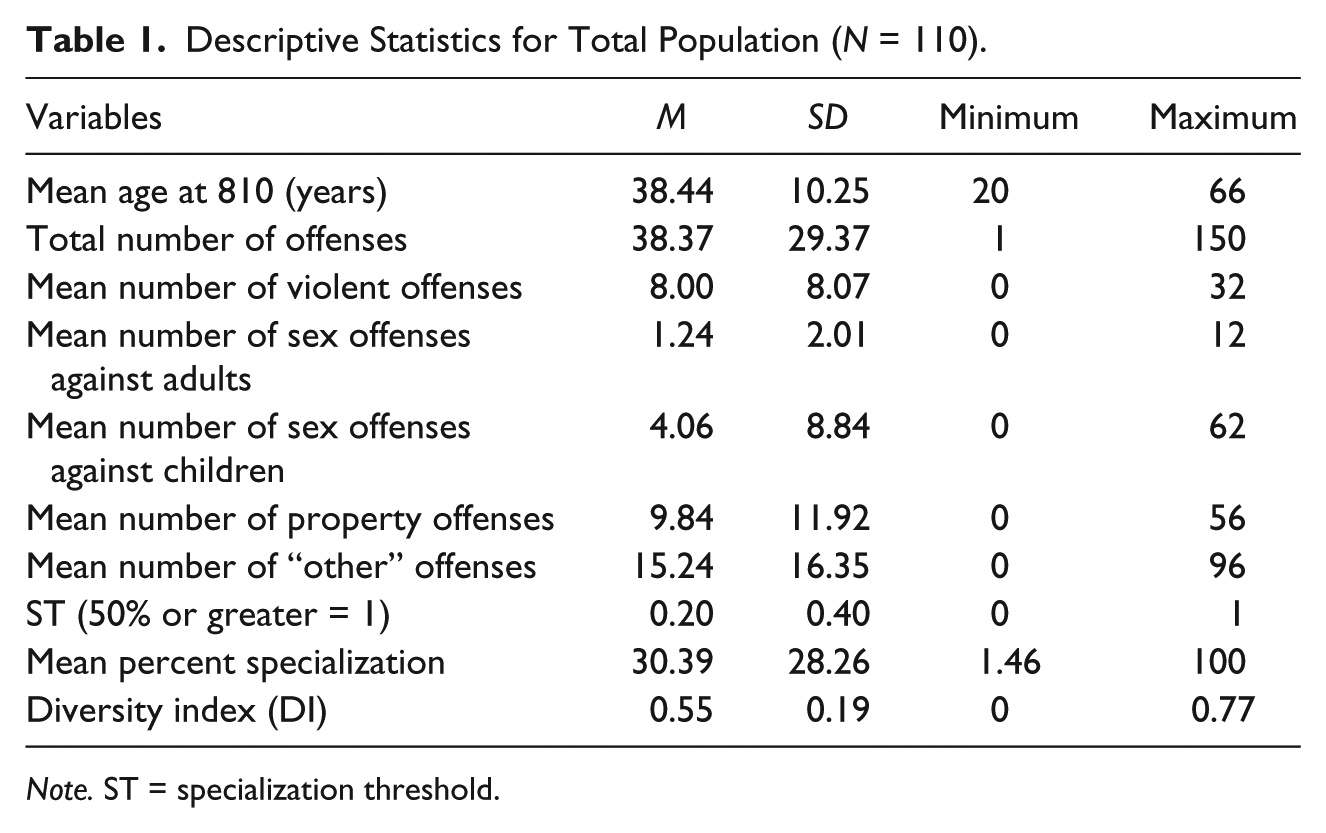
Age and total charges are included as demographic variables. Age is the age of an individual at the time of designation as high risk (when a Section 810.1/.2 peace bond was applied), whereas total charges measures offending frequency and is a control for propensity (McGloin et al., 2007). This variable is a count of the total number of charges an individual has acquired over the course of their life. Descriptive statistics for all study variables are presented in Table 1.
Descriptive Statistics for Total Population (N = 110).
Note. ST = specialization threshold.
Analytic strategy
First, we report the descriptive statistics for the population as a whole. Second, a series of ANOVA significance tests were conducted to compare the different measures of specialization outlined above across 810.1 and 810.2 designations and the more restricted offending categories under offender type (violent offender, sex offender-adult, and sex offender-child). This method is appropriate to compare the specialization in offending patterns across individuals (Mazerolle et al., 2000; Piquero et al., 1999). We also employ the same strategy to consider the relationships between demographic variables and mean number of offenses by category across both court designation and offender type. Tests for skewness indicate that both distributions of mean percent specialization and the diversity index are nonnormal. Consequently, the nonparametric Mann–Whitney U and the Kruskal–Wallis chi-square tests were used to compare groups, which is similar to the way in which Sullivan and colleagues (2006) undertook their bivariate analyses of the Nebraska inmate data (see also Mazerolle et al., 2000; Piquero et al., 1999). The Mann–Whitney U test is the nonparametric version of the independent samples t test and is used to compare the means of a nonnormal ordinal or interval-level variable for two groups and is, therefore, suited to test for group differences between Sections 810.1 and 810.2 offenders (UCLA Statistical Consulting Group, n.d.). The Kruskal–Wallis test is a nonparametric ANOVA that can also be used to test for group differences between two or more groups and is used here to compare independent and control variables across the three offender types (Piquero et al., 1999; Sullivan et al., 2006).
It is important to note that when conducting analyses on population data, it is technically not suitable to use significance tests because inferences are not being made from a sample to a population (Bollen, 1995; D’Alessio & Stolzenberg, 2003). However, D’Alessio and Stolzenberg (2003) argue that a census can be conceivably thought of as a “random sample from a hypothetical universe of cases” (D’Alessio & Stolzenberg, 2003, p. 1390). Significance tests provide a quantifiable and conventional standard, especially when accounting for the magnitude of the coefficients for assessing relationships (D’Alessio & Stolzenberg, 2003). As such, significance levels are reported here.
Results
Table 1 presents the descriptive statistics for the key measures of specialization and demographic variables and summarizes the arrest profiles for the total population of Section 810 offenders. On average, offenders were designated as high risk at age 38.44 years (SD = 10.25 years) and committed 38.37 (SD = 29.37) offenses from first arrest to most recent arrest (up until December 2014). Offenders in this population commit a greater number of offenses in the “other” offenses, consisting of drug/alcohol-related offenses, public-order offenses, breaches, and so forth, and property offenses than violent sexual and nonsexual offenses. Approximately 20% (SD = 0.40) of Section 810 offenders have met the ST, whereby 50% or more of their offenses are consistent with their offender “type.” Thirty percent (SD = 28.26) of the offenses committed by offenders in this population are consistent with offender type and the average diversity score is 0.55 (SD = 0.19). Taken as a whole, these results suggest that this population does not demonstrate a great degree of specialization. This does not indicate, however, whether specialization is more evident among certain types of offenders.
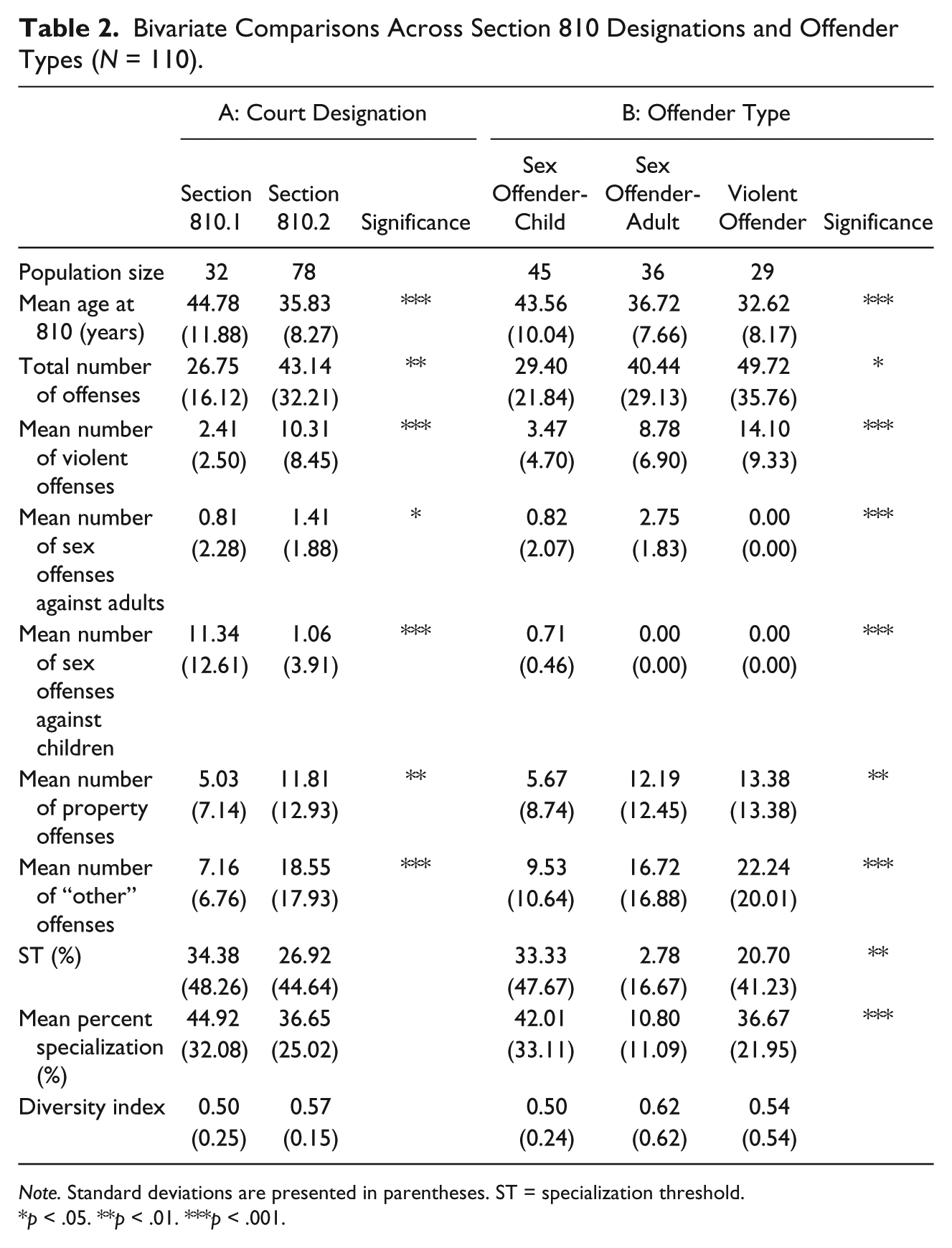
Table 2 displays the bivariate relationships between study variables and court designation as well as bivariate comparisons across the three offender types (violent offender, sex offender-adult, and sex offender-child) to examine whether significant differences exist with regard to specialization according to the categorization of offenders.
Bivariate Comparisons Across Section 810 Designations and Offender Types (N = 110).
Note. Standard deviations are presented in parentheses. ST = specialization threshold.
p < .05. **p < .01. ***p < .001.
Panel A of Table 2 contains the breakdown of offending and comparison of specialization measures across Sections 810.1 and 810.2 peace bonds, using the Mann–Whitney U chi-square test. The differences between demographic variables and offending profiles across the two court designations are all significant. The majority of individuals considered here have been subject to Section 810.2 peace bonds. Individuals with this particular designation are significantly younger when designated as high risk and have, on average, committed a greater number of total offenses than those subject to Section 810.1 peace bonds. An examination of their offending suggests they are also more versatile. Conversely, individuals subject to a Section 810.1 peace bond appear to demonstrate less diversity: Here, we see that the average number of offenses is highest for sex offenses against children (M = 11.34, SD = 12.61), followed by an average of 7.16 for “other” offenses (SD = 6.76) and an average of 5.03 (SD = 7.14) property offenses. Violent offenses and sexual offenses against adults are, on average, the least frequently committed by these individuals. Although sexual offenses against children capture most offending for the 810.1 group, individuals under Section 810.2 peace bond have committed many more “other” offenses (M = 18.55, SD = 17.93) than violent (M = 10.31, SD = 8.45) or sexual offenses (M = 1.41, SD = 1.88) that are congruous with their categorization. However, the mean number of sexual offenses committed against children for this group is significantly lower at 1.06 (SD = 3.91) than for the 810.1 group. Despite the significant differences in the offending profiles between the Sections 810.1 and 810.2 court-designated individuals, there are no significant differences between these groups on any of the specialization measures, suggesting they all demonstrate similar degrees of versatility in offending.
Panel B of Table 2 displays the breakdown of demographic variables, offending profiles, and specialization measures across three offender types, which are more restrictive as individuals who commit violent nonsexual offenses are now categorized separately from those who commit sexual offenses against adults. The omnibus Kruskal–Wallis chi-square test, which examines whether the Wilcoxon scores are equal across categories (Mazerolle et al., 2000), indicates that similar patterns are evident for significant differences in age, offense frequency, and offending profiles across the three offender categories as noted in Panel A of Table 2. Post hoc analyses using the Tukey’s HSD (honest significant difference) post hoc criterion indicated that at least one pairwise comparison was significant at p < .01 for each of these analyses. Individuals in the sex offender-child (SO-C) category are significantly older than both violent offenders (VOs) and those in the sex offender-adult (SO-A) category and are charged with fewer offenses than VOs. Furthermore, individuals from all offender groups have been most frequently charged with “other” offenses and property offenses, suggesting that while they commit offenses consistent with their “type,” their offending is largely dominated by nonviolent, nonsexual offenses.
Unlike Panel A of Table 2, the results in Panel B indicate differences in specialization observed across groups for both the ST and mean percent specialization measures. The Tukey HSD post hoc criterion test showed a significant difference between those who met the 50% threshold in the SO-C category compared with the percentage of individuals in the SO-A category,
The Tukey HSD post hoc test also indicated that there were significant differences in mean percent specialization across offender type,
The results of the diversity index do not confirm the differences indicated by these other two measures of specialization. The index ranges from 0 to 0.77 where higher scores represent greater versatility in offending as the maximum value depends on the number of crime categories considered. Very few in this population evidence specialization and there is very little difference in the average diversity values across offender category. The lowest value was found for those in the SO-C category (M = 0.50, SD = 0.24), indicating that they had the greatest specialization. However, the Kruskal–Wallis test indicates that there are no significant differences between offender types on the diversity index. 5
Discussion and Conclusion
The primary goal of this research was to investigate whether the specialist groups of offenders identified by the criminal justice system are supported by the specialization measures more commonly identified in the specialization literature. Our examination of specialization considered high-risk individuals—those who have been officially labeled by the courts as most likely to commit specific types of offenses in the future and who pose significant threats to public safety. Given the court-authorized label of “high risk,” our analysis controls, to a degree, for differential treatment by police and courts as all individuals included in this analysis have been given this designation.
We compared and contrasted different measures of specialization across the court-determined Section 810.1 or 810.2 designations and the more restrictive offender-type categories to assess whether different measures of specialization identify distinct types of offenders. Those who have been identified through Section 810.1 as high risk of victimizing children appear to be “more accurately” labeled than those labeled as high risk of victimizing adults (Section 810.2), though these labels are far from perfect as the court designations do not accurately reflect past offending profiles. Greater evidence of specialization was found among the more restrictive offender categories we identified, most notably among the sex offender-child and violent offender groups. Our results suggest that there are significant differences among these individuals: Violent offenders have committed significantly more offenses, including more violent offenses, property and other offenses than those identified as at risk of committing sex offenses against children. This finding is consistent with prior research, which has found that violent individuals (who commit violent sexual and nonsexual crimes) exhibit a great deal of variability in their offense patterns and offend frequently (see, for example, Mazerolle et al., 2000; Miethe et al., 2006; Piquero et al., 2007).
Most important, our findings indicate that the way in which specialization is measured and the way individuals are categorized indeed affects whether or not evidence of specialization is found. Specifically, those who sexually offend against children evidence the greatest specialization followed by those who commit violent nonsexual offenses, whereas individuals who commit sexual assaults against adults appear to be the most versatile. It is important to note, however, that there is greater evidence of versatility among all offender groups than there is of specialization. Furthermore, these analyses also indicate that the way in which specialization is measured is critical when determining whether specialization is evident among certain types of offenders.
Although we did not test whether an underlying propensity differentially predicted different types of offending patterns, the present study supports the extant literature, which has found versatility in offending patterns to be the norm among those who commit violent sexual and nonsexual crimes (i.e., D. A. Harris et al., 2009; Lussier et al., 2005; Vess & Skelton, 2010). This suggests that individuals subject to Section 810.2 peace bonds and those found in the violent offender and sex offender-adult categories may have more “generalist” offending tendencies related to this underlying propensity to offend, such as low self-control.
In the case of those who are identified as “high risk” of sexually offending against children, we note that these individuals are identified at a much later age, commit fewer offenses, and demonstrate greater specialization in their offending records than those in the violent offender group. More specifically, those in the sex offender-child category evidence greater specialization, followed by individuals in the violent offender category. Individuals in the sex offender-adult group appear to be the most versatile of these three categories, which is consistent with prior research (D. A. Harris et al., 2009; Zimring et al., 2009). Therefore, this study also lends support to the existing literature that suggests, if specialization does occur, it seems to be among sex offenders who target children (D. A. Harris et al., 2009; Lussier et al., 2005; Simon, 1997). Thus, our findings suggest that specialization varies among offenders. We see that specialization is more likely among those who sexually offend against children—though not to the degree that criminal justice agencies and the public might anticipate.
Deserving of further consideration are the factors that may differentiate those who sexually offend against children from those who commit other violent interpersonal offenses. Smallbone and Wortley (2004) have suggested that offenses against children that are of a sexual nature may require greater strategy on the part of the offender than merely succumbing to one’s impulses; it arguably takes time and patience to create opportunities and gain access to desired victims. Factors that play a role in specific types of offending such as sexual preoccupation and emotional congruence with children (D. A. Harris et al., 2009) need to be considered within this serious and persistent group of offenders.
Where does this leave us on the debate about specialization versus diversity? First, it suggests that the court designation of high risk to reoffend against children is better supported by the various measures of specialization we tested than is the court designation for violent offenders. Second, our findings suggest that measurement matters and that evidence for specialization is a product of the method used to measure it. Clearly, evidence for specialization is most convincing when multiple methods reveal its existence. Having said this, specialization is rare among offenders in this population, a finding also noted by Miethe et al. (2006). This brings into question the utility of specialized policing units and treatment programs that aim to address specific individual proclivities.
This study is not without limitations that require acknowledgment. The problems in using official arrest and conviction data are well known as self-reports have been shown to provide a more accurate reflection of an individual’s entire offense history and may bias measures of specialization (Sullivan et al., 2006). Yet, our analysis of official data considered both convictions and charges over the course of offenders’ lives. Although using this full range of data is not without difficulties, such as potentially failing to reveal evidence of short-term specialization at specific periods throughout the life course (Sullivan et al., 2006), we in fact found evidence of specialization over the extended span considered here. Second, given the small population size from which these analyses were conducted, it is likely that low statistical power, and the nature of certain measures, have prevented the uncovering of further important group distinctions. Other measures (ST and diversity index) may not be reaching significance due to the overall low N included in this analysis. However, this does suggest that any significant differences that were uncovered are all the more important. Finally, there are issues with generalizability of the results given the unique population considered here. Because the criterion for inclusion in this study was high-risk designation, it is unknown whether similar results would be found among individuals who did not receive this designation. This presents an area of future study.
Despite these limitations, the policy implications of our findings are significant. The court identifies individuals as appropriate for Section 810.1 (high risk of child sex offending) or Section 810.2 (high risk of violent offending—including sex offending against adults) peace bonds based primarily on offenders’ past official (and unofficial) records. Our results show, the records of those in either category are variable and include a range (limited, in some cases) of crime events. We see, for example, that individuals identified as high risk of violent crime (Section 810.2) also have sexually offended against adults, in some cases. Of note, the term “sex offender” may not exist in any distinctive way because “sex offenders” like their “nonsex offender” counterparts have a variety of offenses on record. Our analysis of the files on high-risk individuals reveals that those who are labeled as sex offenders who target children are subject to greater attention than are those who have not committed these types of offenses. This may speak to the influence of the treatment and disciplinary orientation (Simon, 2000) that certain types of offending, such as sex offending, are traditionally met with. Even with the advantage of studying a group of high-risk individuals, our analysis suggests that revealing and understanding the intricacies of specialization must be recast with a better understanding of how specialization/diversity intersects with offender motivation and opportunity.
Although our analysis reveals that evidence of specialization is greatly affected by the measures that are used to measure it, we appreciate that the criminal justice system and judges, in particular, are responding to something much different than a statistical analysis of specialization or diversity. Although criminological research such as ours indicates that specialization is complicated by the measures used and the approaches taken to measure it, judges must respond to the pressures they are under to “do something” about crimes that the public feels very strongly about. As we noted earlier, public insistence to respond to crimes that are widely and strongly condemned, such as sex crimes, puts a unique pressure on the criminal justice system to react through the methods immediately at their disposal—the law. Although we have revealed that Section 810 peace bonds do not as accurately match the profiles against those to whom such bonds are applied, we do not suggest that such designations are completely without merit. Rather, we maintain that the accuracy of the label needs to be given further consideration. We observed that “sex offenders” are not a unified entity and evidence a great deal of variability within that category. The offending patterns observed in our examination suggest that all individuals are more likely to commit nonviolent offenses than they are to commit violent sexual and nonsexual offenses.
Designating certain offenders as high risk to reoffend makes sense to put surveillance measures in place and ensure offenders are closely monitored. Section 810 peace bonds allow for heightened surveillance and management measures that may serve to deter (some, or some forms of) future offending. Yet, circumventing future offending is a task that has proven very difficult. Although such efforts are to be lauded given the high volume and serious crimes these high-risk individuals have committed, a reliance on unsubstantiated notions of specialization may not be entirely effective at preventing future crime. Ultimately, we may want to orient the way in which we respond to offending patterns to consider alternative models that demarcate risk in terms of the diversity versus specialization that most offenders appear to demonstrate.
Footnotes
Declaration of Conflicting Interests
The author(s) declared no potential conflicts of interest with respect to the research, authorship, and/or publication of this article.
Funding
The author(s) received no financial support for the research, authorship, and/or publication of this article.