



Abstract
The risk of harm/injury in homes where intimate partner violence (IPV) occurs is not limited to humans; animals reside in as many as 80% of these homes and may be at substantial risk of suffering severe or fatal injury. Gaining a better understanding of IPV-pet abuse overlap is imperative in more accurately identifying the risks of harm for all individuals and animals residing in these homes. The objectives of this study were to utilize law enforcement officers’ observations and IPV victim reports from the scene of the incident to (a) determine the prevalence of pet abuse perpetration among suspects involved in IPV incidents, (b) compare characteristics of IPV incidents and the home environments in which they occur when the suspect has a history of pet abuse with incidents involving suspects with no reported history of pet abuse, and (c) compare IPV incident outcomes involving suspects with a history of pet abuse with those involving suspects with no reported history of pet abuse. IPV victims residing in homes with a suspect who has a history of pet abuse often describe “extremely high-risk” environments. With nearly 80% reporting concern that they will eventually be killed by the suspect, victims in these environments should be considered at significant risk of suffering serious injury or death. In addition, IPV victims involved in incidents with a suspect that has a history of pet abuse were significantly more likely to have had at least one prior unreported IPV incident with the suspect (80%) and to have ever been strangled (76%) or forced to have sex with the suspect (26%). Effective prevention/detection/intervention strategies are likely to require multidisciplinary collaboration and safety plans that address the susbstantial risk of harm/injury for all adults, children, and animals residing in the home.
Keywords
Introduction
Intimate partner violence (IPV) remains prevalent in the United States. An estimated 7 million individuals are victimized by rape, physical violence, and/or stalking by an intimate partner in the United States each year (Black et al., 2011). These IPV victimizations result in nearly 2 million reported injuries and an estimated 4 billion dollars in direct medical costs (National Center for Injury Prevention and Control, 2003).
Victims of IPV may suffer from a range of physical and/or psychological consequences (J. C. Campbell et al., 2002). The manner of IPV (physical, sexual, or psychological) does not necessarily determine the type of consequences experienced by the victim (physical or psychological). Many physical symptoms experienced by IPV victims share as strong of an association with psychological IPV as they do with physical IPV (Coker, Smith, Bethea, King, & McKeown, 2000). These symptoms can include migraines, back pain, arthritis, vision problems, chronic pain, appetite loss, abdominal pain, sexually transmitted infections, broken bones, bruises, and traumatic brain injury (J. C. Campbell et al., 2002). Psychological consequences experienced by IPV victims include depression, feelings of shame or guilt, phobias and panic disorders, anxiety, poor self-esteem, posttraumatic stress disorder, and self-harming or suicidal behavior (Heise & Garcia-Moreno, 2002). IPV perpetrators may use the presence of these psychological consequences to discredit the victim in the eyes of their friends and family, or with law enforcement, the court system, and/or child protective services (Warshaw, Brashler, & Gil, 2009). A lack of consistency in dealing with violence-related mental health issues among victim-serving agencies may result in the provision of inadequate resources and assistance, leaving victims ill-prepared for the many challenges they may face (Warshaw, Gugenhelm, Moroney, & Barnes, 2003). Such victims of IPV may then turn to inappropriate coping mechanisms and are more likely to use or abuse drugs and/or alcohol than the general population (Golding, 1999).
A common method of psychological IPV may involve inflicted or threatened harm to a victim’s pet(s); studies have shown that family violence and animal cruelty commonly co-occur (DeGue & DiLillo, 2009). According to results from a recent survey, pets are present in 68% of U.S. homes (American Pet Products Association, 2017). In homes where IPV is known to occur, this rate rises to as high as 80% (Faver & Strand, 2003). Animals residing in homes where domestic violence is known to occur are most often dogs (53%) or cats (40%) (Volant, Johnson, Gullone, & Coleman, 2008).
As many as 75% of abused women who have companion animals report their intimate partner has a history of threatening or intentionally harming their pet (McDonald et al., 2015). Women residing in domestic violence shelters are more than 11 times as likely to report that their significant other has injured or killed pets than women who do not report experiencing IPV (Ascione et al., 2007). Women who reside in domestic violence shelters often report being emotionally tied to their pets and are likely to be substantially affected by threatened or inflicted harm to these animals (Ascione et al., 2007).
Perpetrators may use animal cruelty to further control or intimidate victims in the home, preventing them from fleeing or seeking outside assistance (Faver & Strand, 2003). Women who do eventually flee the home still report being worried about the safety of their pet(s) who remained with their abusive partner (Flynn, 2000). Although likely to be damaging for all victims, this form of control may be particularly damaging for victims whose primary or sole source of emotional support is their pet (Flynn, 2000). Children have been reported to reside in as many as 58% of homes where adult victims report the co-occurrence of IPV and animal abuse, are likely to be closely emotionally tied to the well-being of their pets, and are at clear risk of suffering severe emotional harm from perpetrated or threatened harm to these animals (Ascione, 1998).
Gaining a better understanding of IPV–pet abuse overlap is imperative in more accurately identifying the risks of harm for all individuals and animals residing in homes where IPV is known to occur. Prevalence data regarding the co-occurrence of IPV and pet abuse are largely limited to reports from victims at domestic violence shelters or victim assistance programs (Ascione, 1998; Flynn, 2000; Krienert, Walsh, Matthews, & McConkey, 2012; McDonald et al., 2017; Quinlisk, 1999; Volant et al., 2008). Examining real-time IPV victim reports to law enforcement officers at the scene of the incident, along with direct observations made by these law enforcement officers, could provide new information concerning IPV perpetrators who abuse pets and the home environments in which these violent acts occur.
The objectives of this study were to utilize IPV victim reports to law enforcement officers at the scene of the incident along with law enforcement officer observations from the scene to (a) determine the prevalence of pet abuse perpetration among suspects involved in IPV incidents, (b) compare characteristics of IPV incidents and the home environments in which they occur when the suspect has a history of pet abuse with incidents involving suspects with no reported history of pet abuse, and (c) compare IPV incident response/outcomes involving suspects with a history of pet abuse with those involving suspects with no reported history of pet abuse.
Method
Study Design
This study is a retrospective analysis of domestic violence incident information sheets collected by first responders to domestic violence incidents in Marion County, Indiana. The forms were collected from September 11, 2014, through December 2, 2015.
Study Population
Centrally located within the state of Indiana, Marion County is the largest county (population of 903,393) in the state and encompasses the state’s capital city, Indianapolis (U.S. Census Bureau, 2010). The primary law enforcement agency operating in Marion County is the Indianapolis Metropolitan Police Department (IMPD), with a jurisdiction covering 92% of the county population (U.S. Census Bureau, 2010). Additional law enforcement agencies with jurisdiction in Marion County that were also included in this study are the Lawrence Police Department (5% of Marion County population), Beech Grove Police Department (2%), and Speedway Police Department (1%; U.S. Census Bureau, 2010).
Data Source
In 2011, IMPD in collaboration with several other victim-serving agencies in Marion County developed a Coordinated Community Response to Domestic Violence. This response included the data collection component of the “Baker One” project. Originally developed by the Baker One District of the Charlotte-Mecklenburg (NC) Police Department in 2002, the Baker One project promotes an improved response to domestic violence incidents, allows for the identification of individuals considered to be at risk for perpetration of domestic violence, and provides victims with access to supportive services (Charlotte-Mecklenburg Police Department, 2002).
A critical component of the Baker One project is effective data collection. A domestic violence officer information form, adapted in part from the Lethality Assessment Program Maryland Model for First Responders (Maryland Network Against Domestic Violence, 2010), was completed by responding law enforcement officers at every domestic violence incident included in this study. These data provide critical information regarding the victims, suspects, and witnesses involved in domestic violence incidents occurring in Marion County (Domestic Violence Network, 2014). The data collected not only include information relating to the current violent incident but provide details about past incidents of violence occurring in the home as well. Information related to past incidents of violence was obtained from a victim at the scene of the current incident; examples include prior threats of violence made by the suspect, a suspect history of strangling the victim, the number of previously unreported domestically violent incidents, and a history of forced sex between the suspect and victim.
Measures
Many of the questions contained on the domestic violence officer information sheet were adapted from a first-responder questionnaire developed as part of the Lethality Assessment Program Maryland Model for First Responders (Maryland Network Against Domestic Violence, 2010). The 11-question Lethality Assessment Program (LAP) survey, designed to be completed by first responders at the scene of a domestic violence incident, was developed as a measure of “lethality.” Victims who responded affirmatively to any of three questions (“Has he or she ever used a weapon against you or threatened you with a weapon? Do you think he or she might try to kill you? Has he or she threatened to kill you or your children?”) were determined to be at considerable risk of suffering severe or fatal injury and in need of a referral to appropriate victim services. Victims who did not respond affirmatively to any of those first three items, but responded “yes” to any four of the remaining eight questions, were also referred for victim services (Maryland Network Against Domestic Violence, 2010).
In addition to the LAP questionnaire, questions were developed for the domestic violence officer information sheet based on established trends in domestic violence incidents occurring in Marion County. The specific question relating to pet abuse included in the questionnaire asks, “Has (the suspect in the current incident) ever abused, tortured, or killed any household pets?”
Domestic violence incident information sheet responses were recorded as a “Yes,” “No,” or “Unable or Unwilling to Respond.” Data based on direct observations of the responding law enforcement officer (i.e., suspect arrested, victim bruising, victim appears afraid) are indicated. As domestic violence incidents may involve more than one victim or suspect, a “Yes” response indicates an affirmative response relating to at least one victim or suspect involved in the incident.
Analysis
This study was approved by the Institutional Review Board of Indiana University. Descriptive data analysis was performed using IBM SPSS Statistics 24. In 22% of incidents (n = 967), victims were reportedly “unable or unwilling” to answer the officer’s question concerning pet abuse (Has suspect ever abused, tortured, or killed any household pets?). When victims were unable or unwilling to answer this question, they often also declined to provide responses to many of the other questions pertinent to this study (history of forced sex, suspect is jealous or controlling, suspect access to gun, recent death threats, suspect history of suicide threat/attempt, etc.). These forms were excluded from the study. Reported percentages indicate the proportion of affirmative responses to each question, when a “yes” or “no” answer was recorded. Chi-square tests were used to determine statistical significance (p < .05).
Results
IPV and Pet Abuse: Incidence and Suspect, Victim, and Witness Demographics
A total of 3,416 domestic violence officer information sheets were analyzed for this study, involving 3,477 suspects, 3,476 victims, and 3,191 witnesses. Among victims who answered the responding law enforcement officer’s question regarding a history of violence by the suspect against pets, 107 victims answered affirmatively (3%).
IPV suspects with a reported history of pet abuse were most often male (96%) and between the ages of 20 and 29 years (41%) (Table 1). The majority of IPV suspects with a history of pet abuse were African American (49%) or White (49%). Victims were more than twice as likely to be White (68%) than African American (27%) when the suspect had a reported history of abusing pets but more likely to be African American (53%) than White (45%) when the suspect did not have a history of reported pet abuse. Witnesses were also more likely to be White (58%) than African American (36%) when the suspect had a history of pet abuse and less likely to be White (38%) than African American (58%) when the suspect did not have a reported history of pet abuse. Victims were twice as likely to be Hispanic (4%) when the suspect had a history of pet abuse than when the incident involved a suspect with no history of pet abuse.
Study/County Population Demographics.
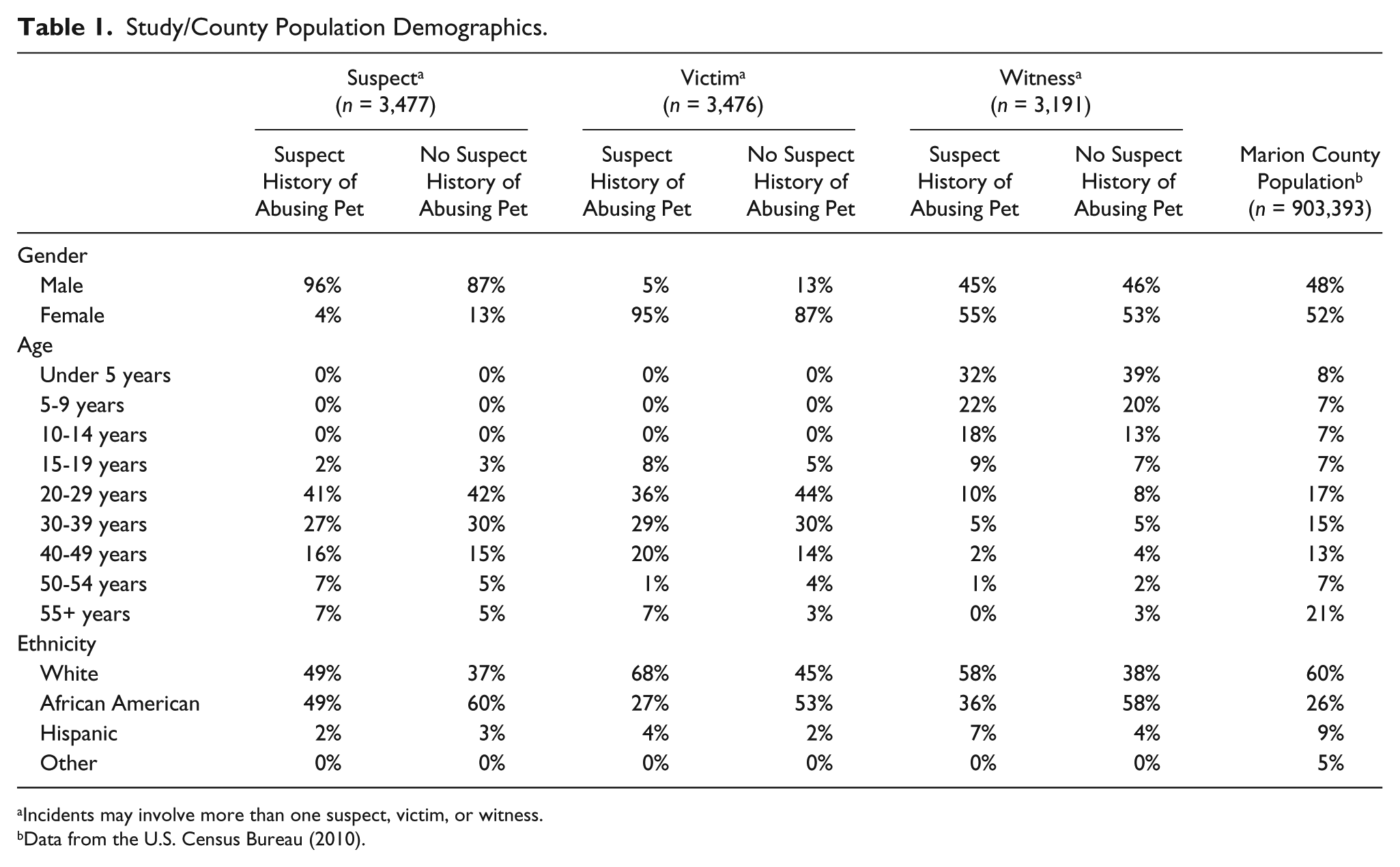
Incidents may involve more than one suspect, victim, or witness.
Data from the U.S. Census Bureau (2010).
Suspect, Victim, and Household Characteristics
Minors (individuals under the age of 18 years) were present for the incident and/or members of the household in 59% of IPV incidents involving a suspect with a history of pet abuse and 59% of incidents involving a suspect with no history of pet abuse (Table 2). IPV suspects with a history of pet abuse were significantly more likely to have at least one child living in the home known to be biologically unrelated to them (32% / no reported history of animal abuse = 24%). Suspects with a history of pet abuse were significantly more likely to have had at least one prior unreported IPV incident with the victim (80% / no reported history of animal abuse = 60%). Suspects with a history of pet abuse were also significantly more likely to have had 11 to 20 prior unreported IPV incidents (17% / no reported history of animal abuse = 6%) and 9 times as likely to have had 50 or more prior, unreported violent incidents with the victim (9% / no reported history of animal abuse = 1%) (Table 2).
Household Characteristics and Prior IPV Incidence.
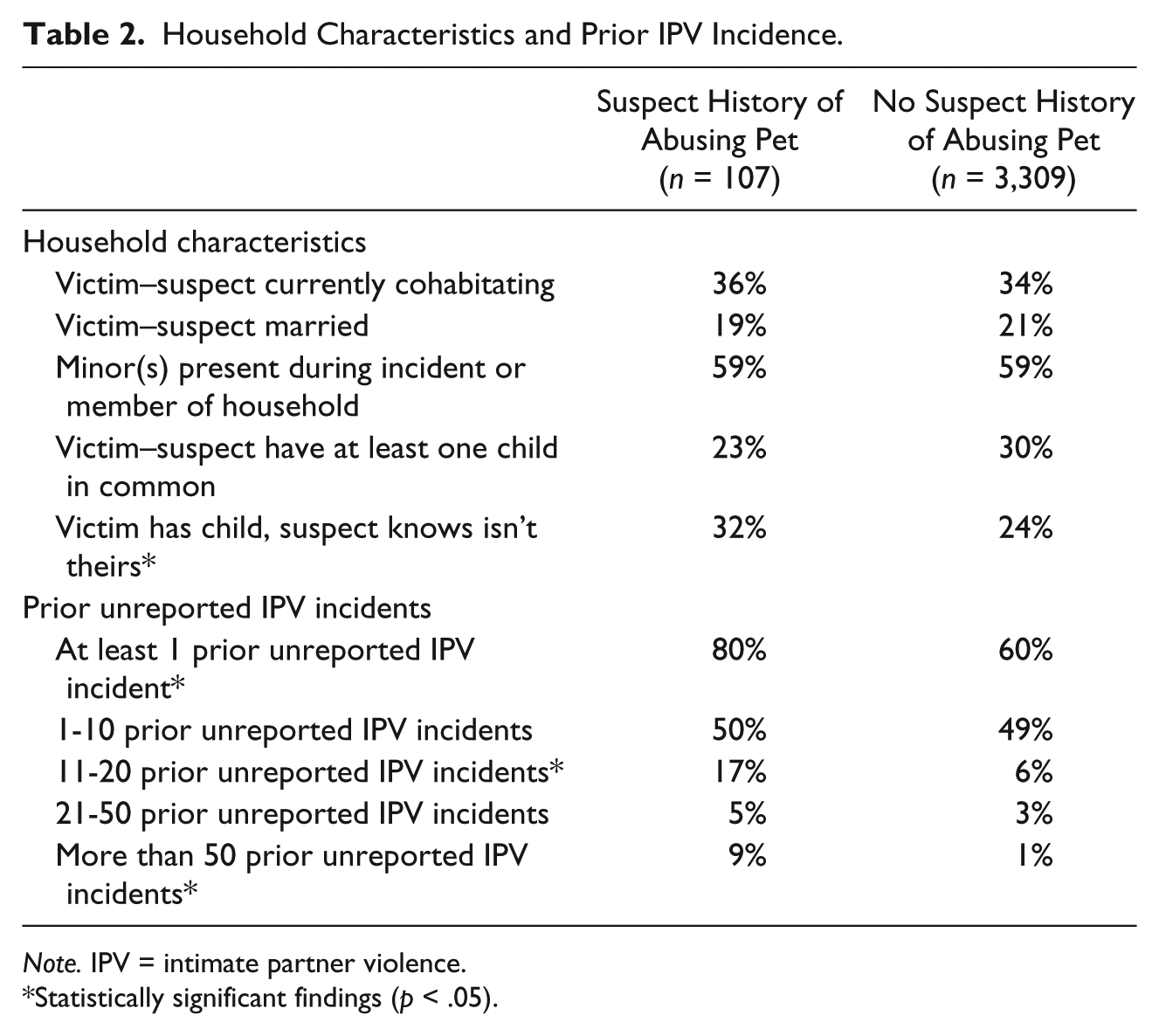
Note. IPV = intimate partner violence.
Statistically significant findings (p < .05).
Contextual Characteristics
IPV victims who reported a suspect history of abusing pets often described extremely concerning home environments (Figure 1). IPV suspects who abused pets were significantly more likely to have a history of alcohol/drug abuse or mental illness (74% / no reported history of animal abuse = 47%), have easy access to a gun (68% / no reported history of animal abuse = 31%), have a history of attempting or threatening suicide (40% / no reported history of animal abuse = 10%), frequently follow or spy on the victim (70% / no reported history of animal abuse = 33%), control most daily activities of the victim (84% / no reported history of animal abuse = 55%), and have a history of forced sex with the victim (26% / no reported history of animal abuse = 8%). Furthermore, IPV suspects who abused animals were also significantly more likely to have a history of strangling the victim (76% / no reported history of animal abuse = 47%), have made recent death threats toward the victim (63% / no reported history of animal abuse = 31%), and to have ever threatened to kill the victim and/or their children (70% / no reported history of animal abuse = 33%).

Suspect-victim incident/home environment characteristics.
IPV Incident Characteristics/Law Enforcement Officer Observations
According to observations made by responding law enforcement officers at the scene, when the IPV incident involved a suspect with a history of pet abuse, victims were significantly more likely to appear afraid (63% / no reported history of animal abuse = 42%), apologetic (15% / no reported history of animal abuse = 5%), and/or nervous (48% / no reported history of animal abuse = 33%) (Figure 2). These victims were also significantly more likely to have bruises (35% / no reported history of animal abuse = 20%) and complain of pain (63% / no reported history of animal abuse = 52%) (Figure 3). After incidents involving suspects with a history of pet abuse, victims were significantly more likely to be removed by first responders to a temporary location, such as a domestic violence shelter or medical facility (44% / no reported history of animal abuse = 24%) (Figure 4). Although not statistically significant, IPV incidents involving suspects with a history of pet abuse were less likely to result in an arrest (33%) than incidents involving suspects who did not have a reported history of abusing pets (37%).

Law enforcement officer observations of IPV victims at the scene of the incident.

IPV victim injuries, reported by responding law enforcement officers at the scene.

IPV incident outcomes.
Discussion
This study makes a valuable contribution to the existing domestic violence literature, being the first to utilize victim reports from the scene of a domestic violence incident and first-responder observations from these scenes to quantify the risk of physical and psychological harm to victims involved in an incident with an IPV suspect who has a history of abusing pets. All humans and animals residing in a home where these two forms of violence are known to co-occur are at substantial risk of suffering severe or fatal injury. All agencies responding to domestic violence incidents must work to ensure protocol are in place to protect both victims and their pets when intervention is deemed necessary.
Three percent of IPV victims in this study reported a history of pet abuse by the suspect. Prior studies, often utilizing reports from domestic violence shelters or victim assistance programs, have estimated the rate of co-occurrence of pet abuse in homes where IPV occurs to be 50% to 75% (Ascione, 1998; Flynn, 2000; McDonald et al., 2015). The substantial disparity in reported prevalence between the current study and previously published findings could be due to a variety of factors. Victims of IPV may be less comfortable disclosing a history of pet abuse to law enforcement officers at the scene of the incident due to fears of suspect retaliation; animal maltreatment has been previously identified as a method employed by suspects to deter victims from seeking assistance or fleeing (Faver & Strand, 2003). This may be in contrast to women in domestic violence shelters who have already left their homes and thus may feel more freedom in disclosing pet abuse than women who have not yet relocated to a safe environment. It may also be possible that the disparity in reported prevalence is actually an indicator of when pet abuse is most likely to occur along the continuum of escalating violent events occurring in the home. It is also important to note that most prior studies only include pet owners in their population, as opposed to the entire population of victims (regardless of pet-ownership status) included in this study.
Over 900 incidents were excluded from this study due to victims being “unable or unwilling” to respond to the officer’s question concerning pet abuse. For victims who were injured during the incident and therefore unable to answer the officer’s questions, safety concerns should be apparent. Concern is also likely warranted in situations where victims were unwilling to indicate whether or not the suspect had a history of pet abuse. Many of these victims were also unwilling to answer several other incident/home environment–related questions (i.e., forced sex, suspect threats, suspect suicide attempts, and suspect access to a gun). Although these incidents were excluded from this study due to a lack of measurable data, victims who refuse to answer questions like these may be afraid to do so for fear of putting themselves in further danger. A victim’s unwillingness to answer questions regarding suspect behaviors should warrant concern and may require additional safeguards be put in place to better ensure the victim feels safe disclosing information that may be critical in assessing their safety.
Disproportionate representations of ethnicities among suspects, victims, and witnesses were apparent in this study. Regardless of whether or not the suspect had a history of pet abuse, African Americans were disproportionately represented as suspects, victims, and witnesses compared with the overall African American county population (26%). The proportion of African Americans was greatest among incidents involving suspects with no reported history of pet abuse (suspects: 60%, victims: 53%, witnesses: 58%). When the suspect had a history of pet abuse, victims and witnesses were more likely to be White (victims: 68%, witnesses: 58%). These proportional differences by ethnicity could be due to a variety of reasons. It is unclear from the data collected, the proportion of homes that had pets residing in them. These results could simply indicate different proportions of pet ownership among different ethnicities. Differences may also exist between ethnicities regarding the definition of “animal abuse.” Future study is required to better understand these findings and determine the generalizability to other geographic regions and populations.
IPV victims residing in homes with a suspect who has a history of pet abuse often describe “extremely high-risk” environments. While individuals in any home where IPV occurs are at substantial risk of suffering harm, suspects with a history of pet abuse appear to present a significantly increased risk of harm or injury for victims. Eighty percent of victims involved in incidents with suspects who have a reported history of pet abuse have been victimized by prior unreported incidents of IPV, and 9% of these victims reported 50 or more prior unreported IPV incidents involving the suspect. With nearly 80% reporting concern that they will eventually be killed by the suspect, victims in these environments should be considered at extremely high risk of suffering severe injury or death. Furthermore, IPV victims involved in incidents with a suspect who has a reported history of pet abuse often indicated the presence of known risk factors for IPV-related homicide (death threats, abuser suicidality/mental illness, abuser with easy access to firearm, abuser drug use, and a history of forced sex; J. C. Campbell et al., 2003). These findings are consistent with prior studies which have identified a link between increased severity and frequency of IPV in homes where pet abuse is known to occur (Ascione et al., 2007; Barrett, Fitzgerald, Stevenson, & Cheung, 2017).
Responding law enforcement officers observed IPV victims involved in incidents with a suspect who has a reported history of abusing a pet to be significantly more likely to appear afraid (63%), apologetic (15%), and/or nervous (48%) at the scene. These concerning descriptors may be further indication of a suspect-controlled environment and should raise the level of concern for the safety of anyone residing in the home. In addition, IPV victims involved in incidents with a pet-abusing suspect were significantly more likely to have bruising (35%) and complain of pain (63%). Individuals living in these homes are at substantial risk of suffering continued and potentially escalating physical injury and should be referred for medical treatment whenever injury is reported or apparent.
Minors (individuals under the age of 18 years) were equally likely to be present for the IPV incident and/or members of the household (59%) regardless of whether or not the suspect had a history of abusing pets. Prior studies have found that children residing in homes where domestic violence and pet abuse co-occur often directly witness the acts of abuse against household pets (Ascione et al., 2007), and are likely to be severely affected, including being at increased risk for behavioral problems and engaging in abusive behavior toward pets (Ascione et al., 2007). It was not clear from the data provided how often child protective services was contacted when children were present for the IPV incident or known to be inhabitants of the home environment in which the incident occurred. All children residing in these environments should be considered at great risk of suffering physical and/or emotional injury or harm.
Studies have shown children residing in a home where IPV is known to occur to be at as much as 60 times the risk of suffering maltreatment (abuse or neglect) compared with the overall U.S. child population (A. M. Campbell & Thompson, 2015; Thackeray et al., 2010). In addition to physical, sexual, and emotional threats of harm, children residing in homes where IPV occurs are at great risk of experiencing chronic stress exposure. Prior studies have well-documented the substantial symptomology often resulting from chronic stress exposure which include lifelong cognitive delays, diminished brain size, lower IQ, and a hyperresponsive or underresponsive physiological response system to future stressful events (De Bellis, 2005). Mental health services are likely warranted for children and adults living in these high-stress, high-risk environments.
IPV victims involved in incidents with suspect who has a history of abusing pets were significantly more likely to be removed to a temporary location (44%; victim assistance shelter/center, medical facility, etc.) by the responding law enforcement officer. It is unclear from the data provided, how long the victims remained at this temporary location or whether any assistance was provided for pets living in the home. Victims may still be in great danger of suffering harm upon their return to the environment in which the incident occurred, particularly in instances where the suspect is unable to be located and may return to the scene of the incident.
There are many reasons why victims may allow the suspect involved in the incident to return to the home environment (A. M. Campbell & Thompson, 2015). They may depend upon the income of the suspect, feel they have nowhere else to go, or fear for their personal safety, their children’s safety, or the safety of their pets. A recent survey of domestic violence victims found that 87% of victims felt that a facility that allowed them to bring their pets with them would make their decision to leave easier (Gallagher, Allen, & Jones, 2008). It is imperative that domestic violence shelters across the country reevaluate their policies regarding victims’ pets. Providing a safe place for a victim’s pets may give the victim necessary courage to step out and flee their violent and dangerous home environment.
It is unclear why suspects with a history of pet abuse were less likely to be arrested than suspects with no history of pet abuse. Law enforcement officers most commonly reported the suspect “no longer being on scene” as the chief reason for not making an arrest as a result of the incident. Adults and children residing in these homes are at substantial risk of suffering further and continued injuries if the suspect returns to the home environment and may require continued assistance and protection to better ensure their safety. A multidisciplinary response that includes prolonged in-home services may be necessary to provide these families with the best opportunity to develop healthy relationships and experience the best possible outcome.
In addition to threats of harm within the home, pet-abusing IPV perpetrators likely present an increased risk of harm to individuals residing throughout their community. Studies have shown that individuals who perpetrate animal abuse are significantly more likely to commit (or to have committed) other violent crimes, as well as drug- and/or property-related crimes compared with individuals with no history of animal abuse (Arluke, Levin, Luke, & Ascione, 1999). IPV suspects may also present substantial risk of harm to others and themselves when attempting to flee the scene of the IPV incident, particularly if they are under the influence of alcohol or drugs (A. M. Campbell, Hicks, Thompson, & Wiehe, 2017).
Limitations of Study
Limitations of this study include the manner in which the data were collected. The majority of the data were obtained from self-reports by victims of IPV incidents. Victims may be likely to underreport or overreport characteristics of the suspect, relationship, or environment for a variety of reasons. Although multiple jurisdictions were included, these data were collected from a single geographic region. Further study is required to determine the generalizability of the results. Victims do not always report IPV incidents to law enforcement; this study is limited to the population of victims who do.
Due to identifiers being removed from the data set, it was not possible to determine whether individual suspects or victims were involved in more than one incident. The data collected do not indicate the total number of victims who had/have pets or describe whether the pet abuse incident occurred in the current home environment or whether it was in a prior home/relationship. In spite of these limitations, this study provides critical and new information regarding the extensive threats of harm to individuals living in a home where pet abuse and IPV occur. Adults, teens, children, and pets should all be considered at great risk of suffering physical and/or emotional harm when residing in these environments.
Future Direction
Future studies must continue to examine the relationship between pet abuse and IPV. More effective methods must be developed to better identify homes in which either or both forms of violence occur. By relying on victims of IPV to report pet abuse, we are conceding that both have already occurred. Working with animal control officers to identify where pet abuse is known to have occurred may help investigators to better identify homes in which both children and adults are also at risk of suffering harm. In addition, alerting animal control officers when responding to an IPV incident occurring in a home that has pets may help provide opportunity to better ensure the safety of the animals residing in the home as well.
It may also be beneficial to further examine these incidents by the type of maltreatment perpetrated against the animal. For instance, in exploring how the characteristics of home environments and suspects who verbally threaten abuse of pets, neglect pets, or physically abuse and/or kill pets differ, protocols may be further developed and appropriately customized to better ensure household safety and increase the likelihood of creating a more positive outcome for all humans and animals residing in the home. In addition, working to identify when pet abuse is most likely to occur along the continuum of violence occurring in the home and further measuring the interconnectedness of perpetration of violence within the home with perpetration of violence in the community (homicide, burglary, aggravated assault, etc.) may be helpful in developing more effective prevention/intervention strategies.
Conclusion
Both humans and animals residing in homes with an IPV suspect who has a history of pet abuse should be considered at extreme risk of suffering severely damaging physical and emotional harm or death. Effective prevention/detection/intervention strategies must involve a multidisciplinary approach and include animal control officers, law enforcement officers, child protective services (when children are present), and domestic violence victim shelters. Having a safe place for a victim to bring their pet(s) is likely to be a major factor in their decision to flee or remain in a dangerous home environment and should be considered a necessary component of effective intervention.
Footnotes
Acknowledgements
Thank you to the Indianapolis Metropolitan Police Department, Lawrence Police Department, Speedway Police Department, Beech Grove Police Department, Marion County Prosecutor’s Office, Indiana Department of Public Safety, the Julian Center, and Domestic Violence Network for the services and assistance they provide to the people of Marion County and the State of Indiana.
Declaration of Conflicting Interests
The author(s) declared no potential conflicts of interest with respect to the research, authorship, and/or publication of this article.
Funding
The author(s) received no financial support for the research, authorship, and/or publication of this article.
