



Abstract
Instances of gender-based violence (GBV) on university campuses are rarely reported to the authorities. This makes it difficult to gauge the prevalence of this problem, which in turn affects efforts for prevention. This article describes a university-wide online survey aimed at assessing, first, the prevalence of GBV experienced by the three sectors in the community—students, academic and research staff, and professional/administrative staff. Many of the findings concurred with research elsewhere—students were the predominant victims of GBV; men were the main perpetrators; and instances of rape occurred mainly when the victim/survivor was under the influence of alcohol or drugs. In contrast to some of the more well-known U.S. surveys (e.g., Georgetown University), we found relatively few instances of students being exploited by staff members. Occurrences of contrapower harassment were also reported in our survey. The second aim investigated whether rape myth acceptance was related to experiences of GBV. We found that women who had these experiences were more rejecting of rape myths than women who had not had such experiences. The opposite was found for White men. White men who had experienced GBV were more accepting of the rape myths than those who had not had such experiences. It was suggested that this reflected a need for these male victims to establish their hegemonic masculine identity. In general, the level of rape myth acceptance was relatively low. This suggested that widespread victim-blame, and self-blame does not account for the low levels of GBV reports to officials. A limitation of the study was the relatively low response rate (1,350 respondents), which was likely caused by the student protests over university fees that were ongoing at the time of the survey. These protests caused considerable disturbance for all sectors of the university community.
Around the world, and particularly in the United States, the issue of campus gender-based violence (GBV) has begun to surface with alarming frequency. In the United States, the growing recognition of the problem has been driven by a series of high-profile cases of sexual assault and harassment including at elite universities in which victims have powerfully spoken out about the harm perpetrated against them, as well as their difficult subsequent journeys within university and criminal justice systems (Bagley, Natarajan, Vayzman, Wexler, & McCarthy, 2012; Hill & Silva, 2005). In many developing countries, the prevalence of GBV in tertiary institutions has now become a matter of considerable concern. These countries include Ethiopia (Mamaru, Getachew, & Mohammed, 2015), Malawi (Kayuni, 2009), Nigeria (Imonikhe, Aluede, Alli, & Idogho, 2012), Zambia (Menon, 2015), Zimbabwe (Dhlomo, Mugweni, Shoniwa, Maunganidze, & Sodi, 2012), and Ghana (Britwum & Anokye, 2006).
South Africa is no exception to the crisis of GBV. Although there are no reliable data, it is widely accepted that South Africa experiences extremely high levels of GBV (Center for the Study of Violence and Reconciliation, 2016; Vetten, 2014; Wilkinson, 2017). Taking a range of forms, including sexual harassment and rape, the drivers of GBV are complex and relate to a range of underlying factors including extreme social and economic inequality, 1 high unemployment, 2 pervasive patriarchal and gendered norms, as well as apartheid’s enduring legacy of violent oppression, socioeconomic dislocation, and exclusion. In South Africa, as elsewhere in the world, 3 there is a growing (albeit sometimes reluctant) awareness that, as microcosms of society, universities reflect broader societal experiences of GBV. Nonetheless, to date there have been few systematic surveys to determine the extent and experience of GBV among staff members and students at South African universities, and none at the University of the Witwatersrand (Wits).
Definitions and Perceptions of GBV
Much of the relevant literature focuses on sexual harassment, particularly perceptions of sexual harassment. Sexual harassment has been defined in numerous ways, but generally “. . . involves the abuse of unequal power derived from the institutional or gender structure” (Vohlídalová, 2011, p. 1124). Behaviors defined as sexual harassment include physical acts such as unwanted touching, pulling off of clothes, stalking, hitting; verbal acts such as jeering, insults, starting rumors, emailing or showing sexual material, badgering for dates; and quid pro quo acts such as offering money, resources, or academic or work advantages in exchange for sex. These definitions, which vary within the policies of different institutions, largely exclude the more extreme acts of assault or rape. Some institutions, such as Yale, have preferred to refer to “sexual misconduct” to include these (Bagley et al., 2012).
In this study, the term “gender based violence (GBV)” is used to cover all forms of sexual and gender harassment, abuse, and rape. The term has been expanded from the United Nations General Assembly (1993). Declaration on the Elimination of Violence Against Women to include all genders. In the declaration, GBV is defined as follows:
violence against [women] means any act of gender-based violence that results in, or is likely to result in, physical, sexual or psychological harm or suffering to [women], including threats of such acts, coercion or arbitrary deprivation of liberty, whether occurring in public or in private life.
Thus, the term covers the behaviors termed sexual harassment, as well as assault and rape.
Till (1980, cited in Huerta, Cortina, Pang, Torges, & Magley, 2006) defined academic sexual harassment as “the use of authority to emphasize the sexuality or sexual identity of a student in a manner which prevents or impairs the student’s full enjoyment of educational benefits, climate, or opportunities.” (p. 617). This definition specifies students as the target of harassment, perpetrated by university staff or other students. In recent times, it has been acknowledged that academic staff (faculty) can also be the targets of sexual harassment by students (termed contrapower sexual harassment; DeSouza, 2011; Mohipp & Senn, 2008; Norman, Aikins, & Binka, 2012). Contrapower sexual harassment is defined as the sexual harassment of a target who has higher status and power in an institution by a harasser who is subordinate or has less power. Early research found that contrapower harassment was largely aimed at women and served to maintain the gender disparity of status in the organization (Rospenda, Richman, & Nwyn, 1998, cited in Mohipp & Senn, 2008). More recent research on contrapower in academia indicates that the incidence rates of contrapower harassment experienced by male and female lecturers is comparable (DeSouza, 2011).
Research has shown that many of the behaviors recognized as sexual harassment or rape in legal or policy terms are not perceived as this by students and faculty (Bursik & Gefter, 2011; Magley & Shupe, 2005; Marsil & McNamara, 2016; Vohlídalová, 2011). Studies have also found differences in perceptions across genders, ethnicity, and cultures. In general, women perceive more behaviors as sexual harassment than men do (Ekore, 2012; Reason & Rankin, 2006; Yee, Alagappar, & Ngeow, 2015). Differences have been found across countries (Limpaphayom, Williams, & Fadil, 2006; Toker, 2016) and across ethnicities and cultures within the same country (Yee et al., 2015). These findings suggest that researchers attempting to assess the prevalence of GBV should specify behaviors rather than ask directly if respondents had experienced sexual harassment and rape.
GBV at Universities
Although there may still be a lot of denial and/or ignorance about the existence of GBV in universities, there has been a growing awareness of the problem over the past decade or so. This has been particularly pronounced in the United States, where, over the past 5 years the federal government has begun to intervene to ensure universities that accept federal funding report on and tackle GBV on campus (Hull, Sheplavy, & Hull, 2015). Notwithstanding such growing awareness, in most jurisdictions there is no definitive clarity of the scale or impact of the problem. In the U.S. university context, many authors cite the figure that two thirds of university students have suffered GBV, which is based on a 2005 study, “Drawing the Line: Sexual Harassment on Campus” by Catherine Hill and Elena Silva on behalf of the American Association of University Women’s Educational Foundation (Hill & Silva, 2005).
However, in any specific context, it is hard to verify (or to second-guess) precise figures for a range of understandable reasons. Aside from the issue of behaviors not self-identified as GBV, as discussed above, many victims/survivors do not report their experiences to the authorities in their institution (Adams, Mabusela, & Dlamini, 2013; Dhlomo et al., 2012). Reasons for this include socialized acceptance of the “rape myths” and self-blaming (Gardner, 2009), absence and/or lack of trust in systems of redress, and fearing the educational/professional consequences that may result (Vohlídalová, 2015). Indeed, the volatile combination of high prevalence and low reporting has been referred to by one U.S. university administrator as a “dormant volcano that lies beneath main administration buildings on campus across the country” (Smith & Gomez, 2014). Undoubtedly, given the complex social terrain, persistent drivers, and a minefield of harm, rights and interests at play, campus GBV presents multiple challenges in terms of designing and implementing effective responses.
Yet, in light of the widely accepted severe impact of GBV on victim/survivor well-being (both physical and psychological), educational and professional performance (see for example Akpotor, 2013; Gouws & Kritzinger, 2007; Vohlídalová, 2015; Yoon, Funk, & Kropf, 2010)—not to mention the moral, as well as legal, obligations to tackle GBV—it is critical for universities to overcome the challenges to design and implement effective responses. The under-reporting of GBV on campus (as elsewhere) means that it is hard for universities wanting to tackle GBV to fully understand the scale and nature of the problem and, concomitantly, to move from reactive to proactive interventions. In this context, particularly in the United States, universities have begun to conduct wholescale surveys in an attempt to better understand the dimensions of GBV on campus. One such survey was recently completed at Georgetown University. The Georgetown University survey (2016), which 51% of students (7,926) completed, found, for example, that 31% of female undergraduate students had experienced nonconsensual sexual contact (defined as vaginal, oral, or anal sexual penetration) or sexual touching (kissing, touching, grabbing, groping, or rubbing in a sexual way) as a result of physical force or incapacitation (due to drugs and/or alcohol) since entering Georgetown (Sexual Assault and Misconduct Task Force, 2016).
The Experience of GBV and Attitudes
Measuring rape myth acceptance, including acceptance of sexual harassment has long been of interest as an index of social tolerance of GBV, and the propensity of individuals to engage in GBV (Hayes, Abbott, & Cook, 2016). “Rape myths” are a set of beliefs that largely place blame on the victim for her or his assault. These attitudes provide an understanding of why rape victims are treated unsympathetically and in turn why so few victims report their assault to the authorities.
The wide acceptance of “rape myths,” and the tendency to blame the victims of crimes and misfortunes has been explained in terms of two main theories: the just-world hypothesis (Lerner, 1980) and the defensive attribution theory (Shaver, 1970). The just-world hypothesis argues that individuals wish to see the world as a just and fair place, so by blaming negative events on the victim (particularly their behavior or character), the belief in a just world may be maintained. The defensive attribution theory argues that by attributing responsibility to the victims for their misfortune, the possibility of these misfortunes happening to oneself is allayed. The amount of blame attributed to victims has been found to be influenced by incident factors (the victim’s behavior, the type of crime) and observer factors (gender, just world belief; Landström, Strömwall, & Alfredsson, 2016). Stoll, Lilley, and Pinter (2017) also demonstrated that the higher the observer’s level of sexism, the greater the acceptance of rape myths (ARMs).
In this study, we investigate whether personal experience of GBV is related to sexist attitudes, particularly the ARMs and victim blaming. Prior research has focused mainly on the influence of experience of GBV and ARMs and victim-blame, with mixed results. Some, such as Vonderhaar and Carmody (2015), found that respondents who had experienced sexual assault tended to have lower rape myth acceptance than those who had not. In contrast, Mason, Riger, and Foley (2004) found that unacknowledged rape victims (those who had not labeled their experience as rape) attributed more blame to the victim of a rape scenario than nonvictims or declared victims. Our study continues this line of research, though broadening the type of GBV experienced and type of victim. Such research is important as it provides insights into (a) the prevalence of GBV and also (b) whether these experiences influence victims’ outlook, possibly explaining the likelihood of reporting GBV.
Aim and Objectives of the Wits Survey
The aim of the survey was to better understand the prevalence and manifestations of GBV at the university, to inform our advocacy and intervention practices.
The objectives of this study were first, to gain an indication of the type and extent of GBV experienced by staff and students at Wits. Second, we investigated whether there was an association between experiences and rape myth acceptance.
Method
Sample and Sampling
Wits is a medium-sized university comprising approximately 38,000 students, 2,000 professional/administrative staff, and 2,000 academic and research staff. It is a public university in that it is partially funded by the state, and offers basic formative (Bachelor) degrees as well as a range of postgraduate degrees—at Honors, masters, and PhD levels. Professional degrees such as medicine, dentisty, engineering, psychology, and teaching are also offered. The university is divided into five faculties—commerce, law and management; engineering and the built environment; health science; humanities; and science.
Emails were sent to all staff and students in the university inviting them to take part in the survey. In addition, information and reminders were placed on various university intranet sites. The final sample consisted of 1,350 respondents, of which 874 were women (64.7%) and 448 men (33.2%). The ethnic group breakdown was 34% African, 42.9% White, 5.3% Coloured, 4 and 9.5% Indian. Within the sample, 2.1% refused to indicate their gender and 8.3% refused to give their ethnic group or belonged to a group that was too sparse to be considered separately (e.g., Korean). The sample consisted of 300 academic/research (Acad) staff members (22.2%), 158 professional/administrative (Admin) staff members (11.7%), and 892 students (66.1%). The relative response rate on the survey was low—only 2.3% of all students in the university, 7.8% of Admin staff, and 14.9% of Acad staff responded. The majority (84%) of the students were aged between 18 and 25 years. Admin staff largely (82%) fell in the age range 31 to 60 years. The age of academic staff was evenly spread from 26 years to 65 years.
The demographics of the sample were compared with that of the university as a whole, to ascertain its representativeness. The proportions of students by gender, ethnic group, level (postgraduate vs. undergraduate) and faculty of study in the sample were compared with that of the university as a whole. The cross-tabulations produced Cramer’s V statistics of less than 0.1 (0.025-0.081). This signifies a small effect size (USGS Fort Collins Science Center, n.d.), which indicates that there is no real difference between the proportions of the sample students’ characteristics and those of the whole university. For Acad staff in the sample, the proportions in the various grades and faculties were compared with all academics in the university. These cross-tabulations produced Cramer’s V statistics close to 0.1 (0.061-0.133). For the Admin staff in the sample, the proportions in the sample by grade, gender, and race were compared with their sector in the university as a whole. The cross-tabulations for grade and race produced slightly higher Cramer’s V statistics (0.123 and 0.175, respectively), though still in the small effect range. Only Grades 5 (Manager level) to 12 (office staff) were sampled, as these grades potentially had access to computers. There were proportionally less African and more White Admin respondents than in the university population. Responses from this sector were low.
Measures
The survey questionnaire consisted of four sections:
Demographic section
In addition to their age, gender, and race, the respondents were asked their sector at university (academic or research staff, professional or administrative staff, or student). Within these they were asked variably their position, their employment grade, or their year of study and their faculty.
Experience of gender-based harm (GBH)
Eleven instances of GBH were presented. For each instance, the respondent was asked whether they had experienced this event in the past 2 to 3 years, and if so, where the incident had happened, the gender and the sector position of the perpetrator (if a member of the Wits community). There was a space for respondents to describe the incident, if they wished. If the respondent had experienced the event more than once, they were asked to complete the same questions for each incident, to a maximum of three. The questions were open and did not specify that only GBV experiences at university were relevant. The eleven events provided were roughly divided into harassment, assault and rape, and quid pro quo incidents:
Sexual harassment
Being subjected to unwanted displays of sexual material
Being nagged for a date or unwelcome sexual demands being made
Being stalked in an unwelcome way
Work (academic or administrative) being used as an excuse for private, inappropriate meetings
Quid pro quo
5. Being offered financial support in return for sex or sexual favors
6. Being offered educational/career advantages in return for sex or sexual favors. (For students, this may be such things as the offer of good marks or special attention. For staff, this may be such things as the offer of promotion or workload considerations).
Sexual assault and rape
7. Being touched in an inappropriate sexual way
8. Being hit or beaten by a sexual/romantic partner
9. Being threatened with force to have sex
10. Being made to have sex through the use of force
11. Being sexually taken advantage of while under the influence of alcohol and/or drugs
These incidents were selected from previous surveys, such as that conducted by Fitzgerald, Gelfand, and Drasgow (1995), and from incidents of GBV reported to the University Gender Equity Office.
Impact of experiences
If the respondent indicated that they had experienced any of these events, they were asked the effects. For students, these impacts were such things as missed classes; dropping a course, changing lecturer or supervisor; and lodging a disciplinary complaint. For staff, the effects provided were such as missing work, reporting the incident to a line manager, and laying a disciplinary complaint or grievance.
ARMs
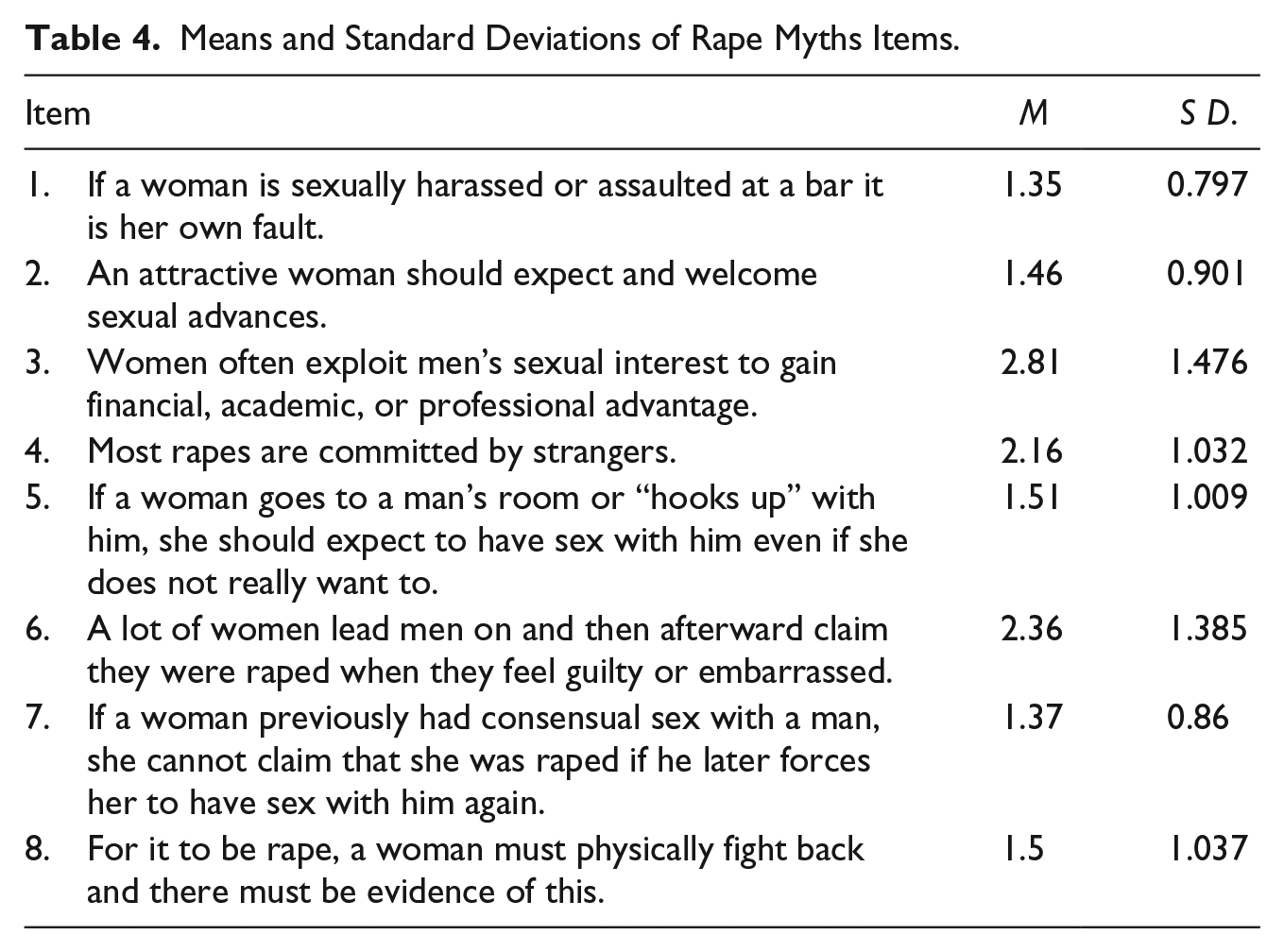
Eight well-known rape myths were adapted to be appropriate to the university situation. Each item was responded to on a 6-point dimension, ranging from 1 (strongly disagree) to 6 (strongly agree). The responses on the eight items were averaged to produce a score, such that a high score indicates strong acceptance of the rape myths. The items were selected from a number of scales available on the PsycTest catalog. They were adapted to be relevant to the university context. The actual items are presented in Table 4.
Procedure
The questionnaire was designed and administered as an online survey using SurveyMonkey™. Campus-wide emails to all staff and students, and information lodged on the various university sites provided the URL for the survey. The survey took an estimated 15 min to complete. No names were requested, and the participants were assured of complete anonymity.
Respondents were advised of freely available university psychosocial support should the survey trigger any anxieties or trauma and were also advised that only the aggregated results of the survey would be published.
Ethics
Although the survey was completely anonymous, in the event that the demographic information requested could be construed as a way of identifying individuals, participants were assured of confidentiality. In addition, their responses would be combined with those of the rest of the sample in any reports, hence, individual responses could not be disentangled. Participation in the survey was completely voluntary, and there were no advantages or disadvantages on participation. Participants could also choose not to answer certain questions or to stop the survey at any time. We also recognized that some individuals might feel disturbed by some of the questions. These individuals were directed to units on campus that would provide counseling.
Permission to administer the survey was given by the Vice Chancellor, and the survey received ethics approval from the University of Witwatersrand’s Human Research Ethics Committee (Non-Medical), certificate number: H15/11/06.
Data Analysis
This study used a cross-sectional survey design. The information about GBH was analyzed through frequencies and cross-tabulations. The rape myth data were first checked for reliability using Cronbach’s alpha. These items were then averaged and used as the dependent variable in ANOVA tests, investigating whether the experience of GBH is related to rape myth acceptance. IBM SPSS Statistics 24™ programs were used for all these analyses.
Results
Experiences of GBV
Sector
Of the sample that completed the questionnaire, those that said that they had experienced at least one of the scenarios of GBV consisted of 26.9% of the students (240), 13.2% of the Admin staff (21), and 17.0% of the Acad staff (51).
Gender
In all sectors, women were the majority of the participants who had experienced GBV: 74.2% of the students (178), 90.5% of the Admin staff (19), and 84.3% of the Acad staff (43).
Type of GBV
From Table 1, it is clear that students are most vulnerable to GBV. The most common incidents for all sectors were the scenarios that were categorized as sexual harassment (shown sexual material, nagged for dates or sex, stalked, touched in a sexual way, work used as an excuse for inappropriate meetings). A relatively large number of individuals in the Acad and Admin groups report work being used as an excuse for inappropriate meetings.
Category of Incidents Reported by Each Sector.

Note. The percentages were calculated as a function of the number of incidents in each category within the sector. This is somewhat inflated as some respondents provided more than one instance or more than one category of event. GBV = gender-based violence; Acad = academic staff members; Admin = administrative staff members.
Within the rape and violence category, 206 incidents were reported. Of the 22 incidents reported by Acad staff respondents, half were domestic violence and half one of the rape scenarios. Of the 13 incidents reported by the Admin staff, 10 were domestic violence. The number of respondents experiencing rape was high for the students—171 incidents reported.
The findings as regards the “quid pro quo” indicated that a fair number of students were offered financial support for sex (49), though fewer were offered academic advantages (9). Relatively more individuals in the Acad group reported having been offered academic/career advantages (8), though less had been offered financial support than the other groups.
Perpetrator
Gender and sector of perpetrator
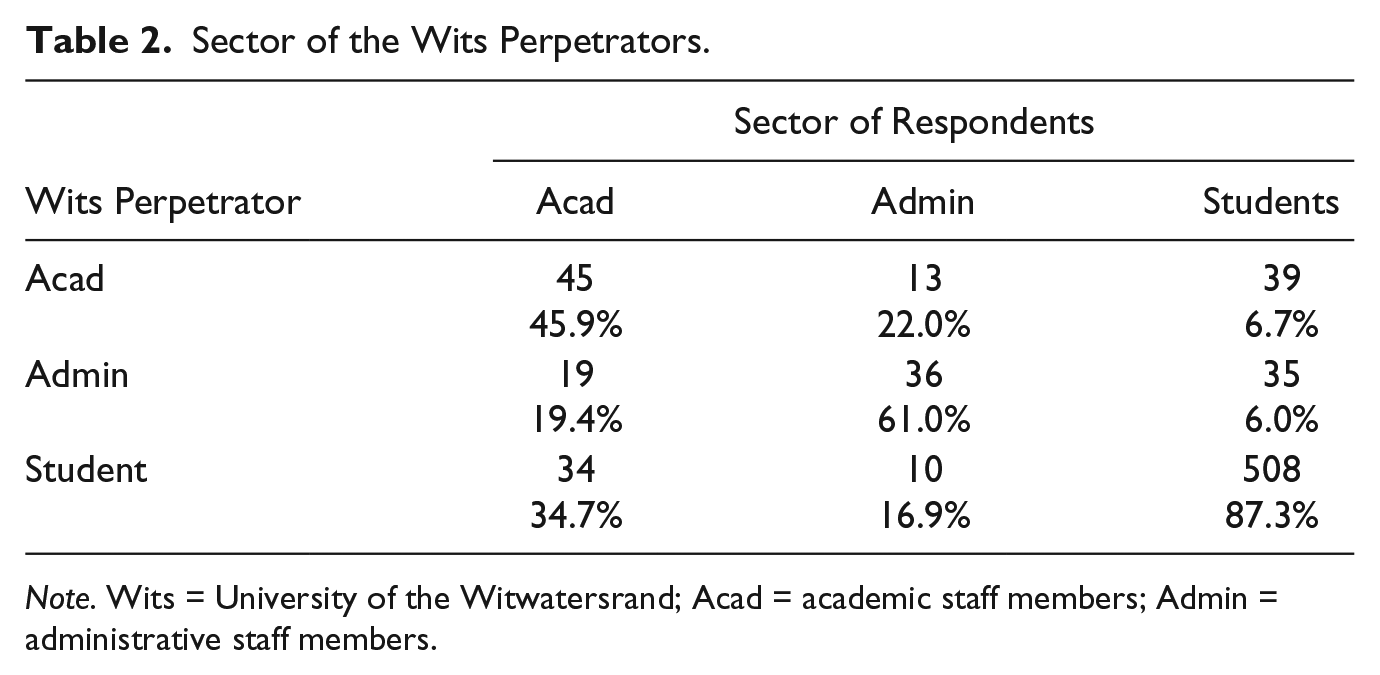
Across the three sectors, and scenarios, males were the most frequent perpetrators (Acad = 78.3% of incidents, Admin = 88.8%, students 86.2%). Table 2 shows that within the Wits perpetrators, these were usually from the same sector as the participant, though Acad respondents report a sizable number of student perpetrators. The remainder of the perpetrators were from outside the university.
Sector of the Wits Perpetrators.
Note. Wits = University of the Witwatersrand; Acad = academic staff members; Admin = administrative staff members.
Considering all incidents reported, Wits perpetrators accounted for 26.7% of the incidents reported by Acad staff, 32.6% of the incidents reported by Admin staff, and 24.0% of the incidents reported by the students. This indicates that, in general, the majority of the incidents reported were perpetrated by people other than Wits staff, in locations other than the university campus.
Rape
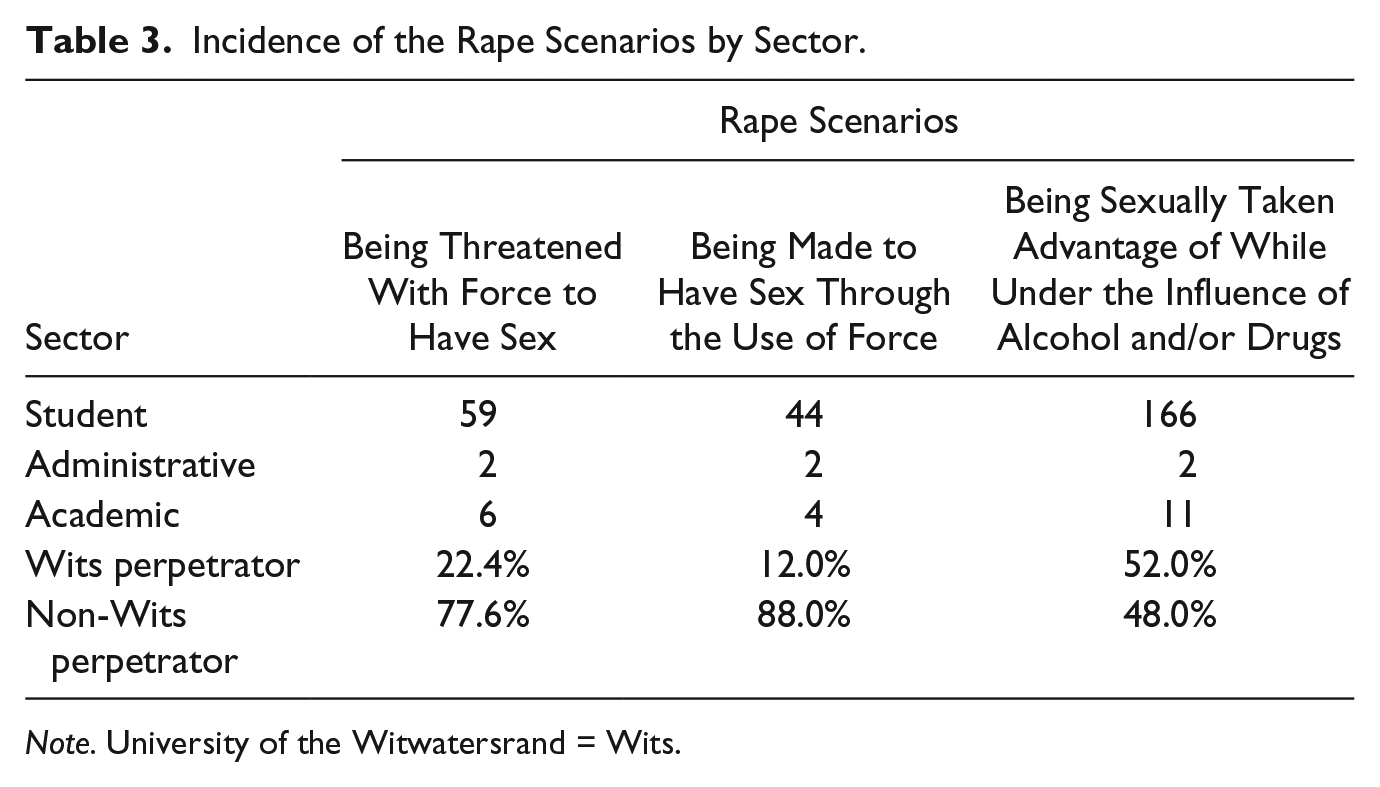
When the sexual assault and rape category is unpacked to focus on the three rape scenarios, a high number of incidents are reported, particularly by students (see Table 3).
Incidence of the Rape Scenarios by Sector.
Note. University of the Witwatersrand = Wits.
Most of the incidents were those that took place when the survivor was under the influence of alcohol or drugs. None of the incidents reported by Acad or Admin staff were committed by Wits perpetrators, whereas the student survivors reported that a fair percentage of the incidents they suffered were at the hands of other students. Only one incident of an academic demanding sex with a threat of force was reported.
Impact
Participants who indicated that they had experienced at least one of the presented scenarios were asked what impact this had on them. Very few of the Acad or Admin staff (17) indicated that they had made a complaint to their line manager or instituted a grievance complaint. A few indicated that they had missed days of work as a result of the incident.
In the open-ended section, a number of Acad staff wrote that they had avoided the perpetrator, changed jobs, sought support from colleagues, or sought therapy. Only one reported having opened a criminal case.
A fair number of the student respondents indicated that they had missed classes (42) or dropped a course or changed supervisor or lecturer (7) as a result of the incident. Only 20 indicated that they had sought assistance from a lecturer or university staff member or instituted a disciplinary complaint.
In the open-ended section, a number of the students wrote that their academic performance had suffered, they had dropped the course or rearranged their schedule to avoid the perpetrator. A number talked about the emotional trauma they had suffered.
ARMs
Only 975 of the 1,350 participants completed the rape myth items. The remaining respondents either did not complete this section at all or left out too many items for their scores to be used. An analysis comparing the group who completed the rape myth questions and those who did not indicated that there was no difference in the percentage of men and women who did not complete the section relative to those who did, χ(1) = .243, p > .05. However, there was a difference by sector, χ(2) = 12.23, p < .01. Within the student and Admin sectors, similar proportions did not complete the ARM part of the questionnaire (28.5% and 27.8%, respectively), whereas only 18.3% of the Acad sample did not. The analysis by ethnic group also indicated a difference, χ(3) = 23.32 p < .01. Among the African participants, 31.4% of the sample did not complete the ARM section, whereas 19.9% of the White sample did not. The analysis by those who had and had not experienced instances of sexual harassment was significant, χ(1) = 4.38; p < .05. Of those who had experienced GBV, only 6.1% did not complete this section, whereas 10.1% of those without such experiences did not complete it. Although these findings suggest that those who had experienced GBV, academics and Whites were more motivated to complete the questionnaire, it may also be a function of access to computers. Fewer African students have their own computers and would be using the institutions’s computers. The high usage of these computers is such that the pressures to limit time on them may have had an effect. Similarly, the Admin staff would probably have tried to complete the questionnaire during work time, so had less time to complete the questionnaire.
The eight rape myth items are presented in Table 4. The midpoint of the scale is 3.5. All the items have means below this, indicating that overall, the participants exhibited a low level of rape myth acceptance.
Means and Standard Deviations of Rape Myths Items.
The rape myths scale proved to have reasonable internal consistence (Cronbach’s α = .77), with all the item-total correlations being acceptable. This indicated that the scores on the eight items could be averaged to provide an index of rape myth acceptance.
The overall distribution of attitudes scores had a mean of 1.79 and standard deviation of 0.65. The coefficients of skewness (1.11) and kurtosis (1.12) fell outside the range, –1 and +1, indicating that the distribution was not a normal distribution (Huck, 2012). The frequency distribution indicated that the vast majority of the respondents (97.8%) had scores below the midpoint, indicating a general rejection of rape myths.
Gender and Ethnic Group
To investigate whether the experience of GBV is related to level of rape myth acceptance, a three-way ANOVA was conducted. This design was a 2 (experience vs. no experience of GBV) × 2 (gender) × 4 (ethnicity) factorial design with rape myth acceptance score as the dependent variable. To account for the violation of the assumption of normality, the bootstrap option in SPSS was used. This analysis indicated the presence of a main effect for gender indicating that women had lower rape acceptance scores (M = 1.69) than men (M = 2.02). The three-way interaction, F(3, 891) = 3.519, p < .05, ηp2 = .012, mean square error (MSE) = 335.22, was also statistically significant. The analysis was then broken up into two-way ANOVAs, analyzing each gender separately.
Women
The analysis of the female participants indicated that there was no interaction between experience and ethnic group, F(3, 602) = 0.188, p > .05. The main effect for ethnicity was not significant, F(3, 602) = 0.655, p > .05, indicating there were no statistical differences between the ethnic groups’ level of rape myth acceptance.
The main effect for experience versus no experience of GBV was significant, F(1, 602) = 4.352, p < .05, indicating that the women (of all ethnic groups) who had experienced GBV had lower ARMs scores (M = 1.62) than those who had not experienced GBV (M = 1.75).
Men
Using only male participants, a very different picture emerged. The interaction between experience and ethnic group was statistically significant, F(3, 289) = 3.453, p < .05. Analysis of the simple effects indicated that experience of GBV only had a statistically significant effect for African and White participants, but in opposite directions. African participants who had experienced GBV had significantly lower rape myth acceptance scores (M = 1.97) than did those who had no such experience (M = 2.33). However, White participants who had experienced GBV had significantly higher rape myth acceptance scores (M = 2.15) than did those who had not experienced GBV (M = 1.86). Although Figure 1 suggests that Coloured men who had experienced GBV had higher rape myth acceptance than those who had not experienced GBV, and Indian men who had experienced GBV had lower rape myth acceptance scores than did those who had not experienced GBV, these differences did not reach statistical significance.
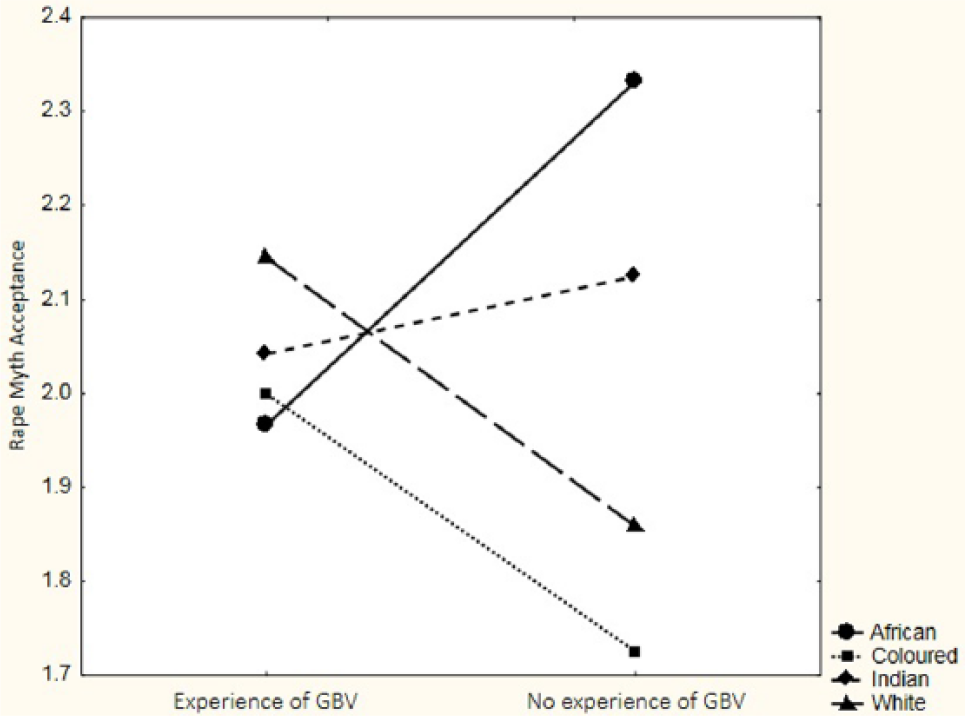
Effect of experience of GBV on male respondents.
Among the male participants who had experienced GBV, there were no significant differences between the level of rape myth acceptance of the ethnic groups. However, among the male participants who had not experienced GBV, there were differences. The White and Coloured respondents had the lowest rape myth acceptance scores (M = 1.86 and M = 1.73, respectively), whereas African and Indian males had the highest rape myth acceptance scores (M = 2.33 and M = 2.13, respectively). However, only the differences between the level of rape myth acceptance means of the White and African, and Coloured and African males differed significantly. The difference between these means and the Indian group did not reach significance.
Sector and Gender
To investigate whether the participants’ sector was a factor in rape myth acceptance, a 3 (sector) × 2 (gender) × 2 (experience of GBV) ANOVA was conducted, again using the bootstrap method. This resulted in the gender and sector main effects reaching statistical significance—gender, F(1, 950) = 16.71; p < .000, and sector, F(2, 950) = 7.28; p < .000. The main effect for experience of GBV and all the two-way interactions and the three-way interaction were not statistically significant. The significant main effects indicated that over all sectors, women had lower rape myth acceptance (M = 1.69) than men (M = 2.18). Among the sectors, Acad staff had significantly lower rape myth acceptance (M = 1.64) than both the Admin staff (M = 1.93) and students (M = 1.83).
Discussion
Prevalence and Types of GBV
In line with other research (e.g. Hill & Silva, 2005), this study found that it was predominately women participants who experienced GBV. Although 448 men completed the questionnaire, only 62 male students, two Admin, and eight Acad male staff indicated they had experienced GBV. Students were by far the main victims of GBV, which is understandable as their circumstances leave them more vulnerable than staff. Aside from having relatively less power by virtue of age and position, students are more likely to use public transport, are more likely to go to clubs and parties, and are in general in contact with more people than staff members, whose lives tend to be more settled.
Relatively few instances of quid pro quo harassment (being offered financial support in return for sex or sexual favors; being offered educational/career advantages for sex or sexual favors) were reported. Students reported 105 instances, ranging from being offered money, payment of university fees and expenses, to being offered jobs or demands being made for good references. This was surprising because the issue of older men paying for the needs and education of young women has been highlighted in the media recently. In South Africa, such men (sugar daddies) are called “Blessers.” There are a number of websites dedicated to finding blessers and blessees. An example of a post on one such site is,
I am a 40yr old guy living in Cape Town @Camps Bay, I am fun loving, outgoing persons and married. I have my own business travelling abroad frequently, I need a blessee around 20-27 yrs. She must be tall, slender, yellowbone and understand that I am married. She should love sex because I am a very horny person and be adventures in bed, I will reward her with anything she desires.
The socioeconomic situation in South Africa is such that many students from disadvantaged backgrounds struggle to get finance for their fees and other necessities. Thus, the practice of “blessing” tends to be quite widespread. This has consequences for the blessees, both for mental and physical health. Of particular concern is that HIV/AIDS has been shown to be spread by this practice (Health24, 2016).
As found in other research (e.g., Hill & Silva, 2005), the perpetrators of GBV are predominately, though not exclusively, men. The majority of sexual harassment events took place within sectors—academics by academics, professional/administrative staff by other Admin staff and students by students. The predominance of peer group harassment of students has been documented in other research (cf. Hill & Silva, 2005), though few studies have considered the other sectors of the university communities. There were relatively few cases of lecturers harassing students (6.7% of the incidents reported by students), which differs from other findings which have found as rates as high as 53.2% of cases were perpetrated by lecturers (cf. Paludi, Nydegger, Desouza, Nydegger, & Dicker, 2006). Yet it is the exploitation of students by lecturers that catch media and public attention (e.g., Singh, Motsai, & Mulaudzi, 2014). Interestingly, of the 98 incidents reported by Acad staff, 34% were perpetrated by students. This confirms that contrapower harassment does take place in this university, though at a lower level than reported in the United States (cf. DeSouza, 2011).
Delving into the instances of rape (being threatened with force to have sex; being made to have sex through the use of force; being sexually taken advantage of while under the influence of alcohol and/or drugs), the student respondents reported a large number of cases (269). The majority of these (62%) occur when under the influence of alcohol or drugs, which has been the finding elsewhere (Kalof, 1993). In addition, many of the perpetrators of these cases were members of the university community. This is particularly concerning as very few of these have been reported to the police, university authorities, or the gender equity office (GEO).
The impact of sexual harassment found elsewhere (cf. Huerta et al., 2006) was reported in this survey. Student respondents reported a range of consequences of the GBV, including academic consequences such as dropping courses and grades suffering; and psychological issues, such as depression and symptoms of trauma.
Acceptance of Rape Myths
The second thrust of this study was to investigate whether there was a relationship between the experience of GBV and ARMs. A large motivation for this was to establish whether victim-blame and self-blame were prevalent among the university community. This was thought to be one of the possible causes of the low rate of reporting instances of GBV to authorities.
The surprising finding was that on average the participants evidenced low rape myth acceptance. It is possible that a strong social desirability tendency was in operation leading respondents to reject the myths. Alternatively, it is possible that the people who answered survey were invested in ameliorating GBV. As 27% of the sample did not complete the attitude scale, it is possible that these individuals did not wish to answer such questions or that the prevalence questions had face validity but the attitudinal aspect was seen as irrelevant. Our analysis comparing those who did not complete the scale with those that did, suggests that participants who had experienced GBV were more motivated to respond. The low averages on the rape myth scale lead to rather low effect sizes in our analyses. However, we believe the results are relevant.
The finding that our women respondents rejected rape myths more strongly than men supports common findings elsewhere (Hayes et al., 2016; Stoll et al., 2017). Our main finding was that female respondents who had experienced GBV rejected rape myths more strongly than women who had not experienced GBV. Also, among women, ethnic group did not influence rape myth acceptance. However, among men, ethnic group did influence responses. The African men (26) who had experienced GBV rejected the rape myths more strongly than African men who had not had such experiences. However, among the White male respondents, those who had experienced GBV (32) had significantly higher rape myth acceptance scores than those who had not experienced GBV. We suggest that suffering GBV is a threat to White men’s hegemonic masculine identity so endorsing the rape myths is an attempt to re-establish this identity. Research elsewhere has found a relationship between hegemonic masculine identity and rape myth endorsement (cf. Hayes et al., 2016). This trend was not found for African men, which supports the findings of Langa (2010) that academic African youth tend to endorse a masculinity that lacks “ key characteristics of hegemonic masculinity, such as roughness and toughness” (p. 8). No effects were found for Indian and Coloured respondents, due to the low numbers of respondents from these groups in the sample and of those who had experienced GBV. The analysis considering the sector of respondents found that Acad staff members had significantly lower rape myth acceptance than did Admin staff and students.
The low level of rape myth acceptance found in this study suggests that there is little victim-blame which in turn suggests little self-blame. Thus, the lack of reporting of instances of GBV is unlikely to be due to this. Future research should attempt to ascertain what other factors (e.g., lack of trust of the authorities, fear of retaliation, insufficient knowledge of university policies) play a greater part in this reluctance to report.
Limitations
This study sought to better understand the scope and nature of GBV experienced by this university community. An appeal was made to every member of the community to complete the anonymous online survey. Unfortunately, the response rate was considerably lower than anticipated. We surmised that the reason for this was that the survey went live at a time when widespread and sustained student protests were gaining momentum. The students protests for free education caused major disruptions and insecurity in the university. Although GBV was an issue among students, the fees protests dominated campus life. Notwithstanding this limitation, the survey produced a number of interesting findings.
Conclusion
It is important to note that from a feminist perspective, GBV is not only about harmful individual behaviors but also the underlying social ordering within which such behaviors are performed and tolerated. As such, GBV is “a form of systemic discrimination that manifests within an unequal gender system in which dominant forms of masculinity, or ‘hegemonic masculinities’ (Connell, 1987) are privileged over forms of femininity and alternative masculinities (Cairns, 1997)” (Jones, Boocock, Underhill-Sem, 2013, p. 37). Thus, although GBV is most commonly and regularly used to assert male power over women, it can also be used to maintain male power within male groups, and to challenge both heterosexual and homosexual men who do not act according to expected masculinity norms (Jones et al., 2013). The response of the White male participants to the experience of GBV supports this need to reinforce male power.
Despite the low response rate, this study did provide some insights into the prevalence of GBV incidents at the Wits. A more systematic survey across all universities in the country is needed to accurately guide policy development and prevention efforts. It is important for all universities in South Africa to recognize their responsibility in addressing GBV and to find ways of supporting the victims in a reasonable and fair fashion.
Footnotes
Acknowledgements
The authors would like to thank the staff members and students of the University of the Witwatersrand who completed our survey. We would also like to acknowledge all the people who have spoken out around the world against gender-based harm.
Declaration of Conflicting Interests
The author(s) declared no potential conflicts of interest with respect to the research, authorship, and/or publication of this article.
Funding
The author(s) received no financial support for the research, authorship, and/or publication of this article.
