




Abstract
A growing body of literature has been devoted to analyzing the relationship status and state between victim and perpetrator to understand the dynamics of intimate partner violence (IPV). Prior research revealed that IPV was more frequent and severe in cohabiting and estranged relationships relative to marital/dating and intact relationships, respectively. Violence in cohabiting unions, however, has declined in recent years potentially due to the increasing popularity of such unions and their growing similarity to legal marriages. The use of relationship duration as a focal variable in analyzing the characteristics of IPV incidents, however, has received inadequate attention within the field. This study addresses this gap and builds upon existing research by exploring whether characteristics of IPV differ depending on the status, state, and duration of relationship by examining IPV cases documented in Crown Attorney files in one Ontario jurisdiction between 2003 and 2009. Through bivariate and multivariate analyses, current findings reveal that IPV involving marital, compared with dating, unions is more severe because of weapon use. Contradictory to previous research, IPV occurring among estranged intimate partners, compared with those in intact unions, is less likely to involve physical injury or weapon use. Finally, situational, in comparison with demographic, characteristics are affected less by the relationship duration between the perpetrator and victim. Several explanations for these findings are discussed along with study limitations and practical implications in terms of preventive measures, and it concludes with areas for future research.
Introduction
Within the past couple of decades, a substantial body of research has examined the way in which relationship status, state, and duration between the victim and the perpetrator may determine the dynamics of intimate partner violence (IPV; Brown & Bulanda, 2008; Brownridge, 2006, 2008; Dawson & Gartner, 1998; M. P. Johnson & Ferraro, 2000; Rennison, DeKeseredy, & Dragiewicz, 2013; Spiwak & Brownridge, 2005; Stets & Straus, 1989). This research is important as IPV dynamics, and risk of victimization, varies according to the relationship status and state (Sinha, 2012). For example, marital relations—both legal and common law—have unique risk factors for IPV, such as economic dependence and the presence of children, that may not be present among dating couples. Therefore, attention should be paid to analyzing which characteristics are common across all relationship statuses, states, and durations and which are not to better inform prevention and intervention strategies.
Relationship status refers to the type of union, whether it is a marital, common-law/cohabiting, or a dating relationship (Dawson & Gartner, 1998; H. Johnson & Hotton, 2003). Early literature focused primarily on violence within marital relationships, while subsequent research incorporated cohabitation when analyzing the impact of relationship characteristics, showing that risk of IPV was often greater in these latter relationships (Brown & Bulanda, 2008; M. P. Johnson & Ferraro, 2000; W. L. Johnson, Manning, Giordano, & Longmore, 2015; Stets & Straus, 1989). Nonetheless, in recent years, the proportion of marital unions in Canada has been declining while cohabitation has been increasing (Statistics Canada, 2012). Due to the growing popularity and acceptance of cohabitation in Canada, Brownridge (2008) argued that as cohabitation increases in popularity, the characteristics of individuals entering these types of relationships should change over time and may become more like married individuals. Thus, a potential convergence in IPV rates between legally married and cohabiting couples may result.
Moreover, in recent years, research on IPV has also directed attention toward analyzing the relationship state—whether the union is intact or estranged (Brownridge, 2008, 2009b; Brownridge, Chan, et al., 2008; Brownridge, Hiebert-Murphy, et al., 2008; Dawson & Gartner, 1998; Rennison et al., 2013; Spiwak & Brownridge, 2005). This is largely because, internationally, separation/estrangement has become one of the most well-documented risk factors for IPV and homicide (Brownridge, Chan, et al., 2008; Capaldi, Knoble, Shortt, & Kim, 2012; Haynes, 2016; Walton-Moss, Manganello, Frye, & Campbell, 2005).
However, several gaps remain in the literature because only a few studies have compared IPV across varying relationship statuses (e.g., Brown & Bulanda, 2008; Dawson & Gartner, 1998; Magdol, Moffitt, Capsi, & Silva, 1998; Stets & Straus, 1989). Studies of relationship state have concentrated primarily on marital and cohabiting unions while oftentimes excluding dating, and only one study has examined relationship duration as a focal variable when analyzing the characteristics of IPV incidents (Kernsmith & Craun, 2008). The existing literature, therefore, is highly fragmented in that the impacts of relationship status, state, and duration are rarely considered simultaneously, and instead, studies tend to focus on one factor in isolation, making it difficult to draw any sound conclusions about whether the characteristics of IPV differ by relationship status, state, and duration. Furthermore, most existing literature draws on national survey data, which has the possibility of producing findings that are different from what may be observed among a criminal justice sample where charges are laid. 1 The purpose of this study is to address these gaps by examining court data from a small Ontario city. By focusing on all three characteristics of intimate relationships, it is possible to analyze whether variations exist in IPV incidents and those involved while simultaneously illustrating what factors are common across all intimate relationships and which are not.
Literature Review
Typically, IPV includes physical, sexual, and psychological violence perpetrated by a current or former partner, which also includes dating and ongoing sexual partners (Ali & Naylor, 2013; Niolon et al., 2017). Although both males and females can perpetrate and be victims of IPV, the existing literature indicates that females are more often the victims of such violence (Niolon et al., 2017). Accordingly, the forthcoming literature can be interpreted within the broader thematic umbrella of the feminist paradigm, where IPV occurs mainly because of gender power imbalances and forms of patriarchal control, which combine and enforce women’s subservient positions in society (Ali & Naylor, 2013; M. P. Johnson & Ferraro, 2000).
Feminist Theory
Within the feminist paradigm, IPV is seen as an outcome of power imbalances within relationships, where men exert control over their female partners (Dardis, Dixon, Edwards, & Turchik, 2015; Kelly, Gonzalez-Guarda, & Taylor, 2011). Working within a socioecological framework, this paradigm is cognizant of the role that broader societal and community factors play that increase the risk of female victimization, such as tolerance for violence against women specifically and acceptance of gender inequality generally (Dardis et al., 2015; Kelly et al., 2011). Consequently, abusive behavior is seen as a learned phenomenon, one that aligns with cultural norms of male ownership over women (Kelly et al., 2011). At the relationship level, a lack of male power (e.g., low income and education) may entice males to regain their power in a relationship through violence (Dardis et al., 2015). At the individual level, several factors are related to male perpetration of IPV: low socioeconomic status and educational attainment, adherence to traditional gender roles, and feelings of dissatisfaction in the relationship (Dardis et al., 2015).
However, it is too simplistic to conceptualize power as a static binary—one where males have all the power and females lack power. Rather, poststructural feminists argue that both men and women have power but exercise it differently based on their social position (Cannon, Lauve-Moon, & Buttell, 2015). Living in a heteronormative and patriarchal society, men have an advantage over women, but it cannot be ignored that women too have power, such as the ability to use violence, but the exercise of it cannot be understood the same as men’s use of violence (Cannon et al., 2015).
Feminist theory has subsequently evolved to account for the intersectional complexities that some women experience when attempting to establish gender equality within relationships and within society (Barrett, Peirone, Cheung, & Habibov, 2021; Cannon et al., 2015; Kelly et al., 2011). More specifically, feminist intersectionality seeks to explore how various social positions—such as gender, race, class, and age—interact and influence individual experiences at all socioecological levels, with the overarching aim of ensuring social justice for all (Kelly et al., 2011). To that end, some research has found that rates of IPV are higher among immigrant women and other visible minorities (Caetano, Schafer, & Cunradi, 2017; Capaldi et al., 2012; Field & Caetano, 2004; Gupta et al., 2010; Vaughn, Salas-Wright, Cooper-Sadlo, Maynard, & Larson, 2015). Specifically, it is possible that IPV is more culturally acceptable among immigrant couples because they may ascribe to different traditional gender roles, leading to a cultural conflict while living in Western countries (Lindhorst & Tajima, 2008; Vaughn et al., 2015). Furthermore, immigrant women may experience social isolation and increased dependence on their intimate partner; this may hinder help-seeking behavior within the community and legal system due to preconceptions that IPV is a family issue to be resolved in private (Barrett & St Pierre, 2011; Hyman, Forte, Du Mont, Romans, & Cohen, 2009; Vaughn et al., 2015). This, in addition to having lower confidence and less favorable perceptions of police, reduces the likelihood of immigrants and other visible minorities (such as Indigenous peoples) from engaging with the criminal justice system (Barrett et al., 2021; Barrett & St Pierre, 2011; Hyman et al., 2009). However, the desire for immediate protection and cessation of violence is often cited as the main motivating factor for involving police during an IPV incident (Barrett et al., 2021; Hyman et al., 2009).
Why Might There Be Differences?
Being in a marital, cohabiting, or dating relationship may denote individual differences in the meaning ascribed to the relationship (W. L. Johnson et al., 2015). As “relationships increase in duration, take on greater meaning, [they] often follow a pattern characterized by increasing levels of trust, intimacy, and commitment” (W. L. Johnson et al., 2015, p. 632). More serious and meaningful relationships may also increase the opportunities of physical violence occurring within interactions (Arriaga, 2002). In addition to the increased opportunities for IPV, women who are more committed to the relationship tend to tolerate escalating levels of abuse and rationalize the behavior for the sake of preserving the relationship (Arriaga, 2002; Machado, Martins, & Caridade, 2014).
Therefore, as relationships become more meaningful for individuals (i.e., moving in together, getting married), the likelihood of IPV occurring may increase. Based on data from two surveys, Stets and Straus (1989) found that more violence was reported by cohabiters compared with those who were married or dating, controlling for occupation, age, and education, but for male-perpetrated violence only (p. 174). This finding was replicated by subsequent research that also analyzed national survey questionnaires, which revealed that cohabiters, regardless of perpetrator gender, were more likely to engage in IPV than married or dating individuals after controlling for relevant factors (Brown & Bulanda, 2008; Magdol et al., 1998). In addition to violence being more common among cohabiters, the violence was also six times more likely to be severe (Stets & Straus, 1989). The presence of children in the household may also predict higher rates of IPV (Brown & Bulanda, 2008; Brownridge, 2009a; Brownridge, Chan, et al., 2008; Romans, Forte, Cohen, Du Mont, & Hyman, 2007; Spiwak & Brownridge, 2005). Regardless of gender, the presence of children increased the odds of IPV occurring in both marital and cohabiting unions due to the stress associated with child-rearing (Brownridge, 2009a).
Not all research reviewed found that marital relationships had greater frequency and severity of violence compared with dating relationships. Machado et al. (2014) administered survey questionnaires to 3,716 Portuguese participants to determine whether attitudes and rates of IPV differed across individuals involved in a marital or dating relationship. Their findings revealed a greater prevalence and severity of physical violence among dating couples relative to their married counterparts (Machado et al., 2014). Within the dating sample, males reported greater rates of victimization compared with females (Machado et al., 2014; Novak & Furman, 2016). This heightened prevalence was attributed to differing relationship dynamics. For example, dating relationships often involve greater independence, can be dissolved easier, and are less likely to involve children; a combination of these factors can “promote feelings of greater insecurity, conflict, and interpersonal stress,” increasing the likelihood of IPV (Machado et al., 2014, p. 6).
These findings, however, can be further explained within the intersectional framework. Some scholars have argued that higher rates, and greater severity, of IPV within cohabiting (and arguably dating) relationships are due to differing characteristics individuals bring to a relationship (Brownridge, 2008); for example, cohabiting couples tend to be younger, have lower education and income, experience employment instability, and have substance abuse problems—factors that have all been linked to IPV (Brownridge, 2008; Kenney & McLanahan, 2006; Magdol et al., 1998). However, as mentioned previously, a trend has emerged where cohabiters are now older, more educated, and have lower rates of unemployment than in the past. These changing selection factors have altered rates of IPV among cohabiters, and although they continue to be at a higher risk of violence compared with their married counterparts, this risk is declining (Brownridge, 2008; James & Daly, 2012). Therefore, it may be appropriate to collapse cohabitation and legal marriages into one category when selection factors are similar across the two groups.
Next, researchers operationalize relationship state as a measure of whether individuals are in an intact or estranged relationship (Brownridge, 2006; Dawson & Gartner, 1998; Vatnar & Bjorkly, 2012). Like cohabiting relations, when researchers use survey data, it has been found that separated women were more likely to experience IPV compared with divorced or married women (Brownridge, 2006; Brownridge, Chan, et al., 2008). This association was more pronounced for estranged women living in rural locales, compared with those in urban or suburban areas (Rennison et al., 2013). In addition to the increased likelihood of experiencing violence, IPV was more severe in estranged unions because victims were likely to sustain injury when the IPV incident involved an estranged husband or ex-boyfriend (Kyriacou et al., 1999). Kernsmith and Craun (2008) also recognized that estranged couples were more likely to be assaulted with a weapon than IPV victims who were still with their partners. From a feminist perspective, these findings may be interpreted due to the perpetrator’s perception that separation is a challenge to his control, potentially increasing the likelihood of aggressive behavior (Haynes, 2016).
Finally, past researchers operationalize relationship duration as a measure of how long a couple has been involved romantically (Kernsmith & Craun, 2008). Studies have recognized that the duration of a relationship is predictive of likelihood and severity of abuse among adults (Gaertner & Foshee, 1999; Haynes, 2016; Parish, Wang, Laumann, Pan, & Luo, 2004). To illustrate, the likelihood of physical violence increased with longer relationships, with males more likely to hit their female partners when they have been together longer than 5 years (Parish et al., 2004). Straus (2008) found that with each additional month the likelihood of male-perpetrated violence among individuals in dating relationships increased by 3%. Similarly, relationship duration influences the likelihood of weapon use: Couples who had been together for 6 to 10 years had the highest percentage of weapon use among cases of IPV (Kernsmith & Craun, 2008). After conducting interviews with female IPV survivors in a shelter setting, Novisky and Peralta (2015) found that most were in a long-term relationship (more than 3 years) with their abusers and the vast majority reported repeated incidents of violence. Nevertheless, not all agree that a positive correlation exists between relationship duration and the likelihood of IPV; others argue IPV is more common among cohabiters with shorter relationships (M. P. Johnson & Ferraro, 2000).
Summary and Hypotheses
To summarize, there is a general consensus in the literature that IPV is more common and severe among cohabiting and legally married individuals compared with individuals in dating relationships. There are exceptions, as one study found the reverse to be true (Machado et al., 2014). There is also reason to believe that differences in the frequency and severity of IPV between married and cohabiting individuals will be minimal in the years to come due to the growing popularity of cohabitation and changing selection factors (Brownridge, 2008, 2009a; James & Daly, 2012). Accordingly, this study will combine these two groups and comparisons will be made against dating individuals. Therefore, we hypothesize the following:
Similarly, prior research has revealed that estranged individuals were at an increased likelihood of experiencing violence and that violence was more likely to be severe, compared with victimization in intact relationships. Accordingly, we hypothesize the following:
Finally, it was illustrated that longer relationships were correlated with risk of IPV resulting in our last hypothesis:
Despite the amount of information available on each relationship characteristic (relationship status, state, and duration) in isolation, an integrated analysis across all three has yet to be conducted. The current study will address this gap while also providing original insights on the phenomenon because our data are drawn from a court population, whereas most of the literature reviewed was based on survey data.
Method
Data
This study employs data from a larger project funded by the Social Sciences and Humanities Research Council of Canada. 2 Data were collected between 2003 and 2009 at a Crown Attorney’s office in a small Ontario city, with a population between 100,000 and 150,000 residents. The data collection process involved three researchers regularly visiting the court office to code information from prosecutor files, tracking each case from the initial laying of the charge to final disposition. This information was supplemented with files kept by the Victim/Witness Assistance Program (VWAP) housed at the same office. The original sample included 2,215 incidents of domestic violence in which charges were laid; however, cases that did not involve heterosexual intimate partners were excluded, resulting in a final sample size of 1,846 IPV incidents. 3 All cases were handled by a specialized domestic violence court which was established in the first year of the study. The data collection instrument recorded information on several variables, including, but not limited to, demographic characteristics of the victim and the accused, situational circumstances, and the criminal justice response.
Variables and Measurement
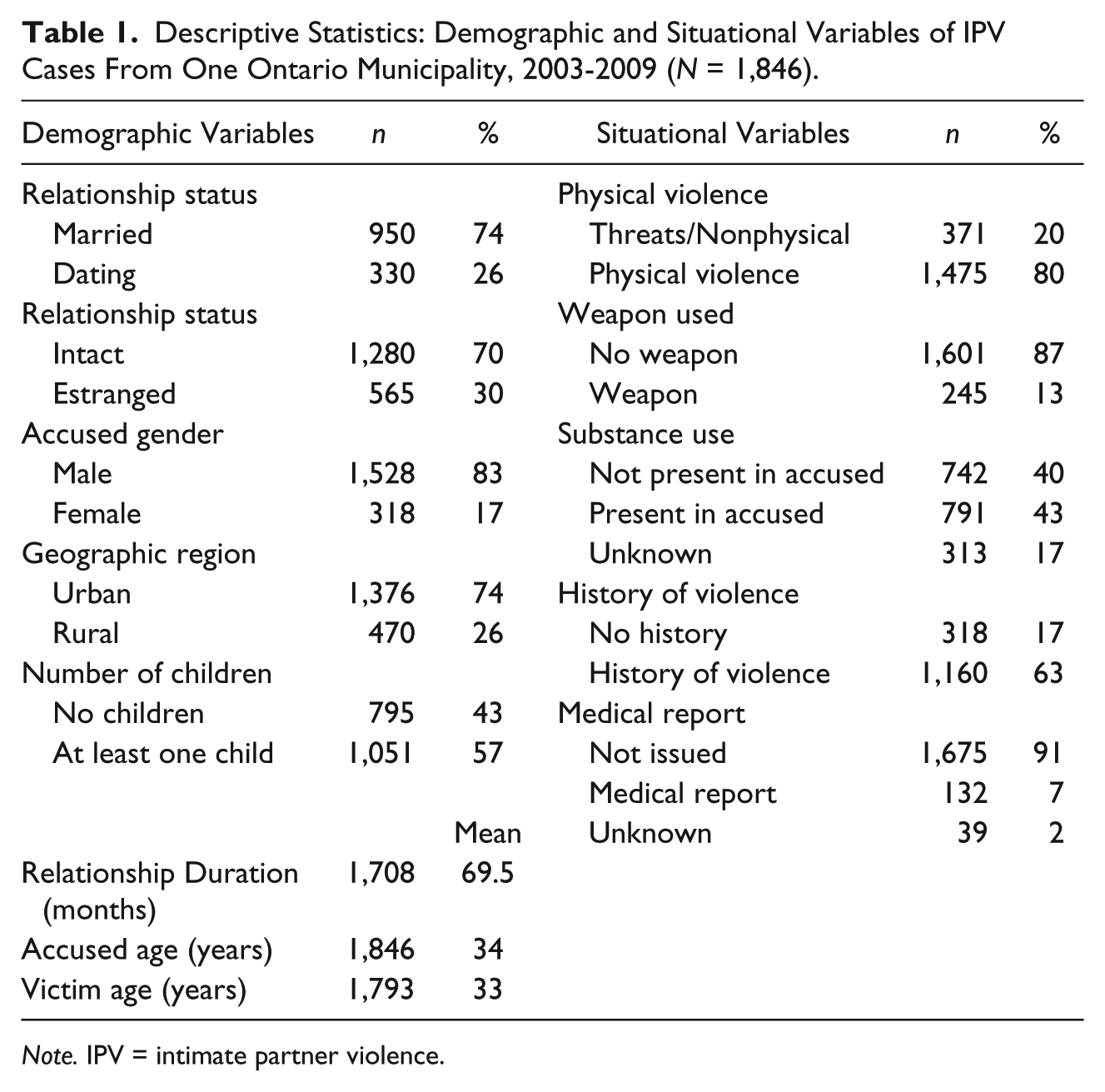
To determine whether IPV characteristics vary according to relationship status, state, and duration, these variables form the focus of our study. Relationship status was recoded to distinguish between marital (coded as 0) and dating (coded as 1) relationships (see Table 1 for descriptive information). 4 Married and common-law unions were grouped together representing the “married” category and compared with dating relationships. This recoding was justified based on the work by Brownridge (2008) and James and Daly (2012) who recognize a growing similarity in IPV incidents between married and cohabiting unions. A preliminary analysis was conducted to ensure similarity between legally married and cohabiting unions. Multivariate results validated this assumption as no significant differences were found between the selection factors and relationship characteristics across legally married and common-law unions.
Descriptive Statistics: Demographic and Situational Variables of IPV Cases From One Ontario Municipality, 2003-2009 (N = 1,846).
Note. IPV = intimate partner violence.
The second focal variable captures the relationship state between the victim and accused, distinguishing between intact (coded as 0) and estranged (coded as 1) relationships. The final focal variable in this study is relationship duration. In the full sample, the average relationship duration of IPV cases exceeded 5 years (69.5 months), 5 with a minimum of less than 1 month and a maximum of 672 months.
Drawing from prior literature, several independent variables were examined consisting of both demographic and situational characteristics, which are also presented in Table 1. Each categorical independent variable with more than two categories was recoded into binary measures by creating dummy variables. Demographic variables include gender of the victim and perpetrator, age of the victim and perpetrator, presence of children in the home, and whether the incident occurred in a rural or urban area. Situational variables include physical injury, weapon usage, substance use, having a documented history of violence, and whether medical treatment was required. The medical report variable was created from the broader “evidence” variable to capture whether a medical report was submitted to the court following the IPV incident. Prior research has not focused on this variable; however, it can be used as a proxy for violence severity (Rusbult & Martz, 1995). In keeping with the feminist paradigm, several interactions were tested for to determine whether variations exist based on the gender of the perpetrator.
Analyses
We began our analysis by separately cross-tabulating a number of demographic and situational characteristics with relationship status and state. This analytic strategy is in alignment with previous research in the area (e.g., Dawson & Gartner, 1998). The subsequent multivariate analyses are used to determine whether the differences observed in the bivariate analyses are significant when accounting for the effects of other relevant variables (Agresti & Finlay, 2009). Specifically, logistic regression is used to examine the odds of being in a marital or dating relationship—or an intact or estranged relationship—based on the characteristics discussed.
For the third focal variable, relationship duration, a similar process was undertaken, but because it is a continuous variable, correlations and independent samples t tests were used to identify whether certain characteristics were more prevalent. Multiple regression is then used to determine whether the bivariate findings hold true when the effects of multiple variables are held constant. Prior to running the multivariate analysis, the regression assumptions—normality of residuals, linearity, and constant variance—were tested. The assumption of linearity, that data are normally distributed, was violated (Agresti & Finlay, 2009). In response, relationship duration was transformed and replaced with the log of relationship duration, which gives a better estimate of the impact the independent variables have on relationship duration.
To increase confidence in results, dummy variables were first created for the missing data and used to identify whether any significant correlations exist between the missing data and the focal variables (Allison, 2002). Two significant correlations occurred after running the logistic regression analysis predicting relationship status. Specifically, “missing substance use” and “missing medical report” variables reached statistical significance at p < .001 and p < .05, respectively. These variables were also significant in predicting relationship state. As a result, cases missing these data were excluded from the analyses, resulting in a slight reduction in the full sample size (N = 1,510).
Results
Relationship Status
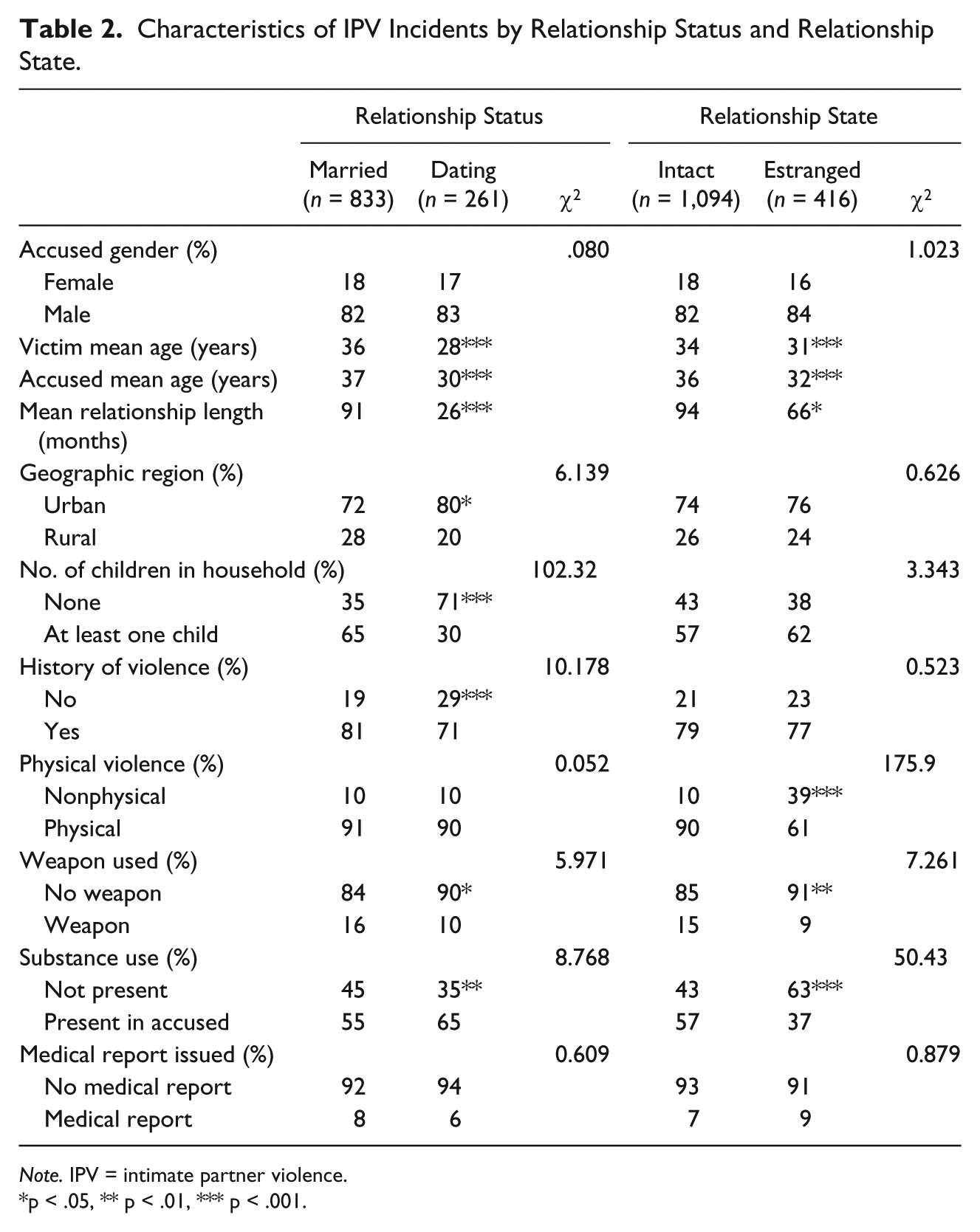
In the first set of cross-tabulations, several demographic characteristics vary significantly between cases involving marital and dating relationships (see Table 2). Specifically, married individuals who perpetrated and experienced IPV are older (p < .001) and had longer relationship durations than individuals in dating relationships (p < .001). Compared with IPV among dating individuals, when it occurred within marital relationships, it is more likely to occur with children in the home (p < .001) and in a rural locale (p < .05). For situational variables, bivariate patterns reveal that weapon use (p < .05) and having a documented history of violence (p < .001) are more common among marital compared with dating relationships. Finally, perpetrators who are married were less likely to be under the influence of drugs or alcohol at the time of the incident compared with perpetrators in dating relationships (p < .01).
Characteristics of IPV Incidents by Relationship Status and Relationship State.
Note. IPV = intimate partner violence.
p < .05, ** p < .01, *** p < .001.
These bivariate analyses were repeated (not shown in table form), controlling for the gender of the accused to evaluate the feminist paradigm. The variables discussed above attained the same level of significance; however, they were significant for males only. Specifically, living in a rural locale, substance use, weapon use, and having a documented history of violence were a male phenomenon—married males accused of IPV were significantly more likely to live in a rural locale (p < .05), use a weapon (p < .05), and have a history of violence (p < .01) against their female partner. These variables were not significant for married females accused of IPV. Similarly, males accused of IPV in dating relationships were more likely to be intoxicated at the time IPV occurred (p < .01); the same cannot be said about females.
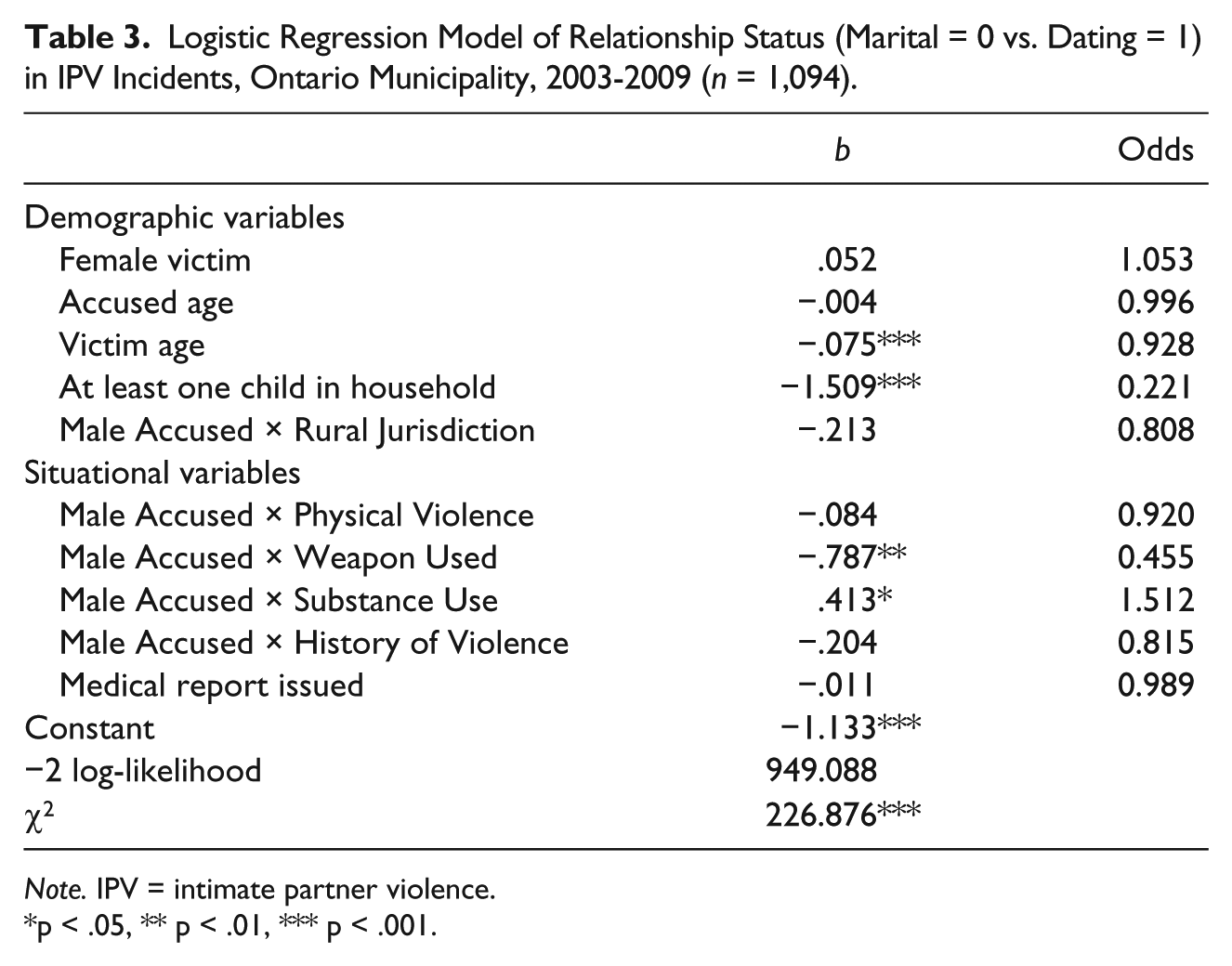
Next, multivariate analyses were conducted to understand the effects of each independent variable on the focal variable, relationship status, while holding all other variables constant. Like the previous analysis, victims who experienced IPV in dating relationships are significantly younger than victims who experienced IPV in marriage (p < .001). However, relationship length and accused’s age are no longer significantly related to relationship status. In further alignment with bivariate patterns, dating couples are less likely to have a child in the household (p < .001), but perpetrators are more likely to be intoxicated, compared with those who are married. Shifting direction to situational variables, multivariate results provide further support that weapon use is significantly more likely to occur in marital, compared with dating, relationships. Finally, having a history of violence and living in an urban or rural locale did not differ significantly between marital and dating relationships when all factors are held constant.
The multivariate analysis was repeated, see Table 3, to include gender interactions for the variables that reached significance at the bivariate level: history of violence, living in an urban or rural locale, substance use, and use of a weapon. Two interaction variables differed significantly between married and dating perpetrators—substance use and use of a weapon. Specifically, males in a marital relationship are less likely to perpetrate IPV while under the influence compared with dating perpetrators (p < .01) and are less likely to use a weapon during the incident (p < .01). The χ2 test for both models are significant (p < .001), implying that the models were significant when controlling for the effects of all variables included in the analysis.
Logistic Regression Model of Relationship Status (Marital = 0 vs. Dating = 1) in IPV Incidents, Ontario Municipality, 2003-2009 (n = 1,094).
Note. IPV = intimate partner violence.
p < .05, ** p < .01, *** p < .001.
Relationship State
In the second set of cross-tabulations, several demographic characteristics vary significantly between cases involving intact and estranged relationships (see Table 2). Specifically, both victims and perpetrators of IPV are younger in estranged, compared with intact, relationships (p < .001). Also, the duration of estranged relationships is significantly shorter than intact relationships (p < .05). For situational variables, physical injury (p < .001), weapon use (p < .01), and perpetrator intoxication (p < .001) are significantly more common within intact, compared with estranged, relationships. Again, these analyses were repeated with the effects of perpetrator gender held constant. Physical injury did not change with this modification; however, weapon use is significant for male accused only, with estranged males less likely to use a weapon than those still with their partner (p < .05).
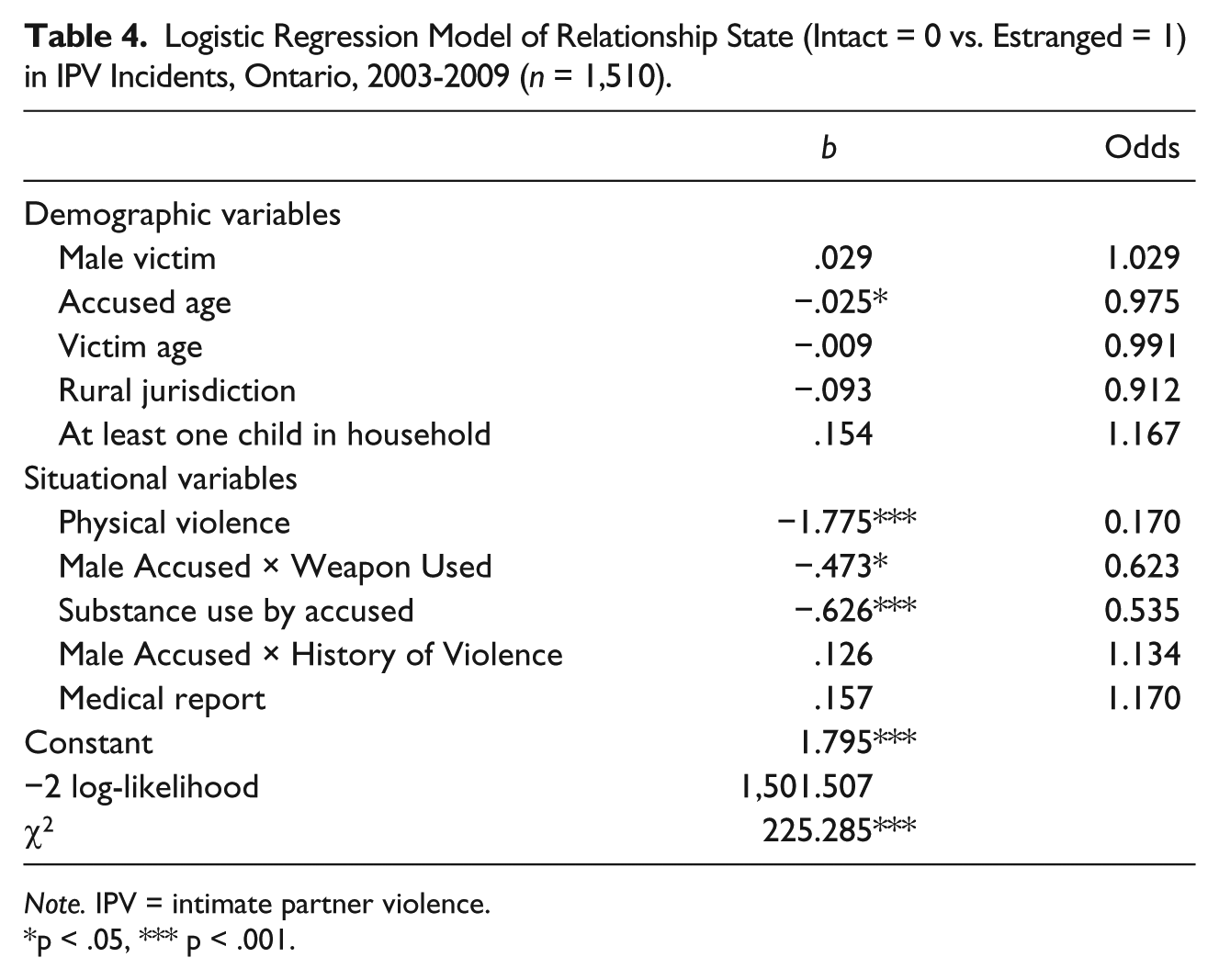
The multivariate effects of all the predictor variables on relationship state are presented in Table 4. When holding all other variables constant, individuals accused of IPV are significantly younger in estranged relationships compared with intact unions. They are also less likely to use a weapon (p < .05) and cause physical injury (p < .001) during the IPV incident, compared with perpetrators who are in a current relationship. Estranged perpetrators are less likely to be intoxicated during the offense (p < .001) compared with perpetrators in intact unions. Again, the analysis was repeated to include a gender interaction for the use of a weapon variable. Males in estranged relationships are less likely to use a weapon during the IPV incident (p < .05) compared with males currently with their partners. The χ2 test for these models are significant (p < .001), implying that both are statistically significant in predicting relationship state.
Logistic Regression Model of Relationship State (Intact = 0 vs. Estranged = 1) in IPV Incidents, Ontario, 2003-2009 (n = 1,510).
Note. IPV = intimate partner violence.
p < .05, *** p < .001.
Relationship Duration
Although not shown in table form, several demographic variables differed significantly depending on the duration of the relationship. Independent samples t tests revealed that both marital and intact relationships are significantly longer (p < .001) than dating and estranged relationships, respectively. As might be expected, the age of the victim and perpetrator is positively correlated with the relationship duration (p < .001). Similarly, the presence of children in the household is significantly more likely to occur with longer relationship durations (p < .001); these relationships are 28 months longer, on average, than couples without children in the home. Two situational variables reached statistical significance at the bivariate level: history of violence and requiring medical treatment. Specifically, couples with longer relationships (by approximately 16 months) are more likely to have a documented history of violence (p < .05). Similarly, having a longer relationship duration increases the likelihood of requiring medical treatment (p < .01); those who submitted a medical report as evidence had been in the relationship approximately 2 years longer than those who did not.
However, several interesting observations were made when controlling for gender. Specifically, although not initially significant, males in longer relationships (i.e., more than 23 months longer on average) are more likely to use a weapon (p < .01). Similarly, relationships of longer durations are more likely to involve a history of male-perpetrated violence (p < .01) and a greater likelihood of the female victim requiring medical treatment (p < .01). The same observations were not significant for female perpetrators.
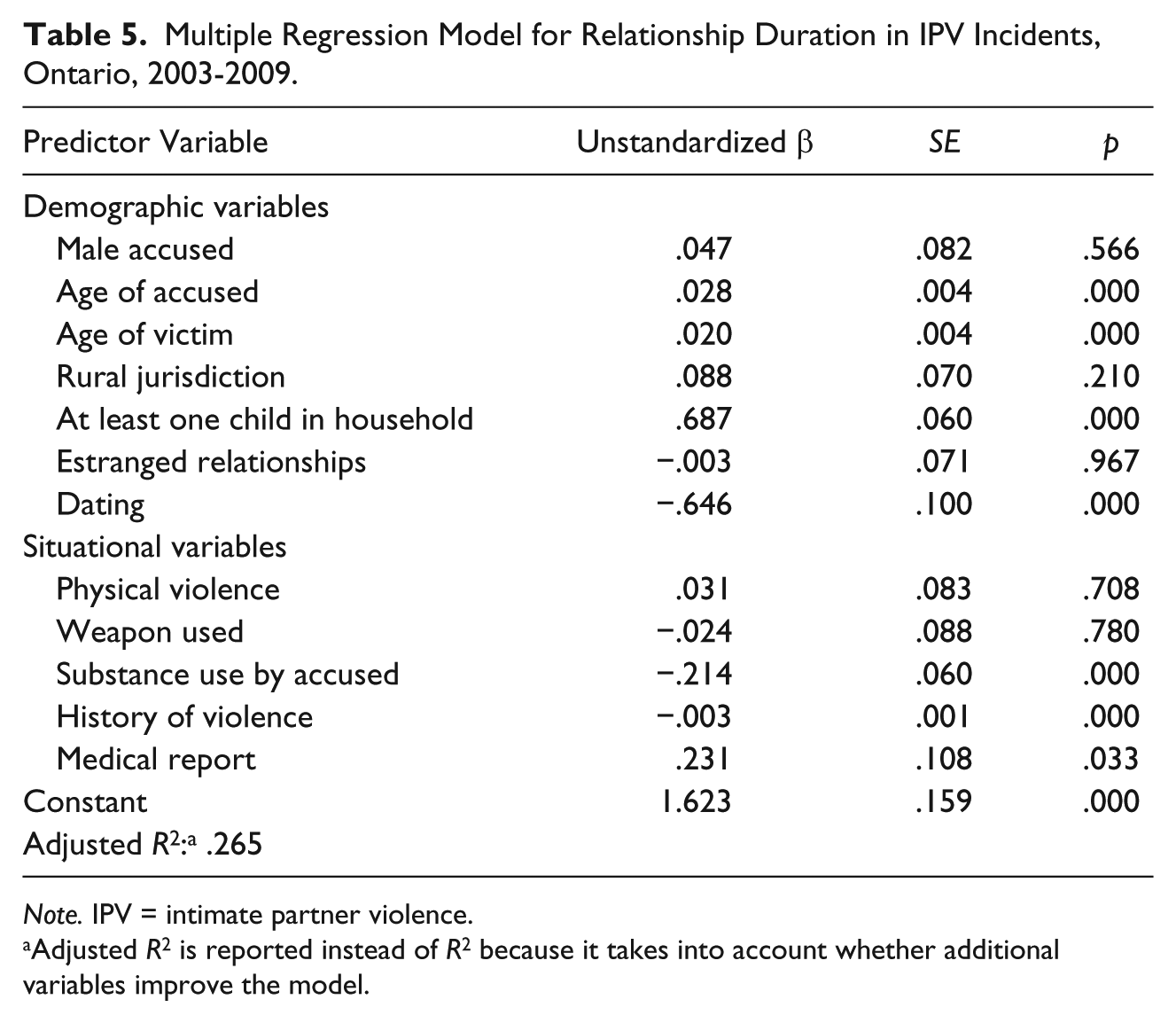
The results presented in Table 5 demonstrate the multivariate effects of all predictor variables on relationship duration through multiple regression. 6 The overall model was significant, p < .001, implying the effects of all variables combined had a significant impact on relationship duration. It appears that demographic variables are stronger predictors of relationship duration compared with situational variables. Aligned with bivariate results, four demographic variables—age of perpetrator/victim, relationship status, and presence of children—significantly affect relationship duration, when controlling for other variables in the model. First, as the age of the victim and perpetrator increases, so too does relationship duration. Similarly, marital relationships and having at least one child in the household are both predictive of a longer relationship duration (p <.001). Second, three situational variables are influential in differentiating IPV cases based on relationship duration. The likelihood of having a history of violence (p < .001) and perpetrator intoxication (p < .01) are significantly less likely in shorter relationships. Finally, victims in longer relationships were more likely to submit a medical report as evidence (p < .05) compared with those in shorter relationships.
Multiple Regression Model for Relationship Duration in IPV Incidents, Ontario, 2003-2009.
Note. IPV = intimate partner violence.
Adjusted R2 is reported instead of R2 because it takes into account whether additional variables improve the model.
Discussion and Conclusion
This study contributes to the expanding, yet still limited, body of research examining the characteristics of IPV incidents and how they differ across relationship status, state, and duration.
Relationship Status
Prior research revealed that IPV is more prevalent and severe in marital relations relative to dating relationships (Brown & Bulanda, 2008; Magdol et al., 1998; Stets & Straus, 1989). Although data did not permit conclusions to be drawn on prevalence rates, results from the current study provide some support for differences in IPV severity observed between marital and dating relationships. We hypothesized that physical injury would be more common among marital, compared with dating, relationships. Our findings did not support this prediction, as no significant differences were found between relationship statuses with respect to physical injury. The fact that physical injury was less documented among marital couples brings the generalizability of previous research into question. However, it may be that differences in physical injury among relationship statuses are more a product of research sampling. The research reviewed was drawn primarily from self-report surveys, whereas our sample was court-based. Prior research has recognized that victims of IPV are more likely to utilize criminal justice services when experiencing severe forms of violence, where weapons are used and physical injury results (Barrett et al., 2021). This may explain the current findings as 80% of victims suffered physical injury and another 63% involved cases with a prior history of violence in the relationship.
Our second hypothesis predicted that weapon use would be more common among marital compared with dating relationships; this attained support at both the bivariate and multivariate level. However, when the gender of the accused was included in the model, the reverse was found to be true with male accused being less likely to use a weapon in marital relationships compared with males in dating unions. Phrased differently, it appeared that female perpetrators in dating relationships were more likely to use a weapon during the IPV incident than married females. This finding partially aligns with Machado et al.’s (2014) conclusion that physical violence was more common in dating relationships, within which males were more likely to report severe victimization. Alternatively, it may be that females rely on weapons as a means of self-defense or to compensate for their lack of physical strength compared with males (Kernsmith, 2005; Kernsmith & Craun, 2008; Melton & Sillito, 2012); however, this explanation does not account for the fact that this finding does not extend to married females. Current results also revealed that substance use was more common among perpetrators in dating relationships than married. Previous research has recognized the association between perpetrator substance use and the victim’s injury severity (Fals-Stewart, 2003; Lee, Ju, & Lightfoot, 2010).
Relationship State
Findings from the second model of this study, which examined how characteristics of IPV incidents differ according to relationship state, are in opposition to what has been previously found. Prior Canadian research has revealed that estranged women are at the greatest risk of violence, followed by divorced and then married women (Brownridge, Chan, et al., 2008; Brownridge, Hiebert-Murphy, et al., 2008; Spiwak & Brownridge, 2005). Past research has also concluded that IPV in estranged unions is more severe, with a greater likelihood of physical injury and weapon use (Brownridge, 2006; Brownridge, Chan, et al., 2008; Kernsmith & Craun, 2008; Kyriacou et al., 1999). These conclusions formed the third and fourth hypotheses that physical injury—and weapon use—would be more pronounced in estranged, compared with intact, relationships regardless of relationship status. The results of the current study found the reverse to be true because perpetrators who were estranged from their victims were less likely to cause physical injury or use a weapon during the IPV incident than those still together. Moreover, it was found that males accused of committing IPV against their estranged partners were less likely to use a weapon than males in a current relationship. These discrepant findings may again be explained by inherent sampling differences or potentially by accounting for perpetrator substance use. It was found that perpetrators in intact unions were significantly more likely to be intoxicated, which may have factored into their subsequent decision to use a weapon and/or the resulting injury.
Relationship Duration
Finally, connections can be drawn from findings within this study and prior research on relationship duration and IPV. Other researchers have found a positive correlation between relationship duration and risk of IPV (Brown & Bulanda, 2008; Gaertner & Foshee, 1999; Parish et al., 2004) and so it was hypothesized that characteristics of IPV will be more severe (e.g., weapon use and physical injury) with longer relationship durations. In partial alignment with Parish et al.’s (2004) research, the current study revealed that among all IPV cases adjudicated by the domestic violence court, the average relationship duration was almost 6 years. Parish et al. (2004) asserted that the likelihood of physical IPV increases with relationships longer than 5 years. The current analysis failed to fully replicate this finding because the data revealed that relationship duration is a poor predictor of situational circumstances (e.g., physical violence, weapon use). However, having a documented history of violence within the relationship and submitting a medical report were more common in IPV cases with longer relationship durations. These factors may lend support to the belief that longer relationship durations provide more opportunities for interactions to be characterized by violence.
Preventive Measures
In 2004, the government of Ontario launched a Domestic Violence Action Plan which aimed to prevent domestic violence with education campaigns and early intervention strategies (Ministry of the Status of Women, 2015). According to their progress report released in 2012, several accomplishments were made: the improvement of community supports, increased training of front-line workers, the promotion of public education campaigns, and bettering the criminal justice response to protect survivors and hold perpetrators accountable (Ministry of the Status of Women, 2015). Together, these initiatives may have encouraged victims of IPV to report incidences of abuse to the authorities and, in turn, may have influenced the nature of the IPV cases brought to court and the unique nature of our sample. With that said, the characteristics of IPV cases observed were heterogeneous and situated contextually. There are few demographic and situational characteristics that reliably increase the risk of IPV (Jewkes, 2002; Slep, Foran, Heyman, Snarr, & USAF Family Advocacy Research Program, 2015). This is evident in the current research as some findings provide support for, while others contradict, prior research.
Due to the situational and heterogeneous nature of IPV, scholars argue that community-based prevention tactics are necessary to reduce rates of IPV (Jewkes, 2002; Mancini, Nelson, Bowen, & Martin, 2006; Slep et al., 2015). Mancini et al. (2006, p. 218) conclude that efforts need to be broadened beyond isolated programs to “begin designing comprehensive, multilevel, community-based strategies for the prevention of IPV.” To prevent dating violence, programs such as the Fourth R, which educates high school youth on violence, bullying, unsafe sexual practices, and substance use, would be beneficial given that perpetrators of IPV in dating relationships were more likely to be intoxicated at the time of the incident compared with married perpetrators. Program evaluations have recognized a significant drop in IPV perpetration among young adults’ post-completion (see Wolfe et al., 2009, for a full review).
Moreover, current findings revealed that IPV recidivism, in the form of having a history of violence, was most common among married perpetrators, compared with dating. Similarly, the likelihood of using a weapon, having a prior history of violence, and requiring medical treatment were most pronounced among male perpetrators in long-term relationships. It is, therefore, necessary to target prevention programming toward offenders of domestic violence who have a high risk of reoffending. Second-responder programs have a long history of providing intervention services to victims of abuse to ensure they have the skills to prevent future abuse through knowledge mobilization and information sharing (Scott, Heslop, Kelly, & Wiggins, 2015). Surprisingly, these programs have generally not offered their services to perpetrators of IPV (Scott et al., 2015). This is an important area for prevention to occur by targeting males who are deemed high risk to re-offend by addressing relevant risk factors (i.e., separation, employment, jealous tendencies, and substance abuse) through the implementation of Risk, Needs, and Responsivity (RNR) programs (see Scott et al., 2015, for a full review). A quasi-experiment was completed to determine the effectiveness of such a program and revealed that men who participated in the RNR program had significantly less police involvement in the following 2 years than a comparison group who did not participate (Scott et al., 2015). After broadening the scope of prevention, social norms and attitudes will hopefully begin to alter, condemning the behavior while simultaneously empowering women (Jewkes, 2002; Mancini et al., 2006).
Limitations and Future Directions
Considering these findings, several limitations that exist in this study should be kept in mind when interpreting the results. First, only one jurisdiction was included in the analysis, making it difficult to generalize the results to a larger population. Second, the data presented in this research were collected about 10 years ago. The IPV cases reviewed may be different from what would be observed in a more recent court sample given the progress made by community initiatives and programs discussed previously. However, the impact of this limitation may be slight considering that it is unlikely that the relationship characteristics have changed drastically. Third, the data used in this study were drawn from Crown Attorney files and so variables examined were restricted to the information available in these documents. As such, information was absent on factors such as race/ethnicity, 7 income, and educational attainment—which have all been recognized in past research as important variables in understanding the characteristics of IPV incidents (Brownridge, 2008; Spiwak & Brownridge, 2005; Stets & Straus, 1989).
Future research would benefit by resolving the limitations inherent within this study by replicating this research using more recent data, drawn from multiple jurisdictions and including racial/ethnic and socioeconomic variables to rule out any spurious relationships. Despite the study’s limitations, the findings have furthered academic knowledge regarding how characteristics of IPV incidents differ depending on the status, state, and duration of relationship. Specifically, these findings provide new evidence on how to improve current prevention and intervention programs; clearly, some factors carry greater risk depending on the relationship status, state, and duration of those involved, and this research calls for these nuances to be recognized and addressed accordingly.
Footnotes
Acknowledgements
The authors would like to acknowledge the Social Sciences and Humanities Research Council of Canada for funding this research as well as the peer reviewers whose critical feedback greatly improved the clarity of this manuscript.
Declaration of Conflicting Interests
The author(s) declared no potential conflicts of interest with respect to the research, authorship, and/or publication of this article.
Funding
The author(s) disclosed receipt of the following financial support for the research, authorship, and/or publication of this article: This work was supported by the SSHRC Standard Research Grant (No. 410-2004-134).
Notes
Author Biographies
 ), University of Guelph. Her research focuses on trends and patterns in violence and social/legal responses to violence.