



Abstract
This article empirically investigates whether women’s access to economic resources acts as a risk factor or protective factor for spousal (emotional and physical) violence against them, particularly in the case of Pakistan. Using data from Pakistan Demographic and Health Survey (PDHS) 2012 to 2013, we employed logistic regression to investigate this relationship between women’s access to economic resources and spousal violence against them by using two indicators: (a) whether she earns money in cash and/or in-kind and (b) whether she owns property. The results indicate that women who earn in cash and/or in-kind face greater violence. Education can reduce the violence against women and family history of violence contributes positively for greater violence. Result also confirms existence of regional disparity in this regard. Based on findings of this study we provide policy suggestions to mitigate the issue of spousal violence against women.
Keywords
Introduction
Intimate Partner Violence (IPV), caused by current or former spouses and partners, is defined as behavior within an intimate relationship that causes physical, sexual or psychological harm, including acts of physical aggression, sexual coercion, psychological abuse and controlling behaviors. (World Health Organization [WHO], 2010)
Intimate partner violence (IPV) is not just a bane of developed countries. It is highly prevalent in both developed and developing countries of the world (Vyas, Jansen, Heise, & Mbwambo, 2015). According to a World Health Organization (WHO) report, 23.2% of ever partnered women experienced lifetime physical and/or sexual violence in high income countries. This rate stood at 37.7% in South Asia. It is important to explore the extent and contributing factors of IPV due to its associated adverse health outcomes for the victims. Women who experience partner violence suffer from higher rates of health problems and risk behavior including sexual diseases such as HIV/AIDS, reproductive health issues, perinatal health issues, mental health issues, injuries, and death through homicide and suicide (García-Moreno et al., 2013). Statistics also reveal that 38% of all murders of women are committed by intimate partners, and 42% of women who experience physical and sexual violence sustain injuries as a result of that violence (García-Moreno et al., 2013).
Violence Against Women (VAW), particularly IPV or spousal violence prevalence rates in Pakistan, vary between 44% and 57%, over the course of the last decade based upon an analysis of primary data studies (Madhani, Tompkins, Jack, & Fisher, 2014). However, these empirical studies mostly rely upon small cross-sectional samples that sampled women from low and middle socioeconomic urban communities (Madhani et al., 2014). The number of registered cases of VAW provides another facet of analyzing these data but this may be severely underreported where registered cases are those for which an FIR or First Investigation Report has been lodged with the police. The prevalence rate of reported/registered cases of VAW in Punjab stood approximately at 7,100 cases per 100,000 population.
The highest prevalence rate of VAW in Pakistan was in Rahim Yar Khan 14 registered cases per 100,000 population and the lowest prevalence rate was in Narowal, 1.67 cases per 100,000 population. Actual cases of violence may be significantly higher than the registered cases of violence as violence, particularly against women, goes unreported. The categories of violence perpetrated against women could be classified as acid burning, beating, custodial rape, gang rape, honor killing, incest, murder, rape, stove burning, wani (a traditional practice whereby the accused man and woman are sentenced to death by a tribal court), and other forms of violence. Such severe forms of VAW and its implications for their mental and physical health necessitate research and policy prescription to circumvent this significant socioeconomic issue. There are quite a few studies which focus on different forms of domestic violence in Pakistan (Manzoor, Rahman, & Bano, 2013; Ali, & Gavino, 2008). But an empirical analysis of spousal violence and its determinants for Pakistan is missing from the literature. This study will fill this gap.
First, this article empirically investigates the determinants of spousal violence in Pakistan; second, this article contributes to the existing literature by analyzing whether women’s access to economic resources acts as a protective factor or risk factor for violence against them by using two indicators, namely, (a) whether she earns in cash and/or in-kind, and (b) whether she owns property or not; and third, based upon the findings of our analysis, this article presents policy recommendations. This is a descriptive/observational study that determines association between violence and economic empowerment of women in Pakistan.
Literature Review
Bargaining theory models suggest that women’s access to economic resources increases their bargaining power, and reduces violence against them (Lenze & Klasen, 2017). Women’s bargaining power within a relationship and IPV against them has also been studied in literature such as by Oduro, Deere, and Catanzarite (2015) when they compare the value of a woman’s total assets with those of her partner to proxy for her bargaining power. Their results reveal that higher women’s bargaining power (proxied by her greater share of partner wealth) is significantly associated with lower odds of physical violence against them in Ecuador and emotional violence in Ghana (Oduro et al., 2015).
Women’s bargaining power is also affected by partner or spouse’s controlling behavior that subject them to economic abuse, where economic abuse is defined as behaviors that, “control a woman’s ability to acquire, use and maintain economic resources, thus threatening their economic security and potential for self-sufficiency (Antai, Antai, & Anthony, 2014).” 1 Antai et al. (2014), study economic abuse against women and utilize four indicators for this purpose, namely, whether her husband had (a) disallowed her to engage in legitimate work, (b) controlled her money or forced her to work, (c) destroyed personal property/pet or threatened to harm pet, and (d) made her lose her job/source of income because of her husband. Logistic regression analysis reveals strong positive association between physical IPV and emotional IPV and all four forms of economic abuse (Antai et al., 2014).
Women’s land ownership is another important economic resource that affects women empowerment initiatives. Women land ownership, either alone or jointly, has been proven to affect their own health care expenditure, major household purchases and their ability to visit family and/or relatives (Mishra & Sam, 2016). In places where women are employed in agriculture, policies involving land rights equity have the potential to increase women’s empowerment and, thereby their expenditure on education, health, and nutrition (Mishra & Sam, 2016).
Paradoxical results are also seen whereby women who gain higher bargaining power through their access to economic resources are exposed to greater violence. This necessitates country specific analysis to come up with protective factors for VAW (Vyas et al., 2015). For instance, Vyas et al. (2015) studied the association between women’s access to economic resources and IPV against them. They found that women who earned money and who owned a business suffered from a higher risk of IPV, in one of two districts of Tanzania they analyzed. They concluded that women’s access to economic resources operate differently in different settings thereby calling for protective policies in accordance with the local landscape.
In case of post-Soviet countries, women’s higher financial power than their spouses was associated with greater violence against them in Moldova, Ukraine, and Kyrgyzstan (Ismayilova, 2015).
Women’s acceptance of wife-beating by their partner/spouse is another significant factor contributing to violence against them. Country specific analysis revealed that females in developed countries are less accepting of violence perpetrated against them by their spouses/partners than in developing countries (Wang, 2016). A comparison of respondents’ acceptance of wife-beating in seven countries from 1998 to 2001 reveals that this rate stood at 26% in Kazakhstan, 56% in Turkey, and 57% in India (Rani & Bonu, 2009). Other studies found this rate to stand at 90% for women in Uganda in certain circumstances, 61.8% among women in a Palestinian refugee camp in Jordan, 53% in Zimbabwe, 74% in Ethiopia, and 62% in Kenya (Wang, 2016).
Similarly, Vyas and Heise (2016), reveal that higher level of women’s acceptance of wife-beating, and male unemployment, is associated with higher risk of partner violence in Tanzania. But higher levels of women in paid work acts as a protective factor by reducing partner violence against them (Vyas & Heise, 2016). With regards to female acceptance of wife-beating, Wang (2016) observes that education reduces risk of justifying wife-beating. In particular, education lower than secondary was associated with a risk of justifying wife-beating.
As mentioned above, this study will evaluate the role of these variables and economic empowerment of women for spousal violence against them in Pakistan.
Methods
The Pakistan Demographic and Health Survey (PDHS) 2012 to 2013 was employed for the purpose of this study. It is the third survey to be conducted in Pakistan as part of the global DHS program that follows up on the earlier editions conducted in 1990 to 1991 and 2006 to 2007. The primary objective of PDHS 2012 to 2013 was to, “provide reliable estimates of key fertility, family planning, maternal, and child health indicators at the national, provincial, and rural and urban level.” 2 A household level survey was conducted to elicit response on various modules of the survey. A total of 14,000 households were surveyed through systematic sampling techniques out of which 3,687 household/women were selected for the domestic violence module. The Woman’s Questionnaire collected information from ever-married women aged 15 to 49 years on areas including domestic violence. It is the first edition that includes a section on the domestic violence module. 3
Table A1 provides definition for all the variables used in the model. The dependent variable or outcome variable in this analysis is lifetime emotional and physical violence experienced by ever-married women in the sample. The respondent was asked questions as to whether she had ever been humiliated by her husband, threatened by her husband, and/or insulted by her husband. Their response was coded as 1 (i.e., they have experienced emotional violence) if they said yes to any one of these three questions and 0 otherwise.
Questions on physical violence ranged from moderate forms of violence to extremes form of violence. Moderate forms of violence included questions on whether she had been “pushed, shaken, or had something thrown at her, or slapped by her husband.” Severe forms of violence included questions on whether she had ever been punched, kicked or dragged, strangled or burnt, threatened with a knife or gun, or had her arm twisted by her husband. Their response was coded as 1 if she said yes to experiencing any of these forms of violence in her lifetime and 0 otherwise.
The global DHS questionnaires administered in other countries also include questions on sexual violence which asked respondents if she had ever been forced to have sexual intercourse by her intimate partner or forced to perform any other sexual acts. Keeping in view the sensitivities of the local landscape, the PDHS did not administer these questions in its survey. Therefore, the analysis in this study is limited to physical and emotional VAW only.
We used women economic empowerment, demographic characteristics, poverty, education, spousal education, family history of domestic violence, and their perception about justification of wife-beating as our explanatory variables. Detailed description of these variables is presented in Table A2 in the appendix.
Women’s economic empowerment is measured by her access to economic resources, which is in turn measured by using two indicators. The first indicator is determined by whether the respondent earns in cash and/or in-kind. The second indicator is based on whether she owns property or not. During the survey, respondents were asked whether they owned a house or not and whether they owned land or not, either alone or jointly. If she said yes to either one or both of these questions, her response to the respondent owns property variable was coded as 1 and 0 otherwise.
Provincial level analysis has been conducted to develop a more nuanced analysis that incorporates socioeconomic differences among regions. According to the Pakistan Social and Living Standards Measurement (PSLM) 2014 to 2015 survey, Punjab had the highest literacy rate (55%) among females followed by Sindh (49%), Khyber Pakhtunkhwa (35%), and Balochistan (25%; PSLM report, 2014-2015).
Sindh was the most urbanized province in 2017 (with 52.02% of the population living in urban areas) followed by Punjab (36.71%+ of the population living in urban areas), Balochistan (27.55% of the population living in urban areas), and Khyber Pakhtunkhwa (18.77% of the population living in urban areas) as per the provisional Census 2017 results revealed by the Statistics Division of Government of Pakistan (Press release on provisional summary results of 6th population and housing census, 2017).
The Household Integrated Economic Survey (HIES), 2013 to 2014 divides the provincial population according to their welfare by clubbing the poorest households into the first quintile, followed by households with higher consumption in the second quintile and so on. The results revealed that Balochistan had the highest percentage of population in the lowest consumption quintile (31%), followed by Sindh (23.83%), Punjab (18.37%), and Khyber Pakhtunkhwa (15.43%). With regards to the highest consumption quintile, Punjab had the highest proportion of population in the highest consumption quintile (23.37%), followed by Sindh (17.12%), Khyber Pakhtunkhwa (16.46%) and, Balochistan (7.65%; HIES, 2013-2014).
Logistic regression was employed to study the association between women’s access to economic resources and lifetime emotional and physical violence against her. This model could be estimated by,

The baseline model specification is presented below:

Where Personal Variables include sociodemographic characteristics (household size, rural urban residence) and socioeconomic characteristics (poverty, respondent’s secondary education, and husband’s secondary education). Economic Empowerment Variables include whether the respondent earns in cash and/or in-kind and whether the respondent owns property. Family Risk Factors include whether the respondents father used to beat her mother or not, her husband’s alcohol consumption and respondent’s acceptance of wife-beating. ε is independently and identically normally distributed error terms for all individuals with zero mean and variance σ2.
Results
Table 1 presents the descriptive/demographic statistics of the variables studies in this investigation. Rates of emotional and physical violence were found to be 32.3% and 26.8%, respectively. Although these rates are not as high as those reported in other countries, this may be because violence cases are generally underreported in Pakistan. Totally, 26.7% of the respondents were earning in cash and/or in-kind and 12.8% of the respondents said that they owned property (either a house or land) alone or jointly.
Descriptive Statistics of Women Interviewed in the Domestic Violence Module.
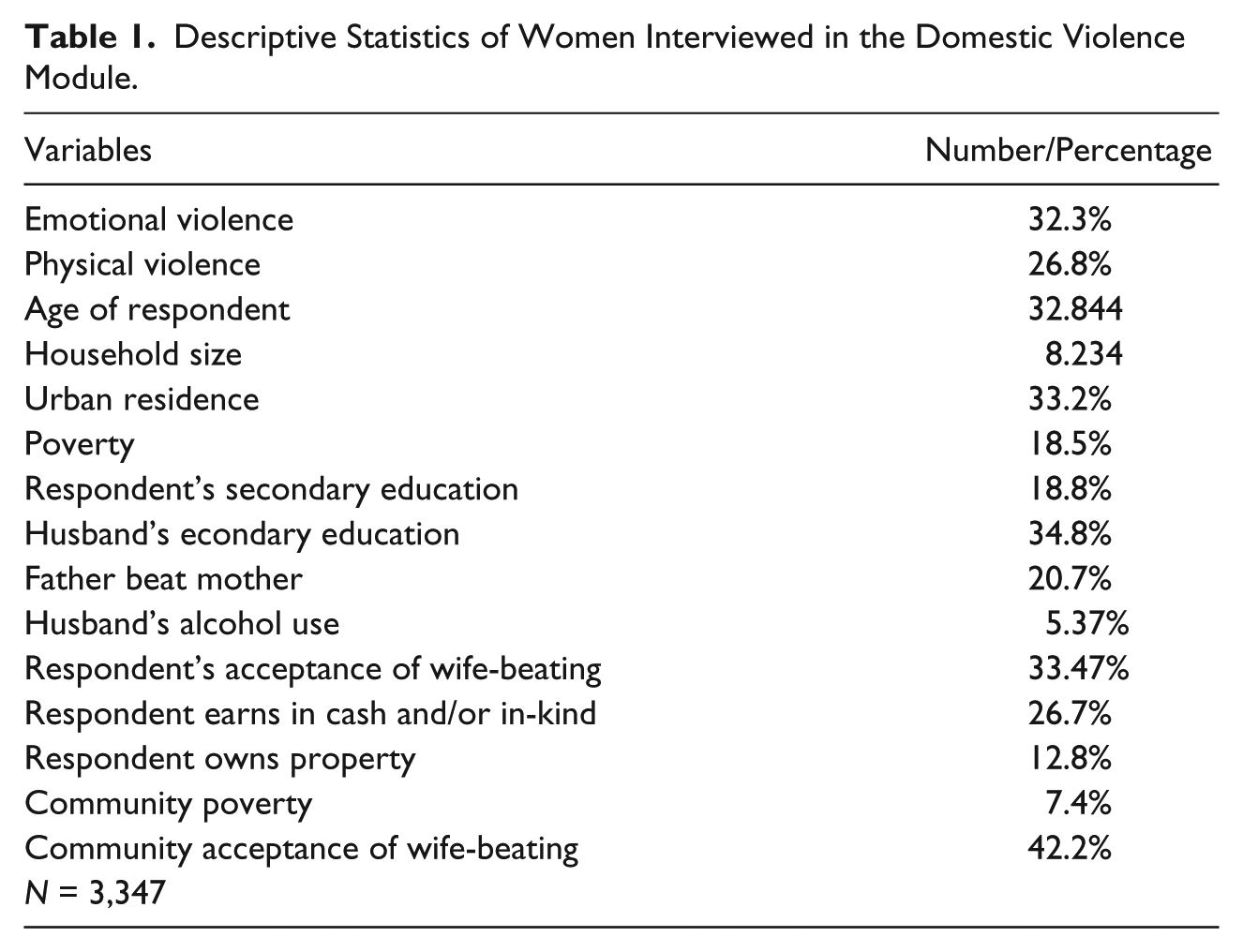
The average age of the respondents interviewed was 32.84 years in Pakistan. Around 18.5% of the respondents were living in Poverty, 18.8% of the respondents had completed secondary education and 34.8% of the Respondents’ husbands had secondary education. Totally, 20.7% of the respondents said that their fathers used to beat their mothers. 33.47% of the respondents justified their husbands in beating them because of various reasons. Correlation matrix among dependent and explanatory variables is presented in the Table A3 in the appendix. It reflects that multicollinearity is not a potential issue in our explanatory variables. We have used variance inflation factor test which suggest absence of any harmful correlation.
More than two fifth of women in Pakistan believed that their husbands were justified in beating them because of one of five reasons. These five reasons included factors such as if she went out without telling him, if she neglected the children, if she argued with her husband, if she refused to have sex with her husband, and if she burnt the food. A province-wise breakup of this number reveals that the highest number of females who said that their husband was justified in beating them were in Khyber Pakhtunkhwa (almost 75%) followed by Baluchistan (almost 50%) and Sindh (38%) and Punjab (34%).
Women in Khyber Pakhtunkhwa had the highest acceptance that their husband was justified in beating them in each of the five cases, followed by women in Baluchistan, Sindh, and then Punjab. The highest number of females, in all four provinces, believed that their husband was justified in beating them if she argued with him. This was followed by the highest acceptance in case she neglected the children and if she went out of the house without informing him. This reflects the traditional gender roles and expectations prevalent in society particularly in Baluchistan and Khyber Pakhtunkhwa provinces (see Figure 1).

Respondent’s acceptance of wife-beating by her husband.
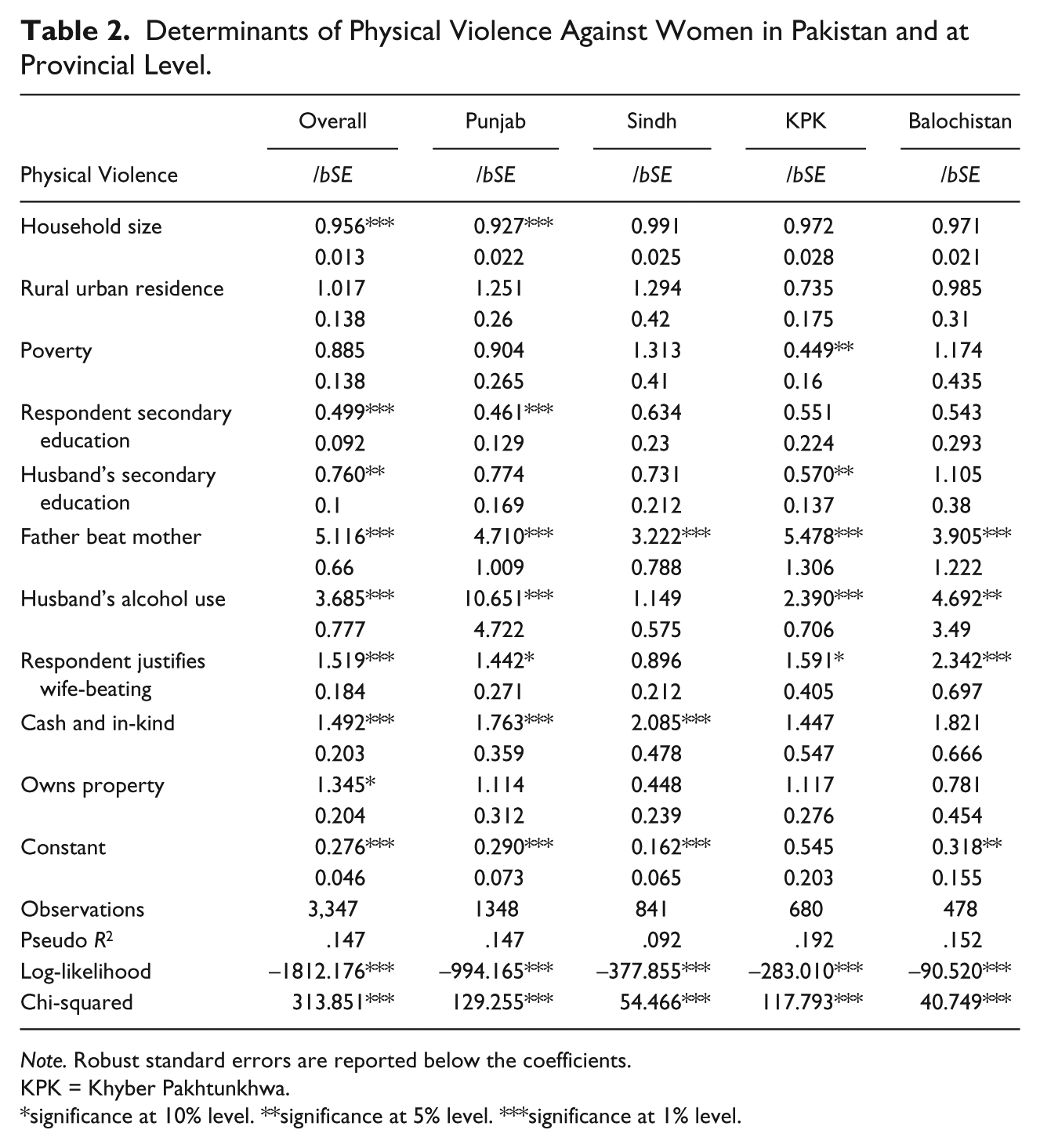
Table 2 reports the results of the logistic regression analysis with physical violence as dependent variable. The coefficient values are odd ratios. First column presents results for Pakistan and next four columns are for Punjab, Sindh, Khyber Pakhtunkhwa, and Balochistan. Robust standard errors are reported to account for heteroscedasticity as well as to account for the multistage sampling design of the DHS questionnaire.
Determinants of Physical Violence Against Women in Pakistan and at Provincial Level.
Note. Robust standard errors are reported below the coefficients.
KPK = Khyber Pakhtunkhwa.
significance at 10% level. **significance at 5% level. ***significance at 1% level.
The results indicate that women who earn in cash and/or in-kind faced a 1.49 times higher risk of physical violence from their spouses. Women with economic empowerment are more victim of physical violence in Punjab and Sindh (see Columns 2 and 3 in Table A2). Khyber Pakhtunkhwa and Balochistan results reflect that likelihood of physical VAW increases with economic empowerment however, results are statistically insignificant. The second indicator of whether the respondent owns property or not came out to be significant only for overall sample.
Larger household size or family size made respondents less vulnerable to both emotional and physical violence perhaps because of the brokering role played by joint families. Poverty was not a significant predictor of physical violence but in case of emotional violence the results indicated that respondents in the lowest income quintile were at less risk of emotional violence than those in higher income quintiles.
Respondent’s secondary education significantly reduced the odds of physical (0.499) violence against them. Husband’s secondary education also acted as a protective factor reducing the odds of physical (0.760) violence against them.
A history of violence in the family whereby the respondent witnessed her father beating her mother was associated with significantly higher odds of violence. Women experienced the highest odds of physical violence (5.116) if they had experienced a history of violence in the family. This result also holds for all four provinces. Husband’s alcohol use also increased the odds of physical violence (3.685) against women. Respondents believing that their husbands were justified in beating them were also associated with higher odds of physical violence (1.519). Results at provincial level also confirm this relationship and are statistically significant except for Sindh.
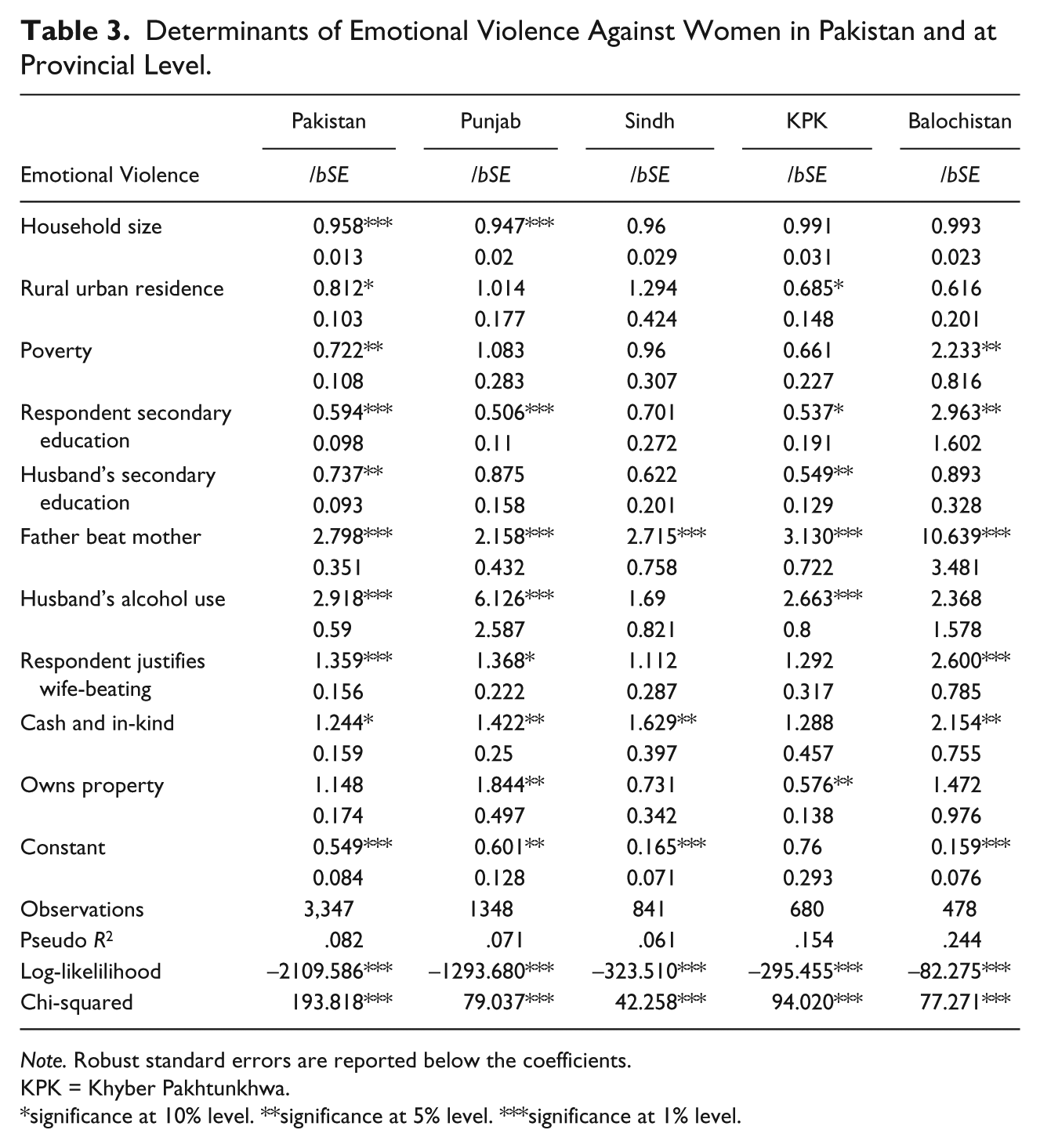
Table 3 presents empirical results for emotional VAW overall and at provincial level. Findings are quite similar to physical violence whereby family history of violence, women earning in-cash/kind, husband alcohol use, and women justification of wife-beating increases the odds for emotional violence.
Determinants of Emotional Violence Against Women in Pakistan and at Provincial Level.
Note. Robust standard errors are reported below the coefficients.
KPK = Khyber Pakhtunkhwa.
significance at 10% level. **significance at 5% level. ***significance at 1% level.
Women earning in cash and kind lead to increase in odds of emotional violence against them. This finding holds for overall sample as well as at the provincial level. An interesting finding is that if women own property, it leads to increase in likelihood of emotional violence against them in Punjab and decrease in emotional violence against them in Khyber Pakhtunkhwa.
Respondent education (in all provinces except for Sindh), her spouse’s education (except for Punjab and Sindh), and family size (in Punjab) reduces the likelihood of emotional violence against them. Balochistan results show that poverty and respondent’s education increases the likelihood of emotional violence against them. This may be due to significant decline in number of observations.
Sensitivity Analysis and Robustness
In order to check the robustness of the results, a sensitivity analysis was also conducted on the physical violence model. Table A2 reports the results of sensitivity analysis on physical violence. The baseline consisted of all variables that came out to be significant from Table 2. Additional variables included the respondent’s rural urban residence, poverty, and whether she owns property or not which were added one variable at a time to the baseline model. The added variables came out to be insignificant (see Columns 2, 3, and 4 in Table A2). However, the respondent’s ownership of property increased the odds of violence against her (1.355) and the results were significant. Our results remain the same which reconfirms the robustness of our findings. In the second sensitivity test, we do the same exercise by changing our dependent variable to emotional VAW. Results are presented in Table A3 in the appendix. Our findings remain the same which ensures the credibility and reliability of our findings.
Discussion
This article explores the association between woman’s access to economic resources and spousal violence against them. The results suggest that respondent’s secondary education and her husband secondary education act as significant protective factors for violence against them. An interaction between respondents’ level of education (no education, primary, middle, secondary, and higher level) and respondents who earn in cash and/or in-kind was demonstrated. There was a significant negative correlation between respondents who earn in cash and/or in-kind and have secondary and higher level education, with physical and emotional VAW. This implies that earning in cash may act as a protective factor for women who have secondary or higher level education.
Girls who witness a history of violence in the family, whereby their fathers used to beat their mothers, and who say that their husband is justified in beating them because of one of five reasons are more prone to land into abusive relationships themselves. Victims blaming themselves for the violence perpetrated against them only encourages the abuser and continues a vicious circle of violence. Therefore, it may be advisable to initiate counseling and training programs along with women empowerment initiatives to change the belief systems of victims. Examples of such interventions can be found around the world. The Intervention for Aids and Gender Equity (IMAGE) program, for instance, combined a microfinance program with gender and HIV training (Pronyk et al., 2006; Vyas et al., 2015). A cluster randomized trial was conducted in the Limpopo province of South Africa which combined these two initiatives (Pronyk et al., 2006; Vyas et al., 2015). The program showed a 55% reduction in physical or sexual partner violence while attributing further reductions to the gender training program rather than the microfinance program (Vyas et al., 2015).
Limitations and Future Research
An important limitation of this study is that violence is underreported because traditional cultural and gender norms prevent women from opening up to outsiders about their spousal relationships. Hence, any results that may be drawn from this study may be biased downward.
Another potential limitation of this study is that it does not contain data on the income of women or the size of their landholding which makes it difficult to draw a line as to how much women need to earn to be truly empowered. Also, it does not bifurcate women according to their employment in formal/informal setup and the implementation of labor laws in their workplace as there is a possibility that women who experience abusive relationships at the workplace also suffer from abuse/violence at home. Future research can bridge this gap by accounting for the type of work done by women and their experience of physical and emotional violence and come up with policy recommendations accordingly. Future research can also explore the possibility of conducting Randomized Control Trial (RCT) on these women empowerment initiatives with and without gender dialogue groups.
Lifetime prevalence of abuse may change over time as economic status of the respondent changes over time. This is another limitation of the abuse assessed in this study.
Conclusion
This study describes the association between women’s access to economic resources and spousal emotional and physical violence against them by using the PDHS 2012 to 2013 and employing logistic regression analysis. The results indicate that women who earn in cash and/or in-kind suffer from greater risk of spousal physical violence while women and their husband’s secondary education act as significant protective factors for violence against them. Females who experience a history of violence in the family and who say that their husbands are justified in beating them suffer from higher odds of violence. The analysis highlights the importance of increasing the level of education among boys and girls and combining gender dialogue/counseling groups along with women empowerment initiatives to lessen spousal VAW. The policy implications of our findings are to increase the level of education among both genders to change the mind-set through targeted interventions that reduce VAW in Pakistan.
Supplemental Material
Supplemental_tables – Supplemental material for Violence and Economic Empowerment of Women in Pakistan: An Empirical Investigation
Supplemental material, Supplemental_tables for Violence and Economic Empowerment of Women in Pakistan: An Empirical Investigation by Javeria Khalid and Misbah Tanveer Choudhry in Journal of Interpersonal Violence
Footnotes
Authors’ Note
Misbah Tanveer Choudhry is now affiliated with Centre for Research on Economic Empowerment of South Asian Women, UK.
Declaration of Conflicting Interests
The author(s) declared no potential conflicts of interest with respect to the research, authorship, and/or publication of this article.
Funding
The author(s) received no financial support for the research, authorship, and/or publication of this article.
Notes
Supplemental Material
Supplemental material for this article is available online.
Author Biographies
References
Supplementary Material
Please find the following supplemental material available below.
For Open Access articles published under a Creative Commons License, all supplemental material carries the same license as the article it is associated with.
For non-Open Access articles published, all supplemental material carries a non-exclusive license, and permission requests for re-use of supplemental material or any part of supplemental material shall be sent directly to the copyright owner as specified in the copyright notice associated with the article.
