



Abstract
Social media platforms such as Pinterest are often used as venues for discussing relationships, making them ideal channels for promoting healthy relationships and preventing intimate partner violence (IPV). This is particularly relevant for IPV, which has been historically understood as a personal issue and lacked support as a significant public health issue. To explore its potential as a platform for prevention, this study examines the ways in which IPV messages on Pinterest reflect public health understandings of, and approaches to, prevention, and how Pinterest users engage with these posts. We analyzed 750 Pinterest posts about IPV using the Social Ecological Model as a theoretical framework for conceptualizing framing devices. The majority of pins (82.9%) used contextually focused thematic framing, while only 8.0% used individually focused episodic framing, and 4.4% used both. The predominance of thematic framing is contrary to findings in examinations of traditional media portrayals of IPV and is likely to facilitate sharing information and education about IPV. However, posts that mention individual causal attribution and individual solution responsibility elicit more engagement than pins that do not. Overall, the Pinterest sample was more reflective of the range of IPV experiences than previous, older analyses of traditional media content, possibly indicating that the public health approach to this issue is gaining momentum. Encouragingly, the study showed increased engagement with posts that discuss psychological abuse, indicating a potentially promising transition from an emphasis on physical abuse to the neglect of psychological abuse. Although Pinterest does still show some stereotypical portrayals of IPV similar to traditional media stories, it also shows much promise for shifting the narrative around IPV in line with the current public health approach and public health professionals should be encouraged to enter the dialogue on IPV on Pinterest.
The Google Play Store describes the social media platform Pinterest as “full of possibilities to design your life.” Although this might prompt most people to think of recipes or décor ideas, what if the life you are trying to design is one free of violence? Increasingly, social media platforms such as Pinterest are being used as avenues to promote healthy relationships and prevent violence—key public health priorities (U.S. Department of Health and Human Services, 2010). Reflective of this trend, Carlyle (2017) called for a greater examination of the role of social media in promoting understanding of violence as a public health issue. This is particularly relevant for intimate partner violence (IPV), which has been historically understood as a personal or family issue and lacked support as a significant public health issue (Carll, 2003). To address this call, this article examines IPV messages on Pinterest and the ways in which they reflect public health approaches to prevention.
IPV
IPV refers to a broad range of abusive behaviors, including “physical and sexual violence, threats of physical or sexual violence, and psychological or emotional abuse by a current or former spouse, boyfriend/girlfriend, or cohabitating partner” (Breiding, Chen, & Black, 2014, p. 538). Recent data indicate that, in the United States, approximately one in three women and one in six men have experienced some form of contact sexual violence in their lifetime, nearly half have experienced psychological and/or emotional abuse, and one in six women as well as one in 19 men experienced stalking (Breiding et al., 2014; Centers for Disease Control and Prevention [CDC], 2012). The consequences of IPV are severe and far-reaching for individuals, families, communities, and society. For victims, exposure to violence is strongly associated with poor self-rated health status (Burton, Halpern-Felsher, Rehm, Rankin, & Humphreys, 2014) and the development of chronic physical and mental health conditions, eating disorders, substance use disorders, and disability/restricted functional status (Cha, Chapman, Wan, Burton, & Masho, 2015; Kang et al., 2013; Out, Hall, Granger, Page, & Woods, 2012; Sutherland, Fantasia, & McClain, 2013). The effects of violence also reverberate throughout neighborhoods, communities, and society as a whole. For example, IPV results in lost workforce productivity and increased health care and criminal justice costs (CDC, 2017a). Studies indicate that the physical and mental effects of violence are more severe for women than for men (Breiding et al., 2014). Female IPV victims are at increased risk of unemployment, homelessness, and loss of productivity, all of which contribute to the economic impact of violence and the disproportionate effects of violence on women’s lives (CDC, 2012). Moreover, although there are a plethora of risk factors associated with IPV, many are interrelated with issues of social and economic disparity. For example, lower income is associated with a higher incidence of IPV (Capaldi, Knoble, Shortt, & Kim, 2012; Cunradi, 2009), as is stress (Wiesner, Capaldi, & Kim, 2007) and unemployment (Caetano, Vaeth, & Ramisetty-Mikler, 2008). Given the widespread prevalence of IPV and its significant impact on the health of the population, the CDC recommends employing a public health approach to IPV prevention.
The CDC approaches violence prevention using the public health model, which consists of identifying problems and the accompanying risk and protective factors and then developing, implementing, and disseminating effective prevention programs (CDC, 2018; Hammond, Whitaker, Lutzker, Mercy, & Chin, 2006). Because primary prevention is the ultimate goal, comprehensively identifying risk factors contributing to violence is key. The Social Ecological Model provides a framework for understanding IPV prevention by organizing risk factors into four levels: individual (personal factors), interpersonal (close relationships), community (settings in which social relationships occur, such as schools and workplaces), and societal (broad societal factors, including social norms and policies; CDC, 2018). Risk factors for IPV at the individual level include low income, young age, belief in strict gender roles, and depression, among numerous others (CDC, 2017b). Relationship risk factors include economic stress, marital conflict or instability, and unhealthy family relationships. Community risk factors include problematic community norms and lack of sanctions against IPV, such as an unwillingness to engage in prosocial bystander behaviors. At the societal level, traditional gender norms are a risk factor (CDC, 2017b). The Social Ecological Model assumes that the risk factors across all levels interact and influence one another, making a multilevel approach to violence prevention the ultimate goal (CDC, 2018).
Despite increasing awareness of the problem, the prevalence of IPV has remained relatively unchanged for at least two decades (CDC, 2012), presenting a significant challenge for practitioners and scientists working in the field of violence prevention. The public health approach to violence prevention challenges the notion that IPV is solely an individual problem by identifying and explaining the sociocultural context in which violence occurs (Worden & Carlson, 2005). Despite this, one explanation for the continuing epidemic of IPV is the lack of social responsibility attributed to the issue and the pervasiveness of victim-blaming attitudes in media and society (Overstreet & Quinn, 2013). In fact, studies suggest that media representations are one of the most powerful influences on public perceptions about crime and victimization (Meloy & Miller, 2009), particularly regarding attributions of responsibility for the causes of and solutions to violence.
Media Representations of IPV
Numerous studies demonstrate that media framing of IPV influences both the affective and cognitive responses of readers. For example, Palazzolo and Roberto (2011) found that stories that included information about the perpetrator, such as he had been drinking or had a history of domestic violence, affected readers’ emotional responses (i.e., more likely to report anger) and their endorsement of specific punishment preferences (i.e., more likely to prefer a jail sentence for the perpetrator). They also found that information about the victim affected responses and advocated that the focus of media stories be on why the perpetrator attacked the victim, rather than the victim-blaming frame of looking at what the victim did to provoke the attack. In addition, Carlyle, Orr, Savage, and Babin (2014) demonstrated that media portrayals of IPV can affect prosocial and public health–oriented responses to IPV and called for more thematic, contextually focused framing of IPV that encourages public understanding of it as a social issue. In fact, whether a message is framed episodically or thematically can have an important impact on public opinion. Episodic framing refers to the representation of issues through either a specific event that serves as an illustration of a larger issue or the personal story of a person or persons (Zhang, Jin, & Tang, 2015). When a story is framed episodically, problems can be seen as solely personal in nature and disassociated from larger social, political, and economic factors (Kim & Willis, 2007). Thematic framing points to representation of a larger issue, often through information about background, systemic causes, and consequences (Zhang et al., 2015). The Social Ecological Model provides guidance as to what the episodic frames might be at the individual and interpersonal levels and thematic frames at the community and societal levels. Although both types of frames incorporate levels of the model, overemphasis on individual- and interpersonal-level factors can be problematic in violence prevention because episodic framing tends to be associated with attributing responsibility for an issue to an individual, whereas thematic framing tends to be associated with the attribution of responsibility to society at large (Myrick, Major, & Jankowski, 2014). This dichotomy mirrors the history of IPV and whether it is understood as a private family issue or one requiring public intervention (Carll, 2003). Although content analyses of traditional news media such as newspapers demonstrate that IPV tends to be framed primarily in episodic ways (Carlyle, Slater, & Chakroff, 2008), it is unknown whether these same patterns are present on social media platforms.
The studies described thus far demonstrate the profound impact of traditional media portrayals of IPV on public perceptions; however, there is a dearth of evidence on the portrayal of IPV on various social media channels such as Facebook, Twitter, Instagram, and Pinterest. What we know from studies of other health issues is that, despite the focus on user-generated content, there is still the tendency for health issues to be portrayed in systematic ways on social media platforms (Guidry, Messner, Carlyle, & Jin, 2015; Guidry, Zhang, Jin, & Parrish, 2016). According to the latest estimates from the Pew Research Center (2018), 69% of the entire adult population in the United States uses at least one of these social media platforms, and that number continues to grow. Given its saturation in our daily lives, social media may represent a particularly rich source of data for understanding public perceptions of IPV from a novel viewpoint.
Previous critiques suggest that the male-dominated voice represented in traditional media may contribute to skewed presentations of IPV (Meloy & Miller, 2009). Given the characteristics of Pinterest and its users, this platform may represent a unique and salient avenue for IPV-related information. More than 80% of all Pinterest users are women (Pinterest, 2017), and as of 2018, 41% of U.S. women reported using the platform (Pew Research Center, 2018). Pinterest was designed to allow users to collect ideas, information, and inspiration for a variety of projects and interests. Users can file ideas, articles, photos, and quotes using visual bookmarks (“pins”) to create virtual collections (“boards”), which can then be viewed and shared by other users. Research indicates that Pinterest users spend significantly more time per visit on Pinterest (14.2 min) than on most other social media platforms, which increases the potential for exposure to and engagement with a variety of content, including IPV-related pins. Moreover, Pinterest has the potential to be a platform for several violence prevention strategies recommended by the CDC, including engaging and empowering bystanders, strengthening supportive relationships, and reaching survivors with victim-centered services (Niolon et al., 2017). To examine IPV messages on Pinterest, the following broad research question is posed:
To be reflective of the public health approach, Pinterest messages should address the breadth of forms of IPV; illustrate risk factors across the Social Ecological Model with an emphasis on thematic framing devices to situate IPV in a societal context; and focus on prevention activities.
Method
This study analyzed IPV-related posts on social media platform Pinterest. On February 1 and 2, 2016, each third pin for each keyword search (“IPV/Intimate Partner Violence,” and “Domestic Violence”) was selected by scrolling down the page with search results and any links to connected websites noted, reaching a total of 375 pins per keyword for a total of 750 pins in the sample. Protocols were developed, tested, and implemented for the coding process. Pins were coded for IPV type (physical, sexual, psychological and economic abuse, stalking, cyber-stalking, and reproductive coercion), Social Ecological Model variables (factors at the individual, relationship, community, and societal levels), episodic and thematic framing, engagement variables (repins, likes, and comments), website connection, and visual type. Social Ecological Model variables were operationalized separately for the contexts of attributions for causes of IPV and responsibility for solutions (see Table 1). Coding categories were not mutually exclusive (e.g., Pins could contain attributions at multiple levels of the Social Ecological Model or both thematic and episodic framing devices). Two coders were trained to establish intercoder reliability. Both coders coded 10% of the posts (n = 75). After pretesting and subsequent changes to the coding protocol, the intercoder reliability test with the ReCal statistical program showed Scott’s Pi (Scott, 1955) was on average .80. The individual coefficients were all considered to be reliable, with the lowest coefficient at .70. After achieving reliability, the first coder coded the remaining 675 pins for all study variables.
Social Ecological Model.
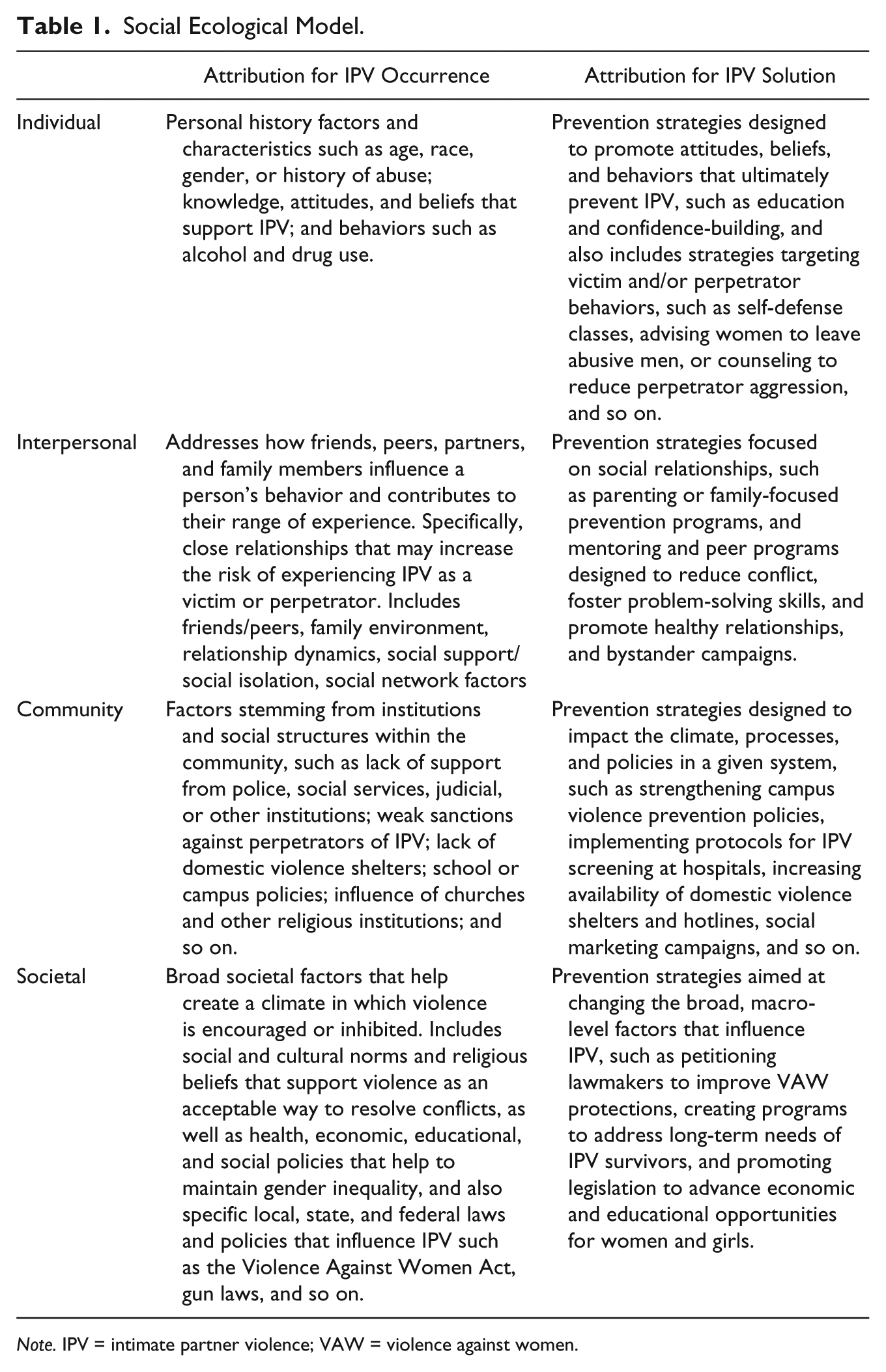
Note. IPV = intimate partner violence; VAW = violence against women.
Results
Research Question 1 asked (a) what are the ways in which IPV messages on Pinterest reflect public health understandings of, and approaches to, prevention, and (b) how do Pinterest users engage with these posts? In this sample, 54.3% (n = 407) of all pins mentioned a specific type of IPV, while the rest discussed IPV more generally. Physical abuse, sexual abuse, and psychological/verbal abuse were the most common types of IPV mentioned (see Table 2 for a complete list). Mann–Whitney U tests were run to determine whether there were differences in repin, like, and comment frequencies between pins with the presence versus absence of different IPV types. Social media engagement variables are not normally distributed, and therefore the median is the more appropriate measure of central tendency. Repin and like frequencies were statistically significantly higher in posts that mentioned a specific type of IPV, in pins that mention sexual abuse, in pins that mention psychological/emotional abuse, and in pins that mention economic abuse versus posts that do not mention these variables (see Table 3). Significantly higher (p < .05) comment frequencies were also seen in posts that mention a specific type of IPV as well as those that mention psychological/emotional abuse; however, those results were not meaningful in practice. There were no significant differences in repin and like frequencies between posts that mentioned physical abuse and posts that did not. We also looked specifically at rape and homicide, finding that 8% (n = 60) of the sample mentioned rape and 13.5% (n = 102) mentioned homicide. Repin and like frequencies were statistically significantly higher (p < .05) in posts that mentioned rape. In addition, repin frequencies were statistically significantly higher (p < .05) in posts that mentioned homicide.
Types of IPV.
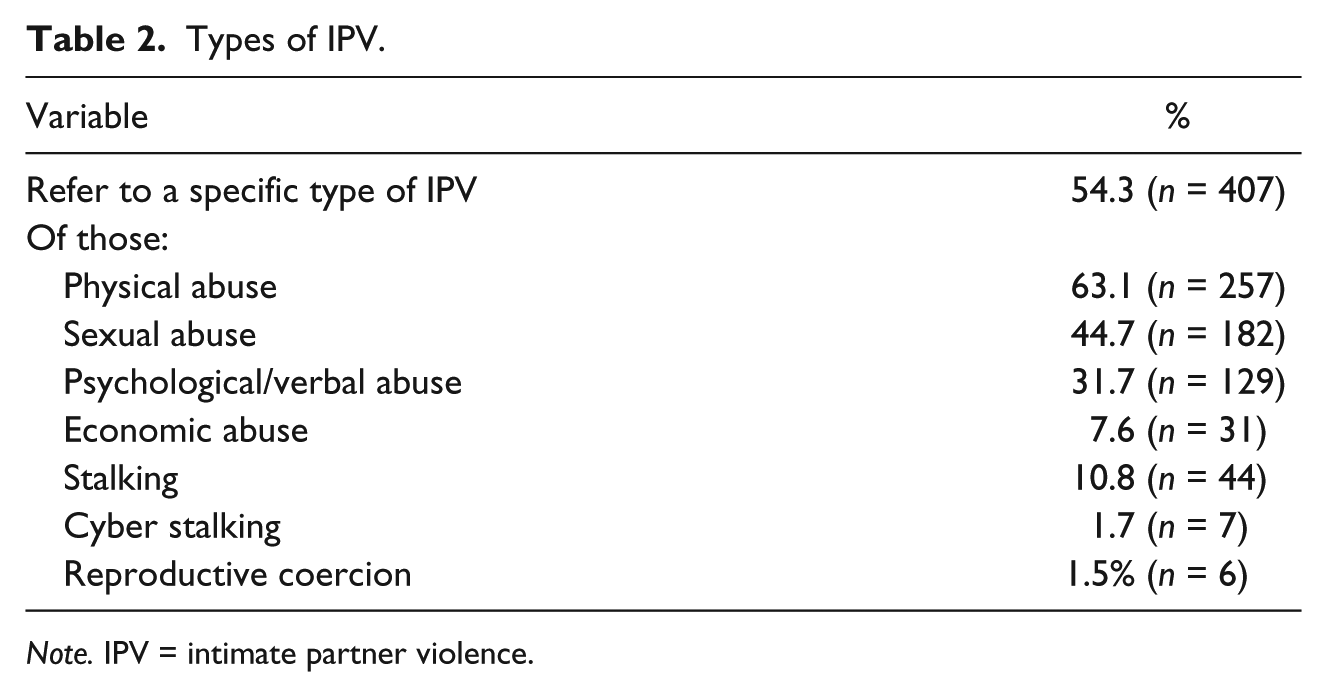
Note. IPV = intimate partner violence.
Dichotomous Independent Variables and Median Engagement.
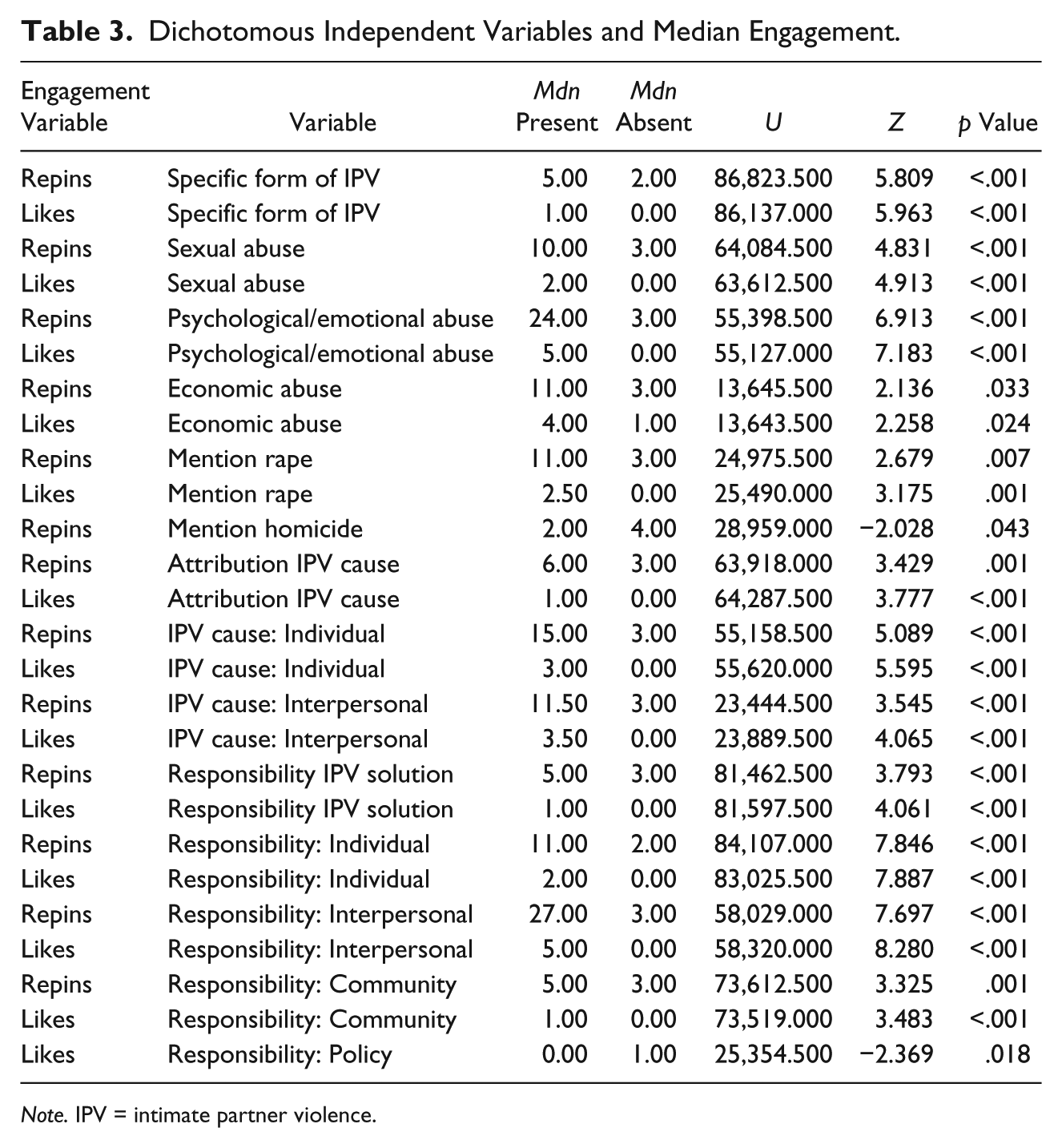
Note. IPV = intimate partner violence.
Looking at which constructs of the Social Ecological Model were present in IPV-conversations on Pinterest, attribution of causal responsibility for IPV was present in 26.7% (n = 200) of all pins. Of those pins, 71.0% (n = 142) referred to individual, 26.0% (n = 52) to interpersonal, 10.0% (n = 20) to community, and 31.0% (n = 62) to societal-level factors. Attribution of solution responsibility to prevent/stop IPV was present in 50.4% (n = 378) of all pins. Of those, 65.9% (n = 249) referred to individual, 34.9% (n = 132) to interpersonal, 69.8% (n = 264) to community, and 22.8% (n = 86) to societal-level factors. Using Mann–Whitney U tests, repin and like frequencies were statistically significantly higher (p < .05) in posts that mentioned the attribution of causal responsibility, in pins that mention individual responsibility, and in pins that mention interpersonal causal responsibility (see Table 3). Significantly higher comment frequencies were also seen in these posts; however, the differences were too small to be meaningful in practical application. There were no significant differences in repin and like frequencies between posts that mentioned community or policy attribution of causal responsibility for IPV and posts that did not.
Mann–Whitney U tests were also run to determine whether there were differences in engagement frequencies between pins with the presence versus absence of the attribution of responsibility for preventing or stopping IPV and related Social Ecological Model variables. Repin and like frequencies were statistically significantly higher (p < .05) in posts that mentioned the attribution of responsibility for preventing or stopping IPV, and in pins that mention individual responsibility to prevent or stop IPV, as well as in pins that mention interpersonal and community responsibility to prevent or stop IPV (see Table 3). Significantly higher comment frequencies were also seen in posts that mention individual and interpersonal responsibility to prevent/stop IPV; however, those results were not meaningful in practice. In addition, like frequencies were significantly lower for posts that mentioned policy responsibility for preventing or stopping IPV than for posts that did not.
In regard to framing, the majority of pins, 82.9% (n = 622) used thematic framing, while only 8.0% (n = 60) used episodic framing and 4.4% (n = 44) used both. Kruskal–Wallis tests were run to determine whether there were differences in repin, like, and comment frequencies between groups of Pinterest posts that differed in their framing (episodic, thematic, both, or neither). Median repin frequencies were not statistically significantly different between the different types of sources, χ2(3) = 7.329, p = .062. As there was no statistically significant difference in media frequencies, no pairwise comparisons were performed.
Of the total sample, 69.6% (n = 495) were posted by individual accounts, while 23.3% (n = 166) of the pinners’ identity could not be clearly identified because not enough information was provided for the account. Only 4.2% (n = 30) of the pins were posted by public health or other health entities. However, Kruskal–Wallis tests showed there was no difference in engagement by pinner identity. Overall, repinning was the most popular type of engagement: 75.6% (n = 567) of pins were repinned at least once (M = 51.31, SD = 263.456, R = 6,270). In contrast, 50.9% (n = 382) of pins received at least one like (M = 12.55, SD = 74.749, R = 1,611) and 6.7% (n = 50) of all pins received at least one comment (M = 0.19, SD = 0.917, R = 11). The median for the number of repins was 3.50, the median for the number of likes was 1.00, and the median for the number of comments was 0.00.
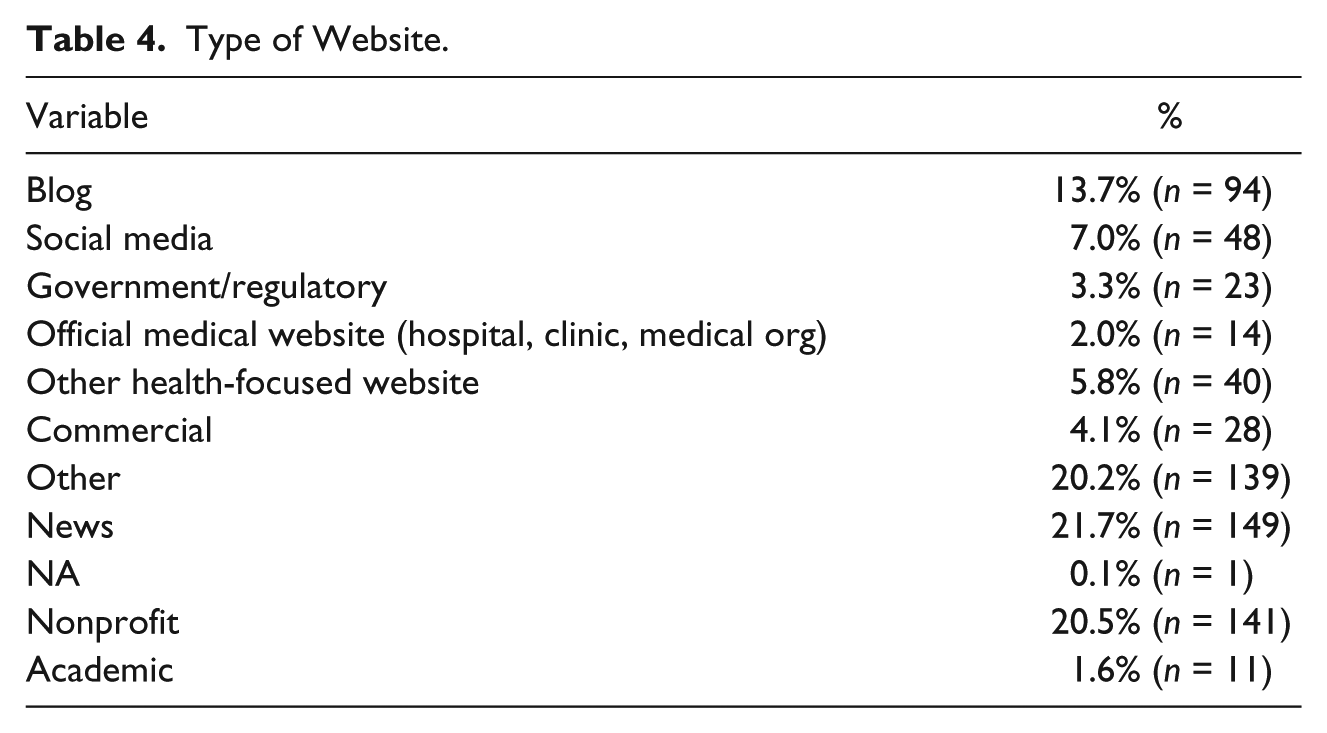
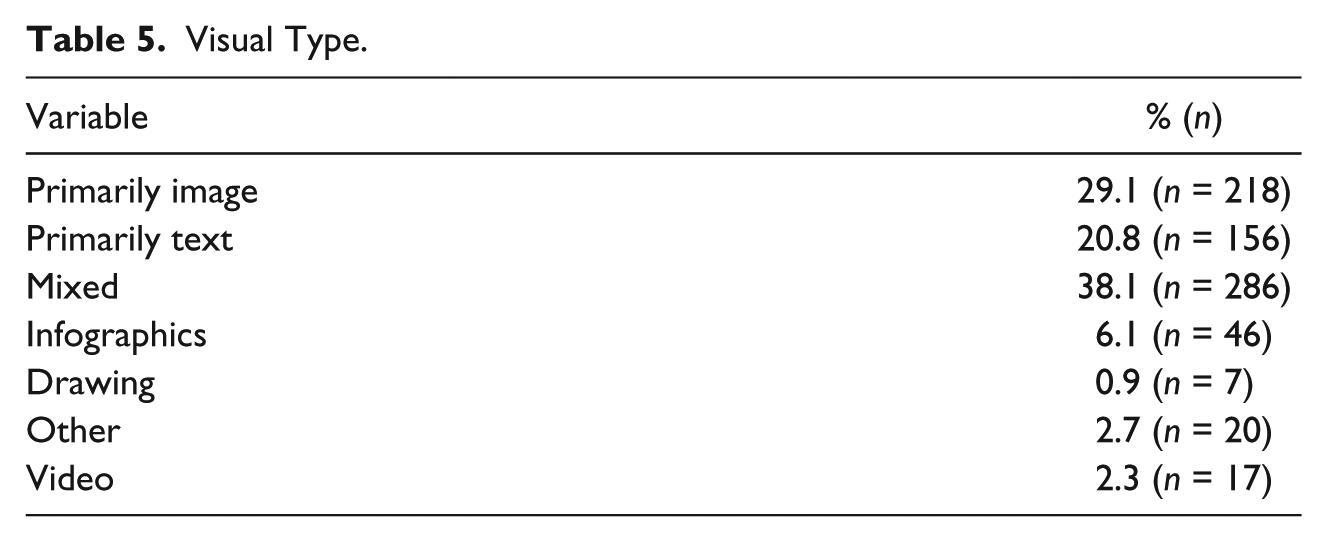
Finally, the clear majority of the pins (91.7%; n = 688) in this sample linked to another website. Most of the pins linking to another website linked to a news website (20.0%; n = 150), while 18.8% (n = 141) linked to a nonprofit website, and 13.1% (n = 98) linked to a blog (see Table 4 for a complete list). Of the visuals 1 included in the pins, 29.1% (n = 218) consisted of primarily image, 20.8% (n = 156) consisted of primarily text, and 38.1% (n = 286) consisted of a mix of image and text (see Table 5 for a complete list). Kruskal–Wallis tests were run to determine whether there were differences in repin, like, and comment frequencies between groups of Pinterest posts that differed in their visual type (primarily image, primarily text, mix of image and text, infographic, drawing, video, or other). Distributions of repin, like, and comment frequencies were similar for all groups, as assessed by visual inspection of a boxplot. Median repin frequencies were statistically significantly different between the different types of sources, χ2(6) = 66.488, p < .001. Subsequently, pairwise comparisons were performed using Dunn’s (1964) procedure with a Bonferroni correction for multiple comparisons, with adjusted p values presented. This post hoc analysis revealed statistically significant differences in repin frequencies between several of the groups. Median like frequencies were also statistically significantly different between the different types of sources, χ2(6) = 63.015, p < .001. Subsequently, pairwise comparisons were performed using Dunn’s (1964) procedure with a Bonferroni correction for multiple comparisons, with adjusted p values presented. This post hoc analysis revealed statistically significant (p < .05) differences in like frequencies between several of the groups. Visuals that consisted primarily of an image elicited statistically significant fewer repins and likes compared with text-based visuals, infographics, and visuals comprised of a mix of image and text. Text-based visuals and infographics produced higher median number of repins and likes compared with most other types of visuals.
Type of Website.
Visual Type.
Discussion
Numerous studies have demonstrated that media present content in systematic ways which may influence public understanding of public health issues such as IPV (Carlyle et al., 2008; Yanovitzky & Bennett, 1999), including making certain schemas or heuristics more accessible than others (Zillmann & Brosius, 2012). The results here are, to a degree, consistent with content analyses of IPV in other media. For example, Carlyle et al. (2008) found that newspaper articles portrayed IPV as predominately physical violence and as an individual-level problem. However, whereas 96% of portrayals depicting a form of IPV in Carlyle and colleagues’ sample referred to physical violence with less than 2% mentioning sexual abuse, the current sample of pins that portrayed a specific type of IPV portrayed physical abuse in 63.1% of pins and sexual abuse in 44.7% of the pins. Psychological abuse was also frequently mentioned (31.7% of the sample) and 7.6% of pins referred to economic abuse. The Pinterest sample could be more reflective of the range of IPV experiences because it is public-generated content and not subject to framing by news media gatekeepers. The difference could also be due to shifts in public understanding of what constitutes IPV in the years since Carlyle and colleagues (2008) collected their sample as the public health approach to this issue has been gaining momentum. Even more encouraging is the relatively high level of engagement with mentions of psychological, sexual, and economic forms of abuse. The presence or absence of physical abuse was not associated with a difference in Pinterest engagement level. However, posts mentioning sexual abuse, psychological/emotional abuse, or economic abuse elicited significantly higher engagement in the form of both repins and likes. Although we cannot directly equate repinning with endorsement of the message, engaging with the messages in any way demonstrates that these forms of abuse have become a part of public discourse surrounding IPV.
As promising as this shift is, there is evidence that the stereotypical framing of IPV evidenced in Carlyle et al.’s (2008) study still has influence on the heuristics people use to process IPV stories, as demonstrated by the pattern of engagement with pins in this study. Specifically, pins featuring individual causal attribution as well as those featuring individual solution attribution were more likely than those not featuring these factors to be repinned and liked. Conversely, pins that included societal/policy causal attribution as well as those featuring societal/policy solution attribution either did not affect pin engagement or had significantly lower levels of engagement. It could be that the pins featuring individual factors resonate most with public perceptions of IPV. Exemplars of individual factors are likely to be most accessible and consistent with the heuristic—or less effortful—processing that is likely taking place on a medium such as Pinterest. Yet, this does not negate the potential for exemplification of these other forms of attribution on Pinterest and that, over time, such repeated exemplification could help bring public perceptions of IPV in line with broader public health approaches. In addition, pins that refer to community solutions for IPV elicited more repins and likes than pins that did not. Finally, although at lower levels, mentions of bystander encouragement and engagement and mentions challenging victim-blaming attitudes were both present, indicating a hopeful trend.
Encouragingly, the majority (82.9%) of all pins used thematic framing. This is likely to facilitate sharing information and educating about IPV. However, what seems to be somewhat lacking from this sample is the type of storytelling that happened on both Twitter and Instagram in 2014 and 2016 with the #WhyIstayed/#WhyIleft and the #NotOkay conversations which primarily focused on women sharing their experiences with IPV and sexual abuse. Related to this, while episodic versus thematic message framing did not seem to have a measurable effect on Pinterest engagement in this sample, thematic framing was present in a great majority of the pins compared with episodic framing. This may be another hopeful sign, as thematic framing tends to attribute responsibility for an issue to society instead of to the individual. In line with this, infographics, text-based messages, and mixed image/text messages are associated with significantly higher engagement than primarily image-based visuals and “other” visuals (mostly maps and graphs). The three higher engagement type visuals are generally more complex and contain more information than the primarily image-type visuals. This likely serves the high percentage of thematically framed pins in this sample, providing more in-depth information about the issue of IPV. Considering these trends in IPV communication, Pinterest as a medium for public health promotion campaigns focused on IPV clearly deserves further exploration.
Limitations and Future Directions
This study has several limitations that, in turn, point to potential future study directions. First, this study utilized a limited number of search terms. Future studies should broaden these terms to include a wider range of behaviors considered to be IPV. Second, while Pinterest is a popular social media platform, it is by no means the only or most popular one, even among visual platforms. Pinterest as a platform has a more homogeneous user-based than other platforms such as Twitter and Facebook, particularly in terms of gender and racial diversity (Pew Research Center, 2018), which limits the generalizability of the findings. Although evolving, the Pinterest user base is primarily White and female, and as such, the types of messages shared via this medium may not reflect an intersectional approach to understanding IPV. Generalizability is also limited by the lack of publicly available data on other, potentially important, user demographics. In addition, although it was not explicitly coded for, the vast majority of posts about IPV in the sample presume a female victim and male perpetrator. This is similar to Carlyle et al. (2008) who found no mention of any same-sex couples in their content analysis of news coverage of IPV, although they did find some coverage of male victims and female perpetrators (see Carlyle, Scarduzio, & Slater, 2014, for a discussion of the different ways in which these situations were covered). Additional platforms should be considered for future studies. In addition, although this study used the Social Ecological Model as a framework, there are other health behavior theories that provide more detailed explanatory and predictive frameworks for both understanding user-generated IPV messages and designing prevention messages. Finally, Pinterest engagement variables, such as most social media variables, are limited in the intensity of engagement, and other, more in-depth engagement measures should be included in future studies to gain a more comprehensive view of IPV attributions and conversations.
Conclusion
Although Pinterest—especially through its engagement metrics—still shows some stereotypical portrayals of IPV, similar to traditional news stories, it also shows much promise for shifting the narrative around IPV in line with the current public health approach. Pinterest may be a good platform for providing exemplars of forms of abuse other than physical, as well as for attributions of causal and solution responsibilities that include an emphasis on societal attributions. Although societal attributions elicit less engagement, people may not yet have the conversational tools to respond to these forms. However, gaining entry into a public forum is an important first step. Public health professionals should be encouraged to enter the dialogue on IPV on Pinterest. Resources and informational support are easy to include, and public health professionals can provide more resources on how to respond to nonphysical forms of abuse, as well as emphasize the societal attributions and responsibilities in addressing IPV.
Footnotes
Declaration of Conflicting Interests
The author(s) declared no potential conflicts of interest with respect to the research, authorship, and/or publication of this article.
Funding
The author(s) received no financial support for the research, authorship, and/or publication of this article.
