




Abstract
In this study, we examined how sexual objectification can help explicate the relationship between alcohol use and sexual assault perpetration. Specifically, we examined a mediation and a moderation model. Moreover, given that gender roles and sexual norms vary across cultures, we also examined the structural invariance of the models between a U.S. male (n = 404) and Philippines male (n = 100) college sample. Path analyses were used to examine the mediation and the moderation model, and multiple groups analysis was utilized to examine model differences between samples. Sexual objectification fully mediated the relationship between alcohol use severity and sexual aggression. Furthermore, the mediation model was invariant between the U.S. sample and Philippines sample. A significant alcohol use severity by sexual objectification interaction effect was found for both samples. Simple slopes analysis indicated that alcohol use severity was not associated with sexual aggression among those with high sexual objectification scores. Among men with low sexual objectification scores, alcohol use severity was associated with higher likelihood toward sexual assault. For the Filipino sample, the impact of alcohol consumption on sexual aggression is more pronounced compared with the U.S. sample. Sexual objectification is a key variable in understanding the alcohol use—sexual aggression relationship. Country differences in alcohol use, cultural meanings of Filipino masculinity, and sexual norms and behaviors accounts for noninvariance in the moderation model. Implications for sexual assault reduction programs were also discussed.
The link between alcohol consumption and sexual aggression perpetration has been repeatedly found using both experimental (using alcohol administration tasks; for example, Noel, Maisto, Johnson, & Jackson, 2009) and cross-sectional and prospective survey methodologies (e.g., Lisco, Parrott, & Tharp, 2012; studies such as this usually utilize self-reports of alcohol consumption, hence do not account for actual intoxication). For example, cross-sectional studies indicated that perpetrators were intoxicated in 30% to 75% of sexual assaults reported (Abbey, 2011). Several theoretical frameworks have also been suggested to help account for this relationship, using alcohol’s pharmacological and psychological effects to explain the alcohol use—sexual aggression link (Abbey, 2011). However, as these theoretical frameworks suggested, alcohol use is not the sole or necessary predictor of sexual assault perpetration. The alcohol use—sexual assault link is complex and multifactorial, and alcohol use is only one among many factors linked to sexual assault (Abbey, Zawacki, Buck, Clinton, & McAuslan, 2004; Testa, 2002). Furthermore, other factors have been associated with alcohol either as a mediator (e.g., misperception of a woman’s sexual intent) or a moderator (e.g., hostile sexism; Abbey, Wegner, Woerner, Pegram, & Pierce, 2014). In this article, we examined sexual objectification as another factor that could explicate the alcohol use—sexual assault perpetration link. Specifically, we examined a mediation (Figure 1a) and a moderation model (Figure 1b). Furthermore, because gender roles and sexual norms vary across cultures, we examined the structural invariance of these models between two countries: the United States and the Philippines.
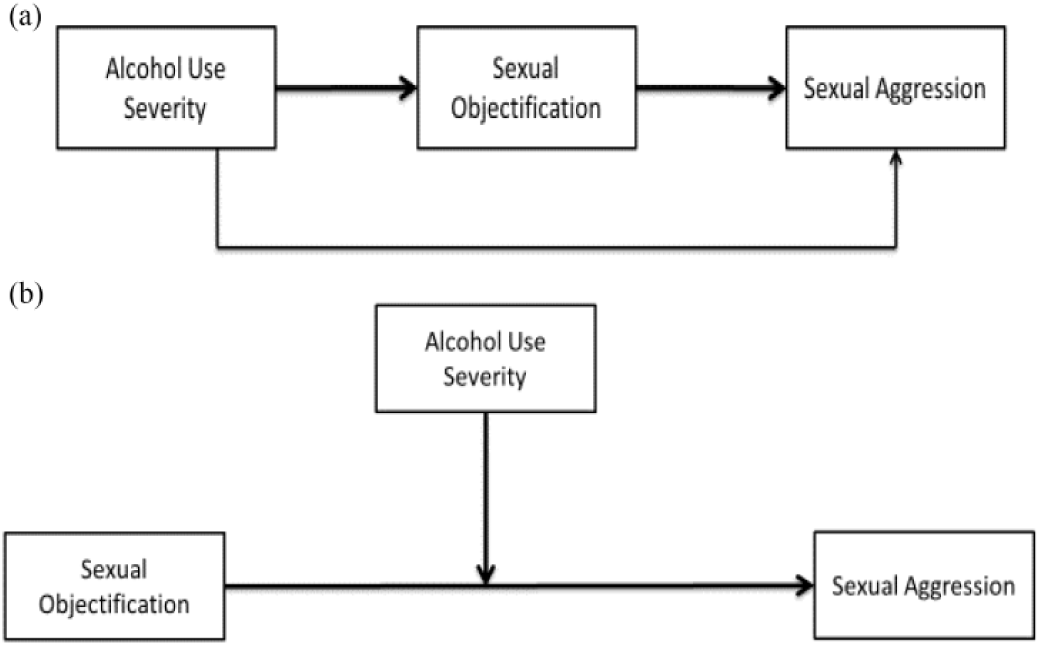
Proposed (a) mediation and (b) moderation models.
Sexual Objectification as a Mediator of Alcohol Use and Sexual Aggression
Sexual objectification occurs when a person’s body or sexual functions are separated from their personality and reduced to instruments of sexual gratification (Fredrickson & Roberts, 1997). Experiences of being sexually objectified include being subjected to objectifying gazes (leering or ogling) and degrading sexual gestures, receiving sexual comments about physical appearance, and uninvited sexual touch (Davidson, Gervais, Canivez, & Cole, 2013). Although the negative impact of sexual objectification experiences among women have been well documented (Szymanski, Moffitt, & Carr, 2011), burgeoning evidence also indicates that men’s sexual objectification of women is associated with sexual assault perpetration (e.g., Gervais, DiLillo, & McChargue, 2014). For instance, using the implicit association test, men who automatically associate women with animals or objects were more likely to endorse rape-supportive attitudes and have higher rape proclivity (Rudman & Mescher, 2012). It was hypothesized that dehumanizing women and treating them as sexual objects made it easier for potential perpetrators to engage in sexually coercive behavior (Fredrickson & Roberts, 1997). Results from this line of research suggest a sexual objectification—sexual aggression pathway.
Burgeoning evidence also suggests that alcohol intoxication influences sexual objectification. A recent study indicated that alcohol intoxication among men increased objectifying gazes toward women, and intoxicated participants rated women as less warm and competent compared with their sober counterparts (Riemer et al., 2017). Coupled with the already established alcohol consumption—sexual aggression link (Abbey, 2011), the existing literature suggests a mediation model (Figure 1a).
To our knowledge, only one study has examined the alcohol use severity—sexual objectification—sexual aggression mediation model (Gervais et al., 2014). Results from this cross-sectional study indicated that sexual objectification mediated the relationship between the quantity of alcohol consumed and sexual aggression among U.S. college males. However, unlike Riemer and colleagues’ (2017) study that utilized a laboratory-based alcohol administration task, Gervais et al.’s (2014) study measured self-reports of alcohol consumption. Gervais and colleagues (2014) utilized the alcohol myopia theory (Steele & Josephs, 1990) as an explanatory framework to account for the mediation. According to the model, alcohol intoxication restricts the number of internal and external cues that can be processed, thereby influencing the potential perpetrator to focus only on the most salient social cues. It was argued (Gervais et al., 2014) that, as the perceptual field narrows, and decision making becomes more hampered by alcohol intoxication, attending more to the sexual body parts (i.e., objectifying a woman) compared with the less salient attributes (e.g., thoughts, feelings, and agency) increases, which subsequently increases the likelihood of sexual assault perpetration.
Alternative Moderation Model
There is also a theoretical justification to posit a moderation model (Figure 1b). Various theoretical models (e.g., I3 theory; Slotter & Finkel, 2011) have suggested that alcohol use tends to disinhibit latent aggressive tendencies and inhibit protective factors (Abbey et al., 2014). In alcohol administration studies, the likelihood of sexual aggression was high among intoxicated men, but even higher among those who espoused attitudes supportive of sexual violence (e.g., Noel et al., 2009). Other cross-sectional studies also indicated that heavy episodic drinking magnified the misogynistic/sexual violence-supportive attitudes and sexual aggression relationship (e.g., hostile sexism; Lisco et al., 2012). When embedded in this line of research, sexual objectification can be considered as a latent aggressive tendency that, when disinhibited by alcohol intoxication, increases the likelihood of sexual aggression.
Presented with equally plausible sexual objectification-alcohol use models, the first aim for this article is to examine and compare the mediation (Figure 1a) and the moderation model (Figure 1b).
Cross-Cultural Differences in Sexual Objectification, Alcohol Use, and Sexual Assault
The second aim for this article is to compare the mediation and moderation models between a sample of U.S. and Filipino males. Prominent sexual objectification theories have been developed and examined predominantly within Western industrialized countries (e.g., Fredrickson & Roberts, 1997; Szymanski et al., 2011), and several authors have cautioned against generalizing theories developed in these countries onto non-Western cultures (Ellsberg & Heise, 2005; Hall, Teten, & Sue, 2003). Further complicating matters are the vast cross-cultural differences in prevalence rates, forms, and characteristics of sexual violence, risk factors, and sexual norms (Ellsberg & Heise, 2005; Krug, Mercy, Dahlber, & Zwi, 2002).
Sexual norms and practices vary across the United States and the Philippines. For instance, the number of adolescent and young adult Filipino males who have had sexual intercourse (33% for ages 14-18 years; Osorio et al., 2012, around 67% for ages 20-22 years; Cheng, Gipson, Perez, & Cochran, 2016) is less than that of their U.S. counterparts (46% for ages 15-19 years; 85% for ages 20-24 years; Martinez, Chandra, Abma, Jones, & Mosher, 2006). Furthermore, it is unclear to what extent sexual objectification occurs in the Filipino culture compared with the United States. On one hand, the Philippines can be considered as egalitarian, which is reflected in Filipino women’s active participation in the financial, economic, and political sphere (World Economic Forum, 2017). The Philippines even ranked higher (ranked 10) in gender equality compared with the United States (ranked 49; World Economic Forum, 2017). On the other hand, vestiges of Spanish colonization still exist where gender role imperatives of machismo (male dominance, and emphasis on male virility and sexual conquests) and marianismo (female submissiveness and sexual purity) are still apparent in the Filipino culture (Nadal, 2011). Media portrayals oftentimes depict women as either being in the home/as homemakers or dressed provocatively (Prieler & Centeno, 2013), and women in the Philippines have been advertised to foreigners as sexual objects (Barry, 1996). Literature on self-reported sexual coercive behaviors among Filipino males is sparse; however, based on two qualitative studies (Serquina-Ramiro, 2005; Siason, 2002), prevalence rates of sexually aggressive behaviors among adolescents and college students range from 17% to 26%.
Alcohol consumption and related behaviors also differ between the United States and the Philippines. U.S. males have a higher prevalence of heavy episodic drinking (42%) and alcohol use disorders (18%) compared with the Filipino males (heavy episodic drinking = 22%, alcohol use disorders = 9%; World Health Organization [WHO], 2014). Compared to the United States, there are more Filipino males who have never drank alcohol (29% and the United States is 4%) or have been abstaining in the past 12 months (55% and the United States is 17%; WHO, 2014). Alcohol consumption in the Philippines is an acceptable behavior, but it is primarily a social activity aimed at reinforcing the value of oneness (pakikiisa and pakikipagkapwa) among kin and friends (Alegre, 1992; Enriquez, 1977). Alcohol use is also bound by cultural norms, particularly hiya (loss of face) and pakikisama (social acceptance). As such, Filipinos are expected to behave accordingly for fear of bringing shame (kahihiyan) to themselves and their families. Boorish and lewd behaviors when intoxicated are frowned upon, and transgressions of social norms could lead to severing of social ties (Alegre, 1992; Evangelista, 1973). Literature on alcohol consumption and sexual aggression among Filipino males is nonexistent; however, Kerridge and Tran (2016) found a relationship between alcohol intoxication and intimate partner violence.
Study Overview
Although numerous studies have shown that alcohol use severity is associated with sexual aggression, there is still a need to uncover explanatory mechanisms to account for this relationship. In this study, we propose sexual objectification as one of these mechanisms, either as a mediator of the alcohol use–sexual aggression link (mediation model, Figure 1a) or as a latent sexual aggression tendency that is disinhibited by alcohol consumption (moderation model, Figure 1b). Because sexual objectification and alcohol use also differ depending on the culture, there is a need to test conceptual models across different countries and cultures. To achieve this end, we examined the similarities and differences of the proposed mediation (Figure 1a) and moderation models (Figure 1b) across samples from the United States and the Philippines.
Method
Participants and Procedures
This study utilized convenience sampling. The University of Nebraska—Lincoln and Creighton University Institutional Review Boards (IRB) reviewed and approved the research protocol, and was thereafter registered in the University of the Philippines—Visayas Office of the Vice Chancellor for Research and Extension (Philippines University’s parallel to IRB). Participants from the United States were from a large Plains State university and a private liberal arts college. No significant group differences among variables of interest were observed between the two institutions. Details of the study were made available on an undergraduate research subject pool (https://www.sona-systems.com) and participants self-selected to participate in the study. Participants from the Philippines were from a large public university in the Visayas region. Study details were made available during class, and participants were provided with a web link to the online survey platform. All data were collected online using Qualtrics (http://www.qualtrics.com). For both countries, recruitment was conducted in prerequisite undergraduate classes (e.g., introductory chemistry, math, psychology, etc.) and other psychology courses. Participants were provided course credits for participation.
A total of 433 males from the United States and 123 from the Philippines participated in the study. To evaluate random responding, four validity items (e.g., “If you are paying attention to this survey, choose ‘moderately agree’”) were randomly embedded among the questions in the survey. Those who got a score of at least two in the validity test were retained (the United States = 415, the Philippines = 105). Due to the male-to-female sexual violence focus of this study, those who self-identified as gay were further excluded in the subsequent analyses. Final sample was comprised of 404 males from the United States and 100 males from the Philippines. See Table 1 for demographic characteristics.
Demographic Characteristics of the U.S. (n = 404) and Philippines (n = 100) Sample.
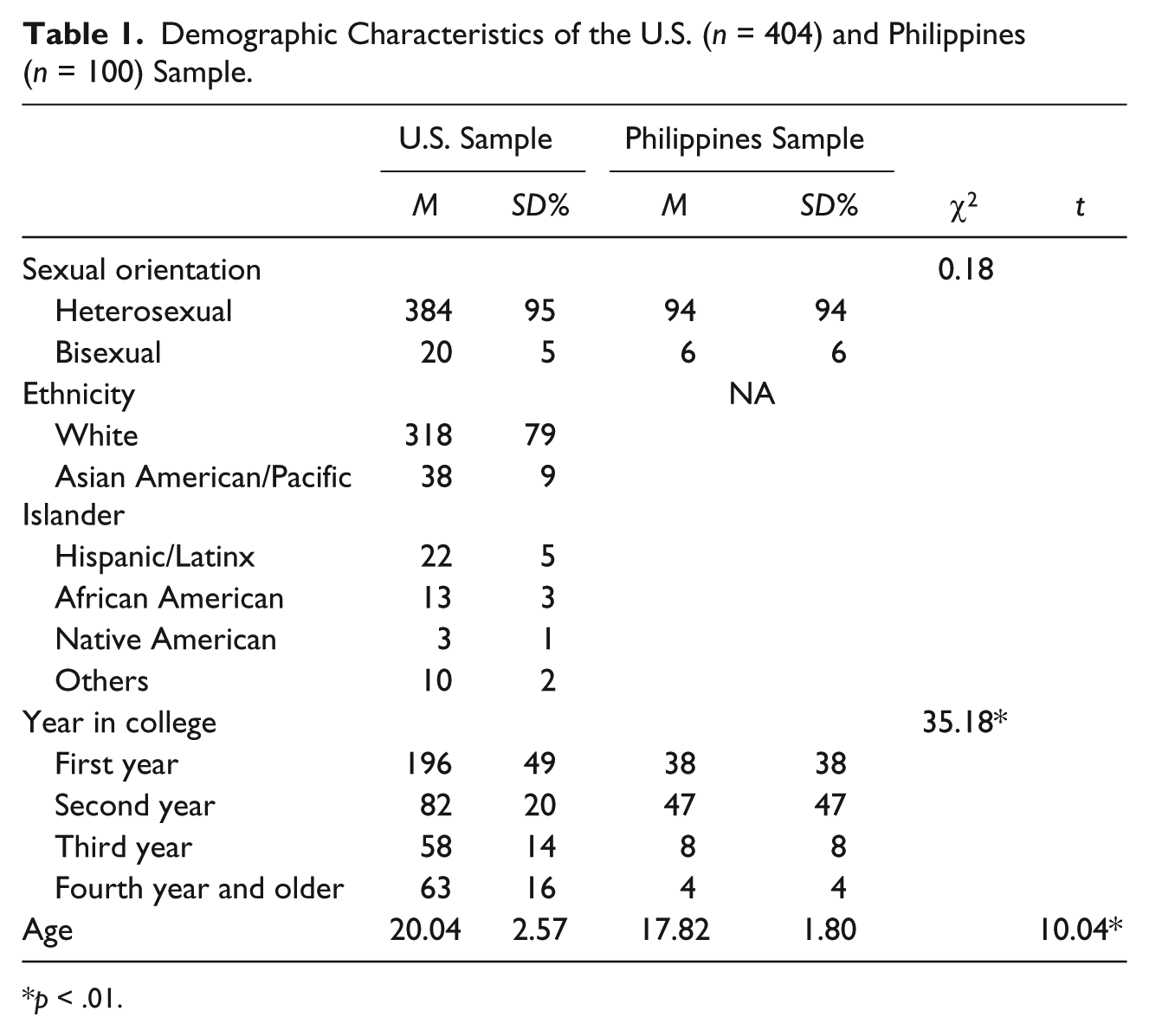
p < .01.
Measurement
Alcohol use severity
The three-item alcohol use disorders identification test—consumption factor (AUDIT-C; Babor, Higgins-Biddle, Saunders, & Monteiro, 2001) was used to measure frequency (e.g., “How often do you have a drink containing alcohol?”; 0 = never, 4 = 4 or more times a week) and amount of alcohol consumption (e.g., “How many drinks containing alcohol do you have on a typical day when you are drinking?”; 0 = 1 or 2, 4 = 10 or more). Responses were provided on a 0-to-4 scale, with higher scores indicating higher alcohol consumption. The sum of the scores was utilized in the analyses. Prior research suggested relative equivalence of the AUDIT-C between a U.S. and Philippines college sample (Tuliao, Landoy, & McChargue, 2016). Internal consistency estimates and range of scores for the AUDIT-C and other measures are found in Table 3.
Sexual objectification perpetration
Sexual objectification perpetration was measured using the 15-item interpersonal sexual objectification scale—perpetrator version (ISOS-P; Gervais, Davidson, Styck, Canivez, & DiLillo, 2018). Using a 5-point Likert-type scale (1 = never to 5 = almost always), participants reported the frequency of engaging in different sexual objectification behaviors (e.g., “How often have you made inappropriate sexual comments about someone’s body?”). The most recent psychometric evaluation of the ISOS-P (Gervais et al., 2018) suggested a bifactor solution, which means that the ISOS-P can be considered as a unidimensional measure despite the presence of other method factors (Reise, Bonifay, & Haviland, 2013). As such, the sum of the items was used in this study.
Sexual aggression perpetration
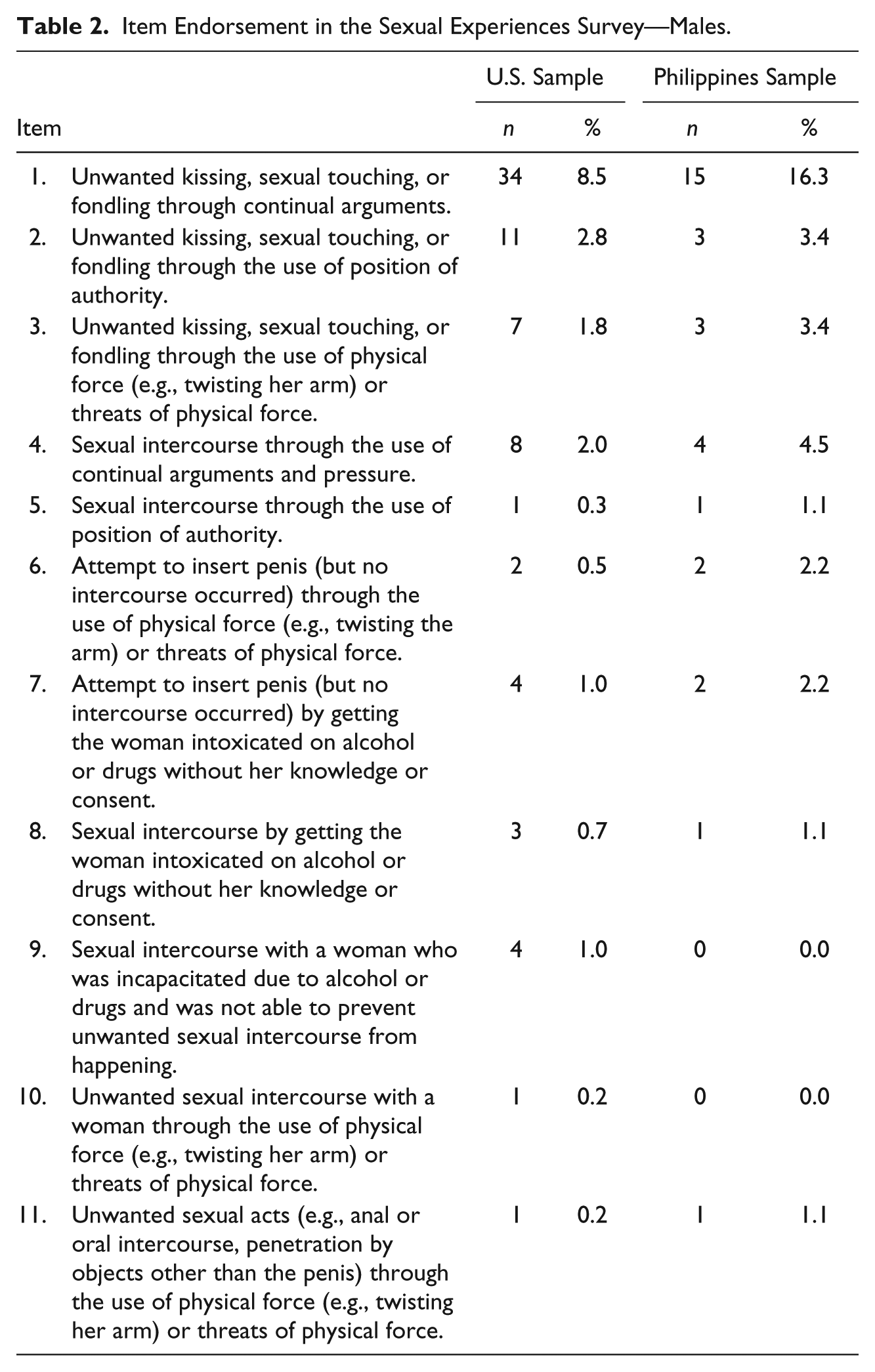
A revised 11-item version of the sexual experiences survey—males (SES-M; Koss, Gidycz, & Wisniewski, 1987) was used in this study to operationalize sexual aggression perpetration. Items of the SES-M describe various forms of sexual aggression, ranging from unwanted kissing to sexual intercourse without consent, and the means in which victimization was achieved, such as using false promises, threats and intimidation, and physical force (Table 2). For each item, participants are asked to report on the commission of such acts (yes = 1; no = 0), and the sum of the items was used in the subsequent analyses.
Item Endorsement in the Sexual Experiences Survey—Males.
Data Analysis
This article aims to evaluate a mediation (Figure 1a) and a moderation model (Figure 1b). A path analysis was performed to achieve these goals using Mplus 7.4 (Muthén & Muthén, 2012). Preliminary analysis of the univariate distribution indicated that the SES-M was extremely positively skewed and highly kurtotic. Count distributions were evaluated and utilized for paths involving SES-M as the criterion variable (Coxe, West, & Aiken, 2009). Comparing the Poisson distribution, negative binomial distribution, and their zero-inflated counterparts, the negative binomial distribution had a better fit, and dispersion estimates were consistently significant. Monte Carlo integration was also utilized in the analysis due to the use of negative binomial distribution. Maximum likelihood estimation techniques with robust standard errors (MLR) were utilized to further account for multivariate nonnormality and missing values (Enders, 2010; Muthén & Muthén, 2012). Model fit indices are not available when using negative binomial distributions.
This article also aims to examine whether the mediation and moderation models are invariant between the U.S. sample and Philippines sample. The extent to which the models were invariant between groups was evaluated using multiple group analysis (MGA). Conventional MGA begins with estimating the model with all parameters free to vary across groups (configural model). Paths were subsequently constrained to be equal between groups. Conventional χ2 difference test to assess change in model fit cannot be used when using MLR (Muthén & Muthén, 2012). Hence, model comparisons were conducted using a likelihood ratio test with scaling correction factors (
Results
Descriptive Statistics and Bivariate Correlation
Results indicated that although the Philippines sample had a higher percentage of males reporting at least one type of sexually aggressive behavior during their lifetime (n = 16, 17.0%) compared with the U.S. sample (n = 43, 10.7%), the difference between groups was not statistically significant based on the z test for proportions (z = 1.49, p = .14). Table 2 presents the endorsement for each SES-M item. The majority of the reported sexual aggressive acts involved unwanted sexual acts and sexual intercourse through verbal pressure. Table 3 presents the descriptive statistics and bivariate correlation among the variables in this study. Results of the t test suggested that the Philippines sample had significantly lower alcohol use severity scores compared with the U.S. sample (see Table 3, country comparison). No significant country differences were found for sexual aggression (using the sum of the SES-M) and sexual objectification (see Table 3, country comparison).
Descriptive Statistics and Bivariate Correlation Among the Variables in This Study.
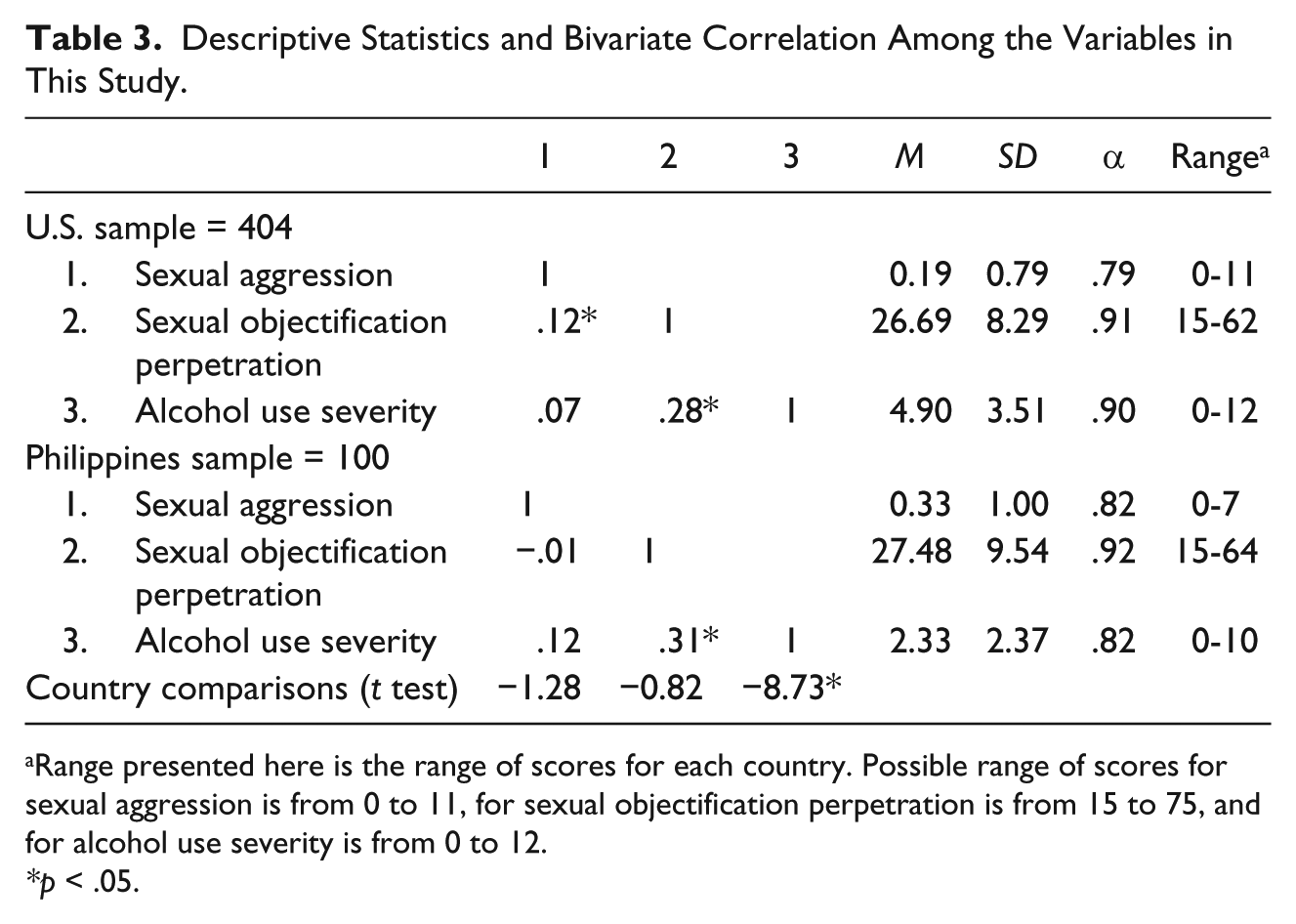
Range presented here is the range of scores for each country. Possible range of scores for sexual aggression is from 0 to 11, for sexual objectification perpetration is from 15 to 75, and for alcohol use severity is from 0 to 12.
p < .05.
Sexual Objectification Mediation Model
The mediation model (Figure 1a) and the invariance of the model between U.S. and Philippines sample were simultaneously examined. Compared to the configural model, constraining paths to be equal between samples did not result in a significant decline in model fit (
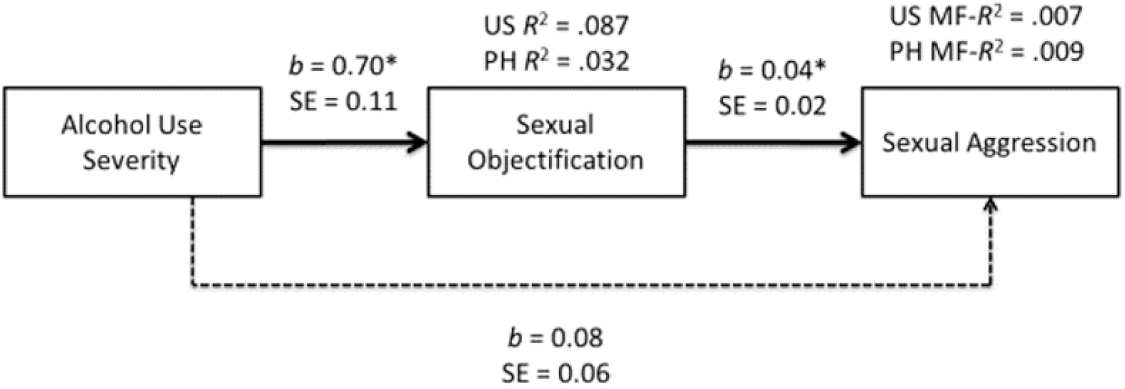
Sexual objectification mediation model for both the U.S. and the Philippines sample.
Utilizing the mediation analyses procedures using the Mplus MODEL INDIRECT option, a significant indirect effect from alcohol use severity to sexual aggression via sexual objectification was found for both U.S. and Filipino participants (indirect effect = 0.027, SE = 0.012, p = .03, 95% CI = [0.002, 0.210]). Constraining the alcohol severity to sexual aggression path to be 0 did not result in a significantly worse model fit compared with a mediation model with the alcohol use severity—sexual aggression path freely estimated (
Sexual Objectification Moderation Model
A moderation model (Figure 1b) was subsequently examined. Specifically, an interaction effect between alcohol use severity and sexual objectification was expected, such that higher alcohol use severity and higher sexual objectification will be associated with a much higher self-reports of sexually aggressive behaviors (Figure 3). To be consistent with the previous mediation analysis, we performed an MGA to the moderation model. Compared to a configural model (i.e., all paths are allowed to freely vary), constraining paths to be equal between samples resulted in a much worse model fit (
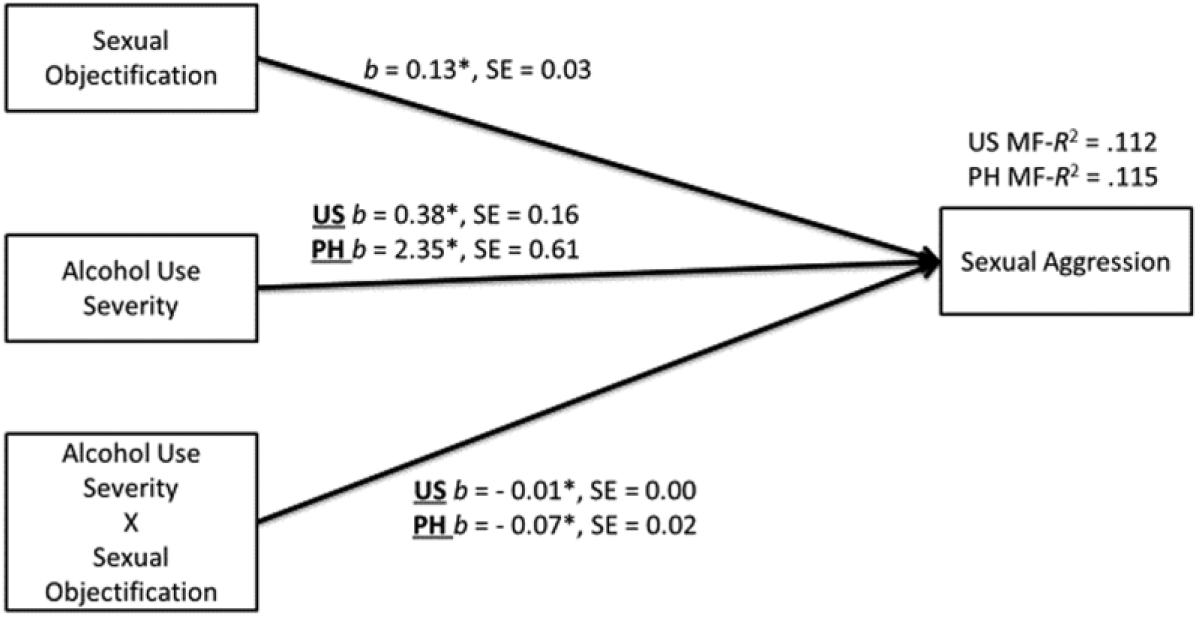
Unstandardized path coefficients for the alcohol use severity × sexual objectification moderation model for the U.S. and Philippines sample.
Figure 3 presents the unstandardized coefficients for the U.S. and Philippines sample. For both samples, alcohol use severity, sexual objectification, and their interaction effects were all significant. A significant interaction effects necessitates an examination of the simple slopes effect (see Figure 4 for the graphical representation of the interaction effects). Among U.S. males, alcohol use severity was not associated with sexual aggression perpetration when sexual objectification was high (+1 SD U.S. sample; b = −0.02, p = .72) or average (b = 0.08, p = .26; see Figure 4a). Alcohol use severity is positively associated with sexual aggression only among those with low sexual objectification scores (−1 SD U.S. sample; b = 0.18, p = .04). U.S. males with high sexual objectification scores also have a higher self-reported sexual aggressive behavior. However, when alcohol use severity is high, the difference across sexual objectification scores with respect to sexual aggression is no longer significant (b = 0.03, p = .19). Among Filipino males, alcohol use severity was not associated with sexual aggression perpetration when sexual objectification was high (+1 SD Philippines sample; b = −0.10, p = .40; see Figure 4b). On the contrary, alcohol use severity is positively associated with sexual aggression perpetration when sexual objectification is low (−1 SD Philippines sample; b = 1.13, p < .01) and at the mean (b = 0.52, p < .01). Alcohol use severity seems to have a much larger impact on sexual aggression perpetration among Filipinos, particularly among those with low sexual objectification scores.
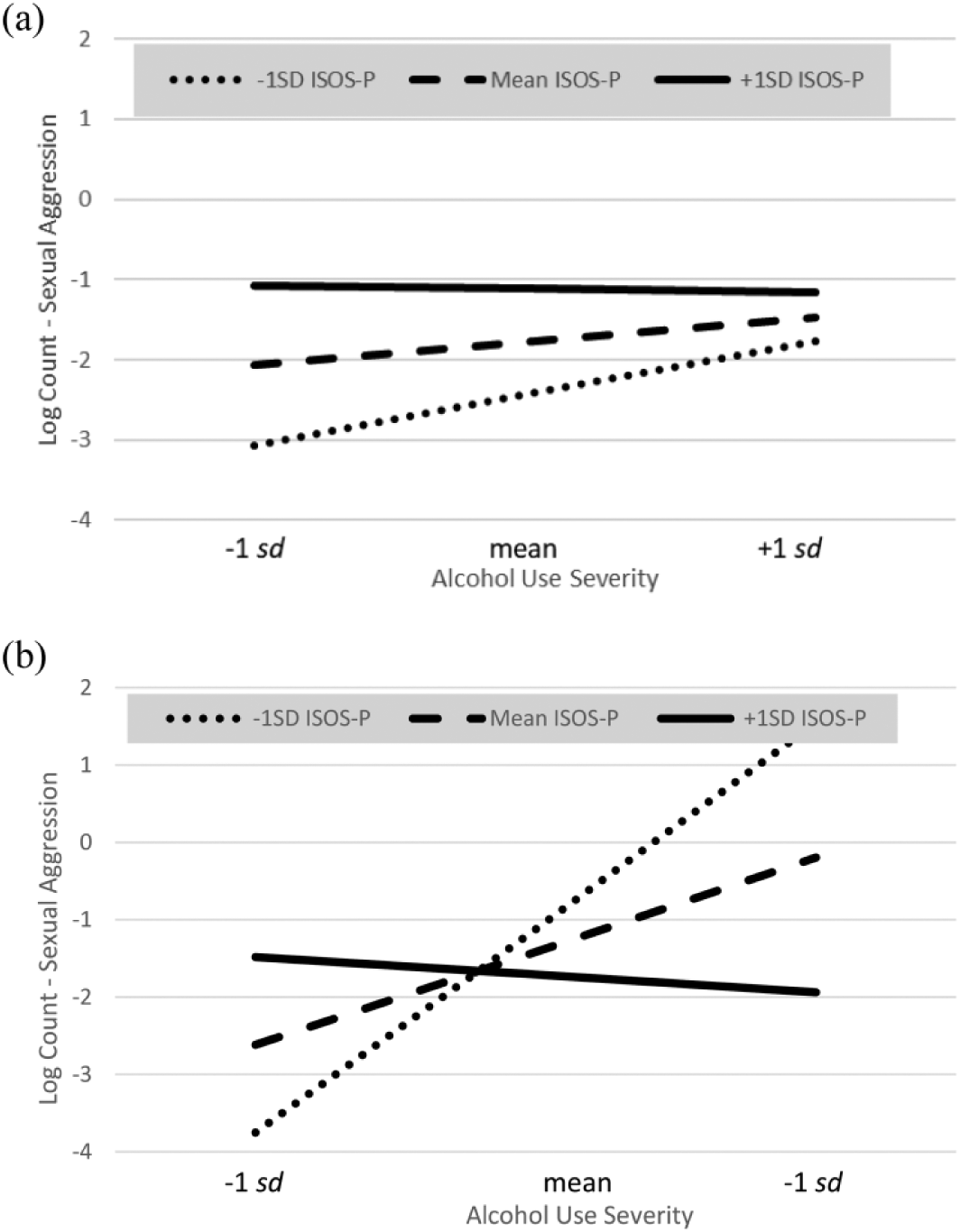
Graphical representation of the alcohol use severity × sexual objectification interaction effect for the (a) U.S. and (b) Philippines sample.
Comparing Alternative Models
Presented with two competing models, it is important to evaluate which model fits the data better. From a path analytic framework, the mediation model and the moderation model cannot be compared using nested or nonnested model comparison due to the additional interaction effect variable in the moderation model. However, an examination of the McFadden (1974) pseudo-R2 indicated that the moderation model (Figure 3) accounts for more variance in sexual aggression compared with the mediation model (Figure 2).
Discussion
Sexual Objectification Mediation Model
Although the alcohol use—sexual aggression link has been established in the literature (Abbey, 2011), there is still a need to examine explanatory mechanisms to understand the relationship. In this article, sexual objectification was examined as one among many variables that could elucidate the alcohol use—sexual aggression relationship. Specifically, mediation and moderation models were examined. Mediation model analysis indicated that alcohol use severity was associated with sexual objectification, which in turn is associated with sexual aggression. These results are consistent with studies suggesting that alcohol use intoxication influences sexual objectification (Riemer et al., 2017), and sexual objectification is associated with sexual aggression (Rudman & Mescher, 2012). Similar to Gervais et al. (2014), results of this study also indicated that sexual objectification fully mediated the alcohol use severity—sexual aggression relationship for both U.S. and Philippines sample. Furthermore, results here indicate that Gervais et al.’s (2014) model has cross-cultural support.
The mediation model is anchored on the alcohol myopia theory (Steele & Josephs, 1990), which suggests that alcohol intoxication reduces the perceptual field and eventually hampers decision making. Because the theoretical framework is based on perceptual processes and the physiological impact of intoxication on cognitive processes, it is understandable that the mediation model is invariant between U.S. and Philippines sample. Another finding worth noting is the similarity in the sexual objectification scores between samples. In other words, the frequency of males engaging in behaviors such as leering, catcalling, and making unwanted sexual comments is similar between countries. Given the Philippines’ gender egalitarianism (Angeles, 2001; Eder, 2006) and Filipino women’s active role and power in the public sphere (at least relative to the United States; World Economic Forum, 2017) it should be expected that sexual objectification perpetration will be less compared with the United States. Filipino masculine ideals revolve around being good providers, virile sex partners, and strong fathers (Pingol, 2001), and a duality exists within the culture. On the contrary, a “real” and “fulfilled” man is one who has the capacity to lead and provide for his family, and one who respects and protects his family, especially women (Aguiling-Dalisay, Nepomuceno-Van Heugten, & Sto Domingo, 1999). However, machismo culture emphasizes virility and sexual prowess over women (Aguiling-Dalisay et al., 1999; Nadal, 2011).
Overall, results of this study highlight the centrality of dehumanizing and objectifying behaviors in understanding the alcohol use—sexual aggression relationship. Furthermore, the mediation model has cross-cultural validity, at least between the United States and the Philippines.
Sexual Objectification—Alcohol Use Severity Moderation Model
The moderation model was anchored on theories suggesting that alcohol intoxication disinhibits latent aggressive tendencies (e.g., I3 theory; Slotter & Finkel, 2011). Results of this study indicated a significant sexual objectification—alcohol use severity interaction effect in predicting sexual aggression for both the U.S. and Philippines sample. The pattern of relationship and the simple slopes effects analysis, however, differed across samples. For the U.S. sample, those with high sexual objectification had higher likelihood toward sexual aggression regardless of alcohol use severity (Figure 4a). In other words, framing sexual objectification as a latent aggression trait, those with high sexual aggression tendencies have the highest likelihood toward sexual aggressive behavior, intoxicated or not. On the contrary, the impact of disinhibition and intoxication is most pronounced among U.S. males who have low sexual objectification scores, such that those who have high alcohol use severity, but low sexual objectification have similar likelihood to perpetrate as men with high sexual objectification scores. Results of this study are consistent with others that show that alcohol use magnifies the sexual violence-supportive attitudes and sexual aggression relationship (e.g., Lisco et al., 2012).
A different pattern emerged for the Philippines sample. Similar to the U.S. sample, Filipino males with high sexual objectification scores have similar likelihood toward sexual aggression regardless of alcohol use severity. However, for those with low sexual objectification scores, higher alcohol use severity is associated with higher likelihood toward sexual aggression. Moreover, those with low sexual objectification and high alcohol use severity scores have a much higher propensity toward sexual aggression compared with those with high sexual objectification scores (Figure 4b). Heavy alcohol consumption, heavy episodic drinking, and rates of alcohol use disorder in the Philippine are less compared with the United States (WHO, 2014). Furthermore, boorish and lewd behavior when intoxicated is frowned upon and discouraged, which motivates Filipinos to control their alcohol consumption for fear of losing face in the community (Alegre, 1992; Evangelista, 1973). Because excessive alcohol consumption among Filipinos is outside the norm, high alcohol use severity could also reflect a predisposition toward deviant and aggressive behavior, which could subsequently explain the higher sexual aggression likelihood among this group. Prior research has shown that psychopathy-related personality traits are associated with hostile attitudes toward women, heavy alcohol consumption, and sexual assault perpetration (Abbey, Jacques-Tiura, & LeBreton, 2011).
Comparing Mediation and Moderation Models
There are theoretical justifications to hypothesize a mediation and a moderation model, and the results of the study indicated that both models are also equally viable. Model comparisons using nested or nonnested models are not possible due to the inclusion of the interaction effect variable; however, the moderation model had a higher pseudo-R2 compared with the mediation model. It is difficult to say definitively that the moderation model is a better model compared with the mediation model given the cross-sectional nature of the current study. One way to address the issue is to conduct experimental manipulations (e.g., alcohol administration studies), especially because the mediation model posits causal relationships among the variables. Variable problem also exists; it is unclear whether the relationship among the variables in this study can be better accounted for by more established causal variables such as hostile attitudes toward women or psychopathy-related personality traits (Abbey et al., 2011).
Research and Policy Implications
Societal discourses on sexual assault that include messages such as “look but don’t touch” give the impression that sexual objectification is innocuous (Gervais et al., 2014). However, results of the mediation model suggest that sexual objectification is an important variable to consider in understanding the relationship between alcohol consumption and sexual violence perpetration. As such, at an institutional, cultural, or macro level, there is a need to implement interventions to reduce sexual objectification and change social norms that promote objectification (Gervais et al., 2014), which could include educating men or bystanders. For instance, bystander programs for reducing sexual assaults generally include intervening during risky situations (e.g., intoxicated woman being led into a bedroom at a party by a group of individuals; Banyard, Moynihan, & Plante, 2007), but not when sexual objectification is being perpetrated (e.g., catcalling). Future research can examine whether including sexual objectification interventions to existing sexual assault prevention programs can be beneficial.
Current sexual assault prevention programs targeting university men tend to target rape-supportive and misogynistic attitudes (Vladutiu, Martin, & Macy, 2011). Results of the moderation model indicated that men with low sexual objectification, but with high alcohol use severity, have a high likelihood toward sexual aggression, comparable to those men with high sexual objectification. As such, interventions that reduce problematic drinking also need to be included in existing sexual assault prevention programs. Intervention programs that combine alcohol use and sexual assault risk reduction (victimization) has shown promise among women (Gilmore, Bountress, Selmanoff, & George, 2018). As such, future research can examine whether a similar intervention can help reduce sexual assault perpetration risk among men.
From a research perspective, results of this study highlight the need to continuously evaluate the generalizability of research done in a Western culture onto non-Western countries as cultural values and norms, particularly on alcohol use and sexual behaviors, significantly varies. As this study shows, the mediation model is applicable to the U.S. and Philippines sample, but the moderation model varied across samples. Applied to interventions, this study suggests that sexual assault prevention intervention should be specifically tailored to the needs of the specific culture or country. For instance, Filipino males would benefit more from the incorporation of alcohol use reduction interventions into sexual assault prevention programs.
Limitations and Future Directions
The results presented here, however, should be tempered by the study’s limitations. First, because of the use of path analysis rather than a full latent factor model, measurement error and its impact on the full model was not accounted for. To alleviate these concerns, future research should replicate this study using identical measures and use a full structural equations model with a subsequent multiple-groups analysis for comparisons across cultures. Second, the college student sample in this study is not representative of the general community population of each country, and future research should further conduct cross-country comparisons using a representative sample. Results of this study should also be interpreted in the context of the nonrepresentativeness of the sample. Third, the sexual assault reported by the participants were predominantly nonpenetrative and/or through the use of verbal coercion (Table 2), and the results of this study should be interpreted with that limitation in mind. Fourth, the low sample size for the Philippines could have influenced the results of this study. Finally, the cross-sectional design of this study limits the ability to posit causal relationships.
Footnotes
Authors’ Note
Part of the data presented in this article has been presented in the 11th Biennial Conference of the Asian Association of Social Psychology and the 52nd Annual Convention of the Psychological Association of the Philippines Joint Convention, Cebu City, Philippines.
Declaration of Conflicting Interests
The author(s) declared no potential conflicts of interest with respect to the research, authorship, and/or publication of this article.
Funding
The author(s) received no financial support for the research, authorship, and/or publication of this article.
