



Abstract
Witnessing or experiencing violence early in childhood is a significant risk factor for later perpetration of intimate partner violence (IPV) by men against women. Despite a large body of research on the topic, there is a need for more specific information about how differing patterns of family violence might pose distinct risks of later mental health problems and violence perpetration. Using a self-administered questionnaire, a cross-sectional survey was conducted among 745 male university students in Israel (age = 21-43, M = 25.56, SD = 3.172) to examine the effects of their exposure to family violence (i.e., parent-to-child psychological aggression [PA] and physical violence [PV] and witnessing interparental PA and PV) on their use of IPV. This study also examined whether psychological distress mediates the relationship between family violence exposure (witnessing or experiencing) and later IPV perpetration. Results indicate that experiencing PA and PV in childhood and current psychological distress predict significantly current IPV perpetration. Results also revealed that psychological distress mediates only the relations between participants experiencing parental violence and their PA against intimate partners. However, results showed that higher rates of participants witnessing interparental violence correlate significantly with lower rates of their PV against intimate partners; this relationship was not mediated by their psychological distress. It was also found that experiencing parental violence has significant direct and indirect positive effect on participants’ PV against intimate partners. The limitations of the study and the implications of its results are discussed.
Keywords
Literature Review
Almost one in three women worldwide have experienced intimate partner violence (IPV) by a current partner or ex-partner that causes physical, sexual, or psychological harm (World Health Organization, 2017). One of the most tested explanations for men’s perpetration of physical violence (PV) and psychological aggression (PA) against partners, or IPV, is a childhood history of exposure to family violence. Studies investigating risk factors for IPV perpetration have found two distinctly powerful risk factors: early exposure to violence between parents (Gover, Kaukinen, & Fox, 2008; Murshid & Murshid, 2018; Skuja & Halford, 2004; Tschann et al., 2009) and parental violence directed toward the child (Lee, Reese-Weber, & Kahn, 2013; Widom, 1989). Reviews of research on the topic illustrate resounding consistency around the conclusion that childhood exposure to interparental violence and direct experiences of parent-to-child abuse significantly increase the risks of IPV perpetration (Capaldi, Knoble, Shortt, & Kim, 2012; Dardis, Dixon, Edwards, & Turchik, 2015; Smith-Marek et al., 2015; Vagi et al., 2013).
Family-Level Risk Factors for IPV Perpetration
Scholars note that the relationship between exposure to family violence and future violent behavior deserves more empirical attention (Capaldi et al., 2012; Widom, 1989). One particularly important question is whether experiencing versus witnessing violence might represent distinct risks with regard to later violence perpetration. Evidence suggests that, in addition to studying separately the relevance of each of these two variables as potential risk factors of IPV, it is important to study these two predictors simultaneously, as studies examining these experiences as co-occurring risk factors tend to demonstrate their distinct effects on later violence outcomes (Herrenkohl, Sousa, Tajima, Herrenkohl, & Moylan, 2008). However, literature is highly mixed on whether child abuse or witnessing violence between parents (or the simultaneous exposure to both) more strongly influences later IPV perpetration.
For instance, in three longitudinal studies that simultaneously examined both risk factors, experiencing early parental physical child abuse, rather than witnessing interparental violence, was the strongest risk of later perpetration of violence against intimate partners (Ehrensaft et al., 2003; Linder & Collins, 2005; Menard, Weiss, Franzese, & Covey, 2014). Undoubtedly, longitudinal studies are considered the ideal methods for tracing causality. Yet, prospective data, based on longitudinal methods, on exposure to family violence are also extraordinarily difficult to obtain; therefore, retrospective studies on the topic are more prevalent. Findings from retrospective research largely corroborate the conclusions from longitudinal studies. For instance, Tajima (2004) used cross-sectional data from a large nationally representative sample (N = 2,733) to examine the effects of IPV only, direct child abuse only, and child abuse coupled with IPV on child aggression, among other outcomes. Here, rates of child aggression were most strongly influenced by being in the child abuse-only group, not the other two groups.
However, one longitudinal study of 1,000 youth assessed from age 14 into adulthood found that the effects of violence between parents held up as a predictor for future violence perpetration, even after controlling for the effects of child abuse (Smith, Ireland, Park, Elwyn, & Thornberry, 2011). These findings are in line with conclusions of a recent review of 124 studies (both retrospective and prospective), in which authors found that the effects of witnessing interparental violence as a child and experiencing parental violence during childhood were nearly indistinguishable and almost equally predicted later relationship violence perpetration (Smith-Marek et al., 2015). The conflicting nature within literature on the relationship between the exposure to different patterns of family violence during childhood and IPV perpetration in adulthood thus points to the importance of considering the distinct ways that both experiencing child abuse and witnessing interparental violence might correlate with later IPV perpetration.
Theoretical Overview: Early Violence Exposure and Later IPV Perpetration
Evidence of early exposure to violence resulting in the use of violence in adult intimate relationships aligns with one of the most prevalent behavioral explanations for the IPV perpetration—the theory that violent behavior passes from parents to children within an intergenerational cycle of violence (Fagan, 2005; Widom, 1989). The intergenerational cycle of violence explanation largely rests on the theory of social learning, which proposes that behaviors are learned through a continuous process of observation and reinforcement (Bandura, 1978). In other words, living within a context of violence within one’s family provides a foundation on which children come to believe that violence is an appropriate response to stressful situations such as tensions with a romantic partner.
Notably, however, many people emerging from violent backgrounds end up not engaging in a cycle of violence, and an absolute reliance on the notion that violence always begets violence is insufficient (Dardis et al., 2015; Smith-Marek et al., 2015; Widom, 1989; Widom, Czaja, & Dutton, 2014). Research suggests that the future use of aggression in response to triggering events is predicted not only by early experiences with violence in one’s social environment but also by the level of skills that a potential perpetrator has regarding emotional and psychological regulation (Bandura, 1978). The use of violence and aggression in romantic relationships may, therefore, depend not only on early exposure to violent behavior but also on the level of one’s psychological distress and one’s perceptions and understanding of violence and its consequences (Bandura, 1978; Jouriles, McDonald, Mueller, & Grych, 2012).
Factors Linking Early Violence Exposure and Later IPV Perpetration: Psychological Distress, Exposure to Multiple Forms of Violence, and the Role of Gender
Unfortunately, emotional and psychological regulation is often fundamentally disrupted by psychological distress or symptoms, such as depression, posttraumatic stress disorder (PTSD), anxiety, hostility, and paranoia, that often result from early exposure to violence (Batten, Aslan, Maciejewski, & Mazure, 2004; Herrenkohl et al., 2008; Maas, Herrenkohl, & Sousa, 2008; Norman et al., 2012). These same symptoms of psychological distress have been linked to IPV perpetration (Capaldi et al., 2012; Crane, Hawes, Devine, & Easton, 2014; Dardis et al., 2015; Hahn, Aldarondo, Silverman, McCormick, & Koenen, 2015; Hanby, Fales, Nangle, Serwik, & Hedrich, 2012; Vagi et al., 2013).
Given the relationships between poor mental health and IPV perpetration (Capaldi et al., 2012), it seems likely that psychological distress would mediate history of exposure to family violence during childhood and adolescence to increase the risks of IPV perpetration in adulthood. As reviewed above, scholarship on the topic demonstrates that psychological distress both results from early experiences of violence and leads to future violence perpetration. One might, therefore, expect that psychological distress and some of its manifestations (e.g., depression, anxiety, stress, hostility) might act as mediators, resulting from a childhood history of abuse, to increase the risk that one acts violently or aggressively in adult relationships (Ehrensaft et al., 2003; Machisa, Christofides, & Jewkes, 2016). However, tests of mediation between men’s mental health and childhood exposure to violence are difficult to find in the literature. In one of the few studies, a 20-year prospective study of more than 500 individuals, Ehrensaft et al. (2003) found that conduct disorder partially mediated the effects of child abuse on future IPV perpetration; child abuse did, however, remain a powerful independent predictor of violent behavior. Another study of 416 South African men found that poor mental health mediated the relationship between exposure to childhood trauma and their perpetration of IPV; in this case, PTSD, not depression, which they also examined, was a significant mediator (Machisa et al., 2016).
Literature also suggests the importance of considering whether the effects of witnessing interparental violence or of experiencing child abuse on future perpetration might differ based on the gender of the early perpetrator—that is, whether it is the mother or the father who perpetrates the abuse (Gover et al., 2008; Laporte, Jiang, Pepler, & Chamberland, 2011). Much of the literature exploring the effects of gender of the perpetrator in early life exposure to violence (either witnessing between parents or experiencing it directly) rests on the idea derived from social learning theory that the risk of replicating violent behavior increases when the child identifies with the gender of the perpetrator (Smith-Marek et al., 2015). Laporte et al. (2011), for instance, found a significant relationship between child victimization and men’s future perpetration of dating aggression for harsh disciplining by fathers, not by mothers. Other studies, however, found that risks of later perpetration did not differ based on the gender of the perpetrator (Gover et al., 2008; Kwong, Bartholomew, Henderson, & Trinke, 2003), and a recent meta-analysis that examined this issue (among others) found no significant differences regarding future offending based on the gender of the parent perpetrating the violence (Smith-Marek et al., 2015). Results of these studies point to the importance of investigating the experience of parental violence and the witnessing of interparental violence with designs that take into account the gender of the parent perpetrator.
Research Hypotheses
In light of the literature above, the following research hypotheses were put forth:
Method
Participants
The study was conducted among a convenience sample of 745 male students at three major universities in Israel. The participants ranged from 21 to 43 years of age (M = 25.60, SD = 3.17). One major criterion for participating in the study was that the students were either currently in a relationship with a female intimate partner that had lasted for at least six consecutive months, or they had recently been in an intimate relationship that ended no more than 4 months prior to the study. About 62% of the participants indicated that they are currently in such an intimate relationship, and the remaining 38% indicated that they had recently been in such a relationship. In both cases, the participants indicated that they had been in the relationship for a period ranging from 6 to 96 months (M = 21.96, SD = 21.23). Regarding the participants’ level of education, 69.5%, 21.6%, and 5.5% of them indicated they are currently enrolled in bachelor’s degree, master’s degree, or doctoral studies, respectively; 3.4% of them indicated that they are enrolled in another type of postsecondary education program (e.g., nondegree studies, teaching certificate).
Measures
A self-administered and anonymous questionnaire, in Hebrew, was utilized in this study. The questionnaire consisted of the following parts:
Background information
This part consisted of several questions relating to the participants’ sociodemographic and background characteristics such as their age, their partner’s age, degree of study at the university (i.e., bachelor’s, master’s, doctoral, or other type of degree), length of time in the relationship with the intimate partner, whether they are currently in a relationship with the partner or whether the relationship ended recently, whether they live together with their partner or not, and the frequency of meetings with the partner, on a scale ranging from 1 (once a month) to 5 (daily).
PA and PV
A 20-item scale developed by the principal investigator especially for this study aimed to measure participants’ use of PA (eight items; e.g., “insults or swearing,” “degradation by using words such as ‘fat,’ ‘ugly,’ or something similar”) and PV (12 items; e.g., “twisted arm or pulled hair,” “beating and hitting with an object”) against current female partner, or against recent partner, in case they are currently not engaged in an intimate relationship. The scale was developed on the basis of available measures of different types and patterns of family violence that were proven to be reliable and valid for measuring PA and PV. These measures included the revised version of the Conflict Tactics Scale (Straus, Hamby, Boney-McCoy, & Sugarman, 1996) and the Wife Abuse and Battering Inventory (Haj-Yahia, 2000). Four different versions of this measure were used to examine the participants’ exposure to the following patterns of violence in their families of origin from early childhood until the age of 18: (a) witnessing father-to-mother PA and PV, (b) witnessing mother-to-father PA and PV, (c) their experience with fathers’ PA and PV, and (d) their experience with mothers’ PA and PV. In addition, using another version of this measure, the participants were asked to report on their own use of PA and PV against their intimate partners. Responses regarding each of the questions about acts of PA and PV were based on the following scale: 0 (never), 1 (once or twice), 2 (3-5 times), 3 (6-10 times), 4 (11-20 times), 5 (more than 20 times). For examining the hypotheses of the study, we followed Straus et al.’s (1996) approach for scoring the responses of the participants to each of the acts, that is, by adding the midpoints for the response categories chosen by the participant. The midpoints are the same as the response category numbers for Categories 0 and 1. For Category 2 (3-5 times), the midpoint is 4; for Category 3 (6-10 times), we assigned the midpoint 8; for Category 4 (11-20 times), we assigned the midpoint 15; and for Category 5 (more than 20 times), we used 25 as the midpoint. In this study, the Cronbach’s alpha values of the measures of father-to-mother PA and PV were .790 and .909, respectively, and the values for mother-to-father PA and PV were .775 and .851, respectively. In addition, the Cronbach’s alpha values for father-to-participant PA and PV were .793 and .901, respectively, and the values for mother-to-participant PA and PV were .782 and .913, respectively. The Cronbach’s alpha values of the scale used to measure participant-to-intimate partner PA and PV were .838 and .829, respectively.
Psychological distress
Derogatis and Melisaratos’s (1983) Brief Symptom Inventory (BSI) was utilized in this study to measure psychological distress. The BSI is a highly reliable and well-validated 53-item self-report symptom inventory, designed to assess psychological symptoms (Derogatis & Melisaratos, 1983). Each item of the BSI is rated on a 5-point scale of distress, ranging from 0 (not at all) to 4 (extremely). The BSI was selected to best reflect the following nine primary symptom dimensions: somatization (e.g., “feeling weak in parts of your body”), obsessive–compulsive behavior (e.g., “having to check and double-check what you do”), depression (e.g., “feelings of worthlessness”), interpersonal sensitivity (e.g., “feelings of inadequacy, inferiority, and marked discomfort during interpersonal interactions”), anxiety (e.g., “feeling tensed or keyed up”), hostility (e.g., “having urges to beat, injure, or harm someone”), phobic anxiety (e.g., “feeling uneasy in crowds”), paranoid ideation (e.g., “feeling that most people cannot be trusted”), and psychoticism (e.g., “feeling very self-conscious with others”). Derogatis and Melisaratos (1983) reported that the Cronbach’s alpha internal consistency coefficients for all nine dimensions ranged from a low of .71 for the psychoticism dimension to a high of .85 for depression. The present study measured eight of the nine BSI dimensions; therefore, interpersonal sensitivity was not measured because of the conceptual and methodological limitations of this dimension as a construct (Derogatis & Melisaratos, 1983). Cronbach’s alpha coefficients for the eight symptom dimensions of the Hebrew version of the BSI utilized in the present study ranged from a low of .71 for the phobic anxiety dimension to a high of .837 for the somatization dimension. One combined score was computed for each participant by summing their responses on all 53 items that measure all eight symptoms. In other words, one score, as a global index for psychological distress, was produced of the eight combined symptoms together. Cronbach’s alpha for the global index of psychological distress in this study was .962.
Procedures
Development of the measures
The background questions were indicated in Hebrew. The PA, PV, and BSI measures were translated from English into Hebrew by an expert in English-to-Hebrew translation, and then back-translated into English by an expert in Hebrew-to-English translation. Both translators hold MA degrees in their specialties. Both translations were performed separately and independently by the two experts. The original English versions of the PA, PV, and BSI and the version that was back-translated from Hebrew into English were almost identical. In the next phase, a pilot study was conducted among 12 Israeli university students. The results of this study also contributed significantly to enhance the clarity of the questions and items of each measure as well as the clarity of the introduction and instructions presented at the beginning of each section or measure in the questionnaire. Both translators and all 12 participants in the pilot study were also involved in assessing and enhancing the face validity and the content validity of the Hebrew version of each of the abovementioned measures that make up the questionnaire.
Data collection procedures
All components and procedures of the study (including its objectives, hypotheses and research question, questionnaire, and data collection procedures) were approved by the Ethics Committee of the Paul Baerwald School of Social Work and Social Welfare at the Hebrew University of Jerusalem. Due to the lack of a sampling frame, a random sample could not be selected. Therefore, a convenience sample was examined in this study. A retrospective cross-sectional design using a student sample was considered the most feasible means of achieving the research goals. Students are relatively accessible and easy to reach, and they have better reading and writing skills than older residents.
Participants at three universities in Israel were approached individually at various locations that students frequent (e.g., libraries, the lawn, student dorms, computer rooms, and cafeterias), as well as during the last 15 min of some lectures. Each potential participant was provided with an explanation about the aim of the study and was asked whether he met the following criteria: He had to be unmarried and currently in an intimate relationship (or in a relationship that had ended within the past 4 months), where the relationship had lasted at least six consecutive months. Students who responded positively to these questions were asked to give their consent to participate in the study by signing their initials on the cover page of the questionnaire, and to devote about 15 min to completing the questionnaire. Of the 1,200 students who were approached by research assistants to participate in the study, 975 met the above-mentioned criteria (81.25%). Of those, 745 (76.4%) completed the questionnaire privately and returned it to the research assistants in a sealed envelope. Completed questionnaires were put in a bag with a group of envelopes that were all the same size and the same color. Note that the completed questionnaires were returned while the research assistants were at least 10 m away from the bags of envelopes. Therefore, confidentiality was strictly maintained at every stage of the study, including the stages of data collection, data processing, and publication.
In addition, at the end of the process, the research assistants (all of whom were master’s degree students in social work, psychological counseling, and educational counseling) asked the participants whether they had felt any discomfort or inconvenience as a result of filling out the questionnaire. If there was any suspicion that any of the students had felt discomfort because of participating in the study, they were to be referred to counselors in their area of residence or to the student counseling services on the campus, as indicated on an explanatory document that was distributed to each participant. It should be indicated that participants were not paid and they did not receive any type of incentives in return for their participation in the study.
Statistical Analyses
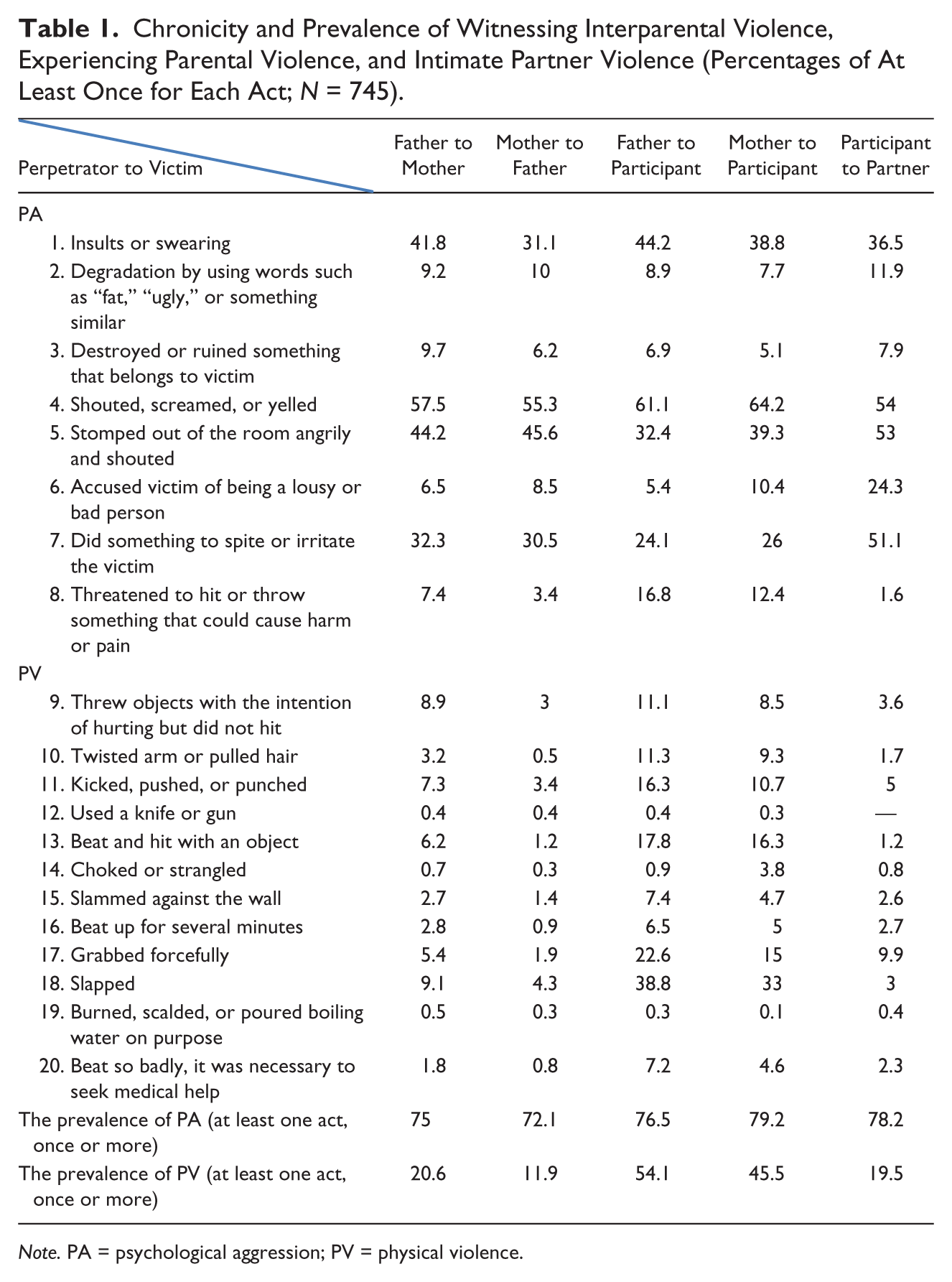
First, descriptive statistics (mainly frequencies) were calculated for each act of PA and PV, for all four patterns of exposure to violence in the family of origin, and for participants’ PA and PV against intimate partners. In essence, following Straus et al. (1996), the chronicity (i.e., the number of times each of the acts in the scale occurred) and the prevalence (i.e., assigning 1 “if one or more of the acts in the scale occurred”; Straus et al., 1996, p. 306) were calculated. However, the full results of these analyses are not presented here, due to space limitations (they can be obtained from the first author upon request). Instead, we calculated another chronicity by grouping all one to five categories of responses for each act into one group; in this way, we calculated the occurrence of each act at least once. This chronicity, in percentages, of participants witnessing father-to-mother and mother-to-father PA and PV, experiencing father’s and mother’s PA and PV, and the use of PA and PV against intimate partners is presented in Table 1. As with regard to the prevalence, one score was calculated for each of the patterns of PA and PV measured in this study, that is, at least one act, at least once, during the whole examined period. Thus, all five possible positive responses for each act (1-5) were grouped into Category “1.” All eight acts of PA were also grouped into one variable, and all 12 acts of PV were grouped into one variable for each pattern of exposure to family violence as well as for participant-to-partner PA and PV. The full results of these analyses, for each of the abovementioned patterns of family violence and IPV, are presented at the bottom of Table 1.
Chronicity and Prevalence of Witnessing Interparental Violence, Experiencing Parental Violence, and Intimate Partner Violence (Percentages of At Least Once for Each Act; N = 745).
Note. PA = psychological aggression; PV = physical violence.
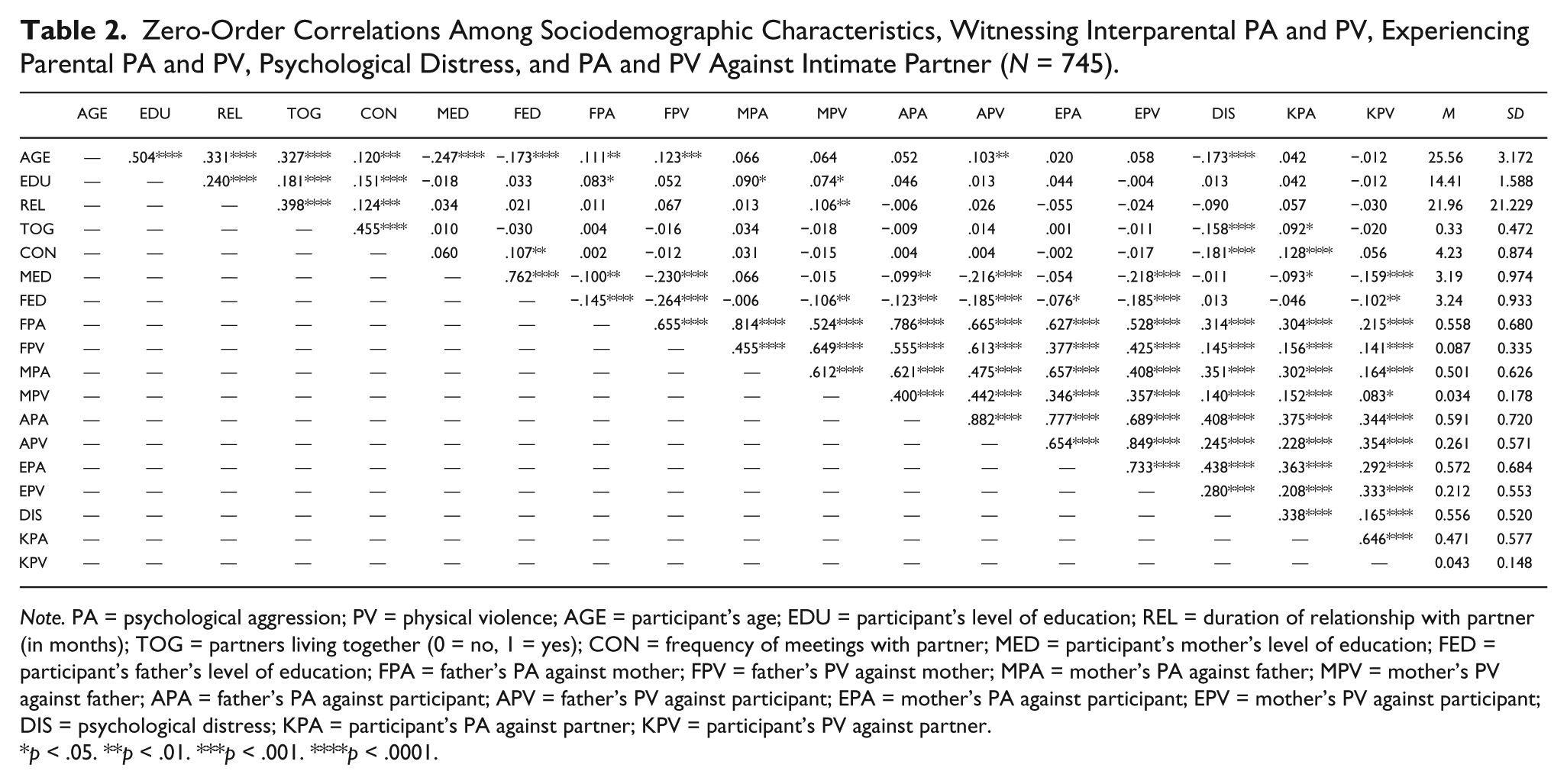
Second, zero-order correlation coefficients were calculated among several sociodemographic characteristics, the main independent variables, and the main dependent variables of the study as delineated earlier (see Table 2). Third, hierarchical regression and multiple regression analyses were conducted to predict the participants’ PA and PV against intimate partners (see Table 4). Three blocks of predictors were formed. The first block included the participants’ sociodemographic characteristics: participants’ age and level of education, the duration of their relationship with an intimate partner, cohabitation with their partner (no = 0, yes = 1), the frequency of meetings with their partner, and parents’ levels of education. Due to the high and significant correlation and multicollinearity between fathers’ and mothers’ levels of education (r = .762, p < .001), one variable (parents’ levels of education) was derived by computing the mean of both parents’ levels of education. This block was the first to be entered into the regression formula to control for the sociodemographic characteristics.
Zero-Order Correlations Among Sociodemographic Characteristics, Witnessing Interparental PA and PV, Experiencing Parental PA and PV, Psychological Distress, and PA and PV Against Intimate Partner (N = 745).
Note. PA = psychological aggression; PV = physical violence; AGE = participant’s age; EDU = participant’s level of education; REL = duration of relationship with partner (in months); TOG = partners living together (0 = no, 1 = yes); CON = frequency of meetings with partner; MED = participant’s mother’s level of education; FED = participant’s father’s level of education; FPA = father’s PA against mother; FPV = father’s PV against mother; MPA = mother’s PA against father; MPV = mother’s PV against father; APA = father’s PA against participant; APV = father’s PV against participant; EPA = mother’s PA against participant; EPV = mother’s PV against participant; DIS = psychological distress; KPA = participant’s PA against partner; KPV = participant’s PV against partner.
p < .05. **p < .01. ***p < .001. ****p < .0001.
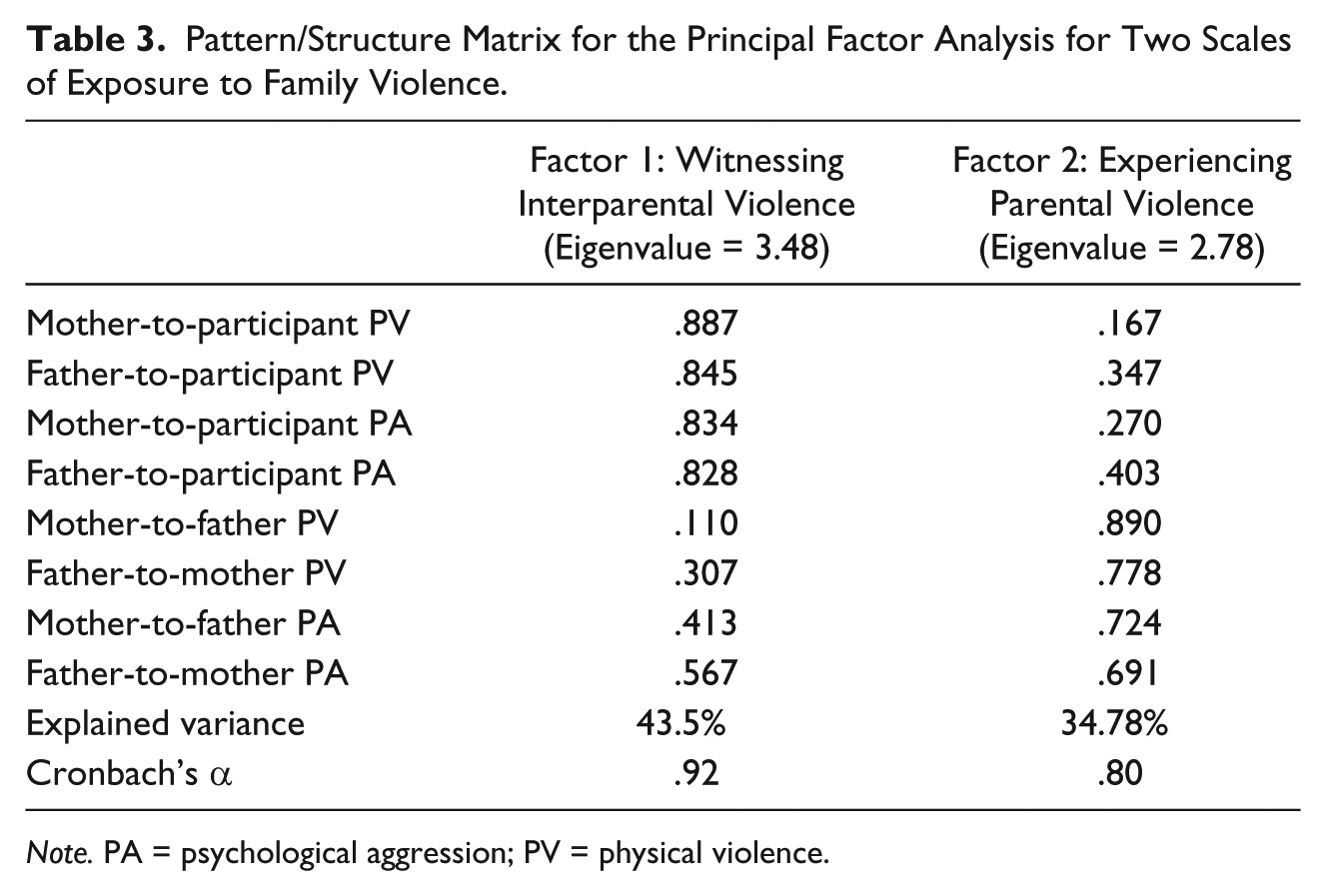
The second block included participants’ psychological distress, and the third block included two patterns of participants’ exposure to family violence. Strong and significant correlations between the eight measures of exposure to family were revealed—for example, participants’ father-to-mother PA and PV (r = .655, p < .0001), mother-to-father PA and PV (r = .612, p < .0001), father-to-participant PA and PV (r = .882, p < .001), and mother-to-participant PA and PV (r = .733, p < .0001). Hence, to prevent a possible problem of multicollinearity in the regression model, it was necessary to aggregate these measures into combined scales. For this purpose, exploratory principal factor analysis was carried out to examine the distribution structure of the eight patterns of participants’ exposure to family violence to aggregated measurement scales. Because the variables were correlated with one another, we rotated the results (varimax method) including the eigenvalue >1 rule. The results suggested two separate factors of exposure to family violence explaining 78.3% of the variance between items, that is, witnessing interparental violence (comprised the mean of father-to-mother PA and PV and mother-to-father PA and PV) and experiencing parental violence (comprised the mean of father-to-participant PA and PV and mother-to-participant PA and PV; see Table 3). Variables of each of the two factors of the abovementioned patterns of family violence were combined for producing one variable relating to each of those two patterns. In this way, two patterns of exposure to family violence (i.e., witnessing interparental violence and experiencing parental violence) were produced instead of the eight patterns mentioned above, and were entered to the regression model, as the third block of predictors (see Table 4).
Pattern/Structure Matrix for the Principal Factor Analysis for Two Scales of Exposure to Family Violence.
Note. PA = psychological aggression; PV = physical violence.
Regression and Hierarchical Multiple Regression for PA and PV Against Intimate Partner.

Note. PA = psychological aggression; PV = physical violence; AGE = participant’s age; EDU = participant’s level of education; REL = duration of relationship with partner (in months); TOG = partners living together (0 = no, 1 = yes); CON = frequency of meetings with partner; PED = parents’ levels of education; DIS = psychological distress; WITF = witnessing interparental violence; EXPV = experiencing parental violence.
Fourth, structural equation modeling (SEM) was used to investigate the hypothesis about the mediation role of psychological distress in the relations between experiencing parental violence and witnessing interparental violence, on one hand, and participants’ PA and PV against intimate partners, on the other. The SEM procedure allows to examine the direct and indirect relationships between participants’ exposure to family violence, psychological distress, and participants’ PA and PV against intimate partners through and beyond participants’ psychological distress, and to assess the overall model fit. Because of the exploratory nature of the study, an unconstraint model was examined using the maximum likelihood method estimates for measuring coefficients and measurement error. For assessing the fit of the theoretical model with the data, Kline’s (1998) recommendations were followed by examining several goodness-of-fit indices (GFIs): the SEM GFI, the comparative fit index (CFI), the standardized root mean square error of approximation (RMSEA), and the chi-square ratio divided by degrees of freedom of the model. A model is judged to fit a data set well if the CFI and GFI are greater than .95, the RMSEA is less than .05 (Bollen & Curran, 2006), and the chi-square ratio/df is <3.0 and not significant.
For variables missing less than 5% of cases, a missing data procedure was conducted using multiple imputation (5,000 imputed data sets) on the AMOS 25 software. In this procedure, multi-item measures were imputed by the remaining items and by a model in which the missing values were predicted by other multi-item measures (full details can be found in Gross-Manos, Shimoni, & Ben-Arieh, 2015; see Figure 1).

Path analysis between experiencing parental violence and witnessing interparental violence and psychological distress to participants’ PV and PA against intimate partners (N = 745).
Results
Exposure to Family Violence
Chronicity, prevalence, and correlations of witnessing interparental violence
The results in Table 1 show that 75% and 20.6% of the participants indicated that they had witnessed at least one act of PA and at least one act of PV by their fathers against their mothers, respectively, at least once during their lifetime. In addition, 72.1% and 11.9% of the participants reported that they had witnessed at least one act of PA and at least one act of PV by their mothers against their fathers, respectively, at least once during their lifetime (for more detailed results about the chronicity of witnessing father-to-mother and mother-to-father PA and PV, see Table 1). The results in Table 2 reveal positive and significant relationships among all four of these types of witnessing interparental violence (see Table 2).
Chronicity, prevalence, and correlations of experiencing parental violence
The results in Table 1 reveal that 76.5% and 54.1% of the participants reported experiencing at least one act of PA and at least one act of PV, respectively, by their fathers at least once during their lifetime. Furthermore, 79.2% and 45.5% of the participants indicated that they had experienced at least one act of PA and at least one act of PV, respectively, by their mothers at least once during their lifetime (for more detailed results about the chronicity of experiencing parental PA and PV, see Table 1). The results in Table 2 reveal significant and positive relationships between all four of these types of experiencing parental violence (see Table 2).
Exposure to Family Violence, Psychological Distress, and IPV
The results in Table 1 indicate that 78.2% and 19.5% of the participants reported that they used PA and PV, respectively, against their intimate partners at least once (for more detailed results about the chronicity of using PA and PV against intimate partners, see Table 1). The results in Table 2 reveal that participants’ exposure to each of the patterns and types of family violence during childhood correlated positively and significantly with their PA and PV against intimate partners (see Table 2). The results also reveal that all patterns and types of exposure to family violence correlated positively and significantly with psychological distress (Table 2). In addition, the results in Table 2 reveal that the participants’ psychological distress correlated positively and significantly with their PA and PV against intimate partners (see Table 2). Results in Table 2 also reveal that the higher the participants’ age, the lower their levels of psychological distress were (r = −.173, p < .0001). Nevertheless, nonsignificant correlations were found between participants’ age and level of education, on one hand, and their use of PA and PV against their intimate partners, on the other. Results also indicate that the more frequently the participants met with their intimate partners, the lower levels of psychological distress they exhibited (r = −.181, p < .0001). Yet, the results reveal that the more frequently they met with their intimate partners, the more they used PA against them (r = .128, p < .0001; Table 2).
The results of the hierarchical regression and multiple regression analyses presented in Table 4 reveal that 20.7% of the variance in participants’ PA against their intimate partners could be attributed to all three blocks of predictors that were examined in this study. In particular, 3.5% and 14.5% of that variance could be explained by participants’ lifetime exposure to family violence and to their psychological distress, respectively. Notably, higher rates of experiencing parental violence contributed significantly to explaining higher rates of use of PA against intimate partners (β = .199, p < .001), whereas witnessing interparental violence did not contribute significantly to explaining the variance in participants’ perpetration of PA against intimate partners (β = .015, p < .80; see Table 4). These variances were found significant over and above the variance in participants’ PA against intimate partners that could be attributed to their psychological distress (i.e., 14.5%) and to their sociodemographic characteristics (i.e., 2.7%). Thus, higher levels of psychological distress (β = .305, p < .0001) and higher frequency of meetings with intimate partners, among all other characteristics, were found significant (β = .146, p < .001) in predicting higher rates of PA against intimate partners (Table 4).
The results in Table 4 indicate that 17.3% of the variance in participants’ use of PV against intimate partners could be attributed to all three blocks of predictors that were examined in this study. Notably, 11.3% and 2.8% of the total amount of the variance in participants’ PV against intimate partners could be explained by the two major blocks of predictors in the study, that is, exposure to family violence and psychological distress, respectively. Specifically, witnessing interparental violence and experiencing parental violence during childhood examined in this study significantly predicted participants’ PV against their intimate partners. Lower rates of witnessing interparental violence and higher rates of experiencing parental violence predicted higher rates of committing PV against intimate partners (β = −.171, p < .002, and β = .478, p < .0001; see Table 4). Note that 3.2% of the variance in participants’ PV against intimate partners could be explained by their sociodemographic characteristics, whereas only higher rates of frequency of meetings with partners (β = .095, p < .05) and lower levels of parents’ education (β = −.096, p < .02) were found significant in explaining higher rates of their PV against intimate partners (Table 4).
Mediation Analysis
All the suggested indexes of SEM showed a good fit for the data in the proposed model: CFI = .999, GFI = .998, χ2 = 3.48, df = 2, χ2/df = 1.74, p = .175, and RMSEA = .032. Figure 1 shows the standardized path coefficients estimated by SEM illustrating the associations between experiencing parental violence, witnessing interparental violence, psychological distress, and participants’ PA and PV against intimate partners. Findings revealed that psychological distress mediates only the relation between experiencing parental violence to participants’ PA against intimate partners. The results indicate that higher rates of experiencing parental violence were a significant predictor of higher levels of psychological distress, b (SE) = .43 (0.04), p < .05, which, in turn, were a significant predictor of higher rates of perpetrating PA against intimate partners, b (SE) = .16 (0.04), p < .03. It was also found that experiencing parental violence has a significant direct and indirect positive effect on participants’ PV against intimate partners. These results confirm the hypothesis of the study on the relationship between experiencing parental violence and IPV, in general, and on the mediating role of psychological distress in this relationship, in particular. Nevertheless, results showed that the significant negative relations between witnessing interparental violence and participants’ PA, b (SE) = −.23 (0.06), p < .001, and PV, b (SE) = −.30 (0.02), p < .001, against intimate partners were not mediated by participants’ levels of psychological distress (Figure 1). These negative relations contradict our hypothesis about possible positive relations between witnessing interparental violence and committing PA and PV against intimate partners, in general, and our hypothesis about the mediating role of psychological distress in these relations, in particular.
Discussion
The research described here first sought to explore whether experiencing parental violence and witnessing interparental violence in childhood would be positively associated with future IPV perpetration (both PA and PV) and whether psychological distress mediates these relationships. Consistent with the findings of multiple studies (both prospective and retrospective; Gover et al., 2008; Laporte et al., 2011; Widom, 1989), this study found direct effects of experiencing abuse in childhood on mental health (psychological distress) and on the perpetration of both PV and PA against intimate partners in young adulthood. Findings from two other studies (again, both prospective and retrospective) on the topic indicate that witnessing violence between parents in childhood is associated with adult use of both PA (Skuja & Halford, 2004) and PV within adult intimate relationships (Murshid & Murshid, 2018). Nevertheless, contrary to our hypothesis and to previous research, our results indicate that higher rates of witnessing interparental violence correlate significantly with lower rates of participants’ PA and PV against intimate partners. At the same time, our results show that experiencing parental violence as a child correlated significantly with adult IPV and does contribute to later perpetration of PA and PV. These results demonstrate the importance of continuing to examine more comprehensively the risk factors related to perpetration of violence and aggression in intimate relationships, based on the cycle of violence theory.
The research described here also sought to explore the role of psychological distress (a measure that included constructs such as depression, somatization, anxiety, hostility, paranoid ideation, and psychoticism) within men’s PA and PV against women in dating relationships. This study examined psychological distress as a risk factor, alongside demographic factors and witnessing interparental violence or experiencing parental child abuse. The results of the analyses presented here demonstrate that psychological distress strongly correlated with men’s use of PA and PV within intimate relationships. Overall, our findings lend support for the idea that psychological distress might be a significant risk factor for the use of violence and aggression within intimate relationships, as has been shown in both retrospective and prospective studies (Capaldi et al., 2012; Dardis et al., 2015; Vagi et al., 2013). Our study adds to the literature on IPV by examining the relationship between exposure to various patterns of early family violence and two distinct, yet often related forms of IPV perpetration: PA and PV. In demonstrating a significant, albeit differential relationship between mental health and IPV perpetration across two distinct constellations of early family violence exposure, our results expand the literature about the connections between psychological functioning and violence perpetration (Capaldi et al., 2012; Ehrensaft et al., 2003). There is clearly a need for more comprehensive studies of other possible mental health states as possible risk factors of PA and PV against intimate partners, in accordance with intrapersonal theories.
Finally, the study examined the question of whether the relationship between men’s witnessing interparental violence and experiencing parental violence and PA and PV against women in dating relationships was mediated by men’s psychological distress. Findings show a mediation effect through experiencing violence at the hands of a parent affected psychological distress and then the perpetration of PA in intimate relationships. Interestingly, our findings indicate that psychological distress only mediated experiencing parental violence, not witnessing interparental violence. For those who reported experiencing higher rates of parental violence as a child, a higher level of distress was associated with an increased propensity for IPV perpetration. This finding relates to results of other studies showing that poor psychological functioning, including symptoms of hostility or heightened sensitivity, mediates the relationship between early experience with child abuse and later IPV perpetration (Capaldi et al., 2012; Ehrensaft et al., 2003; Machisa et al., 2016). As a whole, our study extends the idea that poor psychological functioning affects violence perpetration by underscoring how distress may act particularly in conjunction with a childhood history of direct violence exposure, and that this combination of risk factors may be associated with an increase in violence perpetration against intimate partners in adulthood.
Limitations of this study include the cross-sectional design of the study, which can only explore relationships between variables rather than examine causality. Relatedly, this study relied on retrospective reports of violence in childhood, which might be less accurate than if this variable had been measured prospectively. It is possible that some participants might under- or overreport their violence exposure, particularly as they were reporting on various types of exposure. However, studies have shown retrospective reports to be highly accurate representations of the abuse withstood early in life (Tajima, Herrenkohl, Huang, & Whitney, 2004). Relying on the participants to self-identify their violent behaviors might also have resulted in inaccurate reporting of their PA and PV against intimate partners. As with the participants’ reports of the violence they experienced or witnessed, future studies might consider alternative ways to measure violence perpetration, although this is universally known as a difficult task (Ruiz-Pérez, Plazaola-Castaño, & Vives-Cases, 2007). In addition, it should be noted that the participants in this study reported only on their exposure to two types of violence in their families of origin, that is, PA and PV, whereas other types of aggression and violence were ignored. As such, it is recommended that future studies deal with experiencing other types of violence and abuse (e.g., sexual abuse) and neglect (e.g., physical neglect, educational neglect, moral exploitation) and witnessing other types of interparental violence (e.g., social abuse, ritual abuse, economic abuse). Similarly, participants were asked to report about their use of the two abovementioned types of violence against their intimate partners, whereas their perpetration of other types of violence and abuse against their partners was ignored, for example, sexual abuse, economic abuse, social abuse, ritual abuse. Future research should examine to what extent these types of violence and abuse against intimate partners can be predicted by or attributed to their exposure to other types of violence, abuse, and neglect in their families of origin, such as those recommended above. Note further that the conceptual framework of this study and its hypotheses were examined among a sample of male university students, without participation of female students. Consequently, gender differences were not examined. It is recommended that future studies examine these hypotheses, and the conceptual framework on which they are based, in a sample that includes both male and female participants. Previous research has shown that the consequences of exposure to family violence might be expressed differently among boys and girls, and among men and women, with males tending to externalize the effects of exposure to family violence (e.g., by violent behavior, drug and alcohol abuse), whereas females tend to internalize the effects of such exposure (e.g., by anxiety, depression, PTSD; Capaldi et al., 2012; Gover et al., 2008). Future research, using a similar design to that of the present study but in a sample of male and female young adults, should examine possible gender differences in the effects of their exposure to family violence, and the relationship between these effects and their perpetration of PA and PV against intimate partners. Note further that all participants in this study were Jewish male students from Israel, which limits the generalizability of the results to other ethnonational groups in Israel (e.g., Arabs) and to other religious groups in the country (i.e., Muslims, Christians, and Druze). Future research on the topic should, therefore, aspire to reach a heterogeneous sample that includes participants from these ethnonational and religious groups, as well as participants from different types of localities of residence (e.g., urban areas, rural areas, development towns, kibutzim, Bedouin areas). Such heterogeneity in the sociodemographic, geographic, and ethnonational characteristics of the sample in future studies on this topic will enhance the generalizability of the results and enrich our understanding of the relevance of this diversity to the development of IPV in adulthood as a result of exposure to violence in the family of origin during childhood. Finally, the results of this study showed a partial mediating role for our distress variable. However, this variable represented many different constructs. More nuanced (and significant) results might have resulted from using a different measure, as others have found with mediators such as hostility and other types of conduct disorders (Capaldi et al., 2012). This limitation points to the need to continue investigating additional emotional, cognitive, and behavioral mechanisms through which early exposure to violence is related to future violence perpetration.
These limitations notwithstanding, results of this study enhance knowledge about factors influencing IPV perpetration and contribute to a growing body of literature aimed at disentangling the complex picture related to risk factors for IPV perpetration. This study is particularly noteworthy also with regard to investigating this topic in an area with little information about the complex interplay of risk factors that might underlie IPV, as even prevalence estimates of the problem in this area are relatively new (Daoud, Sergienko, & Shoham-Vardi, 2020). In particular, the attempts to ensure sociocultural congruence with several of the measures (e.g., by assuring and enhancing the face validity and content validity of the Hebrew version of each of the measures) enriches current literature on men’s violence against women by adding a more global perspective to potential factors that increase the risks of male violence. Findings regarding the role of psychological distress are particularly important, as they demonstrated that distress, alone and in combination with early violence exposure, was related to future violence perpetration. These results demonstrate the importance of attending to the mental health antecedents of relationship violence, particularly among young people who have already been victimized by exposure to family violence (Vagi et al., 2013). As with other studies cited here, our findings demonstrate how important it is to understand a range of potential influences on IPV perpetration beyond simply assuming that childhood exposure to violence leads to future violence perpetration. Interventions aimed at ameliorating the effects of experiencing parental child abuse and early witnessing of interparental violence might assist in the prevention of intimate relationship violence, but only if they are equipped with more complexities of understanding around the issue (Vagi et al., 2013). Future research on the topic, in accordance with our above recommendations, will expand our insight into the need for developing possible future interventions for IPV, and the need for prevention programs that are sensitive to the relevance of the diversity of the risk factors of IPV in Israel and elsewhere. Such prevention and intervention programs should also take into consideration the importance of ameliorating the possible mental health effects of the cycle of exposure to family violence.
Footnotes
Declaration of Conflicting Interests
The author(s) declared no potential conflicts of interest with respect to the research, authorship, and/or publication of this article.
Funding
The author(s) disclosed receipt of the following financial support for the research, authorship, and/or publication of this article: The present study was partially funded by a grant from the Warburg Foundation.
