



Abstract
Pregnancy is a period of heightened risk for exposure to intimate partner violence (IPV), which is characterized by actual or threatened emotional, physical, or sexual violence committed by a past or current intimate partner. Pregnancy also represents a unique period in which women may be highly motivated to address IPV, to improve not only her health and well-being but also that of her child. Accordingly, the prenatal period affords an important opportunity for intervention among women experiencing IPV. Focus groups were conducted to evaluate coping strategies utilized by women exposed to IPV during pregnancy in addition to the strengths these women exhibit. Via thematic analysis, focus group data were evaluated from 10 women exposed to IPV proximal to their pregnancy and 46 service providers (e.g., medical personnel, family resource coordinators and case managers) who work directly with pregnant women experiencing IPV. When participants were queried about the personal strengths of IPV-exposed women, two domains emerged: (a) understanding and ending the cycle of IPV and (b) strengths achieved as a result of leaving the violent relationship (i.e., personal growth, enhanced self-esteem, improved attentiveness as a parent and resilience). With respect to coping, three central domains emerged: (a) the necessity of ensuring physical safety as a precondition for coping, (b) maladaptive coping strategies (e.g., substance use, avoidance), and (c) adaptive coping strategies (e.g., seeking support from others via both formal and informal relationships). These findings reinforce the importance of engaging with women before, during, and after they leave a violent relationship to provide support, affirmation and hope.
Intimate partner violence (IPV) is characterized by actual or threatened emotional, physical, or sexual violence committed by a past or present partner (Black et al., 2011). IPV is highly prevalent, with between 24% and 59% of women experiencing IPV during her lifetime (Black et al., 2011). While both men and women are exposed to IPV, women are more likely than men to experience detrimental outcomes, such as poor physical health, substance use, psychopathology, and severe injury (Black et al., 2011). Women exposed to IPV endorse significantly more depressive symptoms (63%) than the general population of women (20%-25%) and are more likely to engage in substance use, specifically illicit drug use (Bailey & Daugherty, 2007; Sarkar, 2008).
Pregnancy represents a period of heightened risk for IPV, with rates increasing 2% to 14.7% over IPV occurring outside of the prenatal period (Bailey, 2010; Gürkan, Ekşi, Deniz, & Çırçır, 2020; Silverman, Decker, Reed, & Raj, 2006). In addition to the heightened risk of IPV during pregnancy, the prenatal period is associated with added challenges, including the discontinuation of both psychiatric medications and substance use, resulting in reduced coping resources (Van Parys, Verhamme, Temmerman, & Verstraelen, 2014). Maternal health problems can also increase during pregnancy, such as unhealthy weight gain, premature labor, preeclampsia, and other complications that may result in adverse fetal outcomes (Gürkan et al., 2020; Lipsky, Holt, Easterling, & Critchlow, 2003; Sarkar, 2008). Depression also occurs at higher rates among IPV-exposed pregnant women, which may negatively impact fetal health and development through slower prenatal growth, premature labor, and compromised physical health indices among newborns (Silverman et al., 2006). Infant health problems may persist following pregnancy due to low birth weight and other complications (Bailey, 2010; Hill, Pallitto, McCleary-Sills, & Garcia-Moreno, 2016; Sarkar, 2008). Furthermore, the effects of IPV may negatively influence the mother–infant relationship by hindering a mother’s ability to warmly and sensitively parent (Huth-Bocks, Levendosky, Theran, & Bogat, 2004). Accordingly, IPV exposure during pregnancy is associated with a host of negative outcomes for both mother and child, making it a prime target for intervention.
Despite the negative effects of IPV, ending a violent relationship can be challenging and women often leave and return to a violent partner multiple times (National Domestic Violence Hotline, 2018). Many factors contribute to returning to a violent partner, including the myriad of difficulties that accompany single parenthood (e.g., financial, physical, and emotional stressors; Bostock, Plumpton, & Pratt, 2009). These challenges may be exacerbated during the antenatal period. Women may be hesitant to leave a violent partner if he fathered the child or if he provides tangible assistance. These stressors can inflate the reasons for keeping the partner in their lives (e.g., financial security, father-figure for their child, not being alone). At the same time, motherhood can also lead to a greater urgency to end the relationship to protect the child and prevent them from being exposed to violence in the home (Keeling, Smith, & Fisher, 2016). The complexities surrounding leaving a violent relationship may impact how women cope with violence exposure; thus, it is important to consider factors that may affect women’s decision to exit or stay in the relationship, especially during pregnancy.
Coping With IPV During Pregnancy
Given the host of negative ramifications associated with IPV exposure during pregnancy, it is essential to identify factors that influence the relationship between IPV and psychological functioning by assessing pathways to risk and resilience following violence exposure. One way in which individuals with similar trauma histories (i.e., IPV during pregnancy) may exhibit variable psychological outcomes (e.g., posttraumatic stress, depression, resilience, posttraumatic growth) is through the use of different coping strategies (Olff, Langeland, & Gersons, 2005). Considerable variability in the utilization of coping strategies exists among individuals experiencing adversity, and these responses may reduce or amplify the effects of their trauma (Olff et al., 2005). In addition, these coping strategies may be characterized as either maladaptive or adaptive (Skinner, Edge, Altman, & Sherwood, 2003).
Adaptive coping strategies become especially important during pregnancy as additional stress may magnify detrimental outcomes for the mother and her infant. Maladaptive coping can present additional health concerns that may be especially harmful during pregnancy. Adaptive coping strategies, such as constructive problem solving and integrating stressful events, are generally associated with less psychopathology, while maladaptive coping strategies, such as avoidance and rumination, are related to higher levels of psychopathology (Olff et al., 2005; Skinner et al., 2003). Specifically, posttrauma rumination has been associated with the development of depression and posttraumatic stress disorder (PTSD; Ehring, Frank, & Ehlers, 2008). Avoidant coping strategies (e.g., substance use, denial) predict ongoing distress, severity of PTSD, and heightened posttraumatic morbidity following violence and victimization (Schackner, Weiss, Edwards, & Sullivan, 2021). Furthermore, to cope with the stress of abuse, women may turn to smoking or use other substances, which presents additional health concerns, especially during pregnancy (Bhandari, Bullock, Anderson, Danis, & Sharps, 2011). Research shows that women in rural settings may employ more emotion-focused coping strategies (e.g., denial and minimization) due to their lack of access to resources, which predict more harmful physical and mental health effects (Bhandari et al., 2011). While the sample in the current study was largely taken from an urban environment, experiencing reduced or unavailable resources remains a concern for this population given the high level of poverty in the area.
Protective factors can influence which coping strategies are employed and may serve to reduce the severity of psychopathology. For example, social support has been shown to protect against the development of mental health problems (Mitchell & Hodson, 1983). Social support also provides the opportunity to discuss traumatic experiences and receive support in the context of IPV (Olff et al., 2005; Schackner et al., 2021). Furthermore, social support is associated with reduced risk of experiencing IPV during pregnancy (Sigalla et al., 2017). Research shows that effective interventions for pregnant women exposed to IPV have a strong emphasis on social support (Van Parys et al., 2014). Pregnancy can create a sense of isolation that may be magnified by experiences of IPV (Rose et al., 2010). Furthermore, both IPV and pregnancy may reduce one’s social networks, conferring added risk for this population.
Despite the increased risks associated with IPV during pregnancy, many women effectively navigate their experiences and come to display adaptive outcomes, such as resilience. From a social-ecological framework, resilience is defined as an individual’s ability to utilize resources in their psychological, social, and cultural domains that promote adaptive outcomes and positively affect well-being following adversity (Ungar, Ghazinour, & Richter, 2013). Previous research has identified several factors associated with increased resilience following adversity including spirituality, social support, community cohesion, ethnic identity, sense of humor, and hope (Davis, 2002; Howell & Miller-Graff, 2014). IPV-exposed pregnant women may display resilience through many avenues such as actively responding to their victimization through problem-focused coping and help-seeking, adjusting to motherhood by creating a bond with their child and establishing their maternal identity, connecting with their community to expand levels of social support, and constructing a future of hope (Lévesque & Chamberland, 2016).
Limitations of Existing Literature
Available literature largely focuses on the adverse effects of IPV and associated risk factors, while failing to thoroughly examine protective factors that may be related to positive outcomes among those exposed to IPV during the prenatal period. While previous studies have examined outcomes and coping strategies used to contend with IPV during pregnancy, research is lacking in explicit targets for intervention for this population (Bhandari et al., 2011). One qualitative study addressed IPV by conducting focus group discussions with married women, but this study did not specifically focus on IPV during pregnancy nor did all participants endorse experiencing IPV (Kaur & Garg, 2009). Other qualitative inquiry specifically examined IPV during pregnancy, with most participants reporting IPV during at least one pregnancy (Bacchus, Mezey, & Bewley, 2006). However, this work was limited to risk factors and negative outcomes following IPV, and in so doing it failed to address the important topic of protective factors and strengths within this population (Bacchus et al., 2006). Trotter and Allen (2009) examined both risk and protective factors in a qualitative investigation of IPV-exposed women, in which themes of safety, emotional availability, input, and aid emerged. These findings highlighted the multifaceted nature of social support in that it can range from valuable to harmful depending on the source. While these findings are applicable to experiences of IPV, IPV during pregnancy presents additional stressors that may not have been captured within their general sample of nonpregnant women. Thus, the specific population of pregnant women exposed to IPV warrants more focused attention, particularly at a time proximal to the pregnancy when concerns are most salient.
Research in this area has yet to take a qualitative approach to examining these protective factors from the perspective of service providers (e.g., medical personnel, family resource coordinators and case managers) who work with this population (Bacchus et al., 2006; Davis, 2002; Kaur & Garg, 2009; Keeling et al., 2016; Lévesque & Chamberland, 2016; Rose et al., 2010). By including the perspectives of both pregnant women experiencing IPV and service providers working with this population, the current study captures the unique individual experience of women who have endured this form of violence, as well as the overarching experience of service providers who have worked with many individuals enduring this adversity. Both perspectives are extremely valuable in that they offer a firsthand and secondhand view, which may provide unique insights that can be used to tailor interventions to promote optimal outcomes.
Another limitation of previous qualitative research in this area surrounds the lack of generalizability of findings to the greater population of women experiencing IPV during the prenatal period. For instance, one qualitative study examining IPV and the decision to terminate the relationship was narrow in its scope in that participants included predominantly white British women (Keeling et al., 2016). As IPV occurs in women of all backgrounds, the current study aimed to expand the diversity of the literature by examining resilience in a racially diverse sample of low-income women. An additional qualitative study noted the effects that prenatal IPV can have on one’s self-perception, which may further impact one’s ability to parent positively postnatal (Rose et al., 2010). In their qualitative research, Mitchell and Hodson (1983) noted that a lack of resources, reduced social support, maladaptive coping strategies, and greater levels of violence predicted poorer mental health outcomes among IPV-exposed women. The current study aims to extend these findings to a sample of women exposed to IPV during the prenatal period. Furthermore, the present study offers a new outlook that is absent from the literature by capturing the perspective of service providers in addition to pregnant women. Finally, rather than solely focusing on negative outcomes, this work aims to examine factors that may contribute to positive functioning among women exposed to prenatal IPV.
Current Study
The current study examines the strengths and coping strategies utilized by pregnant women exposed to IPV from both the perspectives of the women themselves and service providers who work with this population. To achieve this aim, participant responses to two open-ended focus group questions were evaluated via thematic analysis. The questions were (a) “What are the biggest personal strengths you notice in IPV-exposed women?” and (b) “What do you notice is most helpful to them in coping with and processing the violence they have experienced?” By examining these questions within a racially and regionally diverse sample, the current study aims to bolster available knowledge regarding the coping strategies that are most beneficial to inform strength-based interventions for pregnant women experiencing IPV.
Method
Participants
Participants included 10 mothers (Mage = 27.63, SD = 7.93; range = 20-40) who were (a) currently pregnant or had delivered their baby within the last year and (b) endorsed experiencing IPV during or immediately prior to their pregnancy. IPV-exposed women most frequently self-identified as African American/Black (60%), while 10% identified as Asian American, 10% as White, 10% as Multiracial, and 10% as Latina. Approximately half (56%) of the IPV-exposed women reported being currently employed, while 33% were unemployed and 11% did not disclose their employment status. The study sample also included 46 service providers (Mage = 39.61, SD = 11.78, range =21-63) who interacted directly with pregnant women exposed to IPV. The majority of service providers identified as female (97.8%). The service provider sample exhibited racial and ethnic diversity, with 45.7% self-identifying as African American/Black, 39.1% White, 6.5% Native American, 6.5% Other, and 2.2% Multiracial. The service providers included case managers, nurse midwives, family resource coordinators, and nurse practitioners. Most service providers were employed at a family justice center or a trauma-informed counseling center.
The size of the current sample (N = 56) is in keeping with the size of the average sample assessed via thematic analysis, which is typically smaller to allow for more depth in examining and understanding the data (Braun & Clarke, 2006; Joffe, 2012). The choice of sample size rests on the research question (Joffe, 2012). In the current study, the researchers utilized focus group data in which participants responded to semistructured interview questions. For this type of data, a recommended sample size ranges from 38 to 80 participants (Joffe, 2012). A sample of this size provides an intimate understanding of participant experiences.
Procedure
Data were collected from two sites that utilized identical procedures and protocols. The first site was located within a large urban Midsouth community and the second site was located within a mid-sized Midwest community. Following institutional review board (IRB) approval at both sites, flyers seeking focus group participants for a study to evaluate the needs of pregnant women experiencing IPV and the feasibility of intervention services for this population were dispersed in the community. Recruitment locations included hospitals, community centers, college campuses, Obstetrics & Gynecology [OBGYN] offices, and family justice centers. Participants reached out to study staff via phone and were screened for eligibility. Criteria for mother participants included being 18 years of age or older, English speaking, currently pregnant, or delivered within the past year and endorsing IPV during or immediately prior to their pregnancy. To recruit service providers, employees of local family justice centers, OBGYN offices, and trauma-focused counseling centers were invited to participate in the focus groups. IPV-exposed pregnant women and service providers were briefed on the aims of the study and scheduled for a focus group.
Fifteen focus groups were conducted in secure and private rooms located within universities or local community agencies. Focus groups for IPV-exposed women and service providers were conducted separately, with each focus group containing between three and eight participants with the exception of one group, which due to no-shows, had only one pregnant mother participating. After reviewing the informed consent and focus group procedures, participants consented to participate. Within the informed consent document, the possibility of mandated reporting and limits to confidentiality were explicitly addressed using specific examples of reportable offenses (e.g., child abuse). The groups were led by the principal investigators or their doctoral students and lasted approximately 60 to 75 min. Each focus group leader was previously trained on how to facilitate focus groups by the principal investigators of the study. Focus group leaders were provided with a set of semistructured interview questions and encouraged to ask relevant follow-up questions to clarify participant responses. In addition to the focus group facilitator, a research assistant took notes during the focus group that would allow the transcription team to connect participant responses with their numerically assigned identification number. All participants received a $15 gift card as compensation for their time. The focus groups included general questions about the experiences of women exposed to IPV during pregnancy as well as questions about intervention services for this population. Audio recordings were uploaded to an encrypted electronic storage device and the recordings were transcribed verbatim.
Data Analysis
Based on transcriptions from each focus group, the research team coded the data using thematic analysis (Braun & Clarke, 2006). This method was chosen due to the flexibility it provides in identifying and analyzing themes within qualitative data as well as its ubiquitous use within the field to examine patterns (Guest, MacQueen, & Namey, 2012). Upon the decision to use thematic analysis, the coding team explored latent themes using a constructionist approach. This approach was chosen over an inductive approach because the study’s research questions were identified prior to beginning data analysis. Furthermore, this framework seeks to understand individuals within their sociocultural contexts, which was an important goal that aligned with the current study aims. Before coding for the current study began, each member of the research team was trained on how to properly conduct thematic analysis through exposure to seminal work that thoroughly describes the processes necessary for quality coding (e.g., Braun & Clarke, 2006). Coders also practiced coding sample data to establish a basis of understanding. After reliability was achieved among the coders within this practice data, the formal process of coding for the current study began. Guided by the principles of thematic analysis, the coding process progressed through six standard phases that included familiarization of the data, generating initial codes based on the raw data, searching for themes among the initial codes, comparing themes to the original data to examine representativeness and accuracy, defining themes, and producing the final report (Braun & Clarke, 2006).
For the present study, the coding team consisted of three researchers, led by a doctoral candidate (L.M.S.), one post-baccalaureate student (H.C.S.), and a master’s student who served as the auditor (T.R.N.). The research team coded segments of each focus group individually. The two lead coders (L.M.S. and H.C.S.) met weekly to review their codes and consolidate any discrepancies. Once the lead coders reached agreement, the codes were then reviewed by the auditor and any discrepancies were noted. This continued until all focus group transcriptions were fully coded. The lead coders and the auditor displayed strong intercoder reliability among observed themes, with a percentage of shared themes above 90%. Once coding was complete, the codes were merged into a single document and assessed for latent themes. Both the lead coders and the auditor identified themes based on the coded data individually, followed by multiple joint meetings to evaluate and agree on all themes.
Results
The thematic analysis yielded two main domains with respect to strengths displayed by pregnant women exposed to IPV: (a) the transformative power of overcoming IPV and the associated changes to the individual’s outlook and behavior (e.g., enhanced self-esteem and more attentive parenting) and (b) the resilience displayed by pregnant women exposed to IPV (e.g., perseverance). In addition, the analysis yielded three main domains of coping strategies utilized by pregnant women exposed to IPV: (a) the necessity of ensuring physical safety as a precondition to coping, (b) maladaptive coping strategies (e.g., avoidance, negative self-talk), and (c) adaptive coping strategies (e.g., seeking support from others through both formal and informal relationships). Out of the total number of codes, 44% were related to strengths and 56% were related to coping. See Figures 1 and 2 for a list of domains and subthemes.
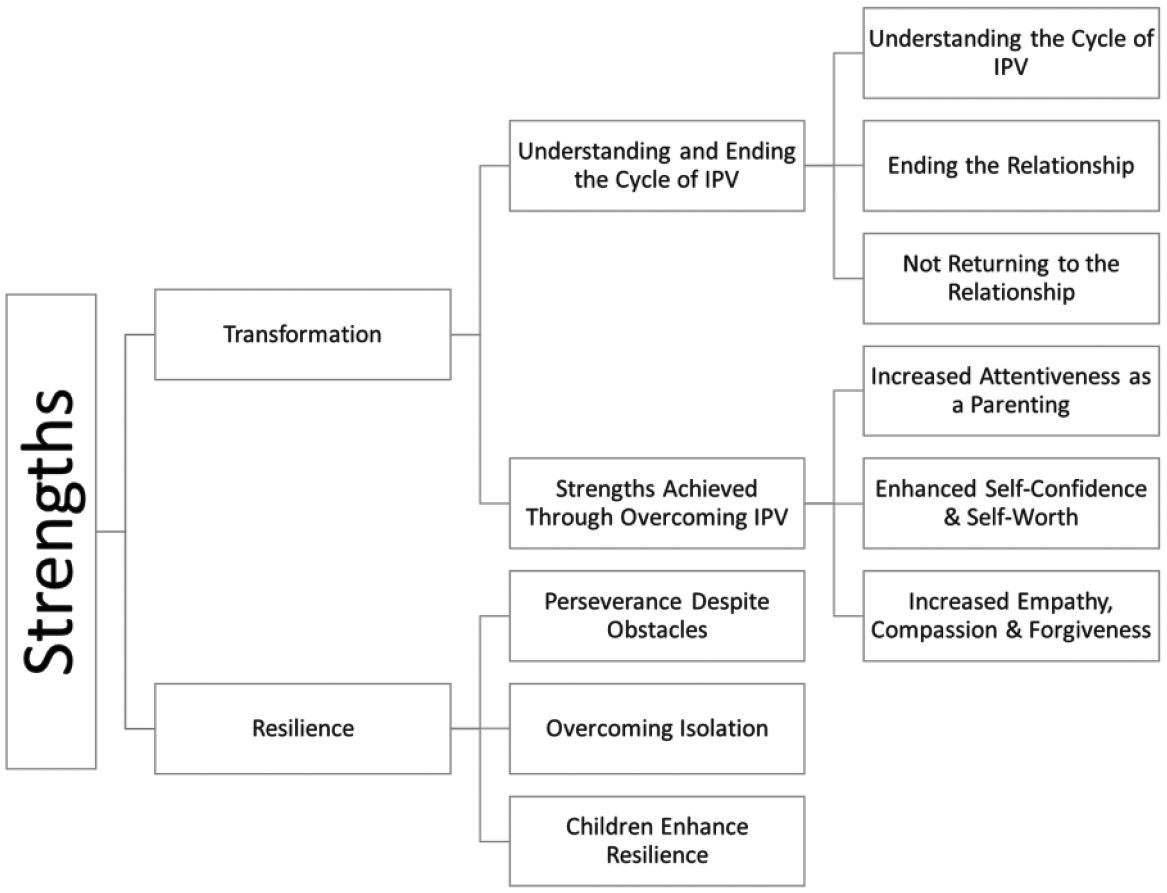
Theme map for strengths displayed by women exposed to intimate partner violence (IPV) proximal to pregnancy.

Theme map for coping strategies displayed by women exposed to intimate partner violence proximal to pregnancy.
Strengths of Women
Transformation
An overarching theme that emerged from the focus groups centered on the transformative power of enduring and overcoming IPV. Participants spoke to a set of fundamental shifts that women experience through this process with respect to their outlook, the way they view themselves and others, and the way they lead their lives. Although both the service providers and mothers touched on aspects of this transformation, it was highlighted at a much higher rate by the mother participants. In fact, out of all the strength codes identified by mothers, 74% were captured by the overarching theme of transformation, whereas only 34% of service provider’s strength codes acknowledged transformation. The individual codes captured by the overarching theme of transformation can be further distilled into the subthemes of (a) understanding and ending the cycle of IPV and (b) strengths achieved through overcoming the experience of IPV.
Understanding and Ending the Cycle of IPV
Understanding the cycle of IPV
A strength of pregnant women exposed to IPV that was highlighted at high rates only by the mother participants was developing an understanding of the cycle of IPV. Mother participants indicated that understanding both the intergenerational nature of IPV as well as the cyclical nature of the violence within relationships (e.g., honeymoon period, acute explosion, return to honeymoon phase) empowered them to leave the relationship, with one mother participant indicating, “I didn’t know domestic violence was a thing until I went there [YWCA]. I didn’t know there were other people.” Another mother participant indicated that It [IPV] can definitely be a pattern because that’s how I ended up in my IPV relationship, and I started to understand how my mother felt as far as trying to stick around for it, but when your life is almost taken you learn when to leave.
Ending the relationship
Both mothers (46% of codes) and service providers (54% of codes) also identified the courage necessary to leave a violent relationship and seek help from others as a strength, with one mother participant indicating, “through IPV survival, their strengths are that they took those steps to get away and try to get help. Those are the most two powerful steps: getting out and finding help.” A service provider also identified the strength and courage required to leave a relationship describing the toll it takes on these women as “they’re emotionally exhausted, tired and scared.” Accordingly, overcoming these fears and challenges to end the relationship is a strength that was identified in women exposed to IPV.
Not returning to the relationship
While overcoming the barrage of challenges necessary to leave a violent relationship is a strength in and of itself, mothers (60% of codes) and service providers (40% of codes) also noted that not returning to the relationship was a transformative strength that occurs within women’s mindsets. One mother participant described this as, You learn when enough is enough. So, I think that’s one of the strong aspects that a woman involved in domestic violence can learn: when enough is enough. When she finally gets out of that situation, she will know not to let anybody else do certain things to her.
Service providers also noted that it is “more common than not” for women to reenter their violent relationship and that overcoming this pattern is a strength.
Strengths Achieved Through Overcoming the Experience of IPV
Increased attentiveness as a parent
A shift toward more attuned parenting after the experience of IPV was identified as a strength only by service providers who noted that because of this experience women are “very protective over their babies.” This is best exemplified by the next quote from a service provider who remarked, With the ones have really been through the process and recovered well, I think they tend to be more attentive, especially as their kids are teenagers because teen dating violence is such a huge thing and a lot of times parents miss that, so I feel like once you’ve been through something, you’re a lot more in tune to what is going on in your kid’s life and watching their relationships to make sure that they’re healthy and good.
Enhanced self-confidence and self-worth
Within the transformation framework, only our mother participants highlighted that the process of leaving their violent partner led to increased self-confidence and greater self-worth. Specifically, these women stated that they recognized that they can make it without their partner and that they deserve better than the treatment they received. For example, one mother participant indicated that “for me, it was the beginning of acquiring a self-esteem. I was in that relationship for a very long time and it’s very brainwashing, your perception gets very muddled and it’s very hard to realize what’s going on.”
Increased empathy, compassion, and forgiveness
Similarly, only our mother participants shared about how their outlook changed and how they have grown as a person in their understanding, compassion, and forgiveness of themselves and others. For instance, one mother indicated that To have that clarity, I went from this really low self-esteem, push-around girl to a very strong woman who’s learned forgiveness, learned a lot of enlightenment as far as I don’t chastise abusers, I understand that hurt people hurt people. So, I think learning that compassion for others and just going from that low self-esteem to finding that self-love is a strength.
Resilience
A second overarching theme in reference to strengths displayed by these women centered on their ability to display resilience by utilizing resources to keep moving forward (Ungar et al., 2013). Focus group participants identified several resilient qualities they have witnessed in women exposed to IPV during pregnancy. Of the strengths noted by service providers, 66% were captured by the overarching theme of resilience, whereas for mother participants, only 26% of their strengths codes were related to resilience. This overarching theme includes the subthemes of perseverance despite obstacles, overcoming isolation, and that children enhance resilience.
Perseverance despite obstacles
Only service providers highlighted that pregnant women exposed to IPV display incredible perseverance. For instance, one service provider stated that despite numerous challenges, these women bounce back saying, “and they do have that resiliency because you know, things happen over and over in their lives so if I don’t bounce back, who else is going to be there to help me?” Another service provider indicated that women exposed to prenatal IPV exhibit resilience through persistence in reaching out for help and moving forward, despite encountering rejection or difficulties by stating, Just the things that they have been through, and that they still continue to try to get help and to reach out for help with the justice system or with counseling services, even though at times they might have tried to reach out and didn’t get the help they needed, but they can still continue to try.
Overcoming isolation
Furthermore, both mothers (20% of codes) and service providers (80% of codes) reported that women exposed to IPV are often isolated and must learn to find the strength within themselves. One woman indicated that A lot of times when there is a lot of domestic violence or partner violence, a lot of women or men are isolated. They know that they only have themselves to rely on. So, if I only have myself to rely on, then I know that I’m either going have to stay down here or I am going to have to bounce-back myself. So, you know, just that resiliency to bounce back.
At the same time, participants also noted that a part of the healing process is overcoming isolation and reengaging with the community, family, and friends. A service provider highlighted the importance of social connection to achieving resilience, “you know, if you have somebody that that can support you, that builds resiliency.”
Children enhance resilience
Both mothers (34% of codes) and service providers (67% of codes) emphasized the positive role that children can have in enhancing the resilience of mothers exposed to IPV through providing motivation and a purpose to keep going, as well as providing a source of joy and love. One woman stated that “with children, you have to have that resilience and you have to have that tough skin to keep pushing through life, whatever life throws at you.” Furthermore, a service provider highlighted how the mother–child relationship can enhance the lives of these women saying, Often times, if you’re interacting with children and getting into child’s play, it can take you away from the stress of the violence. They enjoy that time that they have with them because it’s not a bad time, it’s a more peaceful time.
Coping Strategies Utilized by Women
A precondition for coping: Ensuring physical safety
When participants were queried about how pregnant women exposed to IPV cope with the violence they have experienced, both the service providers and mothers noted the requisite need to achieve physical safety as a precondition for coping. Fourteen percent of the coping codes discussed by mother participants were about this necessity for coping, whereas only 2% of coping codes by service providers examined the critical need for safety. To illustrate this point, a service provider indicated that I think the most important things are the basic safety needs, those have to be met before you can even start with therapy. No one is going to be able to be successful in therapy until they have a roof over their head and things like that.
A woman echoed this point of the necessity of safety first, stating that women must find “a safe place where you know that person [violent partner] doesn’t know where to find you, to be able to have a peace of mind where you don’t have to look around.”
Maladaptive coping
When queried about how women cope with the violence they have experienced, focus group participants listed a number of maladaptive coping strategies that they have seen utilized, or utilized themselves, to cope with IPV. Service providers noted maladaptive coping strategies at a much higher rate, with 42% of their coping codes related to maladaptive coping, whereas only 17% of mother’s coping codes spoke to maladaptive coping strategies.
These maladaptive coping strategies can be condensed into rumination regarding self-guilt or self-blame and engaging in avoidance strategies (e.g., denial and substance use).
Rumination on self-guilt or self-blame
Both women (25% of codes) and service providers (75% of codes) alike spoke to the tendency of IPV-exposed women to engage in self-blame about their relationship. Holding onto this self-blame was viewed as a maladaptive strategy as compared with reframing those thoughts and talking with others. A service provider indicated that A part of therapy needs to always be changing because there are so many irrational thoughts that are related to staying with [their partner] like that it’s their fault, so as part of therapy just to find more healthy and realistic thoughts around that is really important.
Similarly, a mother participant indicated that effective coping comes by “talking about it, acknowledging it and not blaming yourself.”
Engaging in avoidance strategies and denial
The second chief component within the overarching theme of maladaptive coping comes with respect to avoidance behaviors which were highlighted mostly by service providers (92% of codes) and one mother participant (8% of codes). Service providers spoke to a sense of “false hope” (e.g., things will get better, he will change) they witnessed among the women they served, in addition to denial of their situation and blocking of feelings associated with the violence. For example, one service provider indicated, “especially when the baby is born, there’s this kind of moment of reunification almost in the hospital that ‘oh this is going to be okay now, the person’s going to change.’” A second service provider spoke about denial in conjunction with false hope saying, Especially because one time you might see them, say in triage, and they’ve been beaten up. “I’m leaving them, I’m never speaking to them again . . . I’m going to get a police report” and then you see them a couple weeks later, “no, everything’s fine. He’s not going to do it anymore or he’s not doing it anymore.”
Finally, substance use was viewed as a form of avoidance to which a mother participant remarked, “many of the women I know that have gone through it a lot, they use a lot of drugs and alcohol to cope with it rather than proactive things because it’s so hard to cope with.” This avoidance was viewed by focus group participants as maladaptive coping.
Adaptive Coping: Engaging With Support Networks
Adaptive coping strategies were highlighted at high rates by both service providers and women. Of all the service provider codes related to coping, 56% discussed adaptive coping strategies, whereas 69% of the mother participant’s coping codes related to adaptive coping. The adaptive coping strategies centered on engaging with support networks through formal (e.g., professional and community support) and informal (e.g., friend and family) relationships. Both service providers and the mothers emphasized the importance of formal and informal support in facilitating coping and healing among pregnant women exposed to IPV. Focus group participants indicated that this support allows women to know that they are not alone, provides affirmation, gives them an opportunity to share their story and find meaning, and provides resources to help women achieve stability. Three main forms of support were identified by participants: social support (e.g., friends and family), community support (e.g., community programs, family justice centers), and professional support (e.g., group and individual therapy).
Social support
Social support from friends and family was identified as key in facilitating coping by having others to affirm them and identify their strengths (42% mother codes, 58% service provider codes). One service provider highlighted the negative mind-set that women can become trapped within post-IPV, and the role that social support can have in overcoming that mind-set, saying, when a victim feels down, you know the whole idea is that you’re doing everything wrong, that’s the kind of mind-set to kind of keep you locked up, but the affirmation and support from others can be helpful in pulling them out of that place.
A second service provider added that “having a support system seems to change their entire lives and their outlook.” Furthermore, a mother echoed the importance of social support saying, “a whole different lifestyle is associated with getting healthy. And I was lucky enough to find that through finding healthier different people as my support system.”
Community support
Community support, such as support groups, family justice centers, and home visitation programs, was also highlighted as a key resource by focus group participants (55% mother codes, 45% service provider codes). More specifically, one provider stated that “support groups help them cope. They know that they aren’t judged.” A second service provider highlighted the value of support by adding, . . . when they start to realize that there are other people that have gone through it before and you can connect them with that, then that helps build on their strengths and helps them process it and work through it.
A mother spoke to the large network that her friend built by seeking out this community support stating, “I know one girl that went to a lot of groups and had a lot of other women that had gone through it around her. She had a lot of support.” A second mother added the value that this shared experience holds, remarking that these support groups “help women recognize that they’re not at fault and that there is a way out and that there is support on the latter end of not being in the relationship.”
Professional support
The last source of support that was identified relates to professional support through individual and group counseling (38% mother codes, 62% service provider codes). One mother spoke about the vulnerability women display in seeking help from a professional and the good that can come from that step saying, Counseling is most helpful to these women. You’ve got to have a voice and somebody that is there that will listen and not only listen but help you and won’t just say “oh I’ll help you later.” . . . So, you [the counselor] can advocate some time for them and help with whatever they need.
A service provider echoed these points and spoke about the importance of building a relationship with the client saying, “just connecting and talking with them and letting them talk because I notice that when they start to feel comfortable and relaxed, that’s when the sharing and relationship building begins.” Furthermore, professional support allows women not only to share their stories and find meaning but also to target maladaptive self-blame, which was identified by both groups as problematic.
Discussion
Available research underscores the negative impact that IPV has on women’s mental health, as well as the potential escalation and reoccurrence of violence during the prenatal period (Silverman et al., 2006). Pregnancy provides a unique opportunity for community partners and clinicians to connect with women in a time when they are more likely to seek care and potentially end the violent relationship for the safety of themselves and their unborn child (Wortham, 2013). While recent IPV interventions have sought to improve mental health functioning, few programs have focused specifically on pregnancy as a prime period for intervention. Furthermore, most IPV interventions center on meeting tangible needs and providing psychoeducation to IPV-exposed women, rather than building upon protective factors, such as personal strengths or coping strategies. This qualitative study was designed to identify strengths and coping strategies among IPV-exposed pregnant women that may serve to inform health care professionals working with this population. More specifically, this study was designed to identify strengths and coping strategies among IPV-exposed pregnant women by exploring two primary questions: “What are the biggest personal strengths in IPV-exposed women?” and “What is most helpful to women when coping with and processing the violence they have experienced?”
The first area of inquiry asked participants to identify strengths displayed by women who have experienced IPV. From the perspective of the mothers exposed to IPV proximal to pregnancy, the predominant strength centered around a transformation within their mind-set and worldview that occurs through the process of overcoming IPV. This transformative progression manifested through the process of permanently leaving the violent relationship, which participants noted reflected their new outlook, increased self-esteem, and enhanced self-worth. Given that most individuals return to their violent partner an average of 7 times before ending the relationship permanently, not returning to a violent partner speaks to a new mind-set (National Domestic Violence Hotline, 2018). Previous qualitative research in this area has also noted the transformed mind-set that develops as women prepare to end their violent relationship (Keeling et al., 2016). Mother and service provider participants alike noted that displaying the courage to leave and continually resist returning to the relationship, despite the added stressors conferred by pregnancy, exemplifies strength displayed by these women. Furthermore, mother participants stated that through the process of leaving their violent relationship, their feelings of self-esteem and self-worth increased through the realization that they were capable of moving forward independently and “making it on their own.” This finding is consistent with similar research that acknowledges the many barriers women face in ending their IPV relationship and notes that the strength displayed through overcoming these obstacles brings about “healing, growth, and renewal” (Davis, 2002; Keeling et al., 2016).
Study participants also indicated that learning and growth achieved through their experience of being in a violent relationship fostered more attentive parenting, forgiveness, increased empathy, and compassion for others. Mother participants expressed that after this experience they are now more watchful over their children, and service providers suggested that IPV-exposed mothers are more in-tune to violence in their teenagers’ dating lives and attentive to their children’s needs. Participants also noted that their healing process provided a lens through which they could engage in perspective taking, allowing greater development of empathy and compassion for others. Through this augmented compassion, participants identified their desire to give back to other women who have experienced IPV by sharing their messages of hope and empowerment to those who need encouragement in the early stages of healing.
The second overarching theme of strengths that emerged from the data centered on resilience. Resilience manifested as the ability to recover after facing a trauma and continue to persevere despite challenges. While resilience was identified as a strength of IPV-exposed women, it is important to understand the difference between the idea of “strengths” and the dynamic concept of resilience. In the present study, “strengths” were understood as personal, character traits that were demonstrated by pre- and postpartum mothers exposed to IPV proximal to pregnancy, while resilience emerged as women’s continued efforts to access individual resources and seek community support. Women and service providers alike identified that IPV-exposed individuals were persistent in reaching out for help, in overcoming the isolation associated with IPV and in focusing on their children to continue moving forward despite facing recurrent adversity and stressors. This emerging definition of resilience mirrors a dynamic, social-ecological model in which women utilize both internal and external resources to overcome adversity (Howell & Miller-Graff, 2014; Ungar et al., 2013). This definition aligns with participants’ description of resilience in IPV-exposed women as reaching out for assistance and “doing whatever it takes to move forward” into a safe and healthy future.
The second area of inquiry focused on the coping strategies used by IPV-exposed women. Participants noted that the principle need of safety must be established before true coping and healing can transpire. Establishing physical safety plays a significant role in empowering women to leave a violent relationship (Davis, 2002). Once this safety is achieved, women can then contend with the IPV they have experienced along with other challenges such as pregnancy, parenting, and economic security. The myriad of coping strategies discussed by our participants ultimately fell into one of two categories, adaptive or maladaptive coping strategies. Maladaptive coping strategies included rumination regarding self-blame and feelings of guilt related to IPV experiences, denial of the level and severity of violence experienced, and avoiding memories and feelings related to the violent experience through multiple means, including substance use. These findings suggest that the use of maladaptive coping strategies may affect a woman’s decision to return to a violent relationship (e.g., through avoidance and denial) as well as their mental health. In contrast, adaptive strategies, such as challenging negative beliefs about themselves, seeking a way out of the violence and finding someone with whom they could share their experience and receive support, were acknowledged as valuable to our participants.
The most ubiquitous adaptive coping strategy identified by both groups of participants involved seeking out and engaging with support networks, both formal and informal. In line with both qualitative and quantitative research in this population, the current sample discussed engaging in support services and exhibited help-seeking behavior (Davis, 2002; Mitchell & Hodson, 1983). Through exploring this dominant theme of social support engagement, participants remarked that all forms of social support (e.g., friend, family, professional and community support) were needed and equally beneficial. Rather, having someone who will listen and provide emotional support was the most important element of support regardless of the source. This may be particularly salient for women who are currently pregnant or recently delivered who may need additional emotional support or tangible resources. Given the value of emotional support to these women, clinicians and health care providers alike should strive to meet this need with pregnant women exposed to IPV.
Clinical Implications
There are few evidence-based interventions for women exposed to IPV and even fewer for pregnant women experiencing IPV. These findings indicate that future interventions should consider a strengths-based and social-ecological framework within their approach by acknowledging the personal assets of these women while also highlighting the benefit of multiple sources of support and an enriched community network (Bronfenbrenner, 1994). The present study also suggests several factors that future interventions should consider when developing programs for women experiencing IPV proximal to pregnancy. To assist individuals exposed to IPV in achieving the transformative growth evident in the current sample, study findings indicate that IPV-focused interventions should help women establish their independence apart from their violent partners by building their self-efficacy and self-esteem, which were noted as key factors that prevented reengagement with a violent partner. Furthermore, such programs may consider incorporating positive self-image exercises, promoting positive self-talk and encouraging an exploration of personal strengths to foster feelings of self-worth. These intervention suggestions closely align with the resilience portfolio model of adaptation following IPV exposure, which suggests that increasing self-regulatory abilities and emphasizing personal strengths ultimately increase resilience (Grych, Hamby, & Banyard, 2015). In addition, women would likely benefit from an open discussion of the high rate of violent partner reengagement and psychoeducation concerning risk factors and warning signs for future violent relationships. Given the significance many women attributed to the moment they decided “enough is enough,” interventions should help women process what was behind this shift to consolidate their personal growth and harness its power to foster long-term feelings of self-worth.
Study findings also revealed a strong desire for mothers to protect their children, suggesting that services for IPV-exposed pregnant women should create space to discuss parenting beliefs and practices, as well as provide psychoeducation regarding positive parenting strategies that help women feel in control of their children’s safety. These findings support previous research identifying children as a mechanism for permanently leaving violent partners to prevent them from being a part of the continued cycle of violence (Wortham, 2013). Women also expressed a desire to connect and share with other women who have been exposed to IPV. Interventions may also consider dedicating time for IPV-exposed clients to share their histories and provide mentorship to other women who are experiencing IPV surrounding pregnancy. Regarding coping, the current study underscores that IPV interventions should communicate the importance of using adaptive coping strategies as well as provide psychoeducation on the negative ramifications of maladaptive coping strategies, such as avoidance and substance use, which may be harmful to both mother and child, especially during pregnancy. Given that health care providers may be the first point of contact or have more regular access to pregnant women who are exposed to IPV, medical clinics could consider providing an on-site counselor or referral to support groups that could address maladaptive thinking and promote adaptive coping strategies (e.g., emotional-regulation, CBT and social engagement) as well as emotional support. This view is in line with an ecological systems approach that highlights the great potential for community organizations to contribute to recovery and resilience through the interaction of multiple systems (e.g., microsystem, mesosystem, exosystem; Bronfenbrenner, 1994; Ungar et al., 2013). Thus, community organizations may be able to utilize the pregnancy period to connect with women who would not typically be help-seeking but may be motivated to obtain medical care and tangible resources for their infant (Bailey, 2010). Finally, the discrepancy between service provider and mother identified themes indicates that service providers may be primed to identify maladaptive coping strategies and strengths specifically related to behavior (e.g., parenting and persistence). However, given that our mother participants benefited from the identification of inner strengths and transformation, service providers should be trained on strategies to build and highlight these internal assets (e.g., personal growth, self-worth, compassion, forgiveness).
Limitations and Future Research Directions
Although the present study has several strengths, including the diversity of our sample, multiple perspectives of IPV (i.e., women and service providers), and the identification of pregnancy as a fruitful period for intervention, there are also limitations to consider when interpreting results. First, participants included women both pre- and postpartum who had varying levels of violence exposure. Thus, some reports of exiting the violent relationship were retrospective, whereas some experiences were current. Second, women were recruited via flyering and screening at community sites. This may affect the generalizability of the findings, as results are limited to help-seeking women exposed to IPV. Third, while this thematic qualitative research approach appropriately examined focus group data, future research should employ mixed methods of measurement to understand the strengths and coping strategies utilized in this population. The use of a mixed methods design would allow researchers to explore the impact of extraneous variables (i.e., time since IPV, previous trauma exposure, and levels of social support) contributing to the stages of change that lead women to leave a relationship characterized by IPV. In sum, experiences with IPV vary widely and the highlighted results and associated clinical implications will not be appropriate for every woman exposed to partner violence proximal to pregnancy. Still, these findings contribute to a small but important body of work on strengths and protective factors that promote positive outcomes among pregnant women exposed to IPV. These findings also contribute to the growing field of diversity in research by examining strengths and coping strategies utilized in the context of IPV among a sample who primarily identified as African American. Even so, further work in this area is essential to gain an understanding of what is most effective to include in interventions for this vulnerable population.
Conclusion
In conclusion, study findings indicate that service providers highlighted strengths related to parenting and resilience whereas IPV-exposed women focused on the personal growth they achieved and the transformational aspect of their experience. Service providers also underscored maladaptive coping at a higher rate than did the mothers. Finally, all participants noted the crucial importance of both formal and informal supports. These results indicate the importance of educating individuals about the cycle of IPV, the warning signs to look for in relationships, and how to enhance safety when ending a violent relationship; ideally early in a young woman’s dating years and multiple subsequent times to solidify understanding. Findings also recognize the importance of connecting women to support networks, whether that be through their community, friends, family, or professional organizations. Finally, this study reinforces the need to engage with women at all stages of a violent relationship to provide tangible resources, support, and affirmation, as well as to empower women by acknowledging their strengths and resilience.
Footnotes
Declaration of Conflicting Interests
The author(s) declared no potential conflicts of interest with respect to the research, authorship, and/or publication of this article.
Funding
The author(s) disclosed receipt of the following financial support for the research, authorship, and/or publication of this article: This work was supported by grants from the Help for Children (HFC) Global Foundation (PI: Miller-Graff) and the Urban Child Institute (PI: Howell).
