




Abstract
Violence against women is a global issue with estimates indicating that 35% of all women worldwide have experienced either physical and/or sexual intimate partner violence or nonpartner violence in their life time. In Malawi, 42% of ever-married women have experienced some form of violence perpetrated by their current or most recent spouse. A number of studies have investigated intimate partner violence in Malawi within the context of HIV/AIDS, girls’ sexual abuse, and psychological distress, and a few studies report on the role of sociocultural factors in influencing gender-based violence. No study has used cluster analysis to systematically analyze different levels of abuse among married women in Malawi. Using the 2015 Malawi Demographic and Health Survey data, we employed cluster analysis and multinomial logistic regression to analyze the distribution of different levels of abuse among married women in Malawi and the key attributes associated with each level of abuse. Correlates of domestic violence significantly differ by levels of abuse and are distributed as follows: controlling behavior (11.8%), general controlling behavior (GCB; 27.1%), moderate physical and emotional abuse (27.2%), and the high and complete abuse (8.5%). Alcohol consumption, ethnicity, and women working status were significantly associated with all four levels of abuse, but age and religion were only associated with controlling behavior and generalized controlling behavior. The strength of association between husband’s alcohol consumption, woman’s working status, and marriage type and domestic violence increased by level of abuse. On each of these factors, the odds of experiencing violence were lowest in the controlling behavior group and highest in the high physical and emotional abuse group. Policies and programs that are designed to tackle violence against married women in Malawi should incorporate strategies that discourage excessive alcohol consumption, promote messages that women can be bread winners, and discourage polygamous marriage.
Introduction
The World Health Organization (WHO) estimates that 35% of all women worldwide have experienced either physical and/or sexual intimate partner violence or nonpartner violence in their life time (WHO, 2017). As many as 19% of women in 87 countries surveyed between 2005 and 2016 globally reported experiencing physical and sexual violence in the 12 months prior to the survey (United Nations, 2018). In Malawi, the prevalence of domestic violence among the ever married women perpetrated by their current or most recent spouse (physical, sexual, or emotional) is estimated as 42%, higher than the global estimate of intimate partner violence (NSO-Malawi & DHS Program, 2017). Sustainable development goal number 5 aims to achieve gender equality and empower all women and girls through various ways including the elimination of all forms of violence against all women and girls in the public and private spheres including trafficking and sexual and other types of exploitation (United Nations, 2018). Efforts to tackle the problem of violence against women globally through advocacy, empowerment, counseling interventions, and home visitation appear promising in general, but not many countries have made significant strides in reducing violence against women (WHO, 2017). In Malawi, there is concordance between men and women in their perception that women do not have the right to refuse sex whenever their husbands demand so, and it is established that acceptance of intimate partner violence is both a barrier to its reduction and a strong predictor of prevalence (Andersson et al., 2007; Kaminaga, 2017).
There are many theories designed to explain, predict, and better understand the causes of domestic violence. The feminist theory is considered a dominant model because it can be applied across cultures, contains both an explanation and a solution, and emanates from the discipline of sociology with many feminist scholars (Gelles, 2005). It postulates that violence against women is a result of the inferior position occupied by women in the social structure inherited from a traditional family system and that marital violence emanates from inequalities that exist in marriage relationships (Renzetti, Edleson, & Bergen, 2001). Feminists conceptualize all violence as a reflection of the unequal power relationships that exist in society and personal relationships between men and women (Sharma, 1997). However, a more thorough understanding of factors that influence domestic violence can be achieved by using the ecological framework (Figure 1). Carson (1984) adapted Urie Bronfenbrenner’s ecological model of human development to the problem of domestic violence. The ecological model of domestic violence allows for an analysis of factors at different levels: individual, family, community, and society, which may operate simultaneously, independently, and interactively to influence the emanation and persistence of domestic violence. The WHO Violence Prevention Alliance uses the ecological framework to guide its understanding, undertake research, and implement actions for violence prevention (WHO, 2018). This framework illustrates the factors that may influence violence at society and community level, within relationships, and what makes individuals become perpetrators of domestic violence.
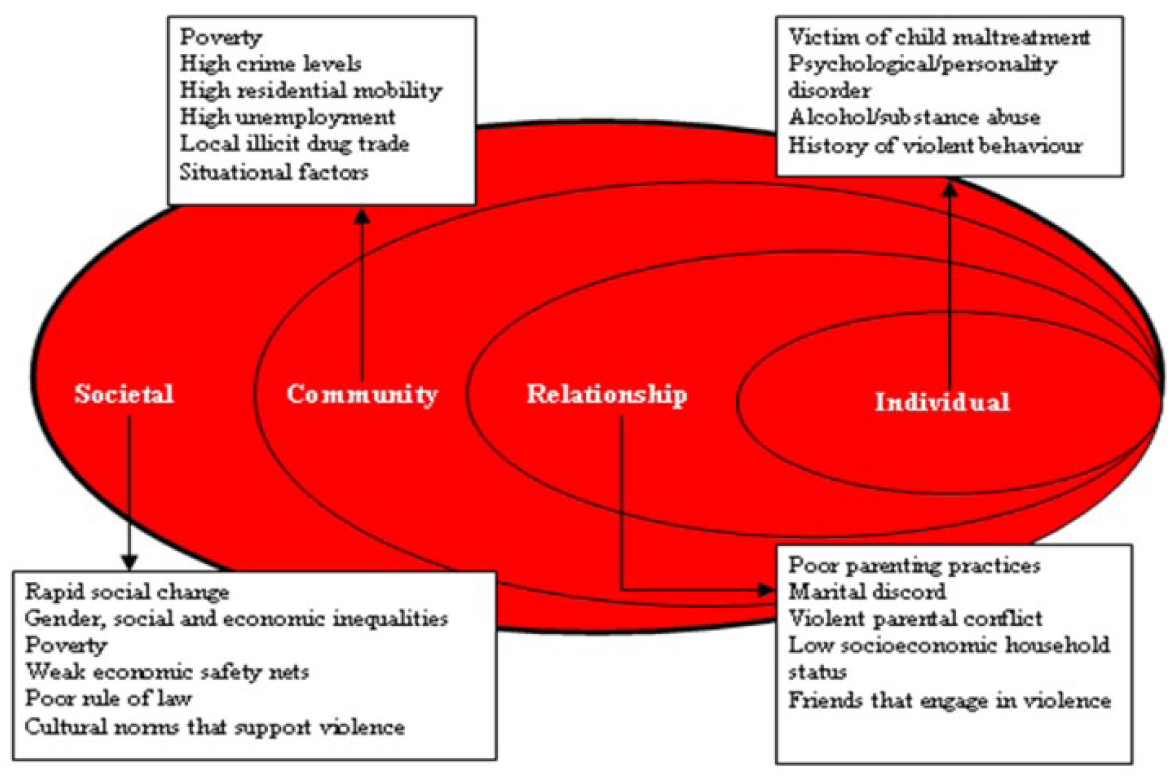
The ecological framework: Examples of risk factors at each level.
The interplay of factors shown in the ecological framework has attracted a significant amount of research on domestic violence across the globe. The evidence indicates that although in general the findings are aligned to the ecological framework, there are variations in the relative importance of factors responsible for domestic violence which may be attributed to differences in context, data, and research methods. A number of studies have established that the risk of abuse is highest among women who are poor and unemployed, which may be linked to the resource theory, dependency relations theory, patriarchy theory, and feminist theory (Dobash & Dobash, 1979; Gelles, 2005; Hyde-Nolan & Juliao, 2011; Jewkes, 2002; Strauss, Gelles, & Steinmetz, 1980; Warner, Lee, & Lee, 1986). The resource theory presupposes that family members with more resources traditionally command higher power and assure obedience and compliance, whereas those with less resources use violence to maintain power (K. L. Anderson, 1997; Pallikadavath & Bradley, 2019; Warner et al., 1986).
The dependency relations theory proposes that victims of abuse are often dependent on their abuser, while patriarchy theory explains that the economic and social processes that operate directly and indirectly to support the patriarchal order lead to the subordination of and violence against women (Alio et al., 2011; Dobash & Dobash, 1979; Hyde-Nolan & Juliao, 2011). Interestingly, a cross-sectional household survey in eight countries found that poverty, overcrowding, and education were less influential than sociocultural factors such as multiple partners, attitudes, and subjective norms (Andersson et al., 2007). Key sociocultural factors associated with domestic violence in Malawi include forced marriage, dowry practice, polygyny, and the notion of household head (Bisika, 2008). The presence of co-wife has been linked to domestic violence in several African countries including Malawi (Alio et al., 2011; Bisika, 2008). Although polygyny is common across all ethnicities in Malawi, it is more predominant among patrilineal communities in the Northern region. The Central and Southern regions are largely matrilineal (Berge, Kambewa, Munthali, & Wiig, 2013; Chikhungu, Madise, & Padmadas, 2014). Women from matrilineal communities are more autonomous, which increases divorce rates (Arnado, 2004). It is not surprising that the Southern region of Malawi has a relatively larger percentage of female-headed households (28%) compared to the Central region (21.2%) and the Northern region (19.9%; NSO-Malawi, 2012). Although most ethnicities follow one lineage system (matrilineal or patrilineal), some ethnic groupings, for example, the Ngonis and Nyanjas, may be both matrilineal and patrilineal depending on their ancestral settlement area when they first migrated into Malawi (Berge et al., 2013; Telalagić, 2012).
At the global level, researchers have used multivariate analysis to explore factors associated with domestic violence among married women either in general or using one specific measure (physical or emotional or sexual), and in some cases, researchers have only undertaken bivariate analysis without controlling for other factors (Alio et al., 2011; Andersson et al., 2007; Fageeh, 2014; Rasoulian et al., 2014; Sapkota, Bhattarai, Baral, & Pokharel, 2016). Based on a literature review on gender-based violence to inform national response in Malawi, a number of studies have investigated intimate partner violence within the context of HIV/AIDS and girls’ sexual abuse, and a few have studied the role of sociocultural factors in influencing gender-based violence (Mellish, Settergren, & Sapuwa, 2015). A recent Malawi national-level study among 13- to 24-year olds established that psychological distress may result from experiencing multiple forms of domestic violence (Fan et al., 2021). No study has analyzed the factors associated with the different levels of abuse in Malawi among married women. Using cluster analysis and multinomial logistic regression and national-level data, this study identifies the distribution of different levels of abuse among married women in Malawi and the key attributes associated with each level of abuse. The study is exploratory in nature and uses the ecological framework and previous empirical work to inform variables of analysis. Study findings provide key information to help government and donor institutions make well-informed policy decisions in tackling violence against women in Malawi and populations of similar attributes.
Methods
Data
The data are drawn from the 2015 Malawi Demographic and Health Survey (MDHS) (2015) carried out under the DHS Program. The United States Agency for International Development (USAID) funds the DHS Program in many developing countries. In the 2015 MDHS, ICF International provided technical assistance throughout the study. The sample was selected based on the 2008 Malawi Population and Housing Census frame. Standard enumeration areas were selected based on probability proportional to size. Thirty households were picked from each enumeration area to make a sample size of 27,516 households. The woman’s questionnaire collected information from 24,562 women out of 25,146 women aged 15 to 49 years who were eligible for the interview representing a 98% response rate. One-third of the sampled households received domestic violence questions (6,379 household). Specifically constructed weights were used to adjust for selection of only one woman per household to ensure national representativeness. Weights are therefore specific to the individual woman and are included in the analysis to make the sample nationally representative. The domestic violence module collected data on different types of violence: physical, sexual, emotional, and level of marital control by husband. The survey also provided information on background characteristics including household wealth status and demographic characteristics of all household members such as age, sex, and relationship to household head. Further details of study design and data collection are available in the 2015-16 Malawi Demographic and Health Survey report (NSO-Malawi & ICF_International, 2017).
Description of variables
Explanatory variables
The choice of explanatory variables is guided by findings from previous literature, the ecological framework (Figure 1), and data availability. The explanatory variables that were explored are described in Table 1. This comprises demographic variables such as age of the woman, age of the woman at first sex, and age of the woman at first cohabitation; geographic/location variables such as urban/rural residence, region, religion, and ethnicity; and socioeconomic variables such as household wealth status, whether husband takes alcohol or not, woman’s education level, whether the woman is currently working or not, and type of marriage (polygynous or monogamous).
Distribution of Variables Explored in This Study.
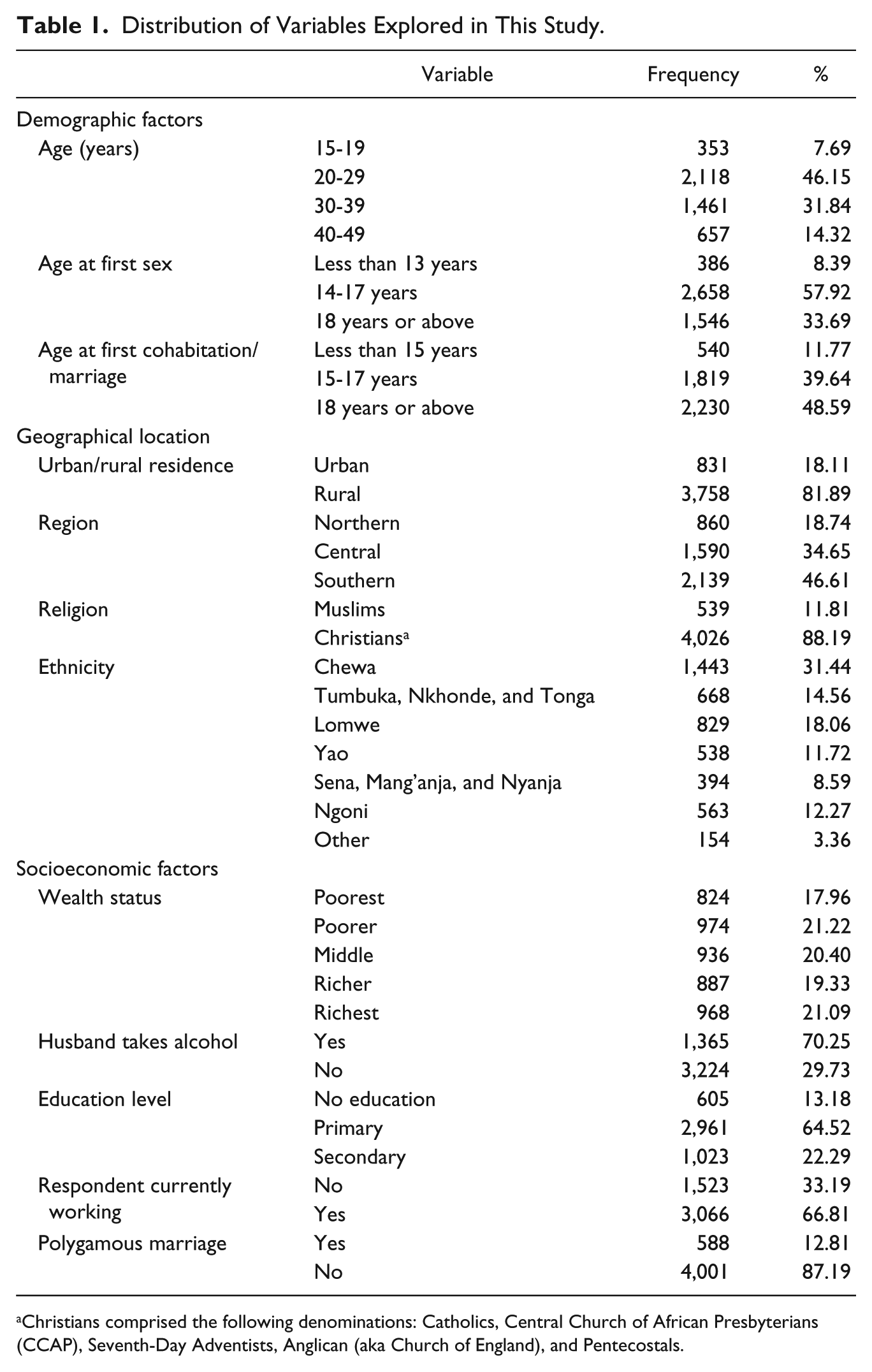
Christians comprised the following denominations: Catholics, Central Church of African Presbyterians (CCAP), Seventh-Day Adventists, Anglican (aka Church of England), and Pentecostals.
Statistical analysis
Cluster analysis
Cluster analysis is used to extract meaningful groupings of the experience of domestic violence from the MDHS. The experience of abuse used in the survey is defined as whether the woman has ever experienced a specific act of violence from her current spouse or partner. Eighteen binary variables are used in forming clusters, each taking the form of a 0/1 indicator variable where the variable takes the value 1 if the woman reports experiencing that form of domestic abuse and zero otherwise. We include three domains of domestic abuse: physical (formed using reports of the woman being pushed, slapped, punched, kicked, strangled, threatened with a weapon, and limb twisted), sexual (physically forced into sex, coerced into sex, and forced to perform a sex act), and controlling behavior (husband exhibits jealous behavior, accused of being unfaithful, needs permission to see friends, needs permission to see family, needs to justify whereabouts, humiliated, threatened, and insulted).
The major advantage of the cluster analytic approach is that it is able to extract meaningful groupings on the experience of violence. This is an advantage over techniques such as Principal Component Analysis, which relies more on analyst interpretation when extracting groupings of behavior (Hair et al., 2009). The approach is conceptually analogous to other grouping techniques such as Latent Class Analysis and has been applied in other contexts where extracting subpopulation groupings is of research interest from a number of different indicator variables (Amos et al., 2018). Cluster analysis is performed using hierarchical cluster analysis based on Ward’s distance cluster function in Stata 13.0 for Windows (StataCorp, 2013). To decide on the number of clusters, we use a combination of indices appropriate for hierarchical clustering, which indicates optimal clustering pattern Duda–Hart index (Duda & Hart, 1973) and pseudo T statistic and dendritic analysis.
Regression analysis
Once the final cluster profile was selected, membership of a particular cluster was then used as the dependent variable in a multinomial logistic regression. A multinomial logistic regression model is appropriate because instead of running four separate regression models, separate logistic regression models for each indicator variable are estimated simultaneously, allowing for mutually exclusive response categories to be analyzed without the need for overlapping reference categories (Agresti, 2019; Anderson & Rutkowski, 2008).
The model takes the form of Equation 1
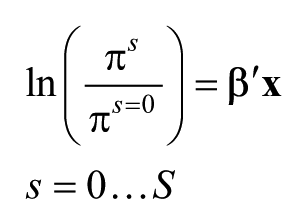
In Equation 1, the probability of belonging to cluster
Results
Cluster analysis
Five distinct clusters of abuse were extracted based on a combination of fit statistics and dendritic analysis. The five clusters have the highest Duda–Hart index (0.897), compared to other proximate solutions (Cluster 4 has a Duda–Hart statistic of 0.036, while Cluster 6 has a Duda–Hart value of 0.789). This is confirmed by the related pseudo T statistic where the value for five clusters is minimized at 142.56, compared to larger values for 4 (44,946.56) and 6 (331.13) cluster solutions. Out of the 6,379 households that responded to the domestic violence questions, data on type of abuse were available for 4,569 women.
The profile of domestic abuse is presented in Figure 2. The first cluster is termed no abuse (NA) and contains women who reported no experience of abuse on any of the response variables. This cluster comprises 25.39% of the sample. The second cluster extracted is characterized by controlling behavior (CB). All women within this cluster report that they have experienced their spouse demanding knowledge of their whereabouts, but no other form of abuse is present. This cluster comprises 541 women or 11.79% of the sample. The third cluster comprises generalized controlling behavior (GCB). Women in this cluster experience high rates of jealousy from their husbands (84%) and their husbands demand to know whereabouts (77%), as well as lower level of accusations of being unfaithful (30%) and isolation from friends (22%) and family (17%). All indicators of physical abuse are low (below 5%). This is the second largest cluster in the sample comprising 1,245 women (27.13%).
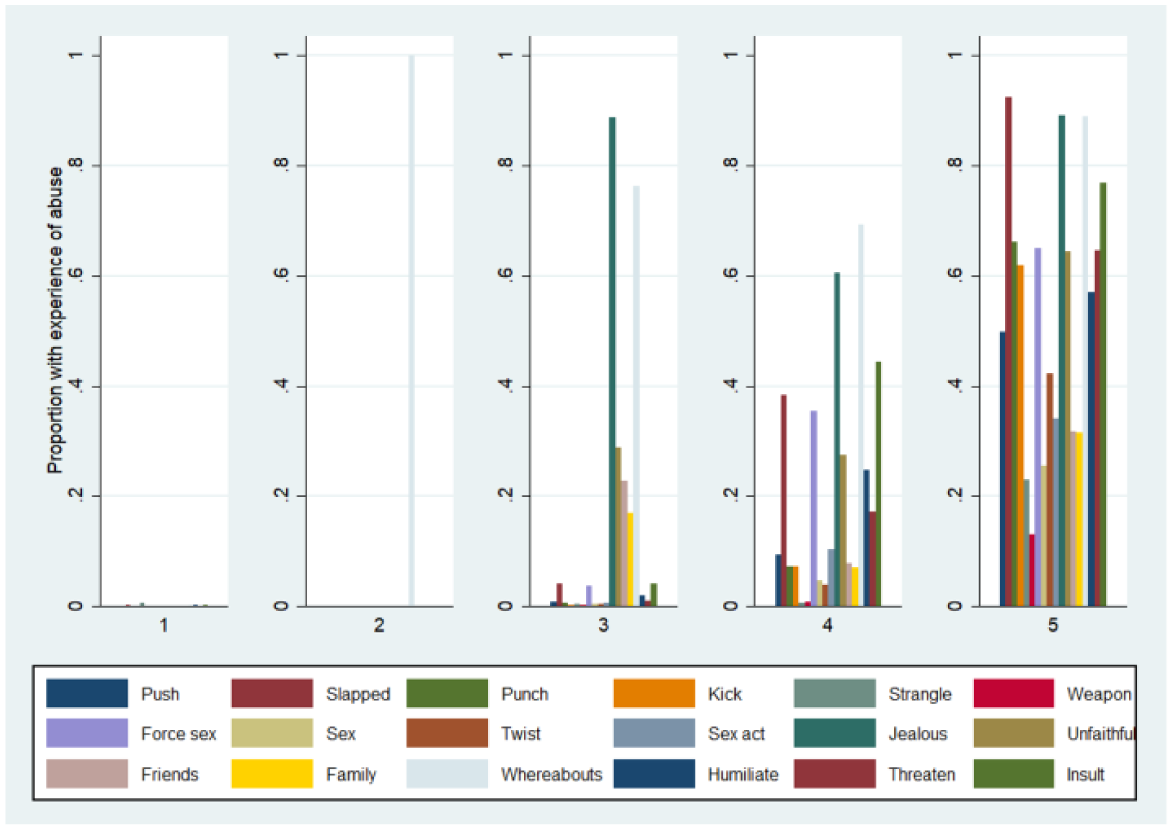
Experience of forms of domestic abuse by form of abuse for each cluster.
Cluster 4 comprises moderate physical and emotional (MPE) abuse. Emotional abuse is common in this cluster, with high rates of jealous behavior (60%) and control of whereabouts (67%). A substantial minority of women in this cluster have experienced physical abuse largely in the form of being slapped (39%) and being forced to perform a sex act (37%). This cluster is the largest in the sample with 1,250 women (27.24% of the sample).
Cluster 5 represents the highest overall level of abuse and is termed the high and complete abuse (HCA). Nearly all women in this cluster have experienced some form of physical abuse, with particular high rates of being slapped (90%), punched (65%), and kicked (60%). Women in this cluster also report high rates of forced sex (65%). Controlling behavior and emotional abuse are also common in this cluster, particularly jealous behavior (90%), knowledge about whereabouts (90%), and being humiliated (55%), threatened (65%), or insulted (75%). This cluster comprises 288 women and is 8.46% of the sample.
Multinomial logistic regression results
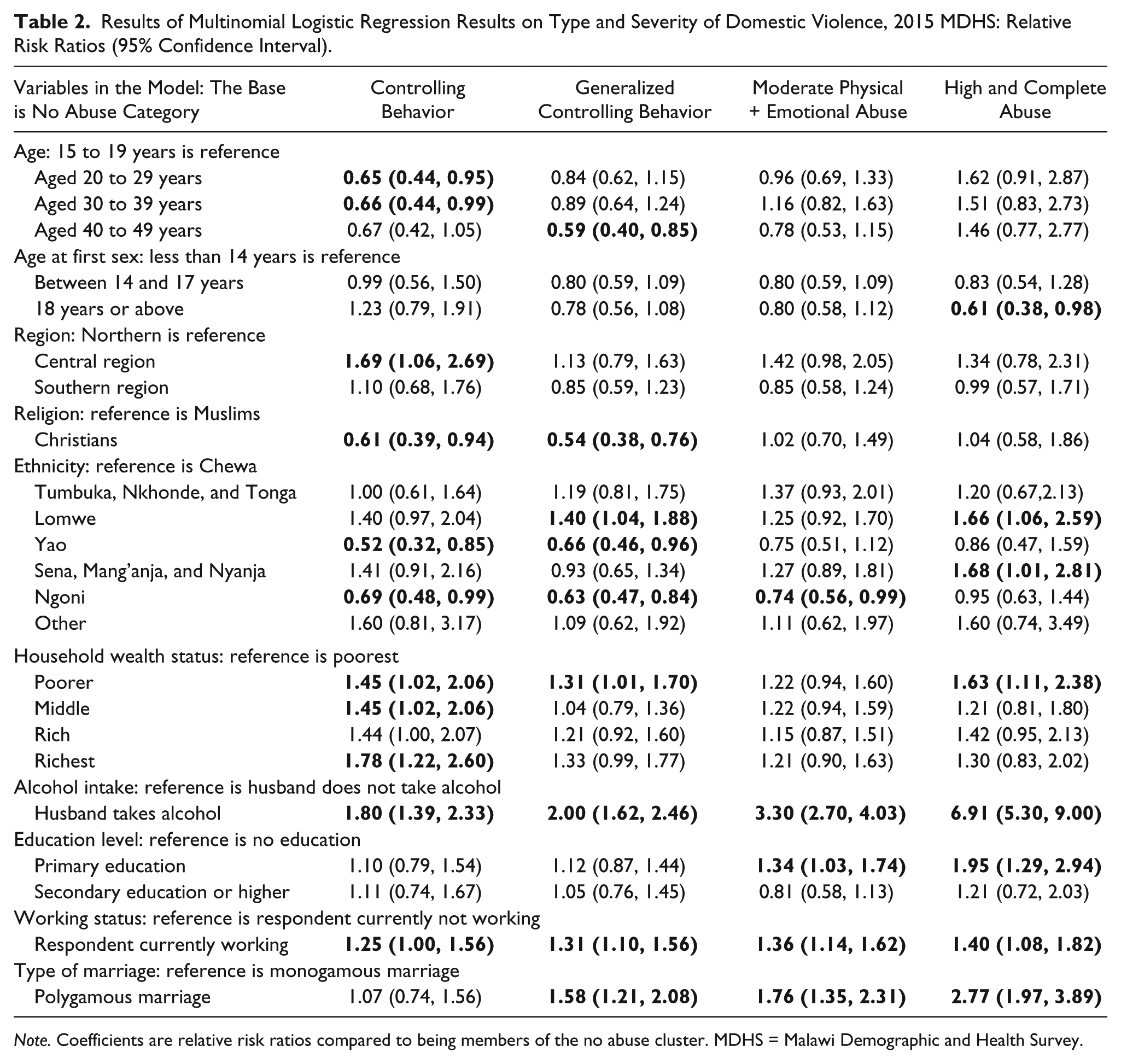
Results of the multinomial regression analysis are presented in Table 2. The odds of a woman encountering a particular profile of domestic violence are presented below each column: controlling behavior, generalized controlling behavior, MPE abuse, and HCA compared to the base category of NA. Statistically significant results (p < .05) are in boldface.
Results of Multinomial Logistic Regression Results on Type and Severity of Domestic Violence, 2015 MDHS: Relative Risk Ratios (95% Confidence Interval).
Note. Coefficients are relative risk ratios compared to being members of the no abuse cluster. MDHS = Malawi Demographic and Health Survey.
Controlling behavior
The odds of a woman encountering controlling behavior were 35% lower for women aged 20 to 29 years and 36% lower for those aged 30 to 39 years compared with those aged 15 to 19 years. Women from the Central region had 69% higher odds of experiencing controlling behavior compared to women from the Northern region. Christian women were less likely to encounter controlling behavior compared to Muslim women, and their odds were 39% lower than that of Muslim women. Women of Yao and Ngoni ethnicity were less likely to encounter controlling behavior than women of Chewa ethnicity. Interestingly, more well-off women were more likely to encounter controlling behavior than the poorest (45% more likely for the poorer and middle categories and 78% more likely for those in the richest category). Similarly, women who reported to be currently working were more likely to have encountered controlling behavior from their husbands than women who were not currently working. The highest difference in the odds of encountering controlling behavior was between women whose husbands drink alcohol and those that do not. Women who reported that their husbands drink alcohol had 80% higher odds of encountering controlling behavior compared to women who reported that their husbands do not drink alcohol.
Generalized controlling behavior
The odds of women encountering generalized controlling behavior were also lower for older women compared to the youngest age group (15-19 years). The association was only statistically significant among the oldest group (40-49 years). Women aged between 40 and 49 years had 41% lower odds of encountering generalized controlling behavior compared to women aged 15 to 19 years. Christian women had 46% lower odds of encountering this form of domestic violence compared to Muslim women. Compared to Chewa women, the odds of encountering this form of domestic violence were 40% higher for Lomwe women, 34% lower for Yao women, and 37% lower for Ngoni women. Women who were in the poorer group of the household wealth status variable were more likely to encounter this form of domestic violence compared to women in the poorest category; the odds were 31% higher. Women who reported that their husbands drink alcohol were twice as likely to experience this form of domestic violence compared to women who reported that their husbands do not drink alcohol. The odds of suffering generalized controlling behavior were 31% higher for women who reported to be currently working than women who were not working and 58% higher for women in a polygynous marriage than those in a monogamous marriage.
MPE abuse
There was no significant association between age, region, religion, and this profile of domestic violence. A statistically significant association was obtained between this form of domestic violence and the following factors: ethnicity, education level, whether the husband drinks alcohol or not, women’s working status, and type of marriage. The odds of experiencing this form of domestic violence were 26% lower for Ngoni women than Chewa women, more than 3 times higher for women who reported that their husbands drink alcohol than women who reported that their husbands do not drink alcohol, 34% higher for women with primary education than those with no education, 36% higher for currently working women than those not working, and 76% higher for women in polygynous marriage than those in a monogamous marriage.
HCA
Factors that emerged as significantly associated with HCA are age at first sex, ethnicity, household wealth status, husband’s consumption of alcohol, education level, working status, and marriage type. Women who reported to have had their first sex at the age of 18 years or above had lower odds of experiencing this form of domestic violence than women who had their first sex aged less than 14 years. The odds of experiencing this form of domestic violence were 66% higher for Lomwe women and 68% higher for Sena, Mang’anja, and Nyanja women than Chewa women. Women in the poorer category of the household wealth status variable had 63% higher odds of experiencing this form of domestic violence than those in the poorest category. The odds of experiencing this profile of domestic violence for women who reported that their husbands drink alcohol were nearly 7 times higher than the odds for women who reported that their husbands do not drink alcohol. Women with primary education had nearly double the odds of experiencing this type of domestic violence than women with no education. The odds of experiencing this type of domestic violence were 40% higher for women who reported to be currently working than those not working and were 3 times higher for women in polygynous marriage than for women in monogamous marriage.
Discussion
This article examined patterns and correlates of domestic violence against married women in Malawi using cluster analysis and multinomial logistic regression. The study explored violence against women across women of different socioeconomic status, education levels, geographical contexts, and ethnic background. Five distinct and meaningful clusters/levels of abuse were extracted from the most recent nationally representative data: no experience of abuse, controlling behavior, generalized controlling behavior, MPE abuse, and HCA.
Alcohol consumption, ethnicity, and women’s working status were significantly associated with all levels of abuse. The crucial role of alcohol consumption in various types of domestic violence has been reported in numerous pieces of literature around the globe (Brecklin & Ullman, 2002; Gilchrist et al., 2003; McKinney, Caetano, Harris, & Ebama, 2009). Alcohol consumption reduces cognitive function, reduces self-control, and makes individuals less able to negotiate a nonviolent resolution to arguments (Bernardin, Maheut-Bosser, & Paille, 2014; Kim, Kim, & Park, 2016; Room, Babor, & Rehm, 2005). However, experiencing violence can lead to alcohol abuse whereby individuals may resort to alcohol abuse as a copying mechanism (Wingood, DiClemente, & Raj, 2000), but the relationship between alcohol use and intimate partner violence may at times be moderated by socioeconomic status (Greene, Kane, & Tol, 2017).
We learn from this study that ethnicity is an important geographical factor that is associated with domestic violence in Malawi. Compared to the Chewa, the Ngonis have lower odds of controlling or physically abusing their wives, while the Lomwe, Senas, Mang’anja, and Nyanjas have higher odds of physically abusing their women. Women from Central region have significantly higher odds of experiencing controlling behavior compared to women from northern region. The role of ecological context in influencing behavioral practices/customs was corroborated in a Malawian study that reported higher levels of stunting among children from matrilineal communities than those from patrilineal communities (Chikhungu et al., 2014). It has been reported that the likelihood of divorce is higher in matrilineal than patrilineal communities and that polygyny is more common in patrilineal societies than matrilineal societies (Arnado, 2004; Berge et al., 2013; Takyi & Gyimah, 2007). The Chewa, Lomwe, and Mang’anja are matrilineal; the Sena are patrilineal; but the Ngonis and Nyanja can either be patrilineal or matrilineal depending on location.
Women’s working status was also a popular factor, emerging significant in all four clusters. It is ironic, however, that although women’s employment is an important avenue for increased gender equality, the finding from this study aligns with numerous studies that have reported that working women are more likely to encounter domestic violence than their nonworking counterparts in India and sub-Saharan Africa (Ahinkorah, Dickson, & Seidu, 2018; Dalal, 2011; Sohini, 2016). Such a finding is not congruent with the feminist theory (Gelles, 2005), but supports the resource theory (K. L. Anderson, 1997). It has been argued that the relationship between women’s working status and intimate partner violence may be influenced by whether the partner/husband believes in traditional ideologies of the role of men and women or not (Atkinson, Greenstein, & Lang, 2005). Such an argument is in congruent with the resources theory on domestic violence, which presupposes that family members with more resources traditionally command higher power and assure obedience and compliance, while those with less resources use violence to maintain power (K. L. Anderson, 1997; Pallikadavath & Bradley, 2019; Warner et al., 1986). But, studies that have controlled for endogeneity when modeling the association between intimate partner violence and women’s working status have not found a significant association between women’s working status and domestic violence, indicating that women’s working status does not necessarily lead to domestic violence (Lenze & Klasen, 2017).
Type of marriage (whether polygynous or monogamous) also emerged as an important factor in three out of the four clusters: generalized controlling behavior, MPE behavior, and HCA. The association was strongest for HCA and lowest in the generalized controlling behavior. In Malawi, polygyny is common in the Northern region where bride price is practiced and lineage system is patrilineal. Bride price is the payment made by the groom’s family to the bride’s family during marriage. It has been indicated that bride price reduces women’s status to that of a possession (Gray, 1960). Historically, polygyny has been linked to limitation of women’s access to land, inheritance, and sources of formalized power (Goody, 1973; White & Burton, 1988). Women in polygynous unions are therefore less likely to have a more equal relationship with their partners compared to women in monogamous unions (McCloskey, Williams, & Larsen, 2005). Higher levels of domestic violence in polygynous than monogamous marriages have been reported in Malawi (Bisika, 2008), but a study in Mozambique suggests that senior wives tend to suffer more violence than junior wives and that the level of violence among junior wives in polygynous marriages may not significantly differ from women in monogamous marriages or unions (Jansen & Agadjarian, 2016).
Age of the married woman and religion emerged significant in the controlling behavior and generalized controlled behavior clusters only. Unsurprisingly, the findings indicate that younger women are more likely to be controlled than older women. With nearly 50% of girls marrying before adulthood, much higher than the figure for boys, estimated at 8%, most women should be married to older men (NSO-Malawi, & ICF International, 2017). A strong association has been established between women’s age and domestic violence in a global study whereby the majority of women reported to have experienced violence in the first 3 years of married life, such that the relatively younger women tend to be more affected by violence than older women (Peterman, Bleck, & Palermo, 2015). Similar to the findings of this study, age was not an important factor in physical violence in a sub-Saharan study (Andersson et al., 2007).
The finding that Muslim women are more likely to experience controlling behavior than Christian women may be explained by Islamic teachings that approve control and physical punishment of rebellious wives. Verse 34 of Surah An-Nisa states, As to those women on whose part you fear disloyalty and ill-conduct, admonish them (first), (next) do not share beds and last beat (tap) them lightly; but if they return to obedience, seek not against them means of annoyance : for Allah is Most High, Great (above you all). (Islamorg, 2015)
Acceptance and obedience on the part of the wives may contribute to prevention of physical violence. Religion is a major influence of gender and social roles and behavior. In Malawi, religious institutions do not recognize marital rape and signing a marriage contract is understood as consent to sex throughout married life (Inglehart & Norris, 2003; Kanyongolo & Malunga, 2011).
Household wealth status turned out to be a significant predictor of domestic violence in the generalized controlling behavior and the HCA clusters, consistent with findings from a study in 18 sub-Saharan African countries (Ahinkorah et al., 2018). Interestingly, the direction of the relationship between household wealth and domestic violence varies from one place to another (Bamiwuye & Odimegwu, 2014). In a 2014 sub-Saharan Africa study on spousal violence, nonpoor women from Zambia and Mozambique were more likely to experience violence than the poorer similar to the findings of this study, but in Zimbabwe and Kenya, the likelihood of encountering violence was higher for poor women than the richer. On a similar note, this study found that women with primary education were more likely to encounter domestic violence than women with no education. These findings concur with reports that richest women and those with formal education in Burkina Faso have shown a higher likelihood to face psychological pressure from their partners (Pambe, Gnoumou, & Kabore, 2013). The behavior of wealth status and education variables appear to suggest that socioeconomic status just like woman’s working status may not have a causative relationship with domestic violence in Malawi. Caution should be taken to interpret the results as associations and not causations because cross-sectional data were used and we did not control for endogeneity.
Conclusion and Policy Recommendations
Alcohol consumption, ethnicity, and women’s working status were consistently associated with all levels of abuse. Age of the married women and religion were only significantly associated with controlling behavior and generalized controlling behavior. Alcohol consumption, women’s working status, and polygyny showed a dose–response relationship; the difference in the odds of encountering domestic violence was much higher in the MPE abuse and the HCA profiles than in the controlling and generalized controlling behavior, suggesting that these factors may be key to tackling domestic violence in Malawi. The Malawi Government and development partners should consider designing policies and programs that tackle excessive beer drinking, promotion of the acceptance that women can be breadwinners, and discouraging the practice of polygyny to curb violence against women in Malawi. Future studies could use ethnographic methods to explore further why some ethnicities show higher levels of domestic violence against married women than others.
Footnotes
Declaration of Conflicting Interests
The author(s) declared no potential conflicts of interest with respect to the research, authorship, and/or publication of this article.
Funding
The author(s) received no financial support for the research, authorship, and/or publication of this article.
