



Abstract
Undergraduate women are at high risk of experiencing sexual assault during their college years. Research has established a strong link between sexual victimization and psychological distress. Although the relationship between sexual victimization and distress has been established, little is known about how the use of university-affiliated sexual assault resources influences mental health outcomes for survivors. The aims of this cross-sectional study were to describe the characteristics of women who used campus survivor resources following a sexual assault during college, examine correlates of campus resource use, and examine correlates and predictors of mental health of women who have been sexually assaulted during college. An online anonymous survey was sent to undergraduate women at two public universities in a mid-Atlantic state. Participants were female, undergraduate students (N = 362) who had been sexually assaulted during their time at college. Few women (n = 98, 27.1%) used campus resources following a sexual assault. We found significant relationships between participants’ use of campus survivor resources and experiencing a sexual assault prior to entering college, experiencing more severe sexual assaults, acknowledging the assault as a rape, feeling more self-blame, and experiencing more psychological distress. Campus resource use was significantly associated with poorer mental health outcomes. The cross-sectional nature of this study limited our ability to explore the reason for this. Further research is needed to explore the role campus resources play in supporting survivors during the recovery process. Given the high rate of sexual assaults on college campuses and the known negative psychological impact of sexual assault, it is imperative that campuses offer resources that are effective in meeting the needs of survivors.
Introduction
Background
Women aged 18 to 24 years have the highest rates of sexual assault victimization compared with all other age groups (Sinozich & Langton, 2014). Approximately 21% of undergraduate women experience a sexual assault during their college years (Krebs, Lindquist, Berzofsky, Shook-Sa, & Peterson, 2016), and this rate did not differ significantly in the time period from 1997 to 2013 (Sinozich & Langton, 2014). Previous research has established a strong link between sexual victimization and psychological distress (Dworkin, Menon, Bystrynski, & Allen, 2017). Although the relationship between sexual victimization and distress has been established, little is known about how the use of university-affiliated sexual assault resources influences mental health outcomes for survivors. This study adds to the body of literature by examining the impact of formal help-seeking on mental health outcomes of women who used university-affiliated survivor resources after experiencing a sexual assault during college.
Mental Health Outcomes of Sexual Assault Survivors
Survivors of sexual assault can experience multiple forms of psychopathology including post-traumatic stress disorder (PTSD), depression, anxiety, increased suicide risk, disordered eating, and/or substance abuse (Dworkin et al., 2017). In one college health survey, women who experienced a sexual assault during college reported symptoms of anxiety (19.8%), depression (19.0%), panic attacks (8.9%), and PTSD (6.4%) (Eisenberg, Lust, Hannan, & Porta, 2016). In this same study, survivors also rated their emotional health as poor, an average of 11 out of the past 30 days. A study of undergraduate students (N = 64,910) at 108 U.S. institutions found that when comparing those who have been sexually assaulted with those who have not, survivors reported more feelings of loneliness (79.8% vs. 58.7%), hopelessness (70.6% vs. 46.5%), difficulty functioning (57.6% vs. 31.2%), overwhelming anxiety (75.4% vs. 54.8%), and sleep problems (45% vs. 26.2%) (American College Health Association, 2016). In another study, survivors of sexual violence reported significantly more suicidal ideations within the previous 12 months when compared with non-victims (26% vs. 4%; Leone & Carroll, 2016). In fact, sexual assault has been more strongly associated with suicidality than other forms of trauma (Dworkin et al., 2017; Leone & Carroll, 2016).
The characteristics of sexual assault may influence mental health sequelae. Many studies have examined relationships between mental health outcomes and sexual assault characteristics such as relationship of the survivor to the perpetrator, use of force, use of a weapon, completed rape, and time since the assault occurred. Researchers have detected significant correlations between distress level and assaults that involve strangers as perpetrators, penetration, perceived life threat, or the use of physical force (Blayney & Read, 2018; Dworkin et al., 2017; Ullman, Filipas, Townsend, & Starzynski, 2006; Zinzow et al., 2012). These studies also suggested that more severe assaults may have a more negative impact on a victim’s recovery.
Women who were drinking alcohol prior to a sexual assault were more likely to experience psychological distress (Lorenz & Ullman, 2016). In a sample of women aged 18 to 26 (N = 143), Jaffe et al. (2017) found a significant positive correlation between the level of alcohol intoxication and PTSD symptoms reported. In contrast, Blayney & Read (2018) found that the level of alcohol intoxication was not significantly associated with post-traumatic stress symptoms in a sample of college students (N = 220). Given that 79% of sexual assaults in the college population involve alcohol use by the victim, perpetrator, or both, assessing intoxication level and its relationship with post-assault distress is important in samples of undergraduate college students (Kilpatrick, Resnick, Ruggiero, Conoscenti, & McCauley, 2007).
Self-Blame
Many women experience self-blame following a sexual assault (Donde, 2017; Littleton, Grills-Taquechel, & Axsom, 2009). Self-blame is theorized to be related to feelings of a loss of control during the assault and responsibility for the assault occurring (Frazier, 2003). Self-blame can have a negative impact on emotional and mental health and has been associated with higher levels of PTSD symptoms and depression (Campbell, Dworkin, & Cabral, 2009; Donde, 2017; Peter-Hagene & Ullman, 2018). Research has provided evidence for two types of self-blame that can be experienced following a sexual assault: characterological and behavioral (Frazier, 2003). Behavioral self-blame is defined as feelings of attributing the rape to a specific behavior the survivor engaged in that could have been modified. For example, a woman may blame herself for certain behaviors such as drinking alcohol prior to the assault or not resisting enough during the assault. Characterological self-blame is defined as feelings of attributing the rape to something about the survivor’s character that is not modifiable. For example, a woman may blame herself for being too careless, too trusting, or unlucky (Frazier et al., 2011).
Both characterological and behavioral self-blame have been associated with increased levels of distress following an assault (Breitenbecher, 2006; Frazier et al., 2011; Ullman, Filipas, Townsend, & Starzynski, 2007). Studies demonstrated that characterological self-blame had greater negative effects on post-assault adjustment than behavioral self-blame (Breitenbecher, 2006; Peter-Hagene & Ullman, 2018; Ullman et al., 2007). One study demonstrated significant, positive correlations for not only characterological self-blame and PTSD symptoms but also characterological self-blame with depression and anxiety (Hassija & Gray, 2013). Breitenbecher (2006) found that characterological self-blame was a more important predictor of distress than the frequency of past victimization (Breitenbecher, 2006). Survivors who experienced more behavioral self-blame less often disclosed their sexual assaults to mental health providers, whereas survivors who reported more characterological self-blame more often reported their assaults to mental health providers (Starzynski, Ullman, Townsend, Long, & Long, 2007). This may have been the result of increased distress experienced by survivors who had higher levels of characterological self-blame and, therefore, sought mental health services to alleviate their distress. Extant research highlights the influence of self-blame on recovery and demonstrates poorer post-assault adjustment for survivors who experience self-blame.
Perceived Control Over Recovery
Survivors who reported more control over the recovery process also reported less psychological distress, less symptoms of PTSD, and greater life satisfaction (Frazier, 2003). Control over the recovery process was found to be associated with positive life change and had the strongest relationship with a decrease in psychological distress (Frazier, 2003). Present control over the recovery process has also been associated with less distress across multiple studies of diverse samples with a variety of traumatic life events (Frazier, 2003; Frazier et al., 2011; Najdowski & Ullman, 2009; Ullman et al., 2007). Control over recovery was found to be associated with lower scores of depression, anxiety, stress, and PTSD scales as well as significantly less self-reported binge drinking in a sample of college students experiencing a traumatic life event (Frazier et al., 2011). A qualitative study of sexual assault survivors (n = 8), survivor advocates (n = 19), and health care providers (n = 6) explored participants’ ideal components of post-assault care and found that participants recommended interventions that optimized survivor control over the recovery process (Munro-Kramer, Dulin, & Gaither, 2017).
Use of Resources
Evidence has suggested that disclosure to formal resource providers (health care providers, crisis agencies, counselors, or police) and the use of mental health resources may contribute to decreased psychological distress and increased well-being for women who are survivors of sexual assault (Hassija & Turchik, 2016). However, the majority of college women do not report or disclose their sexual assault to formal resources (Sabina & Ho, 2014). In fact, college women were less likely to report a sexual assault than non-college women of the same age range (18-24; Sinozich & Langton, 2014). Reasons for not reporting cited by college women include fear, lack of knowledge of campus resources, feeling the incident was not serious enough, alcohol use at the time of the assault, shame, and not wanting to get the perpetrator in trouble (Spencer, Mallory, Toews, Stith, & Wood, 2017). Lack of disclosure of the assault may hinder women from receiving the resources they needed to recover. In a national sample of college women, only 18.7% of rape survivors received medical attention and only 17.8% sought advice from a survivor support agency (Wolitzky-Taylor et al., 2011). In another national campus climate survey of nine colleges and universities, the majority of rapes were disclosed to an informal source, but very few (12.5%) were disclosed to any formal service at the university or in the community (police, university administration, hospital or health center, rape crisis center; Krebs et al., 2016).
The desired outcome of help-seeking is that it will decrease levels of psychological distress for survivors of sexual assault. Although counterintuitive, research has also found help-seeking may not always result in positive outcomes (Campbell, Wasco, Aherns, Sefl, & Barnes, 2001; Dworkin, Brill, & Ullman, 2019). Women who experienced negative reactions from informal or formal support providers experienced more PTSD symptoms (Ullman et al., 2007). Sexual assault survivors who rated their experiences with the medical system as hurtful (29%, n = 102) also reported more psychological distress and physical health symptoms (Campbell et al., 2001). Most studies that have examined reactions from support providers have not examined the effects of formal versus informal support reactions separately (Dworkin et al., 2019). Although some research has examined help-seeking facilitators and barriers in college sexual assault victims, few studies have investigated the relationship between formal help-seeking and psychological distress. This study described the characteristics of college women who used campus survivor resources, examined correlates of campus resource use, and examined correlates and predictors of mental health outcomes in a sample of women who were sexually assaulted during college. Specifically, the goal was to examine whether use of university-affiliated survivor resources was associated with decreased psychological distress for survivors.
Method
Sample and Setting
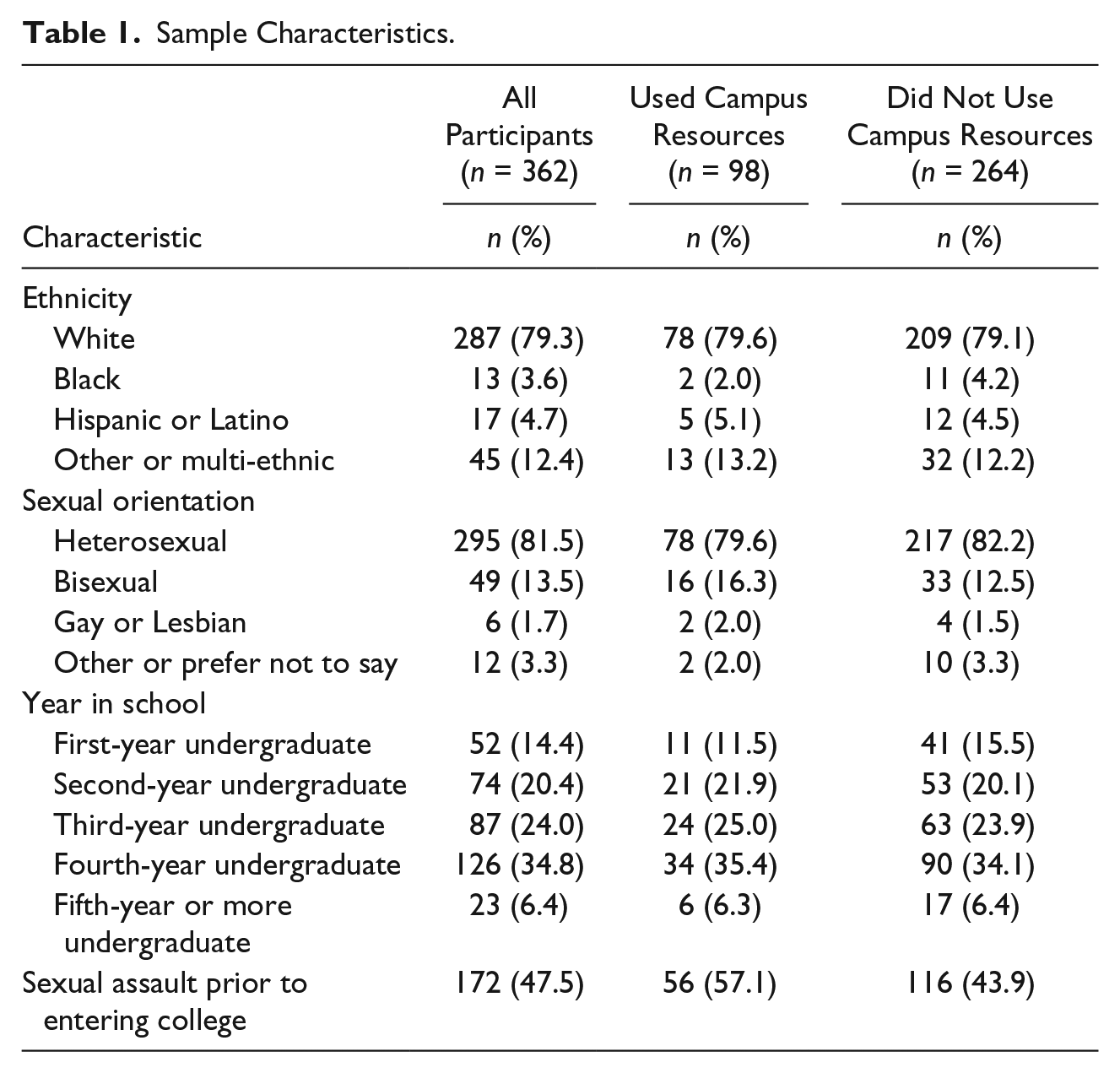
To be eligible for this study, participants had to be undergraduate college students who were identified as female, were aged 18 to 24 years, and had experienced a sexual assault during college. Of the 1,001 students who responded to the email recruitment notice, 485 met the eligibility criteria, 475 consented to participate, and 362, mean (M) age = 20.21, SD = 1.40, completed the measures. The participants were recruited from two public universities in the same mid-Atlantic state (university 1: n = 326, 90.1%; university 2: n = 36, 9.9%). The majority of participants were White (79.3%) and identified as heterosexual (81.5%). All participants identified as cisgender females.
Procedures
Institutional review board approval was obtained from both universities. An invitation to participate in this study was sent to all female students through one university’s student email listserv and through departmental and student organization email listservs at the second university. The email contained a link to screening questions, informed consent, and the anonymous online survey. Participation was voluntary, and no compensation was provided. Every page of the survey contained information on psychological resources and support services for sexual assault survivors. After 30 days, the survey closed, and data were downloaded to an SPSS v.25 compatible file for statistical analysis.
Measures
Demographics
Demographic data including age, year in school, gender identification, sexual orientation, and ethnicity were collected and are presented in Table 1.
Sample Characteristics.
Sexual assault experiences
For this study, sexual assault was broadly defined as any sexual contact or sexual behaviors that occurred without the consent of the recipient including forced sexual intercourse, forced sodomy, forced oral sex, fondling or unwanted sexual touching, and attempted rape. Force can encompass physical or psychological force, coercion, or threats (“Sexual Assault—OVW—Department of Justice,” 2017). The Sexual Experiences Survey–Short Form Victim (SES-SFV) was used to collect data on unwanted sexual experiences (Koss et al., 2007). The phrasing of the original question asking about sexual victimization since the age of 14 was changed to ask the participant if they had experienced any of the unwanted sexual acts since entering college. One question assessed for the amount of time passed since the assault occurred (1 = in the past 6 months, 2 = 6 months to 1 year, 3 = 1–2 years ago, 4 = 2 or more years ago). The SES-SFV was designed to measure sexual assault severity from least to most severe (0 = no sexual assault, 1 = unwanted sexual contact, 2 = attempted coercion, 3 = coercion, 4 = attempted rape, 5 = rape; Koss et al., 2007) and the score has been used as a continuous variable in statistical analyses (Davis et al., 2014). The final question of the SES-SFV asked participants “Have you ever been raped?” (1 = yes, 0 = no). The reliability and validity of the SES-SFV in previous studies demonstrated a reliability of a Cronbach’s alpha = .70 for the overall scale (Johnson, Murphy, & Gidycz, 2017). The scale was found to have comparable results whether administered in person or online (Johnson et al., 2017). The SES-SFV demonstrated good reliability in this study’s sample (Cronbach’s α = .82).
To assess for prior victimization, one question asked if participants had any of the experiences listed on the SES-SFV prior to entering college. The responses were coded as 1 = “yes” and 0 = “no” for use in statistical analyses.
Intoxication
One item was used to assess for level of intoxication from alcohol or drugs. “During or just prior to the unwanted sexual activity, how intoxicated were you?” Answers ranged from 1 (not at all) to 5 (very intoxicated). This item was used in a previous study of community women aged 18 to 26 years (n = 143; Jaffe et al., 2017).
Rape Attributions Questionnaire (RAQ)
Three of the five-item subscales of the RAQ were used to measure sexual assault survivors’ attributions about why the assault occurred and perceived control over the recovery process (Frazier, 2003). The behavioral self-blame subscale (RAQ-BSB) assessed feelings of attributing the sexual assault to a specific behavior the survivor engaged in that could have been modified, “I should have resisted more.” The characterological self-blame subscale (RAQ-CSB) assessed feelings of attributing the sexual assault to something about the survivor’s character that was not modifiable, “I am just the victim type.” Each self-blame subscale asked about feelings in the past month and produced a score that ranged from 5 to 25 with a higher score representing more self-blame (1 = never, 5 = very often). The two subscales demonstrated excellent reliability when used in previous studies: behavioral (Cronbach’s α = .87) and characterological (Cronbach’s α = .82) (Frazier et al., 2011). The RAQ subscales of behavioral self-blame (Cronbach’s α = .87) and characterological self-blame (Cronbach’s α = .74) demonstrated good reliability in this study’s sample.
The perceived control over recovery subscale was rated on a 5-point Likert-type scale and resulted in a score ranging from 5 to 25 with a higher score representing more perceived control over recovery (1 = strongly disagree, 5 = strongly agree). An example of an item was “I am confident that I can get over this if I work at it.” The measure demonstrated good reliability when used in samples of sexual assault survivors (Cronbach α = .69-.84; Frazier, 2003; Frazier, Tashiro, Berman, Steger, & Long, 2004; Najdowski & Ullman, 2009). The reliability of the subscale measuring perceived over recovery demonstrated a Cronbach’s alpha of .64 for the sample in this study.
Resource use
University-affiliated survivor resources, also referred to as campus resources, were defined as those resources that provided mental or physical health support for sexual assault survivors and were offered by the college or university; campus resources included campus counseling centers, campus rape crisis centers, university health centers, campus 24-hr hotline, survivor/victim’s advocates, campus support groups, and peer counseling (Eisenberg et al., 2016; Sabina & Ho, 2014; Stoner & Cramer, 2017). Campus resources did not refer to administrative or legal resources: campus police, Title IX coordinators, campus legal counsel, and so on. Participants were asked to “Please indicate whether you contacted or used any of these university offered resources regarding any unwanted sexual experiences occurring during college.” Responses were coded as 0 = “none used” and 1= “yes” if one or more resources were used.
Participants were also asked if they used any off-campus or community resources following their sexual assault during college. The responses were coded as 1= “yes” and 0 = “no” for statistical analyses.
Mental Health Inventory 18 (MHI-18)
The MHI-18 was used to assess overall mental health of the participants. The 18-item instrument has a possible range of scores 18 to 108 (total instrument) with higher scores demonstrating a more positive overall mental health. The tool has two subscales. The psychological distress subscale assesses the concepts of anxiety (five items), depression (four items), and behavioral/emotional control (four items). Psychological well-being measures the concepts of general positive affect (four items) and emotional ties (one item). Each item asks the respondent about a feeling (such as “feeling depressed”) during the previous 4 weeks; then, the women were asked to report the duration of that feeling on a 6-point scale ranging from 1 = “none of the time” to 6 = “all of the time.” The MHI-18 distress subscale is reverse coded so that higher scores indicate more psychological distress. The MHI-18 well-being subscale has a possible range of scores from 5 to 30 with higher scores indicating more psychological well-being. The MHI has demonstrated good reliability for the total scale (Cronbach’s α = .93), well-being subscale (Cronbach’s α = .81), and distress subscale (Cronbach’s α = .92) in the current sample.
Statistical Analysis Plan
The survey data were downloaded from Qualtrics to SPSS v.25. Any participant who scored a zero on the SES-SFV (0 = no sexual assault) or who was missing all items on the MHI-18, SES-SFV, or all three subscales of the RAQ were excluded from the analyses. No other variables had greater than 3% of data missing. The mean was substituted for missing continuous items, and the mode was substituted for missing categorical items. Descriptive statistics were used to describe the demographic characteristics of the sample, sexual assault experiences, and mental health of the participants. Means and standard deviations were calculated for continuous variables and frequencies for categorical variables. Chi-square tests (categorical variables) and t-tests (continuous variables) were conducted to examine differences between the two universities on the demographic variables (age, ethnicity, and sexual orientation), resource use, and outcome variables (MHI-18 scores).
Correlates of campus resource use were examined with chi-square and Pearson’s correlation tests. Several variables were recoded for the bivariate correlations: sexual orientation (1= heterosexual, 0 = all other sexual identities), ethnicity (1 = White, 0 = other ethnicities), history of a sexual assault prior to college (1 = yes, 0 = no), use of campus resources (1 = yes, 0 = no), and use of community resources (1 = yes, 0 = no). Effect sizes of chi-square analyses with 1 degree of freedom (df) were assessed with Cramer’s V: .10 = small effect, .30 = medium effect, and .50 = large effect (Cohen, 1988). Strengths and directions of relationships between study variables and mental health outcomes were examined by performing point biserial tests for dichotomous categorical or Pearson’s correlation for continuous variables.
Sequential multiple regression was used to describe the incremental variance in the outcome variable of mental health that was explained by the independent variables. Demographic and independent variables that were significantly correlated with any mental health outcomes were entered into regression models to identify significant predictors of each of the dependent variables (MHI-18 total score, MHI well-being subscale, and MHI distress subscale). To assess for multi-collinearity, all variance inflation factor values in the model were assessed to ensure they were below 10.0.
In the first step of the regression models, the variable that has not been examined in previous studies, campus resource use, was entered. In the second step, demographic variables significantly correlated with mental health outcomes were added into the models. In the final step, assault-related independent variables that had significant correlations with mental health outcomes were added to the models. Statistical significance was set at a value of p < .05 for all analyses in this study. Effect sizes of incremental variance in steps of the regression models were assessed using Cohen’s f2 statistic: .02 = small effect, .15 = medium effect, and .35 = large effect (Cohen, 1988).
Results
No significant differences were noted between the two universities for MHI-18 scores, sexual assault severity, history of a sexual assault prior to entering college, use of campus resources, or use of community resources. A significant difference between universities was noted for the mean age (university 1, n = 326, mean age = 20.10, SD = 1.34; university 2, n = 36, mean age = 21.22, SD = 1.61; t = −4.679, df = 360, p < .001). Women at university 1 were more likely to be White (81.0%) than at university 2 (58.3%; χ2 = 9.93, df = 1, p = .002) and more likely to be quite a bit or very intoxicated (48.2%) at the time of the assault than women at university 2 (30.6%; χ2 = 8.80, df = 1, p = .012). The sample size from university 2 was small, and statistical tests may be underpowered to determine significant differences between the universities.
Campus Resource Use
The majority of women (n = 264, 72.9%) did not use campus resources following a sexual assault. No significant relationships were found between campus resource use and age, year in school, sexual orientation, ethnicity, intoxication level at the time of the assault, time passed since the assault, or perceived control over recovery. Women who used university-affiliated resources were more likely to have also used off-campus or community resources (42.9%) than women who did not use campus resources (13.3%; χ2 = 37.39, df = 1, p < .001, Cramer’s V = .321). Women who used university resources were more likely to have experienced a sexual assault prior to entering college (57.1%) than women who did not use campus resources (43.9%; χ2 = 4.99, df = 1, p = .025, Cramer’s V = .117). Of the subsample of women who met the SES-SFV definition of experiencing a completed rape (n = 210), only 59.0% acknowledged the sexual assault as a rape. Women who acknowledged their sexual assault as a rape were more likely to use campus resources (45.5%) than women who did not acknowledge their assault as a rape (22.1%; χ2 = 12.08, df 1, p = .001, Cramer’s V = .240). Table 2 presents the sexual assault experiences of the study respondents.
Sexual Assault Experiences Since Entering College.
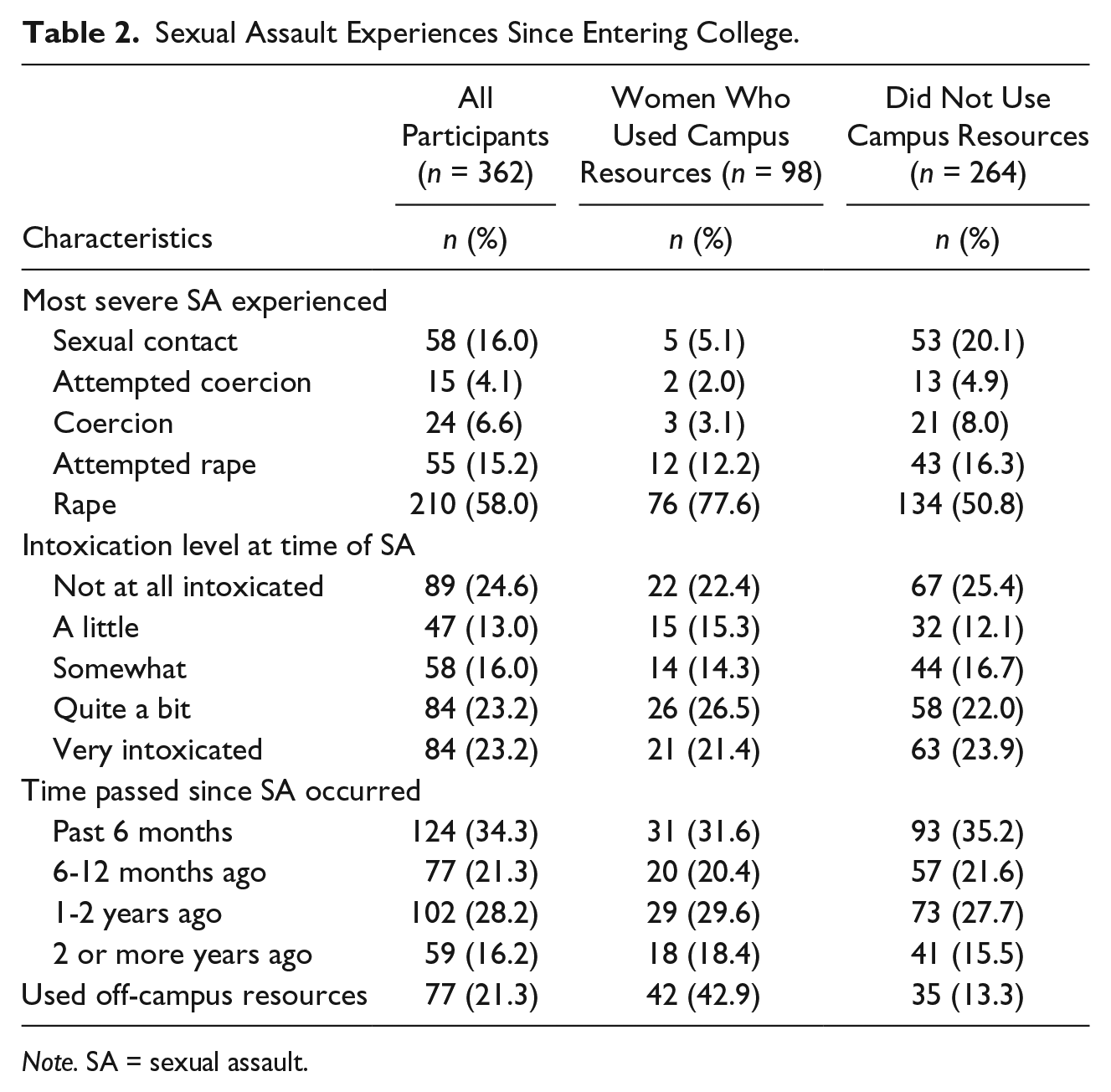
Note. SA = sexual assault.
Relationships With Mental Health Outcomes
The bivariate relationships between demographic variables, independent variables, and mental health outcomes are presented in Table 3. Having more self-blame, experiencing an assault prior to entering college, and using community resources were associated with poorer mental health outcomes and more psychological distress. Having more perceived control over the recovery process, being more intoxicated at the time of the assault, and identifying as heterosexual were associated with more positive mental health outcomes.
Correlations Between Study Variables and Mental Health Outcomes.
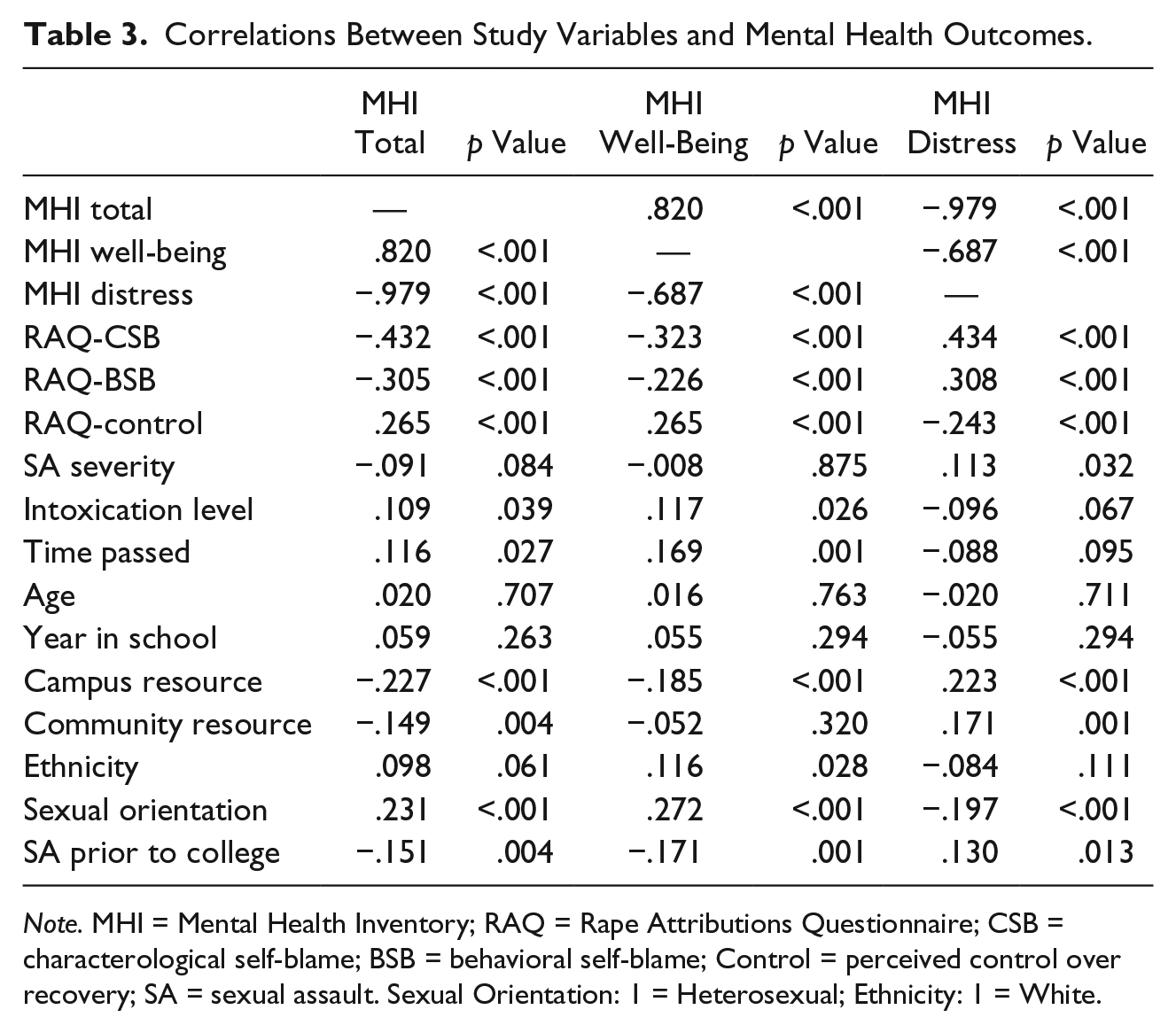
Note. MHI = Mental Health Inventory; RAQ = Rape Attributions Questionnaire; CSB = characterological self-blame; BSB = behavioral self-blame; Control = perceived control over recovery; SA = sexual assault. Sexual Orientation: 1 = Heterosexual; Ethnicity: 1 = White.
Campus resource use was significantly, positively correlated with more distress (r = .223, p < .001), characterological self-blame (r = .163, p = .002), and behavioral self-blame (r = .135, p = .010). Campus resource use was also significantly correlated with more severe sexual assaults (r = .244, p < .001). Use of campus resources was significantly, negatively correlated with overall mental health (r = −.227, p < .001) and psychological well-being (r = −.185, p < .001). These findings suggest that women who used campus resources experienced more severe sexual assaults, more self-blame, and more psychological distress.
To examine the unique contribution of campus resource use in explaining mental health of women who have been sexually assaulted while in college, sequential multiple regression analyses were performed. All final models were significant: overall mental health, R2 = .336, R2adj = .315, F(11, 350) = 16.09, p < .001, f2 = .323; well-being, R2 = .283, R2adj = .260, F(11, 350) = 12.55, p < .001, f2 = .215; and distress, R2 = .310, R2adj = .288, F(11, 350) = 14.30, p < .001, f2 = .302. Campus resource use remained a significant predictor in all steps of all three models: overall mental health, well-being, and distress. Using campus resources was significantly associated with poorer overall mental health, less well-being, and more psychological distress. Table 4 provides a summary of the regression models for overall mental health, psychological well-being, and psychological distress.
Sequential Multiple Regression Analyses Predicting Mental Health Outcomes Following a Sexual Assault in College.
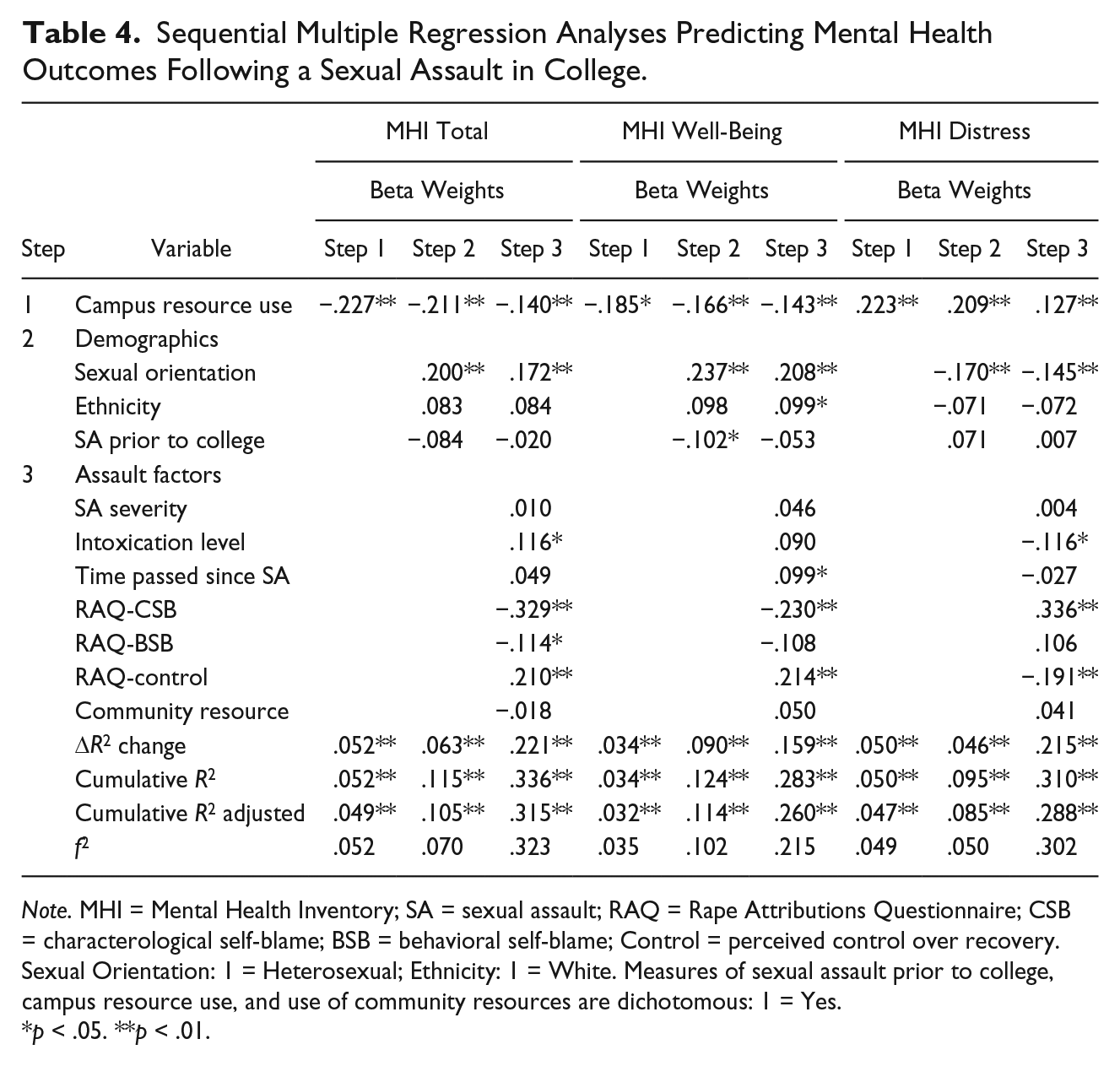
Note. MHI = Mental Health Inventory; SA = sexual assault; RAQ = Rape Attributions Questionnaire; CSB = characterological self-blame; BSB = behavioral self-blame; Control = perceived control over recovery. Sexual Orientation: 1 = Heterosexual; Ethnicity: 1 = White. Measures of sexual assault prior to college, campus resource use, and use of community resources are dichotomous: 1 = Yes.
p < .05. **p < .01.
In the final model, better overall mental health was associated with identifying as heterosexual, being more intoxicated at the time of the assault, having less characterological self-blame, and perceiving more control over recovery. Psychological well-being was associated with identifying as heterosexual, describing ethnicity as White, being more intoxicated at the time of the assault, having more time passed since assault occurred, experiencing less characterological self-blame, and perceiving more control over recovery. Using campus resources had a negative relationship with better overall mental health and well-being. More psychological distress was associated with using campus resources, identifying as a sexual minority, experiencing more characterological self-blame, and perceiving less control over the recovery process.
Discussion
This study examined relationships of campus resource use, demographic characteristics, sexual assault experiences, and mental health in a sample of college women who reported being sexually assaulted during their time at college. This study extends previous research by specifically examining the relationship of using campus resources in the aftermath of a sexual assault and the mental health outcomes of sexual assault survivors. Across all three domains of mental health (overall mental health, psychological well-being, and psychological distress), campus resource use was a significant predictor of poorer mental health outcomes.
In the current sample, mental health sequelae following college sexual assault may have been due to the trauma itself or may also have been exacerbated by negative experiences with formal services provided by the universities. Research demonstrates that women’s experiences with formal resources following a sexual assault may result in secondary victimization and worsening of mental health outcomes (Campbell, 2008). Negative responses from formal supports have been found to exacerbate PTSD symptoms in help-seeking women. Women who were the victims of acquaintance rapes and had negative encounters with formal service providers were at a higher risk for psychological distress than women who sought no services at all (Campbell, 2008). In a study of sexual assault survivors’ perceptions of support services, positive support was associated with fewer symptoms of PTSD (Elklit & Christiansen, 2013) . In this study, no specific questions were asked about the reactions of the providers or staff at the campus resources that were used. Perceived helpfulness of the resources used in this study is described in (Graham, Mallinson, Krall & Annan, 2019). Further research with pretest–posttest designs may better inform the understanding of what impact campus resources have on psychological outcomes. Qualitative research may be valuable to enhance understanding of the support encounter not captured by questionnaires.
It is possible that in this study in which more severe sexual assaults were significantly associated with using resources, the subset of women who sought help from campus resources may have been more distressed from their sexual assault experience rather than from the use of and interaction with campus resources. A meta-analysis by Dworkin et al. (2017) found evidence that sexual assault severity was associated with higher severity of psychopathology (Dworkin et al., 2017). Participants in this study were more likely to seek help from campus resources if they had experienced a completed rape. In a campus climate survey, sexual assault survivors who experienced a rape (79%) were more likely to describe the victimization as upsetting or very upsetting compared with those who experienced a sexual assault excluding rape (48%; Krebs et al., 2016). In a study examining female sexual assault survivors, depression symptoms and prior mental health treatment significantly predicted resource use (Price, Davidson, Ruggiero, Acierno, & Resnick, 2014). These findings suggest that women with more depression symptoms and women who have used services for prior mental health problems were more likely to seek services after a sexual assault. In this study, we did not assess the perceived distress of the assault experience, mental health diagnoses, and mental health treatment prior to the assault. Future research including these phenomena would provide a more comprehensive picture of the mental health of the participants.
In this study, the disclosure of the sexual assault experience to informal resources was not examined. Dworkin and Allen (2018) found that survivors stopped seeking help after a sexual assault when they felt their needs were met. Most women typically first disclose to a close friend or family member (Sabina & Ho, 2014). In this study, it may be possible that if psychosocial needs were met by informal sources, the participants may not have sought help at formal campus resources. Therefore, women who sought campus resources may have been experiencing more distress or had no informal support with whom to disclose. Campus resource use was also associated with help-seeking through community resources. Community resource use was associated with higher levels of distress and worse overall mental health in bivariate correlations, but was not found to be a significant predictor of any of the mental health outcomes. This study did not examine the sequence of events to determine if campus or community resources were sought first or if needs were met by informal sources or through community resources. The finding that campus resource use was a significant predictor of more psychological distress in the current sample may reflect a higher level of distress in the participants prior to campus resource use. Future research should be conducted with longitudinal designs to better understand the time sequence of relationships between mental health and help-seeking using campus resources. Future studies may wish to include more specific measures of timing after the assault and extent to which campus resources were used.
This study’s findings of more self-blame associated with more distress and more perceived control over recovery associated with more psychological well-being supports findings in previous research (Frazier et al., 2011; Frazier et al., 2004; Peter-Hagene & Ullman, 2018). Both more characterological self-blame and less perceived control over recovery were significant predictors of poorer overall mental health, more psychological distress, and less psychological well-being. Campus resource use was also significantly associated with higher levels of both behavioral and characterological self-blame, but not associated with perceived control over recovery. If self-blame is associated with both more distress and campus resource use, then women who sought help through campus resources may have been more distressed before seeking help. Further longitudinal research is needed to determine the sequencing of events of self-blame, distress, and resource use.
In this study, use of campus resources fell into dichotomous categories: yes or no. No evaluation of the extent of disclosure of the assault experience to the resource providers was included. A qualitative study of college students who had experienced a sexual assault introduced the concept of covert help-seeking (DeLoveh & Cattaneo, 2017). Participants described accessing formal services after a sexual assault without disclosing that an assault had occurred. Further research should include a question examining whether the assault experience was disclosed to the formal service provider at the time of service. It is possible that participants in this study who answered yes to using formal resources after a sexual assault did not disclose their assault experience and, therefore, did not receive the help needed to effectively facilitate the recovery process.
Implications for Practice
Women who sought out sexual assault survivor resources were more likely to have experienced a sexual assault prior to entering college and having experienced a sexual assault prior to entering college was associated with more distress. These findings emphasize the importance of screening all women for sexual assault victimization and mental health in college health centers. Screening measures may help identify those who have experienced a prior victimization and may be at risk of revictimization. Women in this study who used on-campus resources were also more likely to use off-campus resources. Providers and staff working in survivor resources on college campuses must be aware of the community resources available to facilitate appropriate and coordinated referrals for survivors. Reputation of campus services and the overall campus climate on sexual assault may play a role in survivors’ decisions to seek resources. Collaboration between administrators, health providers, and survivors is needed to ensure that the resources offered are effective and tailored to meet the needs of college students who experience a sexual assault.
Limitations
This study had several limitations. First, the participants consisted of a generally homogeneous sample of cisgender college women. The results may not be generalizable to other populations with diversity of age range, ethnicity, sexual identity, sexual orientation, or education. This study was limited to female survivors and may not be applicable to the experiences of male college students who are sexually assaulted. The majority of participants were from one university and, therefore, may not represent the population of sexual assault survivors or campus resources available at other universities. Second, no assessment was made of other factors that may have affected the decision to use campus resources including participants’ perceptions of the campus climate regarding sexual assault, the reputation of university-affiliated resources, participants’ knowledge of resources available, or ease of access of resources for students living off campus. Third, this study included retrospective, self-report that may be subject to recall bias. Fourth, the cross-sectional nature of this study precluded making causal arguments and determining the sequence of events. It is unclear whether the psychological distress was related to campus resource use or to the sexual assault trauma itself. It is also unclear how quickly after the assault occurred, how often, or to what extent participants used the campus resources. Finally, the scope of this study did not include other variables that may have had an effect on mental health outcomes: disclosure experiences with informal resources, mental health diagnoses prior to sexual assault, or perceived distress of the assault experience.
Conclusion
Psychological distress and formal help-seeking are complex processes shaped by individual characteristics. This study demonstrated that sexual assault survivor’s use of campus resources was significantly associated with more psychological distress even after controlling for other variables. The cross-sectional nature of this study limited our ability to explore the reason for this. It may be that campus resources were not helpful or effective in supporting survivors in the recovery process. It may be that women in this study who sought resources were more distressed from the assault experience and had more complex needs in the recovery process. Many college women forego the use of any formal services following a sexual assault. Given the high rate of sexual assaults on college campuses and known negative psychological impact of sexual assault, it is imperative that universities assess the usefulness of their resources and strive to offer services and programs that meet the needs of survivors.
Footnotes
Acknowledgements
We would like to acknowledge all of the participants who completed our survey.
Declaration of Conflicting Interests
The author(s) declared no potential conflicts of interest with respect to the research, authorship, and/or publication of this article.
Funding
The author(s) received no financial support for the research, authorship, and/or publication of this article.
