



Abstract
Research assessing familial violence against adolescents, using caregiver–adolescent dyads, is limited in post-conflict settings. This study aimed to determine the prevalence and factors associated with adolescent-reported familial abuse in post-conflict northern Uganda. It also assessed the relationship between abuse subtypes and (a) beliefs supporting aggression and (b) adolescent well-being and life satisfaction. A randomly selected community-based sample of 10- to 17-year-old adolescents (54% girls) and their caregivers (N = 427 dyads) in two northern Uganda districts was used. Abuse outcomes were adolescent reported. All measures used standardized tools that have been adapted for research in resource-limited settings. Analyses used multivariable linear regressions in Stata 14/IC. Overall, physical, emotional, and sexual abuse rates were 70% (confidence interval [CI] = [65.7, 74.4]), 72% (CI = [67.4, 76.0]), and 18.0% (CI = [14.0, 21.2]), respectively. Polyvictimization was 61% (CI = [55.4, 64.7]). There were no gender differences regarding adolescent reports of physical and emotional abuse, but adolescent girls were more likely to report sexual abuse and polyvictimization than adolescent boys. All forms of adolescent-reported abuse (except sexual abuse) were associated with caregiver reports of harsh disciplinary practices. In addition, emotional abuse was associated with physical and sexual abuse. Physical abuse was associated with being an orphan and emotional abuse. Sexual abuse was associated with being a girl, older adolescent age, living in a larger household, and emotional abuse. Polyvictimization was positively associated with being an orphan, younger caregiver age, caregiver-reported poor monitoring and supervision, and higher household socioeconomic status, but negatively associated with lower parental role satisfaction. Physical and emotional (but not sexual) abuse and polyvictimization were associated with beliefs supporting aggression among adolescents. All abuse subtypes were associated with lower levels of perceived well-being and life satisfaction among adolescents in this study. Child abuse prevention programs have the potential to improve adolescent–caregiver interaction and interrupt the violence transmission cycle in this setting.
Keywords
Background
Ending all forms of violence against children is a global priority of the current United Nation (UN) sustainable development goal. Fast-tracking this global agenda will require evidence of the magnitude, risk factors, and consequences of violence against children in a range of settings. Northern Uganda was affected by the war between the Lord’s Resistance Army rebels and the Uganda People’s Defense Forces for over two decades (1986–2007). Recent studies have shown that children and adolescents in war-affected areas bear a disproportionate burden of abuse compared with those in relatively stable contexts (Rubenstein & Stark, 2017; Saile et al., 2014). Indeed, growing evidence shows that war-related violence exposure can translate to violence in domestic settings (Crombach & Bambonyé, 2015; Nandi et al., 2017; Saile et al., 2014). However, little is known about the rates and correlates of adolescent-reported familial abuse in post-conflict northern Uganda. Only one published study has examined the association between war exposure and violence against children in northern Uganda (Saile et al., 2014). This study did not directly assess the contribution of adolescent factors, household factors such as measures of poverty and crowding, and caregiver age, education, and parenting styles. In this study, the strongest correlates of self-reported aggressive parenting were caregivers’ own past experiences of childhood abuse, female caregivers’ intimate partner violence (IPV) experiences, and male caregivers’ posttraumatic stress disorder (PTSD) symptoms and alcohol-related problems (Saile et al., 2014). Indeed, postwar research from this region reports high rates of IPV and PTSD, which have been linked with self-reported abusive parenting in this and other post-conflict settings (Reider & Elbert, 2013; Saile et al., 2014). Polyvictimization (experiencing multiple forms of abuse) is common in postwar areas (Cole et al., 2014; Dubow & Shikaki, 2010) and has been associated with more psychiatric symptoms (Ford et al., 2010), but has hitherto not been investigated in the context of family settings in northern Uganda.
In the 2018 Uganda national Violence Against Children (VAC) survey, past-year risk of sexual violence was 25% for girls and 11% for boys, physical violence was 44% for girls and 59% for boys, and emotional violence was 22% for girls and 23% for boys aged 13 to 17 years. In this survey, past-year sexual, physical, and emotional violence against girls aged 13 to 17 years in Gulu, Oyam, and Lira districts in northern Uganda (Special Focus Area 3) was 18%, 47%, and 37%, respectively. Of note, sexual violence against girls was lower, whereas physical and emotional violence against girls was higher in Special Focus Area 3 compared with national averages. However, this survey had two major limitations: (a) It did not assess the risk and protective factors of violence against children, which are key intervention entry points. (b) The focus on girls only in the three special focus areas limits our understanding of the burden of violence against boys in these areas. The authors made recommendations for regular multisectoral research, especially on drivers and consequences of violence against children in Uganda (Ministry of Gender, Labour and Social Development, 2018).
Small-scale quantitative and qualitative studies in Uganda report that children are routinely exposed to physical, sexual, and emotional violence in a range of settings (Clarke et al., 2016; Devries et al., 2014; Saile et al., 2014; Walakira et al., 2014; Wandera et al., 2017). In a recent study, the prevalence of past-week perpetration of physical violence against students by school staff was 43% in the Luwero district—another post-conflict district in central Uganda (Merrill et al., 2017). Risk factors for perpetration of violence against students included approval of physical discipline and being a parent (Merrill et al., 2017). Established risk factors for violence against children include domestic violence—a strong predictor of other forms of abuse (Dunkle et al., 2007), poverty as a barrier to healthy parenting, (Kaminski et al., 2013), and caregiver mental health, among others (Crombach & Bambonyé, 2015; Nandi et al., 2017; Saile et al., 2014).
Effects of adverse childhood experiences over the lifespan are well documented (Anda et al., 2006). In a larger sample of Ugandan adolescents (N = 3,706, mean age = 13 years) in the Luwero district, experiencing emotional and physical abuse mainly at home and school was associated with more mental health difficulties (Clarke et al., 2016). In another Ugandan study, both the odds of mental health difficulties and using physical or sexual violence almost tripled among 11- to 14-year-old adolescents who had witnessed and experienced violence themselves compared with those who had only witnessed but not experienced violence in a home (Devries et al., 2017).
Adolescence is a critical child development stage characterized by significant biological, intellectual, and sociocognitive changes (Choudhury et al., 2006), often accompanied by a period of self-discovery and a struggle for independence, termed the “storm and stress” period. These attributes make adolescents particularly vulnerable to abuse and mental health disorders. In fact, interpersonal violence is the fourth leading cause of death among the youth aged 10 to 29 globally (World Health Organization, 2018). Young people’s relationships and behavior begin to take shape in adolescence, providing us with a second window of opportunity for prevention. Familial abuse of adolescents and its consequences remain poorly researched in post-conflict northern Uganda, more than a decade after the insurgency. To better understand the magnitude and correlates of adolescent-reported familial abuse in war-affected low- and middle-income (LMIC) settings and inform public health intervention, this study used data from a community-based sample of 10- to 17-year-old adolescents and their primary caregivers (N = 427 dyads) to answer the following questions:
What is the prevalence of the different forms of abuse among adolescents in post-conflict northern Uganda?
Which factors at the child, caregiver, and household levels are associated with the different forms of abuse among adolescents in post-conflict northern Uganda?
Is adolescent abuse victimization associated with beliefs supporting aggression and lower life satisfaction among adolescents in post-conflict northern Uganda?
Method
The study was conducted with participants in Ating parish in the Otuke district and Anyanga parish in the Alebtong district in northern Uganda. Study participants were drawn at the household level. A household was defined as a person or group of persons, with no restriction to biological relations, who lived together and shared a meal. Primary caregivers were defined as men and women aged 18 years or older (except for child-headed households), who had their own children or looked after other children. A random sample of 10 villages was selected from each of the study parishes. In each of the selected villages, households with children aged 10 to 17 years were randomly selected. Within each selected household, one primary caregiver and one randomly selected child were interviewed. Overall, 427 (92% response rate) households agreed to participate in the baseline survey, generating 427 caregiver–child dyads.
Data collection used two semi-structured questionnaires (caregiver and child), which were translated and back-translated from English to Langi. Participants used their local language (Langi). Both child and caregiver questionnaires were based on items from validated tools, were pilot-tested, and revised accordingly before administration by trained research assistants. Voluntary informed consent was obtained from all participants aged 18 years and more. Those aged less than 18 years assented, with their primary caregivers providing full consent. Ethical approval for the study was obtained from the Mildmay Uganda Institutional Review Board. National clearance and accreditation were obtained from the Uganda National Council for Science and Technology.
Measures
Child-level factors of emotional, physical, and sexual abuse victimization were measured using 14 items from the child version of the International Society for the Prevention of Child Abuse and Neglect (IPSCAN) Child Abuse Screening Tool (ICAST-C; Zolotor et al., 2009). The emotional abuse subscale used five items such as being shouted at or called names or cursed (α = .68), the physical abuse subscale used five items such as being slapped (α = .61), and the sexual abuse subscale used four items, including items on contact sexual abuse and exposure to pornographic material (α = .68). Adolescents stated the frequency of experiencing each abuse item in the past year on a five-point Likert-type scale (almost daily, i.e., more than four times a week, 1–3 times a week, once or twice a month, once or twice in 3 months, once or twice a year). The frequency items were reverse-coded and summed up to generate the physical, emotional, and sexual abuse frequency scores such that higher scores reflected more frequent abuse. Polyvictimization was defined as adolescent reports of two or more concurrent forms of abuse in the past year. Frequent abuse was defined as experiencing abuse at monthly rates or more frequently in the past year (Meinck, Cluver, & Boyes, 2015).
Child beliefs supporting aggression used six items from a compendium of assessment tools compiled by the Centers for Disease Control and Prevention and the National Center for Injury Prevention and Control (α = .79; Dahlberg et al., 2005). Child psychological well-being and life satisfaction used an abridged version (22 items, α = .83) of the Multidimensional Students Life Satisfaction Scale (full scale = 40 items). The reduced version still covered five dimensions of the original scale as follows: family, friends, school, living environment, and self. Moreover, in contrast to the original version, which uses a four-point scale (never, sometimes, often, almost always), we decided to use a five-point “agree–disagree” scale (Sawatzky et al., 2009), as this was deemed more appropriate given the actual wording of the items. Negatively signed items were reverse-coded such that higher scores reflected greater well-being and life satisfaction.
Caregiver-level factors of positive parenting, parental involvement, parental monitoring/supervision, and inconsistent disciplining practices were assessed using subscales of the Alabama Parenting Questionnaire (APQ; α = .80; Elgar et al., 2007). Positive parenting used six items on praise, compliments, reinforcement, and rewards for good behavior; higher scores indicated more positive parenting practices (α = .68). Caregiver involvement used 10 items on caregiver involvement in adolescent activities, where higher scores indicated greater caregiver involvement (α = .72). Caregiver monitoring/supervision used 10 items assessing caregiver monitoring of adolescent activities and movement, where higher scores indicated poorer monitoring/supervision (α = .77). Inconsistent disciplining used six items (e.g., you let your child out of their punishment early), where higher scores indicated more inconsistent disciplining practices (α = .40). Caregiver responsiveness to child misbehavior used nine items from the Parental Responses to Child Misbehavior (PRCM) tool (Holden & Zambarano, 1992) (α = .80), where higher scores indicated better caregiver responsiveness to child misbehavior. Caregiver-reported parenting stress used 18 items from the Parental Stress Scale (PSS; Berry & Jones, 1995). The scale assessed self-reported parental role satisfaction. Using exploratory factor analysis with orthogonal varimax rotation and examining the resultant scree plot, two factors with eigenvalues greater than 1.00 were retained and any items with factor loadings of <0.5 were dropped. The retained factors had excellent reliability (α = .84) and explained a greater proportion of the variance on their own (96.2%) compared with the full scale (α = .79). The retained factors were saved and used separately in regression analyses as (a) higher levels of parental stress/lower parental role satisfaction scores (Factor 1) and (b) lower levels of parental stress/higher parental role satisfaction scores (Factor 2). Caregiver knowledge of child protection laws was assessed by self-report. Past-month harsh child disciplinary practices were assessed using 12 caregiver-reported items as follows: six items on physical punishment, one item on withdrawal of privileges or grounding, two items assessing emotional abuse, one item assessing caregiver–child dialog, one item assessed positive distraction—giving the child something else to do, and one item assessing caregiver beliefs supporting physical punishment. The item scores were summed up such that higher scores indicated more negative disciplinary practices (α = .77). “Parenting” referred to any biological or nonbiological primary caring responsibilities for a child (Cluver et al., 2016; Lachman et al., 2014).
Household-level characteristics were assessed by caregiver report. They included household size, main income source, residence type (formal/informal), and socioeconomic status (SES). A relative index of wealth was constructed from 17 items on household assets such as land, agricultural materials such as hoes and plows, and livestock ownership. The index was created using principal component analysis (PCA) and divided into quintiles (Filmer & Pritchett, 1999). The wealth index was collapsed following the 40%, 40%, 20% split rule to generate a context-appropriate SES variable with three categories (low, moderate, and high; Filmer & Pritchett, 1999).
Sociodemographic variables of age, gender, education, and marital status were assessed by caregiver and child reports. Orphanhood was defined as the loss of one or both parents (United Nations Programme on HIV and AIDS [UNAIDS], 2004). The presence and form of child disability was assessed by self-report. Child sociodemographics were validated by caregiver report.
Statistical Analysis
Data analyses were conducted in stages in Stata v14. First, the baseline characteristics of adolescents and their caregivers were analyzed. Descriptive statistics were frequencies (proportions) for categorical data or means (standard deviations) for continuous data. Second, the prevalence of various forms of abuse was determined using contingency tables, disaggregated by frequency of occurrence and adolescent gender. Gender differences in adolescent-reported abuse were tested using chi-square tests. Third, we conducted Bonferroni adjusted Spearman’s correlations of abuse outcomes to determine whether to adjust for other forms of abuse in models testing each abuse outcome. Fourth, multivariate linear regression analyses were used to test which child-, caregiver-, and household-level factors were independently associated with emotional abuse, physical abuse, sexual abuse, and past-year polyvictimization frequency scores. Models testing for correlates of each form of abuse, except past-year polyvictimization, also controlled for the other forms of abuse which were significantly correlated in Step 3 above. Nonsignificant variables were dropped, first at p > .2 and then at p > .05. Covariates with p values fitting these criteria were selected for inclusion in subsequent steps. Estimates from each model were stored in a new variable. The full and partial models were compared using the partial likelihood ratio test and Wald statistics (p < .05; Abdelmonem et al., 2012; Beale, 1970). We tested for the presence of multicollinearity using variance inflation factor (VIF) analyses. Multicollinearity was present if the VIF was >10 or tolerance (1/VIF) was <0.1 for any of the covariates in the model (Allison, 1999). All VIF values in the presented analyses were less than 2.0, implying minimal contribution of multicollinearity to our study findings. For all analyses, only the full and the final/parsimonious models are presented and described. A parsimonious model was defined as the simplest model with the least number of theory-driven variables that explained the greatest variance in the modeled outcome. Fifth, multivariate linear regression analyses controlling for all other covariates were conducted to test whether abuse subtypes were associated with beliefs supporting aggression and lower life satisfaction scores among adolescents. Owing to the potential for multicollinearity, these latter analyses were conducted separately for polyvictimization. Unstandardized beta coefficients are presented for all linear regression models.
Results
Sociodemographic Characteristics of the Study Population
The adolescent sample was 54% female with a mean age of 13.2 (2.2) years, past-year school nonattendance was 11.6%, and 21% were orphans (71% paternal orphans). Child disability was 10.3% (95% confidence interval [CI] = [7.5, 13.6]). Average scores on adolescent beliefs supporting aggression and the Multidimensional Students Life Satisfaction Scale were 18.2 (4.7) and 4.35 (0.09), respectively. Caregivers were 93% female, mean age was 38 (15), 79.4% were married, and 40% had no formal education. Households were 91% informal residences, mean household size was 6.80 (2.18), 81% reported agricultural occupation, and 20% were categorized as higher SES households (Table 1).
Descriptive Analysis of the Study Population.

Prevalence of Child Abuse Victimization
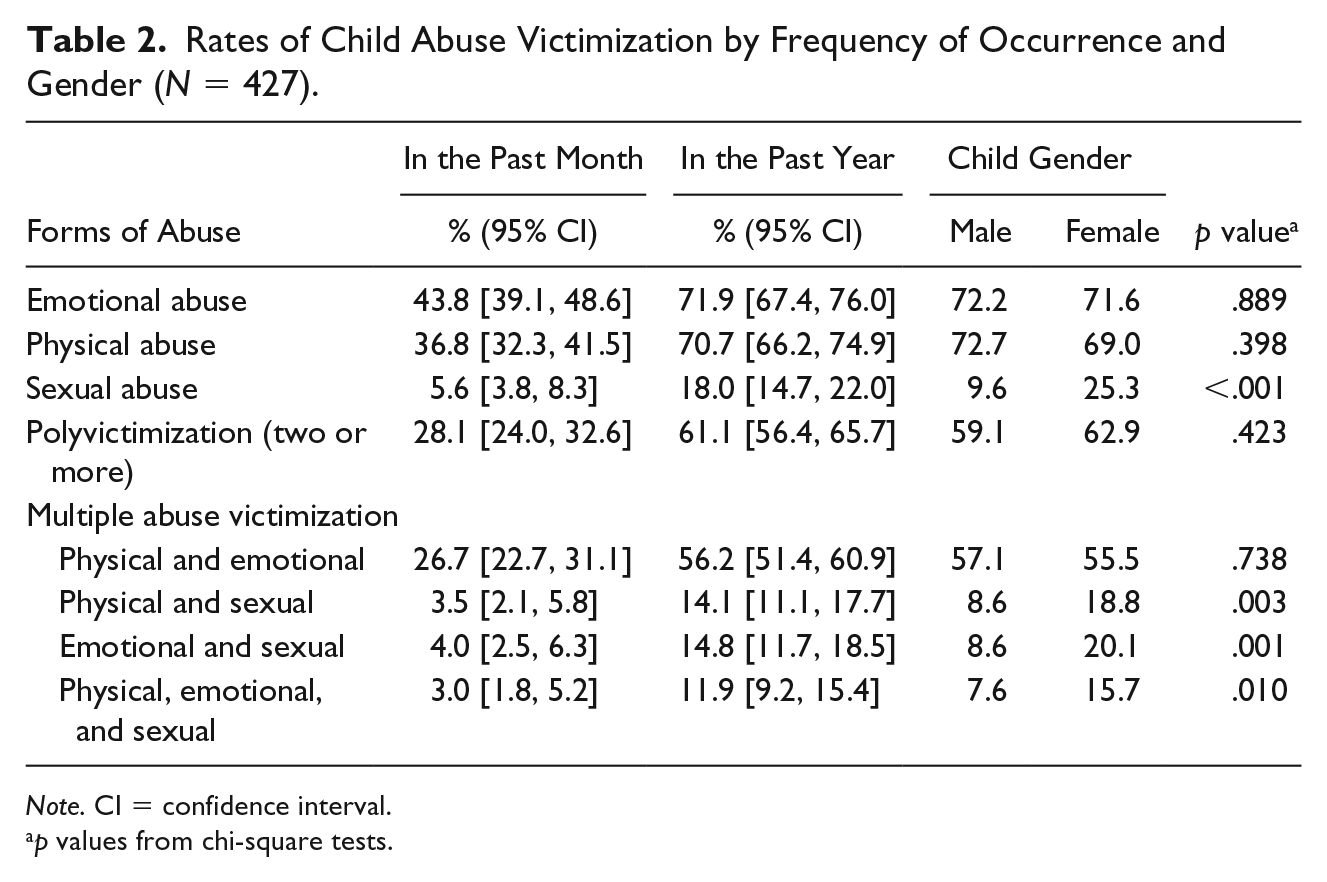
Past-year prevalence of emotional abuse was 71.9% (95% CI = [67.4, 76.0]), physical abuse was 70.7% (95% CI = [66.2, 74.9]), and sexual abuse was 18.0% (95% CI = [14.7, 22.0]) (Table 2). The prevalence of frequent emotional, physical, and sexual abuse was 43.8%, 36.8%, and 5.6%, respectively. Past-year polyvictimization was reported at 61.1% (95% CI = [56.4, 65.7]). More than half, that is, 56.2% (95% CI = [51.4, 60.9]), experienced concurrent physical and emotional abuse in the past year and 26.7% (95% CI = [22.7, 31.1]) in the past month. Frequent polyvictimization was 28.1% (95% CI = [24.0, 32.6]). Frequent polyvictimization forms involving sexual abuse were rare (Table 2).
Rates of Child Abuse Victimization by Frequency of Occurrence and Gender (N = 427).
Note. CI = confidence interval.
p values from chi-square tests.
Prevalence of Child Abuse Victimization by Child Gender
In gender-stratified analyses, adolescent girls reported significantly higher rates of past-year sexual abuse than adolescent boys (overall: 25.3% vs. 9.6%, p < .001; concurrent physical and sexual abuse: 18.8% vs. 8.6%, p = .003; concurrent emotional and sexual abuse: 20.1% vs. 8.6%, p = .001; and concurrent physical, sexual, and emotional abuse: 15.7% vs. 7.6%, p = .010; Table 2). Past-year physical abuse, emotional abuse, polyvictimization (any), and concurrent physical and emotional abuse victimization rates did not differ by adolescent gender (Table 2).
Correlations Between Abuse Subtypes
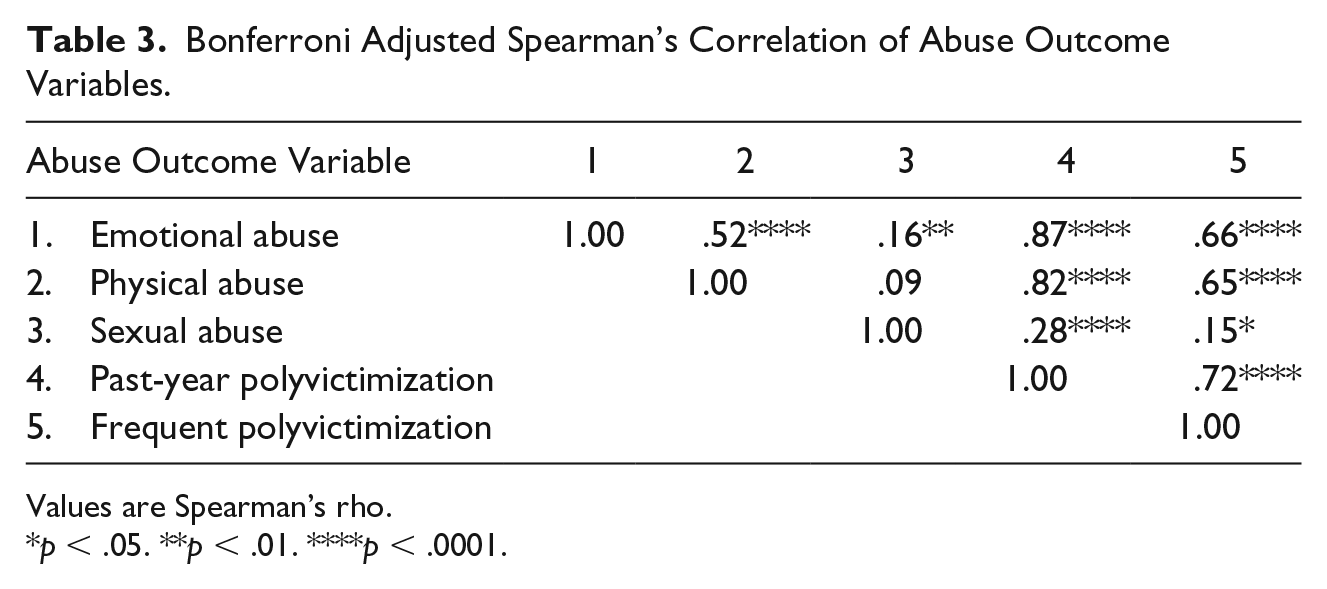
Findings from Spearman’s correlations showed that emotional abuse scores were significantly correlated with both physical (rho = 0.52, p < .0001) and sexual (rho = 0.16, p < .01) abuse scores (Table 3). Sexual and physical abuse scores were not correlated in this population (rho = 0.09, p = .766; Table 3).
Bonferroni Adjusted Spearman’s Correlation of Abuse Outcome Variables.
Values are Spearman’s rho.
p < .05. **p < .01. ****p < .0001.
Correlates of Adolescent Emotional Abuse Victimization
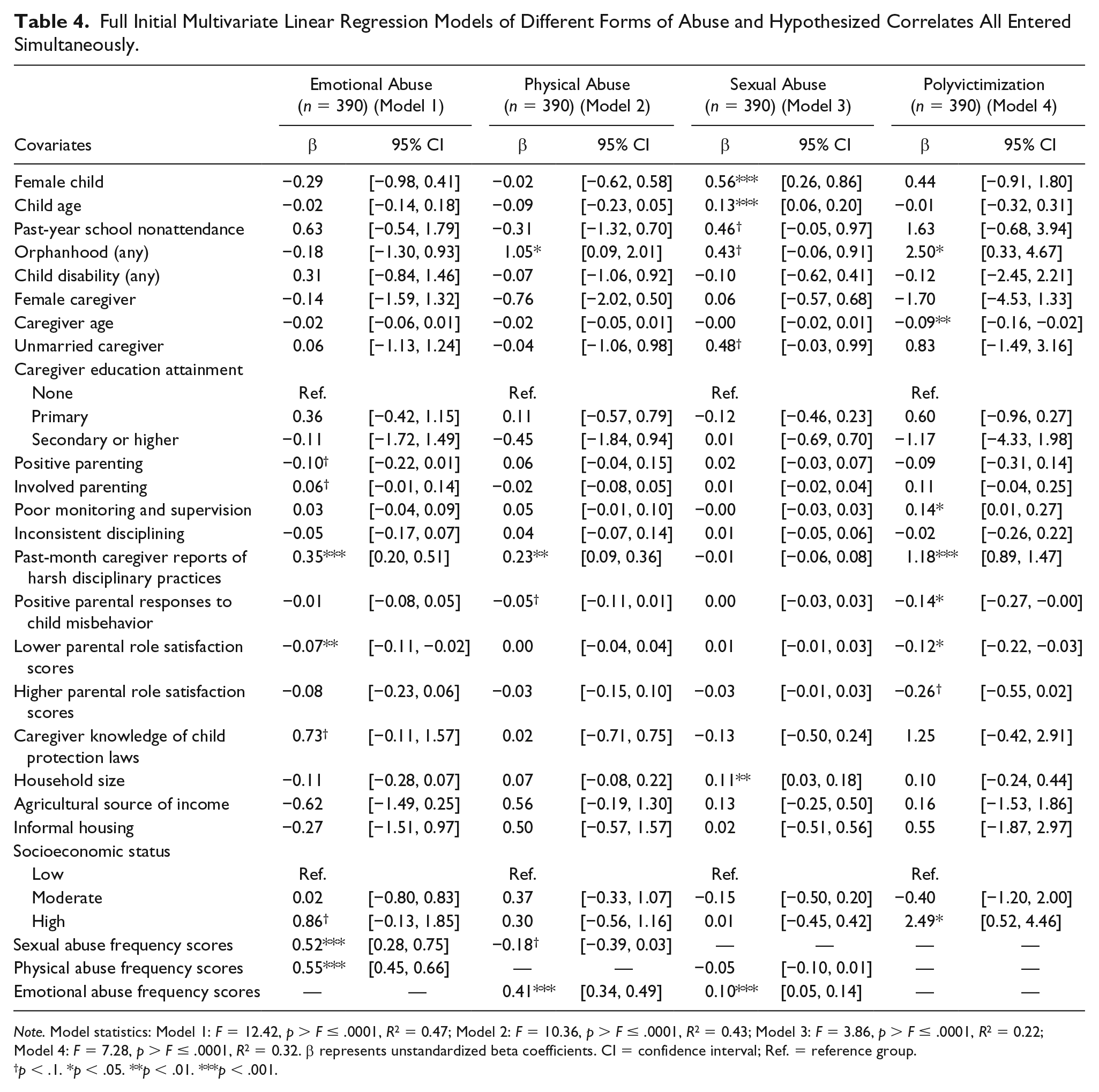
Factors significantly associated with adolescent-reported emotional abuse at the 20% level, in fully adjusted models with all covariates added simultaneously, are presented in Table 4. In the final reduced model at p < .05, past-month caregiver reports of harsh disciplinary practices (β = 0.37, p < .001), adolescent-reported physical abuse (β = 0.58, p < .001), and sexual abuse victimization (β = 0.52, p < .001) remained associated with more frequent emotional abuse in the past year, whereas lower parental role satisfaction scores (β = −0.07, p < .01) remained significantly associated with less frequent emotional abuse (Table 5).
Full Initial Multivariate Linear Regression Models of Different Forms of Abuse and Hypothesized Correlates All Entered Simultaneously.
Note. Model statistics: Model 1: F = 12.42, p > F ≤ .0001, R2 = 0.47; Model 2: F = 10.36, p > F ≤ .0001, R2 = 0.43; Model 3: F = 3.86, p > F ≤ .0001, R2 = 0.22; Model 4: F = 7.28, p > F ≤ .0001, R2 = 0.32. β represents unstandardized beta coefficients. CI = confidence interval; Ref. = reference group.
p < .1. *p < .05. **p < .01. ***p < .001.
Final Partial Multivariate Linear Regression Models for the Different Forms of Abuse Outcomes, All Covariates at p ≤ .05 Entered Simultaneously.

Note. β represents unstandardized beta coefficients. CI = confidence interval; Ref. = reference group; df = degrees of freedom.
p < .1. *p < .05. **p < .01. ***p < .001.
Correlates of Adolescent Physical Abuse Victimization
Factors significantly associated with adolescent-reported physical abuse at the 20% level, in fully adjusted models with all covariates added simultaneously, are presented in Table 4. In the final partial model, only past-month caregiver reports of harsh disciplinary practices (β = 0.30, p < .001) and past-year emotional abuse (β = 0.40, p < .001) remained significantly associated with more frequent physical abuse at p < .05 (Table 5).
Correlates of Adolescent Sexual Abuse Victimization
Factors that were significantly associated with adolescent-reported sexual abuse at the 20% level, in fully adjusted models with all covariates added simultaneously, are presented in Table 4. In the partial model at p < .05, being a girl (β = 0.51, p < .01), older adolescent age (β = 0.15, p < .001), and frequent past-year emotional abuse (β = 0.08, p < .001) remained significantly associated with more frequent sexual abuse in the past year (Table 5).
Correlates of Past-Year Polyvictimization Among Adolescents
Factors that were significantly associated with polyvictimization at the 20% level, in fully adjusted models with all covariates added simultaneously, are presented in Table 4. In the partial model, orphanhood (β = 2.93, p < .001), past-month caregiver reports of harsh disciplinary practices (β = 1.24, p < .001), poor parental monitoring and supervision (β = 0.14, p = .018), and higher SES (β = 2.45, p < .01) remained significantly associated with more frequent polyvictimization, whereas older caregiver age (β = −0.10, p < .001), higher parental role satisfaction scores (β = −0.27, p = .039), and, counterintuitively, lower parental role satisfaction (β = −0.12, p < .01) remained significantly associated with less frequent polyvictimization, independent of covariates (Table 5).
Associations Between Adolescent Abuse Victimization and Beliefs Supporting Aggression Among Adolescents
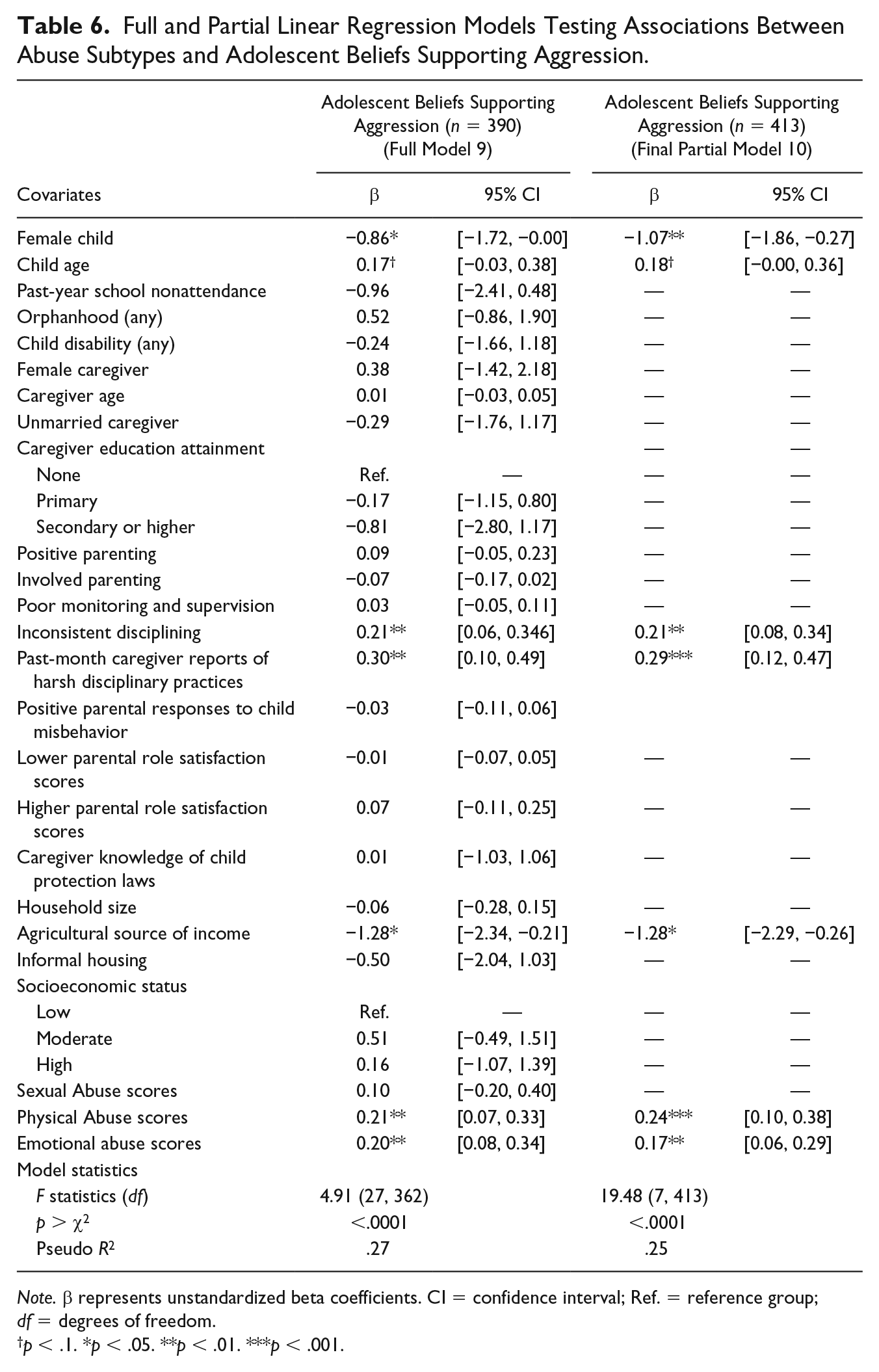
Independent of covariates, findings show that adolescent reports of past-year emotional abuse (β = 0.20, p < .01) and physical abuse (β = 0.21, p < .01) were associated with adolescent reports of beliefs supporting aggression at the 20% significance level. These findings persisted at the 5% significance level as (β = 0.17, p < .01) and (β = 0.24, p < .001) for emotional and physical abuse, respectively (Table 6). Sexual abuse was not associated with adolescent reports of beliefs supporting aggression in this study (Table 6). Adolescent reports of past-year polyvictimization were positively associated with adolescent reports of beliefs supporting aggression (β = 0.19, p < .001), independent of covariates (results not presented).
Full and Partial Linear Regression Models Testing Associations Between Abuse Subtypes and Adolescent Beliefs Supporting Aggression.
Note. β represents unstandardized beta coefficients. CI = confidence interval; Ref. = reference group; df = degrees of freedom.
p < .1. *p < .05. **p < .01. ***p < .001.
Associations Between Adolescent Abuse Victimization and Life Satisfaction Among Adolescents
Independent of all covariates, findings at the 20% significance level show that past-year adolescent reports of frequent emotional abuse (β = −0.52, p < .001), physical abuse (β = −0.74, p < .001), and sexual abuse (β = −0.88, p < .01) were associated with lower adolescent well-being and life satisfaction scores (Table 7). These findings persisted at the 5% significance level as (β = −0.47, p < .001), (β = −0.67, p < .001), and (β = −0.96, p < .01) for emotional, physical, and sexual abuse, respectively (Table 7). Adolescent reports of past-year polyvictimization were associated with lower levels of perceived well-being and life satisfaction among adolescents (β = −0.59, p < .001), independent of covariates (results not presented).
Associations Between Abuse Subtypes and Perceived Well-Being and Life Satisfaction Among Adolescents, All Covariates Entered Simultaneously.

Note. β represents unstandardized beta coefficients. CI = confidence interval; Ref. = reference group; ns = not significant; df = degrees of freedom.
p < .1. *p < .05. **p < .01. ***p < .001.
Discussion
Our study is the first to estimate the prevalence of various abuse subtypes (including polyvictimization) and correlates among adolescents in a community-based sample from post-conflict northern Uganda, using abuse outcomes that account for not only the mere occurrence of an event but also its frequency of occurrence. This study adds to our knowledge of the epidemiology and impact of familial abuse in post-conflict settings. Our findings have several implications for public health and child protection interventions. First, adolescents in post-conflict settings report high rates of familial abuse and are more likely to experience polyvictimization. Nearly three-quarters of these adolescents experience emotional abuse (72%) and physical abuse (71%). About one-fifth (18%) report experiencing sexual abuse and almost two-thirds (61%) report experiencing polyvictimization. More than half (56%) reported experiencing concurrent physical and emotional abuse in the past year and 28% experienced frequent polyvictimization (at monthly rates or more frequently). These findings were similar to those reported among adolescents in South Africa (Meinck et al., 2016).
Comparing studies from different settings is caveat laden because of the differences in study designs, studied populations, locations, methods, and definitions of study measures. However, our sexual abuse findings were similar to the national averages reported in the 2018 Uganda VAC survey, that is, one in four girls and more than one in 10 boys reported past-year sexual abuse in both studies. However, for Special Focus Area 3 (three districts in northern Uganda) in the Uganda VAC study, fewer girls (17.6%) reported past-year sexual abuse compared with 25% in our sample. The possible explanations for this variation include differences in the targeted age groups (10–17 in our study vs. 13–17 in the VAC survey) and the number of items used to assess sexual abuse. Our study used more items including those on unwanted exposure to pornographic material. Physical violence was higher in our study compared with national and Special Focus Area 3 findings. Nearly three in four boys and more than two in three girls in our sample experienced physical abuse compared with three in five boys and two in five girls in the VAC survey. Physical violence was also 1.5 times higher in our sample (71%) compared with 47% in Special Focus Area 3. Emotional violence was almost four times higher in our sample compared with the national average in the Uganda VAC survey (72% vs. 20%). Of note, emotional violence against girls in Special Focus Area 3 was significantly higher than the national average in the VAC survey (37% vs. 20%) but two times lower than the rates in our sample. Potential explanations for this difference include the narrow focus on adult perpetrators and the fewer number of items used to assess emotional violence in the VAC survey—three items versus five items in our study.
Compared with the 2018 findings from neighboring post-conflict Rwanda, our findings were almost three times higher for all forms of violence against adolescents. Rwanda has had a longer period to rebuild and put policy structures in place, but the obvious differences in abuse definitions may explain these disparate findings. It should be noted that in most cases national averages will be lower than area-specific findings.
Our findings were lower than those reported in a similar rural and post-conflict setting in Uganda (Luwero district; Devries et al., 2014) and higher than those reported in other contexts with no war history but high rates of community violence in South Africa (Meinck et al., 2016). Polyvictimization rates among adolescents in our study (61%) were similar to those reported by adolescents exposed to high levels of community conflict (64%; Leoschut & Kafaar, 2017) but higher than those from Vietnam (Le et al., 2016). The difference between our findings and those from Vietnam was due to variations in the definition of polyvictimization. The Vietnamese study defined polyvictims as those children answering yes to 11 or more items measuring multiple forms of abuse (severe polyvictimization), whereas we defined polyvictimization as child reports of two or more concurrent forms of abuse.
Child abuse was associated with factors at the child, caregiver, and household levels. At the child level, orphanhood was associated with physical abuse, but this finding did not persist at the 5% level of significance. Older age, being an adolescent girl, and frequent emotional abuse were associated with sexual abuse. Orphanhood was strongly associated with polyvictimization. These results were consistent with those from past studies in sub-Saharan Africa (Meinck et al., 2016; United Nations Children’s Fund [UNICEF], 2010, 2011). However, gender may have also played a role in the differential reporting of sexual abuse, with adolescent girls being more likely to report sexual abuse as they are the victims in most of the cases. Adolescent boys may underreport sexual abuse for fear of stigma (being labeled as weak or homosexual; Sorsoli et al., 2008), especially in strong patriarchal societies such as our study setting. In the 2017 unpublished VAC Uganda survey, the most cited reason for service nonuse among adolescents reporting past-year sexual abuse was fear of embarrassment for self/family, being more common among boys (36%) than girls (14%). None of the measured child-level factors were associated with emotional abuse in this study.
At the caregiver level, past-month caregiver reports of harsh disciplinary practices were associated with adolescent reports of emotional abuse, physical abuse, and polyvictimization but not sexual abuse. Older caregiver age was protective of polyvictimization (β = −0.10 per unit increase in caregiver age). Caregiver knowledge of child protection laws was not associated with adolescent reports of sexual, physical, and emotional abuse and polyvictimization in our study. Positive parenting analyses, though not statistically significant, revealed a trend toward protection against emotional abuse (β = −0.10) and past-year polyvictimization (β = −0.09). Parental involvement and inconsistent disciplining were not associated with any form of abuse in our study. Poor monitoring and supervision were associated with polyvictimization indicating that adolescents who are not adequately monitored and supervised by their caregivers were at a higher risk of experiencing multiple forms of abuse. Moreover, inadequately supervised adolescents may engage in bad behavior which may lead to harsher disciplining. Older caregiver age and more positive caregiver responses to child misbehavior acted as protective factors for polyvictimization. Lower parental role satisfaction scores were significantly associated with less frequent emotional abuse and polyvictimization among adolescents in our study. This latter finding was counterintuitive and difficult to interpret and may be a result of sample size and factor structure limitations. Higher parental role satisfaction (Factor 2) scores were right skewed. Moreover, we see that the protective effect of higher parental role satisfaction was consistent across abuse outcomes and greater in magnitude than that of lower parental role satisfaction, but this effect did not reach statistical significance, suggesting that our study may have been underpowered to support analyses assessing the potential of these two factors as correlates of abuse alongside all the other hypothesized factors. Although not statistically significant, the magnitude and directionality of our findings showed that female caregivers were less likely to perpetrate violence against children compared with male caregivers (Table 4). This finding may, at least in part, be attributed to the higher rates of PTSD symptoms that have been reported among men than women in this setting (Mugisha et al., 2015), contributing to the vicious cycle of abuse. Previous studies have also shown that caregivers’ own experience of childhood abuse, male caregivers’ PTSD symptoms, and problem drinking were associated with higher reports of maltreatment among children in post-conflict northern Uganda (Saile et al., 2014). The authors suggested an intergenerational transmission cycle for abuse in the context of organized violence and our findings lend support to this observation.
At the household level, higher SES by asset ownership was associated with polyvictimization. The latter finding suggesting that children in richer households were more likely to experience multiple forms of abuse than those in poorer households was surprising but not new. Ravi and colleagues also reported higher odds of childhood violence among richer households in a large sample from four LMIC countries (Ravi & Ahluwalia, 2017). In our study, this finding may be attributed to the way we defined SES, that is, using asset ownership rather than a combination of income, asset ownership, and education level. Alternatively, the protective effects of higher SES may have been diminished by lower caregiver literacy rates in our study, which was underpowered to test for interaction. Many high-income and LMIC studies have shown a link between poverty/lower SES and child abuse risk (Berger, 2004; Cancian et al., 2010; Lindo et al., 2013; Meinck et al., 2017). Although economic interventions have the potential to reduce child abuse risk in both high- and low-income settings, our findings suggest that these interventions alone may not avert risk in a post-conflict setting. Future studies should test whether the caregiver’s level of education moderates the relationship between SES by asset ownership and child abuse. Adolescents from larger households were more likely to report more frequent sexual abuse. The findings were consistent with those summarized in a recent review (Meinck, Cluver, Boyes, & Mhlongo, 2015) and in line with existing literature from high-income countries, indicating the significant role of family structure in child abuse occurrence (Berger, 2004; Cancian et al., 2010; Lindo et al., 2013; Sedlak et al., 2010). Emotional, physical, and sexual abuse subtypes were significantly correlated in our study. In addition, past-year polyvictimization and frequent polyvictimization (at monthly rates or more frequently) were high. These findings suggest that abuse subtypes tend to cluster together, and the familial risk factors tend to be similar. Recent studies on violence against children in Uganda reported similar findings (Clarke et al., 2016). This point is particularly important to consider when designing and implementing child abuse prevention programs.
Our findings show that abuse (physical abuse and emotional abuse but not sexual abuse victimization) was associated with beliefs supporting aggression among adolescents. These findings are consistent with precedent studies in high-income countries (Ben-David et al., 2015; Milaniak & Widom, 2015; Widom et al., 2014). In addition, caregiver reports of inconsistent disciplining were associated with beliefs supporting aggression among adolescents. Our findings also demonstrate that all abuse forms are independently associated with lower life satisfaction among adolescents. Lower life satisfaction has been shown to significantly predict suicidality among young adults (You et al., 2014). Moreover, our findings demonstrated a positive relationship between caregiver involvement, higher parental role satisfaction, and adolescent life satisfaction in post-conflict settings. Child abuse prevention interventions such as parenting programs have the potential for abuse prevention by improving the adolescent–caregiver interaction.
Our study has notable limitations. First, our analyses were cross-sectional and cannot support causal inferences. Second, the use of self-reports to assess SES, caregiver knowledge of child protection laws, and parenting styles may have led to inaccurate reporting due to recall and social desirability bias. Preferential reporting may partly explain why some findings were counterintuitive. Third, the reliability scores for our adolescent-reported abuse outcomes (IPSCAN-C scales) were lower than the widely used cutoff (α = .70) but were comparable to those reported for child-reported outcomes in precedent child development research in Africa (Crombach & Bambonyé, 2015; Kivumbi et al., 2019; Meinck et al., 2018). Fourth, we did not analyze for perpetrators and locations of abuse, limiting our ability to inform targeted intervention. Fifth, we measured adolescent abuse victimization in a post-conflict setting, limiting the generalizability of our findings to adolescents in similar settings such as those affected by war or high levels of organized crime. Sixth, our sample size may have been a limiting factor for some analyses as some of the well-documented protective factors such as positive parenting did not reach statistical significance, which is sample size dependent. Despite these limitations, the study provides circumstantial evidence of the extent and correlates of familial abuse in post-conflict northern Uganda. Our findings may partly explain the high rates of childhood depressive disorders previously reported in the region. In this study, the authors reported that the quality of child–caregiver relationship was a risk factor (Kinyanda et al., 2013).
Conclusion
Adolescent reports of experiencing familial abuse are unacceptably high in post-conflict northern Uganda. The correlates of abuse in this setting are consistent with the child abuse literature across the globe and the findings support a call for action. Interventions aimed at reducing child abuse more broadly such as parenting programs are urgently needed in this setting. However, mechanisms underlying associations between lower parental role satisfaction and lower rates of emotional abuse or polyvictimization, or caregiver involvement and adolescent reports of frequent polyvictimization warrant further investigation in this setting. Future studies in this setting should investigate perpetrators and locations of abuse to better understand adolescent abuse and guide targeted intervention in post-conflict settings.
Footnotes
Acknowledgements
The authors wish to thank all the adolescents and their caregivers for accepting to take part in this study as well as our fieldwork team for their contribution to the success of this study.
Author Contributions
E.J.W., I.D.-N., B.B., and H.P.M.N. conceptualized the study. L.D.C. provided research mentorship for E.J.W. E.J.W., P.M., I.D.-N., and B.B. participated in designing the data collection tool and supervised data collection. P.M. cleaned, organized, and shared the data. H.P.M.N. and P.M. conducted statistical analyses. H.P.M.N. prepared the manuscript. All authors critically reviewed the manuscript and agreed to the final submission.
Declaration of Conflicting Interests
The author(s) declared the following potential conflicts of interest with respect to the research, authorship, and/or publication of this article: Professor L. D. Cluver is a principal investigator on several ongoing trials in Southern and Eastern Africa, all part of the Parenting for Lifelong Health Initiative—a collaboration between the World Health Organization, UNICEF, and academics at several universities to provide evidence-based noncommercialized child violence prevention programs for low- and middle-income settings. The PLH programs are now being implemented in 16 countries in Africa, Asia, and Eastern Europe. All the other authors declare no competing interests.
Funding
The author(s) disclosed receipt of the following financial support for the research, authorship, and/or publication of this article: This study was funded by the Children and Violence Evaluation Challenge Fund awarded to War Child Holland (Uganda) in partnership with E.J.W., I.D.-N., and B.B. as the study coinvestigators. Apart from financial support, the funders had no direct input into study conduct, data analysis, and manuscript preparation.
