




Abstract
Experiencing victimization in childhood increases risk of adulthood revictimization, and it is important to understand what may contribute to such risk. One factor that may help to explain the increased risk of future victimization is disclosure. However, the literature is mixed as to whether disclosure of prior victimization is helpful for protecting against adverse outcomes, and much of the research on disclosure focuses solely on sexual victimization. The current study examines the relationship between various forms of childhood and adulthood victimization and whether disclosure moderates this relationship. In addition, this study investigates whether characteristics of disclosure are associated with revictimization risk. The sample included 275 undergraduates (M age = 19.52 years; 75.6% female, 77.5% non-Hispanic White or Caucasian). Participants reported on previous history of various forms of childhood and adulthood victimization. They also reported whether or not they had disclosed childhood victimization, and, if so, characteristics related to disclosure. Results revealed that number of childhood victimization experiences significantly predicted number of adulthood victimization experiences, and nearly every type of childhood victimization significantly increased risk of experiencing each type of adulthood victimization. Disclosure did not moderate the relationship between childhood and adulthood victimization. Participants who disclosed were more likely to disclose crime and peer/sibling victimization and disclose to parents or friends. Positive reactions to disclosure were more common than negative reactions; however, 75% of disclosers received at least one negative reaction. Finally, revictimized individuals received more overall negative reactions than nonrevictimized individuals. They also received more reactions characterized by the person they disclosed to trying to take control of their decisions or treating them differently. Results highlight the importance of examining relationships between various forms of victimization, considering how characteristics of disclosure relate to risk of revictimization, and the importance of educating potential support networks about appropriate responses to disclosure.
Keywords
Experiencing victimization in childhood increases risk of a range of negative outcomes across various domains of child development that often last well into adulthood (Cicchetti & Toth, 2016). Among these negative outcomes is increased risk of repeat victimization, or revictimization, and the strongest evidence of revictimization risk comes from the research on sexual revictimization. A recent meta-analytic review of 80 longitudinal studies that examined revictimization in individuals with a history of child sexual abuse (CSA) estimated a 47.9% mean prevalence rate of sexual revictimization (Walker et al., 2019). Risk of experiencing revictimization of similar types has also been demonstrated in other bodies of literature. A meta-analysis of studies examining crime revictimization concluded that crime revictimization is concentrated within a relatively small portion of the population who is disproportionately and repeatedly victimized (O et al., 2017). Another study examined how latent classes of childhood peer victimization/aggression related to subsequent risk of victimization by college peers during the first year of college in a sample of 428 majority White (64.5%) and female (73.6%) undergraduate students. Findings revealed that those reporting high levels of childhood peer victimization had a higher mean probability of experiencing victimization (e.g., hazing, verbal aggression, sexual harassment/victimization) by college peers than students with low involvement in childhood peer victimization/aggression (Felix et al., 2019). Latent class analysis in a longitudinal study similarly indicated that peer victimization during adolescence predicted workplace victimization at age 22 in a Canadian sample of mostly Caucasian and French-speaking (90%) sixth graders from suburban elementary schools followed up over time (Brendgen et al., 2019).
It is clear that there is strong evidence for revictimization of similar types. However, several researchers have noted that focusing on individual types of victimization likely underestimates the full burden of broader victimization that children experience because all forms of violence and victimization are closely interrelated (Hamby et al., 2017; Scrafford et al., 2018; Turner et al., 2010). For example, victimization may take similar forms such as childhood physical abuse and physical intimate partner violence (IPV). However, despite differences in the identity of the perpetrator and type of violence, attachment experiences with family members and the social learning from these and other relationships likely inform and influence future interactions with others (Tucker et al., 2018). Thus, the same patterns that characterize violent relationships in one context are often repeated across individuals and settings. Evidence for this theory, described and validated by Tucker and colleagues, to explain sibling–peer victimization linkages is evident in countless studies linking various forms of victimization. Empirical studies and a systematic review of childhood maltreatment and revictimization in homeless individuals have found that childhood maltreatment (e.g., physical abuse, sexual abuse, psychological abuse, and neglect) significantly increases risk of various forms of adulthood victimization, including robbery and sexual, physical, emotional, and verbal victimization (Edalati & Nicholls, 2019; Stroem et al., 2019). In addition, in a study with a mixed gender (54% female) and racially diverse (54% Black, 24% White, 7% Hispanic) sample, participants who were physically or sexually abused prior to age 12 had a greater risk of experiencing physical assault by peers at age 16 (Benedini et al., 2016). Victimization by siblings also increased risk of peer victimization in large, nationally representative samples of children and adolescents (Tippett & Wolke, 2015; Tucker et al., 2014, 2018).
Several studies have specifically sought to address the limitation of focusing on individual forms of victimization by assessing various forms of victimization in childhood and adulthood. One such study using a national sample of 2,000 Latina women, which assessed for physical assaults, sexual assaults, stalking, threats, and witnessed violence, revealed that it was more likely for women to experience polyvictimization (multiple types of victimization) and/or revictimization (victimization in both childhood and adolescence) than to experience one type of victimization (Cuevas et al., 2010). In addition, polyvictimization and revictimization were more common than experiencing victimization solely in childhood or adulthood. The work of Finkelhor et al. (2011), using the Juvenile Victimization Questionnaire (JVQ) with nationally representative samples of children aged 0 to 17 years, also includes assessment for several types of childhood victimization (i.e., child maltreatment, sexual assault, peer and sibling victimization, conventional and property crime, and witnessing/indirect victimization). They have consistently found that experiencing victimization of any type increases risk of subsequent revictimization, even for different types of victimization (Finkelhor et al., 2007b; Turner et al., 2010). For example, child maltreatment is associated with increased vulnerability for conventional and property crime one year later (Finkelhor et al., 2007b). Another study that examined relationships between childhood victimization and adulthood revictimization used the retrospective version of the JVQ with mostly White (75.3%) adults (aged 19–62 years, 62% female, wide range of annual income). Researchers found that 59.5% of the sample reported at least one incident of revictimization in adulthood (Scrafford et al., 2018).
Factors That Influence Risk of Revictimization
Considering the elevated risk of revictimization for individuals who have been victimized, it is important to understand what may contribute to such risk. Much of the research on factors that influence risk of revictimization focuses on factors that are impossible or difficult to change following victimization (Finkelhor et al., 2007b), such as having experienced multiple subtypes of child abuse (Benedini et al., 2016) or childhood exposure to high levels of interparental conflict and parental substance use (Fergusson et al., 1997). In addition, research often focuses on moderators such as race and substance abuse, and mediators such as increased self-blame, decreased assertiveness, heightened post-traumatic stress disorder (PTSD) symptoms, and risky sexual behaviors (Katz et al., 2010; Lalor & McElvaney, 2010) that are specific to the survivor, with less emphasis on factors that are external to the survivor (Mason et al., 2009). This puts the burden on victims to prevent their own revictimization. Furthermore, most of the research that seeks to understand factors that contribute to revictimization risk solely focuses on sexual victimization.
Disclosure as a Potential Moderator of Risk for Revictimization
One potential social factor that may influence risk of revictimization is the experience of disclosing prior victimization to others. Disclosure is most commonly studied in the CSA/sexual assault literature, but a small and growing body of literature has examined disclosure in individuals who have experienced IPV. Some studies have found that a large majority of victims (75% or more) tell someone about their experience, including studies examining mostly White college undergraduate women survivors of sexual assault (Orchowski et al., 2013) and studies with ethnically diverse community samples of women who have experienced sexual assault (Ullman & Peter-Hagene, 2016) or IPV (Levendosky et al., 2004). However, most studies have established that many survivors of sexual victimization, particularly CSA, either do not disclose at all or delay disclosing for more than one year, with CSA victims in particular often not disclosing until they reach adulthood (Ullman, 2011). This finding is consistent across survivors of CSA and/or sexual victimization from a wide array of ethnic backgrounds, including Israeli women (Brenner & Ben-Amitay, 2015), a community sample of U.S. African American and Latina women (Glover et al., 2010), and mostly White, female adults (Swingle et al., 2016). High rates of nondisclosure are also reported across studies with child/adolescent and adult survivors from a variety of racial/ethnic and socioeconomic backgrounds who have experienced other forms of victimization, including IPV (Ashley & Foshee, 2005; Fry et al., 2014; Schramm, 2016), peer victimization (Mishna & Alaggia, 2005; Vernberg et al., 1995), and victimization in general (e.g., child maltreatment, witnessing IPV, stalking, physical threat, or injury by a stranger; Bonnan-White et al., 2018). Furthermore, when people do disclose their experiences with various forms of victimization, they are much more likely to tell informal supports (e.g., family or friends) than formal supports such as police, teachers, or therapists (Ashley & Foshee, 2005; Bonnan-White et al., 2018; Fry et al., 2014; Howell et al., 2015; Johnson, 2018; Mason et al., 2009; Schramm, 2016; Swingle et al., 2016; Ullman, 2011; Vernberg et al., 1995).
Considering the harmful effects of all forms of victimization, survivors are encouraged to disclose their experiences, as it is generally believed by advocacy and prevention programs and established by some researchers that disclosure is cathartic and promotes recovery (Mishna & Alaggia, 2005; Swingle et al., 2016; Ullman, 2011). However, results are mixed as to whether disclosure is actually helpful. A couple of studies of mostly White, undergraduate women with a history of sexual victimization have found that disclosing was beneficial in preventing the development of posttraumatic stress symptoms (Arata, 1998) and was predictive of posttraumatic growth (Hassija & Turchik, 2016). In addition, a few studies have found positive impacts of disclosure for nonsexual victimization. Female young adult survivors of IPV who had disclosed their experiences almost all agreed that talking to informal support networks helped them in some way (Johnson, 2018), and some Thai women who had disclosed IPV reported feelings of relief and increased self-worth (Rujiraprasert et al., 2009). One study found that in a sample of Swedish young adults who witnessed IPV as children, those with higher levels of depression were less likely to have disclosed IPV during childhood (Howell et al., 2015). Similarly, for a sample of socioeconomically and racially diverse (58% White, 30% Black, 9% biracial) children participating in a community-based intervention for children exposed to IPV, spontaneously disclosing their experiences during therapy was related to individual gains in internalizing behavioral adjustment problems (Graham-Bermann et al., 2011). Disclosure of peer victimization was negatively related to loneliness and internalizing problems in an ethnically diverse sample of seventh- and eighth-grade boys and girls who had recently moved to new schools (Vernberg et al., 1995).
However, it has also been found that disclosing CSA is unrelated to current mental health or posttraumatic symptoms (Arata, 1998; Glover et al., 2010). In addition, disclosure can actually be associated with worse functioning (e.g., depressive or posttraumatic stress symptoms, PTSD) in CSA and/or sexual assault victims if adequate steps are not taken to ensure abuse cessation following disclosure (Swingle et al., 2016) or if disclosers receive negative or nonsupportive responses from whom they disclose to (Glover et al., 2010; Ullman, 2011). Similar findings have been reported for IPV and trauma in general. Specifically, some Thai women reported feelings of shame and guilt following disclosure of IPV (Rujiraprasert et al., 2009). Negative social reactions were also associated with negative trauma-related cognitions and greater trauma-related distress for those disclosing traumatic events in general (Bonnan-White et al., 2018), as well as greater psychological distress, depressive and posttraumatic stress symptoms, and avoidant coping in IPV victims (Edwards et al., 2015; Flicker et al., 2012; Schackner et al., 2017). However, despite the clear negative impact of receiving negative social reactions, there is variability in the sexual assault and IPV literature regarding how frequent these reactions are and whether they are more or less common than positive reactions (Arata, 1998; Brenner & Ben-Amitay, 2015; Flicker et al., 2012; Glover et al., 2010; Mason et al., 2009).
Victims’ relationship with the person they disclose to may also influence outcomes. Swedish young adults who witnessed IPV as children and reported their experience to an authorized agency had significantly higher levels of posttraumatic stress symptoms as adults than those who did not make such a report (Howell et al., 2015). Furthermore, reporting to police typically resulted in participants feeling the problem continued anyway, or, that though they were believed, no changes were made.
When it comes to revictimization, the literature on disclosure is even more complex. Arata (1998) found that whether or not CSA was disclosed was unrelated to adulthood victimization. Another study conducted with a racially diverse, community-based sample of women in a large metropolitan area found no differences in rates of sexual assault disclosure for those who reported revictimization one year later versus those who did not (Mason et al., 2009). Disclosure also did not influence risk of IPV revictimization in a study of young adult women survivors (Johnson, 2018), and in a study examining help seeking and revictimization in sexual minority and heterosexual undergraduates (Schramm, 2016). In other studies that have examined the characteristics and experience of disclosure in more depth, sexually revictimized survivors have been found to be more likely to disclose to friends, parental figures, police, and rape crisis centers (Mason et al., 2009), and to receive less supportive reactions and more negative social reactions (e.g., blaming) than women who were not revictimized (Mason et al., 2009; Ullman & Peter-Hagene, 2016). Furthermore, one study examining CSA disclosure found that revictimization rates were significantly higher among women who received negative reactions than both those who received supportive reactions and those who had not disclosed at all (Brenner & Ben-Amitay, 2015). For IPV, greater frequency of positive reactions (i.e., providing information and tangible support) was significantly related to a decrease in odds of experiencing subsequent relationship violence (Johnson, 2018).
Current Study
There is a wealth of evidence as to the heightened risk of revictimization for individuals who have been previously victimized, and this finding is pervasive across studies regardless of race, ethnicity, gender, or sample recruitment method. This necessitates the examination of factors that influence risk of revictimization, and examination of victims’ experiences of disclosing prior victimization provides one potential avenue, as there is mixed evidence as to whether disclosure is helpful. In addition, there is a need for examination of how disclosure affects revictimization risk beyond sexual victimization and IPV.
The current study has four primary aims. The first aim is to examine the relationship between various forms of childhood and adulthood victimization. As part of this aim, we have made the following two predictions based on the literature: (a) Number of childhood victimization experiences will be positively correlated with number of adulthood victimization experiences and (b) various subtypes of childhood victimization will increase risk of both similar and different subtypes of adulthood victimization. The second aim of the study is to examine whether disclosing prior childhood victimization will moderate the relationship between childhood and adulthood victimization. The third aim is to describe victims’ experiences of disclosing prior victimization. The fourth and final aim is to examine whether characteristics of the disclosure experience (i.e., source of disclosure, social reactions received) are associated with revictimization.
Method
Participants
Participants were 275 undergraduates between 18 and 25 years old (M = 19.52 years, SD = 2.4 years) recruited from psychology classes at a large Midwestern university. The majority of participants identified as female (75.6%). The sample was mostly non-Hispanic White or Caucasian (77.5%) and the remaining racial/ethnic backgrounds of participants were as follows: 15.6% Asian, Asian American, or Pacific Islander; 3.3% multiracial/multiethnic or mixed; 1.8% Hispanic/Latino/a or Latino/a American; 1.8% Black or African American; 0.4% Native American or American Indian. Median family household income was between US$75,000 and US$99,999.
Procedure
Questionnaires were completed using the university’s online survey program. Participants signed up using the psychology department’s research participation website and were sent an individualized link to the questionnaire that anonymized their submitted response. Upon completion, two extra credit points were rewarded to use toward a psychology course.
Measures
The measures described below for assessment of childhood victimization and adulthood victimization, and additional measures used to assess the influence of parenting and social support on revictimization risk in this sample and another sample of women residing in a domestic violence shelter, are included in a companion paper (Desir & Karatekin, forthcoming). The complete questionnaire is available from the first author upon request.
Assessment of victimization in childhood
Childhood victimization was assessed using an adaptation of the adult retrospective version of the Juvenile Victimization Questionnaire–2nd Revision Screener Sum Version (JVQ-R2; Finkelhor et al., 2011). This 34-item measure covers five areas of youth victimization (conventional crime, peer and sibling victimization, maltreatment, sexual victimization, and witnessing or indirect victimization) from when the respondent was born through age 17 and has very good construct validity and adequate test–retest reliability (Finkelhor et al., 2005). Respondents replied with “yes” or “no” as to whether these various forms of victimization have occurred to them. If respondents replied “yes” for questions that did not explicitly state the relationship of the person who perpetrated the victimization, they were asked if their “mother,” “father,” “other adult,” or a “peer/sibling” did this and were permitted to check all that apply.
Supplemental Table A1 summarizes the changes to the JVQ-R2 including item number; category of victimization; whether questions were deleted, added, modified, or unchanged; and the reason for addition/deletion/modification if applicable (see Supplemental Appendix A). A total of 25 of the 34 questions from the original JVQ were preserved. Four questions were added to the measure to assess other victimization, one which came from the Adverse Childhood Experiences (ACEs) questionnaire (Felitti et al., 1998), and another which came from a list of items proposed to be added to the ACEs questionnaire (Finkelhor et al., 2005). This resulted in a 29-item measure and “yes” responses were summed to yield a count of victimization experiences ranging from 0 to 29. Internal consistency of the overall measure was good (Cronbach’s α = .81) and would remain within .01 if any of the added items were dropped.
Assessment of victimization in adulthood
At the time of the study, there were no comprehensive measures of adulthood victimization known to us. To relate victimization in adulthood more explicitly to our measure of juvenile victimization, we created our own questionnaire, using measures of five types of victimization: (a) dating violence, (b) sexual assault, (c) harassment, (d) workplace experiences, and (e) crime victimization reported to have occurred after age 18. Supplemental Table B1 lists all the original items from the different measures of adult victimization that were included in the current study along with modifications (see Supplemental Appendix B). Instructions for the measures were also changed in a way that participants could respond “yes” or “no” as to whether they had experienced any of these forms of victimization since the age of 18 in order for response scales to be consistent and a count of total victimization experiences to be computed similar to the JVQ.
Dating violence was assessed using items from the Composite Abuse Scale (Hegarty et al., 2005). To make the number of items asked about dating violence more equivalent to the number of items for the other subtypes of adult victimization, three items were selected from each of four subscales (Severe Combined Abuse, Emotional Abuse, Physical Abuse, and Harassment) that exhibited the highest reliabilities (Cronbach’s αs ≥ .67) with the overall measure (Hegarty et al., 2005). The only exception was an item from the Severe Combined Abuse Scale (“locked me in the bedroom”), which was not relevant for undergraduates who were likely not residing with partners. These questions were only administered to participants who indicated that they had ever been in an adult intimate relationship.
For remaining questions assessing victimization in adulthood, all participants were asked to only answer for victimization experiences outside of adult intimate relationships to eliminate redundancy with the dating violence questions. Sexual assault was assessed using questions from the Sexual Experiences Survey–Short Form Victimization (SES-SFV; Koss et al., 2006). Harassment was assessed using eight questions from the National Violence Against Women Survey (NVAWS; Tjaden & Thoennes, 1998). To account for victimization experiences that are equivalent to youth peer victimization that may occur in adulthood, workplace victimization was assessed using eight items included in a study about perceived workplace harassment experiences (Richman & Flaherty, 1996). Crime victimization was assessed using two items about personal and property crime from the National Crime Victimization Survey (NCVS; Bureau of Justice Statistics, 2008) that were similar to questions asked about crime victimization on the JVQ. As can be seen in Supplemental Table B1, these two items were broken down into separate acts of victimization.
Six questions were added (two to dating violence, one to harassment, and three to crime victimization) and are listed in Supplemental Appendix B. This resulted in a 47-item measure of adulthood victimization. Internal consistency for each category was acceptable to good, with a spread of alphas from .78 to .88.
Assessment of disclosure of childhood victimization experiences
Disclosure of childhood victimization was assessed by asking participants “Out of the experiences you have listed, was there a time when you decided to talk about the experience(s) with someone or disclose it?” Participants responded with “yes,” “no,” or “N/A” if no experiences were indicated. If participants responded “yes,” they were asked which of the experience(s) they first disclosed and the relationship of the person to whom they first talked about their experience(s) (not including the perpetrator).
Assessment of reactions to disclosure
If participants reported experiences with victimization and indicated disclosing their experiences to someone, they were administered the Social Reactions Questionnaire (SRQ; Ullman, 2000). The SRQ is a 48-item self-report instrument that assesses positive and negative reactions to sexual assault victims and had good construct validity and reliability in three samples of sexual assault victims (Ullman, 2000). The original measure uses a 5-point Likert-type response scale from 0 (never) to 4 (always) for respondents to indicate how often they received each reaction across multiple people to whom they disclosed. However, we were only interested in the response of the first person the participant disclosed their victimization experience(s) to, as research has suggested the reaction of the first person disclosed to is particularly influential and affects the remainder of the disclosure process (Bonnan-White et al., 2018). If they first disclosed to more than one person, they were asked to “answer the questions for whose response was most influential, in a positive or negative way in your life.” Due to this focus on the reaction of one person, response options were changed to “yes” or “no” due to response options such as “rarely,” “frequently,” and “always” not being as relevant. Reactions were categorized into two different subscales that represented “positive” reactions (i.e., Belief, Information/Aid, and Emotional Support) and five different subscales that were considered “negative” (i.e., Blame, Egocentrism, Distraction, Control, and Treating the Victim Differently). We counted the number of reactions received in each category, as well as the overall number of positive and negative reactions received. The internal consistencies of the measure of positive reactions (Cronbach’s α = .86) and negative reactions (Cronbach’s α = .84) to disclosure were good.
Data Analyses
Data were checked for missing values, frequencies, minima, and maxima, and continuous data were also checked for skewness and deviations from normality. The Box–Cox procedure (Ripley et al., 2017) was used to determine the most appropriate transformation for highly skewed, nonnormally distributed data. Number of childhood victimization experiences and number of adulthood victimization experiences were transformed by taking their natural logarithms. Descriptive statistics are based on raw scores to facilitate comparisons with other studies; however, all inferential analyses were conducted on transformed data. Participant gender and family household income were unrelated to adulthood victimization and, thus, no control variables or covariates were entered into analyses.
To test the first prediction that number of childhood victimization experiences would be positively correlated with number of adulthood victimization experiences, we conducted linear regressions with adulthood victimization as the dependent variable. Odds ratios (ORs) were used to analyze the second prediction that various subtypes of childhood victimization experiences would increase risk of similar and different subtypes of adulthood victimization.
To test whether disclosure of prior childhood victimization moderated the relationship between childhood and adulthood victimization, we conducted a regression analysis, entering childhood victimization as the predictor variable and adulthood victimization as the dependent variable. Childhood victimization was centered prior to analysis. Disclosure and the interaction between childhood victimization and disclosure were entered into the analysis. Only the subset of the sample (N = 180) that reported experiencing childhood victimization and had indicated “yes” or “no” if they chose to disclose their experiences was examined. In addition, given the limited literature on the influence of disclosure on revictimization for childhood victimization other than CSA, we also chose to examine whether disclosure would moderate the relationship between childhood and adulthood victimization by childhood victimization type. Specifically, we created five subsets of the overall sample that had experienced each type of childhood victimization, and examined whether disclosing that subtype of victimization moderated the relationship between childhood and adulthood victimization. The samples sizes were as follows: conventional crime, N = 147; peer and sibling victimization, N = 106; maltreatment, N = 67; sexual victimization, N = 52; witnessing or indirect victimization, N = 76.
Descriptive statistics were used to report on characteristics (i.e., type of experience disclosed), who participants disclosed to, and the types of reactions received (i.e., positive, negative, and each of the eight subscales of reactions) surrounding the disclosure experience. Finally, to examine whether certain characteristics surrounding disclosure were associated with revictimization and to facilitate comparison with previous studies (Brenner & Ben-Amitay, 2015; Mason et al., 2009; Ullman & Peter-Hagene, 2016), we dichotomized revictimization into revictimized versus nonrevictimized. Next, we ran chi-square analyses to examine differences between the revictimized versus nonrevictimized groups in whom they disclosed to and the types of reactions they received. We used t tests to determine whether there were group differences in the number of various types of reactions received. All significance levels were set at .05. All analyses were conducted in R (Version 3.4.1; R Core Team, 2017).
Results
Descriptive Statistics
Descriptive statistics for childhood and adulthood victimization are reported in Table 1. As can be seen, 78.9% of participants reported experiencing victimization in childhood, with conventional crime and peer/sibling victimization being the most common types endorsed. Of the conventional crime items, more than one-fourth of participants endorsed having something stolen, having something broken or ruined on purpose, and being hit or attacked on purpose without a weapon. Most commonly endorsed peer/sibling victimization items included being called names/people saying mean things (35.3%) and being picked on (25.1%). Participants reported experiencing a mean of two subtypes of childhood victimization, with 58.5% reporting experiencing two or more subtypes and only 20.4% reporting experiences with one subtype. Regarding adulthood victimization, 69.1% of participants indicated being victimized in adulthood. Workplace and crime victimization were the most common, and 42.1% experienced two or more subtypes. Notably, 59.6% of participants reported experiencing victimization in both childhood and adulthood, whereas only 11.6% reported no victimization.
Descriptive Statistics for Childhood and Adulthood Victimization (N = 275).
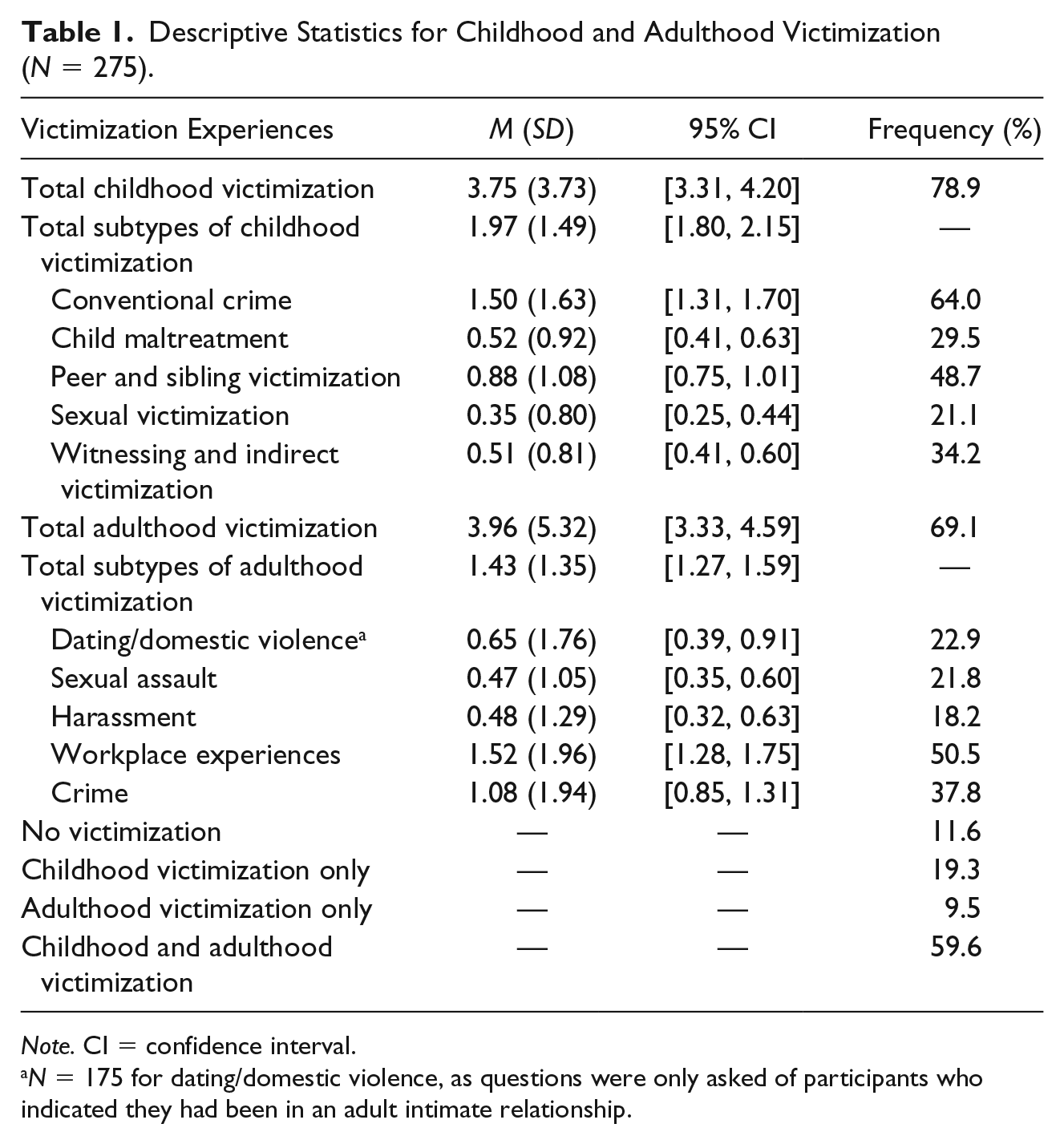
Note. CI = confidence interval.
N = 175 for dating/domestic violence, as questions were only asked of participants who indicated they had been in an adult intimate relationship.
Relationships Between Childhood and Adulthood Victimization
As predicted, number of childhood victimization experiences were a significant predictor of number of adulthood victimization experiences, ß = .47, t(275) = 8.76, p < .001, explaining more than one-fifth of the variance (adjusted R2 = .22), F(1, 273) = 76.66. To analyze the second prediction, we used ORs to determine whether various subtypes of childhood victimization would increase risks of various subtypes of adulthood victimization. Results of these analyses are presented in Table 2. Notably, ORs were the strongest for childhood and adulthood victimization of similar types. Specifically, the greatest risks were present for sexual victimization in childhood increasing risk of sexual assault in adulthood (OR = 6.68, CI = [3.53, 12.83]), followed by crime victimization in childhood increasing risk of crime victimization in adulthood (OR = 4.30, CI = [2.43, 7.94]). However, with few exceptions, experiencing childhood victimization of any type significantly increased risk of experiencing adulthood victimization of different types, with ORs ranging from 1.85 to 4.25.
Risks of Victimization Subtypes in Adulthood Based on Childhood Victimization Subtypes (N = 275) with 95% Confidence Intervals.
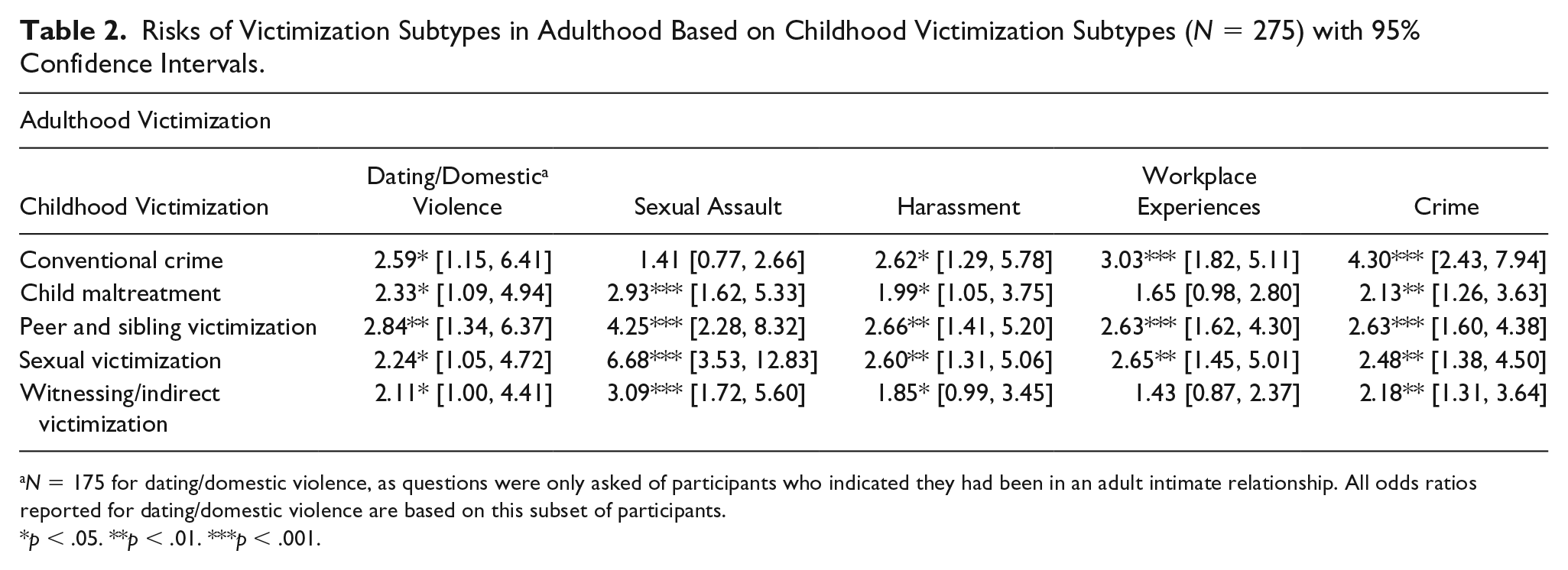
N = 175 for dating/domestic violence, as questions were only asked of participants who indicated they had been in an adult intimate relationship. All odds ratios reported for dating/domestic violence are based on this subset of participants.
p < .05. **p < .01. ***p < .001.
Moderation of the Relationship Between Childhood and Adulthood Victimization
For moderator analyses of disclosure, we examined a subset of the sample (N = 180) who reported experiencing childhood victimization and indicated whether they disclosed their experiences. The interaction between childhood victimization and disclosure was not significant (p = .07). Thus, disclosure did not moderate the relationship between child and adult victimization. Disclosure of individual subtypes of childhood victimization also did not moderate the relationship between childhood and adulthood victimization (ps > .11).
Characteristics of Disclosure
Of the subset of the sample who reported experiencing childhood victimization and who indicated whether they chose to disclose (N = 180), about half (53.3%) reported that they told someone about their experience(s). Descriptive statistics related to characteristics of disclosure are reported in Table 3. Peer/sibling victimization and conventional crime were the types of experiences that were most commonly disclosed. Participants were most likely to disclose experiences to a parent (47.9%) or a friend (43.8%). Overall, when participants who had experienced victimization disclosed their experiences, nearly all (96.9%) reported that they received positive reactions from the first person they disclosed to. However, 75.0% of these individuals also received at least one negative reaction. Nevertheless, the number of positive reactions was larger than the number of negative reactions. More than 90% of participants received at least one of each positive reaction type (belief, information/aid, emotional support). The most common types of negative reactions included being treated differently, “treat different” (51.0%), and the person whom they disclosed to taking control of their decisions, “control” (43.8%).
Disclosure Details for the Overall Sample (N = 96) and Results of Analyses Comparing Revictimized (N = 70) Versus Nonrevictimized (N = 26) Individuals.
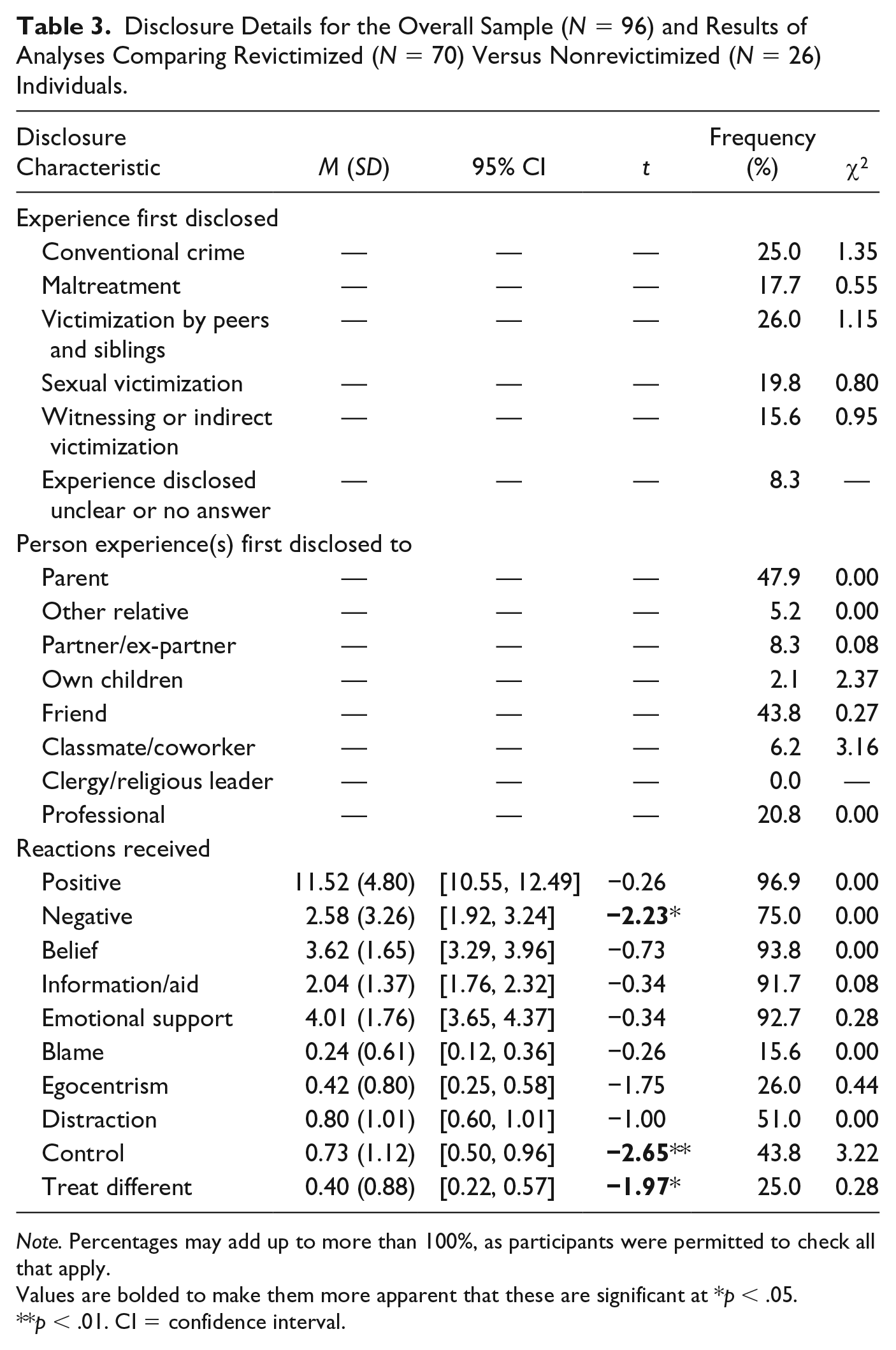
Note. Percentages may add up to more than 100%, as participants were permitted to check all that apply.
Values are bolded to make them more apparent that these are significant at *p < .05.**p < .01. CI = confidence interval.
Association of Disclosure Characteristics With Revictimization Status
Using the subset of the sample that had disclosed childhood victimization experiences (N = 96), we examined whether characteristics of disclosure were related to revictimization status. This subset of the sample was dichotomized into participants who had experienced childhood victimization only but did not report adulthood victimization (nonrevictimized; N = 26) and participants who reported experiencing both childhood and adulthood victimization (revictimized; N = 70). Results of analyses comparing revictimized versus nonrevictimized individuals are also presented in Table 3. There were no group differences regarding the type of victimization experience disclosed, who participants chose to disclose to, or whether or not participants received various types of reactions. However, revictimized individuals received more negative reactions, t(88.48) = −1.97, p = .03; more reactions in which the person they disclosed to tried to take control of their decisions, t(78.22) = −2.65, p < .01; and more reactions in which they were treated differently by whom they disclosed to, t(93.15) = −1.97, p = .05.
Discussion
Summary of Findings and Relation to Previous Literature
This study examined the relation of various forms of childhood victimization to adulthood victimization in a sample of undergraduates. In addition, we investigated the association between different characteristics of disclosing childhood victimization to revictimization.
Relationship between childhood and adulthood victimization
In line with previous research and predictions, childhood victimization significantly predicted revictimization in adulthood, explaining 22% of the variance. Furthermore, nearly every subtype of childhood victimization predicted subsequent risk of experiencing each subtype of adulthood victimization. The largest risk ratios were for similar types of victimization examined in both childhood and adulthood (crime and sexual victimization). This adds to previous findings that have found different subtypes of victimization to increase risk of each other (Benedini et al., 2016; Cuevas et al., 2010; Edalati & Nicholls, 2019; Finkelhor et al., 2007b; Stroem et al., 2019; Turner et al., 2010). In particular, Finkelhor and colleagues (2007b) used risk ratios to examine relationships between various forms of childhood victimization in a sample of children/adolescents and found that the largest risk ratios tended to be for victimization of the same type. Nonetheless, nearly all types of victimization increased risk of subsequent victimization of all types. It is notable that our findings replicated that of this study by Finkelhor and colleagues when we used a modified version of the JVQ and five different measures of adulthood victimization. These findings suggest that future revictimization research should continue to examine various victimization types, as limiting examination of revictimization to one type is likely to underestimate the full burden of broader victimization that these individuals experience (Hamby et al., 2017; Scrafford et al., 2018; Turner et al., 2010). Furthermore, future research should examine relationships between distinct types of victimization to further understand which types may pose the greatest risk for others.
Characteristics of victimization and revictimization in our study were also strikingly similar to another study that used the JVQ with mostly White, female adults (ages 19–62 years), which reported the exact same order for most common subtypes of childhood victimization experiences and a 59.5% rate of revictimization in adulthood (Scrafford et al., 2018). Of note, we did not control for participant gender as this was not related to the dependent variable, number of adulthood victimization experiences. Although this is in contrast to the majority of the revictimization literature on IPV and sexual victimization, other studies assessing for a broad range of victimization have similarly found no relation of participant sex to likelihood of experiencing victimization (Finkelhor et al., 2007a; Turner et al., 2010).
Disclosure of childhood victimization as a potential moderator
Choosing to talk about childhood victimization experiences with someone did not moderate the relationship between childhood and adulthood victimization, whether examining disclosure in general or disclosure of specific subtypes of victimization. This is consistent with the limited literature that has found disclosing prior victimization is unrelated to risk of sexual (Arata, 1998) or IPV revictimization (Johnson, 2018; Schramm, 2016). Another study did not find significant differences in rates of disclosure between revictimized and nonrevictimized sexual assault survivors (Mason et al., 2009). Considering that our study examined such a broad range of victimization experiences beyond CSA/sexual assault and IPV, this provides further confirmation that disclosure itself may not actually be helpful in preventing revictimization and highlights the importance of examining characteristics of disclosure in more depth.
Disclosure characteristics
We did further examine disclosure characteristics and determined whether they were associated with revictimization. Only about half of victimized individuals chose to disclose their experiences, and much of the previous literature has also found that many individuals do not disclose their experiences with various forms of victimization. When participants did disclose, they were most likely to first disclose to informal sources such as parents or friends, and the literature is consistent across victimization experiences that these informal networks are the most likely sources of disclosure (Ashley & Foshee, 2005; Bonnan-White et al., 2018; Fry et al., 2014; Howell et al., 2015; Johnson, 2018; Mason et al., 2009; Schramm, 2016; Swingle et al., 2016; Ullman, 2011; Vernberg et al., 1995).
Reactions received by the overall sample of those who chose to disclose (N = 96) were largely positive, both when considering the frequency with which specific types of reactions were reported and the average number of each type of reaction received. The literature is mixed as to whether positive or negative reactions are more common, with some studies finding reactions to disclosure to be mostly supportive for sexual victimization and IPV (Arata, 1998; Flicker et al., 2012; Mason et al., 2009) and others finding negative reactions to be as common (Glover et al., 2010) or more frequent (Brenner & Ben-Amitay, 2015). When examining the specific types of reactions beyond dichotomizing them into positive or negative, similar to Mason and colleagues (2009), participants in our study received the highest number of emotional support and the lowest number of blaming reactions out of the eight reaction subtypes on the SRQ. Nevertheless, two types of negative reactions were reported by a large percentage of individuals: “treat different” and “control.” Thus, although reactions were mostly supportive, negative reactions were still common. It would be informative for future research to continue examining specific reactions to disclosure beyond positive and negative characterizations for various types of victimization.
Relation of disclosure characteristics to revictimization
Indeed, when considering differences in reactions between revictimized and nonrevictimized participants, revictimized participants received a higher number of overall negative reactions and “treat different” and “control” reactions than nonrevictimized individuals. There are two other studies we are aware of that have examined the relation between specific social reactions to disclosure and revictimization (Johnson, 2018; Mason et al., 2009). However, Mason and colleagues (2009) found that sexually revictimized participants were more likely to receive blaming responses and less likely to receive information/aid and emotional support responses than nonrevictimized survivors. Johnson (2018) found that reactions characterized by providing information or tangible support were related to decreased odds of experiencing subsequent relationship violence. Regardless of differences, our study and these previous studies suggest that there appear to be some distinctions between the types of reactions that revictimized and nonrevictimized individuals receive. This is worth examining in greater depth. For example, examining specific types of reactions to disclosure as a potential moderator of the relationship between childhood victimization and revictimization could contribute to knowledge in this area. We did not find other characteristics of disclosure to be related to revictimization unlike Mason and colleagues who found significant differences based on who their participants disclosed to.
Strengths and Limitations
Our study had a number of strengths including the use of broad measures of victimization in childhood and adulthood, examining various characteristics of disclosure beyond the context of sexual victimization or IPV, and adding to the limited literature on how characteristics of disclosure may influence revictimization. However, this study was cross-sectional and used retrospective questionnaires; thus, there may be some inaccuracies in recall and, as is the case with many studies of (re)victimization, assessment of victimization is based on self-report only. Our sample consisted of mostly White, female undergraduate students from relatively high-income families, and results may not generalize to more racially and socioeconomically diverse individuals who are not of college age.
Limitations of measurement
Expanding on limitations, although utilizing a broad measure of victimization helps to account for the full range of experiences these individuals may have, it may also be more difficult to make specific statements about the relationships between different types of victimization that vary widely in severity and/or potential for physical/psychological harm (e.g., being attacked with weapons vs. someone breaking another’s things on purpose). As noted, similar to our study, future research should continue to assess relationships between specific types of victimization as opposed to victimization in general. In addition, follow-up questions that assess for various characteristics of the victimization experience such as those utilized in the full version of the JVQ (e.g., perpetrator characteristics, use of a weapon, whether injury resulted, whether the event occurred jointly with another reported event) could further clarify these relationships (Finkelhor et al., 2007a, 2007b, 2011).
We also made modifications to multiple measures. Specifically, the instructions for measures of adulthood victimization including the Composite Abuse Scale (Hegarty et al., 2005), SES-SFV (Koss et al., 2006), and workplace victimization (Richman & Flaherty, 1996) were modified from multipoint scale response options that assess the frequency of these experiences to dichotomous yes/no responses. By eliminating assessment of the frequency with which these experiences have occurred, this decreases the nuance of the responses and limits comparison with other studies that have used these measures. The same limitation applies to our modifications to the SRQ (Ullman, 2000), which is meant to account for victims’ overall experiences with disclosure. It is also notable that a recently published study that also used the SRQ to assess for reactions of the first person participants disclosed to preserved the Likert-type scale response style (Bonnan-White et al., 2018), and most studies assess for victims’ experiences with disclosure in general. In addition, the SRQ was developed for sexual assault and some of the questions may not be relevant to nonsexual forms of victimization.
Clinical and Policy Implications
Considering that the number of experiences of victimization in childhood predicts the number of adulthood victimization experiences, early intervention to interrupt the cycle of victimization is of dire importance. However, receiving treatment is often preceded by disclosure of childhood victimization. As noted in previous literature and our study, many children do not disclose. Even if they do, the majority first tell informal social support networks, with parents and friends being the most common sources of disclosure. The types of reactions received from these “first responders” may be associated with various outcomes, including revictimization. Thus, effective programs will not only encourage children to talk about victimization but also educate and train adults and community members to respond effectively and supportively in a manner that prioritizes the needs of the victim and promotes recovery (Orchowski et al., 2013; Ullman & Peter-Hagene, 2016). Community-wide education that informs potential supports on available resources and safety measures to take following disclosure may help to protect against adverse outcomes such as revictimization on a broad level (Relyea & Ullman, 2015; Swingle et al., 2016). Furthermore, considering that many experience various types of childhood victimization (58.5% of participants reported two or more subtypes in the current study), it is important for potential supports, including clinicians, to consider that if people are disclosing one experience of victimization, it is likely there are others they have experienced as well. Understanding how characteristics of disclosure, beyond the context of sexual assault and IPV, can be addressed through community education/outreach and can influence risks of revictimization will be critical to helping promote recovery in children and adults who have had these experiences.
Supplemental Material
jiv-19-206.r2_jiv_disclosure_appendices-revised – Supplemental material for Characteristics of Disclosing Childhood Victimization and Risk of Revictimization in Young Adulthood
Supplemental material, jiv-19-206.r2_jiv_disclosure_appendices-revised for Characteristics of Disclosing Childhood Victimization and Risk of Revictimization in Young Adulthood by Michelle P. Desir and Canan Karatekin in Journal of Interpersonal Violence
Footnotes
Acknowledgements
We would like to thank all of the undergraduates who took part in this study.
Authors’ Note
Present address: Child Abuse Pediatrics, Penn State Milton S. Hershey Medical Center, 500 University Drive, Hershey, PA 17033. Phone: (717) 531-4100 ext. 282821. Email:
Declaration of Conflicting Interests
The author(s) declared no potential conflicts of interest with respect to the research, authorship, and/or publication of this article.
Funding
The author(s) disclosed receipt of the following financial support for the research, authorship, and/or publication of this article: The preparation of this article was supported by a fellowship awarded to the first author through the National Science Foundation (00039202).

Supplemental Material
Supplemental material for this article is available online.
Author Biographies
References
Supplementary Material
Please find the following supplemental material available below.
For Open Access articles published under a Creative Commons License, all supplemental material carries the same license as the article it is associated with.
For non-Open Access articles published, all supplemental material carries a non-exclusive license, and permission requests for re-use of supplemental material or any part of supplemental material shall be sent directly to the copyright owner as specified in the copyright notice associated with the article.
