



Abstract
It is common knowledge that bullying victimization and coping strategies significantly affect the psychological well-being of children. However, which coping strategies are more effective at a particular level of bullying victimization is underexplored. Using survey data from 1,634 children from 10 schools in Wuhan, China, this study aims to investigate the abovementioned research gap. The results of factor analysis suggest that coping strategies of children in China can be divided into three types: help-seeking, avoidance, and self-defense. The results of multilevel modeling suggest that children adopting different coping strategies have distinct levels of depression. Help seekers show a significantly lower level of depression than self-defenders and avoiders. However, with increased bullying victimization, the effectiveness of the help-seeking strategy gradually decreases to offset the negative effect of bullying victimization on psychological well-being. Instead, those who adopt the self-defense strategy display a lower level of depression. The findings of this study suggest that there is no single coping strategy that is best for children, and the more effective strategy largely relies on the level of bullying victimization. The findings also imply that without external support, it is almost impossible for children to completely overcome the negative consequences of bullying on their own.
Introduction
Bullying refers to intentionally harming or disturbing other less powerful people repeatedly and over time by using physically, verbally, or psychologically aggressive means (Olweus, 1978; Slee, 1995). School bullying has been a major public health issue in many countries for a long time (Boden et al., 2016; Ford et al., 2017; Turcotte Benedict et al., 2015; Zhang et al., 2019). The World Health Organization (2012) reported that approximately 13% of children aged 11 to 13 years suffer frequent bullying victimization. In developed economies such as the United States, Britain, and European countries, the percentage of children who experience frequent bullying victimization is usually between 10% and 30% (Chester et al., 2015; Modecki et al., 2014; Paul et al., 2012). Due to the prevalence of bullying victimization among students, many researchers around the world have dedicated their research studies to exploring its causes and consequences.
It has been widely reported that school bullying is detrimental to the health and well-being of children and is linked to a variety of issues, such as depression, anxiety, hyperactivity, loneliness, and sleeping problems (Ford et al., 2017; Neary & Joseph, 1994; Savahl et al., 2019; Slee, 1995; Turcotte Benedict et al., 2015). More importantly, these negative effects may be passed on to later adult life (Boden et al., 2016; Takizawa et al., 2014). Therefore, interventions at an early stage of life to prevent the negative effect of bullying are critical to child development.
Proper coping strategies are also very crucial for children to manage bullying victimization. A specific coping strategy may either facilitate or hinder children in avoiding the negative effect of bullying, depending on the cognitive ability and coping skills of the children (Endler & Parker, 1994; Undheim et al., 2016). Therefore, when analyzing the relationship between bullying victimization and depression in children, the role of coping strategies should not be ignored. From the typology perspective, the coping strategies for bullying can be divided into some subcategories, such as support seeking, wishful thinking, avoidance, and fighting back, and some are more effective than others in coping with bullying victimization (Evans et al., 2017; Parris et al., 2019; Patton et al., 2017; Tenenbaum et al., 2012; Undheim et al., 2016; Waasdorp & Bradshaw, 2011). Because of this, it is of great importance to understand how children adopt specific kinds of coping strategies under a particular level of bullying victimization.
During the past several years, school bullying has increasingly gained more attention in China. The majority of studies have reported a positive association between bullying victimization and depression in children (Yang & Zhang, 2018; Ye et al., 2016; Zhang et al., 2019; Zhou et al., 2017). However, Chu et al. (2019) found no significant relationship between these phenomena. Thus, the relationship between bullying victimization and depression among children in China remains unknown. In addition, scant attention has been paid to the ability of coping strategies to affect depression in children. Will children who adopt distinct coping strategies have different degrees of depression? If this is the case, which coping strategies are more effective at a specific level of bullying victimization? Finding answers to these questions will have significant implications for how to create and implement appropriate interventions to prevent the increasingly pervasive problem of school bullying in China and other countries.
Literature Review
Bullying Victimization and Depression in Children
The negative effect of bullying victimization on depression in children has been demonstrated by many studies (Miranda et al., 2019; Moore et al., 2017; Olweus, 2013; Savahl et al., 2019; Seals & Young, 2003; Turcotte Benedict et al., 2015). This negative effect occurs not only in immediate and direct forms but also in delayed and indirect forms (Stapinski et al., 2015). For example, bullying victimization directly and immediately affects children’s depression and anxiety; bullying victimization may also remarkably affect the health and well-being of children in their adult life (Takizawa et al., 2014). As a result, the cost of rehabilitating bully victimized children is very high. It is estimated that a child who is suffering from bullying continuously costs as much as two million dollars of social expenditures on health and social support (Olweus & Breivik, 2014).
Moreover, the negative effect of bullying victimization on depression can vary by gender, age, and other contextual factors. Possible reasons for these variations include the possibilities that bullying behaviors differ by gender and bullying behaviors change over time. Generally, boys are more likely than girls to be involved in bullying (Craig et al., 2009; Kumpulainen et al., 1998). In addition, boys tend to engage in external, physical, and direct forms of bullying, whereas girls tend to engage in internal, verbal, and indirect forms of bullying (Cullerton-Sen & Crick, 2005; Kristensen & Smith, 2003; Tenenbaum et al., 2012). With regard to changes in bullying behaviors over time, many studies have found that the proportion of children involved in bullying decreases with age (Moon et al., 2016; Olweus, 2013; Zych et al., 2018).
Coping Strategies and Depression in Children
When confronting bullying, children may adopt different coping strategies. There are two main models with regard to how children may cope with bullying. The first model is the transactional coping model (Lazarus & Folkman, 1984). According to this model, children may adopt either emotion-focused strategies or problem-focused strategies to address bullying victimization. Whereas the former mainly aims to regulate distressing emotions, the latter primarily aims to overcome the bullying issue that causes distress (Folkman & Lazarus, 1985). The second model involves the approach and avoidance strategies (Roth & Cohen, 1986). The approach strategy means that children take more active measures to cope with bullying victimization, whereas the avoidance strategy means that children adopt negative approaches to cope with bullying victimization.
However, studies in recent years have suggested that this traditional dichotomous framework cannot fully explain the complexity of coping strategies, which can be divided into more subcategories (Parris et al., 2019). As a benefit of the development of analytical techniques, our understanding of coping strategies has become more profound. Using the latent-class approach, Waasdorp and Bradshaw (2011) identified four types of coping strategies: passive/low, active/support-seeking, aggressive, and an undifferentiated/high pattern. Based on an intervention program aiming to equip students with optimal strategies to deal with bullying victimization in Greece, Roussi-Vergou et al. (2018) found four categories of coping strategies. These four categories include reduced optimism, improving the relationship with the bully, wishful thinking, and avoidance. In addition, how children cope with bullying victimization displays gender differences. Boys prefer externalizing coping styles, whereas girls tend to like internalizing coping styles (Kristensen & Smith, 2003).
Children who adopt distinct coping strategies may have different consequences. Often, children using avoidant coping strategies are more likely to suffer more depressive symptoms; however, when children are actively seeking more external support, they are less likely to suffer from bullying victimization (Paul et al., 2012; Undheim et al., 2016; Waasdorp & Bradshaw, 2011). In addition, when children adopt different coping strategies, the negative effect of bullying victimization on psychological depression may show some variations. For example, Undheim et al. (2016) found that among victimized children, those who have a high level of emotional coping tend to display a higher level of depression. Therefore, coping strategies affect the depression of children in both direct and indirect pathways.
Studies in China
Bullying is also a very serious public health issue in schools in China. The reported proportion of children who suffer from bullying victimization ranges from 19% to 40%, depending on the sampling area and targeted population (Adams & Hannum, 2018; Cao & Yang, 2018; Chen et al., 2017; Chu et al., 2019; Hu et al., 2018; Jiang et al., 2019; Yang & Zhang, 2018; Ye et al., 2016; Zhang, Chi, et al., 2019; Zhang, Zhou, & Cao, 2019; Zhou et al., 2017). Noticeably, many studies have found that migrant children in the city and left-behind children in the countryside are typical victims of bullying (Cao & Yang, 2018; Hu et al., 2018; Jiang et al., 2019; Yang & Zhang, 2018; Ye et al., 2016; Zhang, Chi, et al., 2019; Zhang, Zhou, & Cao, 2019). 1 Due to socioeconomic disadvantage, these children are very vulnerable to school bullying.
Many factors cause children in China to be involved in bullying behaviors, either bullying penetration or bullying victimization. The identified factors include poverty, language problems, internalizing problems, and so forth (Adams & Hannum, 2018; Hu et al., 2018). In addition to individual-level factors, external factors such as school- and community-level factors are also risk factors for bullying victimization (Jiang et al., 2019). Children in China who suffer from school bullying often report a high level of psychological depression. Zhang, Chi, et al. (2019) found that the negative effect of bullying victimization on psychological well-being occurs through self-compassion and hope. In addition, the association between bullying victimization and depression may be mediated or moderated by other factors such as resilience, self-reliance, and mindfulness (Ye et al., 2016; Zhou et al., 2017).
Prior studies have made great contributions to understanding the relationship between bullying victimization and depression among children in China. However, some important questions remain unresolved due to cultural differences. The Chinese culture has the distinctive feature of Confucianism. Affected by this feature, Chinese parents and schools strongly emphasize on child’s academic achievement, but pay less attention to their peer relations (Zhang et al., 2017). As a result, Chinese children might adopt totally different patterns of strategies from children in Western countries to cope with bullying victimization, and the differences in coping strategies may lead victims to have distinct levels of depression. Against this background, this article aims to answer the following research questions:
The Present Study
This study examines how bullying victimization and coping strategies for bullying affect depression among children in China. Because children may adopt distinct coping strategies under different levels of bullying victimization, a specific question to examine is which coping strategies are more effective at a particular level of bullying victimization. Resolving this question is very important for the implementation of intervention policies to eliminate the negative effect of bullying victimization.
Prior studies have suggested that children who suffer bullying victimization are often subjected to psychological problems (Ford et al., 2017; Savahl et al., 2019; Slee, 1995; Turcotte Benedict et al., 2015). We could also expect that there is a positive link between bullying victimization and depression in children. Therefore, the first hypothesis of this study is as follows:
Victimized children usually adopt totally different coping strategies because the coping strategy that a child adopts varies by many individual and external factors. Regarding individual factors, for example, boys prefer to adopt externalizing coping styles, whereas girls prefer to embrace internalizing coping styles (Kristensen & Smith, 2003). With respect to external factors, school interventions may change how children cope with bullying victimization (Paul et al., 2012). All these strategies can lead to different consequences of bullying. Therefore, the second hypothesis of this study is as follows:
Children may adopt different coping strategies depending on the degree of bullying victimization. Therefore, the relationship between bullying victimization and depression is not stable. Rather, it may fluctuate according to the level of victimization and the particular coping strategies that children adopt. Therefore, the third hypothesis of the present study is as follows:
Research Design
Participants
Data were collected from a questionnaire survey in Wuhan, which is one of the largest cities located in the central area of China. In 2017, the city had nearly 11 million residents and 13 urban districts (Wuhan Bureau of Statistics, 2018). The survey was organized from October to November 2017. A stratified cluster three-stage sample was drawn in five urban districts. In the first step, five urban districts were randomly chosen from the 13 urban districts. In the second step, two schools were randomly selected from each of the five urban districts for a total of 10 schools. In the third step, the researcher randomly selected one or two classes from each of Grade 7 and Grade 8 in each school for data collection, and because the ninth graders were busy with preparing for the high school entrance examination, all the school administrations only permitted us to randomly select one class from Grade 9. In total, 41 classes were selected. Before data collection, we first informed students of the research purpose, the confidentiality of their information provided in the survey, and their rights to voluntarily participate in completing the survey, and then asked whether they were willing to fill the questionnaire. The students who agreed to participate in the survey were given the consent form that should be taken home and signed by themselves and one of their guardians. The questionnaire was delivered to 1,651 students who handed back both-side signed consent form, and these students were required to anonymously answer the self-administered questionnaire during a regular class period with the help of research assistants. We finally received 1,646 questionnaire. After eliminating the invalid questionnaires, there were 1,634 valid questionnaires, with a high response rate of 98.97%.
Measures
Depression
Depression was measured with a 13-item scale (Supplemental Appendix Table S1). The scale was designed based on the scales developed by Derogatis et al. (1971, 1973), which aim to measure the depression of children. The responses of each item ranged from 0 to 3. A higher score represented a higher level of depression. Cronbach’s alpha coefficient of the scale was .90. We used the sum of the scores from the 13 items as the indicator of depression in children.
Bullying victimization
We used a six-item scale developed by Yang et al. (2016) to measure bullying victimization (Supplemental Appendix Table S2). Responses for each item ranged from 0 to 4, indicating victimization from a low level to a high level. Cronbach’s alpha coefficient of the scale was .83. We used the total score of the six items as the indicator for bullying victimization.
Coping strategy
Coping with bullying victimization was measured by a 14-item instrument, which was adapted from the 26-item “What I would do” (WID) scale (Kochenderfer-Ladd & Pelletier, 2008) and Self-Report Coping Scale (Causey & Dubow, 1992; Supplemental Appendix Table S3). The coping styles distinguished by these two scales include distancing, seeking adult support, problem solving, internalizing/passive coping, and externalizing/revenge seeking. We used factor analysis to extract the common coping strategies that children in China often use to respond to bullying. The Cronbach’s alpha coefficient of the scale was .69. We used factor analysis to extract the common coping strategies that children in China often use to respond to bullying.
Bullying perpetration
Many studies suggest that bullying perpetration and bullying victimization are highly correlated with each other. That is, victimized children are often involved in bullying perpetration, which is also significantly associated with depression in children (Brosowski et al., 2018; Craig et al., 2009; Waasdorp & Bradshaw, 2011; Zych et al., 2018). Therefore, without controlling for bullying perpetration, the problem of missing variables may occur when analyzing how bullying victimization and coping strategies affect depression in children, which will result in biased coefficient estimates. Because of this, we controlled for bullying perpetration of children in the data analysis. Bullying perpetration was measured by a six-item scale developed by Yang et al. (2016; Supplemental Appendix Table S4). Responses for each item ranged from 0 to 4, indicating perpetration from a low level to a high level. Cronbach’s alpha coefficient of the scale was .75. We used the summed score of the six items as the proxy for bullying perpetration.
We also controlled for variables that might be highly correlated with the depression of children in the regression analysis, including gender, birthplace, age, hukou status, family income, school performance, parental education, parental migration status, and participation in on- and off-campus activities. Hukou status was categorized into local hukou and nonlocal hukou. 2 Birthplace was divided into three types: Wuhan City, Hubei Province, and other provinces. Family income included seven levels: less than 2,000 yuan; 2,000 to 4,000 yuan; 4,000 to 6,000 yuan; 6,000 to 8,000 yuan; 8,000 to 10,000 yuan; 10,000 to 15,000 yuan; and more than 15,000 yuan. School performance was an ordinal variable ranging from 1 to 5, representing very bad to very good. Educational attainment of parents was also an ordinal variable, including primary education and below, middle school education, high school education, polytechnic education, and university education or above. Previous studies have shown that parental migration is closely related to the bullying behaviors and well-being of children (Huang et al., 2018; Zhang, Chi, et al., 2019; Zhang, Zhou, & Cao, 2019). Therefore, we controlled parental migration status in this study. Parental migration status is a dichotomous variable: migrants and nonmigrants. Prior studies have also demonstrated that participation in social activities is highly correlated with both bullying behaviors and depression in children (Peguero, 2008; Riese et al., 2015). Thus, we controlled for on- and off-campus activity participation of children in the present study. Scales that measured activity participation asked students how often they participate in on- and off-campus activities. Responses were ordinal variables ranging from 1 to 4, indicating that children participated in activities from quite rarely to quite often.
Analytical Methods
Children under potential risk of bullying victimization are not homogeneous, so it is important to use statistical methods to explain the heterogeneity of their coping strategies (Waasdorp & Bradshaw, 2011). Therefore, we used a factor analysis method to categorize the coping strategies of children. In the next step, we examined how bullying victimization and coping strategies are linked to the depression of children. Because our data were collected from 41 classes nested in 10 schools, we utilized multilevel modeling to analyze the relationship between bullying victimization and coping strategies and depression in children. Finally, we incorporated the interaction term between bullying victimization and coping strategies into the regression model to examine which coping strategies are more effective at a particular level of bullying victimization. We performed data analysis in Stata 14.0.
Results
Table 1 reports the descriptive statistics of the variables. The average age of the children in this study is approximately 13 years. Forty-six percent are girls, and 54% are boys. The majority of children were born in Wuhan City, but some were not locally born. The percentage of children who have local hukou status is 74%. The average household income is approximately 4,000 to 6,000 yuan per month. The parental education of the children in this study is generally between middle school and high school. The proportions of migrants among the children’s mother and father are 26% and 15%, respectively. Most children think that their school performance is at the middle level. With regard to participation in on- and off-campus activities, children normally report that they take part in activities a few times per week.
Descriptive Statistics.
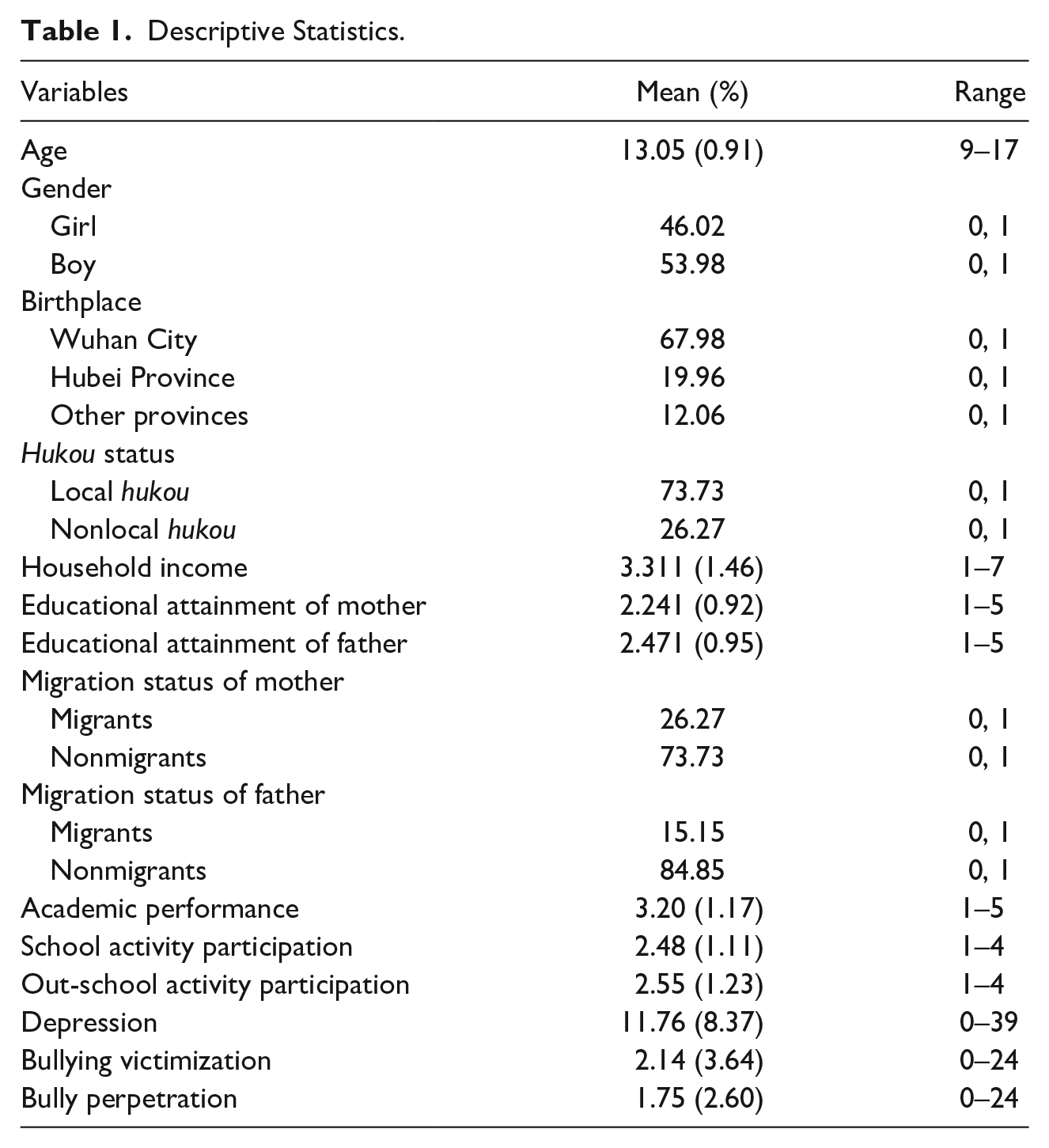
Table 2 shows the results of the factor analysis on how children respond to bullying victimization. The rotated factor loadings and unique variances of the Coping Strategy Scale suggest that three common factors can be extracted. According to the results of the factor analysis, we find that coping strategies of children can be labeled as help-seeking, avoidance, and self-defense, respectively. The help seekers are those who actively find support to overcome the issue of bullying victimization, whereas children who adopt the avoidance strategy negatively address bullying problems. However, children who are self-defenders tend to be both bullies and victims. Cronbach’s alpha coefficients of subscales of help-seeking, avoidance, and self-defense are .75, .63, .74, respectively.
Rotated Factor Loadings (Pattern Matrix) and Unique Variances.
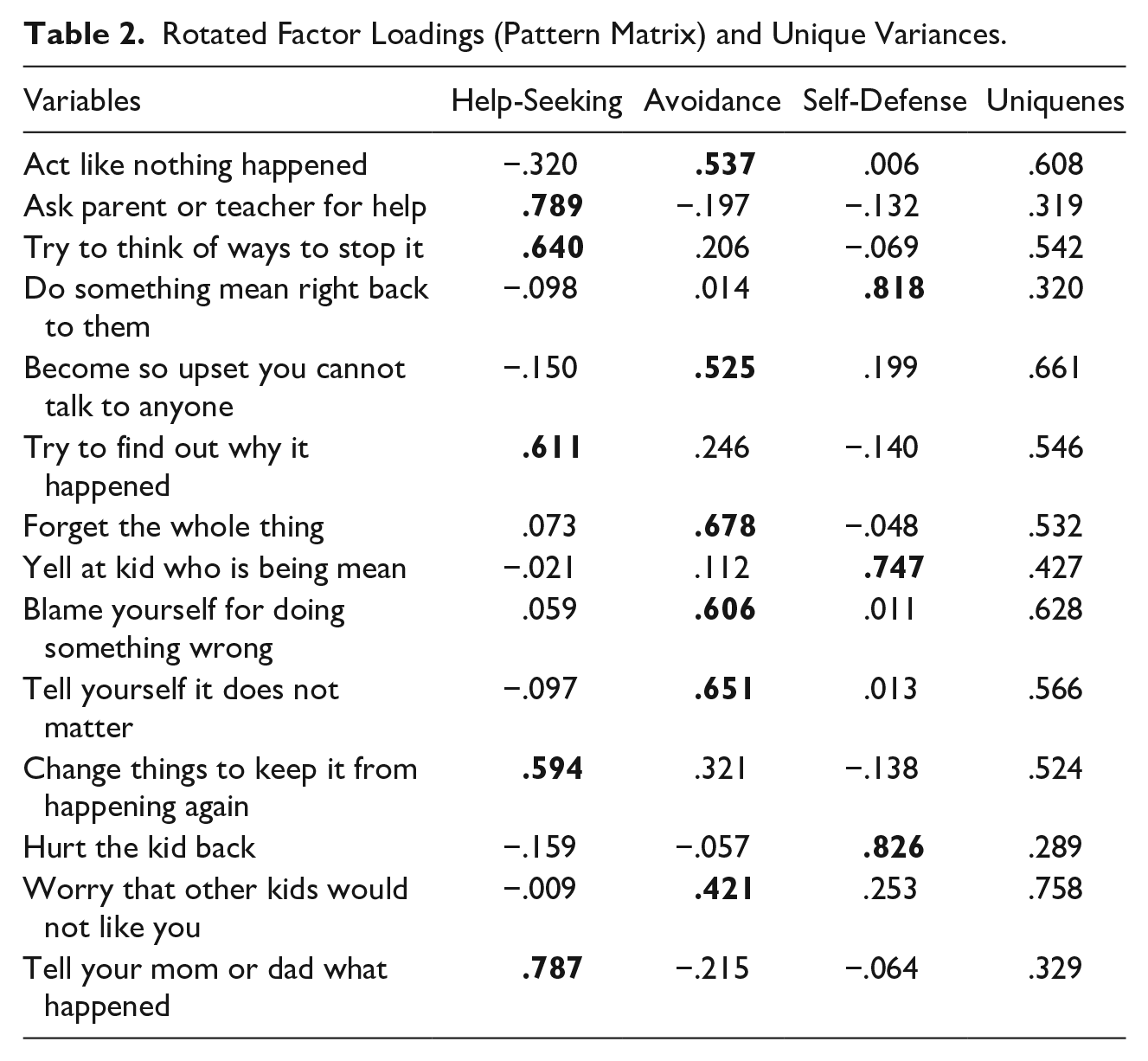
Table 3 presents the results of the ordinary least squares (OLS) regression on depression in children. Model 1 is the baseline model with only control variables. The results of Model 2 show that when bullying victimization was added to the model, the adjusted R2 increased nearly 5%, suggesting that bullying victimization is a crucial factor determining depression in children. In addition, the estimated coefficient of bullying victimization is 0.58 (p < .001), indicating that it is positively associated with depression. The results of Model 3 show that when the variable of coping strategies was added to the model, the adjusted R2 increased from 22% in Model 1 to 34% in Model 3, indicating that how children cope with bullying significantly affects their depression. In addition, the coefficient estimates of bullying strategies show that children adopting help-seeking strategies tend to have a lower level of depression (β = −1.71, p < .001). However, children who adopt the avoidance strategy (β = 1.56, p < .001) or self-defense strategy (β = 2.11, p < .001) tend to have a higher level of depression. This means that children adopting the help-seeking strategy to deal with bullying victimization are less likely to suffer psychological depression than children adopting the avoidance strategy or self-defense strategy. Model 4 shows that when both variables of bullying victimization and coping strategies were added to the model, the results of Models 2 and 3 remained. Bullying victimization negatively affects psychological well-being, and coping strategies display variations in influencing the depression of children.
OLS Regression Results on Depression of Children.
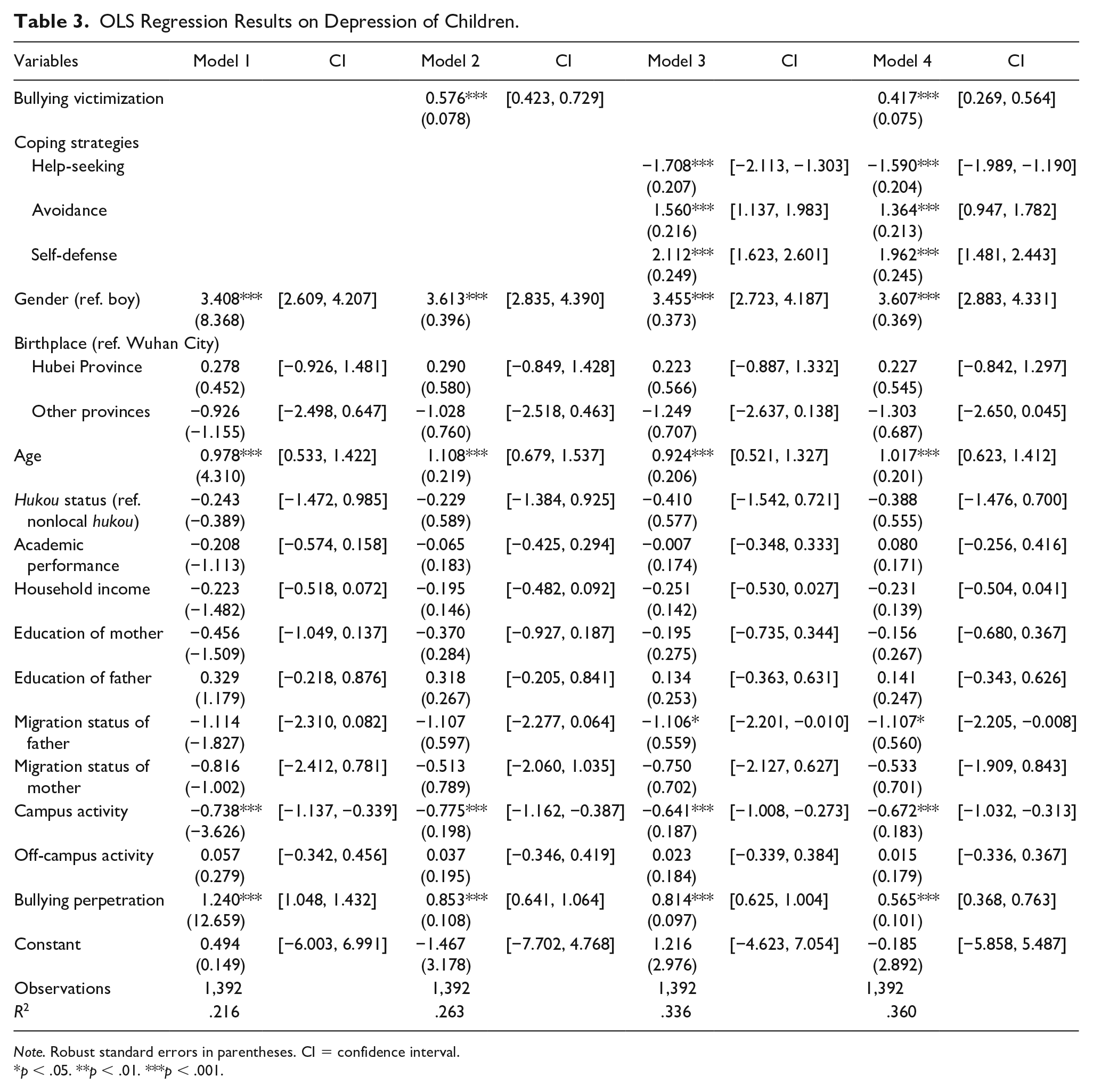
Note. Robust standard errors in parentheses. CI = confidence interval.
p < .05. **p < .01. ***p < .001.
Because we assume that both bullying behaviors and depression in children might be clustered at the class and school levels, the coefficient estimates of the OLS regression might be biased. Therefore, we utilized multilevel modeling to replicate the OLS analysis. We adopted a stepwise strategy to add variables of bullying victimization and coping strategies. The results are reported in Table 4. The results of likelihood ratio test versus linear model of Model 5 (χ2 = 16.47, Prob > χ2 = 0.000), Model 6 (χ2 = 13.43, Prob > χ2 = 0.001), and Model 7 (χ2 = 11.24, Prob > χ2 = 0.003) suggest that multilevel modeling is better than OLS modeling to fit the data. Despite better model fit than OLS modeling, the results of multilevel modeling are close to the results of OLS modeling. Bullying victimization is positively related to the depression of children, which means that the first hypothesis of this study cannot be rejected. Children who adopt the help-seeking strategy can significantly reduce depression symptoms, whereas children who embrace avoidance or self-defense strategies remarkably increase the risk of psychological depression, suggesting that the second hypothesis of this study cannot be rejected.
Results of Multilevel Modeling on Depression of Children.

Note. Robust standard errors in parentheses. CI = confidence interval; LR = likelihood ratio.
p < .05. **p < .01. ***p < .001.
In the next step, we consider the effectiveness of coping strategies at a specific level of bullying victimization. We adopted a stepwise strategy to add the interaction terms between coping strategies and bullying victimization to regression models (see Table 5). The results suggest that the help-seeking strategy can effectively reduce the psychological depression experienced by children. However, this is not always the case. Model 8 shows that with an increase in bullying victimization, the positive role of the help-seeking strategy in alleviating depression will gradually decrease. This trend can clearly be seen in Figure 1, which shows that the association between bullying victimization and depression is moderated by the help-seeking strategy. However, Model 10 shows that the negative effect of the self-defense strategy on psychological well-being gradually decreases with an increase in bullying victimization. Figure 2 also clearly reflects how the self-defense strategy moderates the association between bullying victimization and depression. In addition, Model 9 suggests that the interaction term between bullying victimization and avoidance strategy is not statistically significant, suggesting that the influence of the two variables on depression is independent of each other. According to the above results, the third hypothesis of this study cannot be rejected.
Interaction Effects Between Bullying Victimization and Coping Strategies on Depression of Children.
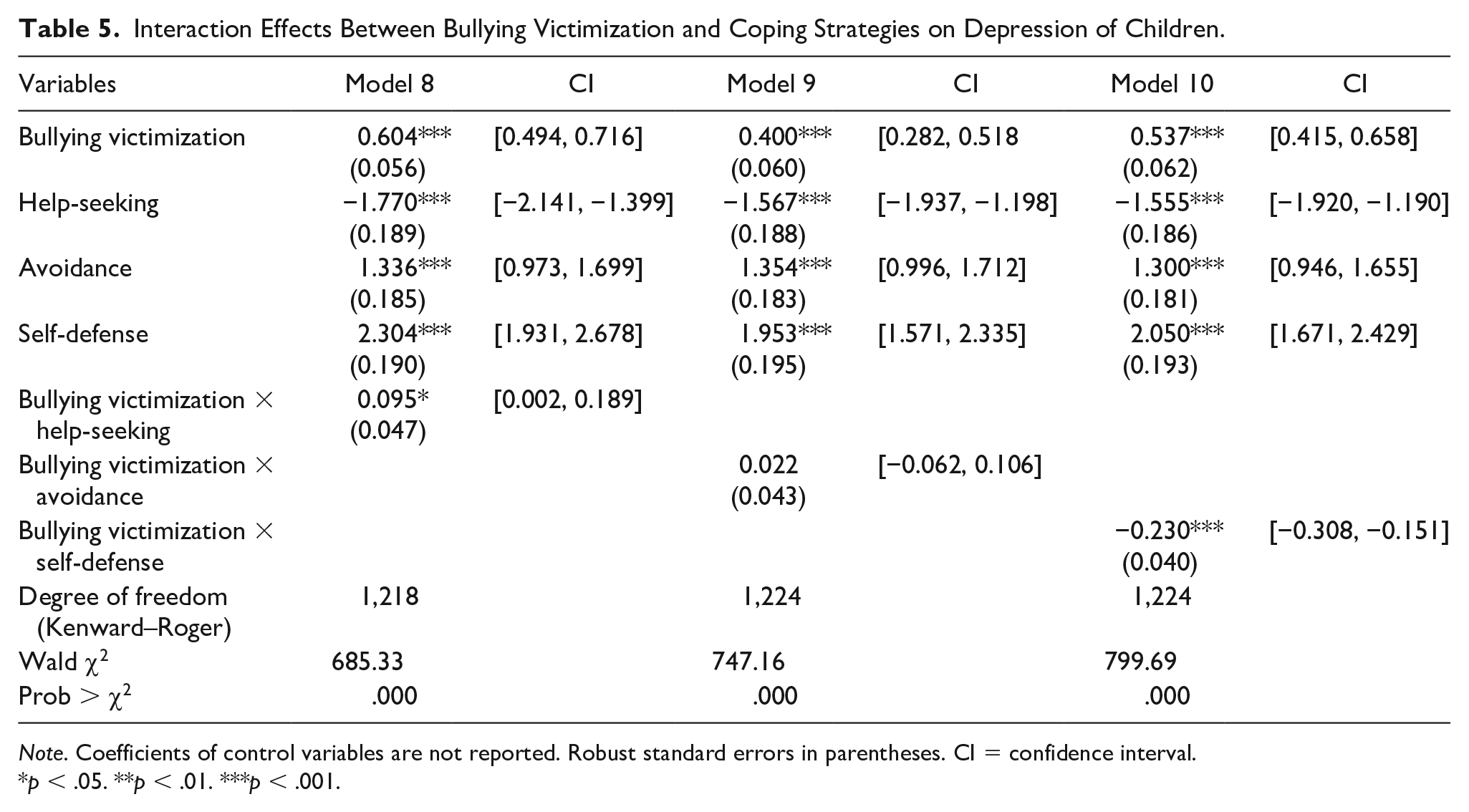
Note. Coefficients of control variables are not reported. Robust standard errors in parentheses. CI = confidence interval.
p < .05. **p < .01. ***p < .001.
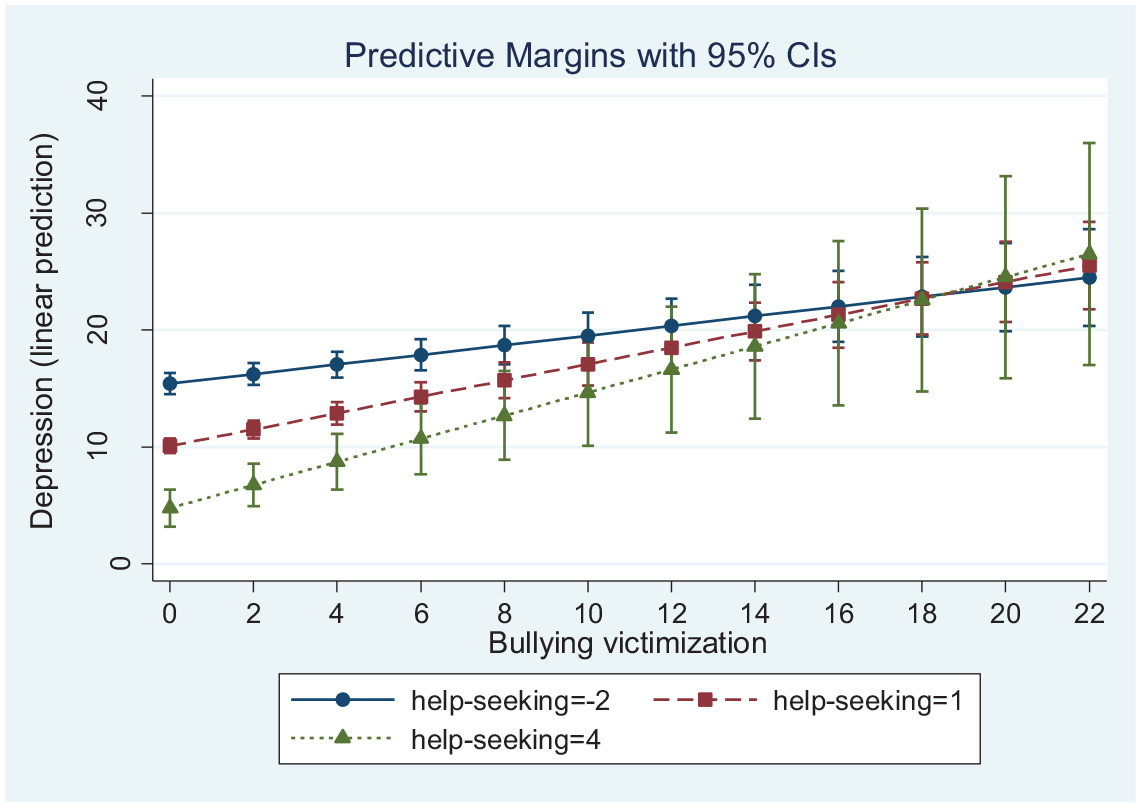
Interaction effects between bullying victimization and the help-seeking strategy.
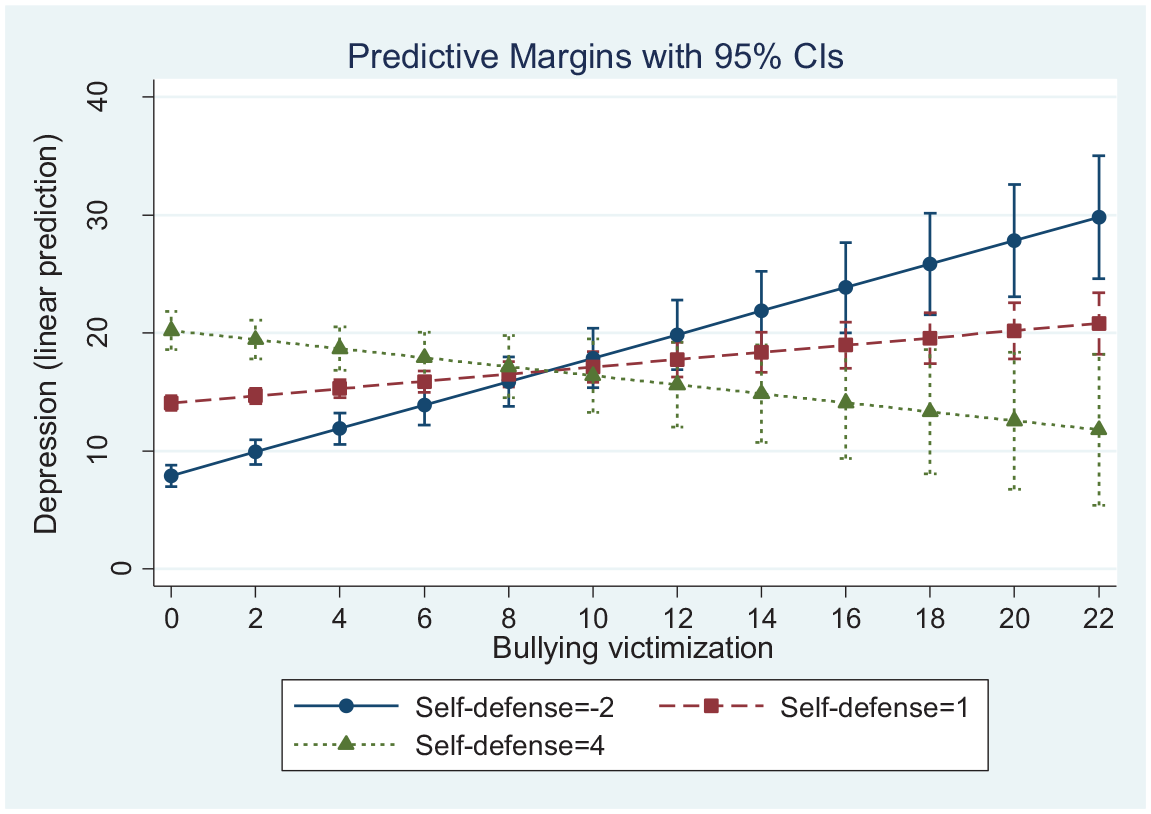
Interaction effects between bullying victimization and the self-defense strategy.
Discussion
It is widely known that bullying victimization and coping strategies significantly affect the psychosocial well-being of children. However, the strategies that children in China usually embrace to cope with bullying victimization are still unknown. Because the cultural feature of China is characterized by Confucianism, which significantly shapes how Chinese people deal with interpersonal conflicts, the strategies that children in China adopt to cope with bullying victimization might be different from children in Western countries. Moreover, which coping strategies are more effective at a particular level of bullying victimization is underexplored. Using questionnaire survey data for children from 10 schools in Wuhan, China, this study aimed to address these questions.
First, our study shows that coping strategies of children can be divided into three main subcategories: help-seeking, avoidance, and self-defense. Classic models usually use the dichotomous approach to classify the coping strategies of children (Folkman & Lazarus, 1985; Lazarus & Folkman, 1984; Roth & Cohen, 1986). The three types of coping strategies identified by the present study can be viewed as an extension of the dichotomous approach. However, our results are more consistent with recent studies showing that coping strategies of children can be divided into more than two subcategorizes (Parris et al., 2019; Roussi-Vergou et al., 2018; Waasdorp & Bradshaw, 2011), suggesting the complexity of coping strategies.
Second, our study suggests that bullying victimization and coping strategies significantly affect depression among children in China. Specifically, bullying victimization is positively and significantly associated with depression in children, which is consistent with many prior studies (Miranda et al., 2019; Moore et al., 2017; Savahl et al., 2019; Seals & Young, 2003). Moreover, children adopting different coping strategies will have a distinct level of psychological depression, which is also in line with previous studies (Paul et al., 2012; Undheim et al., 2016; Waasdorp & Bradshaw, 2011). Help-seekers show better psychological well-being than self-defenders and avoiders. This result means that it is very important for children to seek external support to overcome the negative impact of bullying victimization. This finding also provides a solid foundation for bullying interventions; more specifically, the negative effect of bullying can be rehabilitated if children are taught how to correctly respond to bullying.
Third, our study indicates that with the increase in bullying victimization, the positive role of the help-seeking strategy in alleviating depression will gradually decrease. In contrast, the negative effect of the self-defense strategy on psychological well-being will gradually decrease. In other words, the relationship between bullying victimization and depression is moderated by the help-seeking strategy and self-defense strategy. A similar finding has been reported that emotional coping moderates and partially mediates the association between bullying victimization and depression (Undheim et al., 2016). This means that coping strategies both directly and indirectly affect depression, suggesting the crucial role of coping strategies.
The findings of this study suggest that there is no single best coping strategy for children, and which one is more effective largely relies on the level of bullying victimization. In particular, this study finds that with the increase in bullying victimization, the help-seeking strategy, which is usually considered an effective way to offset the negative effect of bullying victimization on psychological well-being, is not as effective. This means that there is no golden rule for the victimized children to choose a coping strategy. Instead, which strategy a child should select largely depends on the practical situation. Such a finding also implies that it is almost impossible for children to overcome the negative consequences of bullying victimization on their own. In contrast, external support is needed to reduce the degree of bullying victimization. Children who actively seek help to tackle the problem of bullying will enjoy better psychological well-being when bullying victimization is below a specific level.
This study also has significant implications on how teachers and schools respond to bullying. Previous studies on this topic usually focus on how teachers and schools respond to bullying according to the types of bullying, such as physical, verbal, and relational bullying (Duy, 2013; Jacobsen & Bauman, 2007; Yoon et al., 2016). In addition, these studies have revealed that teachers and schools are more likely to work with bullies than with victims (Burger et al., 2015; Duy, 2013). However, the findings of this study suggest that it is also very important for teachers and schools to pay attention to victims, particularly, linking bullying victimization to coping strategies that victims use to adopt appropriate strategies to offset the negative influence of bullying on psychological well-being.
This study also has some limitations. First, this study only used cross-sectional data collected in Wuhan. To obtain the causal relationship between bullying victimization and coping strategies and depression in children, longitudinal data are required. Therefore, we should be cautious about the conclusion drawn from the present study. Second, a data-driven issue should also be noticed. Although the data analysis of this study suggests three types of coping strategies that children usually embrace, the results might be highly corrected with the scale that we used. In particular, we only utilized a simplified version of the scale to measure the coping strategies of children. Third, not only bullying victimization and coping strategies affect depression but also a reverse effect might also exist. That is, depression might also affect the degree of victimization and coping strategies that children use. Therefore, more sophisticated analytical instruments are needed in the future to obtain a more robust causal relationship.
Supplemental Material
supplementary_file – Supplemental material for Bullying Victimization, Coping Strategies, and Depression of Children of China
Supplemental material, supplementary_file for Bullying Victimization, Coping Strategies, and Depression of Children of China by Shenghua Xie, Junling Xu and Yunjiao Gao in Journal of Interpersonal Violence
Footnotes
Declaration of Conflicting Interests
The author(s) declared no potential conflicts of interest with respect to the research, authorship, and/or publication of this article.
Funding
The author(s) disclosed receipt of the following financial support for the research, authorship, and/or publication of this article: This work was supported by the Ministry of Education (MOE), China, Project of Humanities and Social Sciences (Numbers 16YJC840003 and 19YJC840049) and the self-determined research fund of Central China Normal University (CCNU) from the colleges’ basic research and operation of MOE (Number CCNU19TD005).

Supplemental Material
Supplemental material for this article is available online.
Notes
Author Biographies
References
Supplementary Material
Please find the following supplemental material available below.
For Open Access articles published under a Creative Commons License, all supplemental material carries the same license as the article it is associated with.
For non-Open Access articles published, all supplemental material carries a non-exclusive license, and permission requests for re-use of supplemental material or any part of supplemental material shall be sent directly to the copyright owner as specified in the copyright notice associated with the article.
