



Abstract
The advent of modern technology has inadvertently created newer avenues for intimate partner victimization (IPV) to transpire. This study investigated (a) whether psychological, sexual, and stalking intimate partner cybervictimization (cyber IPV) types were uniquely associated with depression and whether there were (b) additive and (c) interactive effects of cyber IPV types on depression, after controlling for face-to-face IPV among Hispanic emerging adults. Participants were 903 Hispanic emerging adults in the age range of 18 to 29 years (M = 20.68, SD = 2.42; 74% female) attending a public university in South Texas. Participants completed an online questionnaire assessing cyber IPV types (psychological, sexual, and stalking), face-to-face IPV types (physical, psychological, and sexual), and depression. Results indicated that nearly three-fourths (73%) of the sample endorsed at least one type of cyber IPV. Hierarchical regression analysis showed that psychological and sexual cyber IPV was uniquely associated with depression. An accumulating effect (additive effect model) of the three types of cyber IPV on depression was also found. Interaction effect model analysis yielded no significant effects. Findings reveal the detrimental effect of cyber IPV on mental health and calls for institutions and clinicians to develop preventive and treatment programs to aid victim-survivors.
Today, an increasingly significant aspect of communication in young adults’ interpersonal relationships is the use of information and communication technologies (ICTs), including smartphones, the internet, text/instant messaging applications (e.g., WhatsApp), electronic mail, or social media (e.g., Facebook, Twitter, Instagram, Snapchat, blogs). In 2018, it was documented that, in the United States, 92% of millennials, that is, individuals between 23 and 38 years of age, owned a smartphone, 85% were on social network platforms, and 97% used the internet (Jiang, 2018). Consequently, the advent of ICTs has inadvertently created newer avenues for interpersonal violence to transpire, including intimate partner violence (e.g., cyber psychological aggression). Presently, the extant literature focuses on face-to-face intimate partner violence and its negative effects on a victim’s mental health; in contrast, lesser is known about its cyber variant: intimate partner cyberviolence (C. Brown & Hegarty, 2018; Gámez-Guadix et al., 2018). Despite the limited research, in the past few years, there has been noticeable progress in the investigation of cybervictimization by an intimate partner (henceforth referred to as cyber IPV) and the ensuing mental health problems, such as depressive symptoms (Charak et al., 2019; Drouin et al., 2015; Weingarten et al., 2018; Wolford-Clevenger et al., 2016).
Cyber IPV is a multidimensional form of violence, akin to face-to-face intimate partner victimization (IPV; i.e., face-to-face IPV), comprising psychological, sexual, and stalking victimization (Watkins et al., 2018). Prior studies have demonstrated that the different types of cyber IPV often co-occur (Reed et al., 2017; Watkins et al., 2018; Zweig et al., 2013). However, few studies examining the association between cyber IPV types and mental health have investigated the independent effect of cyber IPV types. No study to date has examined the unique, additive, or interactive effect of the three aforementioned types of cyber IPV on mental health problems, such as depression. Notably, most of the studies on cyber IPV focus (except Borrajo et al., 2015a) on predominantly White non-Hispanic samples (e.g., Marganski & Melander, 2018; Reed et al., 2016); hence, less is known about this form of IPV within the Hispanic population.
In 2017, Hispanics were the largest minority group in the United States accounting for approximately 18% of the U.S. population (Noe-Bustamante & Flores, 2019). Studies on the prevalence of ICT use among Hispanics indicates that 90% below the age of 50 years have access to the internet, 80% use their mobile devices to access the internet, and 65% of Hispanics are active on social media (A. Brown et al., 2016; Perrin, 2015). With the prolific usage of ICTs, the risk of cyber IPV increases among Hispanic individuals as well, particularly during emerging adulthood. This developmental stage is characterized by individuals in the age range of 18 to 29 years and is marked by an ambivalence about identifying as an adult, lack of fulfillment of being an independent individual, identity exploration, engaging in risky behavior, and establishment of long-term intimate relationships (Arnett, 2000; Nelson & Barry, 2005). Its feature of establishing long-term intimate relationships makes it a pivotal period for examining victimization and violence (Borrajo et al., 2015a). Moreover, there is evidence that Hispanics experience intimate partner violence and depressive symptoms disproportionately. For example, Caetano and colleagues (2005) found that Hispanics experienced face-to-face IPV twice as more than White non-Hispanics, after controlling for socioeconomic status. A meta-analysis evaluating the disparity in depressive symptoms between White non-Hispanics and Hispanics found significantly higher levels of depressive symptoms in Hispanics compared with White non-Hispanics; however, the magnitude of the difference was small (Menselson et al., 2008). Thus, the aim of this study was to add to the growing body of literature on cyber IPV by examining the unique, additive, and interactive effects of three types of cyber IPV, namely, psychological violence, sexual violence, and stalking on depression among Hispanic emerging adults after accounting for the effects of face-to-face physical, psychological, and sexual IPV (i.e., face-to-face IPV types).
Cyber IPV
As mentioned previously, cyber IPV includes psychological, sexual, and stalking victimization. Psychological cyber IPV is defined by being put down, harassed, insulted, or emotionally hurt by an intimate partner publicizing private or personal information about oneself on social media or group instant/text messaging (e.g., WhatsApp) ICTs, or by information received from an intimate partner through ICTs (Leisring & Giumetti, 2014; Watkins et al., 2018). Sexual cyber IPV entails being requested or pressurized to send sexual content of oneself or pressured to engage in sexual acts against one’s wishes by an intimate partner via ICTs. In addition, it includes receiving unsolicited sexual content via ICTs from an intimate partner (Watkins et al., 2018; Zweig et al., 2013). Finally, stalking cyber IPV includes having one’s ICTs and accounts accessed by an intimate partner without permission or being monitored by an intimate partner through ICTs and devices, such as a global positioning system (GPS; Schnurr et al., 2013; Watkins et al., 2018).
Literature on cyber IPV conveys that these forms of cyber IPV are pervasive among young adults. As an illustration, Zapor and colleagues (2017) conducted a study on college students to examine gender difference in the prevalence of lifetime psychological cyber victimization in current dating relationships and found that 74% of male participants and 72% of female participants reported being the victim of at least one act of technology-mediated dating violence. Within a sample of 342 undergraduate students, it was reported that one out of five students was a victim of online harassment perpetrated by a dating partner (Lindsay et al., 2016). Another study investigating sexting, including coercing a partner to send sexually explicit photos of themselves, found that 20% of the sample reported being coerced into it (Drouin et al., 2015). In addition, Reed and colleagues (2015) found that, among university students in a dating relationship, 30% endorsed being victims of electronic intrusion in the past year.
Studies on cyber IPV have conveyed that it is a complex form of intimate partner violence with varied terms, definitions, behaviors, and constructs (C. Brown & Hegarty, 2018; Gámez-Guadix et al., 2018). An aspect of this complexity can be observed in the varied ways in which cyber IPV instruments have termed and conceptualized this form of violence (C. Brown & Hegarty, 2018; Gámez-Guadix et al., 2018). For example, Borrajo and colleagues’ (2015b) Cyber Dating Abuse Questionnaire gauges cyber dating abuse as a two-dimensional form of violence, namely, direct aggression and monitoring/control. Direct aggression comprises 10 behaviors that pertain to psychological violence and one that pertain to sexual violence, whereas monitoring/control was made up of four behaviors that pertained to control and five that pertained to stalking. Relatedly, in the Partner Cyber Abuse Questionnaire, partner cyber abuse is assessed as a unidimensional form of violence (Wolford-Clevenger et al., 2016). The Partner Cyber Abuse Questionnaire comprises nine behaviors that pertain to psychological violence and stalking (Wolford-Clevenger et al., 2016). Using the 34-item Cyber Aggression in Relationship Scale (CARS; Watkins et al., 2018), this study examined cyber IPV as a multidimensional form of intimate partner violence, comprising psychological violence, sexual violence, and stalking as previous research has provided evidence for each as an independent form of violence (Brem et al., 2017; Reed et al., 2017; Watkins et al., 2018; Zapor et al., 2017).
Co-Occurrence Between Cyber IPV and Face-to-Face IPV
Cyber IPV possesses key features that differentiate it from face-to-face IPV. First, ICTs facilitate cyber IPV because there is a lack of physical and social cues that tend to occur in face-to-face interaction (Dehue et al., 2008; Denegri-Knott & Taylor, 2005). Particularly, individuals may be less inhibited in cyber interactions and enact violent behaviors they would otherwise not commit in face-to-face interactions (Li, 2006). Second, ICTs are portable, which allows victims of cyber IPV to experience violent behaviors anywhere, regardless of physical proximity (Runions et al., 2013). The aforementioned features of cyber IPV suggest that its domain and presentation are distinct to those of face-to-face IPV. Acknowledging the differences between these two forms of IPV, studies have indicated that victims of cyber IPV were likely to be victims of face-to-face intimate partner violence (Borrajo et al., 2015a; Friz et al., 2018; Marganski & Melander, 2018; Reed et al., 2016; Villora et al., 2019; Zweig et al., 2013). For example, Reed and colleagues (2016) conducted a study investigating the relation between psychological, sexual, and control digital dating abuse (DDA) behaviors and face-to-face psychological, sexual, and stalking IPV and found that DDA victimization was positively associated with face-to-face IPV. These findings on the co-occurrence of cyber IPV and face-to-face IPV raise questions regarding the unique effect of cyber IPV types on a victims' well-being above and beyond the effects of face-to-face IPV types.
Cyber IPV and Mental Health Problems
Although few in number, studies suggest that cyber IPV is a form of IPV that is associated with symptoms of depression and anxiety, symptoms of posttraumatic stress disorder (PTSD), antisocial behavior, and alcohol and substance use (Bennett et al., 2011; Borrajo & Gámez-Guadix, 2016; Dardis et al., 2019; Lindsay et al., 2016; Watkins et al., 2018; Weingarten et al., 2018). Drouin et al. (2015) investigated cyber sexual coercion victimization among young adults and found that it was associated with an increase in symptoms of anxiety, depression, and traumatic stress. Moreover, Sargent and colleagues (2016) conducted a study that examined the relation between cybervictimization, depressive symptoms, and antisocial behavior among first-year college students in a romantic relationship and found that cybervictimization was associated with both depressive symptoms and antisocial behavior. In summary, recent studies on the association between cyber IPV and mental health problems suggest that it is a form of intimate partner violence that warrants further research to comprehend its manifestations and psychological effects, to develop efficacious treatment and preventive strategies for victim-survivors. Some studies have examined the association between cyber IPV and depression to accomplish this endeavor; however, no study has investigated the unique, additive, and interactive effects of cyber IPV types on depression after accounting for face-to-face victimization types among Hispanic individuals.
Unique, Additive, and Interactive Effects of Cyber IPV Types
Past studies have investigated the independent effects of cyber IPV types on mental health problems (Drouin et al., 2015); however, caution must be exercised when interpreting these results, as these studies do not take into account the effects of other potential types of cyber IPV and the literature on cyber IPV has found that forms of cyber IPV tend to co-occur (Reed et al., 2017). Studies that solely investigate the independent effects of cyber IPV types risk overestimating the effect of a particular cyber IPV type. Therefore, investigating the unique effect, as this study does, will provide insight into the effect of a cyber IPV type above and beyond the effect of other forms of cyber IPV.
Given that individuals are often exposed to multiple types of cyber IPV, the literature on cyber IPV further suffers from an absence of studies focusing on the cumulative and interactive effects of cyber IPV types. Conventionally, studies have examined the effect of multiple types of victimization within interpersonal relationships (e.g., child abuse and face-to-face IPV) on health outcomes via two models, namely, the additive effect model and the interactive effect model (Fujiwara et al., 2010; Senn & Carey, 2010; Stoicescu et al., 2019). Particularly, the additive effect model is employed to assess the cumulative effect that different forms of victimization may have on an individual’s health. Although no study to date has utilized the additive effect model to examine cyber IPV types and their association with mental health problems, the literature focusing on face-to-face IPV suggests that exposure to multiple types of victimization is associated with an increase in mental health problems, such as depression. For example, in a study examining the additive effects of physical, psychological, and sexual IPV on symptoms of depression and PTSD in the past year, Sabina and Straus (2008) found that exposure to multiple forms of intimate partner violence was a predictor of depressive symptoms in women only and a predictor of PTSD symptoms in men and women. The unique feature of the additive effect model is that it weighs all victimization types equally in effecting psychological outcomes.
The interactive effect model overcomes the assumption of equivalency of victimization types and examines interactions between various forms of victimization (e.g., interaction between sexual and psychological IPV) and their effect on mental health. Specifically, the interactive effect model suggests that the psychological impact of a specific type of victimization would depend on the level or severity of another type of victimization. To the best of our knowledge, only one study to date has examined the interactive effect of the forms of cyber IPV on mental health problems; notably, this study is only available in Spanish language (Borrajo & Gámez-Guadix, 2016). This study investigated the interactive effect of control and direct aggression (wherein direct aggression comprised one item on sexual aggression and nine items on psychological aggression) cyber dating abuse victimization on depression and anxiety among young adults from Spain and found that control moderated the effect of direct aggression. That is, the association between direct aggression and depression, and anxiety, was much stronger when control was low. However, this study did not account for the confounding effect that face-to-face IPV may have nor did it examine the potential effects of sexual cyber IPV on mental health outcomes, as done in this study. An examination of the additive and interactive effects of cyber IPV types attempts to identify if there are cumulative or interactive combinations of cyber IPV types that increases the risk of depressive symptoms. Findings will allow clinicians and institutions of higher education to understand specific manifestations and effects of cyber IPV exposure to facilitate the development of clinical intervention and prevention programs.
This Study
This study aimed to examine how cyber IPV types affect symptoms of depression in Hispanic emerging adults.
Aim 1
The first aim is to examine whether each type of cyber IPV had a significant unique effect on symptoms of depression, after accounting for face-to-face IPV victimization, namely, psychological, sexual, and physical violence. Prior studies have established an association between psychological (Wolford-Clevenger et al., 2016), sexual (Drouin et al., 2015), and stalking (Dardis et al., 2019) cyber IPV and depression, although the effect of face-to-face IPV was not taken into account. This study hypothesized that psychological, sexual, and stalking cyber IPV each would have a unique effect on depression, after controlling for the effect of face-to-face IPV types, such that those with exposure to any form of cyber IPV would have elevated scores on depression (Hypothesis 1 [H1]).
Aim 2
The second aim is to examine whether exposure to more types of cyber IPV would have an additive effect on symptoms of depression, after accounting for face-to-face IPV. To date, there is no study that has investigated the additive or cumulative effect of cyber IPV types on depression. Alternatively, studies on face-to-face IPV have indicated that exposure to multiple types of IPV increases the risk of depression (Sabina & Straus, 2008). Contingent on these findings, it was hypothesized that cyber IPV types would have an accumulating effect on depression in that with every exposure to a different type of cyber IPV there would be an increase in the depression score (Hypothesis 2 [H2]).
Aim 3
The third aim is to examine whether the three different types of cyber IPV interact (two- and three-way interactions) to affect depression after accounting for types of face-to-face IPV. To date, only one study has provided evidence for a two-way interaction effect of cyber IPV facets on depression and anxiety (Borrajo & Gámez-Guadix, 2016). In addition, there are multiple studies on the interaction effects that other types of interpersonal violence victimization (e.g., child abuse and face-to-face IPV) may have on a victim’s health and well-being (Fujiwara et al., 2010; Kaslow & Thompson, 2008; Senn & Carey, 2010; Stoicescu et al., 2019). These studies provide evidence that distinct forms of interpersonal victimization interact to have a differential effect on mental health problems. Given that there is only one prior study that examined the interaction effect of two types of cyber IPV, this study explored two- and three-way interaction effects of the three cyber IPV types on symptoms of depression.
Method
Participants
Participants were 912 college-going Hispanic emerging adults enrolled in psychology courses at a university in South Texas situated in a region that is predominantly Hispanic. The inclusionary criteria for this study were as follows: (a) must self-identify as being of Hispanic ethnicity, (b) an age within the range of 18 to 29 years, and (c) in a current intimate partner relationship or have been in the past. Participants that did not identify as either male or female were deleted (N = 2). After plotting the standardized residuals and predicted values as part of a multiple regression assumption test for the predictor variables, seven cases were identified as outliers (>3.0 standardized residual). These seven cases were deleted for the final analyses.
The final effective sample consisted of 903 Hispanic emerging adults (74% female) within an age range of 18 to 29 years (M = 20.68, SD = 2.42) who were at the time of the study in an intimate partner relationship (63.8%) or have been in the past. Regarding the participants’ self-reported race, 98% were White and less than 1% identified as African American/Black, American Indian/Alaskan Native, and Native Hawaiian/Other Pacific Islanders, and Other, each. Nearly, 91% of the participants were U.S. citizens by birth, 4.1% were U.S. citizens by naturalization, and 5.3% were non-U.S. citizens. The household annual income of 47.4% of the participants was US$29,999 and below, 10.9% had an income between US$30,000 and US$39,000, 10.6% reported an income in the range of US$40,000 to US$49,000, 9.3% reported an income between US$50,000 and US$59,000, 4.9% had an income between US$60,000 and US$69,000, and 16.9% had an income of US$70,000 or more.
Procedure
Participants were recruited through the SONA system, an automated participatory pool management software that assists researchers with setting up studies, recruiting participants, and managing course credits or paid participation. On average, it took students 45 min to complete the survey. Participants who completed the online survey were granted course credit if enrolled in the General Psychology course, and students enrolled in other Psychology courses were granted extra credit at the discretion of their instructor. To avoid coercion, alternative research activities were available for students who did not want to take the surveys. Data collection for this study was conducted between Spring 2016 and Spring 2019. The Institutional Review Board at the corresponding author’s (R.C.) university approved the research study.
Measures
Demographics
Participants reported their gender (0 = male, 1 = female), age, relationship status (not currently in an intimate relationship = 0, currently in an intimate relationship = 1), race, citizenship/immigration status, and household income.
Face-to-face IPV
To evaluate face-to-face IPV, the Conflict Tactic Scale 2 Short Form (CTS2S; Straus & Douglas, 2004) was used. The CTS2S is a five-subscale instrument that measures physical assault, psychological aggression, sexual coercion, injury, and negotiation tactics that are used when conflict in intimate relationships arises. The CTS2S measures the perpetration and victimization of these tactics in the past year, or prior to the past year. The physical assault, psychological aggression, and sexual coercion subscales were used for this study to assess lifetime face-to-face IPV. Victimization for physical assault was assessed using two items (e.g., my partner punched or kicked or beat-me-up), two items assessed psychological aggression victimization (e.g., my partner insulted or swore or shouted or yelled at me), and sexual coercion victimization was also assessed via two items (e.g., my partner used force like hitting, holding down, or using a weapon to make me have sex). Frequency of abuse for victims was rated on an eight-point Likert-type scale, ranging from 1 (once in the past year) to 8 (this has never happened before); Option 7 indicated not in the past year but it did happen before. A dichotomous variable was created for each type of face-to-face IPV such that those who endorsed 1 to 7 were coded as 1, that is, there was a presence of a specific type of lifetime IPV, and those who endorsed 8 (i.e., the absence of specific lifetime IPV) were coded as 0. Attaining the sample’s CTS2S subscales’ internal consistency reliability coefficient is inappropriate because each subscale is composed of solely two items; however, the instrument has adequate construct and concurrent validity (Straus & Douglas, 2004).
Cyber IPV
The CARS (Watkins et al., 2018) was used to evaluate cyber aggression in intimate relationships. The CARS is an instrument with three subscales that measure psychological, sexual, and stalking cyber IPV in the past year, or prior to the past year. In this study, the psychological, sexual, and stalking aggression subscales were used to assess lifetime cyber IPV. Psychological cyber IPV was assessed using five items (e.g., my partner sent threatening or harassing messages to me via text or social media), sexual cyber IPV was assessed using four items (e.g., my partner pressured me to send sexual or naked photos of myself to him or her), and finally victimization for cyberstalking was assessed via eight items (e. g., my partner checked my phone to see who I was talking to or texting without my permission). Frequency of victimization was rated on an eight-point Likert-type scale with options ranging from 0 (this has never happened) to 6 (more than 20 times in the past year) referring to victimization experienced in the past year, and response 7 (not in the past year, but it did happen before) referring to victimization that happened prior to the past year. A dichotomous variable was created for each type of cyber IPV such that those who endorsed 1 to 7 were coded as 1, that is, there was a presence of a specific type of lifetime cyber IPV, and those who endorsed 0 (i.e., the absence of specific type of lifetime cyber IPV) were coded as 0. To analyze the additive effects of lifetime cyber IPV types, a composite variable (i.e., cumulative cyber IPV) was created by summing the three different types of cyber IPV experienced. Cumulative cyber IPV ranged from 0 (no cyber IPV) to 3 (three types of cyber IPV). In the development of the CARS, Watkins and colleagues (2018) utilized an item factor analysis and confirmed the presence of three factors, namely, psychological, sexual, and stalking. Moreover, the CARS provide evidence of adequate convergent and discriminant validity for each subscale. Internal consistency reliabilities for the three subscales in the present sample were α = .81 for psychological cyber IPV, .84 for sexual cyber IPV, and .85 for stalking cyber IPV.
Symptoms of depression
The Patient Health Questionnaire (PHQ; Kroenke & Spitzer, 2002) is a nine-item instrument that screens for depression as characterized by the Diagnostic and Statistical Manual of Mental Disorders (5th ed.; DSM-5; American Psychiatric Association, 2013) criteria. Frequency of depressive symptoms (e. g., little interest or pleasure in doing things) experienced in the past month was rated on a four-point Likert-type scale (0 = not at all; 3 = nearly every day). Responses were summed to provide a PHQ-9 total score. PHQ-9 scores ranged from 0 to 27. Consistent with prior research, a cutoff score of 10 was used to indicate depression (Kroenke et al., 2001). An increase in PHQ-9 depression severity scores is associated with deteriorating functionality in primary care patients, hence demonstrating adequate construct validity. Internal consistency reliability for the PHQ-9 scale in the present sample was α = .89.
Data Analysis
Data were analyzed using SPSS version 25. First, preliminary regression assumption test analyses were conducted to test for violations in linearity, multicollinearity, and homoscedasticity and to identify outliers. Second, descriptive statistics were conducted to examine the distribution of demographic variables, such as gender, relationship status, and face-to-face IPV types, cyber IPV types, and depression within the sample. Second, bivariate correlations were conducted between the demographic variables, face-to-face IPV types, cyber IPV types, and depression. Demographic variables that were significantly associated with the dependent variable (i.e., depression) were used as covariates in subsequent analyses. Third, two separate hierarchical regressions were conducted to examine the variance in depression scores due to (a) the unique effect of each of the three types of cyber IPV; (b) the two- and three-way interaction effects of cyber IPV types; and (c) the additive effect of cyber IPV types, after controlling for the effects of covariates and physical, psychological, and sexual face-to-face IPV types.
Unique and interactive effects of each cyber IPV type
For the regression model analyzing the unique and interactive effects of cyber IPV types on depression, gender and relationship status were entered in Step 1. In Step 2, the types of face-to-face IPV were entered. For examination of the unique effects of the three types of cyber IPV, in Step 3, the three types of cyber IPV were entered. In Step 4, the two-way interactions between the cyber IPV types were entered followed by the three-way interaction between the cyber IPV types in Step 5.
Additive effect of cyber IPV types
To investigate the additive effect of cyber IPV types on depression, first, gender and relationship status were entered in Step 1 of the hierarchical regression analysis. Second, the three types of face-to-face IPV were entered in Step 2, and finally in Step 3 the cumulative cyber IPV variable was entered.
Results
IPV Types and Depression
Descriptive analysis demonstrated that 24.7% to 63.3% of participants endorsed a cyber IPV type. Approximately two-fifths (17.6%) to a third (32.7%) of the sample reported experiencing one to three types of cyber IPV. Nearly 21% to 45% of participants reported experiencing two specific combinations of cyber IPV types. In addition, 19.5% to 57.6% of the sample endorsed a type of face-to-face IPV. Approximately a third of the sample (30.5%) received a PHQ-9 score of 10 and above, indicative of probable depression. The mean score on depression was 7.97 (SD = 6.08). Table 1 gives a detailed account of the distribution for the aforementioned demographic covariates, cyber and face-to-face IPV types, and elevated scores on depression (i.e., cut off score > 9 on PHQ).
Covariates, Cyber IPV, Face-to-Face IPV, and Elevated Depression in Hispanic Emerging Adults.
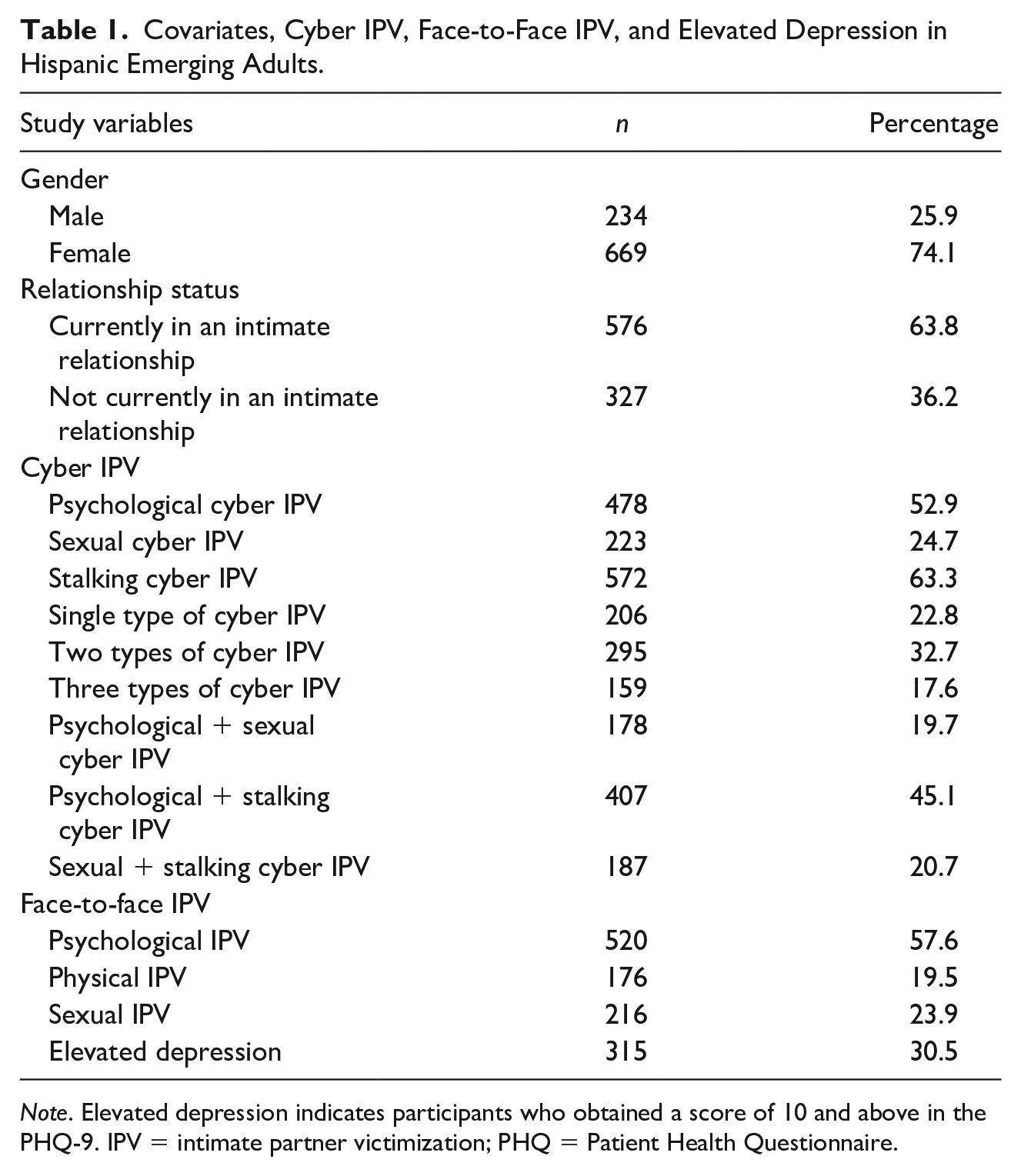
Note. Elevated depression indicates participants who obtained a score of 10 and above in the PHQ-9. IPV = intimate partner victimization; PHQ = Patient Health Questionnaire.
Face-to-Face and Cyber IPV Correlations and Covariates
As presented in Table 2, bivariate correlations indicated a significant association between gender, relationship status, and depression, such that female participants and those who were currently not in a relationship were higher on depression scores In addition, cyber IPV types were positively associated with face-to-face IPV types (rrange = .117–.398) indicating that an increase in face-to-face cyber IPV types was associated with an increase in types of cyber IPV.
Correlation Between Study Variables.
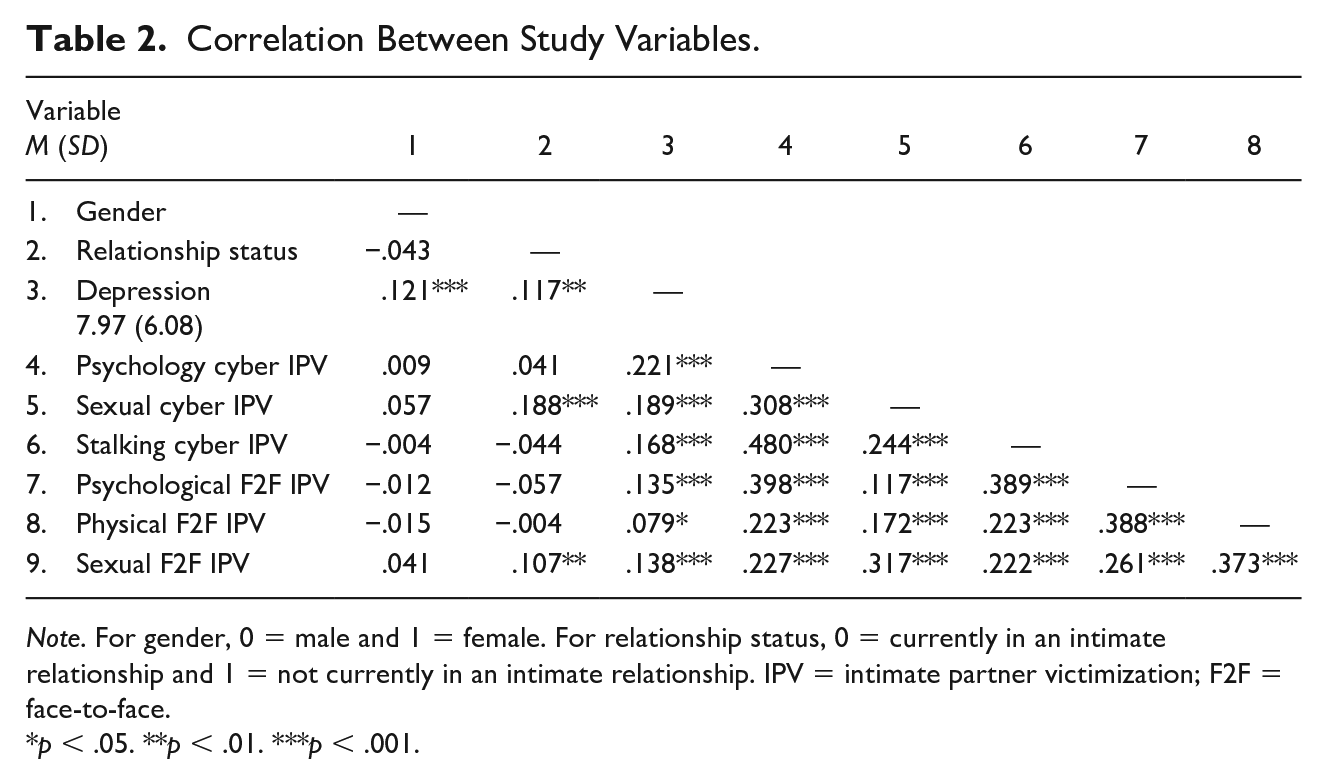
Note. For gender, 0 = male and 1 = female. For relationship status, 0 = currently in an intimate relationship and 1 = not currently in an intimate relationship. IPV = intimate partner victimization; F2F = face-to-face.
p < .05. **p < .01. ***p < .001.
Regression Analyses
In the present sample of Hispanic emerging adults, those with exposure of either psychological or sexual cyber IPV were at an increased risk of depression, across all levels of the other two types of cyber IPV (Step 4; Table 3). This increased risk in depression was present even after accounting for the effects that their histories of face-to-face IPV and other forms of cyber IPV had on their symptoms of depression. Notably, when psychological and sexual cyber IPV are absent, the simple effect of stalking cyber IPV did significantly impact symptoms of depression (Step 5; Table 3). The additive hierarchical regression model demonstrated a significant cumulative effect of cyber IPV on depression, after controlling for gender, relationship status, and face-to-face IPV types (Table 4), such that with every exposure to a type of cyber IPV there was a 2.15-unit increase in depression score.
Hierarchical Regression Examining the Unique and Interactive Effects of Cyber IPV Types on Depression After Controlling for the Effects of Covariates and Face-to-Face IPV in Hispanic Emerging Adults.
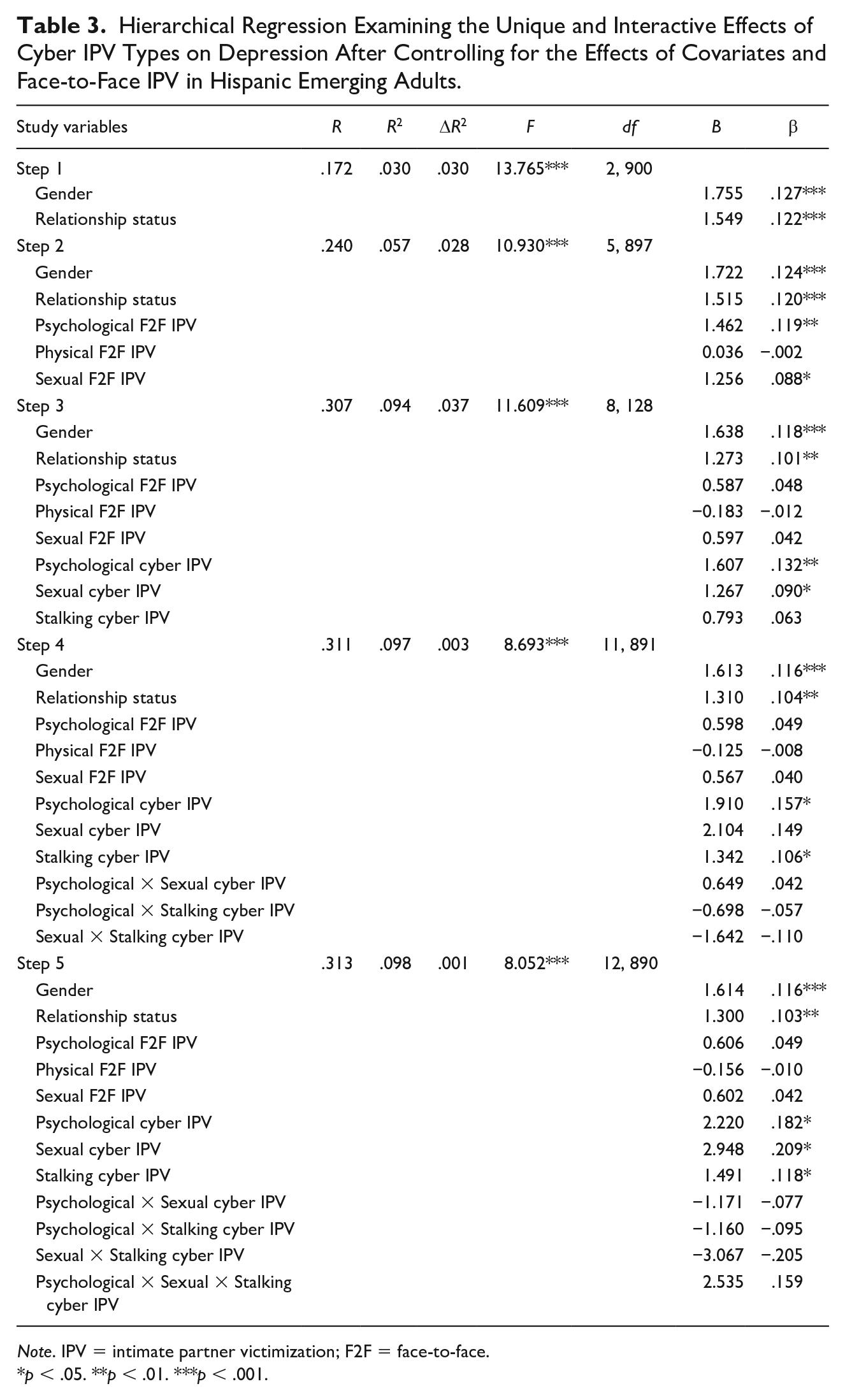
Note. IPV = intimate partner victimization; F2F = face-to-face.
p < .05. **p < .01. ***p < .001.
Hierarchical Regression Examining the Association Between Cumulative Cyber IPV and Depression After Controlling for the Effects of Covariates and Face-to-Face Psychological, Physical, and Sexual IPV in Hispanic Emerging Adults.

Note. IPV = intimate partner victimization; F2F = face-to-face.
p < .05. **p < .01. ***p < .001.
Discussion
Studies on cyber IPV among emerging adults indicate that it is a pervasive form of violence that has a detrimental effect on a victim’s mental health (Dardis et al., 2019; Drouin et al., 2015; Sargent et al., 2016; Wolford-Clevenger et al., 2016). However, no study to date has investigated the rates of cyber IPV and its effects on depression among Hispanic emerging adults. This study aimed to extend the literature on cyber IPV by examining the unique, additive, and interactive effects of three types of cyber IPV on depression among Hispanic emerging adults. The take home message from the unique, interactive, and additive effects of cyber IPV types on depression is that psychological and sexual cyber IPV, each had the propensity to increase symptoms of depression (Step 4; Table 3), but stalking cyber IPV impacted depression scores only in the absence of both psychological and sexual cyber IPV types (Step 5; Table 3). Furthermore, findings suggest that the impact of one type of cyber IPV (e.g., sexual cyber IPV) on depression did not depend on the presence of another type of cyber IPV (e.g., psychological cyber IPV) although there was an accumulating effect of the three types of cyber IPV on depression scores. Study findings are discussed below in detail.
Although not a hypothesis, this study found rates of cyber IPV types in Hispanic emerging adults to be in the range among those reported in prior studies. For example, in this study, 53% of Hispanic emerging adults reported psychological cyber IPV compared with studies reporting 14% to 77% among young adults (Bennett et al., 2011; Borrajo et al., 2015b; Lindsay et al., 2016; Watkins et al., 2018; Zapor et al., 2017). Prior studies on young adults reported rates of stalking cyber IPV ranging from 18% to 75% (Bennett et al., 2011; Borrajo et al, 2015b; Burke et al., 2011; Dardis et al., 2019; Watkins et al., 2018), compared with 63.4% in this study. Finally, rates of sexual cyber IPV across prior studies ranged from 11% to 32% among adolescents (Reed et al., 2017; Zweig et al., 2013) and young adults (Drouin et al., 2015; Watkins et al., 2018), compared with 24.6% in this study. However, it is important to mention that prior studies use different definitions and instruments/measures to gauge cyber IPV, and hence the abovementioned comparisons are limited in this regard. A significant finding of this study was that 50.2% of the present sample reported exposure to more than one form of cyber IPV suggesting that victimization of multiple types of cyber IPV is prevalent among Hispanic emerging adults. These rates display the pervasiveness of this form of intimate partner violence among Hispanic emerging adults.
Findings from the regression model partially supported H1 indicating that psychological and sexual cyber IPV had a unique effect on depression, beyond the variance in depression due to gender, relationship status, and physical, psychological, and sexual face-to-face IPV types. Findings are consistent with prior studies that indicate an association between these types of cyber IPV and depression (Borrajo & Gámez-Guadix, 2016; Drouin et al., 2015; Lindsay et al., 2016; Watkins et al., 2018). In the present sample of Hispanic individuals, the main effect of stalking cyber IPV on depression was nonsignificant although the simple effect of stalking cyber IPV on depression was significant in the absence of psychological and sexual cyber IPV. Findings are in contrast to prior studies (Borrajo & Gámez-Guadix, 2016; Dardis et al., 2019; Watkins et al., 2018) that suggest a main effect of stalking cyber IPV on depression. However, these prior studies did not control for the effect of face-to-face IPV types when examining the association between stalking cyber IPV and depression, and their conceptualization of stalking cyber IPV differs. Differences in these factors may confound the results in two ways. First, by not controlling for forms of face-to-face IPV, stalking cyber IPV may have been assumed to be the sole variable leading to the variance in symptoms of depression. Second, different operational definitions of stalking cyber IPV would involve an array of stalking behaviors that may vary in the degree of severity, and ultimately its effect on depression.
In addressing the additive effects of cyber IPV types, the accumulation of cyber IPV types was found to have an additive effect on depression beyond the effect of covariates, and physical, psychological, and sexual face-to-face IPV (H2 supported). Particularly, with every additional exposure to a type of cyber IPV, the depression scores increased by more than two units. Findings are consistent with prior studies on face-to-face IPV, which suggest that exposure to multiple forms of IPV increases the risk of depression (Dutton et al., 2005; Sabina & Straus, 2008). The additive effect of cyber IPV types on depression is in line with the cumulative risk hypothesis (Rutter, 1979) conveying that the experience of multiple forms of cyber violence within the context of an intimate partner relationship is related to a greater risk of developing mental health problems. Hence, as participants in this study were exposed to more types of cyber IPV, their depression incremented. This observation implies that Hispanic individuals are also subject to the cumulative risk theory suggesting that Hispanic emerging adults with exposure to multiple types of cyber IPV may exhibit exacerbated symptoms of depression. To the best of our knowledge, this study is the first to examine the additive effect of cyber IPV types on depression and warrant replication. Nonetheless, findings suggest that clinicians should identify individuals with exposure to more than one type of cyber IPV, as they are at an increased risk of depression.
For the interactive effect of cyber IPV types, findings indicated that exposure to specific combinations of cyber IPV types (e.g., sexual and psychological cyber IPV) did not affect depression in Hispanic emerging adults. These findings are in contrast to a prior study that found direct aggression and control cyber dating abuse to have an interaction effect on anxiety and depression (Borrajo & Gámez-Guadix, 2016). Dissimilar results between studies could be explained by differences in conceptualization of cyber IPV and conception of studies. For instance, this study defines cyber IPV as a three-factor form of violence (i.e., psychological, sexual, and stalking) instead of a two-factor form of abuse (i.e., direct aggression and monitoring; Borrajo & Gámez-Guadix, 2016). In addition, in this study, sexual cyber IPV was analyzed to identify its potential interaction effects on depression when combined with psychological and stalking cyber IPV. Finally, the effects of face-to-face IPV types were included in this study’s models. In contrast, the aforementioned study did not account for these confounding variables.
This study’s findings should be interpreted with the following limitations in mind. First, recall and response biases may exist considering the length of time that may have elapsed between the cyber IPV experience and participation in the study. Second, the design of the study is cross-sectional and the causal relation between cyber IPV types and depression is an assumption based on prior literature (Dardis et al., 2019; Lindsay et al., 2016; Wolford-Clevenger et al., 2016). Third, prior studies suggest that other types of victimization that are associated with depression, such as peer victimization and child maltreatment, may have confounded the results (Ross et al., 2019; Tennant et al., 2015). Fourth, this study focused on Hispanic emerging adults enrolled at a university, and thus the study findings may not be generalizable to other ethnic/racial groups of emerging adults.
The current findings have significant implications for future research endeavors in the field of cyber IPV in Hispanic emerging adults. The unique effect of psychological and sexual cyber IPV, and the additive effect of the three types of cyber IPV types on depression, shows the importance of examining cyber IPV as a multidimensional form of interpersonal violence among Hispanic individuals as well. Although the harmful effect of stalking cyber IPV on depression did not arise in this study, it is nevertheless a wrongful act. Moreover, studies on cyber IPV should further investigate the mechanistic role of universally established protective (e.g., social support, resilience) and risk factors, (e.g., emotional dysregulation, child maltreatment), and factors associated with the Hispanic culture (e.g., machismo, marianismo) in the association between cyber IPV types and other forms of mental health problems among Hispanic individuals. Notably, cultural factors, such as machismo (i.e., male stereotype in Latin culture that encompasses bravado, decision-maker of the family), marianismo (i.e., woman’s role in Latin American culture in which there is an expectation of submissiveness, modesty, and responsibility for the caretaking of children), and level of acculturation have been found to act as risk and protective factors of face-to-face IPV among Hispanic individuals (Cummings et al., 2013). An understanding of these mechanisms would inform prevention and intervention strategies to combat cyber IPV and related consequences among Hispanic emerging adults. The additive and interactive effects that face-to-face IPV and cyber IPV types have on mental health and behavioral problems should be examined, as prior studies have demonstrated that these forms of IPV highly co-occur (Marganski & Melander, 2018; Watkins et al., 2018; Zapor et al., 2017). In addition, as this study consists of Hispanic emerging adults between 18 and 29 years old, findings indicate that the importance of this formative developmental period should be affirmed and addressed by clinicians in clinical interventions.
In practice, university institutions should be conscientious about the current pervasive transgressions of cyber IPV among emerging adults. Institutions of higher education should utilize their resources to increase awareness on campus by having mandatory preventive strategies, such as education programs teaching online citizenship, and provide training to identify and report cyber IPV (White & Carmody, 2018). An evidence-based violence intervention, such as the Green Dot Bystander Intervention, may be adapted for ICTs and implemented at universities to address cyber IPV along with face-to-face IPV among young adults (Coker et al., 2015). The bystander intervention emphasizes that communities must be aware of the behavioral nature and frequency of violence to safely and effectively intervene to mitigate the risk of violence (Coker et al., 2015).
In addition, clinicians who work with emerging adults who have been victims of intimate partner violence and/or are exhibiting depressive symptoms should as well investigate the presence of cyber IPV types and exposure to multiple types of cyber IPV. Clinicians should be culturally sensitive and employ evidence-based therapies, such as cognitive-behavioral therapy, to help victim-survivors overcome negative cognitions (e.g., self-blame) that accompany victimization that may be maintained by cultural factors (e.g., marianismo; Cummings et al., 2013) to help mitigate symptoms of depression in Hispanic individuals. Continual research on cyber IPV to refine the etiology and effects on mental and behavioral health is required to develop specified forms of treatment and prevention programs to better aid victim-survivors.
The present findings warrant replication and future research should continue to investigate the mental health problems that may result from cyber IPV types utilizing the interactive effect model considering that differential effects of specific combinations of other interpersonal violence victimization types (i.e., child abuse and face-to-face IPV) have been reported in prior studies (Fujiwara et al., 2010; Kaslow & Thompson, 2008; Senn & Carey, 2010; Stoicescu et al., 2019). In addition, future studies should continue to investigate the association between psychological, sexual, and stalking cyber IPV and mental health using standardized questionnaire to facilitate comparison of findings across samples of White non-Hispanics and other diverse and at-risk samples (e.g., LGBTQ+ [lesbian, gay, bisexual, transgender and queer or questioning] population, other racial minorities; Charak et al., 2019). In particular, future studies should also focus on examining the severity of cyber IPV as prior studies on adulthood victimization suggest that higher intensities of victimization (e.g., longer duration, higher frequency) are associated with severe psychological problems (Charak et al., 2018).
Footnotes
Declaration of Conflicting Interests
The author(s) declared no potential conflicts of interest with respect to the research, authorship, and/or publication of this article.
Funding
The author(s) received no financial support for the research, authorship, and/or publication of this article.
Author Biographies
 ) at the University of Texas Rio Grande Valley, Edinburg since 2016. Before this, she served as a postdoctoral research associate at the University of Nebraska–Lincoln on an NICHD/NIH grant on sexual revictimization in young women. She has taught courses in clinical psychology and statistics in India and in the United States. Her research interests pertain to childhood adversities, including child abuse and neglect, family violence, sexual victimization in adolescents and young adults, and posttraumatic stress disorder, and she often uses structural equation modeling as a statistical tool in her research work. She has worked on diverse sample populations from the United States, the Netherlands, Denmark, Northern Ireland, India, and Burundi (Africa). She currently serves on the editorial boards of Psychology of Violence, Journal of Traumatic Stress, Child Abuse and Neglect, Child Abuse Review, and European Journal of Psychotraumatology.