




Abstract
The dependency-possessiveness model proposes that individuals who are highly dependent on their intimate partner and fear partner abandonment, particularly among those with emotion dysregulation problems, may be at heightened risk for intimate partner aggression (IPA) perpetration. Despite prior research establishing a link between relationship dependency and male IPA perpetration, it is unknown whether this association extends to female-perpetrated aggression, occurs in dating relationships, and is moderated by emotion dysregulation. Thus, the purpose of the current study was to investigate the association between relationship dependency and female-perpetrated dating aggression and determine if emotion dysregulation moderated this hypothesized relationship. Female undergraduate students (N = 119) completed measures assessing relationship dependency, emotion dysregulation, and female-perpetrated physical and psychological dating aggression as part of a larger study investigating the context of dating aggression episodes. Anxious attachment was significantly correlated with female-perpetrated psychological and physical dating aggression. Regression analyses indicated a significant interaction between the Spouse-Specific Dependency Scale [SSDS] Anxious Attachment subscale and emotion dysregulation predicting female-perpetrated physical dating aggression, suggesting moderation. There was a positive association between anxious attachment relationship dependency and female-perpetrated physical dating aggression at high levels of emotion dysregulation. A significant interaction was also found between the SSDS Emotional Dependency subscale and emotion dysregulation predicting female-perpetrated physical dating aggression, such that among those with low scores in emotion dysregulation, there was a positive relationship between emotional dependency and female-perpetrated physical dating aggression. Findings suggest that the ability to regulate emotions may play an important role in the association between relationship dependency and female-perpetrated dating aggression.
Dating aggression, involving physical, psychological, or sexual aggression between dating partners, is a problem often identified in young adults (Shorey et al., 2008). Although commonly assumed to be a social problem characterized by male perpetrators and female victims, mounting evidence indicates that both male and female college students engage in dating aggression perpetration (Dardis et al., 2015; Desmarais et al., 2012). Hettrich and O’Leary (2007) found that around 32% of dating college women reported physically aggressing against their partners, with women reporting significantly more acts of physical dating aggression perpetration than their male counterparts. Additional findings indicate that women, including women in dating relationships, may perpetrate psychological aggression at equal or higher rates than their male partners (Carney & Barner, 2012; Hines & Saudino, 2003; Leisring, 2011). Notably, psychological aggression has been identified as an important longitudinal predictor of future physical aggression among college women in dating relationships (Testa et al., 2011).
Literature examining the causes of female-perpetrated physical and psychological dating aggression is limited and developing. Preliminary evidence indicates that anger, partner dishonesty, communication difficulties, embarrassment, jealousy, and temper contribute to women’s use of physical aggression against their male dating partners (Hettrich & O’Leary, 2007). College women have reported engaging in physical dating aggression perpetration with the expectation that physically aggressive acts would result in a variety of potentially reinforcing outcomes such as facilitating communication, increasing partner compliance, increasing physical space between the couple, ending or escaping an aversive interaction, or getting their partner’s attention (Cornelius et al., 2015; Sherrill et al., 2011). Further research investigating factors that contribute to female-perpetrated dating aggression is needed, particularly in light of some findings suggesting that women’s use of physical aggression in dating relationships can increase men’s own use of physical aggression toward their female dating partners (Baker & Stith, 2008). Relationship dependency and emotion dysregulation are two factors previously identified as risk factors for intimate partner aggression (IPA) that may relate and interact to predict female-perpetrated dating aggression.
Relationship Dependency and Dating Aggression
Relationship or interpersonal dependency is characterized by an individual’s overreliance on an intimate partner to define the view of self. Individuals who have high relationship dependency rely heavily on their partners for both emotional and social support and will go to “great lengths to acquire, protect, and preserve close relationships with others” (Rathus & O’Leary, 1997, p. 159). Three components of relationship dependency have been identified previously using a measure of relationship dependency commonly used in IPA research (Spouse-Specific Dependency Scale [SSDS]; Rathus & O’Leary, 1997): (a) Anxious Attachment, reflecting fear of partner abandonment and hypersensitivity to partner separation or rejection; (b) Exclusive Dependency, involving sole reliance on partner for companionship; and (c) Emotional Dependency, capturing reliance on one’s partner for self-esteem and emotional functioning. All three relationship dependency subscales have been found to distinguish physically violent from nonviolent husbands (Holtzworth-Munroe et al., 1997; Murphy et al., 1994). More recent research has also identified a link between maladaptive dependency schemas and male physical and psychological IPA perpetration (Kachadourian et al., 2013).
Emotion Dysregulation, Relationship Dependency, and Dating Aggression
Emotion dysregulation may enhance risk for partner aggression, including dating aggression, among individuals with other IPA risk factors, including relationship dependency. Gross (1998) defines emotion regulation as “the processes by which individuals influence which emotions they have, when they have them, and how they experience and express these emotions” (p. 275). Gratz and Roemer (2004) expanded on this construct by providing a multidimensional conceptualization of emotion regulation that involves: (a) awareness and understanding of emotions, (b) acceptance of emotions, (c) ability to control impulsive behaviors and behave in accordance with desired goals when experiencing negative emotions, and (d) ability to use situationally appropriate emotion regulation strategies flexibly to modulate emotional responses as desired in order to meet individual goals and situational demands. (pp. 42–43)
Emotion regulation is important in three key aspects of life: work, relationships, and the relationship with oneself (Gross & Muñoz, 1995). Difficulties regulating one’s emotion (i.e., emotion dysregulation) are associated with dating aggression perpetration and may increase risk for female-perpetrated physical and psychological dating aggression (Bliton et al., 2016; Harper et al., 2005; Shorey, Brasfield, et al., 2011; Stappenbeck et al., 2016). In one study, female undergraduates who reported a history of psychological dating aggression perpetration exhibited more emotion dysregulation compared with non-perpetrating women (Shorey, Cornelius, & Idema, 2011). Additional findings from studies with male and female college students in dating relationships indicated positive correlations between overall emotion dysregulation problems and female-perpetrated psychological and physical dating aggression and between specific aspects of emotion dysregulation, namely Lack of Emotional Awareness, and female-perpetrated psychological and physical dating aggression (Bliton et al., 2016; Shorey, Brasfield, et al., 2011). However, in one of these studies, emotion dysregulation only accounted for a small portion of variance in overall female-perpetrated psychological and physical dating aggression (Bliton et al., 2016), suggesting that other factors likely contribute uniquely and interact with emotion dysregulation to predict women’s use of aggression in dating relationships.
Though prior research suggests a link between relationship dependency and male-perpetrated IPA, not all individuals who are highly dependent on their intimate partner become aggressive, suggesting that additional factors likely interact with relationship dependency to predict IPA perpetration (Kachadourian et al., 2013). Bornstein (2006) and others (Dutton, 1995, 2007; Murphy et al., 1994) have proposed a dependency-possessiveness model to account for the link between relationship dependency and IPA perpetration that identifies emotion dysregulation as a potential moderator of this association. The model suggests that individuals with greater insecurity about their intimate relationship who fear abandonment are more likely to act aggressively toward their partner when experiencing fear of rejection, which may be reflective of difficulties managing emotional distress triggered by perceived threat of relationship loss and may be more pronounced among individuals with emotion regulation problems (Bornstein, 2006). Consistent with this model, Kachadourian and colleagues (2013) conducted a study with court-referred men enrolled in a domestic abuse intervention program and found an association between maladaptive dependency schemas and mild physical IPA perpetration among those reporting high levels of posttraumatic stress hyperarousal symptoms. Results suggest that dependency on one’s intimate partner can increase risk for male physical IPA perpetration, particularly among those who are hypersensitive and emotionally reactive to perceived threat of relationship loss. The study, however, did not investigate dating aggression perpetration or female-perpetrated IPA, and it did not directly assess emotion dysregulation as a moderator of the association between relationship dependency and IPA perpetration. As such, it is yet unknown whether this association between relationship dependency and IPA perpetration extends to dating relationships or female-perpetrated IPA and is strengthened among those who experience greater emotion dysregulation.
Introduction to Current Study
Despite preliminary evidence establishing a link between relationship dependency and male IPA perpetration, calls to investigate the role of relationship dependency in female-perpetrated IPA, and theory suggesting that emotion dysregulation may moderate the association between relationship dependency and IPA perpetration (Bornstein, 2006; Kachadourian et al., 2013), no known studies have examined whether or not the association between relationship dependency and IPA perpetration extends to women in dating relationships and whether or not this hypothesized association is stronger among women with greater emotion dysregulation. Consistent with the dependency-possessiveness model (Bornstein, 2006), it is possible that women in dating relationships who are highly emotionally dependent on their partners, particularly those who have greater difficulty regulating their emotions, may be at greater risk for engaging in physical and psychological dating aggression perpetration when experiencing interpersonal conflict that triggers emotional distress and fears of abandonment or rejection. Under these circumstances, women may engage in IPA in an effort to preserve the relationship, which would be consistent with prior research suggesting that women may use aggression in their dating relationships to facilitate communication with their partner, increase partner attention, maintain the relationship, and reduce conflict with their partner (Breslin et al., 1990; Leisring, 2009; Sherrill et al., 2011).
The current study investigated the association between relationship dependency and female-perpetrated physical and psychological dating aggression among female college students and examined the extent to which emotion dysregulation moderated this proposed relationship. Given prior theory and research suggesting that fear of partner abandonment, sensitivity to threat of partner rejection, and reliance on partner for emotional support is associated with male IPA perpetration (Bornstein, 2006; Holtzworth-Munroe et al., 1997; Kachadourian et al., 2013; Murphy et al., 1994), it was hypothesized that two aspects of relationship dependency as measured by the SSDS, anxious attachment and emotional dependency, would be positively correlated with both female-perpetrated psychological and physical dating aggression. In accordance with the dependency-possessiveness model (Bornstein, 2006) suggesting that the link between relationship dependency and IPA perpetration may be stronger among those with greater emotion dysregulation, it was further hypothesized that (a) emotion dysregulation would moderate the relationship between anxious attachment and female-perpetrated IPA, such that the association between anxious attachment and female-perpetrated psychological and physical dating aggression would be strongest among those reporting greater emotion regulation difficulties; and (b) emotion dysregulation would moderate the association between emotional dependency and female-perpetrated IPA, such that the relationship between emotional dependency and female-perpetrated psychological and physical dating aggression would be strongest among those reporting greater emotion regulation difficulties.
Method
Participants
Participants were 119 female undergraduate students recruited from two large, public Midwestern universities as part of a larger multisite study investigating the context of recent dating aggression episodes. Of those reporting ethnicity, 69.2% were White, 18.8% were African American, 3.4% were Hispanic, 3.4% were Asian, and 5.1% were identified as “Other.” The mean age of the sample was 19.03 (SD = 1.31). The mean number of months in current dating relationship with a male partner was 22.65 (SD = 18.73).
Participants completed an online screening assessment to determine whether they were eligible to participate in the second phase of the study. Eligibility requirements specified that the participants were women at least 18 years of age, were currently in a dating relationship with a male partner, and reported perpetrating at least one act of physical dating aggression within the previous 6 months as measured by the original Conflict Tactics Scale (CTS). Individuals meeting the eligibility requirements continued to the second phase of the study, which involved attending an in-person session that included completion of several paper-and-pencil measures.
Materials
Demographic questionnaire
The demographic questionnaire assessed basic demographic and relationship information including age, gender, ethnicity, religious affiliation, education, employment, and current dating relationship status.
CTS and Conflict Tactics Scale-II (CTS2)
The original CTS (Straus, 1979) is a 38-question instrument assessing strategies used by intimate partners to handle relationship conflict and is widely utilized to measure acts of physical and psychological IPA perpetration and victimization (Straus, 2007). The CTS has displayed moderate reliability in addition to strong construct validity and adequate concurrent validity (Straus, 1990). For the purposes of the current study, the original CTS was administered via an online survey system to screen for presence of physical female-perpetrated dating aggression in the past 6 months.
The CTS2 (Straus et al., 1996) is a 78-item self-report questionnaire that assesses the prevalence and frequency of aggression intimate partners have engaged in within the previous year. It assesses conflict negotiation skills and IPA perpetration and victimization within four subscales, namely Psychological Aggression, Physical Aggression, Sexual Coercion, and Injury. Participants use a 7-point scale (0 = never; 6 = more than 20 times) to report the number of times an indicated act was used by both the participant and their partner within the previous year. In addition, participants are given the opportunity to report if an indicated act has occurred sometime throughout the course of their relationship, but more than 1 year ago (7 = yes it has happened, but not in the previous year). The CTS2 can be scored using multiple techniques. To reduce skewness in the IPA variables, a variety scoring method was utilized as recommended by Moffitt and colleagues (1997), which calculates the number of acts committed at least once within the past 12 months. The CTS2 has exhibited good reliability, with internal consistency ranging from .79 to .95 as well as good construct and discriminant validity (Straus et al., 1996). For the purposes of the current study, CTS2 scores were used in all analyses of psychological and physical dating aggression. Internal consistency in the current study was .71 and .88 for psychological and physical dating aggression perpetration, respectively.
Spouse-Specific Dependency Scale (SSDS)
The SSDS (Rathus & O’Leary, 1997) is a 30-item self-report measure that assesses the level of relationship dependency among individuals in intimate relationships, including those in dating relationships, and was developed with the intention of being used in future IPA research. The instrument’s psychometric properties were initially established using a traditional college sample comprised of men and women in dating relationships for at least 1 month (Rathus & O’Leary, 1997). There is a male and female version of the SSDS with both versions consisting of three subscales (Anxious Attachment, Exclusive Dependency, and Emotional Dependency) comprised of 10 items each. The Anxious Attachment subscale contains items assessing distress reactions in response to a partner’s emotional and physical distancing. The Exclusive Dependency subscale reflects an individual’s sole reliance on their partner for social support and interaction, to the exclusion of other social relationships, interests, and activities. The Emotional Dependency subscale assesses the extent to which an individual’s emotional needs, self-esteem, and identity are heavily reliant on their partner. Participants use a 6-point scale (1 = disagree strongly; 6 = agree strongly) to report the degree to which each item relates to them. The SSDS is scored by calculating the sum of the reported numerical values for each subscale. The SSDS has shown high internal consistency for both male and female versions with alpha scores at .93 in addition to strong inter-scale correlations (Rathus & O’Leary, 1997). Alphas obtained in the current study on the SSDS subscales were .81 for Anxious Attachment, .53 for Exclusive Dependency, and .63 for Emotional Dependency. Because the obtained alpha for the Exclusive Dependency SSDS subscale in the current study is considered poor (George & Mallery, 2003), it was excluded from analyses. Although the obtained alpha for the Emotional Dependency SSDS subscale was questionable, it was retained in the study’s analyses because it was directly relevant to the study’s research question and hypotheses.
Difficulties in Emotion Regulation Scale (DERS)
The DERS (Gratz & Roemer, 2004) is a 36-item self-report measure that assesses difficulties in emotion regulation. It is comprised of six subscales that include Nonacceptance of Emotional Responses, Difficulties Engaging in Goal-Directed Behavior, Impulse Control Difficulties, Lack of Emotional Awareness, Limited Access to Emotion Regulation Strategies, and Lack of Emotional Clarity. Using a 5-point scale (1 = almost never; 5 = almost always), participants indicate how often the items relate to themselves. Scoring of the DERS is calculated by adding the numerical value given to the category participants indicate best represent the extent to which each statement relates to them. Scores of each subscale can be calculated as well as a total score for the entire questionnaire with higher scores indicating greater emotion dysregulation. Due to sample size limitations, only the composite DERS score was used in the current study. The DERS has displayed good reliability, with internal consistency at .93 along with adequate predictive and construct validity (Gratz & Roemer, 2004). A Cronbach’s alpha of .86 was obtained for the composite DERS score in the current study.
Procedure
All data were originally collected as part of a larger, multisite study examining the context surrounding recent occurrences of physical dating aggression. In the first phase of the study, participants took part in an online screening in which they completed a basic demographic questionnaire along with the original CTS (Straus, 1979). If the eligibility requirements were met, participants were invited to come into the laboratory to participate in an in-person session. During the second phase, participants completed the CTS2 (Straus et al., 1996), the SSDS (Rathus & O’Leary, 1997), and the DERS (Gratz & Roemer, 2004), among other measures. Upon completing the study, participants were awarded course credit, a small gift (i.e., university bumper sticker), or US$10 as compensation for their involvement, as directed by the regulations for participant compensation specified by the research ethics board at each recruitment site.
Data Analysis
The data set was reviewed for outliers and missing data, and data were plotted to examine the distributions of study variables. Outlier analysis and solutions were conducted in accordance with guidelines provided by Tabachnick and Fidell (2007). Cases were identified as outliers if standardized scores on study variables exceeded 3.29. Three outliers were identified for CTS2 physical aggression frequency, and one outlier was identified for both CTS2 psychological aggression frequency and DERS composite score. Outlier scores were re-assigned a raw score of one standard deviation unit larger than the most extreme retained score within the distribution for the variable. Less than 4% of study values were missing in the data set and Little’s missing completely at random (MCAR) test was nonsignificant (χ2 = 27.950, df = 32, p = .67), suggesting that missing data can be characterized as missing completely at random. Cases with missing data on variables were excluded pairwise for correlation analyses and listwise for regression analyses.
Descriptive analyses of the demographic and study variables were conducted. To test the first hypothesis, correlation analyses were performed to examine the associations between the two SSDS subscales, the DERS composite score, and the CTS2 physical and psychological aggression variety scores. Next, two hierarchical regression analyses were performed to test the two moderation hypotheses. Separate regression analyses were conducted for psychological and physical female-perpetrated dating aggression. Because of differences in the sample at the two sites (discussed below), recruitment site was controlled for in the first step of each regression analysis. For the second step, SSDS subscale scores and the DERS composite score were entered. Two-way interaction terms between each of the SSDS subscale scores and the DERS composite score were entered in the final step to predict female-perpetrated dating aggression. Significant interactions were plotted and post hoc probing of significant interactions was performed using the pick-a-point approach described by Aiken and West (1991), which involves selecting representative values (e.g., high, average, and low values) of the moderator variable and then estimating the effect of the focal predictor at those values. In the current study, +1 SD, average, mean, and −1 SD was the method utilized to denote high, average, and low values of emotion dysregulation.
Results
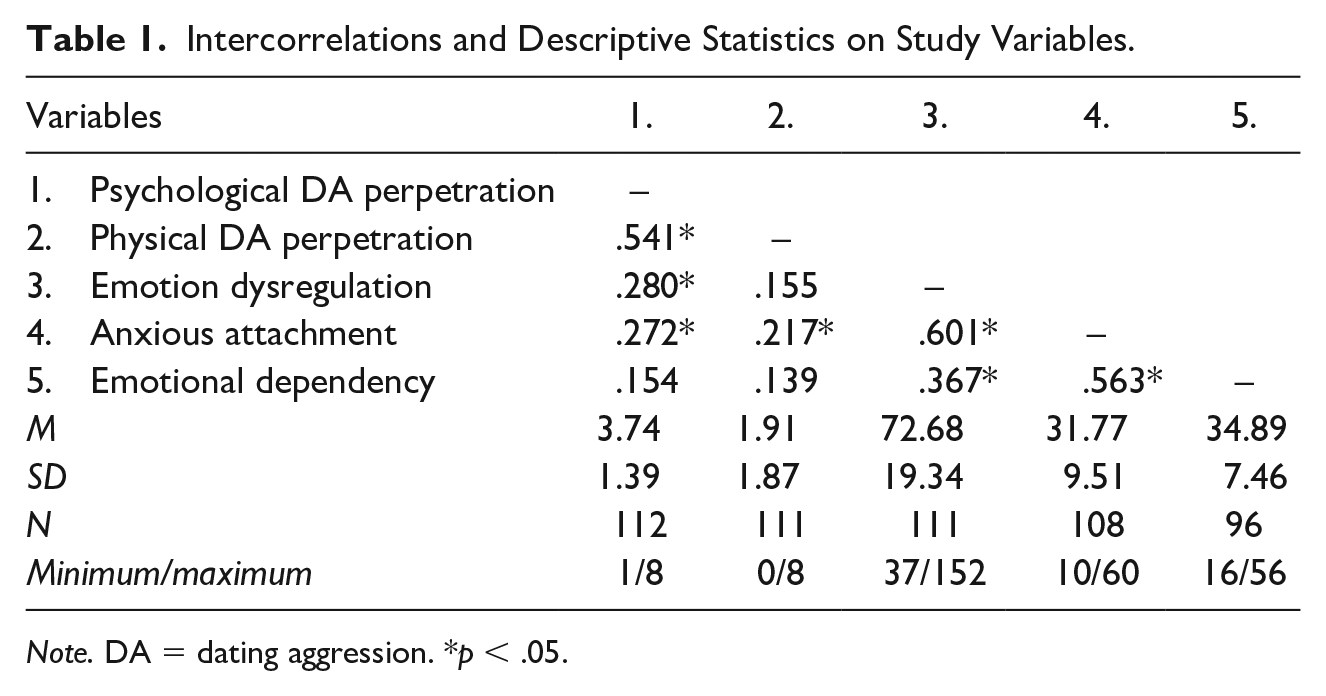
Means and standard deviations for study variables are summarized in Table 1. Despite all participants reporting perpetration of at least one act of physical dating aggression in the past 6 months on the CTS during the online screening assessment, 37 participants did not report perpetrating physical dating aggression in the past 6 months as measured by the CTS2 during the in-person survey session. Seven people who did not report any physical or psychological dating aggression perpetration in the past 6 months on the CTS2 were excluded from the study’s analyses. The final sample included only participants who reported at least one act of psychological dating aggression perpetration in the past 6 months. Nearly 53% of the sample reported a history of physical dating aggression victimization and 96.4% of the sample reported a history of psychological dating aggression victimization in the past 6 months.
Intercorrelations and Descriptive Statistics on Study Variables.
Note. DA = dating aggression. *p < .05.
T-tests were performed to determine if differences existed between the recruitment sites based on demographic and study variables. There were significant differences between recruitment sites for age, ethnicity, emotion dysregulation, physical dating aggression perpetration, and anxious attachment, resulting in the decision to control for recruitment site in the regression analyses. Site 2 participants were significantly older (M = 19.28, SD = 1.52) than Site 1 participants (M = 18.64, SD = 0.778), t(109) = 2.92 p = .00, and there were more Site 2 African American participants (29.6% African American participants) than Site 1 African American participants (0% African American participants), χ2 = 15.00, df = 4, p = .01. Participants from Site 1 scored higher on the DERS (M = 79.84, SD = 17.96) than participants recruited from Site 2 (M = 68.96, SD = 19.09), t(109) = −2.91, p = .00. Site 1 participants also scored higher on anxious attachment (M = 35.00, SD = 9.53) than Site 2 participants (M = 30.08, SD = 9.11), t(106) = −2.62, p = .01. Finally, Site 1 participants reported significantly more acts of physical aggression perpetration (M = 2.49, SD = 1.50) than Site 2 participants (M = 1.60, SD = 1.98), t(109) = −2.45, p = .02. There were no significant differences between recruitment sites for years in college, number of months in current dating relationship, psychological aggression and emotional dependency.
As noted in Table 1, correlation analyses between the SSDS subscales, the DERS composite score, and the CTS2 physical and psychological dating aggression frequency scores were performed. Psychological dating aggression perpetration was significantly positively correlated with each of the other study variables, with the exception of emotional dependency. Unexpectedly, physical dating aggression perpetration was only significantly correlated with anxious attachment and psychological dating aggression perpetration.
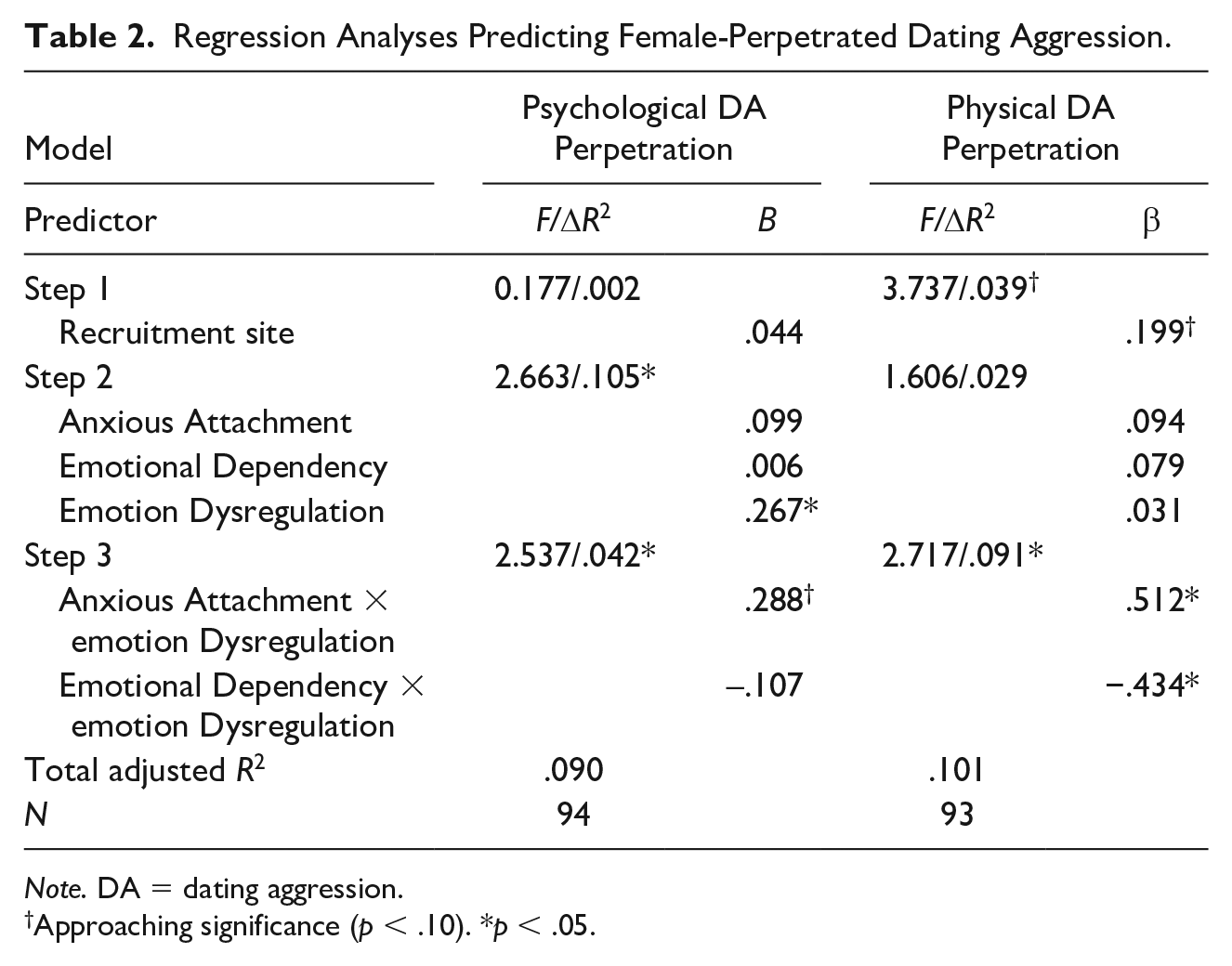
The first regression analysis tested the main and two-way interaction effects of the relationship dependency subscales and emotion dysregulation on psychological dating aggression perpetration after controlling for recruitment site (see Table 2). The second step of the model was statistically significant, with a main effect of emotion dysregulation identified (B = 0.267, p < .05). In the final step, however, the main effect of emotion dysregulation was no longer statistically significant and the interaction between anxious attachment and emotion dysregulation to predict female psychological dating aggression perpetration was approaching significance.
Regression Analyses Predicting Female-Perpetrated Dating Aggression.
Note. DA = dating aggression.
Approaching significance (p < .10). *p < .05.
In the second regression analysis, the main and two-way interactive effects of the relationship dependency subscales and emotion dysregulation on physical dating aggression perpetration were examined after controlling for recruitment site (see Table 2). Results indicated that recruitment site was approaching statistical significance (p = .06) at the first step. No significant main effects were identified in the second step of the model. The final step of the model that included both main and interaction effects was statistically significant. A simple slopes analysis showed a positive association between anxious attachment relationship dependency and female-perpetrated physical dating aggression at high (i.e., +1 SD DERS score; B = 0.843, t = 2.2928, p < .05) levels of emotion dysregulation (see Figure 1). A significant interaction was also found between emotional dependency and emotion dysregulation predicting female-perpetrated physical dating aggression (see Figure 2). A simple slopes analysis showed a significant positive association between emotional dependency and female-perpetrated physical dating aggression at low (i.e., −1 SD DERS score; B = 0.1063, t = 2.3164, p < .05) levels of emotion dysregulation. No main effects were identified in the final step of the model.
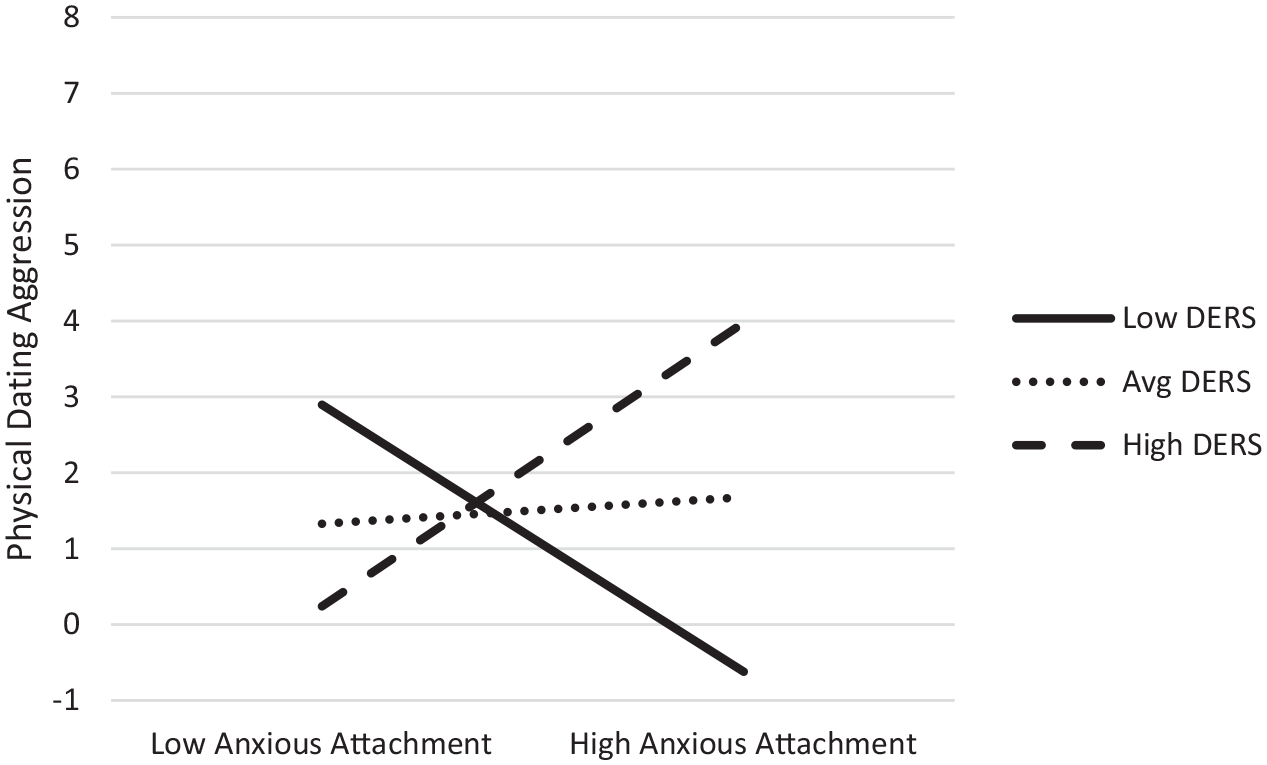
Interaction between anxious attachment and emotion dysregulation on perpetration of physical dating aggression.
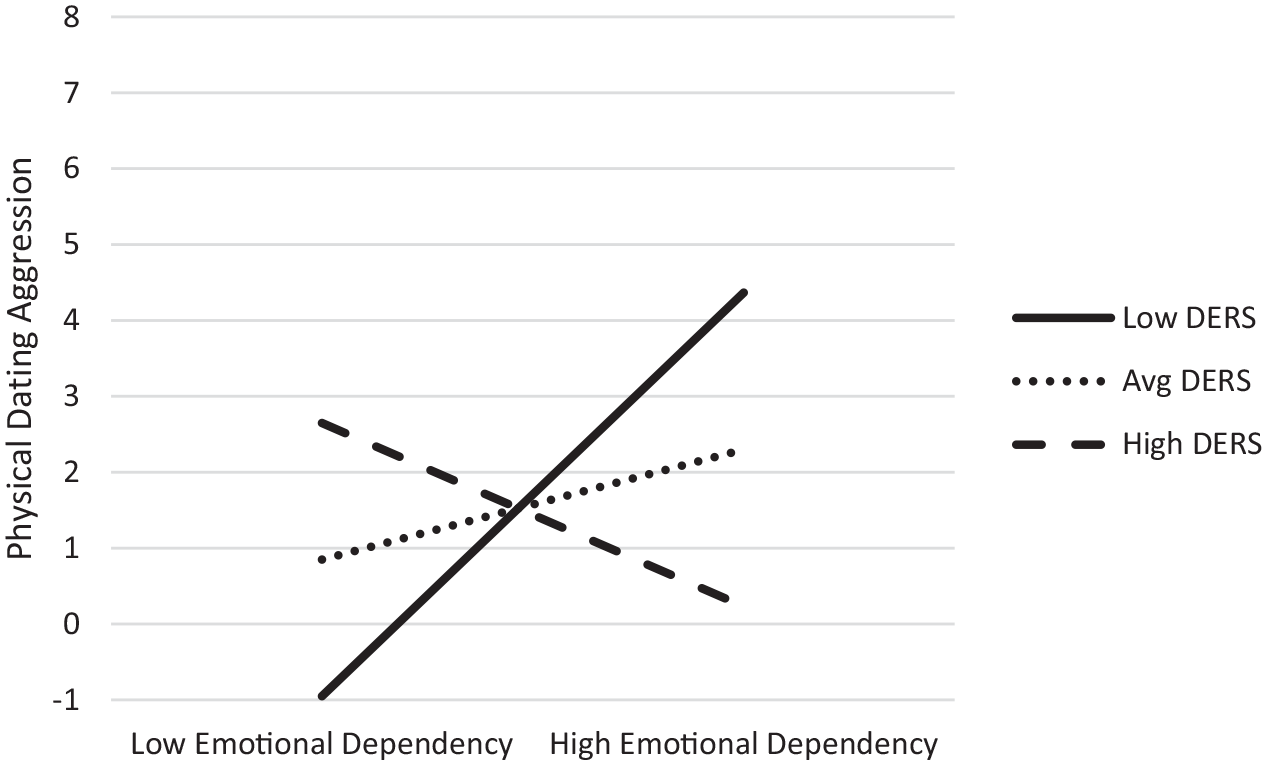
Interaction between emotional dependency and emotion dysregulation on perpetration of physical dating aggression.
Discussion
The results of the current study partially supported the original hypotheses. As expected, anxious attachment was correlated with female-perpetrated psychological and physical dating aggression, and emotion dysregulation interacted with anxious attachment to predict female-perpetrated physical dating aggression in the expected direction. At high levels of emotion dysregulation, there was a positive relationship between anxious attachment relationship dependency and dating aggression perpetration. Overall, these results are consistent with prior research indicating a link between relationship dependency, including anxious attachment, and physical IPA perpetration (Holtzworth-Munroe et al., 1997; Kachadourian et al., 2013; Murphy et al., 1994) and extend this prior work by demonstrating a similar linkage with female-perpetrated physical dating aggression. As predicted by the dependency-possessiveness model (Bornstein, 2006), current findings indicate that women who fear their dating partner’s abandonment and are ineffective at regulating their emotions may have more difficulty coping with emotional distress and may be more likely to engage in maladaptive strategies when experiencing interpersonal conflict. Findings suggest that those who lack essential emotion regulation skills and fear partner abandonment may become hyperactivated during interpersonal conflict when perceived threat of relationship loss is heightened. Unable to effectively regulate their distress, these individuals may use physical aggression in an attempt to increase their partner’s attention and assistance in emotion regulation. This interpretation would be consistent with prior conceptualizations of emotion dysregulation among anxiously attached young adult men and women, which suggest that emotional dysregulation among these individuals can serve to draw attention and increase proximity to one’s partner (Clear & Zimmer-Gembeck, 2017; Wei et al., 2005). Additional research is necessary to contribute to the field’s understanding of how fear of partner abandonment and emotion dysregulation might jointly contribute to risk for physical dating aggression perpetration, particularly in situations involving heightened perceived threat of relationship loss.
Contrary to expectations, emotional dependency was not significantly correlated with female-perpetrated physical or psychological dating aggression. A significant interaction between emotional dependency and emotion dysregulation was found for female-perpetrated physical dating aggression but not as hypothesized. Findings indicate a positive association between emotional dependency and physical dating aggression at low levels of emotion dysregulation. These preliminary results suggest that reliance on one’s intimate partner to facilitate emotional functioning may increase risk of physical dating aggression perpetration among those who are better at regulating their own emotions. This interactive relationship is puzzling and additional research is needed to replicate the current study’s findings. If replicated, it is possible that this finding from the current study captures those individuals who benefit from their reliance on their partners for self-esteem, identity, and emotional support to better regulate their emotions but also experience greater risk for physical dating aggression perpetration due to their dependency on their partner’s emotional support. This would suggest a nuance to the data that has emerged thus far with regard to the relationship between emotion regulation and physical dating violence perpetration that would need to be explored in greater depth in future research.
Study Limitations and Future Directions
There were several limitations in this study. There was a low level of physical aggression reported by participants despite inclusionary screening criteria specifying a history of physical IPA perpetration in the past 6 months, which might have inhibited the detection of noteworthy correlations between physical IPA perpetration and the other study variables. As noted above, a portion of participants reporting perpetration of physical dating aggression on the CTS during the online screening phase did not report a history of physical dating aggression perpetration as measured by the CTS2 during the in-person session. This finding is not entirely surprising given prior preliminary research indicating reports of dating aggression measured by the CTS during online screening may not be confirmed when later assessing for dating aggression with the CTS2 during an in-person session (Cornelius et al., 2011). Despite this limitation, nearly 69% of participants in the current study consistently reported a history of perpetrating physical dating aggression during the past 6 months on both the CTS and the CTS2. In addition, the internal consistency of the Emotional Dependency SSDS subscale fell within the questionable range and was lower than found previously (Rathus & O’Leary, 1997), which could possibly account for the weaker correlations between emotional dependency and dating aggression perpetration identified in the current study.
Participants were recruited from two, large public Midwestern universities with similar demographic characteristics. Yet, in the current study, several differences in demographic and study variables were noted between participants at each site. Site 1 participants were younger, had fewer African American participants, reported more acts of physical dating aggression, and experienced greater emotion dysregulation and anxious attachment relationship dependency. Due to sample size restrictions, regression analyses could not be conducted separately for each recruitment site. However, recruitment site was controlled for in all regression analyses. It is not clear why participants differed in these demographic and study characteristics across recruitment sites, given the demographic similarities between the two recruitment sites and the use of similar recruitment methods at both sites. Study results are preliminary and should be interpreted cautiously. Future research is needed with larger, more diverse samples to replicate the current study’s findings. Relatedly, the current study’s sample included predominantly Caucasian, college-enrolled heterosexual women recruited from the Midwestern United States, which limited generalizability to other populations, including noncollege women and nonbinary persons, racially, ethnically, socioeconomically, and regionally diverse samples and individuals within other types of intimate relationships, including marital and same-sex intimate relationships. Additional research with diverse samples recruited from different regions of the world is still needed.
Due to sample size limitations, analyses investigating the unique impact of different components of emotion dysregulation and their associations with both relationship dependency and dating aggression perpetration were not performed. It is possible that specific aspects of emotion dysregulation might have a greater influence on specific relationship dependency subscales and dating aggression perpetration. For example, the Limited Access to Emotion Regulation Strategies subscale of the DERS might be more directly associated with the Emotional Dependency subscale of the SSDS and jointly predictive of dating aggression perpetration. Future research is needed to determine if and how key aspects of emotion dysregulation are associated and interact with different forms of relationship dependency/attachment styles to predict physical dating aggression perpetration.
This study did not examine specific contextual factors that might influence the association between anxious attachment relationship dependency and physical dating aggression perpetration among women with high emotion dysregulation. The dependency-possessiveness model would suggest that people with emotion regulation difficulties who fear partner abandonment might be at greater risk for aggressing when experiencing emotional distress in response to acute perceived threat of relationship loss (Bornstein, 2006). Prospective studies, including use of ecological momentary assessment (EMA) methodology, on the interactive relationships between anxious attachment relationship dependency, emotion dysregulation, and physical dating aggression perpetration could further clarify the nature of the associations between these variables and examine how relationship dependency and emotion dysregulation interact within certain situational contexts (e.g., times of heightened interpersonal stress or threat of interpersonal rejection) and during times of amplified emotional states (e.g., periods of heightened anger) to predict physical dating aggression perpetration.
Although preliminary, results from the current study have potential clinical implications. Interventions, such as Dialectical Behavior Therapy (DBT; Linehan, 1993a, 1993b) that target the acquisition of emotion regulation and distress tolerance skills might be beneficial for those exhibiting high relationship dependency and emotion dysregulation who might be at heightened risk for physical dating aggression perpetration. Growing research suggests that DBT skills training can improve emotion regulation and reduce experiential avoidance, and DBT might be particularly appropriate given its multi-module skills training program that teaches participants mindfulness, emotion regulation, distress tolerance, and interpersonal skillfulness (Fassbinder et al., 2016). Mindfulness and acceptance-based interventions might also prove useful in reducing physical dating aggression risk among those with high relationship dependency and greater emotion dysregulation, as these interventions work toward reducing avoidance of internal states (i.e., thoughts, emotions, physical sensations) by teaching individuals to become more aware of and develop a new relationship with their internal states without trying to change or control them. Used within the context of the current study, these interventions might be adapted to instruct individuals on becoming more aware of their relationship insecurities, fear of abandonment and related emotions, and urges to act to preserve the relationship while also teaching these individuals to better tolerate distress and engage more effectively in interpersonal situations to meet their needs. Preliminary research suggests that mindfulness training can address interpersonal dependency in male and female young adults and can reduce attachment anxiety among women with an interpersonal aggression history and, thus, is a promising area for future research (Kelly & Garland, 2016; McClintock & Anderson, 2015b).
Taken together, the current study suggests that relationship dependency, particularly as it relates to fear of partner abandonment, may contribute to female-perpetrated physical dating aggression, especially among women with greater emotion dysregulation problems. Further research is needed to better understand the mechanisms underlying this interaction to identify potential pathways for dating aggression prevention and intervention programming.
Footnotes
Declaration of Conflicting Interests
The author(s) declared no potential conflicts of interest with respect to the research, authorship, and/or publication of this article.
Funding
The author(s) received no financial support for the research, authorship, and/or publication of this article.
