



Abstract
Intimate partner violence (IPV) is a major international public health concern that poses significant mental and physical health risks for affected individuals. To improve prevention efforts, it is imperative that researchers and government bodies understand risk factors for IPV. One such risk factor concerns the extent to which violence is intergenerational, such that exposure to violence predisposes individuals to engage in violence toward intimate partners. The purpose of this research is to assess childhood exposure to violence as a risk factor for perpetration of IPV in adulthood, and to evaluate the Dark Tetrad personality traits as mediators in this relationship. We recruited 153 men and 246 women (age range = 18–73, Mage = 33.50, SDage = 10.26) through Amazon’s Mechanical Turk to complete a series of questionnaires and an open-ended IPV perpetration assessment. Results showed no relationship between IPV perpetration and childhood IPV exposure, indicating that mediation analyses were not possible. Possible explanations are discussed. Follow-up exploratory analyses demonstrated that gender moderated the relationships between childhood IPV exposure and levels of Factor 1 psychopathy and Machiavellianism. Specifically, men who were exposed to IPV in childhood were more likely to develop higher levels of Factor 1 psychopathy and Machiavellianism, whereas women were not. Overall, our findings highlight the importance of providing researchers and clinicians with a greater understanding of environmental events preceding maladaptive trait development. It is also important for researchers and clinicians to consider gender differences in pathways between exposure to IPV and subsequent development of dark personality traits. Theoretical and practical implications are discussed.
Keywords
Intimate partner violence (IPV) continues to be a major international public health concern, posing significant mental and physical health risks for affected individuals. The United States Centers for Disease Control and Prevention has focused on efforts to reduce IPV, including, for example, promoting healthy relationships from an early age (i.e., primary prevention) and providing a range of services to those affected by IPV (i.e., secondary and tertiary prevention; Breiding et al., 2014). To improve prevention efforts, it is also important for researchers to understand the extent to which violence is intergenerational, such that exposure to violence predisposes individuals to engage in violence toward intimate partners. The purpose of this research is to assess childhood exposure to violence as a risk factor for perpetration of IPV in adulthood, and to evaluate personality traits as potential mediators in this relationship.
Childhood Maltreatment and Adult IPV Perpetration
Several studies have recognized various forms of childhood maltreatment as risk factors for adolescent and adult perpetration of IPV (e.g., Ehrensaft et al., 2003; Richards et al., 2017; Whitfield et al., 2003). Specifically, these risks partially arise because certain developmental processes become affected by childhood abuse and neglect, and result in expressions of anger, aggression, and social information processing biases in relationships with others (Dodge et al., 1994; Wolfe et al., 2009). For example, Whitfield et al. (2003) found significant increased risk of IPV perpetration in adulthood for men who reported experiencing physical abuse, sexual abuse, or witnessed domestic violence against their mother.
Among the many types of maltreatment, childhood exposure to violence in the home is frequently cited as a robust predictor of IPV perpetration in adolescence and adulthood (e.g., Choice et al., 1995; Ehrensaft et al., 2003; Roberts et al., 2010). Childhood exposure to IPV is a complex phenomenon that is defined by a range of possible experiences. Holden (2003) contended that “exposed” is a more favorable term than “witnessed” because it is inclusive of many types of violent experiences that children may be exposed to. Holden (2003) subsequently created a comprehensive taxonomy of exposure based on reports from children and mothers. According to this taxonomy, exposure to IPV includes prenatal exposure, child victimization by parents, overhearing the violence, attempting to stop the violence by intervening, witnessing the initial effects on a parent, or hearing about the events later, among other possible experiences.
Children exposed to violence, particularly maternal abuse, may not only later accept violence as a response to conflict, but may also further shape distorted ideals of gender-role expectations in relationships (Wolfe et al., 2009). Several studies have identified a link between childhood victimization in the family context and later perpetration through intergenerational transmission, such that children exposed to violence in childhood learn to be violent as a mechanism to resolve conflict in their adult intimate relationships (e.g., Ehrensaft et al., 2003; Richards et al., 2017; Widom, 1989). For example, in their prospective study examining demographic and familial variables as risk factors, Ehrensaft et al. (2003) concluded that exposure to parental violence was the second-strongest predictor of IPV perpetration for both men and women behind conduct disorder. Using a retrospective design, Roberts et al. (2010) found that after controlling for demographics and childhood circumstances, witnessing parental violence was related to increases in risk for IPV perpetration in adulthood, and that childhood emotional support from the family did not mitigate this effect. Similar patterns also occur within adolescent dating relationships, such that children who experienced or witnessed violence and interparental conflict while growing up also reported greater use of threatening behaviors and physical abuse compared with those who did not experience violence (Kinsfogel & Grych, 2004; Wolfe et al., 2001).
Exposure to Violence in Childhood and IPV Perpetration in Adulthood: Personality as a Mediator
Despite significant links reported between childhood exposure to family violence and IPV perpetration, not all children exposed to IPV grow up to be violent, and pathways from adverse childhood experiences to violence in adolescence and adulthood are often mediated by other processes. These include, for example, conflict resolution strategies, acceptance of dating violence, anger control, and marital distress (e.g., Choice et al., 1995; Clarey et al., 2010; Kimonis et al., 2011; Malik et al., 1997). Research has also suggested that personality disorders mediate associations between various childhood experiences of family violence (i.e., abuse, neglect) and later general violent behaviors (e.g., Baskin-Sommers & Baskin, 2016; Brennan, 2014; Weiler & Widom, 1996; White & Widom, 2003). Results of these studies emphasize the importance of considering circumstances by which children who are victimized subsequently become violent. For example, findings from Brennan (2014) showed that pathological narcissism partially mediated the relationship between childhood experiences of family violence and later general violence perpetrated by men and women.
Although few studies have evaluated personality disorders as mediators underlying these relationships, no studies have investigated personality traits at the subclinical level as mediators. One particular group of personality traits that provides incremental value in predicting relevant antisocial outcomes includes the Dark Tetrad of personality (Buckels et al., 2013). The Dark Tetrad comprises subclinical psychopathy, narcissism, Machiavellianism, and sadism. Individuals high on psychopathy exhibit callousness, shallow affect, and impulsivity (Paulhus & Williams, 2002). Psychopathy can be further divided into two dimensions: Factor 1 psychopathy, characterized by affective-interpersonal components, and Factor 2 psychopathy, characterized by lifestyle-antisocial components (Harpur et al., 1988). Those high in Machiavellianism possess a cynical worldview, are deceptive, and, manipulative (Christie & Geis, 1970). Individuals high in narcissism desire power and admiration, are entitled, and have a grandiose sense of self (Paulhus & Williams, 2002). Finally, subclinical sadism is characterized by a tendency to engage in aggressive and demeaning behaviors for pleasure or subjugation (Plouffe et al., 2017). Across studies, the Dark Tetrad and its predecessor, the Dark Triad (Paulhus & Williams, 2002) have consistently been associated with aggression across several contexts, including physical violence (Buckels et al., 2013), bullying (Baughman et al., 2012), and IPV (Carton & Egan, 2017; Kiire, 2017).
Several studies have drawn associations between childhood and developmental experiences and subsequent development of dark personality traits (e.g., Barlett, 2016; Bernstein et al., 1998; Brumbach et al., 2009; Jonason et al., 2014; Láng & Lénárd, 2015; Schraft et al., 2013). For example, results by Jonason et al. (2014) suggested that low quality of maternal care predicted higher levels of Machiavellianism, narcissism, and primary psychopathy, and that some of these processes were mediated by attachment style. Similarly, Schraft et al. (2013) found that childhood exposure to violence in the home predicted levels of psychopathy facet scores, and also predicted behavioral components of psychopathy over and above exposure to violence within the community. In terms of sadism, clinical levels of the sadistic personality have also been related to physical abuse and neglect in childhood (Bernstein et al., 1998). However, this relationship has yet to be examined at the subclinical level. Based on these results, as well as findings that the Dark Tetrad personality traits predict adolescent and adult levels of violence, it is plausible to hypothesize that the associations between childhood exposure to IPV and perpetration of IPV in adulthood may be partially contingent upon individual differences in the Dark Tetrad personality traits.
Objective
The aim of the present study is twofold. The first objective is to evaluate associations between retrospective accounts of childhood exposure to IPV, perpetration of physical IPV in adulthood, and the Dark Tetrad of personality. Based on past research (e.g., Carton & Egan, 2017; Choice et al., 1995; Ehrensaft et al., 2003; Kiire, 2017), we hypothesize that there will be a positive relationship between childhood exposure to IPV, perpetration of physical IPV in adulthood, and each of the Dark Tetrad traits. The second objective is to assess the Dark Tetrad traits both separately and simultaneously as mediators in the relationship between childhood exposure to IPV, perpetration of physical IPV in adulthood. Based on past research (Brennan, 2014; Weiler & Widom, 1996; White & Widom, 2003), we expect that subclinical psychopathy and narcissism will mediate these relationships. Although sadism and Machiavellianism have not been examined as mediators of these relationships in the past at the subclinical or clinical level, based on their associations with various types of abusive behaviors in intimate partner contexts (e.g., Smoker & March, 2017), we expect that they will emerge as significant mediators.
Method
Participants
A total of 399 participants (153 men and 246 women) were recruited through the crowdsourcing marketplace known as Amazon Mechanical Turk (MTurk). A priori sample size was calculated using the application entitled Monte Carlo Power Analysis for Indirect Effects (Schoemann et al., 2017), run through R version 3.5.2 (R Development Core Team, 2019), based on effect sizes calculated by Brennan (2014). To achieve a power value of at least .80, 169 participants were required for the mediation analyses. Therefore, our sample size of 399 was adequate. Individuals were eligible to participate if they fulfilled inclusion criteria of having been in at least one romantic relationship lasting for a minimum of 3 months at some time in their life, if they were age 18 or older, and resided in the United States or Canada. To avoid recruiting inattentive or bot workers from MTurk, participants must have completed between 100 and 500 MTurk human intelligence tasks (HITs) previously; have demonstrated a HIT approval rate above 95%; completed a CAPTCHA image on the survey-hosting platform; and correctly responded to two of three attention checks on Qualtrics. Open-ended responses were screened by the researchers following data collection to ensure participant understanding of items.
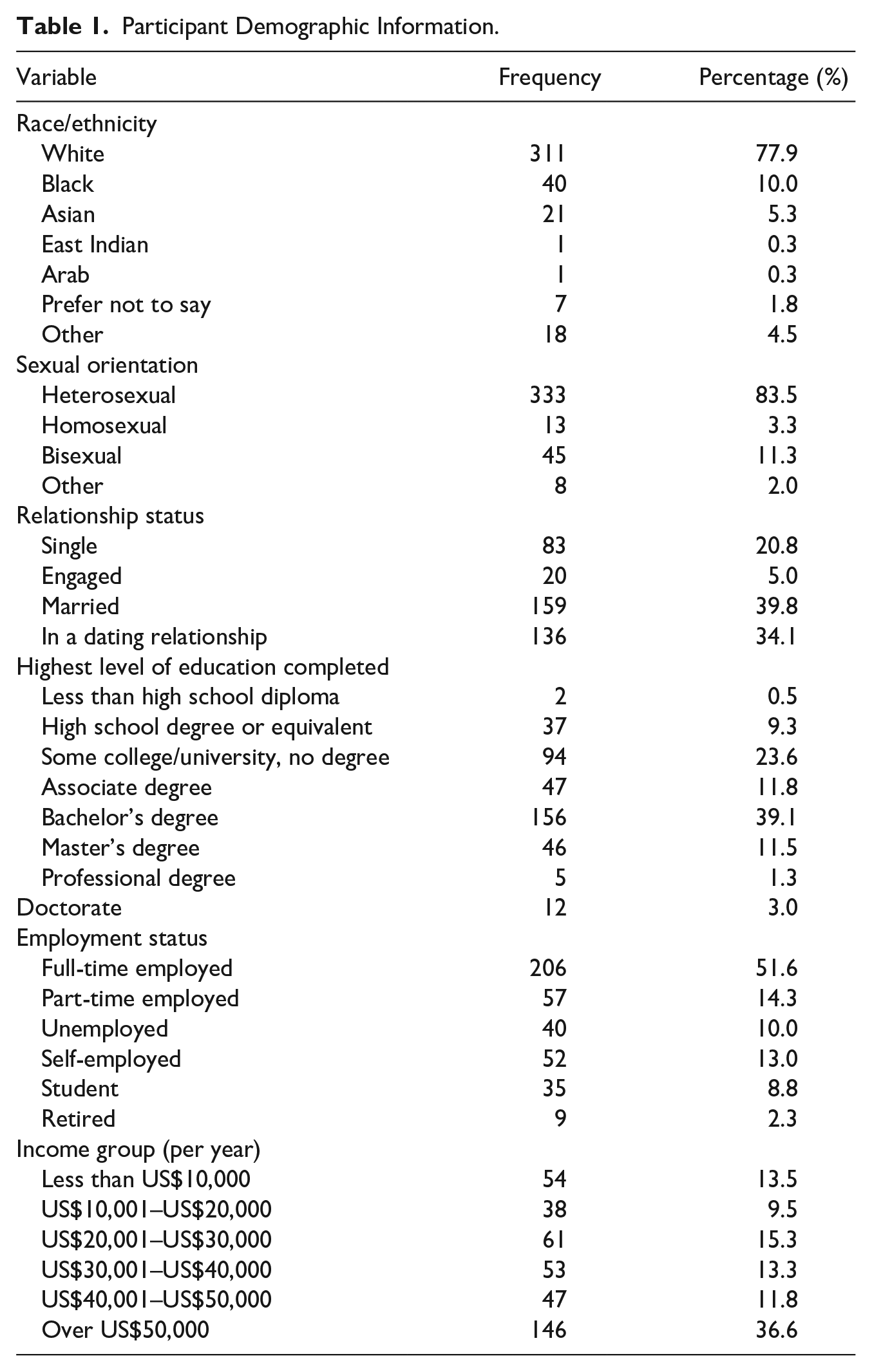
Participants’ ages ranged from 18 to 73 years (Mage = 33.50, SDage = 10.26). Most participants resided in the United States (n = 384), and the remaining participants lived in Canada (n = 15). Demographic information, including race/ethnicity, relationship status, highest level of education completed, current employment status, and income group are presented in Table 1. Most participants were married or in a dating relationship at the time of study enrolment. Of those married, engaged, or in a relationship, the average length of relationship was 6.87 years (SD = 7.39 years). 1
Participant Demographic Information.
There were five participants whose data were not used for the current study because they reported being nonbinary. These data were not used for this study because there was not a large enough group of nonbinary individuals to assess group differences on study variables.
Procedure
The study was approved by the Non-Medical Research Ethics Board at the University of Western Ontario. Eligible participants signed up to take part in the study via MTurk and were redirected to the survey-hosting website, Qualtrics. Participants then read the letter of information and indicated whether they provided informed consent to participate in the study. All participants who provided informed consent then completed a demographics survey. Following this, they completed a series of anonymous personality, childhood event, and relationship questionnaires. After the study, participants were debriefed on the specific purposes of the research. The study took approximately 0.5 hr to complete. Participation was voluntary and all individuals received US$1 for their time.
Measures
Self-Report Psychopathy Scale-III (SRP-III)
SRP-III (Paulhus et al., 2015) comprises 64 items designed to evaluate levels of psychopathy. Participants respond to items on a 5-point scale (1 = strongly disagree, 5 = strongly agree). Mean scores were computed for Factor 1 and 2 psychopathy. Higher scores indicate higher levels of psychopathy. Past research supports the validity and reliability of the SRP-III (total score α = .89–.92; Paulhus et al., 2015).
Narcissistic Personality Inventory (NPI)
NPI (Raskin & Hall, 1979) comprises 40 forced-choice items designed to measure levels of subclinical narcissism. Scores are summed and range from 0 to 40. Past research supports the validity and reliability of the NPI (α = .87; Emmons, 1987). Higher scores indicate higher levels of narcissism.
Machiavellianism Scale (MACH-IV)
The 20-item MACH-IV was developed to assess levels of Machiavellianism in the general population (Christie & Geis, 1970). Participants respond to items on a 5-point scale (1 = strongly disagree, 5 = strongly agree). Mean scores were computed for Machiavellianism, and higher scores indicated higher levels of Machiavellianism. Past research supports the validity and reliability of the MACH-IV (α = .83; Jones & Paulhus, 2014).
Assessment of sadistic personality (ASP)
The nine-item ASP (Plouffe et al., 2017) is a self-report measure of subclinical sadism. Participants respond to items on a 5-point scale (1 = strongly disagree, 5 = strongly agree). Mean scores were computed for sadism, and higher scores indicated higher levels of sadism. Past research supports the validity and reliability of the ASP (α = .83; Plouffe et al., 2017).
Physical IPV perpetration
Physical IPV perpetration severity was evaluated using an adapted version of the assessment procedure implemented by Graham et al. (2012). Participants were requested to respond to the following pertaining to their physical aggression toward a partner over their lifetime: People can be physically aggressive in many ways, for example, pushing, punching, slapping, or physical aggression in some other way. What is the most physically aggressive thing that you have done over your lifetime to someone who is or was in a close romantic relationship with you such as a spouse/partner, lover, or someone you are or were dating or going out with for at least three months?
Physical IPV behaviors were subsequently coded into categories reflecting increasing severity by two independent reviewers. Reviewers discussed dissenting choices until agreement was reached. To accommodate responses that did not fit into original Graham et al. (2012) categories, including scratching, biting, sexual assault, and rape, these categories were added to the final list. Final categories included: 0 = no violence, 1 = push/shove, 2 = grab/restrain, 3 = slap/smack/scratch/bite, 4 = hit, 5 = punch, 6 = kick, 7 = hit with a thrown object, 8 = choke/strangle/headlock, 9 = assault with a deadly weapon/sexual assault/rape. Although sexual assault and rape are often classified as sexual and not physical violence, we believe that it was important not to code sexual assault as “0” reflecting no violence. Therefore, we included sexual assault behaviors in category 9. Participants’ responses indicating that they acted in self-defense were coded as 0, and participants’ most severe incident was scored if multiple instances were reported.
Juvenile Victimization Questionnaire: Second revision
Retrospective accounts of childhood exposure to IPV were assessed using Juvenile Victimization Questionnaire: Second revision (JVQ-R2; Finkelhor et al., 2011). Although the self-report format of the JVQ is intended for children aged 12 to 17, instructions and items were modified to reflect the participant age group. The full JVQ-R2 evaluates the following areas of youth victimization: conventional crime, maltreatment, peer and sibling victimization, sexual victimization, and witnessing/other exposure to violence. Five items reflecting exposure to family violence and abuse were used for the current study. Item responses were coded on a dichotomous scale (1 = yes, 0 = no) and items were aggregated to create a total score. Higher scores indicated higher levels of childhood exposure to IPV. Empirical research supports the validity and reliability of the JVQ (exposure to IPV α = .86; Hamby, 2016).
Data Analytic Strategy
Descriptive statistics, reliability coefficients, Spearman’s rho correlations, Pearson correlations, and gender differences were calculated using SPSS Version 26 (IBM Corp., 2019). 2 Mediation models will be tested in MPlus Version 8 (Muthén & Muthén, 1998–2017) to test the hypothesis that the Dark Tetrad traits mediate the relationship between childhood exposure to IPV and IPV perpetration severity in adulthood. The first four path analyses will evaluate the Dark Tetrad traits separately as mediators underlying the link between childhood exposure to IPV and the outcome indicator variable, physical IPV perpetration severity. Gender will be entered as a covariate in the models. The last path analysis will evaluate all four of the Dark Tetrad traits as mediators underlying these relationships within the same model.
Direct, indirect, and total effects will be inspected to evaluate whether there is full or partial mediation in the models. If the indirect effects are significant and the direct effect is close to or at zero, we can conclude that the relationship between childhood exposure to IPV and IPV perpetration severity is mediated by one or more of the Dark Tetrad traits. All mediation models will be conducted using bias-correcting bootstrap confidence intervals. If the 95% confidence intervals for the indirect effects do not contain zeros, this will indicate that mediation is present (Preacher & Hayes, 2008). If the mediation effects are significant, effect sizes will be calculated using kappa-squared (k2; Preacher & Kelley, 2011). This value provides the maximum proportion of the indirect effect occurring due to the variables tested in the model. k2 is similar in interpretation to Cohen’s (1988) guidelines, such that .01 represents a small effect, .09 represents a medium effect, and .25 represents a large effect (Preacher & Kelley, 2011).
Results
Descriptive Statistics and Background Analyses
Descriptive statistics, Cronbach’s alphas, skewness, and kurtosis values are reported in Table 2. Reliability coefficients were high for all variables. Skewness and kurtosis values for all study variables fell within the acceptable range with cutoff values of 3.0 and 10.0 (Kline, 2011).
Descriptive Statistics.
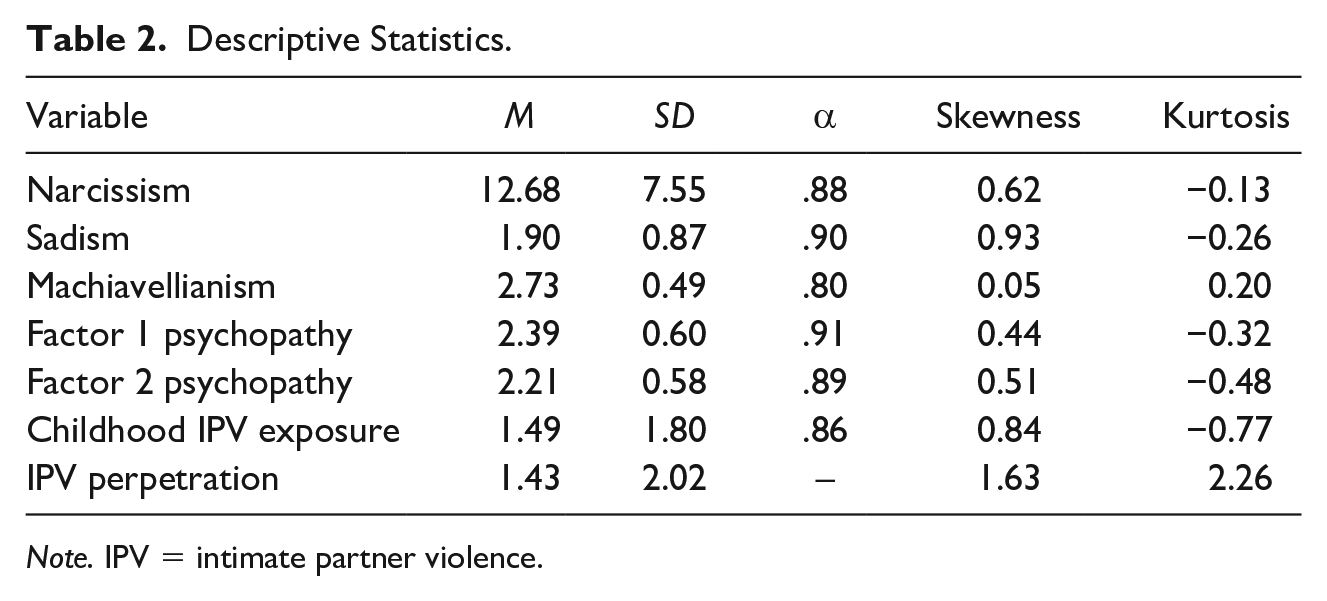
Note. IPV = intimate partner violence.
As hypothesized, the Dark Tetrad traits were correlated moderately to strongly with one another (Table 3). Childhood exposure to IPV also demonstrated small-to-moderate significant correlations with each Dark Tetrad trait, showing the strongest relationship with psychopathy. Age was negatively related to sadism, Machiavellianism, Factor 1 psychopathy, and Factor 2 psychopathy. Education level was also negatively related to childhood IPV exposure, and income was negatively related to Factor 2 psychopathy. Unexpectedly, IPV perpetration was unrelated to all study variables. Therefore, it was not possible to test mediation hypotheses. Correlations were also computed separately for men and women (Table 4) and were largely consistent across genders. Specifically, the Dark Tetrad traits were moderately-to-strongly correlated across men and women. Interestingly, the significant correlations between childhood exposure to IPV and the Dark Tetrad were driven by men. For women, the only Dark Tetrad trait significantly related to childhood IPV exposure was Factor 2 psychopathy. Again, across both genders, IPV perpetration was unrelated to all study variables. For women, age was negatively related to sadism and Machiavellianism, and for men, age was negatively related to Factor 2 psychopathy and Machiavellianism. Income was also negatively related to Factor 2 psychopathy for men.
Bivariate Correlations.
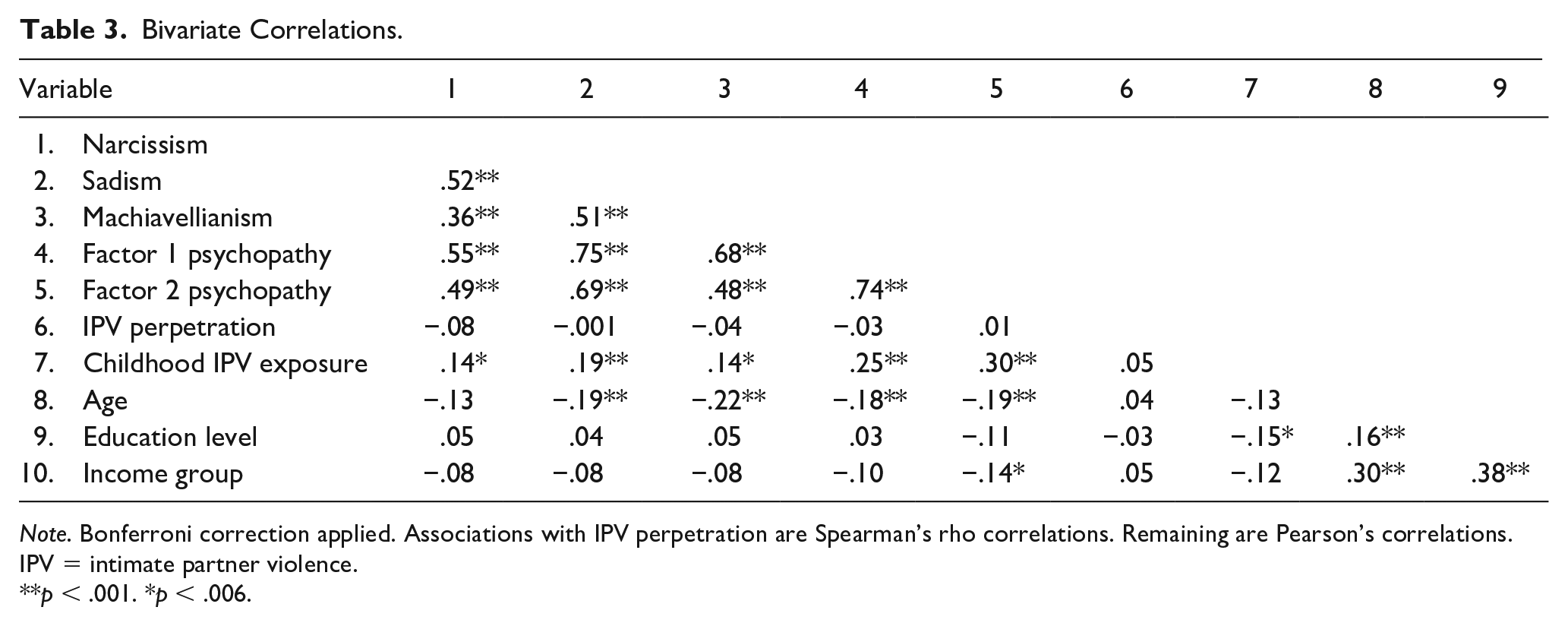
Note. Bonferroni correction applied. Associations with IPV perpetration are Spearman’s rho correlations. Remaining are Pearson’s correlations. IPV = intimate partner violence.
p < .001. *p < .006.
Bivariate Correlations for Men and Women.
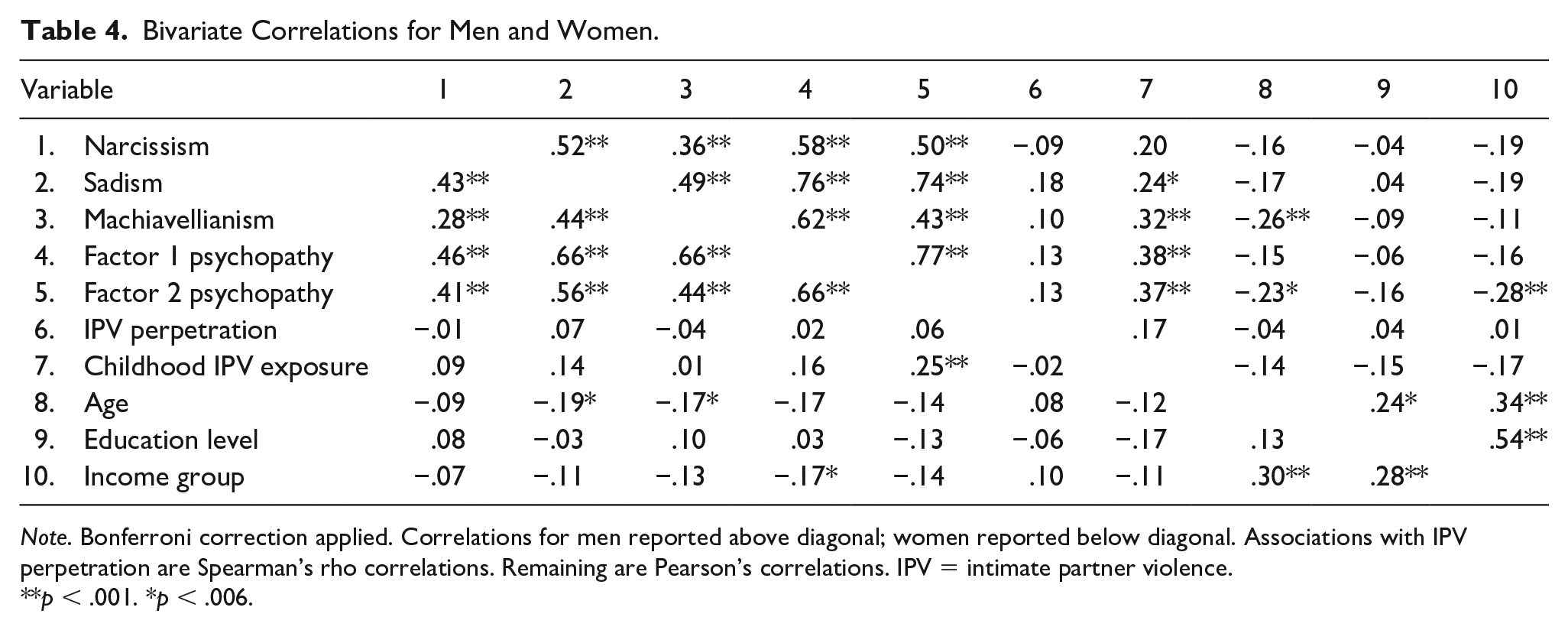
Note. Bonferroni correction applied. Correlations for men reported above diagonal; women reported below diagonal. Associations with IPV perpetration are Spearman’s rho correlations. Remaining are Pearson’s correlations. IPV = intimate partner violence.
p < .001. *p < .006.
As expected, men scored significantly higher than women on all Dark Tetrad traits (Table 5). Interestingly, women scored significantly higher than men on IPV perpetration severity. There were no significant gender differences on childhood exposure to IPV.
Gender Differences.
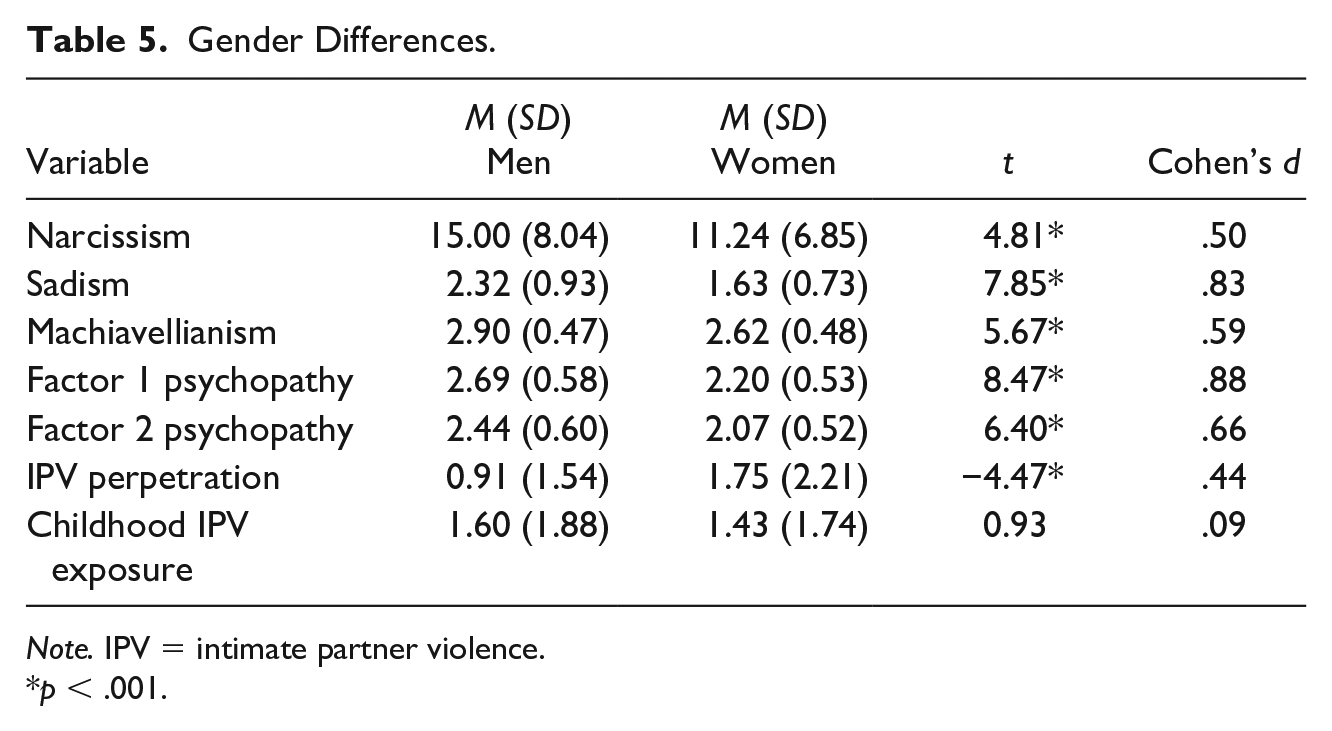
Note. IPV = intimate partner violence.
p < .001.
Overall, 196 individuals (49.1%) reported engaging in no IPV perpetration. The most commonly reported IPV was pushing/shoving (18.8%) and slapping/smacking/scratching/biting (13.0%). The least commonly reported perpetration category was kicking (0.3%). Of the total sample, four participants (1.0%) reported perpetration consistent with assault with a deadly weapon, sexual assault, or rape. Figure 1 shows the percentage of men and women endorsing IPV severity categories separately.
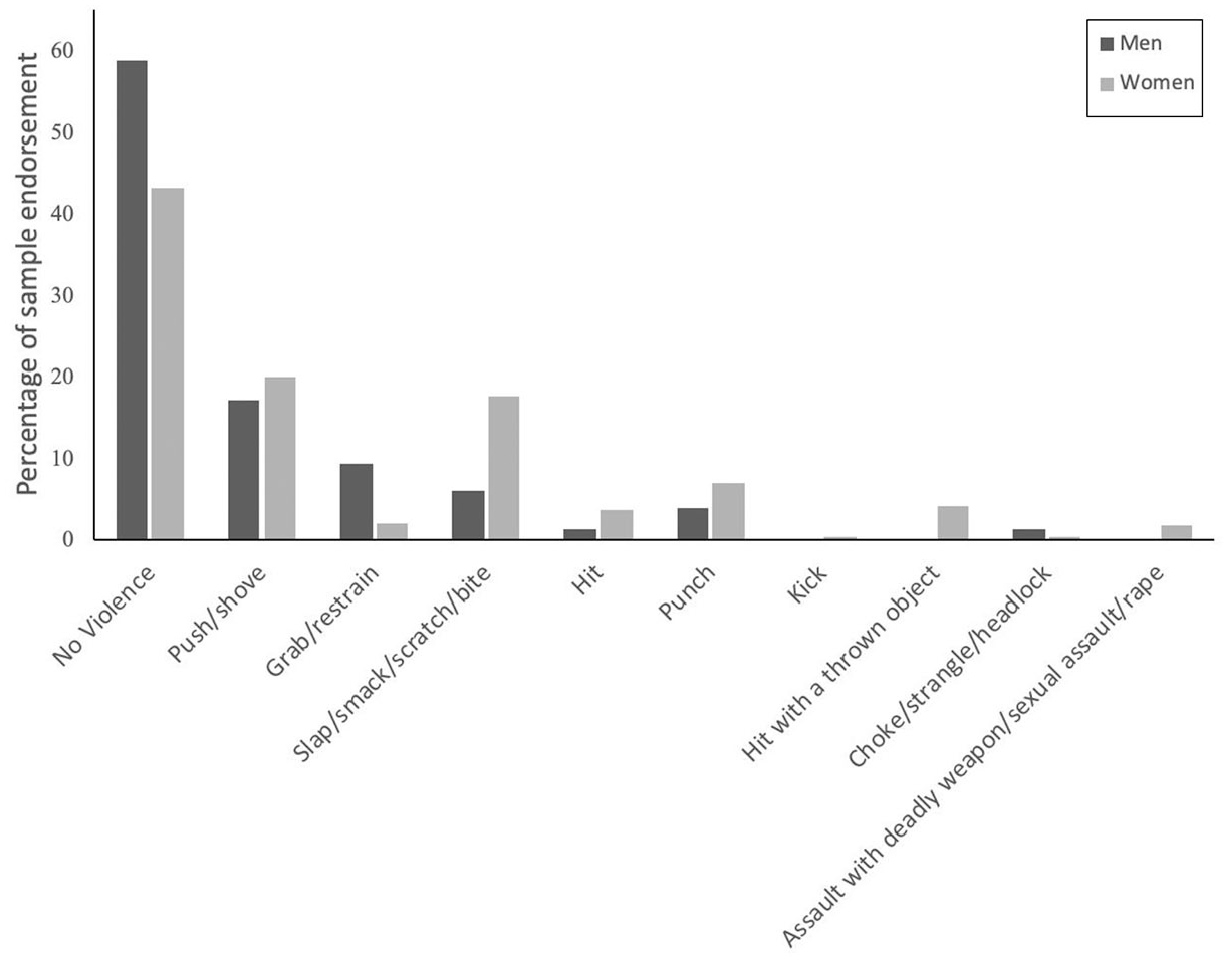
Percentage of men and women endorsing intimate partner violence (IPV) perpetration response categories.
Exploratory Analyses: Regression of Dark Tetrad Traits on Childhood IPV Exposure
Levels of IPV perpetration were unrelated to all study variables in the present study. Therefore, it was not possible to conduct the proposed mediation analyses. Based on significant correlations in the current study, as an exploratory initiative, we examined whether childhood IPV exposure predicted levels of each Dark Tetrad trait using multivariate regression in SPSS Version 26 (IBM Corp., 2019). Results showed that childhood IPV exposure significantly predicted levels of narcissism, R2= .02, F(1, 397) = 8.36, t(397) = 2.89, b = .60, p = .004; sadism, R2 = .04, F(1, 397) = 15.02, t(397) = 3.88, b = .09, p < .001; Machiavellianism, R2 = .02, F(1, 397) = 8.23, t(397) = 2.87, b = .04, p = .004; Factor 1 psychopathy, R2 = .06, F(1, 397) = 26.19, t(397) = 5.12, b = .08, p < .001; and Factor 2 psychopathy, R2 = .09, F(1, 397) = 39.74, t(397) = 6.30, b = .10, p < .001.
Exploratory Analyses: Gender as a Moderator in Relationship Between Childhood IPV Exposure and Adulthood Dark Tetrad Trait Levels
Based on past research findings using clinical data (e.g., Krischer & Sevecke, 2008; Watts et al., 2017), the authors explored whether the relationships between childhood IPV exposure and the subclinical Dark Tetrad trait levels differed for men and women. Moderation analyses were tested separately for each Dark Tetrad trait in MPlus Version 8 (Muthén & Muthén, 1998–2017). There were no missing data points. Childhood IPV exposure was grand-mean centered. For any significant interactions, simple slopes were computed for men and women following recommendations by Aiken and West (1991).
Gender and childhood IPV exposure were significant predictors of each Dark Tetrad trait across models (Table 6). The inclusion of the interaction term accounted for a significant amount of variance in both Factor 1 psychopathy and Machiavellianism. To better understand the significant gender × childhood exposure interactions, simple slopes were examined for the relationship between childhood IPV exposure and Factor 1 psychopathy, as well as the relationship between childhood exposure and Machiavellianism. As depicted in Figure 2, the relationship between childhood IPV exposure and Factor 1 psychopathy was significant for men (b = .12, t = 3.70, p < .001), but not for women (b = .05, t = 0.74, p = .458). A similar pattern emerged for Machiavellianism, such that the relationship between childhood IPV exposure and Machiavellianism was significant for men (b = .08, t = 3.95, p < .001), but not for women (b = .004, t = 0.09, p = .932; Figure 3).
Exploratory Moderation Models With Dark Tetrad Traits as Outcomes.

Note. Significant coefficients bolded. N = 399. b = unstandardized coefficient; SE = standard error for b; CI = confidence interval; Childhood exposure = childhood exposure to IPV; IPV = intimate partner violence.
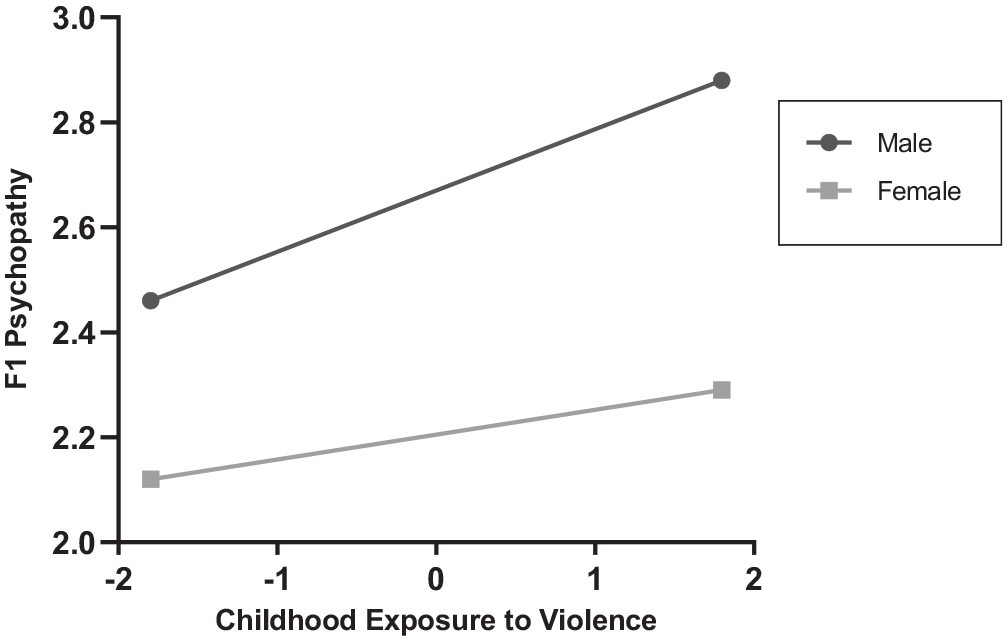
Factor 1 psychopathy scores as a function of childhood IPV exposure for men and women. Childhood IPV exposure is grand-mean centered.
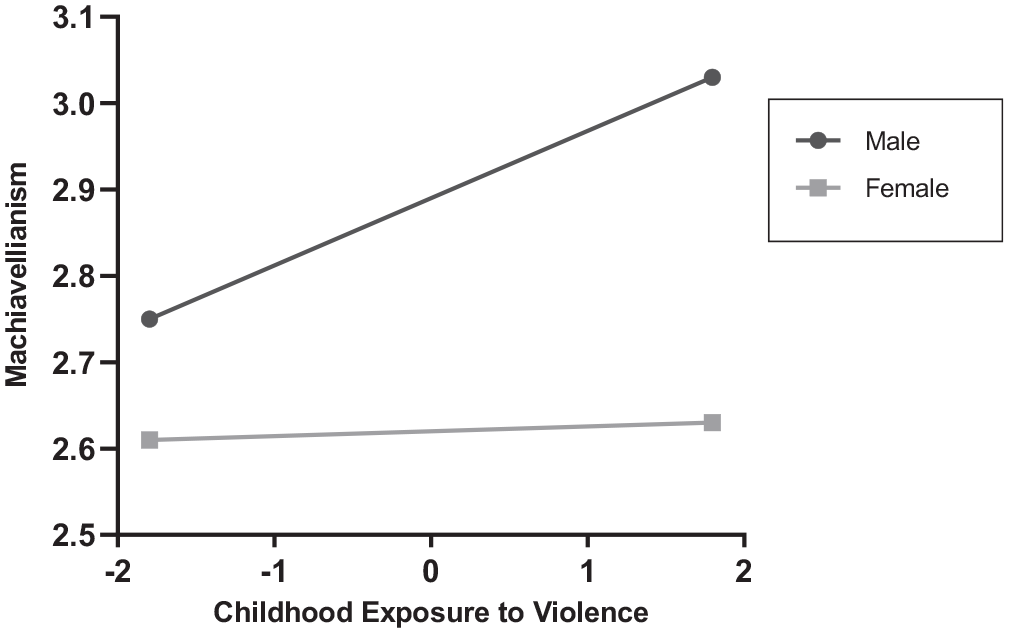
Machiavellianism scores as a function of childhood IPV exposure for men and women. Childhood IPV exposure is grand-mean centered.
Discussion
The purpose of this study was to investigate whether the Dark Tetrad traits mediated the relationship between exposure to violence in childhood and subsequent IPV perpetration in adulthood. As expected, preliminary analyses revealed moderate-to-strong significant relationships between each of the Dark Tetrad traits. In addition, childhood exposure to IPV was significantly correlated with each of the Dark Tetrad traits with small-to-moderate effect sizes. The strongest correlation emerged between childhood IPV exposure and Factor 2 psychopathy with a medium effect size. These relationships are consistent with past research reporting tendencies for those who experienced adverse circumstances throughout development to later exhibit characteristics consistent with dark personality traits (e.g., Bernstein et al., 1998; Brumbach et al., 2009; Jonason et al., 2014; Láng & Lénárd, 2015; Schraft et al., 2013). Interestingly, correlational analyses in the present study separated by gender revealed that these relationships were driven mainly by men, with the exception of Factor 2 psychopathy. Past studies have also demonstrated that the relationships between childhood maltreatment and subsequent development of psychopathic traits in youth and adults were more robust for men than women (Krischer & Sevecke, 2008; Watts et al., 2017), indicating that men may be more susceptible to the development of callous-unemotional traits as a result of adverse experiences early in life.
Contrary to prediction, IPV perpetration was unrelated to all study variables, and this finding emerged across both men and women. Therefore, it was not possible to examine mediation hypotheses. This finding was in contrast to several studies indicating a positive relationship between IPV perpetration, dark personality traits, and childhood IPV exposure (e.g., Carton & Egan, 2017; Ehrensaft et al., 2003; Kiire, 2017). However, there are several possible explanations for the nonsignificant finding in the current study. First, although the authors attempted to code all instances of violence involving self-defense as 0, reflecting no violence, it is probable that individuals who engaged in protective behaviors themselves did not always report these as defensive actions. Therefore, these may have been mistakenly reported as IPV perpetration behaviors, which would reduce correlations with relevant variables such as dark personality traits. Second, more innocuous types of IPV, including pushing, shoving, scratching, smacking, etc., were more commonly reported in the current sample than were more dangerous types of IPV. This range restriction would attenuate the magnitude of the relationships between IPV perpetration and other relevant study variables. Given that this was a community sample of adults, it is plausible that assessing levels of psychological IPV would result in stronger correlations because it is more prevalent in the general population than is physical violence (e.g., Romans et al., 2007). Finally, it is possible that retrospective accounts of childhood IPV exposure and of IPV perpetration in adulthood are susceptible to memory distortions or omission of forgotten experiences (Sudman & Bradburn, 1973), hindering the accuracy of the participant’s responses to the IPV perpetration item.
Although no relationships were found between IPV perpetration and study variables, childhood IPV exposure significantly predicted levels of each Dark Tetrad trait. This was unsurprising given past empirical findings linking childhood maltreatment to the development of personality disorders and dark personality traits (e.g., Bernstein et al., 1998; Jonason et al., 2014). As an additional exploratory initiative, the authors explored whether gender moderated the relationships between childhood IPV exposure and subclinical Dark Tetrad trait levels. This was based on the premise that among clinical samples of youth and adults, men and boys who were exposed to physical or emotional maltreatment as children were more likely to develop certain psychopathic characteristics than were women and girls (Krischer & Sevecke, 2008; Watts et al., 2017). We found results consistent with this premise, such that greater childhood exposure to IPV resulted in higher levels of Factor 1 psychopathy and Machiavellianism for men, but not for women. Although psychopathy demonstrates a moderate-to-large heritable component (Vernon et al., 2008), the current study supports the notion that environmental influences, such as experiences in childhood, also play a critical role in the development of psychopathic characteristics, particularly for men. Similarly, men exposed to IPV in childhood exhibited higher levels of Machiavellianism, including manipulative tendencies, deception, and a cynical worldview than those who were not exposed. This is consistent with findings that levels of Machiavellianism are largely influenced by environmental, rather than genetic factors (Vernon et al., 2008). Specifically, in a study of monozygotic and dizygotic twin pairs, Machiavellianism showed an influence of shared environmental factors, whereas psychopathy and narcissism did not (Vernon et al., 2008).
Interestingly, however, women were not more likely to exhibit higher levels of Factor 1 psychopathy, nor Machiavellianism, following childhood IPV exposure. Although both boys and girls experience a range of adverse psychological and behavioral outcomes following exposure to IPV in childhood (e.g., Jaffe et al., 1986), these outcomes may be expressed differently for boys/men and girls/women. For instance, in their meta-analytic review of 60 studies evaluating the associations between childhood IPV exposure and subsequent behavioral symptoms, Evans et al. (2008) revealed that boys were more likely to exhibit externalizing symptoms and behavior problems, such as delinquency and conduct problems, than girls. These behaviors are consistent with outcomes exhibited by individuals high in traits such as psychopathy and Machiavellianism. On the contrary, exposure to violence or abuse in childhood has also been linked to increased subsequent internalizing behaviors in girls, including depression and anxiety (Stagg et al., 1989; Yates et al., 2003), as well as future IPV victimization (e.g., Gagné et al., 2005).
Another explanation for significant moderation findings concerns the notion of modeling same-sex parents. Modeling theory contends that the same-sex parent serves as a stronger model of behavior than the opposite-sex parent (Mischel, 1970). Therefore, observing the same-sex parent engage in IPV behaviors against the opposite-sex parent may indicate to the child that these behaviors are acceptable in their own relationships (Jankowski et al., 1999). In their study of the effects of witnessing parental violence on perpetrating dating aggression, Jankowski et al. (1999) concluded that those who witnessed a same-sex parent perpetrate IPV were at higher risk of perpetrating dating aggression than those who witnessed the opposite-sex parent perpetrate IPV. Although we did not request gender of the parent engaging in IPV, it is possible that individuals were more frequently exposed to their fathers engaging in IPV than their mothers. Therefore, men modeling their fathers would be at greater risk for engaging in callous or aggressive behaviors commonly seen in those high in psychopathy and Machiavellianism.
Overall, findings from the present study have implications for prevention and intervention for children exposed to IPV. Given the substantial negative impact of exposure to violence in childhood on future outcomes, including development of maladaptive personality traits, early intervention is of paramount importance for children who have been affected by IPV. It is, therefore, imperative that health care providers are equipped with the knowledge and information necessary to mitigate negative outcomes on children exposed to violence within the family.
Limitations, Future Directions, and Concluding Remarks
This study is not without its limitations. First, the data collected in our study were self-report in nature and included retrospective accounts of IPV exposure in childhood and adult IPV perpetration. Retrospective accounts of past events and self-report measures are susceptible to memory distortions (Sudman & Bradburn, 1973), validity concerns (e.g., Kolar et al., 1996), and socially desirable responding (Paulhus, 1984). These are especially important issues for older adults, who may experience even greater memory distortions for events that occurred years earlier. Although our sample included one participant over the age of 70, it is unlikely that excluding this individual would change our findings. However, future research should aim to longitudinally evaluate effects of adverse childhood events on later outcomes to ensure accuracy in responses.
Second, our open-ended measure of IPV perpetration did not consider the context in which the violent behaviors occurred (e.g., self defense versus IPV initiation), which may have hindered the accuracy of the relationships between IPV perpetration and relevant study variables. Future research should assess not only the severity of violent behaviors, but also the context behind the action for more accurate coding.
Third, we recruited a community sample of adults for participation in this study. Although these individuals were diverse in terms of age, participants were mostly affluent individuals residing in the United States. As such, the variance of study variables, particularly IPV perpetration, was low, and results may not generalize to more diverse groups of individuals or clinical samples. Future research should conduct similar research and compare findings with clinical samples, as well as more diverse community samples.
Despite these limitations, this study outlines important findings linking adverse experiences in childhood, particularly exposure to violence, with the development of maladaptive traits at the subclinical level. Furthermore, this study is the first to highlight gender differences in pathways between exposure to IPV and subsequent development of the Dark Tetrad traits. Overall, this work has implications for providing researchers and clinicians with a greater understanding of environmental events preceding maladaptive trait development, which will be imperative in introducing paradigms designed to reduce behavioral outcomes associated with the Dark Tetrad traits. This work also emphasizes the importance of reinforcing positive parenting styles and child-rearing environments to ensure healthy development of the child.
Footnotes
Declaration of Conflicting Interests
The author(s) declared no potential conflicts of interest with respect to the research, authorship, and/or publication of this article.
Funding
The author(s) disclosed receipt of the following financial support for the research, authorship, and/or publication of this article: Studies were partially funded by a Faculty of Social Sciences Graduate Research Award, University of Western Ontario, and a Social Sciences and Humanities Research Council of Canada Doctoral Fellowship awarded to the first author.
