



Abstract
Childhood adversity is predictive of poorer health and behavioral health outcomes in adulthood. Males and females are known to experience different types of childhood adversity, with females experiencing more sexual and emotional harm in childhood. Latent class analysis (LCA) has been used to identify patterns among types of childhood adversity. These studies have constructed class structures using single gender or blended gender samples. Class structures based on blended gender samples, however, may misrepresent the nuances of gender-specific adversity histories through averaging, potentially distorting the relative need for gender-specific types of intervention. This study investigated whether latent class structures of childhood abuse are equivalent for incarcerated males and females. Our sample included 4,204 residents (3,986 males, 218 females) drawn from a single prison system. Residents completed an hour-long audio computer-assisted self-interview that included questions on 10 types of childhood abuse, depression, and anxiety symptoms, the Beck Hopelessness Scale (BHS), Buss-Perry Aggression Questionnaire, and Criminal Sentiments Scale-Modified (CSS-M). Overall, female residents were both more likely to experience childhood abuse and have more extensive victimization experiences. Small subgroups of males, however, had even more extensive victimization experiences. Abuse patterns for males and females, while optimally clustering in four classes, are rather unique, especially for higher abuse classes, in terms of distribution of membership and types of abuse. These differences may matter in terms of identifying the relative need for therapeutic intervention among incarcerated males and females and targeting those interventions in ways that reflect the gradient and density of therapeutic need. The next step is to test whether using blended or gendered latent class structures matters in terms of predicting outcomes, such as prison-based behavioral health problems, suicidality, and victimization.
Keywords
Childhood adversity histories are strongly correlated with poorer physical health and behavioral health outcomes in adulthood (Anda et al., 2006; Shonkoff et al., 2012). Latent class analysis (LCA) has been used to create classes of childhood adversity, ranging from low to high severity, to better predict adult outcomes and the need for targeted interventions. Most of these analyses, however, have constructed class structures based on samples that blend males and females. Yet if males and females have different adversity histories, blending together their experiences when constructing class structures may misrepresent the nuances of their harm histories and, through this averaging, distort their relative need for specific types of intervention. This practice of blending genders in analyses simply, as some scholars suggest, “adds women and stirs” (Flavin, 1982). In the criminological literature, the tendency to either eliminate females from analyses or stir them in has been criticized as “cavalier androcentricism” (Chesney-Lind & Pasko, 2004). Theories of gender differences argue that the biological, psychological, cultural, and economic differences between males and females may culminate in differential coping responses that increase the risk of abuse for females, compared to males, because females are relatively more vulnerable and relegated culturally to more subordinate roles relative to more dominant and aggressive roles for males in a male-dominated society (Caldwell et al., 2012). These relative differences in vulnerability and dominance are heightened by gender difference in stress reactions, with males having a tendency to externalize stress through aggression, while females tend to internalize stress in the form of depression and withdrawal (Keenan & Shaw, 1997). Other scholars argue that males and females are more psychologically similar than different. In testing the gender similarity hypothesis, Hyde (2005) found males and females to be similar on a majority of psychological constructs, although moderate gender differences were found in areas of physical and verbal aggression. It is important to note that the meta-analysis conducted by Hyde (2005) did not include studies of justice-involved samples. While theorists differ in their views on whether and how gender matters in predicting behaviors and outcomes, assuming gender neutrality is a historical bias in the literature that warrants closer inspection. This article examines the latent class structure of childhood abuse exposure of incarcerated men and women to determine if class profiles differ by gender. Focusing on incarcerated samples is important because it is an understudied, primarily minority population with significantly higher rates of childhood adversity than general population samples (Wolff et al., 2009). In the next section of the article, the prevalence literature is reviewed to highlight gender-specific patterns in childhood adversity, followed by a review of the literature using a person-centered approach to examine patterns within types of childhood adversity by gender.
Prevalence of Childhood Adversity by Gender
There are very distinct gender patterns within childhood adversity histories. Females, independent of age, experience more sexual abuse than their male counterparts. In a meta-analysis conducted by Stoltenborgh et al. (2011) of 331 independent samples representing nearly 10 million participants, the prevalence rate of childhood sexual abuse for females was more than double the rate for males (18.0% vs. 7.6%); the rate for mixed gender samples was 8.7%.
Studies examining the childhood abuse histories of justice-involved people have also found distinct patterns of childhood adversity for males and females. Overall, females, compared to males, report higher rates of all types of childhood abuse (Caravaca-Sánchez & Wolff, 2016; Harlow, 1999; McClellan et al., 1997; Williams et al., 2012). For example, among incarcerated people in the U.S., Messina et al. (2007) found that, compared to their male counterparts, females had higher rates of childhood emotional, physical, and sexual abuse. Conversely, Wolff and Shi (2010) reported higher rates of childhood physical abuse for males than females based on a sample of nearly 7,000 incarcerated males and 600 incarcerated females. Again, the prevalence gap was largest for sexual abuse, where females, compared to males, were 10 times more likely to report sexual abuse during childhood (Wolff & Shi, 2011). Findings from a more recent study conducted by Greene et al. (2014) paralleled those reported by Messina et al. (2007), with higher rates of emotional, physical, and sexual abuse reported by incarcerated females relative to males.
Similar findings are emerging from other parts of the world. For people incarcerated in Spanish prisons, the rate of childhood sexual abuse for incarcerated females (12.1%) was twice the rate for incarcerated males (6.0%; Caravaca-Sánchez & Wolff, 2016). Also in Spain, modestly higher rates of childhood physical abuse have been found among incarcerated females compared to incarcerated males, with even larger differences for sexual abuse (Villagrá et al., 2019). Driessen et al. (2006), investigating childhood harm histories of people incarcerated in Germany, found that males, compared to females, had higher rates of physical abuse, emotional neglect, and physical neglect, while females, compared to males, had higher rates of emotional and sexual abuse. By contrast, in Australian prisons, Moore et al. (2015) found higher rates of abuse for females relative to males for any childhood abuse and bullying.
Classes of Different Types of Childhood Adversity by Gender
To more accurately represent the abuse histories during childhood, researchers have been using a person-centered approach that integrates abuse histories using LCA to investigate patterns among different types of childhood adversity (Cavanaugh et al., 2015). Most of these person-centered studies have been conducted on community samples that blend males and females (Ho et al., 2019; McLafferty et al., 2015; Merians et al., 2019; Ross et al., 2016), although one study analyzed males and females separately (Cavanaugh et al., 2015).
Relatively little is known about the co-occurring patterns of childhood abuse among incarcerated samples. To our knowledge, only four studies based on incarcerated adult samples have examined profiles of childhood abuse using LCA (Azimi et al., 2019; Debowska & Boduszek, 2017; Henry, 2020a; Wolff et al., 2020; Zhang & Zheng, 2018). Two of these studies, one from Poland (Debowska & Boduszek, 2017) and another from China (Zhang & Zheng, 2018), used LCA to analyze the childhood harm histories of incarcerated adult males, while the other two studies based in the United States, used mixed gender samples (Azimi et al., 2019; Henry, 2020a).
Based on large US blended gender samples, both Azimi et al. (2019) and Henry (2020a) found that a four-class structured best fitted the adversity experiences reported by incarcerated adults. However, the resulting classes differed in the number and the types of childhood harm used to construct these classes. Azimi et al. estimated a four-class structure based on four childhood abuse types (including sexual abuse during childhood and during adulthood) of a blended sample of 18,169 incarcerated adults (78.6% male and 21.4% female). The classes were: (a) low/no victimization (49.2%), (b) physical victimization in childhood (17.4%), (c) physical victimization in adulthood (31.1%), and (d) poly-victimization (2.3%). Compared to males, females were more likely to be members of the two higher risk classes: poly-victimization (9.6% for females; 0.4% for males) and physical victimization in childhood (29.5% for females; 14.1% for males) and less likely to be members of the physical victimization in adulthood (23.0% for females; 33.4% for males) and the low adversity (37.9% for females; 52.1% for males) classes. Henry (2020a), based on blended sample of 14,297 men and 3,888 women drawn from the 2004 Survey of Inmates in State and Federal Correctional Facilities, estimated a four-class structure using 10 measures of household dysfunction, physical and sexual abuse in childhood and adulthood, and military combat. The classes were: (a) low exposure (52.1%), (b) moderate deprivation, high violence exposure (12.7%), (c) high deprivation, low violence exposure (24.7%), and (d) high exposure (10.5%). Women, compared to men, were more likely to have membership in the higher adversity classes.
Accurately representing the class structures of childhood adversity histories of males and females is important because they are increasingly used to predict adult behaviors or outcomes. For justice-involved samples, higher adversity classes have predicted mental health disorders (Azimi et al., 2019; Henry, 2020a), PTSD (Ford et al., 2013), personality disorders (Zhang & Zheng, 2018), depression (Ford et al., 2013; Wolff et al., 2020), substance use disorders (Ford et al., 2013; Henry, 2020a; Wolff et al., 2020), lower self-esteem and cognitive responsiveness (Debowska & Boduszek, 2017), and suicide ideation (Ford et al., 2013), as well as criminal justice outcomes: prison-based rule violations (Henry, 2020b), violent crimes (Azimi et al., 2019; Debowska & Boduszek, 2017; Zhang & Zheng, 2018), and recidivism (Zhang & Zheng, 2018).
Study Focus
What remains unknown is whether gender differences in childhood harm experiences yield similar or different class structures. We know that females, compared to males, are more likely to experience sexual abuse in childhood and some research suggests that they are also more likely to experience higher levels of emotional and physical abuse and are more likely to be members of higher adversity classes. Blending male and female childhood experiences when identifying class structures may, therefore, mask important gender differences in class profiles (see Cavanaugh et al., 2015). Implicitly, when blending samples, equality in childhood abuse histories is assumed between genders, which disregards evidence clearly showing that males and females have quite unique harm histories. Our primary aim is to test the implied assumption of gender equality underpinning blending male and female samples in latent class analysis. More specifically, we hypothesize the following: membership distribution of males and females across class structures will systematically differ, with female distributions being more skewed towards membership in higher severity classes. We also expect meaningful differences among classes with different levels of adversity. As such, we test the second hypothesis that higher severity classes, relative to low severity classes, will have higher levels of emotional and behavioral distress and cognitive dysfunction. To our knowledge, this is the first study to examine gender differences in class structure using an adult incarcerated sample.
Methods
Setting
The study population included 10,260 soon-to-be-released residents housed at 10 adult prisons for men and one prison for women, all part of New Jersey Department of Corrections. This population of residents includes residents who were within 24 months of parole eligibility or their maximum sentence. Excluded were those who (a) were assigned to administrative segregation, hospital, halfway houses or other residential treatment programs or off-site on the day of the data collection because of court, work, or work assignments or (b) had detainers for deportation or new charges. These exclusion criteria rendered approximately 25% of the soon-to-be-released population at these 11 prisons ineligible (n = 2,598). All eligible residents were invited to participate in the study about reentry readiness (n = 7,662). Surveys were administered from June through August, 2009. There was a video announcement about the study aired on the prison television channel. On the designated day, all interested residents within a unit were invited to attend an orientation held in a common location (e.g., classroom, gymnasium, treatment room). Residents were moved in small groups by officers. The principal investigator then provided a 10-minute study orientation to groups of approximately 30 eligible residents. At the conclusion of the orientation, those interested in participating were consented. Written consent was required to participate in the study and participants were not compensated for completing the survey. The study procedures were approved by the Rutgers University Institutional Review Board and the Research Committee of the New Jersey Department of Corrections.
Participants
Of the 7,662 eligible residents, 4,204 (3,986 men and 218 women) agreed to participate in the survey. The overall response rate for those invited to participate in the study was 54.9% (SE = 6.9); the response rates across the 11 facilities ranged from 46.0% to 71.5% (
Questionnaire and Administration
It took participants about 60 minutes to complete the reentry readiness questionnaire, which was administered using audio computer-assisted self-interviews and was available in English and Spanish.
Measures
Statistical Analyses
Analyses were conducted in several steps. First, we examined the prevalence of 10 childhood abuse experiences (CAE) among male and female inmates. Next, we used LCA to identify groups of respondents who shared similar patterns of CAE. These analyses were computed separately for males and females, and they were run sequentially, with an increasing number of classes (1–10) to determine the best fit to the data. Four indicators were used to identify the optimal number of classes: Log Likelihood, Bayesian Information Criterion (BIC), Akaike’s Information Criterion (AIC), and entropy. In interpreting these indicators, lower BIC and AIC values and higher log likelihood and entropy values reflect better model fit. Based on simulation studies indicating that AIC tends to over-extract the number of classes, we prioritized BIC over AIC when determining the optimum number of classes (Chen et al., 2017; Nylund et al., 2007). Once the best models were identified and respondents were assigned to the classes, the association between class membership and covariates was analyzed. At the bivariate level, we tested these relationships using chi-square tests and one-way ANOVAs. Games-Howell was selected for the post-hoc comparisons because of its ability to handle groups with unequal sizes (Howell, 2010). At the multivariate level, multinomial regression models were used to assess the association between class membership and psychological distress, behavioral problems, substance use, social support, and criminal history while controlling for demographic variables. The examination of the variance inflation factors suggested no multicollinearity problems in any of the models (VIF < 3).
The loss of information from missing data was small; variables used in these analyses had a relatively small number of missing data (males: range: 0% to 3.4%, with mean of 1.5 % and SD = 0.9%; females: range: 0% to 3.2%, with mean of 0.6% and SD = 0.7%). Since the missing value proportion was small and consistent, the full sample (male: n = 3,778; female: n = 211) for the regression analysis resulted in a total loss of 208 observations (5.2%) for the male sample and 7 observations (3.2%) for the female sample. Because of the low rate of missing data, missing data are treated as missing completely at random and all percentages are based on valid numbers.
Results
Childhood Abuse Experiences Among Male and Female Residents
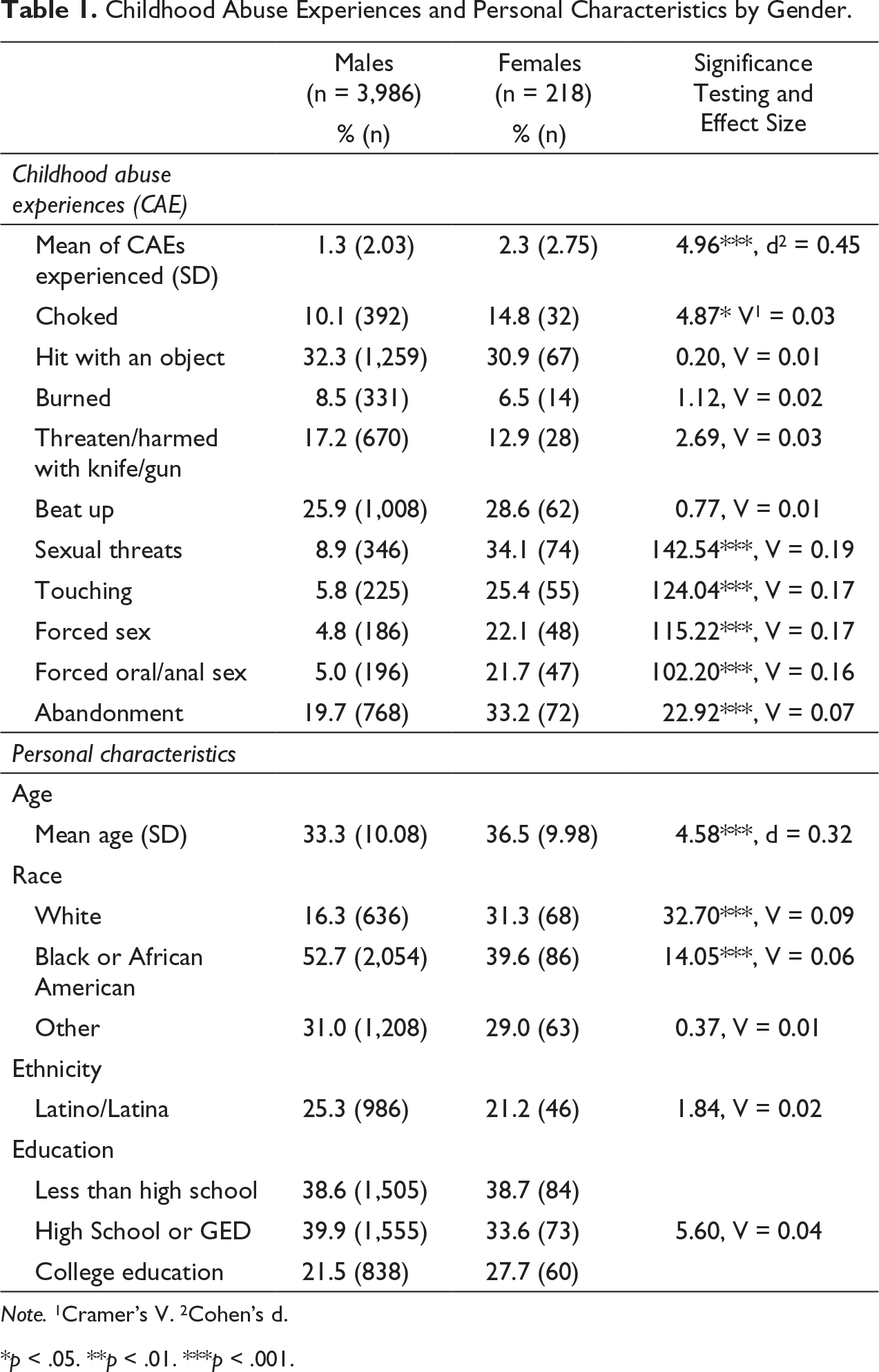
Table 1 provides the prevalence of self-reported of CAEs, along with descriptive statistics for demographic variables, for males and females separately. The average number of CAEs was significantly higher for females (M = 2.3, SD = 2.75) when compared to males (M = 1.3, SD = 2.03; t = 4.96, p < .001). Significant differences were found between the genders in all sexual victimization experiences and abandonment, with women reporting higher rates of sexual threats, sexual touching, forced sex, and abandonment. However, rates of physical abuse were comparable between genders (except for being chocked, which was more commonly reported by women). The most frequently reported abuse experiences were being hit with an object (32.3%) and being beaten up (25.9%) for males, and sexual threats (34.1%) and abandonment (33.2%) for females.
In terms of sample composition, males and females differed in age and race. On average, males were three years younger than females (M = 33.3, SD = 10.08 versus M = 36.5, SD = 9.98) (t = 4.58, p < .001). Slightly over half of the males were black (52.7%), while this percentage was 39.6% among females (
Childhood Abuse Experiences and Personal Characteristics by Gender.
Note. 1Cramer’s V. 2Cohen’s d.
*p < .05. **p < .01. ***p < .001.
Latent Subgroups Based on Childhood Abuse Experiences
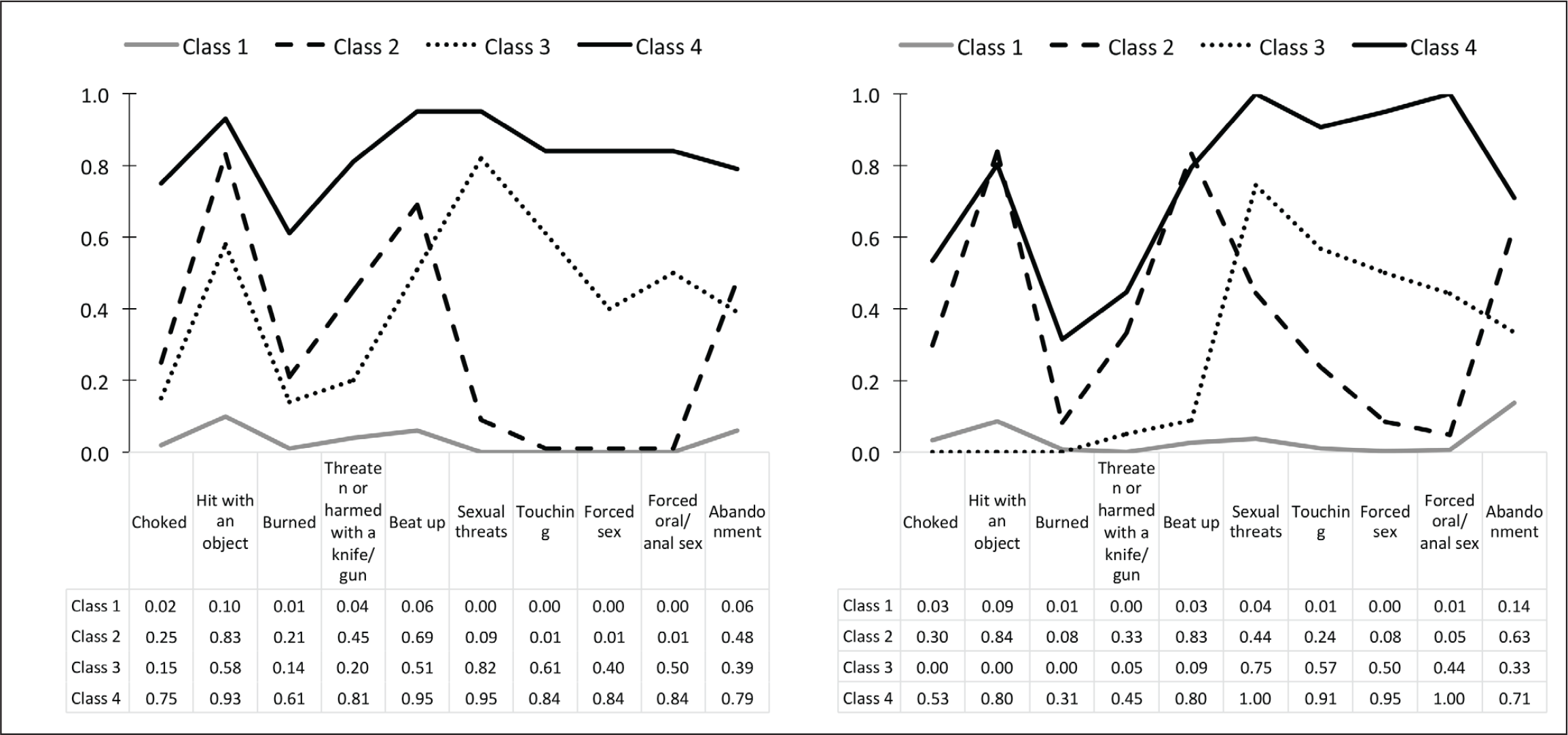
Table 2 depicts the fit statistics from the series of latent profile models with one to ten classes by gender. An evaluation of the fit indices suggests that, for both genders, the four-class solution fitted the data best (the minimum BIC values were found for the four-class solutions). In addition, the four-class models had high entropy values, indicating adequate classifications. These criteria are consistent with the interpretability of the classes. As illustrated in Figure 1, the classes are distinguishable on the basis of CAEs.
Fit Indices for LCA Models With One to Ten Classes By Gender.
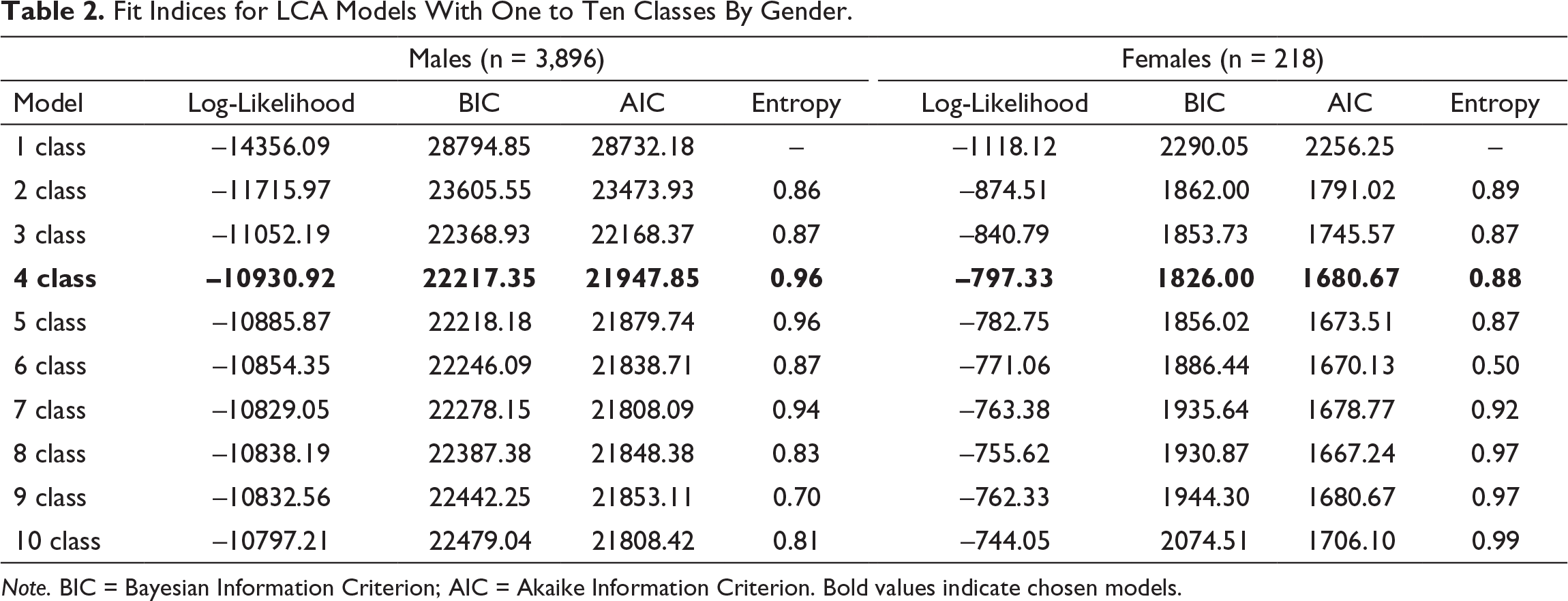
Note. BIC = Bayesian Information Criterion; AIC = Akaike Information Criterion. Bold values indicate chosen models.
With slight variations, the following classes were identified in both samples: Class 1 “Low Abuse”, Class 2 “High Nonsexual Abuse”, Class 3: “High Sexual Abuse”, and Class 4: “High Sexual and Nonsexual Abuse”. Class 1 was the largest subgroup for males and females (66.9% and 56.4%, respectively) and is characterized by low levels of CAEs across all domains (response probabilities did not exceed 0.15 for any single experience). Class 2 was the second largest subgroup and has members with moderately high levels of physical abuse and abandonment (26.6% for males; 16.5% for females). Class 3 is characterized by high levels of sexual abuse and moderately high levels of abandonment (3.3% for males; 12.4% for females). Compared with Class 2 (High Nonsexual Abuse), this cluster reported lower levels of physical abuse. Finally, Class 4 (High Abuse) represents elevated levels of all ten CAE (3.2% for males; 14.7% for females). Figure 1 represents the profile plot of the 4-class models for males (left) and females (right), where the CAEs are represented in the x-axis, and their corresponding probabilities are plotted in the y-axis.
Predicted probabilities by class for males (left) and females (right).
Descriptors of Class Membership
Table 3 shows descriptive statistics of the covariates for the four classes by gender. In the male sample, the profiles were significantly different in terms of depression, anxiety, and hopelessness, with the Low Abuse class reporting significantly less psychological distress than the other three classes (High Nonsexual, High Sexual, and High Abuse). In the female sample, significant differences were found for anxiety and hopelessness, but not for depression. In these cases, the High Abuse subgroup (Class 4) scored highest, and the High Nonsexual Abuse subgroup (Class 2) lowest. Across genders, significant differences were observed for all behavioral variables (interpersonal problems, self-regulation problems, and aggression). The High Abuse subgroup (Class 4) scored highest in interpersonal and self-regulation problems and aggression. They were followed by the High Nonsexual Abuse, the High Sexual Abuse, and the Low Abuse groups (Classes 2, 3, and 1, respectively).
Classes also differed in terms of criminal thinking, with male and female residents of Classes 2 and 4 (High Nonsexual Abuse and High Abuse) reporting the highest criminal thinking scores and members of Class 1 (Low Abuse) the lowest. In terms of substance use, a similar picture was observed, with members of Class 4 (High Abuse) reporting the greatest consumption and members of Class 1 (Low Abuse) the lowest. In contrast, social support was highest for residents of the Low Abuse subgroup (Class 1).
In the male sample, both the High Nonsexual Abuse and High Abuse subgroups (Classes 2 and 4) had the largest percentage of individuals incarcerated for violent offenses (30.1% and 28.7%, respectively), while the Low Abuse class had the lowest (21.8%). In the female sample, the High Abuse class, but not the High Nonsexual Abuse class, had the highest percentage of residents incarcerated for violent offenses (28.1%), and the Low Abuse class the lowest (16.4%). Across genders, the High Sexual Abuse and High Abuse subgroups (Classes 3 and 4, respectively) had the highest prevalence of individuals incarcerated for sexual offenses.
Descriptive Statistics of the Classes by Gender.
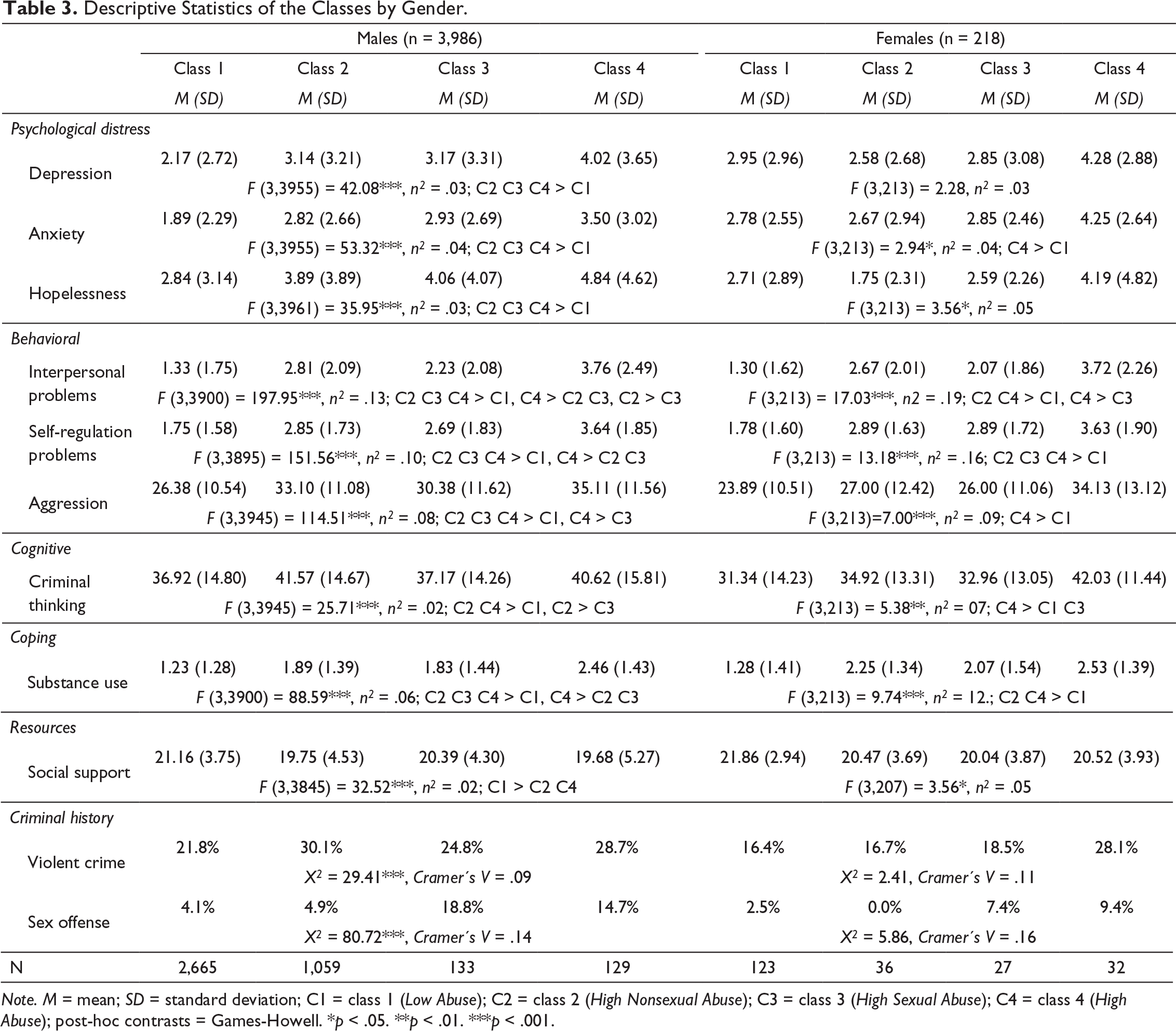
Note. M = mean; SD = standard deviation; C1 = class 1 (Low Abuse); C2 = class 2 (High Nonsexual Abuse); C3 = class 3 (High Sexual Abuse); C4 = class 4 (High Abuse); post-hoc contrasts = Games-Howell. *p < .05. **p < .01. ***p < .001.
Multivariate Analyses
To further explore the differences among the classes, latent class membership was regressed on the covariates of interest using multinomial logistic regression. The results from the regression models, including relative risk ratios (RRR) and 95% confidence intervals (CI) are presented in Table 4. The reference for comparison was the Low Abuse class. After adjusting for covariates, differences in depression between the Low and the High Abuse classes remained for males; greater depressive symptoms were related to membership in the High Abuse subgroup. In terms of anxiety, the relative risk of belonging to the High Sexual Abuse class over the Low Abuse class raised 11% per unit increase in the anxiety scale. Among females, hopelessness significantly distinguished members of the Low Abuse and High Nonsexual Abuse classes.
In general, behavioral problems were associated with decreases in the risk of belonging to the Low Abuse subgroup for males. Higher scores in interpersonal problems increased the risk of belonging to the High Abuse class by 31% for males. In the male sample, higher scores in interpersonal problems also increased the risk of Class 2 membership (High Nonsexual Abuse) by 21% (RRR = 1.21, p < .001). Males and females with greater self-regulation problems were at increased risk of belonging to the High Sexual Abuse and High Abuse subgroups (Classes 3 and 4). In addition, greater self-regulation and aggression problems were associated with Class 2 membership (High Nonsexual Abuse) among males (RRR = 1.17, p < .001, and RRR = 1.02, p < .001, respectively).
In the male sample, substance use differentiated between the Low and High Abuse classes, with higher scores predicting subgroup membership in the High Abuse class among males (RRR = 1.31, p < .01). In this sample, the relative risk of belonging to the High Nonsexual Abuse and High Abuse classes over the Low Abuse class dropped by six and five percent respectively per every increase in the social support scale. Among females, increases in social support reduced the risk of class membership in the High Nonsexual, High Sexual, and High Abuse classes.
In terms of criminal history, the relative risk of Class 2 (High Nonsexual Abuse) over Class 1 (Low Abuse) membership is 33% greater for males incarcerated for violent offenses. In addition, the relative risk of belonging to the High Nonsexual, High Sexual, and High Abuse classes increases by 92%, 601%, and 856% if males committed a sexual offense. In the female sample, sexual offending increases the risk of membership in the High Abuse class (RRR = 20.93, p < .001).
The multinomial regression analysis showed that the classes did not differ on most of their demographic characteristics. The exceptions were age and education in the male model, and race and education in the female model. Older males were at increased risk of being in Class 3 (High Sexual Abuse) (RRR = 1.02, p < .05), while those with college education were at increased risk of belonging to classes 3 and 4 (High Sexual Abuse and High Abuse) (RRR = 1.63, p < .05 and RRR = 1.77, p < .05). In the case of females, being White increased the probability of Class 2 (High Nonsexual Abuse) membership by 255% (RRR = 3.55, p < .05). In this model, having high school education reduced the risk of belonging to the High Nonsexual Abuse and High Abuse subgroups by 87% and 72%, respectively.
Results of Multinomial Logistic Regressions Examining the Relationship Between Childhood Abuse Classes and Covariates by Gender.
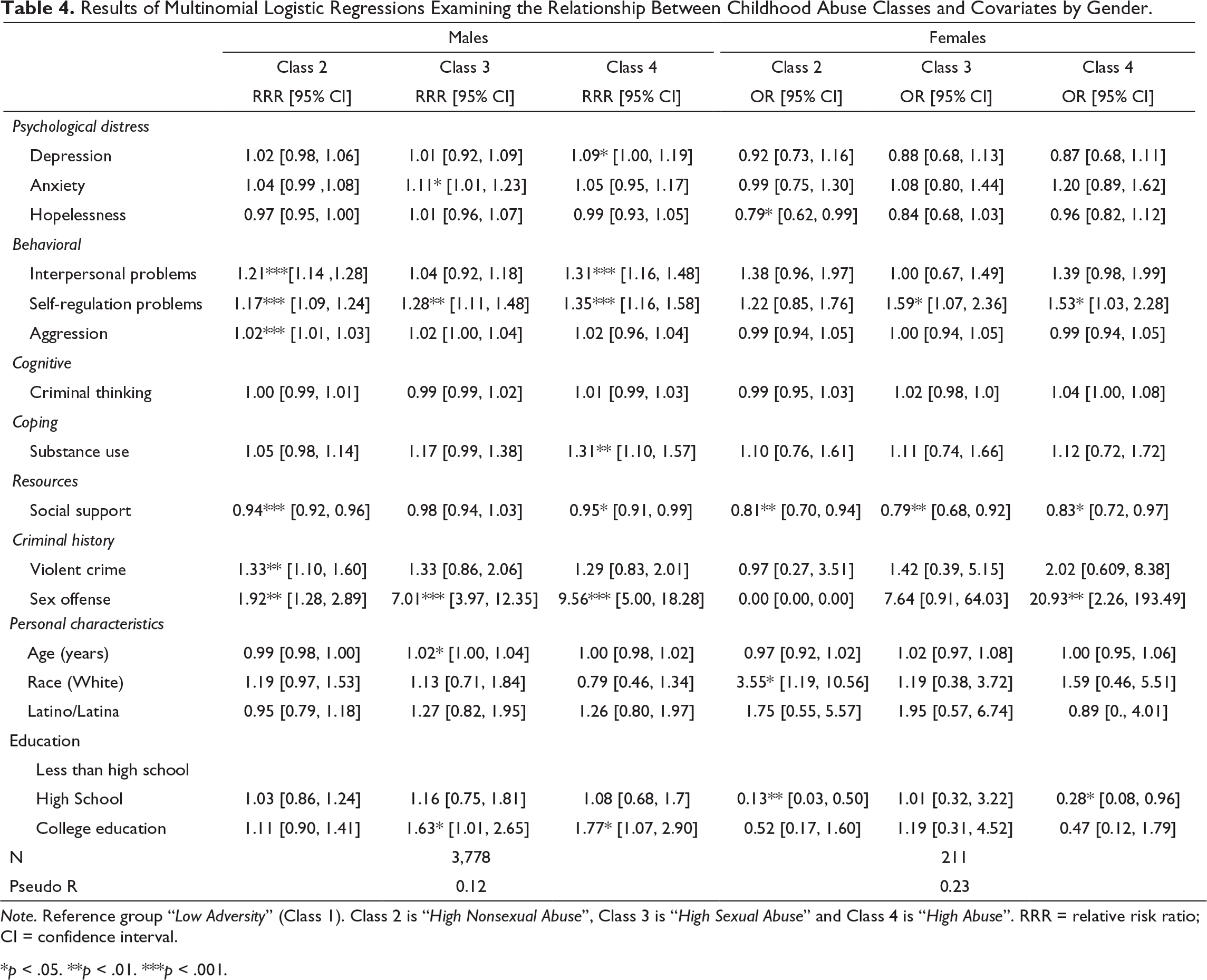
Note. Reference group “Low Adversity” (Class 1). Class 2 is “High Nonsexual Abuse”, Class 3 is “High Sexual Abuse” and Class 4 is “High Abuse”. RRR = relative risk ratio; CI = confidence interval.
*p < .05. **p < .01. ***p < .001.
Discussion
This study examined the similarities and differences between the childhood abuse histories of incarcerated men and women using LCA. Several important similarities and differences were found, most of which are consistent with previous empirical findings. As expected, incarcerated females, compared to incarcerated males, were significantly more likely to experience sexually- and emotionally-related abuse as children and, with the exception of experiencing being choked, they were also equally likely to experience physically-related abuse. Poly-victimization was also more common among females than males. This pattern of more extensive victimization for females is consistent with the literature dating back to the seminal study conducted in 1997 by McClellan et al. (prison sample of 1,030 males residents [73% males of color] and 500 female [67% females of color]), which found that females experienced more childhood abuse than males.
Our main finding, however, is not that relative rates of childhood adversity vary by gender, but rather that absolute rates of childhood adversity are high for both females and males. That is, independent of the relative differences between the genders, it is important to keep foremost in mind that both incarcerated males and females were multiply victimized in childhood and, as such, they both are at risk for the long-term consequences associated with adversity that occurs during the early stages of life development (Shonkoff et al., 2012).
There were also important differences between the genders. First, the proportional distribution of members across the classes varied by gender, supporting hypothesis one. Approximately one quarter of females were members of the two highest abuse classes, compared to only 6.5% of males. Males, compared to females, were more likely to be members of the Low Abuse class. Second, the distribution of types of abuse within the same risk class varied by gender. Males in the highest abuse class were highly likely to experience all 10 types of childhood abuse. Moreover, the men in this class had a profile of sexual harm in childhood that looks very similar to the profile of sexual harm reported by female members in the highest abuse class. Females in the High Abuse class, however, had lower risks of physical harm in childhood, compared to their male counterparts. These abuse distributional differences within classes are concealed when blended gender samples are used to create class structures. Yet when class structures are estimated separately for genders, they reveal subgroups of males and females with extreme but unique childhood abuse profiles.
The four classes were also unique in their constellation of adult problems, which is consistent with our second hypothesis. In general, for both males and females, depression and anxiety symptoms, as well as hopelessness, increased with abuse class, as did interpersonal problems, self-regulation, aggression, and substance use. For both genders, the mean score for depression and anxiety symptoms, hopelessness, behavioral, and substance abuse problems were significantly higher for the highest abuse class relative to the lowest, indicating more psychological distress and behavioral problems among those with more complex childhood abuse histories. This finding replicates a consistent finding in the literature that behavioral health problems increase with adversity risk (Cavanaugh et al., 2015; Henry, 2020a; McChesney et al., 2015; Ross et al., 2016; Ross et al., 2018; Zhang & Zheng, 2018). The mean scores for psychological distress and behavioral problems, however, were surprisingly similar by class and gender, which differs from the literature. Other research has found that females, compared to males, are more likely to report mental health problems, while males report more substance use problems (Henry, 2020a; Keyes et al., 2012).
For both genders, criminal thinking mean scores were high for all classes, ranging from 36.9 to 41.6 for males and 31.3 to 42.0 for females (criminal thinking scores of 30 or more are considered high in terms of criminal attitudes and behavior). Criminal thinking, however, did not distinguish membership between higher abuse classes and the Low Abuse class, after controlling for other covariates. The body of research on gender differences in criminal thinking is quite small and what research is available is conflicting; some research finds that males endorse criminogenic cognitions more than females, while other research finds no mean differences in criminal thinking between the genders (see Vaske et al., 2016). Our findings are consistent with the mixed findings within the broader literature. Females, in our sample, had lower mean criminal thinking scores across the classes compared to males (except for the High Abuse class) but criminal thinking did not predict membership in higher classes compared to the low abuse class for either gender.
Limitations and Strengths
The results of this study must be interpreted within the context of its methodological limitations. First, our sample was limited to one state correctional system and excluded the experiences of residents who were not located in the general population on the day of the survey and who were not eligible for release to the community within a 24-month period, and included only those who voluntarily agreed to participate in the survey. Replication studies are needed using samples from other states and countries. Second, because our data are cross-sectional, the causal relationship between childhood abuse and the various covariates cannot be ascertained. Third, our measures of psychological distress are based on self-reports and they are reported proximate to the time of release to the community. Fears and pressures related to community reentry may have elevated distress levels uniformly across all members of the sample, narrowing the difference in psychological distress between members of higher abuse classes and the lowest abuse class. Fourth, given the relatively small representation of females in prison, our female sample was very small. Many of the associations in the bivariate and multivariate analyses, while having the same sign and, in many cases, magnitude found for the male sample, did not reach statistical significance due to the small sample size. Larger samples of incarcerated females are needed to explore membership differences among abuse classes. Fifth, gender identity was measured as a binary variable (male or female). There is growing evidence that transgendered and nonconforming people, and LGBTQ people more generally, are disproportionately represented in correctional settings and, while incarcerated, they are more vulnerable to victimization and maltreatment (National Center for Transgender Equality, 2018). It is vital that future victimization studies conducted in correctional settings broaden gender identity to include, at a minimum, female, male, trans, nonconforming (nonbinary), and other relevant options (Truman et al., 2019).
Our research suggests that latent class structures that blend genders conceal important differences in the distribution of abuse and membership within and among classes. This is especially relevant in correctional samples where males comprise over 90% of the population. By blending genders in latent class structures, the smaller group of females contributes less to the model, masking gender differences and hiding gender-unique harm experiences. These differences may matter in terms of identifying the relative need for therapeutic intervention among incarcerated males and females and targeting those interventions in ways that reflect the gradient of therapeutic need (Covington & Bloom, 2007). Precision matters when the goal is to prevent and treat adverse behavioral health outcomes, especially in environments where behavioral health treatment resources are not only scarce but also not traditionally delivered with trauma sensitivity or integrated with trauma treatment. Designing and implementing interventions to respond to differential needs must be guided by need patterns that are accurate and reliable to ensure that evidence-based, gender-sensitive trauma services are available for incarcerated men and women (Miller & Najavits, 2012). In addition, more research is needed on the ways in which gender identity matters within incarcerated settings and how gender-specific trauma-integrated treatments can be customized to the specific experiences and sensitivities of LGBTQ individuals who are incarcerated. The next step is to test whether using blended or gendered latent class structures matters in terms of predicting outcomes, such as prison-based behavioral health problems, suicidality, and victimization.
Footnotes
Authors’ Note
Eva Aizpurua is also affiliated with Trinity College Dublin, Ireland and City, University of London, UK. Francisco Caravaca Sánchez is also affiliated with Almería University, Almería, Spain.
Declaration of Conflicting Interests
The author(s) declared no potential conflicts of interest with respect to the research, authorship and/or publication of this article.
Funding
The author(s) received no financial support for the research, authorship and/or publication of this article.
