



Abstract
The number of fatalities in Spain due to gender-based violence has increased in recent years, with a new rise in 2019, reaching the highest figure since 2015, a year that registered a peak with 60 victims. This article analyzes a database obtained from a survey on gender violence conducted by the Spanish Centre for Sociological Research. The survey, prepared by the Government Delegation for Gender Violence, consisted of interviews with women aged over 15 years living in 858 municipalities distributed over 50 provinces in Spain. The data reveal that most of the women interviewed have not suffered any type of physical, sexual, or psychological abuse. Hence, the application of standard logistic methodologies which suppose symmetric responses, can lead to a poor specification of the model, a misinterpretation of marginal effects and unidentified predictors. It seems more appropriate to consider an asymmetric link function to explain the probability of abuse (physical, sexual, or psychological). The Bayesian methodology allows the incorporation of such an asymmetric function improving the specification of the model. In this article, we compare both methodologies and prove that Bayesian asymmetric performs better results by considering several diagnostic criteria. Furthermore, this methodology detects some significative factors that are not revealed by the classical method, e.g., the partner’s nationality for sexual abuse or the women’s total number of intimate partners for psychological abuse. Bayesian asymmetric estimations reveal no significance concerning to the lowest partner’s level of education for physical abuse but if the intimate partner is currently studying this reduces the probability of sexual abuse. The woman’s level of education is not relevant to the physical, sexual, or psychological abuses suffered. Therefore, the findings may help identify economic and sociological factors not previously considered in this area and highlight policies that may be adopted or revised to help overcome this social problem.
Keywords
Introduction
Gender-based violence (GBV) and violence against women (VAW) is an ongoing concern throughout the world (Allen et al., 2018; Goodey, 2017; Johnson, 2006), and much research is devoted to understanding the factors that may influence the likelihood that a women experiences GBV (Capaldi et al., 2008). In this article, we analyze data from the VAW survey conducted by the Spanish Centre for Sociological Research (CIS) in late 2014. These data reveal that most of the women interviewed do not suffer physical, sexual, or psychological abuse. The use of a symmetric link function as developed in both classical and Bayesian logit specification is recommended for binary response data in which the frequency of one response is similar to the frequency of the other response. If this is not the case, then an analysis using an asymmetric link function is preferable (Chen et al., 1999). Apart from Chen et al., 1999’s work, the statistical literature provides other proposals that have followed the line developed in that work. Some of these are Kim et al. (2008), Wang and Dey (2010), Jiang et al. (2013) and Lemonte and Bazán (2018).
In the Bayesian approach, the regression coefficients are considered to be random variables assuming noninformative and centered normal prior distributions for the
Classical statistics, based mainly on the estimation from the collected data, provide tools to carry out the objective that is intended to be addressed in this work. However, given the nature of the data (the asymmetry in our case), the use of the classical methodology may not be able to define elements that are affordable with the use of the Bayesian methodology, which can use, apart from the data, prior information provided by a well-trained practitioner. Bayesian inference for logistic analyses follows the usual pattern in Bayesian analysis consisting of the likelihood function of the data, the prior distribution over the unknown parameters and the Bayes’ theorem to compute the posterior distribution of the parameters. There exists in the literature a lot of procedures about choosing the prior distributions based on noninformative, default, and reference prior distributions. See, for example, Jeffreys (1961), Kass and Wasserman (1996), Spiegelhalter and Smith (2002), Bernardo (2004) and Hartigan (2014), among others. For a comprehensive knowledge about this topic, the reader can consult the paper of Gelman et al. (2008). The most common priors for logistic regression parameters are
In this study, the selection of socioeconomic variables was based on previous research. Farmer and Tiefenthaler (1997), Yodanis (2004), Famoye and Singh (2006), Aizer (2010), Capaldi et al. (2008), Bhattacharyya et al. (2011), and Alonso-Borrego and Carrasco (2017) analyze factors regarding the domestic violence as employment and property status, employment income, educational and occupational status, the impact of sexual male–female wage gap, among many others.
The rest of this article is organized as follows. The database used in the analysis is described in Section 2. The theoretical aspects of the logistic regression models used are presented in Section 3. In Section 4, we discuss the results obtained and study some diagnostic measures to determine whether the symmetric or the asymmetric model is preferable for our purposes. Finally, we present the main conclusions drawn.
Data Collection
The data used in this study were obtained from a nationwide CIS survey conducted at the end of 2014. The survey, prepared by the Government Delegation for Gender Violence, consisted of interviews with women aged over 15 years living in 858 municipalities distributed over 50 provinces in Spain. The initial aim was to interview 10,258 women, but full responses were only obtained from 5,818 women, although these accounted for 10,171 observations. The sampling allocation method was nonproportional. The sampling procedure was multistage, stratified by clusters via a questionnaire presented in a personal interview in the participant’s home. This article considers three models with physical, sexual, and psychological abuses as dependent variables representing abuse by the current or most recent intimate partner in the last twelve months. These three dependent variables are based on a set of different questions from the original survey for the three type of abuses. If the response was “never,” the variable was codified by 0; and 1 otherwise (“once,” “sometimes,” and “many times”).
The explanatory variables for the three models were selected following two steps. In the first one, 41 variables extracted from the survey were chosen attending socioeconomic reasons or in terms of policy implications. The second step consisted in applying Bayesian model averaging (see Hoeting et al., 1990, and references therein for a comprehensive study of this technique) from the previous 41 covariates and over
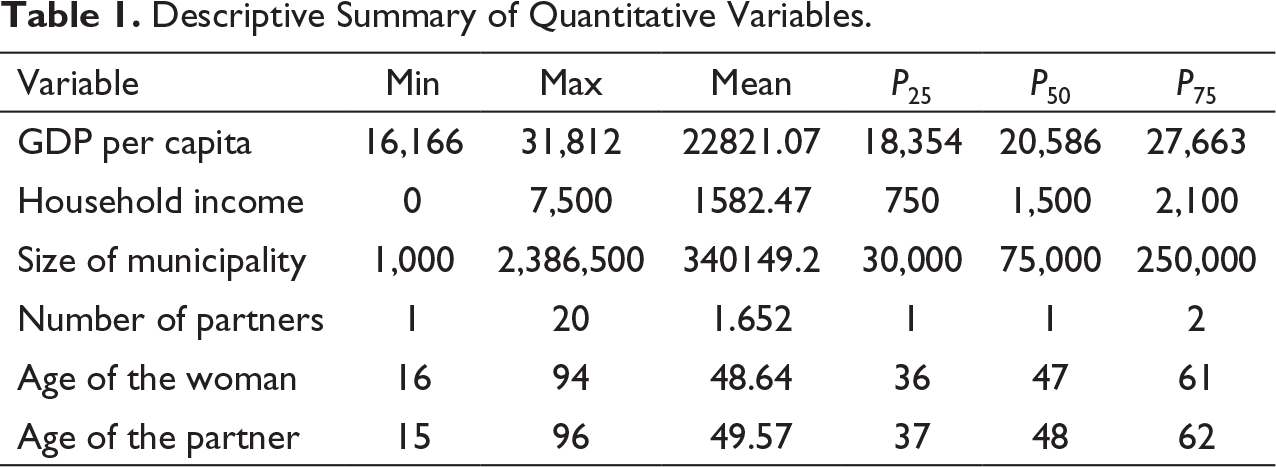
The survey data are available on the CIS web page. The sample error has a 95.5% level of confidence and the real error is 0.99% for the whole sample in simple random sampling. A descriptive study of all these variables in the sample is shown in Tables 1 and 2.
Descriptive Summary of Quantitative Variables.
Descriptive Summary of Categorical Variables (Absence or Presence).

Table 3 reports the ϕ coefficient, also known as the mean square contingency, which is a measure of association for two binary variables and is interpreted in a similar way to the Pearson correlation coefficient. The results obtained present strong positive correlations among the three dependent variables, which are analyzed as follows.
Number of Women Who Have Suffered Physical, Sexual, or Psychological Abuse.

Statistical Methods
When a research context produces binary outcomes, it is usually analyzed by logit and/or probit models. A binary response model is a regression model in which the dependent variable
In this study, we use the logit model to estimate the probability of abuse (physical, sexual or psychological) given a set of characteristics of the event; that is, given the predictor
Symmetric Assumption
Specifically, the classical (and symmetric) logit is defined as follows. For observation t in a sample of size n, let yt, t = 1, 2, …, n, a binary variable taking the value of 1 with probability

and 0 with probability 1 – pt, where

Asymmetric Assumption
In Table 2, it can be seen that the answer 0 (and therefore they stated that they do not suffer any type of abuse) is much more frequent than the 1 (they answered yes to some type of abuse). Hence, it seems more appropriate to consider an asymmetric link function to explain the conditional probability response variable
From the asymmetric point of view, an approach based on data augmentation, as considered by Albert and Chib (1995), can be used. In this way, it is easily shown (see Chen et al., 1999) that a skewed logit link is equivalent to considering that

where
The new Bayesian asymmetric logit model can be written as follows:


where
Results
The models for physical, sexual, and psychological abuse were estimated. For this purpose, we have considered the model in (2) for the classical methodology and the model in (4)–(5) for the Bayesian methodology. The results obtained by the classical and asymmetric Bayesian estimations are shown in Tables 4–6, respectively. These tables show the estimated coefficients,
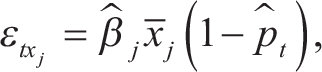
where
Physical Abuse
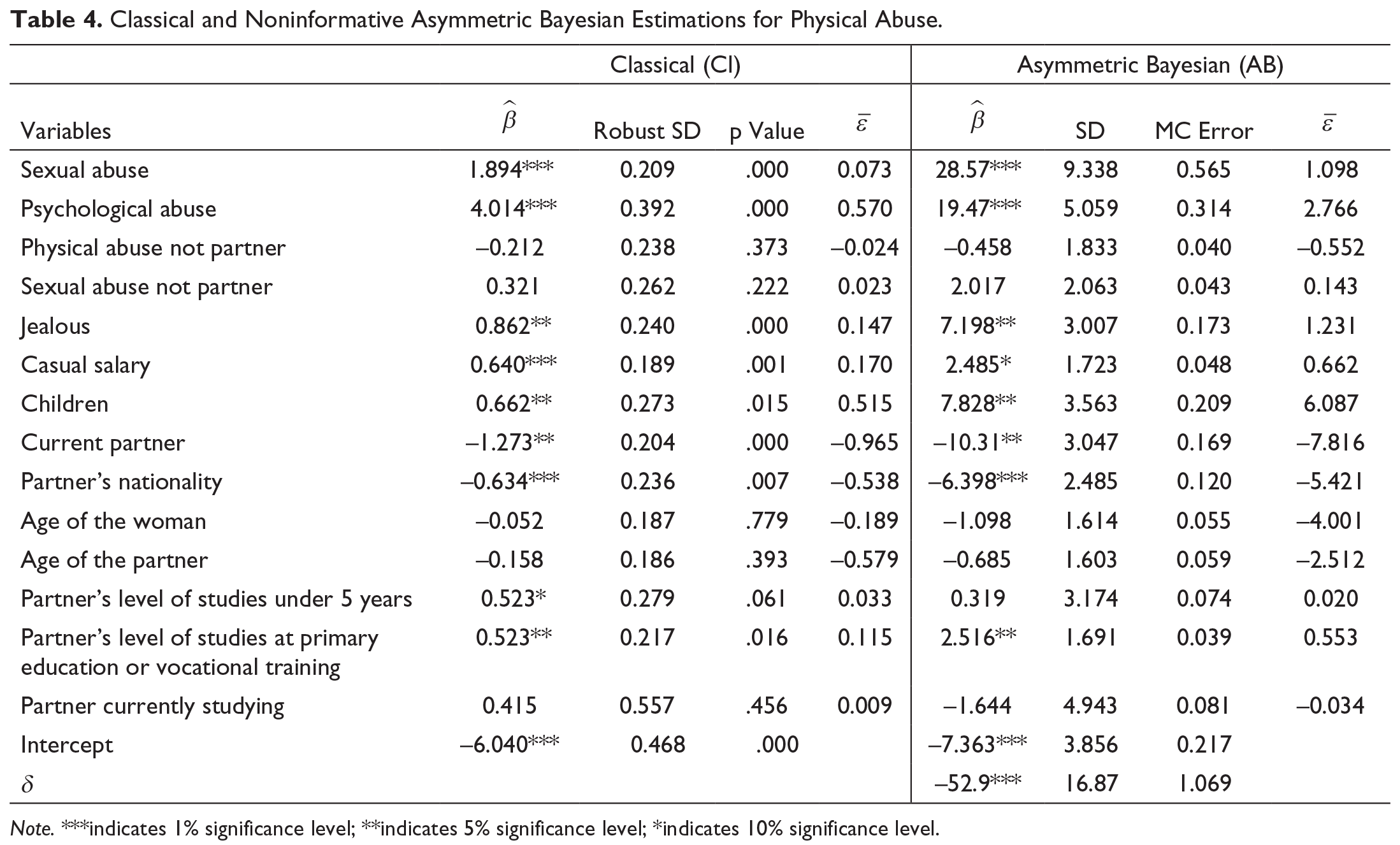
Table 4 shows the estimation results for physical abuse. According to the classical and asymmetric Bayesian estimations, the intercept, the existence of sexual or psychological abuse and the nationality of the intimate partner are all statistically significant in explaining the probability of physical abuse, at
Classical and Noninformative Asymmetric Bayesian Estimations for Physical Abuse.
Note. ***indicates 1% significance level; **indicates 5% significance level; *indicates 10% significance level.
Sexual Abuse
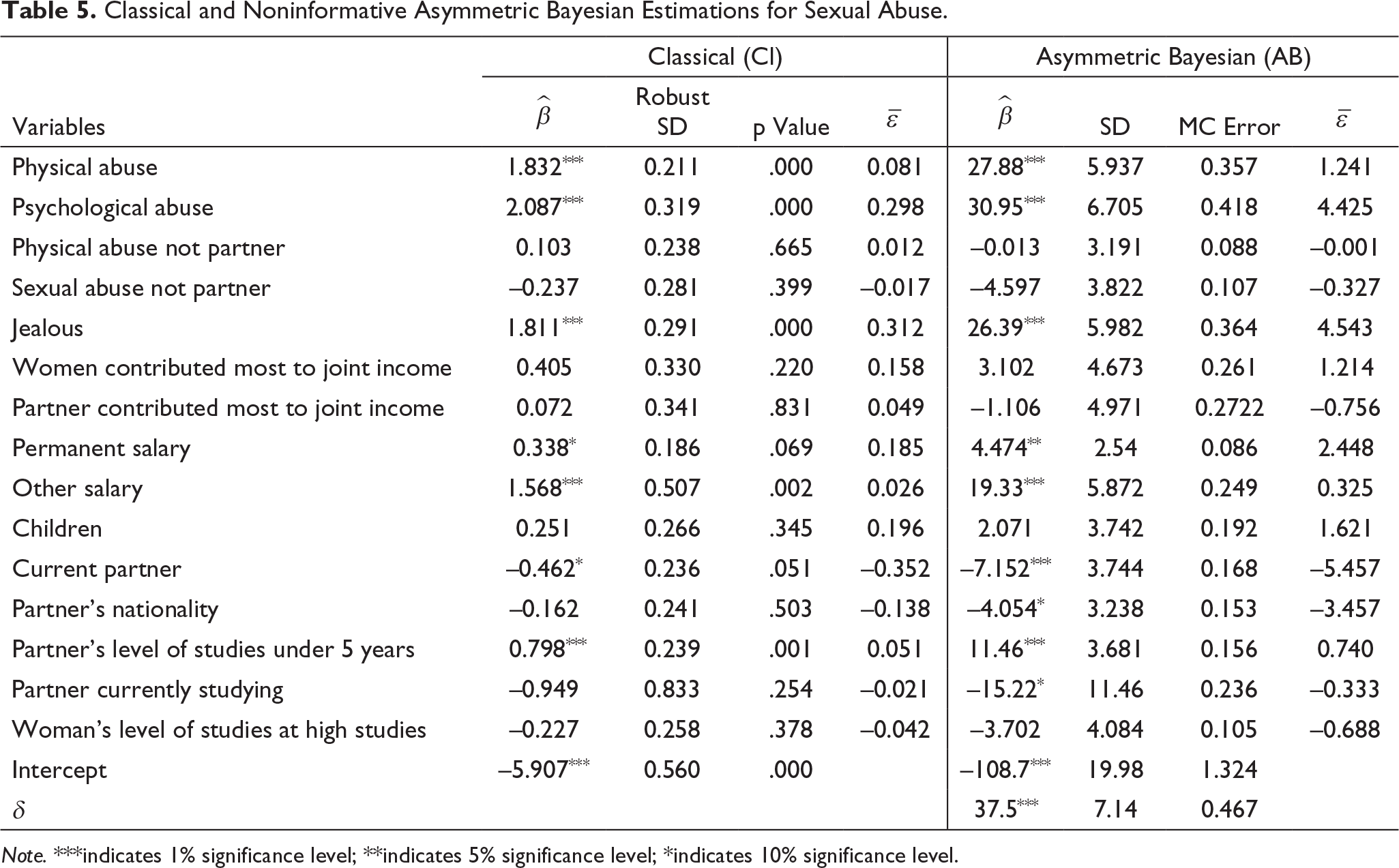
The results obtained for sexual abuse are shown in Table 5. According to the classical and asymmetric Bayesian estimations, the intercept, the existence of physical or psychological abuse, that of jealousy, unregulated wages and the intimate partner’s low level of education are all associated positively and significantly with the probability of sexual abuse, at
Classical and Noninformative Asymmetric Bayesian Estimations for Sexual Abuse.
Note. ***indicates 1% significance level; **indicates 5% significance level; *indicates 10% significance level.
Psychological Abuse
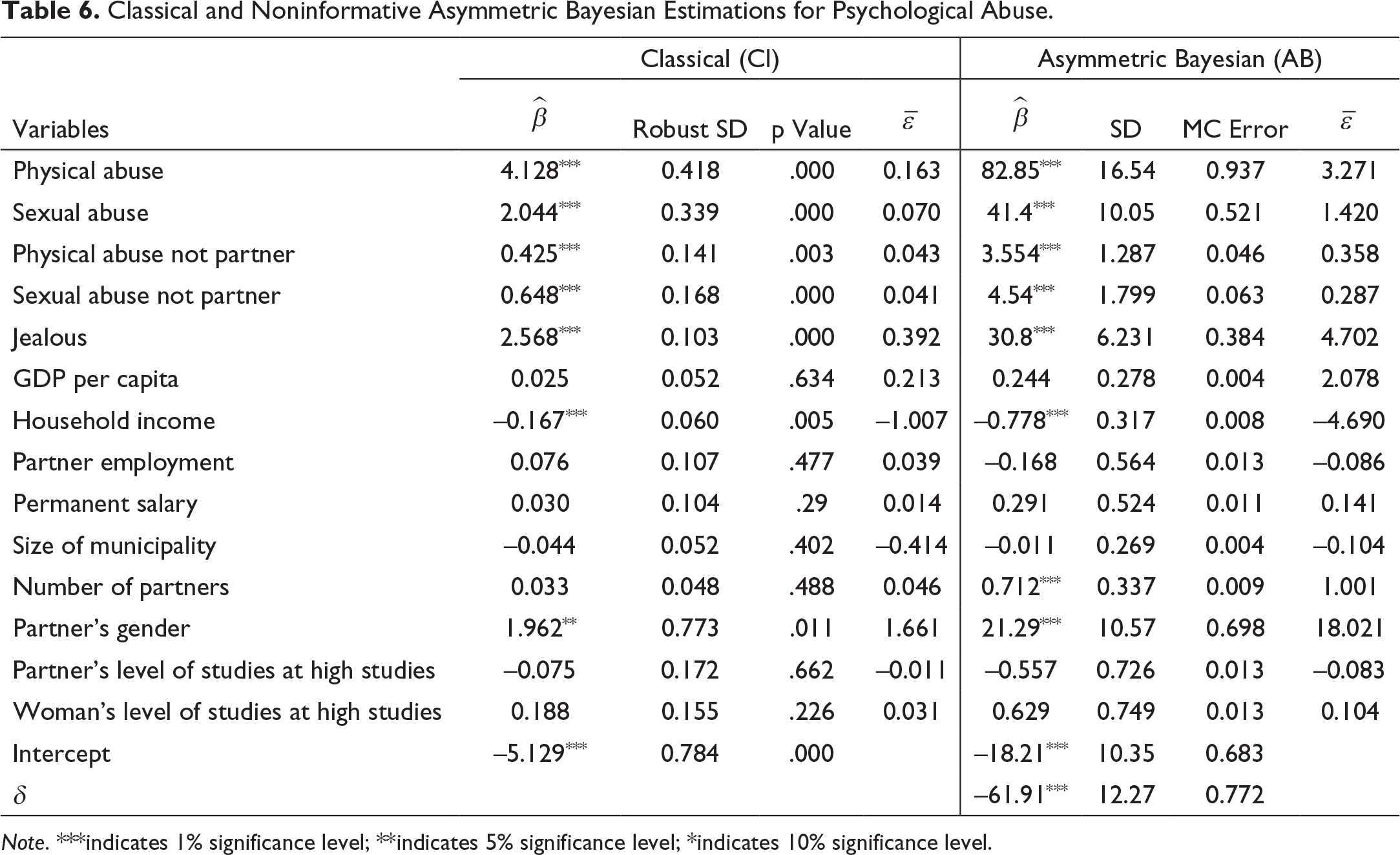
Classical and Noninformative Asymmetric Bayesian Estimations for Psychological Abuse.
Note. ***indicates 1% significance level; **indicates 5% significance level; *indicates 10% significance level.
Table 6 shows the estimation results for psychological abuse. According to the classical and asymmetric Bayesian estimations, the intercept, the existence of physical or sexual abuse (by an intimate partner or anyone else), income and jealousy are all statistically significant in explaining the probability of psychological abuse at
Comparative Diagnostics
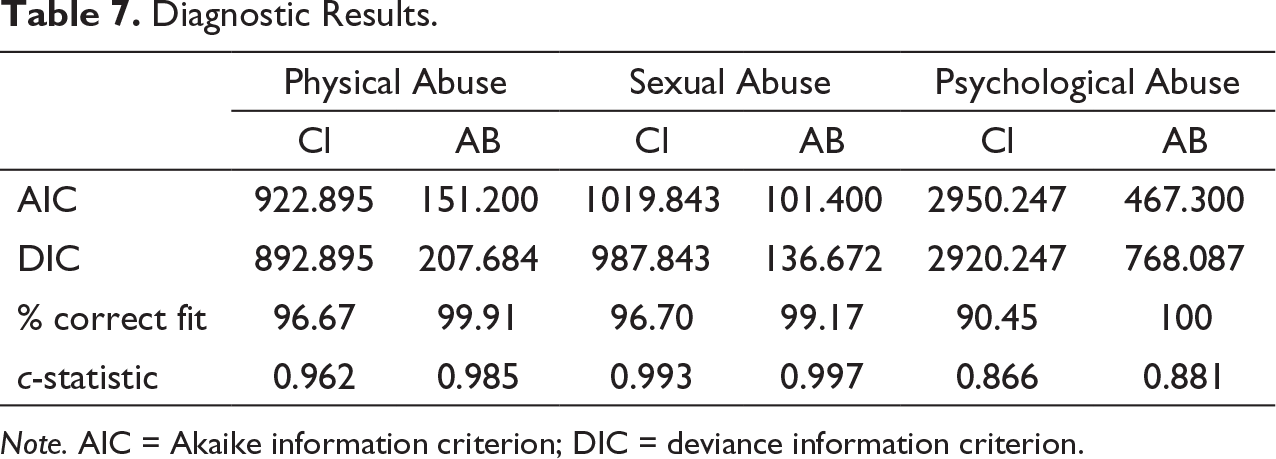
The goal of a regression model, such as the logistic model considered here, is to correctly fit and predict the category of outcome for individual cases using the best model and including all the predictor variables considered to be useful in explaining the response variable. To assess the goodness of fit obtained by the classical and the Bayesian logit models, three different measures were applied:(a) the percentage of correct fits, calculated by considering the estimated probabilities; (b) the
Diagnostic Results.
Note. AIC = Akaike information criterion; DIC = deviance information criterion.
Results provided in Table 7 reveals that the asymmetric link model is better in the three settings considered when assuming AIC, DIC, percentage of correct fit and
Discussion and Conclusions
This article studies gender-based violence which is a topical issue in both developed and developing countries using data supplied by the Centre for Sociological Research (CIS) and the Government Delegation for Gender Violence in Spain. We identify the factors involved in physical, sexual, and psychological VAW in Spain, a problem that affects women of all ages and conditions. Taking into account that most of the women interviewed do not suffer any type of abuse, the classical logistic and Bayesian regression models, which assumes similar proportions in the response variable, do not seem to be appropriate for determining the factors or determinants underlying this phenomenon. Accordingly, an asymmetric logistic regression model was applied by detecting some factors that are not revealed by the classical methods, including sociological factors, and therefore contributes to the design of better-targeted policies with which to address this problem.
This type of study is adequate not only in the scenario we are considering but in all those in which there is a marked difference between the two types of responses that constitute the endogenous variable. So, a prudent researcher should, in our view, analyze the data prior to the study and then use the model that best suits them. Obviously, a similar proportion in the two responses of the endogenous variable would not require a study beyond the classical logit, but the use of a model of this nature when there is a marked asymmetry in the responses could be ignoring elements that considerably change the conclusions of the study.
The asymmetric model includes the classic logit model as a particular case and the results obtained by both are included, which can be useful for comparisons. In particular, the results obtained here indicate that the asymmetric link produces, apart from other comparative diagnostics, a better fit than the symmetric model and, therefore, seems more appropriate for analyzing this sort of data. In this sense, asymmetric Bayesian estimation isolates the asymmetric nature of the data and not only reveals new determinants but also the elasticities highlight the marginal effects in a more reliable way. Regarding physical abuse, asymmetric Bayesian estimations find the same significant factors as classical model, except for the partner’s level of studies under 5 years which is not important for the asymmetric Bayesian model. In relation to sexual abuse, the asymmetric Bayesian model detects two new significant factors, i.e., the partner’s nationality and the fact that this person is (or not) currently studying. Finally, regarding psychological abuse, the results are again similar, except for the number of partners which is a significant determinant for the asymmetric Bayesian estimations.
These findings undoubtedly help to identify economic and sociological factors that have probably not been considered in the past when addressing this social problem. Recently, in their ministerial offices, most developed countries have incorporated specialist teams to tackle the issue of gender violence. There is no doubt that these findings should be considered by political authorities in the moment of implementing measures to solve this problem, adapting, or revising the existing policies so far.
These results could be useful not only in the area of violence towards women in intimate relationships (which has been addressed here) and in other areas where abuse responds to a network of patriarchal violence. Finally, regardless of the type of maltreatment suffered, it seems that the cultural element plays, as it seemed predictable, a fundamental role for both, the person who commits the abuse, and the woman who suffers it. Then, the gender policies carried out should be accompanied by actions from the educational field that promote gender equality.
The nature of this study analyzes only women residents in Spain. However, the women who responded in the sample had different socioeconomic statuses, races, ethnicities, languages, nationalities, gender identities, sexual orientations, religions, geographies, abilities, and ages. In general, these characteristics are not significant when studying any type of abuse in relation to the women interviewed. Only household incomes are determinant in explaining the probability of psychological abuse. With regards to the partners, their genders, nationalities, and levels of studies are important for determining the probability of physical, sexual, or psychological abuses. This work’s empirical nature does not allow us to draw general conclusions and the results obtained are valid exclusively for the analyzed population (Spain, in our case). However, the available digital media have favored globalization in many topics, e.g., behavior patterns; for that reason, we would dare to say, with the caution that the matter deserves, that probably the conclusions reached could serve to understand violence sexual, at least, in countries with a level of development similar to that of Spain.
Two issues would deserve to be investigated: (a) a simultaneous study of the effect of covariates on the three types of abuse to see whether there are marginally significant differences between the results obtained in this study and those ones that could be derived from a multivariate study. (b) Some of the covariates used (such as jealous) also show asymmetry and their effect on the skewed response variable could also be studied.
Footnotes
Declaration of Conflicting Interests
The author(s) declared no potential conflicts of interest with respect to the research, authorship, and/or publication of this article.
Funding
The author(s) disclosed receipt of the following financial support for the research, authorship, and/or publication of this article: J.M.P.S. and E.G.D. were supported by the Ministerio de Economía, Industria y ompetitividad, Agencia Estatal de Investigación (Project ECO2017-85577-P).
