




Abstract
There is abundant evidence in the literature to show that victimization has a series of adverse consequences on child victims’ physical and mental health. However, some studies detailed whether the family correlates of repeat victims differ from those who are victimized only once. This study fills this gap by describing the probabilities that children who fit certain profiles will be repeat victims and implies that it is possible to identify and screen individual and family factors who are at high risk of repeated victimization. Using the 2009–2010 Child Victimization Survey, we analyzed data from 14,564 Chinese adolescents aged 14–18 years from five major cities in China. We employed a multinomial logit regression model, using child victimization as the dependent variable and demographic factors as independent variables. We identified the top 1% of the most vulnerable cases and summarized their demographic characteristics. Our analysis revealed that older boys with siblings in the same household whose mothers’ education was below average were the most vulnerable to one-time victimization. Further, boys with siblings whose parents were less-educated than average, unemployed, and unmarried were the most vulnerable to repeated victimization. This study has vast practical implications, including different ways to confront the problem of repeated child victimization (both practically and in the literature), develop a quick screening tool, and apply cost-effective prevention and interventions in China.
Keywords
Introduction
Child victimization, which refers to a wide range of violence experienced by children, has widely been recognized as a prevalent public health issue across all nations, including China (e.g., Chan, 2013; Dong et al., 2013). Previous research has consistently shown that child victimization can lead to a variety of deleterious effects on children’s and adolescents’ well-being (e.g., Pinto-Cortez et al., 2018; Turner et al., 2017). Family is one of the most researched and debated contexts that contributes to child victimization; considerable research and policy attention has examined how different family factors may affect child victimization and development (e.g., Turner et al., 2013). It is well documented that children living in families with a single parent or stepparent are more likely to be sexually assaulted, be maltreated, and witness family violence than those who live with two biological parents (Turner et al., 2007, 2013). Moreover, parents’ education level (Chan et al., 2013), low family socio-economic status (SES) (Hanson et al., 2006), and the number of siblings living in the same household are often identified as risk factors for child victimization (Eriksen & Jensen, 2006; Tucker et al., 2020).
Despite a growing body of child victimization research conducted in the Chinese population (e.g., Chan, 2013; Dong et al., 2013; Hu et al., 2018), knowledge of child victimization in mainland China remains limited. Notably, there has not been much attention to repeated victimization among children in China (Zhu et al., 2020). As suggested by Damashek et al. (2012), international knowledge about child victimization and repeated victimization and its association with family correlates may be socially and culturally bounded. Such insights in the literature inspired the current study, which focused its attention on family factors within the context of Chinese society.
One unique contextual factor that has profound impacts on families in China is the strict family planning policy enacted in 1979, which includes the well-known “one-child policy” which started in 1982 (Chen, 1985; Hesketh et al., 2005). Some studies suggest that parental supervision has become relatively stricter, especially in cities of China owing to the one-child policy, which shields these children from victimization outside their family and therefore explains relatively lower victimization prevalence among them (Ji et al., 2013; Sun et al., 2008). Another contextual factor that attracted scholarly attention in this field is the unprecedentedly rapid urbanization and industrialization in China in the last four decades, which arguably has led to a decline in the importance of marriage and family among Chinese people and a weakening trend of family functioning in China (Wang & Mesman, 2015; Wu & Li, 2012;). These scholars noted that, compared to their counterparts, parents who work long hours and those with lower education levels often face greater material and emotional burdens to take care of their children, which may increase the likelihood of child victimization. Both studies noted the importance of examining family characteristics in the research of child victimization in China.
Past research on child victimization has mainly focused on a single form of victimization. In recent years, several studies have addressed multiple victimization or poly-victimization (e.g., Feng et al., 2019; Finkelhor, 2005a). However, not much is known about repeated child victimization—that is, experiencing one specific form of victimization more than once in a given period. Some studies have attempted to investigate family backgrounds of children who have experienced single form or multiple forms of victimization (Adams et al., 2016; Cohen et al., 2017). Given the literature revealing the significance of repeated victimization for children’s health and mental health problems in China (Zhu et al., 2020), examining family characteristics that may lead to repeated child victimization has important implications for designing effective prevention and intervention systems (Espelage, 2014). This study, guided by family stress theory, explored the family characteristics of adolescents most vulnerable to victimization and repeated victimization in the social context of China and inform practitioners about effectively screening high-risk children and applying professional prevention and intervention methods.
Literature Review
Child Victimization, Repeated Victimization, and Family Profiles of Victims
Finkelhor et al. (2005a, 2005b) identified five main forms of child victimization: conventional victimization (e.g., robbery, theft, or intentional vandalism of belongings), maltreatment, victimization from peers or siblings, sexual victimization, and indirect victimization (e.g., witnessing violence). Previous studies tended to focus on the occurrence of a specific single form of victimization while paying little attention to the frequency with which it is repeated. A growing body of research suggests that child victims who have been victimized once are more likely to be victimized again (e.g., Fagan & Mazerolle, 2011; Finkelhor et al., 2007; Kilpatrick et al., 2003; Margolin & Gordis, 2000; Turanovic & Pratt, 2014). These studies have shifted researchers’ focus from studying a single form of victimization to studying both multiple forms of victimization and repeated instances of a single form of victimization (Feng et al., 2019; Finkelhor et al., 2007; Hope et al., 2001; Pinto-Cortez et al., 2018). Children experiencing multiple forms of victimization may face the cumulative impacts of trauma and associated experiences, which intensifies the ill effects of their victimization compared to those who have experienced only a single form of victimization (Shen et al., 2019).
There is abundant evidence that child victims face a series of adverse physical and mental health effects (e.g., Chan, 2013; Chartier et al., 2010; Finkelhor et al., 2005a; Weber et al., 2016). However, only a few studies have investigated the impacts of repeated victimization, which Hope et al. (2001, p. 596) defined as “a time-ordered sequence of similar events suffered by the same individual victim or target.” A limited number of studies found that children who experienced repeated victimization tend to report more negative physical and mental health consequences than their counterparts who have experienced only a single episode of victimization (Fluke et al., 2008; Turanovic & Pratt, 2014; Zhu et al., 2020).
Several studies have attempted to depict family profiles of victimized children. Data from the Fourth National Incidence Study and Prevalence of Child Abuse and Neglect showed that girls are more likely to experience abuse in all its forms than their male counterparts (Sedlak et al., 2010). Other recent and representative survey data revealed that older children who are African-American, whose parents are unemployed, whose family is of low SES, who live with a single parent cohabiting with a partner, or who live in households with four or more children are at higher risk of all forms of victimization than are their counterparts (Sedlak et al., 2010; Turner et al., 2010). However, these studies typically examined a single form of child victimization. To the best of our knowledge, no study has yet discovered whether children who have experienced repeated victimization share similar family profiles with those who have experienced only a single episode or form of victimization. There is also no such study in the Chinese context.
Family Stress Theory and Risk Factors of Child Victimization
Family stress theory defines and explores the periodic or acute stressors that happen to each family (Hill, 1949). When these stressors become frequent or if the individual or family lacks the resources or adequate support of significant relationships, personal and family crises often arise (Belle, 1982). Informed by this theory, child victimization could be viewed as a result of both personal and family crises to which family stressors could lead. Previous research has documented some risk factors that can be regarded as such family stressors. For example, children living in single-parent families or with siblings have a higher risk of victimization and distress than those living with two biological parents (Hanson et al., 2006; Turner et al., 2013). Research also showed that single or cohabiting parents are more likely to report psychopathology problems, such as distress and depression, alcohol abuse and use illegal drugs, than are married parents (Kalil & Ryan, 2010). In turn, those problems are significantly associated with child maltreatment (Lee & Koo, 2015; Windham et al., 2004).
Family economic hardship is an often-cited salient risk factor for child victimization. Studies found that families with low (vs high) SES may display increased parental stress and inter-parental conflict, and thus may be less sensitive and responsive to their children’s needs (Linver et al., 2002), and hence put children at a higher risk of victimization (Espelage, 2014; Turner et al., 2013). In China, family economic difficulties often lead parents to work long hours, leaving them feeling stressed at home, and adopting harsh parenting practices, or even maltreating their children (Chan, 2014; Chan et al., 2021). Parents’ low education level and unemployment have been consistently identified as common risk factors in this regard (Rodriguez, 2010; Zhu et al., 2018).
Risky family characteristics, such as inconsistent parenting, and frequent residential mobility that threaten stability, may exacerbate the effects of child victimization (Turner et al., 2013). These studies have provided evidence that families exposed to stress and adversity put their children at greater risk of child victimization. However, as mentioned previously, while investigations of family correlates of a single form or episode of child victimization is common, only limited research has examined family correlates of repeated victimization. We do not yet know whether victims of repeated child victimization have family characteristics similar to those of single episodes of child victimization. Given the documented prevalence of repeated child victimization in China, examining family factors in both one-time and repeated victimization are important—both for scholarly purposes and for prevention and intervention services.
Child Victimization in the Chinese Context
Research shows that child victimization is common in China. Studies estimate that the prevalence of a single form of child victimization among Chinese children varies between 28 and 90%, and the prevalence of child poly-victimization varies between 10 and 30% (Chan, 2013; Feng et al., 2019; Liu et al., 2020; Shen et al., 2019). In addition, Zhu et al. (2020) found that repeated victimization was as prevalent as one-time victimization among Chinese children and, in all forms of victimization, children who experienced repeated victimization reported significantly higher levels of depression, lower levels of self-esteem, and overall health than did one-time victims.
Regarding family correlates of child victimization, studies around the world share many common findings, many of which have to do with family stressors. However, several scholars (e.g., Chan, 2013; Damashek et al., 2012) remind us that there may be characteristics unique to a certain society shaped by its historical, social, cultural, and economic contexts. Since its economic reform started in 1978, China has witnessed rapid urbanization and industrialization, and economic development. Around the same time, the Chinese government began to implement strict family planning policy—more specifically, the one-child policy. Therefore, Chinese families have undergone salient changes in structure and intra-familial relationships (Xu & Xia, 2014). Some scholars believe that in China, marriage and family have declined in importance and that this has been accompanied by weakening family functioning (Wang & Mesman, 2015; Wu & Li, 2012). Others believe that having one child has heightened Chinese parents’ concern about child safety and hence parental supervision has become stricter (Xu & Xia, 2014) than in the past, but also resulted in higher expectations for the families’ sole child (Wong et al., 2009). Moreover, the rapid social transition has resulted in the thriving of individualistic values embraced by the one-child generations who are educated and now active in job market, while concurrently posed many stresses to Chinese families (McLaren, 2016; Xu & Xia, 2014). Divorce, long working hours, and lower education levels often mean that some parents have to face greater material and emotional stress to care for their children, which can increase the likelihood of child victimization.
Previous studies in China have identified risk factors that may link to a specific form of child victimization in Chinese populations; however, only some findings have been consistent with the literature around the world. For example, Wong et al. (2009) identified low family SES, mothers’ higher level of education, and mothers’ employment with higher occupational status as risk factors of child physical abuse. The finding of low family SES as a risk factor is consistent with the literature outside of China, while the other two findings are not. Chan et al. (2013) found that having an unemployed father, and having divorced, separated, or widowed parents were common risk factors for sexual abuse among Chinese children; these were all consistent with the literature mentioned above. The same study also found that having sibling(s) was a risk factor, which confirmed the argument that having only one child can reduce the likelihood of abuse owing to heightened safety concerns among Chinese parents.
More recent studies investigating the risk factors of different types of victimization (e.g., child maltreatment, peer victimization, indirect victimization) revealed that poverty, parents’ depressive symptoms, and problematic inter-parental relationships (e.g., dominance or control behaviors) are significantly related to higher odds of children experiencing any type of victimization (Dong et al., 2013; Liu et al., 2020). Such studies suggest that, while there may indeed be some empirical findings unique to China, by and large evidence supports the argument inspired by the family stress theory. However, family characteristics of child victimization and especially repeated child victimization in mainland China remain relatively unexplored, which is where this current study seeks to make its contribution. As suggested by previous research, screening the characteristics of the most vulnerable families should not be ignored in child protection (Chan et al., 2017). Sorting out such differences is crucial to identifying high-risk children as well as developing and implementing efficient and effective prevention and intervention programs.
Method
Sample and Study Design
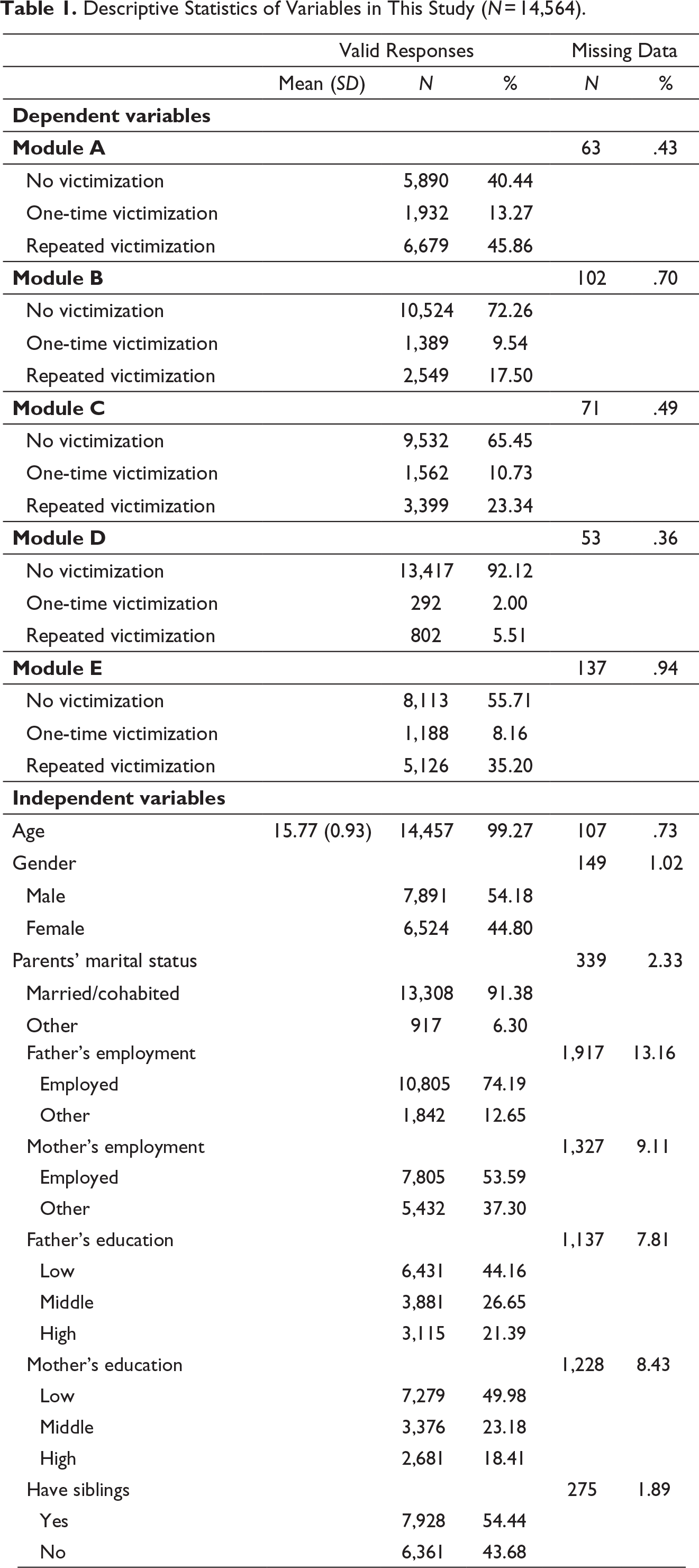
This study used data from the 2009–2010 Child Victimization Survey. The survey contains a representative sample (N = 14,564) of children aged 14–18 years from five major cities in mainland China. This survey used a three-stage stratified sampling procedure to collect the sample from research sites, yielding a school-level response rate of 70% and an individual-level response rate of 96.7% (Chan, 2013). Table 1 contains descriptive statistics of the sample. Ethical approval for this study was granted by the institutional review board of The University of Hong Kong, the Hospital Authority for Hong Kong West Cluster, and the local institutional review boards of the five mainland cities.
Descriptive Statistics of Variables in This Study (N = 14,564).
Measures
Child victimization.
The survey used an adapted Chinese version of the Juvenile Victimization Questionnaire (CJVQ) developed by Finkelhor et al. (2005b) to assess respondents’ experiences of victimization. The adapted CJVQ includes five subscales covering various forms of violence against children and adolescents: conventional victimization (8 items, Cronbach’s α = .803), child maltreatment (4 items, Cronbach’s α = .647), victimization from peers and siblings (6 items, Cronbach’s α = .768), sexual victimization (12 items, Cronbach’s α = .948), and indirect victimization (9 items, Cronbach’s α = .778). With the permission of the original authors of the JVQ, the CJVQ added five additional items to the sexual victimization subscale to capture and examine this sensitive issue in the Chinese context more accurately (e.g., Chan et al., 2013). These items ask whether respondents had been forcibly exposed to pornography, had nude photographs taken of themselves unwillingly, had their private parts exposed, been forced into commercial sex, and had nude photographs or videos of themselves uploaded to the Internet unwillingly. The modified sexual victimization module comprises 12 items. All items were rated on a 7-point scale: 0 = No experience; 1 = A single experience; 2–5 = Experienced two to five times, respectively; and 6 = ≥ six times in the past year. The CJVQ had been validated by previous studies (Chan et al., 2011).
Family and demographic characteristics.
The survey collected the following data from participants: their sex, age, whether they have siblings, parents’ marital status (married/cohabitating vs not married/cohabitating), fathers’ education, mothers’ education (for both father and mother: 1 = Low education level, 2 = Middle education level, 3 = High education level), fathers’ employment status, and mothers’ employment status (for both father and mother: employed vs unemployed).
Data Analysis
Participants’ family and demographic characteristics were summarized via descriptive analysis (Table 1). To explore family characteristics of those respondents who were most vulnerable to victimization, we first estimated the probability that our respondents would be victimized either once or repeatedly using the above family and demographic factors as predictors. We recoded all victimization items (0 = No victimization experience, 1 = One-time experience, and 2 = Multiple experiences). We then combined items in each of the five subscales to create measures for every form of child victimization, using the following coding scheme: 0 = No victimization on all items, 1 = Having experienced any form of victimization once, and 2 = Having experienced victimization two or more times on any given item.
Missing data were handled using multiple imputations (Graham, 2009), with 10 iterations of multivariate imputation by chain equations. Relative efficiency values indicate that 10 imputations produced point estimates that were more than 95% as efficient as infinite numbers of imputations (Allison, 2012). We employed multinomial logit regression analysis to calculate the probabilities of one-time and repeated victimization for each respondent on all five forms of child victimization. We then summarized the family and demographic characteristics of the top 1% of our sample with the highest probabilities.1 Statistical significance was determined using p-values (α =.05). All analyses were performed using Stata 16 software.
Results
Table 2 shows the results of the five multinomial logit regression models. Although these results display a lot of inconsistency, they suggest that, in general, family and demographic factors substantially predicted children’s experience of various forms of victimization. Overall, respondents’ sex, parents’ marital status, mothers’ education, and whether they have siblings were relatively consistent and significant factors in multiple regression models.
Results of Multinomial Logit Regression Models Predicting the Probability of Victimization (N = 14,564).
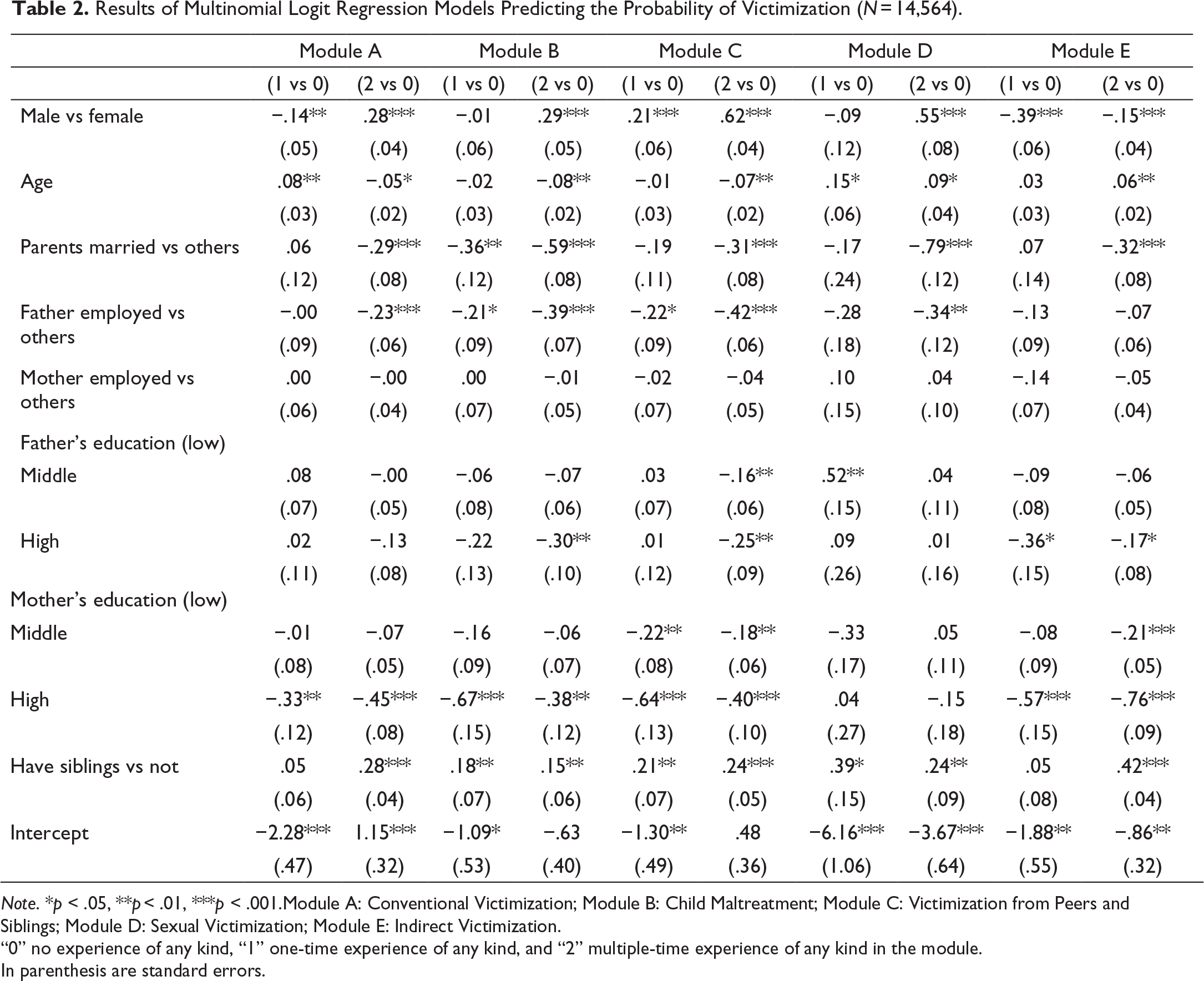
Note. *p < .05, **p < .01, ***p < .001.
Module A: Conventional Victimization; Module B: Child Maltreatment; Module C: Victimization from Peers and Siblings; Module D: Sexual Victimization; Module E: Indirect Victimization.
“0” no experience of any kind, “1” one-time experience of any kind, and “2” multiple-time experience of any kind in the module.
In parenthesis are standard errors.
We then calculated the probabilities that respondents with these family and demographic characteristics were likely to experience victimization never, once, or multiple times. Table 3 shows that sexual victimization was the form of victimization least experienced, with a mean probability (M) of no experience equal to .92. Our respondents had more experience with child maltreatment (M = .72), victimization at the hands of peers and siblings (M = .65), indirect victimization (M = .56), and conventional victimization (M = .41).
Summary Statistics of Predicted Probabilities of No Experience, One-time Experience, and Multiple-time Experience (N = 14,564).
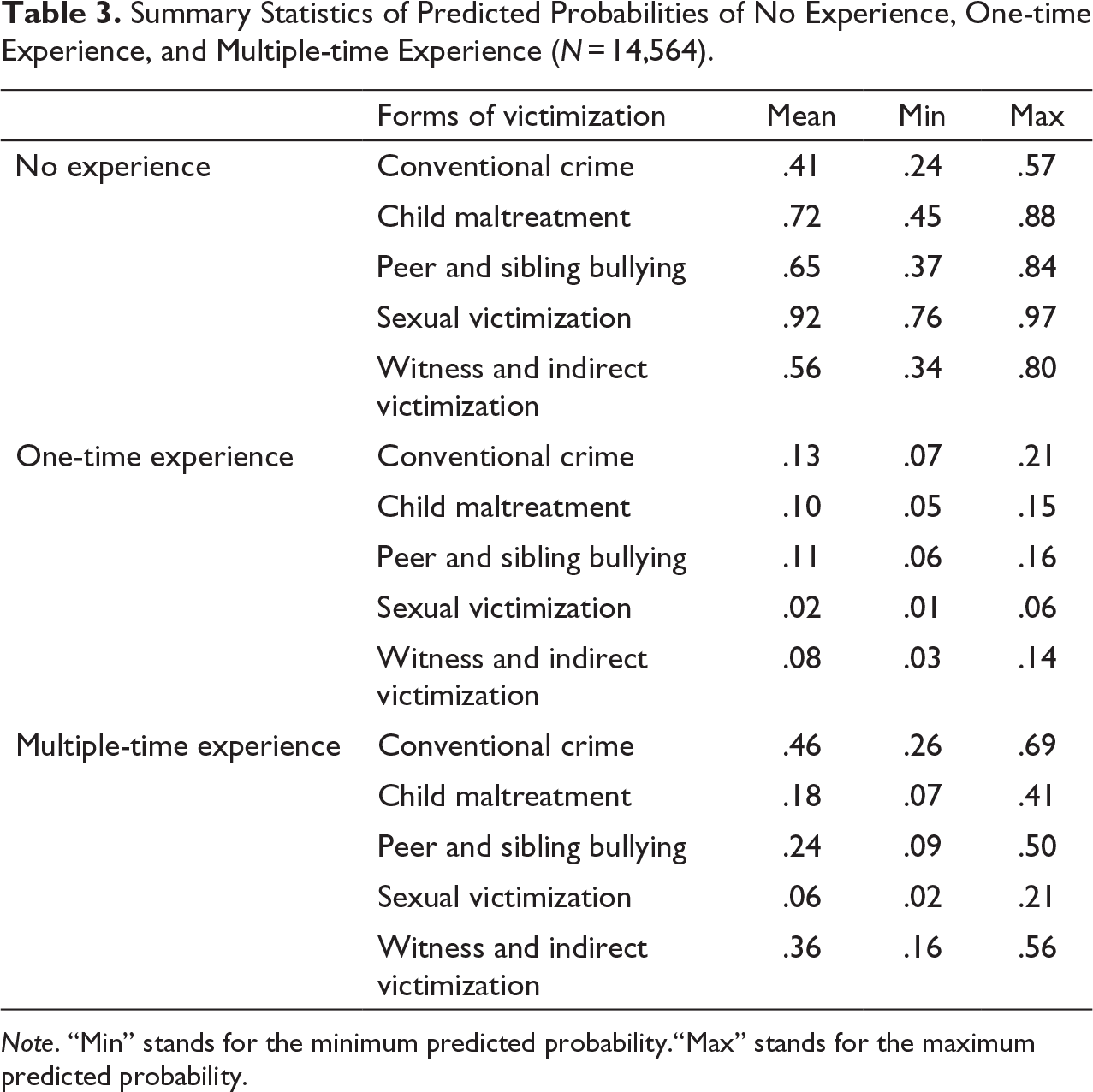
Note. “Min” stands for the minimum predicted probability. “Max” stands for the maximum predicted probability.
Table 3 also shows the average predicted probabilities of one-time and multiple experiences of each form of victimization. We found a consistent pattern in these probabilities: respondents who were victimized once as well as those who were victimized multiple times were most likely to experience conventional victimization, followed by indirect victimization, victimization at the hands of peers and siblings, child maltreatment, and sexual victimization, in descending order. Here, it was striking that the average probability that a respondent will face repeated victimization was nearly the same as the probability that they will be victimized just once.
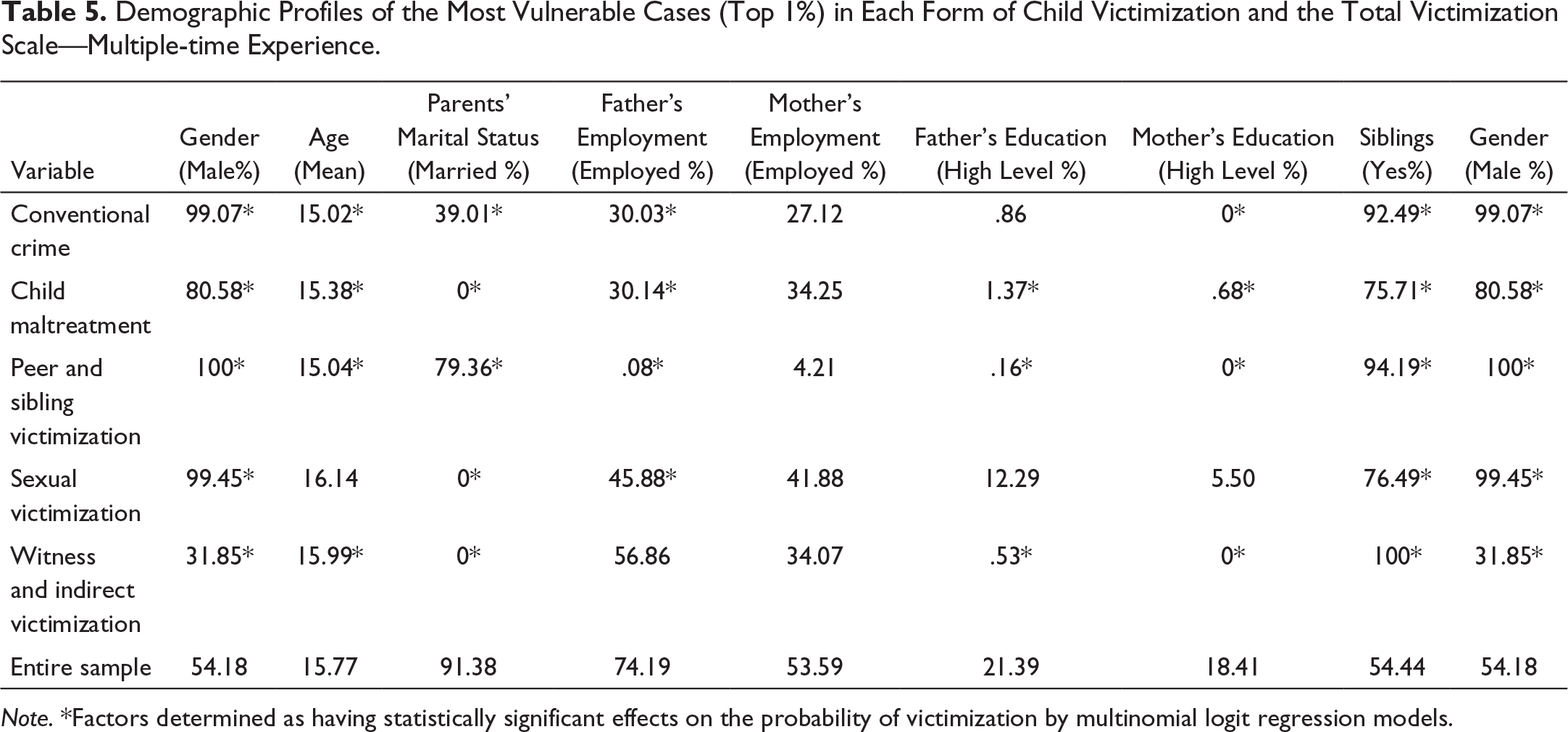
Tables 4 and 5 display our efforts to summarize family and demographic characteristics of the top 1% of cases. Table 4 profiles the top 1% of one-time victims and Table 5 profiles children who experienced repeated victimization.
Demographic Profiles of the Most Vulnerable Cases (Top 1%) in Each Form of Child Victimization and the Total Victimization Scale—One-time Experience.
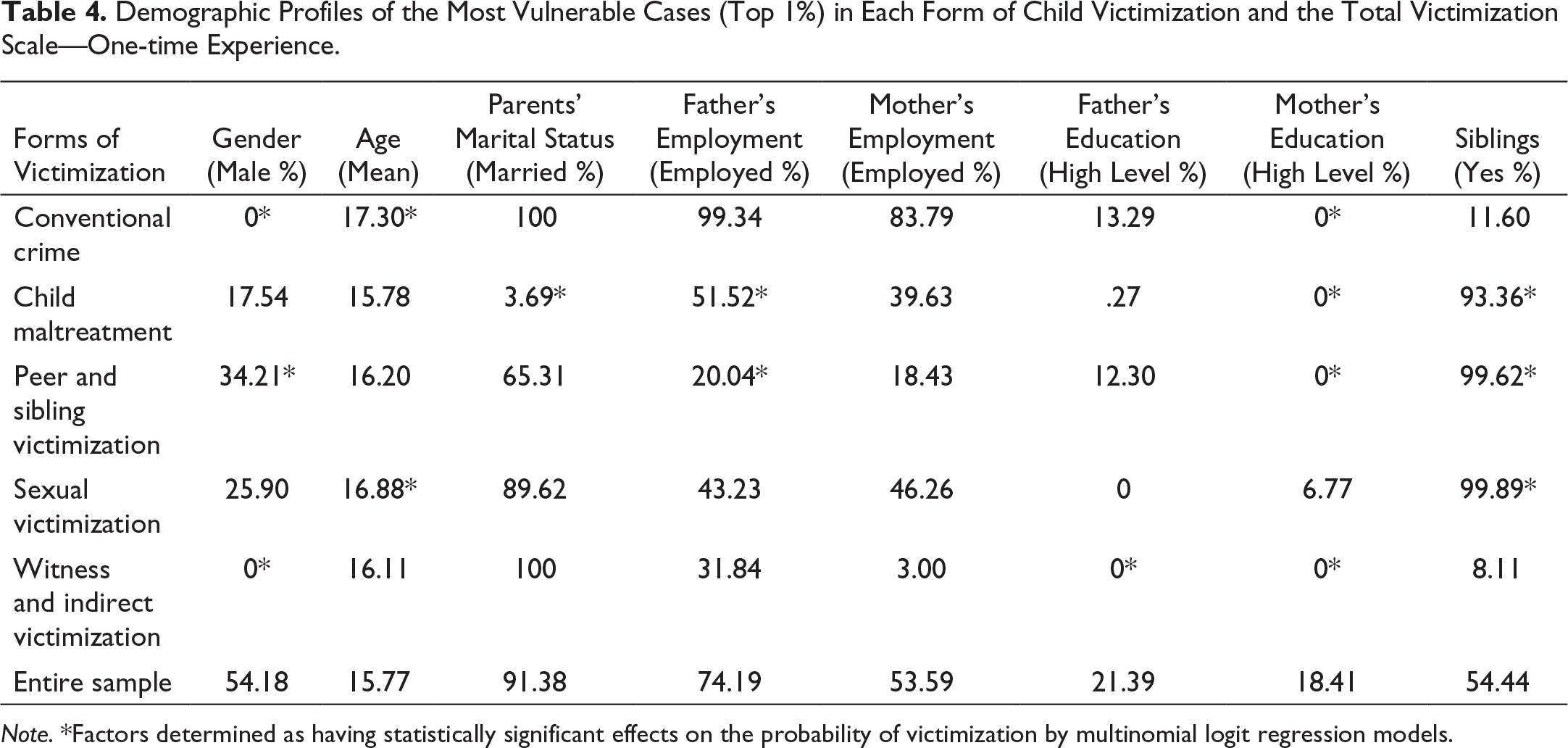
Note. *Factors determined as having statistically significant effects on the probability of victimization by multinomial logit regression models.
Demographic Profiles of the Most Vulnerable Cases (Top 1%) in Each Form of Child Victimization and the Total Victimization Scale—Multiple-time Experience.
Note. *Factors determined as having statistically significant effects on the probability of victimization by multinomial logit regression models.
According to Table 4, the profiles of the top 1% most vulnerable cases vary across forms of victimization. For conventional victimization, these cases are overwhelmingly girls, older than the respondents’ average age, and with a less-educated working mother. For child maltreatment, these cases are children with siblings whose parents are less-educated and unmarried. For victimization at the hands of peers and siblings, these cases are mostly girls with siblings whose mothers are less-educated and fathers are unemployed. Overall, the chance of Chinese adolescents experiencing sexual victimization seems to be comparatively low, and the most vulnerable adolescents are those from households with more than one child. Finally, girls whose parents are less-educated are at the highest risk of indirect victimization. In short, children who are most vulnerable to one-time victimization are often older than the respondents’ average age, have siblings, and whose mothers are less-educated.
Table 5 displays the family and demographic characteristics of adolescents who are most vulnerable to repeated victimization. Unlike the results displayed in Table 4, those displayed in Table 5 are far more consistent across different forms of victimization. For instance, the group that was more vulnerable to child maltreatment and conventional, peer and sibling, and sexual victimization was boys with siblings and single parents who are less-educated and unemployed. Those most vulnerable to repeated indirect victimization were mostly girls with siblings and less-educated single parents. Taken together, the results indicate that boys from single-parent, multi-child households with less-educated parents are most vulnerable to repeated victimization.
Discussion
Child victimization affects the well-being of millions of children and adolescents worldwide (Gilbert et al., 2009). Despite the growing number of studies on child victimization globally, relatively little is known about repeated child victimization. This study is among the first to profile the family characteristics of adolescents who are most vulnerable to repeated victimization. This provides important empirical evidence to clarify family correlates of child victimization in China and enhance family-based intervention and prevention efforts. In this section, we reflect on several findings that have important theoretical and practical implications.
Having siblings was consistently related to higher risks of child victimization in general, and repeated victimization in particular. This finding is consistent with some studies that found that families with multiple children face unique parenting struggles and often fail to buffer the negative health consequences of victimization (Chen et al., 2018; McCloskey et al., 2008). We argue that this finding is logically consistent with the argument that many Chinese families with a single child have increased protection for their children and hence have a lower chance of child victimization (see above). It is important to note that, even with strict family plan policy, more than 55% of our respondents reported having siblings. With the relaxation of the one-child policy in more recent years, families with only one child are unlikely to become more common. There are also studies showing that those who do not have siblings in a family may have systematic differences in personality development and social interaction capability when compared to those with siblings (e.g., McLaren, 2016), which might impact the chance of experiencing child victimization. We believe that more studies are needed to continue examining the link between one-child status and children’s victimization.
Adolescents who live with single, less-educated parents (especially less-educated mothers) were at a higher risk of victimization and repeated victimization than their counterparts. This is consistent with previous studies that found that elevated levels of family adversity may increase children’s risk of being victimized (e.g., Chan et al., 2017; Strøm et al., 2020; Turner et al., 2007). Divorced, less-educated parents may find parenting more difficult owing to their limited economic and emotional resources and thus face higher risk of family stress and its accompanying negative health outcomes than their counterparts (Zhu et al., 2018). Such consistent findings therefore indicate the applicability of family stress theory in the context of Chinese society.
Interestingly, parents’ employment status produced inconsistent effects across the five forms of child victimization. Adolescents reported higher risk of one-time conventional victimization when their mother has stable employment status. While this finding could be explained that employed mothers are more often absent at home, and their children are often taken care of by relatives who might provide insufficient guardianship and attachment (Chan, 2013), it is inconsistent with the expectation that stable employment should bring more security to the family and hence more protection to children. Another possibility is that it may be specific to the Chinese context. We also found that, when both parents are employed, their children were at a much lower risk of repeated conventional victimization. While this is consistent with previous findings that parents’ stable employment is associated with higher SES and more material resources and therefore lower risk of child victimization (Jansen et al., 2012; Silvestri, 2015), this finding illustrates that, at least in our study, repeated victimization can have different family correlates than one-time victimization. Further studies are needed to examine the relationship between parents’ employment status and repeated child victimization in the Chinese context.
We found some inconsistency between the profiles of those children who are most vulnerable to one-time victimization and those who are most vulnerable to repeated victimization. Specifically, adolescents’ sex, age, and their parents’ marital status have different patterns for one-time and repeat victims. Boys are clearly more vulnerable to nearly all forms of repeated victimization than girls, while no significant difference was found for one-time victimization. Girls were more vulnerable to one-time sexual victimization and boys are more vulnerable to repeated sexual victimization. In addition, older adolescents were more vulnerable to all forms of one-time victimization, but not repeated victimization. Regarding the effects of one salient family factor—parents’ marital status, our results indicated that having a single parent increased children’s risk of all forms of repeated victimization and that this relationship is less consistent regarding one-time victimization. Overall, family profiles of those with repeated victimization experiences are more consistent across all forms of victimization than those with one-time victimization, which suggests that SES is a more robust indicator of children’s risk of repeated victimization than it is of their risk of one-time victimization.
One practical implication of our findings is that social work practitioners should focus their efforts on supporting single-parent or low SES families and work to strengthen the functioning of those families. For example, community social workers should ensure that families with limited material resources have access to financial aid from external systems and that parents who bear the primary guardianship responsibility can obtain sufficient medical and educational protection to take care of the children (Chan et al., 2017). For parents who work long hours and have limited emotional resources to care for their children, social workers should enhance community care resources or provide related supporting services in the community as a supplement.
This study had a few limitations. First, we only analyzed individual and family demographic profiles of adolescent victims. Future studies should examine community-driven factors in more detail. Second, the age range of study respondents may reduce the generalizability or predictive power of our findings. Thus, future studies should consider including additional factors to improve our initial explanatory model. Third, our cross-sectional design has limited temporal coverage. Future longitudinal studies with more recent data could provide more precise evidence and support for future prevention and intervention measures. Finally, this study only employed data from five major cities in mainland China, which might reduce its generalizability to the general Chinese adolescent population. Future studies should try to achieve a broader representativeness of the sample.
Conclusion
To summarize, this study found that, in China, boys from low SES families living with siblings are at exceptionally high risks of repeated victimization. These characteristics may help practitioners develop more effective screening, prevention, and intervention measures for at-risk adolescents, thus enhance existing policy and practice. It also might help enable personalized involvement in efforts to prevent violence, enhance parenting skills, and support disadvantaged families on a macro level.
Our findings corroborate the implications of family stress theory, revealing that less-educated and unmarried parents are key elements of repeated victims’ profiles. The findings indicate that adverse family environments increase children’s vulnerability to repeated victimization. We suggest that future preventive and intervention programs for repeated victimization should focus more on families with these specific characteristics. For instance, family members and high-risk adolescents alike may benefit from enhanced resources and educational programs that promote healthy family functioning.
Furthermore, families with working mothers might benefit from receiving material and emotional resources and less-educated parents might benefit from joining parenting programs. These measures would help parents cultivate skills that would improve their parenting and reduce their children’s vulnerability to various forms of victimization. In short, we suggest that future intervention programs focus on improving communication and the expression of empathy within families.
Footnotes
Authors’ Note
Chenyang Xiao contributes equally to this work as first author.
Acknowledgments
We thank Professor Ko Ling Chan from Hong Kong Polytechnic University, who authorized us to access the original data.
Declaration of Conflicting Interests
The author(s) declared no potential conflicts of interest with respect to the research, authorship, and/or publication of this article.
Funding
The author(s) disclosed receipt of the following financial support for the research, authorship, and/or publication of this article: This study was supported by the Fundamental Research Funds for the Central Universities, and the Research Funds of Renmin University of China (No.: 21XNL013).
