



Abstract
Teen dating violence (TDV) is a public health crisis that organizations and individuals in several fields are working to prevent and address. State lawmakers are a group with substantial power to address TDV and intimate partner violence (IPV) through policies including Civil Protection Order (CPO) statutes. Understanding the factors that influence how state legislators craft TDV and IPV policies and how those policies are implemented can lead to policy processes that better serve survivors. Past research suggests the level of gender inequality in a state may be an important influence on TDV policies. This study used a case study approach to compare the processes of adding individuals in dating relationships to CPO statutes in a subset of states (n = 3) with high, middle, and low levels of gender inequality. Results did not suggest that gender inequality was related to variation between states but rather that it was a larger factor that creates the need for TDV policies at all. Relationships between the state IPV coalitions and lawmakers and the historical moment that laws were considered emerged as important factors in interstate variation. Future research can build on these results by further exploring the role of gender inequality in policy processes with additional states or policies and by examining the factors identified here in greater depth. Implications for practice are also discussed.
Keywords
Background
The Centers for Disease Control and Prevention (CDC) define intimate partner violence (IPV) as “physical violence, sexual violence, stalking, or psychological harm by a current or former partner or spouse” (The Centers for Disease Control and Prevention, 2018). “Teen dating violence” (TDV) is a type of IPV defined by a set of somewhat nebulous constructs. While a “teen” is typically defined as someone between 13 and 19 years of age, much of the research on TDV encompasses a broader range of ages that often includes young adults (Luthra & Gidycz, 2006; National Institute of Justice, n.d.). With regard to “dating,” adolescents configure their romantic and sexual relationships in ways that may not fit neatly into traditional or conservative categories, and they may not identify with terms such as “boyfriend/girlfriend” (Smith et al., 2009). Therefore, for the purposes of this article, TDV extends the CDC definition of IPV to physical, psychological, and sexual abuse, and/or stalking that occurs in a casual or committed sexual or romantic relationship, specifically in relationships where at least one person is a minor.
Several civil and criminal legal policies to address IPV can be extended to address TDV (Pensak, 2015). Civil protection orders (CPOs) are among the more popular. A CPO is given by a judge to a survivor after they provide evidence about how the perpetrator is harming them, and the perpetrator has had a chance to respond to the allegations. Different forms of relief are available, including orders to the perpetrator to not contact the survivor, to stay a certain distance away, or to avoid their place of work, among others. If the perpetrator violates the terms of the CPO, they may face consequences, including criminal charges for repeated or serious violations. Past research suggests that CPOs may not be effective in preventing future violence between adults and may lead to more extreme forms of violence (Benitez et al., 2010; Broidy et al., 2016; Dowling et al., 2018). However, important differences between adult and adolescent relationships suggest that CPOs may be more effective in preventing TDV, including fewer legal, familial, economic, and emotional ties between adolescents and a shorter history of mild-to-moderate violence, a factor that often applies to teen relationships (Benitez et al., 2010).
Policy makers must make several decisions when designing CPO policies including who can be a party to a CPO, available forms of relief, types of violence covered, the relationship between parties, and so on (Break the Cycle, 2010; Pensak, 2015). With so many decisions to be made, variation within and across the U.S. states is likely. In 2010, the TDV advocacy organization Break the Cycle assessed the alignment of each state’s CPO laws with policy recommendations for CPO policies that are most protective of TDV survivors such as granting minors CPOs, including dating relationships in CPO laws, and allowing minors to file CPOs on their own behalf. They found substantial differences in how TDV was addressed in CPO laws, from no coverage at all to equitable coverage with adult IPV (Break the Cycle, 2010).
Several key factors influence IPV and/or TDV policymaking and implementation including societal factors, media coverage, advocacy, and lobbying frames (Annesley et al., 2014; Hoefer et al., 2015; Prindeville, 2000). Gender inequality, operationalized by the United Nations as “the loss in potential human development due to inequality between female and male achievements” in reproductive health, empowerment, and the labor market (United Nations Development Programme, 2020), represents an important factor that has been associated with higher rates of TDV and IPV victimization in past studies, particularly TDV and IPV among girls and women (Gressard et al., 2015; Willie & Kershaw, 2019). Prior research also suggests that gender inequality may impact the timing, content, and implementation of bills addressing IPV and/or TDV. For example, legislatures in states with higher levels of gender inequality may be less likely to include bills addressing issues such as TDV on their agenda or they may pass such bills later than states with less inequality (Annesley et al., 2014; Prindeville, 2000).
The media (Andrews & Edwards, 2004; Le et al., 2019) and the individuals and groups involved with a bill also influence the IPV and TDV policymaking process (Andrews & Edwards, 2004; Spehar, 2012; Tunstall et al., 2016). Such groups and individuals may lobby directly or indirectly, testify at committee hearings, submit comments on rule changes, or serve on advisory boards. Because much of the policy on IPV and TDV involves multiple organizations within a community, several entry points exist for non-legislative groups and individuals (e.g., nonprofit organizations and other advocates) to influence the policy process. Legislative champions are lawmakers that frequently author and promote bills on specific topics they care about. In general, legislative bodies with higher proportions of female legislators pass more bills that primarily affect women, and they pass these bills more easily than legislatures that are male dominated (Atkinson, 2020; Itzkovitch-Malka & Friedberg, 2018). The presence of female legislative champions is also important for the success of bills on IPV (Spehar, 2012). However, gender inequality may decrease the likelihood that voters will elect women to state legislatures (Atkinson, 2020). Thus, states with higher levels of inequality may have fewer female legislators to champion legislation on issues such as IPV and TDV.
The types of arguments and data that are presented to lawmakers and how they are framed also influence the policy process (Krizsan & Popa, 2014; Tunstall et al., 2016). Through these lobbying frames, advocates can define the problem and articulate a preferred solution for the lawmakers. Krizsan and Popa (2014) argue that the way gender inequality is (or is not) discussed in the lobbying process influences the goals and effectiveness of the resultant laws in addressing the problem of IPV. Thus, legislative advocates in states with higher gender inequality may have more difficulty persuading lawmakers to prioritize bills addressing TDV. After a bill has been passed, societal levels of gender inequality may also influence how the law is enacted (Le et al., 2019). States with higher levels of gender inequality may have CPO laws that cover fewer people or forms of abuse, that are harder to access, that are not as comprehensive, or that are not perceived as effective when compared to states with more equality.
The current study builds on this past research by examining the processes of adding “dating relationships” to CPO laws and implementing the subsequent policy changes in a subset of states (n = 3; Connecticut, Ohio, and Oklahoma) with differing levels of gender inequality using a case study method. The study sought to address four research questions.
Which of the policy features identified by Break the Cycle (2010) does each state have? What were the advocacy and lobbying processes for adding “dating relationships” to CPOs in each state? What were the facilitators and barriers to the formulation and implementation of bills adding dating relationships to CPOs across states? How do the states studied vary in formulation and implementation of bills adding dating relationships to CPOs and to what extent does gender inequality relate to variation between states?
Method
Study Design
This exploratory study synthesizes case studies of three states with contrasting levels of gender inequality to answer its research questions. Case studies were selected as the method given their focus on both events and the context of those events, particularly when it is not possible to test hypotheses about events that occurred in the recent past (Yin, 2009). Individual case studies were completed for each state, and the results were synthesized to draw cross-case conclusions (Yin, 2009, p. 57). Each individual case study included a chronicle, a descriptive tool that lays out a series of events, of the advocacy process as well as analysis of the important facilitators and barriers in that state (Yin, 2009) using interview and archival data. Within each state, interviews were conducted with one or more individuals involved with the policy formulation and/or implementation processes. Documents from this process were reviewed as well.
Sample
States.
Study states were purposively selected based on high, middle, and low levels of gender inequality as measured by the Gender Inequality Index (GII), a composite measure developed by the United Nations (United Nations Development Programme, 2020), and as reported in Gressard et al. (2015) and Willie and Kershaw (2019). The GII ranges from 0 (complete equality) to 1 (complete inequality). Connecticut had the lowest levels of gender inequality, Oklahoma had the highest and Ohio had a level in the middle (see Table 1).
Policies.
Each state’s policy added individuals in dating relationships to the list of individuals eligible for a CPO or, in the case of Ohio, created a new type of CPO to cover these individuals (Table 1). The text of each policy was obtained from legislative websites (Connecticut, Ohio) and contacts (Oklahoma) subsequent to website searches of
Informants.
Key informants were recruited from two groups: policy advocates and policy implementers. Policy advocates were individuals who either directly lobbied state legislators for the change or who helped craft lobbying campaigns, messaging, arguments, and narratives designed to influence elected officials. Policy implementers were primarily attorneys and victim service providers, whose main interaction with the law is through implementation. A total of 37 individuals identified through information available on the internet, snowball sampling, and personal contacts were invited to participate in the study including 7 individuals in Ohio (n = 7), 12 in Connecticut (n = 12), and 18 in Oklahoma (n = 18). Of those contacted, eight (n = 8) individuals participated in interviews including four participants from Ohio (n = 4), three from Connecticut (n = 3), and an expert in Oklahoma (n = 1) with extensive experience in domestic violence policy in the state (Table 1). Several of the contacts in Oklahoma referred the lead researcher to this individual.
Gender Inequality Among Study Sites, Materials, and Participants.
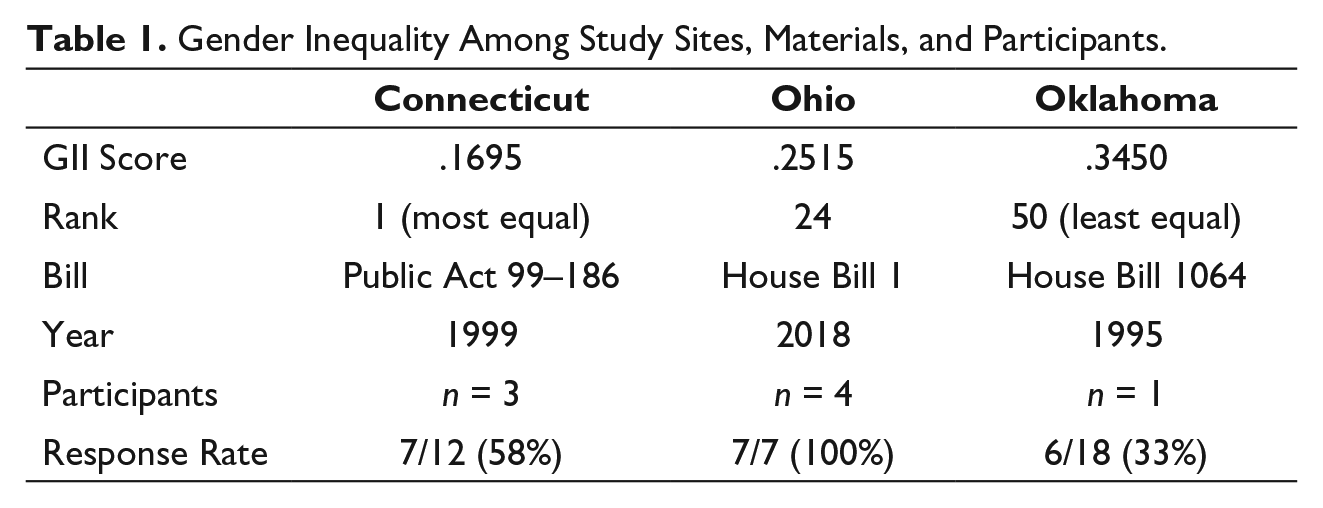
Six participants served, at least in part, in policy advocate roles: two in Connecticut, three in Ohio, and one in Oklahoma. In Connecticut and Ohio, one participant was a policy implementer. The participant from Oklahoma served in both the policy advocate role and the implementer role and is therefore included in both lists.
Documents.
For each case study, the state library and the state legislature were contacted for relevant documents including written and oral testimonies from those supporting and opposing the bills; transcripts from hearings, which included legislative debate and discussion on the bills; and committee reports. Voting records were also requested. Transcripts from all legislative discussions and hearings were available in Connecticut. Testimony from those supporting and opposing the bills was appended to the transcripts. Testimony from 19 advocates in support of Ohio’s bill was provided. Voting records were available for all three states. No additional documents were available from Oklahoma.
Interviews
Structured interviews included questions related to the informant’s role in the policy process. A set of questions were asked of all informants to illuminate the context of the policy process including the role of gender inequality and survivor identity in the policy process, perceptions of the success of the law, who was involved in the process, and other important factors in the state. Policy advocates (n = 6) were asked an additional set of questions that focused on the policy formulation process, such as questions about lobbying frames and how the bill changed over time. Policy implementers (n = 2) were asked additional questions about the current state of CPO laws in the state and the influences on the implementation process. The participant from Oklahoma served in both the policy advocate role and the implementer role and was asked both sets of questions. A copy of the interview protocol is available upon request.
Six of the eight interviews were conducted via phone and the remaining two, both in Ohio, were conducted in person. At the beginning of each interview, verbal consent was obtained from participants. The average interview was 54 minutes long, with a range of 40 to 75 minutes. During the interview, electronic notes were recorded in all but one interview. In that interview, paper notes were used during the interview then immediately transferred into an electronic format after the interview was complete. After each interview, notes were lightly edited for spelling, grammar, and clarity. To ensure accuracy, interview records were emailed to participants for member checking. Participants were asked if the responses as recorded reflected the facts and opinions discussed in the interview. Their approval of the interview record was obtained prior to analysis. The Ohio State University Institutional Review Board approved this study as exempt human study research prior to data collection.
Data Analysis
The analytic approach was informed by a policy process framework proposed by Flynn (1992) and described in Ginsberg and Miller-Cribbs (2005). The process framework focuses on the individuals and groups involved in policymaking, their relationships to one another, and what influences their opinions and decision-making. The process framework also pays attention to how the result of a policy aligns with the initial goals of those seeking the policy change.
To address the first question (Of the potential policy features identified by Break the Cycle (2010), which features does each state have?), participants with experience implementing the laws studied here were asked if each of the policy recommendations are currently present in their state laws or practices. The 10 policy recommendations included: (a) minors can be granted CPOs; (b) dating relationships are included; (c) minors can file on their own behalf; (d) The minor petitioner’s parents do not have to be notified; (e) same-sex couples qualify; (f) minors can be respondents; (g) other people can file on the minor’s behalf; (h) multiple forms of abuse are protected against, including property damage and technology-based abuse; (i) minors’ CPO cases are heard in a court familiar with TDV; and (j) CPOs are modifiable.
To address the second question (What were the advocacy and lobbying processes for adding “dating relationships” to CPOs in each state?), data from interviews and documents from each state were cross-walked with the content of each state’s laws and compiled into an individual case study for each state. Individual state case studies are available upon request. Important themes that were analyzed within each case study’s chronicle included the types of groups involved in lobbying, lobbying frames used with legislators, the length and difficulty of the lobbying process, similarities and differences between how TDV and IPV are addressed in the state, media coverage of the bill, and the role of the hypothetical survivor’s identity in the process.
To address the third question (What were the facilitators and barriers to the formulation and implementation of bills adding dating relationships to CPOs across states?), interview data were analyzed to determine who was involved in the policy process and what factors influenced formulation and/or implementation. A coding approach informed by grounded theory was used to analyze these data (Strauss & Corbin, 1998). While the approach was not purely a grounded theory analysis because some analytical themes were pre-specified (as discussed above), the coding procedure allowed for unexpected themes to emerge within and between the states. The pre-specified and emergent themes within each chronicle were analyzed, and if relevant, classified as either a facilitator to the process or a barrier.
Finally, to address the fourth question (How do the states vary in formulation and implementation of the policy and to what extent does gender inequality relate to variation between states?) a cross-case analysis and synthesis of the three individual state case studies were conducted. Because this study is exploratory, no hypotheses were tested. Rather, the goal was to describe processes and variation without prediction. To increase the validity of the study, however, it was important to specify the themes that would be analyzed in cross-case synthesis prior to data collection (Yin, 2009). The themes analyzed for this question were the same as those analyzed for the first research question: types of groups involved in lobbying, lobbying frames used with legislators, the length and difficulty of the lobbying process, similarities and differences between how TDV and adult IPV are addressed in the state, media coverage of the bill, and the role of hypothetical survivor’s identity in the process. Each participant was asked directly if they believed gender inequality in their state played a role in how the law was created or implemented. Participant responses were compared within and across states in conjunction with the cross-case synthesis described.
Results
Policy Features and Implementation
Presence or Absence of Break the Cycle (2010) Policy Features in Connecticut, Ohio, and Oklahoma’s CPO Laws.
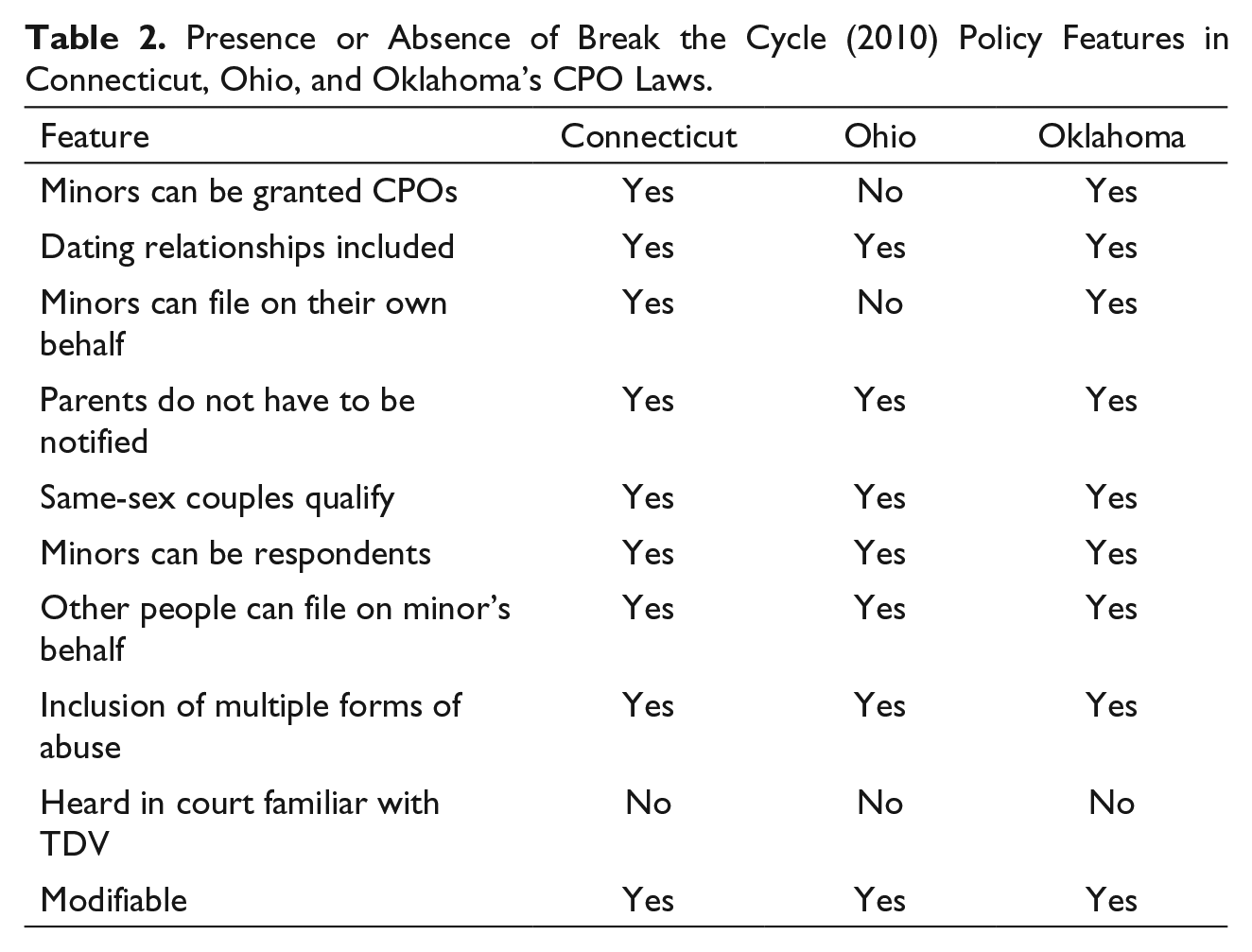
Connecticut and Oklahoma shared the same nine features: (a) minors can be granted CPOs; (b) dating relationships are included; (c) minors can file on their own behalf; (d) the minor petitioner’s parents do not have to be notified; (e) same-sex couples qualify; (f) minors can be respondents; (g) other people can file on the minor’s behalf; (h) multiple forms of abuse are protected against, including property damage and technology-based abuse; and (j) CPOs are modifiable. Minor teens experiencing TDV did not have access to CPOs in Ohio, so accessibility to minors and ability for minors to file on their own behalf were necessarily missing from Ohio law.
Notably, the hearing of cases in a court familiar with TDV was a feature commonly missing from each state’s statute. Barriers such as cost can reduce the likelihood of the legislature requiring judges to receive TDV education and of judges electing to pursue this training independently. Judicial education was a topic that was discussed with informants from all states. Informants generally felt that judicial education was the key to best serving survivors in the court system; however, access to and requirements concerning judicial education varied throughout their state and were largely out of informants’ control.
Advocacy and Lobbying Processes for Adding “Dating Relationships” to CPOs
Unique factors were involved in each state’s process of adding “dating relationships” to CPOs including the groups involved; the lobbying frames utilized; the length and difficulty of the advocacy process; media coverage; survivor identities; and implementation processes. Each of these factors and their relationship to the advocacy and lobbying process are discussed in turn.
Groups involved.
Across the three states, the state IPV coalitions and legislative champions, particularly female legislators, emerged as common groups that were significant in the advocacy process. Each state had a federally recognized coalition of local IPV programs that generally supported and provided state-level advocacy on behalf of the local programs. In particular, the coalitions often engaged in policy advocacy at the state legislatures. The coalitions in both Connecticut and Oklahoma were both actively involved with the advocacy process for the bill in their state. Informants from both states indicated that these organizations identified a gap in services that was excluding some survivors from access to CPOs and that they then sought to change the policy through advocacy with specific legislators that they frequently worked with on IPV legislation. The coalitions and their lobbyists were also actively involved in deciding on the language and timing of the proposed bills through collaboration with lawmakers. Informants in both states viewed the legislative champions as key to their success.
The Ohio coalition also had a large influence on the process as HB 1 worked its way through the legislature, but this influence was in the opposite direction as the other two states. Ohio has a complicated system of CPOs, and prior to HB 1, this system did not provide statutory relief for adult survivors who were in dating relationships with their abuser and who did not cohabitate or have shared children with them, nor did it provide relief for minor survivors of TDV. HB 1 was proposed by a prominent female legislator to address this gap in the statute because advocates in her district were reporting that adult dating violence survivors did not have access to CPOs. Informants from the Ohio coalition, however, stated that this was a localized problem. They said that they had worked through the courts to define “cohabitating” in such a way that almost all adult survivors in dating relationships in Ohio were eligible for CPOs. The problem, to them, was localized to the legislator’s district and required judicial education, not a change in state policy. The coalition feared that the changes proposed in HB1 would make the CPO system less accessible to survivors, not more.
Compared to the earlier adopting states, Ohio’s state coalition and the bill’s legislative champion had a much more acrimonious and adversarial relationship that was mutually identified as slowing the bill’s formulation process substantially. HB 1’s legislative champion had tried to pass a similar bill during the previous legislative session, but the state coalition succeed in stalling and defeating the bill the first time. The coalition also delayed the process for HB 1, which took much longer to pass than supporters had expected based on the priority designated by being the first House Bill. Both proponents and opponents of HB 1 reported that the state coalition and the legislative champion did not work collaboratively on the bill’s language at any point, particularly after the coalition had defeated the first iteration.
Lobbying frames.
Lobbying Frames in Each State.
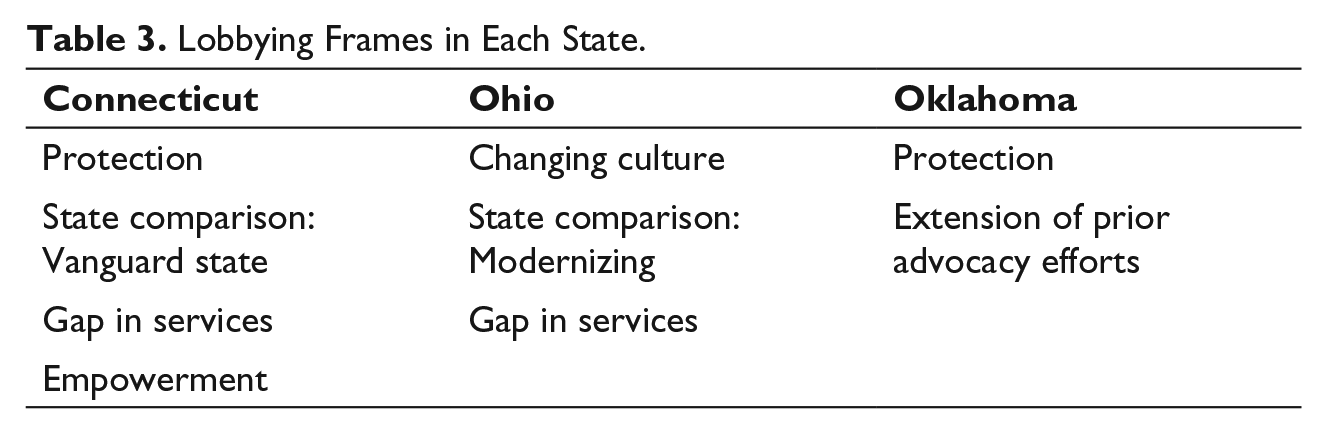
The “protection” frame, present in both Connecticut and Oklahoma, focused on the need to protect survivors who are often characterized as unable to help themselves. Advocates in both Ohio and Connecticut employed a “state comparison,” arguing in the case of Connecticut that the legislature had the opportunity to be better than the states who had not yet adopted such a law, and in the case of Ohio, that the legislature needed to avoid the shame of being the last state to adopt the law. In Connecticut, legislators urged the passage of PA 99–186 to mark the state as a national leader in addressing IPV. Conversely, advocates in Ohio argued that legislators should pass HB 1 to avoid being the last state to adopt such language (Ohio was the 49th state to do so). The frame “gap in services” was also present in Ohio and Connecticut. This frame emphasized the areas where the existing law fell short and left survivors without a legal resource that advocates felt they needed. The final frame in Connecticut, “empowerment,” emphasized the ability for survivors to help themselves if the legislature provided them with the necessary tools (i.e., CPOs).
The unique frame in Ohio was “changing culture.” This frame focused on how cultural ideas around relationships, especially dating, cohabitating, and delaying marriage, had changed since the state’s CPO laws were written, and therefore the laws needed to change as well. Finally, “extension of prior advocacy efforts” was the unique frame in Oklahoma. In this frame, advocacy efforts were presented as a logical next step to prior changes that were made to the state’s laws.
Length and difficulty of the advocacy process.
In the two states that adopted legislation early, the advocacy process was completed in less than six months (78 days for Connecticut, 119 for Oklahoma). Despite the speed at which these bills were passed, informants suggested no prior attempts at passage had been made. Ohio, on the other hand, took over a year (428 days) to pass HB 1 after a prior attempt to pass a similar bill in the previous legislative session by the same lawmaker. Therefore, the total time spent advocating for this statutory change was far more than a year.
Almost all informants reported that ease of passage was directly related to length of the advocacy process as well as the strength of the relationship between the state IPV coalition and the legislator proposing the bills, with stronger relationships leading to quicker and easier passage. Overall, informants in Oklahoma and Connecticut reported that the policy formulation process moved quickly and easily in their states, largely due to the collaboration between the coalition and the legislators, whereas the process in Ohio was longer and more contentious due to the adversarial coalition-legislator relationship.
Media coverage.
Media coverage in Connecticut and Oklahoma was minimal according to informants. Coverage of PA 99–186 and HB 1064 was not readily available online as well. The media was more important for the passage of HB 1 in Ohio according to informants who advocated for the bill. More coverage was available online as well, although this can partly be attributed to the prevalence of digital journalism in the 2010’s when compared to the 1990s when Connecticut and Oklahoma’s laws were passed.
According to informants, the Ohio bill’s designation of “House Bill 1” indicates that it was the top priority of House leadership at the beginning of the legislative session. Such a designation is likely to attract and sustain media attention and was credited by proponents with helping HB 1 pass. Positive media attention was also important for counteracting the quieter campaign against HB 1 that the state coalition was leading. As such, media coverage can create supporters among the general public who may not be highly familiar with CPO laws and these supporters may then pressure lawmakers. The state coalition did not want media attention placed on the fact that they were opposed to an IPV bill, even though they felt they had solid justification for their opposition. For example, the coalition did not publicly testify against the bill. Rather, they worked directly with lawmakers to oppose the bill. Media attention on HB 1 forced lawmakers to choose between voting with the coalition and potentially angering voters or against the coalition but in line with their constituents' desires.
Survivor identity.
A facet of survivor identity that was commonly invoked in the advocacy process was gender. In the interviews, advocates either referred to survivors as women or did not explicitly use gendered terms. Despite the prevalence of gendered language and the fact that each of these bills was intended to help women primarily, advocates in all states also said that they did not focus their lobbying efforts around gender or try to frame the lack of protection as a gender inequality issue.
Implementation process.
Informants in Oklahoma and Connecticut did not note any implementation challenges related to the specific bills studied and reported that implementation was straightforward. They did, however, identify intrastate variation as a barrier to successful implementation of protection order laws in general. In some parts of their states, informants reported that obtaining a CPO was easier than in others., However, geographic variation is typically related to the amount of evidence required rather than the ages of the survivor or the type of relationship. Therefore, minor and adult survivors typically had the same access to CPOs within a region.
Unlike the other states, Ohio’s implementation was described as a much more complicated task. Rather than incorporate dating relationships into existing protection orders, HB1 created a new type of protection order. With the new order came new forms and new procedures. These forms and procedures were still being developed two years after the law was passed. One informant in Ohio did not perceive the implementation of HB1 to be going smoothly because it still has not been implemented in a meaningful way, though perceptions of the process may change in the future. Informants disagreed in their perceptions of the change in access to CPOs for survivors, and quantitative data was not available to evaluate changes in access at the time of this writing.
Facilitators and Barriers to Policy Formulation and Implementation
Facilitators and Barriers in the Policy Processes.
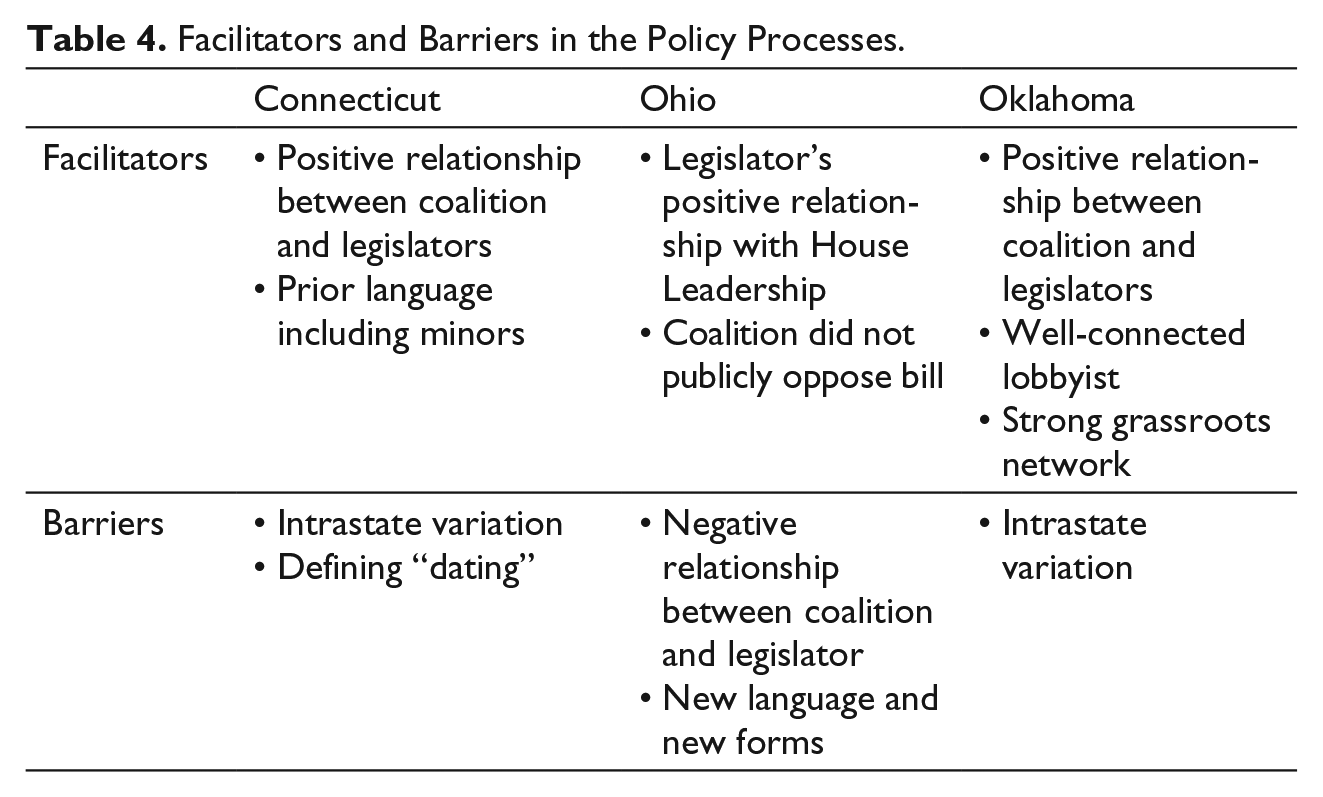
Advocates in each state also faced barriers in formulation and/or implementation processes (Table 4). In the formulation process, these barriers slowed or stalled the process. During implementation, the barriers reduced the informants’ perception of the laws’ efficacy and/or the ease at which they were able to implement the laws. Whereas positive relationships served as major facilitators in Oklahoma and Connecticut, the negative relationship between the state coalition and the legislators championing the bill presented the largest barrier to policy formulation in Ohio. In Oklahoma and Connecticut, the state coalitions worked with legislative champions to design legislation they believed would effectively address a gap in services. The state coalitions then publicly supported the bills and the lawmakers who proposed them. By contrast, the state coalition in Ohio was not asked to be involved in the drafting of the bill and quietly worked against the bill both times it was introduced.
A common barrier across Oklahoma and Connecticut in implementation was the challenge of intrastate variation in how CPOs were granted and under what conditions, with differences between judges and between jurisdictions in the duration and severity of abuse that is required for relief to be granted. The challenges are similar in Ohio, but the situation is more fluid because the implementation process is ongoing. As of this writing, the courts are establishing definitions and processes for the new dating violence CPOs, and this process creates substantial differences in survivor access across the judicial system.
Gender Inequality and Policy Formulation and Implementation
Finally, each informant was asked if they saw a connection between the level of gender inequality in their state and the advocacy or implementation process for the bill under study. Two similar themes emerged from the informant responses. First, almost all informants explicitly stated that gender inequality is the underpinning of gender-based violence and the entire movement to end IPV. They believed that they would not be engaged in this work if not for gender inequality because there would be no need.
However, despite this obvious connection between gender inequality and gender-based violence, the second theme that emerged was that the issue of gender inequality was not discussed overtly, especially with lawmakers. Gender inequality was not a topic of discussion when advocating for or implementing these laws and no informants mentioned anything specific to their state that connected gender inequality to the advocacy or implementation processes for these bills. Rather, informant responses tended to focus on the larger movement to end gender-based violence and gender inequality more broadly, from the beginnings of the consciousness-raising movement for domestic violence in the 1960’s and 1970’s to the ongoing efforts to protect reproductive health care access. The informants’ perception of the role of gender inequality in their states’ processes and the similarities of the most and least equal states relative to the middle state suggest that a state’s level of gender inequality was not among the most influential factors in the policymaking process.
Discussion
This study contributes to the literature on IPV and TDV by identifying the unique policy features, advocacy and lobbying processes, and facilitators and barriers to adding “dating relationships” to CPOs in three states with varying levels of gender inequality. Study findings comport with past research by underscoring the critical role of advocacy (Annesley et al., 2014; Hoefer et al., 2015; Prindeville, 2000) in IPV and TDV policy processes. The findings emphasize a key tenet of advocacy: relationships are paramount in making the policy process effective. Connecticut and Oklahoma generally had easier advocacy and implementation processes, largely due to the involvement of the state coalition and their positive relationships with supportive legislators. However, the advocacy process in Ohio was much longer and more difficult than the other states, and the implementation process was generally perceived as less effective. Informants in Ohio believed this was related to the negative relationship between the state coalition and the legislator that proposed the bill.
State IPV coalitions were also found to be important in the process, an echo of prior research that found nonprofit advocacy organizations can exert significant influence on the policy process (Andrews & Edwards, 2004). While the lawmakers controlled the language of the bills and if and when the bills were introduced and voted on, the state coalitions could make the process more or less difficult. In Oklahoma and Connecticut, the state coalitions helped draft the language of the legislation to fit the problems their member organizations were observing. As a contrast, the Ohio coalition was credited with stalling the first iteration of HB 1 and slowing the process of HB 1 by lobbying against it. Past research has also found female legislators to be important champions of legislation on IPV and other issues that affect women (Atkinson, 2020; Itzkovitch-Malka & Friedberg, 2018; Spehar, 2012). Similarly, informants in all three states identified female legislative champions as important players in the advocacy process.
The case study approach also yielded new findings that inform the field’s growing knowledge of factors that influence IPV policy processes by highlighting the historical moment that a policy is proposed as a key factor. The bills in Oklahoma and Connecticut were passed in 1995 and 1999, respectively, but the law in Ohio was not passed until 2018. The 1990’s may have been an easier time to pass legislation like HB1064 and PA 99–186 because awareness of dating violence as an issue was growing and there was a true gap in the protections offered to survivors. In this scenario, adding dating relationships to protection orders was an obvious and easy solution. Lawmakers who passed these laws also had the benefit of recognition as a vanguard legislature with “state-of-the-art laws.” In Ohio, on the other hand, advocates in the 1990’s, 2000’s, and 2010’s created a patchwork system through the courts to protect survivors who were excluded from the statute. By the time HB 1 was introduced, this system protected most adult survivors of dating violence in the state and the gaps in services were localized to only some regions. Therefore, the state coalition and advocates in most parts of the state did not see a statutory solution such as HB 1 as effective. Had HB 1 been introduced closer in time to the similar laws in Oklahoma and Connecticut, the policy process may have been easier than the process was in 2018. The different opinions on the efficacy of the proposed bill also influenced the relationship between the state coalition and lawmakers in each state. When advocates perceived that the timing was advantageous for such a bill, they supported the process, as in Oklahoma and Connecticut, but when the moment for a policy solution had passed, as in Ohio, the state coalition slowed the policy process and did not have a collaborative relationship with the proposing lawmaker.
The study also sought to determine the extent to which gender inequality related to variation between these states in the formulation and implementation of bills adding dating relationships to CPOs. Given that states with higher levels of gender inequality have higher prevalence rates of IPV (Willie & Kershaw, 2019) and TDV (Gressard et al., 2015) it was expected that interstate variation in gender inequality might be related to state differences in TDV and IPV policy processes. However, findings suggested that Connecticut, the state with the lowest levels of gender inequality, and Oklahoma, the state with the highest levels, were generally similar with regard to policy formulation and implementation processes, whereas Ohio, a state with a middle level of gender inequality, was dissimilar. This pattern held across many of the themes identified, including lobbying length and difficulty, the groups involved in advocacy, features of the laws, and the perceived efficacy of the law post-implementation. Whereas gender inequality was described by informants as the reason for gender-based violence and the need for policies to end it, results did not support the idea that variation between the states in policy formulation and implementation processes was due to differences in state levels of gender inequality per se. Gender inequality is the fundamental cause of TDV and IPV and, by extension, the subsequent policies that address this violence. However, the results of this study suggest that while interstate variation in gender inequality is related to differences in TDV and IPV prevalence, it may have a less discernable impact on differences in the policy process for TDV and IPV laws.
Strength and Limitations
Prior research on IPV policies typically focuses on either one state or all the U.S. states. The sample of three states in this study allowed for a cross-state comparison of states with varying levels of gender inequality along with in-depth analysis of multiple factors associated with the policy processes examined. The case study method also allows for a focus on specific events in their larger contexts, and the analytic approach provided the opportunity for new or unexpected themes to emerge from the data. Studying a bill both before and after passage captures important data that may have tangible effects on survivors attempting to access protection orders and may inform future advocacy efforts. Therefore, the study focused on the entire policy process rather than formulation alone, providing a more nuanced understanding of advocacy efforts and their results.
That said, this study has many limitations including a small sample of states and a small number of key informants within each state. Initially, the study sought to recruit three to five informants per state. Despite contacting 18 individuals in Oklahoma, the participation of only one informant increased the potential for biases related to recall and perspective. However, it is important to note that in any case study, the participation of the most knowledgeable interviewees may be more critical to a study’s internal validity than the sample size. In the case of Oklahoma, the participant was the leading expert on domestic violence in the state with more than 30 years of experience. The participant was also the individual to whom the vast majority of contacts referred the lead researcher for the interview. Another important quality indicator in case study research is the alignment of findings across data sources (Yin, 2009). To this end, the interview data gathered from Oklahoma were carefully cross-walked with the law that was passed, the voting records, and information about the number of female legislators in office at the time of passage, with strong alignment identified across sources. Nonetheless, events in Oklahoma and Connecticut occurred more than 20 years before the beginning of this study. Such a delay makes it more difficult to locate informants because many have since left the field and also increases the threat of recall bias among informants. Therefore, future research should include a larger sample of states to protect against outliers and allow for a more rigorous exploration of factors in TDV policy processes. Future research should also examine the role of gender inequality with different policies (i.e., the inclusion of stalking as a cause for a CPO) as well as additional factors identified here, specifically the role of the state coalition and the timing of the bill.
Implications
Findings from this study suggest that when advocating for IPV and TDV policies, advocates should prioritize their relationships with other important individuals and groups in the policy arena. Additionally, policy advocates should consider if a policy solution is practical or effective in the social and political context or if another solution would better serve their interests. In some circumstances, a nonpolicy solution may be more effective in reaching advocates’ goals than a policy would. As an example, a policy solution to the lack of access to CPOs for individuals in dating relationships was appropriate in Oklahoma but has not yet been as effective as the case law and other court solutions that had been developed in Ohio. If a policy solution is indeed the best solution, advocates and lawmakers should then ensure that their solution to a problem fits within the current system. Few policies exist in a vacuum or are the first on a topic. Policies that build on those already in place will be easier to implement and more likely to be perceived as effective than those that create a new way of doing things or that undermine the current system.
Finally, it is critical that all efforts to end IPV and other forms of gender-based violence center the voices, opinions, and needs of marginalized survivors. Advocates interviewed for this study generally stated that their conversations with lawmakers did not address race or other facets of survivor identity (e.g., class, sexuality, immigration status, ability, etc.) that impact survivors’ experiences with IPV and with the systems designed to address it despite advocates’ knowledge of the role of intersectionality in survivors’ experiences. The whitewashing of survivors’ identities is typically carried out with the goal of increasing the likelihood of the bill passing by increasing the predominantly White lawmakers’ sympathy with survivors they presumed are White (National Conference of State Legislatures, 2015). While policy advocates work with good intentions, the potential impact of their efforts on survivors of color and other marginalized survivors should be prioritized. When their needs are not discussed in the policy process, marginalized survivors may reasonably assume that services are not intended for them or the services themselves may contain barriers to meaningful access. Not discussing the specific needs of marginalized groups of survivors undercuts the goal of expanding access to CPOs because although survivors of color and those from other marginalized groups may have legal access to CPOs, they will not have meaningful access until it is clear that the services are meant to help them and are able to help them in contexts that may be different than those that lawmakers envisioned when creating the law.
Footnotes
Acknowledgments
We would like to thank the participants for their dedication to ending gender-based violence and Dr. Cecilia Mengo for her thoughtful suggestions and improvements to this project.
Declaration of Conflicting Interests
Funding
The author(s) received no financial support for the research, authorship, and/or publication of this article.
