



Abstract
We examine gendered patterns in the use of violence in response to the partner's violence (“fighting back”). Within each gender, we examined if socio-demographic differences in prevalence were present, and if contextual factors influenced the use of violence against a violent partner. Data from a large, population-based sample of New Zealand adults was used to identify ever-partnered respondents who had experienced physical IPV (n = 407 women, and n = 391 men). Weighted percentages and 95% confidence intervals (95%CIs) were calculated for the use of violence against a violent partner, stratified by gender. Multivariable logistic regression was used to assess the association between each contextual risk factors and the use of violence against a violent partner. For both men and women, at the multivariable level, use of violence against a violent partner was associated with contextual factors related to the abuse. However, for almost all of these variables a higher proportion of women than men experienced the risk factor; for example, a higher proportion of women than men reported having experienced severe IPV (57.6% women; 43.7% men), injuries resulting from IPV (44.5% women, 15.0% men), and fear of a partner (22.7% women, 4.9% men). Women were also more likely to report experiencing other types of IPV (particularly sexual IPV) and were more likely to report that their children were present at the time of violence. These factors contributed to the higher proportion of women who reported fighting back at least once (53.4% of women and 22.3% of men). Health, social, and legal services need to conduct appropriate and thorough assessment of nature and context (current and historical) of the violence that individuals have been exposed to as part of service provision. Assessments need to be carried out with a gender-lens in order to provide comprehensive and appropriate responses.
Keywords
Introduction
Intimate Partner Violence (IPV) is a complex, multi-faceted issue which is associated with extensive negative psychological and physical health consequences including posttraumatic stress disorder, depression, physical injury, reproductive health problems, irritable bowel syndrome, and chronic pain (Campbell, 2002; Coker et al., 2002; Fanslow & Robinson, 2004).
Quantitative studies using population-based samples and act-based measures have indicated women are likely as men to use violence within intimate relationships (Ahmadabadi et al., 2021; Chase et al., 2003). In New Zealand, a population-based study recently found that approximately 30% of women and men experience physical violence by their partners at some point in their life (Fanslow et al., 2022). These comparable rates have sometimes been interpreted as women’s use of violence having the same effect, reasons, and motives as men’s use of violence. However, these interpretations have been criticized for decontextualizing women’s and men’s experience of IPV (Allen-Collinson, 2009).
When context is taken into account, existing evidence suggests that women commonly use IPV in response to their partner’s violence (Bair-Merritt et al., 2010; Swan et al., 2008). Research suggests that women are more likely to use violence if: they have been subjected to violence during their childhood or by a non-partner; if they have experienced severe IPV or been exposed to other types of abuse; and if the IPV has impacted them (e.g., resulted in injuries or fear or created physical or mental health effects)(Fanslow et al., 2015). Women are also more likely to use violence against their partner to protect their children (Swan et al., 2008).
However, most studies exploring women’s use of violence against their male partner have recruited women from services (e.g., IPV shelters, jails, or batterers' treatment programs) and have relatively small samples (Bair-Merritt et al., 2010; Downs et al., 2007). Women who access help through services represent only a specific and small proportion of women in violent relationships (Gulliver & Fanslow, 2012; Johnson, 2006), and these relationships generally involve severe and frequent IPV (Gulliver & Fanslow, 2012; Johnson, 2006; Stark & Hester, 2019). Within Aotearoa New Zealand, where help is sought, police are often the first point of contact (Ministry of Justice, 2021). Research on how men use IPV in response to women’s IPV is scarce.
Population-based studies provide an opportunity to assess a wider cross-section of violence experience(Gulliver & Fanslow, 2012; Johnson, 2006). However, these studies need to capture sufficient data to provide better understanding of the context in which IPV occurs, as this is important to understanding gendered patterns in the use of violence. This information has potential to help differentiate violence that is initiated (sometimes call “offensive”) versus violence that is used in response to a violent episode (defensive). Further understanding of these patterns can help inform prevention and response strategies (e.g., child protection and criminal justice responses), in ways that help to interrupt victimization and ensure the predominant aggressor (the most significant or principal aggressor in an IPV relationship, with a pattern of using violence to exercise coercive control) is held accountable (No to Violence Male Family Violence Family Prevention Association, 2019).
While contextual factors may include people’s self-reports of their motivation or reason for the use of violence (e.g., self-defense, retaliation, anger, jealousy, and desire to control the partner’s behavior), self-reported motivations are not the full story because they are vulnerable to social desirability bias (van de Mortel, 2008) and are limited to descriptions of what was occurring at a moment in time, but do not take into account previous victimization experiences, or the severity and impacts of violence experienced (Family Violence Death Review Committee, 2014).
Current Study
We sought to examine gendered patterns in the use of violence in response to the partner’s violence (“fighting back”) in a large, population-based sample of New Zealand adults. Within each gender, socio-demographic sub-group differences in prevalence of fighting back were also explored. Further, we sought to examine which commonly known contextual factors were associated with the use of violence against a violent partner, and if these factors differed by gender. We also examined whether men and women differed in their self-reported descriptions of their main reason for the use of violence in response to physical IPV, and the effect of such acts on their partner’s behavior.
Method
Data Source
The data reported are from the 2019 New Zealand Family Violence Survey, a population based study conducted between March 2017 and March 2019. The three regions where data collection was carried out (Waikato, Northland, and Auckland) contained 40% of the New Zealand population, and have an ethnic distribution comparable to the population as a whole. Full details of the study methods are published elsewhere (Fanslow et al., 2021) but are summarized briefly here. Eligibility requirements for participants were age 16 years and over, speaking conversational English, sleeping in the property at least four nights a week on average, and living at the property for at least 1 month prior to data collection. Both women and men were recruited for the study.
Sampling Method
Meshblocks (the smallest geographical unit used for census surveys) were selected by Stats NZ. Within each meshblock, a random starting point was identified, and every second and sixth house within the meshblock was selected. Non-residential and short-term residential properties, rest homes and retirement villages were excluded. Specific meshblocks were allocated to each gender for safety measures. In addition, only one randomly selected person per household could participate in the study.
Data Collection
Data was collected through face-to-face interview using the WHO Multi-Country Study on Violence Against Women (VAW) questionnaire. The instrument was adapted to include men and was pre-tested with a convenience sample before the actual data collection started. Comprehensive training of all interviewers was conducted to ensure valid data collection, and the safety of interviewers and respondents. For quality assurance purposes regular meetings, audits, and reviews of completed interviews were conducted. Interviews were conducted privately with no one aged 2 years or over present. All respondents provided written consent prior to interview.
Study Sample
The final sample size for this study was 2887 and consisted of 1423 men and 1464 women who completed interviews. Figure 1 documents households approached, contacted and the recruitment outcomes at the individual level. Those who agreed to participate represented over 60% of eligible individuals (63.7% women, 61.3% men). 2019 New Zealand Family Violence Survey: Flowchart of household and individual recruitment outcomes and included participants.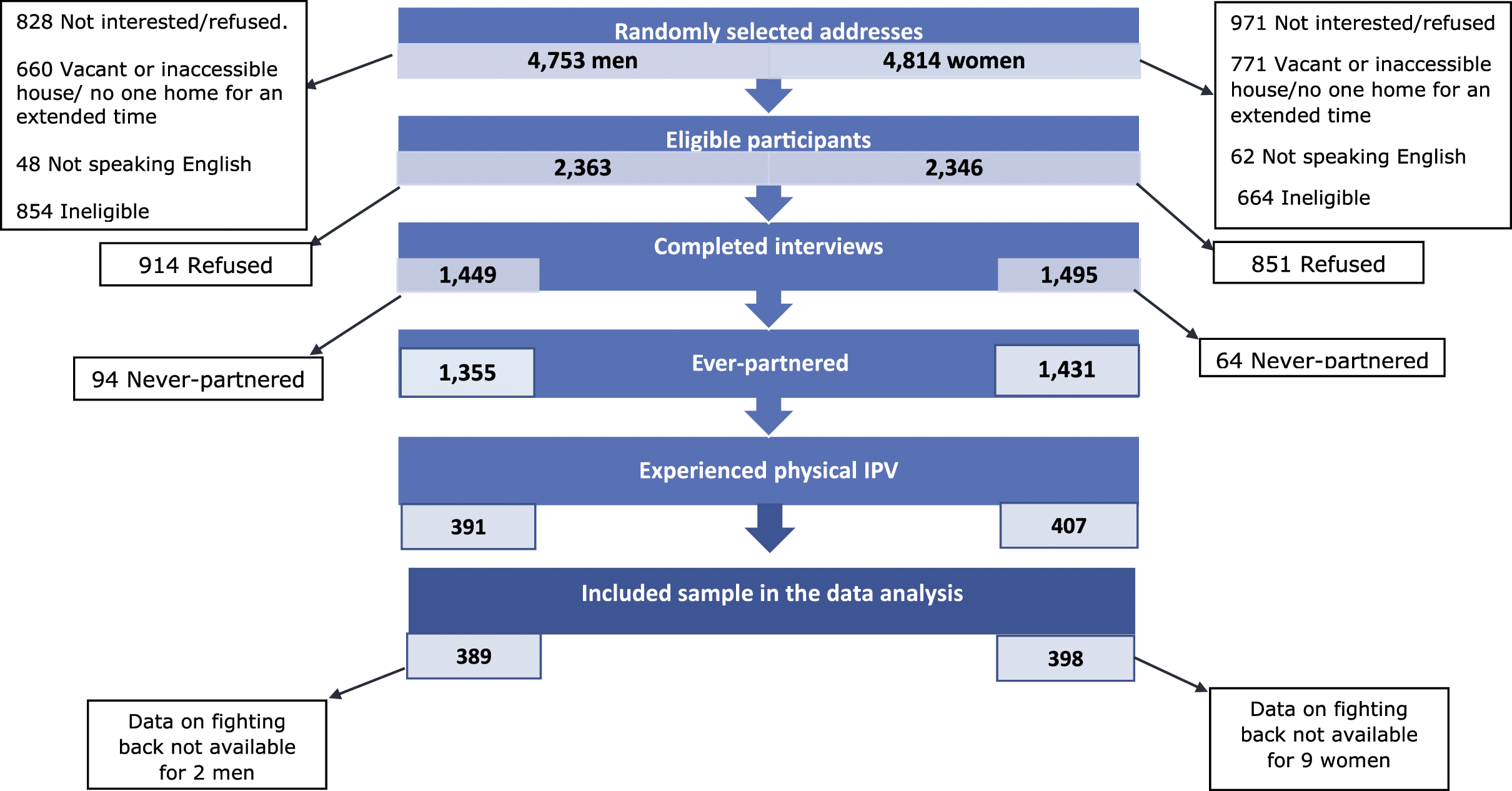
The number and weighted percentage of women and men who reported the use of violence against a violent partner, as a function of socio-demographic characteristics and risk factors.

Note. IPV = intimate partner violence; The italic font indicates significant gender differences at p < .05.
Note. IPV = Intimate Partner Violence aIn these columns, percentages are col%. The other columns present row percentages.
Representativeness
The ethnicity, marital status, and deprivation level distribution of the sample were closely comparable to the general population; however, the sample was under-represented for younger women (ages 16–29) and slightly over-represented for those over 60 years of age (Fanslow, et al.,. 2021).
Ethics Approval
Ethics approval was received from The University of Auckland Human Participants Ethics Committee (reference number 2015/018244).
Measures and Variables
Ever-partnered respondents were identified as those who had ever been married, ever lived with, or were currently with a regular sexual partner. Information on the variables was collected from the respondent only. Respondents were instructed to consider their current or most recent partner when answering questions concerning partner’s childhood experience of violence.
Main Outcome of Interest
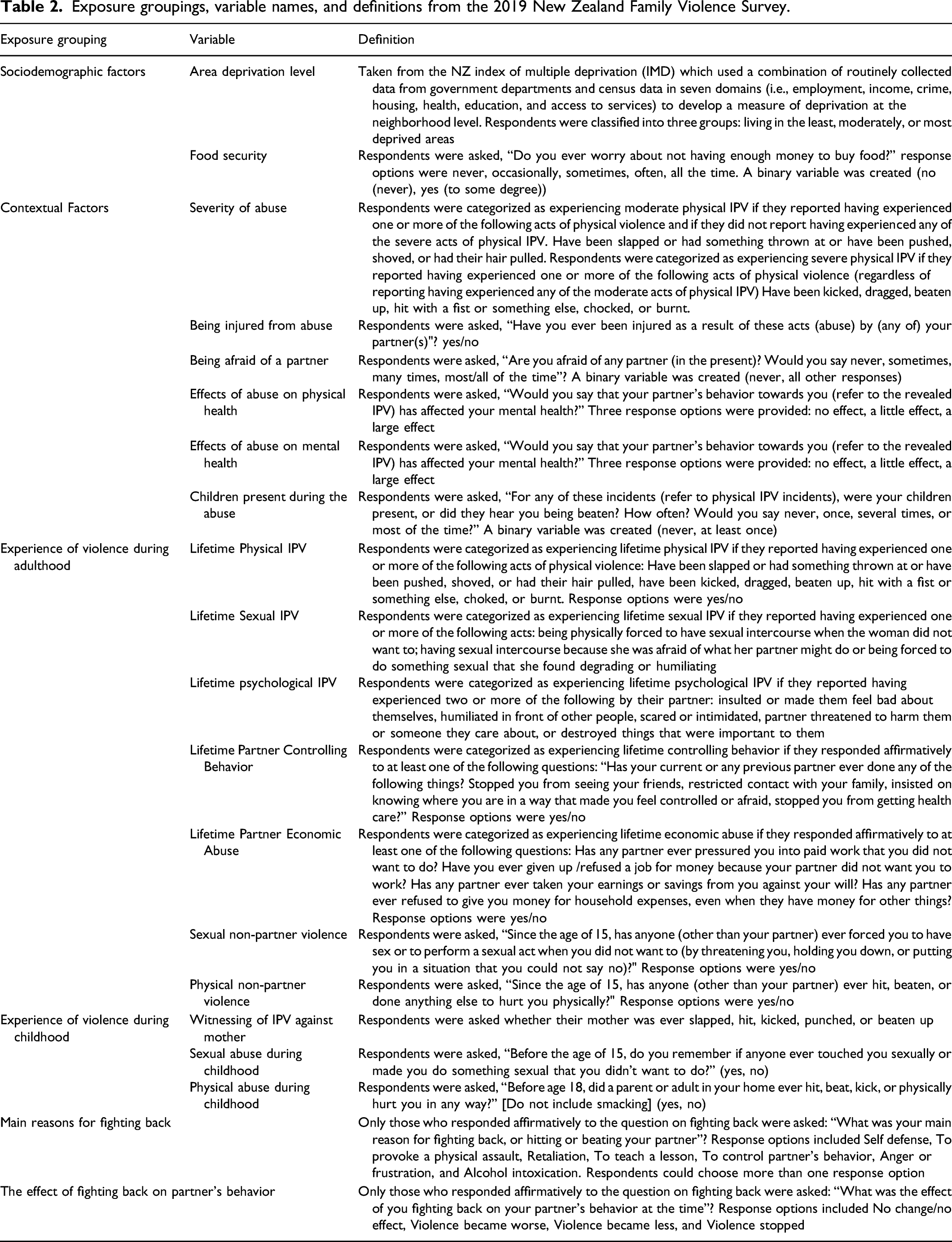
Exposure groupings, variable names, and definitions from the 2019 New Zealand Family Violence Survey.
Exposure of Interest
The risk factors considered as exposure variables in the current investigation were grouped as: (a) exposure to other types of violence during adulthood including: other IPV exposure (i.e., psychological IPV, economic abuse, and controlling behavior) and non-partner violence (physical and/or sexual), (b) experience of violence during childhood: (physical and sexual violence) and witnessing of IPV against mother, and (c) contextual factors: severity of the physical violence experienced, the effect of abuse on the physical and mental health of the respondent. Only information on respondent’s experiences were included (Table 2).
Socio-Demographic Factors
Socio-demographic variables were used to explore prevalence rates of reported use of violence against a violent partner among sub-group populations and as potential confounders in the multivariate analyses. These variables included age, ethnicity (European, Māori, Pacific, Asian, and MELAA [Middle East or Latin American or African]), food security status (secure and insecure), and area level deprivation. Since there were too few MELAA respondents who responded to the use of violence against a violent partner question (n = 4 women and n = 0 men), this ethnic group was dropped from the analyses. Age was grouped into two cohorts: under or equal 40 years old and over 40. Definitions for area level deprivation (Exeter et al., 2017), and food security are presented in Table 2.
Data Analysis
Analyses were limited to ever-partnered respondents who had experienced physical IPV (n = 407 women, and n = 391 men). Of those, nine women and two men did not report whether they had used violence in the context of IPV and were excluded from the analyses, resulting in a sample size of 398 and 389 for women and men, respectively.
Descriptive statistics including weighted percentages and 95% confidence intervals (95%CIs) were calculated for the binary outcome variable (use of violence against a violent partner: never vs. at least once) stratified by gender (Table 1). Descriptive statistics for the categorical outcome variable (use of violence against a violent partner with three frequencies: never, once, more than once) stratified by gender are presented in Supplementary Table 1.
Prevalence rate of the main outcome variable (the use of violence against a violent partner) was also estimated across several key socio-demographic variables, including age groups, ethnicity, food security status, and area level deprivation stratified by gender. Prevalence rate of the main outcome variable across different risk factors were also explored (Table 1). Chi-square tests were used to explore gender differences.
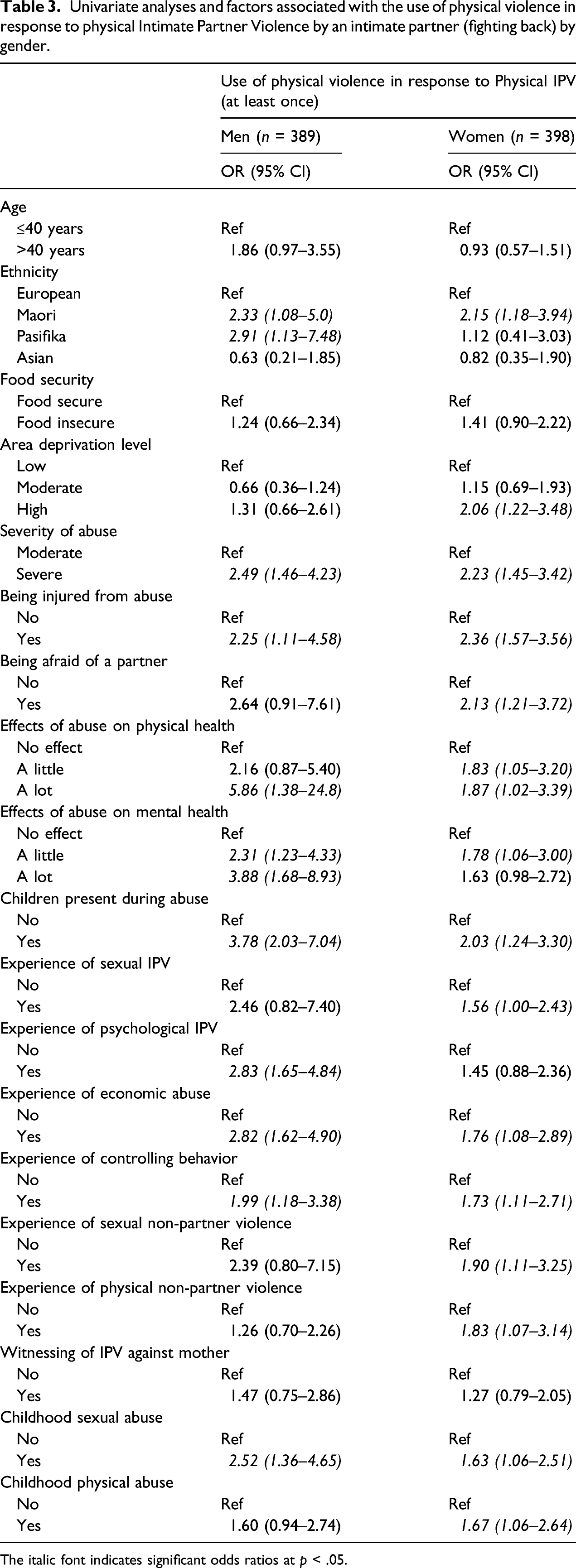
Univariate analyses and factors associated with the use of physical violence in response to physical Intimate Partner Violence by an intimate partner (fighting back) by gender.
The italic font indicates significant odds ratios at p < .05.
Multivariable analyses, factors associated with the use of physical violence in response to physical Intimate Partner Violence by an intimate partner (fighting back) by gender.

The italic font indicates significant odds ratios at p < .05
aAOR: Adjusted Odds Ratios adjusted for age, ethnicity, food security, and area-deprivation level.
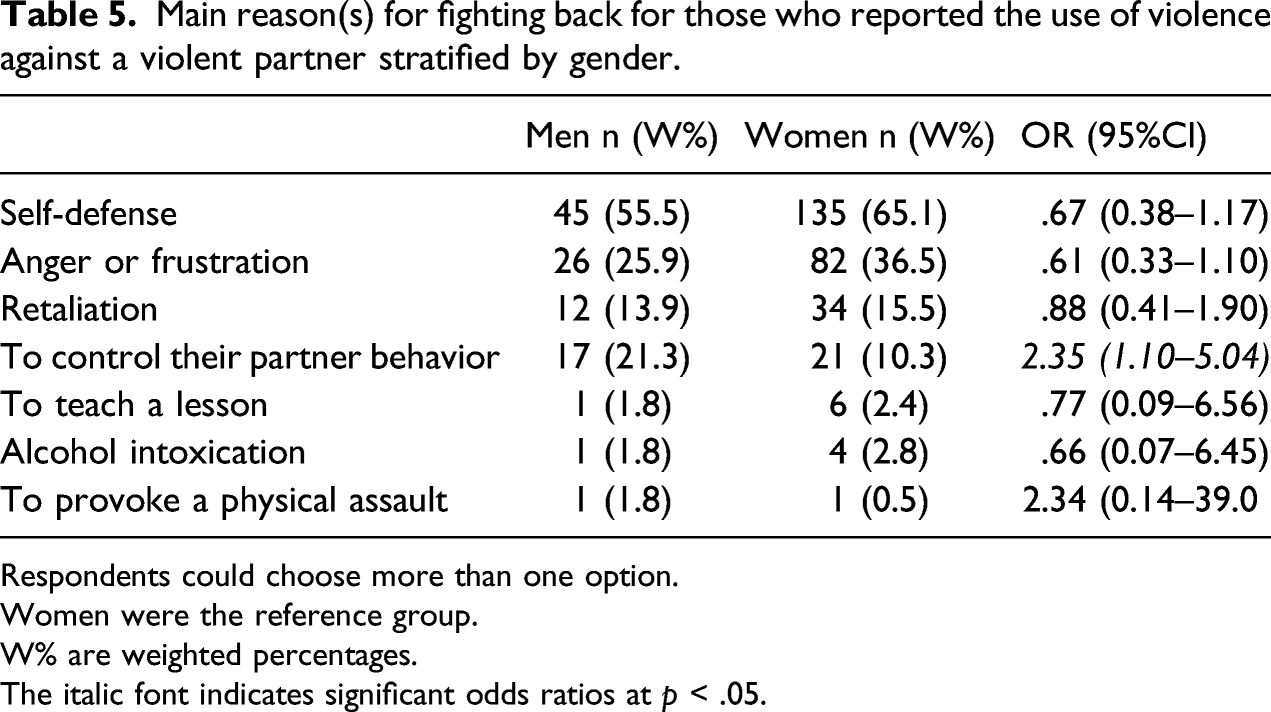
Main reason(s) for fighting back for those who reported the use of violence against a violent partner stratified by gender.
Respondents could choose more than one option.
Women were the reference group.
W% are weighted percentages.
The italic font indicates significant odds ratios at p < .05.
The effect of fighting back on the violent partner’s behavior stratified by gender.

W% are weighted percentages
Missing values including don't know, don't remember, refused, and no answer responses were excluded from the analyses. Missing data were less than 2% for all examined variables with the exception of sexual abuse during childhood (with 4% missing) which was driven by the number of participants who responded with “Don't know, don't remember, refused” to this question. All analyses were conducted using Stata/SE 15.1(StataCorp, 2017). In all analyses, the complex sampling design has been allowed for by using the Survey Data Analysis programs in Stata/SE, which allows for stratification by sample location (region), clustering by primary sampling units (PSU), and weighting of data to account for the number of eligible participants in each household.
Results
Overall prevalence of the use of violence against a violent partner reported by men and women and stratified by socio-demographic characteristics.
Women reported a higher prevalence rate of use of violence against a violent partner compared with men. Of the 398 women who reported experience of physical IPV, 183 (46.6%) reported that they never fought back, 215 (53.4%) reported that they fought back at least once. Of the 389 men who reported experience of physical IPV, 304 (77.7%) reported that they never fought back, 85 (22.3%) reported that they fought back at least once (Table 1).
The distribution of the use of violence against a violent partner across socio-demographic groups for each gender is presented in Table 1. The association between socio-demographic factors and the outcome variable is presented in Table 3
Factors Associated with Fighting Back in Response to Physical IPV
Contextual Factors
For almost all of the variables associated with use of violence in response to the partner’s violence (fighting back), a higher proportion of women than men experienced the risk factor. For both men and women, at the multivariable level and after controlling for socio-demographic characteristics, use of violence against a violent partner was associated with contextual factors related to the abuse itself.
Severity: A higher proportion of women reported experiencing severe violence (57.6%) compared with men (43.7%) (Table 1). Both women and men who reported experiencing severe physical IPV were more likely to report fighting back compared with those who reported moderate physical IPV (for women AOR = 2.11, 95%CI: 1.35–3.30; For men AOR = 2.59, 95%CI: 1.57–4.26) (Table 4).
Injury: Women were more likely to report that they had been injured from violence (44.5% compared with 15.0% of men) (Table 1). Women and men who reported that they had been injured as the result of IPV were also more likely to report fighting back (for women AOR = 2.15; 95%CI: 1.39–3.33; for men AOR = 2.17, 95%CI: 1.09–4.32)
Fear: Women were more likely to report that they were afraid of their partner (22.7% compared with 4.9% of men) (Table 1). Women and men who reported being afraid of their partner were more likely to report fighting back (for women AOR = 1.94, 95%CI: 1.05–3.57; for men AOR = 3.28, 95%CI: 1.06–10.15)
Physical and Mental Health Effects: A higher proportion of women reported some effect of abuse on their health (physical health effects: 34.1% of women compared with 11.7% of men; mental health effects: 68.7% of women compared with 40.6% of men) (Table 1). Women and men who reported that the abuse had affected their physical and mental health were more likely to report fighting back compared with those who did not report these effects. Some gender differences were noted. Women were more likely to fight back when the violence they experienced had “a little” effect on their mental health or their physical health. For men, they were more likely fight back when they reported that the violence they experienced had a “lot of” effect on their physical health, and if the effect on their mental health was either a “a little” or “a lot” (Table 4).
Children Present During Abuse: Women were more likely to report that they had children present at the time of abuse (43.5% compared with 30.2% of men) (Table 1). Both women and men who reported that their children were present during the abuse were more likely to report fighting back (for women AOR = 1.94, 95%CI: 1.15–3.28; for men AOR = 3.16, 95%CI: 1.68–5.95) (Table 4).
Experience of Violence During Adulthood: A higher proportion of women reported experiencing any form of IPV compared with men (Table 1). For women, the experience of sexual IPV was associated with fighting back (AOR = 1.60, 95%CI: 1.01–2.54); but the associations with experience of other forms of IPV and fighting back were not significant. A different pattern was observed for men, with men who reported experience of other forms of IPV (psychological IPV, economic abuse, and controlling behavior) almost 2.5 times more likely to report fighting back; experience of sexual IPV was not associated with fighting back (Table 4).
A higher proportion of women reported experiencing sexual non-partner violence as an adult (16.9% compared with 5.8% of men) (Table 1). For women, this experience was significantly associated with their likelihood of fighting back against an abusive partner, but the association was not significant for men (Table 4). A higher proportion of men reported experience of physical violence by a non-partner (60.6% compared with 21.7% of women, Table 1) but this experience was not associated with men fighting back. Women’s experience of non-partner physical violence was significantly associated with their likelihood of fighting back against an abusive partner (Table 4).
Experience of Violence During Childhood: Women were more likely to report experience of sexual abuse during childhood (38.3% compared with 17.0% of men), and more likely to report witnessing of IPV against their mother (30.9% compared with 20.3% of men), but there were no gender differences in the reports of physical abuse during childhood (Table 1). Experience of violence during childhood influenced men’s and women’s likelihood of fighting back differently. For women, experience of physical abuse during childhood increased their likelihood of fighting back (AOR = 1.77, 95%CI: 1.09–2.85). For men, experience of sexual abuse during childhood increased the likelihood of fighting back (AOR: 2.19, 95%CI: 1.15–4.15). Childhood witnessing of IPV against their mother was not significantly associated with fighting back for either men or women (Table 4).
Main Reason(S) For Fighting Back
A significantly higher proportion of men (21.3%) reported that they fought back to control their partner’s behavior compared with women (10.3%, OR = 2.35, 95%CI: 1.10–5.04). No other significant gender differences were found. Self-defense was the most commonly reported reason for fighting back for women (65.1%) and men (55.5%), followed by fighting back because of “anger or frustration” (36.5% for women and 25.9% for men). For women, 15.5% reported “retaliation” motivated them to fight back (13.9% for men). The least common reasons were “to teach a lesson” (2.4% for women and 1.8% for men), “alcohol intoxication” (2.8% for women and 1.8% for men), and “to provoke a physical assault” (0.5% for women and 1.8% for men) (Table 5).
Effects of Fighting Back on Partner’s Behavior
There were no significant gender differences in the reported effects of fighting back on partner’s behavior. Of women who reported fighting back, 29.1% indicated that the violence they suffered had subsequently become worse (23.4% for men), whereas 37.3% indicated that the violence stopped (42% for men) and 12.7% indicated that the violence decreased (12.1% for men). The remainder of the women (20.9%) indicated that there was no change in the violence they experienced (22.4% for men) (Table 6).
Discussion
This study provides information on gender patterns in the use of violence against a partner, at the time the partner was perpetrating physical violence against them (“fighting back”). The results have relevance for understanding gender differences in the use of violence by men and women. Findings also shed light on the factors that may influence fighting back, self-reported reasons for fighting back, and the effects of fighting back on their partner’s behavior.
Overall, a higher proportion of women than men experienced severe IPV, injuries resulting from IPV, fear of a partner, and physical and mental health effects from abuse. Women also were more likely than men to report experiencing other types of IPV (particularly sexual IPV), and were more likely to report that their children were present at the time of violence. Women were also more likely to report having experienced violence as children. Collectively these factors suggest that, for women, fighting back is a high-stakes effort to save their lives and to protect their children, and might explain why a higher proportion of women reported fighting back (53.4% of women and 22.3% of men reported fighting back at least once). These findings are consistent with research indicating that one of the most common motivations for women’s use of violence is for self-defense(Swan & Snow, 2006). While men are also more likely to fight back if they experience these contextual factors, they are significantly less likely to experience severe IPV, or IPV that results in being injured and fearful, or IPV that results in physical or mental health effects.
The findings of the present study are unique in that they explore factors associated with fighting back in the context of a violent episode for both men and women. However, the study findings are also consistent with findings on men’s and women’s use of violence more generally. Specifically, the significant association between severity of violence experienced and women’s fighting back has also been found in other studies. While severity of violence experienced is an important factor associated with fighting back, it does not mean that it is the only form of violence important to consider when seeking to understanding violence as whole. Other studies have documented the harmful physical and mental impacts of other forms of abuse, such as controlling behavior, psychological and economic abuse for both men and women (Antai et al., 2014; Bates, 2020)
The association between presence of children and fighting back has also been found in previous studies (Fanslow et al., 2015; Swan & Snow, 2006). It is possible that using violence against an abusive partner is being used as a strategy to protect the children. This interpretation is supported by previous research, which has found a strong association between IPV against women and child abuse by the same perpetrator (Buffarini et al., 2021; Guedes et al., 2016; Hamby et al., 2010)
Experience of Violence During Childhood and Adulthood
The history of exposure to other forms of the violence across the life course has different implications in terms of fighting back for women and men. For women, the type of violence that they have been exposed to has implications for their likelihood of fighting back; women exposed to both physical and sexual violence (by partners, non-partners and as a child) are more likely to fight back. For men, exposure to non-physical and non-sexual forms of violence by a partner was associated with a higher likelihood of fighting back, as was exposure to sexual abuse as a child.
The Main Reason(s) for Fighting Back
Compared with women, men were over two times more likely to report that they fought back to control their partner’s behavior (21.3% for men, 10.3% for women). This finding is consistent with previous research indicating that men use violence to induce fear in a partner (Hamberger & Guse, 2002) with the instrumental goal of increasing control over her through the course of the relationship (Downs et al., 2007; Stark & Hester, 2019). No other significant gender differences were found.
Effects of Fighting Back on the Partner’s Behavior
There were no significant gender differences in participant reports of the effect that fighting back had on their partner’s behavior. Almost half of women and men who reported fighting back indicated that the violence got worse or did not change. Previous research has also indicated that women’s use of violence in response to violence perpetrated by an intimate partner had little to no effect on, or escalated the violence (Downs et al., 2007; Fanslow et al., 2015).
Implications
The current research has shed more light on both gender similarities and differences in the use of violence. Findings suggest that much of women’s fighting back occurred as part of women’s strategies to protect themselves (and their children) against severe and fear-inducing violence from their male partner.
The gender differences in the experience of violence, with women more likely than men to experience severe and fear-inducing violence, has both policy and practice implications. These include the need for appropriate and thorough assessment of nature and context (current and historical) of the violence that individuals have been exposed to when they present to helping, health or legal services. These assessments need to be carried out with a gender-lens, and awareness of the different patterns of abuse that people may have experienced in order to provide comprehensive and appropriate responses. Findings also suggest that service providers working with women who use violence may need to develop safety plans similar to those they would develop for women who have experienced violence. Services also need to ensure that they do not inadvertently respond to women in ways that result in systematic entrapment; previous research has indicated that women resort to fighting back as a last resort, they had not received helpful responses from support agencies (Wilson et al., 2019). Instead, services need to provide high quality responses that ensure safety for women and their children (Sullivan, 1991).
While men may less frequently experience severe physical and fear-inducing violence compared with women, this does not mean that this type of violence never occurs for men. Men may also experience other forms of non-physical forms of IPV (psychological abuse, controlling behaviors, and economic abuse) which have detrimental impacts that need to be addressed. As a consequence, services for men who experience violence are also needed. These services and service providers working with men who use violence should operate from a trauma-informed perspective. Data from this study shows that men who use violence in the form of fighting back may also have experienced physical and/or sexual violence during childhood. Service providers working with men who state they are using violence as a form of self-defense also need to assess if men have experienced severe or fear-inducing violence. Programs that provide men and women with education and skill-building to resolve conflict constructively and non-violently and that foster development of healthy relationships are needed (Abramsky et al., 2016).
The higher rates of fighting back reported by both Māori men and women, and Pasifika men also highlight the need well-resourced and culturally appropriate intervention and prevention programs. Systemic discrimination that limits people’s access to appropriate support also needs to be addressed. Elements of systemic discrimination include the “over-policing” of Indigenous people, which currently results in Māori domestic violence survivors being more likely to be prosecuted for violence, including defensive violence, than non-Indigenous (Douglas & Fitzgerald, 2018; Toki, 2009), and the under-policing of Indigenous women as victims of violence, which results in failures to protect and/or failures to properly investigate (Cunneen & Tauri, 2019; Stubbs, 2016). Strategies to address poverty and deprivation are also needed as part of wider violence prevention strategies.
Compared with men, women were more likely to report that there were children present at the time the violence occurred. This has implications for the justice system and for child protective services. Institutional changes must be implemented to prevent inappropriate arrests of women exposed to intimate partner violence and inappropriate findings of “failure to protect”. Courts, police and child protective services need to understand that women who experience violence are attempting their best to protect themselves and their children, and work to keep children safe and together with the non-abusing parent (Murphy et al., 2013; Saunders et al., 2013).
The findings highlight the importance of fully assessing the context of the violence (i.e., the other experiences and impacts of violence that have occurred within the relationship and throughout the lifespan), particularly when studying women’s use of violence. Act-based quantitative research studying the prevalence of violence carries the risk of labeling violence perpetrated by women as “partner abuse” or “mutual combat,” when it is violence that was perpetrated for self-defense. This finding has direct relevance for the interpretation of data on the prevalence of intimate partner violence from population-based studies, that is, the high number of men in New Zealand who reported that they have been subjected to the violence by their female partner (Fanslow et al., 2022).
Strengths
A unique aspect of the present study was its focus on exploring gendered patterns of and factors that contributed to violence used in the context of a violent episode. The use of a large population-based sample and the use of a wide range of standardized measures to assess violence exposure and violence use, and on factors contributing to the violence provide confidence that the results are robust.
Limitations
The cross-sectional design does not permit causal attribution to be made between risk factors studies in this investigation and the reported outcome. All data were obtained from the respondent’s reports of their own and their partner’s behaviors. A survey collecting information from both partners would add to the validity of the findings (Pu et al., 2021). Further, recall bias or biases in disclosure (e.g., social desirability) might have influenced data. This may particularly influence men’s disclosures of violence experience, as stereotypes of masculinity can contribute to men’s reluctance to recognize or disclose victimization (Hine et al., 2022). Inclusion of modules to assess degree of social desirability bias would provide a basis for adjusting self-reported measures (Pu et al., 2021). We did not ask about non-physical strategies that people who experienced IPV used to respond to their partner’s violence. Research has shown that men and women employ a variety of nonviolent and non-physical means to protect themselves from partner violence. When women use violence to defend themselves, there is some evidence that it occurs after nonviolent means have not been successful (Downs et al., 2007). There may be other factors that contribute to the likelihood of fighting back that were not included in this study (e.g., problematic alcohol/drug use). Finally, we are just focusing on violence in the context of a violent episode, not looking at violence occurring at other times.
Conclusion
These findings reinforce calls to collect data on the nature and context (current and historical) of the violence that individuals have been exposed to when studying men and women use of violence in an intimate relationship. The results underscore Greenblat’s (1983) assertion that “marital (partner) violence events need to be studied in their context and caution is needed when applying particular labels to simple counts of events”(Greenblat, 1983). Implications of the findings include the need for gender informed assessment when individuals present to helping, health or legal services. Assessments need to be followed up with comprehensive and appropriate safety planning and services which interrupt use of violence by the predominant aggressor and which support the development of healthy relationships.
Supplemental Material
sj-pdf-1-jiv-10.1177_08862605211073094 – Supplemental Material for Gender Patterns in the Use of Physical Violence Against a Violent Partner: Results of a Cross-Sectional Population-Based Study in New Zealand
Supplemental Material, sj-pdf-1-jiv-10.1177_08862605211073094 for Gender Patterns in the Use of Physical Violence Against a Violent Partner: Results of a Cross-Sectional Population-Based Study in New Zealand by Janet L. Fanslow, Ladan Hashemi, Pauline Gulliver and Tracey McIntosh in Journal of Interpersonal Violence
Footnotes
Acknowledgments
We gratefully acknowledge participants, the interviewers, and the study project team, led by Patricia Meagher-Lundberg. We also acknowledge the representatives from the Ministry of Justice, the Accident Compensation Corporation, the New Zealand Police, and the Ministry of Education, who were part of the Governance Group for Family and Sexual Violence at the inception of the study. This study is based on the WHO Violence Against Women Instrument as developed for use in the WHO Multi-Country Study on Women’s Health and Domestic Violence and has been adapted from the version used in Asia and the Pacific by kNOwVAWdata Version 12.03. It adheres to the WHO ethical guidelines for the conduct of violence against women research.
Declaration of Conflicting Interests
The author(s) declared no potential conflicts of interest with respect to the research, authorship, and/or publication of this article.
Funding
The author(s) disclosed receipt of the following financial support for the research, authorship, and/or publication of this article: This work was supported by the Health Research Council of New Zealand (Grant 02/207) for the 2003 study and the New Zealand Ministry of Business, Innovation and Employment (Contract number CONT-42799-HASTR-UOA) for the 2019 study.

Supplemental Material
Supplemental material for this article is available online.
Author Biographies
References
Supplementary Material
Please find the following supplemental material available below.
For Open Access articles published under a Creative Commons License, all supplemental material carries the same license as the article it is associated with.
For non-Open Access articles published, all supplemental material carries a non-exclusive license, and permission requests for re-use of supplemental material or any part of supplemental material shall be sent directly to the copyright owner as specified in the copyright notice associated with the article.
