



Abstract
Low rates of reporting sexual assault to law enforcement have been attributed to a culture of rape myth acceptance. Yet, rape myth acceptance rates and specific barriers to reporting have not been examined by sexual assault and reporting histories. This study compared the rape myth acceptance levels of reporting survivors, non-reporting survivors, and individuals without sexual assault histories. The sample consisted of 579 undergraduate students (68.0% White, 72.5% women) at a public university in the southeastern U.S. Differences in non-reporting survivors’ experienced barriers to reporting and the perceived barriers of those without sexual assault histories were also examined. Results indicate differences in rape myth endorsement by sexual assault and reporting status, with the highest rape myth adherence rates endorsed by individuals without a sexual assault history and the lowest endorsed by reporting survivors. While non-reporting survivors and those without sexual assault histories shared two of the top three barriers to reporting (i.e., wanted to avoid thinking or talking about it, did not want family or friends to find out), non-reporting survivors were more likely to endorse personal reasons for not reporting, and those without sexual assault histories were more likely to endorse concerns about the law enforcement response to rape. Several barrier factors were identified among non-reporting survivors (i.e., fear of law enforcement involvement, personal reasons, ambiguity of the event, responsibility) and among individuals without sexual assault histories (i.e., risks outweigh benefits, victim blaming, ambiguity). Although both survivors and individuals without sexual assault histories acknowledge the personal, social, and legal risks of reporting a sexual assault to law enforcement, survivors’ experienced barriers differed in nuanced ways from the presumed barriers of individuals without sexual assault histories. Findings may enhance sexual assault prevention trainings and awareness campaigns by targeting both rape myth beliefs and specific barriers to reporting of those with and without sexual assault histories.
Sexual assault, defined as a sexual act committed or attempted under circumstances in which consent is not or cannot be freely given (Basile et al., 2014), is the most underreported violent crime (Planty et al., 2016). Criminal justice and healing are two distinct but potentially overlapping processes that can follow sexual assault. Reporting the assault to law enforcement is often considered the first step in the path to criminal justice; however, it is step taken by relatively few survivors, and even when taken, conviction is rarely attained and healing is not guaranteed (Langhinrichsen-Rohling et al., in press). Many researchers attribute low rates of formally reporting a sexual assault to law enforcement to a pervasive culture of rape myth acceptance that affects all points of both the criminal justice and healing processes (Hahn et al., 2020; Heath et al., 2011).
Rape myths are misconceptions regarding sexual assault that justify and perpetuate violence against women by shifting the blame from perpetrator to survivor (McMahon & Farmer, 2011). A common rape myth is that “real rape” is characterized by violent and forceful penetration, is committed by a stranger, and results in physical injury; similarly, a “true victim” is a well-behaved White woman who reports the assault in a timely manner, does not have a criminal or mental health history nor “problematic” conduct (e.g., substance use, risky sexual behaviors), and who remains engaged with the criminal justice process (DuMont et al., 2003). While this scenario is far from the norm (Planty et al., 2016), many doubt the veracity of assaults that deviate from the prototypical rape script (O’Neal & Hayes, 2020).
Rape Myths Beliefs Differ Based on Sexual Assault and Reporting Histories
Differences in rape myth acceptance levels have been documented among survivors who report the sexual assault to law enforcement, survivors who choose not to report the sexual assault to law enforcement (i.e., ‘non-reporting survivors’), and individuals without sexual assault histories. On average, survivors who have chosen to officially report the assault endorse lower levels of rape myth acceptance than non-reporting survivors (Egan & Wilson, 2012; Heath et al., 2013). If an assault is not congruent with an individual’s pre-existing conceptualization of sexual assault or with the presumed conceptions held by disclosure recipients (Deming et al., 2013; Hahn et al., 2020; Heath et al., 2011), the survivor is less likely to formally report the assault to law enforcement (Littleton et al., 2009; Wilson & Miller, 2016). Perhaps, survivors with lower levels of rape myth acceptance are more inclined to make a formal report given their greater understanding and acceptance of the heterogeneity of sexual assault.
Survivors who choose not to report the sexual assault to law enforcement also tend to endorse lower levels of rape myth acceptance than individuals without sexual assault histories who, on average, hold the highest levels of rape myth acceptance (Vonderhaar & Carmody, 2015). Because sexual assault rarely follows the prototypical rape script (Planty et al., 2016), survivors are more likely than individuals without sexual assault histories to have had direct experiences that contradict rape myths. This may contribute to rape myth rejection and to the adoption of a more nuanced conceptualization of sexual assault. On the other hand, in the absence of disconfirming experiences, individuals without sexual assault histories may be more susceptible to believing the various rape myths deeply entrenched in modern society (e.g., survivors often lie, those who are assaulted placed themselves in risky situations, and therefore, it is not “real rape”). Thus, individuals without sexual assault histories may be more likely to assume that survivors’ barriers to reporting are grounded in similar beliefs.
To date, however, the rape myth acceptance levels of reporting survivors, non-reporting survivors, and individuals without sexual assault histories have not been examined simultaneously. Comparing rape myth acceptance rates by sexual assault experience status and reporting history is a necessary next step to better understand the role of rape myth acceptance in survivors’ reporting decisions. It is also critical for ensuring that sexual assault awareness campaigns and other programs aimed at responding to sexual assault in a trauma-informed manner are reflective of survivors’ lived experiences when deciding whether to report an assault to law enforcement.
Do Barriers to Formal Sexual Assault Reporting Differ by Sexual Assault History?
Oftentimes, personal rape myth beliefs and presumptions about the rape myth beliefs of disclosure recipients influence an individual’s perceptions of barriers to formal sexual assault reporting (Hahn et al., 2020; Heath et al., 2011). Extant research has focused on either survivors’ experienced barriers to reporting (Schwartz et al., 2017; Zinzow & Thompson, 2011) or on individuals’ perceived barriers to reporting regardless of their personal sexual assault history (Allen et al., 2015; Hahn et al., 2020; Sable et al., 2006). For example, among survivors, the most frequently cited barrier to reporting is a lack of understanding that the assault was a crime (Sabina & Ho, 2014). Other barriers to reporting commonly endorsed by survivors include concerns about the response from the criminal justice system (e.g., believing police would not help or would engage in victim blaming due to personal history/case characteristics) and worries about the reactions of family and friends, cognitive barriers (e.g., being unaware of reporting options, thinking the assault was a personal matter or not important enough to warrant a report) and/or emotional barriers (e.g., feelings of shame, self-blame, confusion, fear for safety; Cohn et al., 2013; O’Donahue & Schewe, 2019; Planty et al., 2016; Spencer et al., 2017). One qualitative study compared survivors’ barriers to reporting to law enforcement to the barriers of “unacknowledged victims,” or individuals who denied being a sexual assault victim but endorsed a history of being taken advantage of sexually after using substance(s) (Schwartz et al., 2017). While survivors’ reasons for non-reporting centered on their fear/embarrassment, unacknowledged victims included awareness of rape culture and societal influences on perceptions of sexual assault as barriers to reporting.
Other studies examining barriers to formal sexual assault reporting have required individuals to list or rate the importance of various barriers regardless of their sexual assault history (Allen et al., 2015; Hahn et al., 2020; Sable et al., 2006). For instance, in a recent study of 409 undergraduate students with and without sexual assault histories, individuals most often endorsed the following as important barriers to reporting a hypothetical rape to law enforcement: fear of the offender, not wanting others to know, shame/embarrassment, and not wanting police or court involvement (Hahn et al., 2020). Conversely, the least often reported barriers were wanting to handle the assault personally and not believing it was serious enough to report. As existing studies have not compared endorsement of specific barriers to reporting based on sexual assault status and formal reporting decisions, the current study fills an important gap in the literature.
High rates of lifetime sexual assault (21% of women; Fantasia et al., 2018) and low rates of formal reporting (Department of Justice, 2014) are consistently observed among college students. In response, many universities have enacted campus-wide campaigns to raise awareness of sexual assault and to identify and reduce barriers to reporting. These efforts often target rape myths to challenge cultural attitudes that make perpetration of sexual assault more likely and/or interfere with recovery post-assault. Yet, it is unclear whether these programs effectively address the specific rape myth beliefs and barriers to reporting considered by both survivors (who did or did not report) and individuals without sexual assault histories. Exposure to sexual assault awareness programs that are theoretically designed for survivors but are based on uncommon lived experiences may invalidate and further shame or alienate survivors.
The Current Study
The current study aims to (1) compare the rape myth acceptance levels of reporting survivors, non-reporting survivors, and individuals without sexual assault histories, (2) examine potential differences in non-reporting survivors’ experienced barriers to formal reporting and the presumed barriers to reporting of individuals without sexual assault histories, (3) identify common factors underlying non-reporting survivors’ experienced barriers to formal reporting, and (4) explore common factors underlying the presumed barriers to formal reporting of individuals without sexual assault histories.
Based on the extant literature, following hypotheses are proposed:
Method
Participants and Procedures
Participants (n = 579) were assessed online via an undergraduate subject pool at a mid-size university in the southeastern United States. For their voluntary and anonymous participation, participants were offered credit in an introductory psychology course. Participants could choose not to initiate the survey in its entirety or choose not to answer any particular item without penalty. Data collection and study procedures were approved by the university’s Institutional Review Board. Ethical procedures were followed throughout.
In all, 602 students followed the survey link in the university subject pool between April 2020 and April 2021. Informed consent was obtained prior to participation. After participation, participants were debriefed, thanked for their participation, and provided a list of mental health and community resources. Twenty-one participants were removed for failing to complete more than 25% of the survey, and two were removed for age ineligibility (i.e., endorsed they were 18 years or older during consent but later marked their age as less than 18). Thus, the final sample consists of 579 participants. On average, participants completed the survey in 22.4 minutes (standard deviation [SD] = 52.9 minutes). The final sample was predominantly White (68.0%, n = 394) and women (72.5%, n = 420) with a mean age of 19.3 years (SD = 2.8 years, range 18–53 years). The sample’s demographics closely reflected the university’s 2016–2020 enrollment by race/ethnicity (62.6% White, 67.9% women; University of South Alabama, 2021). Sample characteristics are shown in Table 1.
Sample Characteristics.
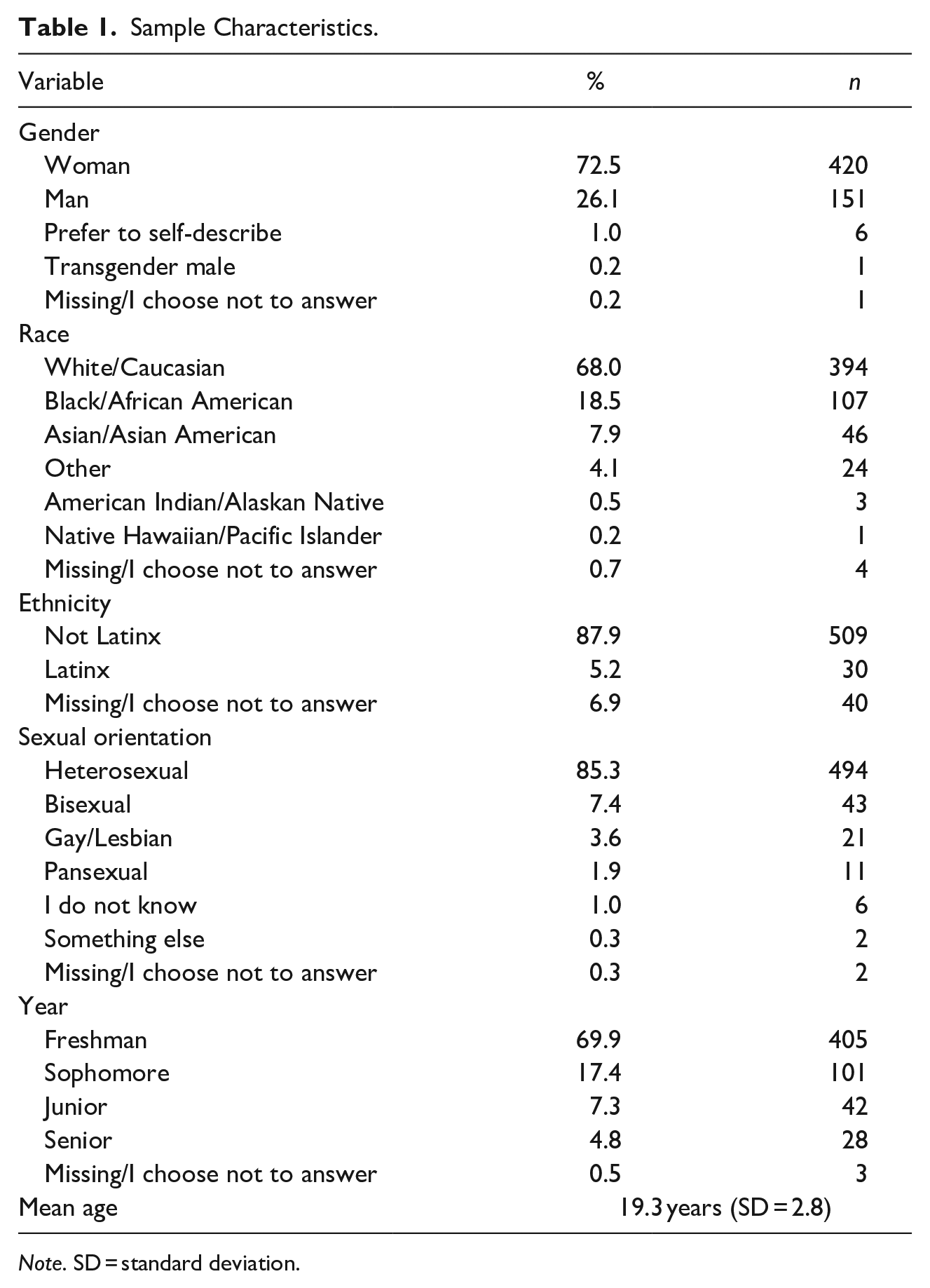
Note. SD = standard deviation.
Measures
Sexual assault history
Sexual assault history was assessed via the following item: “Have you ever been sexually assaulted (sexual contact or behavior that occurs without explicit consent of the victim, such as penetration [rape], attempted rape, sexual touching, being forced to perform sexual acts)?” Participants rated the item on a binary scale (No = 0, Yes = 1). Individuals who responded No were categorized as “individuals without a sexual assault history,” and individuals who responded Yes were categorized as “survivors.”
Sexual assault reporting history
If a sexual assault history was endorsed, participants were asked whether they reported the assault to law enforcement (“Did you report the sexual assault to law enforcement?”). Again, participants rated each item on a binary scale (No = 0, Yes = 1). If a participant responded Yes, they were categorized as a “reporting survivor.” If a participant responded No, they were categorized as a “non-reporting survivor.”
Rape myth acceptance
Rape myth acceptance was assessed using a subset of 11 questions from the Updated Rape Myth Acceptance Scale (McMahon & Farmer, 2011). Four factors were assessed: She Lied (two items); She Asked For It (three items); He Didn’t Mean To (four items); and It Wasn’t Really Rape (two items). Items were rated on a Likert scale ranging from 1 (Strongly disagree) to 7 (Strongly agree). Overall internal consistency was excellent (α = .89).
Barriers to reporting
Non-reporting survivors and individuals without a sexual assault history were administered a list of 16 barriers to reporting commonly found in the literature (e.g., want to avoid thinking or talking about the assault, fear not being believed by law enforcement, feel responsible for the assault, did not think reporting was important to move forward or heal). Specifically, non-reporting survivors were instructed, “If you did not report the sexual assault [to police], think about what prevented you from reporting,” while individuals without a sexual assault history were asked “Why do you think victims of sexual assault are reluctant to report to police?” Each item was rated on a Likert scale ranging from Strongly Disagree (1) to Strongly Agree (7).
Data Analyses
Missing data were minimal for survivors’ rape myth acceptance scores (n = 19; 3.0%) as well as non-reporting survivors’ barriers to reporting and the perceptions of barriers to reporting of individuals without a sexual assault history (n = 17; 2.9%). In these cases, mean substitution by item was used.
Missing data were also minimal for participants’ sexual assault history (n = 24; 4.1%) and whether a report was made to law enforcement (n = 30; 5.2%). Less than 1% of data were missing for the following variables: gender (n = 1; 0.2%), sexual orientation (n = 2; 0.3%), race (n = 4; 0.7%), and year in college (n = 3; 0.5%). Roughly 6.9% of participants chose not to disclose their ethnicity (n = 40). These missing data were excluded from analyses.
Though they make up a smaller portion of the sample, we have chosen to include male respondents in analyses because they are represented within each subgroup of interest: survivors who reported to law enforcement (n = 3 of 11; 27.3%), survivors who did not report (n = 15 of 136; 11.0%), and respondents who denied a sexual assault history (n = 125 of 396; 31.6%). When male respondents were removed from factor analyses examining survivors, the number of factors remained the same and loadings were consistent. When male respondents were removed from factor analyses examining individuals without sexual assault histories, cross-loadings appeared on two items (see Table 4).
Descriptive statistics are shown in Table 2. To test
One-Way ANOVA of Rape Myth Adherence and Survivor/Reporting Status.
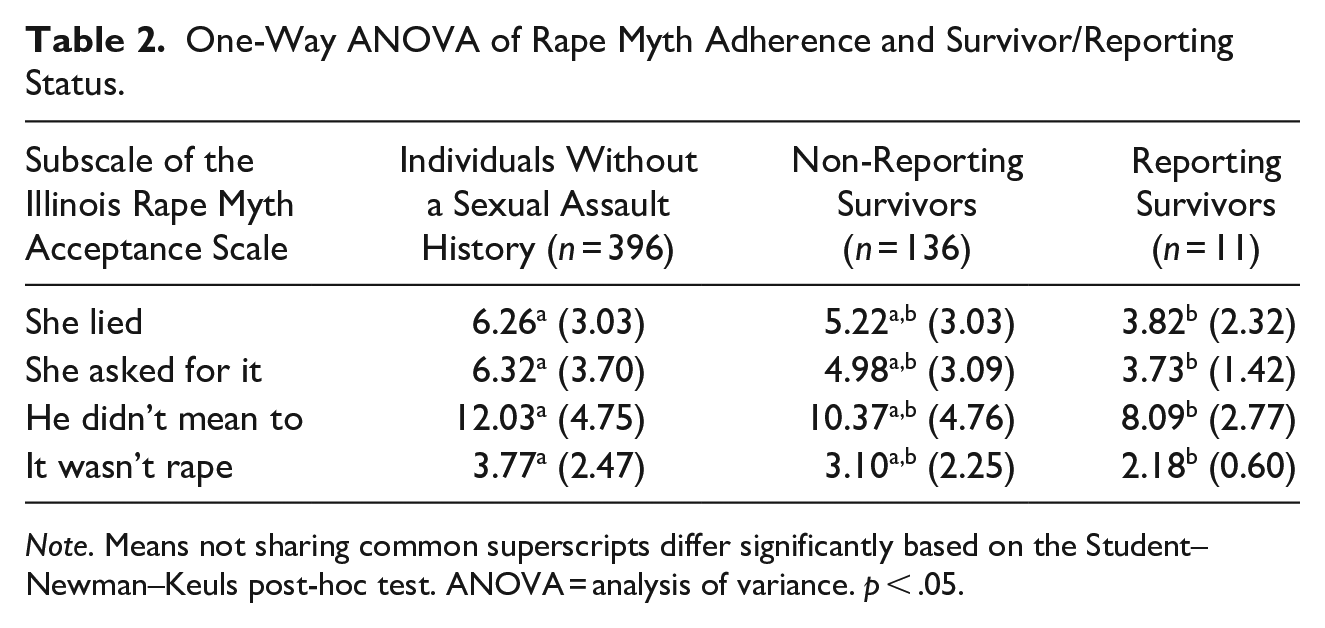
Note. Means not sharing common superscripts differ significantly based on the Student–Newman–Keuls post-hoc test. ANOVA = analysis of variance. p < .05.
Results
To test
To address
Mean Ratings for Reasons Individuals Choose not to Report Following a Sexual Assault, by Endorsement of Sexual Assault History.
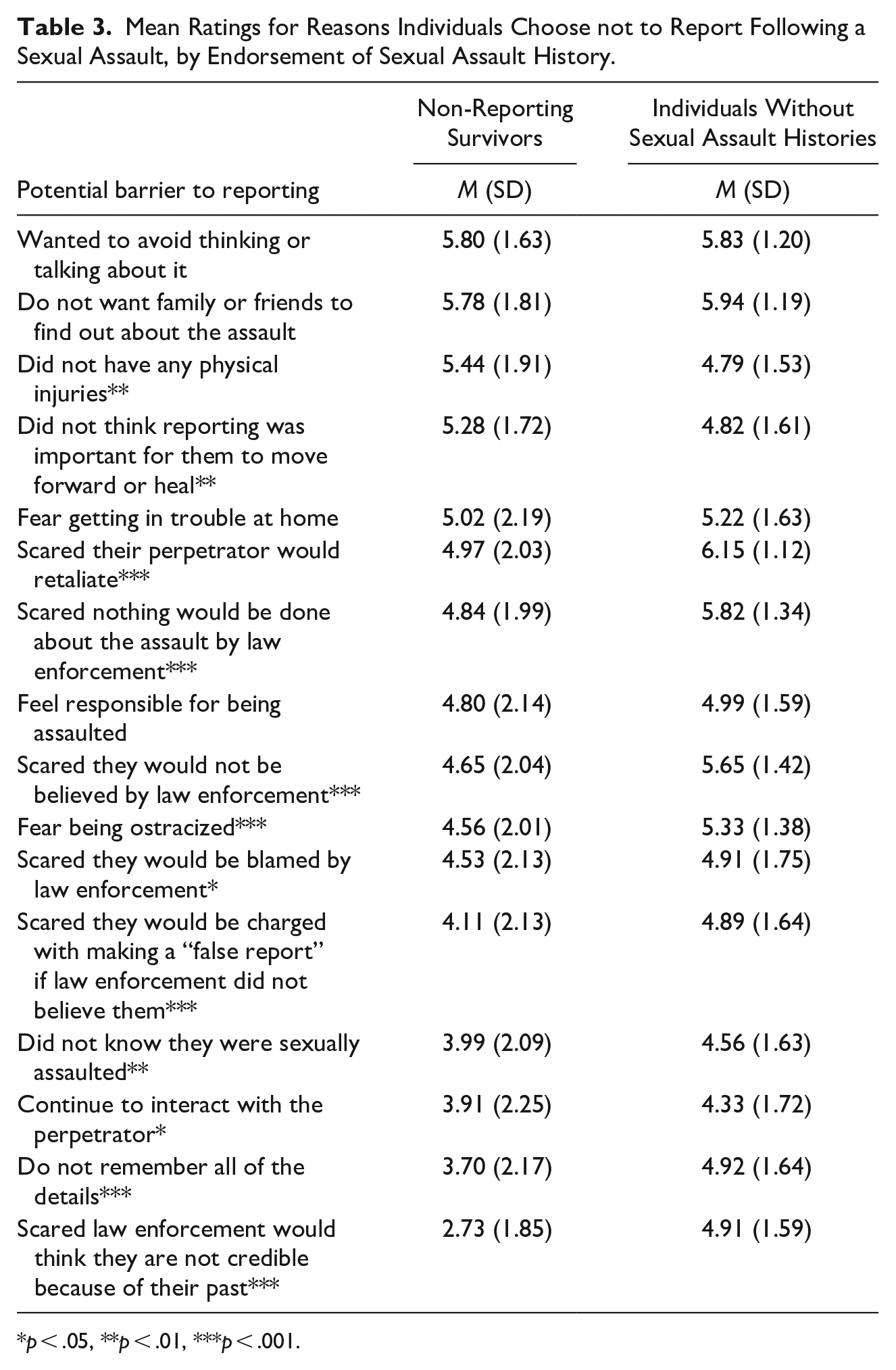
p < .05, **p < .01, ***p < .001.
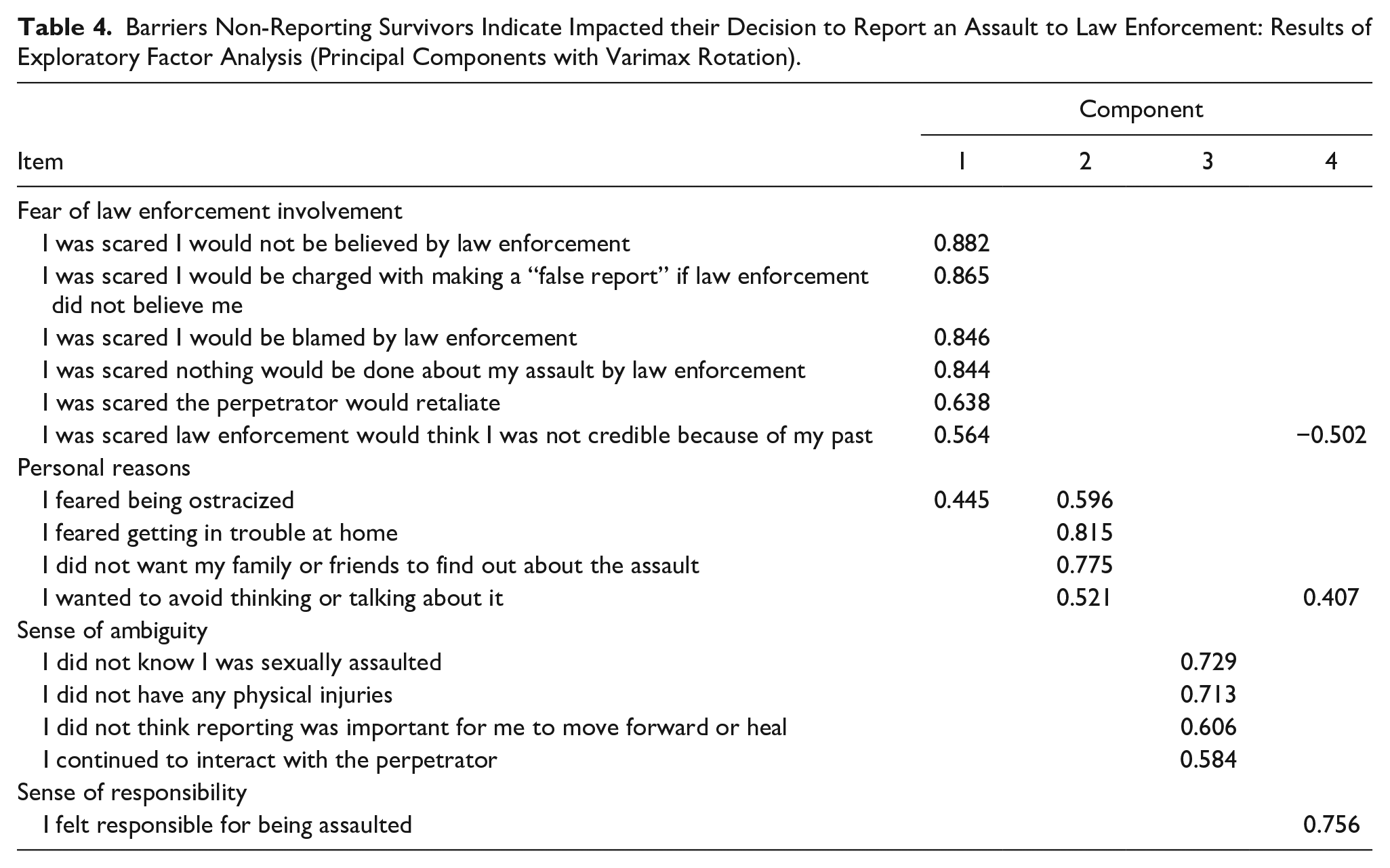
Next, we conducted exploratory factor analysis to identify common factors underlying non-reporting survivors’ personal barriers to formal reporting
Barriers Non-Reporting Survivors Indicate Impacted their Decision to Report an Assault to Law Enforcement: Results of Exploratory Factor Analysis (Principal Components with Varimax Rotation).
We also used exploratory factor analysis to identify common factors underlying the presumed barriers to formal reporting of individuals without sexual assault histories
Barriers Non-Survivors Perceive that Explain Why Survivors May Not Report Their Assaults to Law Enforcement: Results of Exploratory Factor Analysis (Principal Components with Varimax Rotation).
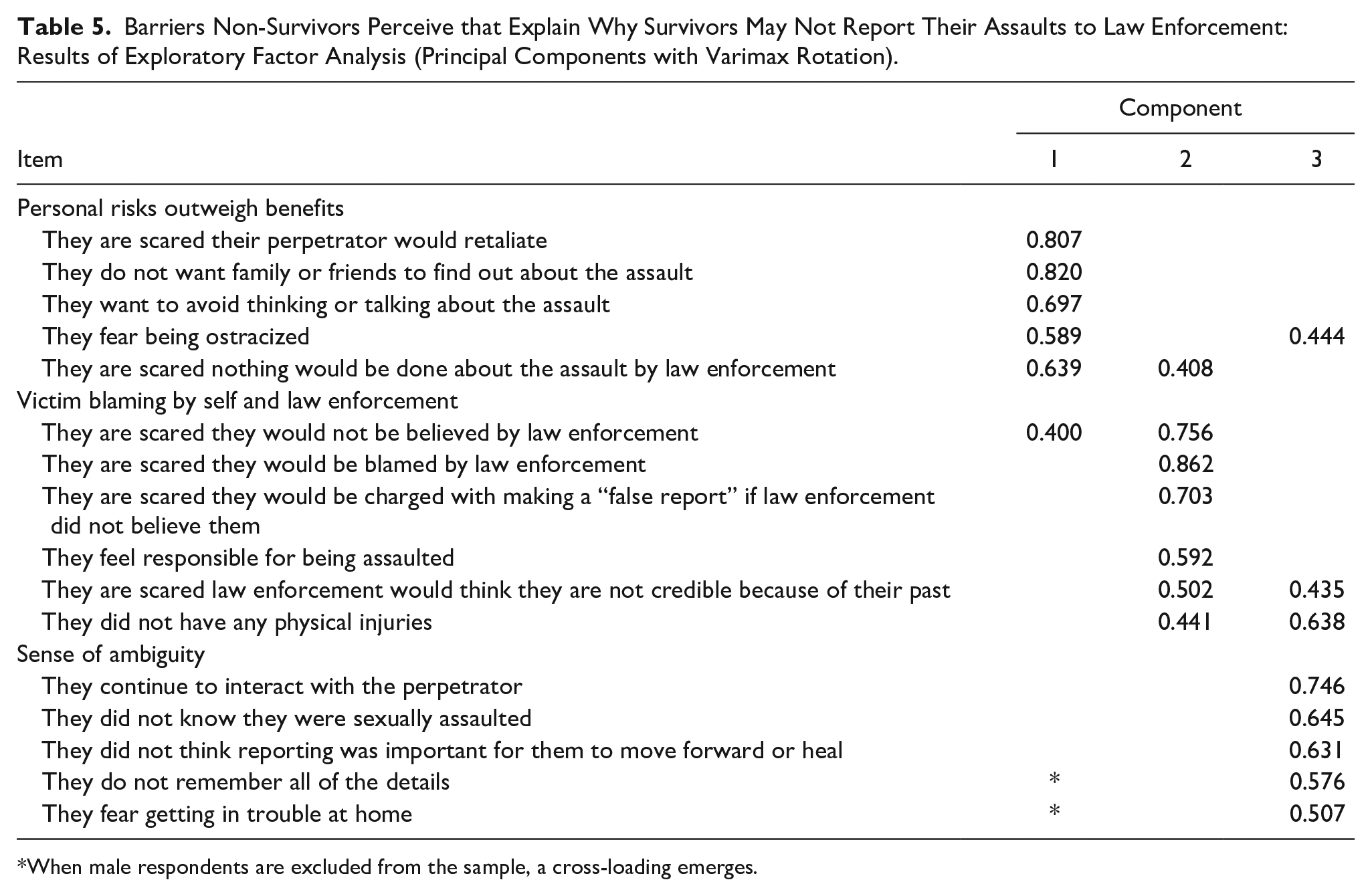
When male respondents are excluded from the sample, a cross-loading emerges.
It is important to note that a rather sizable proportion of our sample identified as Black/African American (18.5%, n = 107). Within this subset, 32 respondents endorsed a sexual assault history, while 67 denied a sexual assault history (eight participants declined to answer the question). Given the historical underrepresentation of Black/African American individuals in sexual assault research on college campuses, we sought to provide additional insight into this understudied group. Because of the size of the subsample, however, we could not replicate our exploratory factor analyses; instead, we conducted factorial ANOVAs examining main and interaction effects of sexual assault history and race on various barriers to formal reporting. There were main effects for race for two items: “Continue to interact with the perpetrator,” F(1,451) = 9.47, p < .01, and “Did not remember all of the details,” F(1,454) = 14.00, p < .001, with White respondents endorsing the items at greater rates than Black/African American respondents. Moreover, significant interaction effects were found for “Did not remember all of the details,” F(1,451) = 11.47, p < .001, and “Did not know they were sexually assaulted,” F(1,451) = 5.77, p < .05, such that the negative correlation between sexual assault history and each potential barrier item was stronger for Black/African American participants than White participants. Moreover, the sexual assault history by race interaction on “Feared being ostracized” was trending toward significance, F(1,441) = 3.63, p = .06, such the negative correlation between sexual assault history and endorsing this barrier item was stronger for White participants than Black/African American participants (see Table 6).
Mean Ratings for Reasons Individuals Choose Not to Report Following a Sexual Assault, by Endorsement of Sexual Assault History and Race.

p < .05, **p < .01, ***p < .001.
Discussion
The current study is the first, to our knowledge, to compare the rape myth acceptance levels of survivors (both reporting and non-reporting) and individuals without sexual assault histories, as well as to examine experienced and/or perceived barriers to reporting a sexual assault to law enforcement within the same sample. As expected, based on previous findings (Egan & Wilson, 2012; Heath et al., 2013; Vonderhaar & Carmody, 2015), rape myth acceptance rates differed by sexual assault history. Across rape myth total and subscale scores, individuals without sexual assault histories endorsed the highest level of rape myth acceptance, followed by non-reporting survivors. Reporting survivors had the lowest mean level of rape myth acceptance, although mean differences were only significant between individuals without sexual assault histories and survivors who chose to report their assault to the police. Perhaps, the choice of non-reporting observed by some survivors can be explained by greater endorsement of rape myths (Hahn et al., 2020; Littleton et al., 2009; Wilson & Miller, 2016), which is related to more difficulty recognizing and/or acknowledging situations that do not match existing beliefs about what constitutes rape as meeting criteria for a reportable sexual assault (Cleere & Lynn, 2013; LeMaire et al., 2016; Newins et al., 2018; Turchik & Edwards, 2012).
Next, two groups were compared on specific barriers to reporting: individuals who experienced a sexual assault but did not make a formal report to law enforcement (i.e., ‘non-reporting survivors’) and those who indicated they had never experienced a sexual assault. While two of the top three reasons for not reporting to law enforcement (i.e., do not want family or friends to find out about the assault; want to avoid thinking or talking about it [sexual assault]) were the same across groups, non-reporting survivors were otherwise more likely to endorse personal reasons for non-reporting, such as not having physical injuries and not thinking reporting was important for them to move forward or heal. Because most sexual assaults do not mirror the prototypical rape script (Planty et al., 2016), survivors may be more likely to refute many rape myths based on their lived experience. However, they may still evaluate their likelihood of prevailing in the legal system without demonstrable physical harm; they may also not perceive pursuing justice as a pathway that would personally help them heal or move forward. This perception may be justified based on the frequent experience of institutional betrayal and the lack of successful prosecution experienced by sexual assault survivors who interact closely with the justice system (Lovell & Langhinrichsen-Rohling, 2022). Contrary to expectation, individuals without sexual assault histories were not more likely to endorse barriers that align with rape myth beliefs, per se. Instead, individuals without sexual assault histories were significantly more likely to endorse concerns about the law enforcement response (e.g., being scared nothing would be done, thinking they would not be believed or blamed by law enforcement) as barriers to reporting than survivors. Without the lived experience of sexual assault to trigger internally focused barriers, those without sexual assault histories appear to be more concerned with outwardly focused barriers.
Relatedly, factors underlying non-reporting survivors’ and individuals without sexual assault histories’ barriers to reporting to law enforcement were revealed. For non-reporting survivors, these included fear of law enforcement involvement, personal reasons, sense of ambiguity related to the assault, and sense of responsibility. For individuals without sexual assault histories, these included their perception that the risks of reporting outweighed the benefits, victim blaming by self and law enforcement, and sense of ambiguity. These factors reflect themes noted in previous literature comparing survivors’ experienced barriers to reporting to law enforcement (e.g., fear/embarrassment, personal connection with attacker, alcohol use) to those of individuals with sexual assault histories who did not self-identify as victims (i.e., “unacknowledged victims”; e.g., rape culture, societal influence on perception of assault, doubt/uncertainty, substance use, fear of retaliation; Schwartz et al., 2017). Ultimately, present results, in conjunction with previous findings, suggest both non-reporting survivors and individuals without sexual assault histories recognize how certain factors or the lack thereof can contribute to an individual questioning their experience (i.e., sense of ambiguity) and being concerned about the social consequences of formal reporting. Additional research exploring how to reduce the sense of ambiguity related to sexual assault and address fears related to the social repercussions of reporting is needed.
Results of the current study also suggest that barriers to reporting are largely similar across White and Black/African American participants. There were no race-based differences in concerns about law enforcement response; this is unexpected, given culturally specific barriers to formal reporting, including systemic racism and warranted distrust of medical, legal, and social service systems, documented among Black/African American women (McMahon & Seabrook, 2020; Tillman et al., 2010). In this study, however, other notable race-based differences in barriers to reporting a sexual assault to law enforcement were found. On average, regardless of sexual assault history, White participants were more likely to endorse continuing to interact with a perpetrator and not remembering all of the details of the sexual assault as barriers to reporting than Black participants. In addition, sexual assault history significantly interacted with race to predict endorsement of certain barriers (i.e., Did not remember all of the details, Did not know they were sexually assaulted) such that Black participants without a sexual assault history were equally or more likely than White participants to consider each item a barrier to reporting while Black survivors were least likely to consider each item a barrier to reporting. While Black individuals without sexual assault histories may expect an inability to remember details or uncertainty about an assault to act as significant barriers to reporting, it is possible that other, more socioculturally specific considerations, such as stigma, social norm expectations (i.e., disclosure to non-formal sources), and lack of resources to pursue justice, are more salient for Black survivors making reporting decisions (O’Callaghan & Ullman, 2022; Ullman et al., 2020). Given the limited subsample of individuals who reported belonging to racial groups outside of White and Black, we were unable to compare Black participants’ endorsed barriers to reporting to those of other racial minority groups. Thus, it is unknown whether findings are unique to those who identify as Black or are applicable to individuals from racially minoritized groups, more generally.
While the present results advance our knowledge of how barriers to reporting differ based on sexual assault history, there is much left to be learned about factors that impact an individuals’ decision to report a sexual assault to law enforcement. Of note, participants without personal histories of sexual assault generally endorsed barriers at a higher level than did non-reporting survivors. There was an especially pronounced discrepancy in the barrier of “Scared law enforcement would think [I am]/they are not credible because of [my]/their past” (non-reporting survivors: M = 2.73, SD = 1.85; those without personal history of assault: M = 4.91, SD = 1.59). Lower means, on average, among non-reporting survivors may indicate that barriers presented within the current study may have not adequately captured the barriers most salient to survivors and/or the complex nature of survivors’ thought processes when deciding not to report their experience to law enforcement. Future studies should explore how these findings can be used to simultaneously target the rape myths of both survivors and individuals without sexual assault histories via prevention trainings and awareness campaigns.
It is highly unfortunate that the onus of criminal justice is often placed upon survivors, many of whom are socioeconomically vulnerable or otherwise marginalized. However, while the criminal justice and healing processes may overlap for some survivors, they are distinct undertakings; criminal justice does not demarcate the path to healing for all survivors (Langhinrichsen-Rohling et al., in press). Even though no information was given on the circumstances surrounding the assault or the assault itself, current findings support the notion that both survivors and individuals without sexual assault histories acknowledge the personal, social, and legal risks of formally reporting a sexual assault, providing context for one of many complex decisions a survivor faces. They can forgo potential criminal justice and pursue healing in another way that may be more meaningful to them, or remain engaged in a difficult and potentially harmful justice process (Lovell et al., 2021).
Several study limitations must be considered. First, data were cross-sectional, so causal conclusions cannot be drawn. Second, sexual assault history was determined by one self-report item. It is possible that a participant denied a sexual assault history due to a lack of identification as a “victim” or not acknowledging an experience that objectively qualifies as sexual assault (e.g., sex involving coercion or substance use) as sexual assault (Schwartz et al., 2017; Wilson & Miller, 2016). In future research, multiple items should be used to assess sexual assault history in a more nuanced way. Relatedly, similar to previous research, few survivors formally reported the assault to police in the present study (n = 11). Thus, conclusions should be drawn with a caveat in mind: reporting survivors comprised a very small portion of the overall sample.
Moreover, it is unknown exactly when the sexual assault occurred; although the participants are current college students, the assault may have occurred prior to their enrollment. However, in the state in which this study was conducted, there is no statute of limitations for rape, and over 80% of the students at the university are receiving in-state tuition; taken together, this means most participants can file a report with law enforcement in the jurisdiction of the assault at any time. It is also important to note that the sample likely includes survivors of child sexual abuse, adulthood sexual assault, or both. Given the potential practical implications, future research should prioritize determining how barriers to formal and informal reporting differ by age of assault. Furthermore, the barriers assessed include barriers to formal reporting to law enforcement; other barriers may carry more weight when considering disclosure to other formal and informal sources, including friends/family, sexual assault nurse examiners and other healthcare providers, and mental health professionals. Third, although mostly reflective of the university’s demographics, the current study’s sample consisted primarily of White, college-age women. Results may not be generalizable to other demographic groups (e.g., racially marginalized individuals or those belonging to other minoritized groups; non-college students). Future studies should include a more diverse sample, including individuals who are racially marginalized or who belong to sexual and gender minority populations, given their barriers to reporting might be associated with identity-related discrimination, stigma, or bias.
Implications
Despite limitations, our findings suggest that a “one-size-fits-all” approach to sexual assault awareness and prevention on college campuses may be less than ideal, as survivors may experience different barriers to reporting to law enforcement than those assumed by individuals without a sexual assault history. Awareness of potential differences in barriers to reporting between survivors and individuals without sexual assault histories is necessary to ensure targeted education about best practices in disclosure responding is provided and the appropriate mechanisms that influence formal reporting and informal disclosure decisions are addressed. Campus-based initiatives may benefit from a multi-pronged approach incorporating and targeting the perspectives of both non-reporting survivors and individuals without sexual assault histories, as their rape myths and beliefs about reasons for non-reporting have some overlap but also differ in nuanced ways. Not only would the ability to directly and simultaneously target shared and unique rape myth beliefs and barriers likely increase formal disclosure, but it may also help prepare individuals without sexual assault histories to appropriately respond to a sexual assault disclosure and better support a disclosing survivor’s choice regarding formal reporting. Moving forward, a better understanding of factors that bar and encourage making a formal report and/or engaging in other pathways to healing is needed to increase the effectiveness of sexual assault prevention campaigns for both survivors and individuals without sexual assault histories.
Footnotes
Declaration of Conflicting Interests
The authors declared no potential conflicts of interests with respect to the authorship and/or publication of this article.
Funding
The authors received no financial support for the research and/or authorship of this article.
