



Abstract
Considerable developmental research has shown an association between peer victimization and subjective well-being among adolescents. However, the mediating processes and protective factors that constrain this association are less understood. To fill these gaps, we investigated whether self-esteem mediates the association between peer victimization and subjective well-being and whether forgiveness moderates the direct and indirect associations of peer victimization with adolescents’ subjective well-being via self-esteem. A large sample of 2,758 adolescents (Mage = 13.53 years, SD = 1.06) from 10 middle schools in China participated in this study. Participants provided data on demographic variables, peer victimization, self-esteem, forgiveness, and subjective well-being by answering anonymous questionnaires. After controlling for demographic covariates, we found that self-esteem mediated the relationship between peer victimization and subjective well-being. Furthermore, as a protective factor, forgiveness moderated the relationship between peer victimization and self-esteem. Consistent with the protective-reactive model, when adolescents experienced more peer victimization, those with higher forgiveness levels exhibited a greater decline in self-esteem, and low self-esteem was then associated with decreased subjective well-being. These findings demonstrate the utility of examining both mediating and moderating factors in this relationship and highlight the negative impact of peer victimization on adolescent self-worth and the limited role of forgiveness as a protective factor.
Peer victimization refers to exposure to intentional and repeated aggression from similar-aged peers, which has become a global public health problem due to its high prevalence and severe adverse effects (Christina et al., 2021). According to the United Nations International Children’s Emergency Fund (UNICEF, 2018), globally, more than one in three students aged 13 to 15 years have experienced peer violence in and around school. A recent national survey conducted in the United States found that approximately 20% of middle school students reported being victimized by their peers within a year (Centers for Disease Control and Prevention, 2019). Similar data from China showed that approximately 25% of adolescents experienced moderate or higher levels of peer victimization (Yang et al., 2020). In addition, meta-analyses have shown that peer victimization can severely affect adolescents’ academic performance as well as their physical and mental health globally, regardless of country (Nakamoto & Schwartz, 2010; Reijntjes et al., 2010, 2011).
Considerable research in the field of positive psychology has examined the impact of peer victimization on adolescents’ subjective well-being. Subjective well-being refers to how people evaluate their lives, which often includes affective evaluations and cognitive judgments (Diener et al., 2003). Adolescents who experience peer victimization often exhibit a decrease in positive affect such as happiness, hope, and optimism (Martin & Huebner, 2007), an increase in negative affect such as sadness, fear, and anxiety (Casper & Card, 2017), and a decrease in life satisfaction (Gini et al., 2018). To our knowledge, however, few studies have simultaneously examined potential mediators (i.e., why) and moderators (i.e., under what condition) underlying this association. This is important because the pressing task of second- and third-generation research on this topic is to extend beyond the investigation of direct relationships and to explore the mediating processes and protective factors underlying these associations, so as to provide guidance for targeted prevention and intervention efforts (Cummings & Valentino, 2015). Therefore, to address these significant gaps, the main purpose of this study was to test a moderated mediation model among Chinese adolescents. Specifically, we sought to examine whether self-esteem mediates the relationship between peer victimization and subjective well-being. Meanwhile, we examined whether forgiveness moderates the negative impact of peer victimization on adolescents’ subjective well-being.
Self-Esteem as a Mediator
The association between peer victimization and well-being among adolescents has received extensive attention and is well-supported (Gini et al., 2018; Huang, 2021; Mehari & Farrell, 2015). For example, in a sample of 12,058 Chinese adolescents, Huang (2021) found that peer victimization was positively associated with negative feelings and negatively associated with positive feelings and life satisfaction. Recent process-oriented research has emphasized the need to examine the underlying mediating processes among variables. Accordingly, to better understand the psychological processes by which peer victimization impacts subjective well-being, we examined the mediating role of self-esteem. Self-esteem refers to an individual’s overall evaluation of his or her own value (Donnellan et al., 2011). According to the sociometer theory (Leary & Baumeister, 2000), the self-esteem system is a meter developed to monitor the quality of interpersonal relationships to meet needs for belonging. When one’s relational deficiencies are detected, self-esteem, as an “internal monitor,” will be negatively affected in an automatic, unconscious way. A loss of self-esteem will then send out signals of emotional distress (e.g., leading to depression, anxiety, and hurt feelings, just as physical pain is a sign of possible damage to the body). In line with this model, we examined self-esteem as a critical mediator that may connect peer victimization and subjective well-being.
Indeed, the mediating role of self-esteem may be particularly important in the Chinese cultural context. According to cultural relativism, adolescents in Chinese culture typically have lower positive self-perceptions than adolescents in western cultures due to the strong restrictions of cultural norms such as modesty and naive dialecticism (Heine & Buchtel, 2009). In addition, Chinese adolescents rely more on others’ evaluations than on objective self-awareness when evaluating themselves (Heine & Buchtel, 2009). Therefore, when they are victimized by peers, which implies strong negative evaluations, their self-esteem will be more damaged and they will experience more severe adverse effects.
Regarding the first link in the mediational path, adolescents often define themselves by internalizing peers’ evaluations of themselves (known as reflected self-appraisals; Yue et al., 2020), and victimization conveys a negative evaluation by their peers. Furthermore, adolescents may develop negative self-schemas through self-attribution. For instance, victimization experiences may make adolescents feel inadequate in their social skills and lead to self-doubt about their behavior and appearance, thereby increasing negative self-appraisal (Lopez & Dubois, 2005). Indeed, previous studies have found that experiencing different types of victimization is negatively associated with adolescent self-esteem (Nepon et al., 2021; Turner et al., 2017; van Geel et al., 2018).
There are also conceptual and empirical grounds for the second link in the mediational path (i.e., the linkage between self-esteem and subjective well-being). The sociometer theory proposes that low self-esteem is a risk factor for negative mental health outcomes (Leary & Baumeister, 2000). This may be because, to prevent further decline in self-esteem, adolescents with low self-esteem usually avoid threatening/challenging activities, but this may make them miss out on opportunities for success and happiness. Moreover, low self-esteem can also act as a distracting alarm, consuming individuals’ psychological resources and preventing them from effectively dealing with challenges (Cohen & Sherman, 2014). In supporting these views, meta-analysis studies reported that low self-esteem may be negatively associated with many aspects of adolescent well-being (Orth et al., 2018; Sowislo & Orth, 2013). For example, Marshall et al. (2014) conducted a 4-year longitudinal study of adolescents and found that self-esteem was a significant predictor of social support quality and social well-being. Likewise, a prospective longitudinal study (Trzesniewski et al., 2006) showed that low self-esteem during adolescence predicted poor mental and physical health during adulthood.
To our knowledge, although no studies have directly examined the mediating role of self-esteem between peer victimization and subjective well-being, several studies have confirmed the mediating role of self-esteem between victimization and psychological adjustment (Duru et al., 2019; Nepon et al., 2021; Norrington, 2021). However, the majority of these studies only focused on adolescents in western cultural contexts. Therefore, in response to the call for increasing cultural and contextual diversity of study samples (Thalmayer et al., 2021), our first purpose was to test the mediating role of self-esteem between peer victimization and subjective well-being among Chinese adolescents.
Forgiveness as a Moderator
Adolescents can differ in their responses to peer victimization, emphasizing the importance of identifying potential sources of heterogeneity. Based on the stress-and-coping model of forgiveness (Strelan, 2020; Worthington, 2006), we propose that in both western and eastern cultural contexts, forgiveness may be the key to explaining this heterogeneity. Specifically, forgiveness is a positive psychological response to interpersonal harm, and it refers to the transformation of a victim’s prosocial attitude from hostility to friendliness (Forster et al., 2020). The stress-and-coping model of forgiveness argues that forgiveness plays a protective role in interpersonal harm and transgressions (Ghobari Bonab et al., 2021) and helps adolescents broaden their thoughts and behaviors when experiencing victimization, for instance, attributing multiple perspectives to victims, not just negative internal attributions, and proactively responding to challenging activities rather than avoiding them, thereby maintaining their self-esteem and subjective well-being. Empirical studies conducted in western countries such as the United States and Italy have suggested that forgiveness can mitigate the negative emotional impacts of interpersonal stressors such as discrimination, bullying, and relationship breakdown (Barcaccia et al., 2018; McCarthy, 2008; McCullough et al., 2011).
The protective role of forgiveness in the context of peer victimization may be particularly prominent in countries with collectivist cultures such as China. This is because adolescents in a collectivist culture tend to develop an interdependent self-construal, embracing benevolence, grace, forbearance, and harmony as common virtues to maintain social relationships (Ho & Worthington, 2020). These characteristics can be reflected in the traditional Chinese proverb, “Ocean accepts all rivers to reach its profundity (hai na bai chuan, you rong nai da [海纳百川, 有容乃大]).” Indeed, Karremans et al. (2011) and Zhang et al. (2015) have found cultural differences in forgiveness tendencies, with adolescents in collectivist cultures forgiving offenders more than those in individualist cultures and possibly perceiving themselves as powerful because of their forgiveness. This may then attenuate the potential harm of peer victimization on self-esteem and well-being. Thus, in the context of this study, there is an urgent need to examine the moderating role of forgiveness on adolescent peer victimization in a collectivist culture like China. In addition, forgiveness as a personal attribute is relatively malleable. It develops and fluctuates over time, and can, for example, be activated by subtle and implicit contextual cues (Karremans & Van Lange, 2008). Thus, psychological and educational practitioners are paying attention to the cultivation of forgiveness knowledge and skills in adolescents (Rapp et al., 2022), and a better understanding of its protective role can provide valuable guidance for the development of forgiveness education.
However, theorists disagree about the nature of the peer victimization × forgiveness interaction. The protective-stabilizing model (Figure 1a; Luthar et al., 2000) presumes that forgiveness might attenuate the associations of peer victimization with self-esteem and subjective well-being. According to this model, forgiveness will confer stability to self-esteem or subjective well-being, even if the risk of peer victimization increases. In other words, forgiveness has the ability to protect against victimization under even severe peer victimization. For example, in the broader psychological literature, Brooks et al. (2021) found that the relationship between racial discrimination and depressive symptoms among African American adults is significant for those who had low forgiveness but not for those who had high forgiveness. Similarly, there is evidence that for adolescents with a high rather than low tendency to forgive, harsh parenting is not associated with emotional dysregulation (Wang & Qi, 2017). By contrast, the protective-reactive model (Figure 1b; Luthar et al., 2000) assumes that forgiveness might magnify the associations of peer victimization with self-esteem and subjective well-being. According to this model, forgiveness will confer advantages to self-esteem or subjective well-being, but its beneficial effect begins to wane when peer victimization increases to a certain extent. This is because when faced with higher levels of adversity, the beneficial effects of forgiveness may be offset by the risk of adversity, which compromises the ability of forgiveness to mitigate risks (Masten, 2014). For instance, in the broader psychological literature, Cowden et al. (2019) found that forgiveness amplified the relationship between psychological abuse perpetrated by intimate partners and depressive symptoms among South African women in romantic relationships. That is, when the underlying psychological abuse was severe and persistent, forgiveness was no longer a protective factor—the protective effect was significantly diminished. Because the two complementary models each have their own justification, we sought to conduct an exploratory rather than a directional analysis to test which of the two potential types of forgiveness moderation was most feasible in the mediational pathway.
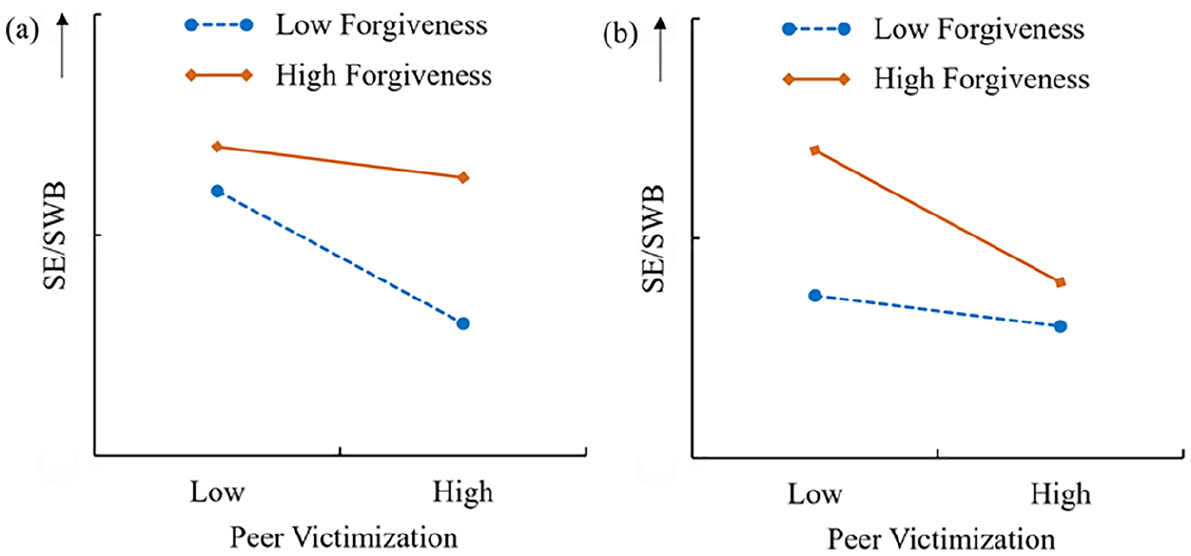
Illustrative effects of peer victimization on self-esteem (SE) or subjective well-being (SWB) in the interaction with forgiveness: (a) protective-stabilizing model, an interaction in which the effect of peer victimization is much stronger for adolescents lower in forgiveness, and (b) protective-reactive model, an interaction in which the effect of peer victimization is much stronger for adolescents higher in forgiveness.
Developmental Considerations
Given several developmental considerations, the current study sampled junior high school students as research participants to test our moderated mediation model. First, adolescents exposed to peer victimization may be especially likely to undergo a decline in subjective well-being and develop mental health problems. In contrast to young children, adolescents attach more importance to peer relationships and expect to be recognized, making rejection or victimization by peers more impactful (Casper & Card, 2017). Second, from a developmental perspective, the frequency of victimization follows an inverted U-shaped curve throughout childhood and adolescence, reaching its peak in early adolescence (i.e., junior high school; Nansel et al., 2001). Third, early adolescence is at a crucial stage for the development of self-esteem, and self-esteem has been conceptualized as an internal asset that facilitates successful adjustment during adolescence (DuBois et al., 2002; Pan et al., 2020). However, adolescents who have experienced traumatic interpersonal events such as peer victimization are especially prone to developing low self-esteem. Fourth, although children and adolescents have gradually learned the value of forgiveness and acquired the ability to forgive others during their socialization process (Enright & The Human Development Study Group, 1991; van der Wal et al., 2017), current empirical research on forgiveness has focused primarily on adults, and few studies have focused on how forgiveness can be protective against the adverse impact of peer victimization on subjective well-being among middle school students.
Covariates
We controlled for several important demographic variables in our analyses, including gender, age, family structure, and family socioeconomic status, as these variables may confound the relationship among peer victimization, self-esteem, forgiveness, and subjective well-being. First, the literature has documented that boys reported significantly more peer victimization (Cheng et al., 2008) and have higher levels of self-esteem than girls (Yan et al., 2021), although the gender difference in forgiveness and subjective well-being is inconsistent (Huebner, 2004; Ma & Jiang, 2020; Ma et al., 2015; Miller et al., 2008). In addition, compared with older adolescents, younger adolescents are more likely to experience peer victimization (Huang et al., 2013), have low levels of self-esteem (Bleidorn et al., 2016) but high levels of forgiveness and subjective well-being (Casas & González-Carrasco, 2019; Chiaramello et al. 2008). Finally, adolescents from non-intact families and low socioeconomic backgrounds are more likely to experience peer victimization (Huang et al., 2013; Wang & Liu, 2021; Zhang et al., 2022), have low levels of self-esteem and subjective well-being than their counterparts from intact and high socioeconomic families (Chen et al., 2016; Shek, 2008). Therefore, to ensure that any significant moderated mediation effect is not a byproduct of these demographic factors, we included them as covariates in our analyses.
The Present Study
Taken together, the present study aims at testing a moderated mediation model of forgiveness and self-esteem in the association between peer victimization and subjective well-being among Chinese adolescents. The conceptual model shown in Figure 2 provides an overview of our research questions. As depicted in Paths 1a and 1b, our first aim was to explore whether adolescents’ self-esteem mediated the relationship between peer victimization and subjective well-being. Based on the sociometer theory (Leary & Baumeister, 2000), we anticipated that self-esteem would play a mediating role in the relationship between peer victimization and adolescent subjective well-being (Hypothesis 1). As denoted in Paths 2a and 2b, our second goal was to examine whether adolescent forgiveness moderated the associations of peer victimization with self-esteem and subjective well-being. We anticipated that forgiveness would act as a protective factor in these relationships (Hypothesis 2). However, as for the moderation pattern, due to the inconsistency of previous research, we did not make specific assumptions, but rather, tested for the feasibility of two forms of moderation (i.e., protective-stabilizing and protective-reactive) to reconcile contradictory findings in existing research. At a higher level of forgiveness, finding a weaker path would support the protective-stabilizing model. By comparison, a stronger effect at a higher level of forgiveness would align with the protective-reactive model. Finally, to confirm the robustness of the findings, we further examined whether our moderated mediation model differed across two important demographic indicators (adolescent age and gender).
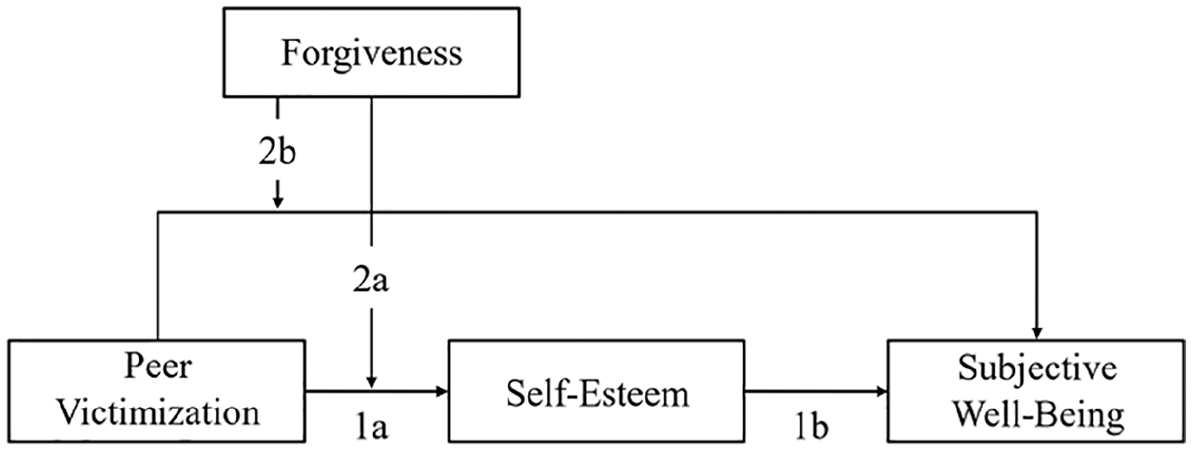
A conceptual model diagram for the moderated mediation framework.
Method
Participants
Data were drawn from the larger Ecological Risk Factors and Adolescents’ Social Adaptation study project (Li, 2012), which aimed to explore the association between environmental factors and problem behaviors among adolescents. By adopting a stratified cluster sampling method, 2,758 adolescents from Southern China participated in this study. Specifically, they were recruited from 10 middle schools, with 34.99% in Grade 7, 32.49% in Grade 8, and 32.52% in Grade 9. On average, adolescents were 13.53 years (SD = 1.06, range = 10–19 years), and 53.92% of the participants were girls. The median education of adolescents’ parents was between junior and senior high school diploma, which is similar to the national average data released by the sixth national census of China (National Bureau of Statistics, 2011).
Procedures
The research was approved by the Institutional Review Board at the corresponding author’s university. The questionnaire method, which measures individuals’ behaviors and attitudes through rigorously designed written questionnaires (Bradburn & Sudman, 1979), was used to collect the data. The research team worked closely with each school and, with the informed consent of schoolteachers and students, the survey was conducted by well-trained graduate students in the adolescents’ regular classrooms in November 2011. Prior to answering the questionnaire, adolescents were given standardized instructions and asked to complete all the questions independently within 45 min. Considering that anonymous questionnaires facilitate greater disclosure of sensitive information (Durant et al., 2002; Ong & Weiss, 2000), the entire survey was conducted anonymously. Meanwhile, much work has been done to improve the reliability of self-reports and reduce measurement error, including establishing a trusting relationship with participants to encourage cooperation, explaining the meaning of items to participants in advance, choosing appropriate wording of questions, and making questionnaire layouts more user-friendly (Schwarz, 1999).
Measures
Peer victimization
Peer victimization was assessed using the Adolescent Peer Victimization Questionnaire (Li et al., 2015). This questionnaire was adapted from previously validated instruments (e.g., Olweus, 1993) to ensure its cultural, linguistic, and age appropriateness. This questionnaire consists of seven items, assessing physical, verbal, relational, and financial forms of victimization. A sample item is “My own belongings were deliberately damaged by my schoolmates.” Similar items have been used in National Children’s Study of China (Dong & Lin, 2011). Each of the seven items was significantly related to self-esteem (rs = −.24 to −.08, ps < .001) and subjective well-being (rs = −.23 to −.07, ps < .001). Adolescents rated the frequency of peer victimization they experienced in school during the past 12 months using a 5-point Likert scale, ranging from 1 (never) to 5 (5 or more times). The higher the average score of all items, the higher the frequency of peer victimization. Moreover, significant associations with theoretically relevant constructs such as negative perception of school climate (r = .33, p < .001), depression (r = .33, p < .001), and delinquency (r = .25, p < .001) were found, indicating that the measure has good predictive validity. In the present study, Cronbach’s α was .77.
Self-esteem
Self-esteem was measured by the Chinese version (Wang et al., 1999) of Rosenberg’s (1965) Self-Esteem Scale. The scale consists of 10 items (e.g., “Ultimately, I tend to consider myself as a failure,” reverse scored). Adolescents rated their degree of self-worth and self-acceptance using a 4-point scale, ranging from 1 (strongly disagree) to 4 (strongly agree). The higher the average score of all items, the more positive the self-evaluation. This scale is the most representative instrument in the field of self-esteem research and has excellent psychometric properties among Chinese adolescents (Yan et al., 2021). The Cronbach’s α in this study was .84.
Forgiveness
Forgiveness was assessed using the Forgiveness Scale, which was adapted from two widely used and well-validated scales for assessing dispositional forgiveness (Brown, 2003; Thompson et al., 2005). The items were translated, back-translated, and adapted to ensure their cultural, linguistic, and age appropriateness. The scale consists of eight items, assessing three major motivational elements of forgiveness: rumination (e.g., “If someone wrongs me, I often think about it a lot afterward,” reverse scored), revenge (e.g., “I continue to be hard on others who have hurt me,” reverse scored), and benevolence (e.g., “Although others have hurt me in the past, I have eventually been able to see them as good people”). Adolescents rated the degree of forgiveness using a 7-point scale, ranging from 1 (strongly disagree) to 7 (strongly agree). The higher the average score of all items, the stronger the tendency to forgive. Significant associations were observed with theoretically relevant constructs such as prosocial behavior (r = .36, p < .001), resilience (r = .22, p < .001), and classmate relations (r = .42, p < .001), indicating good predictive validity. In the present study, Cronbach’s α was .82.
Subjective well-being
Subjective well-being was assessed using the Chinese version (Li, 2012) of Campbell’s (1976) Subjective Well-Being Scale. The scale consists of nine items, of which eight evaluate negative versus positive affections (e.g., “bored vs. interested,” “frustrated vs. enthusiastic”), and one evaluates overall life satisfaction (i.e., “not at all satisfied vs. completely satisfied”) over the past few weeks. In general, these items describe how an individual feels about his or her current life. Adolescents rated the degree of subjective well-being using a 7-point scale. The higher the average score of all items, the higher level of perceived well-being. The scale has been demonstrated to have good test-retest reliability and validity among Chinese adolescents (Li & Feng, 2018). The Cronbach’s α in this study was .93.
Demographic covariates
Because of documented associations with subjective well-being, seven covariates of demographic characteristics were included: (a) school, which was converted into nine dummy variables; (b) gender, where 0 = girl and 1 = boy; (c) age; (d) family structure, where 0 = non-intact family and 1 = intact family (i.e., living with biological father and mother); (e) education level of parents, where adolescents reported the education level of their parents from the following seven options: 1 = never attended school, 2 = primary school, 3 = junior high school, 4 = high school, 5 = junior college, 6 = undergraduate college, and 7 = postgraduate; (f) occupation of parents, where the occupation of parents was rated according to Li’s (2005) occupational prestige rankings, from 1 to 7 (1 = high occupational prestige, 7 = low occupational prestige); and (g) family financial stress, which was based on a 5-item scale (e.g., “My family has no money left over for entertainment during the past 12 months”). Adolescents rated the degree of financial stress faced by the family using a 4-point scale, ranging from 1 (never) to 4 (always). The higher the average score of the items, the greater the severity of financial difficulties.
Analysis Plan
Missing data (<1%) in the sample were imputed using the mean imputation method. When the missing rate is very low (<5%), this method can obtain unbiased estimates that are similar to other missing value processing methods (Little & Rubin, 2002). Because students were nested in schools, the fixed effect approach was utilized to handle the nesting effect (Cohen et al., 2003). All mediating and moderating effect analyses were conducted in SPSS 25.0 with the PROCESS macro v3.3 (a plug-in for SPSS; Hayes, 2018). Specifically, this study first used Model 4 to test the mediating effect of self-esteem, and then used Model 8 to test the moderated mediation effect of forgiveness. Models 4 and 8 are both pre-determined models among the 70+ models provided by PROCESS. Due to the simplification advantages of PROCESS in analyzing conditional process models, the analysis process requires only simultaneous input of predictors, mediators, moderators, outcomes, and covariates, in addition to a selection of the appropriate model, in order to generate the results of estimated mediation and moderation models. Bootstrapping, a nonparametric approach that requires no specific assumptions about sample distribution was utilized, and 95% confidence intervals (CIs; Hayes, 2018) were computed with 10,000 resamples. The parameter estimates are considered statistically significant if the 95% CI does not contain zero.
Results
Descriptive Analyses
Means, standard deviations, and correlations among the primary study variables are presented in Table 1. As expected, peer victimization was negatively associated with self-esteem (r = −.26, p < .001) and subjective well-being (r = −.26, p < .001). Moreover, self-esteem was positively associated with subjective well-being (r = .49, p < .001). Finally, forgiveness was positively associated with self-esteem (r = .27, p < .001) and subjective well-being (r = .35, p < .001).
Means, Standard Deviations, and Correlations Among the Variables in the Primary Analyses of the Study.
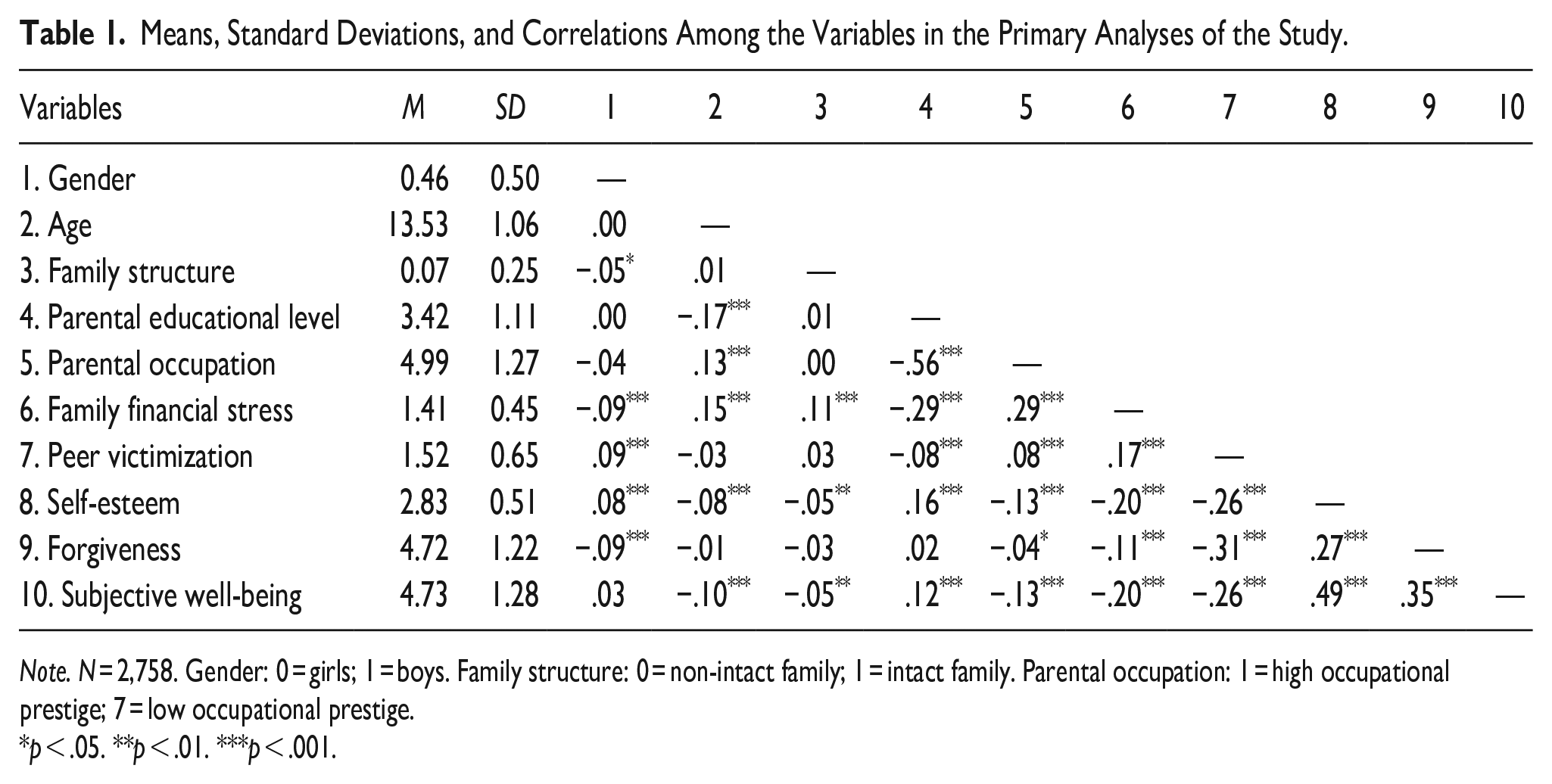
Note. N = 2,758. Gender: 0 = girls; 1 = boys. Family structure: 0 = non-intact family; 1 = intact family. Parental occupation: 1 = high occupational prestige; 7 = low occupational prestige.
p < .05. **p < .01. ***p < .001.
Testing for Mediation (Primary Analysis I)
In the first primary analysis, Model 4 in the PROCESS macro (Hayes, 2018) was used to test the hypothesis that self-esteem mediates the relationship between peer victimization and subjective well-being. The result indicated that self-esteem significantly mediated the relationship between peer victimization and subjective well-being, even after controlling for demographic covariates. Specifically, peer victimization was negatively associated with self-esteem (b = −0.19, p < .001), which in turn was positively associated with subjective well-being (b = 1.08, p < .001). There was also a significant direct relationship between peer victimization and subjective well-being (b = −0.26, p < .001), which indicated that self-esteem only partially mediated the relation between peer victimization and subjective well-being (indirect effect = −0.20, 95% CI [−0.24, −0.16]). This mediation model accounted for 27.30% of the total effect of peer victimization on subjective well-being. Thus, our results provide support for Hypothesis 1. It is important to note that we only use the term “mediation” in a statistical sense, given that the cross-sectional nature of the current study does not allow causal inference.
Testing for Moderated Mediation (Primary Analysis II)
In the second primary analysis, Model 8 in the PROCESS macro (Hayes, 2018) was used to test the hypothesis that forgiveness moderated the direct and indirect relationships between peer victimization and subjective well-being via self-esteem. To reduce problems with multicollinearity in the moderation analysis, we centralized the main effect terms that constitute the product term. As shown in Table 2, the interaction between peer victimization and forgiveness on self-esteem was significant (b = −0.02, p = .024), even after controlling for the demographic covariates. To further explore the moderation pattern, we conducted simple slope analyses. As shown in Figure 3, the nature of the moderation was consistent with the protective-reactive model (Luthar et al., 2000). Specifically, while peer victimization had a significant effect on self-esteem among adolescents low in forgiveness (b = −0.12, p < .001), the effect was stronger among those high in forgiveness (b = −0.18, p < .001). Therefore, the negative impact of peer victimization on self-esteem was stronger for adolescents with higher forgiveness. Finally, contrary to our expectations, the direct effect of peer victimization on subjective well-being was not moderated by forgiveness (b = 0.01, p = .745). This moderated mediation model accounted for 31.31% of the variance in adolescent subjective well-being. Our analyses provided partial support for Hypothesis 2.
Testing the Moderated Mediation Effect of Peer Victimization on Subjective Well-Being.
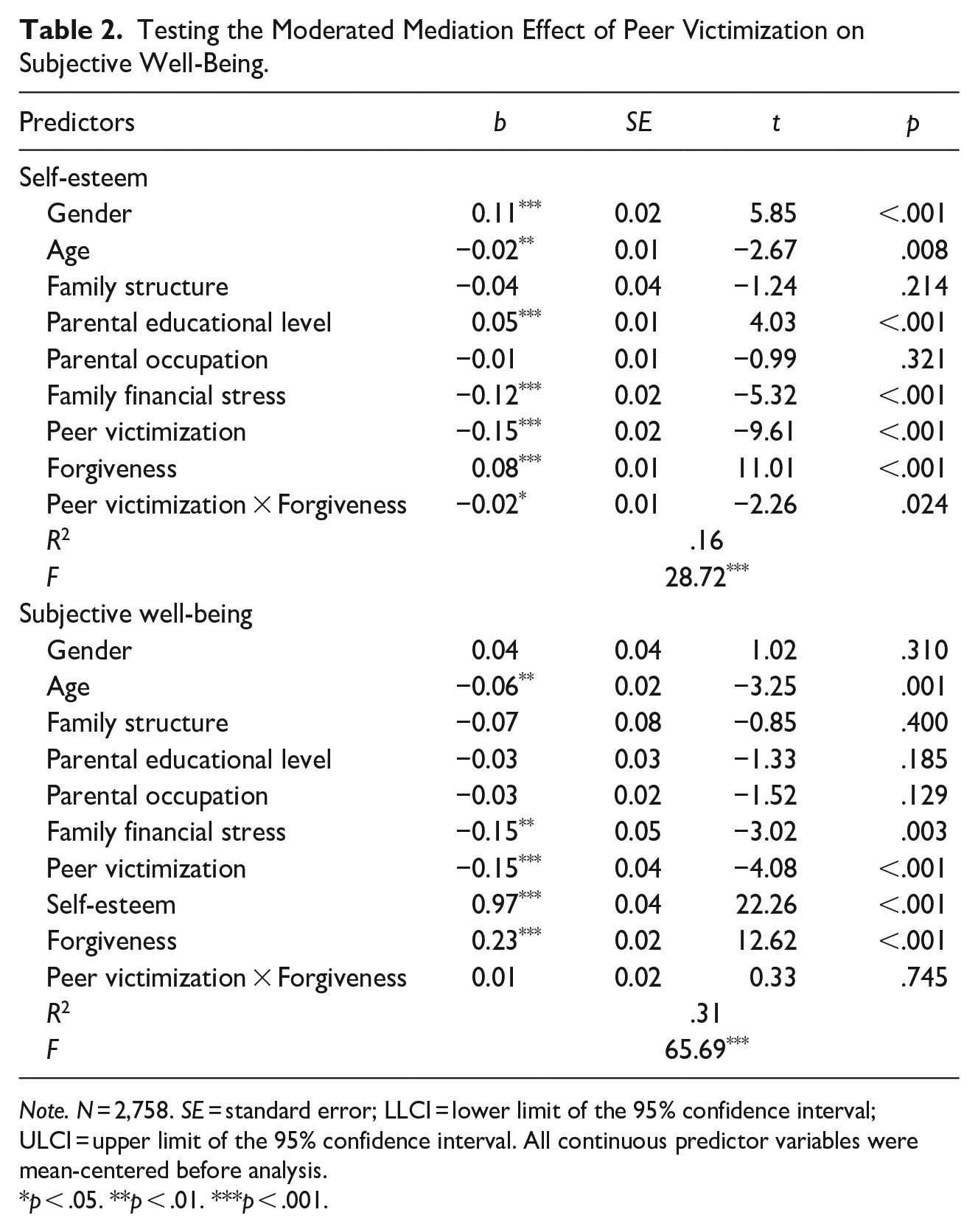
Note. N = 2,758. SE = standard error; LLCI = lower limit of the 95% confidence interval; ULCI = upper limit of the 95% confidence interval. All continuous predictor variables were mean-centered before analysis.
p < .05. **p < .01. ***p < .001.
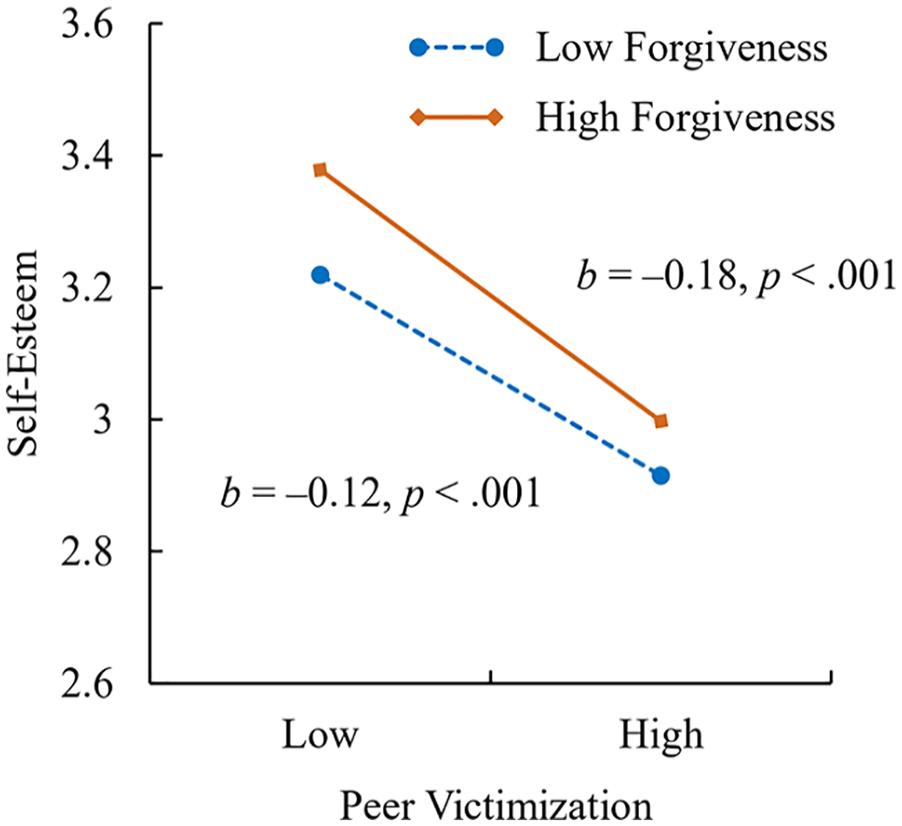
A graphical plot depicting the interaction between peer victimization and forgiveness in predicting self-esteem.
Supplementary Analyses
To determine any age/gender differences in the results, we conducted supplementary analyses to assess the three-way interaction among peer victimization, forgiveness, and adolescent age/gender. Specifically, Model 12 (a model for testing three-way interactions of moderators W1 and W2 on the relationships between X and M, and between X and Y; Hayes, 2018) in the PROCESS macro was used to test age and gender differences. The results indicated that no significant moderation effects emerged—that is, our results did not differ by age or gender (age: b = −0.00, p = .804 for the relation between peer victimization and self-esteem, and b = −0.04, p = .139 for the relation between peer victimization and subjective well-being; gender: b = −0.04, p = .076 for the relation between peer victimization and self-esteem, and b = 0.00, p = .944 for the relation between peer victimization and subjective well-being).
In addition, pseudo-forgiveness and true forgiveness are easily confused when measured. Specifically, researchers have argued that “move on” or “never bring it up again” would fall under pseudo-forgiveness (i.e., acknowledging the transgression, but instead of entirely resolving it, the decision is made to suppress or ignore it) rather than true forgiveness (Sheldon & Antony, 2019). Although our Forgiveness Scale was adapted from widely used instruments, to be conservative, we conducted a sensitivity analysis to see if the two items that included the meaning of “move on” or “never bring it up again” (i.e., “When people wrong me, my approach is just to forgive and forget” “I tend to get over it quickly when someone hurts my feelings”) affected our results. Therefore, we removed the two items from the Forgiveness Scale and reanalyzed the data. The results were not substantially different from those reported here.
Discussion
Although the relationship between peer victimization and subjective well-being has been confirmed in a range of empirical studies (Casper & Card, 2017; Gini et al., 2018; Martin & Huebner, 2007), few studies have simultaneously examined the mediating processes and protective factors underlying this association. Our study was designed to test a moderated mediation model to investigate the mediating role of self-esteem and the moderating role of forgiveness. Consistent with the sociometer theory (Leary & Baumeister, 2000), the results showed that self-esteem mediated the relation between peer victimization and subjective well-being among Chinese adolescents. Furthermore, as a protective factor, forgiveness moderated the first part of the mediational chain from peer victimization to self-esteem. Consistent with the protective-reactive model (Luthar et al., 2000), adolescents higher in forgiveness exhibited a greater decline in self-esteem with increased peer victimization, and low self-esteem was further associated with decreased subjective well-being. These findings emphasize the negative impact of peer victimization on adolescent self-worth system and the limited role of forgiveness as a protective factor.
Self-Esteem as a Mediator
Mediation analyses showed that self-esteem as a mediating factor accounted for the relationship between peer victimization and subjective well-being. Therefore, our findings align with the sociometer theory (Leary & Baumeister, 2000), which posits that when individuals are devalued by peers, the “internal barometer” (self-esteem) will decline, in turn contributing to negative emotions.
First, as mentioned previously, peer victimization experiences enable adolescents to develop negative self-images through their reflective self-evaluation (Yue et al., 2020) and self-blame attributions (Lopez & Dubois, 2005). Social comparisons may also operate in these processes (adolescents likely compare themselves to peers who are not victimized; Kaufman et al., 2020). Moreover, peer victimization often threatens adolescent peer status in the group, which also increases victims’ negative self-evaluations. Second, low self-esteem induced by peer victimization will decrease adolescents’ subjective well-being. This is because low self-esteem consumes the emotional and cognitive resources of adolescents and makes them unable to effectively cope with challenges (i.e., avoiding being involved in potential threats) in their life (Cohen & Sherman, 2014). As a result, adolescents with low self-esteem tend to perceive themselves as worthless and life as boring.
Our findings were also consistent with previous studies in a western context, which have shown that self-esteem serves as a mediator between peer victimization and psychological adjustment (Duru et al., 2019; Nepon et al., 2021; Norrington, 2021). Therefore, a cultural universalistic perspective—which suggests that self-esteem is a fundamental psychological need and manifests similarly across different cultures—was supported by our research (Heine & Buchtel, 2009). In addition, because individuals in collectivist cultures are more dependent on others in self-evaluation, interventions aimed at enhancing self-esteem are especially critical in the context of interpersonal harm in China.
Forgiveness as a Moderator
Existing theoretical and empirical studies have yet to elucidate whether and how forgiveness alters the direct and indirect associations of peer victimization with adolescent subjective well-being via self-esteem. Our findings demonstrate that forgiveness, as a protective factor, moderated the relationship between peer victimization and self-esteem. The form of moderation favored hypotheses that emerge from the protective-reactive model (Luthar et al., 2000). That is, with greater peer victimization, adolescents with higher forgiveness exhibited a greater decrease in self-esteem.
There are two possible explanations for this phenomenon. First, in the case of low victimization, adolescents with high forgiveness could mobilize their “cold” cognition to reflect on the behavioral motivation of the transgressors (Ghobari Bonab et al., 2021; Oostenbroek & Vaish, 2019), which enables them to adopt multifaceted attributions (e.g., transgressors’ negative mood, misunderstanding) as opposed to relying solely on negative internal attributions, and thus, self-esteem is less affected. However, when suffering from high levels of peer victimization, the protective role of forgiveness is weakened (Masten, 2014). In other words, frequent victimization experiences could leave deep scars on individuals’ self-esteem that are difficult to erase. Second, when victimized, adolescents with high levels of forgiveness are more likely to “return good for evil” rather than seek revenge (Flanagan et al., 2012), so they seem less aggressive and may incur more subsequent victimization. Meanwhile, the perpetrators are more likely to continue or even escalate their victimization behaviors—forgiveness becomes a negative reinforcement toward the perpetrators—because they have never experienced the criticism, guilt, or loneliness that arise from not being forgiven (McNulty, 2010), thereby leading to a more dramatic reduction in victims’ self-esteem. Taken together, this finding may reflect a “healthy individual paradox”—in the victimization context, some bullying victims with positive personal qualities such as forgiveness are more vulnerable than others. Therefore, as suggested by McNulty and Fincham (2012), certain traditionally positive psychological traits such as forgiveness are not always beneficial; rather, their effects depend on the context in which they operate.
Limitations and Future Directions
Though this study contributes to the literature, several limitations still merit caution in interpreting the results. First, although the present study had a sound theoretical and empirical basis, it cannot reveal any bidirectional or dynamic processes among the constructs due to its cross-sectional nature. For example, studies have shown that low self-esteem is not only a result but also a cause of peer victimization and forgiveness (van Geel et al., 2018; Yao et al., 2017). Therefore, a longitudinal cross-lagged panel design could be used in the future to provide more information on these complex associations and to develop and extend relevant theories. Second, although self-report may be accurate in revealing some covert victimization experiences (Gromann et al., 2013), the common method variance in this study was not serious (Harman’s single-factor test showed that the first factor could only explain 19.90% of the variance, far less than the recommended 40%; Podsakoff & Organ, 1986), it is necessary for future studies to assess relevant variables from multiple sources. Third, peer victimization in the current study was analyzed in terms of the total scores. Although this facilitates exploration of the cumulative effect of different forms of victimization, more research is needed to examine the unique contributions of individual victimization subtypes (e.g., physical, verbal, or financial victimization). Fourth, our study was conducted with a sample of Chinese middle school students, so caution should be exercised in generalizing the findings to other cultures, developmental stages, and clinical samples. Future studies could use a more inclusive and diverse sample design to test the generalizability of our findings. Fifth, although it is important to examine peer victimization as a risk factor, adolescents may also experience low self-esteem and well-being due to other factors such as poor parent-child relationship and teacher-student relationship. Future research could examine the impact of multiple factors on self-esteem and well-being and reveal their unique contributions. Sixth, we cannot dismiss the possibility that other mediators and moderators act on the relationship between peer victimization and subjective well-being. Future studies may benefit from exploring other important mediators (e.g., psychological security) and moderators (e.g., family functioning). Finally, researchers have argued that forgiveness includes both forgiveness of others and forgiveness of self (Griffin et al., 2020); however, we only focused on the forgiveness of others as a moderator in the present study. Future research could explore the moderating role of forgiveness of self, for example, whether forgiveness of self attenuates the adverse impact of low self-esteem on one’s own subjective well-being.
Practical Implications
Although the current findings require replication, they have significant implications for practice. First, given that self-esteem is a mediator in the relation between peer victimization and subjective well-being, the cultivation of positive self-beliefs may have a protective function against adverse effects of peer victimization. For example, developing self-affirmation interventions that require adolescents to write down their core values in different domains in order to affirm their self-worth might be a worthwhile approach. Such interventions can trigger an adaptive cycle between adolescent self-systems and social systems (e.g., school) and ultimately benefit long-term global self-worth (Cohen & Sherman, 2014). As such, it has great potential to be integrated into daily instruction and implemented on a large scale in schools.
Second, the moderating role of forgiveness is consistent with the protective-reactive model, suggesting that high forgiveness is protective under low peer victimization, but its protective role is diminished under high peer victimization. This does not mean that adolescents who have experienced high peer victimization cannot benefit from forgiveness interventions that equip individuals with empathy, cooperation, and emotion management skills (Rapp et al., 2022). Rather, the benefits are not as pronounced as in cases of low peer victimization, and therefore, the beneficial role of forgiveness interventions should not be exaggerated. If adolescents experience serious peer victimization, targeted psychological intervention should be implemented promptly, regardless of their levels of forgiveness.
Finally, peer victimization should remain a fundamental intervention goal. Indeed, anti-bullying campaigns have been launched in many countries worldwide. In China, for instance, specific initiatives include carrying out thorough investigations to disclose bullying incidents; students who perpetrate bullying will be punished according to the seriousness of their offenses; diversified education guidance (e.g., moral, legal, mental health, and family education) will be promoted to reduce school bullying; and so on (The Ministry of Education of the People’s Republic of China, 2021). These anti-bullying initiatives could be cross-referenced, further promoted, and examined in different countries and regions.
Conclusions
The present study was the first to test a moderated mediation model of forgiveness and self-esteem in the association between peer victimization and subjective well-being among Chinese adolescents. The findings revealed that self-esteem mediates the association between peer victimization and subjective well-being. Furthermore, consistent with the protective-reactive model, forgiveness exacerbates the relationship between peer victimization and self-esteem, which in turn is related to subjective well-being. By using a moderated mediation model, the present study demonstrates the significance of simultaneously examining mediation and moderation factors. This study moves one step forward in the broader literature on peer victimization, representing important progress toward preventing and developing interventions aimed at improving subjective well-being among adolescents at risk of peer victimization.
Footnotes
Declaration of Conflicting Interests
The author(s) declared no potential conflicts of interests with respect to the authorship and/or publication of this article.
Funding
The author(s) received no financial support for the research and/or authorship of this article.
