



Abstract
Women exposed to intimate partner violence (IPV) often rely on support from their informal support networks to obtain resources that may mitigate IPV. This study explored the challenges women of color encounter in seeking advice and information from their informal support networks (i.e., family, friends, neighbors, community members) regarding IPV support services. In-depth interviews were conducted with 29 IPV survivors who self-identified as Black or Hispanic. Data were analyzed using grounded theory methodology. Results showed that participants lacked informational support, both in their communities and in their interpersonal relationships with family and friends. Communities treated IPV as normal and propagated the belief that women’s responsibilities were to men and family. Family and friends discouraged IPV information seeking and advised that IPV should be kept private to avoid community shaming. The community environments also lacked information about resources for women experiencing IPV. The lack of information from their informal support networks appeared to delay participants’ help-seeking. As the frequency and severity of violence escalated, some participants engaged in independent information searching, using social media and online information sources as well as conventional media like radio and newspapers. Others received information from first responders in the wake of a violent emergency. Participants described the information they received online or from first responders as empowering, encouraging them to engage in support services. Similarly, they felt empowered by the information they received from social workers, counselors, and victims’ advocates, and they wished to use what they learned to help other women in similar circumstances. Women experiencing IPV and their communities need more information regarding IPV support services. Successful interventions for IPV survivors and their support networks may necessitate community-level education and altering biased perceptions of gender-appropriate behaviors.
Keywords
Intimate partner violence (IPV) involves physical and sexual abuse, stalking, and psychological aggression between current or former partners (Breiding et al., 2015). An estimated 36% of US women have experienced IPV in their lifetime (Smith et al., 2018). Experiencing IPV is associated with a number of adverse mental and behavioral health outcomes, which include posttraumatic stress disorder (PTSD) (Beijer et al., 2015; Black et al., 2011; Sullivan & Holt, 2008), major depressive disorder (Black et al., 2011; Coker et al., 2002), anxiety and hostility (Black et al., 2011), and suicidality (Black et al., 2011; Coker et al., 2002).
Women of color experience particularly high rates of IPV. For example, Black or African American (hereafter Black) women are disproportionately affected by IPV, with an estimated 43.5% reporting lifetime IPV exposure compared to 38.4% of non-Hispanic White women (Smith et al., 2017). Furthermore, 32.3% of Latina/Hispanic (hereafter Hispanic) women report lifetime IPV exposure and more than half (51.1%) of women self-identifying as multiracial experience lifetime IPV (Smith et al., 2017). Given these disproportionate rates of IPV exposure, it is particularly important to understand help-seeking behaviors among women of color.
Help-seeking for IPV is a process that includes “defining the problem, deciding to seek help, and selecting a source of support” (Liang et al., 2005, p. 82). Help-seeking has also been defined as disclosing IPV victimization to obtain help (Mays et al., 1996; Morrison et al., 2006) from informal and formal support systems. Informal support systems include people’s family, friends, and fellow community members, while formal support systems comprise legal, medical, and counseling professionals (Gottlieb & Bergen, 2010; Krause et al., 2008; Sylaska & Edwards, 2014). Key functions that both informal and formal support systems may provide include emotional, tangible (i.e., money, food, housing, transportation), and/or informational support (Berkman, 2000; Hlebec et al., 2009; Levendosky et al., 2004; Schwarzer & Knoll, 2007; Thoits, 2011).
This study focuses on informational support, which may consist of advice and information regarding resources for women experiencing IPV (Berkman, 2000; Schwarzer & Knoll, 2007; Thoits, 2011). When friends, family, neighbors, coworkers, faith contacts, and other community members understand and possess information about IPV, they can be a critical information source regarding IPV services and resources (Barnett, 2001; Evans & Feder, 2014; Fraser et al., 2002), particularly since they are often the people to whom survivors first disclose their IPV experiences (Liang et al., 2005; Sylaska & Edwards, 2014). An informal support system that is well-informed about IPV may therefore serve as a critical link between women experiencing IPV and the formal support system of professionals that provide resources to help women leave and recover from IPV (Fanslow & Robinson, 2010; Fraser et al., 2002). Informational support from friends, family, and others includes information explaining what IPV is, the types of resources offered locally or within reach, and where to find those IPV resources (see Crandall et al., 2005; Randell et al., 2012). IPV resources typically include safe housing, food, and employment assistance; trauma recovery programs; and legal assistance (Bent-Goodley, 2007; El-Bassel et al., 2001; Evans & Feder, 2014; Rizo & Macy, 2011). Accessing and utilizing these resources help women survivors of IPV leave their perpetrators (Brown, 1997; Liang et al., 2005) and protect themselves from future harm (Liang et al., 2005).
When women experiencing IPV lack informational support from their informal support systems, often due to lack of awareness about IPV (Barnett, 2001; Bent-Goodley, 2007; Brabeck & Guzmán, 2008; Davis et al., 2001; Fanslow & Robinson, 2010; Flicker et al., 2011) or community norms permissive of IPV (Brabeck & Guzmán, 2008; Flicker et al., 2011; Fraser et al., 2002; Raj & Silverman, 2002; Rose et al., 2000), they may alternatively access informational support directly from the formal support system by inquiring about available IPV resources and where to find them. For instance, first responders, crime victims’ centers, family safety centers, and domestic violence agency staff are all information sources about their own services and, potentially, those offered by other agencies. In some instances, this informational support is provided without request: police, often a first point of contact in emergencies, may provide informational support in the form of IPV agency and shelter contact information (Brabeck & Guzmán, 2008). Once connected with the formal support system, women survivors of IPV receive further support, such as information from shelter staff regarding other local IPV resources (Few, 2005).
Despite the potential benefits associated with this type of formal informational support, women of color report difficulties accessing it, including calling the police for fear of reprisals. For example, Black women are reluctant to formally report IPV due to the justice system’s history of discrimination (Bent-Goodley, 2007) and other experiences of systemic racism (Kasturirangan et al., 2004). Likewise, Hispanic women’s efforts are impeded by fear of law enforcement, deportation, and uncertainty about their legal rights (see Rizo & Macy, 2011). Women of color also avoid seeking informational support or accessing IPV resources because of higher rates of prosecution and child custody losses compared to White women (Bent-Goodley, 2007) and negative experiences with medical professionals (Paranjape et al., 2007). Their consequent lack of informational support is well documented: compared to non-Hispanic White women, women of color who experience IPV are often less aware of available IPV resources such as police intervention, restraining orders, counseling programs, and medical and emergency care (Bauer et al., 2000; Brabeck & Guzmán, 2008; Few, 2005; Krishnan et al., 2001; Lucea et al., 2013; Raj & Silverman, 2002; Rizo & Macy, 2011; Sabina et al., 2012; Shuman, 2014). Similarly, undocumented Hispanic immigrant women experiencing IPV are mostly unaware of US laws, such as the Violence Against Women Act, to protect them from abuse and deportation (Adams & Campbell, 2012; Bauer et al., 2000; Raj & Silverman, 2002)—information that evidence suggests would encourage them to access IPV resources (Adams & Campbell, 2012; Ammar et al., 2005; Raj & Silverman, 2002; Randell et al., 2012). Their understandable avoidance, and the systemic factors giving rise to it, may cause women of color to delay seeking informational support from the formal support system (i.e., police and domestic violence agencies) until the IPV becomes severe, including serious injury (Lucea et al., 2013; Mitchell et al., 2006; Sylaska & Edwards, 2014).
Despite the important role of informational support in connecting women experiencing IPV with the resources they need, few studies have explored challenges women of color experiencing IPV may face in seeking informational support about available resources from their informal support networks, including friends, family, and community members (see Brown, 1997; Petersen et al., 2005; Randell et al., 2012). For instance, though it is limited, evidence suggests lack of knowledge about harms caused by IPV may lead friends and family members to not only refuse informational support but to be unsupportive of survivors’ independent attempts to request or seek information about IPV resources (Brabeck & Guzmán, 2008). Likewise, there is also some evidence suggesting that community norms may impact women of color’s informational support: while also experienced by White women (see, e.g., Alaggia et al., 2012; Crandall et al., 2005; Evans & Feder, 2014), evidence regarding community normalization of IPV and tolerance of male violence against women suggests these intersecting social influences may uniquely impact access to IPV resources for women of color (Bauer et al., 2000; Brabeck & Guzmán, 2008; Fraser et al., 2002; Lucea et al., 2013; Morrison et al., 2006; Rizo & Macy, 2011; Rose et al., 2000). However, these studies do not focus on barriers to informational support and independent information seeking among women of color. Consequently, research is particularly limited regarding the influence of interpersonal relationships and community norms on IPV survivors’ decisions to independently seek information about IPV resources when informational support is lacking.
Previous literature does suggest that sociocultural factors, such as religious beliefs, may discourage efforts by women of color to garner informational support (see Lucea et al., 2013; Rizo & Macy, 2011). However, few qualitative studies exploring this phenomenon among women of color are available in the literature (see the following exceptions: Few, 2005; Petersen et al., 2005; Rose et al., 2000). Furthermore, few studies have explored how interpersonal and community pressures to keep IPV private, due to the stigma associated with this form of violence, may discourage women of color from seeking information about IPV resources (Bent-Goodley, 2007; Fraser et al., 2002). Critically, there is limited understanding of how women of color view the role of interpersonal and community influences in impeding their informational support—a serious gap revealed through our attention to feminist intersectionality, specifically its multicultural (race, class, gender) perspective (Sokoloff, 2008). Also, independent information seeking about IPV resources remains largely absent in the literature.
Furthermore, to our knowledge, no studies have investigated how women of color surviving IPV overcame barriers, to both informational support and independent information searching, to ultimately receive or access information that led to IPV resource use. Therefore, the purpose of the current study is to qualitatively explore how interpersonal and community-level pressures impacted women of color’s informational support, efforts to independently search for information about IPV resources, and how they ultimately received or accessed needed information that led to their use of IPV resources.
Methods
Participants
In-depth interviews were conducted between June 2018 and February 2019 with 29 IPV-exposed women of color residing in a large metropolitan area in the mid-southern United States. Participants included 14 Black and 15 Hispanic women who experienced IPV. The terms “Black” and “Hispanic” were preferred by participants. Black participants were from the US Mid-South and spoke English. Hispanic participants originated from Mexico (13), El Salvador (1), and Guatemala (1); they primarily spoke Spanish. Black and Hispanic participants were similar in terms of age range, number of children, IPV experience (i.e., types of IPV experienced and time since last abuse incident), and forms and length of counseling services received (see Table 1). However, more Hispanic participants reported lower educational attainment and income and higher levels of sexual abuse compared to Black participants. Annual household income for most participants in both groups was less than $25K (see Table 1), which is well below the US median for all households ($68.7K in 2019 and $63.2K in 2018) (Bureau of Labor Statistics, 2021). At the time of interview, five Black participants resided in a domestic violence women’s shelter and two other Black participants were enrolled in a 1-year residential domestic violence and substance use recovery program. Hispanic participants lived independently or with a non-abusing partner, friend, or family member (e.g., adult child).
Characteristics of the Study Sample (n = 29).
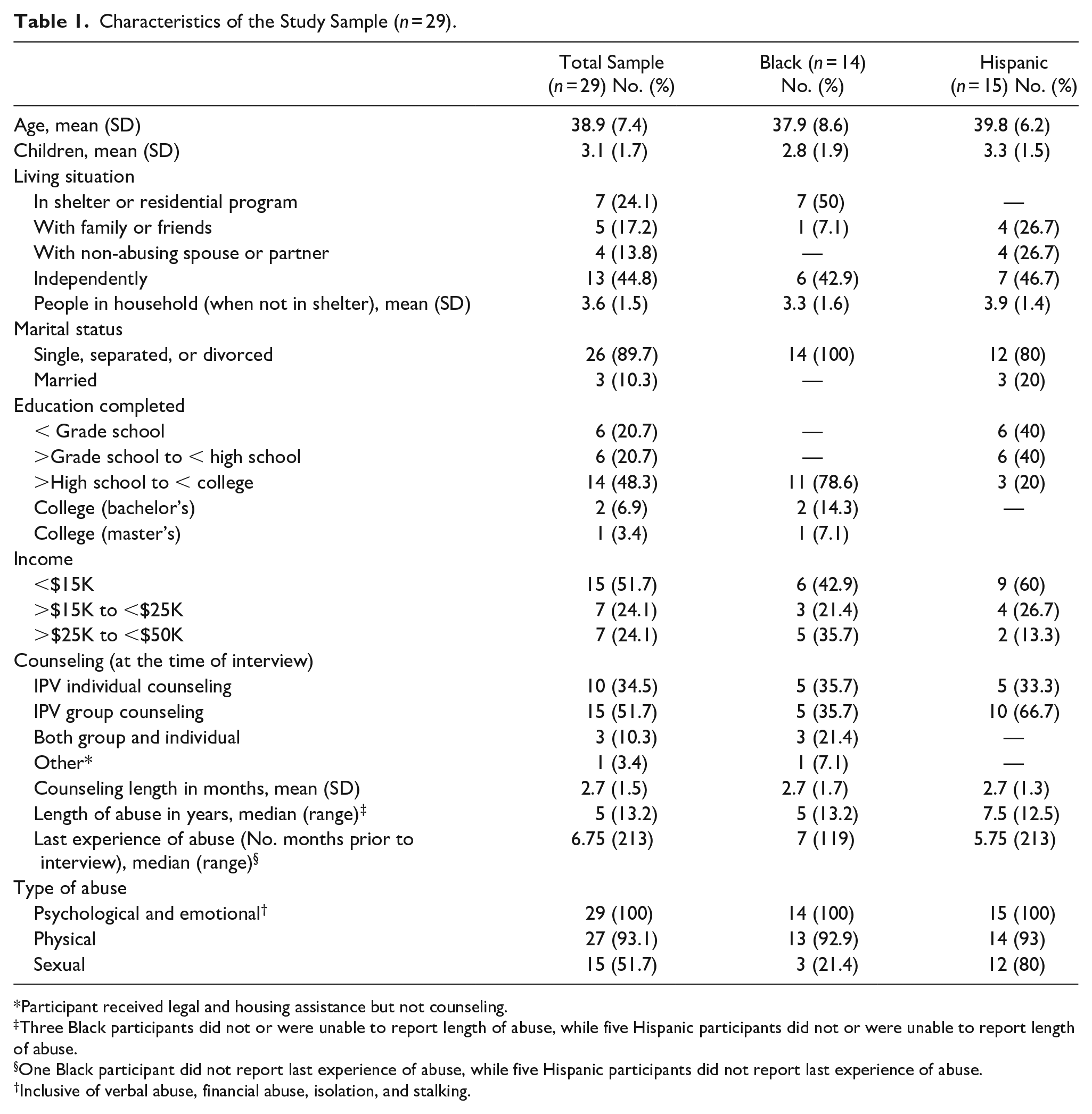
Participant received legal and housing assistance but not counseling.
Three Black participants did not or were unable to report length of abuse, while five Hispanic participants did not or were unable to report length of abuse.
One Black participant did not report last experience of abuse, while five Hispanic participants did not report last experience of abuse.
Inclusive of verbal abuse, financial abuse, isolation, and stalking.
Participants experienced IPV, involving multiple forms of abuse, over several years. All participants reported psychological and emotional abuse, while 93% reported physical abuse and 51% reported sexual abuse (see Table 1). Most participants recounted increasing severity and frequency of physical abuse prior to seeking informational support regarding IPV.
Procedures
Study inclusion criteria were as follows: (1) prior experience with IPV involving a male intimate partner; (2) currently receiving formal counseling from a local nonprofit or government agency related to experiences of IPV; (3) self-identify as Black, African American,
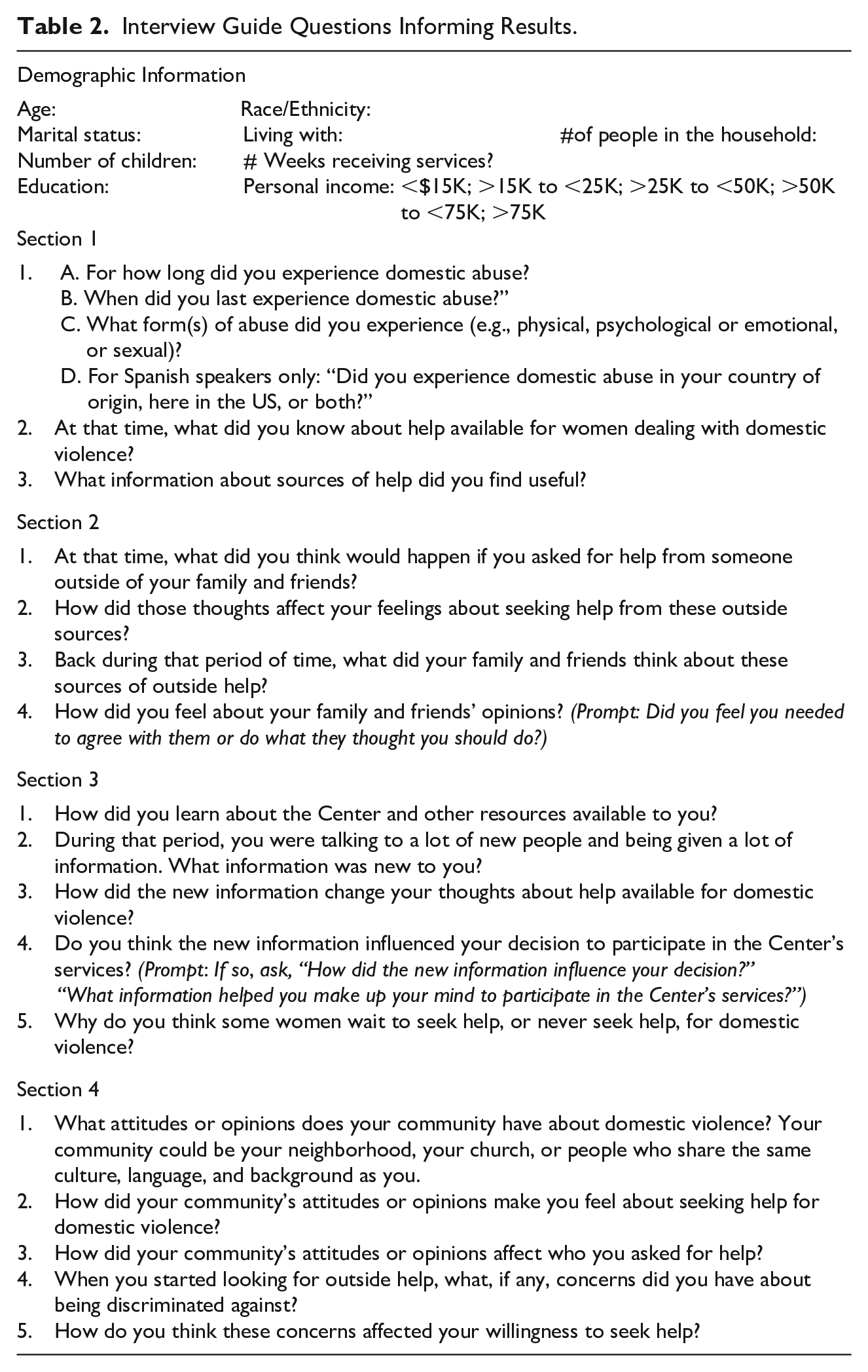
The Institutional Review Board at the first author’s home institution approved the study protocol. All participants reviewed and signed an informed consent document in their preferred language (English or Spanish) prior to being interviewed. The interviews were conducted in participants’ chosen language. The first author conducted the English-language interviews and was assisted by trained certified medical translators for the Spanish-language interviews. Interviews were conducted in private areas located within the referring agencies’ offices and were audio-recorded. Interviews were directed by a semi-structured interview guide (see Table 2) and, on average, lasted 60 minutes. All participants were given a $25 grocery store gift card as compensation for their time.
Interview Guide Questions Informing Results.
Interview Guide
The interview guide was comprised of demographic items followed by questions pertaining to IPV experiences, knowledge about IPV support resources, information sources, information received, information-seeking activities, and community norms and attitudes about IPV and IPV help-seeking. The guide was developed using literature review and in collaboration with two local public health experts, also women of color, familiar with the subject of IPV.
Data Analysis
Interview recordings were transcribed, and Spanish interviews were translated into English by professional translators. Transcripts were imported into NVivo version 11.2.1 (NVivo, 2016) and were analyzed using Charmaz’s (2014) constructivist grounded theory approach. The analysis process began by developing a set of initial codes via an inductive, line-by-line process (Charmaz, 2014). This line-by-line coding of each transcript generated dozens of codes, which served as tentative themes grouped into categories. Drawing from these initial codes, a set of focused codes were developed using the constant comparative method (Bowen, 2006; Glaser & Strauss, 1967). Comparing categories and themes resulted in merging several similar themes, shifting some themes to more appropriate categories, conflating redundant categories, and revising certain code names. These strategies were used to focus data interpretation while preserving the extent of variation within the data.
As each interview was completed, its transcript was coded prior to the next interview. This iterative process provided time between interviews and throughout the coding process to engage in reflexivity, or the challenging of the authors’ preconceptions through the rigorous use of memo-writing (Charmaz, 2014). For example, the first author interrogated his preconceptions based on his experiences witnessing the toll of domestic violence on many of his close family members, his experiences volunteering weekly in a domestic violence services agency, and his familiarity with the IPV literature. The second author interrogated his preconceptions as well, including those based on prior research with women experiencing interpersonal and intrapersonal traumas associated with substance use disorders.
The first author was responsible for completing each initial round of coding, while the second author double-checked and examined the data for disconfirming cases and alternative meanings. Disagreements were resolved through discussions between the first and second authors. Memos were also employed throughout the analysis process to document reflections on the emergent categories and themes. Theoretical saturation was reached after analyzing the first 10 transcripts from each group, as no new categories emerged from subsequent transcripts; that is, themes were largely repetitive of earlier responses (Bowen, 2006; Charmaz, 2014).
Results
The analysis resulted in four primary themes regarding the challenges women of color faced when accessing informational support for IPV help-seeking. The primary themes were as follows: (1) community norms deterring informational support and information seeking, (2) family and friends discouraging information seeking, (3) lacking information in the community environment, and (4) independent information searching and emergency referrals (see also Figure 1).
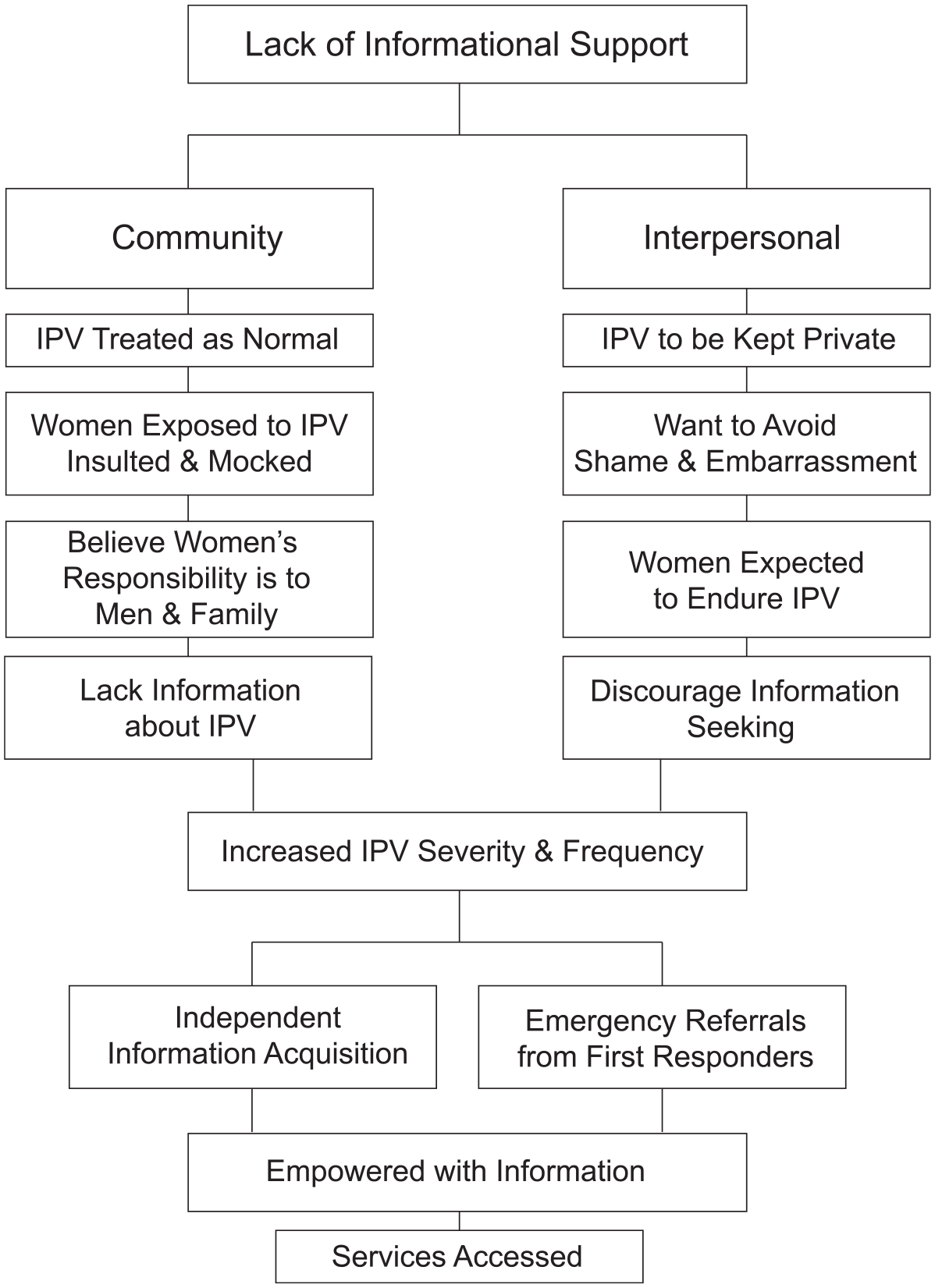
Thematic map for informational support experiences impacting IPV help-seeking among women of color exposed to IPV.
Community Norms Deterring Informational Support and Information Seeking
Community beliefs manifested most saliently in religious settings, such as churches. According to participants, church leaders and fellow congregation members emphasized their belief in marriage and the responsibility of women to support their husbands and family. As a Black participant explained, . . . In our church as Christians, the women are kind of taught to cover your husband in the sense of you shouldn’t tell everybody what he’s doing, you shouldn’t make people aware of it. Hispanic participants, also self-identifying as Christian, stated that the very topic of IPV is taboo in their churches. These beliefs extended beyond the church itself and appeared to permeate their community life and norms. A Hispanic participant, for instance, stated, . . . Many times, it’s the custom that people tell you, “if you married him, stay with him.” Participants perceived little support for their information needs. Moreover, they felt community norms forced them to accept their abusive situation, which further dissuaded them from seeking information from fellow church members or clergy about resources to address their abuse.
Most participants’ accounts of community attitudes toward IPV survivors ranged from indifferent to hurtful. Indifference, participants inferred, arose from the commonplace presence of IPV in their communities. Participants described environments where IPV was treated as such a normal part of life that it did not seem wrong so much as something women were expected to endure, as one Black participant shared:
It’s almost like it’s okay because it’s so common now. People just deal with it, and it’s almost like almost cool, or you don’t feel like you’re loved if you’re not hit. So, it’s kind of so abnormal. It’s so backwards.
This seeming indifference toward IPV, and by extension the plight of women caught in abusive relationships, discouraged participants from expecting informational support from other community members. For example, one Black participant said, Back then I just really didn’t feel comfortable asking for help. Because where I’m from, domestic violence is not made to be a major issue.
Experiences of hurtful treatment toward survivors were more prevalent among Hispanic participants, many of whom recalled their most discouraging experiences of community attitudes in their countries of origin rather than the United States. Such attitudes appeared rooted in beliefs about the relationship roles and social status of women: What a lot of people say, well, what’s typical for Mexicans to say is, “She had it coming. The man hit her because she misbehaved. She disobeyed him.” These earlier experiences appeared to cause some Hispanic participants to expect similar treatment in the US: Yes, I thought it was like back in Mexico, that if people know about you, they mock you or say, “look at that old lady, her man beats her.” In such cases, fear of embarrassment and ridicule appeared to diminish or eliminate any expectation participants might have of receiving informational support from community members. Moreover, this fear appeared to dissuade participants, particularly Hispanic women, from seeking information independently, since even private efforts could be discovered, risking unwanted IPV disclosure and consequent community embarrassment.
Family and Friends Discouraging Information Seeking
Reactions from family and friends seemed intent on adhering to community norms as a way to protect IPV survivors from indifference and hurtful treatment—and the wider family from invasion of privacy. Most participants shared that they felt a lack of support within their closest interpersonal relationships, finding that—rather than being encouraged to seek information about IPV resources—they encountered pressure from family and friends to maintain a relationship with the violent partner. Participants recalled how this advice, rooted in the broader community belief that women’s primary responsibilities were to their husband, children, and household, deterred them from leaving their abuser or even seeking information on their own. One Hispanic participant who tried to ask friends where to find help and emotional support to make the transition explained, [My friends] always say, “No, you have your children. . .Those who suffer are the children.” And that, there it is crushed again. Putting up with more.
Within families, IPV was regarded as an extremely private issue. To ask for help, participants were told, was to appear weak and unable to cope with the realities of life that they witnessed other family members, that is, their mothers, aunts, and grandmothers, endure quietly. As one Black participant stated:
My mom questioned [looking for help]. She would say that when she was young that she experienced a lot of domestic violence and childhood domestic violence as well as all of her sisters and my grandmother, and why didn’t she need therapy? Why didn’t it affect them?
Families did not want to invite outside accusations of weakness and consequent feelings of embarrassment and shame. As a Black participant shared, Like I said, everybody was, “Shh, don’t say anything, you don’t need your business out there, you don’t want to be judged.” Some family members went so far as to recommend tolerating the abuse, believing it would resolve itself over time. As one Black participant stated, And what they all are saying is what doesn’t kill you only makes you stronger. But that’s not true. That’s not true at all. Likewise, a Hispanic participant recalled being subjected to a similar expectation: My mom had the antiquated mindset that a marriage needs to be preserved, and she had hope that he would change. This advice to tolerate abuse for the sake of maintaining appearances seemed particularly dangerous because it failed to provide needed informational support while also thwarting independent information seeking and encouraging women to remain with a violent perpetrator. Despite receiving similar advice, Black and Hispanic participants characterized the pressure this advice exerted differently. More specifically, Black participants explained that they were made to feel “abnormal” if they chose to look for information that could help them access resources to live independently, even if their partner was abusive, while Hispanic participants explained that the pressure they experienced was both a cultural and marital obligation that discouraged them from believing they should seek or expect informational support.
Lacking Information in the Community Environment
Most participants reported a dearth of information about IPV or about IPV support services in their communities. For example, a Hispanic participant stated, The truth is all women don’t know there’s such a place like this [a counseling service provider]. There are no ads, I think, I don’t know what it is. Several participants contrasted the relative absence of IPV information with the seemingly ubiquitous presence of information pertaining to homelessness or substance use treatment services. A Black participant, for instance, explained, Like I said, a lot of women don’t know what help is out there at all. I didn’t know, you always see things about drugs or alcohol, getting help with those things, but [not IPV].
These participants were unaware of IPV resources beyond police intervention. One Black participant, for example, shared:
I thought that there was no help at all. I really felt like there was no sort of help, just nothing. Just call the police, wait for him to get back out. That was basically our help, that’s what I thought. I had no idea.
A Hispanic participant expressed a similar sentiment: The only thing that I know that I can do is call the police, and like they going to take him away, but I didn’t even know that there were agencies that help women after, or during that process.
Participants appeared frustrated by the lack of outreach by IPV support agencies for their programs or services—as these messages would have helped counteract the prevailing community and interpersonal pressures they felt to endure IPV. With near unanimity, participants suggested that they would have sought help sooner if more information about IPV services had been available in their community, as one Hispanic participant explained:
If I would have known years ago, it would be very different. Very different. Now, I put on my Facebook that if anyone is suffering from domestic violence, that they can contact me. I would give them everything that I didn’t know.
Participants were emphatic that they did not want other women from their communities to suffer lack of informational support as they did, particularly when they saw information regarding resources for other needs circulating in their communities. Asked how information should be shared in the community, a Black participant responded:
The same way they get the word out about everything else. Like they got bulletins, it can be like a secret number [a domestic violence hotline]. They don’t have none of that. They got a homeless hotline, they advertise that. They don’t advertise domestic assault.
Participants shared other suggestions for more effective dissemination of information about IPV resources; the suggestions included spreading information through clothing and food pantries, human resource departments and SNAP offices, and libraries and helplines (all preferred by Black participants), television, churches, social media, newspapers (including Spanish-language publications), and bus exteriors. Some proposed launching school-based education programs to provide children information they could bring home to their mothers, an approach suggested only by Hispanic participants:
I believe if the children got that information and they are aware they are experiencing this, they are going to be able to help their parents. . . . That’s why I think through the children, we can do more, especially in the Hispanic culture.
Independent Information Searching and Emergency Referrals
Lacking relevant information in the community and from their family and friends, participants had to either overcome discouragement and proactively seek information on their own (e.g., to avoid a life-threatening emergency) or receive information from a first responder, social worker, or victims’ advocate in the wake of an emergency. Facing increasing abuse severity and frequency, many participants independently sought information about where to find help. In particular, participants turned to online information sources, using search engines (e.g., Google) and social media (e.g., Facebook) to learn what other women in similar situations were doing to access assistance. Some searches were broad, as many participants were not sure of keywords or what type of IPV resources might be available in their community. Other searches were more focused, as one Black participant described: I would do a lot of research on the Internet. . . . I was searching for shelters and domestic violence help and help for single moms and stuff like that.
Participants also relied on media to obtain information about IPV and IPV resources. Black participants recounted intentionally viewing television programs or films that depicted female protagonists experiencing IPV. Radio and newspapers emerged as important outlets for Hispanic participants, likely due to the presence of Spanish-language radio programs and a Spanish-language newspaper in the otherwise English-dominated media market in the study location. Hispanic participants also sought information through social media as well as from the regional health department.
Other participants acquired information about IPV services in the wake of an emergency and with the aid of first responders, particularly police officers. For participants suffering severe physical abuse, police often served as the initial information touchpoint. As one Hispanic participant stated, I came here, I mean, the first time I called the cops because I was a victim of domestic violence, the cops sent me here [a counseling service provider]. However, participant accounts revealed considerable inconsistency in the provision of IPV-related information provided by police. Though some police officers carried printed materials to hand out to individuals experiencing IPV, these flyers were not uniformly distributed by all officers. Furthermore, while some police officers provided detailed guidance on where to find help, others offered no information. Regardless, many participants were left unaware of the process to obtain a restraining order or order of protection.
For most participants, acquiring the information needed to access IPV resources came at a substantial cost. Lack of informational support and support for participants’ own information seeking appeared to delay participants’ efforts to seek support services for extended periods of time, up to 10 years in some cases. The delays resulted in participants experiencing increasingly frequent and severe abuse, including rape, beatings, hospitalization, threats at gunpoint, vehicular assault, and significant mental illness as well as homicidal and suicidal ideation. For example, one Black participant stated, In certain situations, in the physical abuse, I feel like I was going to die. I mean I didn’t know if it was going to be me or him type of situation. Relatedly, a Hispanic participant shared that at one time she wanted to die:
I got to the point to where I had to see the doctor because I was in bad shape. They prescribed antidepressants for me. I felt like taking a lot of pills and go to sleep and not wake up.
Discussion
This study explored the interpersonal and community level experiences that impact access to, and attainment of, informational support for women of color seeking help after experiencing IPV. Qualitative findings showed that participants had minimal awareness of IPV resources, found little information in their communities about such resources, received unhelpful advice from family and friends, and felt discouraged about seeking information regarding IPV resources by family, friends, and community members. As a result, participants faced severe and frequent IPV and found themselves seeking information about accessing services independently; receiving referrals to agencies in the wake of violence; or receiving referrals from the social workers, counselors, or victim’s advocates assisting them following a severe IPV incident. Participants maintained that they would have accessed help sooner if they had received or found information about available services more readily. Due to their own challenges in accessing care, participants shared a strong desire to assist other women in similar situations by providing them with more easily accessible information about IPV-related services.
Study findings that family and friends may discourage women exposed to IPV from seeking information are consistent with prior work involving women of color as well as White women experiencing IPV (see, e.g., Brabeck & Guzmán, 2008; Evans & Feder, 2014). Our results contribute to the literature by showing the similarities between community norms and the attitudes and beliefs underlying family and friends’ lack of informational support and discouragement of survivors’ efforts to locate information regarding IPV services. Study findings indicate that the messages participants received from friends and family, coupled with community norms (e.g., beliefs conveyed through church), appeared to mutually reinforce participants’ perception that little informational support would be forthcoming.
Further contributing to the literature, our study reveals how IPV surviving women of color, while lacking informational support, independently accessed information about IPV resources that they subsequently utilized. The extant literature primarily focuses on barriers to informational support (Adams & Campbell, 2012; Bent-Goodley, 2007; Raj & Silverman, 2002; Rizo & Macy, 2011), leaving open the question of how women of color respond to those barriers and ultimately access information and IPV resources. Our results show how women of color responded to their circumstances both proactively (to avoid harm) and reactively (in response to increasingly severe and frequent abuse). In addition, this study compares the impacts of interpersonal and community-level pressures experienced by Black and Hispanic women survivors of IPV on their informational support and independent information seeking, contributing new insights to the literature. Furthermore, this study uncovered unique differences in Black and Hispanic women’s preferences for IPV information dissemination in their communities.
Interestingly, community norms described by Black and Hispanic participants were similar in terms of gender expectations, including acceptance of male to female violence. Interventions aimed at changing societal and community norms that support male aggression often employ a social-ecological approach (see, e.g., Bourey et al., 2015; Gram et al., 2021; Jewkes et al., 2015; Michau et al., 2015; Semahegn et al., 2019). The goal of these interventions is to undermine support for violence-affirming masculinity by changing perceptions of masculinity in ways that reduce rather than promote violence (Flood, 2003; Jewkes et al., 2015). Challenges to “hegemonic masculinity” (Connell, 2013) may involve organized diffusion: systematic efforts led by community members to disseminate anti-violence campaign messages (Gram et al., 2021). Recommendations for such interventions also include the use of evidence-based campaigns (as opposed to general information campaigns) that avoid shame and blame tactics (Michau et al., 2015); targeting gendered behaviors and perceptions regarding the appropriate roles of men and women through critical reflection over long-term programming with single sex and mixed sex groups in schools and community organizations (Jewkes et al., 2015); complementing group education programs with social marketing strategies (Jewkes et al., 2015); and supporting and encouraging social and cultural norm change at the institutional and policy levels (e.g., anti-discrimination and anti-racism economic policies) (Bourey et al., 2015). Study results provide some support for these strategies, particularly addressing the perceptions of men and women at levels ranging from the intrapersonal to community and organizational, promoting greater understanding of IPV in the community, undermining acceptance of male violence and aggression toward women, promoting more equitable relationships between men and women, and reversing family and community pressures to remain silent about IPV.
Further insights for intervention can be found in domestic violence programs based on feminist intersectionality (Crenshaw, 1991). Such programs respond to the stated needs of women of color and marginalized groups by recognizing and responding to their preferences as well as their personal IPV program or service goals (Kulkarni, 2019). Related efforts focus on community education about IPV, community capacity building to support IPV survivors (rather than rely on police and the justice system), and helping couples experiencing IPV link their beliefs regarding gender and gender roles to forms of oppression affecting marginalized communities (Sokoloff, 2008).
Treating individuals experiencing IPV as members of one monolithic context of abuse likely provides inadequate guidance for intervention (Michau et al., 2015). Our findings provide some insights into differences between Black and Hispanic women IPV survivors in their fear of being judged by family, friends, and community members. The specific experiences that appeared to give rise to these fears varied between the two subgroups: Black participants recalled experiencing indifference from family and friends and fearing judgment from neighbors and other community members, whereas Hispanic participants recalled being mocked or treated cruelly by neighbors and members of law enforcement in their countries of origin. In addition, some Hispanic participants feared deportation and child separation should they seek help related to IPV exposure. These differences can yield important guidance for tailoring broadband informational outreach, such as community media campaigns. For example, campaigns directed at Black women should prominently foreground representation of Black women, countering the notion that a woman needs to “keep her business private” or fear judgment. Conversely, campaigns directed at Hispanic women should emphasize that culturally and linguistically competent, empathic counselors are already serving women similar to them. Any campaign planning should, of course, involve women with direct knowledge of IPV and who live within the communities being targeted.
Limitations
This study has some limitations that should be considered when interpreting its findings. Given the interview format, social desirability bias may have impacted some participants’ answers. However, the candor and often explicit detail of adversities shared by participants cast doubt on this concern. Participants had been in counseling for several weeks prior to recruitment and had therefore already shared intimate details in their counseling sessions. Participants’ comfort level in sharing the details of their experiences appeared to be enhanced by their enrollment in culturally competent counseling programs administered in their preferred language. Member checking was not practicable because safety and privacy concerns limited access to each participant to only one occasion. However, as questions arose during data analysis, the primary author spoke with counselors and caseworkers to clarify issues pertinent to coding of themes and categories, which also served as an ad hoc form of peer debriefing. In addition, this study did not examine within-group variation, which is an important consideration for future research.
Conclusions
Addressing the challenges women of color face when seeking information about IPV support services will likely require intervention at multiple levels of the social ecology. Success relies on undermining the mutually reinforcing interpersonal/communal acceptance of male dominance through changing men’s and women’s perceptions of gender-appropriate behaviors. Interventionists should consider ways to both honor and capitalize on survivors’ willingness to share their knowledge and value their authority as subject matter experts and change agents. Understanding the experiences of women disproportionately impacted by IPV, especially women of color, as well as the differences between or among women of color subgroups, is critical to informing the style, language, presentation, choice of media, location of programs, and overall messaging for effective dissemination of IPV information and services.
Footnotes
Acknowledgements
The authors thank the women who participated in this study for generously sharing their experiences and insights.
Declaration of Conflicting Interests
The author(s) declared no potential conflicts of interests with respect to the authorship and/or publication of this article.
Funding
The author(s) received no financial support for the research and/or authorship of this article.
