




Abstract
Adolescents are at particular risk for multiple violence experiences and substance use behaviors. The extent to which the two clusters of experiences correlate with each other remains unclear. The purpose of this study is to assess the co-occurrence and mutual impact of violence experiences and substance use behaviors in adolescents using structural equation modeling (SEM) based on syndemic theory. This study utilized data collected by 2019 Youth Risk Behavior Survey from a nationally representative sample (N = 13,677). Bivariate associations and correlations between four forms of violence experiences (weapon threats, sexual violence, dating violence, and bullying) and three types of substance use behaviors (e-cigarette smoking, alcohol drinking, and marijuana use) were examined. Two SEM models were built to measure the correlation between the two clusters of variables. The results showed that 36.8% of adolescents experienced at least one form of violence in the past year (22.0% one form, 8.9% two forms, and 5.9% three or more forms) and 42.4% reported one or more types of substance use in the past month (16.3% one type, 14.0% two types, and 12.1% three types). Youths with multiple violence experiences were three to four times more likely to report substance use, and those using three types of substances were two to six times more likely to report violence victimization. All examined associations and correlations between violence experiences and substance use behaviors were statistically significant. In the final SEM model, the four violence variables indicated a syndemic factor and the three substance use variables indicated another syndemic factor. The two syndemic factors were positively correlated (β = .43, p < .05), with 19% of variance being explained by each other. Findings in this study highlight the needs for comprehensive prevention efforts to address the co-occurring and mutually reinforced situation between violence experiences and substance use behaviors in the youth population. Targeted intervention programs and mental health services are needed for adolescents with multiple violence experiences and concurrent substance use behaviors.
Introduction
Violence is an urgent public health problem, causing heavy economic burdens to the society and healthcare system (Krug et al., 2002). Particularly, violence affects the physical, mental, and behavioral health of adolescents and youths (David-Ferdon & Simon, 2014; David-Ferdon et al., 2016). Every day, about 360 adolescents aged 14 to 18 are treated for nonfatal assault-related injuries in emergency departments, and homicide is the third leading cause of death for youths (David-Ferdon et al., 2021). Besides the immediate health consequences, youth violence and related traumatic events can have a long-lasting (even lifetime) negative impact on victims’ well-being and behaviors, including chronic physical health conditions, persistent mental health issues, substance use disorders, and suicidal behaviors (Bushman et al., 2016; David-Ferdon & Simon, 2014; Yang, 2023).
Many forms of youth violence are prevalent in the United States. Youth violence occurs when adolescents and young people intentionally use aggressive behaviors to harm others, including weapon threats, sexual assaults, dating violence, and bullying (David-Ferdon & Simon, 2014; David-Ferdon et al., 2016; Krug et al., 2002). In 2019, about 7.4% of high school students were threatened or injured by weapon, 10.8% experienced sexual violence, 19.5% were bullied on school property, 15.7% suffered from cyber bullying, and 12.2% experienced physical or sexual dating violence (Basile et al., 2020; CDC, 2020; David-Ferdon et al., 2021). To make the situation worse, multiple forms of violence tend to co-occur, with shared influential factors and health consequences (CDC, 2016). About 10.8% of adolescents experienced two forms of violence, and 4.8% suffered from three or more forms in 2019 (David-Ferdon et al., 2021). Adolescents with multiple violence experiences are at higher risk for substance use behaviors and mental health issues than those suffering from a single form of violence (David-Ferdon et al., 2021; Turner et al., 2016; Yang, 2023).
Similarly, substance use behaviors, including e-cigarette smoking, alcohol drinking, and marijuana use, are highly prevalent among the U.S. adolescents. In 2021, one in three (34.0%) high school students reported using a tobacco product, with most using e-cigarette (Gentzke et al., 2022). Almost one in six (16.1%) youths aged 12 to 20 reported alcohol drinking in the past month, with the majority having binge drinking behaviors (Substance Abuse and Mental Health Services Administration, 2021). Marijuana use is also highly prevalent (15.4%) among adolescents aged 12 to 17 (Jones & McCance-Katz, 2019). Like the co-occurrence of violence experiences, it is common for adolescents to use multiple types of substances concurrently. For example, about 14.6% of high school students reported using two or more tobacco products in 2021 (Gentzke et al., 2022). Tobacco use is associated with alcohol drinking and marijuana use (Conway et al., 2017), and marijuana use is linked with a broad range of substance use behaviors among adolescents (Jones & McCance-Katz, 2019; Schauer et al., 2020). In longitudinal studies, adolescents engaging in tobacco and marijuana use at an early age are at higher risk for subsequent violence victimization (Brady et al., 2008) and those with concurrent use of alcohol and prescription drugs have greater likelihood to experience sexual violence and dating violence (Espelage et al., 2018).
Although the co-occurrence of violence experiences and substance use behaviors have been identified by previous studies, the linkage between the two clusters of experiences is less developed. Major research gaps exist in the current literature. First, most studies have focused on a single form of violence victimization and its association with substance use behaviors, neglecting the co-occurring situation of violence experiences (Espelage et al., 2018; Schauer et al., 2020). Consequently, it is very unlikely to generate evidence on how multiple violence experiences cumulatively impact substance use behaviors in adolescents. The lack of such evidence causes uncertainties in developing targeted prevention programs for adolescents who experience multiple forms of violence to reduce their risk for substance use. Therefore, researchers are recommended to measure the co-occurrence of violence experiences and their health consequences to guide more effective prevention efforts (Basile et al., 2020).
Furthermore, among the limited studies that explore multiple forms of violence and associated substance use behaviors, the predominant majority have calculated a count (sum number) to indicate the total forms of violence victimization and take this count into a regression model to measure its association with a substance use behavior (e.g., the increased risk for alcohol use in adolescents who experienced two forms of violence) (David-Ferdon et al., 2021). Although such approach assesses the impact of multiple violence experiences on a single substance use behavior, it neglects the co-occurring situation of substance use behaviors in adolescents. The extent to which multiple violence experiences impact the concurrent substance use behaviors (rather than a single type) remains unclear. This evidence is critical because if the two clusters of experiences are highly correlated, it is necessary to develop comprehensive intervention programs that cover both violence experiences and substance use behaviors to gain a better prevention effect in the youth population. In contrast, if the two clusters of experiences are linked in a weak manner, it may not be cost-effective to cover both in prevention programs, especially when resources are limited. However, the lack of clear evidence on the degree to which the two clusters of experiences are interconnected causes ambiguities in violence prevention efforts and substance use intervention programs.
The Current Study
To bridge the literature gaps mentioned above and provide evidence to guide more comprehensive prevention efforts, this study was conducted to examine the co-occurrence and mutual impact of multiple violence experiences and substance use behaviors in adolescents. To measure the degree to which the two clusters of experiences are correlated, structural equation modeling (SEM) was selected as the analytical approach in this study. SEM is a multivariate statistical method with the capacity to identify latent factors that represent multiple predictors via confirmatory factor analysis and measure their correlations via path analysis (Kline, 2016). This advanced statistical method has been applied to studies on youth risk behaviors and mental health issues to measure the cumulative impact of multiple predictors (Yang, 2023; Yang et al., 2020; Yang, Liller, Coulter et al., 2022).
Considering the high prevalence and co-occurring condition of violence experiences and substance use behaviors among adolescents, syndemic theory was chosen as the theoretical framework for this study. Syndemic theory was proposed in the mid-1990s to describe the situation that multiple health problems co-occurred and intertwined with each other, collectively creating a reinforced situation that could amplify the negative impact on people’s well-being (Singer, 1996). The first syndemic condition is known as “SAVA,” referring to the clustering of substance abuse, violence, and AIDS among Hispanic/Latino adolescents and adults (Singer, 1996). Over the past two decades, syndemic theory has been primarily applied to the field of HIV treatment and prevention to address the co-occurring health issues (e.g., substance use, violence victimization, mental health problems, chronic diseases) among marginalized groups living with HIV (e.g., transgender women, men who have sex with men) (Brennan et al., 2012; Martinez et al., 2016; Robinson et al., 2016). To the best of our knowledge, no studies have applied syndemic theory to explain the co-occurring situation of multiple violence experiences and substance use behaviors among adolescents. In recent years, researchers in the HIV field raise concerns that the commonly used regression models have lagged the validation of syndemic theory and suggest that SEM could be a potential approach to test this theory (Tsai, 2018).
In summary, the purpose of this study is to assess the co-occurrence and mutual impact of multiple forms of violence victimization and substance use behaviors among adolescents using SEM guided by syndemic theory. The SEM analysis will examine the following hypotheses:
(1) Multiple forms of violence victimization co-occur and correlate with each other, indicating a syndemic factor.
(2) Multiple types of substance use behaviors co-occur and correlate with each other, indicating another syndemic factor.
(3) The two syndemic factors are significantly correlated and mutually impacted, causing a reinforced condition.
Methods
Study Design and Data Source
This is a cross-sectional study using an existing dataset collected by 2019 national Youth Risk Behavior Survey (YRBS), a complex school-based survey conducted biennially by the Centers for Disease Control and Prevention (CDC) since 1991(CDC, 2020). The 2019 national YRBS applied a three-stage cluster sample design to generate a nationally representative sample of high school students in grades 9 to 12 (N = 13,677) (CDC, 2020; Underwood et al., 2020). Additional descriptions on YRBS sampling, data collection procedure, data processing steps, and dataset availability were well documented and publicly accessible (Underwood et al., 2020).
In the 2019 YRBS, violence-related behaviors included weapon carrying, physical fighting, sexual violence, dating violence (physical and sexual), and bullying. Substance use behaviors included cigarette smoking, electronic vapor products, other tobacco products (e.g., cigars), drinking and binge drinking, marijuana use, and illicit drug use. A total of seven variables were utilized in this study. All of the variables were dichotomized for two purposes: (a) to reduce the influence of skewed (non-normal) distribution of data and (b) to make the results comparable to CDC’s reports and other publications using YRBS (Basile et al., 2020; CDC, 2020). As this study utilized de-identified publicly available dataset, no ethics approval was required.
Measures
Violence Victimization Variables
Four violence variables were utilized, either in the original form (weapon threats and sexual violence) or in a combined form (dating violence and bullying). (a) Weapon threats. One question measured how many times youths were threatened or injured by a weapon (e.g., gun, knife) on school property in the past 12 months. Original response options ranged from 1 (0 times) to 8 (12 or more times), dichotomized and recoded as 0 (no) and 1 (yes) for analysis. (b) Sexual violence. One item assessed how many times youths experienced sexual violence in the past 12 months. Original responses ranged from 1 (0 times) to 5 (6 or more times), dichotomized as 0 (no) and 1 (yes). (c) Dating violence. This variable was created by summing up two questions measuring sexual and physical dating violence, recoded as 0 (no) and 1 (yes). (d) Bullying. Two overlapped measures, being bullied at school and being bullied electronically, were combined into this variable following a similar strategy with the dating violence variable, recoded as 0 (no) and 1 (yes).
Substance Use Variables
Three substance use variables with the highest prevalence among adolescents were selected, including e-cigarette use, alcohol use, and marijuana use. (a) E-cigarette use. One question measured how many days adolescents used an electronic vapor product in the past month. (b) Alcohol use. This variable assessed the number of days for at least one drink of alcohol in the past month. (c) Marijuana use. This item measured the frequency of marijuana use in the past month. Original responses for the three substance use variables ranged from 1 (0 day) to 7 (all 30 days), recoded as 0 (no) and 1 (yes).
Composite Variables
Violence Count
This composite variable was created to calculate the number of violence forms that adolescents experienced in the past year. It was generated by adding up the four violence variables (range: 0–4, with higher number indicating more forms of victimization), collapsing the frequencies into four levels, and recoding as no victimization (0), one form of victimization (1), two forms of victimization (2), and three or more forms of victimization (3). Three dummy variables were created to facilitate the comparison between the three victimized groups and the non-victims (as the reference group).
Substance Use Count
Three substance use variables were summed (range: 0–3, with higher number implying more types of substance use), and categorized into four levels as no substance use (0), one type of substance use (1), two types (2), and three types (3). Three dummy variables were created based on this composite variable to facilitate data analysis.
Data Analysis
Preliminary data cleaning (e.g., deleting unused variables), recoding, combination of variables, and creation of dummy variables were conducted in SPSS (Version 29.0, Armonk, NY: IBM Corp). The formal data analyses described below were conducted in Mplus (Version 8.6, Los Angeles, CA: Muthén & Muthén). No cases were manually deleted from the original dataset for three reasons: (a) only two cases missed all values of the violence and substance use variables in the SEM models and the very few cases were automatically excluded from parameter estimation in Mplus; (b) cases with partial missing data for certain variables were kept in the dataset as they can help to maximize information for model estimation (Muthén & Muthén, 2017); and (c) since this study utilized a publicly available dataset, no manual deletion of cases may facilitate researchers to repeat all the analytical steps using the original dataset. In this study, data were analyzed in four steps, accounting for the complex sampling and weighting features based on CDC’s recommendation (CDC, 2020).
Step 1: Descriptive analysis on sample demographic characteristics (gender, grade, and race/ethnicity) was conducted. Weighted prevalence of each type of violence victimization and substance use among adolescents was estimated. Combined prevalence of multiple types of violence victimization and substance use was also assessed based on the two composite variables (Table 1).
Step 2: A series of logistic regression models (controlling for gender, grade, and race/ethnicity) were built to examine the bivariate association between violence experiences and substance use behaviors (Table 2), with dummy variables being used for the two composite variables (Table 3). For each regression model, odds ratio (OR) and corresponding 95% confidence interval (CI) were generated using maximum likelihood estimation (via logit link).
Step 3: A series of correlation analyses were conducted to assess the correlation between the four violence variables and three substance use variables. Weighted least squares (WLS) method , or more particularly mean- and variance-adjusted weighted least squares (WLSMV) estimator, was utilized for parameter estimation due to the inclusion of dichotomous variables (Muthén & Muthén, 2017). Each correlation coefficient was tested for significance (p < .05) and the correlation matrix was reported (Table 4).
Step 4: Two SEM models were conceptualized based on syndemic theory to evaluate the correlation between the two clusters of violence experiences and substance use behaviors. Specifically, the four forms of violence victimization indicated a latent syndemic factor and the three types of substance use indicated another syndemic factor; their correlation was assessed by path analysis (SEM structural model). As for parameter estimation of the SEM models, WLS method (Estimator: WLSMV) was utilized considering the computing efficiency of a large sample (Muthén & Muthén, 2017) and the inclusion of skewed dichotomous variables (Kline, 2016). Each model’s goodness of fit was assessed based on the following indices and criteria: (1) the root mean square error of approximation (RMSEA) (<0.06); (2) the Comparative Fit Index (CFI) (>0.95); (3) the Tucker–Lewis Index (TLI) (>0.95); and (4) the standardized root mean square residual (SRMR) (<0.08) (Kline, 2016). For the final SEM syndemic model, unstandardized coefficients, standardized coefficients (β), R2, and significant test were reported (Table 5).
Sample Statistics (N = 13,677).
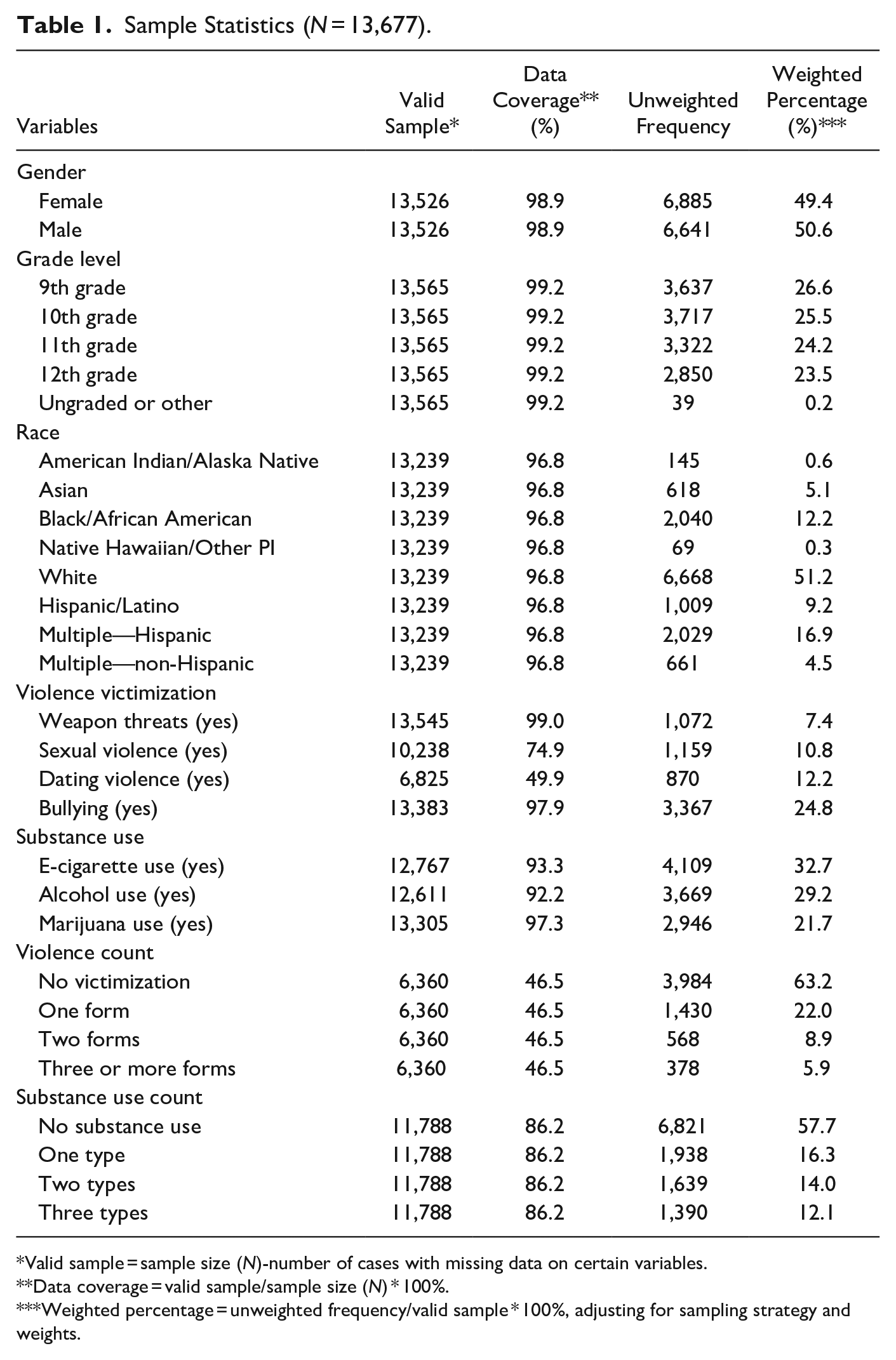
Valid sample = sample size (N)-number of cases with missing data on certain variables.
Data coverage = valid sample/sample size (N) * 100%.
Weighted percentage = unweighted frequency/valid sample * 100%, adjusting for sampling strategy and weights.
Bivariate Associations Between Violence Victimization and Substance Use Variables.*
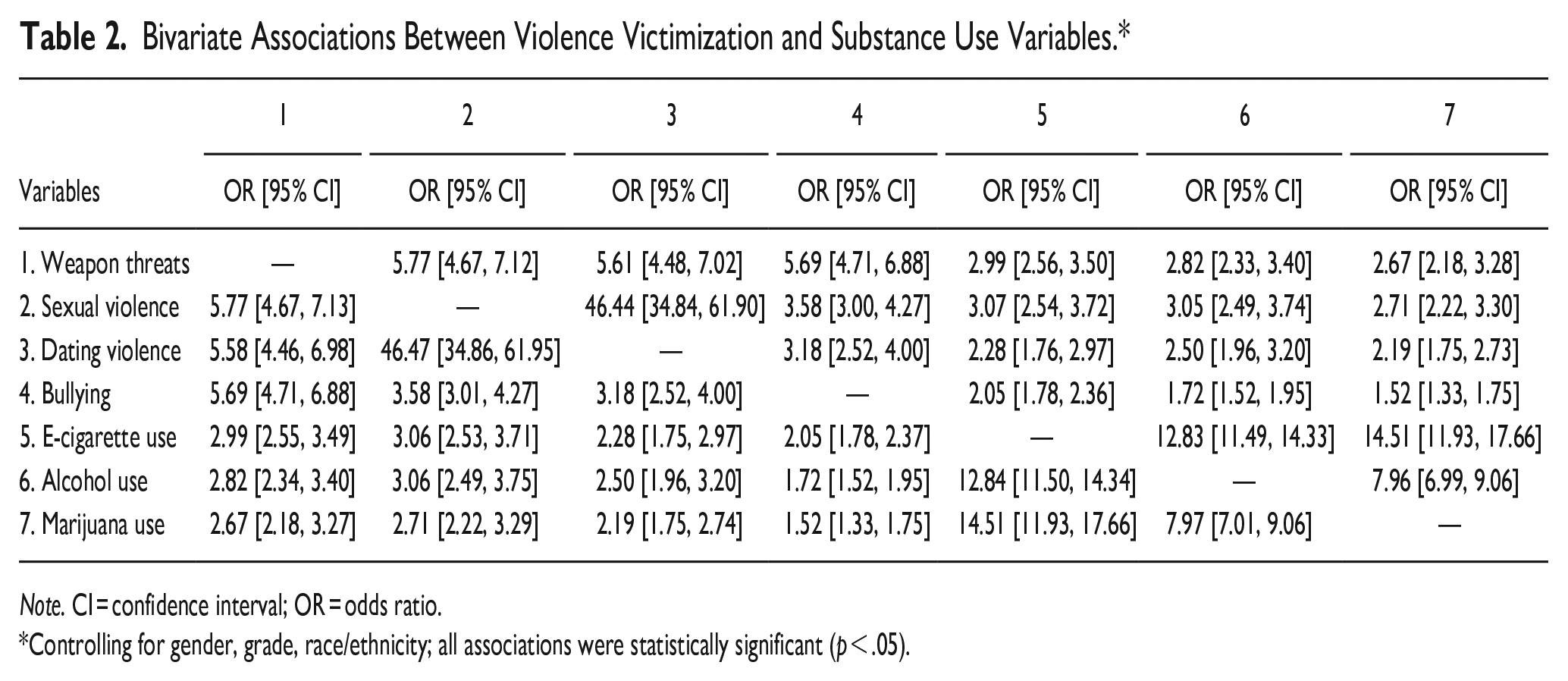
Note. CI = confidence interval; OR = odds ratio.
Controlling for gender, grade, race/ethnicity; all associations were statistically significant (p < .05).
Associations Between Multiple Forms of Violence Victimization and Substance Use.*;
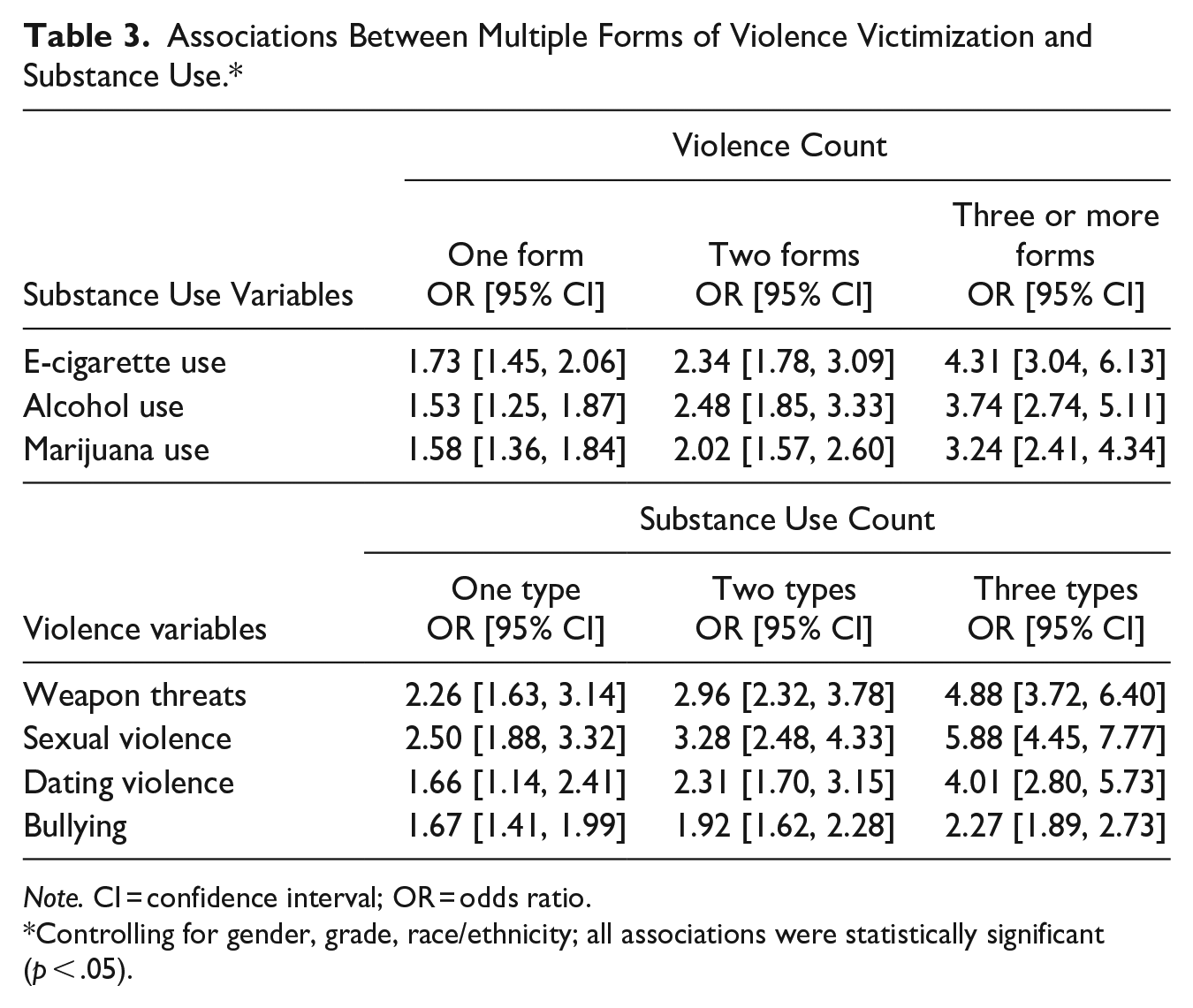
Note. CI = confidence interval; OR = odds ratio.
Controlling for gender, grade, race/ethnicity; all associations were statistically significant (p < .05).
Correlation Matrix for Violence Victimization and Substance Use Variables.*
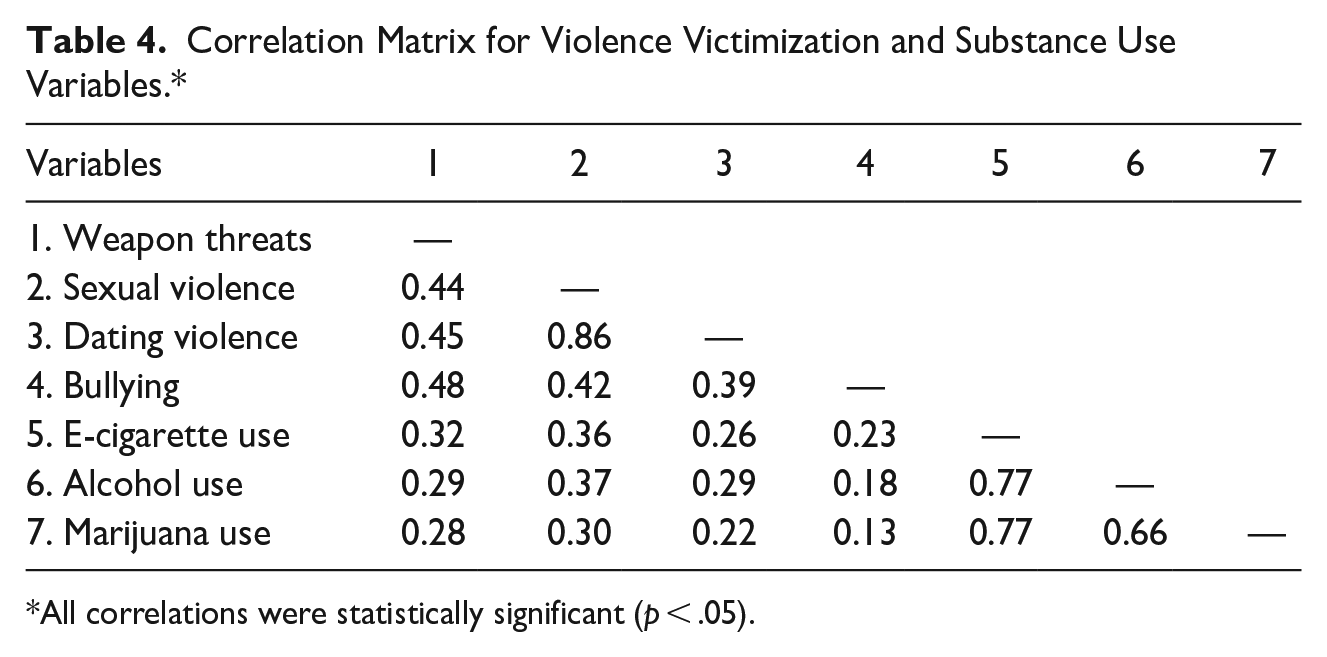
All correlations were statistically significant (p < .05).
Parameter Estimation of the Final Structural Equation Model.
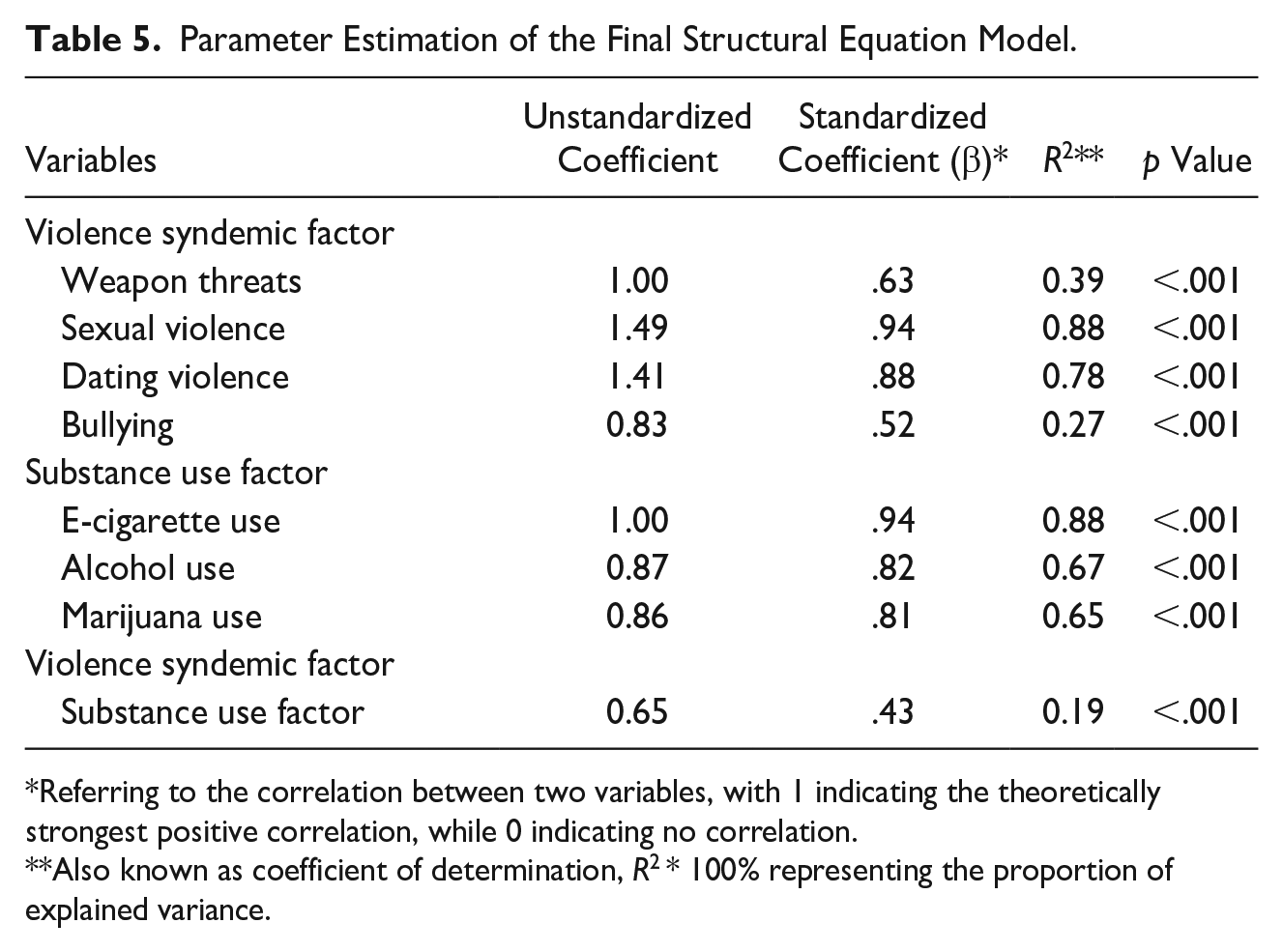
Referring to the correlation between two variables, with 1 indicating the theoretically strongest positive correlation, while 0 indicating no correlation.
Also known as coefficient of determination, R2* 100% representing the proportion of explained variance.
Results
Sample Description
Demographic information of this sample is shown in Table 1. Among all examined violence measures, bullying was most prevalent (24.8%), followed by dating violence (12.2%), sexual violence (10.8%), and weapon threats (7.4%). Among the three substance use behaviors, e-cigarette use showed the highest prevalence (32.7%), followed by alcohol use (29.2%) and marijuana use (21.7%) (Table 1).
Regarding violence count (sum number), about 22.0% of adolescents reported experiencing one form of victimization, 8.9% experienced two forms, and 5.9% experienced three or more forms (Table 1). In other words, among adolescents with violence experiences (n = 2,376), about one in four (23.9%) victims reported two forms of violence experiences (n = 568), while one in six (15.9%) experienced three or more forms (n = 378).
As for substance use count, approximately 16.3% of adolescents reported using one type of substance in the past month, 14.0% reported two types, and 12.1% reported all three types (Table 1). That is, among adolescents with substance use behaviors (n = 4,967), one in three (33.0%) used two types of substances (n = 1,639) and two in seven (28.0%) used three types (n = 1,390).
Association
All examined associations between the four forms of violence victimization were statistically significant (Table 2). Specifically, youths experiencing one form of violence were much more likely to report another form. For example, adolescents who were threatened by weapon were about 6 times more likely to report other forms of victimization, while those suffering from sexual violence had 46 times increased odds for dating violence (Table 2). Moreover, the three types of substance use behaviors were significantly associated with each other. Adolescents who smoked e-cigarette were almost 13 times more likely to drink alcohol and 15 times more likely to use marijuana, while those with alcohol drinking were 8 times more likely to use marijuana (Table 2). In addition, each form of violence victimization was significantly associated with each substance use behavior. For example, adolescents who experienced weapon threats were about two to three times more likely to report e-cigarette smoking, alcohol drinking, or marijuana use (Table 2).
A strong dose–response relationship was observed between the number of violence forms and the risk of substance use. As youths reported more forms of violence experiences, the odds for e-cigarette smoking, alcohol drinking, and marijuana use were significantly greater than those without violence experiences. For instance, adolescents who experienced three or more forms of violence were four times more likely to use e-cigarette than non-victims (Table 3). Similarly, as adolescents used more types of substances, the chance of violence victimization increased significantly. Youths with multiple substance use behaviors were at greater risk for violence experiences. For example, adolescents who used all of the three examined substances were almost six times more likely to experience sexual violence, while those using two types of substances had three times higher odds for sexual violence (Table 3).
Correlation
As shown in Table 4, multiple forms of violence victimization were significantly correlated with each other. Specifically, sexual violence and dating violence were highly correlated (r = .86, p < .05), while the other forms of violence victimization were moderately correlated (r = .39 ~ .48, p < .05). Also, the three types of substance use were highly correlated with each other (r = 0.66 ~ 0.77). Moreover, violence experiences were positively and significantly correlated with substance use behaviors (r = .13 ~ .37, p < .05). However, compared with weapon threats, sexual violence, and dating violence, bullying victimization showed a slightly weaker correlation with the three substance use behaviors (Table 4).
SEM Syndemic Models
As previous analyses showed that different forms of violence victimization were significantly correlated, an initial SEM syndemic model was built to assess the degree to which multiple forms of violence victimization collectively affected e-cigarette use, alcohol use, and marijuana use (β = .40, β = .38, β = .31, respectively) via a latent syndemic factor (Figure 1). This violence syndemic factor explained about 16% of variance in e-cigarette use, 15% of variance in alcohol use, and 10% of variance in marijuana use. The initial syndemic model fit the data very well (RMSEA = 0.03, CFI = 0.99, TLI = 0.98, and SRMR = 0.05).

Initial Structural Equation Model.
As substance use behaviors were also highly correlated with each other, the initial SEM model was modified, and a final model was built to combine the three substance use variables into one factor. In the final model (Figure 2), weapon threats, sexual violence, dating violence, and bullying indicated a latent syndemic factor (β = .63, β = .94, β = .88, β = .52, respectively); e-cigarette, alcohol, and marijuana use indicated another syndemic factor (β = .94, β = .82, β = .81, respectively). The violence syndemic factor and substance use factor were significantly correlated with each other (β = .43, p < .05), with the violence syndemic factor explaining 19% of variance in the substance use factor, and vice versa (Table 5). This final model showed a very good fit of the data (RMSEA = 0.03, CFI = 0.99, TLI = 0.98, and SRMR = 0.05).

Final Structural Equation Model.
Discussion
Violence and substance use are major public health issues that severely impact people’s well-being and quality of life (CDC, 2021, 2022a). Adolescents are at particular risk for violence victimization and substance use (CDC, 2022b; David-Ferdon et al., 2021). Unfortunately, neither violence experiences nor substance use behaviors tend to occur in isolation. A substantial proportion of adolescents experience multiple forms of victimization and concurrent substance use behaviors. Through a series of analytical steps using logistic regression, correlation analysis, and SEM models, this study provides a comprehensive assessment of the co-occurrence and mutual impact of violence experiences and substance use behaviors using a nationally representative sample of the U.S. high school students.
Co-occurrence of Violence Experiences
Multiple forms of youth violence tend to co-occur. As shown in this study, one in four victims experience two forms of violence and one in six report three or more forms. This finding is consistent with existing literature showing that a large number of adolescents experience multiple forms of violence and such victimization experiences seriously affect adolescents’ physical, mental, and behavioral health (David-Ferdon et al., 2021). This study also finds that adolescents reporting one form of violence are more likely to experience another form, indicating that contextual factors (e.g., living in a disadvantaged community) may put certain groups of adolescents at higher risk for violence victimization (Turner et al., 2016; Wilkins et al., 2014). To address the co-occurring situation, researchers are recommended to assess a boarder range of victimization and develop comprehensive strategies that can cover multiple forms of violence to reduce their cumulative impact on adolescent health (Finkelhor et al., 2007; Wilkins et al., 2014; Yang, 2023).
Co-occurrence of Substance Use Behaviors
It is common for adolescents to use multiple substances concurrently. As shown in this study, one in three adolescent substance users report using two types of substances, and two in seven use three types. Adolescents using one type of substance are more likely to report other substance use behaviors, consistent with existing literature indicating that the youth population are at high risk for concurrent use of different substances (Conway et al., 2017; Jones & McCance-Katz, 2019; Schauer et al., 2020). Due to the unpredictable effects and potential interactions between different types of substances, concurrent use of multiple substances elevates the risk for substance overdose, substance use disorders, and brain damages (CDC, 2022a; Espelage et al., 2018). Therefore, it is critical to protect adolescents from substance use behaviors, especially the concurrent use of multiple substances. Caring relationships and supportive environments, such as proper parental monitoring, safe community environments, and high levels of school connectedness, will be of great benefit to reduce adolescents’ substance use behaviors (CDC, 2022b).
Correlation and Mutual Impact of Violence Experiences and Substance Use Behaviors
This study shows that adolescents with multiple forms of violence victimization are much more likely to report substance use behaviors, consistent with existing literature (David-Ferdon et al., 2021; Ford et al., 2010). In fact, multiple victimization experiences may have a severe and long-lasting psychiatric impairment on adolescents and thus significantly increase the risk for substance use behaviors and mental health consequences (Finkelhor et al., 2007; Ford et al., 2010; Turner et al., 2016). Therefore, targeted intervention programs and mental health services are needed for adolescents experiencing multiple forms of violence to minimize their risk for substance use behaviors and mental health issues.
Similarly, this study demonstrates that adolescents with multiple substance use behaviors have significantly increased risk for violence victimization, consistent with findings in the longitudinal studies (Brady et al., 2008; Espelage et al., 2018). Since potential interactions between different substances could make the adverse effects stronger and more unpredictable than one substance alone, concurrent use of multiple substances greatly increases the chance of victimization experiences and various health risks (CDC, 2022a; Espelage et al., 2018). Therefore, adolescents who use multiple types of substances need immediate attention and sufficient support from healthcare providers, social workers, and family members to reduce their substance use behaviors and associated risk for violence victimization.
Furthermore, our study identifies that victimization experiences from weapon threats, sexual violence, dating violence, and bullying collectively explain about 19% of variance in the substance use factor indicated by e-cigarette smoking, alcohol drinking, and marijuana use in the final SEM syndemic model, and vice versa. Considering the numerous influential factors at individual, family, community, and societal levels, 19% of explained variance indicates a strong correlation and mutual impact between violence victimization and substance use. This finding is consistent with existing longitudinal studies showing that the associations between violence victimization and substance use behaviors among adolescents are bidirectional (Brady et al., 2008). Violence victims are at higher risk for subsequent substance use behaviors; adolescent substance users also have elevated likelihood of violence victimization (Brady et al., 2008). Given the strong connection between violence experiences and substance use behaviors, collaborative efforts from public health professionals, local agencies, schools, communities, and all stakeholders are needed to find the root causes for the co-occurring situation and develop comprehensive prevention strategies to reduce their cumulative impact on adolescent health (CDC, 2016; David-Ferdon et al., 2021).
Limitations
Although this study has identified the co-occurrence and mutual impact of violence experiences and substance use behaviors using a nationally representative sample via multiple statistical techniques, limitations exist in the findings. First, our study finds that correlations between violence victimization and substance use are bidirectional, consistent with existing longitudinal studies (Brady et al., 2008). However, no causal mechanisms can be determined due to the cross-sectional nature of this study. Second, because of the lack of relative measures in the 2019 YRBS survey, our study does not examine the contextual factors that may contribute to the co-occurring situation of violence victimization and substance use. Since syndemic theory highlights that social disadvantages and environmental conditions may predispose certain groups of people at higher risk for multiple health situations (Singer, 2006; Singer & Clair, 2003), future studies are recommended to take the contextual factors into the SEM models to assess their direct and indirect effects on violence experiences and substance use behaviors. Last, findings in this study are subject to the limitations of the original YRBS dataset (Underwood et al., 2020), including the social desirability bias of the self-reported violence experiences and substance use behaviors, low data coverage of the two original dating violence variables, and binary measurement of the two original bullying variables. These limitations may cause biased estimation of the model parameters to some extent.
Implications for Future Studies
As the prevalence of violence experiences and substance use behaviors may vary across subgroups of adolescents and communities (Basile et al., 2020; David-Ferdon et al., 2016), future studies are recommended to test this SEM syndemic model in different groups of high school students with specific demographic characteristics (e.g., gender-specific models, racial/ethnic minority models) and contextual backgrounds (e.g., living in a high crime area). By comparing the results with this nationally representative sample, subgroup models can help to identify adolescents at elevated risk for violence victimization and substance use, and therefore, provide more evidence to develop targeted intervention strategies.
Contextual factors may contribute to the co-occurring and mutually reinforced situation between violence experiences and substance use behaviors. Future studies are recommended to examine the family, community, and societal factors that predispose adolescents at higher risk for this syndemic condition. Moreover, resilience and protective factors, such as safe environments, supportive family, and social cohesion, have been identified to benefit adolescents’ overall well-being and development (David-Ferdon et al., 2016; Yang, Liller, Martinez Tyson et al., 2022). Researchers are recommended to explore whether these factors can buffer the mutually reinforced situation between violence victimization and substance use.
Conclusions
Through logistic regression, correlation analysis, and SEM models, this study provides a comprehensive assessment of the co-occurrence and mutual impact of multiple forms of violence experiences and substance use behaviors using a nationally representative sample. Adolescents with multiple violence experiences are at higher risk for substance use, and those using multiple substances are much more likely to experience violence victimization. Collectively, the four forms of violence experiences (weapon threats, sexual violence, dating violence, and bullying) explain a substantial proportion of variance in the three types of substance use behaviors (e-cigarette smoking, alcohol drinking, and marijuana use), and vice versa. Findings in this study highlight the needs for comprehensive prevention efforts to address the co-occurring and mutually reinforced situation between violence experiences and substance use behaviors in the youth population. Targeted intervention programs and mental health services are recommended for adolescents who experience multiple forms of violence and concurrent use of different substances.
Footnotes
Acknowledgements
This study has utilized an existing dataset collected by the Centers for Disease Control and Prevention (CDC) to test the hypotheses proposed by the authors. The findings and conclusions in this study are those of the authors and do not necessarily represent the viewpoints of CDC or its partners.
Declaration of Conflicting Interests
The author declared no potential conflicts of interests with respect to the authorship and/or publication of this article.
Funding
The author received no financial support for the research and/or authorship of this article.
