



Abstract
Previous studies exploring the influential factors associated with attitudinal acceptance of wife abuse (AAWA) did not widely focus on the relation between women’s social mobility (WSM) and different dimensions of AAWA in rural Bangladesh. This current study examined the association between WSM and different dimensions of AAWA in the context of socio-cultural differences among the Bengali, the Santal, and the Garo ethnic communities in rural Bangladesh. Adopting a cross-sectional design, 1,929 married men and women were randomly included in the study from 8 Bengali, 8 Santal, and 8 Garo villages where 50.2% were women and 49.8% were men. Of the sample, 33.2% Garo, 33.2% Santal, and 33.6% Bengali participants were included in this study. Data revealed that 45.5% of women had low social mobility and the prevalence of different dimensions of AAWA was high and varied among the study communities. We used descriptive statistics, chi-square, and binary logistic regression analysis to estimate the association. The multivariate binary logistic regression analysis results revealed that the likelihood of attitudinal acceptance of overall abuse, psychological abuse, physical abuse, abuse on disobeying family obligation, and abuse on challenging male authority were significantly lower for the respondents who belonged to families where women enjoyed high mobility compared to those who belonged to families where WSM was low. This study also showed that the Bengali and the Santal participants were more likely to accept different dimensions of AAWA compared to the Garos. This study suggests that WSM should be considered in policy-making and implementing interventions to reduce the different dimensions of AAWA in rural Bangladesh.
Introduction
Wife abuse refers to the perpetration of psychological, physical, and sexual violence against a woman in a marital relationship by her male counterpart. Wife abuse is one of the most common and widespread forms of intimate partner violence worldwide (Ellsberg & Heise, 2005). One in three women experienced physical or sexual violence from an intimate partner at least once in her lifetime globally (Garcia-Moreno et al., 2006; Stöckl et al., 2014). Attitudinal acceptance of wife abuse (AAWA) is one of the noteworthy factors that foster the high prevalence of wife abuse and promote responses of the victims and community (Flood & Pease, 2009; Sambisa et al., 2010; Sardinha & Catalán, 2018). AAWA refers to the justification of the act of wife abuse under some conditions or issues where the respondents might refuse or justify a husband’s perceived right to abuse his wife (Hossain et al., 2022; Karim et al., 2020; Karim, S. Rahman, et al., 2021; Sayem et al., 2012). The prevalence of AAWA is very high in low- and, middle-income countries, particularly in South Asia and Africa (Rani & Bonu, 2008; Sardinha & Catalán, 2018). Yount and Roof (2018) illustrated that residing in a patriarchal social system increased the likelihood of the acceptance of wife abuse. In Bangladesh, the AAWA is also high and people believe, predominantly, that a husband should punish his wife under certain conditions, for example, if a wife argues with her husband (Bangladesh Bureau of Statistics [BBS] and Statistics and Informative Divisions [SIDs], 2016; Hossain et al., 2022; Jesmin, 2015, 2017; Karim et al., 2020; Rani & Bonu, 2008; Sambisa et al., 2010). Therefore, it is crucial to understand the factors, which are associated with AAWA. Though several studies also evaluated the factors influencing the AAWA in the context of rural Bangladesh (Hossain et al., 2022; Jesmin, 2015, 2017; Karim, S. Rahman, et al., 2021), most of these studies assessed the acceptance or justification of wife abuse based on a limited number of conditions or one dimension of AAWA. One study explored women’s social mobility (WSM) based on one scenario (“if the women are able to go to the hospital or health center alone or with children”) and the relationship between WSM and attitudes toward wife abuse in Bangladesh (Jesmin, 2015). However, there is a lack of exploring the relationship between WSM and different dimensions of the AAWA in rural Bangladesh.
Review of Literature
In South Asia, Bangladesh is one of the lower-middle-income countries (Asian Development Bank, 2019) where 164.6 million people live and most (70%) live in rural areas (BBS & SID, 2020). This country ranked 131 in the Gender Inequality Index out of 170 countries (United Nations Development Program, 2022). This high gender inequality is maintained through men’s supremacy and women’s systematic subordination (Gangoli, 2017; Hunnicutt, 2009; Sultana, 2010; Yllö, 1993; York, 2011) and survives depending on the gender division of labor, socially expected gender roles, and the complicity of women within the system (Gangoli, 2017; Hunnicutt, 2009; Karim & Swahnberg, 2018). Gender inequality seems normal to the majority of members of society (Ben-David & Schneider, 2005), which is a public health problem in rural Bangladesh (Karim, 2006). The majority of ethnic communities in Bangladesh, predominantly uphold the patriarchal social structure where women are considered inferior to and dependent on men. The main features of these communities are women’s low participation in income-generating sectors, women’s inadequate access to properties, restricted WSM, male preferences in family decisions, men’s control and supremacy over their wives’ life choices, social institutions, and even husband’s control over wives’ income (Chowdhury, 2009; Kamal, 2022; Karim, 2006; Sultana, 2010).
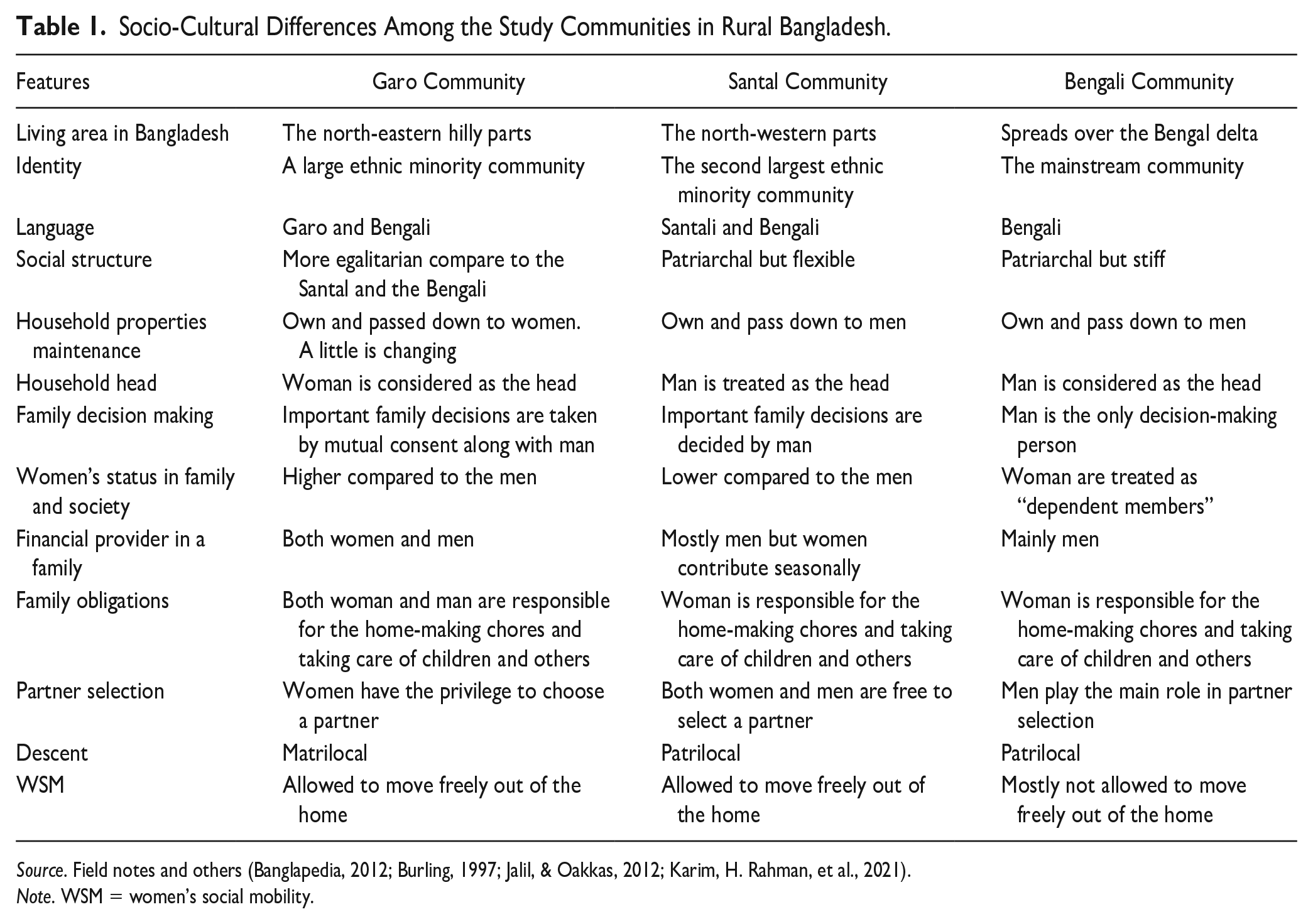
WSM refers to women’s access to public domains or movement outside the home. Restricted WSM is an example of gender inequality in patriarchal communities in rural Bangladesh. WSM is restricted by patriarchal traditional gender norms in the country (Chowdhury, 2009). Traditional gender norms in patriarchal society suggest that a wife should seek permission from her husband to go out from home, and if a wife goes out by her own choice, her husband should punish her (Islam & Karim, 2013; Sultana, 2010). Gendered family functioning and work distribution also support restricting WSM (Karim, 2006). Traditional gendered work distribution is mainly classified into household chores (mostly unpaid) and heavy work outside the home (mostly paid) (Sultana, 2010). Men discern that women are less fit for heavy work outside the home and are suitable for household chores (Islam & Karim, 2013; Karim, 2006). The fear of sexual harassment in visiting public arenas and the paid labor field also encourages controlling WSM in Bangladesh (Chowdhury, 2009; Kamal, 2022). Sexual harassment includes staring at, touching a woman’s body sexually, commenting upon, repeated non-reciprocated propositions for dates, requests for acquiescence in sexual behavior, and demands for sexual intercourse and rape (Freeman, 1989; Kamal, 2022). Moreover, society appreciates traditional gender norms followers and blows up the challengers (Chowdhury, 2009; Kamal, 2022; York, 2011). To avoid condemnation, both men and women try to maintain the traditional gender norms of society (Kamal, 2022; York, 2011), which restrict women’s mobility outside their household (Chowdhury, 2009). The Bengali and the Santal communities uphold patriarchal social norms, but there is a clear difference among them in terms of women’s position and autonomy in the society and family (see Table 1). However, there are some matrilineal ethnic minority communities like Garo and Khasi who are traditionally different from mainstream Bengali and other patriarchal communities (BBS & SID, 2020; Burling, 1997; Jalil, & Oakkas, 2012). In practice, the Garo community maintains more egalitarian gender norms compared to the Bengali and other communities, where women have the right to choose their life partner and high family status compared to the patriarchal communities (see Table 1).
Socio-Cultural Differences Among the Study Communities in Rural Bangladesh.
Source. Field notes and others (Banglapedia, 2012; Burling, 1997; Jalil, & Oakkas, 2012; Karim, H. Rahman, et al., 2021).
Note. WSM = women’s social mobility.
AAWA is widespread among men and women in rural Bangladesh compared to the urban areas (BBS & SID, 2016; Biswas et al., 2017; Hossain et al., 2022; Jesmin, 2015; Karim et al., 2020; Yount et al., 2016). Different types of wife abuse are justified as normal behavior and perceived necessary for family well-being in rural Bangladesh when a wife argues or disobeys her husband (Biswas et al., 2017; Islam & Karim, 2013). Most studies explored the prevalence of AAWA (Garcia-Moreno et al., 2006; Rani & Bonu, 2008; Sardinha & Catalán, 2018; Schuler & Islam, 2008), but a few studies focused on the factors influencing AAWA in rural Bangladesh (Biswas et al., 2017; Dey et al., 2021; Flood & Pease, 2009; Hossain et al., 2022; Jesmin, 2015, 2017; Karim et al., 2020; Karim, S. Rahman, et al., 2021). Karim et al. (2020) explored the ethnic differences of AAWA among Bengali, Santal, and Garo communities based on three dimensions of AAWA following a 10-item scale. To the best of our knowledge, no single study explored the AAWA on disobeying family obligation and challenging male authority and included five dimensions of AAWA, where three dimensions (overall, physical, and emotional abuse) were based on a scale of 12 items. This study examines the association between WSM (based on six scenarios) and the five dimensions of AAWA, considering the context of socio-cultural differences among the Bengali, the Santal, and the Garo ethnic communities in rural Bangladesh.
Aims and Research Questions
This current study mainly aims to explore how different level of WSM is associated with the different dimensions of AAWA and how it varies in the context of socio-cultural differences among the Bengali, the Santal, and the Garo communities in rural Bangladesh. Specifically, considering the socio-cultural diversity among the study communities, (a) this study assesses the different levels of WSM status and the prevalence of different dimensions of AAWA among the study communities; and (b) explores how the different levels of WSM status are associated with the different dimensions of AAWA and how it varies in the context of socio-cultural difference among the study communities in rural Bangladesh.
Theoretical Perspectives
This study draws on the patriarchy theory and the social justification of abuse model to assess the research questions. Here, patriarchy refers to a gender-based system where a hierarchy of men’s control over women and women’s systematic subordination stands within the system (Dobash & Dobash, 1979; Gangoli, 2017; Hunnicutt, 2009; Sultana, 2010; York, 2011). The social justification of abuse model argues that higher community justification of abuse (generalized justified attitudes) increases the likelihood of the acceptance of abuse among the victims and gives freedom to justify the abusive behavior among the perpetrators of the community (Waltermaurer, 2012). Patriarchy theory argues that patriarchy is one of the main causes behind the high prevalence of AAWA and gender inequality (Dobash & Dobash, 1979; Gangoli, 2017; Hunnicutt, 2009; York, 2011). Drawing on patriarchy theory, this study explores whether WSM status varies or not among the study communities and whether low WSM is connected or not with different dimensions of AAWA. Further, drawing on the social justification of abuse model, this study explores whether generalized justified community attitudes increase the likelihood of different dimensions of AAWA among the victims and the abusers. This study expects that the likelihood of different dimensions of AAWA will be higher among the respondents who reported low or restricted WSM. This study also expects that the likelihood of different dimensions of AAWA among the Bengali and the Santal participants will be higher compared to the Garos.
Methods and Materials
Study Design
This current study used the baseline data of a project titled “Community-based prevention of domestic violence among Bengali, Garo, and Santal ethnic communities in rural Bangladesh: a cross-cultural study.” The project aimed to examine the efficacy of community-based intervention to prevent intimate partner violence in rural Bangladesh. The baseline survey was conducted from February to May 2019. Though the main study is a longitudinal cluster-randomized control trial, the current study follows a cross-sectional design. The first author worked as a full-time research assistant during the project period.
Study Sites
This current study included the ethnic minorities Garo and Santal with the mainstream Bengali community. The primary criterion for selecting the areas was the presence of an ethnic community in the rural area. To include the study villages, we have prioritized the similarities among the villages of each community. All villages were far from nearly sub-urban areas, had close contact with nature, and most of the people were mainly dependent on agriculture. Before conducting the baseline survey, a pilot study was conducted among the three communities. During our pilot study, we visited, talked with people, and observed all the villages of each of the study areas. Finally, eight villages were randomly selected from each of the communities before the baseline survey. The fieldwork was conducted in 24 randomly selected villages, comprising eight Garo, eight Santal, and eight mainstream Bengali villages. The Garo villages were selected from the northeast region of Bangladesh, where the Garo communities have been living for more than 500 years in the forested areas of Modhupur, Tangail, approximately 250 km from Rajshahi. The Santal villages were selected from the northwest of Bangladesh (Godagari, Rajshahi), where the Santals have been living in this region for more than 300 years, located 20 to 30 km from Rajshahi city (Banglapedia, 2012). The Bengali villages were selected from another two subdistricts (Durgapur and Charghat) of Rajshahi. Both of the subdistricts were situated 10 to 20 km away from the city of Rajshahi. The Santal ethnic minority and the mainstream Bengali villages are patriarchal, whereas the ethnic Garo upholds more egalitarian traditions. The women in these three communities have different socioeconomic statuses (see Table 1). Due to lack of sufficient budget, our study areas were limited to two districts of the country.
Study Participants
The participants of this study were 16 to 60 years old married men and women from the study villages. We excluded individuals with psychological and physical disabilities (e.g., deaf/mute) due to a lack of preparation and appropriate facilities. The sample size determination for the baseline survey was done by considering the proportion of sexual abuse (p = .167) in our pilot study in an ethnic village. We estimated the minimum required sample size at 1,854 using a formula (n = Z2α/2 p(1–p)/E2, where p = proportion; α = .05; Zα/2 = 1.96; E = p/10) (Dattalo, 2008). To avoid non-consent/dropout, we created a sample pool with 10% oversampling. Firstly, we identified the study sites and selected the study villages. After selecting the study villages, we collected a sampling frame from the Union Parishad (village-level local government) and conducted a quick household mapping in the areas to update the sampling frame before the survey. Each of the villages consisted of around 100 to 300 households from which we randomly selected up to 86 households from a village. Afterward, we included one participant (either husband or wife) from each randomly selected household based on the availability of the respondents during data collection. If the husband and the wife or multiple respondents were available, we decided to include one of them by lottery. We did not include both husband and wife from a household due to safety issues. Altogether we approached 1,968 persons. Upon informed consent, 1,929 respondents (960 men and 969 women) completed the interviews. The response rate was 98.02%. Reasons for non-participation were mostly related to the respondents’ lack of time.
Data Collection
To ensure good interaction and high-quality responses, we used a structured questionnaire schedule to collect data through face-to-face interviews (Maxim, 1999). The survey was conducted in Bengali language with all the study participants and then translated into English. Before conducting the baseline survey, the study measures were finalized based on field experiences of the pilot study and through continuous revision. The interviewers personally contacted the respondents and built up a rapport with them. Four graduates in social work (two males and two females) were employed to collect the data. Female interviewers interviewed the female respondents while male interviewers interviewed the male respondents, respectively. The first author worked as a full-time interviewer during the study period and conducted interview sessions with almost half of the male participants. Wife abuse is considered a private and sensitive issue. Thus, the interviewers were trained on ethical, safety, and technical issues related to data collection. The interviewers explained the study protocol to each of the respondents to get informed consent from them and to establish rapport.
Ethical Procedures
The study was conducted according to the World Health Organization’s operational guidelines and procedures recommended for researching wife abuse (Ellsberg et al., 2001). The study protocol was approved by the Ethics Review Committee at the Faculty of Social Sciences, University of Rajshahi, Bangladesh. We obtained informed verbal consent from the study participants. After receiving consent, we asked the study participants to suggest a suitable place and time so that the data collection process could take place in private. They were also reminded that their participation was entirely voluntary, and they had no obligations to complete the interview and could drop out of the interview at any time without any further explanation. The anonymity of the interviewees and the confidentiality of the data were maintained. Interviewers were trained to provide emotional support and information about the available support services to the survivors. This study also followed the ethical guidelines of the Swedish Research Council (SRC) conducting research with humans (SRC, 2017).
Dependent Variable: AAWA
AAWA refers to the justification of the act of abuse under some conditions or issues where the respondents might refuse or justify abuse by a husband to his wife. Here, AAWA was measured using a 12-item scale validated in rural Bangladesh. The scale included 12 items on the contextual reasons why people might accept or refuse abuse by a husband to his wife in rural Bangladesh. The 12 items showed a high internal consistency, with a Cronbach’s α of .91. We asked the respondents for their opinions on “whether wife abuse by husband is justifiable in a current relationship” under given conditions. The conditions were as follows: if a wife “sells any asset (crop/cattle/jewelry) without husband’s permission,” “goes outside the home without husband’s permission,” “fails to prepare meals in time,” “burns the meals,” “fails to prepare tasty meals,” “wants to do a job or earn money without husband’s permission,” “chats with a person who is disliked by her husband,” “refuses sex to the husband,” “refuses/delays to conceive despite the husband’s wish,” “neglect children causing pain/hurt/injury,” “argues with husbands,” and “has an extra-marital affair.” There were four response categories: 0 = no (refused abuse), 1 = yes (accepting) psychological abuse, 2 = yes (accepting) physical abuse, and 3 = yes (accepting) both psychological and physical abuse. We provided examples of both psychological abuse (e.g., humiliation, insults, verbal rebuke, cursing, displays of anger, violent threats, etc.) and physical abuse (e.g., slapping, grabbing mouth, punching, kicking, beating with a fist/stick, burning, etc.) during the data collection.
The scale produced three variables: acceptance of psychological abuse, acceptance of physical abuse, and acceptance of overall abuse. In order to compute the variables (acceptance of overall, psychological, and physical abuse), we recorded the responses. We derived the acceptance of psychological abuse variable after merging “yes” (accepting) psychological abuse and “yes” (accepting) both psychological and physical abuse responses. We also got the acceptance of physical abuse variable after merging “yes” (accepting) physical abuse and “yes” (accepting) both psychological abuse and physical abuse responses. Afterward, we merged “yes” (accepting) psychological abuse, “yes” (accepting) physical abuse, and “yes” (accepting) both psychological and physical abuse responses to compute the acceptance of overall abuse.
The scale also produced two underlying factors of 6 items (three for each factor): (a) disobeying family obligation and (b) challenging male authority. The first factor measures the acceptance or refusal of wife abuse where a wife fails to fulfill the family obligation (e.g., “failing to prepare meals,” “burning the meals,” and “failing to prepare tasty meals”). In contrast, the second factor assesses the acceptance or refusal of wife abuse where a wife challenges male authority (e.g., “arguing with husband,” “chatting with a man who is disliked by her husband,” and “getting involved in an extra-marital affair”). Both of the factors had high internal consistencies, the first factor had a Cronbach’s α of .88 and the second factor had an α of .78 (Karim & Swahnberg, 2021).
Based on the structure of the scale, we constructed five binary variables: (a) acceptance of overall abuse where the respondent accepted the psychological abuse, physical abuse, or both for at least any of the 12 items; (b) acceptance of psychological abuse where the respondent accepted the psychological abuse for at least any of the 12 items; (c) acceptance of physical abuse where the respondent accepted the physical abuse for at least any of the 12 items; (d) acceptance of wife abuse on disobeying family obligation where the respondent accepted the psychological abuse, physical abuse, or both for at least any of the 3 items; and (e) acceptance of wife abuse on challenging male authority where the respondent accepted the psychological abuse, physical abuse, or both for at least any of the 3 items. We considered an acceptance of wife abuse where a respondent answered with a “yes” for at least any of the relevant items. Afterward, we coded the responses: 0 = “refused abuse,” 1 = “accepted abuse.”
Independent Variable: WSM
WSM refers to women’s access to different public domains, or the freedom of movement outside the household. A 6-item scale was used to measure the wife’s social mobility. We asked questions on a woman’s social movement outside of the household. We collected responses from both male and female perspectives by using two versions of the schedule, one for men and another for women. Women reported their social mobility status and men reported their wives’s throughout the year against each item. For example, a sample item included “Have you (for women)/your wife (for men) ever gone to any agricultural field?” Other items were “Have you/your wife ever gone to any agricultural field alone?,” “Have you/your wife ever gone out of your village or para (sectional part of a village)?,” “Have you/your wife ever gone out of your village or para (sectional part of a village) alone?,” “Have you/your wife ever gone to any bazar or haat (local marketplace bigger than bazar)?,” and “Have you/your wife ever gone to any bazar or haat (local marketplace bigger than bazar) alone?” Each item includes three response categories: 0 = never (wife’s mobility is strictly restricted), 1 = visited a few times (wife’s mobility is restricted but sometimes challenged), 2 = visited many times (wife’s mobility is not restricted at all). Exploratory factor analysis (EFA) indicated that the scale was unifactorial, explaining almost 65% of the total variance (Hair et al., 2010). The scale appeared to be internally consistent with a high-reliability score (α = .89). Afterward, a sum score of the responses was computed (range 0–12) and the score was categorized into two levels: 0 = low/restricted mobility (sum score 0–5) and 1 = high mobility (sum score 6–12).
Covariates
We controlled for a community-level variable (e.g., ethnicity) and a few individual-level variables such as the sex of the respondents, age, education, and income. Based on ethnicity, the respondents were divided into three categories: Garo, Santal, and Bengali. Respondent’s sex was classified into two categories: man and woman. Age was classified into three categories: 29 years or below, 30 to 39 years, and 40 years or above.
Education was measured using the actual number of years of schooling/educational attainment in Bangladesh. The score was transformed and classified into four levels: no schooling, primary (1–5 years of schooling), secondary (6–9 years of schooling), and higher secondary or above (10 years of schooling or above).
Considering the people’s current socioeconomic conditions in rural Bangladesh, the personal monthly income was classified into the following four categories: 0 = no income (earning no cash income), 1 = earning 2,499 Bangladeshi taka or less, 2 = earning 2,500 to 4,499 Bangladeshi taka, and 3 = earning 4,500 Bangladeshi taka or more.
Analytical Strategies
The data analysis was conducted using SPSS 23.0 software (SPSS Inc., 2016). Descriptive statistics of the variables were calculated to determine a sociodemographic profile of the study participants. Bivariate cross-tabulations were performed to determine the sex differences in the prevalence of different dimensions of AAWA within each category. Chi-square test was performed to examine sex and ethnic differences in different dimensions of AAWA. The dependent variable was measured as binary categories. Therefore, we employed binary logistic regression to assess the association between the dependent and indipendent variables, and covariates. At first, bivariate binary logistic regression was employed to identify the significant indipendent variables and covariates. Finally, multivariate binary logistic regression was performed to test the association of the variables with the dependent variable. There was no multicollinearity issue and an adequate sample size to meet the assumptions of logistic regression in the models (Hair et al., 2010). Coefficients of logistic regression with log link function, exp (β), produced odds ratio (OR), which facilitated the explanation of regression results. We used OR to report associations between the dependent and indipendent variables, and covariates (Hair et al., 2010).
Results
Sample Characteristics
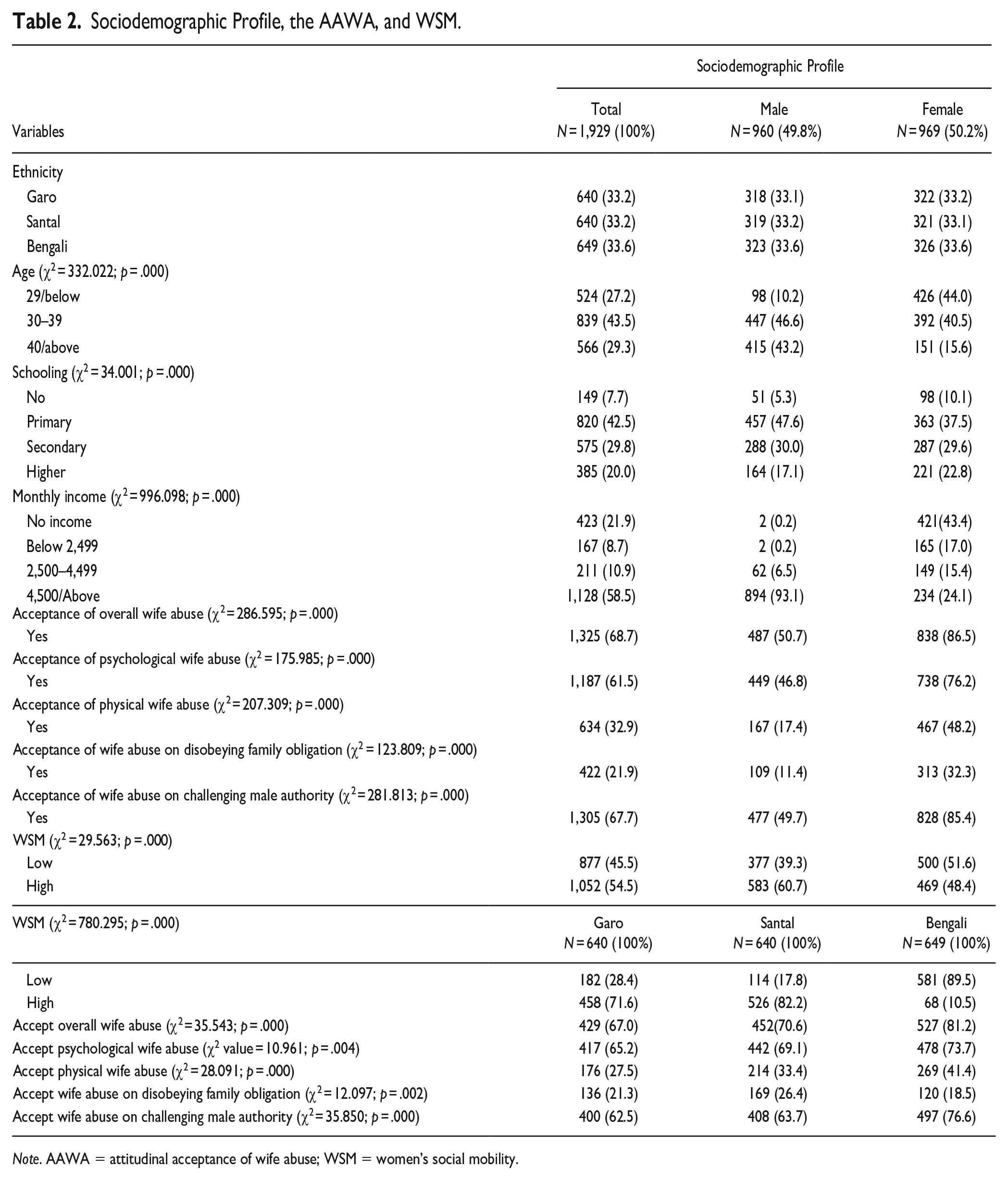
Table 2 presents the sociodemographic profile of the respondents. Of the sample (N = 1,929), 33.2% of the respondents belonged to Garo, 33.2% of them belonged to Santal, and 33.6% of them belonged to the Bengali ethnic communities. Half (50.2%) of the respondents were women. The majority (43.5%) of the participants belonged to the age group (30–39), where the majority (43.2%) of men belonged to the 40 or above age group, and the majority (44.0%) of women belonged to the below 29 age group. In terms of educational attainment, 7.7% of the respondents had no formal schooling, 42.5% of the respondents had 1 to 5 years of schooling, 29.8% of them had 6 to 9 years of schooling, and 20.0% of them had 10 or more years of schooling. The majority (58.5%) of the respondents earned monthly Bangladeshi taka-4,500/above where 93.1% of men had monthly cash income of Bangladeshi Taka-4,500/above and 43.4% of women had no cash income. The table also revealed the sex differences in the respondent’s sociodemographic profile (see Table 2).
Sociodemographic Profile, the AAWA, and WSM.
Note. AAWA = attitudinal acceptance of wife abuse; WSM = women’s social mobility.
Different Dimensions of AAWA and WSM
Data revealed that the different dimensions of AAWA were high among the respondents and women accepted more compared to men (see Table 2). Data showed that 68.7% (men = 50.7%, women = 86.5%) of the respondents accepted overall abuse, 61.5% (men = 46.8%, women = 76.2%) of them accepted psychological abuse, 32.9% (men = 17.4%, women = 48.2%) of them accepted physical abuse, 21.9% of them (men = 11.4%, women = 32.3%) accepted abuse on disobeying family obligation, and 67.7% (men = 49.7%, women = 85.4%) of them accepted abuse on challenging male family authority. The sex differences in different dimensions of AAWA were statistically significant (see the χ2 and p values in Table 2). Data also showed that 67.0% Garo, 70.6% Santal, and 81.2% Bengali respondents accepted overall abuse; 65.2% Garo, 69.1% Santal, and 73.7% Bengali respondents accepted psychological abuse; 27.5% Garo, 33.4% Santal, and 41.4% Bengali participants accepted physical abuse; 21.3% Garo, 26.4% Santal, and 18.5% Bengali respondents accepted abuse on disobeying family obligation, 62.5% Garo, 63.7% Santal, and 76.6% Bengali participants accepted abuse on challenging male family authority. The ethnic differences in different dimensions of AAWA were also statistically significant among the ethnic communities (see the χ2 and p values in Table 2).
WSM status reported by the respondents is also presented in Table 2. Data revealed that more than half 54.5% (men = 60.7%, women = 48.4%) of the respondents reported women’s high social mobility and 45.5% (men = 39.3%, women = 51.6%) of the respondents reported women’s low/restricted social mobility status. Data further showed that women in the Santal community enjoyed high social mobility (82.2%) compared to the Garo (71.6%) and the Bengali (10.5%) and WSM was highly restricted in the Bengali community (89.5%) compared to the Garo (28.4%) and the Santal (17.8%). The differences among the Bengali, the Santal, and the Garo communities in WSM status were statistically significant (see Table 2).
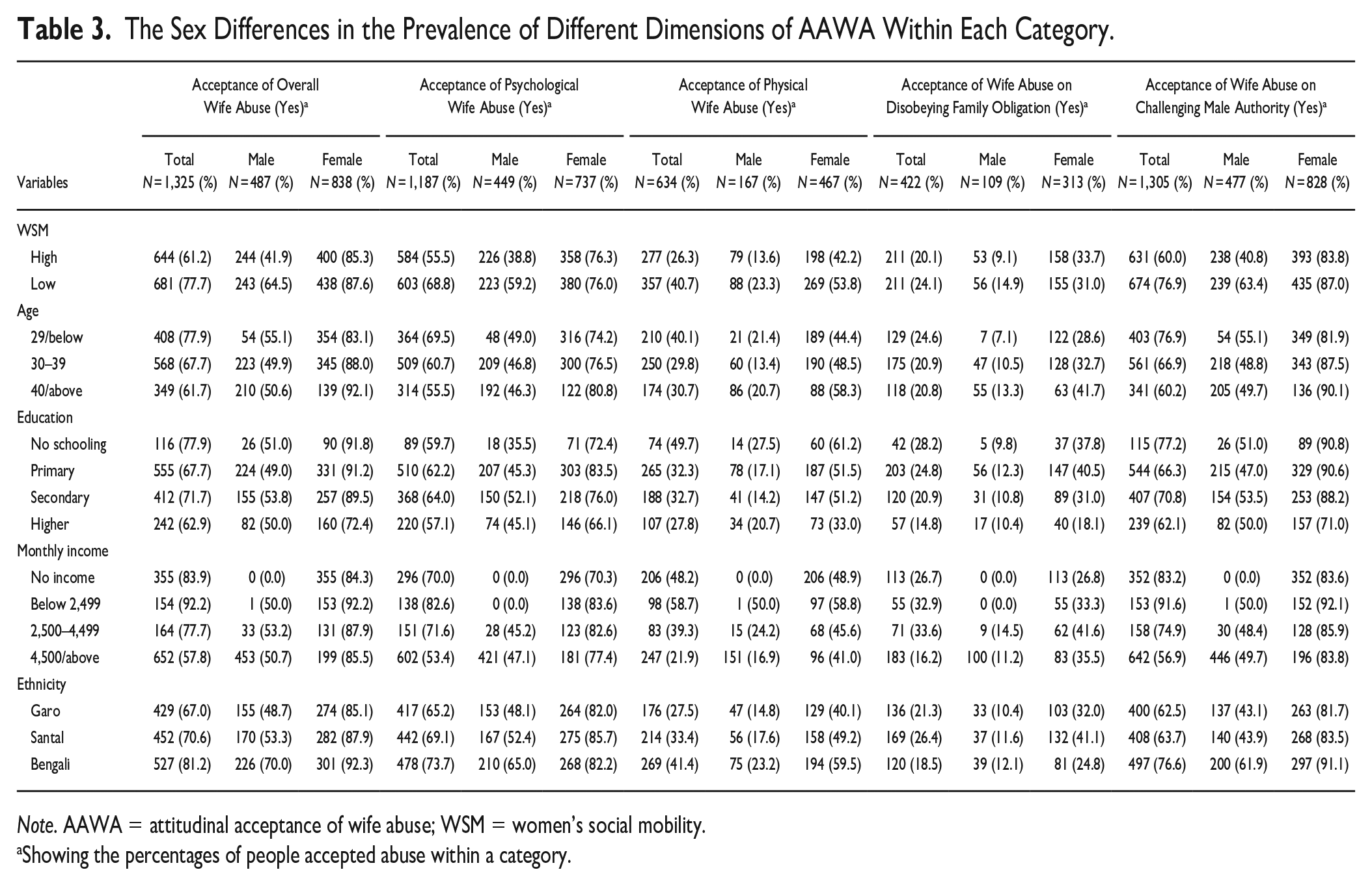
The bivariate cross-tabulation results are presented in Table 3 which shows the sex differences in AAWA within the categories of each of the variables. Data revealed that the prevalence of the acceptance of overall wife abuse, psychological abuse, physical abuse, abuse on disobeying family obligation, and the abuse on challenging male authority were high among the respondents who lived in families where women had low/restricted social mobility. Data illustrated that the prevalence of different dimensions of AAWA was high among the younger respondents compared to the older respondents. The results showed that the prevalence of different dimensions of AAWA was lower among the respondents with higher education compared to the respondents with lower education. The results also showed the sex differences in the prevalence of different dimensions of AAWA within the categories of each of the variables (see Table 3).
The Sex Differences in the Prevalence of Different Dimensions of AAWA Within Each Category.
Note. AAWA = attitudinal acceptance of wife abuse; WSM = women’s social mobility.
Showing the percentages of people accepted abuse within a category.
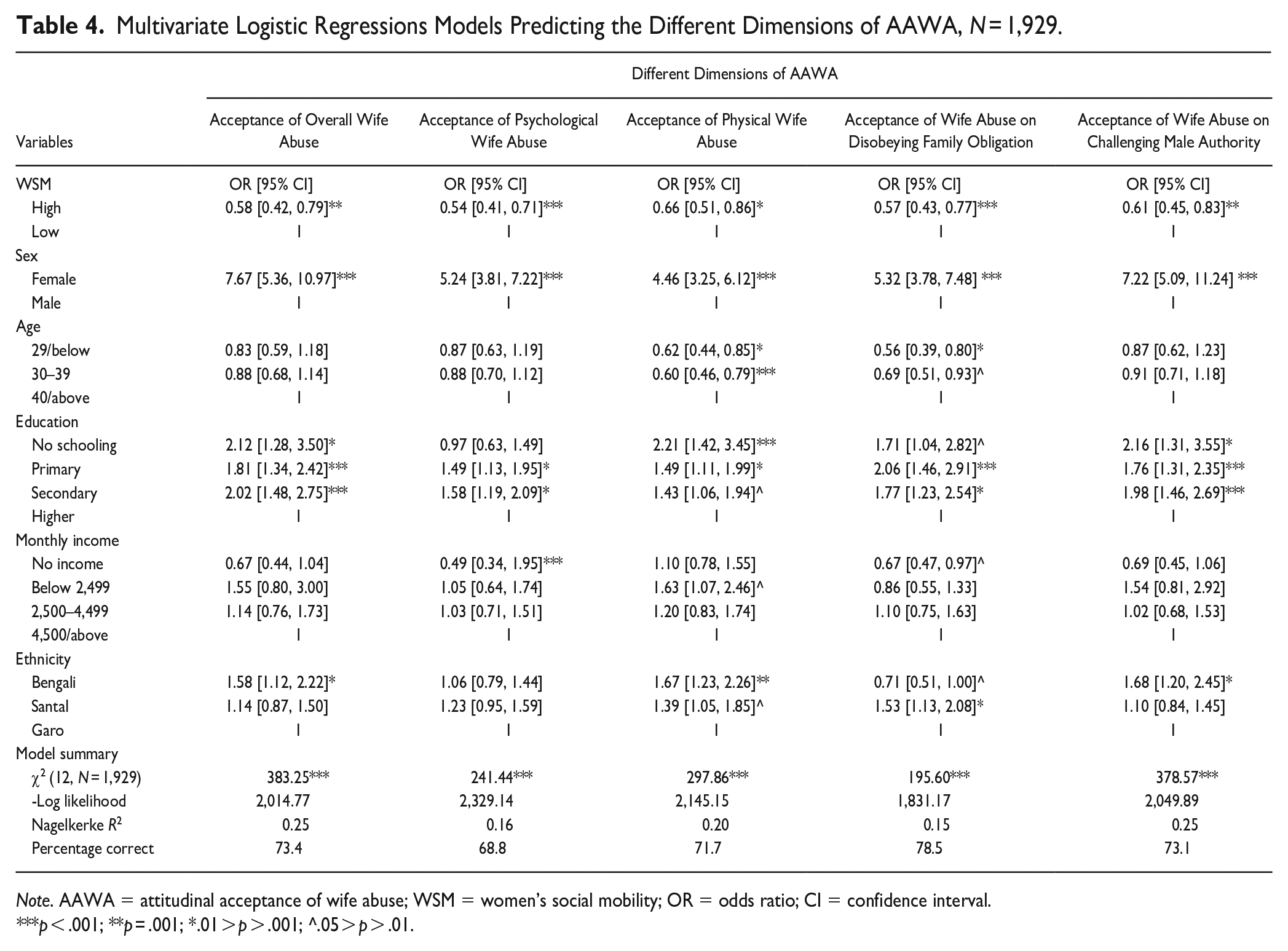
The multivariate binary regression analysis outcomes are presented in Table 4, which shows the adjusted ORs for attitudinal acceptance of (a) overall wife abuse, (b) psychological abuse, (c) physical abuse, (d) wife abuse on disobeying family obligation, and (e) wife abuse on challenging male authority from five different models.
Multivariate Logistic Regressions Models Predicting the Different Dimensions of AAWA, N = 1,929.
Note. AAWA = attitudinal acceptance of wife abuse; WSM = women’s social mobility; OR = odds ratio; CI = confidence interval.
p < .001; **p = .001; *.01 > p > .001; ^.05 > p > .01.
Model Fit Statistics
In Table 4, the likelihood ratio, chi-square statistics for the five different models are presented. Data further revealed that the included variables in the analysis had produced significant overall models for explaining the AAWA (acceptance of overall abuse χ2 = 383.25, df = 12, p < .001; acceptance of psychological abuse χ2 = 241.44, df = 12, p < .001; acceptance of physical abuse χ2 = 297.86, df = 12, p < .001; acceptance of wife abuse on disobeying family obligation χ2 = 195.60, df = 12, p < .001, and acceptance of wife abuse on challenging male authority χ2 = 387.57, df = 12, p < .001). The models as a whole explained a significant amount of variance in the acceptance of overall wife abuse (25.0% Negelkerke R2), psychological abuse (16.0% Negelkerke R2), physical abuse (20.0% Negelkerke R2), abuse on disobeying family obligation (15.0% Negelkerke R2), and abuse on challenging male authority (25.0% Negelkerke R2).
Attitudinal Acceptance of Overall Wife Abuse
Data revealed that the OR for the attitudinal acceptance of overall wife abuse was 0.58 (p = .001) for the respondents living in families where the women had high social mobility compared to those living in families where the WSM was low (see Table 4). The finding indicated that the respondents who belonged to families where wives had high social mobility were significantly 42% less likely to accept overall wife abuse.
Attitudinal Acceptance of Psychological Wife Abuse
Data showed that the OR for the attitudinal acceptance of psychological wife abuse was 0.54 (p < .001) for the participants who belonged to families where wives enjoyed high social mobility compared to those who belonged to families where WSM was low (see Table 4). The result illustrated that the attitudinal acceptance of psychological wife abuse was significantly 46% lower among the respondents who lived in families where wives had high social mobility status compared to the families where wives’ mobility was low.
Attitudinal Acceptance of Physical Wife Abuse
Table 4 showed that the OR for the AAWA was 0.66 (p = .002) for the respondents who reported women’s high social mobility compared to the respondents who reported low/restricted social mobility. Data indicated that the respondents who lived in families where the women had high social mobility status were 34% less likely to accept physical wife abuse compared to those who lived in families where WSM was low.
AAWA on Disobeying Family Obligation
Data disclosed that the OR for the AAWA on disobeying family obligation was 0.57 (p < .001) for the respondents who reported women’s high social mobility compared to those who reported women’s low social mobility (see Table 4). This result indicated that in families where the women enjoyed high social mobility, the respondents were significantly 43% less likely to accept wife abuse when the wives disobeyed family obligations compared to those who lived in families where WSM was low.
AAWA on Challenging Male Authority
Data revealed that the OR for the AAWA on challenging male authority was 0.61 (p = .001) for the respondents who belonged to families where the wives enjoyed high social mobility, compared to those who belonged to families where wives’ social mobility was low (see Table 4). The result explained that the probability of acceptance of wife abuse was 39% lower among the respondents who lived in families where the wives had high social mobility compared to those who lived in families where the wives’ social mobility was low.
Other Factors Influencing the AAWA
This study produced the following ORs for the attitudinal acceptance of overall wife abuse 7.67 (p < .001), psychological abuse 5.24 (p < .001), physical abuse 4.46 (p < .001), wife abuse on disobeying family obligation 5.32 (p < .001), and wife abuse on challenging male authority 7.22 (p < .001), against women. These findings revealed that the different dimensions of AAWA were significantly high among the women compared to the men (see Table 4).
Data further revealed that the young-aged respondents were relatively less likely to accept different dimensions of wife abuse compared to the 40 years or above (see Table 4). Different dimensions of AAWA were significantly high among the respondents with no institutional education, primary education, and secondary education compared to the respondents who had higher secondary or above education (see Table 4).
Data illustrated that the attitudinal acceptance of overall wife abuse, psychological abuse, physical abuse, wife abuse on disobeying family obligation, and wife abuse on challenging male authority were low among the respondents who had monthly cash income of Bangladeshi taka 4,500 or above compared to the respondents who belonged to the monthly cash income categories of Bangladeshi taka 1 to 2,499, and Bangladeshi taka 2,500 to 4,499. The attitudinal acceptance of overall abuse, psychological abuse, abuse on disobeying family obligation, and abuse on challenging male authority were low among the respondents who had no cash income monthly compared to the respondents who belonged to the monthly income category of Bangladeshi taka 4,500 or above (see Table 4).
However, this study also illustrated that the likelihood of all dimensions of AAWA was high among the participants of the patriarchal mainstream Bengali community compared to the matrilineal ethnic minority Garo community except disobeying family obligation, where the attitudinal acceptance of overall wife abuse, physical abuse, and abuse on challenging male authority were significantly high (see Table 4). This study further illustrated that the likelihood of all dimensions of AAWA was high among the participants of the patriarchal ethnic minority Santal community compared to the matrilineal ethnic minority Garo community, where the attitudinal acceptance of physical wife abuse and abuse on disobeying family obligation were significantly high (see Table 4).
Discussion
This study explores the relationship between WSM and the different dimensions of AAWA in the context of socio-cultural differences among the Bengali, the Santal, and the Garo ethnic communities in rural Bangladesh. This study shows that restricted/low WSM has a significant positive association with the different dimensions of AAWA in rural Bangladesh. Several previous studies that showed women’s autonomy, mobility, and socioeconomic status are influential factors in the acceptance or refusal of abuse (Islam et al., 2014; Jesmin, 2015, 2017) which support these findings. Flood and Pease (2009) stated that there is a strong likelihood that women’s mobility would make a meaningful difference in society’s perception of abuse. This result indicates that women’s high social mobility decreases the likelihood of different dimensions of AAWA in rural Bangladesh. This study further accentuates that WSM is one of the influential factors and is significantly associated with the different dimensions of AAWA in rural Bangladesh.
This study also shows that the prevalence of different dimensions of AAWA is very high in rural Bangladesh and varies among the study communities. Previous studies estimated the prevalence of AAWA (BBS & SID, 2016; Biswas et al., 2017; Jesmin, 2015; Schuler et al., 2012) and the factors related to AAWA (Hossain et al., 2022; Islam et al., 2014; Jesmin, 2017). Nevertheless, earlier studies lacked dimensional views of AAWA. Wherein, this study explores the factors related to the different dimensions of AAWA.
Moreover, this study shows that the prevalence of different dimensions of AAWA is high among the Bengali community respondents compared to the Santals and the Garos, and the Santals compared to the Garos. However, the prevalence of wife abuse on disobeying family obligation is high among the Santals compared to the Garos, and the Garos compared to the Bengalis. Previous studies barely assessed the different dimensions in AAWA considering the ethnic minority communities in rural Bangladesh. The study findings also illustrate that the patriarchal communities (the Bengali and the Santal) are more likely to accept different dimensions of AAWA compared to the more egalitarian community (the Garo) in Bangladesh. Although this study explores the difference between patriarchal and more egalitarian communities, findings do not justify that egalitarian communities do not accept different dimensions of AAWA. This study shows that the generalized justified attitudes toward wife abuse are very high in rural Bangladesh.
This study further shows that the prevalence of different dimensions of AAWA is high among the women compared to the men in all three communities and women are significantly more likely to accept different dimensions of AAWA compared to men. These results are consistent with some of the previous studies (Hossain et al., 2022; Murshid & Murshid, 2015; Sardinha & Catalán, 2018; Sayem et al., 2012; Yount et al., 2013). Earlier studies also identified that the prevalence of the acceptance of wife abuse is high among women compared to men in South Asian countries (Rani & Bonu, 2008; Pettitt et al., 2024; Sardinha &Catalán, 2018) and also in rural Bangladesh (Dey et al., 2021; Hossain et al., 2022; Karim et al., 2020). The field notes suggest that the reasoning behind this high acceptance of wife abuse among the women in rural Bangladesh might be the result of their social learning and fright of challenging patriarchy. Gangoli (2017) stated that patriarchal dominance is also established through the women’s compliance to maintain control over them within the system. This result also indicates that the majority of women accept different dimensions of AAWA due to the generalized justified community attitudes toward abuse. From the social justification of abuse model perspective, we can argue that generalized justified attitudes toward wife abuse are very high in rural Bangladesh (BBS & SID, 2016), which increases the likelihood of the acceptance of wife abuse among women and gives freedom to the men to justify abuse (Waltermaurer, 2012).
This study further reveals that an individual’s higher level of education, higher income, and young age are inversely associated with different dimensions of AAWA. The earlier research findings support these results, which show that younger women are less likely to accept wife abuse (Hossain et al., 2022; Rashid et al., 2014); women with higher levels of education are less likely to accept wife abuse (Islam et al., 2014; Hossain et al., 2022; Rashid et al., 2014); and the middle-income people are more likely to accept wife abuse compared to the richest and the poorest (Doku & Asante, 2015).
Broadly, we can conclude that these findings support the predictions of the patriarchy theory of abuse and the social justification of abuse model. We did not look into the patriarchal gender norms and their association with the AAWA. However, aline with earlier studies, this study indicates that patriarchy is one of the causes behind the high prevalence of different dimensions of AAWA and gender inequality (Dobash & Dobash, 1979; Hunnicutt, 2009). This study also explores that generalized justified attitudes toward wife abuse are widespread in rural Bangladesh. This study further explores that both men and women accept different dimensions of AAWA, and the likelihood of AAWA among women is high compared to men in rural Bangladesh. These findings indicate that living in a society where generalized justified attitudes toward wife abuse are widespread might increase the likelihood of acceptance of wife abuse at individual level among women and men in rural Bangladesh. To reduce the high prevalence of different dimensions of AAWA and the socioeconomic inequalities between men and women, a comprehensive transformation of the patriarchal social order is imperative in rural Bangladesh. Policy-makers and those implementing interventions should take into account the social mobility of women within the community. This study also suggests that gender equality may have a significant role to reduce the different dimensions of AAWA in rural Bangladesh.
Limitations and Future Research Directions
It is important to consider the limitations of this study while appreciating the findings. Although we incorporated an adequate number of observations from the three communities, the study was confined to two districts of the country due to budget and time constraints. The present study is based on a single-level analysis, although the village and regional level variances may influence the individual level factors. As the current study design does not include all the necessary elements for conducting multilevel analysis and lacks the required data, we were unable to apply this method. This study used cross-sectional data, which is not suitable for establishing a cause-and-effect relationship. This study did not assess the general beliefs in the patriarchal system and their relation with AAWA.
This current study lacks the explanation of why the likelihood of AAWA on disobeying family obligation is showing low tendency among the Bengali community compared to the Garo community. Future research may explore the reasons behind this difference. To make more accurate generalizations, it is necessary to include other matrilineal communities (e.g., Khasi) and other ethnic minority groups in the country to obtain more representative samples and longitudinal data. Future studies should consider these limitations when researching AAWA.
Conclusion
The AAWA is widespread in Bangladesh like many other South Asian countries. This study illustrates that restricted/low WSM is one of the associated factors with different dimensions of AAWA, which is prevalent in rural Bangladesh. This study indicates that patriarchy has a commanding role in increasing the different dimensions of AAWA in rural Bangladesh. This study further indicates that an equitable gender norm in terms of social mobility might reduce the different dimensions of AAWA. The findings also indicate that gender equality might be a preventive measure to reduce the high prevalence of wife abuse in rural Bangladesh. We argue that a comprehensive transformation of the patriarchal social order is imperative to reduce the widespread wife abuse in rural Bangladesh.
Footnotes
Author Contributions
Conceptualization, data collection and data curation, methodology design, formal data analysis, and writing the original draft were done by Hafijur Rahman. Funding acquisition, resources maintenance, project administration, and supervision were maintained by Rabiul Karim, Tanzima Zohora Habib, and Katarina Swahnberg throughout the study time.
Declaration of Conflicting Interests
The authors declared no potential conflicts of interests with respect to the authorship, funding, and/or publication of this article.
Funding
The authors disclosed receipt of the following financial support for the research and/or authorship of this article: The authors received financial support from University of Rajshahi, Swedish Research Council, and Linnaeus University for this survey. The funders had no role in authorship, preparation of the manuscript and decision to publish.
