



Abstract
Community violence and crime in Arab society in Israel have risen substantially, to the point of becoming one of the most distressing issues for Arab citizens. While many studies have examined the extent of social violence, few have examined its relationship with emotional health, and the mediating role of stress has not been the topic of any scientific investigation. Based on a cross-sectional survey conducted among 941 adult Israeli Arab citizens, the current study assesses the ramifications of community violence on the emotional health of the Arab population in Israel. A mediation model was found to fit the data comparative fit index (CFI) = 0.901, root mean square error of approximation (RMSEA) = 0.039, standardized root mean squared residual (SRMR) = 0.050), where stress was found to mediate the association between exposure to violence and depression (95% CI = 0.17, 0.30) and anxiety (95% CI = 0.18, 0.31), as well as between threat of violence and depression (95% CI = 0.02, 0.24) and anxiety (95% CI = 0.02, 0.25). Stress also mediated the association between worry about social crime and violence and depression (95% CI = 0.04, 0.25) and anxiety (95% CI = 0.04, 0.26), as well as between the attitudes that more should be done about social crime and violence and depression (95% CI = 0.03, 0.19) and anxiety (95% CI = 0.03, 0.19). The findings suggest that stress plays a central role in the association between community violence and symptoms of depression and anxiety among Arab citizens in Israel.
Background
Community violence and crime in Arab society in Israel have risen substantially over the last decade. Since 2017, violent crime has become one of the most distressing issues for the entire nation (Klor, 2023), and particularly for the Arab population (Haj-Yahya et al., 2021). This violence includes firearms, drug trafficking, murders, extortion and protection money. The accessibility of illegal weapons and the lack of enforcement have become so prevalent that 75% of Arab citizens believe using weapons to solve problems is acceptable and routine (Ali & Rosenberg, 2023). Firearms incidents in Arab residential areas constitute 92% to 95% of all shooting incidents in Israel (Haj-Yahya et al., 2021). A 2023 survey revealed 2.1 times more murder victims than the previous year, with consequent decreased personal safety: 37% feel insecure, 74% are concerned about crime, and 66% worry about becoming victims (Abraham Initiatives, 2020, 2023).
A 2019 survey found 60.5% of Arab citizens feel unsafe in their community, compared to 12.8% of Jewish citizens (Ali et al., 2020). Moreover, 65.6% worry about property offenses, 52% about protection money, and 27% reported direct exposure to violence (Haj-Yahya et al., 2021).
Constant insecurity and worry generate chronic stress, in turn harming physical and emotional wellbeing. Community violence is associated with increased risk of chronic illnesses. Ongoing stress increases stress hormone secretion and risk of diabetes, cardiovascular diseases, and emotional disturbances such as depression, anxiety or post-traumatic stress disorder (PTSD), potentially resulting in violent outbursts (Eberly et al., 2022; Everett & Drabick, 2023; Thomas et al., 2020).
Exposure to community violence and crime has also been linked to poorer mental health outcomes among adults, including psychological distress, depression, and anxiety (Cornaglia et al., 2014; Dustmann & Fasani, 2016; Lorenc et al., 2012).
The Arab Population in Israel
Arab citizens in Israel constitute a sizeable indigenous minority of approximately 1.8 million people, about 20% of the population (Israel Central Bureau of Statistics [ICBS], 2024). While their legal rights equal those of other Israeli citizens, they experience political, economic, social and cultural discrimination (Khattab & Miaari, 2013).
In a 2019 survey (Smooha, 2020), 63.2% of Arab respondents stated Israel does not treat Arab citizens fairly, compared to 24.5% of Jewish respondents. Moreover, 67.2% of Arabs, versus 31.6% of Jews, believed Israel treats Arabs as second-class or hostile citizens not entitled to equality.
More broadly, patterns of separation and inequality have characterized the relationship between Jewish and Arab population in Israel over time (Hassanein, 2016). For historical reasons, Jewish and Arab populations live separately (Daoud, 2018). Approximately 90% of Arabs live in exclusively Arab villages and towns, with only 10% in separate neighborhoods in mixed cities (Smooha, 2022). Arabs maintain separate educational systems (Schnell & Haj-Yahya, 2014) and community organizations. Arabs and Jews do interact in public spaces, including workplaces, shopping malls, government offices, medical facilities, public transportation, higher education, restaurants, beaches and parks (Smooha, 2022).
The quality of life in Arab localities is significantly lower than in Jewish localities as reflected in physical infrastructure, economic development and services (ICBS, 2016). In 2022, the incidence of poverty was 39% among Arabs, compared to 14% among Jews (National Insurance Institute, 2023).
The COVID-19 pandemic increased overall poverty by 5%, whereas among Arabs the increase ranged from 37.3% to 42.1% (Endeweld et al., 2020). According to an Israel Central Bureau of Statistics survey, the Jewish population was much more satisfied with its area of residence than the Arab population, a difference that can be explained by the substantial increase in violence and crime and lack of personal safety in Arab localities (Haj-Yahya et al., 2021; ICBS, 2021).
A systematic review revealed strong associations between reported racism and poor health and wellbeing (Priest et al., 2013). A 2020 report showed Arab adults are more likely to feel depressed than Jewish adults (Tur-Sinai et al., 2020). Discrimination, repression and inequality directed at the Arab population in Israel (Abu-Kaf et al., 2020) in various areas of life, including employment (Kraus & Yonay, 2018), education (Abu-Saad, 2004), housing (Tarabeih et al., 2012), and health services (Daoud, 2018) find expression in higher psychological distress among the Arab minority than the Jewish majority (Baron-Epel & Kaplan, 2009). Against this background, perceived social discrimination may be an important factor in understanding psychological distress among Arab citizens in Israel (Abu-Kaf et al., 2020; Baron-Epel & Kaplan, 2009).
Arab citizens have low trust in political institutions (Khalaily & Ghanem, 2023). Mentovich et al. (2020) found that Arab citizens report more systematic police discrimination than Jewish citizens. A 2019 survey found that only 17% of Arabs, compared to 42% of Jews, expressed high trust in police (Ali et al., 2020).
Violence in Arab society has reached emergency proportions, exacting heavy physical and emotional tolls. The year 2023 was the worst year recorded regarding crime and violence: 244 Arab citizens lost their lives, more than double the previous year (Abraham Initiatives, 2023).
Studies have found that direct or indirect exposure to social violence is associated with depression, anxiety, stress, emotional distress, and PTSD (Cohen & Williamson, 1988; DeCou & Lynch, 2015; Lowe et al., 2017; Pahl et al., 2020; Walker et al., 2024). This massive growth in the number of victims does not consider the broader physical and emotional harm caused to the victims’ families and the broader social surroundings. This discussion leads to the understanding that the Arab population in Israel is extremely susceptible to physical health problems, emotional distress, depression, anxiety and stress. Many studies have examined social violence and personal safety, yet few have examined the relationship between social violence and emotional health, nor has any research examined the role of stress in mediating between exposure to violence on the one hand and anxiety and depression on the other. To address this knowledge gap the study aims to contribute to the existing literature by investigating the following hypotheses:
Hypotheses
A positive association will emerge among exposure to violence, threat of violence, worry, social discrimination, attitudes toward social crime and violence and stress, and these factors will be negatively associated with sense of personal safety and trust.
Exposure to violence, threat of violence, worry, social discrimination, attitudes toward social crime and violence and stress will be positively associated with depression and anxiety. Moreover, sense of personal safety and trust will be negatively associated with depression and anxiety.
Stress will mediate the associations among exposure to violence, threat of violence, worry, sense of personal safety, social discrimination, trust and attitudes toward social crime and violence on the one hand, and depression and anxiety on the other (Figure 1).
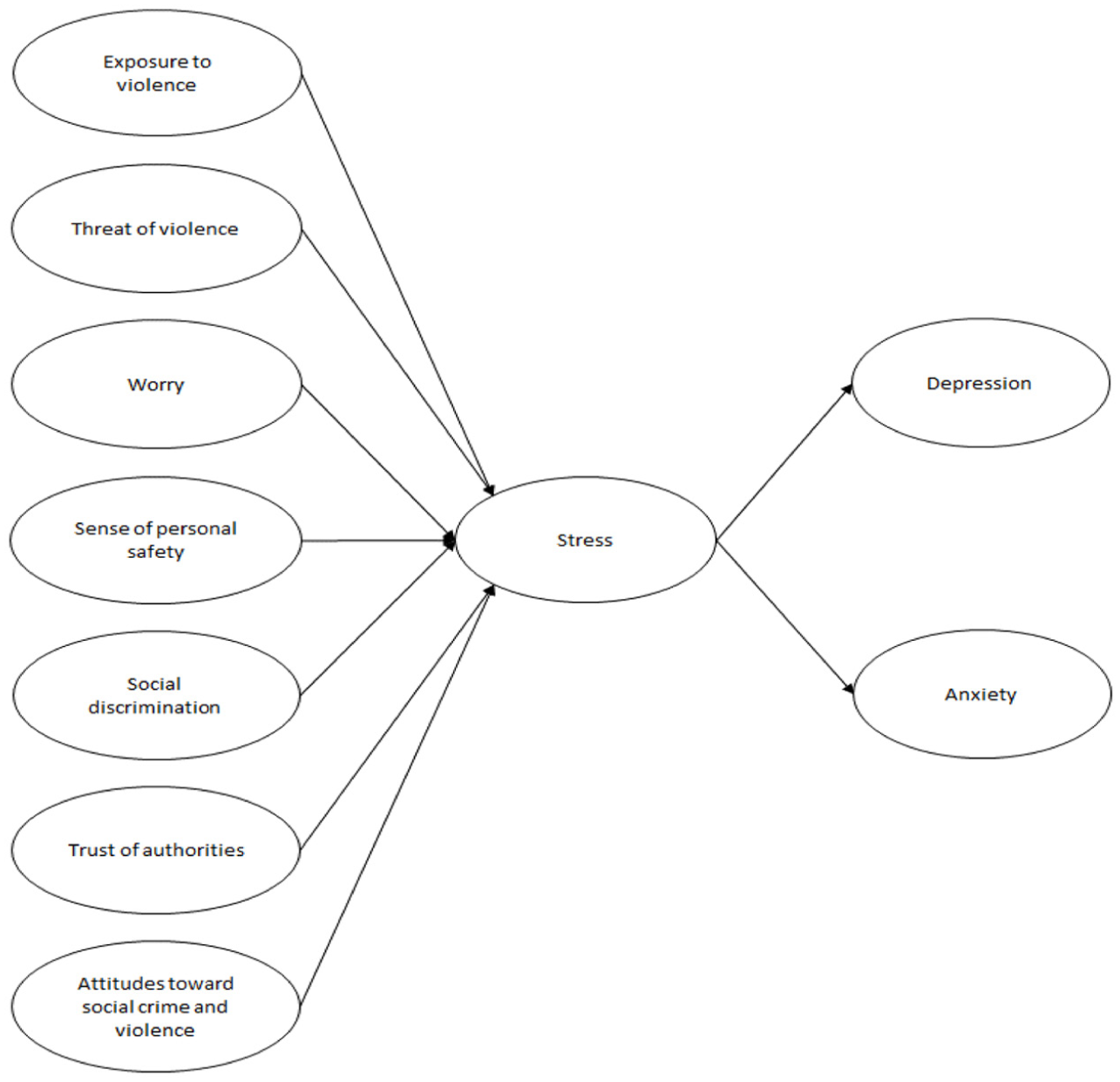
The study model.
Materials and Methods
This study is a cross-sectional survey. The survey questions were disseminated in 2023 among Arab citizens of Israel via snowball sampling on social networks, such as Instagram, Facebook and WhatsApp. The inclusion criteria were being 18 years or older and identifying as an Arab citizen of Israel. The exclusion criteria were being younger than 18 years, not identifying as Arab, or not being a citizen of Israel. The study was approved by the ethics committee at the academic institution with which the principal investigator is affiliated.
The research tool was a quantitative online self-report questionnaire based on reliable and verified questionnaires used in previous studies and adapted for the current study. Questionnaire items in English were translated into Arabic and back-translated into English by an expert in Arabic to ensure reliability. The introduction explained the research topic, ensured respondents’ anonymity and explained their right to refuse or drop out at any time.
Participants
The study participants included 941 adult Israeli Arab citizens, mostly female (approximately 79%), Muslim (approximately 85%), and residing in northern Israel (approximately 91%). On average, they were in their thirties (M = approximately 34 years, SD = 13.03), and most were either married (approximately 54%) or single (approximately 43%). Approximately half had children, with a mean of three children per participant. Approximately 30% had a high school or post-high school education, about a quarter were undergraduate students, and the rest (close to half) had academic degrees. Approximately 61% resided in rural areas, and the rest in urban areas, mostly Arab cities. Most were somewhat religious (about 63%) or religious (about 28%), and approximately three-quarters were employed. Reported income was generally below-average (about 56%) or average (about 34%) (Table 1).
Participants’ Sociodemographic Characteristics (N = 941).
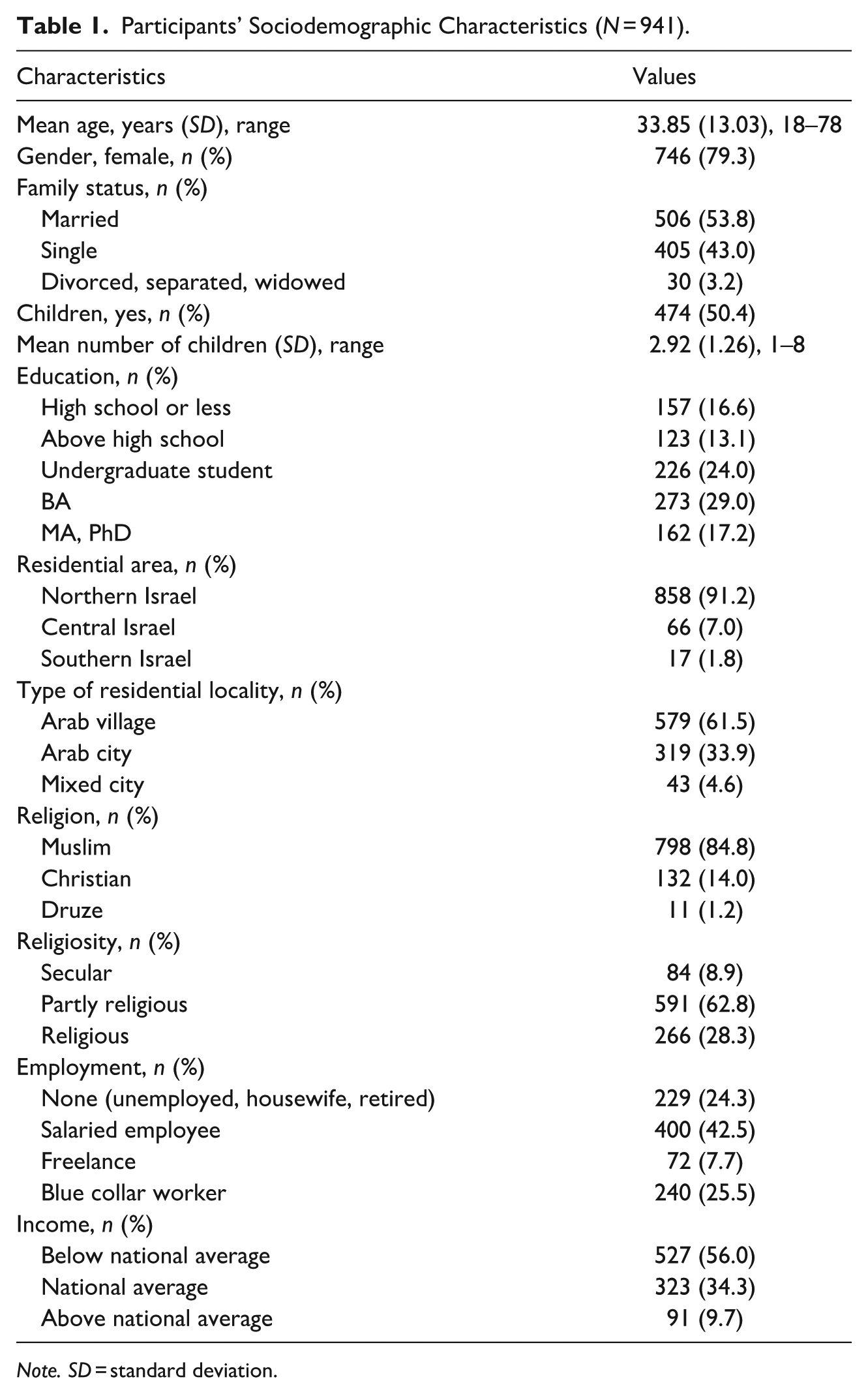
Note. SD = standard deviation.
Instruments
Exposure to violence (participant, family members or friends): Five items describing harm by violence, such as (a) shooting at property or a person with firearms or (b) property vandalism, fights, beatings, measured on a 5-point Likert scale ranging from 1 (no exposure) to 5 (very high exposure). Principal components factor analysis with oblique rotation and Eigenvalue >1 revealed one factor, with Eigenvalue = 3.55, and 71.07% of the explained variance. A high internal consistency was found: α = .90. The total score was computed with item means, with a higher score indicating higher levels of exposure (Abraham Initiatives, 2020).
Threat of violence: Seven items measured on a 5-point Likert scale ranging from 1 (no threat at all) to 5 (very high threat). Principal components factor analysis with oblique rotation and Eigenvalue >1 revealed one factor, with Eigenvalue = 3.96, and 56.53% of the explained variance. A high internal consistency was found: α = .87. The total score was computed with item means, with a higher score indicating higher levels of threat (Abraham Initiatives, 2020).
Worry about social crime and violence: Fifteen items measured on a 5-point Likert scale ranging from 1 (not worried at all) to 5 (worried a lot). Principal components factor analysis with oblique rotation and Eigenvalue >1 revealed three factors. (a) Worry about negative social phenomena: including eight items (e.g., “unemployment,” “drug use”), with Eigenvalue = 4.68, 39.0% of the variance, item loading ranging between 0.45 and 0.82, α = .84. (b) Worry about social violence: including four items (e.g., “violence”, “shooting- using live ammunition”), with Eigenvalue = 4.06, 10.17% of the variance, item loading ranging between 0.53 and 0.85, α = .78. (c) Worry about government-related issues: including three items (e.g., “the status of Israeli democracy,” “Jewish-Arab inequality”), with Eigenvalue = 3.15, 7.35% of the variance, item loading ranging between 0.61 and 0.84, α = .69. The total score had a high internal consistency: α = .87. Scales were computed with items means, such that higher scores indicate higher levels of worry. Correlations among the scales ranged between r = .45 to r = .58 (p < .001); thus, the total score was used (Abraham Initiatives, 2020).
Sense of personal safety: Two items (“feeling lack of personal safety due to the social violence in the Arab sector,” and “compared to last year, to what extent has your sense of personal safety changed”?), measured on a 5-point Likert scale ranging from 1 (not at all) to 5 (very much). The correlation between the two items was rs = .43 (p < .001); a total means score was computed, with a higher score indicating higher levels of personal safety (Abraham Initiatives, 2020).
Perceived social discrimination: Seven items measured on a 5-point Likert scale ranging from 1 (never) to 5 (always). Principal components factor analysis with oblique rotation and Eigenvalue >1 revealed one factor, with Eigenvalue = 3.98, and 56.93% of the explained variance. A high internal consistency was found: α = .87. A total means score was computed, with higher score indicating higher levels of perceived social discrimination.
Trust: Ten items measured on a 5-point Likert scale ranging from 1 (no trust at all) to 5 (very high trust). Principal components factor analysis with oblique rotation and Eigenvalue >1 revealed two factors. (a) Trust of formal authorities, including seven items (e.g., “police,” “education system”), with Eigenvalue = 6.17, 64.34% of the variance, item loading ranging between 0.69 and 0.98, α = .95. (b) Trust of non-formal authorities, including three items (e.g., “family,” “religious figures”), with Eigenvalue = 3.71, 11.81% of the variance, item loading ranging between 0.51 and 0.89, α = .75. The total score had a high internal consistency: α = .93. Scales were computed with item means, such that higher scores mark higher levels of trust. The correlation between the two scales was r = .63 (p < .001), and thus the total score was used.
Attitudes toward social crime and violence in the Arab sector: Seven items measured on a 5-point agreement scale ranging from 1 (highly disagree) to 5 (highly agree). Principal components factor analysis with oblique rotation and Eigenvalue >1 revealed two factors: (a) The offenders are known in the community, including four items (e.g., “those who shoot at property or people are usually known to the victim”, “crime families are known to the law enforcement authorities”), with Eigenvalue = 2.81, 41.72% of the variance, item loading ranging between 0.56 and 0.87, α = .76. (b) Reasons for social violence, including three items (e.g., “crime in the Arab sector is the result of long-term neglect and discrimination,” “Arab society lacks the courage to speak openly about the social crime and the offenders”), with Eigenvalue = 1.51, 14.82% of the variance, item loading ranging between 0.42 and 0.88, α = .75. The total score had an acceptable internal consistency: α = .74. Scales were computed with item means, such that higher scores indicate higher levels of each variable. The correlation between the two scales was r = .46 (p < .001), and thus the total score was used (Abraham Initiatives, 2020).
Stress: Ten items measured on a 5-point Likert scale ranging from 0 (never) to 4 (always). Good internal consistency was found: α = .78, and the total score was computed as the sum of the items, such that a higher score (ranging 0–40) marks higher levels of stress (Cohen & Williamson, 1988).
PHQ-4: Two items for depression and two items for anxiety, measured on a 4-point Likert scale ranging from 0 (never) to 3 (almost every day). The correlation between the two depression items was rs = .71 (p < .001), and between the two anxiety items was rs = .76 (p < .001). Two summary scores were computed, for depression and for anxiety (ranging 0–6 each), with higher scores indicating higher levels of depression and anxiety. The score of ≥3 for each scale marks the cutoff point for a potential case of depression or anxiety (Löwe et al., 2010).
Demographic and background variables: Age, gender, marital status, children, level of education, area of residence, type of residence, religion, religiosity, employment and income.
Data Analysis
Data were analyzed with SPSS version 29 (IBM, Armonk, NY, USA). Descriptive statistics were used for sociodemographic characteristics. Principal components factor analyses with oblique rotation and Eigenvalue >1 were calculated for the study variables, and variables were computed with item means/summary scores. Several variables were positively skewed (exposure to violence, personal safety, and trust—skewness = 1.02 to 1.29, SE = 0.08), and others were negatively skewed (worry and social discrimination—skewness = −1.03 to −2.00, SE = 0.08), and were thus log transformed, and exponentially transformed, respectively. Descriptive statistics were used for the study variables and Pearson correlations were calculated among them. The study model was assessed with AMOS ver. 29. First, the measurement model confirmatory factor analysis (CFA) was evaluated, using Cmin/df, tucker-lewis index (TLI), CFI, RMSEA, and SRMR as measures of model fit. Second, the study model was assessed with SEM, using the same measures of model fit. Model observed variables (items on latent variables) were standardized. Mediation was examined within the SEM analysis, with bootstrapping of 5,000 samples and bias-corrected 95% confidence interval.
Sample size was calculated using Soper’s calculator (Soper, 2023; Westland, 2010). For a structural equation model with 10 latent variables and 70 observed variables, a medium-low effect size of 0.2 and a power level of 0.8, with α = .05, the minimum required sample contains 475 participants.
Results
Descriptive Results
Distribution of the study variables reveals that exposure to violence was rather low, threat of social violence was moderate (Table 2), worry about violence and crime was high, sense of personal safety was rather low, and social discrimination was perceived as high. Trust of authorities was rather low, attitudes toward social crime and violence were moderate-high, and perceived stress was moderate. The potential for clinical depression was noted among 69% of participants (n = 650), and the potential for clinical anxiety was noted among 73% of participants (n = 689), using the cut-off of three points.
Distribution of Study Variables and Pearson Correlations (N = 941).
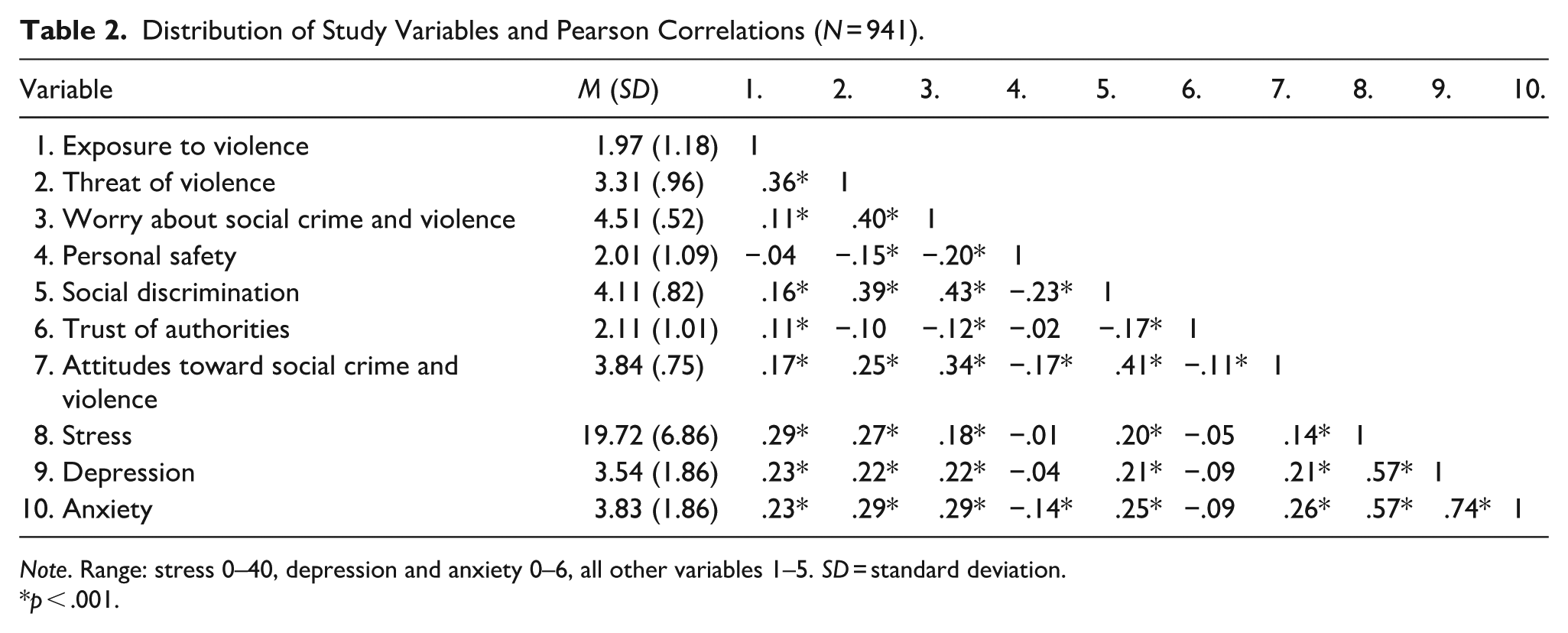
Note. Range: stress 0–40, depression and anxiety 0–6, all other variables 1–5. SD = standard deviation.
p < .001.
Significant correlations were found among the study variables. Weak to moderate positive associations were found among exposure to violence, threat of violence, worry, social discrimination, attitudes toward social crime and violence and stress. Weak negative associations were found between the aforementioned variables and sense of personal safety and trust. Further, weak positive associations were found between exposure to violence, threat of violence, worry, social discrimination, attitudes toward social crime and violence, and depression and anxiety. Moderate positive associations were found between stress, depression and anxiety. A weak negative association was found between sense of personal safety and anxiety. Attitudes towards social crime and violence were not associated with depression and anxiety. It should be noted that worry, trust, and the attitudes were each composed of two to three sub-scales. These sub-scales are presented in a previous article (Abraham Initiatives, 2020). Their correlations with the other variables of the study were similar (see Supplemental Table 1), and thus, for the purpose of clarity and conciseness, total scores were used in the study model.
Associations With Background Variables
Significant associations were found between the background variables and the mediating and dependent variables. First, gender was found significant for stress, such that women (M = 20.06, SD = 6.79) reported higher stress levels than men (M = 18.41, SD = 6.96) (t(939) = 3.01, p = .003). Further, women reported higher levels of depression and anxiety (M = 3.70, SD = 1.84 and M = 4.00, SD = 1.81, respectively) than men (M = 2.92, SD = 1.82 and M = 3.20, SD = 1.89, respectively) (t(939) = 5.26, p < .001 and t(939) = 5.44, p < .001, respectively). Second, age was negatively associated with depression (r = −.12, p < .001). Third, income level was found significant for depression, such that participants who reported below-average income demonstrated higher levels of depression (M = 3.74, SD = 1.83) than participants who reported average or above-average income (M = 3.29, SD = 1.87) (t(939) = 3.70, p < .001). Other background variables, i.e., level of education (academic vs. non-academic), employment status (yes/no), and religiosity (secular or partly religious vs. religious) were unrelated to stress, depression or anxiety (p = .052 to p = .930). Thus, the study model was examined while controlling for gender (1 = male, 0 = female), age and level of income (below-average vs. average or above-average).
Study Model
The measurement model for the study (CFA), with 10 latent variables, was found to fit the data: Cmin/df = 2.43, TLI = 0.903, CFI = 0.909, RMSEA = 0.039, SRMR = 0.050. The study model was evaluated with these ten latent variables, using stress as the mediator and depression and anxiety as the dependent variables, and controlling for gender, age and income level. This model was found to fit the data as well: Cmin/df = 2.42, TLI = 0.895, CFI = 0.901, RMSEA = 0.039, SRMR = 0.050, as shown in Figure 2 and Table 3.
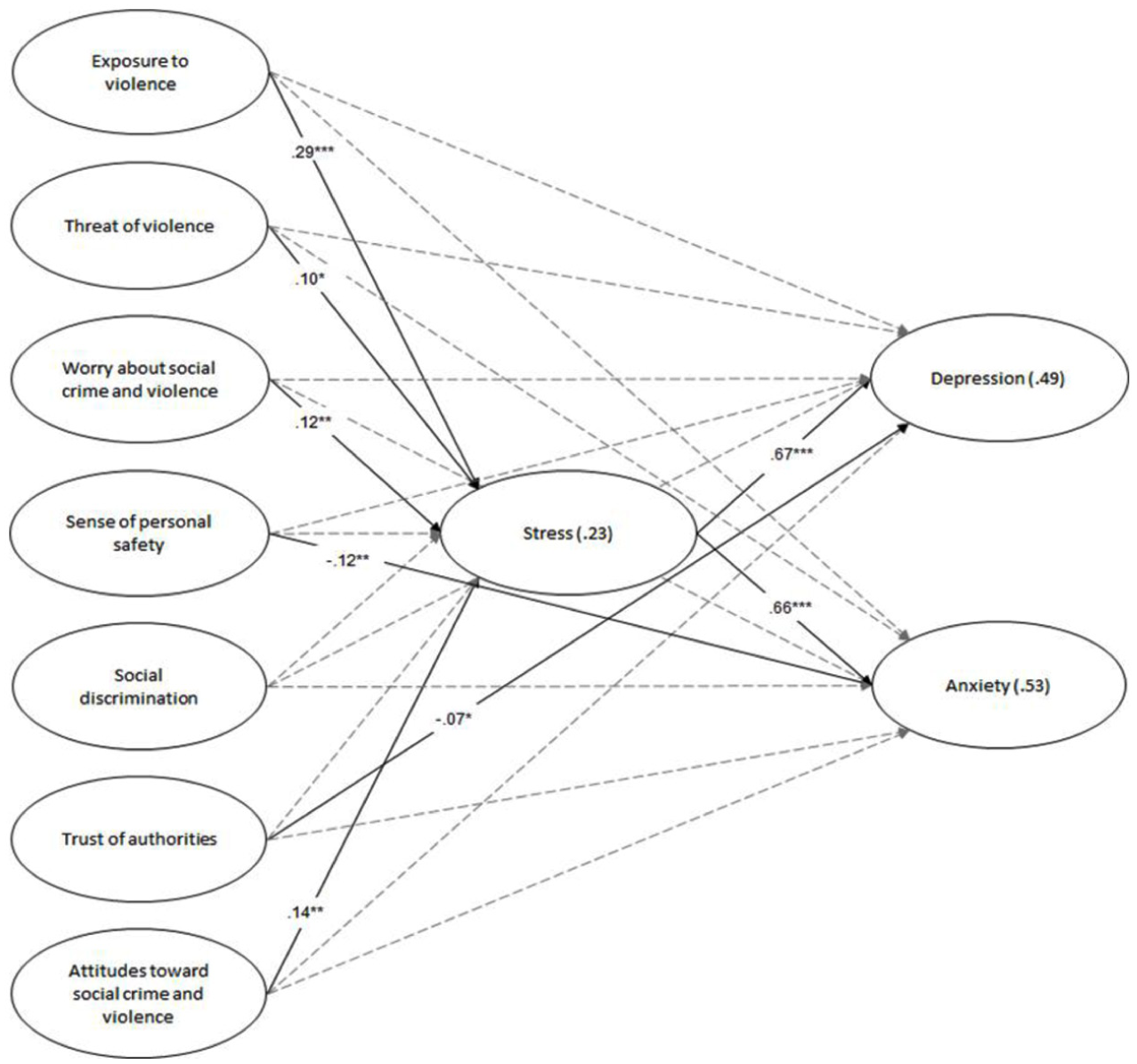
Structural equations model for depression and anxiety, with the mediating role of stress.
Structural Equations Model for Stress, Depression and Anxiety (N = 941).
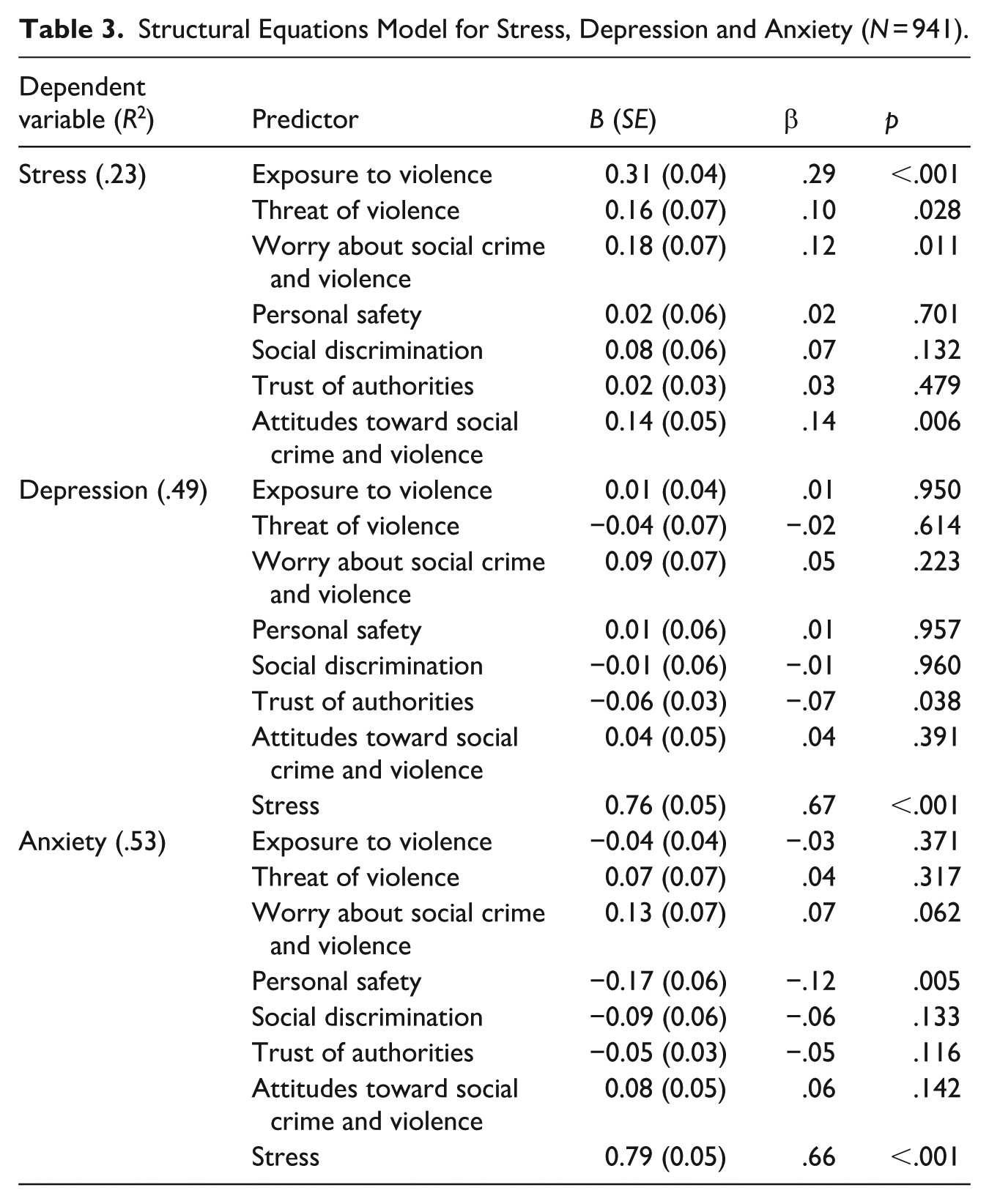
The results show that 23% of the variance in stress, 49% of the variance in depression, and 53% of the variance in anxiety were explained by the study variables. Stress was found to be positively associated with exposure to violence, threat of violence, worry about social crime and violence, attitudes toward social crime and violence, and stress, such that higher exposure to violence, greater threat of violence, higher worry about social crime and violence, and higher attitudes toward social crime and violence (i.e., higher perception that offenders and reasons are known but little is done) were associated with greater stress. Further, higher trust in the authorities was associated with lower depression levels, and a higher sense of personal safety was associated with lower anxiety. Finally, higher stress was associated with higher levels of both depression and anxiety.
The mediating role of stress was examined within the structural equations model. Its results (Table 4) show that stress was found to mediate the associations between exposure to violence, threat of violence, worry about social crime and violence, attitudes toward social crime and violence, and depression and anxiety. That is, higher exposure to violence, greater threat of violence, higher worry about social crime and violence, and higher attitudes toward social crime and violence (i.e., higher perception that offenders and reasons are known but little is done) were associated with greater stress, which in turn was associated with higher levels of depression and anxiety.
Indirect Effects for Depression and Anxiety, With Stress and Independent Variables (N = 941).
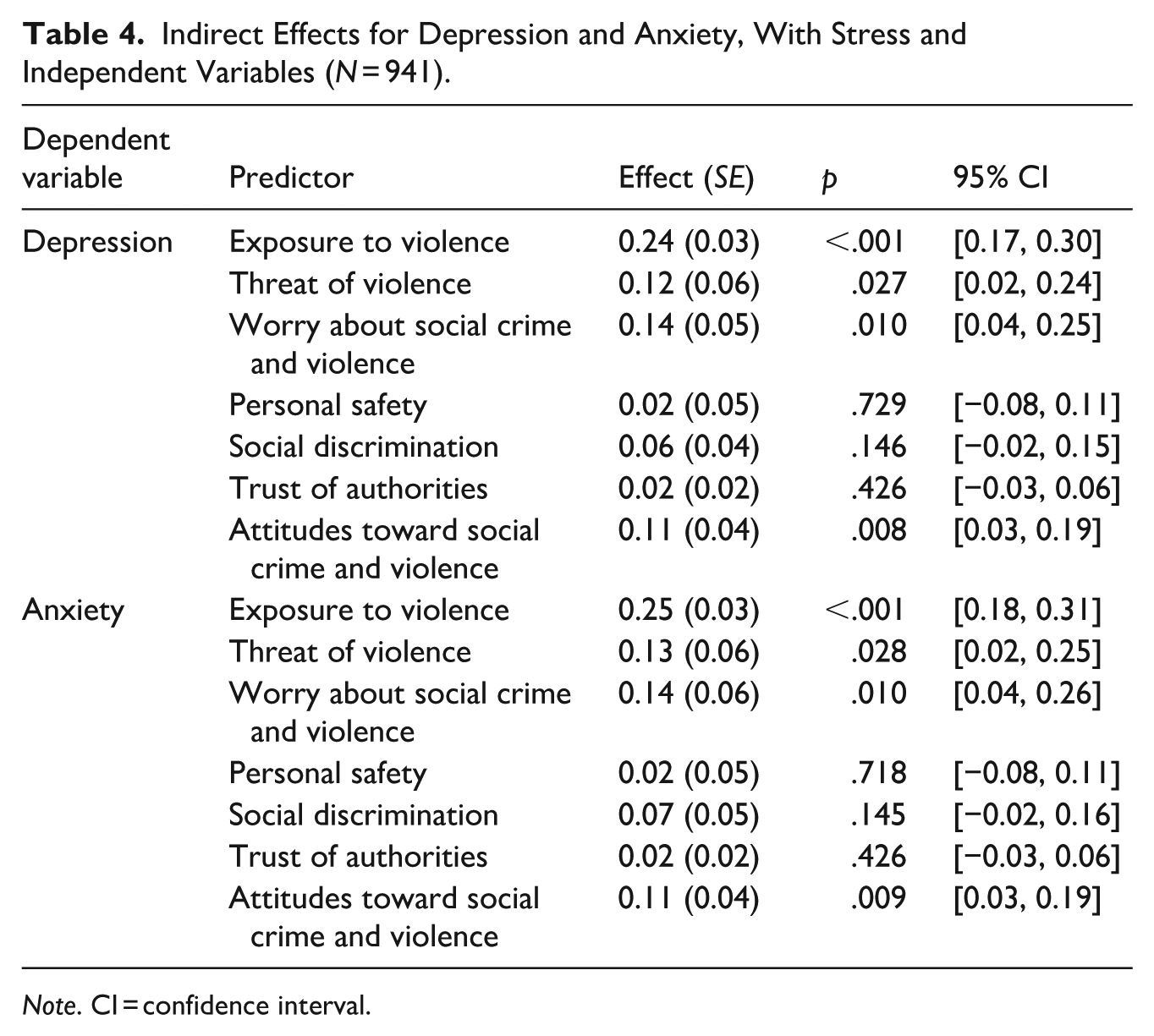
Note. CI = confidence interval.
Discussion
The population’s rising concerns about violence can be explained by the disturbing upsurge in crime and police helplessness in eradicating violence. The Israel Police closes a high percentage of investigations due to insufficient evidence: 70% of cases involving Arabs versus 52% involving Jews (Hassanein, 2016). This statistic rose significantly in 2023: out of 244 cases, only 10.5% were solved, suggesting most murderers remain at large.
The ongoing neglect and low socioeconomic background of the Arab population are liable to generate distrust in government authorities (Ali-Saleh & Obeid, 2023). Similar to previous studies (Satran et al., 2021), participants reported high perceived discrimination. Over the years, the Arab minority has suffered from discriminatory government policies: small allocations of state resources and of lands for development, as well as lower funding for infrastructure and education (Smooha, 2022). Land confiscation and low resource allocation in Arab local authorities have led to systematic discrimination (Daoud, 2018; Smooha, 2022). The Arab population is socially and economically disadvantaged, with lower income and higher unemployment than the Jewish population (ICBS, 2022), alongside unprecedented violence and crime rates. Such changes increase problems and erode social cohesion in Arab neighborhoods (Daoud et al., 2017).
The current study revealed a very low sense of personal security, understandable given the considerable increase in crime and violence (Ali & Rosenberg, 2023). According to Ali et al. (2020), 42% of Arab citizens reported lacking personal safety and feeling very or extremely threatened in their community. Smooha (2022) noted that high crime and violence levels cause most Arabs to feel physically unsafe in their localities, and they accuse the government of doing nothing.
The study found the potential for developing clinical depression and anxiety to be 69% and 73% respectively, with moderate stress levels, rates significantly higher than among the Jewish population (Abu-Kaf, 2019). A study examining emotional distress found only 30% of Arab participants reported no symptoms, compared to 75% of the general population. Moreover, 45% of Arabs reported some symptoms, compared to 14% of the general population (Khatib et al., 2021). During COVID-19, 41% of Arab women were classified in the clinical depression range (Halperin et al., 2023). In another study, most participants reported moderate stress levels, and 10% reported high stress (Satran et al., 2021).
The current study found that higher exposure to violence, greater sense of threat, and increased concern regarding crime are associated with more negative attitudes regarding community crime. Participants perceived that offenders and their motivations are known yet authorities take little action, correlating with higher stress. Moreover, higher trust in government authorities was associated with lower depression, and higher personal security with lower anxiety. Finally, higher stress was associated with higher depression and anxiety.
Observation of the everyday lives of Arab citizens explains how stress, anxiety and depression are associated with these variables. Criminal organizations openly engage in “settling scores”, not distinguishing between ordinary citizens, including women and children, and their specific rivals (Ali et al., 2020). Community violence and crime cause stress, leading to avoidance behavior affecting social activities (Lorenc et al., 2012). Many studies found associations between crime levels and depression symptoms (Cornaglia et al., 2014), as well as negative impacts on emotional wellbeing (Dustmann & Fasani, 2016).
The most worrisome issues for Arab citizens are violence, shootings and weapons use, with 80.3%, 77%, and 73.5% respectively expressing concern (Ali et al., 2020). These high levels demonstrate the concrete threat to life hovering over the Arab public, as well as their drop in personal security, disappointment and distrust in official authorities. This finding may explain the high anxiety level. The level of despair is rising, to the point that they see the current situation as their inevitable fate. Moreover, they fear confronting perpetrators, particularly criminal gangs (Ali et al., 2020). Even leaders of Arab local authorities fear for their lives and prefer not to confront these gangs.
This study also found higher stress, depression and anxiety among women than among men. Moreover, age was negatively associated with depression, such that younger people reported more depression. Participants with below-average income reported higher depression. Previous studies reported similar findings. Abu-Kaf (2019) found that Arab women are more vulnerable to mental health problems and experience ongoing stress affecting their physical and mental health. Other studies found higher anxiety rates among women from minority populations (Prady et al., 2016). A longitudinal study in Britain found that violence and crime in neighborhoods are associated with rising depression and anxiety among women (Dustmann & Fasani, 2016). Women who witnessed neighborhood violence were at twice the risk of developing depression and anxiety (Clark et al., 2008).
The negative association between age and depression can be explained by the fact that most crime and violence victims (48.7%) are young people aged 18 to 30. All age groups are at risk, but risk generally drops with age, except among minors (Abraham Initiatives, 2023).
The current study found that below-average income is associated with higher depression. The Arab population experiences poverty, meagre resources, social exclusion and discrimination (Daoud et al., 2019), all associated with emotional distress, particularly depression (Kaplan et al., 2010).
The study also found that stress mediates the associations among exposure to violence, sense of threatened violence, worry about crime and violence, attitudes toward social crime and violence, depression and anxiety. That is, higher exposure to violence, higher sense of threat, more concern regarding social crime and violence, and stronger attitudes regarding community violence (perceiving that criminals and reasons for crime are known but little is being done) are associated with stress, which in turn is associated with higher depression and anxiety.
Previous studies found that community crime and violence are a major public health concern and cause of stress, which in turn mediates between the attributes of communities where violence occurs and the population’s mental health problems (Lorenc et al., 2012).
In summary, the findings underscore the emotional repercussions of rising violence and crime in the Arab population in Israel. They add another layer to understanding the intersection between belonging to the Arab minority and exposure to such high levels of social violence. This exposure constitutes a clear and significant risk factor for emotional distress, depression, anxiety and stress. The present findings should also be interpreted in light of the diversity of the Arab population in Israel. The participants in the current sample were primarily women, Muslims, residents of northern Israel, and relatively educated. Hence, they may not be fully representative of the heterogeneity marking Arab society in Israel, affecting the generalizability of the findings. Moreover, the differences in gender, age, and income suggest that the emotional burden associated with community violence may not be uniform across sociodemographic groups. Future research should examine more diverse samples and underrepresented groups within Arab society in Israel.
The findings point to the need for guidelines and procedures to enable health professionals to address exposure to community violence, assess depression, anxiety and stress, and access community resources for coping with these consequences. The findings underscore the urgent need to devise programs for prevention, intervention and treating the root of the problem, in an attempt to cope with this serious threat to the health of the Arab population in Israel.
Recommendations for Future Research
Ongoing studies are needed to understand the reciprocal relations between social violence and health consequences among unique population groups, such as pregnant women, postpartum women, children and adolescents, older adults, and people with special needs, particularly in the Arab population. Research is needed to examine violence repercussions on physical health and risk behaviors, such as alcohol and drug consumption, smoking, eating habits, and lifestyle changes. Both qualitative and mixed-methods studies are needed to give voice to those experiencing social violence firsthand. Preventative factors for reducing the effects of violence on mental health should be examined. Another future line of research is examining the impact of social violence on social involvement, changes in health behaviors and engaging in risky behaviors.
Research Limitations
The current study has several limitations, mainly related to sampling method. Recruiting participants via social networks may represent sampling bias in that only people active on social networks with internet access or smartphones responded. Additionally, the sample is homogenous, as most respondents were females, Muslim, residing in northern Israel, mainly educated, and partly religious or religious. This homogeneity turns the sample unrepresentative of the Arab-Israeli population, and limits the generalizability of the findings. Further, mean exposure to violence was rather low, which might have limited the scope of the findings. The associations that were found were mostly weak to moderate, which might have resulted from the homogeneity of the sample or the low mean of exposure.
Most respondents were female (79%) and only 21% were male, impairing generalizability. Moreover, self-reporting methods may have caused bias among this population, particularly due to their major fear of confrontations and the responses of criminal organizations to those who speak up. Future research should use random sampling, as well as different tools, such as in-depth interviews, more suitable for examining complex aspects of this issue.
Supplemental Material
sj-docx-1-jiv-10.1177_08862605261459052 – Supplemental material for Living Under Threat: Stress as a Mediator Between Community Violence and Mental Health in the Arab Society in Israel
Supplemental material, sj-docx-1-jiv-10.1177_08862605261459052 for Living Under Threat: Stress as a Mediator Between Community Violence and Mental Health in the Arab Society in Israel by Ola Ali-Saleh, Layalleh Massalha and Jalal Tarabeia in Journal of Interpersonal Violence
Footnotes

Ethical Considerations
The study was approved by the Ethics Committee of Emek Yezreel College (Approval No. 2023-57 YVC EMEK).
Consent to Participate
Informed consent was obtained from all individual participants included in the study.
Author Contributions
All authors contributed to the study conception and design. Material preparation, data collection and analysis were conducted by Ola Ali-Saleh, Layalleh Massalha, and Jalal Tarabeia. The first draft of the manuscript was written by Ola Ali-Saleh and all authors commented on previous versions of the manuscript. All authors read and approved the final manuscript.
Funding
The authors received no financial support for the research and/or authorship of this article.
Declaration of Conflicting Interests
The authors declared no potential conflicts of interests with respect to the authorship and/or publication of this article.
Data Availability Statement
All data is available upon request from the authors.
Supplemental Material
Supplemental material for this article is available online.
Author Biographies
References
Supplementary Material
Please find the following supplemental material available below.
For Open Access articles published under a Creative Commons License, all supplemental material carries the same license as the article it is associated with.
For non-Open Access articles published, all supplemental material carries a non-exclusive license, and permission requests for re-use of supplemental material or any part of supplemental material shall be sent directly to the copyright owner as specified in the copyright notice associated with the article.
