



Abstract
The authors contend that despite the popularity of the term and of corporate surveys to measure it, employee engagement is often an ill-defined concept, and the relationship of it with reward management is often even more unclear. In a wide-ranging analysis, they consider the impact of the difficult global economic climate on engagement levels and what we have learned about the relationship with rewards. They argue that engagement and its links with pay and rewards need to be defined and understood in each organization setting, rather than assuming that simplistic universal models can be adopted. They highlight the importance of a total rewards approach in engaging the diversity of the workforce and meeting the wide variety of employee needs. Third, they call for action on survey results, with the recession having widened the “say–do” gap on employee engagement. Finally, they highlight some outstanding questions for future research and practice to investigate in this field.
Introduction: Get Totally Engaged
Almost 5 years ago, we jointly authored an article on employee engagement and the relationship with pay and reward management policies. 1 Since then, engagement has become an even more popular topic, producing some 40 million web hits on a Google search today. It appears to be a near-universal corporate and employer objective and “good,” lauded by governments, chief executives, HR directors and consultancies. As the United Kingdom’s Secretary of State for Business, Innovation and Skills put it, “Organisations that truly engage their employees produce world class levels of innovation, productivity and performance.” 2
Often though, we feel that engagement continues to be an ill-defined, ubiquitous, ‘warn and fuzzy’ concept. It is often measured in surveys characterized by an obsession with completion rates and comparative benchmarking, but which are little acted upon, and with the practical implications, particularly in terms of financial reward, frustratingly unclear.
The U.K. Government–commissioned report, Engaging for Success, discovered more than 70 different definitions of engagement, ranging from the unintelligibly theoretical to the Dean of Cass Business School’s delightful “you sort of smell it, don’t you.” 3 And the numerous “recipes” and “formulas” for creating and sustaining an engaged workforce are even more diverse. According to Professor David Guest, “The concept needs to be more clearly defined or it needs to be abandoned.” 4
The assumption generally, however, appears to be that providing “total rewards” (often an equally “fuzzy” concept) and particularly the nonfinancial dimensions, will engage staff to willingly deliver high levels of customer service and thereby financial performance: “providing a total package of reward that optimises employee engagement with their work and contribution to the employer at an acceptable cost,” according to then–United Kingdom’s Chartered Institute for Personnel Development Vice President, Reward, Vicky Wright. 5
This emphasis in the definitions on organizational financial performance benefits delivered through employee engagement that in turn is strongly influenced by nonfinancial rewards seems to be very common. The authors of Engaging for Success state specifically that engagement is “the key to unlocking productivity” and “taking maximum advantage of the economic upturn when it comes.” They also note, however, that “pay and conditions are important in attracting people but subsequently act as more of a hygiene factor.” 6 For them, the four key “enablers” of employee engagement are: leadership, managers, voice/involvement and integrity.
The Paradox of Recession and Engagement
Yet, paradoxically and remarkably, the viral popularity of this concept, this “lifeblood of organizations,” 7 has coincided with the worst global economic recession for almost a century. Actions by governments and employers in the United Kingdom and United States that have had a detrimental impact on rewards and living standards for the majority of the workforce, with pay levels frozen and even cut, state and employer pensions and benefits reduced, earnings differentials with the highly compensated expanded, much wider use made of “zero hours” and more insecure employment arrangements.
While trade union leaders may point out the apparently hypocritical “say–do” gap on employee engagement and investing in people in a recession, the increasing employer emphasis on employee engagement through total rewards is, in fact, not difficult to comprehend in the current economy. As Scott Young, HR Business Partner and Engagement Manager at the United Kingdom’s BIG Lottery Fund put it, 8 with a national public sector pay freeze in place for 3 years and now a 1% imposed ceiling on awards, employers need to focus on nonfinancial rewards to maintain employee engagement. “It’s a very difficult environment at the moment,” he explains, “we are restrained by what we can pay employees, so we have to focus on nonfinancial rewards.”
Similarly, the Operating Framework of the National Health Service (NHS) for 2011/2012 states,
With a two-year pay freeze applying from April 2011 . . . explaining the make up of pay and reward provides an opportunity for employers to strengthen staff engagement by helping staff maximise the value of their reward packages to their own and their employers’ benefit.
9
Yet, despite such efforts, at a macro national and international level, like the economy itself, employee engagement levels fell significantly after the 2008/2009 financial crash and are only now recovering to their prerecession levels. Aon Hewitt’s engagement database covers more than 2,500 employers worldwide, with almost 4 million employees. The surveys include a set of core questions on six dimensions of engagement, including financial and nonfinancial rewards, and these are used to produce an overall engagement score in each organization, which can be aggregated and analyzed at the sector, country, regional and global levels. The pattern of overall engagement levels globally and by region is shown on Figure 1. 10
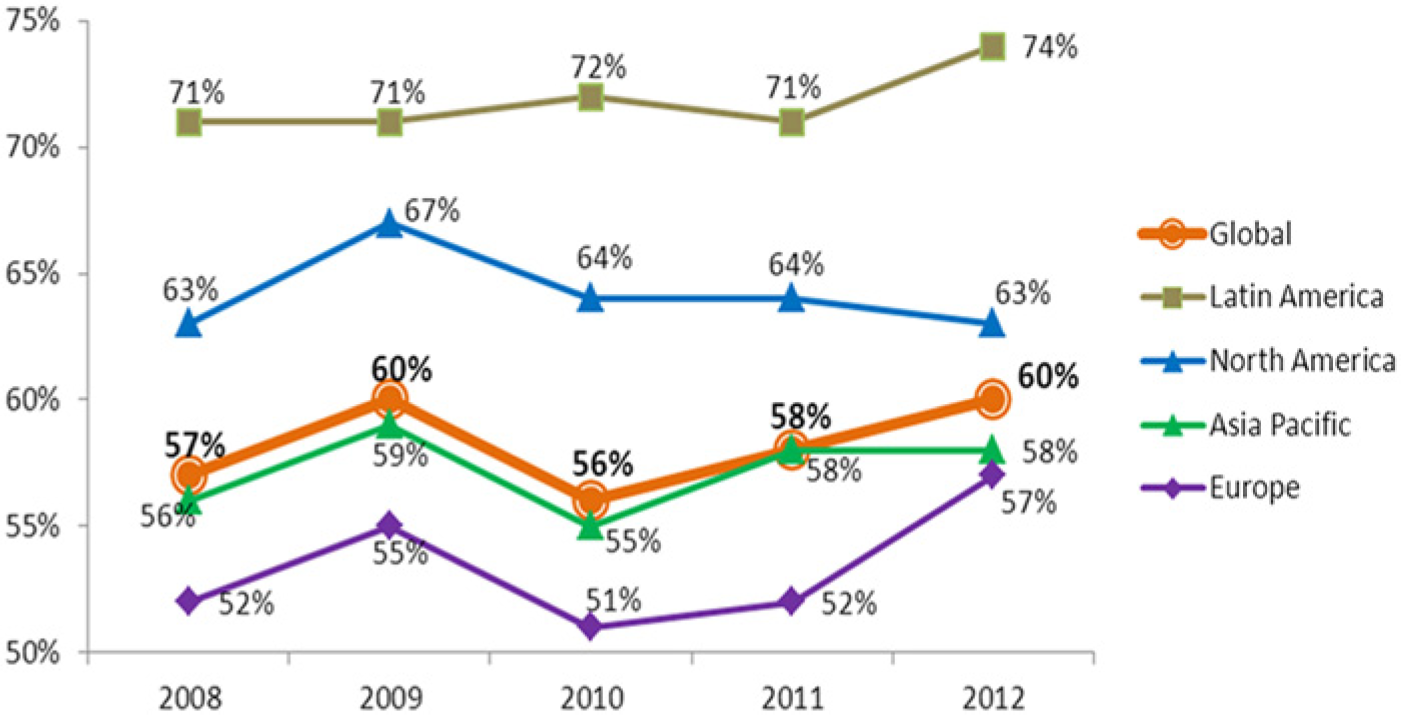
The shifting pattern of employee engagement levels across the world.
Looking across the world, although lagging the financial crash in late 2008 and the beginning of the recovery, engagement levels on average fell significantly from 2009 to 2010 and have since been gradually rising, up 2% in 2011 to 60% in 2012. The largest engagement increase has been in Europe (improving 5 percentage points) and Latin America (improving 3%).
Globally, 4 out of 10 employees are not engaged, and 2 in every 10 are actively disengaged. ORC International’s statistical analysis draws virtually identical conclusion, highlighting for example that “the UK job market has suffered extensively as a result of the financial crisis . . . this turbulence has carried over into engagement scores.” 11
So what have we learned over the past 5 years about employee engagement, its relationship with performance and the influence it has on reward management? We would draw out in particular three key lessons.
Research and Define Engagement, Its Links With Performance and the Influence of Rewards, in Your Own Specific Setting
In our original article, 12 we outlined powerful evidence that employee engagement levels are indeed associated in many research studies with higher levels of corporate performance, a relationship that is integral to the very concept of engagement. The Institute for Employment Studies (IES) defines engagement as “a positive attitude held by the employee towards the organisation and its values” such that they “work with colleagues to improve performance”; while Aon Hewitt similarly views it as “the psychological and behavioural outcomes that lead to better employee performance.” Given the variety of definitions of employee engagement it is important to emphasize that these two versions make clear the link between employee attitudes and behaviors and organizational outcome. The academic focus has tended to be on employee states of well-being and commitment that are independent of the organization—something that has much less utility for employers.
Over the intervening years, academic research on the linkages with performance has continued to accumulate and these studies are summarized well in the Engaging for Success report, with case study evidence from a wide range of organizations and a particularly welcome growth in public sector studies. For example, separate pieces of research amongst U.K. hospitals and local government authorities both highlight that staff advocacy and voice, an important dimension of engagement, are strongly associated with organization performance as assessed by regulators.13,14
Aon Hewitt’s global summary would in fact suggest that during the economic downturn, the engagement “gap” between the highest performing public companies, in terms of their total shareholder returns (TSRs), and the average for lower performers has actually widened, with their engagement scores on average now 13% higher and a TSR premium of some 50%: see Figure 2. 15
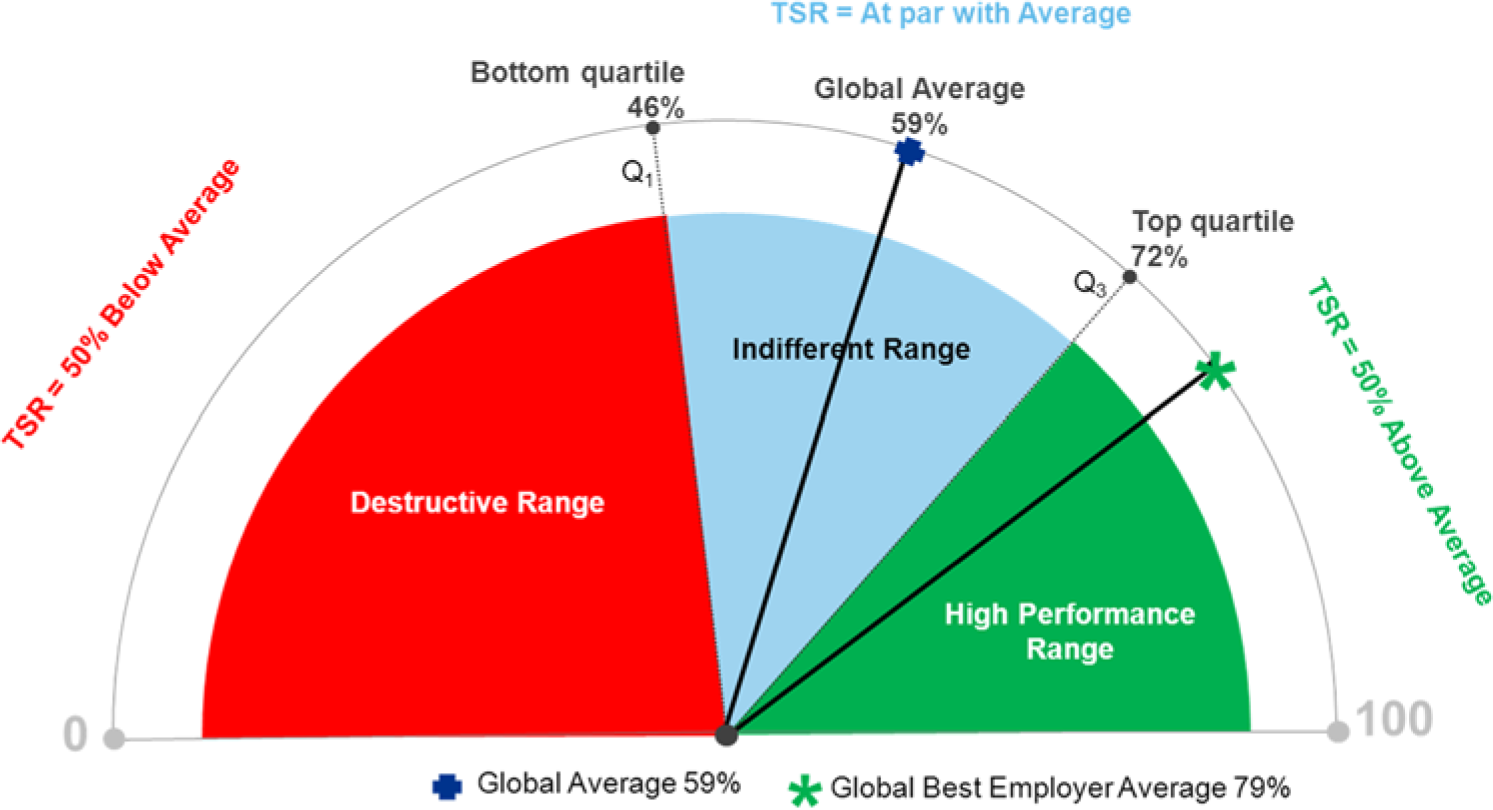
The highest performing employers (top quartile) are pulling away from the rest in terms of engagement levels and relative TSR.
We also described in our original article that pay and reward policies in turn can be shown to positively influence engagement levels. But we pointed out that both of these relationships are much more complex and situation specific than much of the popular “pull reward lever ‘A,’ achieve employee engagement level ‘B’ and influence customer and business outcome ‘C’” articles assume. We argue this generally requires more detailed investigation and cautious, tailored and sustained reward interventions to positively influence engagement and performance.
Research data and our experience in the years since first published have very much reinforced these initial conclusions. Firstly, we are convinced “‘engagement” is a multidefined and multifaceted concept that needs to be clearly specified and measured by each employer for its own workforce, highlighting in particular the locus of engagement desired, that is to the organization, the job and work, the work team and colleagues and/or the customer.
In its most common usage, the term means more than intrinsic job satisfaction and employee motivation, involving a commitment by each individual employee to “go the extra mile” to perform and deliver on the organization’s goals. But as Professor Paul Sparrow 16 points out, following his studies of major international companies including McDonalds, IBM and Nestle, it is an essentially individual concept that may not scale up to the whole workforce in every situation. As he says, this makes the obsession with benchmarking engagement and achieving “best company” status somewhat problematic, particularly if the concept varies in different settings. His argument suggests that organizations should concentrate on how levels of employee engagement change over time in their setting rather than worry about cross-organizational comparisons.
Second, the way in which employee engagement influences performance is similarly complex and multifaceted. The linkages are undoubtedly two-way and Aon Hewitt’s global data suggest that engagement trends lag the patterns in GDP growth, raising the “chicken-and-egg” problem of which factor is driving which in the relationship: see Figure 3. It also shows that across all employers, unlike in the rest of the world, U.S. engagement levels in 2012 actually declined, despite the developing economic recovery there.
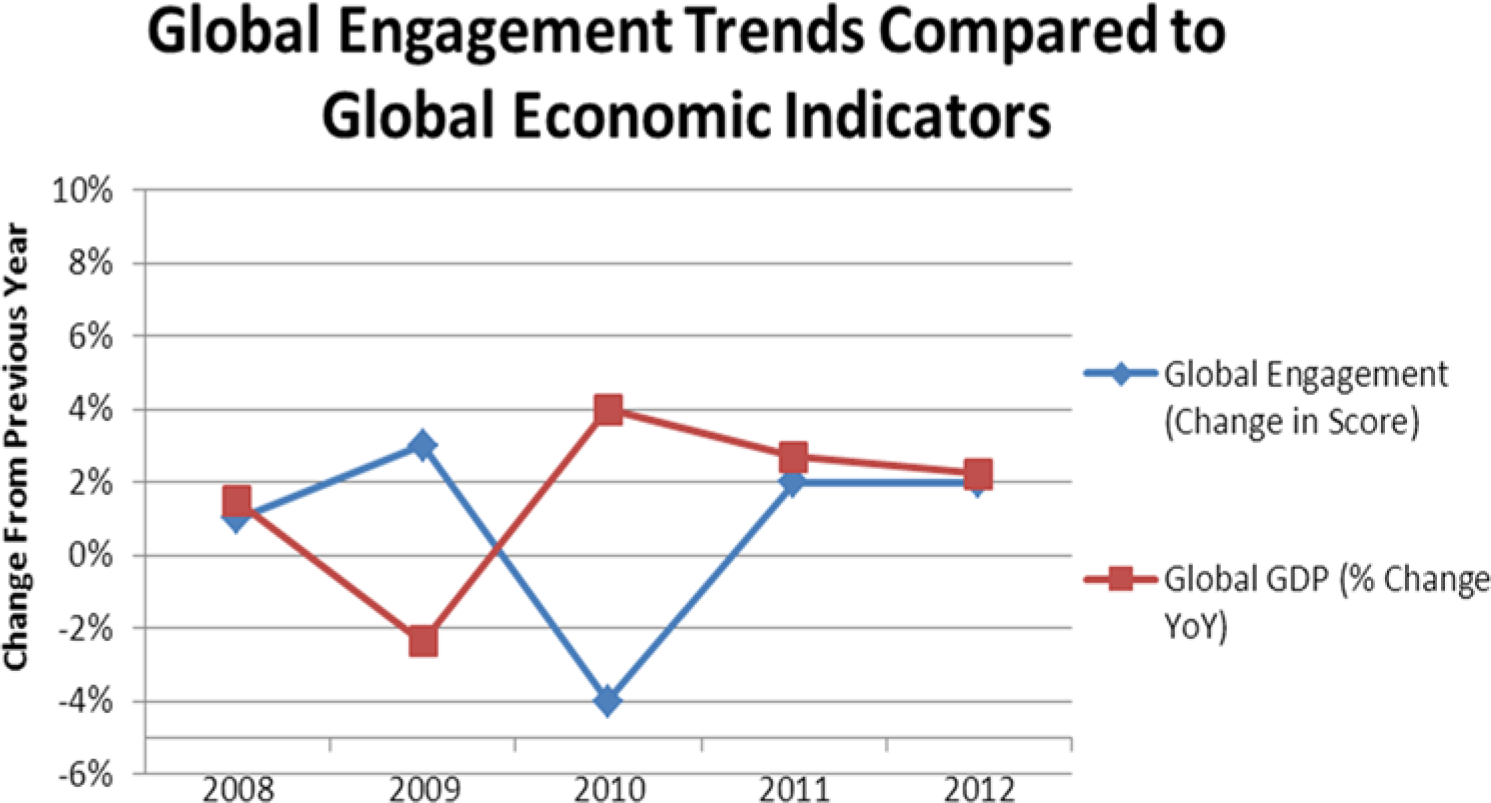
Employee engagement is a leading indicator of company growth—but lags economic trends.
The engagement–performance relationship is often different outside of the direct face-to-face customer service setting in which the original Sears research identified the linkages and that was replicated by IES in the U.K. supermarket firm Sainsbury’s. For example, as Scarborough and Elias point out, 17 the way in which an investment bank can leverage high performance from a few key “rainmakers” is very different from a major retailer with tens of thousands of customer-facing staff, such as Sears or the United Kingdom’s John Lewis Partnership. This also suggests that the appropriate reward models can be quite different, with John Lewis operating a common profit-sharing scheme for all of its employees, with no distinct sales or executive incentives, while investment banks generally still retain distinct and highly leveraged incentive plans for their traders.
Sparrow goes further and questions if high engagement is even required for high performance in every organization setting, and for all jobs. Certainly some organizations have reported good performance without high levels of employee engagement. That reality may have grown during the recession where employees more fear job loss than a wish to engage. Moreover, the return to Taylorism in the standardization of work processes means that the scope for autonomy in many jobs is limited and even the scope for discretionary effort constrained.
Call center jobs spring immediately to mind to illustrate this point, with prescribed scripting of the customer interaction. In global companies generally, there has also been a drive toward increased uniformity so as to ensure that employees stick to their role definition. Part of the reason may be to do with efficiency—employees must follow the lean, prescribed route toward optimal performance—but standardization is also driven by risk minimization. Compliance with Sarbanes Oxley, Basel III or whatever the regulatory framework can make a required protocol a strategy to ensure that staff do not endanger company reputation. Even in HR the imposition of central work dictates is to be found: As one HR manager put it in an interview with one of the authors speaking of local operational HR colleagues, their task is “not to think but to do.” 18
The growth of temporary workers and even more so those on so-called “zero hours” employment contracts may be a further indication of this trend toward segmented employee engagement: high levels required of some but not all employees. The number of U.K. workers on these zero hours contracts has increased to over 200,000 in the past 3 years. Many of those working in such “precarious” employment situations do not expect to give, nor are expected to give, their full commitment. Yet the contract type does not always define the effort–reward deal. It was obvious looking back at the last major recession that temporary contacts were used more as a hedge against uncertainly than as a statement of performance expectations. 19 Indeed, there is evidence that fixed-term contractors at least showed higher levels of workplace commitment than those on permanent contracts, perhaps because the effort–reward bargain was more clear-cut. 20
Marchington, Grimshaw, Rubery and Willmott 21 meanwhile have considered how some organizations comprising multiple employers, such as those involved in the operation of an airport or sports facility, can be managed to engage staff successfully behind a common goal of serving customers well.
The recession has also stimulated interest in how employee engagement can help prevent highly damaging performance, and the role of rewards in encouraging or preventing such behavior. The response of Prime Minister David Cameron to the findings of the Francis enquiry into the appalling levels of patient care at Mid-Staffordshire hospital was to suggest that it showed that quality of patient care should in the future influence the rewards of the nursing staff. 22
This is despite the fact that management attention to narrow corporate performance targets was a significant factor in causing executives to neglect important areas, like (deteriorating) patient health outcomes, because they were not subject to scrutiny. Similarly, in 2008 the actions of certain highly-incentivized investment bankers boosted their short-term earnings but were highly damaging to their employer’s long-term performance and contributed to the financial crash. That prompted regulatory reform on both sides of the Atlantic that focused on de-gearing incentive plans and tying rewards much more closely to behaviors and the display of core organization values. 23 Again, there is pressure to limit bankers’ job autonomy if it ultimately risks organizational damage.
This better understanding of the complexity and diversity of employee engagement and how it links to employer performance means also that there are no silver bullets 24 for producing high employee engagement in every setting. We contend the mix of rewards required to influence employees to be engaged and perform highly in support of corporate goals will need to be comprehensive, multidimensional and flexible so as to match with and support varying business and cultural requirements.
Recognize It’s the Total Rewards Bundle, Including Financial and Nonfinancial Rewards, That Counts
The reward–engagement relationship is also therefore far from straightforward, generally involving multiple factors and drivers, cash and noncash, and involving multi-directional influences. A total rewards approach seems essential.
Aon Hewitt’s research on total rewards 25 suggests that higher performing companies in North America, with the highest levels of TSR, are significantly more likely to have declared total reward strategies than the remaining firms. The high performers are also more likely in the current still-difficult economic climate to be attempting to differentiate themselves on the nonfinancial rather than the financial dimensions of rewards: see Figure 4. Research from the Conference Board 26 meanwhile indicates that the pay levels required to attract new recruits are lower in organizations with an attractive and well-publicized total rewards package and brand. The Virgin brand is a good example in the United Kingdom.
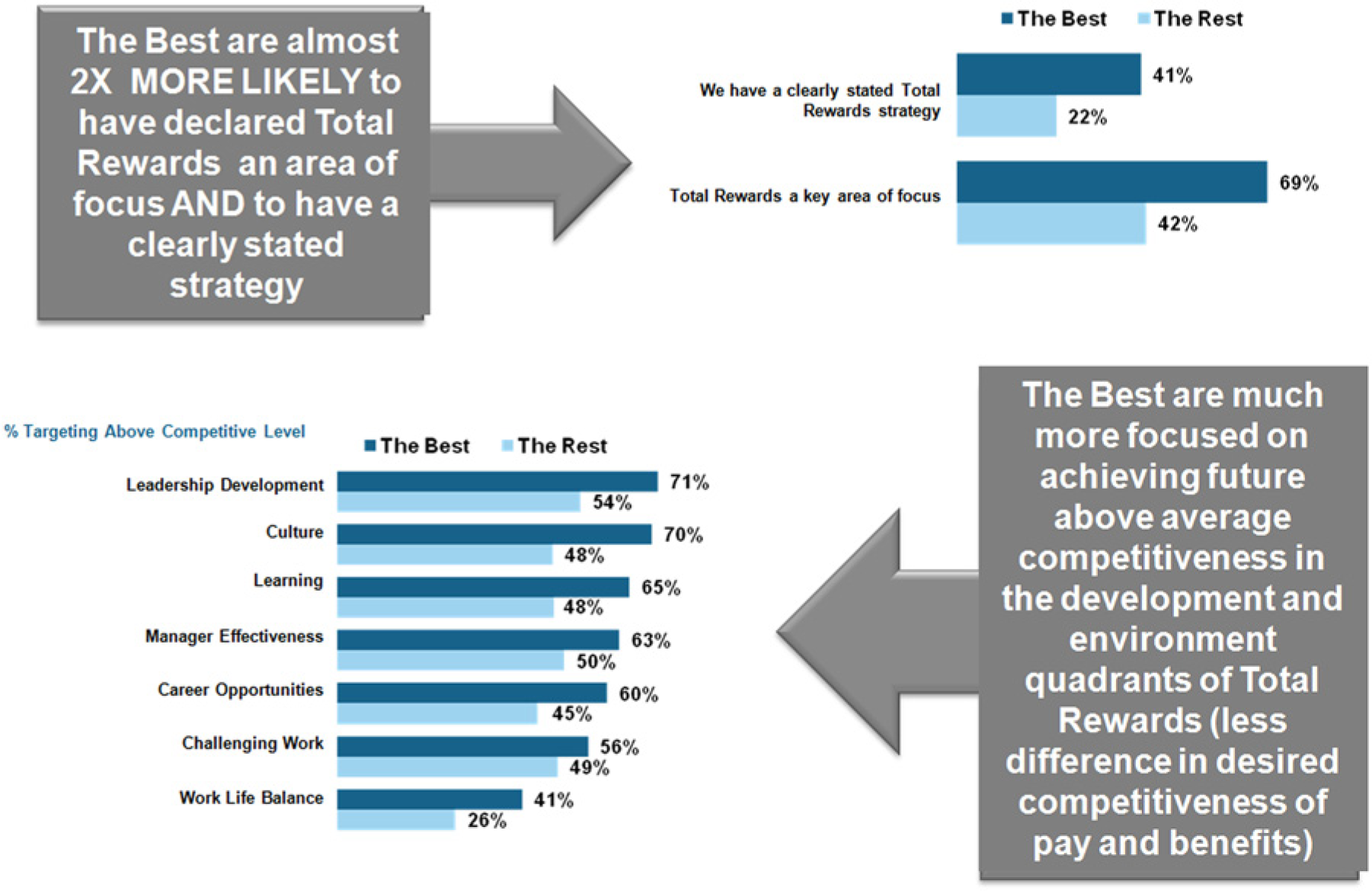
High-performing companies are more likely to articulate a total rewards strategy and differentiate themselves on nonfinancial rewards.
There is still what we regard as a somewhat turgid, largely academic debate on the relative influence of financial and nonfinancial rewards in engaging staff. Yet it seems obvious to us from many research studies and consultancy assignments that aspects of both are needed, as part of the “bundle” of management practices required so as to fully engage a large and diverse workforce. And the role of pay and financial rewards should not be underestimated, particularly in the current economic climate.
Aon Hewitt’s engagement database shows that pay has risen in relative importance during the economic recession to being the third most important explanatory driver of employee engagement levels globally and in Europe, where living standards in many of the countries have been under threat over the past 4 years from pay increase below increases in the of cost of living. In addition, our analyses show strong relationships between the key dimensions of pay that are assessed in our engagement surveys and the levels of engagement and performance.
Figure 5 illustrates that in the best performing companies in our indices, employees have far better perceptions of the fairness and competitiveness of their rewards, as well as of the links between pay and performance and their perception of being recognized for their contributions.
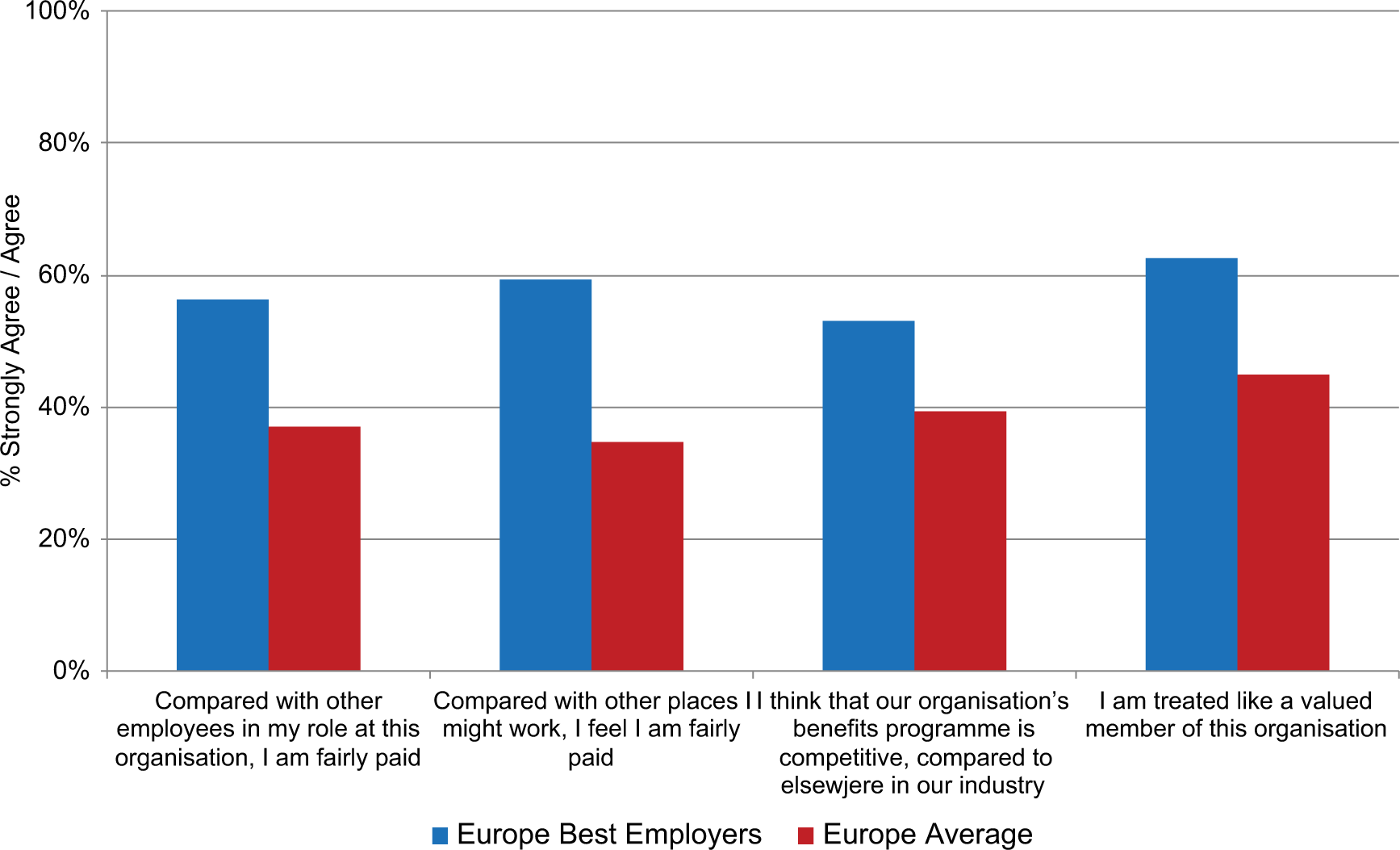
Employees in better performing companies have more positive perceptions of pay.
Beneath these macro analyses, however, the importance and weighting on each aspect of rewards required to maximize the engagement levels of a workforce vary according to the organizational goals, culture, workforce mix and a host of other variables in each employer. This is consistent with wider research on the links between HR practices and performance, which finds that it is the total “bundle” of practices that is important in reinforcing performance rather than any one practice independently. 27
For example, IES research in the NHS, 28 which has over 1 million employees, found that feeling valued and involved had the strongest impact on overall levels of employee engagement. Many aspects of HR management and the work experience influenced this, including pay and benefits, family friendliness and flexibility, quality of first-line management and perceived levels of teamwork and cooperation: see Figure 6. But the emphasis on each of these varied significantly according to the size and type of NHS employing institution.
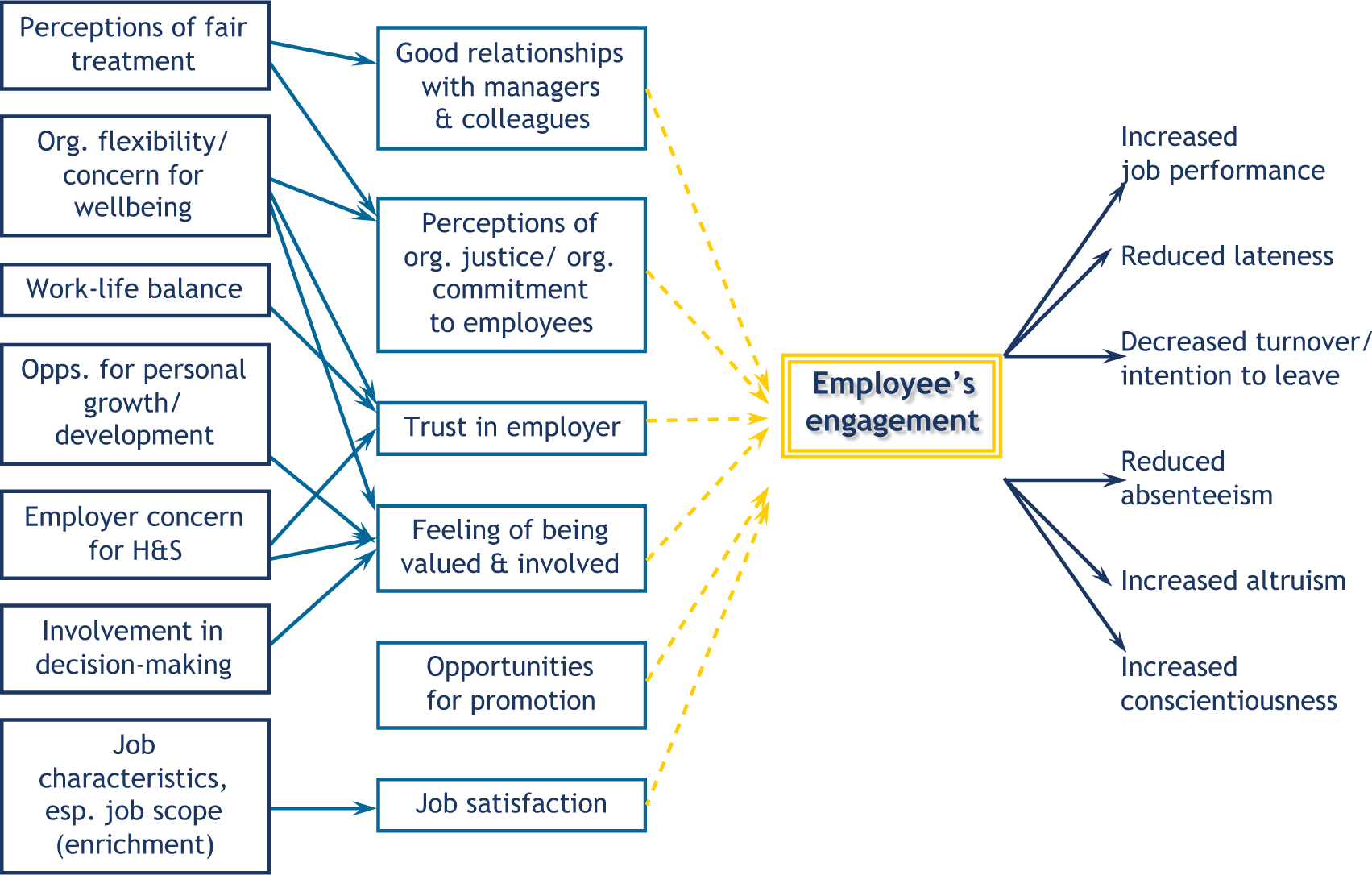
The wide range of influences on engagement found in Institute for Employment Studies’ health sector research.
As such, segmentation and choice of employment “deals” and the exact mix of rewards seem critical in many large, multifunctional and multinational employers; different employees will be fully engaged by different factors. In addition, these factors may vary as an employee ages. Moreover, different drivers and rewards may help in initially attracting and engaging employees from those that then sustain the engagement and enhance it over time.
Aon Hewitt’s engagement research shows significant variations in the determinants of employee engagement by country, sector, function and types of job. In Figure 7 we show these variations by generation in the workforce. Although career opportunities and organizational reputation are the most important drivers for all generations, possibly enhanced by the difficult economic climate of recent years, below these we see some significant variations in factors and importance of them by age-group.
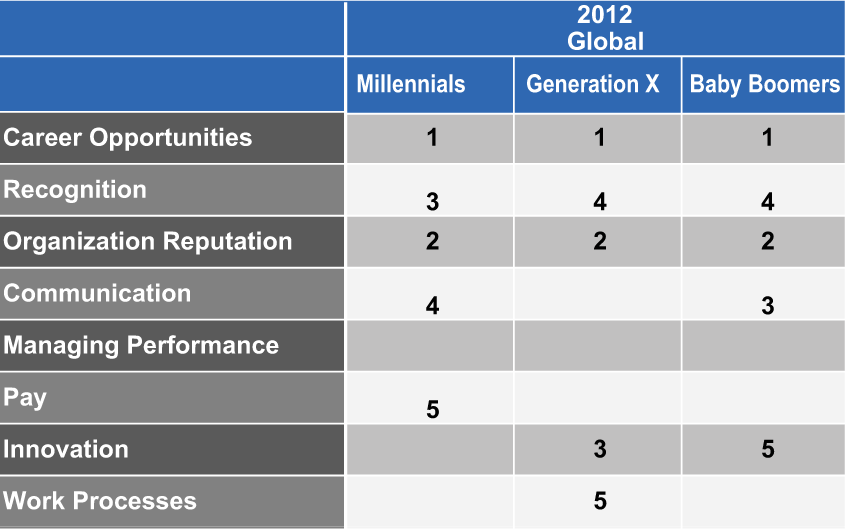
Variations in engagement drivers by generation.
Unpublished, qualitative work carried out by IES in London that looks at local government backs this up. It shows that there are clear differences in what motivates staff, particularly accounted for by grade, but also by gender at lower grades. Thus, for example, female manual workers emphasized the fit of their working hours with their domestic situation as a primary goal, though they were also sensitive to wage rates with limited loyalty to their employer. The latter condition was also evident among many young professionals who put skills development and career enhancement on the top of their reward list. Middle-ranking and senior employees were more driven by the purpose of the organization, though this applied also to residents of the borough (cutting across all grades). The NHS research reported above also showed variations in employee engagement by occupational group with managers being more organizationally engaged than doctors and other professional staff: see Figure 8.
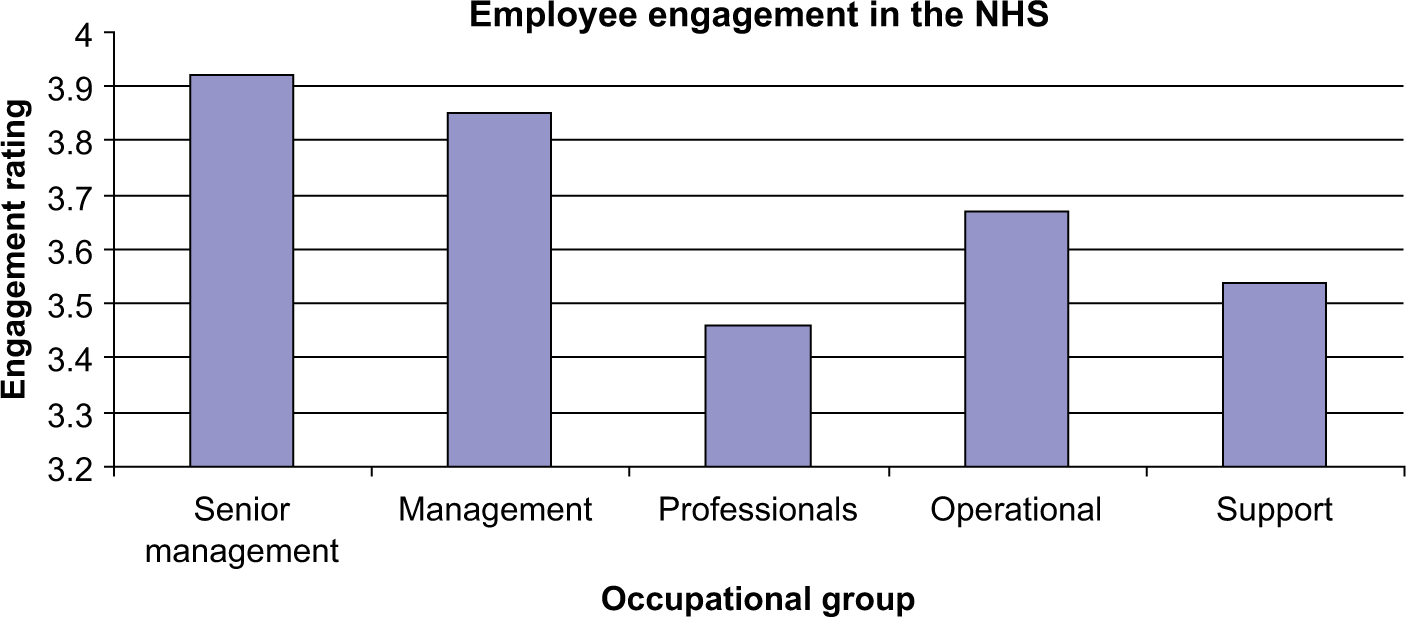
Engagement varies by occupational group.
These findings on the reward–engagement–performance relationship reinforce the proponents of the “best fit” rather than universal “best practice” models of HR and reward management. That argues for tailoring the HR and reward approach to each particular organization rather than just following market practice and “sector convoys.” But they also emphasize that the “fit” needs to be not just with strategic business requirements but also with the types and needs of each workforce and its makeup. Personal as well as organizational choice may also be important, therefore, in allowing employees to determine their own package. Individuals place different values on different aspects of rewards to each other, and these valuations change over time.
A number of research studies on flexible benefits have shown that they can positively influence employee perceptions of the financial and nonfinancial attractiveness of their reward package. Barber, 29 for example, found that the introduction of flexible rewards in a financial services company increased employee engagement levels.
Before the recession there was talk of the “mass customization” of rewards, especially benefits, to address the nature of these sorts of differences. The problem is that this a time-consuming exercise in both design and execution such that, with more limited funds, organizations have been less keen to get into this detail, happy to spend all their money on across-the-board increases. Some companies have even ignored performance disparities with so small a budget for increases. 30 The fact remains that many organizations still know and respond better to variations in customer needs than they do to employee needs.
Don’t Just Survey, Take Action!
So the linkages between employee rewards and engagement are complex and multidimensional and should be analyzed and understood in each organizational context. One current issue is that organizations are so obsessed with benchmarking and comparing their employee engagement score on each dimension with their sector “norm” that they accept standardized survey instruments from their external provider. This limits the opportunity to explore their distinctive challenges and understanding of how the different workforce groups tick. Mindful of securing a decent response rate to a survey, there is a limit to the number of extra, organization-specific questions that can be asked.
This is especially true of reward questions, which are often so superficial as to be meaningless. Moreover, many organizations contract out all survey analysis to their provider, accepting standard reports that may not dig into important differences between employee groups in their attitudes to employment conditions and reward. Could organizations make use of structured focus groups or online crowd-sourcing techniques to obtain qualitative perceptions on the more complex and sensitive topics to supplement the survey results? For example, Unilever successfully used crowd sourcing to get feedback on their benefits for expatriate staff. Could organizations do more to integrate their various data elements (e.g., on absence, retention, customer satisfaction as well as employee engagement survey scores) to build a more comprehensive and nuanced picture of the dimensions of employee engagement and its organizational effects?
This though assumes that all organizations are indeed asking employees their views. The recession has seen some major corporations, unfortunately, postponing or cancelling their annual engagement surveys. This may be a matter of cost, but it is also because of fears of getting a negative response to recession-imposed change. We would argue this is precisely the time to test the organizational temperature and be prepared to respond to any symptoms of distress. We need to question if employers generally do more than take note of the answers and act on the knowledge from engagement surveys, so as to design reward and other HR practices to take account of the learning from these surveys.
The case then needs to be made not just to survey employees and analyze the results, properly, but also to act on the results.
Recent evidence suggests that the economic downturn has definitely widened the “say–do” gap on employee engagement. Despite the already-referred-to evidence on the links between employee engagement and corporate performance, and also indications that those that act on engagement survey findings subsequently see increases in their employee engagement scores, Aon Hewitt’s latest data 31 indicate that while more than 70% of employers report that they collect information on employee engagement levels, only one in five have concrete action plans designed to raise those scores.
In fact, we find that there is growing cynicism evident in employee focus groups that engagement survey findings will be acted on, and our survey results show that in the United Kingdom, in firms with higher engagement scores there is more confidence that action will be taken to address identified problems and issues, reward and otherwise: see Figure 9.
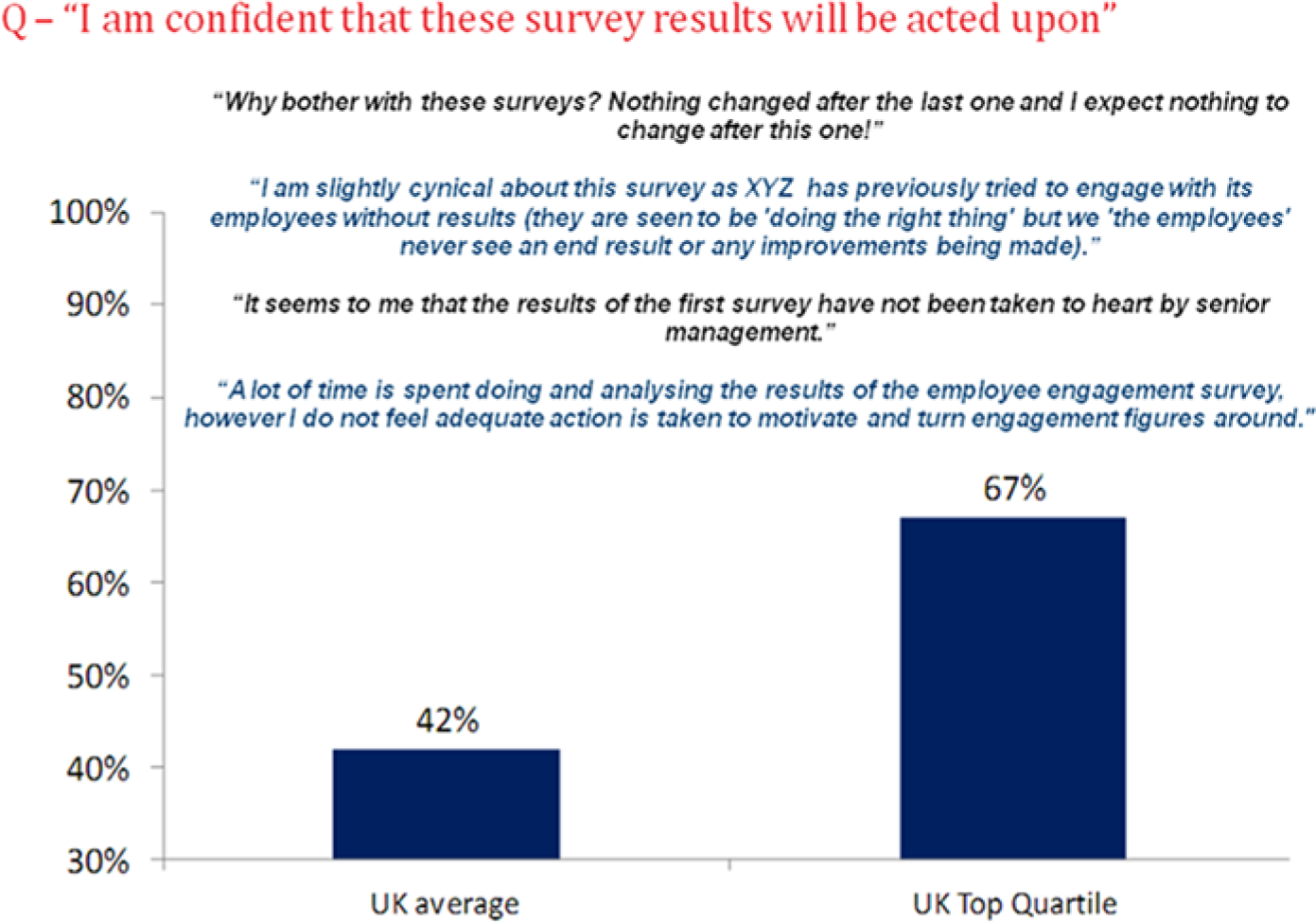
Employees in companies with higher engagement scores are more likely to believe that survey results will be acted on.
Again the tough economic situation for employers as well as employees may have something to do with this. Aon Hewitt’s Ken Oehler comments, “While some aspects of the work experience have improved in North America, the overall drop in engagement levels could indicate that companies have not been sufficiently investing in talent” and in the careers and development opportunities of their employees.
And a similar “say–do” gap is identifiable in terms of total rewards approaches, initiatives and investments. Aon Hewitt’s Total Rewards Survey 32 found that 88% of the over 700 U.S. employers included in the study regarded aligning total rewards with business strategy as a critical priority. However, 75% of them did not have a total rewards strategy, only 29% have reliable data on the reward preferences of key employee groups and just 10% use total rewards in practice as an effective differentiator.
These data should be seen against a background where employee cynicism extends beyond doubts that engagement survey results will be used to change policy. Tahmincioglu, 33 for example, contends that nonfinancial recognition (or total reward) schemes can appear to employees to be empty attempts to appease them when promoted in a period of low pay increases, downsizing and restructuring. Such approaches can potentially backfire, causing more demotivation than motivation.
As we highlighted in our original article, employers can follow a four-step model (see Figure 10) toward taking actions that can use their rewards policies to more effectively leverage employee engagement and performance:
Examine the business strategy and organization culture of the firm, looking at the gaps between business requirements and existing employee characteristics, including levels of engagement.
Construct an engagement model for your organization that is reflective of the different “deals” across the workforce and how rewards affect engagement.
Design and amend reward programs to leverage these different aspects of engagement for the various staff groupings.
Implement and monitor the effects of rewards on engagement and adjust and adapt as required over time.
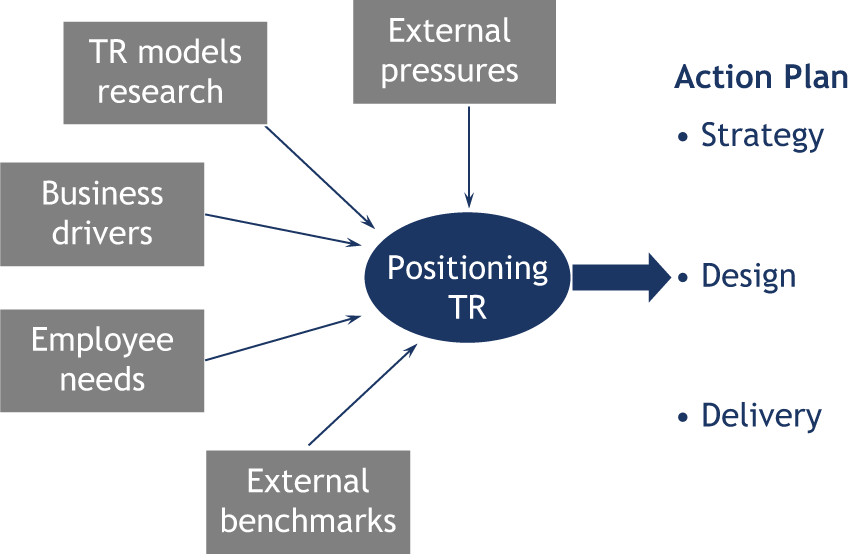
A total rewards approach to successfully engaging employees requires a clearly articulated strategy and action/delivery plan.
Acting on Engagement and Rewards: A Brief Example
A major U.K. financial services organization has recently been undertaking a major review of its reward strategy, driven by the intense economic and regulatory pressures of the past 4 years. Customer service is now a key strategic priority going forward and the executives truly believe the research evidence that engaged employees deliver better customer service and higher financial returns. But how to use the bank’s pay and rewards so as to best reinforce those levels of engagement to drive higher performance?
The bank’s most recent annual employee engagement survey in fact revealed a shortfall of some 15% against U.K. market norms. But the generic nature of the questions in the survey meant that little could be deduced in terms of the effects of pay and rewards on engagement. They therefore conducted a more tailored mini survey of a sample of more than 6,000 of the bank’s employees, accompanied by focus groups with different grades and functions involving several hundreds. Some of the survey results are shown on Table 1.
Some of the Findings From the Reward Survey in a Major U.K. Bank.
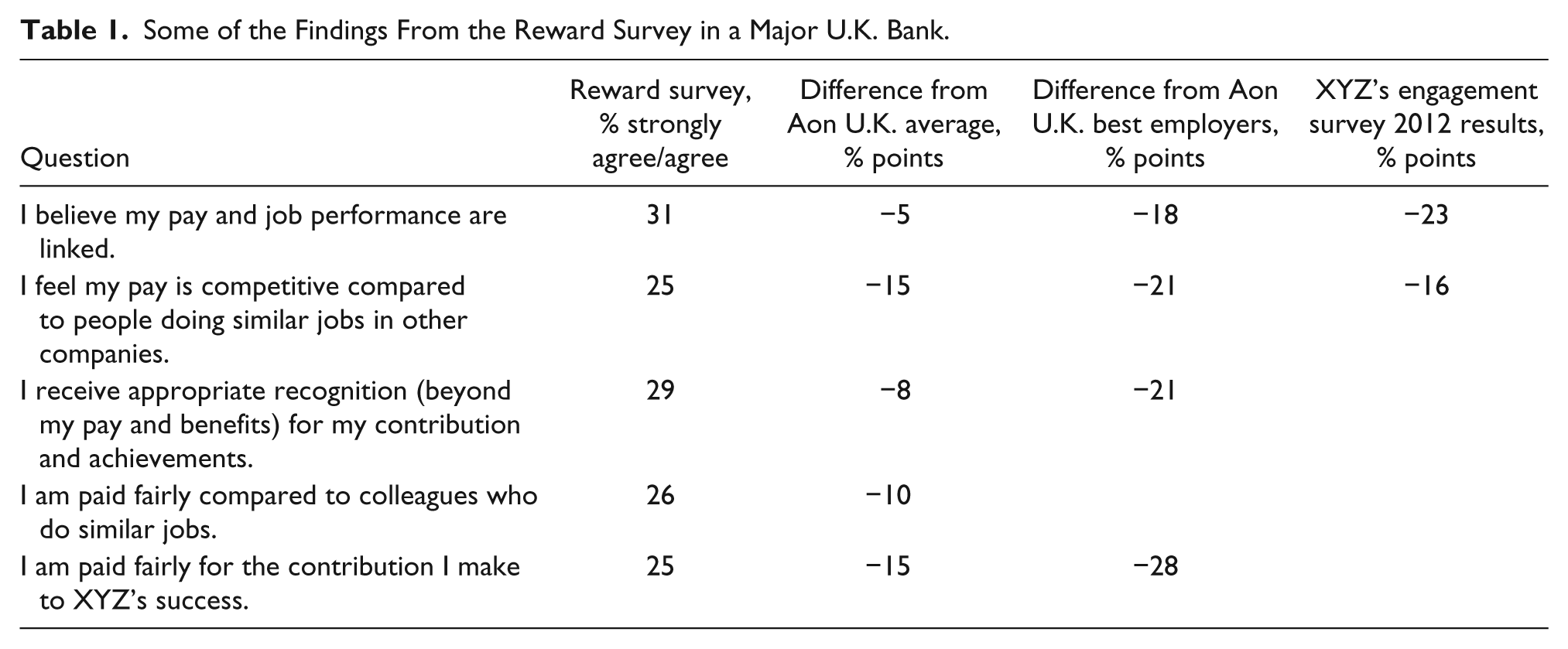
The survey highlighted that the bank’s spending for rewards was not being fully optimized from the perspective of employee engagement. Only a third of employees had a positive perception of their rewards, despite the provision of a generally market competitive package, with particular weaknesses in the perceptions of the links between performance and rewards. And only 16% agreed that the package was sufficiently compelling to attract and retain key talent.
As a result, the bank is now undertaking a major program of reforms including greater consistency in the design of the pay structure, improved and more differentiated rewards for high-performing and high-potential staff and a restructuring of the benefits package, as well as a major initiative on rewards communications.
Conclusions on Engaging Rewards
Rewards and total rewards approaches have major potential to positively affect employee engagement levels and corporate performance, in a world in which 4 out of every 10 employees are not engaged. To achieve this, we need to rapidly abandon a simplistic and universal concept of employee engagement and superficial analysis focused on survey completion rates and externally benchmarked scores. Employee data need to be carefully analyzed to understand the nature of engagement and how it influences performance in different employer settings. Often more detailed research will be required on the reward aspects which often are not well covered in general surveys, as in our case study illustrations. Often there will be different employee deals in the same employer.
So the reward packages to help maximize performance and engagement need to be necessarily varied, multifaceted and flexible too. But the good news is that many employers fail to understand how reward influences the engagement of their employees and how this drives better organizational performance. So there is major potential to get grounded understanding of these linkages and especially of how total rewards practices affect employee engagement and hence performance. There is a real opportunity to produce distinctive and segmented employee value propositions that attract, retain and motivate various groups of staff. Rather than simply following the sectoral convoy 34 to produce a “vanilla” reward offering, organizations can mark themselves out in a crowded labor market as Ed Lawler urged so many years ago. 35 As he said back then, “In order to be effective, a pay system must impact perceptions and beliefs in ways that produce the desired organisational behaviours.” The objective has remained the same, but we still struggle to meet it.
While the amount of research into the linkages between rewards and engagement is thankfully growing, we would highlight some of the following as questions for further research and future practice to explore profitably:
Does a highly automated, low-skill job organization model actually engage employees to perform highly? Traditional motivation research says autonomy is a key factor, yet McDonalds, for example, has very high engagement levels, reinforced by distinctive rewards—see case study.
Does paying a living wage, above the national minimum wage pay off in terms of added engagement and performance, in return for the additional costs?
How much do the economic context and state of the labor market affect levels of employee engagement and perceptions of the different elements of reward?
Despite the need for tailoring, are there universal engagement truths, for example, bundles of people management practices, the importance of leadership and quality of good local management, and so on.
Are flex packages generally engaging, especially over the longer term?
How do individual and collective rewards vary in terms of their impact on engagement and performance—for example, are high individual incentives a replacement for more broad-based engagement?
How does increasing pay dispersion within companies affect workforce employee engagement?
How do you effectively communicate a total reward approach in a way that avoids a cynical response that it is no more than a gimmick to justify low pay awards?
Footnotes
Declaration of Conflicting Interests
The authors declared no potential conflicts of interest with respect to the research, authorship, and/or publication of this article.
Funding
The authors received no financial support for the research, authorship, and/or publication of this article.