



Abstract
Generation Z is the youngest and newest entrants into the workforce. However, confusion about their characteristics, work values, and reward preferences hinders effort to attract, recruit, and retain this generational cohort into public sector organizations. Accordingly, this study investigates effective reward strategies for recruiting and retaining Generation Z into public sector organizations. I used an evidence-based research approach and an aggregative systematic review as the study methodology. The evidence curated from 32 studies reveals how the background and life experiences of Generation Z influence the importance they assign their work values, reward preferences, and how they prioritize rewards in terms of their employment decisions. Additionally, gender also influenced the importance Gen Z assigned to specific rewards. Overall, Gen Z’s strong attractiveness to specific extrinsic and intrinsic rewards makes public sector organizations a likely employer of choice and offers managers a viable strategy for attracting, recruiting, and retaining the youngest generational workforce.
Keywords
Public sector organizations face critical human capital challenges—the tidal wave of employee retirement owing to aging and a worsening youth gap resulting from Millennials’ disinterest in public employment. 1 In view of the above mentioned, there are growing concerns among public sector leaders about the diminishing role of young talents in public sector organizations, particularly the federal government. 2 According to the United States (US) Office of Personnel Management, 3 only 16% of the federal workforce is under 35 years as opposed to 45% above 50 years. In today’s war for talents, public organizations struggle to compete with private sector companies that typically offer high salaries and flexible work schedules to their younger workforce.4,6 Data from the US Bureau of Labor Statistics report 7 showed that the Millennial workforce composition in government was 25.9 compared to 37.8% in the private sector. Consequently, public sector organizations are confronted with retaining a considerably younger generational workforce (i.e., Millennials or Generation Y), whose job hopping activities present severe human capital challenges to the sector.4,8
Accordingly, in a bid to address the sector’s current employment needs, public sector leaders have focused their attention on Generation Z (Gen Z), the newest and youngest generation of labor participants. In the United States, Gen Z accounts for about 27% (68 million) of the country’s population. The current Gen Z workforce composition is between 5–10%. 9 An increasing number of these generational cohort members who have completed their education will enter the workforce in 2020. 9 Though there are differing views on the specific birth range of this generational cohort, most generational researchers agree Gen Z’s birth years fall between 1995 and 2015.10–14
Characteristics of Generation Z
The Generation Z cohort (Gen Zers) is also known as “post-Millennials,” “NextGen,” “iGen,” or “TrueGen.” Gen Z’s experiences of the post 9/11 era include terrorism, school shootings, and global pandemics. Those experiences coupled with the devastating effects of the great recession on their families have shaped their outlook on life and made them more embracing of change, adaptable, realistic, and highly driven.11,15 Further, Gen Z is known to be the most racially and culturally diverse generational cohort in the United States. 16 Gen Zers are globally minded and have such a profound interest in social justice and environmental issues.12,17–19
Furthermore, post-Millennials are considered the “phygital” generation because being born into a digital era, they have greater access to technology, mobile phones, IPads, video games, and social media than previous generations. 11 Their ultratechnology and social media savviness are why Gen Z is known as the true digital natives. 18 Their overreliance on technology and social media for information has made Gen Zers more eager to learn and be creative and highly independent.15,20 Gen Z’s strong sense of independence has been attributed to their upbringing. They were raised by Generation X parents, who instilled in them the “do-it-yourself” mindset. 11 Further, Gen Z is considered more innovative and entrepreneurial minded than the previous generations because they live in an era of booming entrepreneurship. The entrepreneurial successes of Facebook’s Mark Zuckerberg, Tesla’s Elon Musk, and Amazon’s Jeff Bezos are an inspiration. 21
Multigenerational Workforce
Summary of Generational Characteristics and Reward Preferences.

Note. Engaging a multigenerational workforce: practical advice for government managers. IBM Center for The Business of Government. Source: Adapted from Hannam and Yordi. 24
To attract, recruit, and retain this new generational cohort into the multigenerational workforce, public organizations must understand the forces that drive their work values, workplace needs and expectations, and how their reward preferences may be different from those of the other generations in the public sector workforce. 25 Previous research has found a link between generational work values and the category of rewards to recruit and retain a generational workforce.26,27 Work values are personal and professional goals people seek to realize in their work, hence directly impacting their work-related choices and behavior. 107
Talent Management Challenges of Generation Z
Some authors are of the view that unlike the generations before them, the digital-centric Generation Z represents the most significant generational shift the workplace has ever encountered.12,28,29 However, Gen Z poses a challenge to organizational leaders and managers in terms of identifying their work values and reward preferences to enable human resources (HR) professionals and managers to devise new strategies and adjust old methods to recruit and retain them. 108 The difficulty, for managers, lies with the lack of consensus on the specific birth years of Gen Z, their characteristics, and work values as expressed in empirical literature. 30
Some studies consider Generation Z to be a part of Generation Y and thus share the same characteristics, work values, and reward preferences of the latter.12,31 On the other hand, some authors argue that the post-Millennials have unique characteristics and work values; therefore, organizations should develop targeted methods to recruit and retain them.11,13,25 Some authors believe Gen Zers possess distinct characteristics such as digital technology savviness, adaptability, realism, diversity, and competitiveness, which set them apart from other generations.11,15,32
The evolving dynamics of today’s work environment make it imperative for organizations to prioritize worker attributes’ issues such as technology savviness, adaptability, and innovation capacity. Gen Z is entering the multigenerational workforce. Given their characteristics and values, the question that begs to ask is whether public sector organizations are likely to offer a better fit for the youngest generational workforce who may have different work motivations. Also, considering the catalytic role that this digital-centric workforce could play in public sector transformation, public sector organizations need to recruit talent from this generational cohort and retain them through responsive human resource management (HRM) policies.
Reward Systems
Reward systems are some of the most notable recruitment and retention mechanisms in talent management. Reward strategies are systems and policies that organizations employ to elicit positive employee workplace attitudes required for enhanced employee job performance and retention. 33 Public sector organizations administer intrinsic and extrinsic rewards to motivate and induce attitudinal changes in individuals. 34 Intrinsic rewards, mostly intangible and psychological, are designed to elicit personal satisfaction from work. 35 On the other hand, extrinsic rewards are tangible rewards that organizations offer to induce specific outcomes or to realize specific goals.34,35 Intrinsic rewards include meaningful and challenging work, autonomy, and contribution to society. Extrinsic rewards include elements such as fringe benefits, advancement opportunities, job security, and work conditions. 35
In modern times, most organizations use total reward systems to attract, motivate, and retain young talents.36,37 Total reward system is widely used by private sector organizations. 38 The private sector’s total reward system consists of five major elements: remuneration, benefits, work–life balance, performance and recognition, and career development opportunities.39,40 The public sector has not fully and widely adopted the total reward system because factors such as market demands, public accountability, high trade union membership, and legislation dictate the sector’s reward program design and allocation.35,38,41 Nevertheless, some elements of the total reward system, such as work–life balance, career advancement, recognition, are already being deployed by many public sector organizations.38,39
The traditional public sector reward program includes the following extrinsic rewards: pension schemes, health insurance systems, and security of tenure. 42 Plant 109 argued that public sector reward systems focus on intrinsic job attributes such as career advancement, fair treatment, employee engagement, and recognition for service and commitment, rather than financial benefits. The motivational value of rewards may not be the same for all generations. 43 Thus, the specific problem for organizational leaders and HR professionals is what extrinsic and intrinsic rewards are attractive to Generation Z cohort members. How effective would such a package be for attracting, recruiting, motivating, and retaining the emerging workforce?
A review of the literature on the attraction, recruitment, and retention of Generation Z is necessary to obtain a full and clear understanding of the topic and identify unanswered questions. However, there is a gap in empirical research on the issue of fitness, or lack of it, between the Gen Z cohort and public sector employment. The review of the state of the literature reveals Gen Z characteristics and work values to be the dominant interest among researchers (e.g., Addor 17 ; Half 29 ; Kirchmayer & Fratričová 44 ; Meret et al. 45 ; Su et al. 46 ). To the best of my knowledge, no studies have investigated the reward preferences of Gen Z and how they influence the attraction, recruitment, and retention of the newest generation into public sector organizations.
The purpose of this study was to examine the reward preferences and effective strategies for attracting, recruiting, and retaining Gen Zers. Thus, the questions guiding this research inquiry are: What are the reward preferences of Gen Z and what effective strategies can public sector organizations deploy to attract, recruit, and retain the Generation Z cohort members? The investigation into the reward preferences of Gen Z also involves exploring how the importance they assign to their work values influences their employment decisions. This study consists of an introduction, methodology, results and analysis, and implications and conclusions. The methodology section features data collection and analysis processes. Next, the result section discusses the descriptive themes in the synthesis process. Then, the discussion section offers interpretations of the key findings. The final sections provide the implications and conclusions, as suggested by the study findings.
Theoretical Frame: Strauss and Howe Generational Cohort Theory (1991)
This theory, also known as the fourth turning theory, suggests that historical events, social and cultural backgrounds, and other personal life experiences shape each generation’s peer personality. 47 Strauss and Howe 48 posited that shared values, beliefs, behaviors, and membership characterize the generational persona (peer personality) of members in the same generation. They also assert that forces which shape each cohort are more dominant during an individual’s childhood and adolescence and even provide a lens through which to interpret later life experiences.25
Ryder
49
has criticized Strauss and Howe’s generational theory for positing cohort-based generalizations. Notwithstanding the criticisms, the academic and management literature widely cite Strauss and Howe’s theory .50,110 For instance, Brown Crowder utilized Strauss and Howe’s
48
GCT to explain differences in generational work values in a multigenerational workplace. From a management perspective, Strauss and Howe’s theory may help managers understand generational characteristics (traits) and values and how they influence each generation’s work values and reward preferences.51,52 Figure 1 illustrates the relationship between generational peer personality and their reward preferences. Theoretical framework.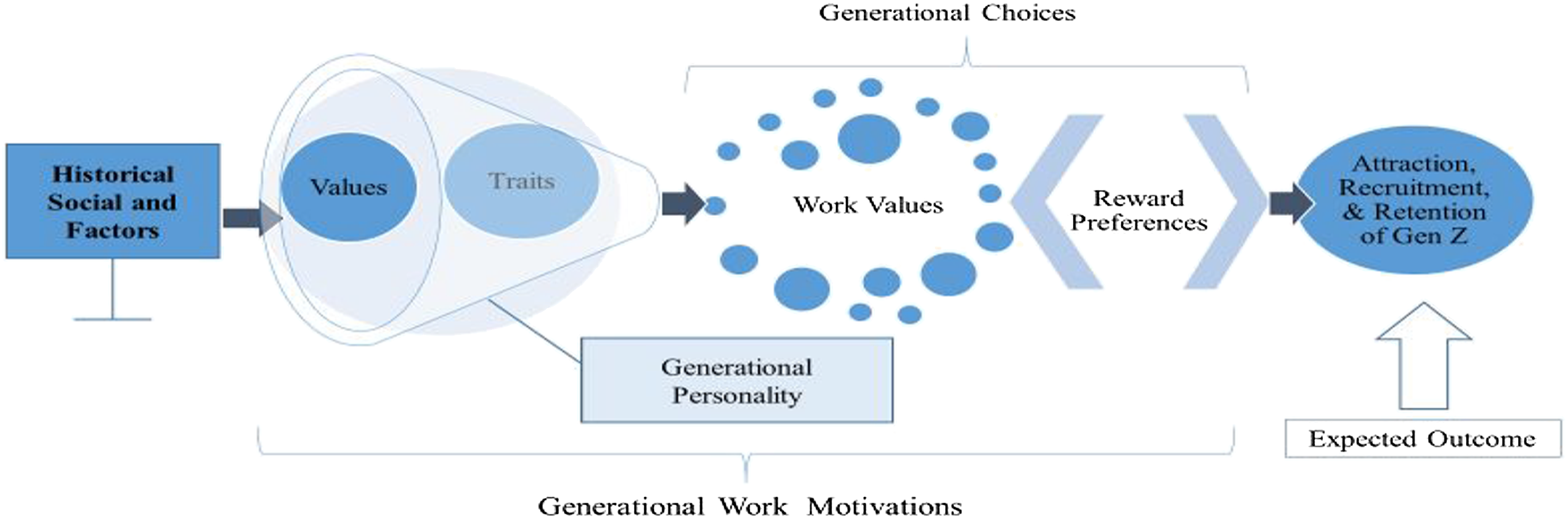
The theoretical framework is vital in helping to answer the review question because it highlights how historical events and sociocultural contexts shape generational choices in terms of their work values and reward preferences. Generational personality guides and influences employer–employee interactions in terms of employees’ work motivations (work values, work expectations, and needs) and how to meet those needs. 53 Also, this framework offers a theoretical lens into explaining and interpreting this study’s results.
Methodology
I employed a systematic review, an evidence-based research framework, as the study design. 54 Khan, Kunz, Kleijnen, and Antes 55 observed that a review is systematic if it is “based on a clearly formulated question, identifies relevant studies, appraises their quality, and summarizes the evidence by the use of explicit methodology” (p. 2). I also utilized an aggregative review approach, which allowed adding up findings/results from multiple studies with similar data to address the research question. 56 The primary rationale for choosing a systematic review as the study methodology was that the rigor and transparency inherent in the review process contribute to the evidence’s quality and dependability. 56
Systematic Review Process
I followed the five-step SR process recommended by Khan et al.
55
The five significant steps are the following: Formulating review question, identifying relevant studies, appraising the quality of studies, summarizing the evidence gathered through synthesis, and interpreting the review findings.
Identification of Relevant Evidence
I used ABI Inform, Business Source Complete, and Scopus databases for the bibliographic search. I electronically retrieved the published studies from the University of Maryland Global Campus’ library system. I queried Google and Google Scholar to locate both unpublished and published data. The studies retrieved were mainly peer-reviewed articles and some grey literature to avert publication bias.
57
To find articles, I constructed search statements based on the following keywords: “attracting,” “recruiting,” “retaining,” “Generation Z,” and “public sector organizations.” The search terms used included synonyms and related terms of those keywords. Thus, to ensure a transparent, reproducible, and verifiable study search, I used a combination of key search terms, Boolean operators (“AND” and “OR”), the truncation symbol (*), and parentheses () to query the selected databases.
58
The following are examples of the search statements: (recruit* OR attract* OR retain* OR hire* OR hiring) AND (“public sector*” OR “public service” OR “civil service” OR “civil servant” OR federal OR government) “Reward strategies” OR incentives AND “Generation Z” “Igeneration” OR “Gen* Z” AND “public sector” OR “federal jobs.”
To identify relevant studies, I applied the inclusion and exclusion criteria such as time frame (2010–2019), language (English), study population (Gen Z), nature of the intervention (rewards/incentives), context (public sector organizations), and outcomes (attraction, recruitment, and retention of Gen Z).
The study search yielded 69,139 records. I applied the exclusion criteria which included English as publication language, publication date between 2010–2019 and attraction, recruitment, and retention as study outcomes. I removed a total of 65, 220 studies that did not meet the eligibility criteria at this phase. The remaining 3919 underwent a two-phase screening stage. For the initial screening, I applied the eligibility criteria to the selected studies’ titles and abstracts and removed 3667 duplicate publications whose titles and abstracts were unrelated to the research question. The second screening phase focused on assessing the 225 identified articles on their relevance and appropriateness of their research designs to answer the review question. Further, I assessed the eligibility of the retrieved studies against this study’s inclusion and exclusion criteria. The second screening phase resulted in the removal of 222 articles. After an exhaustive study selection process, I found 33 articles relevant and selected them for data extraction and quality appraisal. The selected studies included three studies which I identified through the snowball referencing technique.
Quality Appraisal of the Data Set
Results of Quality Assessment Rating.
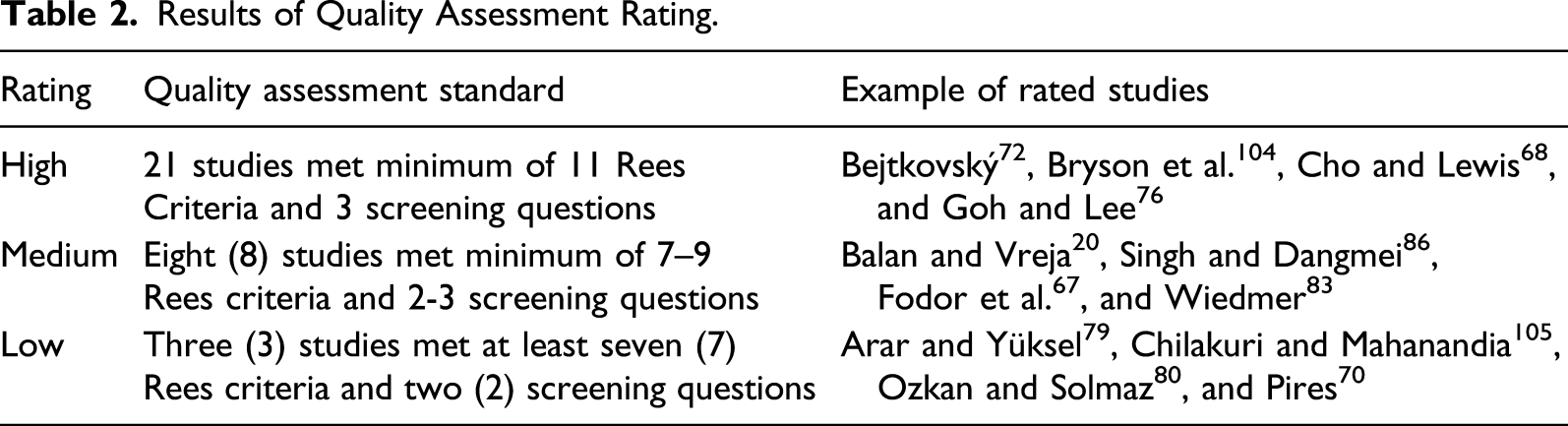
An example of a study with a “low” rating is a methodologically weak study but, to some extent, addresses the review question. It is essential to mention that Montana and Petit’s 111 article, which has a medium rating, was removed because its findings did not address the review question. The final sample of 32 articles comprised 19 empirical studies, three grey literature articles, and one unpublished study (obtained through internet search via Google Scholar). The sample also consisted of 19 studies that used a quantitative approach, 11 studies that used a qualitative approach, and two studies that used a mixed methods approach. Also, 10 of the 32 articles were public administration literature. There was a total of 215, 941 respondents in the included studies. The data extraction process revealed only four of the 32 included studies examined the influence of gender on the importance Gen Z places on specific rewards such as job security, work environment, and supervisor relations (see Results and Table 6 for details). The number of respondents in the four studies was 64,428, of whom 26,536 (41%) were females and 37,892 were males (59%).
Synthesis
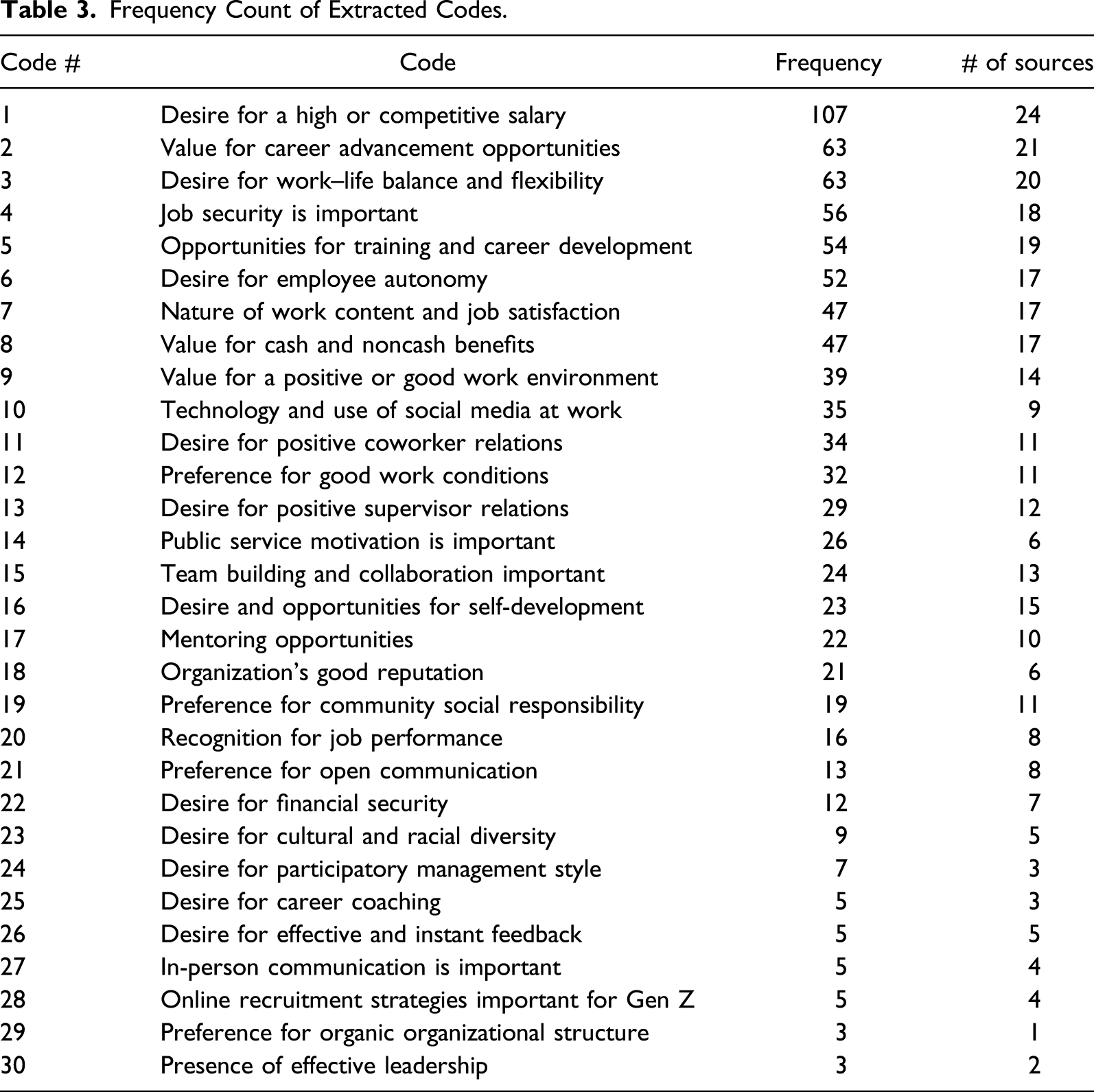
This stage of the review process involves aggregating, integrating, and interpreting all the evidence relevant to answer the review question. 61 Following the critical appraisal, I conducted thematic coding to identify and extract themes and subthemes from the corpus of studies. 62 I adopted the first and second coding cycle process to generate initial thematic codes. 63 The first cycle coding resulted in six thematic concepts: salary, career advancement, work–life balance and flexible work, supervisor support, training and career development, and job security. A thorough examination of the result and discussion sections during the second cycle coding yielded four thematic codes, including mentoring, feedback system, the nature of work content, and employee autonomy.
Frequency Count of Extracted Codes.
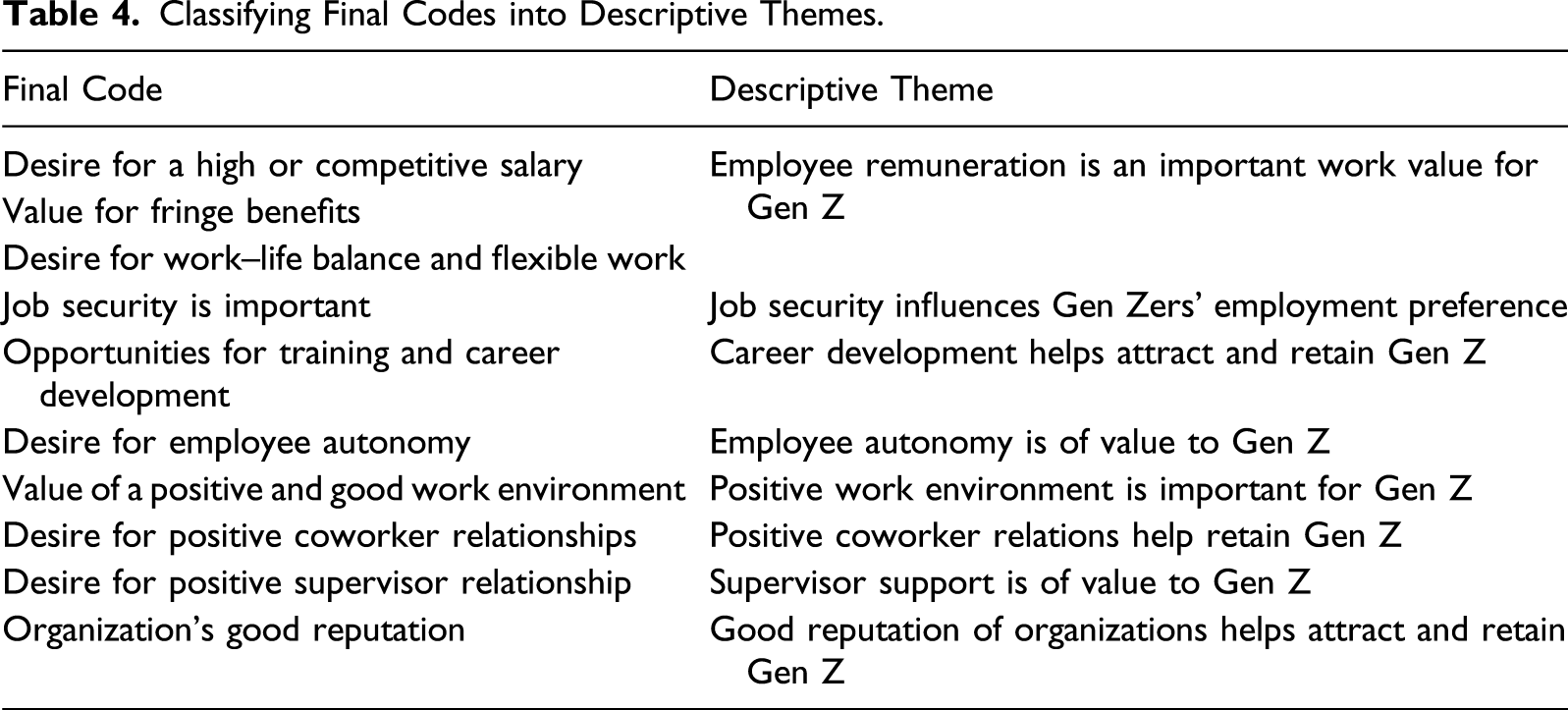
Classifying Final Codes into Descriptive Themes.
Results: Descriptive Themes
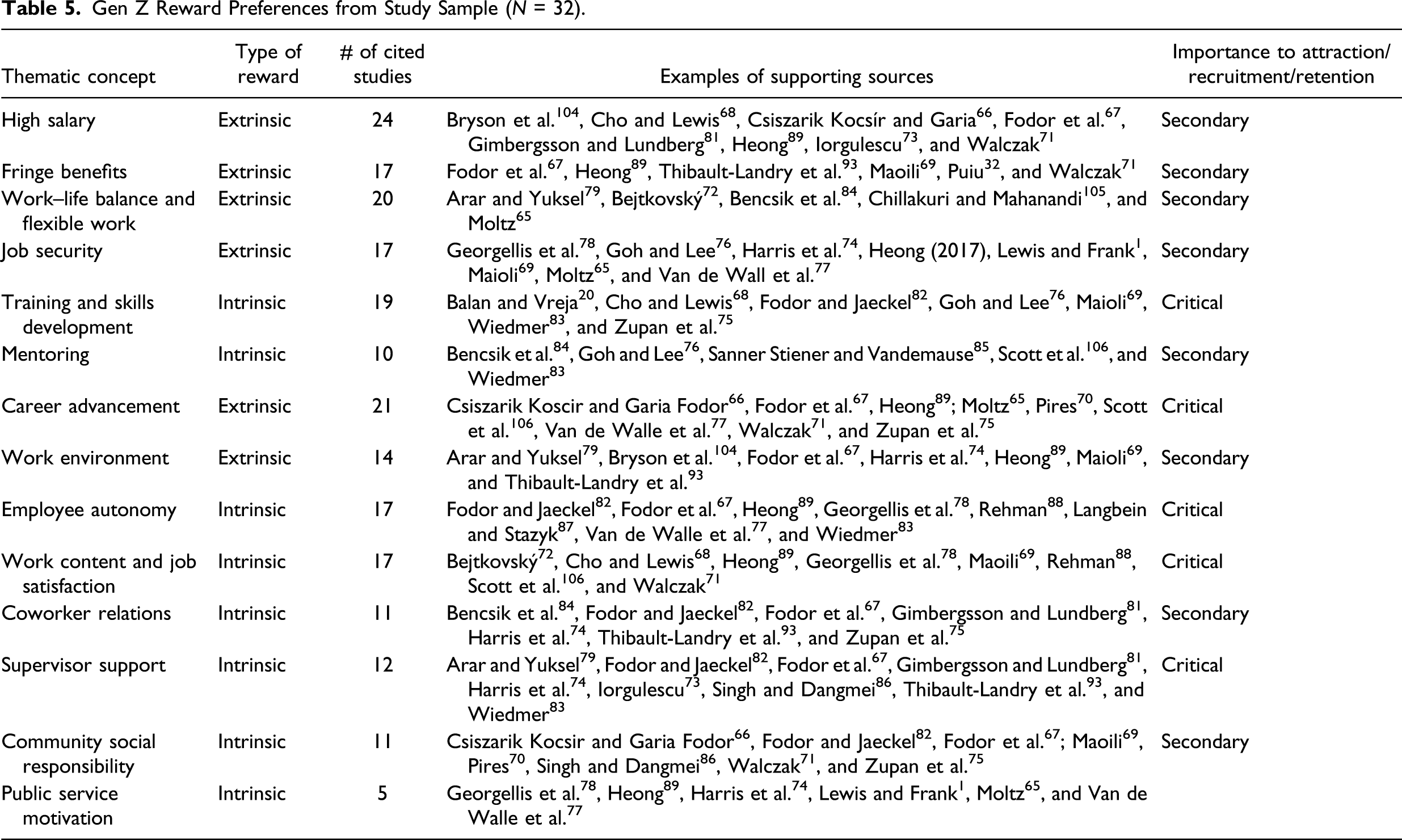
Gen Z Reward Preferences from Study Sample (N = 32).
Gender-Based Difference in Importance of Six Rewards.
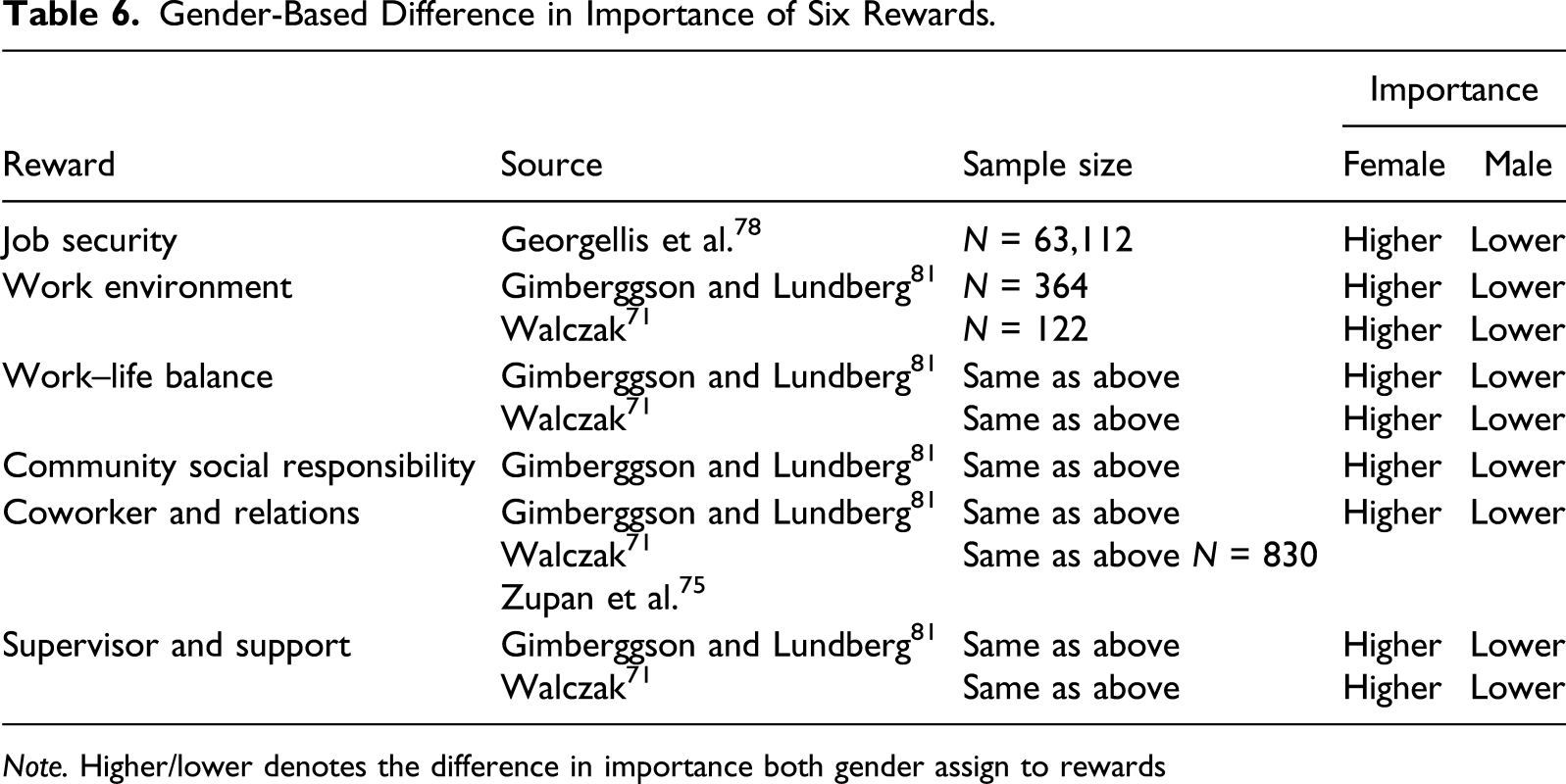
Note. Higher/lower denotes the difference in importance both gender assign to rewards
Table 6 shows the gender-based comparison of the value male and female respondents in the study sample assign specific intrinsic and extrinsic rewards. I obtained the data for Tables 5 and 6 by assessing and aggregating the results of each article in the study sample during the data extraction and appraisal processes.
To ensure clarity, I have grouped the results of the descriptive themes under the extrinsic and intrinsic reward dimensions. The rationale for selecting the intrinsic/extrinsic category is that they specifically speak to factors that shape individual behavior or motivations.42,65 More so, the intrinsic/extrinsic characterization reflects the nature of reward strategy used by the public sector. 35 Given the aggregative synthesis approach used in this study, I provided examples of included studies that supported specific themes and cited sources to support the results to create a preponderance of evidence relative to the themes being discussed.
Extrinsic Rewards: Gen Z Reward Preferences
Desire for High or Competitive Salary
Twenty-four (n = 24) of the 32 included studies examined the value of high salary to Gen Z. As shown in Table 5, the reviewed studies reported that high salary was an essential work value that played a role in their choice of employers. For example, Csiszárik Kocsír and Garia Fodor 66 attested that a high salary is the critical driver of Gen Z employment decisions. Further, 89% of study respondents (N = 1178) in the study by Fodor et al. 67 , 60% of respondents (N = 156) in Iorgulescu’s study (2016), and 59% of survey respondents (N = 111) in the study by Puiu 32 ranked high salary as a significant work characteristic. Results from Cho and Lewis’ 68 study (N = 36, 926) revealed “higher entry salaries may both attract more high-quality job applicants and help retain new hires” (p. 19). On the question of the work motives that influence their sectoral choices, the study participants (N = 37,200) from 31 nations mentioned high salary is one of the work motives that influenced their choice of public sector employment. 65 The value the Generation Z cohort ascribes to high salary not only evokes the need for financial security—a desire resulting from the economic challenges their families encountered during the Great Depression.69,70
Value for Fringe Benefits
Seventeen (n = 17) studies from the review corpus examined fringe benefits and their impact on Gen Z’s employment decisions. Fringe benefits are essential work values to Gen Z because they evoke a sense of financial security.70,71 For example, the findings from Beijvoksy’s 72 study indicated that Gen Z respondents (N = 182) highly valued financial bonuses for work done and ranked this type of fringe benefit as one of the most critical work values. Respondents from the reviewed studies stated fringe benefits such as education grants, healthcare insurance, paid leave, and retirement benefits contribute to their decision to choose an employer (e.g., Bejtvosky 67 ; Fodor et al. 72 ; Thibault-Landry et al. 93 ). For instance, in Csiszárik Kocsír and Garia Fodor’s 66 study, respondents stated that though fringe benefits “serve as great motivational factors,… they were not perceived as the most important ones” (p. 72). Iorgulescu 73 supported the view that while they are important to Gen Z, fringe benefits were the least important factors for selecting a full-time job.
Desire for Work–Life Balance and Flexible Work
Twenty (n = 20) of the 32 included studies discussed Gen Z’s preference for work–life balance and flexible work. Walczak 71 explained that the youngest generation’s strong desire for work–life balance reflects their independent nature. For instance, Moltz 65 underscored the importance his study respondents (N = 37,200) attached to work–life balance and their choice of employer. Respondents (N = 1178) in the study by Csiszarik Koscir and Garia Fodor 66 and Pires’ 70 study (N = 65) mentioned that their preference for work–life balance and flexible working schedules might influence their selection of a workplace. Also, respondents (N = 8) indicated that having greater flexibility and work–life balance informed their decision to pursue a civil service career. 74
Value for Career Advancement Opportunities
Job promotional opportunities had a great deal of appeal among the study respondents. Twenty-one (n = 21) studies of the study sample indicated that rapid career advancement is significant to Gen Z job seekers and that job promotional opportunities constitute a top priority for selecting a workplace. 73 For example, study respondents (N = 122) in Walczak’s 71 study gave prospective promotion the highest rank of 7 as an expected job characteristic. Csiszárik Kocsír and Garia Fodor 66 affirmed the commonly held view across the reviewed studies that the opportunity for promotion and professional development looms large in Gen Z’s career choice consideration. Moreover, Gen Zers’ value for career advancement seems to have a global and multicultural appeal, as presented in the studies by Zupan et al. 75 and Heong 89 . Zupan et al. attributed Gen Zers’ strong desire for career advancement to their ambitious nature. Respondents (N = 71) in the study by Goh and Lee 76 share Maioli’s 69 view that to attract, recruit, motivate, and retain Gen Z, it is essential to discuss their career pathways and career development opportunities that fit their interests and talents.
Job Security Influences Gen Zers’ Employment Preference
Eighteen (n = 18) of the studies reviewed revealed that Generation Z found stable employment or career security very appealing. For example, survey participants (N = 505) in Heong’s study ranked job security as a significant job characteristic. For instance, regarding the impact of intrinsic and extrinsic rewards on sectoral choices (private or public sector employment), respondents (N = 15,222) from 26 countries cited job security as one of the reasons they would opt for public employment. 77 Also, in Puiu’s 32 study, 56% of respondents believe job stability is one of the top three reasons for choosing a job. Fifty-six (56%) of Gen Z respondents (N = 400) in Maioli’s study supported this view. Evidence from the reviewed studies indicated that Gen Zers were attracted to organizations that provided them stable jobs, and it might be a contributory factor for their decision to work for an organization (e.g., Iorgulescu 73 ; Georgellis et al. 78 ; Van de Walle et al. 77 ).
Positive Work Environment is Important for Gen Z
Fourteen (n = 14) studies discussed Gen Z members’ value for the social and physical work environment. In these reviewed studies, respondents considered a vibrant team culture, technology, social media, open workspace, and diversity as desirable workplace expectations (e.g., Arar & Yuksel 79 ; Beijkovsky 72 ; Maioli 69 ). In the study by Ozkan and Solmaz 80 , 74% of respondents (N = 276) believed a positive social environment in the workplace is a motivating force for the Gen Z workforce. Maioli 69 affirmed that “issues associated with organizational climate would be found among the factors that members of Generation Z evaluate when choosing a job” (p. 10). Surprisingly, the results revealed, except for career advancement opportunities, the other extrinsic rewards are contributory (secondary) factors to Gen Z’s employment decisions especially (see Table 5).
Gender seems to influence the importance Gen Zers place on certain extrinsic rewards (see Table 6). For instance, the results from two reviewed studies showed female respondents assigned more significant value to work–life balance than their male counterparts (i.e., Gimberggson & Lundberg 81 ; Walczak 71 ). Female respondents (n = 229) ranked work–life balance higher than their male counterparts (n = 135). 81 Also, Georgellis et al. 78 reported that job security was positive and significant for female respondents (n = 25, 728). The authors stated that satisfaction with job security was higher for women more than men. Further, female respondents ranked work conditions higher than their male counterparts.71,81 For instance, Walczak 71 revealed that while 40% of female respondents (n = 85) rated questions on work conditions at the highest value, more than 50% of male respondents (n = 37) assigned it an average ranking.
Intrinsic Rewards: Gen Z Reward Preferences
Opportunities for Training and Skills Development
The respondents in 19 of the 32 included studies ranked opportunities for training and skills development as significant to Gen Z and top priorities for selecting a workplace and, most importantly, remaining with their employers. For instance, Fodor and Jaeckel 82 attributed Gen Z’s desire for career development to their internal motivation to learn. Further, 47% of the reviewed studies (n = 15) discussed the importance of self-development in the career development of Gen Zers (e.g., Bălan & Vreja 20 ; Ozkan & Solmaz 80 ; Wiedmer 83 ). Also, 93% of the respondents (N = 112) in Walczak’s 71 study considered self-development a critical work value and may sacrifice an employer who pays more for one who supports learning.
Gen Z Desires Mentoring Opportunities
Ten reviewed studies identified mentoring as an essential work value of Generation Z. Four of the ten studies extensively discussed Gen Z’s desire for reverse mentoring where Gen Z shares their knowledge and skills on technology and social media with more senior employees at their potential workplaces.69,83–85 For instance, Maioli 69 attested that organizations can effectively retain Gen Z if they offer multiple growth opportunities.
Employee Autonomy is of Value to Gen Z
As shown in Table 5, 17 studies examined how valuable job or employee autonomy is to the post-Millennials. Gen Zers’ desire for freedom reflects their independence and desire to prove themselves.83,86 Consequently, respondents in the reviewed studies ranked autonomy as one of their most essential work values. For example, Bejtvoksy 72 (N = 182) stated that the freedom to choose how to do their work and implement their own ideas was one of the critical five work values for Gen Z. Also, survey respondents ( = 34,000) believe having a voice in the workplace is vital to achieving success for the work they do and engendering positive work attitudes needed for their retention. 87 Thibault-Landry et al. 93 affirmed employee autonomy is one of the important individual/employee psychological needs whose fulfillment engendered positive work outcomes, such as employee engagement and commitment.
Nature of Work Content and Job Satisfaction
Gen Z does not only need the freedom to choose how and where they do their jobs but also perform diverse, meaningful, and challenging jobs that ensure job satisfaction. The findings from 17 of the study sample underscore this view. Accordingly, respondents in the reviewed studies consider the nature of work content (“work itself”) and job satisfaction significant work values and intrinsic rewards that may influence their selection of a workplace and motivate them to stay with their employers. For instance, Walczak 71 reported that for more than 80% of his study respondents (N = 122), the type of work they will do and the satisfaction they will derive from their work are critical to them. The respondents (N = 568) in Rehman’s 88 study believe that the satisfaction they get from their work makes them more committed to their employers. The author (Rehman) concluded that job satisfaction impacts retention of employees and the attraction of new talents.
Positive Coworker Relations Help Attract and Retain Gen Z
Concerning work relationships, 11 of the included studies discussed the role that positive relationships with workmates play in Gen Z’ s decision to stay with their employers continually. Positive coworker relations are an essential work value for Gen Z members mainly because they value team building and collaboration. 81 Both Chinese (n = 281) and Slovenian respondents (549) in Zupan et al.’s 75 study rank friendly coworkers among their top six work values. Also, there is strong support for good coworker relations as a workplace expectation among the respondents (N = 364). 81 While Gen Z values good relationships with their coworkers, the evidence suggests coworker relations play a secondary role in Gen Z job seekers’ evaluation of their career choices.
Supervisor Support is of Value to Gen Z
As shown in Table 5, 12 studies of this study sample examined the importance of positive managerial relations or supervisor support to Gen Zers’ decision to stay with their employers. The findings from the reviewed studies indicate Generation Z responds positively to good supervisor relations. The findings suggest that Gen Zers are motivated by supervisor support behaviors, including constant and meaningful real-time feedback, recognition for performance, open communication, and participative management (e.g., Arar & Yuksel 79 ; Pires 70 ). For the Gen Z respondents, the supervisor’s support is an essential workplace expectation that will help them develop personally and professionally (e.g., Iorgulescu 73 ; Singh & Dangmei 86 ; Thibault-Landry et al. 93 ; Wiedmer 83 ). In Harris et al.’s 74 study, respondents (N = 8) believed that positive managerial support was the most salient factor in their decision to work for an organization and stay with their employers. Thibault-Landry et al. 93 confirmed that supervisor–employee relation is one of the employees’ pivotal psychological needs that must be met to motivate and retain employees.
Preference for Community Social Responsibility
The findings from 11 included studies showed that Gen Zers had a favorable perception of organizations that promoted community social responsibility (CSR) and would pursue employment with such organizations. Gen Z respondents from these studies considered CSR an essential work value (e.g., Bălan & Vreja 20 ; Fodor et al. 67 ; Moltz 65 ; Puiu 32 ; Zupan et al. 75 ). Gimberggson and Lundberg attributed Gen Z’s high CSR value to their altruistic nature and the need to contribute to society. The survey respondents (N = 1358) in the study by Fodor et al. 67 mentioned they prefer working with an organization “with a conscious CSR strategy and an environment-conscious way of thinking” (p. 27). Pires 70 affirmed that CSR is a significant motivator for Gen Z. The author further reports 60% of Gen Z respondents want to work for organizations that have links with the community and help it.
Public Service Motivation is Important
Respondents in six (n = 6) of the study sample ranked public service as a significant work value which is crucial to their retention (see Table 5). For instance, with a mean of 3.84, respondents (N = 504) ranked PSM as one of their most crucial work characteristics. 89 Also, the all-female respondents (N = 8) in the study by Harris et al. 74 stated their public service maturation informed their decision to remain civil servants after their internship. Lewis and Frank 1 revealed that 29% of study respondents (N = 2609) who gave PSM a high rating preferred public employment than 24%, who gave it a low rating. Moltz 65 mentioned individuals’ prosocial motivations might be critical in choosing public employment, enhancing their job satisfaction, and commitment to their employers.
Furthermore, gender seems to play a role in Gen Z’ s value of intrinsic rewards such as CSR and work relationships (see Table 6). Also, the results showed that females had higher altruistic values (CSR) and preferred a workplace that supports CSR than males. 81 Additionally, the results show that female respondents valued good relationships with coworkers and their supervisors (characterized as social work values) more than their male counterparts.75,81 For instance, there was a significant mean differential (0.22) for coworker relations and supervisor support between female (3.9) and male respondents (3.7). 81 Zupan et al. 75 revealed female Slovenian and Chinese respondents had a higher value for coworker relations than their male counterparts.
Taken altogether, the examination of the eight descriptive themes revealed that the study’s respondents’ evaluation of the importance of a reward is influenced by their life experiences, psychosocial characteristics (values, motivations, and needs), and gender. The results also suggest that Gen Z assigns varying degrees of importance to their extrinsic and intrinsic reward preferences. Additionally, the results show the relationship between the importance Gen Z place on their reward priorities and how those priorities lead to their predisposition to choose an employer and continue working for that employer. Gender was found to influence the value Gen Z placed on three intrinsic and three extrinsic rewards.
Discussion
This body of evidence indicates life’s experiences and personal traits are significant determinants of Gen Z’s work values and reward preferences. Consequently, Gen Zers’ extrinsic and intrinsic work motivations are shaped by their personal experiences and those of their parents when growing up.25,48 For this reason, activities along the entire HRM chain (recruitment, training, performance management, and compensation) require program design that is responsive to generational sensitivities. Employing a differentiated approach to reward allocation enables public sector managers to answer the question about what a generational workforce wants and why it wants what it wants.
Furthermore, gender seemed to influence the importance that Gen Z assigned to specific rewards, albeit limitedly with only four reviewed studies. Nevertheless, the role of gender in shaping Gen Z’s reward preferences is consistent with previous research that found differences in male and female work value preferences.90,91 The evidence also validates current research findings that females are more likely to opt for public employment because they assign more significant importance than males to altruistic values such as CSR and PSM.1,77 This finding is insightful and clear because it reveals complexity in making design decisions about employee compensation packages for a new generational workforce. This key finding makes a case for why the most frequently used rewards are considered ineffective by intended targets because the rewards do not reflect their work values. A clear understanding of the gender-based difference in the importance the Gen Z cohort assign their work values will help business leaders, especially, the HR function, to create work programs that address such differences.
The results preponderantly reveal Gen Z finds extrinsic rewards very appealing and are attracted to organizations that offer attractive extrinsic rewards. However, concerning retention, the weight of evidence suggests except for job promotional opportunities, extrinsic rewards may be secondary factors for retaining Gen Z. Gen Z’s realistic attitude to life probably explains the higher premium they place on career promotional opportunities than the other extrinsic rewards. 15 Dool further explained that for Gen Z, a rapid career progression is akin to acquiring financial security. This finding is consistent with previous research that extrinsic rewards play ancillary role in Gen Z’s career decisions (Kirchmayer & Fratričová 44 ; Meret et al. 45 ). The results offer insights into the effectiveness of extrinsic rewards to retain the Gen Z workforce in a multigenerational workplace. Extrinsic rewards as an attraction, recruitment, and retention strategy generate a different dynamic as far as Gen Z is concerned.
Fortunately for public sector organizations, those critical extrinsic elements of public sector reward program (i.e., high salary, career advancement opportunities, and job security), which make public employment attractive to job seekers, are also essential to Gen Z.34,92 In light of the above, it is fair to state that Gen Z is more likely to choose public employment because specific extrinsic rewards public organizations offer align with their needs and workplace expectations.1,77 In this case, managers should leverage Gen Z’s strong attractiveness to extrinsic rewards to attract and recruit them. Cho and Lewis 68 underscored the importance of extrinsic rewards as a recruitment strategy for younger individuals. The authors argue that turnover is high among new and younger public sector employees because they are dissatisfied with extrinsic rewards. Cho and Lewis 68 further explained that career advancement is a vital retention strategy that should be deployed early in the younger workforce’s career.
Public sector organizations should be hopeful about the study results that Gen Zers place greater importance on intrinsic rewards and consider them critical to their retention. The results also show that Gen Z is intrinsically motivated as they seem to have a higher value of intrinsic than extrinsic rewards to mostly motivate and retain them. 93 Intrinsic motivations such as satisfaction with the nature of work and public service motivations are known to be determinants of public sector preference.42,78,94 Importantly, previous research has confirmed that intrinsic motivation, particularly PSM, is a predictor of people’s desire to work in public sector organizations. 95 In this regard, one could reasonably argue that Gen Z is more likely to seek public employment because public organizations may meet their intrinsic needs.
Additionally, the results indicated that Gen Z’s desire to contribute to society and help others, which are critical factors for working for an employer, are crucial determinants of public sector employment (Van de Walle et al., 2012). Although only six studies examined PSM, the evidence supports previous findings that being socially responsible and willing to serve others attest to a greater level of PSM and, consequently, a higher interest in public sector employment. 96 In other words, Gen Zers are motivated by public service or prosocial values, which are congruent with the mission and values of public sector organizations. 97 Accordingly, concerning the fitness of Gen Z to public sector employment, the body of evidence reveals the youngest generational workforce is more likely to find a good person–organization fit with public sector organizations because of the congruence of values between the former and the latter. 98
Managerial Implications
These study findings offer public sector managers’ insights into how they can effectively align Gen Zers’ work values with their organizational reward systems. The findings will also help increase workplace diversity awareness and a differentiated reward allocation approach that allows for tailoring talent management practices and policies to fit the characteristics, needs, and work-related preferences of each generational workforce. 99 In this regard, this study provides a blueprint for the recruitment and retention of Generation Z talent into the public sector. It is important to mention that implementing programs that use this blueprint at the organizational level must consider Strauss and Howe’s generational cohort theory as guiding principles only, as allowing for flexibility around organization-specific challenges and risk factors.
Additionally, in recent times, conversations in the labor market about the cause of high turnover for younger talent have shifted from demand-side issues such as skill and education to person–organization fit (P-O fit). Admittedly, this perspective is more nuanced about how it broadens the discussion to include the employer’s issues. P-O fit helps to match employee characteristics and expectations with employer job requirements in a way that fits. And according to Sutajaro, 100 it forms part of a strategy to improve productivity and reduce turnover. There is also a need for strategic engagement with higher learning institutions in academia to explore how public service motivation could be translated into orientation programs for Gen Zers while they are in school. This strategy would help address attitudinal red flags that undermine person–organization fit. These study findings provide an intellectual framework for the policy conversation on how best to achieve the goals of person–organization fit through demand-side reforms in the labor market.
Overall, this study’s findings provide an evidence-based business case for managers to consider the allocation of rewards using Strauss and Howe’s generational cohort theory as guiding principles. The results validate the key tenet of GCT that the historical and socioeconomic context individuals grow up in influenced their work motivations. Thus, the talent management decisions and actions of public sector leaders should reflect the lived experiences of Gen Z job seekers. Moreover, thinking about reward packages through this study’s theoretical lens enables hiring managers and HR professionals to understand that being fully aware of generational experiences is pivotal to designing reward strategies commensurate with the needs and motivations of each generation in the public sector workforce.
Recommendations
A winning strategy for public sector leaders and managers to compete for younger generational talents in the labor market and retain them is to adopt a differentiated reward strategy. For instance, an organization could offer a spectrum of benefits that has mutually exclusive permutations to allow for choice. Moreover, managers should create work programs that address gender differences. For example, to attract and recruit Gen Z job seekers, especially female job seekers during college career fairs, public sector recruiters could deploy targeted messages that highlight the compatibility between Gen Z’s values and the mission and goals of public sector organizations. Also, to retain Gen Z employees, paternity leave programs could be made available to male employees whose wives are also employed in the public sector, albeit not necessarily within the same organization. This strategy would contribute to building a culture of support for Gen Z civil servants who struggle with work–life conflict situations. The positivity of such cultural accommodations may have a strong appeal for Gen Z prospects.
The significant value Gen Z attaches to career development and career advancement opportunities in the workplace imposes substantial responsibilities on HR managers as far as recruitment and retention of Gen Z are concerned. HR managers should develop a portfolio of training and career development programs that includes job enrichment, job rotation, and secondments. Also, managers should support and offer online professional development courses available on massive open online course platforms such as Coursera. It is equally crucial that hiring managers frame public communication messages using platforms such as Instagram, Snapchat, LinkedIn, Twitter, and YouTube to emphasize the availability and benefits of these programs in public sector HR recruitment campaigns Gen Z prospects.
For public sector organizations to optimize their chances of being the employer of choice for Generation Z, public sector leaders and managers should adopt an employer branding strategy focused on organizational cultural change. Job applicants are attracted to organizations they perceive to have cultures that fit their work values and needs. 101 Consequently, public sector organizations should create and maintain a work culture that promotes professional growth, entrepreneurship, autonomy, diversity, and inclusion.
Limitations and Future Research Directions
One of the recognizable limitations of my study is the scope of the topic. The focus on public sector organizations limited the potential insights that would otherwise have emanated from a broader spectrum of work settings, thereby impacting the study findings’ transferability (generalizability). Further, demographic factors such as race, education, and socioeconomic status of generational cohort members can affect their work values and reward preferences. 102 Another limitation was the absence of a review team to undertake the systematic review process. Since I was the sole reviewer in this study, the lack of alternative perspectives that a review team could offer potentially creates selection bias (see Burns & Burns 103 ). Selection bias could undermine the dependability (reliability) and confirmability (objectivity) of the findings. However, this systematic review process’s rigor and transparency reduced the incidence of bias and helped reinforce this study’s trustworthiness.
The possibility of other factors besides gender, having a moderating influence on how Gen Zers respond to extrinsic and intrinsic motivation, is an area this study did not sufficiently explore. This study limitation also opens opportunities for future scholarly inquiry. Future research should explore the impact of additional demographic factors on the work values and reward preferences of the Generation Z workforce. Further, the positive job market trends before the current public health crisis (coronavirus pandemic) and the high unemployment rate may have shaped the respondents’ (Gen Z) work motivations. This study and the surveys in the study sample were conducted before the emergence of COVID-19 and the recession; hence, offered no perspective on how the volatility and uncertainty in today’s job market impact Gen Z’s career decisions. Future research should examine how the current situation may reshape the work motivations of Gen Z.
Conclusions
This study demonstrates how public sector leaders and managers can attract, recruit, and retain Generation Z cohort members through a differentiated reward allocation strategy. Through the theoretical lens of Strauss and Howe’s generational cohort theory (1991), the study results provide a better understanding of relationships between Generation Z’s experiences and their influence on their reward preferences and evaluation of their employment choices. As the results revealed, Gen Z’s extrinsic and intrinsic reward preferences suggest that public sector organizations may be the employer of choice for the youngest generation.
Footnotes
Declaration of Conflicting Interests
The author declared no potential conflicts of interest with respect to the research, authorship, and/or publication of this article.
Funding
The author received no financial support for the research, authorship, and/or publication of this article.

Notes
Articles with asterisk (*) are included in the sample of reviewed studies