



Abstract
Human resource (HR) is the backbone of an organization and hence, there is need to build its underlying capabilities for effective service delivery. Six Sigma aims at improving the effectiveness of processes by collecting data and then using advanced statistical analysis tools to solve the problems. Six Sigma deployment in HR provides consistency in operations and leads to quality excellence by providing better services at lower costs. Six Sigma approach adds more science to the art of HR, which is used to measuring outcomes it can control, rather than those it can influence. Six Sigma deployment in HR transforms typical HR practices with a proactive approach and leads to better, faster and more cost-effective services; improve internal customer satisfaction and greater motivation and job satisfaction of employees. The research develops various framework for Six Sigma deployment in HR and provides case studies of successful Six Sigma deployment in various areas of HR.
Keywords
Introduction
Human resource (HR) is a critical business function as it facilitates shaping organizational culture, raising employee engagement and boosting managerial effectiveness. Hence, organizations need to build the underlying capabilities of HR for effective service delivery (Madhani, 2022a). HR does provide services at various levels and thus reflects and reinforces other underlying processes of an organization. However, HR faces many challenges in diverse areas such as attracting top talent; managing diversity; talent retention; effective training and development; employee engagement and productivity enhancement; performance management; change management; compensation and benefits management; monitoring health and safety; regulatory compliance and meeting aspirations of employees. Six Sigma deployment in HR provides consistency in operations and leads to quality excellence by providing better services at lower costs in these areas. This research explores Six Sigma deployment in diverse areas of HR functions and provides various case studies of its successful deployment.
Six Sigma and HR Analytics
Sigma Level and Defects per Million Opportunities.

Six Sigma and HR Analytics
HR analytics is a data-driven approach to managing HR in organizations. HR analytics revolves around analyzing HR problems using data to answer critical questions affecting the performance of the organization. This enables better and data-driven decision-making. Six Sigma and HR analytics are intertwined as both are based on the fundamentals of data science applied to HR process data. The best data science practices are known to combine management tools with statistical and machine learning insights. Six Sigma is perhaps the most established and documented approach in this regard. Six Sigma is a data-driven methodology to improve the quality of a process by reducing the variation around the mean of the process. Today, data science touches every aspect of business functions. It enables greater speed, accuracy and quality of business decision-making and thus, directly improving the productivity and profitability of organizations. As an inherent part of core business operations, HR functions are also adapting to this development. Six Sigma is a strategic process improvement framework that starts and ends with the quantification of HR processes data. It begins via measuring a Sigma level (of the HR process under improvement) and ends with an improved sigma level (i.e., improved quality) of the HR process. The various Sigma levels and corresponding yield are shown in Table 1. The Sigma level provides clear and quantifiable evidence of sustained HR process improvement. Thus, Six Sigma deployment in HR enhances the performance of HR processes.
Six Sigma Deployment in HR: Proactive Approach
HR is the backbone of an organization with internal customers (i.e., employees) to satisfy, government rules and regulations to comply with, HR budgets to meet and a bottom line to improve. Six Sigma can be just as suitable in HR as it would be in any other functional area of the organization (viz. sales and marketing (Madhani, 2017; Madhani, 2018c), finance and accounting (Madhani, 2021b), finance and financial services (Madhani, 2020c) and supply chain management (Madhani, 2016a; Madhani, 2020b)). Six Sigma deployment in HR aims at improving the effectiveness of processes and solving the problems by collecting data and then using advanced statistical analysis tools. Six Sigma promotes and requires different behavior and a new way of thinking for HR function—facts-based, statistical thinking. The Six Sigma approach adds more science to the art of HR. The statistical thinking of Six Sigma can be an effective tool for analyzing HR issues and improving the performance of the HR department. Typically, intangible assets (e.g., human resources) are measured on a softer or subjective basis, than the financial measures. Hence, HR managers usually do not feel motivated to assess their performance. Six Sigma as a quality tool helps organizations in measuring and analyzing human resources. Six Sigma deployment represents a fundamental shift for HR, which is used to measuring outcomes it can control, rather than those it can influence.
Traditional HR metrics focus on functional effectiveness or efficiency but they inform rather than drive strategy. Such operational metrics do not provide the analytics, which is necessary to push the HR function to a transformational role and a closer alignment as a partner in business strategy (Weiss & Finn, 2005). Six Sigma deployment in HR plugs this gap wherein it not only informs current efficiency and effectiveness of the process but also pivots HR toward organizational strategy synchronization. Six Sigma aims for statistically measuring the selected process of HR function through rigorous measurement, and has soft processes, like team thinking, brainstorming, etc., built into it (Pandey, 2007). Further, it plugs the lacunae of measurement effectiveness, which was found to be a major drawback with existing HR-related metrics (Beatty et al., 2003). Six Sigma changes the organizational mindset in which people make decisions based on data, look for root causes of problems, define defects based on internal or external customers, and seek to control variation, and ultimately track leading indicators of problems to prevent them from happening (Lanyon, 2003). Six Sigma is an approach to organizational change that incorporates elements of total quality management (TQM), business process reengineering (BPR) and employee involvement.
Six Sigma deployment equips HR professionals with an opportunity to prove their mettle as key strategic differentiators for organizations. Six Sigma deployment in HR transforms typical HR practices with a proactive approach and leads to better, faster and more cost-effective services; improve internal customer satisfaction and greater motivation and job satisfaction of employees. Six Sigma involves a transformational change in an organization’s culture, structure and processes, which in turn enhances its sustainability (Larson, 2003). With a proactive approach, Six Sigma’s focus on the entire process, and hence, its methods would be more appropriate for a complete overhaul of HR activities and processes. With Six Sigma deployment, the function of HR has shifted from its traditional transactional role to a more crucial organizational function that caters to the requirements of the dynamic and competitive business world (Figure 1). Six Sigma deployment in Human resource (HR): Proactive approach.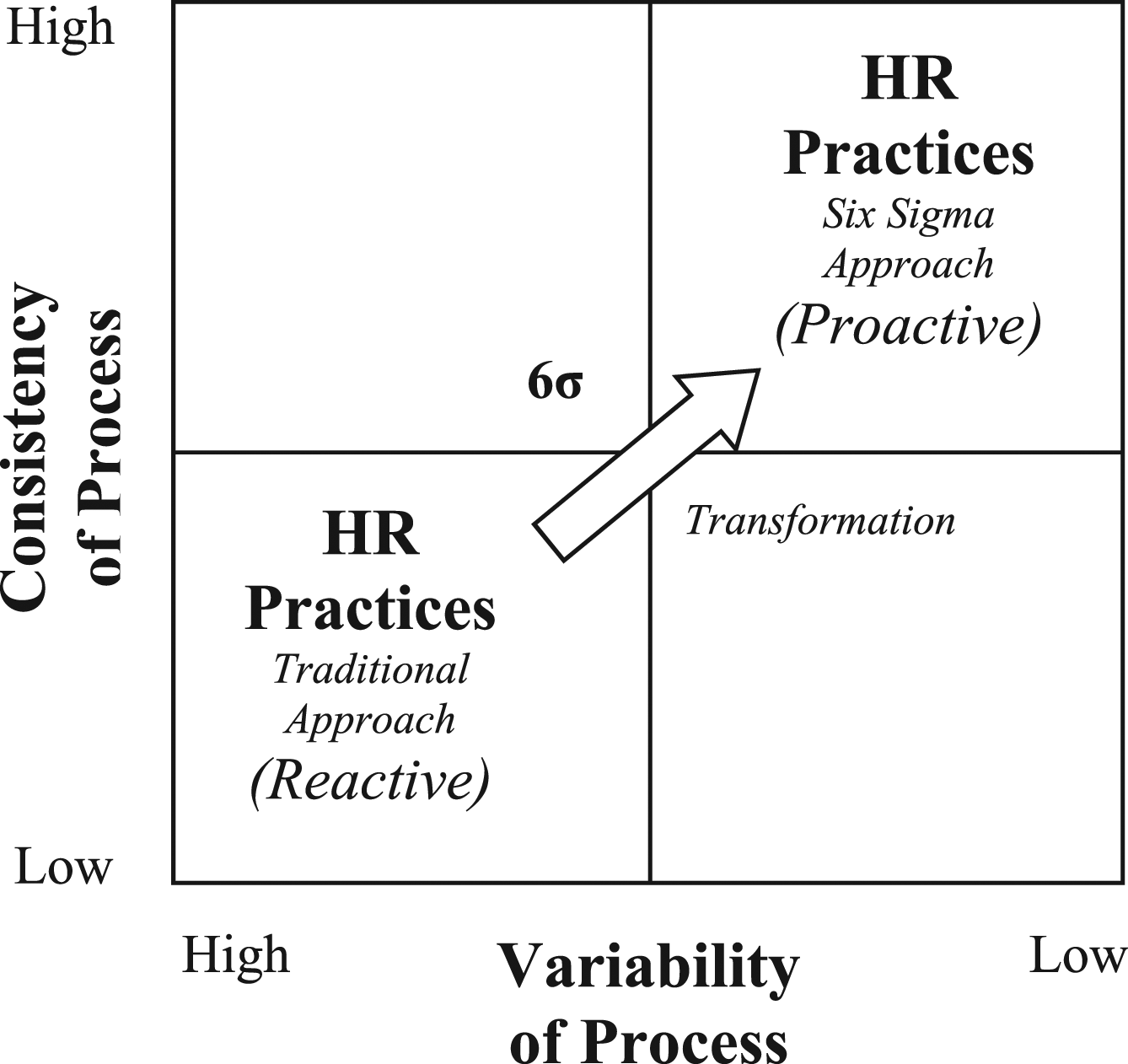
Major challenges in managing the human resources of the organizations are compensation, employee turnover and recruiting expense, education and training, workforce deployment and engagement (Lange, 2003; Madhani, 2022b). By proactively managing these challenges with Six Sigma deployment, HR will contribute to the organization’s service, quality and productivity objectives. Thus, HR will play a proactive role in human capital management with its internal functioning aligned with the strategic objectives of the organization. With such transformation, HR becomes a powerful source of sustainable competitive advantage for the organization.
Six Sigma Deployment in HR: Enhancing Efficiency and Effectiveness
Every organization sustains and prospers because of the competencies, proficiencies and fruition of its human resources (HR). Today, HR consists of all the activities undertaken by an organization to attain individual, group and organizational goals and the success rate of any business is dependent on the people who are part of the activities. As people are the building blocks for the processes, the quality and consistency of the process depend on the efficiency of the people engaged in the activities and management can focus on optimizing the process for business excellence. HR practices are the most influential predictors of change in company performance. However, most organizations think only about production processes for improvement initiatives. Hence, HR professionals must be able to think and measure in terms of systems to be valued as strategic partners. This is what Six Sigma in HR processes addresses: impact of HR in measurable terms and saving of cost in money and time terms.
Employee Voluntary Turnover: Negative Impact on Performance of Organizations
Turnover is a tangible performance measure and reduces the overall effectiveness of an organization. In the last decade, costs associated with voluntary employee turnover in the US have nearly doubled from $331 billion (in 2010) to $617 billion (in 2018). Out of this, $475 billion in turnover costs were controllable (77% of all turnover) with the alignment of employers’ interventions and retention requirements (compensation and benefits, career growth and opportunity for advancement, training and development, work environment, work-life balance, etc.). For each employee, the company loses, it will cost up to 33% of their annual salary to replace them. At the current trend, the turnover cost is expected to reach $800 billion by 2023 (Work Institute, 2019).
Employee turnover leads to the depletion of stocks of the relational, human and social capital of the organization (Holtom & Burch, 2016). Employee turnover also depletes an organization’s knowledge base of both explicit knowledge (i.e., intra-organizational knowledge readily available through procedures, policies, training and other formal mechanisms) and tacit knowledge (i.e., knowledge learned over time through experience and practice), affecting an organization’s ability to deliver services and maintain employee-customer bonds at pre-turnover levels (Michele Kacmar, Andrews, Van Rooy, Chris Steilberg, & Cerrone, 2006). Employee turnover reduces the overall efficiency and effectiveness of an organization as it incurs both direct costs (e.g., costs of recruitment and selection, cost of training and development) and indirect costs (e.g., quality of product/service, customer dissatisfaction, poor customer services, low productivity, etc.). Employee turnover can be costly due to loss of recruitment, training, socialization investments and disruption. Employee turnover is negatively associated with profit margin and customer service in a U.S. retail chain (Ton & Huckman, 2008). Various factors go into high employee turnover but figuring out the best ways to address it can be a challenge. Given the large and complex nature of these interrelated factors of employee attrition, it is an excellent candidate for the statistical methods and creative thinking that Six Sigma has to offer.
The focus of Six Sigma deployment in HR is not only on reducing costs but also working smarter and doing things right the first time. The various advantages of Six Sigma deployment in HR are summarized below: 1. Reduces employee attrition levels; 2. Reduces administrative errors and brings accuracy in preparing various compensation and benefits statements and reduces response time to employee queries; 3. Increases employee satisfaction scores by streamlining and standardizing HR processes. 4. Reduces training costs and improves training effectiveness; 5. Reduces the time and cost of the recruitment process and also improves the quality of recruits; 6. Reduces the time and cost of managing employees’ separation; 7. Improves new employee orientation processes and reduces learning curve time; 8. Enhances effectiveness and efficiency of HR and 9. Improves employee productivity levels and reduces overall employee cost.
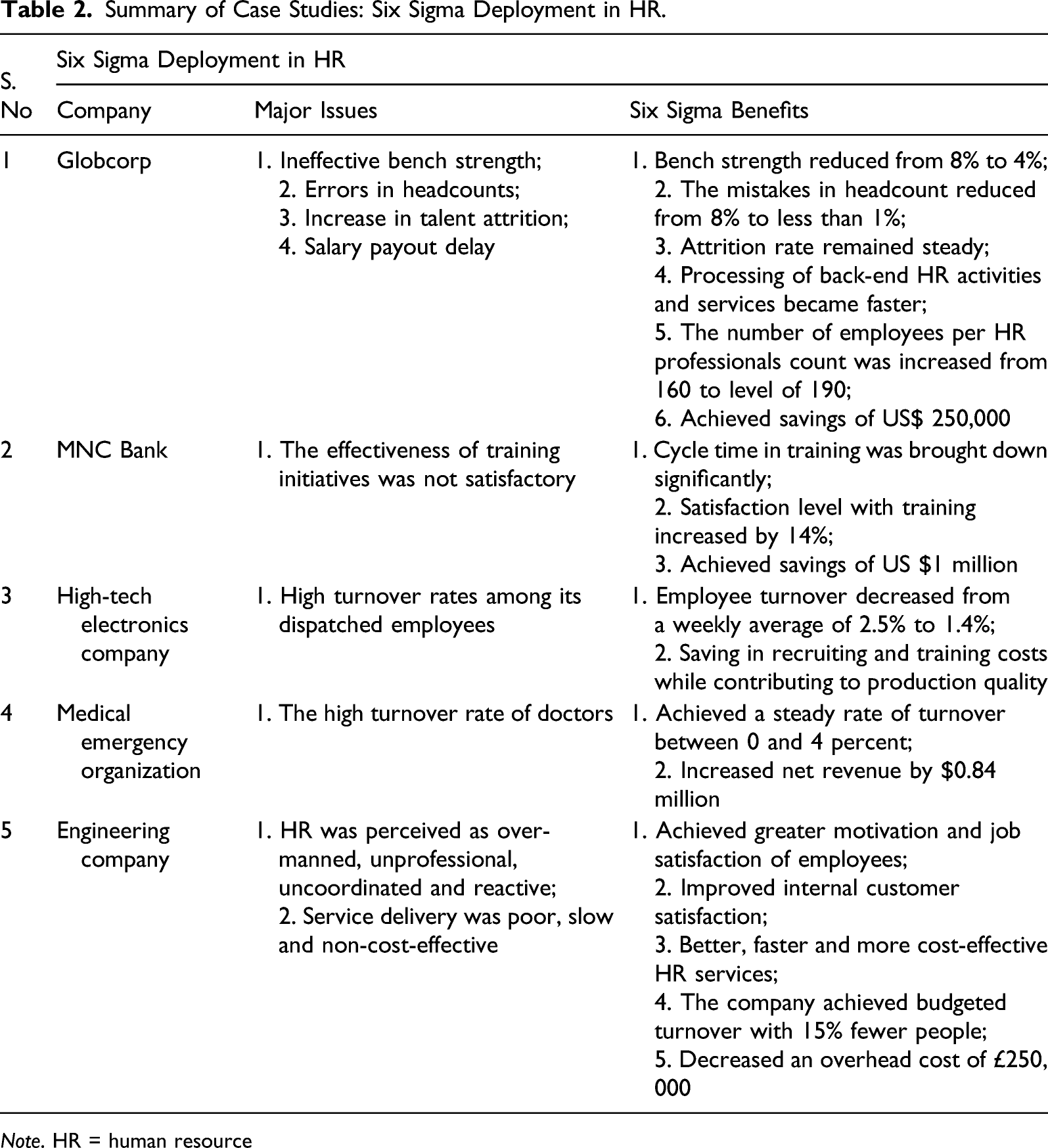
Summary of Case Studies: Six Sigma Deployment in HR.
Note. HR = human resource
Six Sigma Deployment in HR with DMAIC Methodology
Being a quantitative decision-making initiative, Six Sigma is one of the most powerful performance improvement methodologies used by organizations. As a method to eliminate variation and defects, Six Sigma makes use of a structured approach and statistical tools to find the root causes behind problems and to drive processes toward near-perfection. To achieve this goal, the DMAIC (define, measure, analyze, improve and control) framework is implemented. In the Six Sigma methodology, improvement activities pursue the DMAIC methodology. The DMAIC cycle enables organizations to determine the order in which specific actions need to be carried out. Various stages of the Six Sigma DMAIC methodology in HR, along with major drivers or facilitators of Six Sigma deployment, are shown in Figure 2. Six Sigma deployment in HR: Define, measure, analyze, improve, and control methodology.
Six Sigma is organized around individual improvement projects with finite timelines. Each project begins by forming a team that identifies the customer’s needs. The team measures how these needs are being met, and analyzes the variables that affect customer satisfaction, how it improves the process, and looks into the control issue of the process. All these steps are called DMAIC (define, measure, analyze, improve and control) for improving business processes. These steps of Six Sigma DMAIC methodology are explained below with illustrations of various case studies of Six Sigma deployment in HR functions.
Illustrations
Six Sigma Deployment in HR Function by Globcorp
This illustration describes Six Sigma deployment in HR for managing talent attrition in the global corporation (pseudonym: Globcorp) (Bhatnagar & Pandey, 2005). Globcorp mainly operates in an industry related to call center and Information Technology Enabled Services (ITES). The HR function at Globcorp extends its services to more than 12,000 employees around the world while delivering more than 450 processes. Before the implementation of Six Sigma, the top management had a poor picture of HR as having unclear targets and no control over its processes. Globcorp HR was facing frequent incidents of salary payout delay, ineffective bench strength and errors in headcounts. Hence, Globcorp HR took Six Sigma initiatives intended to achieve a 4.5 Sigma level (i.e., 1350 DPMO). Out of the main functions, the following three HR processes have been identified for Six Sigma deployment: 1. Resourcing and Hiring; 2. Attrition and 3. HR back-end processes.
These processes are most important from customer satisfaction perspectives and have a strong impact on the organizational bottom-line.
At Globcorp, the HR department deployed the Six Sigma DMAIC methodology for enhancing the efficiency and effectiveness of the HR function. Globcorp made Green Belt training at middle-level managers mandatory as it was aiming to make every executive at middle and higher-level manager Green Belt certified. Master Black Belts and Black Belts were dedicated to Six Sigma projects. Most of the Black Belts have come from within the organization because of their passion and achievement in the quality movement. The salary of recruits was getting delayed in more than 15% of cases and was a major source of dissatisfaction. A Green Belt project was designed around this problem area.
Six Sigma DMAIC Methodology at Globcorp: Various Steps
Define
This step starts with the identification of the services provided by the HR function. Prioritization of important characteristics of customer service was identified and defined by Globcorp. A customer satisfaction survey was conducted as it provided a valid source about the feelings of the internal customer. Pareto diagram was used to display the reason for the defects; as well as gaps between espoused and actual practice. On the graph, the number of defects for each category or reason was presented. More than one level of the Pareto diagram was drawn to find out the reasons for dissatisfaction among the Globcorp employees. Benchmarking with other organizations for similar processes and exploratory questions from the customers provided important leads for the projects. Out of the main HR functions following three processes have been prioritized for Six Sigma deployment as most important for customer satisfaction perspectives and which have a strong impact on organizational bottom-line: 1. Resourcing and Hiring; 2. Attrition and 3. HR back-end processes.
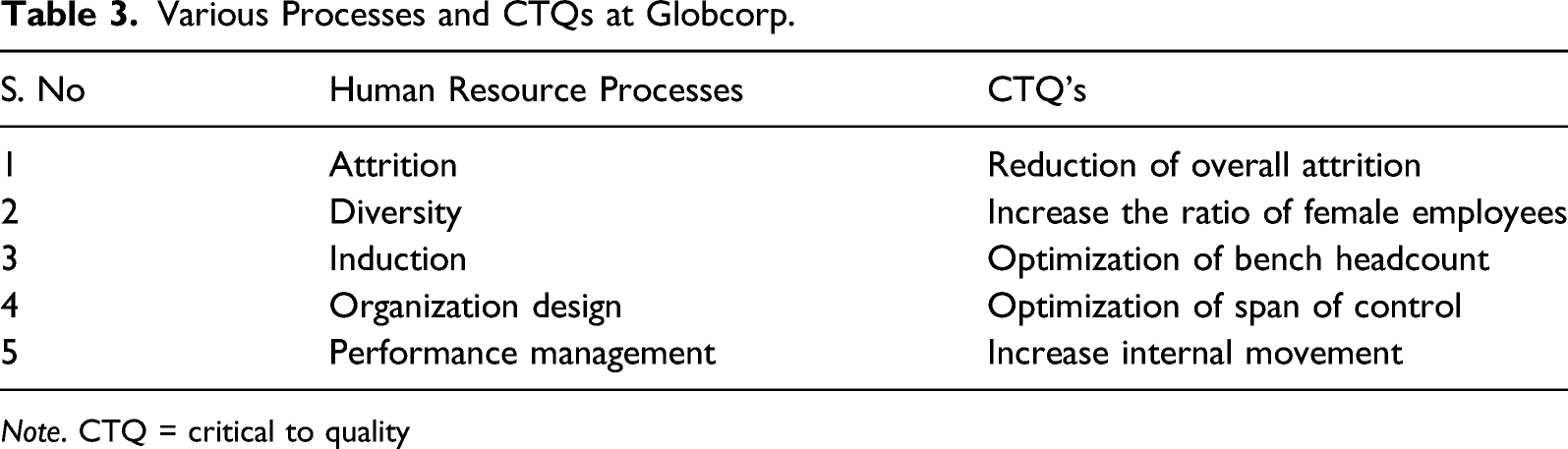
Various Processes and CTQs at Globcorp.
Note. CTQ = critical to quality
Various sub-processes involved in the main process (shown in Table 3) were identified. For sub-processes Critical to Process (CTP) questions were identified. CTP’s were critical to managing CTQ’s. For each process, CTPs and CTQs were recognized and on this basis, metrics for each process were designed.
Measure
In this step capability of the process was determined along with the measurement metric. Measurement matrices were also decided for every CTQ and CTP. For CTQs, these were known as effectiveness or process metrics; while for CTP’s they were known as efficiency or output metric. The measurement process started with data collection related to sub-processes taking place at different ends. With the conclusion of this step, the Six Sigma project team at Globcorp had a better insight into the problem and the problem areas. For the CTQ (critical to quality question) related to timeliness of salary payment to recruits, the following data was collected: 1. Data related to pa with Six Sigma deployment, employee turnover atrticulars of a new employee; 2. Turnaround time of the new employee salary payment; 3. The salary payment date for the last 6 months.
Analyze
The objective of this step in DMAIC methodology was to find out when and where the defects occur in the HR process. Definition of performance objective in light of baseline and target was given. The probability of target was plotted. Timing for the current baseline process was defined. Sources of variations were found through different statistical tests like chi-square, ANOVA, etc. A random sample of new employee and preexisting employees were taken. Significance level was checked for the difference in TAT (turnaround time) for the process (i.e., salary payment), for newly joined and preexisting employees and analyzed by using the ANOVA technique. This analysis explains the variance in the service offered to internal customers. Through this step statistical significance of payroll, the cutoff date was established.
As the HR department of Globcorp extended its services to more than 10 business divisions located at four geographical locations, the study on different segments (hierarchical level-wise, location-wise and geography-wise) was calculated. Based on the above studies brainstorming sessions were conducted within the team. Fishbone analysis was conducted to understand the cause-and-effect relationship of the defect in the process. Fishbone analysis helps in generating the list of potential root causes. In Fishbone analysis, the problem statement is written within the “head” of the fish and the four major “bones” of the fish are created and labeled for the four generic inputs, that is, material, methods, manpower and machines. Problems relating to these inputs are identified and these specific input-related problems are eventually found to be contributing to the main problem. Figure 3 shows Fishbone analysis for the problem of salary not paid in the time. The problem statement is shown in the head while specific inputs contributing to the main problem are segregated in material, methods, men and machines. Fishbone analysis for six sigma deployment in HR at Globcorp.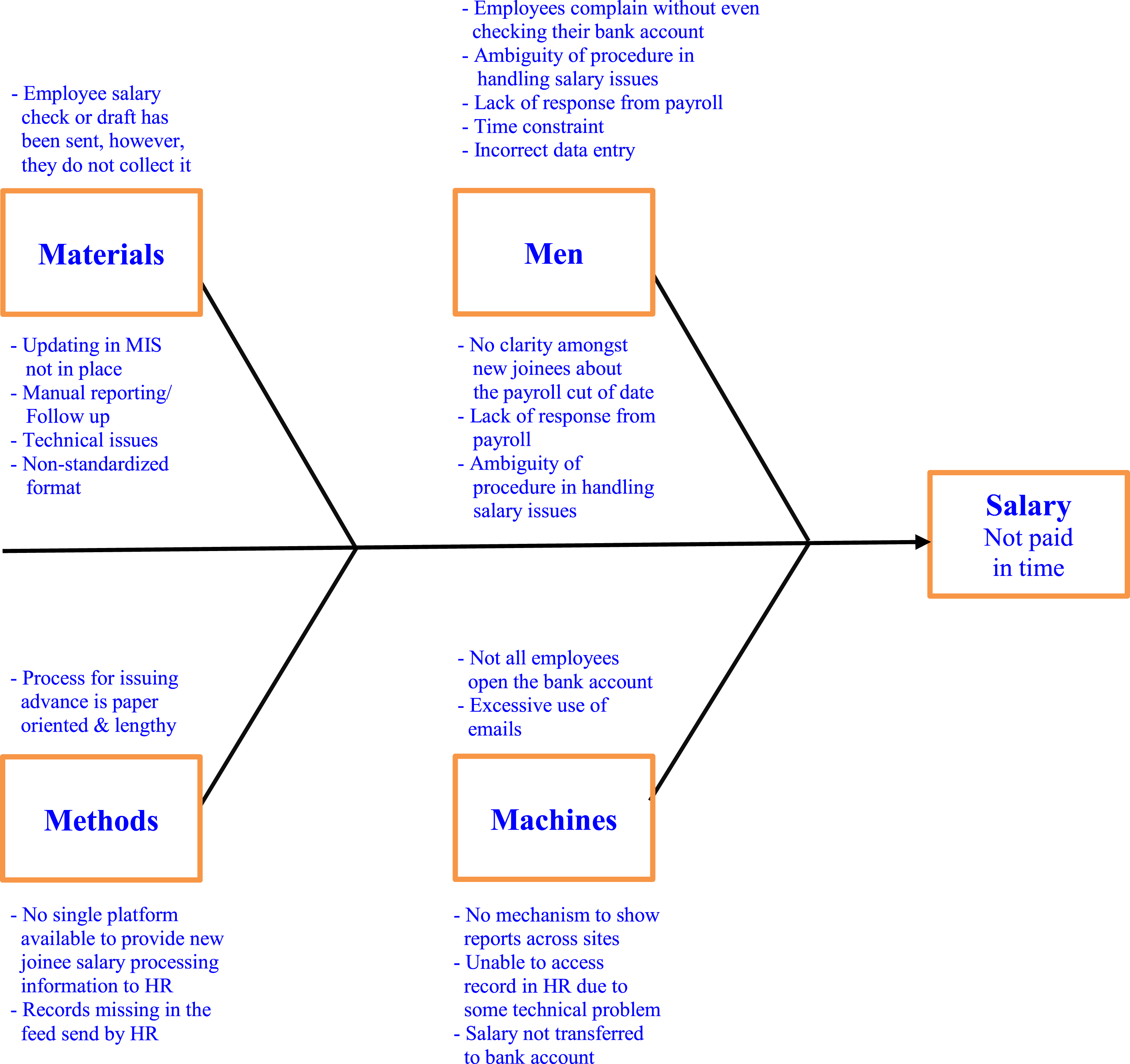
Improve
In this step, the Six Sigma project team at Globcorp determined the ways to attain Six Sigma capabilities for HR processes. This was the method of narrowing down the broad work area of HR activities. In this step, the focus was on investigating the root causes. Globcorp was facing the problem of late payment of salary. To solve the issue and improve the process, the Six Sigma team conducted brainstorming sessions with the HR person as well as the person for payroll and IT. Six Sigma team got many insights after such discussions and picked those high-impact root causes which could be controlled for improvement. Action plans were made for rectifying those root causes as they served as proof of the milestones achieved in the improvement process and guidelines for future actions. The improvement step also involved data collection and analysis to check the process and to achieve the desired level of quality. The proces was redesigned till the end of this step. The result of the improvement step was made explicit through the change in the process map also. At Globcorp, the number of steps was reduced from 45 to 14 as a result of the improvement process.
Control
This step was aimed to ensure the institutionalization of the improvement at Globcorp. The normal distribution curve of turnaround time (TAT) for the process was drawn to check whether the change had been sustained at a significant level or not. As a measure of current process capability “before and after analysis” was followed. At Globcorp, Failure Mode Effect Analysis (FMEA) was an integral part of the control step. In this analysis, potential failure modes were identified and the potential effect of the failure on the process was accessed. Along with this, the potential cause(s) of failure was accessed and a method of controlling was identified and implemented. This made the improvement permanent in the system. Globcorp also prepared a control response plan to serve as a “regular check” on the system to control the generation of undue variance in the processes.
Six Sigma Deployment in HR Function at Globcorp: Major Benefits
1. With Six Sigma deployment in the hiring process, “filled rate” on every level was achieved hundred percent; transparency of Globcorp HR increased, bench strength decreased from 8% to optimum level of 4%, attrition rate remained steady and processing of back-end HR activities and shared services related processes became faster. 2. Six Sigma deployment in HR function resulted in a saving of US$ 250,000. 3. The introduction of Six Sigma has made the HR department a metric-driven department as employees talk in more objective terms and take care of matrices while making the decision. These efforts have resulted in changing the culture of HR. 4. Six Sigma deployment in HR function resulted in better harmony within the HR team and sharing and gaining of work knowledge have become a part of HR team culture. 5. The service level improved as the efficiency and effectiveness of the HR function increased. The mistakes in headcount also reduced from 8% to less than 1%. 6. In the HR department, number of employees per HR professionals count was increased from 160 to level of 190 (Bhatnagar & Pandey, 2005).
Major Challenges
The focus group discussion at the Globcorp brought out the following disadvantages of Six Sigma deployment in HR function: 1. Six Sigma misses the big picture and can be focused on small-scale projects mainly. 2. As HR function is qualitative, there are wider differences in points of view and hence faced difficulty in defining process scope. 3. There is a complaint among the associates that it is too statistically oriented and requires a large investment in terms of time, effort and other resources.
Six Sigma Deployment in HR Function by MNC Bank
Six Sigma was deployed in HR function at the Indian subsidiary of a multinational corporation (MNC) Bank where HR provided services to 1200 employees in four business divisions (Pandey, 2007). HR was instrumental in achieving the objective of customer satisfaction in the Bank. Six Sigma and HR processes were integrated and directed toward achieving process excellence as well as service excellence in banking operations for increased customer satisfaction, enabling the organization to increase market share and revenue growth. The world over this organization is engaged in many mergers and acquisitions. Six Sigma has helped it to give direction to the regional Banks of different structures to assimilate in the larger fabric of the Bank’s multinational network. This case study of MNC Bank highlights a success story of Six Sigma intervention in training function. Through the internal customer survey, the effectiveness of training initiatives was found to be only 49% as against 56%, the global score of the corporation. Benchmarking also revealed that world-class organizations like Johnson and Johnson achieved up to 70% customer satisfaction for training initiatives (Pandey, 2007). In MNC Bank, the Six Sigma project team comprised of a change leader (Chief Operating Officer), a Black Belt, and a Green Belt quality leader. Implementation team comprised of HR process owners and participants. Green Belts were generally process owners who scheduled the Six Sigma project and drew the action plan. The Six Sigma team with the use of improvement tools implemented the desired changes and deployed the control mechanism to make the changes sustainable. Process owners of the training activities after implementation of this project were awarded Green Belt status.
Various Steps of Six Sigma DMAIC Methodology Deployed by MNC Bank Are Explained Below
Define
This step starts with the identification of the services provided by the HR function to internal customers. Services are then prioritized in terms of their criticality for the satisfaction of internal customers (i.e., employees). This is a crucial step as the Six Sigma process deployment needs a lot of resources. Six Sigma project selection in HR depends on processes that are cost-intensive, strategically important and are important for the customers. As the voice of the customer provides the main lead to the problem identification, project selection is done based on the following: 1. Customer satisfaction survey; 2. Pareto diagram; 3. Benchmarking and 4. Prioritization.
In MNC Bank all the above-stated methods were used for identifying the problems for the success of the training. Through the internal customer survey, the effectiveness of training initiatives was found to be only 49% as against 56%, the global score of the corporation. Benchmarking also revealed that world-class organizations like Johnson and Johnson achieved up to 70% customer satisfaction for training initiatives (Pandey, 2007). Significant resources were spent by MNC bank on training and development activities and hence made a strong case for Six Sigma intervention in training initiatives.
Measure
Criteria for the performance measurement of any process selected depends on critical to quality (CTQ’s) and critical to cost (CTC’s) questions related to that particular process. Process mapping clarified who are the customers and what are their priorities. Attributes having the highest impact on quality and customer satisfaction are called Critical to quality questions (CTQ). Critical to process (CTP) questions are identified by outlining the main process and sub-processes. As CTP’s are critical to managing CTQ’s attributes, they are identified for each process. In this step, MNC Bank made the action plan to align training to the business strategic objectives by defining the process scope and measures of performance.
Analyze
In this step, the focus is not on the “measure of performance” but on controlling the inputs that control the measures. Hence, the objectives of this step are to find out when and where the defects occur. Sources of variations are found through different statistical tests like chi-square, ANOVA, etc. The analysis step provides insights into the causes of the problem. MNC bank used the voice of the customer, hypothesis testing and Pareto chart in this stage. Process technique like fishbone analysis was also used for analysis. Fishbone analysis generates the list of potential root causes and thus helps in understanding the cause-and-effect relationship of the defect in the process.
In this step, the HR department of MNC Bank calculated training effectiveness scores for different segments (hierarchical level-wise, location-wise and geography-wise). Based on the findings brainstorming sessions were conducted within the team. In MNC Bank, the following factors were identified influencing training effectiveness: 1. Coaching; 2. Client information; 3. Product knowledge; 4. Training needs analysis and 5. Formal training procedure
The HR department of MNC Bank also used the voice of customers method to analyze the problem and identified the following factors impacting the satisfaction from training: 1. Learning opportunities should be available to all as a matter of right and not as manager’s discretion; 2. Training should be linked with growth opportunities within the organization; 3. Associates need speaking and facilitation opportunities and 4. Organizations should provide opportunities to apply skills acquired in training.
Improve
Improvement started with prioritizing the root causes to be worked upon as they leave a high impact on quality. Action plans are made for rectifying the root causes. All the identified causes are accessed on parameters of their practicality for implementation.
In the MNC Bank following root causes were prioritized for improvement: 1. The training was not directly linked with the associate’s career progression; 2. Associates needed opportunities to apply skills and competencies acquired from training and 3. Associates needed involvement and participation in the process of internal training.
Control
The main goal of the control stage is to ensure that the achievements resulted from the above step (i.e., improve step) are sustained long after the project has finished. The control stage implements a plan for monitoring overall performance and takes corrective action in case of the emergence of anomalies. This step is aimed to ensure the institutionalization of the improvement by conducting the “before and after analyses.” In the MNC Bank, a quarterly HR review system was implemented to ensure the process capability.
Six Sigma Deployment in HR Function at MNC Bank: Major Benefits
Significant resources were spent at MNC Bank on training and development activities as they were part of competence building and motivational factors for employees. As Six Sigma emphasizes evaluation at each step of training, that is, planning, design, delivery and impact, Six Sigma deployment in the MNC bank improved training effectiveness due to better alignment with organizational requirements, and increased satisfaction level of internal customers with the HR function. Six Sigma deployment by the HR department in MNC Banks led to greater acceptability of the HR function in general and training function in particular, through improved parameters of service delivery as explained below: 1. Six Sigma deployment by HR function at MNC Bank changed the role of the training function toward proaction by challenging the status quo. 2. Six Sigma promoted data-based thinking amongst employees of the HR function. 3. Cycle time for activities like training need analysis, delivery design, etc., was brought down significantly and resulted in financial cost-saving within the training function. 4. Design and delivery of training programs were systemically linked with the voice of customers; that is, trainees, their managers and the top management. 5. Six Sigma put a major emphasis on tying process improvements to customer needs. The emphasis was on process measurement and improvement that was tied to higher-level processes and eventually to strategic objectives and customer satisfaction. 6. Internal customer satisfaction surveys conducted after the implementation of Six Sigma depicted positive outcomes for the MNC Bank and reported a 14% rise in satisfaction level amongst internal customers with training. 7. Six Sigma Deployment in HR function also resulted in savings of $1 million for MNC Bank (Pandey, 2007).
Major Challenges
The focus group discussion at the MNC Bank brought out some dis-satisfactions with Six Sigma deployment in HR function: 1. MNC bank monitors the processes and determines Six Sigma projects from a central location, while some other organizations (e.g., GE, Johnson and Johnson) distributes Six Sigma efforts throughout the divisions of the organization and allows the divisions to determine their projects. 2. Sometimes variance was noted in the customer requirements itself in the HR function and the Six Sigma team was expanding its scope from training to other roles such as hiring and attrition. 3. Some middle-level managers expressed the necessity of taking small projects related to sub-sub processes
Six Sigma Deployment in HR Function by High-Tech Electronics Company
In 2011, a typical foreign-invested high-Tech Electronics Company located in Tianjin City, China was experiencing high turnover rates among its 6000 dispatched employees. The high turnover rate resulted in high recruiting and training costs as well as production problems. Dispatched employees have no employment relationship with the companies where they work as they are hired by an agency before being dispatched to companies on fixed contracts. The Six Sigma improvement project was carried out by the HR department with the cooperation of the manufacturing and quality departments (He, Zhang, & Zhang, 2014). Various steps of Six Sigma DMAIC methodology deployed by High-Tech Electronics Company are explained below:
Define
In this first step of the DMAIC process, a team charter is created to guide the work and define roles in optimizing a business process. Team members include employees from HR, planning and manufacturing departments. As the project is initiated by the HR department, dispatched employees are taken as external customers of the HR department while departments in need of labor are regarded as internal customers. To collect the voices of customers (VOC), the Six Sigma team did some surveys and interviews with both dispatched employees and production managers. It was found that many dispatched employees complained of unsatisfying work and were unwilling to stay because of low salary and benefits, obscure future, frequent changes of working schedule, limited converting opportunity (convert some outstanding dispatch employees into formal employees) and other reasons. Production managers often complained of the high mobility of dispatched employees resulting in unstable yield and quality. Company executives were concerned about the high HR costs due to recruiting and training of new dispatch employees. By analyzing VOC and VOB (voice of business) in detail, the Six Sigma project team defines employee turnover rate as CTP (critical to process) and employee retention as CTQ (critical to quality). The goal of this project was to reduce the weekly turnover rate from 2.5% to 1.5% (He et al., 2014).
Measure
Measure step is a step in which the current process is measured and assessed, and the baseline is identified. Data collection began with defining the baseline level of job turnover in the company and developing survey instruments to assess worker attitudes relevant to turnover behavior. The surveys were handed out by HR staff using pseudo-random sampling. Three hundred paper questionnaires were filled out by dispatched employees on break and 283 were returned. Through checking the completeness of the questionnaires, 279 valid responses were considered. The voluntary turnover of a dispatched worker was regarded as a defect in the HR process and the weekly turnover rate was regarded as the defect rate. The process average defect was measured as 2.5% (He et al., 2014).
Analyze
The result of the questionnaire surveys mentioned above was subject to factor analysis. It shows that organizational commitment and work satisfaction have positive impacts on employee retention will. Salary and benefits, career development, rotation system, personal relationships and humane care have significant positive impacts on work satisfaction. Salary and benefits, rotation system, converting opportunity, training and work environment have positive correlations with commitment. Through work status surveys and interviews with the dispatched employees, it was found that some important factors are affecting dispatched employees’ turnover that is different from those of general employees. Organizational commitment has a higher intermediary impact on dispatched employee’s retention will than work satisfaction does. Organizational culture and working environment had no significant impact on dispatched employees’ retention will as they do not think they belong to the company where they work. Factor analysis found that salary and benefits are the most important variable that affects dispatched employees’ retention will. This variable has a stronger impact on organization commitment than on work satisfaction. Converting opportunity and job hunting are also important factors influencing dispatched employees turnover.
Improve
Various factors for improvement were selected according to their ranks. Key factors for improvement were: salary and benefits; converting opportunities; rotation system; career development, training and humane care. Several feasible solutions were generated by brainstorming and prioritized after evaluation and risk assessment due to resource constraints. The evaluation was conducted by matrix analysis in terms of the fitness of process/VOC, running cost, efficiency, extended application, simplicity, etc. The improvement plans include base salary increase by 12.5%, converting number increase by 30%, vocational qualification for workers, regular working skills training, regular sports activities, birthday and festival gifts, etc.
Control
Control is the last step in the DMAIC process, which aims at keeping the achievements of the employee turnover project and gaining a sustainable improvement. The improved result was compared with the baseline in the project and the goal of the project. As weekly dispatched employee turnover rate was measured constantly, it was found that the turnover rate of contract employees declined. The decrease in turnover rate shows that the project has achieved the goal (He et al., 2014).
Six Sigma Deployment in HR Function at High-Tech Company: Major Benefits
Although dispatched employees consider salary and benefits as the most important factor for their retention, they also desire organizational recognition and pursue individual career development. During the period of declining profits, increasing the salary will cause a financial burden for companies. Hence, the organization should also pay more attention to career development and training opportunities for employees.
The organization’s culture can be shaped by the kinds of behaviors and outcomes it chooses to reward and punish (Madhani, 2021a). The motivation of employees is determined by both monetary and non-monetary factors. An effective balance between financial and non-financial rewards enhances employee satisfaction and can leverage employees to perform better at the workplace, ensure retention and boost productivity (Madhani, 2019; Madhani, 2021c). Improvement measures including enhancing pay satisfaction (by increasing base salary by 12.5%, and offering benefits), providing converting opportunities (increasing to 30%), deploying job rotation, developing career plans and providing training were implemented by the High-Tech Company. With Six Sigma deployment, employee turnover at a High-Tech Company decreased from a weekly average of 2.5% to 1.4%, saving recruiting and training costs while contributing to production quality (He et al., 2014).
Six Sigma Deployment in HR Function by Medical Emergency Organization
The Six Sigma methodology was deployed in an organization operating in emergency services to address the high turnover issue of doctors as the turnover rate of doctors increased from 1% to 12% in 5 months (Tolga Taner & Sezen, 2009). To identify and eliminate the root causes of turnover, Six Sigma DMAIC methodology was used. DMAIC process eliminates variation and defects as it uses a structured approach and statistical tools to find the root causes behind the high turnover issue of doctors. A self-administered questionnaire consisted of 43 questions, was developed and distributed to evaluate the job satisfaction of doctors in the organization. All the doctors (n = 100) have participated in the study. The stress level affects an employee’s voluntary choice to leave employment through the influence of job satisfaction. The stress first manifests itself as an increase in job dissatisfaction, which may lead to an increase in quitting intent. The root causes of high employee turnover were studied and found to be related to pay dissatisfaction and personal burnout/stress. The organization enhanced pay satisfaction (by providing higher pay and also offering various working and social benefits) and also improved doctors’ working conditions to sustain the organizational commitment of doctors.
Monetary and non-monetary incentives were revised with the prime purpose of achieving a high level of job satisfaction. To motivate doctors, the organization reduced the time burden, offered various bonuses for increased responsibility, and provided a long-term career development plan and vacation benefits.
Medical Emergency Organization benefited from Six Sigma as it implemented new organizational policy and work instructions by improving and standardizing various processes: (1) In the new policy the annual salary of the doctor was decided after considering the following: a) The level of commitment exhibited daily. b) The risks to which they are exposed as they are at all times working is an outside environment. c) Their qualification levels. Also, any additional degree/courses taken will be recognized by the organization. d) A table of overtime and disbursement is entered into and agreed upon by both parties on the signing of the work contract. (2) New policy provided adequate recognition and rewards for time invested by doctors in exhibiting leadership qualities and encouraged fellow doctors to improve qualifications. (3) Work-life balance was given top priority by controlling too much overtime and make the balance between the professional and the domestic roles. (4) All team problems are referred to an arbitrator who is a full-time welfare agent but whose opinion is binding and impartial. (5) Within the workforce, a new system of rotation of hours was introduced so that the ambulance service is available 24 hours/day and fellow doctors can be accommodated when an urgent need for the time free is required.
The organization was able to decrease the turnover rate by 11% in 18 months due to improved pay and better overall conditions, paying equal emphasis to work and social benefits. These actions achieved a steady rate of turnover between 0 and 4 percent and resulted in higher net revenue by $0.84 million (Tolga Taner & Sezen, 2009).
Six Sigma Deployment in HR Function by Engineering Company
Six Sigma was deployed in the central HR function of an engineering company that provides service to employees in four business divisions and other central support functions (Wyper & Harrison, 2000). The global engineering company employs 8000 people in 20 different locations. In this company, HR was perceived as reactive, uncoordinated, over-manned and unprofessional, delivering poor, slow and non-cost-effective services. Hence, the company deployed Six Sigma in the HR domain to drive the improvement of HR processes and achieve the strategic objectives of “right people in the right place at the right time at the right cost.” The primary objectives were to develop and implement HR processes and measures of performance, with the focus on complete internal customer satisfaction.
Rewarding, resourcing, communication and development were selected as the first processes to be analyzed. Six Sigma deployment in HR resulted in greater motivation and job satisfaction of employees, improved internal customer satisfaction, better, faster and more cost-effective HR services, and ultimately, improved business performance. The company achieved budgeted turnover with 15% fewer people with an overhead cost reduction of £250,000 and, for the first time, an annual employee bonus was declared. HR systems now transform problems into preventive actions that minimize the likelihood of reoccurrence. HR employees have originated several improvement ideas as they moved from being compliant to committed employees. Improved processes resulted in cost-saving due to better service quality and reduction in throughput time, defect and rework. The cost of HR function per employee has also been reduced by 34% in 18 months with the same or better service provided (Wyper & Harrison, 2000).
Six Sigma Deployment in HR: A Partner in Strategy Execution and Synchronization
Six Sigma aims for scientifically measuring the selected HR function through a rigorous measurement process and hence plugs the lacunae of measurement effectiveness, which was found to be a major drawback with existing HR-related metrics. HR functional efforts are directed toward internal customers (employees) of the organization. The strategic intent of the organization (i.e., top management commitment); technical expertise (i.e., competence of the workforce) and organizational culture are intertwined through the successful deployment of Six Sigma. Focus and alignment are the governing principles in Six Sigma deployments. Six Sigma is an organization-wide intervention, where each functional area is responsible for implementing and reviewing it regularly.
Six Sigma deployments in HR are interwoven in the strategic framework of the organization. As a component of the TQM system, it allows the organization to plan and execute strategic breakthroughs while effectively managing continuous improvement performance. Top management identifies specific goals for HR process improvement and provides resources and support to middle management. It is emphasized that Six Sigma deployments in HR is a goal and the ultimate idea is to improve the process and to reduce the variation in the process as much as possible. Six Sigma project implementation team interacts with middle management and measures process capability for further improvement. Top management reviews specific outcomes with the Six Sigma implementation team (Figure 4). Six Sigma deployment in HR: Strategic perspectives.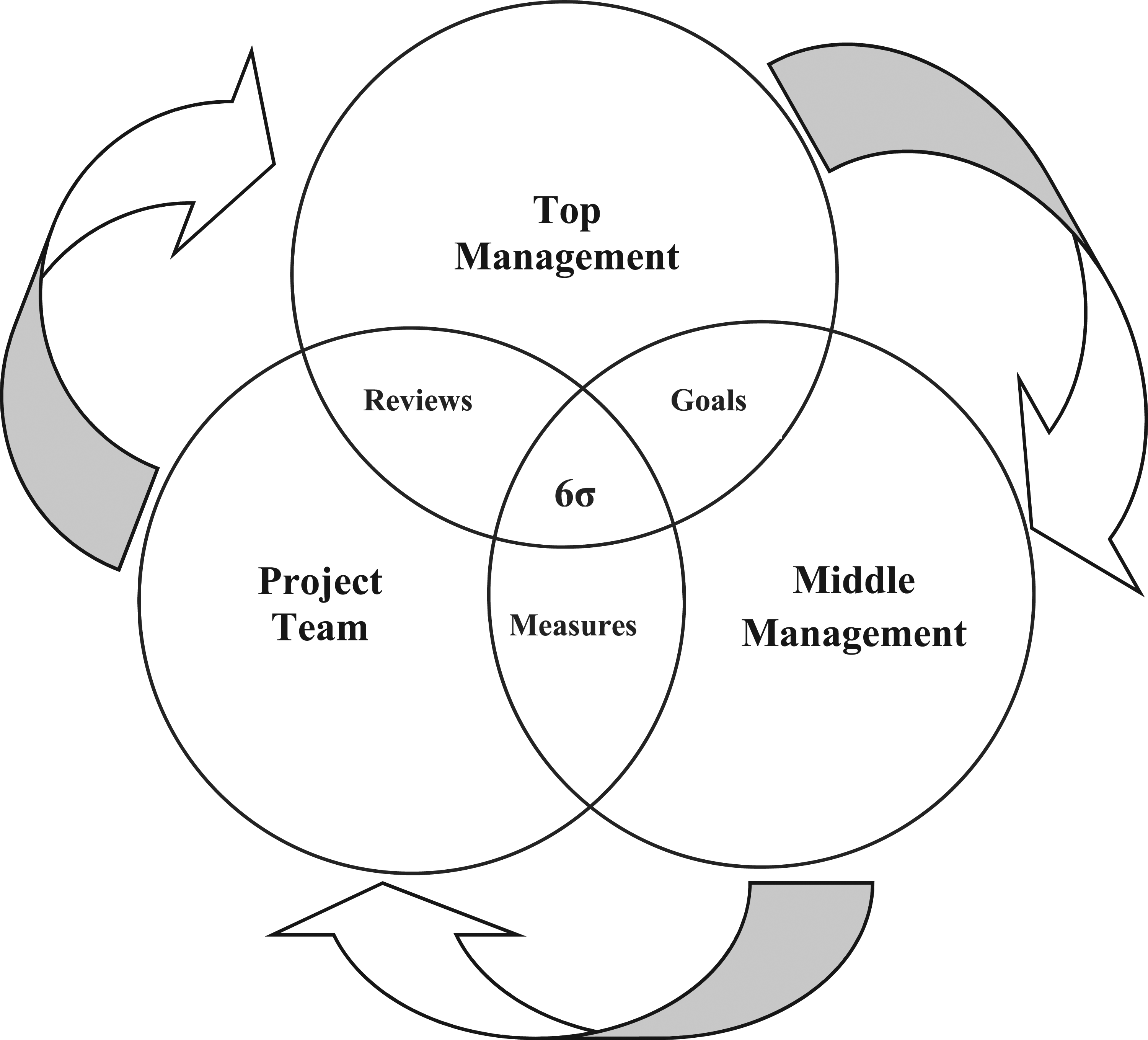
HR needs to become a partner in strategy execution and be held responsible for designing the organizational architecture. To be “true” strategic partners, the HR function must spend time beyond delivering services, maintaining records and auditing. Instead, HR professionals should spend more time performing strategic HR planning; and making contributions to organizational design, strategy development and strategic change. As shown in Figure 4, Six Sigma (6σ) deployment in HR acts as a navigation system to reliably and effectively reduce the variability of performance through planned breakthrough goals. Such initiatives are integrated with critical few strategies, initiatives and measures, set by top management and are vital to achieving the vision and mission of the organization. Six Sigma represents a transformation from a control-oriented process to empowerment-oriented developmental efforts and thus helps in strategy synchronization and become a partner in strategy execution.
Six Sigma Deployment in HR: Various Hierarchy and Process Tools
Six Sigma consists of both process and people aspects. Most Six Sigma programs adopt the regimented hierarchical structure and are supported by an infrastructure of Sponsors, Champions, Specialists, often called Master Black Belts, Black Belts, Green Belts and Yellow Belts. The components of such hierarchy and their functions are described below: 1. Sponsors
At the top of the team and have the responsibility to promote and define the guidelines for the implementation of Six Sigma; 2. Champions
Members of the executive committee, which facilitate the production of resources and the elimination of barriers in the development of improvement projects; 3. Master Black Belts
Make the connection between the general management of the Six Sigma project and the people responsible for the improvement projects; 4. Black Belts
Lead specific projects, working with tasks related to the identification of new projects and the training of involved staff; they have training in statistical methods, quality improvement process, among others; they work full-time on projects; 5. Green Belts
Dedicated to improvements, with part-time within the project and can be from all levels of an organization; 6. Yellow Belts
Make up the so-called “shop-floor” but are trained to use the basic tools of Six Sigma, which apply to the various phases of the projects.
At the center of the hierarchy are Black Belts and Master Black Belts; these individuals receive extensive training in experimental design, data analysis and process control to serve as company-wide Six Sigma resources.
Six Sigma DMAIC Process Tools
Overview of the DMAIC Process Tools.

Note. DMAIC = define, measure, analyze, improve and control
Six Sigma Deployment in HR: Managerial Implications
Six Sigma is a data-driven improvement methodology that emphasizes defect prevention over defect detection by focusing on improving process inputs to improve process outputs. Six Sigma deployment in HR helps in the reengineering of HR processes by increasing the speed, quality and efficiency of its services. The statistical thinking of Six Sigma can be an effective tool for analyzing HR issues and improving the performance of the HR department. With Six Sigma’s focus on the entire process, its methods would be more appropriate for a complete overhaul of HR processes. Six Sigma is a powerful strategy that enables companies to use simple and powerful statistical methods to drastically improve the efficiency and effectiveness of HR processes continuously.
Before the COVID-19 outbreak, less than 50% of companies had a remote working plan. Furthermore, many companies in financial services, banks and regulated industries did not encourage remote working. Now almost all of them are rushing to build remote work strategies. This has led to many undiscovered problems. HR managers are trying to build seamless routes and strategies to overcome the challenges that it brings. Six Sigma has opened up new opportunities for HR work programs as Six Sigma deployment in HR may help in solving, post COVID-19 HR problems.
Six Sigma Deployment in HR: Prerequisites
Six Sigma deployment in HR functions faces many challenges as HR is qualitative with attributes of intangibility and heterogeneity. Hence, to avoid the failure of Six Sigma initiatives in HR, the following points are needed to be considered for its successful implementation: 1. As Six Sigma is project-based and shares the fundamental principle of continuous improvement (also known as Kaizen), selection of the right project in HR and identification and removal of the root cause of process fault are critical success factors. Wrong project selection leads to the failure of the Six Sigma project. Hence, there should be effective guidelines for project selection, prioritization, reporting and tracking systems. 2. A streamlined, reliable information gathering and retrieval system are required for HR project success. The organization should imbibe the culture of collecting and recording relevant data that determines the process performance. 3. All Six Sigma deployment team members should have a common approach to the management of HR projects such as a clear definition of the project, individual role, its scope and deliverables. Wrong team formation leads to the failure of the Six Sigma HR project. 4. Six Sigma HR projects need the support of top management. An important job of top management is to get over the resistance on a technical, organizational or personal level. Hence, there should be committed leadership and supporting infrastructure. 5. There is always a resistance to change and hence failing to consider the human side of change may prove to be a bane for the success of Six Sigma projects. 6. The organization should have relevant process performance metrics or key process indicators that all employees understand and use. A clear and encouraging reward system for Six Sigma implementation should be set up to ensure the involvement of the stakeholders at all levels.
Six Sigma Implementation
Organizations need to have a project before starting to certify or provide training to their employees in Six Sigma. When HR professionals encounter a problem and intend to use Six Sigma in HR to help solve it, there is no need for them to go out and get their training. Very often, HR professionals do not have the luxury of time to be trained before they can start working on a problem. The better solution is to borrow a Black Belt from another department to help solve the problem as they work through and manage the process. In this way, HR professionals can focus on the project and the management of that project and by working with this seasoned Black Belt, HR professionals would learn to use the tools in a practical situation and a practical application of those tools. As HR professionals are working on the project guided by this Black Belt, they could work toward their certification and be able to learn how to use the tools and please other stakeholders at the same time because HR would be resolving their problems very quickly.
Therefore, while the Black Belt is helping HR resolve the problem, the HR is being trained and can work toward certification at the same time. The Six Sigma certification (with HR concentration) provides a solid understanding of Six Sigma principles and enables HR professionals to effectively work within a Six Sigma team. Such Six Sigma certified professionals also help ensure the team functions effectively and create the appropriate Six Sigma culture with change management skills. The Management and Strategy Institute (www.msicertified.com), an industry-accredited trainer and certifying body, also provides Six Sigma Green Belt as well as Six Sigma Black Belt Certification with HR concentration to help HR practitioners to get started with the process (Madhani, 2018a).
Six Sigma Project Failure in HR: Potential Causes
As explained earlier with various illustrations, Six Sigma deployment in HR provides many benefits. However, people’s behavior is very complex, and therefore, it is difficult to quantify many HR practices and implement Six Sigma in the HR function. Six Sigma projects in HR function do not fail because Six Sigma principles and statistical tools do not work. It tends to fail because of how project teams apply the Six Sigma methodology. Following are the main reasons for failure: 1. Lack of Support from Top Management
Six Sigma projects need the support of leadership to obtain financing, overcome obstacles and help the team’s improvements take root in organization culture and become a permanent part of doing business. Hence, when top leadership puts its full support behind a Six Sigma project, it typically encounters much less resistance. Management’s direct involvement in Six Sigma initiatives through Black Belts and Master Black Belts are also crucial for success. 2. Erratic Team Leadership
Six Sigma projects fail because of inefficient team leaders. Six Sigma project teams are usually captained by an experienced Black Belt who keeps the team on track and moving forward. However, once the team starts making progress, the Black Belt is usually transferred to another project. Hence, when a project team loses strong leadership, it risks losing sight of its objective and not meeting its performance goal. Hence, to avoid this issue, it is necessary to keep the Black Belts who lead Six Sigma teams in place until the project is completed. If a long-term commitment is not possible, Black Belts need to groom a successor to replace their leadership on the Six Sigma project team. 3. No Connection to Financial Performance
Six Sigma initiatives that focus on decreasing costs or increasing effectiveness with positive financial impact gain more attention, command more respect and get more support from top management than projects not directly connected to financial performance. A Six Sigma project with easily understood financial benefits helps focus the attention of both its team members and the organization’s leadership.
Conclusion
This research is unique as it makes an in-depth analysis of various case studies to emphasize the successful implementation of Six Sigma in the HR function. These case studies are selected from areas as diverse as BPO, banking, high-tech, healthcare and engineering. The Six Sigma deployment by these companies effectively managed and solved the various HR issues faced by them. Six Sigma deployment in HR function transforms the overall processes and creates new capabilities for enhancing business performance. Six Sigma in HR provides many benefits as it reduces recruitment time and costs, lowers compensation and benefits costs, controls overhead costs, reduces talent attrition and enhances training efficiency and effectiveness. Research emphasizes that Six Sigma deployment in HR helps organizations in streamlining their diverse HR tasks, processes and activities for sustaining operational performance and building competitive advantages. The research also develops various frameworks and emphasizes the crucial role of Six Sigma in enhancing HR performance.
Footnotes
Declaration of Conflicting Interests
The author(s) declared no potential conflicts of interest with respect to the research, authorship, and/or publication of this article.
Funding
The author(s) received no financial support for the research, authorship, and/or publication of this article.

Author Biography
Pankaj M. Madhani earned his Bachelor‘s in Chemical Engineering and Law, MBA from Northern Illinois University, MS (CS) from the Illinois Institute of Technology, and PhD from CEPT University. He works as the Dean (Academics) and Professor at ICFAI Business School. He has received his ‘IBSAF Best Teacher Award’ twice. He received his ‘Best Research Paper Award’ at the 2016 International Management Convention. He has published several management books and more than 400 research articles in various referred journals. He is conferred as the ‘Best Professor in Strategy and Finance’ by ‘AMP Academic Excellence Award 2019’ for his academic and research contributions. He also served as the editor of the IUP Journal of Corporate Governance. He is a frequent contributor to “Compensation & Benefits Review” and has published more than 25 articles on compensation strategy.