



Abstract
This study aims at investigating the good and bad of contract employment and examines whether there have been changes in the working conditions over time. Specifically, the study explored why people accept contract work and the peculiar emotional challenges they experience due to their employment status. A qualitative research design was employed with data collected through interviews with 34 employees from six financial institutions in Ghana. Thematic analysis revealed that individuals’ reasons for accepting contract work were either for socioeconomic convenience, affective or job-related factors. The emotional challenges experienced by these contract workers were either psychological or social. Another finding that emerged pertained to intrinsic and extrinsic protective factors for the experience of these emotional challenges. These findings imply that although contract workers are more vulnerable and may experience a variety of emotional challenges compared to permanent workers, some of these contract workers consider their jobs a blessing rather than a curse.
Introduction
Contract employment is a form of non-standard employment arrangement that deviates from the standard form of employment (International Labour Organisation (ILO), 2021) because although it is full-time work, it lacks permanency. It implies that organizations hire employees for a specific period only (Ofosuhene & Sammo, 2020) with no assurance of permanent employment (Basu, Chau & Soundararajan, 2021). The lingering question is why do people choose to have and keep such offers? Is contract work peripheral just like other non-standard work as denoted by the dual labour market theory? Does it offer benefits to these employees unknown to other stakeholders? These questions are asked because Keep and James (2012, p.214) argue that employees in non-standard work arrangements are ‘more vulnerable than permanent workers’. A reason is that they are likely to earn less, receive less training and have fewer promotional opportunities (e.g. Ferber & Waldfogel, 1998; McGovern, Smeaton & Hill, 2004) although they might put in the same or even more effort and time to get a task accomplished (Callea, Urbini, Ingusci & Chirumbolo, 2016). There is also the issue of lower payments for overtime or unsociable hours and a higher tendency for work intensification (Campbell & Chalmers, 2008). Holman and McClelland (2011) add that these vulnerable workers are at a risk of working in low-quality jobs, and the likelihood of them getting confined in such jobs is also high if there are no interventions from stakeholders.
In the Ghanaian context, the focus is usually placed on employment and labour force participation with little or no emphasis on the quality of employment (Darkwah & Tsikata, 2021). As a result of the non-existence of unemployment benefits that may cushion the unemployed as pertains in advanced economies, the average person may seek just to get employed. This leaves employees securing a job to survive but not necessarily a ‘good’ job. Against the backdrop that these workers are more vulnerable (Holman & McClelland, 2011) than permanent employees, this study provides answers and insights into understanding the specific reasons why contract workers choose to stay in this employment type although many are usually dissatisfied and the extent of their vulnerability (emotional challenges) using a qualitative study. Further, it sheds light on understanding the good and bad aspects of this employment type and validates whether or not it is peripheral as asserted by the dual labour market theory. This study contributes to both practice and policy formulation which is lacking. In practice, the outcome of the study provides insight to help organizations to appreciate and understand the struggles, grievances and challenges that accompany working as a contract worker and how they can be motivated to transition or eliminate factors that hinder their transition. This employment form is fairly new but is gaining ground in this context just like the developed countries. As an underexplored country, the findings will extend the empirical geographic reach of the concept. Also, the study has implications for the formulation of policies by organizations to allow for sound and peaceful working relationships and environments among employees with different types of employment statuses. The rest of the paper is structured as follows. After this introduction, the literature is reviewed on the construct under study and continues by describing the methods and findings feeding into the discussion. The study ends with the limitations and concludes.
Literature Review
Why the Surge in Non-standard Employment?
In contrast to traditional permanent full-time employment, the use of non-standard employment which is fueled by external factors is on a rise. Technological advancement, demographic changes and macroeconomic fluctuations are some influences that have necessitated the use of these non-standard work arrangements (ILO, 2021). Cappelli and Keller (2013) add that globalization and organizations’ craving for more profit has warranted the search for employment flexibility through the use of non-standard employment. Non-standard work arrangements are defined as ‘employment relations other than standard, full-time jobs’ (Mitlacher, 2008, p.446), that is, ‘that which is either not permanent or not full-time’ (McGovern et al., 2004, p.231) is gaining prominence. According to Ongera and Juma (2015), in the USA, the US Bureau of Labour Statistics (2012) intimates that four out of five organisations of different sizes employ non-standard employees. As a result, Ongera and Juma (2015) further indicate that one out of four workers is on contract in the USA. De Jong, De Cuypper, De Witte, Silla and Bernhard- Oettel (2009) categorized contract workers into three: the involuntary temporary, the steppingstone and the non-voluntary group. Contracts can be either fixed or temporary, and they are characterized by a specific duration upon which they expire either by the date or by the completion of the project at hand (Wanderam, 2011). Employment on contract may be terminated by consent from the employer and employee to terminate (Anyim, 2018), and the duration differs based on the context studied. While Germany stipulates that short-term contracts should not exceed two years, South Africa stipulates the length of a short-term contract as five years (Ntisa, Dhurup & Joubert 2016). The Labour Act of Ghana, Act 651, provides that a contract worker is one employed continuously for a minimum period of one month and a maximum period of six months but is neither a permanent nor a seasonal worker. However, they are expected to be treated as permanent workers if they work continuously for more than six months (Ghana Labour Law, 2003). These contracts are usually renewable if the employee and employer deem them necessary. Regarding how contract employees are hired, the organization or a recruitment agency may be in charge.
Contract Work, Motivations and Challenges
Contract work has gained ground in the Ghanaian context as many organizations from different sectors and with different sizes see it as a cost-effective mode of acquiring and managing human resources (Wandera, 2011; Pedulla, 2013). The features of contract work are no different from those found in the international literature. These workers have full-time statuses but with no permanency and are usually paid below the amount given to permanent full-timers and also with little allowances comparatively. Until one can change the status, one’s security is not assured as the contract may or may not be renewed. On average, it can be argued that their job quality is likely to be low like other employees in non-standard employment due to the abovementioned features.
From the organization’s perspective, various reasons account for the use of such employees including budgetary issues (McQuerrey, 2018), a form of probation where they get to evaluate employees before moving them into permanent full-time jobs (Pedulla, 2013; ILO, 2013) and ease of retrenchment (Iko, 2015). Others see its use as providing flexible work arrangement options (Ongera & Juma, 2015). On the other hand, Keim, Landis, Pierce and Earnest (2014) acknowledge that some employees opt for such employment types because of their career goals. For instance, job continuity (Brosnan, Horwitz, & Walsh, 1996) and employment (Callister, 1997) have been noted to be reasons for accepting a contract or short-term employment. Others accept contract work with the hope of being maintained or being the first to be offered permanent job employment (Callaghan & Hartmann, 1991; Foote & Folta, 2002) and also to shorten the unemployment period (de Graaf-Zijl, 2005). While others are in for the experience (Callaghan & Hartmann, 1991; Callister, 1997), for others, it is due to their inability to secure a much desired or permanent work (Wandera, 2011). Job flexibility is also a reason why people accept contract work (Callaghan & Hartmann, 1991; Callister, 1997). Despite these reasons, a worrisome observation however is that many contract employees are often considered to be secondary; hence, organizations hardly invest in them (Landsbergis, Grzywacz & LaMontagne, 2014). Further, due to how they are managed, contract workers have been found to exhibit negative behaviours because of low levels of job satisfaction (Ofosuhene & Sammo, 2020; Landsbergis et al., 2014). Although there is sparse literature on the challenges of contract employment on the employee in the African context, enough studies have been documented on contract employment in countries outside Africa.
Psychological challenges have been observed among temporary workers. For instance, Felfe, Schmook, Schyns and Six (2008), Millward and Hopkins (1998) and McInnis, Meyer and Feldman (2009) reported that short-term employees show less commitment. Contrary to this finding, some researchers reported no significant differences in job commitment (Martin & Hafer, 1995) and job satisfaction (De Witte & Näswall, 2003) between short-term and long-term employees. Further, short-term employees exhibited a higher level of employee effort (Engellandt & Riphahn, 2005). Lack of trust, perceived unfairness and lower affective attachment have equally been documented by researchers as challenges found among contract workers (Kalleberg & Rognes, 2000; McDonald & Makin, 2000). For instance, contract workers tend to depart before contract end dates because of challenges such as inadequate socialization, perceptions of injustice, exclusion from decision-making, expectations for permanent work, lower wage and tenure, lower tolerance for inequity, low levels of commitment and limited motivation (Autor, 2001).
Theoretical Framework
Dual Labour Market Theory
The dual labour market theory theorizes that jobs are segmented into two tiers: primary and secondary (e.g. Dorienger & Piore, 1971; Dahl, Nesheim, & Olsen, 2009).The primary segment consists of good jobs while the secondary comprises jobs of low quality. The theory further asserts that bad or good job features have the propensity to congregate in such a way that a job that is good or bad on a dimension tends to be good or bad on others. Primary jobs are of high quality because they tend to possess several of these characteristics: ‘high wages, good working conditions, employment security, chances of advancement, equity and due process in the administration of work rules’ (Dorienger & Piore, 1971, p. 165). Pfeifer (2005) explains that due to the existence of work councils (in Europe), workers in the primary labour markets gain higher job security. Employees in the primary labour markets also benefit from the protection of unions (Blaauw & Uys, 2006).
Secondary jobs are, however, of low quality with negative attributes on several dimensions (e.g. little to no progress, low-skilled, paying poverty-level wages with no benefits and highly insecure). Primary labour markets have better jobs than secondary labour markets, making the latter unattractive due to their features (e.g. Kalleberg et al., 2000; Dahl, Nesheim, & Olsen, 2009). Additionally, tardiness and higher rates of turnover and absenteeism are exhibited by workers in the secondary segment due to the bad nature of their jobs (Doeringer & Piore, 1971). Due to the nature of secondary jobs, employees and their families are very likely to suffer from financial difficulties and poverty if these employees are the breadwinners (Hudson, 2007). Additionally, the theory predicts that movement from the secondary category to the primary is restrictive (Doeringer & Piore, 1971; Hudson, 2007), and these employees will be less likely to transition to the primary segment throughout their lives.
Studies testing the tenets of the dual labour theory have provided inconsistent results. A study by Dickens and Lang (1985) using the thirteenth wave (1980) of the Panel Study on Income Dynamics strongly supported both tenets: the existence of two separate labour markets and barriers to mobility between these labour markets. Similarly, Rosenberg (1976) provides evidence to show a lack of mobility into primary jobs for some employees who began their careers in the secondary segment. Blaauw and Uys (2006) confirm the tenets of the dual labour market theory in South Africa using the informal and formal car guard sector. The informal sector has features resembling the secondary segment, and mobility was limited unlike those in the formal sector. The authors conclude by noting that ‘the South African labour market is fragmented, consisting of a well-paid formal sector and the periphery that consists of workers in the informal sector… and even within the periphery, there is a certain degree of dualism’ (Blaauw & Uys, 2006; p. 254). On the other hand, studies by Leigh (1976) and Schiller (1977) refute the mobility assumption of the dual labour market theory. Specifically, Leigh (1976) finds upward mobility for some groups of workers in the secondary market regarding occupational advancement, and Schiller (1977) finds that some employees in the secondary markets can increase their incomes (wage mobility).
A key argument of critics of the dual labour market theory is that most jobs are likely to have a combination of good and bad features. For example, it is possible to have a job that is not highly paid but does have opportunities for career development. Munro (2012) conducted a series of research projects on hospital cleaning in England and Scotland over thirty years (the early 1980s to late 2000s). In contrast to the dual labour market theory, Munro (2012, p.182 & 187) argued that ‘domestic service work has always had a mix of features associated with “good” and “bad” work quality’, such that ‘ostensibly bad jobs can have good aspects’. In agreement, Tilly (1997, p. 270) notes ‘there is no reason to expect that a job that is bad in one way will also be bad in other ways’.
Research Methodology
Research Setting
This present study was undertaken in Ghana, specifically Greater Accra with a current population of around 30,832,019 people, with females outnumbering males (15,631,579, 50.7% females and 15,200,440, 49.3% males), an average age of 20.82 years and a population of working age (15 – 64 years) of 18,619,021 (60.4%) Population and Housing Census, 2021. Ghana has sixteen (16) regions, of which Greater Accra is included. Although, there appears to be a gap in the documentation of contract employment in Ghana and statistics on employment in Ghana seem out of date, a fair knowledge of it will give an idea of the employment situation in Ghana. The unemployment rate in Ghana, as of 2015, was 13% and that of youth unemployment was also 26%, the estimated value of this for 2019 was 6.8% and 14%, respectively (Ghana Labour Market Profile (GLMP), 2020). According to GLMP (2020), the international statistical definition of unemployment reflects ‘not being employed, carrying out activities to seek employment during a specified recent period and available to take up employment given a job opportunity’ (p. 12). This fair idea of the employment situation in Ghana helps one to better appreciate the issue of contract employment in Ghana.
Research Design, Sample and Sampling Technique
A qualitative design was considered suitable for this type of research because the study explored the experiences of contract workers which is an aspect of work which is difficult to measure quantitatively. Employing the qualitative approach enabled the researcher to get closer to respondents and understand their emotions due to the nature of their work status. Data for this study were collected from a sample of 34 staff (representing the saturation point) from a population of contract workers from various financial institutions (Stanbic, GCB, Access, Fidelity, ABSA and Ecobank) in Ghana using the snowballing sampling technique. This technique enables researchers to use existing study subjects to recruit future subjects from among their acquaintances. According to Etikan, Alkassim and Abubakar (2016), this technique is particularly suitable for research where the population of interest is hard to reach and compiling a list of the population poses difficulties for the researcher. This group of workers (contract workers) is a minority in Ghana and as such difficult to reach; hence, the snowballing technique was used. The banking sector was purposively chosen due to the prevalent use of this type of employment. In selecting interviewees, permanent full-timers were excluded.
Interview Guide and Data Collection Procedure
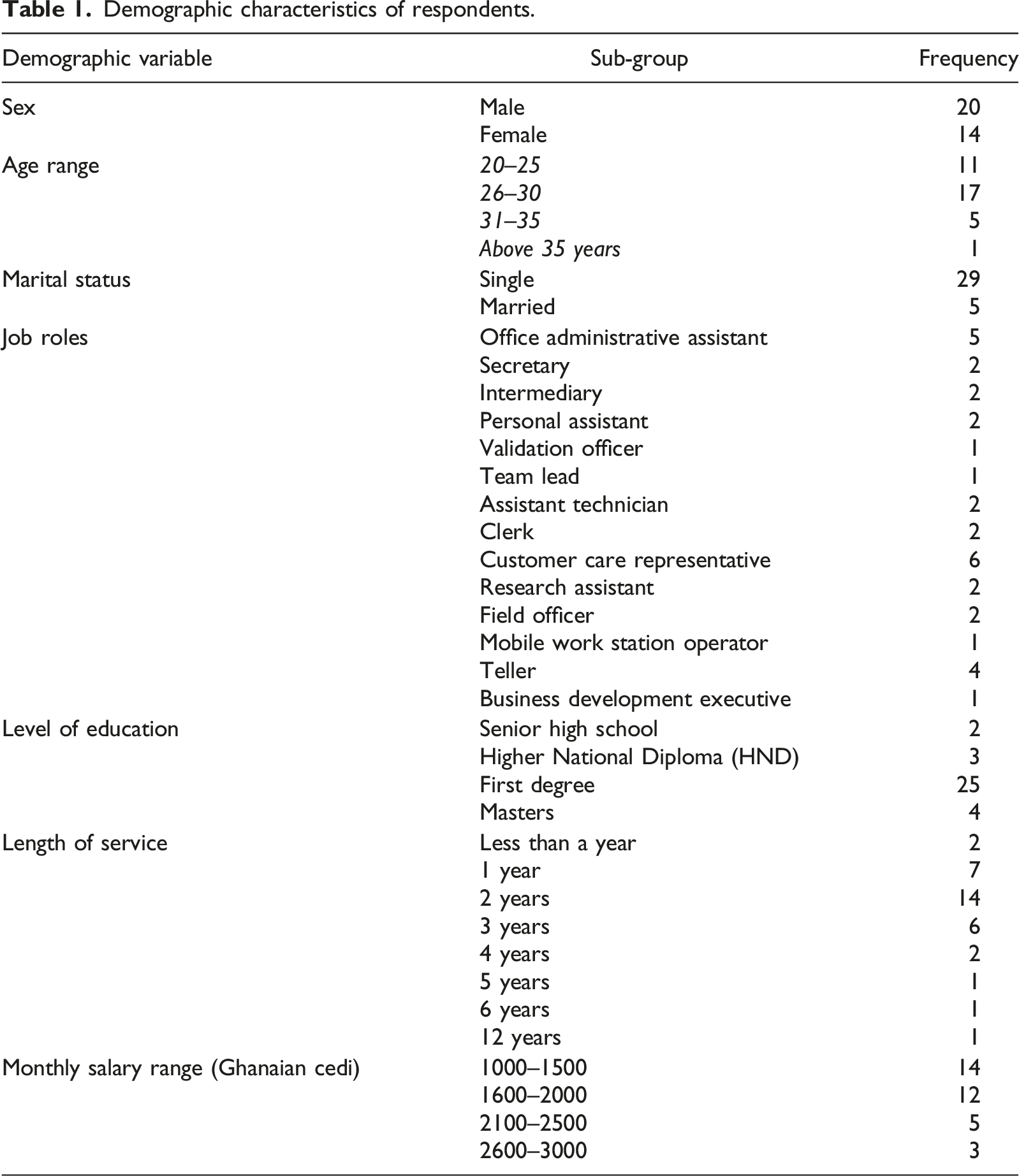
The instrument for data collection was an interview guide that consisted of a set of open-ended questions that tapped into the experiences of contract workers. The interview guide was used to conduct semi-structured interviews with 34 contract staff from various financial institutions in Ghana to understand their perceptions as well as the psychosocial challenges confronting them. These workers were sampled from the headquarters of these banking institutions. The interview guide was sectioned into two parts with part A collecting data on their demographics (age range, gender, marital status, educational background, job role, level of job experience and salary range). Part B had 13 questions focusing on the experiences of contract workers and the associated challenges. The interviews lasted on average 25 minutes on a date, time and place determined by the interviewee. All ethical protocols were strictly adhered to. Respondents were encouraged but not coerced to be part of the process. Their identities were not disclosed; hence, quotes cannot be associated with any respondent and confidentiality was maintained.
Demographic characteristics of respondents.
Data Analysis
All interviews were transcribed manually and critically scanned several times for the researcher to fully understand the interviewees’ responses. Data were analyzed using the thematic approach which is a method of identifying, analyzing and reporting patterns (themes) within data (Braun & Clarke, 2006). Codes, sub-codes and then themes were generated after the first process was completed. These themes were reviewed several times so that themes relevant to meeting the research goals were selected. Themes that were recurrent, repetitive and showed similarities and differences were adopted. Interpretations were made based on the themes realized, and exemplary quotes from the interviews were quoted to create a better understanding of the interpretation.
Results
Why People Accept Contract Work
Figure 1 is a pictorial representation of themes, sub-themes and codes realized from the qualitative analysis of data. Findings are discussed as depicted in the diagram. Development of codes, sub-themes and main themes on why people accept contract work.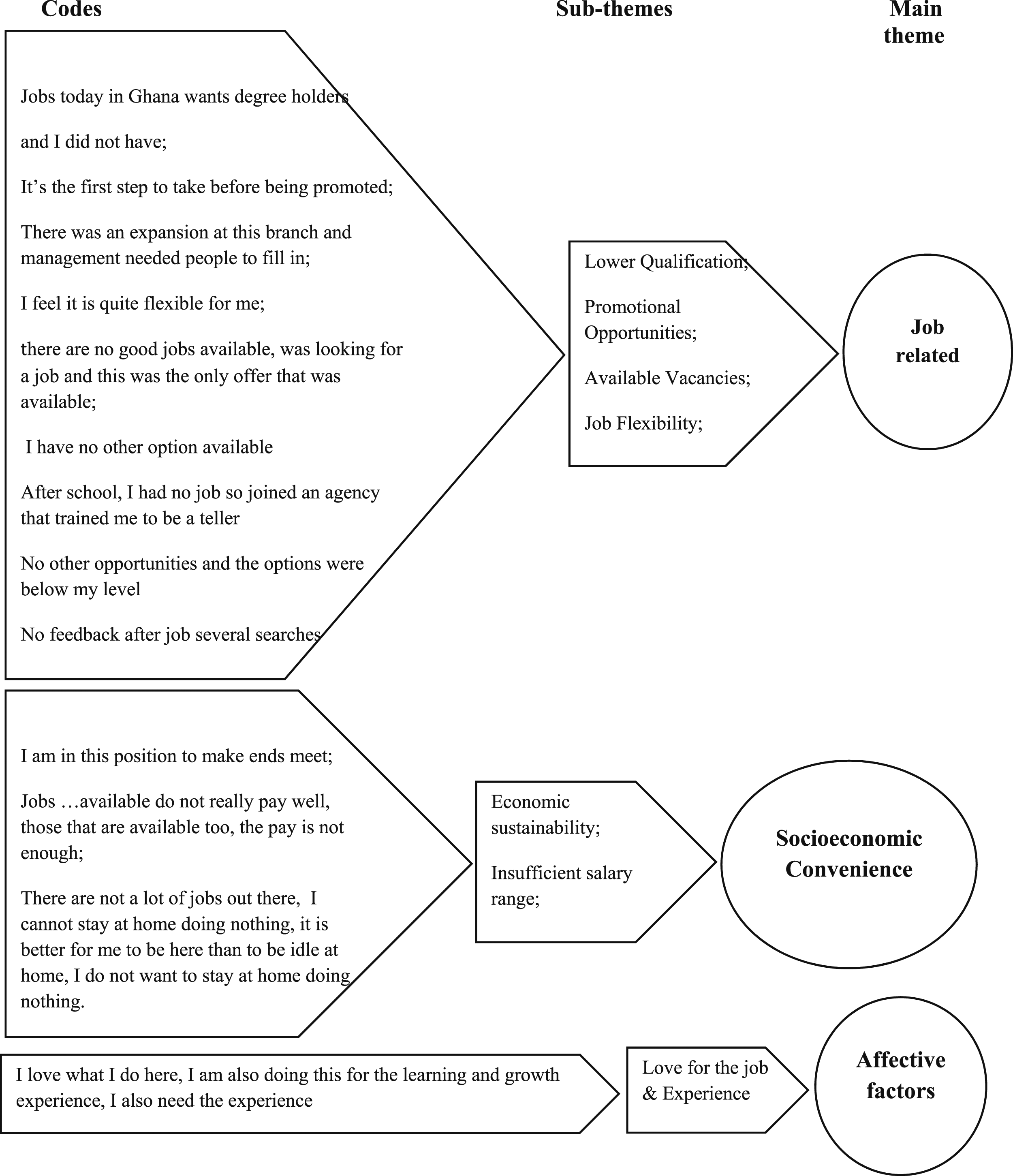
Job-Related Factors, Socioeconomic Convenience and Affective Factors
From the above, a variety of perspectives were expressed by interviewees accounting for their decision to accept contract status. For instance, some of the reasons were job-related factors. About 40% of the respondents did not have the qualification to opt for jobs or posts above their current posts. Thus for these individuals, withdrawing from their current posts was not an option. Yet, an individual was of the view that his current post could afford him the opportunity of being promoted to a much more deserving post. Hence, for this individual, the current post served as a springboard for their targeted position. It, therefore, seems that one’s qualifications determined whether one will be in a full-time permanent or full-time non-permanent position. An individual expressed his opinion: ‘I had no other option but to take this chance because most jobs today in Ghana require degree holders and I do not have so I took the opportunity…’ (P1).
One interviewee equally argued that
‘I believe it's the first step to take before being promoted to a senior staff…’ (P16).
Also, under job-related factors, some individuals (25%) joined their current organizations as interns and were offered the opportunity to work on a contract basis when the opportunity presented itself. Another individual was of the view that the job was flexible enough for her to engage in other activities. This is a personal choice due to career objectives. Yet for most (60%) respondents, scarcity of jobs has resulted in their decision to stay in their current posts. In many instances, the respondents sided with this quote in that they believed that: ‘There is no other option. This is the only position available to me, I feel it is quite flexible for me…’ (P2).
Another reported reason for accepting contract work was related to socioeconomic convenience. With this, employees’ decision to work on a contract basis was because of their current socioeconomic status. Most of the respondents (55%) had a low socioeconomic status and as such were more than willing to take on these job offers either to economically sustain themselves or as a substitute for idleness. For instance, an interviewee reported that: ‘Well I am in this position to make ends meet… I have things I want or need … I have to make money to acquire them. Therefore, I have no other option but to take this opportunity’ (P5).
To another, ‘…I have tried applying to other institutions for jobs but there is none available. Those that are available do not pay well’ (P12).
While others (15%) considered that, ‘…I do not have other alternative options so it is better for me to be here than to be idle at home’ (P7).
Another recurring theme under this broad aim was related to affective factors. Individuals (35% of respondents) maintained their current job status because of the love and gratitude they had for the job and the experience they were interested in gaining. For instance, an interviewee indicated that ‘…I love what I do here and I am also doing this for the learning and growth experience…’ (P7).
Emotional Experiences of Contract Workers
Psychological and Social Challenges
Figure 2 captures the challenges contract workers are exposed to. These concerns were collapsed into two major challenges, namely, psychological challenges and social challenges. Over half, (75%), of those surveyed, explained that their current work status has left traces of negative feelings within them making them psychologically unstable. For instance, the differential attitude accorded some contract workers in certain organizations has left them feeling hurtful and unhappy. Figure 3There were some suggestions: ‘…The permanent workers are always informed about the details of …events weeks before we are informed. I do not understand why some people should be informed before others about an event that is going to be attended by all the staff of the organization. I think it is unfair and discriminatory’ (P4). Other psychological challenges identified were feelings of dissatisfaction, discouragement and anxiety due to job insecurity. 10% out of the 75% were dissatisfied with the conditions they have to condone. For another 10%, the working relationship in some organizations had left them feeling discouraged. 15% of respondents just felt insecure about their current work status and this left them feeling anxious. In their account of events, respondents reported that: ‘…I feel discouraged. There is no motivation to work and the benefits are minimal. We do not even get certain allowances. Sometimes, the uncertainty of securing the job gives me anxiety’ (P5). Pictorial representation of codes, sub-themes and main themes on the emotional challenges encountered due to one’s employment status. Diagrammatic representation of codes, sub-themes and main themes on protective factors for job performance.
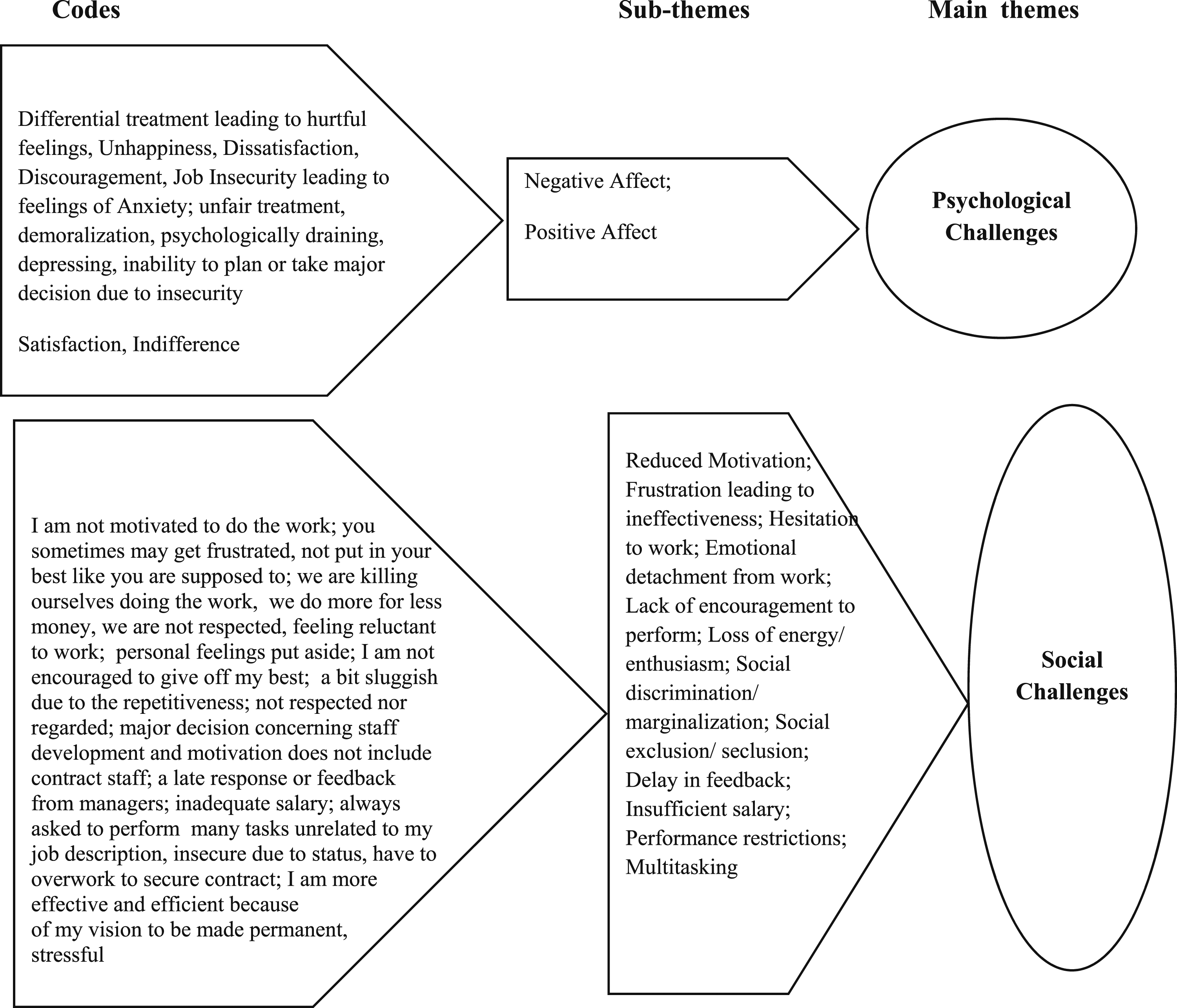
Although the majority of the respondents reported negative psychological challenges, it is worth noting that a small cohort (20%) reported a positive affect on their work status. For instance, some respondents (10%) expressed satisfaction with their current work status while other respondents (10%) were just indifferent about their employment status. These views were expressed as follows: ‘…I feel good …about my employment status. Because in our Ghanaian setting nowadays, it is very difficult for a graduate like me to a find job right after national service. It is fair and I feel privileged to work especially as a graduate on our side of the world’ (P9).
Another who was indifferent was of the view that: ‘…I think I am okay’ (P12).
Social challenges were also identified as part of the experiences of contract workers. Some respondents (6) lacked the motivation/encouragement to work. These views surfaced mainly concerning the frustration individuals (3) felt about their current status which made them reluctant to work, rendering them ineffective. The views were echoed by a respondent: ‘…I am not encouraged to give off my best because of my status…’ (P5).
On the other hand, another expressed that contract workers are highly committed and hard-working because of their desire to be made permanent.
The sources of frustration were varied. Many contract workers were of the view that their permanent colleagues also stressed them emotionally. This was exemplified by an interviewee who expressed the sentiment as follows: ‘…the way some of the permanent staff treat us, we tend to give up… you begin to feel reluctant in doing the work’ (P10).
One major theme that appears to run through all responses was the high level of discrimination. The majority (89%) of the interviewees explained that discrimination was with the rewards and benefits received by the two groups of workers. Some of these benefits aside from the higher salaries (50%) were personal and vehicle allowances, loans, insurance, yearly bonuses and medical allowances. These views were expressed by one of the interviewees who stated: ‘…some of the challenges as I mentioned before are the fact that we are not regarded or respected as contract staff and the fact that we do not enjoy some of the benefits that the permanent staff enjoy. For example, taking “trotro” (public transport) to work every day is a big challenge for me because public transport is not easy to get especially very early in the mornings when everyone wants to get to work. This is the kind of challenge we face because we do not have access to car loans’ (P 14).
Another type of discrimination experienced by other contract workers was associated with not being regarded or respected in the organization, especially by their fellow permanent staff. In some organizations where contract work is seen to be peripheral, it is no surprise they face such forms of discrimination from the permanent staff and management. Other forms of discrimination mentioned included insufficient salaries, no recognition in the workplace in terms of role-played, opinions not valued and decisions concerning staff motivation and development being ignored by management. These views were also expressed by an interviewee who stated: ‘… There is a lot of discrimination in this environment. Sometimes when resources are shared among staff, we are not given, given less or the last to be given. The permanent workers do not respect or regard us because they think we are only on contract. We are not included in decision-making concerning our development as workers’ (P20).
Another challenge discovered by one of the interviewees was that there is no assurance of renewal of the contract when the contract is expired. There is always the need to put in extra effort to secure your spot when the contract is about to expire. The position was expressed by a respondent saying: ‘…There is no assurance of contract renewal. When your contract for the period ends, the contract is terminated, and renewal is not guaranteed. Hence, if you do not work hard or your performance is not good, there is a very high possibility of you losing your job’ (P.13).
It is interesting to note that this discrimination was not perceived but rather resulted from actions and inactions from both management and colleagues. This attitude had made some (20%) numb to emotional events surrounding their job, as well as bored as a result of repeating the same activity on a daily basis. Concerns were expressed as follows: ‘…your work is not valued, your opinions are not taken into consideration during decision making because it is perceived that you do not know much…’ (P11).
Another reported problem was the delay in structural functions. For instance, a small cohort (25%) explained that because of their employment status, there was always a delay in feedback. Other contract workers (10%) reported that despite being expected to perform beyond their assigned duties, their performance was restricted. A view expressed was that: ‘There is usually a late response or feedback from my line of work…’ (P7) and ‘I always have to ask for approval before performing certain tasks…always being asked to perform so many tasks unrelated to my job description’ (P19).
These challenges stated above are evidence of how much discrimination and unfair treatment by management and other employees can affect the work of employees in an organization.
Although this study did not interview permanent workers, there was a consistency in the responses of all contract workers (100%) regarding differential treatment meted out to them. Per their narration, permanent employees’ years of experience, level of entry and qualifications create salary differentials. However, for contract workers, qualifications alone determined salary differences irrespective of work experience. Permanent workers are mandated to write certification exams and so eligible to apply for promotion, something unavailable to contract workers. They recount that they get the minimum of all permanent workers earn, making them feel peripheral. For instance, whereas their counterparts get between 28 and 30 annual leaves depending on their rank, contract workers get exactly what is stipulated in the Labour Act, 15 days. Discrimination is seen in monthly salary levels (where permanent workers get twice or more [between 3000 and 6000]) and many more allowances (e.g. clothing, transportation, free full medical healthcare, bonuses, Christmas giveaways etc.,) but is limited to contract workers. Many (90%) complained about the difficulty of accessing loans because of the definite nature of their contracts. One striking observation was that only permanent workers get an upfront allowance (i.e. payment like a bond to secure one's tenure with the bank for the year).
A respondent puts it blatantly: Yes, there is a huge difference. Permanent workers get a lot of bonuses and allowances. Same job, the same title but they are getting a salary twice or more as high as your pay (Respondent 32).
Unfortunately, for some (50%), landing on an indefinite contract was possible if one resigns and reapplies after working for two years. All were somewhat sure of exiting the organization should a better opportunity present itself.
An Emerging Finding
Protective Factors for Emotional Challenges
Intrinsic and Extrinsic Motivation
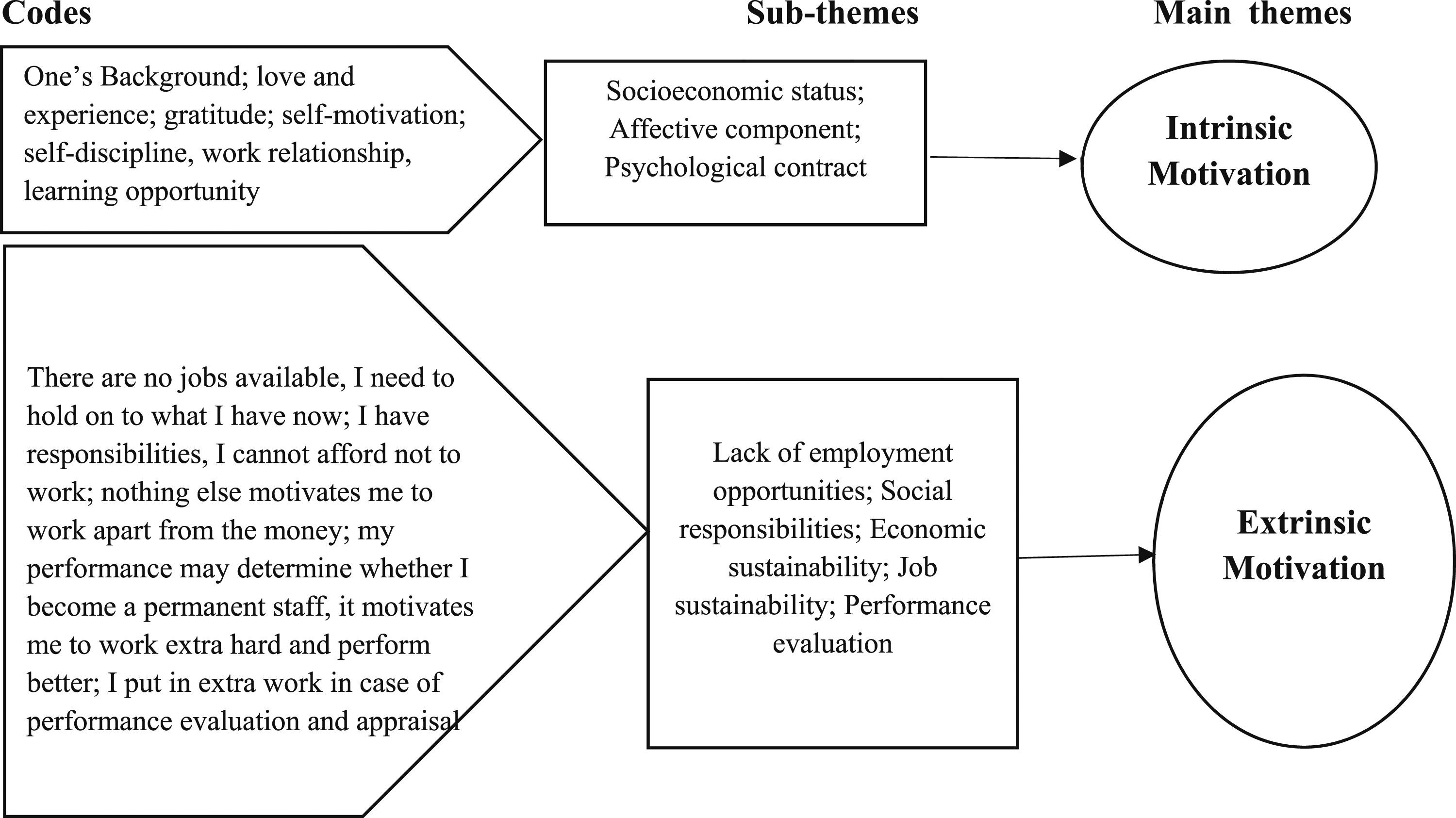
Although not a focus of this present study, the thematic analysis revealed that these contract workers had formed a protective shield in dealing with the challenges they encountered at their workplace. They (45%) were intrinsically motivated to continue working because of their background; the love they had for the job; and the experience they wanted to gain or the gratitude they felt and wanted to express through servitude. Other respondents (10%) motivated and disciplined themselves to work. Other interviewees (60%) suggested they were extrinsically motivated by factors like lack of employment opportunities, social responsibilities, economic sustainability, job sustainability and performance evaluation.
Discussions
Prior studies have noted that contract employment has been in existence for decades now. However, it is gaining ground in the Ghanaian context. Thus, the gradual acceptance of this employment type in the Ghanaian economy demands extensive research to gain an understanding of the nature and experience of employees in this type of employment. The overriding aim of this present study was to investigate the nature of contract employment in Ghana. Specifically, it investigated why people accept contract work and the emotional challenges experienced by these workers. Findings from the thematic analysis of why people accepted contract work were job-related, socioeconomic convenience and affective factors. Contract workers experienced psychological and emotional challenges because workers with an indefinite contract were treated better than those on contract. Another finding that emerged is that protective factors (intrinsic and extrinsic motivation) were adopted to mitigate the effect of these emotional challenges.
Blaauw & Uys (2006) acknowledged that individuals in primary jobs had a higher level of education than their counterparts in secondary jobs, a finding consistent with this study. Some individuals opted to stay in their current posts because they did not qualify to search for better jobs. Some employees with bachelor’s degrees or more and with good classes were more likely to be considered permanent full-timers. Like Blaauw and Uys (2006) who found that both formal and informal car guards performed similar functions, this research found that both groups of workers performed similar functions. This implies that although one’s level of education may hinder one from searching for a better job, in reality, the activities one performed surpassed one’s qualification or level of education. Brosnan et al. (1996), Callaghan and Hartmann (1991) and Foote and Folta (2002) admit that individuals accept contract works with the hope of continuing with the organization on a long-term basis or being promoted. Although this contradicts the dual labour market theory which equally suggests that it is almost impossible for an individual in a secondary job category to move easily to a primary job category (Dickens and lang, 1985; Doeringer & Piore, 1971), the findings of this study revealed that employees maintained their current post with the hope of securing a permanent full-time status. The demographics show that many contract workers have been in this status on average for about 2 years; hence, the hope of transitioning is high. Those who appear trapped (working for 3 years and beyond) are few. Hudson (2007) explains that this transition is possible if individuals are young; therefore, the assertion is quite true in that the sample for this study was youthful probably, a reason they were optimistic. Also, this perception could be because a majority of the respondents were single with limited family and financial obligations, although their income is small, their singlehood and youthful nature allow them to be quite comfortable.
Lack of jobs implies that individuals will make do with available vacancies and these are subthemes that emerged in the analysis. This reflects the findings of Callister (1997) that individuals maintain their contract work due to the current employment rate. Job flexibility was one of the subthemes under job-related factors. Individuals felt their current jobs allowed them to combine work and family life. This perfect blend made them comfortable with their current job post, corroborating the findings of Callaghan and Hartmann (1991) and Callister (1997) that individuals opt for contract work because of their flexible nature. Hudson (2007) explains that individuals in secondary jobs most often encounter financial difficulties, with their family members also experiencing the spillover of this effect. It can be argued that individuals in secondary jobs, although accepting such jobs to earn income, do not, in reality, earn much that can sustain the home, thus defeating the purpose for which they accept such jobs in the first place. The findings of this study reported the same that although salary ranges on the market are insufficient, individuals accept contract work in order to earn income to sustain themselves economically. However, some were not enthused at all with their remunerations. This study also finds that in a bid to shorten unemployment duration, many accept to be in this employment, a finding supporting de Graaf-Zijl (2005). It can be argued that unemployment subjects one to a state of complete or temporary idleness causing one to be restless. A complete state of idleness can force one into accepting jobs that may be below one’s qualifications just to keep one temporarily occupied.
Callaghan and Hartmann (1991) and Callister (1997) explain that individuals accept contract work to gain experience. The experience exposes an individual to the corporate world and prepares the individual for more challenging roles, a finding consistent with this research. A rather interesting finding that is yet to be discovered in the literature is that individuals maintain their jobs because of the ‘love’ they have for the job and not for any other particular reason. When one is passionate about what one does, one does not restrict himself or herself in the performance of their duties, making this finding relevant to the existing body of literature.
Emotional Experiences of Contract Workers
The dual labour market theory explains that secondary jobs are of low quality with negative attributes on several dimensions. It can be argued that these negative attributes may result in negative affect. These negative affect may include but are not restricted to feelings of hurtfulness, unhappiness, dissatisfaction, discouragement and anxiety as found in this analysis. It can further be argued that these negative feelings may result from the social relationship in the work environment like lack of trust and perceived unfairness (Kalleberg et al., 2000; McDonald & Makin, 2000). A rather interesting finding that emerged is that amidst these negative effects, other respondents exhibited positive affects like satisfaction and indifference to their current state. Some aspects of this study mirror that of Munro (2012) and Tilly (1997) who indicate that jobs are likely to have good and bad features.
Autor (2001) reported that contract workers experience little motivation, lower wages and tenure, exclusion from decision-making and perceptions of injustice, findings similar to this study. Furthermore, individuals’ expectations for permanent work when unfulfilled force the individual to exit the organization. Contract workers go a step further to multitask and work harder, a finding confirming Campbell and Chalmers’ (2008) study, and this can lead to a higher tendency of work intensification. This is done in hope that one may be retained or offered a permanent job; hence if this vision remains unfulfilled, there is the likelihood of higher turnover soon. This study found that contract workers do not hesitate in performing their duties although they experience a delay in getting feedback on the chain of command, and this may result from the perceived social discrimination/marginalization and exclusion they experience in the work environment. The findings here largely confirm the first tenet of the dual labour market theory because many aspects of the job are bad for these contract workers, a finding in line with Dickens and Lang (1985) and Blaauw and Uys (2006). A subtle finding that surfaced supported the second tenet of the dual labour market theory. Although some (10) remained optimistic about transitioning to a permanent job role, the otherwise response of the majority (17 respondents) revealed that this optimism was far from materializing. The remaining seven had conditioned their minds to stay on for a while and then move on because resigning and reapplying had no certainty. The majority were of the view that there was a greater probability of them not being retained due to certain factors in place, supporting the view of restricted mobility to primary job posts by the dual labour theory (Doeringer & Piore, 1971; Hudson, 2007; Rosenberg, 1976). Probably, the situation might be because as a country, hardly are there quality of jobs of the citizenry monitored.
An additional finding was that contract workers had a shield that helped them deal with the challenges they faced at the workplace. While others were intrinsically motivated to look beyond their present ‘predicament’ and still perform to their very best, others were extrinsically motivated to perform, a dimension least explored in the literature. Therefore, it may be an area that future researchers should consider venturing into to establish the nuances therein.
Limitations
This study is limited to the Ghanaian context and as such findings cannot be generalized due to it being a qualitative study. Further, the study focused mainly on the experiences of contract employees; hence, employers’ views were not solicited for explanations on why they opted for non-standard forms of employment. Future research should be focused on that.
Contribution, Implication and Conclusion
This study has made a substantive contribution to the existing body of literature. To start with, the findings have brought to light that employers need to create a conducive work environment for all including contract workers to improve their (contract workers) psychosocial and physical well-being. Since organizations may have their reasons (e.g. reducing budgets) for using contract workers, their working conditions should be improved since they have an indispensable role to play in the growth of the organization. For instance, all (contract and permanent) employees can be trained since training has a direct effect on employee and organizational performance. The findings of this study imply that although a permanent job is the most desired, in its absence, individuals consider contract employment to be a relief from the complete state of dejection as such it is a blessing in disguise. Conscious efforts must be made by the government in the form of policy intervention for such workers to be considered first should there be an opening in the organization they work for. For instance, since the majority of these employees are managed by recruitment agencies, their activities must be regulated so as to get these contract workers protected. On a positive note, some workers were quite optimistic that they will be successful, but the uncertainty is with the timing. Holman and McClelland (2011) are of the view that this deliberate attempt must be made to improve their job quality or they risk being trapped in that for a long time. There must be a national agenda to improve the quality of Ghanaian jobs instead of much emphasis on job creation. In conclusion, although on the surface level, contract works may have many negative attributes and may seem undesirable in one dimension, in another dimension, it is a blessing in disguise in this current state of the Ghanaian economy where it is almost normal to have all the necessary qualifications and still be unemployed. The research may conclude that many of these respondents see themselves as either in the category of involuntary temporary workers or stepping-stone group, hence generally, feel fortunate and thankful for having a job.
Supplemental Material
Supplemental Material – Contract Work, a Blessing in Disguise? An Application of the Tenets of the Dual Labour Market Theory
Supplemental Material for Contract Work, a Blessing in Disguise? An Application of the Tenets of the Dual Labour Market Theory by Majoreen Osafroadu Amankwah in Compensation & Benefits Review.
Footnotes
Declaration of Conflicting Interests
The author(s) declared no potential conflicts of interest with respect to the research, authorship, and/or publication of this article.
Funding
The author(s) received no financial support for the research, authorship, and/or publication of this article.

Supplemental Material
Supplemental material for this article is available online.
Author Biography
References
Supplementary Material
Please find the following supplemental material available below.
For Open Access articles published under a Creative Commons License, all supplemental material carries the same license as the article it is associated with.
For non-Open Access articles published, all supplemental material carries a non-exclusive license, and permission requests for re-use of supplemental material or any part of supplemental material shall be sent directly to the copyright owner as specified in the copyright notice associated with the article.
