




Abstract
Despite a great deal of research investigating incentives and goal setting more broadly, little is known about the linking of goals and goal attainment to different monetary incentive structures, or the manner in which such structural choices impact various job attitudes and job performance. Consequently, a quasi-field experiment, a laboratory experiment, and an on-line survey experiment examined the effects of three monetary incentive systems on task performance (exps. 1, 3), counterproductive behavior (exper. 2), and perceptions of fairness (exps. 1, 3). Additionally, the mediating effect of prolonged effort/persistence (exp. 3) was tested. The results revealed that an all-or-nothing distal goal method of linking a monetary incentive to a goal under-performs the multiple proximal goals and linear piece-rate methods with regard to task performance, counterproductive behavior, and perceptions of fairness. The results of the third experiment revealed that persistence and perceptions of fairness mediate the monetary incentive-task goal performance relationship.
Managers throughout the western world rely on monetary incentives to increase an individual’s job performance, with practitioners observing that “since reaching a record high in 2014, the number of companies using incentive pay to produce stellar results has kept on rising” (Fisher, 2016). Researchers have shown that money can have a positive influence on an individual’s performance (Locke et al., 1980). A meta-analysis investigating the relationship between monetary incentives and job performance found a significant corrected correlation between financial incentives and performance quantity (.34; Jenkins et al., 1998). Subsequent reviews have confirmed that financial incentives improve performance on both interesting and boring tasks, showing the positive effect of external rewards on intrinsic and extrinsic motivation. (Kim et al., 2021). However, it is notable that Jenkins et al. observed the effectiveness of different incentive systems varies considerably. Hence, they concluded there is wisdom in “designing incentive systems carefully” (Jenkins et al., 1998, p. 784). Indeed, despite a great deal of research investigating incentives and goal setting more broadly, little is known about incentive structures and the linking of goals and goal attainment to particular incentives, or the manner in which such structural choices impact various job attitudes and job performance. To date, there is little information available to suggest what a carefully designed monetary incentive system entails, and how various incentive systems influence employee behavior and attitudes such as task performance, counterproductive behavior, effort/persistence, and goal commitment, let alone perceptions of fairness.
Virtually all of the 1000 or more studies on goal setting theory (GST, Mitchell & Daniels, 2003) have shown that a specific, challenging goal leads to higher performance than an easy goal, a vague goal, or no goal at all. These results have been highly consistent across laboratory and field settings (Locke & Latham, 1990, 2013). Yet comparatively little work has addressed the effect of tying a monetary incentive to goal setting to further increase an individual’s job performance and attitude, and the relative impact of various structures of linking goals to incentives on performance.
The purpose of this paper was to examine the effectiveness of linking three incentive methods to a specific, challenging goal on two dimensions of job performance as well as the perceived fairness of each incentive method and goal commitment (see Figure 1). In the following sections, we review extant research that has focused on both monetary incentives and goals, outline three methods of linking a bonus to a goal that have been proposed by Locke (2004), and develop hypotheses regarding the effectiveness of each one. We then report the results of a quasi-field experiment, a laboratory experiment, and an online experiment that tested these hypotheses. Note: PR, linear piece rate; PG, multiple proximal goals; DG, all-or-nothing distal goal.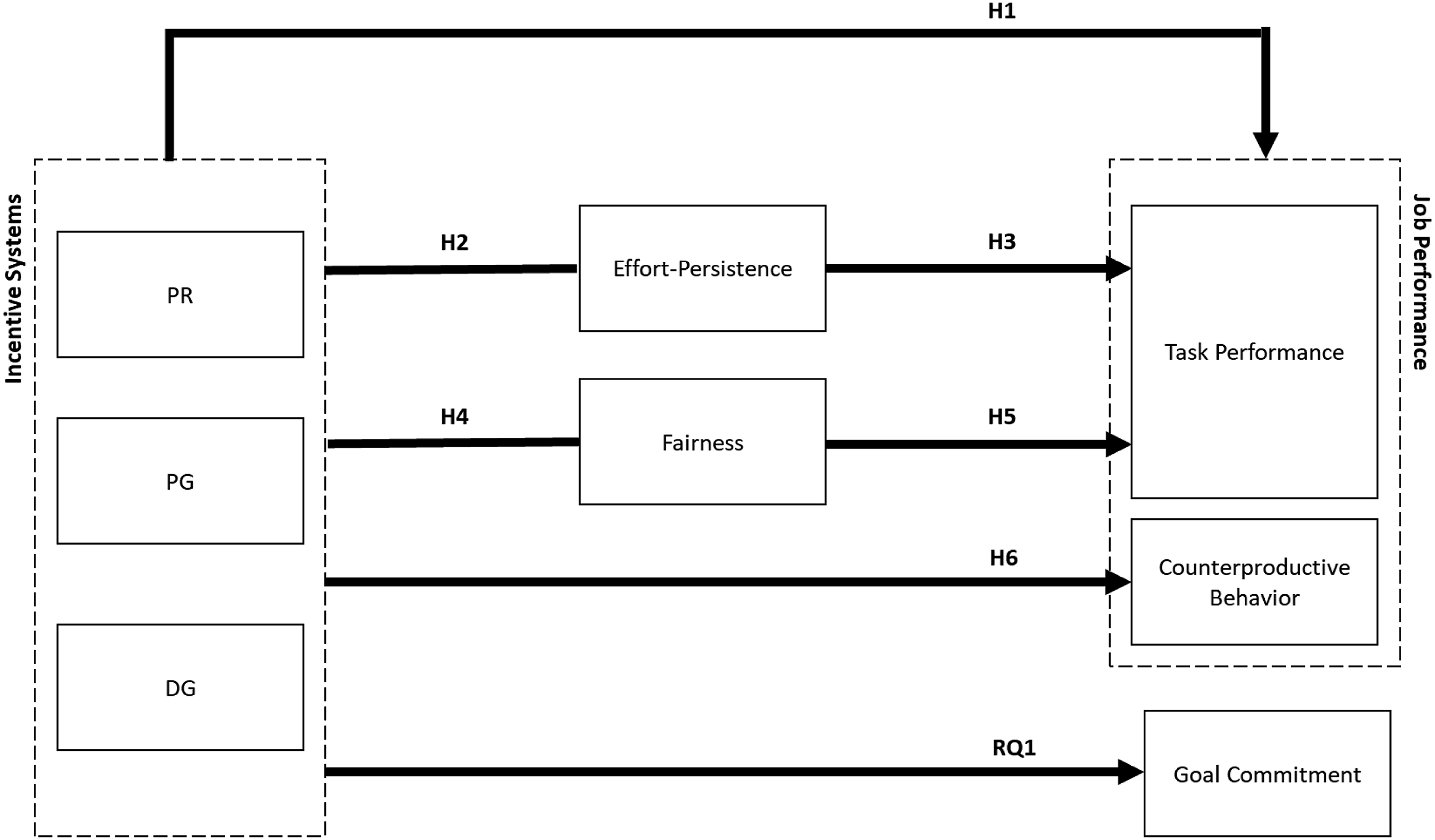
Linking Monetary Incentives to Specific, High Goals
Research that has tested the hypothesis that linking a monetary incentive for goal pursuit/attainment has generated mixed results. Indeed, in their review of this literature, Locke and Latham (1990, p. 139) concluded that “the use of incentives added increments to performance about as often as not,” with some studies demonstrating an improvement, others nonsignificant findings, and still others a negative effect on job performance. The vast majority of research in this domain was conducted in laboratory settings where students were the participants. For example, Mowen et al. (1981) showed that when money was paid on a piece-rate basis, a high goal resulted in higher performance than a moderate or easy goal. However, when a bonus was given only for goal attainment, performance was lower when the goal was high than when it was moderately difficult or easy to attain. Similarly, Lee et al. (1997) found that when goals were perceived as impossible to attain, a monetary incentive for goal attainment lowered an individual’s performance of a laboratory task. Such laboratory experiments, however, are limited in that they: (1) rely solely on undergraduate student samples, (2) focus only on task performance, and (3) provide limited insight into mediating mechanisms that might explain observed relationships. Given the importance of challenging goals and monetary incentives to both practice and GST, further understanding of this relationship is needed. Thus, we reviewed three different methods of linking monetary incentives to goal pursuit that was suggested by Locke (2004).
Three Goal Setting-Monetary Linkages
Locke (2004) speculated on the advantages and disadvantages of three methods of linking a monetary incentive to a goal, namely (1) an all-or-nothing attainment of a distal goal, (2) a distal goal that includes multiple proximal goals, and a (3) linear piece-rate. The all-or-nothing method requires an employee to attain a specific, difficult distal goal in order to receive a bonus. If the employee falls short of goal attainment, no monetary reward is given. The multiple goal method (i.e., multiple subgoals) rewards multiple levels of job performance for which increasing amounts of money are awarded for attaining each proximal goal. Finally, the linear method involves an increasing amount of money paid for every incremental increase in the level of an employee’s job performance. Other than requiring a minimum level of performance, there are no cutoff levels of performance for an employee to receive a bonus.
Dependent Variables
To investigate the effectiveness of each of these three monetary methods, we chose dependent variables of both theoretical and practical significance (see Figure 1). First, we investigated the effect of each incentive system on two dimensions of job performance, namely, task performance and counterproductive behavior (Rotundo & Sackett, 2002). Task performance refers to behaviors that contribute to the technical core of an organization (Borman & Motowidlo, 1993) such as the provision of goods and services to customers (Rotundo & Sackett, 2002). Counterproductive behavior, often referred to as workplace deviance, is defined as voluntary behavior intended to harm the organization and/or its members (Robinson & Bennett, 1995; Rotundo & Sackett, 2002).
Second, we investigated the effect of each of three incentive methods on effort/persistence. GST (Locke & Latham, 1990) states that specific, high goals influence performance by increasing the effort/persistence that individuals put forth to attain the goal. Empirical research supports this assertion (Locke & Latham, 2013). As such, we investigated the extent to which monetary incentive increases effort in the form of persistence, and whether persistence mediates the influence of an incentive on task performance. Effort/persistence, or prolonged effort, is a mediator in GST (Locke & Latham, 1990).
Third, we investigated the extent to which a monetary incentive influences perceptions of fairness. Perceptions of fairness, or the lack thereof, have been shown to relate to counterproductive behavior (Greenberg, 1993). Hence, perceptions of fairness might mediate the effect of an incentive system on task performance as well as counterproductive work behavior. Counterproductive behavior can take the form of cheating to attain a goal (e.g., Schweitzer, Ordonez, & Douma, 2004) and other retaliatory actions (e.g., Greenberg, 1993).
GST states that goal commitment is a moderator of the goal-performance relationship. Locke and Latham (1990) have argued that if there is no goal commitment, by definition there is no goal. Empirical research has shown that high goals only have a positive effect on performance when there is high goal commitment (Hollenbeck & Klein, 1987). Thus, we investigated if any of the three monetary incentive methods influenced goal commitment.
Hypotheses
Monetary Incentives and Task Performance
The three incentive methods examined differ with respect to proximal versus distal goals (Bandura & Simon, 1977; Manderlink & Harackiewicz, 1984). The all-or-nothing method provides only a single distal goal. In addition to a distal goal, a proximal goal system includes multiple subgoals. Attaining proximal goals can increase an individual’s persistence in reaching the distal goal (Manderlink & Harackiewicz, 1984). Moreover, as noted by Bandura (1986), attaining proximal goals serves an informational as well as an energizing function, thus facilitating both learning and maintenance of an individual’s effort/persistence (Latham & Seijts, 1999). This is because the pursuit of each proximal goal provides performance feedback as to the necessity of acquiring new strategies for attaining the distal goal. The absence of proximal goals suggests that the all-or-nothing distal goal method may yield the lowest level of job performance.
In the linear piece rate method, employees receive an incentive for every incremental increase in their performance. Thus, the employees involved in this bonus system may be less likely to perceive an incremental discrepancy between their performance level and the distal goal, thereby overlooking the necessity of adjusting their effort or changing their strategy to attain the distal goal.
The multiple proximal goal method and the linear piece rate method differ primarily in the number of proximal goals. By assigning every possible subgoal, the multiple goal method becomes a piece rate linear method. The difference in the number of proximal goals might be crucial. Indeed, the linear system, with a monetary incentive for each incremental increase in performance might result in employees settling for an easier distal goal. By contrast, employees who have far fewer proximal goals may have goal levels that increase goal striving as a result of perceiving a discrepancy between their performance and the attainment of each proximal goal. Consequently, we tested the following hypothesis:
The multiple proximal goal incentive system leads to higher job/task performance than the linear piece rate and the all-or-nothing linear systems.
Effort-Persistence
As noted earlier, GST states that effort/persistence mediate the goal-performance relationship (Locke & Latham, 1990). Persistence is defined as “effort maintained over time” (Locke & Latham, 1990, p. 90). As argued above, the manner in which these three incentive systems do or do not provide proximal goals in addition to a distal one, considered together with goal difficulty, suggests that the multiple proximal goal method may lead to the greatest amount of persistence. Indeed, Locke and Latham (1990, p. 88) argued “while it is not assumed that effort-performance relationships are necessarily or consistently linear, more effort typically gets better results than less effort.”
Consistent with the arguments made in support of the first hypothesis, we further hypothesized that the multiple proximal goal method generates the greatest amount of persistence since this bonus system combines the energizing effects of proximal goals with the discrepancy feedback seeking effects generated by goal difficulty. Individuals whose bonus is paid on a linear piece rate might satisfice, since they are less likely to experience anything more than a small performance-distal goal discrepancy, thus leading them to exert less effort than those individuals whose bonus is paid on the attainment of each proximal goal. Consistent with both expectancy theory (Vroom, 1964) and empirical research on GST (Lee et al., 1997), individuals in the all-or-nothing distal goal system might abandon pursuing a distal goal if their expectancy judgments decrease once they perceive they are unlikely to attain the distal goal. Thus, we tested the following two hypotheses:
The multiple proximal goal incentive system leads to greater persistence than the linear piece rate and the all-or-nothing distal goal payment systems.
The effect of an incentive system on task performance is mediated by persistence.
Fairness Judgments
As noted earlier, fairness perceptions have been shown to influence a variety of workplace outcomes including job/task performance (Colquitt et al., 2001; Folger & Cropanzano, 1998) and counterproductive behavior (Skarlicki & Folger, 1997). The all-or-nothing distal goal method might lead to lower perceptions of fairness than the other two methods. The multiple proximal goals and linear piece rate methods are likely to generate higher perceptions of fairness, as the attainment of each proximal goal leads to a monetary reward. However, in an all-or-nothing distal goal method of providing a bonus, employees who increase their effort, but fall short of attaining the distal goal leave empty-handed. Consistent with organizational justice theory (Folger & Cropanzano, 1998), this method likely generates unfavorable counterfactual judgments. Employees who receive no reward for goal persistence may imagine the counterfactual of having improved their performance, yet are not rewarded for doing so. Such a counterfactual may lead to the perception that it is unfair to come close to goal attainment yet receive no reward. The multiple proximal goals and linear piece rate methods may mitigate feelings of unfairness by providing a monetary reward for every proximal goal attained. Additionally, given the manner in which fairness perceptions have been shown to influence task performance (Colquitt et al., 2001), we hypothesized that fairness perceptions mediate the effect of an incentive system on an individual’s performance. Hence, a fourth and fifth hypothesis were tested:
The all-or-nothing distal goal method is perceived as less fair than the multiple proximal goals and linear piece rate methods.
The effect of an incentive system on performance is mediated by perceptions of fairness.
Counterproductive Behavior
Lewicki (1983) argued that the choice to engage in inappropriate behavior entails an individual’s consideration of the balance between the costs and benefits of doing so. Hence, all three methods of linking incentives to goal setting might influence perceptions of the costs and benefits. In the all-or-nothing distal goal method, the benefits derived from deviant behavior are arguably the highest. Attainment of the distal goal leads to a large reward, but falling short leads to uncompensated effort. Thus, employees in this system arguably have the most to gain from engaging in counterproductive behavior. On the other hand, employees paid on a linear piece rate method obtain limited benefit from behaving counterproductively. This is because they receive a monetary bonus at each point on a rising scale. The costs of being caught engaging in counterproductive behavior (e.g., theft) is likely to be perceived as much greater than the costs of doing so in the other two payment methods.
Greenberg (1993) found that perceptions of justice are related to employee theft. Individuals who engaged in stealing viewed their behavior as restoring justice/fairness to a situation that they perceived as unfair. Thus, it is likely the all or nothing distal goal method leads to the greatest amount of counterproductive behavior. Therefore, a sixth hypothesis was tested:
Counterproductive behavior is higher in the all-or-nothing distal goal bonus method than it is in the other two bonus conditions.
Goal Commitment
Monetary incentives may increase commitment to difficult goals (Hollenbeck & Klein, 1987). However, it is unclear as to the type of incentive system that influences goal commitment. There is little theoretical or empirical research for formulating a hypothesis. Therefore, we sought an answer to the following research question: Do the three incentive methods lead to different levels of goal commitment?
Experiment 1
Method
Context
A quasi-field experiment was conducted in three call centers of a large pharmaceutical firm that sells products to customers ranging from small drug stores to large health-care providers. The call centers are located in different US states: one in the southeast, one in the southwest, and one in the relative center of the south. An advantage of testing the six hypotheses in call centers of the same firm is that the company collects detailed job performance data on each employee using a computerized tracking system for assessing an employee’s productivity down to the minute. The employees are paid on an hourly basis and perform similar tasks in each of the three geographic locations. One of the three bonus systems was randomly assigned to one of the three call centers.
Sample
The participants were full-time call center employees (n = 109) of whom 69% were female. Of these employees, 34 were in the all-or-nothing distal goal condition, 37 were in the multiple proximal goals condition, and 38 were in the linear piece rate condition.
The employees were engaged in customer support activities. In doing so, they dealt directly with business-to-business customers who were purchasing pharmaceutical and health-care products. In short, the employees in each of the three call centers were engaged in similar work involving similar customers and products.
Procedure
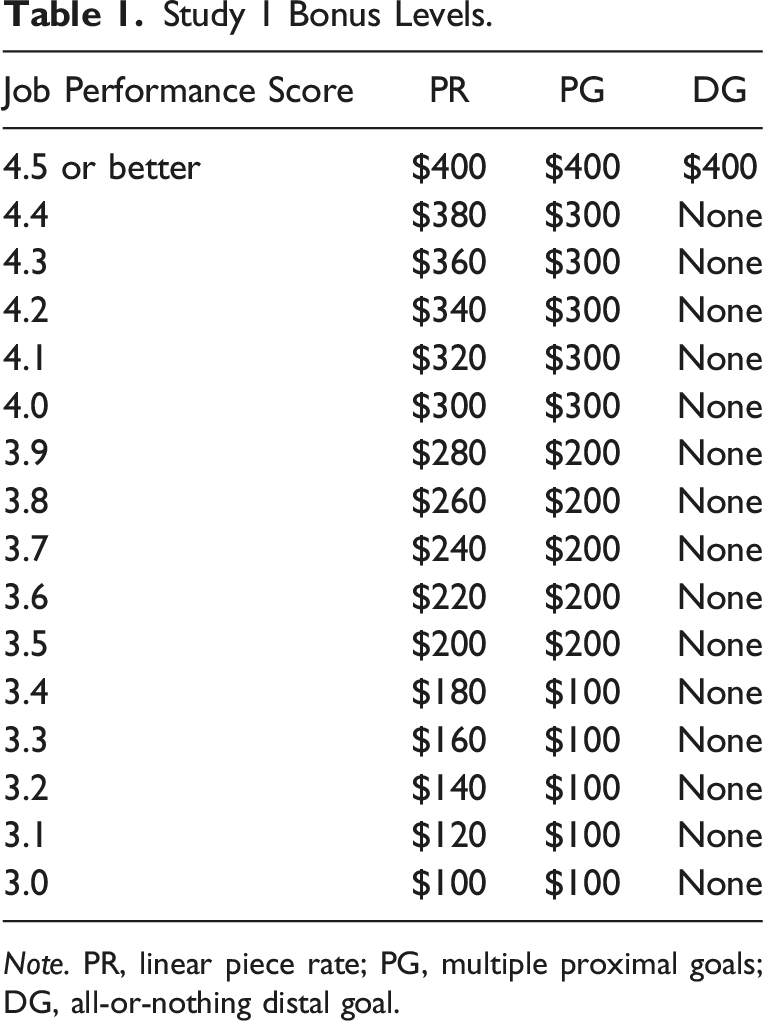
Each call center was exposed to one of the three bonus methods for two consecutive months. The same high performance distal goal was set for all the employees at each of the three sites, namely, to attain a monthly job performance score of 4.5 or higher on a 5-point scale. Data from a pilot study indicated that this distal goal represented the 93rd percentile of employee performance, which management determined was the appropriate level of difficulty based on their projections of how much money might be spent testing the effect of each incentive plan. Thus, the difficulty level of the distal goal was held constant across the three call centers. Only the method for paying a bonus was manipulated.
Study 1 Bonus Levels.
Note. PR, linear piece rate; PG, multiple proximal goals; DG, all-or-nothing distal goal.
In the multiple-goal-level method, performance was rewarded at four goal-attainment levels: $100 for performance exceeding 3.0, but less than 3.5 (24th percentile of performance); $200 for performance exceeding 3.5 but less than 4.0 (50th percentile of performance); $300 for performance exceeding 4.0, but less than 4.5 (73rd percentile of performance); and performance at or above 4.5 resulted in a $400 bonus.
In the linear PR method, a bonus was provided for job performance scores that exceeded 3.0, starting with a bonus of $100 and increasing in $20 dollar increments for each 10th of a point improvement on the job performance measure. For the average employee, a $400 bonus was equivalent to a 16% bonus.
Approximately 2 weeks prior to the beginning of this quasi-field experiment, management briefed the employees on the rationale for the high distal goal and the respective bonus system. There was no communication between employees in one call center with those in the other two locations. As such, the employees in one call center were not aware of the different incentive systems that were used in the other two sites because the sites were geographically far apart.
Prior to this experiment, all three call center managers had administered monetary bonuses in an ad hoc manner. From our discussions with management and our subsequent interviews with employees, it appears that bonus decisions were made largely on the basis of managerial discretion combined with all-or-nothing-like task performance logic. Employees in each condition of the present experiment indicated that a positive feature of their bonus system was that they now knew the performance targets required to receive a bonus.
Unfortunately, no fourth call center location was available to serve as a control condition. Thus, we used historical performance data from each of the three geographical locations to minimize threats to internal validity.
Measures
Given the nature of call center work, each employee worked in a separate computer station, where phone calls with customers were recorded. Consequently, objective job performance data were collected in real time throughout the two-month experimental time frame. Goal commitment and perceptions of fairness were measured via a written survey administered in the fifth week of the experiment—after the employees had worked for over a month under a bonus system, but before the first bonus was paid. The surveys were administered during regular working hours.
Employees received real-time updates on their performance throughout the work-day in a “pop-up window” on their computer screen. That information included their performance for the day and their running average for the month (with the score from each working day being equally weighted into the running average). Task performance scores were reset at the beginning of each working month. These procedures are normal day-to-day company operations. Management insisted on using this measure because of their employees familiarity with it.
Results
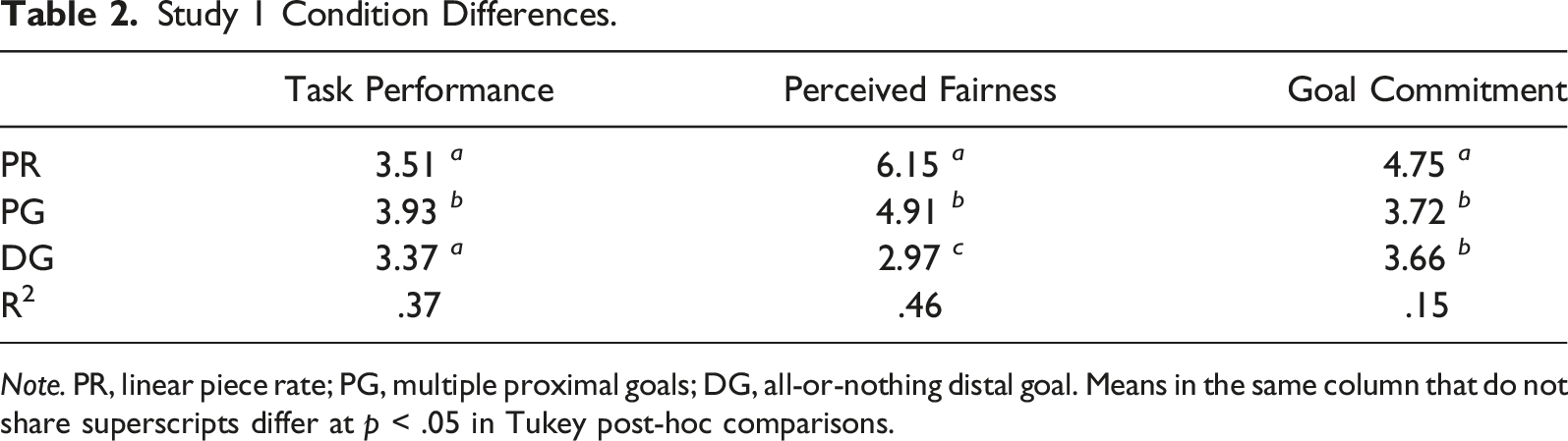
Study 1 Condition Differences.
Note. PR, linear piece rate; PG, multiple proximal goals; DG, all-or-nothing distal goal. Means in the same column that do not share superscripts differ at p < .05 in Tukey post-hoc comparisons.
Notably, the means reported here are raw task performance means, but given that we controlled for the previous month’s performance, the ANCOVA results indicate the extent of improvement or change in task performance evident in each call center relative to the prior month. Consistent with Hypothesis 1, these results revealed that the multiple proximal goals method resulted in the highest job performance.
To eliminate the rival hypothesis that inherent differences among the call centers, rather than differences in the bonus conditions, account for differences in job performance, ANCOVAs were conducted for each of the 11 months that immediately preceded this experiment. The immediately preceding month was used as a covariate in each analysis. That is, 11 different ANCOVAs were conducted to determine whether there were significant differences in job performance among the three call centers for the 11 months prior to the experimental manipulation. No significant difference in performance was obtained among the three sites during any one of those 11 months.
ANOVA revealed that perceptions of fairness differed significantly among the three bonus methods (F[2, 107] = 42.60; p < .01; r 2 = .46). The linear piece rate condition (M = 6.15, SD = 1.15) received higher fairness ratings than the multiple proximal goals (M = 4.91, SD = 1.38; F[1] = 13.09; p < .01) and the all or nothing distal goal conditions (M = 2.97, SD = 1.77; F[1] = 84.20; p < .01). The multiple proximal goals condition (M = 4.91) received significantly higher fairness ratings than the all or nothing distal goal condition (M = 2.97; F[1] = 30.77; p < .01). These results provide support for hypothesis 4, namely, that the all-or-nothing distal goal method was viewed as the least fair of the three methods for administering a bonus.
Similarly, ANOVA revealed that goal commitment was high in all conditions. Nevertheless the differences among the three incentive methods (F[2, 107] = 9.15; p < .01; r 2 = .15) was significant. Post-hoc comparisons indicated that the linear piece rate method (M = 4.75, SD = 1.15) generated a significantly higher level of goal commitment than the multiple proximal goals (M = 3.72, SD = 1.26; F[1] = 13.11; p < .01) and the all-or-nothing distal goal methods (M = 3.67, SD = 1.24; F[1] = 14.13; p < .01).
Discussion
The results from this quasi-field experiment indicate that the multiple proximal goals method led to higher levels of job performance than the linear piece rate and the all-or-nothing distal goal conditions. This is consistent with the notion that multiple proximal goals provide information as to whether a change in strategy for attaining the distal goal is necessary, and that they energize effort. Multiple proximal goals, in addition to a distal goal, typically lead to higher performance than only setting a distal goal (Bandura & Simon, 1977; Latham & Seijts, 1999).
Previous research has shown that when distal goal difficulty is held constant across conditions, performance does not differ significantly between conditions in laboratory (e.g., Latham & Saari, 1979) or field settings (e.g., Latham & Marshall, 1982). The present experiment shows that this is not the case when a monetary bonus is linked to the setting of a specific, difficult goal. Different monetary incentive methods affected an employee’s performance differently in the present experiment even when the distal goal difficulty was held constant.
Although this study did not directly lend itself to testing the second hypothesis regarding persistence, qualitative data obtained from post-study interviews were consistent with this hypothesis. In each call center, following the completion of the employee questionnaire, focus groups consisting of 8–12 employees were conducted at the request of management to gauge employee reactions to their respective incentive method.
Employees were provided with straightforward prompts such as: “tell us about your reactions to the incentive system,” “what did you like about the incentive system?” and “what did you dislike about the incentive system?” The interviewer did not provide further prompting or questioning of employees. Representative responses from these discussions revealed that persistence varied across the three call centers. For example, employees in the all-or-nothing distal goal method reported: “Once you know your month is shot in that there is no way you are going to earn the bonus, you give up,” “I just think that once you’ve gone past the point that you can’t make it back, you just don’t care anymore,” and “If you have a bad day then you are done, and that can occur at the very beginning of the month.” Goal striving that is typically induced by a specific, challenging goal no longer occurred once obtaining the monetary incentive was perceived as unlikely. However, the employees in the multiple proximal goals and linear piece rate conditions stated: “there was an incentive for us to try and move up a little bit further before the month was over” and “there was motivation every single day to exert effort until day 31.” These findings are consistent with the second hypothesis.
In terms of perceptions of fairness, we found support for the fourth hypothesis. The all-or-nothing distal goal method was viewed as the least fair of the three conditions. Given the importance of perceptions of fairness to job-related outcomes, such as workplace deviance behavior (Colquitt et al., 2001), the all-or-nothing distal goal condition would appear to have substantial undesirable side-effects.
Employees in the linear piece rate condition had the highest level of goal commitment. However, this finding is not in keeping with the findings regarding job performance.
Experiment 2
Managerial preference in the quasi-field experiment did not permit an investigation of the extent to which linking an incentive system to a specific, high distal goal might generate counterproductive behavior. Thus, we designed a laboratory experiment to test the sixth hypothesis regarding that behavior.
Method
Procedure
The participants were 79 undergraduate business students of a large mid-western university who received extra course credit for participating in this experiment. The participants were 50.6% male; 74.7% Caucasian, 17.7% Asian, and 1.2% African-American (6.3% did not identify their race). They were randomly assigned to one of four conditions: all-or-nothing distal goal (n = 20), multiple proximal goals (n = 20), linear piece rate (n = 20), and a no-bonus control condition (n = 19).
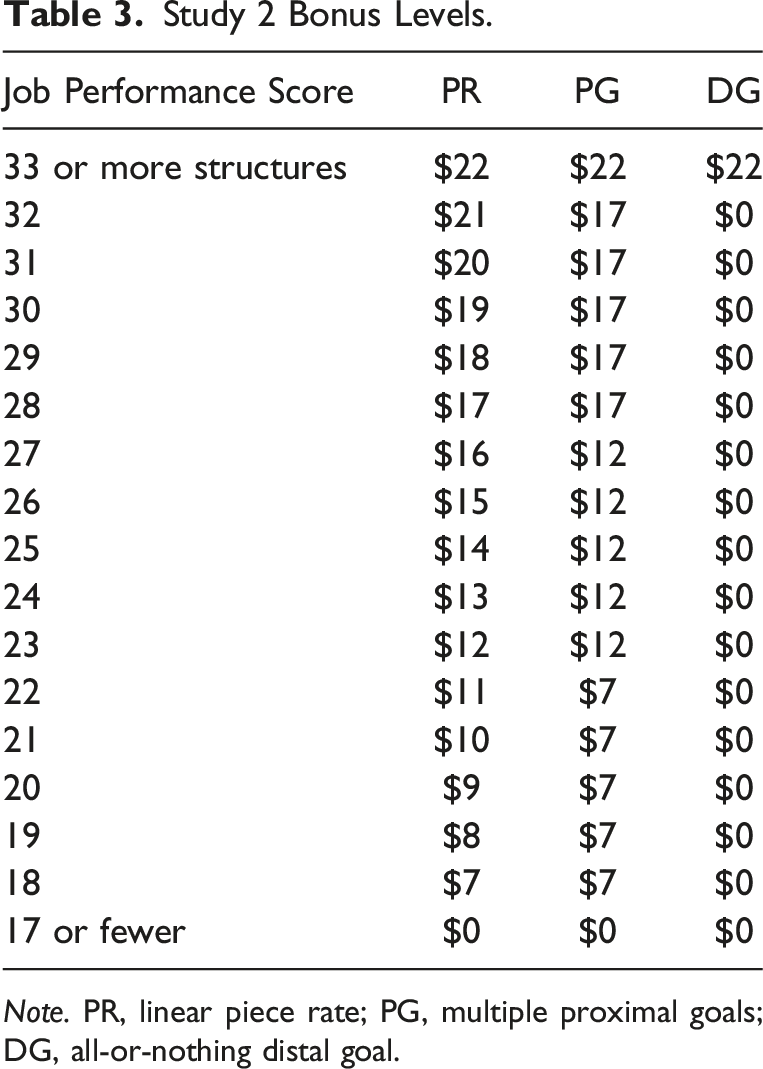
Each participant was directed to a room, one at a time. The room contained two large buckets of Lego blocks and a small model Lego structure. The experimenter took the model structure apart and demonstrated how to reassemble it. The participants were then given a 5-minute practice period. After the practice session, the experimenter assigned a specific, high distal goal of replicating 33 structures within a 30-minute time frame. A pilot test revealed that this number was roughly equal to the performance percentile used in the first experiment, namely, 93%. Locke and Latham (1990) recommended a distal goal difficulty level of at least 90% in a laboratory setting to ensure performance variance.
Study 2 Bonus Levels.
Note. PR, linear piece rate; PG, multiple proximal goals; DG, all-or-nothing distal goal.
A digital timer was placed in view of the participants. The experimenter observed each participant through a one-way mirror for the entire 30-minute session. At the end of 30 min, the digital timer sounded an alarm. The experimenter reentered the room with a questionnaire on fairness for each participant to complete. Before a participant had an opportunity to ask questions or make comments, the experimenter’s cell phone rang. The experimenter engaged in a short conversation with the “bogus” caller. The experimenter then informed each participant: “I’m very sorry, but this is an important call. It will probably take about 10–15 min. At this point all you need to do is complete this short survey. When you’re done you will be given course credit.”
The experimenter removed what appeared to be a random assortment of bills from a bag and, referencing the written materials regarding the assigned incentive system, said: “You know how the incentive system works. Complete the survey, pay yourself a bonus if you are owed one, and then you can be on your way. If you’d like to meet with me to discuss this experiment, you are welcome to wait until I’m done, or you can email me to make an appointment.”
Consistent with theft-related research (e.g., Greenberg, 1993), the experimenter placed $26 dollars (three $5 bills, and eleven $1 bills) on the table, resumed the telephone conversation, and left the room to observe the participants through the one-way mirror.
Study 2 Means, Standard Deviations, and Correlations.
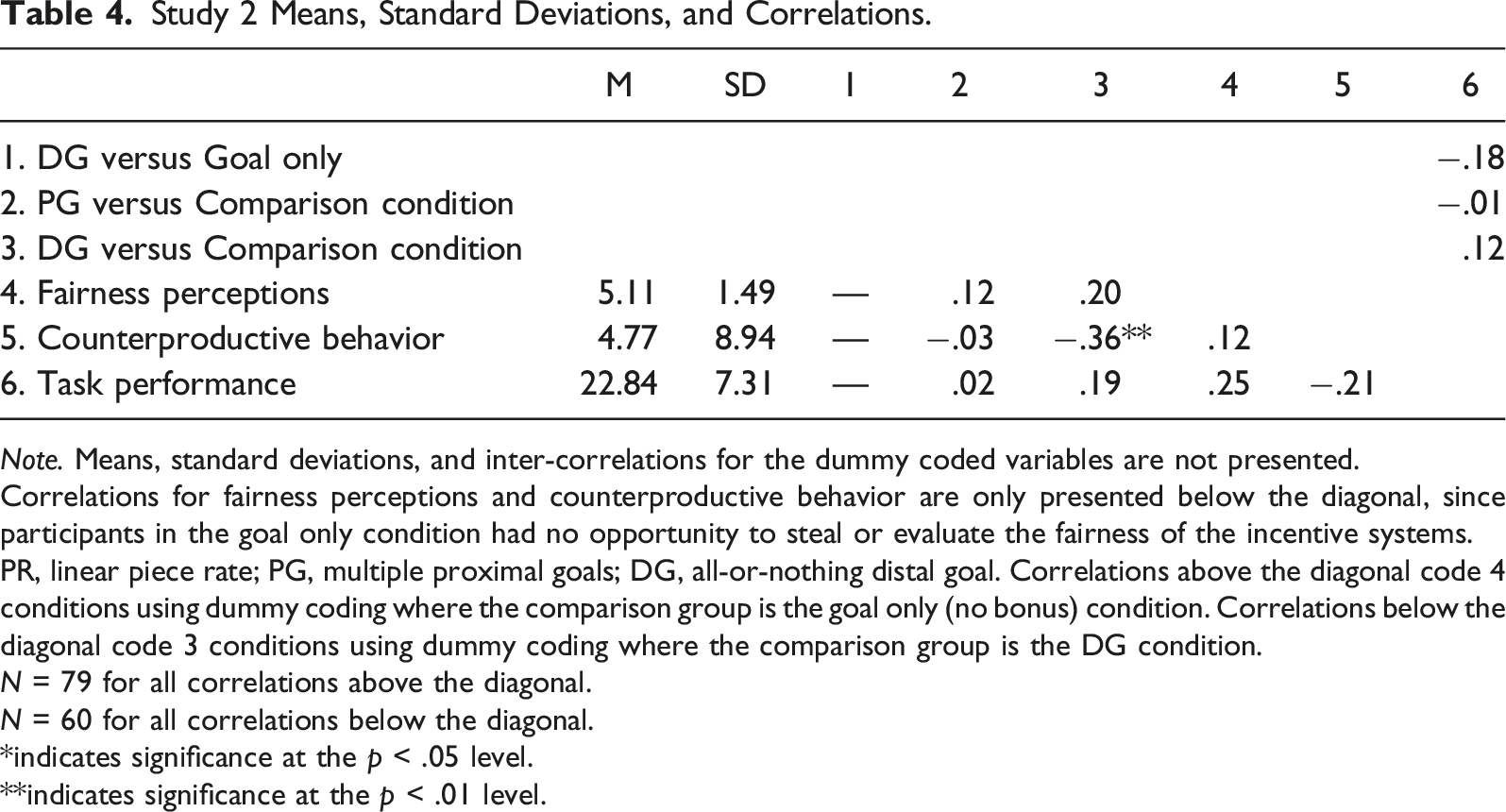
Note. Means, standard deviations, and inter-correlations for the dummy coded variables are not presented.
Correlations for fairness perceptions and counterproductive behavior are only presented below the diagonal, since participants in the goal only condition had no opportunity to steal or evaluate the fairness of the incentive systems.
PR, linear piece rate; PG, multiple proximal goals; DG, all-or-nothing distal goal. Correlations above the diagonal code 4 conditions using dummy coding where the comparison group is the goal only (no bonus) condition. Correlations below the diagonal code 3 conditions using dummy coding where the comparison group is the DG condition.
N = 79 for all correlations above the diagonal.
N = 60 for all correlations below the diagonal.
*indicates significance at the p < .05 level.
**indicates significance at the p < .01 level.
Study 2 Condition Differences.
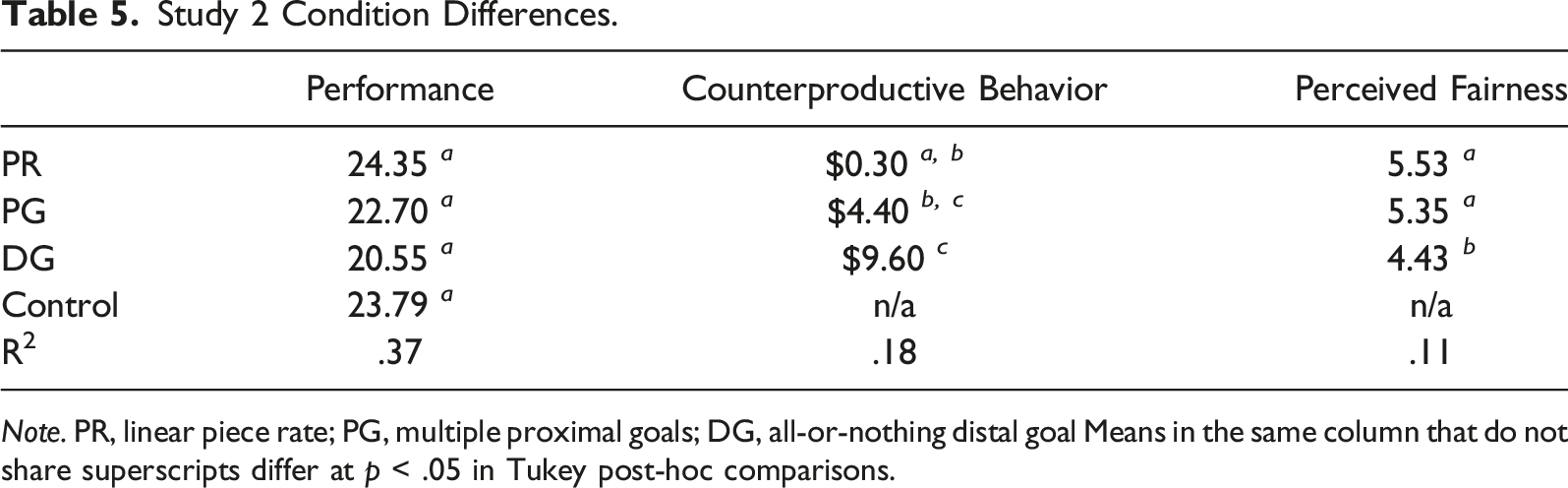
Note. PR, linear piece rate; PG, multiple proximal goals; DG, all-or-nothing distal goal Means in the same column that do not share superscripts differ at p < .05 in Tukey post-hoc comparisons.
Study 3 Correlations.
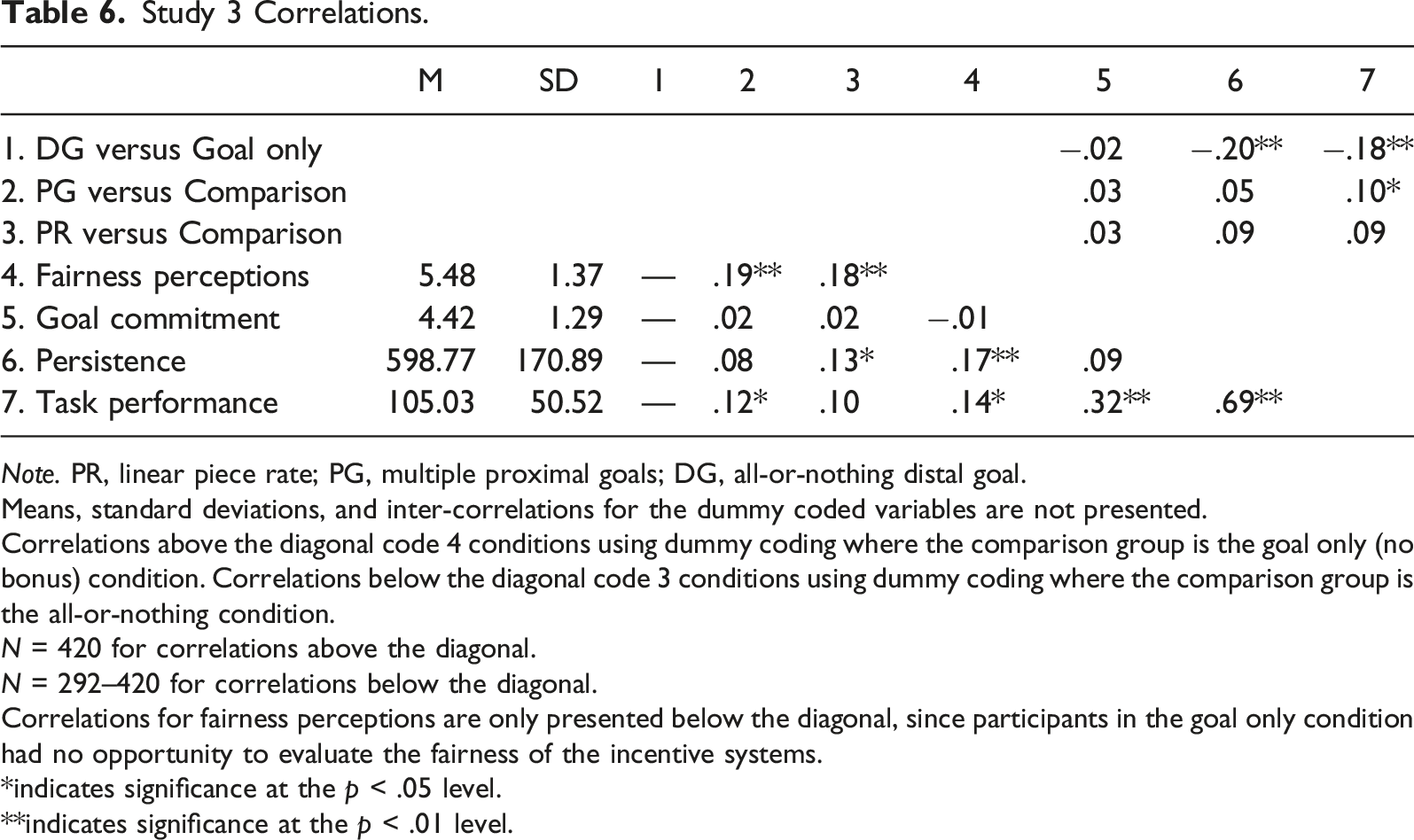
Note. PR, linear piece rate; PG, multiple proximal goals; DG, all-or-nothing distal goal.
Means, standard deviations, and inter-correlations for the dummy coded variables are not presented.
Correlations above the diagonal code 4 conditions using dummy coding where the comparison group is the goal only (no bonus) condition. Correlations below the diagonal code 3 conditions using dummy coding where the comparison group is the all-or-nothing condition.
N = 420 for correlations above the diagonal.
N = 292–420 for correlations below the diagonal.
Correlations for fairness perceptions are only presented below the diagonal, since participants in the goal only condition had no opportunity to evaluate the fairness of the incentive systems.
*indicates significance at the p < .05 level.
**indicates significance at the p < .01 level.
Measures
Results
Since the raw theft measure violated assumptions related to the homogeneity of variance and the normality of residuals, we conducted a two-step transformation on the theft measure to address normality (Templeton, 2011), and used statistics robust to violations of the homogeneity of variance (i.e., Welch F-test and Games-Howell post-hoc comparisons).
For ease of interpretation, mean theft figures are presented in raw dollar amounts Table 4. The amount of money stolen varied significantly among the three incentive conditions (Welch F[2, 33.34] = 4.41, p < .01). Post-hoc comparisons revealed that the amount of theft was significantly higher in the all-or-nothing distal goal (M = $9.60, SD = 12.18) condition than in the linear piece rate condition (M = $0.30, SD = .42; F[1] = 12.83, p < .01). The multiple proximal goals condition (M = $4.40, SD = 7.28) did not differ significantly from the amount of theft in the linear piece rate or the all or nothing distal goal conditions. Forty percent of those in the all or nothing distal goal condition, 30% of those in the multiple proximal goals, and 15% of those in the linear piece rate condition engaged in theft. These results provide partial support for Hypothesis 6 Table 5.
Similarly, we found significant differences among conditions in the perceived fairness of the different incentive conditions (F[2, 60] = 3.39, p < .05, r 2 = .11). Post-hoc comparisons indicated that the linear piece rate (M = 5.53, SD = 1.11) was perceived as more fair than the all or nothing distal goal condition (M = 4.43, SD = 1.64; F[1] = 5.90, p < .05). Additionally, the multiple proximal goals condition (M = 5.35, SD = 1.49) was perceived as more fair than the all or nothing distal goal condition (F[1] = 4.10, p < .05). These results provide support for Hypothesis 4.
No significant differences in task performance occurred across conditions (F[3, 79] = 1.05, p > .05). This result failed to provide support for Hypothesis 1. Notably, the present analysis included a control condition where the same challenging distal goal, as in the monetary bonus conditions, was provided, but no financial incentive was available.
Discussion
This second experiment demonstrates that the all-or-nothing method of linking incentives to a distal goal generates the worst outcomes in terms of perceptions of fairness, and a significantly greater amount of counterproductive behavior than in the linear piece rate condition. Such findings are in keeping with previous research on justice and theft (Greenberg, 1993). The all-or-nothing distal goal condition produced a substantial amount of theft in the present experiment, both in terms of the absolute amount stolen, and in terms of the percentage of individuals (40%) who engaged in this counterproductive behavior. This finding is also consistent with and explains the laboratory findings of Welsh et al. (2020) where the participants were assigned a goal set at the 90th percentile, self scored their performance, and in doing so inflated their scores inappropriately with the belief that no one would know they had done so. In short, when a goal is assigned without taking into account the ability to attain it, when performance is self-assessed with no independent audit, and money is linked to the goal that is set, inappropriate behavior is likely to occur. When performance is objectively scored, as in our first experiment, inappropriate/unethical behavior is unlikely to occur.
There were no significant differences in task performance among conditions in this second experiment. This is consistent with prior laboratory findings where goal difficulty was held constant (e.g., Latham et al., 1982). The control condition in this second experiment, where participants had the same challenging distal goal, but no financial incentive for attaining it, performed as well as participants in a bonus condition. This finding questions the necessity of linking a monetary incentive to goal setting in order to increase an individual’s performance. Having said this, it is possible that this study does not have sufficient power to detect performance differences given that it was designed primarily to investigate perceptions of fairness and counterproductive behavior. The pattern of performance means might be suggestive of a performance effect that failed to reach significance due to low power. The piece rate system had the highest performance at 24.35 structures, followed by the multiple proximal goal system at 22.70 structures, and finally the all-or-nothing distal goal system at 20.55 structures.
Experiment 3
The designs of experiments 1 and 2 did not allow for tests of the extent to which persistence and perceptions of fairness mediate the goal-incentive task performance relationship. In designing a third experiment, we first considered why the second experiment failed to find task performance differences among conditions. Interviews with the participants pointed to the multi-trial nature of task performance in the first experiment versus the single trial in this second experiment.
In the first experiment, the employees indicated that the incentive conditions affected their performance as the month progressed. As they obtained performance feedback across multiple days of performance, and goal pursuit became increasingly difficult in the all-or-nothing condition most people did not see themselves achieving the performance level required to obtain a bonus. Hence, they reported that their effort decreased. By contrast, in the second experiment, the participants familiarized themselves with the tower-building task and then worked to attain the distal goal level on a single trial. Consequently, in addition to examining mediators, we included multi-trials in this third experiment to determine if the results of the first experiment would be replicated.
Sample
Participants were 420 individuals recruited from Amazon’s Mechanical Turk (mTurk), an online environment that matches participants to researcher requests. Each participant was paid $2.00 as a base rate for completing the study. Participants were 32.7 years of age on average, with 10.5 years of full-time work experience; 61.2% were male.
Procedure
The participants were randomly assigned to one of four conditions: a goal-only control condition (i.e., no bonus), an all-or-nothing distal goal payment method, a multiple proximal goals payment method, and a linear piece rate method of payment. The task required counting the number of circles of a given color in a series of images. Each image was a 6 × 6 grid of circles of six different colors: black, blue, green, purple, red, and yellow for a total of 36 total circles per grid. Depending on the image and the color to be counted, correct totals varied from 3 to 9 circles of the target color.
The participants began with a practice trial in order to familiarize themselves with the task and the web interface. They had 60 s to correctly count the number of circles of a given color in 20 images. A timer counting down the amount of time to perform the task was always visible on each participant’s computer screen. Following the practice round, participants were provided information regarding their bonus condition, completed survey measures described below, and then proceeded to the main study.
In this third experiment, there were four trials of image counting. Each trial, lasting 3 minutes, included 60 images. Pretesting on this task was conducted in order to establish performance norms. Distal goal difficulty level was set at the 93rd percentile of performance, the same level of difficulty in the first two experiments. The 93rd percentile of correctly counted images across all four rounds was 190 images out of 240 possible images.
In the all-or-nothing distal goal condition, participants were given a $4.00 bonus if they correctly counted a total of 190 or more images across the 4 rounds. Correctly counting 189 or less resulted in no bonus. In the multiple proximal goals condition, a total of 190 or more correctly counted images yielded a $4.00 bonus, 140 to 189 images yielded a $3.00 bonus, 90 to 139 images yielded a $2.00 bonus, and 40 to 89 images yielded a $1.00 bonus.
In the linear piece rate condition, a total of 40 correctly identified images qualified for the first-level bonus of $1.00 (as in the multiple proximal goals bonus system), and each additional correctly identified image resulted in a bonus of $0.02. For example, correctly identifying 41 images resulted in a bonus of $1.02, 42 images a bonus of $1.04, and so forth.
At the conclusion of each trial, participants were shown the number of images they had correctly counted in the preceding trial as well as their total score of correctly counted images to that point. At the conclusion of the final round, the participants were informed of their total score and the amount of bonus money, if any, they had earned. The participants then completed survey measures related to their perceptions of fairness of their incentive system as well as demographic information Table 6.
Measures
Task Performance
Task performance was measured as the number of correctly counted images on each trial, summed to a total score on all four trials.
Persistence
As noted earlier, persistence refers to how long a participant continued to work toward goal attainment on each trial. The duration of each trial was 3 minutes, after which participants were automatically advanced to the next trial. However, the participants could terminate or “quit” their work on any trial by clicking a button labeled “I’m done with this round.” The survey interface recorded the time in seconds when a participant first clicked on the survey page. This first click represented entering a field to input their first answer. The survey also registered the time, in seconds, of the last click a participant made during each trial. The first click was subtracted from the last click to represent the amount of time (in seconds) that a participant was actively working, and then these lengths were summed across the four trials. This procedure is superior to simply measuring the amount of time a participant spent working on each page during each trial since a page could be loaded and left open for a full 180 seconds without the participant actually working on the task. Additionally, during each trial, the “Tab” key was disabled so participants had to use mouse clicks to navigate and enter their answers. Thus, persistence represents the number of seconds, out of a total 720 possible seconds, that a participant was actively pursuing goal attainment.
Perceived Fairness
Perceived fairness was assessed using four items on a 7-point Likert-type scale: “My assigned goal was fair”; “My reward reflects the outcome I deserve”; “My reward is commensurate with my performance”; and “I am happy with the pay system for this HIT.” The Cronbach alpha for this scale was .91.
Goal Commitment
Goal commitment was measured using the same 7-item scale used in the first experiment (Hollenbeck et al., 1989) with regard to the overall goal of correctly counting 190 circles across the four trials.
Results
Study 3 Condition Differences.

Note. PR, linear piece rate; PG, multiple proximal goals; DG, all-or-nothing distal goal. Means in the same column that do not share superscripts differ at p < .05 in Tukey post-hoc comparisons.
The measure of persistence was not normally distributed. Thus, using the same procedure as that described in the second experiment, we transformed this measure and used statistics robust to violations of homogeneity of variance. The mean duration figures in the original scale (number of seconds) for ease of interpretation are reported. An ANOVA of persistence revealed significant results (F [3, 419] = 5.35, p < .001). Post-hoc tests indicate that significantly different means were present in the all or nothing distal goal (M = 539.18) compared to the multiple proximal goals (M = 612.39), linear piece rate (M = 624.44), and control conditions (M = 620.61). These findings provide partial support for Hypothesis 2 in that the multiple proximal goals resulted in greater persistence than the all or nothing distal goal condition, but did not result in significantly greater persistence than that in the linear piece rate condition.
ANOVAs revealed significant differences among conditions in terms of perceived fairness (F[3, 419] = 15.57, p < .01). The all or nothing distal goal condition was perceived as significantly less fair (M = 4.71) than the multiple proximal goals (M = 5.83) linear piece rate (M = 5.81), and control conditions (M = 5.53). Thus the fourth hypothesis was supported. Finally, with regard to the Research Question, there was no significant difference in goal commitment among the three experimental conditions (F[3, 418] = .52, p > .05).
To test the extent to which persistence and perceptions of fairness were mediating mechanisms through which the goal-bonus linkage increased task performance, we tested a path model. The participants in the control condition were excluded from the analysis. Additionally, the results of an ANOVA indicated that the multiple proximal goals and linear piece rate conditions were not significantly different from one another. But the all or nothing distal goal condition was significantly different from both. Thus, we collapsed the multiple proximal goals and linear piece rate conditions, and then compared them to the all-or-nothing distal goal condition. We generated a dummy variable to code this grouping (0 = all-or-nothing; 1 = linear/multiple-goal-level). Lisrel 8.80 was used to test the path model.
The tested model and results are summarized in Figure 2. Fit statistics indicate the model fit the data (χ2, df = 4.34, 2; CFI = .99; GFI = .99; SRMR = .06; RMSEA = .06). The dummy variable representing the experimental condition significantly, and positively predicted persistence. Similarly, the dummy variable significantly, positively predicted perceptions of fairness. Persistence was shown to significantly, positively influence task performance, thus suggesting a mediation effect. Perceptions of fairness also significantly, positively predicted task performance suggesting a second mediated effect. Finally, to test for full or partial mediation, we added a direct path from the dummy variable representing the experimental condition to task performance. This path failed to reach significance. Adding this path did not produce an improvement in model fit over the original model (χ2 difference, df = 1.02, 1; p = .31). This suggests that persistence and perceptions of fairness fully mediated the effect of incentive systems on task performance thereby providing support for the third and fifth hypotheses. Study 3 path model.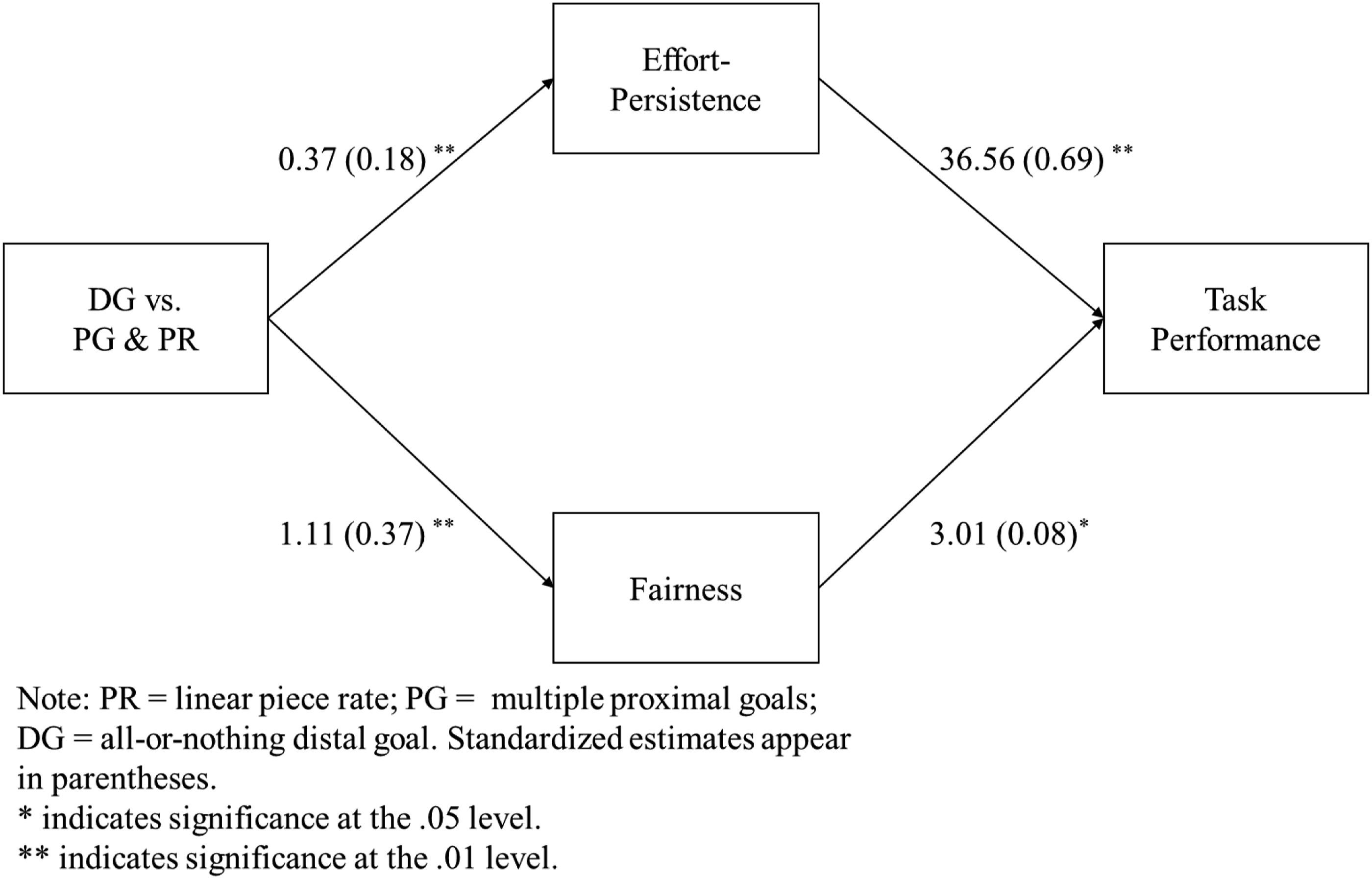
To further investigate whether multiple trials are required to generate significant task performance differences among the bonus conditions, we conducted four ANOVAs, one for each trial. For the first trial, the overall ANOVA failed to reach significance (F[3, 419] = 2.45, p > .05), indicating that none of the incentive conditions produced significantly different levels of task performance. A significant overall ANOVA (F[3, 419] = 5.05, p < .01) was obtained on the second trial. Condition comparisons indicated that both the multiple proximal goals and the linear piece rate conditions, generated significantly better task performance than the all or nothing distal goal condition. No other bonus system comparisons differed significantly. The same pattern of results occurred on trials 3 and 4. However, on trial 3, the participants in the no-bonus condition had significantly higher task performance than those in all or nothing distal goal condition. These results are consistent with the possibility that performance feedback on multiple trials, as opposed to a single trial, is required for a bonus condition to increase task performance.
Discussion
The results of this third experiment suggest that performance feedback on two or more trials is necessary for the effect of a monetary incentive system to increase an individual’s performance. Feedback is a moderator in GST (Locke & Latham, 1990, 2002). Additionally, the results of this third experiment support the hypotheses that persistence and perceptions of fairness mediate the effect of an incentive system on task performance. This finding provides a theoretical explanation of why incentive systems that include proximal goals are more effective than those that only have a distal goal.
Overall Discussion
Summary of Findings.

First, the present overall results suggest that the effectiveness of a bonus system for increasing the goal-performance relationship is tied to the bonus system design. The results of experiments 1 and 3 indicate that different types of incentive systems generate different levels of task performance. The results of the third experiment revealed that performance feedback on more than one trial is required for differences in task performance to materialize.
Second, our findings indicate that the all-or-nothing distal goal method of administering a bonus generates the lowest level of task performance relative to the multiple proximal goals and linear piece rate methods of payment. This is a compelling finding for practical reasons as many organizations continue to use the all-or-nothing distal goal method for rewarding employees with a bonus.
The difference between the multiple proximal goals and linear piece rate methods for administering a bonus is, as noted earlier, arguably a difference of degree. That is to say, there is little difference between the multiple proximal goals and the linear piece rate methods except for the number of proximal goal rewards that can be earned. The all-or-nothing distal goal method provides no proximal goals and thus no scaffolding to build toward distal goal attainment.
The all-or-nothing distal goal requirement for giving a bonus is common in the workplace (Zoltners et al., 2006). The present research shows that it leads to the lowest level of task performance in both field and laboratory settings. The results of our third experiment suggest that this all-or-nothing method actually lowers performance relative to a distal goal-no bonus condition. This seems particularly important to practitioners. Organizations that use all-or-nothing monetary incentive methods are essentially paying for lower task performance than could be achieved with a goal-only system. Additionally, they are foregoing the benefits of higher performance that could be obtained from the other two incentive systems. Our results suggest a few avenues toward improvement for practitioners. First, the all-or-nothing system may be improved upon by removing the bonus opportunity and providing only a specific, challenging distal goal, or a distal goal that includes proximal goals but no monetary incentives. There are voluminous field experiments showing that a specific, high goal alone increases job performance of unionized loggers (Latham & Baldes, 1975), unionized employees in a newsprint facility (Latham & Frayne, 1989); unionized truck drivers (Latham & Saari, 1979) and engineers and scientists with graduate degrees (Latham et al., 1978).
Second, practitioners might improve such systems by setting the distal goal to be less difficult than the 93rd percentile (see Latham & Kinne, 1974). This level of goal difficulty was used in our studies since management in the field organization used that level. However, Locke and Latham (1990, Appendix D) have recommended setting goals in field settings that take into account an individual’s ability, a moderator in GST. A goal difficulty level of 93% means that most individuals will quickly see that goal attainment will not prove possible for them.
Third, our results suggest that the incentive methods increase performance through persistence in goal pursuit. Persistence is a mediator in GST (Locke & Latham, 1990). The present results indicate that financial incentives can enhance or erode persistence depending on how they are linked to a goal. The all-or-nothing distal goal method can quickly erode persistence. After a single round of performance, participants in the all-or-nothing condition in the third experiment reported a significant reduction in their persistence that fully explained their lower task performance.
Fourth, results related to perceived fairness and counterproductive behavior indicate that the all-or-nothing distal goal method generates the worst outcomes. Notably, the fourth hypothesis regarding low perceptions of fairness was supported consistently across all three experiments. What is clear for practitioners is that the all or nothing bonus systems that seem to be the norm in industry represent the least effective method of incentivizing performance, and should either be abandoned or modified in favor of different structures, or the lack of bonuses entirely.
With regard to goal commitment, we failed to find consistent results. Only in the first experiment did the linear piece rate condition lead to a higher level of goal commitment than the other two bonus systems. As noted earlier, goal commitment was high across all conditions.
In summary, the results of these three experiments suggest that of the three bonus systems examined in terms of linking a bonus to goal setting, the all or nothing distal goal system should be avoided in favor of either the linear piece rate or the multiple proximal goals methods. Because paying bonuses on a piece rate basis is not possible in many middle or higher level jobs, the preferred method is to link a bonus to distal goal/proximal goal attainment. However, the findings of the second and third experiments, when considered with previous field experiments (e.g., Dossett et al., 1980; Latham & Baldes, 1975; Latham & Frayne, 1989; Latham & Marshall, 1982) suggest there may be little to gain by linking dollars to goals in order to improve performance regardless of the bonus system employed. This conclusion warrants further study, especially with regard to moderators.
Limitations and Future Research
We followed McGrath’s (1982) advice to combine different research strategies into a single research program using “multiple methods that do not have the same weaknesses” (p. 80). Specifically, our research participants were drawn from three different populations. Three different methods of linking bonuses to goals were examined in a quasi-field experiment and two true experiments.
Nevertheless, important limitations remain. First, we only examined the three incentive methods suggested by Locke (2004). Other bonus systems linked to goals should be investigated. Second, the variety of tasks in the present three experiments were those where an individual’s performance was easily measured. Many jobs performed by middle and upper management are not easily measured and thus complicate the question of how best to link financial incentives to goal setting (Weibel et al., 2009).
Third, although we examined task performance and counterproductive behavior, we did not investigate the effect of the different incentive systems on OCB. This is a limitation given that perceptions of fairness were influenced by the different incentive systems examined in our research, and the importance of fairness judgments to OCB (Colquitt et al., 2001).
Footnotes
Declaration of Conflicting Interests
The author(s) declared no potential conflicts of interest with respect to the research, authorship, and/or publication of this article.
Funding
The author(s) received no financial support for the research, authorship, and/or publication of this article.
