



Abstract
While interest in the footwear industry in strengthening brand relationships with customers using corporate social responsibility (CSR) has increased, the effects of CSR on brand equity are undetermined. This research examines how consumers’ subjective evaluations of CSR efforts affect customer-based brand equity. A total of 909 responses were used to empirically test the role of consumers’ perception on a brand’s effort to be transparent and honest about labor condition (perceived brand transparency) as well as consumers’ perception about the brand’s charitable activities (perceived corporate giving) in building its brand equity. Results showed that both brand perceived transparency and perceived corporative giving directly affect brand equity and also indirectly contribute to increasing brand equity mediated by brand attitude and brand trust. However, perceived brand transparency has a significantly stronger direct impact on brand attitude and brand trust than perceived corporate giving does. Theoretical and practical implications are discussed.
Keywords
Brand equity refers to a measure of the overall value of a given brand (Keller, 1993). Brand equity has been considered a major determinant of brand preference and purchase intention toward the brand, and thus it is critical for managing brands across different product categories (Chang & Liu, 2009; Cobb-Walgren, Rubble, & Donthu, 1995). Researchers have examined brand equity from two different perspectives: financially based brand equity and customer-based brand equity (Keller, 1993). Financially based brand equity is focused on measuring brand value more precisely for accounting purposes by estimating factors, such as fixed assets and cash flow, which ultimately can be used for financial business strategic decisions such as merger, acquisition, and divestiture (Keller, 1993). Customer-based brand equity is more focused on individual consumers and defined as “the differential effect of brand knowledge on consumer response to the marketing of the brand” (Keller, 1993, p. 2). In the customer-based perspective, brand equity consists of a wide range of brand assets including awareness, images/associations, attachments, perceived quality, and loyalties that a consumer has toward a brand (Aaker, 1991; Keller & Lehmann, 2006). Given the view that it is the consumer who first determines brand equity (Cobb-Walgren et al., 1995), the researchers of this current study focus on customer-based brand equity. Specifically, the authors seek to connect customer-based brand equity to corporate social responsibility (CSR) efforts that are becoming a basic requirement of business in the 21st century (Waller & Conaway, 2011). CSR can be defined as the responsibility of a corporate entity to be as profitable as possible while not only meeting all legal requirements but also going beyond those requirements to behave ethically and philanthropically (Waller & Conaway, 2011), much as a “citizen” would be expected to behave with respect to society.
CSR efforts of consumer product and retail brands involve a variety of stakeholders, from far distant factory workers to children in local communities and from corporate headquarters to retail locations. These efforts can include systematic changes toward socially desirable goals (e.g., improving working conditions) or through the establishment and maintenance of ongoing relationships (e.g., charitable donations). An important aspect of these CSR efforts is a commitment to transparency both about the nature and extent of the problems faced by a brand and the progress toward solutions. Examples of efforts to make progress toward improving working conditions can include adopting codes of conduct for contractors, conducting monitoring investigations, hiring outside monitors, or joining organizations of brands committed to improving practices (Dickson, 2013). Researchers of CSR efforts by apparel/footwear brands have focused on aspects of the impact of CSR communications on consumers, including media stories (Dickson & Eckman, 2008), brand loyalty (Dickson, 2000), or consumer willingness to pay for information about factory inspections (Hustvedt & Bernard, 2008). However, the effects of communication by apparel/footwear companies about CSR on their brand equity are yet to be specifically determined. Despite extensive literature on brand equity, there is little empirical evidence of how a consumer’s perception of a brand’s effort toward social responsibility influences brand equity.
The footwear industry, while similar to the apparel industry in utilizing a global supply chain that features a labor-intensive production system, has experienced especially intense focus related to social responsibility. The multiple layers of sourcing interactions within this supply chain means that accountability for social responsibility is complicated by distance, difference in local regulations, and perceptions of responsibility for implementation (Park & Dickson, 2008). The footwear industry also provides diversity both of approaches to CSR efforts and of consumer perceptions. While some companies, such as Nike, have an extensive track record of providing details about their supply chain despite facing challenges to their sincerity toward human rights, other footwear brands, such as TOMS, provide much less extensive information, even while making broad claims about their CSR to generally approving consumers. These issues make footwear branding an excellent framework within which to investigate the interaction of transparency of social responsibility with brand equity.
In this study, we aim to understand how consumers’ perceptions about a brand’s efforts toward social responsibility affect its brand equity with a focus on footwear brands. Specifically, we examine the role of consumers’ perceptions on a brand’s effort to be transparent about labor conditions and/or sweatshop issues (perceived labor transparency) as well as consumers’ perceptions about the brand’s contribution to local community development through giving back and charitable activities (perceived corporate giving) in building its brand equity. We also examine the effects of perceived labor transparency and perceived corporate giving on brand equity in relation to brand attitude and brand trust based on the theoretical framework of customer-based brand equity (Keller, 1993).
This research contributes to the body of knowledge on customer-based equity by (1) simultaneously examining different angles of CSR efforts perceived by consumers—perceived labor transparency and perceived corporate giving—in a single empirical model and (2) evaluating the relative importance between perceived labor transparency and perceived corporate giving in contributing to building brand attitude, brand trust, and finally brand equity.
Literature Review
Brand Attitude and Brand Equity
Brand attitude is a consumer’s overall opinion, evaluation, feeling, and liking toward a particular brand, which can be favorable or unfavorable (Chang & Liu, 2009; Kotler & Armstrong, 2010). When consumers have strong, positive, and favorable associations with the brand, brand equity can arise (Keller, 1993; Kim, Knight, & Pelton, 2009). Consumer’s positive attitude toward a brand is indeed one of the core ingredients that form brand equity (Nowak, Thach, & Olsen, 2006).
Previous studies suggest brand attitude is a significant antecedent of brand equity (Beristain & Zorrilla, 2011; Chang & Liu, 2009; Chaudhuri, 1995). For instance, Chaudhuri (1995) developed a model depicting the effects of brand attitudes, habit, and brand loyalty on brand equity outcomes including market share and price. In his empirical study using bath soap brands, positive attitudes were found to be a significant variable in predicting high market share; such attitudes were positively related to brand loyalty, which in turn led to high market share. Chang and Liu (2009) also found that brand attitude had a significantly positive impact on brand equity in service industries (i.e., bank credit card, mobile telecommunication, and asymmetric digital subscriber line services). Beristain and Zorrilla (2011) conducted a brand study in the hypermarket sector, and they confirmed that brand image—a set of brand associations that include consumers’ attitudes toward the store—was significantly related to three components of brand equity: quality, loyalty, and awareness. Researchers imply that brand attitude would positively affect brand equity, which leads us to develop Hypothesis 1.
Brand Trust and Brand Equity
Brand trust is critical in building relationships between consumers and brands, as noted by Hiscock (2001, p.1), who states that “The ultimate goal of marketing is to generate an intense bond between the consumer and the brand. And the main ingredient of this bond? Trust.” Brand trust refers to a consumer’s belief that the brand will act in the best interests of its consumers based on shared value, continue to meet consumers’ expectations and needs, and keep what the brand promises (Chaudhuri & Holbrook, 2001; Erdem & Swait, 2004). Brand trust, in essence, involves consumers’ beliefs on reliability, credibility, safety, trustworthiness, and honesty of a certain brand (Chaudhuri & Holbrook, 2001; Chen, 2010; Lassar, Mittal, & Sharma, 1995). In the literature, researchers have suggested the significant role of brand trust in development and reinforcement of consumer–brand relationships such as brand loyalty, brand attachment, purchase intention, market performance, and ultimately brand equity (Chaudhuri & Holbrook, 2001; Chen, 2010; Delgado-Ballester & Munuera-Alemán, 2005; Esch, Langner, Schmitt, & Geus, 2006; Matzler, Grabner-Kräuter, & Bidmon, 2008; Zboja & Voorhees, 2006).
Researchers have previously suggested that brand trust is significant in forming consumers’ intentions to purchase or repurchase from the brand in a direct or indirect way. Zboja and Voorhees (2006) found that trust in brand positively affected trust in retailer, and trust in retailer positively affected consumers’ repurchase intentions for computers and electronics. Esch, Langner, Schmitt, and Geus (2006) tested a comprehensive model to understand the relations among brand knowledge, brand relationships, and brand outcomes. They found that brand trust directly affected brand attachment, which in turn indirectly affected current purchase as well as future purchase intention.
Further, researchers have suggested that brand trust is a vital construct in development of market performance and brand loyalty, which can, in turn, lead to brand equity. Chaudhuri and Holbrook (2001) confirmed the direct role of brand trust in building brand loyalty (purchase loyalty and attitudinal loyalty) and indirect role in generating market performance (greater market share and higher relative price for the brand). Matzler, Grabner-Kräuter, and Bidmon (2008) also found that brand trust positively influenced brand loyalty of mobile phone users. Given that price premium and market share are important components of brand equity (Chaudhuri & Holbrook, 2001) and brand loyalty is significantly associated with brand equity (Taylor, Celuch, & Goodwin, 2004), those authors suggest that brand trust can contribute to brand equity.
Some researchers have demonstrated that brand trust is indeed associated with brand equity. Delgado-Ballester and Munuera-Alemán (2005) conceptualized brand trust as a two-dimensional idea: brand reliability (“the ability and willingness to keep promises and satisfy consumers’ needs”) and brand intentions (“the attribution of good intentions to the brand in relation to the consumers’ interests and welfare”; p.188). They found that both dimensions of brand trust positively influenced brand loyalty, which in turn positively affected brand equity. For this study, brand trust embraces both brand reliability and brand intentions; therefore, Hypothesis 2 was developed.
Perceived Labor Transparency, Brand Attitude, Brand Trust, and Brand Equity
In her discussion of CSR in the apparel industry, Dickson (2013) suggests that publicly reporting policies and practices related to human rights is a crucial aspect of CSR efforts. However, as Waller and Conaway (2011) discuss in their examination of the communication strategies used by Nike, talking with the public about human rights concerns or supply chain issues is far from straightforward, albeit potentially very rewarding from a market share perspective. In their analysis of negative media reports about social or environmental issues for both Nike and H&M, Islam and Deegan (2008) found that both companies’ response to these reports was to disclose additional information, especially about working conditions and child labor, in their annual reporting. Dickson and Eckman (2008) found that the media has responded to voluntary disclosures of CSR efforts in a generally positive light. Moreover, while many apparel and footwear brands have resisted disclosing information about their supply chains to the public in order to protect perceived competitive advantages, Doorey (2011), who analyzed the publication of supply chain information by Levi-Strauss and Nike, suggests that the companies ultimately benefited from sharing the identity of their suppliers and factories.
Perceived labor transparency is conceptualized for this study as the consumers’ perception about how transparent a brand is in addressing labor conditions and sweatshop issues (Hustvedt & Kang, 2013). Perceived labor transparency is not about how faultless the labor conditions are in a particular supply chain or how clearly transparent the brand is based on an absolute or objective standard. Rather, this core construct is focused on a consumer’s subjective perception of how honest a company is being specifically about labor issues in its production and manufacturing processes, how easily the consumer can find relevant information, and how actively a company will make an effort to address sweatshop issues once it gets involved.
One of the goals of the communication of CSR efforts is to meet the requirement for transparency, which is a fundamental condition for building a good relationship between a brand and its customers (Valero & Dickson, 2013). Transparency is critical for the accountability to stakeholders that is required for a corporation to be considered socially responsible (Waddock & Bodwell, 2002). Beyond being merely a requirement for good corporate governance, transparency is the sole corporate value with the ability to directly impact the economic, social, and environmental spheres of corporations’ behavior (Waddock, 2004). Transparency, communication, and perceived good citizenship all play important roles in the brand–consumer trust relationship (Willmott, 2003).
The transparent actions of the company can influence not only the relationship between corporations and their consumers but also the consumers’ general attitudes toward the brand (Bhaduri & Ha-Brookshire, 2011; Hoeffler & Keller, 2002). In a study of CSR and services (Salmones, Crespo, & Bosque, 2005), the authors found that CSR efforts, specifically philanthrophy and general ethics, increased brand loyalty, but only indirectly through an increase in the value consumers placed on the services offered by the brand. On the other hand, Bezençon and Blili (2010) found that the value consumers placed on CSR activities of a brand (in this case ethical sourcing) directly increased consumer involvement with the brand, rather than indirectly boosting involvement with the product. Looking at apparel consumers specifically, Dickson (2000) found that consumers’ perceptions of the working conditions in the industry, as mediated by concern for workers, significantly predicted support for socially responsible apparel firms. Hustvedt and Bernard (2008) found that adding information about factory monitoring to apparel products significantly increased the price that consumers who valued social responsibility were willing to pay for the product.
Given a lack of studies on brand equity in relation to transparency, we can infer the relationship from previous studies on different types of CSR efforts such as proenvironmental initiatives. Chen (2010) investigated the relationship between a company’s efforts to be environmentally friendly and brand equity, exploring the connections between “green brand image, green satisfaction, green trust, and green brand equity” of information and electronic products using a survey of Taiwanese consumers (p. 307). Chen (2010) found that green trust was positively related to green brand equity and that green trust partially mediated the positive effects of green brand image on green brand equity. Based on the literature, we expect that perceived labor transparency would affect brand attitude and trust. In addition, perceived labor transparency could affect brand equity directly as well as indirectly. Accordingly, the following hypotheses were developed:
Perceived Corporate Giving, Brand Attitude, Brand Trust, and Brand Equity
An additional issue to consider when examining the role of social responsibility efforts in the attitudes that consumers have toward brands is the specific nature of those social responsibility efforts. While the driving issue for this study are the challenges that footwear brands face in being transparent about their efforts to improve labor conditions in their complex supply chains, many other brands have focused their CSR on fulfilling social responsibilities within the local communities in the form of corporate giving (Ellen, Webb, & Mohr, 2006). Efforts to improve labor conditions also incur costs to brands, but researchers studying consumer attribution of the motives of corporate CSR show that opinions of the selfish or altruistic motivations of CSR efforts are not easy to predict and that CSR that appears to be value-driven (i.e., doing what is right despite the cost) is better received than those that are stakeholder-driven (e.g., donations receive a tax write-off; Ellen et al., 2006).
Previously, researchers have examined the relationship between corporate giving and attitudes consumers have toward brands. Ricks (2005) looked at the relationship between corporate philanthropy (a corporation donating “a portion of its resources to a societal cause” (p. 121) and brand equity, concluding that while this type of CSR improved brand attitudes, it did not directly increase sales. Researchers also found that corporate philanthropy had only a small impact on brand equity. Vlachos (2012) and Salmones, Crespo, and Bosque (2005) also found that CSR in the form of corporate giving, while improving brand attitudes, only indirectly increased customer loyalty, a common antecedent of brand equity. Choi, Eldomiaty, and Kim (2007) point out that naturally, consumer trust in the truthfulness of corporate claims about philanthropy was an essential part of brands deriving any value from their CSR. Alcañiz, Cáceres, and Pérez (2010) found that brand trust increased the consumer evaluation of the value of CSR including corporate donations. Therefore, we expected that perceived corporate giving would positively affect brand attitude and brand trust, which in turn would affect brand equity. Perceived corporate giving would also positively affect brand equity directly and/or indirectly. However, the impact sizes of perceived corporate giving on brand attitude, brand trust, and brand equity would be different from ones of perceived labor transparency. Thus, the following hypotheses were developed:
Method
Sample and Data Collection
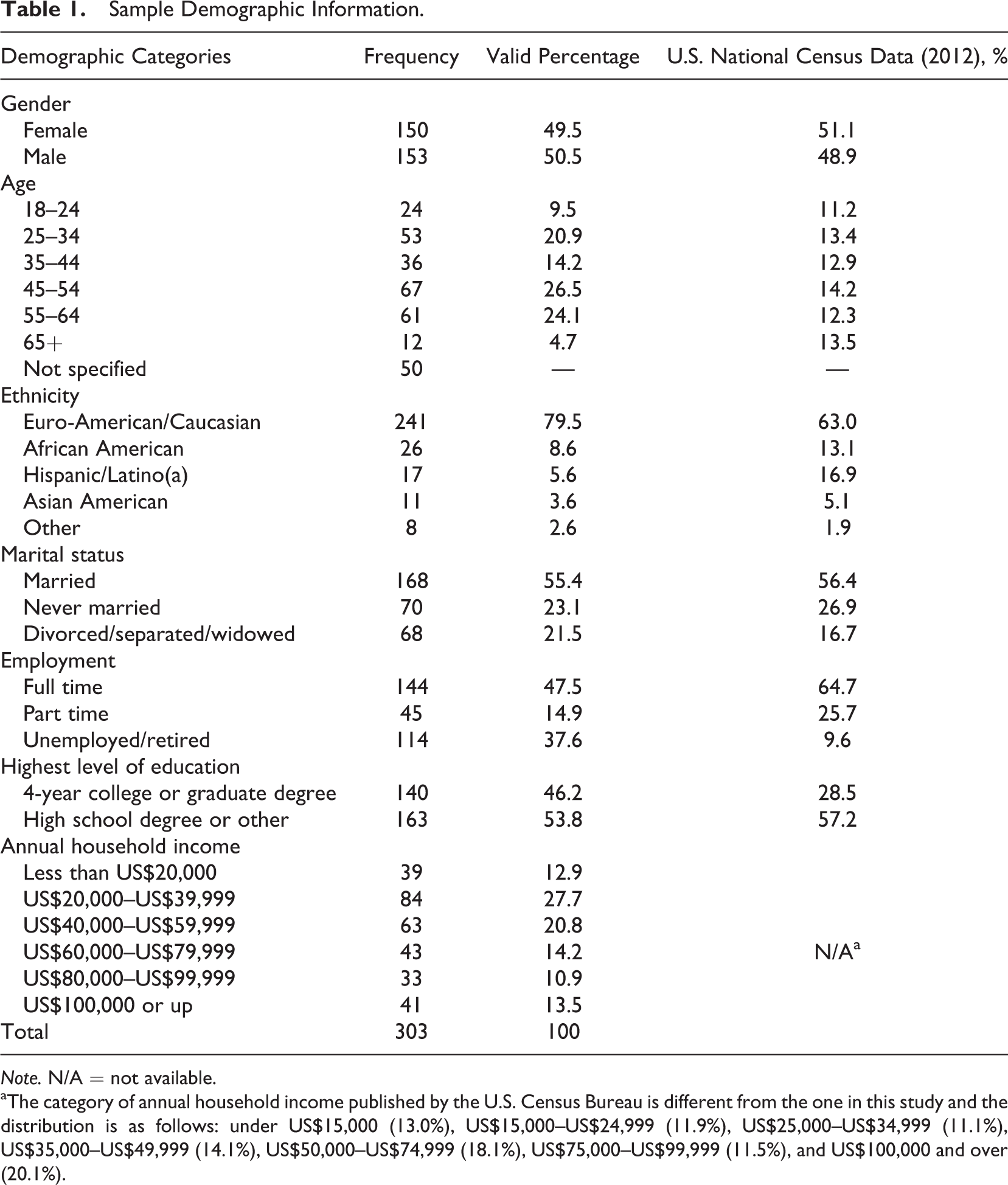
We employed an online survey with a general U.S. adult sample to test the hypotheses. We purchased a consumer panel sample (N = 300) from a large data company to ensure the quality and validity of each response. One week after the survey launch, we acquired complete and valid surveys from a slightly overtargeted number of respondents (N = 303). The demographic distribution of the final consumer panel sample is shown in Table 1, and it fairly represents the general population of the United States in terms of gender, ethnicity, and marital status (see Table 1).
Sample Demographic Information.
Note. N/A = not available.
aThe category of annual household income published by the U.S. Census Bureau is different from the one in this study and the distribution is as follows: under US$15,000 (13.0%), US$15,000–US$24,999 (11.9%), US$25,000–US$34,999 (11.1%), US$35,000–US$49,999 (14.1%), US$50,000–US$74,999 (18.1%), US$75,000–US$99,999 (11.5%), and US$100,000 and over (20.1%).
Instruments and Questionnaire
The survey questionnaire included items to measure perceived labor transparency, perceived corporate giving, brand trust, brand attitude, and brand equity. Since we focused on the footwear industry, we included three selected brands—New Balance, Nike, and TOMS—for each set of questions. The three brands were chosen to take into consideration a wide angle of a brand’s properties such as awareness, familiarity, popularity, and perceived involvement in CSR. Each respondent was asked to answer a set of questions regarding each brand in a random order by a randomization tool available in an online survey system, which controlled possible order effects. Therefore, we used a total of 909 responses (3 brands × 303 respondents) for main data analysis. In measurement model and structural model testing, two dummy variables were included to control possible brand effects.
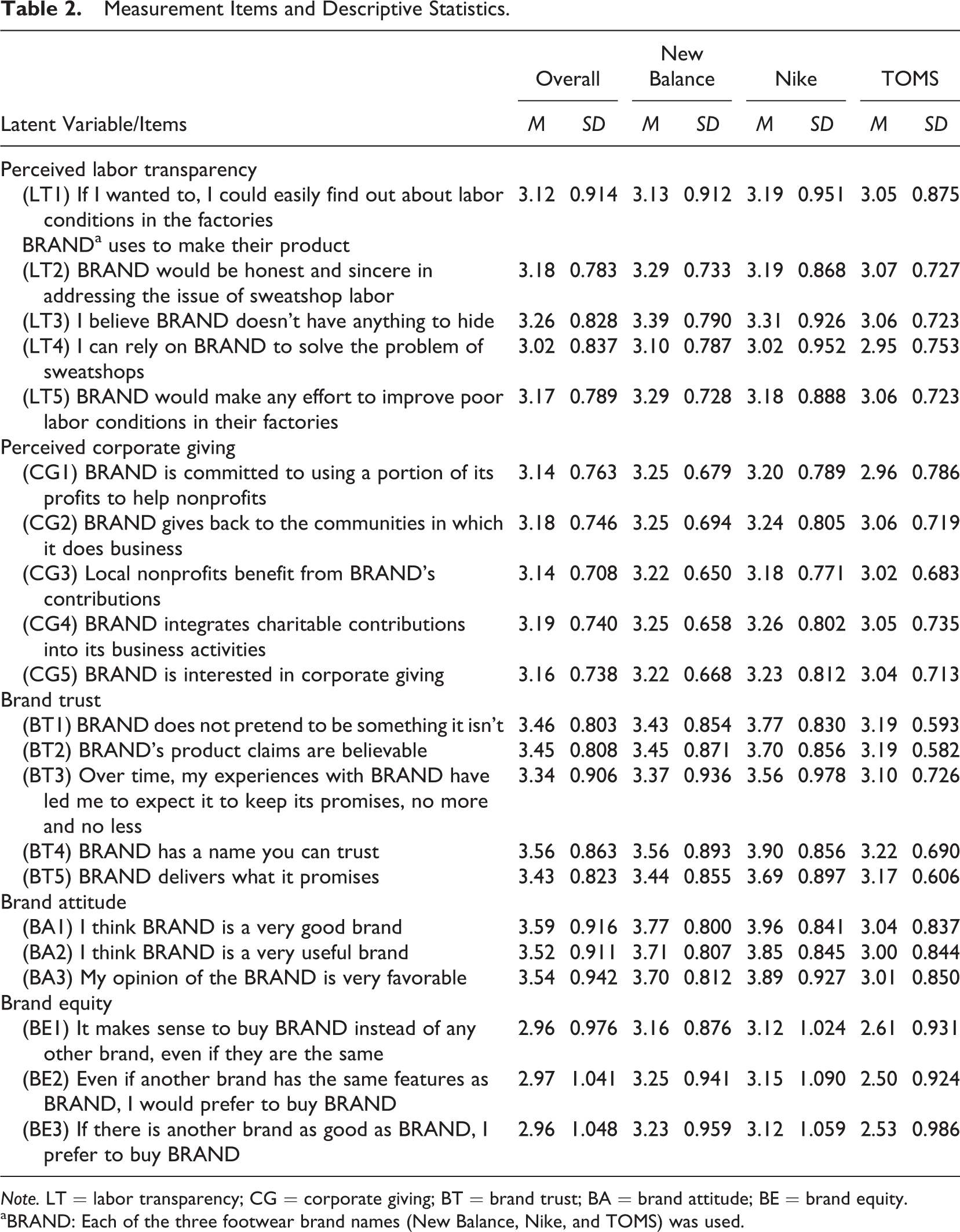
Perceived labor transparency was measured with 5 items from a previous study (Hustvedt & Kang, 2013). Those items measure a consumer’s perception about endeavor of a brand to be open in addressing sweatshop issues and responsible for labor conditions in the process of their production. Perceived corporate giving was measured with 5 items from Lichtenstein, Drumwright, and Braig’s (2004) study. Those 5 items measure a consumer’s perception about a brand’s support for the local community and charitable contribution. Brand trust was measured with 5 items from Erdem and Swait’s (2004) study. Those items measure a consumer’s belief that a brand will continue to do business as it promises. Brand attitude was measured with 3 items from Sengupta and Johar’s (2002) study. Those items measure how favorable a consumer is toward a brand. Brand equity was measured with 3 items from Yoo, Donthu, and Lee’s (2000) study. These items measure a consumer’s perceived value of a brand compared to similar types of competing brands “that are identical in all respects (quality and features) except brand name” (p. 196). All items were measured on a 5-point Likert-type scale ranging from strongly disagree (1) to strongly agree (5). The survey questionnaire was pretested by two faculty members and two master’s students to ensure the clarity of the instruments. Based on the pretest, minor revisions were made to address inconsistent formats and missing words and punctuation marks. The list of all items is given in Table 2.
Measurement Items and Descriptive Statistics.
Note. LT = labor transparency; CG = corporate giving; BT = brand trust; BA = brand attitude; BE = brand equity.
aBRAND: Each of the three footwear brand names (New Balance, Nike, and TOMS) was used.
Analysis
We used structural equation modeling (SEM) with AMOS software and followed the recommended two-step procedure of SEM: a measurement model and a structural model (Anderson & Gerbing, 1988). The measurement model testing was conducted to ensure the validity of constructs and all measurements, and the following structural model testing was intended to test hypothesized relationships among variables.
Results
Measurement Model Testing
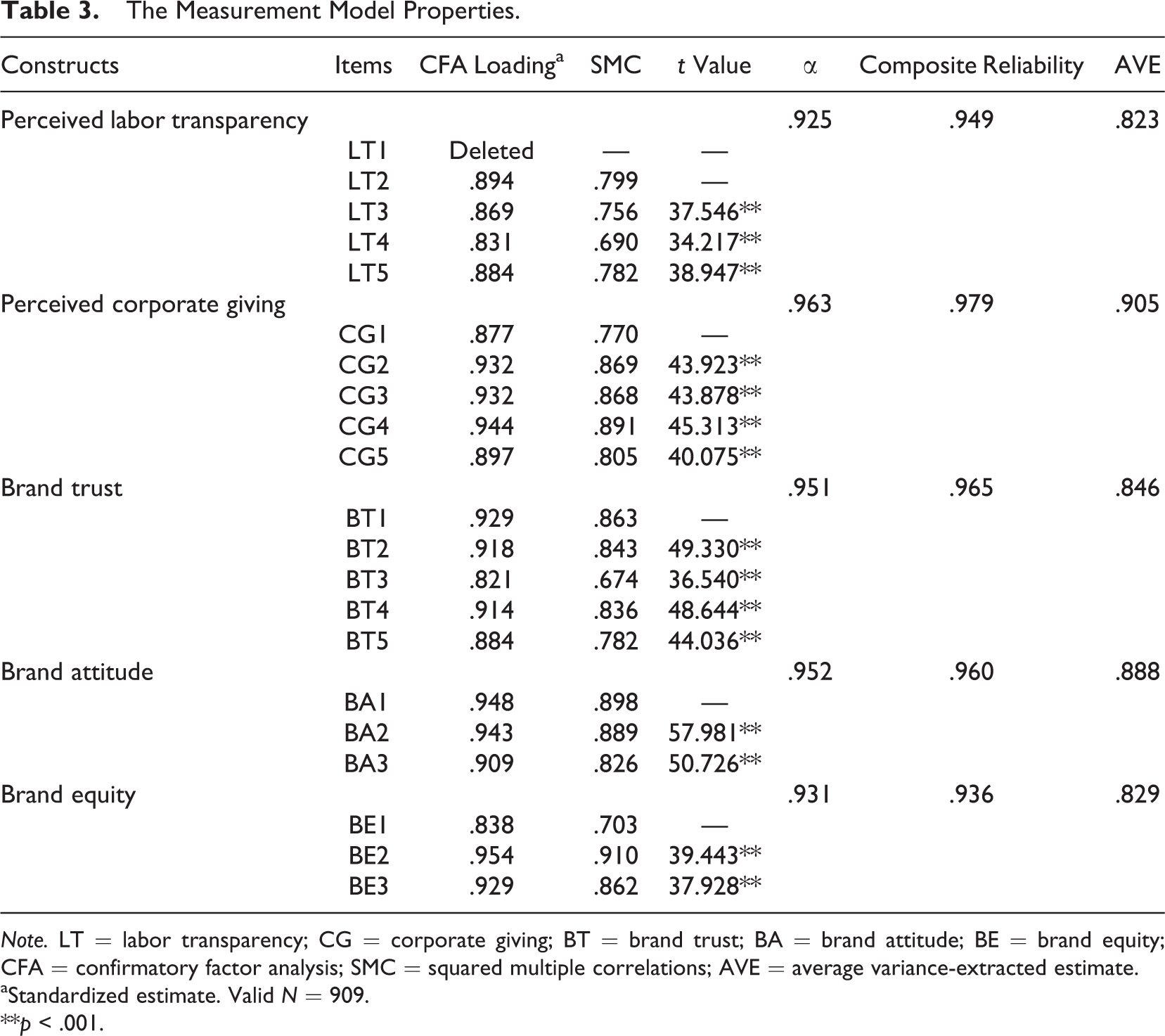
A confirmatory factor analysis was performed with maximum likelihood estimation. For this study, 1 item that measured perceived labor transparency (“If I wanted to, I could easily find out about labor conditions in the factories _____ uses to make their product”) was deleted because the item factor loading was lower than .70. The measurement model offered an acceptable model fit: χ2(df = 190) = 623.822, p = .000; goodness-of-fit index (GFI) = .943; adjusted GFI (AGFI) = .924; comparative fit index (CFI) = .980; normed fit index (NFI) = .972; root mean square residual (RMR) = .019; root mean square error of approximation (RMSEA) = .050. The properties of the measurement model are described in Table 3.
The Measurement Model Properties.
Note. LT = labor transparency; CG = corporate giving; BT = brand trust; BA = brand attitude; BE = brand equity; CFA = confirmatory factor analysis; SMC = squared multiple correlations; AVE = average variance-extracted estimate.
aStandardized estimate. Valid N = 909.
**p < .001.
Reliability and validity of all measurements were further examined based on the procedure outlined by Fornell and Larcker (1981). Reliability was established as the Cronbach’s αs ranging from .925 to .963 exceeded the recommended .70 threshold, and the composite reliability estimates ranging from .936 to .979 exceeded the recommended .50 threshold.
Next, convergent validity was examined in order to confirm that each of five latent variables was well represented by its measurement items. Convergent validity was evident because item factor loadings are greater than .70 and item squared multiple correlations are greater than .50 (Fornell & Larcker, 1981). Finally, discriminant validity was ensured by demonstrating that the average variance-extracted estimate (AVE) of each latent variable, which ranged from .823 to .905, was greater than the squared correlations between latent variables, which ranged from .305 to .564 (Fornell & Larcker, 1981). The correlations between latent variables as well as the AVE of each construct are shown in Table 4. The evidence of discriminant validity confirmed that all of the five latent variables were distinct from each other.
The Comparison Between AVEs and Correlations.
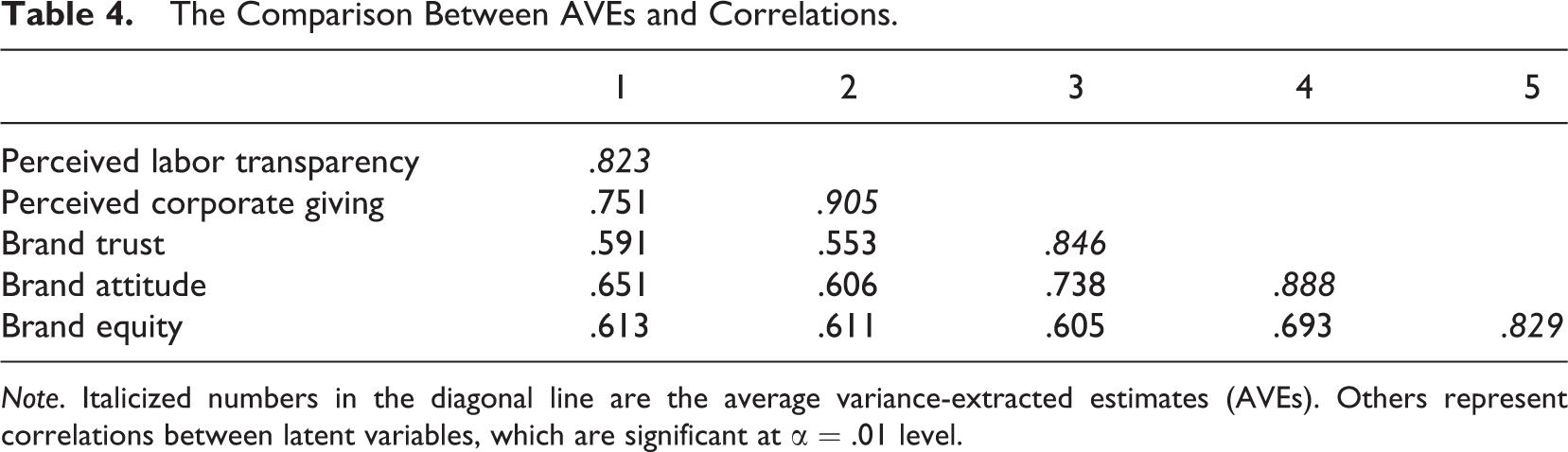
Note. Italicized numbers in the diagonal line are the average variance-extracted estimates (AVEs). Others represent correlations between latent variables, which are significant at α = .01 level.
Structural Model and Hypothesis Testing
Given that the measurement model confirmed the reliability and validity of all the measurements, a structural model was estimated based on the hypotheses. We specified perceived labor transparency and perceived corporate giving as exogenous variables while brand trust, brand attitude, and brand equity were specified as endogenous variables. We also included two dummy variables of brands as exogenous variables in the model to control brand effects. Structural model testing (see Figure 1) yielded an acceptable model fit of the model to the data: χ2(df = 191) = 854.252, p = .000; GFI = .924; AGFI = .900; CFI = .970 NFI = .961; RMR = .043, and RMSEA = .062.
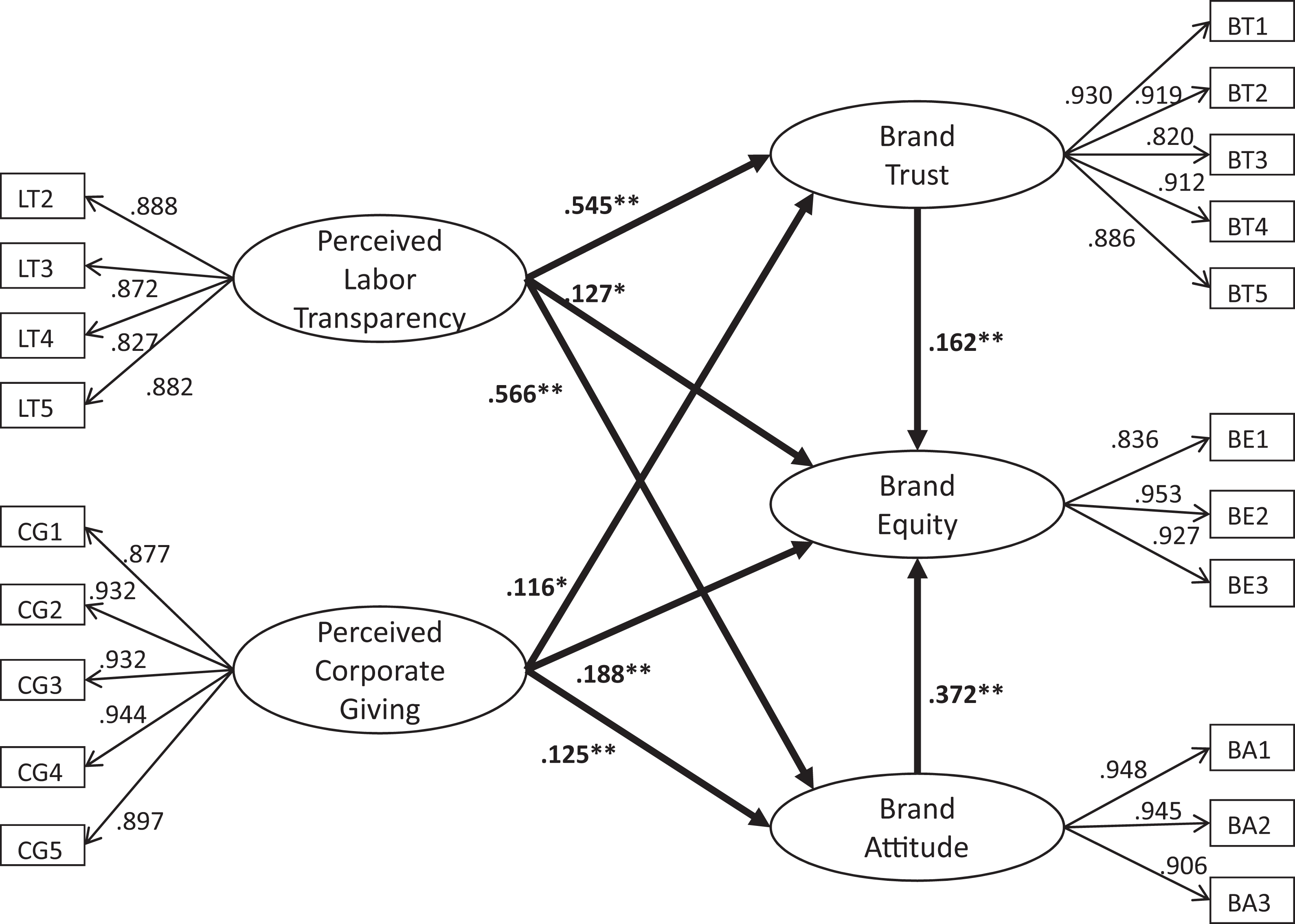
Structural model testing. Note. **p < .01. *p < .05.
Once the acceptable model fit was confirmed, the individual paths of the model were evaluated. The effect of brand attitude on brand equity was significant (γ = .372, p < .01). The effect of brand trust on brand equity was also significant (γ = .162, p < .01). Thus, both Hypotheses 1 and 2 were accepted. The effect of perceived labor transparency was significant on brand attitude (γ = .566, p < .01) as well as brand trust (γ = .545, p < .01). Further, perceived labor transparency significantly affects brand equity (γ = .127, p < .05). Therefore, Hypothesis 3 was accepted. The effect of perceived corporate giving was significant on brand attitude (γ = .125, p < .01) as well as brand trust (γ = .116, p < .05). The effect of corporate giving on brand equity was significant (γ = .188, p < .01). Therefore, Hypothesis 5 was accepted. No significant brand effects were found.
In order to test Hypotheses 4 and 6, indirect effects of the model were examined through decomposition tests with the bootstrapping method. This test was conducted in order to examine if perceived labor transparency (Hypothesis 4) and perceived corporate giving (Hypothesis 6) indirectly affect brand equity mediated by brand trust and/or brand attitude. The results show that both indirect effects of perceived labor transparency and perceived corporate giving on brand equity were significant (see Table 5). The results indicated the role of brand trust and brand attitude as mediators in the path from perceived labor transparency to brand equity as well as from perceived corporate giving to brand equity.
Indirect Effects Testing of the Structural Model.

*p < .05 (bias-corrected percentile method was used).
In order to test Hypothesis 7, we examined the relative importance between perceived labor transparency and perceived corporate giving in affecting brand trust, brand attitude, and brand equity. The structural model results suggest that the effect size of perceived labor transparency on brand trust (γ = .545) is greater than that of perceived corporate giving on brand trust (γ = .116). Similarly, the effect size of perceived labor transparency on brand attitude (γ = .566) is greater than that of perceived corporate giving on brand attitude (γ = .125). On the other hand, the effect size of perceived labor transparency on brand equity (γ = .127) is slightly smaller than that of perceived corporate giving on brand equity (γ = .188).
To assess if the differences of effect sizes are statistically significant, we examined χ2 differences (Δχ2) between an equal constrained model and a free model. First, we specified an equal constrained model where we equally constrained for the path from perceived labor transparency to brand trust and from perceived corporate giving to brand trust: χ2(df = 192) = 874.399. This was then compared with the free model, χ2(df = 191) = 854.252. The results demonstrated that the effect sizes of the path from perceived labor transparency to brand trust and from perceived corporate giving to brand trust were significantly different: Δχ2 = 20.147(Δdf = 1).
Next, we tested another equal constrained model where we equally constrained for the path from perceived labor transparency to brand attitude and from perceived corporate giving to brand attitude: χ2(df = 192) = 882.133. Comparing the results with the free model demonstrated that there was a significant difference between the effect size of perceived labor transparency on brand attitude and that of perceived corporate giving on brand attitude: Δχ2 = 27.882 (Δdf = 1).
Finally, another equal constrained model, which was equally constrained for the path from perceived labor transparency to brand equity and from perceived corporate giving to brand equity, χ2(df = 192) = 852.836, was compared with the free model. The results showed that there were no significant differences between those paths: Δχ2 = 1.416 (Δdf = 1). Thus, Hypothesis 7 was partially supported.
Discussion
From this study, it is clear that consumers’ perceptions of a brand being transparent and committing to the local community help improve overall brand value by contributing to positive attitude and trust, which in turn increase brand equity. This result goes a step beyond previous researchers who have found CSR to be only indirectly connected to brand equity through brand attitude (Ricks, 2005; Salmones et al., 2005; Vlachos, 2012). This contributes to our theoretical understanding of the variables related to brand equity by demonstrating that consumers’ perceptions of CSR efforts not only indirectly but also directly affect brand equity. The results also confirmed these CSR efforts can increase brand equity through brand trust. These results are important for the implications for CSR managers, who must describe the value of being transparent about their effort; these results also confirm that consumers' perceptions about corporate behavior, including CSR, give consumers a certain amount of power that can change the behavior of corporations. Consumers can play an important role in driving footwear brands to be more transparent and responsible by rewarding brands with increased equity.
The approach we used in this study also demonstrates the value in measuring CSR using variables specific to the concerns faced by the brand, in this case the issues particular to labor-intensive industries such as footwear. Previous researchers, who used more specific measures such as the one used to measure brand green initiatives in Chen’s (2010) study, suggest the merit of this approach. Researchers exploring the role of CSR efforts in building brand–customer relationships did not specifically examine the relative importance among different types of CSR initiatives. In essence, one of our major contributions is to provide empirical evidence that different types of CSR initiatives are not equally effective in building brand–consumer relationships, at least for footwear brands. While the direct effects of perceived labor transparency and perceived corporate giving on brand equity were not statistically different from one another, the results of this study show that consumer evaluation of the labor transparency of brands has a significantly stronger direct impact on brand trust and brand attitude than does the corporate giving of the brands. The results suggest that it is critical for a brand, especially one within a labor-intensive industry, to be transparent about labor issues, addressing sweatshop issues, and providing consumers with a venue where they can easily and at any time find information about labor conditions in the brand’s supply chain.
Given the results of research by Vlachos (2012) and Ricks (2005), who also found corporate giving to have a small or indirect effect on brand equity, the small effect found here is not remarkable. The small effects of perceived corporate giving on brand trust and attitude also resulted from the fact that we measured “consumer” perceptions about a brand’s corporate giving, not the actual quantitative data of the brand’s corporate giving activities (e.g., budget). Many consumers might not believe a brand’s claims about giving back or charitable donations, as consumers would consider such commitment to be stakeholder-driven donations for a tax purpose (Ellen et al., 2006), due to the lack of “transparency” of corporate giving. Indirect effect tests and χ2 difference tests together suggest that the indirect impact of perceived labor transparency on brand equity mediating brand attitudes and brand trust is much stronger than one of perceived corporate giving on brand equity. The results underline the research of Ellen, Webb, and Mohr (2006), who suggest that it is important to select CSR efforts carefully to avoid appearing selfish or focused only on stakeholder value. In all, the results of this study indicate that measuring CSR using a variable that focuses only on corporate giving (or other nonspecific topics) is too generic to connect with the complexity of social responsibility efforts undertaken by brands with complex global supply chains found in the apparel and footwear industries.
The most valuable aspect of this study is that, when added to the results of the studies previously discussed (Dickson & Eckman, 2008; Doorey, 2011; Hustvedt & Bernard, 2008; Islam & Deegan, 2008), these results conclusively demonstrate that brands simply do not need to fear the impact of tracking and disclosing the struggles they may be having with human rights issues. In addition, by demonstrating that transparency in labor condition as well as giving back to community efforts greatly contribute to increasing brand equity, this study validates that a measure of consumer perception of labor transparency should be included among the measures used by brand managers to assess the performance of brand communications.
Limitations and Future Research
One limitation of this type of research is that the instrument must have sufficient focus on specific variables to correctly understand their relationships. This approach, however, necessarily leaves out many other important variables such as environmental initiatives, consumer safety, and other social responsibility efforts that might have particular significance for certain parts of the apparel/footwear industry, such as animal welfare. For this reason, there is always additional research that needs to be done to add to the model of the ethical consumer of apparel and footwear.
Three selected footwear brands were used for this study. The results of the research model testing can be generalized, given that the different brand effects were controlled. However, there is room for future research to examine how consumers’ preexisting perceptions or involvement with different brands (e.g., their awareness, popularity, and overall image) interact with consumers’ perceptions about labor transparency and corporate giving. Additionally, as we shed a light of transparency on “labor” issues considering their prevalence in the footwear supply chain, more specific versions of the transparency variable could be created to examine the role transparency of CSR on brand equity for other industries (e.g., transparency of animal welfare practices for the cosmetics industry or transparency of environmental issues for household chemicals). Finally, future studies will be valuable if researchers extend the model developed from this study using multilevel modeling. For instance, it would provide implications for the field of CSR research to test if the two dimensions (brand reliability and brand intentions) within brand trust (Delgado-Ballester & Munuera-Alemán, 2005) are different in terms of relative impact on variables such as brand equity.
Footnotes
Declaration of Conflicting Interests
The author(s) declared no potential conflicts of interest with respect to the research, authorship, and/or publication of this article.
Funding
The author(s) received no financial support for the research, authorship, and/or publication of this article.