



Abstract
This research used historically informed analysis as a framework to examine studio design practice. Discovery of a historical patent for a coat made from a single pattern piece led to an examination of United States coat and jacket patents to identify past patternmaking explorations that could inform current design practice, with a focus on those with one pattern piece. These patterns allowed large expanses of cloth for surface design, especially for creation of engineered digital prints on a single canvas, and opened up avenues for creative experimentation. The research objectives were to analyze the patterns for shape and accuracy of fit, to evaluate them as a beginning point to inform future patternmaking and design approaches, to engineer digital prints for prototypes, and to create aesthetically appealing designs that could be produced with minimal fabric waste. Digital copies of the patterns were created, tested and compared, with a focus on evaluation of critical fit points and the potential for further creative development. Prototype designs were generated from the patent patterns, with some faithful to the original patent and others moving away from the patentee’s intentions, although keeping the pattern shape. Digital prints were then created and engineered for the patterns. This investigation also reoriented traditional apparel design practice by placing pattern manipulation at the beginning of the design process, and made design development contingent upon research objectives. At the same time it confirmed that research through design is not linear, and that studio practice also informed the objectives.
Apparel design research includes not only the activities of designing and creating garments but also documentation as a critical tool for reflection on and analysis of process. In addition, determining and investigating context is a critical first step to transforming design production into design research. One element of context can include historically informed analysis as a framework to examine studio design practice. As a designer/artist working with engineered digital textile prints for apparel, development of garment patterns that allow large expanses of cloth for surface design has been central to the creative process. Discovery of a historical coat patent designed to be cut from a single pattern piece opened up a new avenue of creative exploration for both garment shape and surface design. The purpose of this research was thus to examine U.S. historical garment patents to identify patternmaking explorations that could inform current design practice, with a focus on those with minimal pattern pieces. In addition, these patents offered an opportunity to consider pattern shape from the perspective of efficiency in fabric usage with engineered digital textile design. The research objectives were to analyze the patterns for shape and accuracy of fit, to evaluate them as a beginning point to inform future patternmaking and design approaches, to engineer complex digital prints on a single pattern canvas, and to create aesthetically appealing designs that could be produced with minimal fabric waste. An additional strategy was to reorient design development to make patternmaking, stitching, and print design creative considerations from the beginning, eliminating sketching as a first step. Thus, design of the garment pattern led the creative process.
Pattern Design Context
Many designers take advantage of the creative possibilities that manipulation of basic geometric shapes offers. Traditional and non-Western garments often use squares, rectangles, and minimal fabric cutting to allow large areas of cloth for surface decoration. Burnham (1973) wrote a seminal study on traditional apparel shapes. She identified the importance of loom width to the shape and size of the garment and examined the many design variations possible with geometric shapes that utilize whole cloth. Twentieth-century and twenty-first century apparel designers who focus on geometric or mathematical pattern development have many reasons for using this approach. While reduction in fabric waste is one reason, the ability to create complex garment forms from geometric shapes is certainly a factor (Teng & Majors, 2003). Many designers have used the idea of geometry and flat planes of cloth for dramatic effect. Madeleine Vionnet, Balenciaga, Yeohlee Teng, Madame Grès, Vivienne Westwood, Issey Miyake, Halston, and Isabel Toledo all experimented with garment forms that rely on geometry as opposed to contoured block patterns with darts and set-in sleeves. Balenciaga, for example, is known for his one-seam coat pattern (Koda, 1987). Recent exhibition curators and researchers are beginning to analyze the creative thinking and process of these designers with a scholarly approach. In American Beauty, Mears (2009) investigated the use of geometric shapes by American designers, both historical and contemporary. Mears (2007) also examined Madame Grès’ reliance on geometric forms and use of ethnic inspiration in developing her designs. Lindqvist (2013) detailed Westwood’s pattern development process as well as various methods to use geometric shapes in apparel patterns. Other researchers include critical analysis of the work of Madeleine Vionnet (Kirke, 1998) and of Isabel Toledo (Steele & Mears, 2009).
Contemporary design scholars are examining the possibility of eliminating fabric waste in the apparel industry, an approach that also often relies on the use of geometry. Timo Rissanen, Holly McQuillan, and Mark Lui, among others, all work to develop designs with zero waste. An exhibition at Columbia College in Chicago highlighted this ecological and sustainable approach (Sandhu, 2011). Rissanen (2007) asserts that to eliminate fabric waste in cutting, it must be a consideration from the beginning, reversing the current industry practice of creating a design from a sketch prior to developing the pattern. Origami-like folds and manipulation of shapes are also utilized as part of some zero-waste design development. These designs are often dependent on creation of complex pattern pieces that interlock in the final layout or marker. The patterns thus result in more complicated construction and an attempt to utilize small pieces of fabric, giving less consideration to the amount of stitching labor required, or to opportunities for integrating print design. However, some recent designs rely more on manipulation of simpler shapes, with fewer inserts and added pieces (McQuillan, 2012; Rissanen, 2007).
Most researchers who explore historical garment patterns, such as those of Vionnet and Grès, do not focus on surface design as it may be integrated into the garment shape. In addition, little or no attention has been paid to the many historical apparel patents developed either for multifunctional garments or for production efficiency, although some historians utilize garment patents in their research (Gray & Peteu, 2005; Shephard, 2012). Discovery of an 1863 one-piece coat pattern patent intended to create “economy in cutting, economy in making, and comfortable fit” led to a search for other similar patterns in the U.S. patent files. A study of these patents offered an opportunity to analyze and synthesize historical approaches to pattern development, with an intent for both production efficiency and digital surface design exploration.
Data Collection and Design Method
Designer/artists who are also academics continue to identify methods to produce an object or design and to communicate knowledge gained in the process. As Nimkulrat states, “The practitioner researcher not only creates an artefact but also documents, contextualizes and interprets the artefacts as well as the process of making them” (Mäkelä & Nimkulrat, 2011, p. 1). As a creative research process, this represents what Mäkelä (2007, p. 1) defined as “knowing through making.” The objective is that through a study of past techniques, and through studio replication of the patterns, insight can be gained and shared. This insight would then be directed toward creation of new designs, thus positioning the creative studio research as “an inquiry that blends logic and consistency with imagined possibilities whereby reason and sensation are seen to be compatible entities” (Sullivan, 2008, p. 3).
For this study, the artifacts examined are both the original patented patterns and the designs created through their replication and reinterpretation. To begin the research process, an online search of U.S. patents was conducted. The primary search criterion was for clothing made using only one pattern piece for the entire garment, as these patterns offered the best opportunity for both efficiency and surface area for textile print. The date range for the search was 1860–1990 and included both utility and design patents. As the initial intent was to reproduce the pattern exactly, the latter date assured that none would be under patent protection. Numerous search terms were tested, and it was necessary to conduct searches that integrated various combinations of the terms. These included one-piece, combination, garment, clothing, coat, and convertible. The terms “convertible” and “combination” often described one-piece women’s undergarments as well as multiuse garments, such as a coat that converted to a tent. While these designs were deemed of future interest, it was essential to limit the number of variables. The terms “one-piece,” combination, “coat,” and/or “jacket” yielded the most usable sample. For this study, undergarments and utilitarian clothing such as hospital robes were eliminated. In addition, some coats were described as one piece because a single seam had been eliminated, although the rest of the pattern was traditional in cut. These were also not included. It was also important to select patents that included a pattern schematic. That way it was not necessary to reconstruct patterns from limited written information or from a sketch. The largest group of patents that met these criteria was coats and jackets. This resulted in 26 patterns, all but 2 of which dated between 1881 and 1946. The outliers were the original 1863 patent and a women’s multiuse jacket from 1963.
The patents chosen for study were based on design and pattern shape, but the patentees’ stated purpose still provided critical insight. While some specified a utilitarian reason for the design, others simply commented on the unique nature of their pattern. The stated intent of some was to reduce fabric waste, sewing labor, and/or seaming. Others identified functional purposes such as waterproof garments, as fewer seams reduced the amount of rain transmitted to the wearer. Notes were made on a patentee’s stated intent and any explanation of the uniqueness of the patent, but because these were inconsistent or sometimes not present at all, specific purpose statements were not a determining factor in the choice of patterns to test.
For this research, the next step was to evolve a method to evaluate the patterns for shape, for fit on the body, and ultimately for use as a foundation for both shape and surface design experimentation. An additional goal was to develop efficient patternmarkers to reduce waste when printing. After preliminary examination of all the patterns, it was clear that, while the objective of some patentees was reduced fabric usage, when placed into a fabric layout, significant unused fabric remained. In addition, there were potential issues related to standard fabric widths, given the total pattern width if cut as one piece. It is unclear how the patentees solved this problem, as historically many fabrics would not have been wide enough unless the coat was cut on the cross grain. While these were considerations, it did not affect selection of the initial set of test patterns. The patent group was narrowed to 12 (Figure 1) covering dates from 1863 to 1941. These were selected because they offered variations for comparison, and all were designed with sleeve and garment body cut as one. All were coats or jackets with the exception of the Sferrazza, which is a pattern for a combined jacket and pant. The Pilla is two piece but still has sleeve and coat cut as one. It was determined that these offered critical opportunities for comparisons of overall pattern shape and fit based on sleeve configuration. Patterns not included in the initial set of 12 for the pilot test were those that had a traditional T-shape (90°) orientation of sleeve to body and those that had a loose, cape-like fit over the arm. All patterns and designs will be referred to by the last name of the patentee.
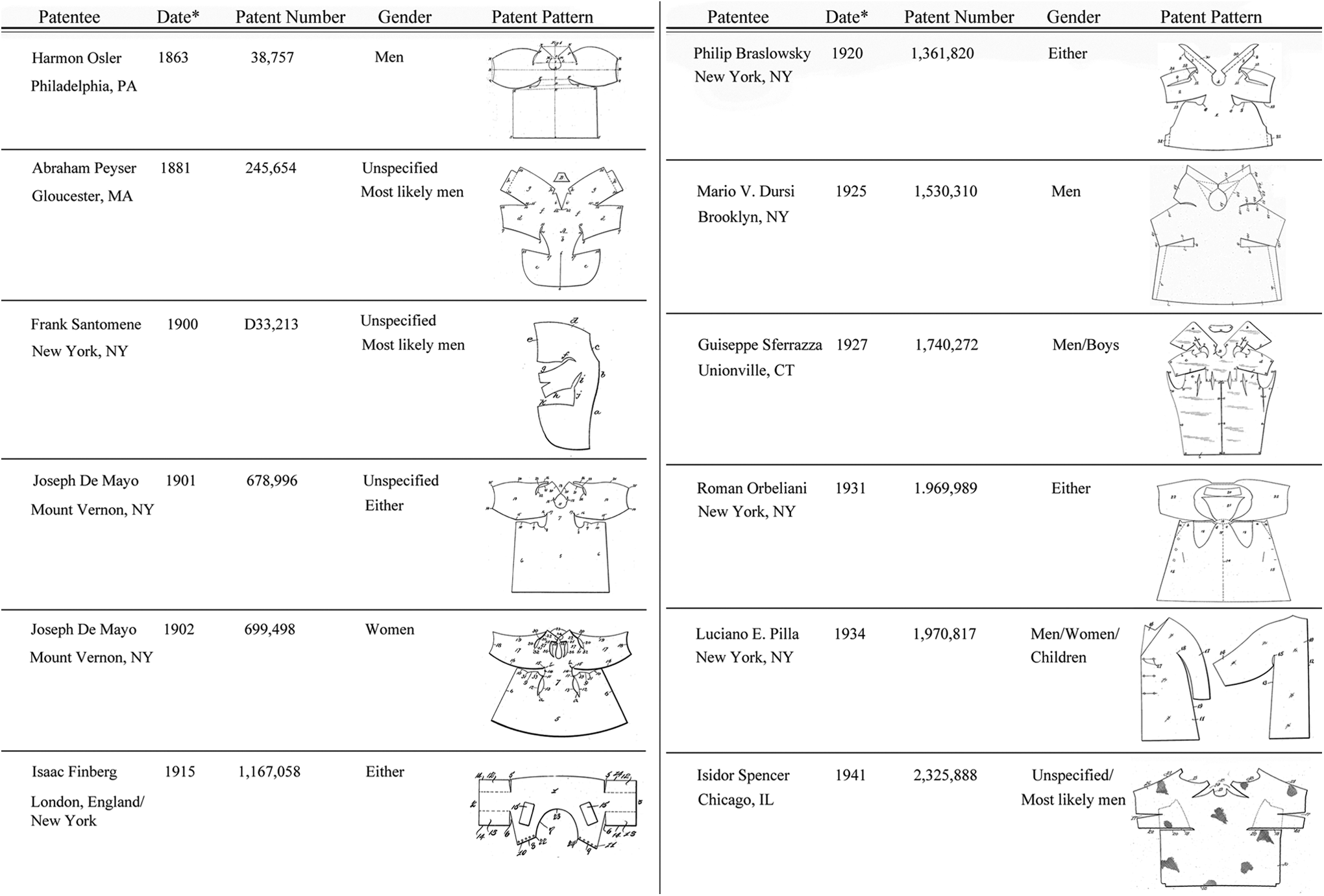
List of patents used in the pilot study, along with images of the patent patterns as they originally appeared.
Although the research process was begun as linear, studio design practice often works best when not forced into linear development. This is supported by Yee (2007, p. 5) who suggested that, while it is tempting to “assume research is a linear process,” in some cases design research stages can exist in an “iterative loop.” Thus, while an initial order of experimentation was outlined, the process was ultimately allowed to move back and forth as ideas emerged and as pattern testing evolved. The documentation process consisted of written notes based on studio observation, but to a greater extent, it relied on visual documentation of each stage of the pattern development process in conjunction with the note taking. Using extensive digital images, as well as digital comparisons of patterns, meant an ability to return to each phase and to continually analyze and reflect on shapes and garment fit.
The original outlined experimental stages were:
Test patterns in half scale in muslin exactly as printed. Test patterns in full scale to evaluate fit and range of movement on a model, focusing on sleeve/armhole fit. Make comparisons among the patent patterns for correlation of angles and grain placement, especially the relationship of the shoulder/sleeve with other sections of the garment body. Evaluate the pattern pieces for adaptation to decrease fabric waste when printing. Create a digitally printed, engineered design for the original patterns, with fit changes but minimal style changes to evaluate the effect of construction processes, different textiles, and interaction of surface design with garment shape. Use selected patterns to create additional designs, incorporating design changes and variations, while evolving techniques for efficient pattern layouts and labor processes.
The goal for the first stage of the project was to complete Steps 1 through 4 and begin Step 5 with selected patterns. Although this was an initial experimentation order, as stated earlier, the insight gained in the studio opened up other creative directions. Thus, the process sometimes looped back rather that progressing linearly. Steps 2 and 3 occurred more or less simultaneously, for example, as the amount of arm movement and comfort were directly correlated with the relationship of sleeve angles to the body of the pattern. Evaluation was aided by moving between these two steps. The first two fully completed design iterations were based closely on original fit-tested and adjusted patent patterns, while the next two designs were developed through an experimental process that relied on the original pattern shape but not the original intended orientation on the body. Thus, Step 6 was begun with these two prototype designs based on results of the first five steps and became a transition between Steps 5 and 6. This ultimately allowed critical thinking that will contribute to ongoing creative research.
Experimental Pattern Analysis
Original patterns were traced into Adobe Illustrator® and enlarged to fit a half-scale body form. The patentees provided few specific measurements. Only the Osler patent had complete drafting measurements. Some identified approximate measurements for use in developing the pattern to full scale based on historical proportional measurement systems (Kidwell, 1979). The Santomene design patent had little information. Not all patentees stated whether the coat was for men or women. Of the 12 selected for testing, 4 were expressly for men and 1 expressly for women. Of the remaining seven, the patentee either did not specify a gender or stated it would work for men, women, and in one case also children. However, for three of the unspecified patterns, the style suggests a man’s garment. All had a boxy shape that did not contour closely to the torso, although the 1902 De Mayo pattern had contouring side darts. Because all were designed with the sleeve cut as one piece with the coat body, critical points for movement and fit were the armhole openings, sleeve width, and sleeve angles relative to the coat body. A standard chest measure of 40 in. (full size) was assigned uniformly to all for comparison, and all were first tested in half scale on a woman’s form.
Half-scale muslins were constructed for the initial set of 12 patterns (e.g., see Figures 2 and 3). This allowed familiarization with and comparison of critical intersection points, particularly the relationship of sleeve to garment body, the shoulder angle, and where style lines landed on the body. The latter in particular would impact digital print placement. Additional analysis determined whether they worked as described in the patent. Use of a woman’s half-size form did not affect evaluation of sleeve fit and shoulder angle and allowed for analysis of how additional shaping might be added. Other considerations at this stage included opportunities for developing style variations from the pattern and whether the pattern might be reconfigured or designed to minimize fabric waste in printing.
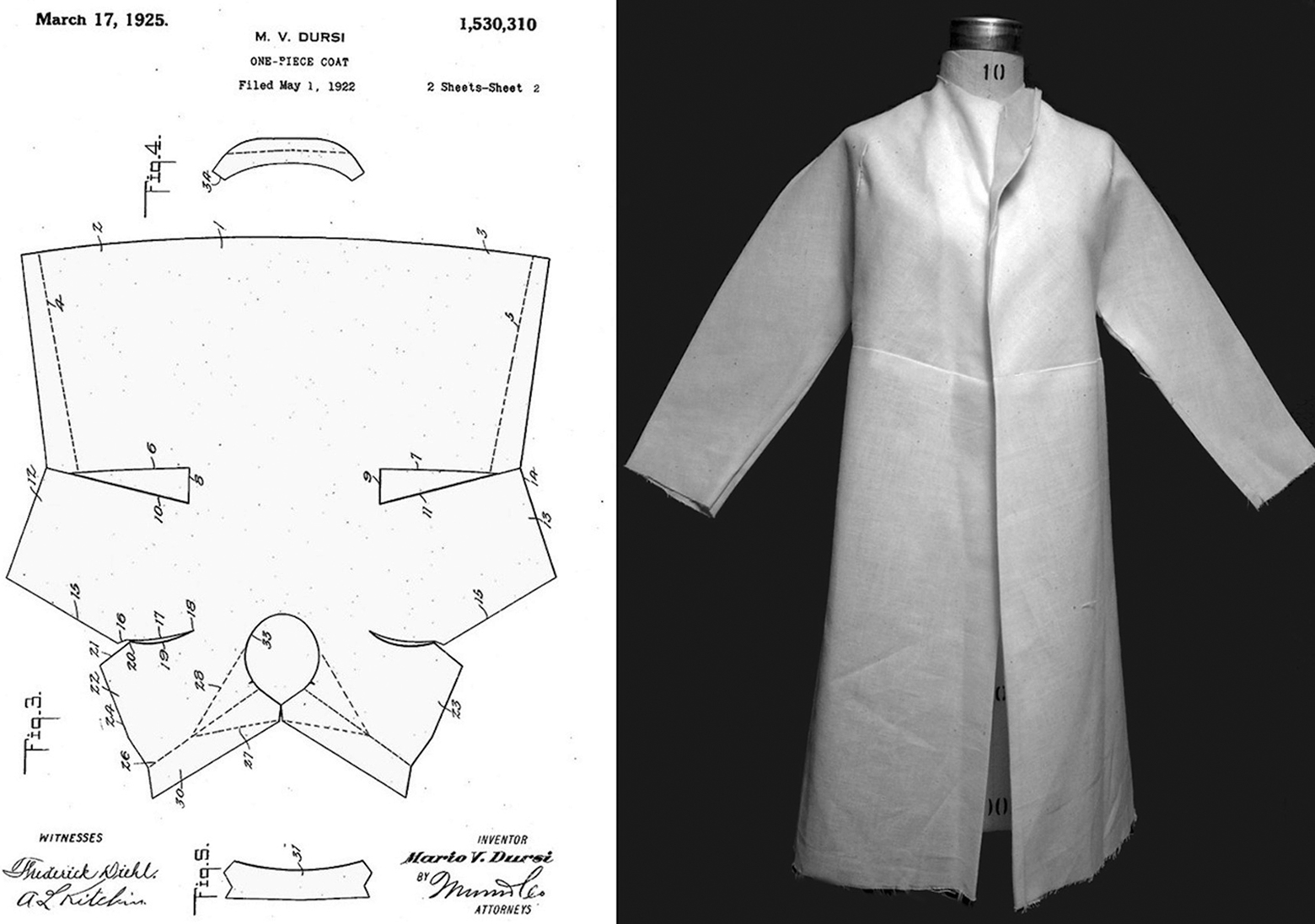
One-piece men’s coat patent designed by Mario V. Dursi (U.S. Patent number 1,530,310, 1925) and half-scale muslin (right).
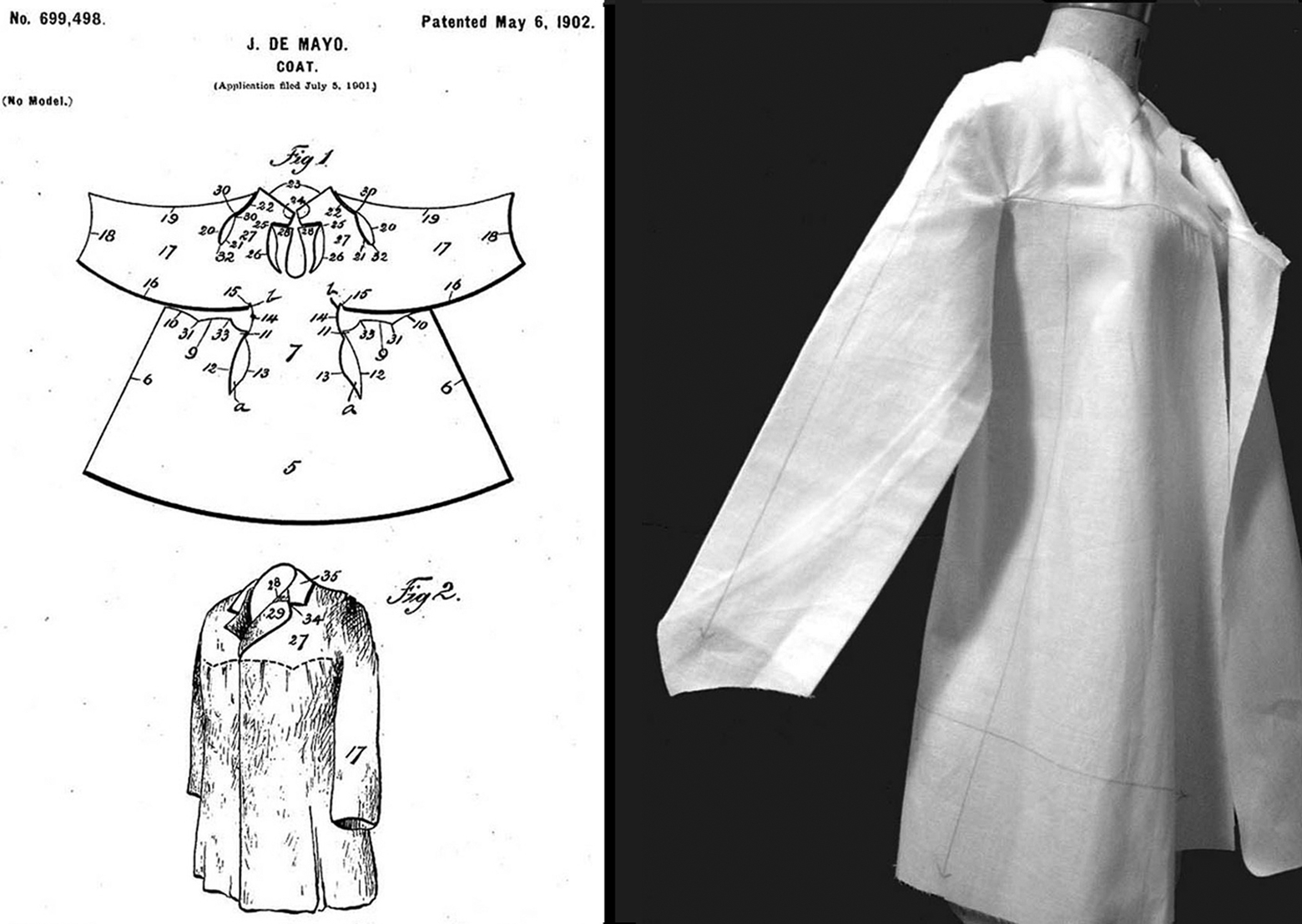
Patent pattern for a women’s coat cut in one piece, designed by Joseph De Mayo (U.S. Patent number 699,498, 1902) and side view of the front yoke/sleeve combination in half scale.
Some patterns conformed to the body very well, were balanced, and appeared to fit both through the body and the sleeve area with a reasonable amount of ease. It became clear, however, that although a patent was issued, there was no guarantee it would work as illustrated or even that it would provide adequate room for movement. For example, the 1900 Santomene patent had many problems (Figure 4). The sleeve was clearly too small and at too steep an angle to contour to the shoulder. In the course of pattern experimentation and analysis, common themes began to emerge, both in terms of body fit and in the way individual pattern sections (sleeve, front, back, etc.) were combined to create a single-piece pattern.
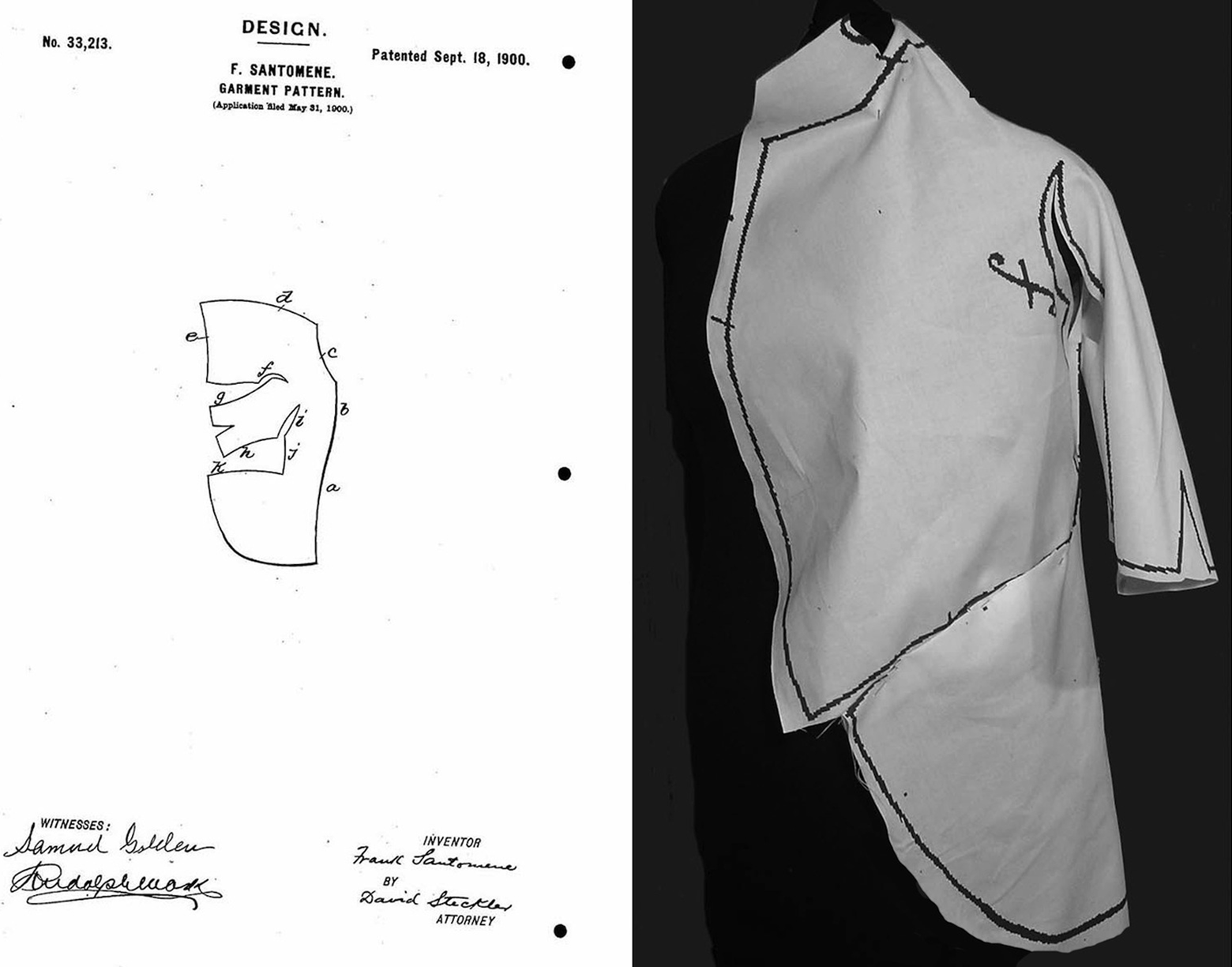
Patent pattern for a men’s coat cut in one piece, designed by Frank Santomene (U.S. Patent number 33,213, 1900). Full size pattern printed directly to cloth to clearly identify style lines.
It was determined that evaluating variations in fit and shape among the patterns could only partially be accomplished on a half-scale body form. It was difficult to accurately assess the different angles of the sleeve and body relationship and impossible to evaluate movement. Thus, to analyze critical intersection points and grain lines, digital pattern overlays were created for comparison prior to creating full-size patterns for fit and movement analysis.
Before digitally comparing the patent patterns to each other, a T-shaped pattern was chosen as a base for all evaluations. The Balenciaga one-piece coat pattern from the early 1960s, a variation on the traditional “bog” coat (Hansen, 1994), was selected. The front yoke of the pattern is cut on straight grain, although unlike traditional garments, it has additional shaping over the shoulder through use of an inset. The overall fit of the coat through both sleeve and body is loose and boxy. When the Osler pattern is overlaid, it is possible to analyze the differences (Figure 5). While they initially appear similar, with center front below the yoke seam on straight lengthwise grain line for both patterns, the front yoke line of the Osler pattern (line B) is close to a 45° bias when compared to the yoke seam of the T-shaped pattern, which is on straight crosswise grain (Line C). In addition, the pivot point for the sleeve/body intersection at the back (Point A) is considerably higher and closer to a standard armhole on the Osler pattern. When the Osler pattern is pivoted onto a body, the change in angle brings the upper section of the coat around the body to create a much closer fit, particularly under and around the arm.
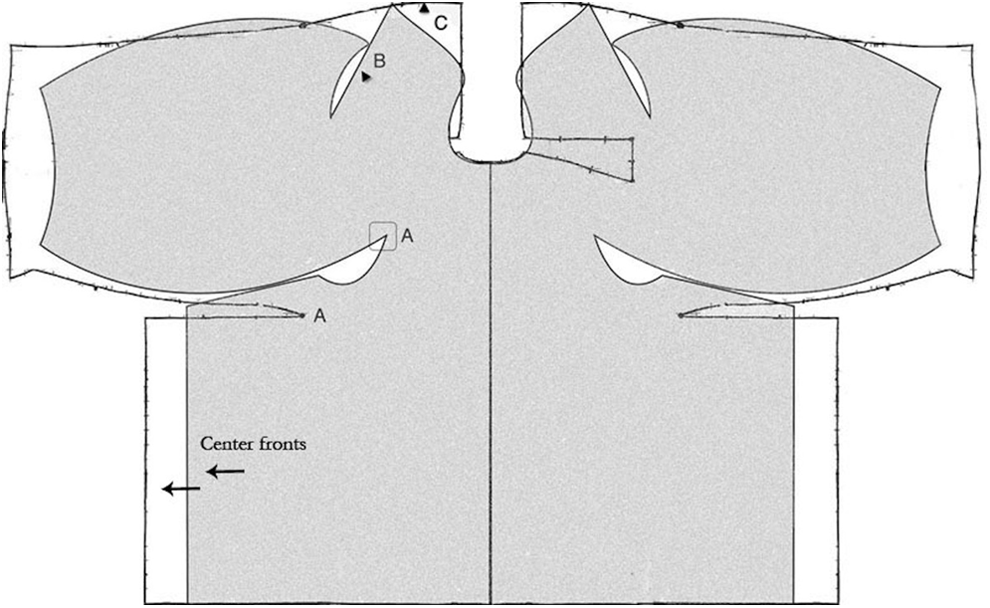
Osler pattern (gray) overlaid on T-shaped one-piece coat pattern.
All patterns were compared to the Balenciaga to evaluate sleeve/body angles. In addition, patents with similar style lines, and orientation of component parts were compared to each other. Thus, comparison between the ill-fitting Santomene pattern and the Peyser pattern (Figure 6) revealed critical grain and scale differences. Both were designed with a seam at the front high hip, where a pocket is placed on a late 19th-century man’s jacket, instead of a mid-chest yoke as in the other coats. Despite similar shapes and arrangement of the pattern sections, the Peyser design (in white) allowed more room through the sleeve and shoulder than the Santomene (in gray). As the overlays demonstrate, there are clear differences in the angles and fit points between the two. The center fronts above the waist are on different grain lines, with the front of the Santomene pattern at almost a right angle to center back. This forced both a tight fit across the shoulder and a steep shoulder angle. In addition, the sleeve is thrown toward the back. All evaluations were used for fit purposes and consulted as part of design development.
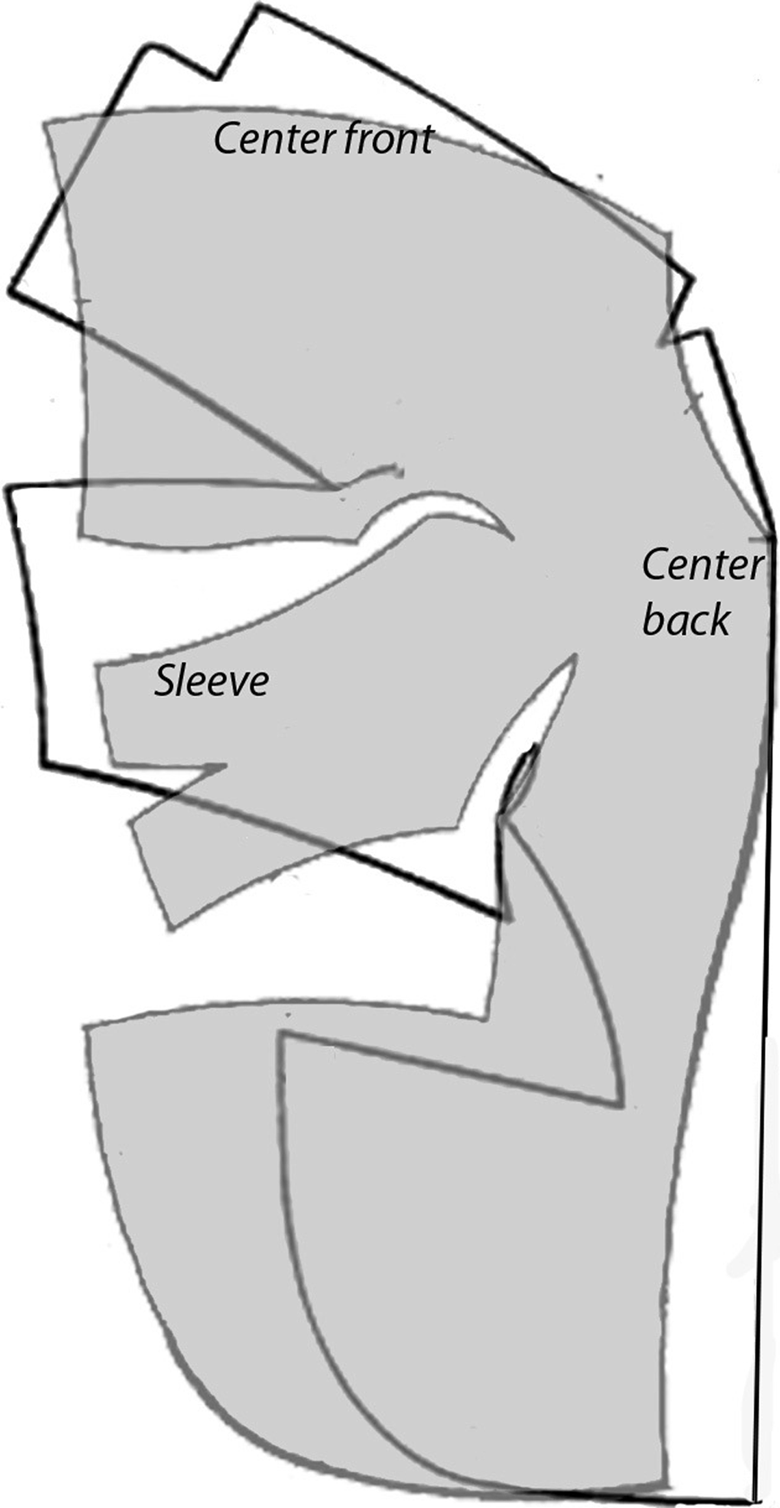
Santomene pattern in gray overlaid on Peyser one-piece coat pattern.
With the combination of pattern overlays and the muslin tests, similarities and differences were identifiable. The key to further analysis appeared to be sleeve angle relative to the garment body and armhole opening size. Patentee descriptions revealed the reasoning behind some shapes and enhanced understanding of the arrangement of seams and of added extensions for sleeves, collars, and lapels. They solved (or not) the sleeve fit problem in a variety of ways. De Mayo, for example, added an extension to the sleeve that acted like a gusset, inserted into a cut made at mid back armhole (the extension can be seen at the top edge of the pattern in Figure 3). This created what he described as “fingers” to complete the sleeve connection to the back. There were, however, limits to the use of extra extensions for fit purposes, depending on the arrangement of other pattern sections. Unlike traditional T-shape patterns, most of the tested patent patterns had less excess fabric under the arm. In some cases, this created significant loss of movement.
The original intent was to construct all 12 patterns in full size. However, after making the digital overlay comparisons, six patterns fell into a similar arrangement of parts and angles, despite style line differences. These were the Osler, Peyser, Santomene, both De Mayo patterns, and the Dursi. Of the remaining six, two had two pattern pieces (Pilla and Spencer). The Sferrazza, while one piece, was intended to make a coat/pant/vest combination garment, and the Finberg is an above-the-waist cape/jacket. Therefore, to control the number of design variables during the next experimental phase, it was decided to focus on the group of six with clear design relationships.
The next phase of experimentation moved back and forth between experimental Steps 2 and 3, testing in full size and comparing the angles and shapes, as minor adjustments were made to the patterns. All were tested on the same size form and on a live model with the same chest measurement as the form. Of the group of six patterns, all except the Santomene and De Mayo had sleeve openings that fit with only minor changes when tested in full size, although full ability to lift the arm was somewhat limited in the Osler, Peyser, and Dursi patterns. The De Mayo pattern had an armhole opening that was too narrow, therefore width was added to the entire length of the sleeve from neck edge to wrist for a second test. Additional fabric at the neck was stitched into a dart over the shoulder. This added more fullness at the wrist but provided necessary fit ease. In fact, all patterns except the Osler had better balance when a dart was added for contouring on the shoulder. Additional analysis of pattern overlays and full-size muslins suggested that patterns with a back sleeve connection point closer to midpoint of a standard armscye provided the best movement and lift for the arm. Other sleeve fit solutions that were evaluated included inserting a small gusset under the arm to increase movement or adjusting the sleeve angle slightly, if possible.
After full-size testing and moving to experimental Steps 4 and 5, four of the coat patterns were chosen for digital print design and completion as finished designs. This allowed analysis of fabric choice on both technical and creative decisions, of techniques for making the marker more efficient, and of any construction problems in stitching the garment. By creating a prototype in printed fabric, future design and pattern analysis could be accomplished with a more complete understanding of where problems occurred and of where creative freedom was possible.
Design Experiments
The first four patents selected to develop into trial designs were the Osler (1863) and De Mayo (1902) as a pair and the Santomene (1900) and Peyser (1881) as a second pair. Through studio experimentation, development of all four designs ultimately became a synthesis of Steps 5 and 6 of the proposed experimental process. These were chosen to evaluate as pairs because they had similar orientation of garment parts for comparison. After analysis (Step 4), it was clear they could all be manipulated relatively easily for cutting efficiency yet allow variations in print design. The poorly fitting Santomene pattern was included to determine whether it was possible to reconfigure the pattern and whether this could suggest creative approaches to developing variations on the other patterns. Considerations at this point included how orientation of garment components affected both fit and drape, how patterns draped on the body before seams were joined, and whether reorientation was possible. A different fabric type was chosen for each prototype to test how weight and drape affected the final product both aesthetically and in the construction process. The experiments revealed new ways to see the patterns and began to inform the creative process. It also revealed potential problems in stitching and finishing.
For consistency, all four designs were made for women. Although only the De Mayo pattern was specifically created as a woman’s coat, digital comparisons revealed little difference in pattern contouring between it and the other three. Digital textile printing was chosen for the final coats because of the ability to engineer complex designs that aligned with the shape and because of the more sustainable nature of the process. With digital print, all the ink/dye goes directly onto the cloth, so little waste goes into the water system. However, it must be noted that digital printing with reactive or acid dyes requires both pre- and posttreatment. In addition, the fabric is steamed to fix the dye and then rinsed to remove any (usually minimal) excess. One drawback was that the pretreated fabrics most readily available were not wide enough to cut the De Mayo or Osler patterns as shown in the patent, which when scaled to full size were 60 in. from wrist to wrist. This issue was solved in several ways as will be seen in the final markers.
Both the De Mayo and the Osler coats required only two seams in their original form. The sleeve is closed first and then the yoke seam is stitched. The short curve under the arm can be closed as a final step. The Osler coat was tested first, using a print design that would demonstrate the position of seam edges (Figure 7). For the final marker, the sleeve section was separated from the body of the coat at the narrowest point and placed lengthwise due to the 44 in. fabric width, although it is shown prior to that process in the image to facilitate visualization of the pattern and identification of seams. It was printed onto cotton twill. Overall fit through the body with this pattern was quite good. However, despite the full and dramatic curved shape of the sleeve through the elbow, addition of more width in the upper sleeve would allow for more comfortable movement (indicated with a white line in Figure 7).
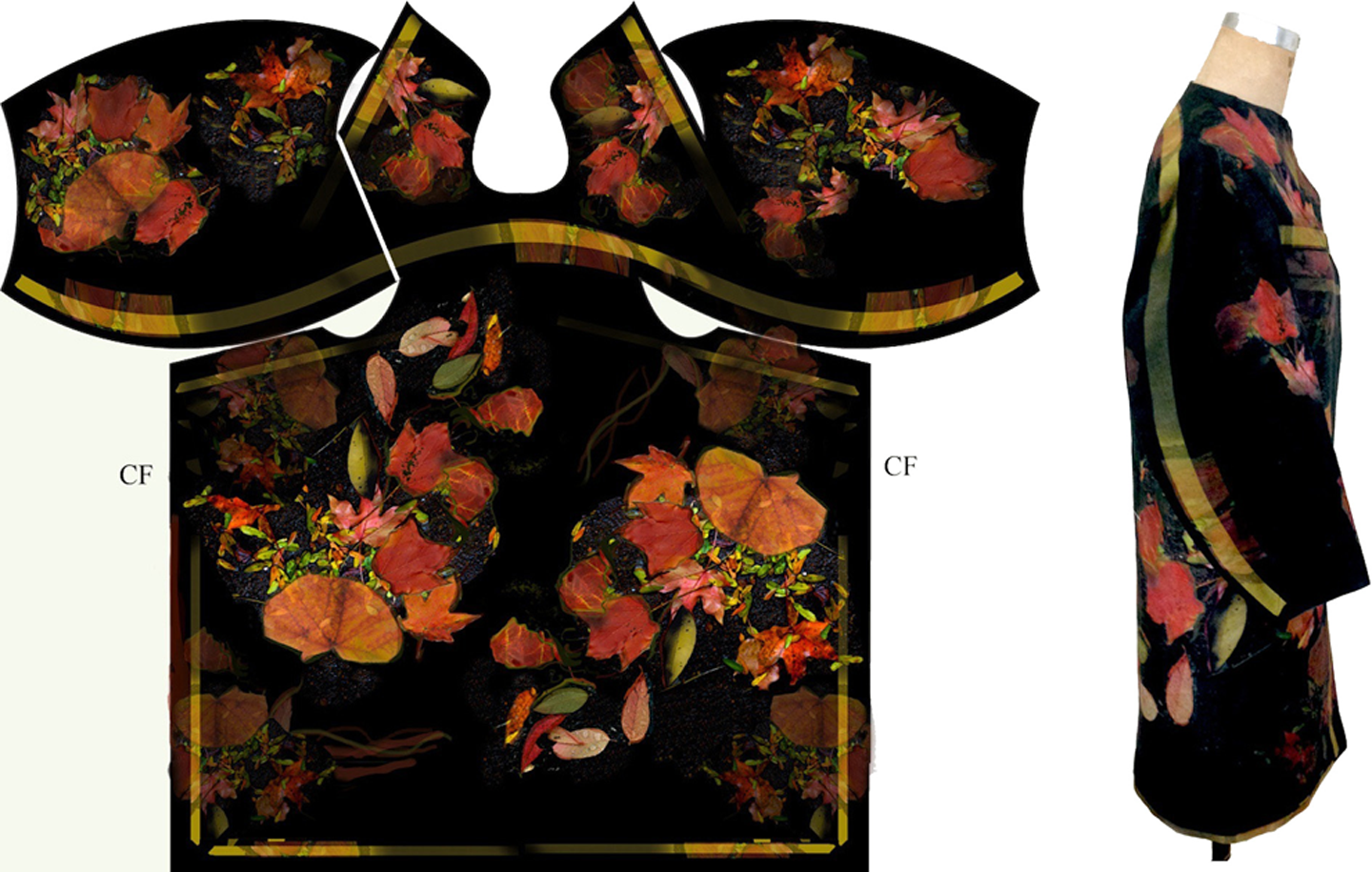
Osler coat with engineered print design and side view of the finished coat. White line on the left sleeve pattern indicates where there was not enough width around the upper arm, causing minor fit issues. Digitally printed on 100% cotton twill.
Although similar in shape, the 1902 De Mayo coat had the additional step of stitching a dart along the side seam for a closer fit (the shape can be seen in the small ovals marked lines 12 and 13 in Figure 3). The prototype coat, printed in an allover pattern onto silk crepe, can be seen in Figure 8. The back is reinforced and slit at a point mid-armhole to inset the long extended finger of the sleeve pattern. On the original pattern, the sleeve seams were not the same length. Rather than placing the excess at the elbow as most likely intended, pleats were created at the upper sleeve seam. Finally, a small collar was added from the remaining printed fabric. The other alteration to the original was addition of width in the sleeve as noted earlier.
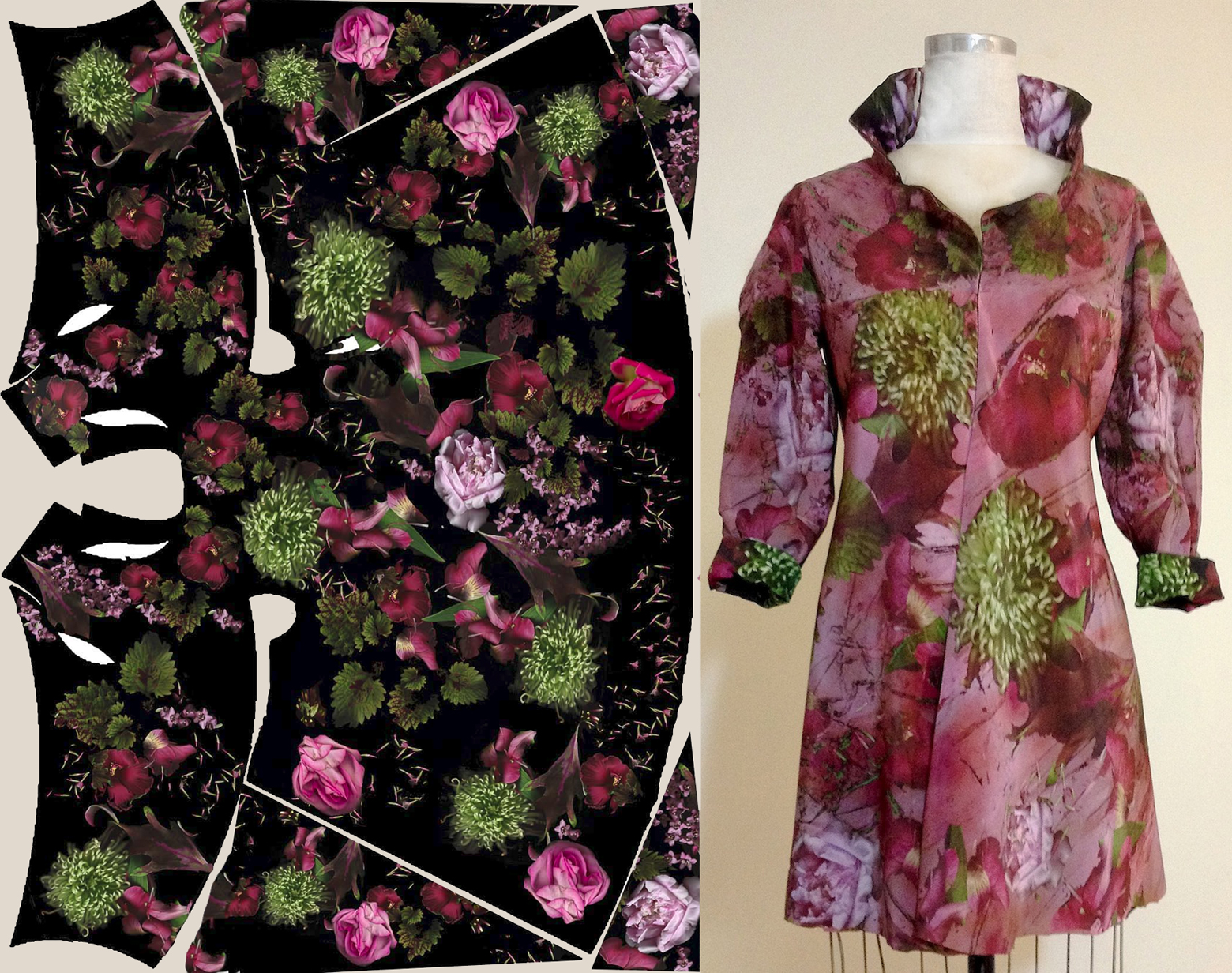
Marker for the 1902 De Mayo pattern and finished, reversible, coat design based closely on the pattern. Digitally printed on 100% silk crepe.
The Santomene pattern was the third coat developed as a printed prototype. This pattern did not fit through the arm and shoulder area when tested and would have required significant alterations. The sleeve was much too narrow and the shoulder angle too steep. In addition, it was the only pattern with center front at a 90° angle to center back. Rather than attempt to adjust the pattern to retain the patentee’s original intention, this pattern was chosen for creative experimentation (Step 6 of the original proposed process) that might suggest other approaches to draping the pattern shapes. For this investigation, the original pattern shape was retained but orientation on the body altered. This meant ignoring the patentee’s intended relationship of pattern to body. The entire pattern was shifted forward from the shoulder, thus causing the center front (Figure 9) to drape at an angle, rather than follow the center front line. This placed the back armhole point (C) higher on the back of the body—a more logical position to improve movement based on previous analysis. The front edge was folded back to form a lapel. Points A and B are marked on both pattern and muslin in Figure 9 to provide orientation. Point C is not visible on the muslin. While contouring issues remained, the result is a more dramatic garment drape and shape. The back coat section, originally intended to connect to the front, is now draped with a side fold and held in place with a tuck (Figures 9 and 10). After the muslin test, an underarm panel was added to increase the sleeve size based on comparison to the sleeve on the Peyser pattern. A dart was added over the shoulder for shape and several additional darts to contour to the body. For this jacket, the print was engineered to clearly follow the lines of the pattern, with the final design printed on cotton sateen (Figure 10).
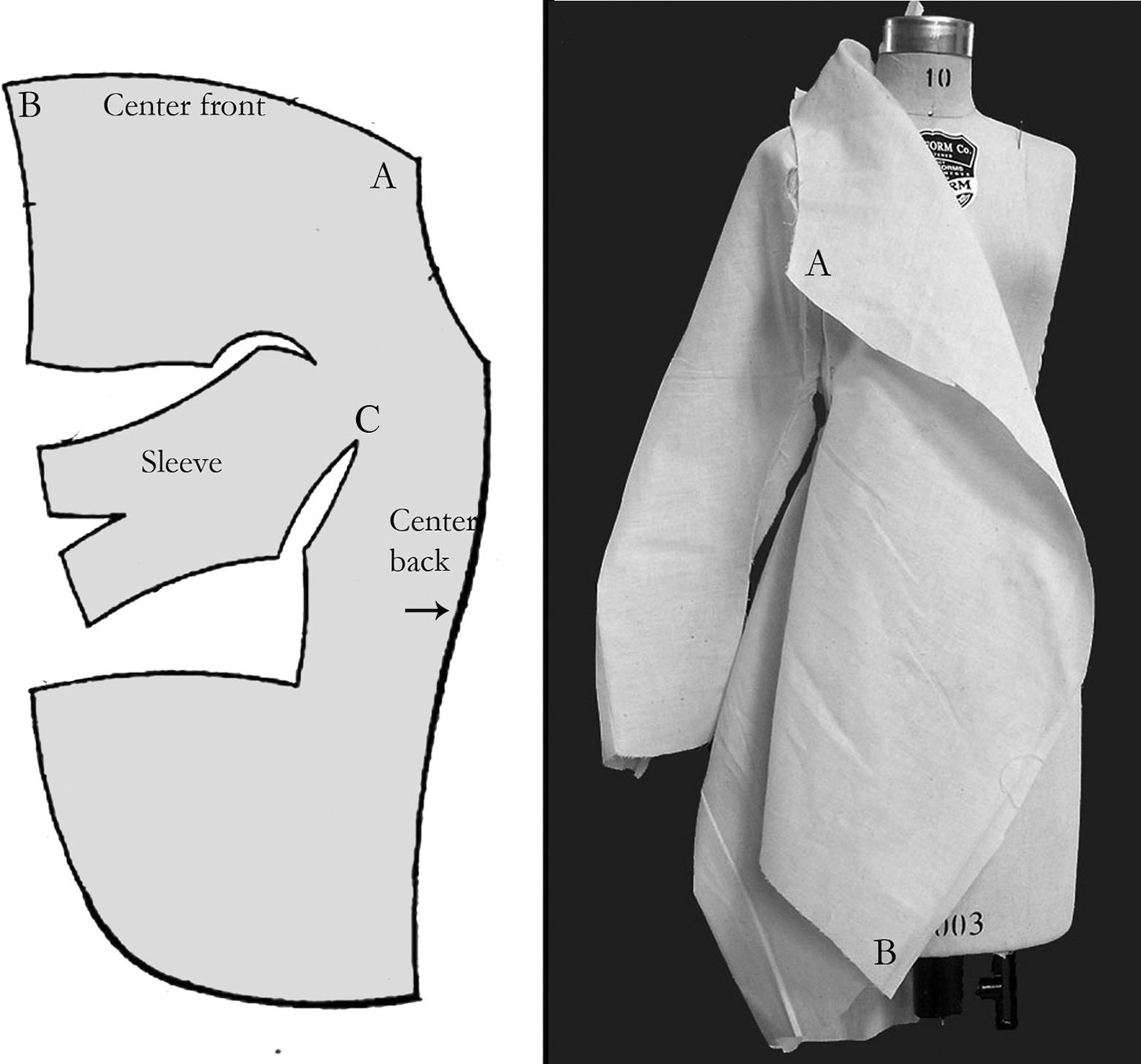
Original pattern from Santomene patent and test muslin in half scale.
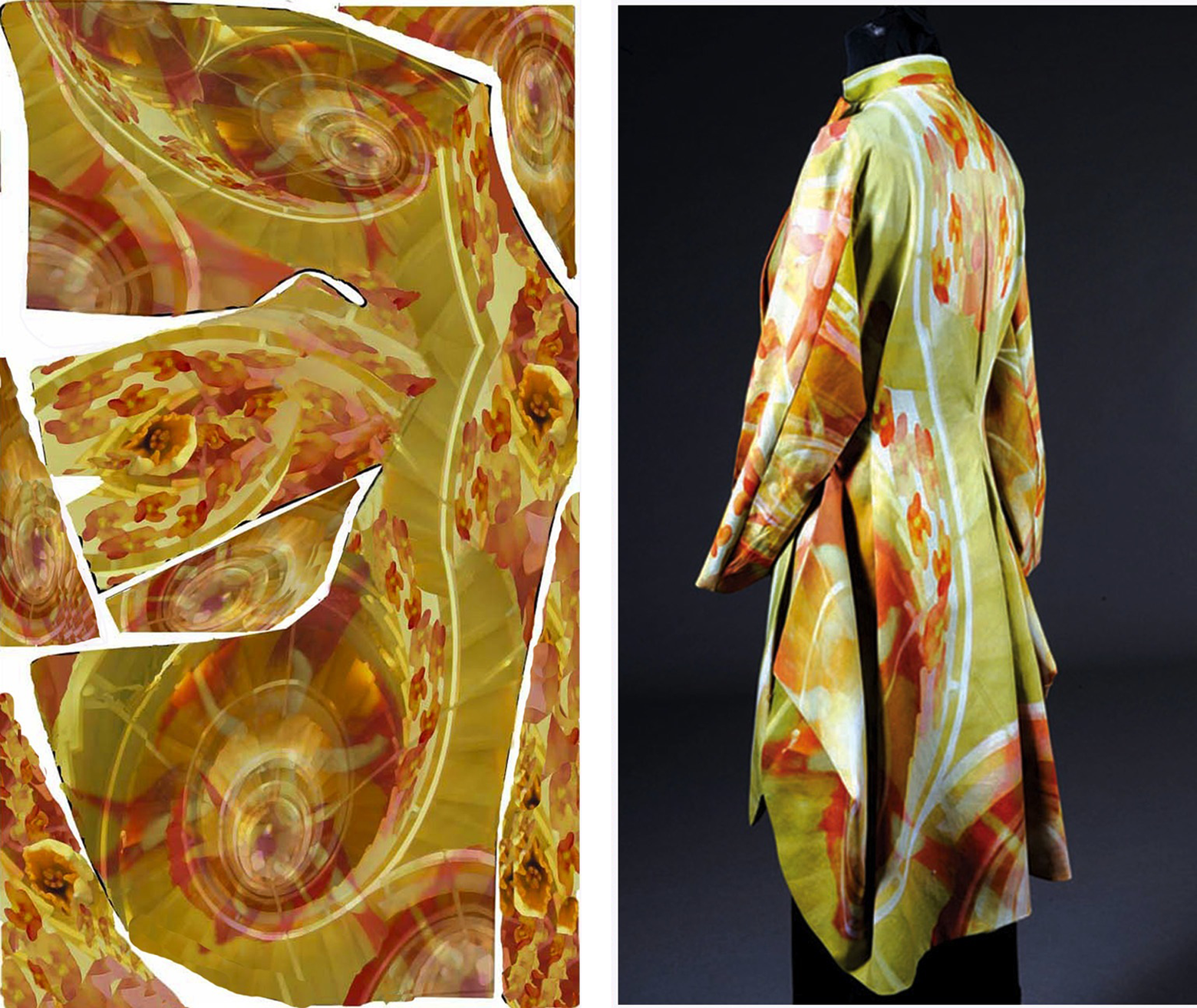
Printed marker for Santomene pattern with additional pieces to be used for facings and a collar, and full size finished coat, printed on 100% cotton sateen.
The Peyser patent was used for a fourth design experiment (seen in white in Figure 6 overlay) because, although it fit with adequate ease through the shoulder and upper arm in the first muslin test, the original style lines are comparable to the Santomene pattern, with a seam at high hip in front. Therefore, an analogous approach to the Santomene experiment was used when manipulating the fabric on the form. This permitted comparison of a single design development process and further reflection on creative solutions. After cutting the original shape in muslin, this pattern was also shifted forward from the shoulder and allowed to hang freely. The drape was manipulated into numerous iterations before settling on a design. To further evaluate process and to see the design from another perspective, a colleague, Kerri McBee-Black, collaborated with this draping experiment. For a first iteration, the back extension was allowed to fall into folds, held in place with several tucks. After evaluation, the back skirt shape was lengthened for a more complete use of the fabric (the original pattern line is marked in Figure 11). The result suggested a surface design that emphasized the edges in an engineered border print. It was printed first in half scale to evaluate the positioning of the print and then printed in full scale on medium-weight linen. After this test, a second variation was draped with the skirt section brought fully forward on the body (Line A in Figure 11), forcing diagonal pleats across the front, rather than to the back. Although slightly less efficient in the marker, for this variation, the skirt section was rounded for aesthetic reasons.
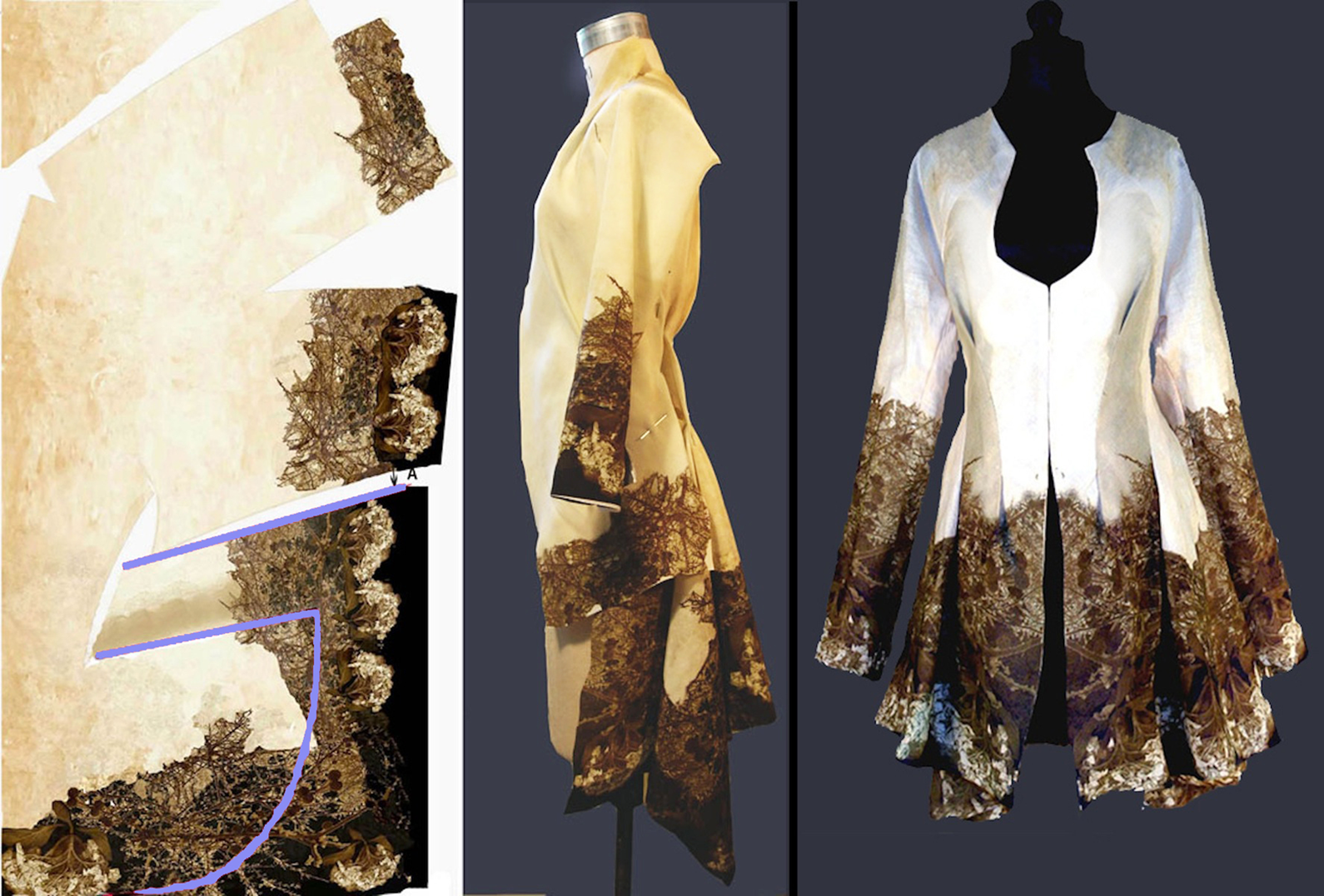
Printed marker for Peyser pattern with original pattern lines marked on lower portion, half-size test of coat variation 1 to visualize border design placement (center) and design variation 2 in full-size finished coat, printed on 100% linen.
Discussion and Implications
The coats as designed and constructed could be viewed as successful first prototypes, opening up many opportunities for creative exploration, although a number of problems arose and need further evaluation. The unaltered Osler and De Mayo patterns were easy to construct and to line, although the tight corner required for stitching the sleeve finger into the back of the De Mayo pattern would be a challenge for an inexperienced seamstress or in loosely woven fabric. While the Osler pattern fit quite well, additional width in the sleeve section closest to the shoulder edge would create more comfortable movement. The Peyser and Santomene patterns, with the added pleats, required precise marking of pleat and tuck positions for construction. In addition, fabric choice affected both drape and fit, meaning new prototypes to test each choice. The cotton sateen used in the Santomene and the linen in the Peyser jackets behaved differently than the muslin when draped into the folds, and original markings had to be shifted. There clearly remain garment shape, stitching, and layout efficiency issues to solve, but by working through the entire proposed research process, it is now possible to make both creative and technical design decisions with a more informed and experienced approach. The ability to make significant design changes without altering original pattern shapes (Peyser and Santomene) suggested techniques to create visually interesting geometric shapes as well as for incorporating surface design. In addition, further analysis of cutting with minimum fabric waste and a consideration of the amount of labor/sewing required should be evaluated. One unsolved problem remains designing the patterns to work within available fabric widths. In addition, further exploration of the range of physical movement allowed by the patterns is essential. All patterns had a closer to the body fit through the upper arm than traditional T-shaped garments, thus configurations contributed to a silhouette without large amounts of excess fabric under the arm. With further evaluation of sleeve angles and placement of intersections on the body, this is something that could be used to advantage for future creative shape experimentation.
Developing an integrated design and history research process allowed complex analysis of the apparel design process while demonstrating that utilizing technical innovations of the past can expand our current design dialogue in critical ways. As a work in progress, there were both successful aspects of the research and aspects of the method that require reevaluation and further exploration. This experimental process confirmed that research through design is not linear and that studio practice informs the development of the goals and objectives. It is hoped that future projects will involve collaborative work with other apparel and textile designers. Finally, this investigation placed pattern manipulation, not sketching, at the beginning of the design process, and made design development contingent upon the research objectives and goals. As both the research and the studio practice evolve, an important part of the examination will continue to be the intersections of creative expression with shape and print, fit and wearability, and ease of construction.
Footnotes
Declaration of Conflicting Interests
The author(s) declared no potential conflicts of interest with respect to the research, authorship, and/or publication of this article.
Funding
The author(s) disclosed receipt of the following financial support for the research, authorship, and/or publication of this article: This research was funded in part by the Rossmann Manatt Faculty Development Award, Iowa State University, Ames, IA.