



Abstract
The study of clothing disposal systems, involving the flow of clothing from one household to another, is of great interest because of the positive social and environmental consequences. Based on 35 in-depth interviews with adult men and women in Ecuador, a Latin American country, the authors sought to expand knowledge regarding one of these systems: clothing disposal by gifting to family, friends, and acquaintances. The respondents’ narratives indicated that the clothing disposal system by gifting is noncentric; based on social exchange, it strengthens the links between givers and recipients while allowing for clothes to circulate for a longer time. The data also indicated an intersection between age and gender, offering insight into how the process of clothing disposal by gifting develops within households. In some disposal events reported by participants, the clothing disposal system by gifting demonstrated autonomy, but in other events, it interacted with the clothing marketing system.
Disposal is a process that begins with a consumer’s decision to stop using a still-usable product (Hanson, 1980; Jacoby, Berning, & Dietvorst, 1977). The consumer must then decide how to dispose of that product. He or she may store it, transfer it temporarily or permanently to other individuals or organizations, or throw it away (Jacoby et al., 1977). In recent years, research has increased in the field of consumer behavior and product disposal, particularly with regard to clothing. This interest can be explained by the potentially enormous economic and environmental impacts of clothing disposal (Chen & Burns, 2006). In the United States alone, households spend approximately US$350 billion annually on clothes and shoes (American Apparel and Footwear Association, 2012). Certain marketing strategies increase the frequency of consumer shopping and stimulate the major clothing markets. For example, “fast fashion” involves the production of low-cost clothing based on the latest fashion trends (Joy, Sherry, Venkatesh, Wang, & Chan, 2012; Rath, Bay, Petrizzi, & Gill, 2015). Of course, this strategy creates major sustainability issues due to the rate of consumption.
Methods of clothing disposal outside of the market involving the flow of clothing between households are of particular interest because of their social and environmental benefits. Among these methods are freecycling (organized around a community) and gifting (to family, friends, and acquaintances); the latter method is the subject of this study. By improving the situation of both the giver and the receiver of a product, these types of methods have a positive social impact (Krush, Pennington, Fowler, & Mittelstaedt, 2015). Additionally, an increase in clothing circulation decreases the amount of waste entering garbage dumps and landfills, generating a positive environmental effect (Bianchi & Birtwistle, 2010). Despite their benefits, these disposal methods have received little attention from researchers (Krush et al., 2015). Donation has attracted the most attention because it tends to be the primary clothing disposal method in developed, individualistic societies (Bianchi & Birtwistle, 2010; Harrell & McConocha, 1992; Morgan & Birtwistle, 2009), and most studies of clothing disposal have come from these types of nations (Laitala, 2014). Developed individualistic societies (e.g., the United States and the United Kingdom) have high income levels, and the individual’s goals take precedence over the goals of the groups to which he or she belongs (Hofstede, 2001).
The authors of the current study focused on clothing disposal by gifting to family, friends, and acquaintances. This type of clothing flow not only meets individual needs but also strengthens the links between givers and recipients, while allowing clothes to circulate for longer periods of time. Clothing disposal by gifting is distinct because givers and receivers share a preexisting and stable link. The authors approached this form of clothing disposal by viewing it as a system within a social and cultural environment. The study site was Ecuador, a developing collectivist Latin American country where gifting is the primary method of clothing disposal outside of the household (Cruz-Cárdenas, 2013). The popularity of this disposal system can be explained by those economic conditions typical of developing countries. The cultural features of collectivist societies are another factor because individuals are integrated into closely knit groups and subordinate their objectives to group goals (Hofstede, 2001).
Previous authors have commonly used a microperspective to investigate the issue of disposal. While the authors of the current study also employ this perspective, we primarily adopt meso- and macropoints of view. The microapproach allows researchers to focus on the individual and organizational levels, making it useful for studies that pursue managerial interests, such as consumer–business or consumer–product relations (Alvesson, 1994). In the current study, the authors sought to explain behavior in depth at an aggregate level, including behavioral interactions with the social environment. As such, our approach needed to be broader and includes meso- and macro levels (Layton, 2008; Meade & Nason, 1991). The meso, or intermediate, approach emphasizes system functioning in which various elements interact, including individuals, organizations, and products (Layton, 2008), while the macro approach allows researchers to study the mutual interactions between society and systems of interest (Hunt & Burnett, 1982). Given the limited research on clothing disposal by gifting, the authors of the current study adopted an exploratory, qualitative approach using in-depth interviews of adult men and women.
Theoretical Framework and Research Questions
Clothing Disposal
Jacoby, Berning, and Dietvorst (1977), pioneers in the study of product disposal, associated this behavior with the consumer’s decision to stop using a still-usable product. They proposed a typology that divides disposal methods into temporary or permanent. More useful to this study, one can also classify disposal methods based on whether or not the product remains within the household. Disposal methods within households primarily involve storage and use conversion, but intergenerational transmission is also possible. Disposal methods outside of households include giving a product to others, selling it, trading it, or discarding it. Burke, Conn, and Lutz (1978) noted the heterogeneity of the “giving to others” category, further dividing it into giving away (to family, friends, and acquaintances) and donating (giving to charities). Since its inception, the microapproach has been dominant in studies regarding the disposal of products and clothing.
Harrell and McConocha (1992), along with Paden and Stell (2005), conceived of product disposal outside of the household as the structuring of redistribution or disposal channels that originate with the consumer. Because a system is a set of integrated elements, the redistribution or disposal channel is a system that involves consumers, companies, and organizations; products and information flows; and other components. These human and nonhuman actors are integrated into a network of associations, and these relationships shape their roles and identities (Hansson, 2015; Latour, 2005). The notions of time and space/place are also very important in the study of systems and networks: The relationships and interactions that occur between actors in specific locations and time frames also produce places (Green, Lewis, & Jirousek, 2013; Massey, 1994).
Product disposal systems are heavily influenced by macroenvironmental factors, such as the economy and culture. A deep economic crisis can lead certain channels to flourish, such as owners who sell their possessions (Green, Mandhachitara, & Smith, 2001). In developing countries, a large percentage of the population lives in poverty, which increases the number of friends and acquaintances representing potential product recipients (Saunders, 2010). Culture is another fundamental macroenvironmental force in disposal channel structures. In developed, culturally individualistic societies, donation is the prevailing channel for clothing disposal outside of the home (Bianchi & Birtwistle, 2010; Harrell & McConocha, 1992; Morgan & Birtwistle, 2009). However, in certain collectivist societies, gifting is the prevailing disposal channel (Cruz-Cárdenas, 2013). Groups and networks formed in a collectivist context (Hofstede, 2001) make available a greater number of potential recipients. Unlike donation, which requires few interpersonal linkages, clothing disposal by gifting occurs in the context of interpersonal relationships. As with all gifting, this form of clothing disposal has consequences for the relationships involved.
Developmental and Critical Schools and Marketing Systems
Methodologically, the microapproach is the most helpful in drawing conclusions regarding management utility; however, the meso- and macroapproaches allow a more comprehensive understanding, which is needed in the current case of clothing disposal by gifting. Researchers using these approaches have emphasized higher levels of aggregation, inevitably addressing the roles of consumption and markets and their impacts on society. Scholars might find guidance for their conclusions and recommendations in two schools of thought: the developmental school and the critical school. While both schools advocate changes that lead to better situations for individuals, organizations, and society, there are substantial differences between them regarding the depth of the desired changes.
The developmental school represents the mainstream in the marketing and consumer behavior field. Based on the premise that consumption and markets meet needs, thinkers in the developmental school emphasize the positive role of marketing in economics and society. They focus on how businesses meet human and social needs in exchange for utility. Scholars subscribing to this view believe that the social and environmental problems resulting from consumption can be overcome by improving marketing systems without changing economic or political systems (Mittelstaedt, Kilbourne, & Shultz, 2015).
The critical school has its origins in thinkers from the Frankfurt School. Scholars like Max Horkheimer, Theodor W. Adorno, Erich Fromm, Herbert Marcuse, and Walter Benjamin sought to give continuity to Marxist theory, which derived from the thoughts of Karl Marx, Friedrich Engels, and others, by reinterpreting and extending it (Arato & Gebhardt, 1978). Although the critical school is well established in other disciplines, it has only emerging status in the field of marketing and consumer behavior (Alvesson, 1994; Mittelstaedt et al., 2015). Thinkers in this school hold that current marketing systems are unsustainable and require fundamental changes. They believe it is necessary to emancipate individuals from the economic and social forces that dominate them and to counteract their current critical thinking, which includes perceptions of marketing and markets (Alvesson, 1994). According to scholars who subscribe to this view, businesses seek to keep consumption at the center of consciousness and human attention to obtain higher returns; in this manner, people are socialized to play the role of consumers (Alvesson, 1994; Burton, 2001).
Individualism and Collectivism
Culture represents a final area that must be addressed to generate the theoretical basis for the current study. Culture is a fundamental macroenvironmental influence on the structure of disposal systems, and Hofstede (2001) divided societies into collectivist- and individualist-oriented cultures. In collectivist societies, people are united by close ties, and the individual’s goals are subordinated to the group’s objectives. In individualistic societies, the individual’s goals take precedence. While this binary conception is a simplification of a much more complex reality, the authors of the current study employ this division for simplicity and convenience.
Much of the world’s population lives in countries that can be classified as collectivist; however, there are various types of collectivism. For example, the collectivism of Latin America differs from the Asian/Confucian collectivism present in countries such as China, Japan, and South Korea. These differences arise from the influence of different religions and philosophies and the degree of Westernization. Both collectivism and individualism can be horizontal or vertical, depending on whether emphasis is placed on equality or hierarchy (Triandis & Gelfand, 1998). In horizontal societies, individuals have relatively similar statuses, whereas vertical societies contain hierarchies and marked distances.
Research Questions
While a certain baseline of information has been established with regard to clothing disposal by giving, many details and implications require clarification. Therefore, the authors of the current study sought to contribute to this gap in the research by choosing Ecuador, a developing Latin American country that is culturally collectivist, as the study environment. Additionally, the authors formulated the following research questions to guide the study:
Study Setting
Ecuador is a developing Latin American country with approximately 16 million inhabitants. Quito, the capital city, has a metropolitan area population of approximately 2.2 million. Ecuador is a Spanish-speaking country with an overwhelmingly Roman Catholic population. Culturally, Ecuador is a country of very low individualism (high collectivism), scoring only 8 in contrast to other countries such as the United Kingdom, which has a score of 89, and the United States, which has a score of 91 (Hofstede, 2001). Ecuador’s scores of 78 for power distance and 63 for masculinity (Hofstede, 2001) indicate that its society can be characterized in terms of vertical collectivism (Triandis & Gelfand, 1998). That is, Ecuador’s society includes marked hierarchies and inequality in power distribution along with collectivism (Hofstede, 2001). Vertical cultural collectivism, Catholicism, and developing country status are characteristics that Ecuador shares with most Latin American countries. Regarding the Ecuadorian economy, the country uses the U.S. dollar as its official currency.
Method
Given the limited research background on clothing disposal by gifting, the authors selected a qualitative approach for this study. To this end, the authors conducted 35 in-depth interviews with 20 women and 15 men, ranging in age from 18 to 63 years old, in Quito, Ecuador. Other characteristics of the final sample can be observed in Table 1. The in-depth interviews and transcripts occurred primarily during the second half of 2014. The institution funding the study approved the ethical research protocols. Before the interviews, participants read and signed an informed consent form that explained their rights (Silverman, 2006). The interviews lasted an average of 1 hr, and participants received a reward of US$40 for their time. The interviewer, one of the authors, focused on eliciting detailed descriptions of specific events of clothing disposal by gifting.
Sample Characteristics.
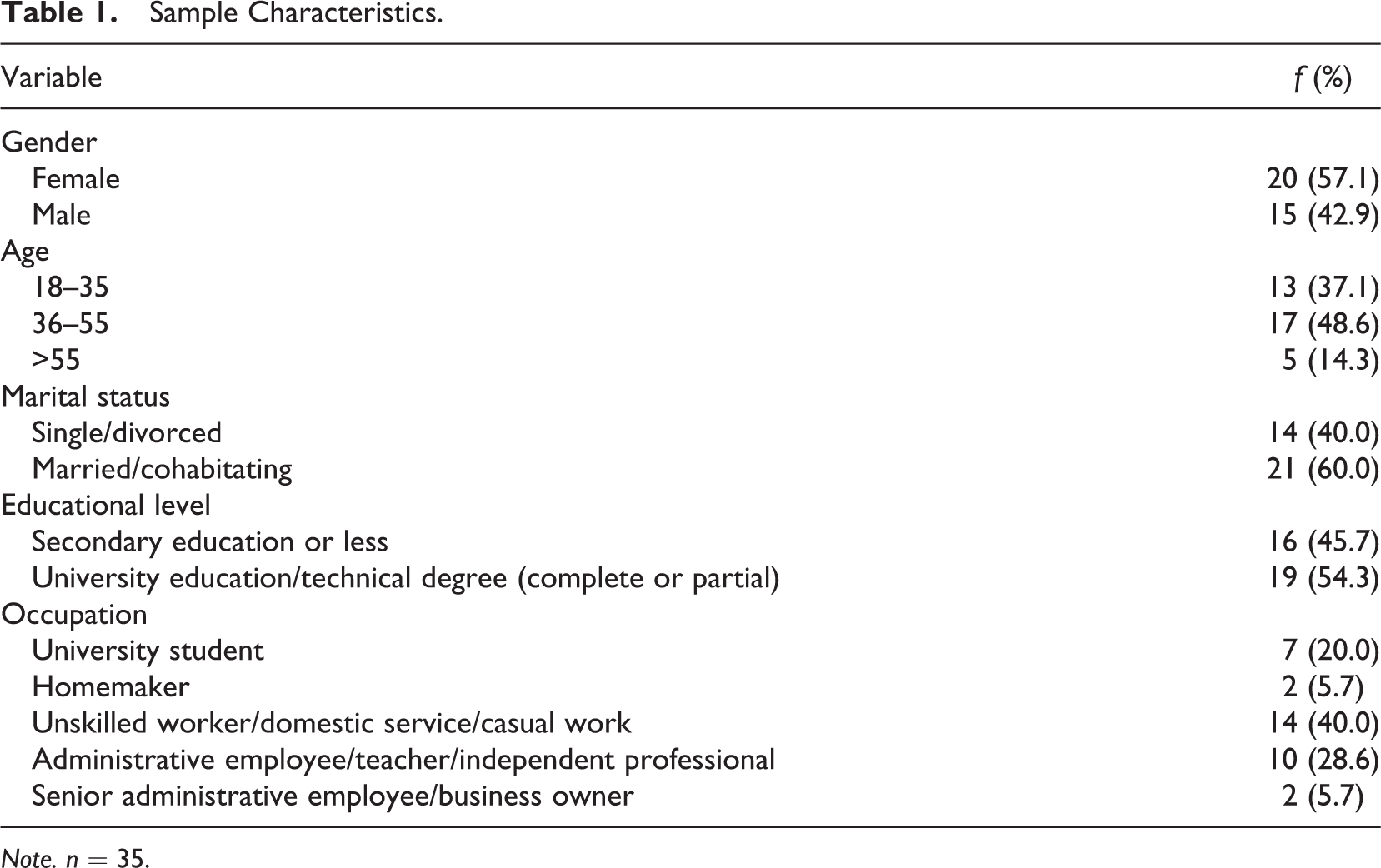
Note. n = 35.
When fieldwork commenced, the authors opted for purposive sampling. The first respondents came from the middle and upper-middle socioeconomic strata, which are purported to practice clothing disposal behaviors more intensely. This initial group included seven people, acquaintances of one of the authors linked to different business organizations and educational institutions. The sample was expanded progressively following the snowball technique. For simplicity, the authors used educational level and occupation as qualifying criteria for belonging to the middle or upper-middle class (Schiffman & Wisenblit, 2015). Participants had university education levels and professions in administrative and office work, teaching, or independent business. University students were also included in this group. As the data analysis progressed, the sampling became theoretical (Glaser & Strauss, 1967), and the participants’ origins were extended to include lower socioeconomic segments. The sample for this group of respondents began with two individuals who were acquaintances of one of the authors. One participant worked in domestic service, and the other was a gardener. The sample in these strata was expanded again using the snowball technique. To qualify a person as belonging to the lower socioeconomic strata, the authors were also guided by the criteria of education and occupation. Participants in this group had lower educational levels (secondary or primary education) and worked primarily in manual occupations (e.g., domestic service, cleaning, and gardening).
The authors took several actions to enhance the validity of the data analysis and interpretation. A person trained for the task completely transcribed the interview recordings, generating approximately 1,000 pages of Spanish-language text (Braun & Clarke, 2006). Two of the authors with training and experience in qualitative research conducted the data analysis and interpretation using the thematic interpretive method (Cornish, Gillespie, & Zittoun, 2014; Patton, 1999). One of these two authors has experience primarily in the consumer behavior discipline, and the other has a background in organizational systems and social networks. The inductive process of building categories and themes (Braun & Clarke, 2006) lasted for several months and involved numerous rounds of individual analysis and subsequent meetings to compare and discuss results until reaching consensus (Cornish et al., 2014). During this time, the authors compared various forms of data organization and discussed several theories to interpret the results (Patton, 1999).
Findings
Of the 93 events reported in chronological order by the respondents, a large majority (80) were about gifting as a disposal method. Only 13 events were associated with other methods, such as selling, donating, or discarding. These frequencies align with the results of other studies in the same environment, which indicate gifting as the prevailing method of clothing disposal outside of the home (Cruz-Cárdenas, 2013). The qualitative analysis presented below is divided into three sections or themes. The authors devoted the first section to the characteristics of the clothing disposal system by gifting. In the second section, the authors focused on the process of clothing disposal by gifting inside the household. Finally, in the third section, the authors considered the interaction between the clothing disposal system by gifting and the clothing marketing system. The interview extracts, which are used later for the categories and themes, were edited to facilitate clarity and translation from Spanish to English 1 (Roulston, 2014).
The Clothing Disposal System by Gifting and its Features
In this first theme, the authors sought to partially answer our first research question regarding the characteristics and operation of the clothing disposal system by gifting. This goal was accomplished by presenting the actors, their interactions, and the relevant characteristics of the system. Based on the respondents’ narratives, we identified an initial characteristic of the clothing disposal system by gifting: It is noncentric. The presence of a large number of actors, with no central coordination, endows this system with its noncentric character (Dixon, 1984). A second feature arising from the narratives demonstrated that the system is based on social exchange. The social exchange between the givers and recipients of used clothing relied on a cultural norm of reciprocity, that is, an exchange of benefits (Gouldner, 1960).
Rosa
2
(female, high school teacher, 46) narrated a story of used clothing disposal. This clothing, initially Rosa’s possession, became a gift to and later the possession of her friend Yolanda, the recipient. Yolanda previously had received clothes from Rosa. Rosa reflected on the characteristics of the clothing. Rosa knew Yolanda’s physical characteristics (she emphasized her size) and her difficult economic situation. Yolanda’s subsequent actions made the exchange reciprocal: She spent time with Rosa and prepared food for her. This type of compensation with actions or services was very common in the respondents’ stories. Similar to scenarios described by previous authors (Caplow, 1984; Gouldner, 1960), the norm of reciprocity here could be relaxed based on the situation and the recipient’s characteristics. Here is a passage from Rosa’s narrative: I wear a uniform from Monday through Friday and, on Saturday and Sunday, light clothes. I think that was the main reason why I stopped using those clothes. The melon-colored [suit] was one of them. I also had a gray and brown one. I asked my friend [Yolanda] if she wanted them, and she said yes; she uses them [now]…my friend is almost the same size, you know? We talk since she’s my friend, and she told me, “You know, I’m building my house;” she has children and financial problems…. Sometimes she calls me and tells me, “You know I made some soup”…but more than that, there are moments that I share with her that make me feel so good, where I feel her gratitude. I gave the work clothes to a man who comes to help me on the farm because I have a plot of land here…. I gave him overalls, a pair of work boots, a hat, a jacket…he asked me to give him the used clothes; he’s a humble little peasant, so I told him, “No problem; I’m much delighted…. But come to take them tomorrow because I have to wash them”…. I must admit that he didn’t ask me to give him the clothes but rather to sell him the clothes, and I answered, “How could I sell you things I’ve already used?”
In contrast, the story of Ernesto also exemplifies a third feature of the clothing disposal system by gifting: the dynamism within the opening of new networks or channels of disposal. This dynamism was present in several interviewees’ stories. Meanwhile, uncertainty in the identity or role that the different actors acquired prevented participants from opening new channels or networks of clothing disposal by gifting. Therefore, the system also had a certain degree of stability. In the following narrative, Sandra (female, independent professional, 34) was reluctant to open a new channel of disposal with her employee. Sandra felt uncertainty about whether her employee would accept the role of receiver and whether her clothing would acquire the status of a gift. Sandra finally indicated a preference for established channels, in which she had more certainty about the roles of the actors. Her words are presented below: I am not encouraged to give [used clothing] to my employee…. I should be careful with what I give her; I do not know what she likes or how she would react. On the other hand, with my cousin, it is fairly regular [the gift of used clothing]…when I see there are a lot of clothes, I call her, or she asks me, “Cousin, have you some clothing to give me?”
The Process of Clothing Disposal by Gifting Inside the Household: The Involvement of Participants and the Physical and Temporal Flow of Clothing
In the first theme, we began to answer the first research question regarding the characteristics and operation of a clothing disposal system by gifting. In the second theme, we continued answering this first question by analyzing a vital area for system operation: the process of clothing disposal by gifting within households, emphasizing the roles of the actors from the intersectionality perspective. As its central premise, the concept of intersectionality holds that individuals’ varying positions on social identities axes (age, gender, social class, and others) interact and overlap (Kaiser, 2012). While individuals are not entirely free to choose these positions, they can exercise agency in exploring the alternatives (Holmer-Nadesan, 1996; Kaiser, 2012).
In their stories, interviewees showed differing degrees of involvement in clothing disposal by gifting, mainly according to their position on two identity axes: gender and age. Compared to older household members, younger respondents (approximately 18–35 years old) showed much less involvement in the entire process of clothing disposal by gifting. These results are complemented by other studies showing that younger individuals base their identities largely on purchase and consumption activities, showing less interest in the social and ecological consequences of these actions (Morgan & Birtwistle, 2009). In contrast, the interviews showed that middle-aged and older adults were more likely to be involved in the process. Interestingly, involvement in the phenomenon was most common at a particular intersection of gender and age: middle-aged and older women (approximately 36 years old or older). Based on interviewees’ stories, this greater involvement could reflect an association between clothing disposal tasks and housework—tasks traditionally attributed mainly to mothers and/or wives (Bianchi, Milkie, Sayer, & Robinson, 2000). This role is even more pronounced in high masculinity societies (Hofstede, 2001), including that of Ecuador. Notably, middle-aged and older men showed variable involvement that tended to become greater toward the end of the disposal process by gifting.
In their interviews, the participants noted that the first stage of clothing disposal by gifting involved removing the clothes that they no longer wanted or used from their closets and wardrobes. Even less-involved individuals (typically young adult men and women or middle-aged and older men) contributed somehow to this first stage, with their actions of closet management. For example, Cristina (female, administrative employee, 22) detailed the management of her closet and why she physically relocated some clothing to less visible and accessible areas. Here is an excerpt: On vacation, when I arranged everything, I discovered I had clothes in my closet that I did not even remember…clothes that I use less frequently or that I do not mind going to the bottom of the closet and drawers, the new and what I use frequently are on top, within reach…. I found some blouses that I used very little and the basketball t-shirts I wore when I was on the high school team…too many things! And my mother told us [Cristina and her sister] to remove the clothes we no longer use.
During his interview, Javier (male, university student, 18) echoed Christina’s words but even more explicitly associated the first stage of the clothing disposal process with housework. Javier also emphasized the role of his mother with these words: My closet, thankfully—my mom is always tidy…[that day] we were fixing up the house, and my mom said that we should see what I no longer use, and then we found two pairs of my shoes…a suit…about two pairs of jeans and two shirts. There [on vacation] is where I sit, and I choose clothes we will not use and accumulate…. Instead, he [her husband]—if I do not tell him that there is something he does not use, he will not take it out…. I had to say, “You prefer to have piled clothes! Take what you no longer wear and give it away, or do whatever you want!” Usually on vacation or when I see a lot of mess, I say [to her husband and children] to classify what will no longer be used. Yes, because the clothes are already piled up…so I’m putting them in bags and keeping them in a corner of the laundry room and then give them away.
A third and final stage of the process of clothing disposal by gifting inside the household involved the selection of recipients for the clothing placed in the transition area. María (female, administrative employee, 49), for example, told how she and her husband endowed garments, which had an ambiguous identity, with a new identity—that of gifts. This process required the selection of recipients. Here is an excerpt from her narrative: The clothes that my girl no longer uses, I sent to the house of my nephew and his wife because they have small daughters…also, my nephew’s wife got my blouses. The clothes we took from my son I gave to my brother-in-law and his wife, who have a child about the same size as mine. I also gave some clothes to needy neighbors. Instead, my husband gave his shirts and jackets to a friend of his and to a cousin. So…in my family, we accumulate…and when we have enough clothes, we see what goes for everyone and make a bundle and deliver…. Her clothes and those of our children my wife usually gives to a friend of hers from her workplace and also to another girl who helps us with cleaning the house and to the lady who cares for my mom…. For my part, I give my clothes to my two workers: Walter and Rodolfo.
The Clothing Disposal System by Gifting and the Clothing Marketing System: Interaction and Autonomy
In this third theme, the authors sought to answer the second research question regarding the interaction between the clothing disposal system by gifting and the clothing marketing system. Marketing activities can also be assimilated into a system (Dixon, 1984; Meade & Nason, 1991). In the current study, the clothing marketing system is relevant, involving the manufacturers and retailers of new clothing, as well as the consumers and products. Many of the respondents were part of both the disposal and the clothing marketing systems. In several of the disposal events reported by participants, the interaction of the two systems became evident, as buying new clothes was preceded and/or followed by clothing disposal by gifting. Previous researchers have also identified this interaction with donation disposal behavior (Ha-Brookshire & Hodges, 2009; Morgan & Birtwistle, 2009). In the words of the respondents who reported this interaction, space and place were central issues leading to this connection.
For Lefebvre (1991), space is a social construct that has several dimensions, one of which is conceived space. This dimension is abstract and is produced by planners and strategists in the form of drawings and representations (Lefebvre, 1991). In the narration of Magnolia (female, administrative employee, 37), there were two conceived spaces: the retail space and the home. The retail space is designed by marketing strategists and planners to focus on sales and product rotation (Denegri-Knott, 2007). The home is a space for rest and family life (Storr, 2008). In Magnolia’s narrative, these conceived spaces were associated with specific places in which she participated. Here are her words: A promotion was launched at a boutique near my work…two pairs of shoes for thirty dollars or three pairs for forty dollars…. Then one day I said, “I will enter,” and indeed, you had a world of shoes and could choose any kind of shoes: low, high, boots, any of them…. I was like in the heaven of shoes…. So I picked eight pairs…. I bought recently on Friday, and the clothes I was already taking out from Monday or Tuesday…and this week I am also taking and giving things…. The apartment where I live is small, and I wanted to find space…make space.
However, participants also reported events of clothing disposal by gifting in which the interaction of the two systems was not required for disposal. In these types of events, the respondents did not assume the role of consumers, and they were disconnected (at least momentarily) from the marketing system. In these stories, we could appreciate the relative autonomy that is possible in the clothing disposal system by gifting. Within this scenario of autonomy, clothing disposal by gifting approached conventional gift giving, which is characterized by the delivery of an object that transports meaning in the context of a relationship (Mick & Demoss, 1990). For example, the disposal event narrated by José (male, gardener, 40) did not relate to a new purchase. José’s disposal of clothing could be explained by a series of elements internal to the clothing disposal system by gifting. When some of his clothes no longer fit, José assumed the role of giver (but not consumer) and estimated that the clothes would be useful to his neighbor and tenant. In the environment under study, the word “neighbor,” which José used to describe the clothing recipient, is a very common manner of addressing someone who is very close geographically. This concept serves to create a group feeling, inasmuch as the group is the basic unit of collectivism (Hofstede, 2001). A social exchange occurred between José and his neighbor. In reciprocation for the clothing gift, José’s neighbor (the recipient) helped him to paint the house. Here is a passage from José’s narrative: My sweatshirts no longer fit me…. I said, “Neighbor, by any chance, do you need some sweatshirts? They’re almost new and don’t fit me.” Then, my neighbor said, “Let me see” and then “Yes, neighbor.” So I gave them to him…. He’s a tenant of mine; he’s been here three years now…. Now, I’m painting the walls of my house, and he’s lending me a hand.
Discussion and Implications
The authors of this study addressed the clothing disposal system by gifting in terms of its characteristics, its operation, and its interactions with the clothing marketing system. The exploratory qualitative nature of this study allowed for a deeper understanding of the subject, but it limited the possibility of generalizing the results to a larger population. From the respondent narratives, it was possible to characterize the clothing disposal system by gifting as a noncentric system in which participants, assuming the roles of givers and recipients, transformed clothing possessions into gifts and new possessions. Benefits received in return became actions of reciprocity under the generated social exchange. The authors also noted an intersection of age and gender, which is fundamental to understanding the involvement of household members, with women who were middle aged and older playing a leading role. The clothing disposal system by gifting differs from other disposal systems. It diverges from disposal by donation, which does not occur in the context of interpersonal relationships and represents a convenient method of disposal in terms of time and effort (Ha-Brookshire & Hodges, 2009; Morgan & Birtwistle, 2009). It also differs from disposal by freecycling, which occurs more in the context of a community than in the context of interpersonal relationships (Krush et al., 2015). Finally, although disposal by selling demands effort, the exchange that is produced is economical.
In several of the events reported by respondents, we observed an interaction between the clothing disposal system by gifting and the clothing marketing system. Taking a developmental school perspective, we can identify benefits for all actors by adding the consequences of this interaction to the consequences of the independent operation of the two systems. A positive marketing situation (Mittelstaedt et al., 2015) should be encouraged. Through the interaction of the clothing disposal system by gifting and the clothing marketing system, consumers benefit by buying new clothes and accommodating them at home, while new clothing sales benefit companies. Givers and receivers strengthen their links due to the social exchange that is produced through the clothing disposal system by gifting. Similar to freecycling (Krush et al., 2015), the recipients benefit by gaining access to clothing that they want or need. The clothing disposal system by gifting also keeps clothing circulating longer, away from garbage dumps and landfills, thus making it beneficial to the environment and to society in general.
The findings of the current study can also be viewed from the critical school perspective. Several of the disposal events reported by respondents occurred independently in the clothing disposal system by gifting without interacting with the clothing marketing system. From a critical perspective, these behaviors are delivery and provision mechanisms—alternatives to the markets, leading to greater individual autonomy (Alvesson, 1994) and creativity (Ruppert-Stroescu, LeHew, Hiller Connell, & Armstrong, 2015); they thus should be encouraged. Nonetheless, the critical school of thought would see the interference of the clothing marketing system in the clothing disposal system by gifting as a cause for concern. Such interference is evident in the invasion of the home space (Lefebvre, 1991). In this regard, some factors deserve to be studied in light of their ability to exacerbate this effect. For instance, the expansion of consumerism and materialism should be considered; expansion in particular can affect societies that experience rapid economic and social changes (Ger & Belk, 1996). Another factor of interest is the global expansion of fast fashion, which is characterized by the imitation of luxury fashion through the production of goods of low quality and durability (Joy et al., 2012; Rath et al., 2015). The impact of these factors seems to indicate that the clothing disposal system by gifting could change over time, as more disposal events are driven by selfish motivations to create space at home for new clothes.
Finally, it is necessary to reflect on the issues that we expected to find in the participants’ stories, but that were absent. We expected a religious theme due to the Roman Catholicism of the majority of the people in the studied setting. We also expected to hear about environmental issues, which are logically linked with disposal behavior. Religious motivations in product disposal have emerged in other settings (Saunders, 2010). One possible explanation for its absence in our study is that the participants considered clothing disposal by gifting to be a secular activity; therefore, they separated it from religious life and linked it more with social and functional benefits. Environmental concerns were also absent from the participants’ stories, which would support results in other scenarios: When consumers recognize environmental concerns, they apply this attitude to the consumption of certain products but not specifically to the purchasing and disposal of clothing (Joy et al., 2012). Based on the obtained results, environmental issues would not provide fertile ground for public campaigns that promote clothing disposal in an environmentally friendly manner, such as gifting. A more fruitful short-term initiative would be an appeal to social relationships and to the goodwill that can be fostered among family, friends, and acquaintances through product transfer.
Footnotes
Acknowledgment
The authors wish to thank the editors and the anonymous reviewers for their valuable comments and recommendations.
Declaration of Conflicting Interests
The author(s) declared no potential conflicts of interest with respect to the research, authorship, and/or publication of this article.
Funding
The author(s) disclosed receipt of the following financial support for the research, authorship, and/or publication of this article: Universidad Tecnológica Indoamérica funded this study.