



Abstract
The purpose of this study is to critically examine the fashion illustration textbooks that are currently being used within the textile and apparel discipline. Using gendered stereotypes and intersectionality theory as a conceptual and theoretical framework, the following research questions guided our study: (a) Are women represented in diverse races, and how do racial hierarchies intersect with these representations? (b) How are women’s body sizes represented, and how does race intersect with these representations? (c) How are women’s bodies positioned, and how do gendered stereotypes and hierarchies of race intersect with these representations? We used the content analysis method and analyzed fashion illustration textbooks in several categories including gender, race, body size, body position, provocative, skin color, and hair type. We found very few women of color, a majority of thin bodies, and more light-skinned Black individuals than dark-skinned Black individuals.
Fashion illustration is taught in the majority of textile- and apparel-related programs, as it is often one of the early steps in the apparel design process. When teaching these courses, instructors frequently use a textbook to provide guidance for students. In recent years, scholars in numerous fields have begun critically examining their textbooks in regard to diversity and found there has not been a significant amount of representation of diverse races (J. Collins & Hebert, 2008; Hogben & Waterman, 1997). A few scholars have examined textbooks within the textile and apparel discipline (product development and men in fashion illustration textbooks), and similar to other areas did not find much diversity (Reddy-Best, Choi, & Park, 2018; Reddy-Best, Kane, Harmon, & Gagliardi, 2018). In this study, we build on previous work and shed light on how women are represented in fashion illustration textbooks. Additionally, we analyzed the diversity of each textbook to provide implications to fashion illustration instructors as well as future authors and publishers of these texts.
The demographics for students in textile- and apparel-related programs are not publicly available. However, anecdotal evidence found by analyzing the authors’ institutions and conversations with a number of professors working in textile and apparel programs at conferences such as the International Textiles and Apparel Association (ITAA) and Costume Society of America indicate that most of these programs enroll predominantly White students. However, it should be noted that there are several historically Black colleges and universities in the United States that offer fashion-related programs (M. Collins, 2014). While White individuals might predominantly occupy the field, people of color (POC) are represented in about 39% of the postsecondary education population, which, according to U.S. Census data, is comparative to the representation of POC in the U.S. population (40%; National Center for Education Statistics, 2016; U.S. Census, 2016). Therefore, exposing students to diverse examples is increasingly important. Additionally, researchers studying media exposure theories highlight that media and imagery can significantly affect a viewer’s perceptions and attitudes, indicating that what we see in various outlets informs our perceptions (Gerbner, Gross, Morgan, Signorielli, & Shanahan, 2002). In this study, we are the first to critically analyze imagery in fashion illustration textbooks, which prompts a much-needed discussion in our discipline and literature as these textbooks are an important course component that could potentially shape students’ perceptions about race and the body.
Literature Review
Representation of Race
Over the past 70 years, textbooks and fashion media have overwhelmingly lacked representation of POC. For example, J. Collins and Hebert (2008) analyzed books used in psychology and reported that White individuals occupied much of the imagery. Within the textile and apparel discipline, Reddy-Best, Kane, Harmon, and Gagliardi (2018) surveyed race in books used in product development and fashion design classes and found POC were pictured very few times or less than 15%. Similarly, authors analyzing men in current fashion illustration textbooks reported that POC only represented about 15% of the sample (Reddy-Best et al., 2018).
Imagery in mainstream fashion media has also lacked racial diversity. During the 1990s, many mainstream fashion magazines had very few models of color (Millard & Grant, 2006). Researchers who analyzed magazines in the 2000s (Frith, Cheng, & Shaw, 2004) and 2010s (Jung & Lee, 2009) continued to find similar results. Historically, racial inequality has also permeated fashion runways, yet reporters recently highlighted that fashion show directors in major fashion cities had cast a record number of POC, at 27.9% (The Fashion Spot, 2017).
In the previously mentioned studies, the authors analyzed each race as a single unit; however, within-race inequality, or colorism, can also permeate the media. Colorism refers to the “process of discrimination that privileges light-skinned people of color over their dark skin counterparts” (Hunter, 2007, p. 237). Both Leslie (1995) and Keenan (1996) found evidence of colorism when analyzing models’ skin tones in both mainstream magazines and magazines targeting Black individuals from the 1950s to 1990s, wherein most Black individuals were pictured with lighter skin coloration and straightened hair. Hair straightening, another example of the long-standing hierarchy in physical features within the Black community, has been used by Black individuals as one strategy to fit into the dominant, White society. While slavery has been abolished, these hierarchies of hair still exist today, and those with straight hair are held at a higher value than those with natural hair (Byrd & Tharps, 2001).
Representation of Body Size and Position
In addition to race, scholars have examined women’s body sizes and body positions in mainstream fashion media. Using a 9-point scale, where 1 was very thin and 9 was obese, Sypeck, Gray, and Ahrens (2004) examined women’s body sizes and reported the 1980s and 1990s had mostly thin women. Similarly, Jung and Lee (2009) surveyed Asian and White women’s body sizes in 2005, using the same 9-point scale, and again found mostly thin models.
Magazines targeting POC were also analyzed using the 9-point body size scale. For example, Dawson-Andoh, Gray, Soto, and Parker (2011) examined JET magazine and found an increase in body sizes over time (Sizes 3–5). Thompson-Brenner, Boisseau, and St. Paul (2011) reported that bodies in Ebony magazine from the 1970s to early 2000s gradually increased over time and were largely in the normal-weight range (Sizes 1–2 were considered underweight, 3–4 normal weight, and 5–9 overweight). More recently, researchers analyzing Black body sizes also found mostly larger sizes (Shoneye, Johnson, Croker, Steptoe, & Wardle, 2011). It is evident that different body size ideals are communicated to Black women than to White women by the media.
Looking further at women’s bodies, researchers found they were often pictured in magazines in stereotypically passive positions. Throughout the 20th and 21st centuries, magazines such as Vogue, McCall’s, Elle, Glamour, and Time all have significant evidence of women in nondominant positions or “depicted as sex objects” (Stankiewicz & Rosselli, 2008, p. 586). For example, women were often pictured with their gazes turned away.
Impact of Imagery on Viewers’ Perceptions
Viewing imagery in various outlets can have a significant impact on the viewer and their perception of the self and others (Chidester, 2008). Repeatedly viewing the same type of image can cause the viewer to believe the representation accurately reflects reality, even if the representation is skewed (Gerbner et al., 2002). Imagery in media is one source of socialization or the process of learning behaviors, values, and norms (Arnett, 1995a). Sources of socialization allow for “the cultivation of sources of meaning—what is important, what is to be valued” (Arnett, 1995b, p. 618). While there are numerous socialization agents (family, peers, school, and communities), media can have a significant impact on the development of meaning and how individuals understand and interpret their surroundings (Arnett, 1995a).
Scholars found that even short periods of exposure to related media can influence the user’s thoughts, ideas, and then judgments and attitudes (Bargh, Chen, & Burrows, 1996). Yet, the longer someone is exposed to an image, the more likely they are to have a greater liking of it (Winkielman & Cacioppo, 2001). While different types of media have different long-term and short-term effects on the viewers, Gerbner et al. (2002) reported that viewing media such as TV contributes to the “massive, long-term, and common exposure of large and heterogeneous publics to centrally produced, mass-distributed, and repetitive systems of stories” (p. 47). Numerous scholars have studied the specific impact of different media messages on perceptions of self; for example, it was most recently found that “viewing sexualized images” resulted in increased self-objectification among women (Linder & Daniels, 2018, p. 37). Authors who conducted a meta-analysis of studies on exposure to thin bodies in media found negative effects on women, including “body image concerns” (Grabe, Ward, & Hyde, 2008, p. 460). Also, researchers found that people respond more positively, seek out media that reflects their different identities (Harwood, 1997), and avoid media content when they know it will not reflect their identities or will depict them in a negative fashion (Abrams & Giles, 2007).
Conceptual and Theoretical Framework
In order to locate the study within a critical framework, our research questions and data analysis were guided by a conceptual framework, gender stereotypes, and the theoretical framework of intersectionality theory. Stereotype refers to “the unconscious or conscious application of (accurate or inaccurate) knowledge of a group in judging a member of the group” (Banaji & Greenwald, 1994, p. 58). Gender stereotypes are then beliefs about a particular gender, where women are mostly believed to be of a lower status than men, and depicted as such in images (Goffman, 1979). In Goffman’s (1979) work, he highlights how gendered stereotyping permeates advertising in subtle ways and is evident through careful analysis of advertisements with several categories that he developed. In one of the categories he developed, ritualization of subordination, Goffman (1979) explains that this refers to the way that women are often pictured in a lower status, where they might be physically lower on the page or actually lying down. In all of the examples Goffman provides, the advertisers perpetuate the gendered stereotype that women are lesser than men. These gendered stereotypes often fuel the objectification of women and women’s bodies by focusing on their sexual attractiveness, where their bodies are viewed as objects for the male gaze (Fredrickson & Roberts, 1997). In the previously mentioned studies by scholars who analyzed body position (Conley & Ramsey, 2011; Lindner, 2004; Stankiewicz & Rosselli, 2008), the authors confirmed Goffman’s conclusion that women were often pictured in stereotypical positions. In this study, we do not utilize Goffman’s (1979) exact framework, yet his notion that imagery in the media is permeated with negative gendered stereotypes of women informs our research questions and our analysis of women’s body positions.
While we closely analyzed women’s bodies in regard to gendered stereotypes, we did not ignore how gender and race intersect; therefore, intersectionality theory also guided our study. Intersectionality theory, developed by Crenshaw (1991), has its roots in feminist theory yet demands further analysis into the intersections of subject positions. Crenshaw (1991) argued that: The experiences Black women face are not subsumed within the traditional boundaries of race or gender discrimination as these boundaries are currently understood, and that the intersection of racism and sexism factors into Black women’s lives in ways that cannot be captured wholly by looking at the race or gender dimensions of those experiences separately. (p. 1244)
Research Questions
The following research questions about recently published fashion illustration textbooks guided our study: (a) Are women represented in diverse races, and how do racial hierarchies intersect with these representations? (b) How are women’s body sizes represented, and how does race intersect with these representations? (c) How are women’s bodies positioned, and how do gendered stereotypes and hierarchies of race intersect with these representations?
Method
Using content analysis, we examined 28 fashion illustration textbooks, which included all of the published textbooks since 2000. We found books by first looking in library databases and searching with various combinations of key words including fashion, apparel, clothing, accessories, illustration, drawing, sketching, rendering, and sketchbook. We also looked for books on publishers’ websites that focused on fashion, including Fairchild/Bloomsbury, Laurence King, and Prentice Hall. To ensure our list was exhaustive, we also looked at any fashion illustration syllabi that were available online from universities or colleges that have textile and apparel programs by using the ITAA’s directory to find programs associated with its members. While we recognize that some schools might have books published prior to 2000 on their required or suggested textbook list for their fashion illustration courses, we chose to analyze only the entire population of the most recently published textbooks for this study because we are interested in examining how authors and publishers of current textbooks portrayed women in regard to race and the body.
We coded each individual in each illustration as a “unit of analysis” (Neuendorf, 2002, p. 13). Individuals were coded if the image included a view from at least the head to the chest, at least one quarter of the face was visible, and some outline of the face was evident. In some instances, the books included the same image, but on different pages; we included these individuals in the coding. If an individual was repeated several times on a single page wearing different garments, they were also included. We did not code skeleton or muscular outlines, if an individual in the same outfit was repeated on the page, if the image was smaller than 1 in., or if the individual was too abstract. We also did not code children or teens. In many books, the authors demonstrated a drawing technique using a progression and repeated the same person in the image. In this instance, we only included the individual in the finished illustration. Drawings, photographs, color images, and black-and-white images were all included.
We analyzed each individual in five categories: gender, race, body size, body position, and provocative. The categories, codes, and code definitions are listed in Table 1. We coded Black individuals into two additional categories: skin color and hair type. For some categories (body size and skin color), we used previously developed scales. We redeveloped some categories (race, body position, and gender) based on analysis of previous literature, and two categories were developed as we began coding the data (Black hair and provocative). According to Neuman (2011), developing categories from previous literature and during the coding process is an acceptable approach to category and code development for content analysis.
Categories and Code Definitions.
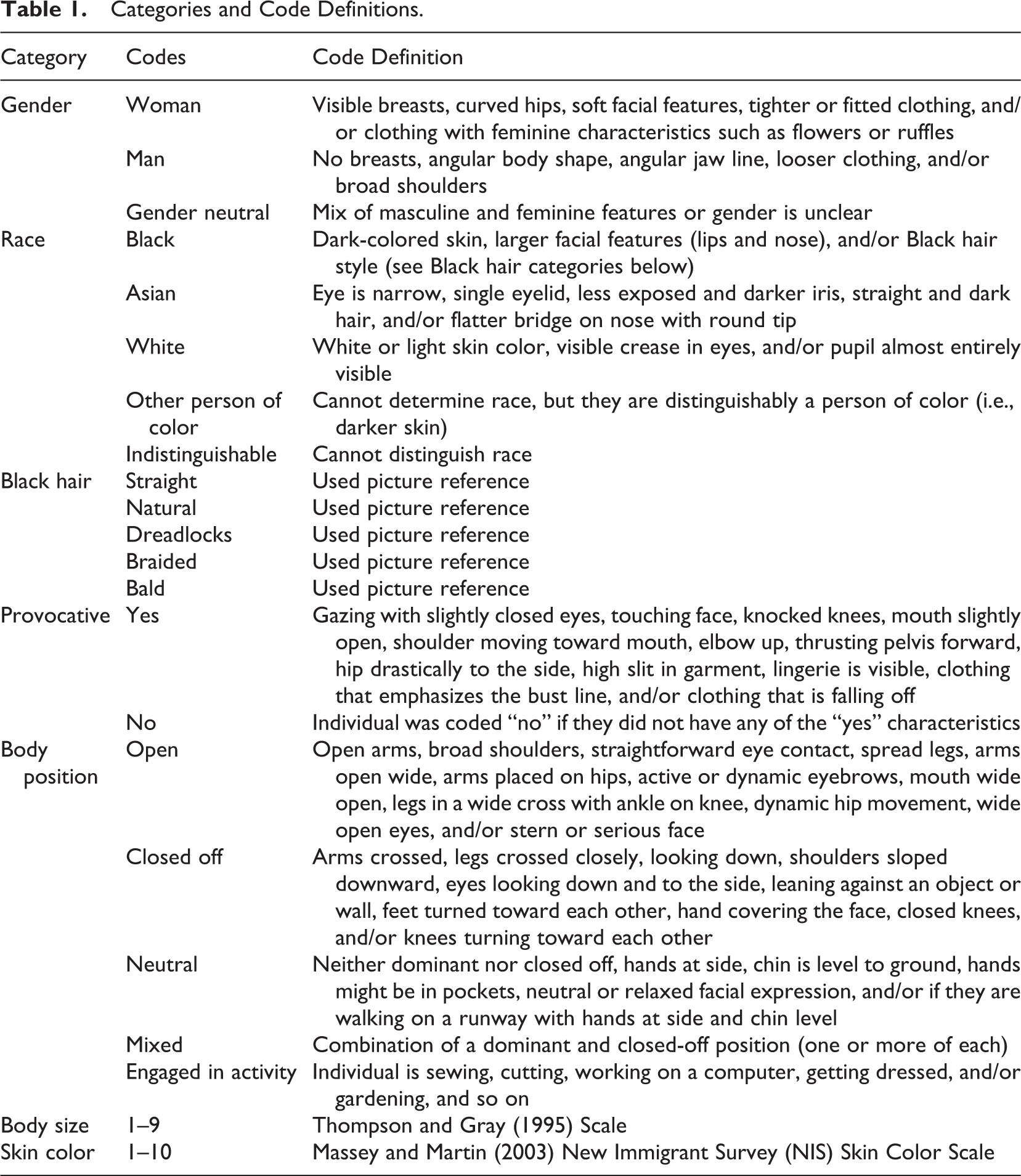
For body size, we used Thompson and Gray’s (1995) 9-point scale, ranging from Size 1 to Size 9. For skin color, we used the New Immigrant Survey (NIS) Skin Color Scale, a previously developed scale, where skin color coded as 1 is albino and 10 is the darkest. The scale increases in darkness based on black or brown hues (Massey & Martin, 2003).
To analyze race, we first examined previous literature and found no consistent language or descriptions in how authors coded this complex category. When descriptions were available in the previous literature, they were vague. For example, Graff, Murnen, and Krause (2013) explained that they coded the race/ethnicity of each person by skin tone but did not provide any further description. There was much discussion among the authors of this article about how to name and define codes within this category. We moved forward by developing code definitions using the works of previous scholars who had coded race in content analysis, and we also looked at language used on plastic surgery websites to describe characteristics of the face for each race. Based on our analysis, White, Black, and Asian were codes that could be clearly defined and identified within the textbooks. However, there were individuals pictured in the textbooks who fit some of the criteria for being a person of color, but they were not easily distinguishable. Therefore, we created the category “other person of color” for these individuals.
Body position and gender were also developed from looking at previous literature. The individuals we coded in this study were not included in scenes or advertisements, whereas most of the researchers analyzing some type of body position in previous studies were analyzing individuals in advertisements, which have context surrounding each individual (Conley & Ramsey, 2011; Jung & Lee, 2009). After viewing the body positions in some of the fashion illustration textbooks, we felt it was necessary to analyze their positions for gendered stereotypes even without the context of an advertisement and created an adapted set of codes and code definitions based upon Conley and Ramsey’s (2011) study. Lastly, we referenced the gender descriptors in Workman and Johnson (1993) to develop our gender code definitions.
After we began the intercoder reliability check, we realized two categories needed to be added: Black hair and provocative. We realized that Black women’s hair was represented in a variety of different styles, and a systemic analysis would shed light on possible hierarchies of hair. Therefore, as we came across new Black hairstyles, we added them to our codebook with a code definition; however, for this category, we used images for reference points as opposed to written descriptions. Lastly, we also noticed that many of the women pictured were in a sexy pose or revealing outfit, which led to the development of the provocative category. We thought this category might lead to insightful results not only in terms of how women’s bodies are positioned but also whether they are posed in positions that arouse sexual interest or objectification (Fredrickson & Roberts, 1997). Therefore, we created a separate category to categorize the nuances of the ways their bodies were presented in the textbooks in relation to sexiness.
All of the authors participated in coding the data. To ensure consistency, a codebook with code definitions was actively utilized. Two coders coded 20% of each book for each category and then checked for consistency in their coding. Directly after checking 20% of each book, the disagreements were reviewed between the two coders and agreement was reached on the assigned code. As the coders analyzed individuals who fell outside of the code definitions that were developed for the study (race, body position, gender, provocative, and Black hair), the code definitions were reworked, and all of the coders recoded all previously coded data to ensure consistency. The total number of code agreements was divided by the total number of ratings to calculate intercoder reliability, a method also used by Jung and Lee (2009). This resulted in a 94.4% agreement overall and the following agreements for each category: gender (99%), race (92%), skin color (96%), Black hair type (99%), body size (94%), body position (86%), and provocative (94%). An 80% agreement is acceptable for content analysis (Neuendorf, 2002). Therefore, our overall agreements were well above the acceptable threshold.
Before coding in the categories, we also ensured that we were consistently including or excluding individuals in the analysis based on our inclusion criteria. We checked 100% of individuals in the textbooks to determine whether they should be included. We discussed all disagreements and resulted in 100% agreement. Once checking intercoder reliability was complete, the remaining data were coded and no further changes were made to the codebook.
Results
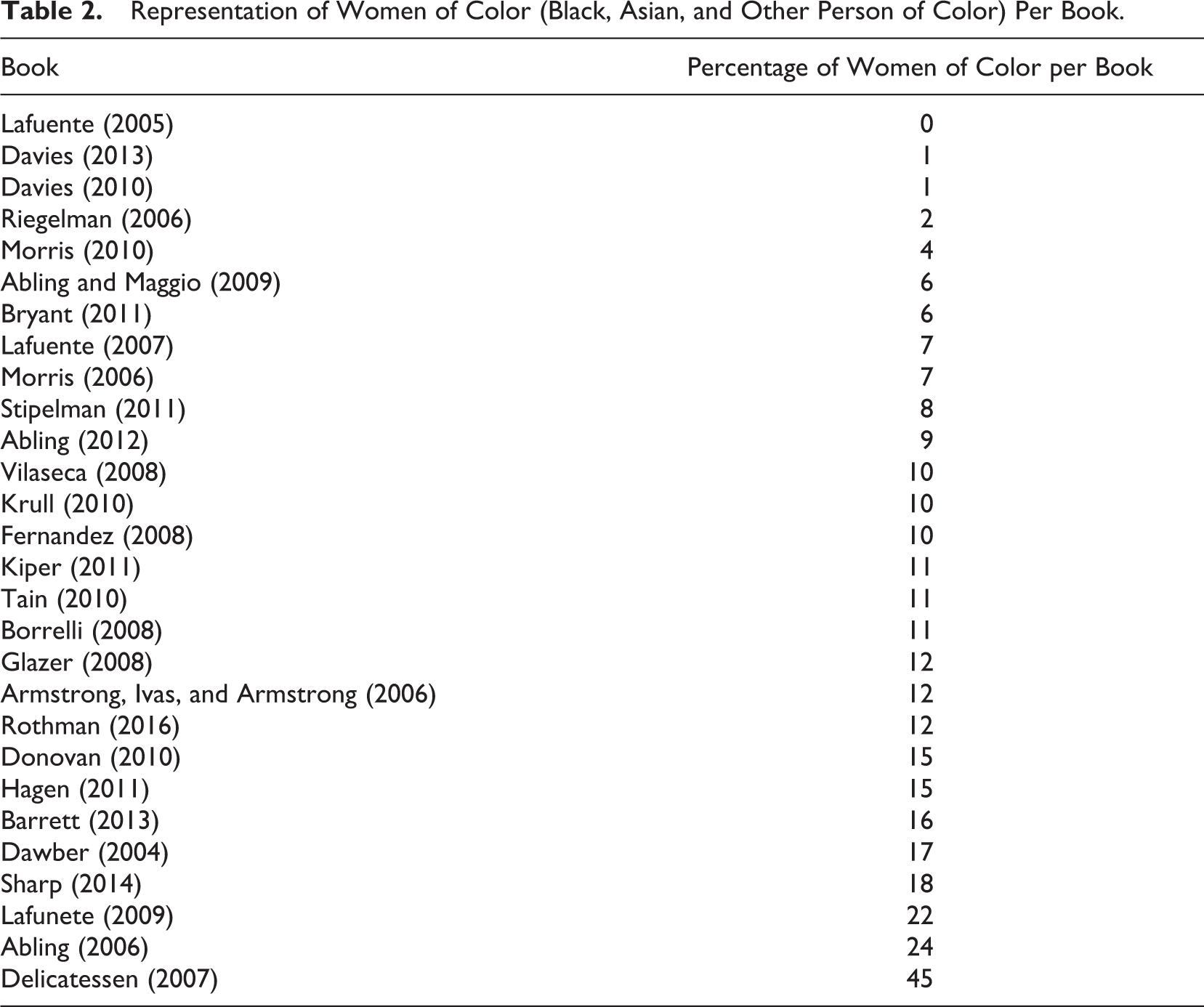
Overall, women (n = 5,675, 84%) represented the majority of individuals in the textbooks, followed by men (n = 902, 13%) and gender-neutral individuals (n = 159, 2%). For race, White women were represented the most (n = 4,117, 73%), followed by indistinguishable (n = 975, 17%), Black (n = 250, 4%), Asian (n = 193, 3%), and other POC (n = 140, 2%). The representation of women of color in each book ranged from 0% to 45%, with an average of 12% (see Table 2).
Representation of Women of Color (Black, Asian, and Other Person of Color) Per Book.
In addition to race, we further analyzed Black women’s skin color. Our results revealed that Black women were mostly (63%) represented in the lighter skin colors ranging from 3 to 6, while they were only pictured in the darker skin color range of 7–10, 14% of the time (see Figure 1). When analyzing Black women’s hair, there were 114 (46%) with straight hair, 87 (35%) with natural styles, 24 (10%) with a braided style, 24 (10%) who were bald, and 1 (less than 1%) with dreadlocks.

Representation of Black women for each skin color.
When analyzing body size, women were represented 705 times (12%) in Size 1; 2,062 (36%) in Size 2; 2,433 (43%) in Size 3; 314 (6%) in Size 4; 114 (2%) in Size 5; 26 (<1%) in Size 6; 11 (<1%) in Size 7; 8 (<1%) in Size 8; and 2 (<1%) in Size 9. The breakdown of women’s body sizes for each race is highlighted in Figure 2. Women’s bodies were represented in closed-off positions 1,009 times (18%), open positions 1,941 times (34%), neutral positions 2,016 times (36%), mixed positions 597 times (11%), and active positions 112 times (2%). The breakdown of women’s body positions for each race is shown in Figure 3. Lastly, women’s bodies were represented in provocative positions 1,163 times (20%), while the remainder were not provocative (n = 4,512, 80%). The breakdown of provocative positions for each race is illustrated in Figure 4.
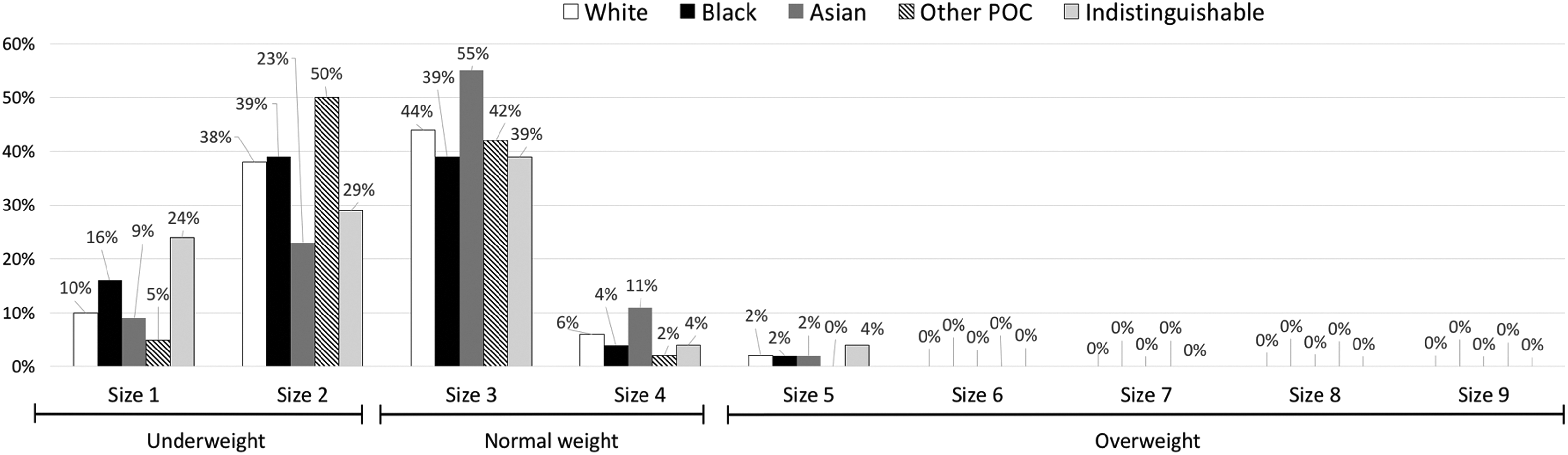
Representation of women in each race for each body size.

Representation of women in each race for each body position.
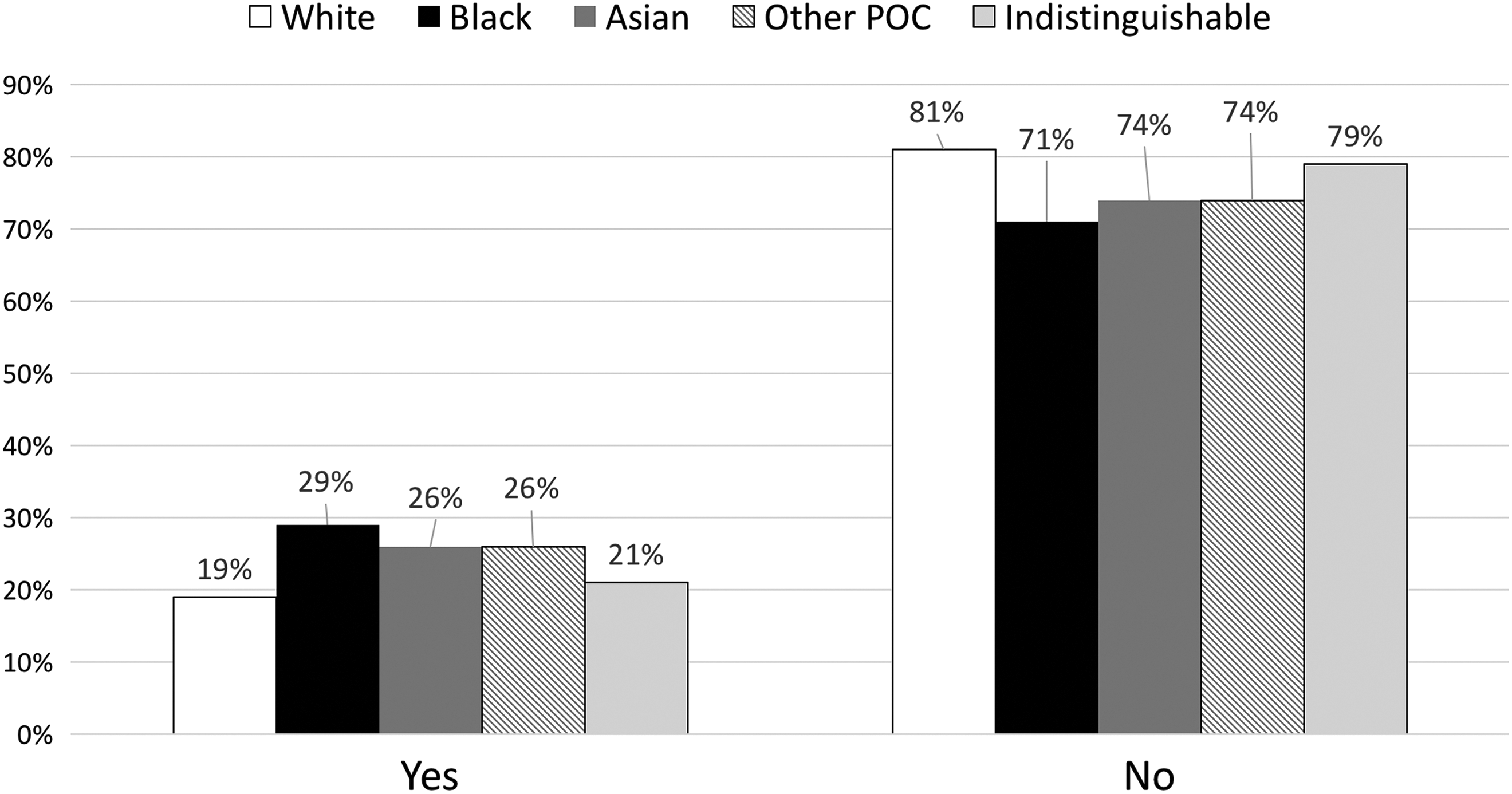
Representation of women in each race for the provocative category.
Discussion and Conclusion
In this study, we first asked whether women are represented in diverse races in fashion illustration textbooks, and how do racial hierarchies intersect with these representations. In all of the previous literature where scholars examined representations of each race as a single unit in fashion media (Frith et al., 2004; Jung & Lee, 2009) and textbooks (Reddy-Best et al., 2018; Reddy-Best et al., 2018), there was an overwhelming lack of representation of POC. Through our study, we confirm the results from previous analyses of textbooks and fashion media where the majority of fashion illustration textbooks had White individuals represented in the imagery. As a whole in this study, POC were represented in 9% of the images, and as shown in Table 2, the majority of books overall did not feature a diversity of races; most of the books (n = 27, 96%) had fewer than 25% POC. In comparison to the overall population of POC in the United States (40%) and POC who are enrolled in postsecondary education (39%), these results related to race as a whole are comparatively low. Considering a one-dimensional antiracist perspective, these numbers are evidence of POC as a single group being positioned structurally in a marginalized status. Their absence on the pages and in drawing demonstrations relegates them to a position of lesser value and significance. Authors and publishers of these texts have not decentered whiteness from the dominant position and expose the assumed privileges, superiority, and power of being or appearing White when they choose to include a majority of White-appearing examples, whether a conscious or subconscious decision. This reinforcement of whiteness in the hierarchy of what we know to be valued (Arnett, 1995b) continues the dialogue surrounding the perpetuation of White-appearance norms or White as the dominant expectation or race.
The skin color and hair texture of Black people are entangled within-group differences that lead to hierarchical statuses based on a preference for White appearances (Hunter, 2007). Skin tone, which is one aspect of colorism where privileges are extended to light-skinned Blacks as compared to dark-skinned Blacks (Hunter, 2007), also permeated the images of women in fashion illustration textbooks. This finding is consistent with previous examinations of skin tone, which indicate a majority of light-skinned Blacks (Keenan, 1996; Leslie, 1995). We also examined Black hair for evidence of hierarchies related to the preference for straight hair or characteristics that more closely match White individuals’ appearances. Again, similar to previous studies (Byrd & Tharps, 2001; Leslie, 1995), we found Black women were mostly represented with straightened hair. These within-group differences show evidence of the continuation of hierarchical statuses and power relations as to how these bodies are understood within and outside the Black community—not only within media or other print sources but also as part of the larger, long-standing, and systemic history of oppression for POC with roots in the years of slavery in the United States. The ideologies behind these racially exclusive practices bring to the surface the ways racism is perpetuated in not only physical experiences but also imagery throughout everyday lived experiences. Crenshaw (1991) argued that Black women’s experiences are largely unheard in antiracist and antisexist discussions, and we argue and highlight that their expressions are silenced within these illustration texts. How do these images, or lack thereof, shape Black women’s experiences as fashion designers and fashion consumers, since Black students (and arguably all students of color) engage with these images and examples? While there was a majority of women pictured in these texts (84%), Black women who adhere to and express Afrocentric features (natural hair and/or dark-colored skin) are rarely within these pages, making their experiences and expressions even more invisible. Through the lens of colorism, while Black women were pictured very infrequently, Black women with natural hair and dark skin occupied a social location of even more unequal balance to their more White-appearing counterparts, and space was not reserved to draw Afrocentric bodies. Therefore, when we asked if fashion illustration textbooks have diversity in regard to race, based on the analysis of the data, the result is no, they do not. Even further, Black women’s representations of skin and hair needed further analysis to highlight how they experience greater marginalization within these boundaries in regard to how White they appear or not.
Next, we critically examined women’s body sizes. The sizes overall mostly ranged from Sizes 1 to 3. This confirms previous researchers’ findings that body sizes were mostly thin (Jung & Lee, 2009; Sypeck, Gray, & Ahrens, 2004) or in the underweight (Sizes 1 and 2) or lower end (Size 3) of the normal-weight categories (Thompson-Brenner, Boisseau, & St. Paul, 2011). When analyzing body sizes of POC, we also found they were mostly in Sizes 1–3. This finding is in contrast to previous work that found Black women’s bodies in media targeting Black audiences (such as JET magazine) were on average larger or in the three to five range. We asked if there were a diverse range of bodies represented in the textbooks, and we found that overall, the bodies pictured were mostly thin, with many of them appearing anorexic in the one to two range or lower end of the normal-weight range. The appearance ideals related to body size presented in the imagery in these textbooks did not send varying messages about the body sizes of different races. Therefore, regardless of race, women were more frequently represented as having thin bodies.
We also analyzed women’s bodies in relation to how they were positioned and whether they were objectified (Frederickson & Roberts, 1997). We sought to critically examine whether women’s bodies were positioned in stereotypically gendered positions, where women are in a lower status (Goffman, 1979), and to disentangle any systemic racism that may be promoted in regard to how bodies are positioned by considering the intersections of race and gender (Crenshaw, 1991). Were POC bodies relegated to an even lower status than White women when examining their body positions? In contrast to previous studies (Conley & Ramsey, 2011; Lindner 2004; Stankiewicz & Rosselli, 2008), we found that when only considering gender (not race), most women were represented in open or neutral positions. When looking at race and body position, we found women in each race were represented the most in either an open or neutral position. Therefore, there was not further marginalization of women of color in reference to how their bodies were positioned. In fact, Black women had the least amount of representation in closed-off positions. While Black women (and other women of color) have previously been silenced and often in a state that was further marginalized than White women and Black men (Crenshaw, 1991), this was not the case for the representation of how their bodies were positioned within these textbooks. In these images, women were not represented as lesser than men, as discussed by Goffman (1979) and numerous other scholars, which highlights that the authors and publishers perhaps consciously or unconsciously considered how the women’s bodies were positioned and perpetuated equality in regard to gender and gender stereotypes. The explanation for a lack of women in closed-off positions could possibly be related to the need to draw garments and accessories in a visible space where a body in an open or neutral position might work best. Or, it could be possible that the authors were more attuned to gendered stereotypes for women as opposed to issues related to racism and colorism, and therefore made a conscious effort to reject these negative stereotypes for women as a whole.
Lastly, we examined whether women were in provocative positions or not. When women are represented in sexy or sexually arousing positions, their bodies are again said to be in stereotypical positions, which contributes to the objectification of their bodies (Frederickson & Roberts, 1997). We found overall that women were mostly in nonprovocative positions, indicating that women’s bodies were not further objectified in the texts. However, when looking at the intersections of race and provocativeness, White women had the least representation in this provocative category. This positioning of White women’s bodies in relation to POC women’s bodies highlights that again, while the representations overall were low for how objectified women’s bodies were, the systemic trend of a lower position of power for POC women was evident when looking at the intersections (Crenshaw, 1991) of race and gender in this category.
The purpose of this study is to critically examine and disentangle notions of racism, colorism, gendered stereotypes, and objectification within fashion illustration textbooks. Based on previous findings in the literature and industry trends, it is not surprising that we found a significant lack of women of color, a majority of thin bodies, mostly light-skinned Black individuals, and more Black women with straight hair. It is evident that the authors of fashion illustration textbooks are continuing the preference for White bodies and physical features, despite, for example, the decades that have passed since the Civil Rights Movement. Previous researchers have revealed that repeated exposure to imagery can shape people’s values and attitudes (Gerbner et al., 2002). The authors of current fashion illustration textbooks are promoting value and emphasis upon White, thin bodies. When individuals repeatedly view the same type of image, viewers of these images internalize and understand these repetitive messages as what is important (Arnett, 1995a). Harwood (1997) reported that people respond more positively to and seek out media where they see a reflection of themselves; even further, individuals often avoid media when they know members of their community are not represented or represented negatively (Abrams & Giles, 2007). Based upon this research in media studies, it appears POC and women of diverse body sizes who are absent in the imagery will likely not respond positively to or be interested in using these important tools in the classroom.
We propose that instructors seek out additional illustration examples for these classes and ensure a variety of colors are included when demonstrating skin tones. Questions of skin tone also extend to course supply lists. What color paints, markers, or pencils are required, and do they consider diversity in race? If authors are developing new fashion illustration textbooks, be sure to include diverse examples throughout the text and not in a special section, which promotes “otherness” or the relegation of diverse individuals to other spaces outside the norm. Instructors can individually contact publishers and request changes in future textbooks, or publishers can require authors to consider diversity in book proposals. Authors and instructors should also consider how these findings might reflect what students we are recruiting and accepting into our programs, examples utilized throughout the curriculum, how many diverse faculty members are in our departments, and other intersections of race and gender within the discipline.
Limitations
In our study, we were limited to analysis of textbooks, which does not reveal the motivation for image usage in each text. In another sense, content analysis answers the question of what is represented, but not why it is represented. Conducting interviews with the authors and publishers of these textbooks might shed light on why specific images were incorporated. Also, while we focused additional analysis on Black individuals, we did not look into further marginalization of other POC in the texts. For example, in the future, we could analyze eye and facial shape to examine whether other preferences for White features are present within the imagery. Another voice missing from the analysis is the perspective of students and their impressions utilizing these textbooks. Future scholars can examine how students, in particular, students of color and students of varying body sizes, feel about these course tools.
Footnotes
Declaration of Conflicting Interests
The author(s) declared no potential conflicts of interest with respect to the research, authorship, and/or publication of this article.
Funding
The author(s) received no financial support for the research, authorship, and/or publication of this article.