



Abstract
This study examines Muslim women’s purchasing behaviors toward modest activewear in the United States and tests the underlying mechanism of intent to purchase activewear, based on the theory of planned behavior (TPB). A sample of veiled Muslim women (N = 328) participated in this study. Results from structural equation modeling revealed that perceived aesthetic attributes and compatibility with regard to apparel functionality, expressiveness, and aesthetics are significant predictors of attitude toward purchasing activewear. Attitude and subjective norm are significantly related to intent to purchase modest activewear, and religiosity indirectly influences purchase intention through the social norm. This research extends the TPB and contributes to the growing body of research on Muslim consumers’ purchasing behavior and to the growing modest apparel market and pro-hijab movement in the industry.
The demand for Islamic modest activewear is growing with the increasing commitment to inclusivity and the pro-hijab movement in the global apparel industry (Latif, 2016; Lewis, 2018). Although the apparel industry has disregarded Muslim women as fashion consumers, especially after September 11, 2001, the market for Muslims’ modest apparel is now a lucrative global industry, as apparel companies begin to respond to the increasing expenditure by Muslim consumers on lifestyle and apparel. Currently, the global Muslim clothing and apparel market is worth US$270 billion and is set to rise to US$360 billion by 2023 (Rogers, 2019). Various sportswear retailers (e.g., Nike, Asiya) have recently introduced hijab clothing options including running jackets and hoodies, loose T-shirt dresses, drawstring joggers, long sports tees, and climate-adapting hijab (Bahath, 2017). For instance, Nike introduced a pro-hijab line for Muslim female athletes, and other niche retailers, including Asiya, Veil, and Sukoon, have launched activewear lines targeting Muslim women.
Especially for veiled Muslim women, activewear needs to meet the nuances of their cultural and religious values: Islam imposes a dress code by which women are required to cover their bodies, except faces and hands, although interpretations vary as to how and which parts to conceal (Hochel, 2013). In general, there are four attributes of modest clothing that are followed by Muslim women: (a) Muslim women must wear head coverings (e.g., hijab) to conceal their hair and/or neck, (b) clothes (top and bottom) must be loose and long enough so they do not outline and reveal one’s body, (c) clothes must be thick enough so the fabric is not see-through, and (d) clothes should be clean and not so excessively fancy that they draw people’s attention (Benhabib, 2002; Shaheen et al., 2015). Thus, in this article, modest activewear refers to clothing that meets the four general attributes outlined above and is suitable for physical activities.
Various types of modest activewear have recently been introduced in the market, but Muslim women’s attitudes toward these products have not been explored. Although the Muslim consumer market intrigues researchers and industry professionals due to its increasing consumer purchasing power, there are limited studies on consumers’ attitudes and purchase intentions toward such clothing; researchers have investigated only Muslim women’s consuming behavior toward veil clothing in general (Dehyadegari et al., 2016), luxury fashion brands (Al-Mutawa, 2013), and cosmetics (Musa, 2014), but it is unknown how consumers perceive current activewear, in relation to religiosity and modesty. Further, religiosity is an important source of personal values influencing one’s attitude (Ajzen & Fishbein, 1980; Fry et al., 2011), but the influence of religiosity has not been examined in the context of Muslim women’s purchasing behaviors of clothing.
Thus, the purpose of this study was to examine Muslim women’s purchasing behaviors toward modest activewear in the United States. Specifically, in this study, we extended the theory of planned behavior (TPB; Ajzen, 1991) and identified antecedents influencing attitudes toward purchasing modest activewear, from the perspectives of apparel functionality, expressiveness, and aesthetics (FEA), as well as religiosity. The TPB developed by Ajzen (1991) was used because it has been widely applied to examine factors influencing consumers’ attitudes and intentions to purchase apparel (Shaw & Shiu, 2003; Yan et al., 2012). In addition, the three dimensions of clothing (FEA) are adopted in this study, since these factors are effective in assessing the attitudes of consumers who require special needs in clothing (Lamb & Kallal, 1992; Stokes & Black, 2012) such as modest activewear. This research has theoretical implications as we extend the TPB and confirm the influence of religiosity and FEA factors in the context of Muslim women. Also, the majority of activewear firms are global Western companies, and they need to understand the purchasing behaviors of Muslim women with religiosity to devise design and marketing strategies. Recognizing the factors affecting Muslim consumers’ acceptance of current activewear is imperative, in light of increasing commitment to inclusivity and the pro-hijab movement in the apparel industry, and is an important prerequisite for predicting their behavior toward apparel.
Literature Review
Muslim Women and Modest Clothing
For Muslim women, the term hijab has been used specifically as a reference to head coverings, and commonly, to include the proscribed modest dress code; the apparel market also refers to it as faith-based fashion. There are varying interpretations of modest clothing as it relates to Muslim women, including many culturally oriented definitions (Mossière, 2012). In general, a strict and literal definition of the modest dress code for all Muslims is based on the consensus found in the Quran (the holy book of Islam; Berglund, 2008). Chapter 24, verse 31 emphasizes that Muslim women must preserve their beauty and ornament by covering all parts of their body except the face and hands. Along with covering the physical parts of the body, clothes should not be close-fitting or otherwise reveal the outlines of the figure, as required by the Sahih Muslim. In this regard, Muslims’ clothing strategies are meant to de-eroticize and desexualize female bodies (Mossière, 2012), and one’s appearance through her clothing plays an important role for veiled Muslim women. However, the Quran only indicates general terms concerning the clothing of women, there is no uniform style of hijab or modest clothing common to all Muslim women (Shirazi, 2010). Previous researchers have found that veiled women do not associate veiling with oppression, but rather as their own choice to express their identity and faith through clothing (Byng, 2010).
Although there has been a rapid evolution of hijab and the modest clothing market is on the rise among women from other faiths as well, Muslim women still have difficulty finding activewear due to limited choices. Some veiled women have indicated that they wear men’s sportswear or choose garments in larger sizes to hide their body shape (Yazid, 2016). Unlike the casual dress, activewear, by definition, is about functionality and designed to offer a product that supports physical activities (Dhanapala, 2015). Muslims who dress modestly are unlikely to wear clothing that reveals the shape of the body; thus, many veiled women face a challenge in purchasing activewear. When their needs are not met, they must either compromise their cultural and religious beliefs or limit their participation in physical activities (Kay, 2006). Today’s retailers selling modest activewear (e.g., Modanisa, Ooal, Dignitti) have introduced designs to meet Muslim women’s needs by providing better coverage in terms of length and fit, comfort, and color variations that are fashionable and suitable for physical activities but also meet the attributes of modesty as discussed above (Figure 1): activewear being loose and long for sufficient coverage, not see-through, and not so excessively fancy as to draw people’s attention. Thus, Muslim women’s attitudes toward currently available modest activewear need to be examined to assess the efficacy of the market’s initiatives.
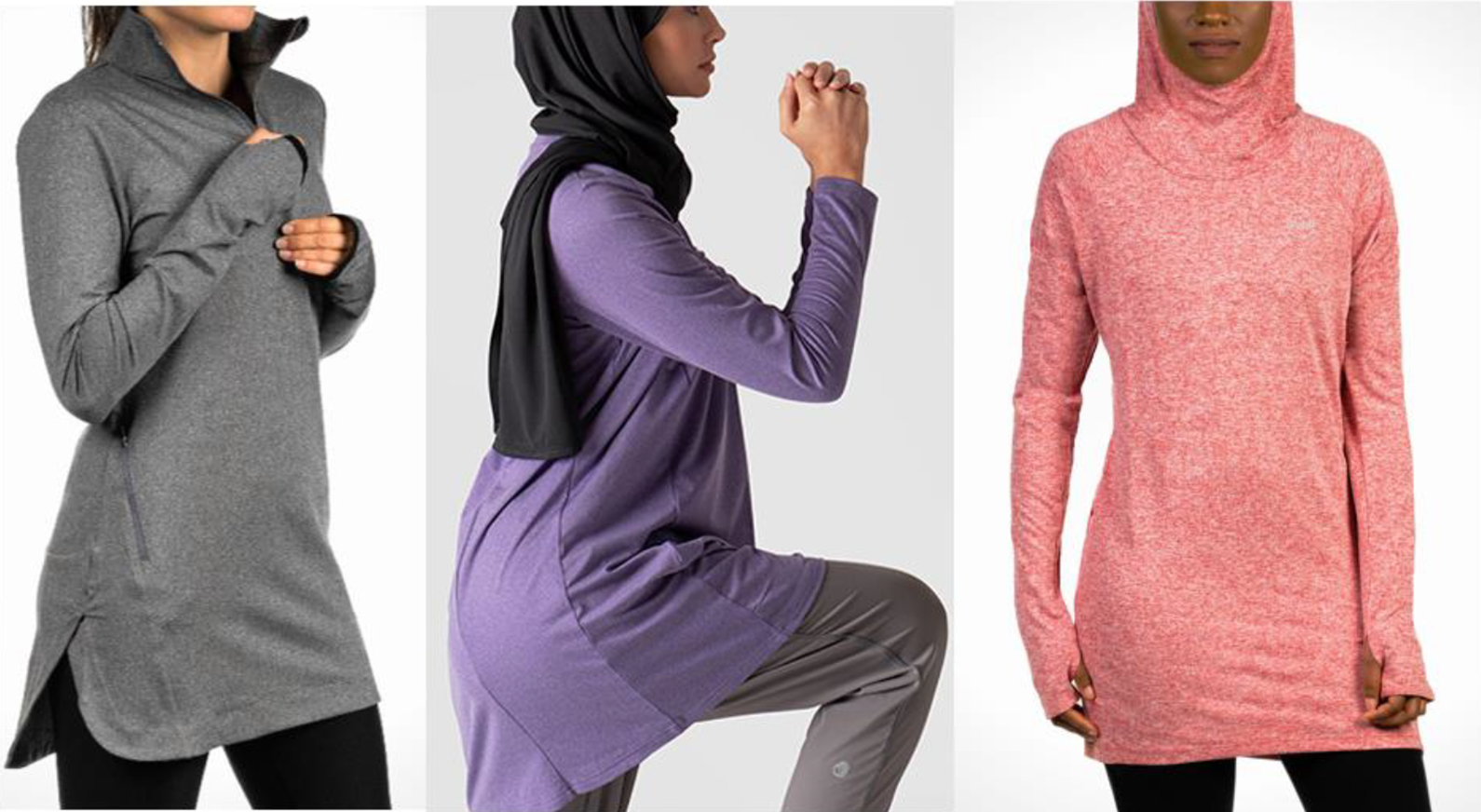
Images of modest activewear (from left to right: Veil, Ooal).
Factors Influencing Purchase Intention
The TPB developed by Ajzen (1991) explains how an individual’s attitude toward behavior, subjective norm, and perceived behavioral control predicts intent, which leads to behavior. This theory grew from the theory of reasoned action (TRA; Ajzen & Fishbein, 1980) by including perceived behavioral control as a determinant of both behavioral intention and behavior. Specifically, intention is one’s decision to act in a particular way, and attitude is the “degree to which a person has a favorable or unfavorable evaluation of a behavior in question” (Ajzen & Madden, 1986, p. 454). Empirical researchers support this attitude–behavioral intention relationship in the context of apparel products (Shaw & Shiu, 2003; Yan et al., 2012): The more positive the attitudes consumers hold toward a behavior, the more likely they are to perform the given behavior.
Subjective norm in TPB is one’s perception of how others expect them to behave (Fishbein & Ajzen, 1975). For instance, an individual may have a favorable attitude toward buying current activewear, but the intent to purchase may be influenced by the person’s belief about the subjective norm. Previous researchers have found that subjective norm positively influences consumers’ attitudes toward purchasing apparel products such as fashion counterfeits (Kim & Karpova, 2010), luxury apparel (Summers et al., 2006), and foreign brands (Jin & Kang, 2011). Another variable, perceived behavioral control in TPB, refers to one’s perception of the difficulty of performing the behavior in question (Ajzen, 1991). This implies that the individual will need certain resources and opportunities to carry out the behavior; thus, the perceived availability of resources and opportunities may influence behavioral intent—Muslim women may want to purchase modest activewear, but the perceived availability of resources and opportunities may influence their behavioral intention. Previous researchers have found a positive relationship between perceived behavioral control and purchase intention related to apparel (Jin & Kang, 2011; Kim & Karpova, 2010). In accordance with TPB, Hypotheses 1–3 are proposed in the context of modest activewear:
Antecedents to Attitude: FEA Consumer Needs
Modest activewear must satisfy Muslim women’s needs in clothing attributes such as functional, expressive, and aesthetic (FEA) qualities (Lamb & Kallal, 1992). Empirical researchers suggest that all three dimensions (FEA) should be taken into consideration for consumers with special needs: Previous researchers have applied the FEA factors for clothing types that must meet the needs of specific target consumers, such as hospital gowns (Cho, 2006), figure-skating costumes (Lamb & Kallal, 1992), smart clothing (Hwang et al., 2016), and dress for adolescent girls with disabilities (Stokes & Black, 2012). Activewear for Muslim women is relevant for applying the FEA factors, since this type of clothing also must meet Muslim women’s special needs for modest attributes related to the proscribed dress code, as well as functional attributes for physical activities. In the FEA dimensions, the functional dimension of clothing relates to its utility (e.g., fit, comfort), the expressive clothing dimension relates to symbolic communicative characteristics that establish identity (e.g., values, self-esteem), and finally, the aesthetic dimension relates to the use of design elements (e.g., design principles, body–garment relationship). Ajzen and Fishbein (1980), in their attitude–behavioral intention model, indicated that other external variables may have some influence on behavioral intention. Hwang et al. (2016) found that these FEA attributes positively influence consumers’ attitudes toward purchasing clothing. In the current study, the researchers consider FEA attributes as antecedents to attitude in the TPB model that influence women’s motivation to purchase modest activewear. Interrelating FEA considerations of modest activewear can be helpful in assessing the suitability of current modest activewear in the apparel industry. Each dimension of FEA (discussed as perceived comfort, compatibility, and aesthetics) is discussed below as an antecedent to attitude.
Perceived comfort (functionality)
Lamb and Kallal (1992) state that the functional dimension for an apparel product relates to its utility and physical comfort. Physical comfort is “a mental state of physical well-being expressive of satisfaction with physical attributes of a garment such as air, moisture, heat transfer properties, and mechanical properties such as elasticity, flexibility, bulk, weight, texture, and construction” (Sontag, 1985, p. 10). Thus, physical comfort results in subjective assessments of garment fit, along with tactile properties resulting from skin contact (Sontag, 1985). Related to modest activewear, current designers seek to achieve comfort, in terms of fabrics and fit of the garments. Recent introductions of modest activewear in the market satisfy modest attributes such as loose fit and also support physical comfort while the wearer is engaging in physical activities through the use of lighter materials and comfortable seam lines (Bahath, 2017). Researchers have shown that physical comfort in the FEA model is an important factor influencing the overall evaluation of the product, and these utilitarian aspects of clothing positively influence consumers’ attitudes toward purchasing (Frith & Gleeson, 2004; Hwang et al., 2016; Sontag, 1985). Thus, perceived comfort is proposed as influencing Muslim women’s attitudes toward purchasing modest activewear:
Perceived compatibility (expressiveness)
Stokes and Black (2012) state that consumers take expressive considerations of clothing into account. Expressive consideration, as a dimension of FEA, relates to the “communicative, symbolic aspects” (Lamb & Kallal, 1992, p. 43) of clothes and is based on the sociocultural and psychological aspects of a garment. Appearance through garments communicates various messages about the wearer, and thus, the product should be compatible with the wearer’s self-image (Damhorst, 1990). Perceived compatibility is an important factor influencing one’s attitude toward purchasing certain clothing. In this regard, compatibility is an important factor determining one’s expressiveness through clothing, which is defined as the degree to which the product is perceived to be consistent with “one’s existing wardrobe and appropriateness for one’s current needs and lifestyle” (Ko et al., 2009, p. 261).
Previous researchers have reported that perceived compatibility influences attitudes toward purchasing, because consumers perceive the product to be appropriate for their lifestyles and coordinate well with their currently owned products (Hwang et al., 2016; Shim & Kotsiopulos, 1994). Especially in the case of Muslim women, perceived compatibility plays an important role that influences their attitudes toward purchase (Byng, 2010); if the design attributes of activewear meet their standards of modesty and coordinate well with other modest clothing and hijab, it will increase Muslim women’s attitudes toward purchasing the activewear. Thus, we propose that perceived compatibility positively affects attitude toward purchasing modest activewear:
Perceived aesthetic attributes
Empirical researchers have demonstrated that the aesthetic dimension of clothing is an important criterion for consumers’ evaluations of apparel, especially for female consumers (Chattaraman & Rudd, 2006; Eckman et al., 1990). Aesthetic criteria take into account the human desire for beauty and relate it to “the use of elements such as line, form, color, texture, and pattern to create a pleasing design” (Lamb & Kallal, 1992, p. 43). Thus, researchers have used clothing attributes, such as style, color, and design, to examine overall judgments made by consumers. Related to clothing, Hwang et al. (2016) found that perceived aesthetic attributes positively influence attitude and are central to consumers’ evaluations of apparel (Chattaraman & Rudd, 2006; Eckman et al., 1990). There may be certain restrictions for modest activewear to be fashionable, but the current market enhances aesthetic attributes by including subtle colors, prints, and arrangements of design elements. Thus, it is proposed that perceived aesthetic attributes positively affect attitude toward purchasing modest activewear:
Effects of Religiosity
Ajzen’s TPB assumes that religion is one of the background factors that may influence consumers’ attitude and subjective norm (Ajzen & Fishbein, 1980). Koenig et al. (2000) define religion as: an organized system of beliefs, practices, rituals and symbols designed (a) to facilitate closeness to the sacred or transcendent (God, higher power, or ultimate truth/reality), and (b) to foster an understanding of one’s relation and responsibility to others in living together in a community. (p. 18)
Even though religiosity is a vital factor influencing Muslim consumers’ lifestyles, there are few academic researchers investigating the influence of religiosity on attitude and perceptions toward fashion, particularly among Muslim women (Farrag & Hassan, 2015). Researchers found that religiosity influences Muslim’s attitudes toward buying, such as halal and sustainable products that do not have a destructive effect on nature, acting as an independent variable (Bakar et al., 2013). In addition, based on the TPB, Graafland (2017) found that religiosity influences both attitude and subjective norm. Since the values of a religious community affect the behavior of other people in the religious community to which the individual belongs, it is likely that they will also influence the social norm of those people who are important to the individual. The more intensely the individual participates in the religious community, the more likely the social norm in the religious community will affect the subjective norm of the individual (Graafland, 2017). Thus, a positive relationship between religiosity and attitude toward purchasing modest activewear and a positive relationship between religiosity and subjective norm are hypothesized:
Method
Sample and Procedures
An online survey was conducted with participants recruited by Qualtrics research service, a professional organization that uses prequalified respondents to achieve significant response rates for the purpose of validity. The inclusion criteria for participating in this study were to be female, at least 18 years of age, who identified as Muslim and wore a veil (hijab) in the United States. An online survey including both closed-ended and open-ended questions was sent out nationwide, and 415 participants completed the survey; usable data were retrieved from 328 participants. To give participants a clear understanding of modest activewear, a detailed information page describing current activewear was provided at the beginning of the survey. The page presented images of commercially available activewear labeled as “modest” (e.g., Veil, Ooal, Modanisa, Shukr), along with the attributes of modest activewear and a price range of the products shown.
The data were analyzed in three steps. First, the assumption test and descriptive statistic tests were conducted, followed by randomly selected scatterplots of SPSS graphs to assess the linearity of the observed variables. To check for multicollinearity in the data, the determinant of the input matrix was used. Skew and kurtosis were estimated to determine the univariate and multivariate normality. Next, a confirmatory factor analysis (CFA) was performed to test the convergent and discriminant validity of the scale items. Finally, structural equation modeling (SEM) was conducted to test the hypothesized relationships. The same fit indices were tested to perform the measurement model and structural model tests.
Instrument Development
All scales, except perceived comfort and attitude, employed 7-point Likert-type items, ranging from strongly disagree (1) to strongly agree (7). The subjective norm measure included 3 items from Fitzmaurice (2005), and the perceived behavioral control scale consisted of 3 items from Kim and Karpova (2010). Attitude toward purchasing the product was measured with 7-point semantic differential scales (MacKenzie et al., 1986), and purchase intention was assessed by adapting three 7-point Likert-type items from Bower and Landreth (2001). For perceived comfort, three semantic differential scales, each measured on a 7-point scale, were adapted from Hwang et al. (2016). Three items measuring perceived compatibility were adapted from Ko et al. (2009). For perceived aesthetic attributes, three 7-point Likert-type items were adopted from Eckman et al. (1990), ranging from strongly disagree (1) to strongly agree (7). Three 7-point Likert-type items measuring religiosity were adopted from Worthington et al. (2003). Respondents’ demographic characteristics were collected: age (open-ended), marital status (closed-ended), and ethnicity (closed-ended).
Results
Sample Profile
A total of 415 participants responded to the survey. The data from 87 were excluded due to incomplete responses, leaving a total of 328 sets of usable data. The participants’ ages ranged from 18 to 73 years, with 41% between 18 and 25 years old. The participants in this study were well distributed geographically, including Northeast (37.3%), followed by Midwest (20.2%), Southeast (18.8%), Southwest (12.7%), and West (11%). All participants wore veils; specific types of veils included hijab (53.8%), followed by shayla (18.9%), al-amira (12.4%), niqab (6.1%), khimar (4.1%), chador (3.5%), and burka (1.2%). About 51.7% of the women were married, followed by single/never married (31%), other (9.5%), and divorced (7.8%). The participants engaged in physical activities once or twice per week (48.6%), followed by 3–4 times per week (35%), and more than 5 times per week (16.4%).
Assumption Test
Based on the examination of linearity in the scatterplots, no randomly selected pairs of variables had abnormal data patterns. The skew (−0.94 to −0.01) and kurtosis (−1.41 to −0.27) ranges indicated normal distribution of the data. In addition, the tolerance (−0.71 to 0.13) and variance inflation factor (1.1–2.3) ranges indicated that multicollinearity assumptions were not violated (Kline, 2005).
Measurement Model Test
The CFA for the full measurement model provided a good fit (χ2 = 515.39, df = 247, χ2/df = 2.09; standardized root mean residual [SRMR] = 0.051; root mean square error of approximation [RMSEA] = 0.058; normed fit index [NFI] = 0.91; comparative fit index [CFI] = 0.95; Tucker Lewis index [TLI] = 0.93). All indicators loaded significantly (p < .05), and each factor loading was greater than the conservative threshold of 0.70 (Bentler, 2004; Table 1).
Summary Results for Measurement Model (Factor Loadings, CR, and AVE).
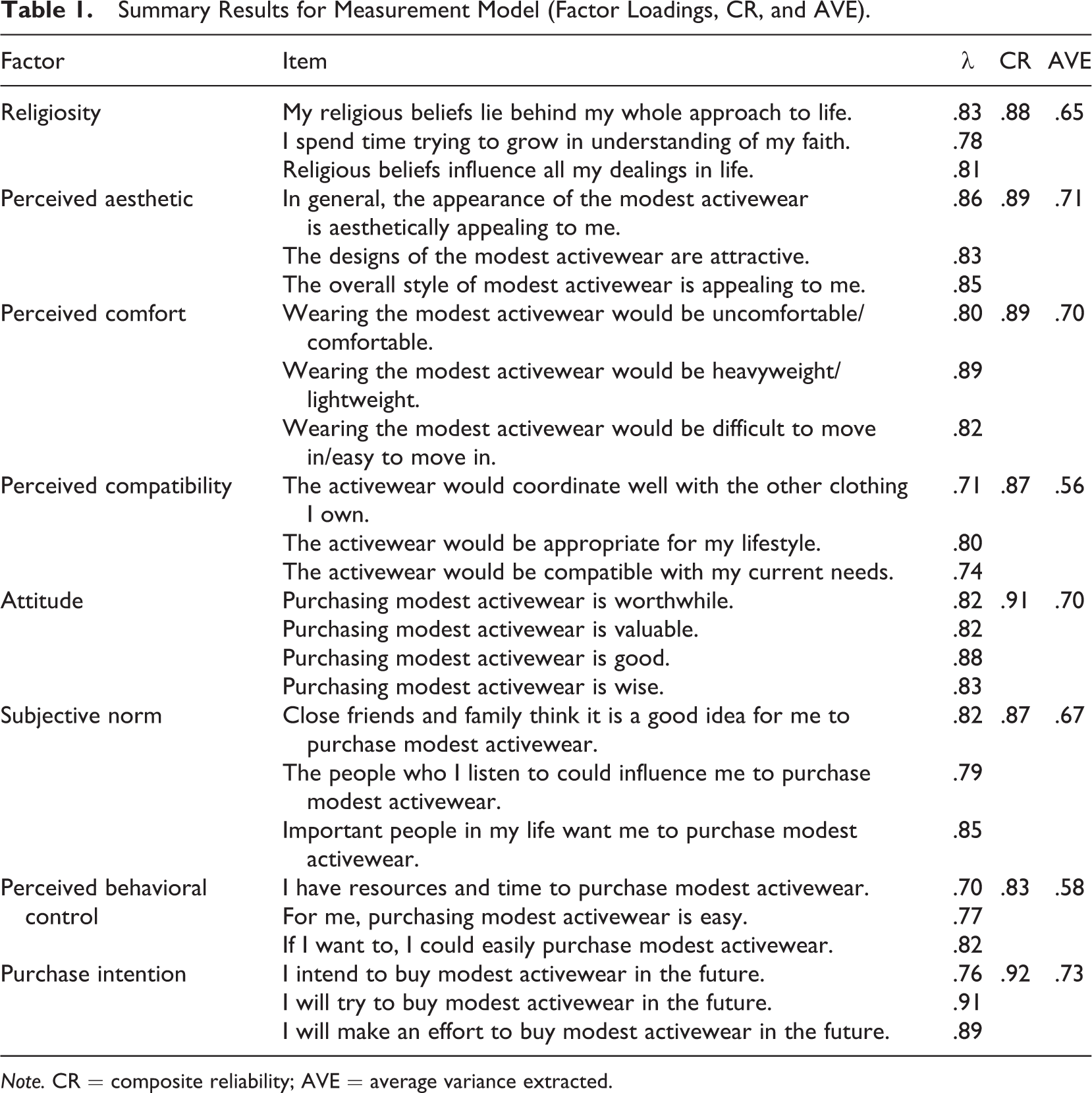
Note. CR = composite reliability; AVE = average variance extracted.
Reliability and validity of the measurement model were assessed by examining the factor loadings and by calculating the composite reliability (CR) and average variance extracted (AVE) for each factor. CR values all exceeded the cutoff value of 0.60 (Hair et al., 2009), and the values of all CR ranged from 0.83 to 0.91. The AVE values ranged from 0.56 to 0.73, which satisfied the acceptable value of 0.50 or higher (Fornell & Larcker, 1981). In terms of discriminant validity, the correlation between dimensions was lower than the suggested threshold of 0.85 (Kline, 2005); the correlations ranged from −0.09 (perceived comfort and compatibility) to 0.70 (perceived aesthetic and subjective norm; Table 2). All squared correlations were lower than their respective AVE values. Thus, there was evidence of discriminant validity (Fornell & Larcker, 1981), and we found that the items were highly reliable for measuring the constructs.
Correlations Among Motivation Factors (M, SD, Average Variance Extracted, Correlations, and Squared Correlations Matrix).
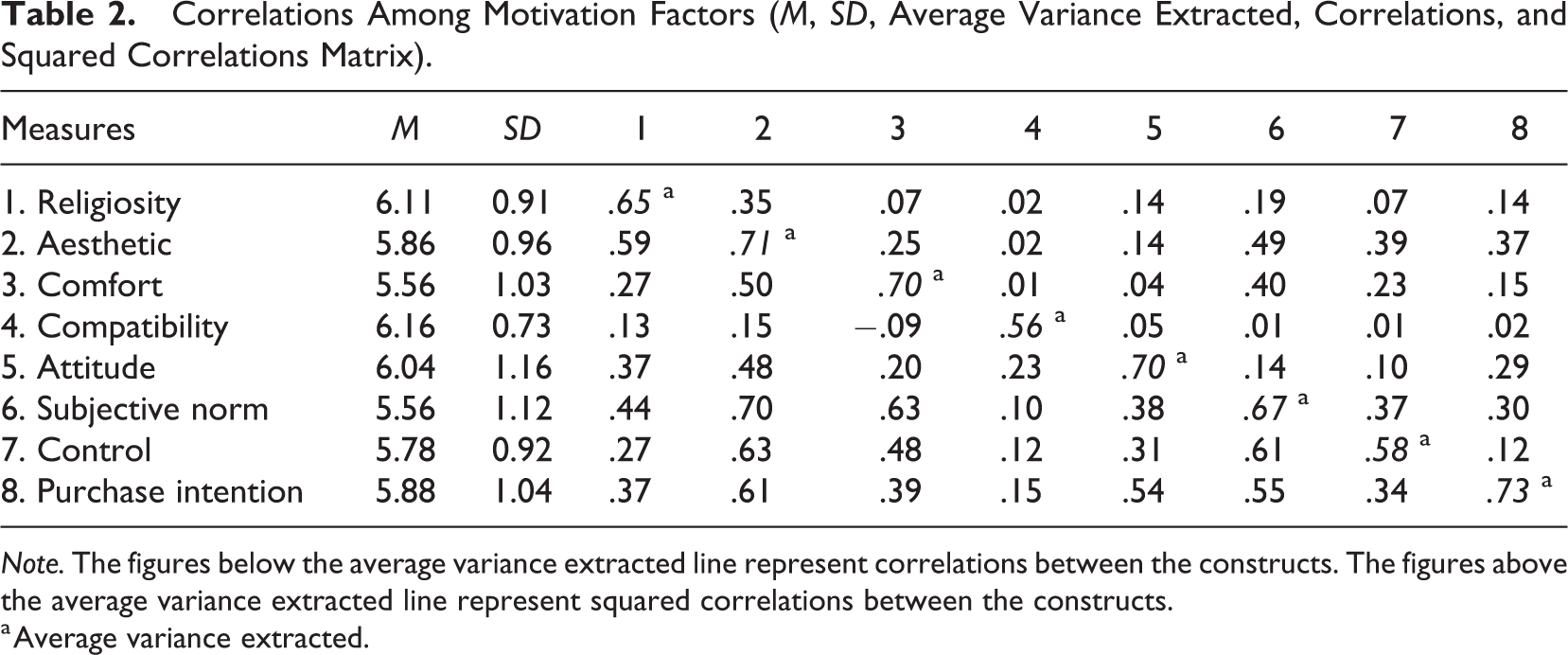
Note. The figures below the average variance extracted line represent correlations between the constructs. The figures above the average variance extracted line represent squared correlations between the constructs.
a Average variance extracted.
Structural Model Test
To test the hypotheses, SEM with a maximum likelihood estimation procedure was conducted (Figure 2). The fit indices of the SEM revealed a good fit (χ2 = 878.32, df = 261; SRMR = 0.059; RMSEA = 0.080; NFI = 0.91; CFI = 0.91; TLI = 0.90). The χ2 to df ratio was 2.87, which falls within the acceptable range of 1–3 suggested by Carmines et al. (1981). Other fit indices, such as CFI and TLI, were considered and found to be within the acceptable range.
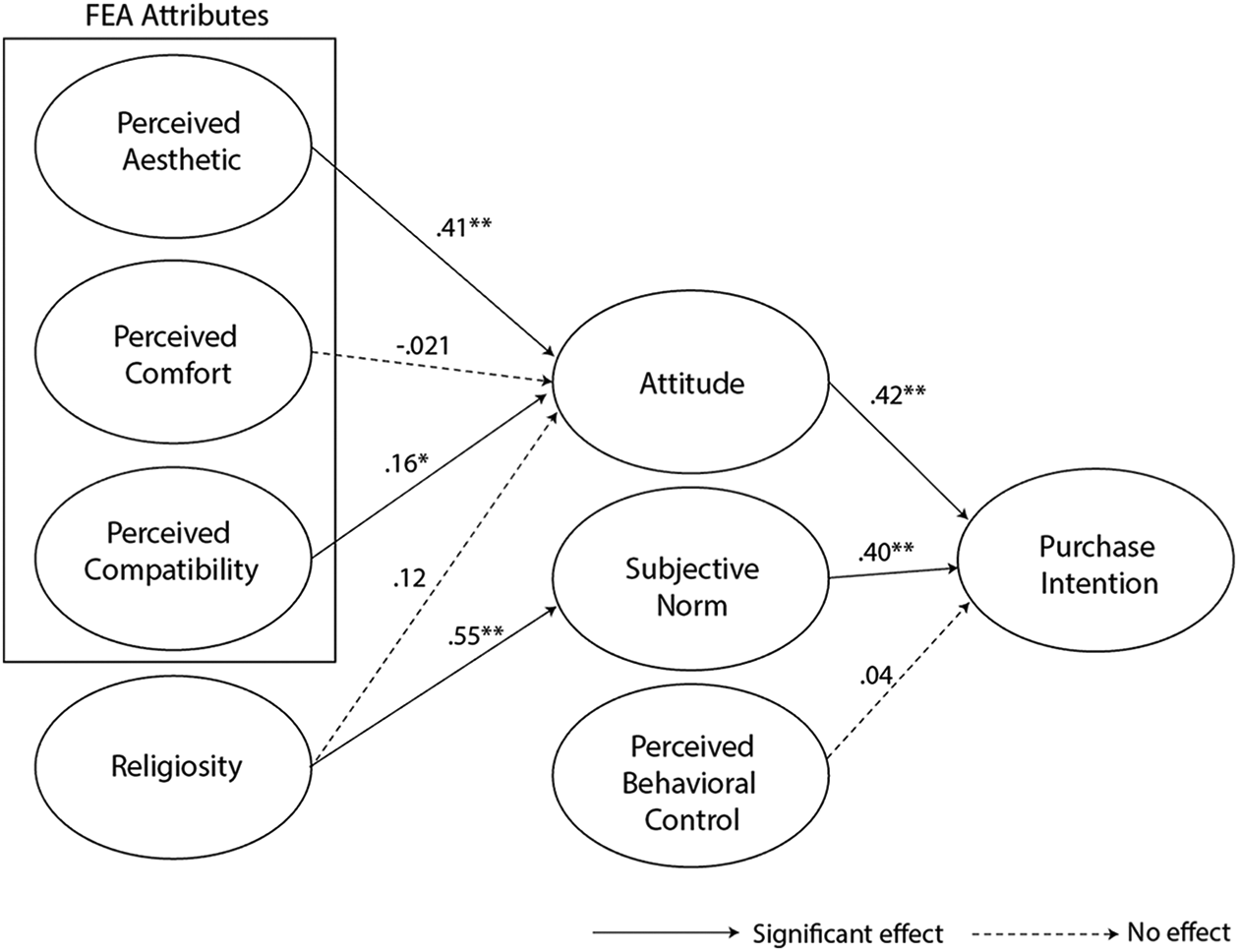
Structural equation model path coefficients and model fits for the proposed model. Note. χ2 = 749.07, df = 261, χ2/df = 2.87; standardized root mean residual = 0.059; root mean square error of approximation = 0.080; normed fit index = 0.91; comparative fit index = 0.91; Tucker Lewis index = 0.90. *p < .01. **p < .001.
Hypothesis 1 proposed that attitude toward purchasing activewear is positively related to purchase intent toward modest activewear. The results supported the hypothesis (β = .45, p < .001). The results also supported Hypothesis 2, which posited that subjective norm is positively related to purchase intent toward modest activewear (β = .40, p < .001). There was no significant relationship between perceived behavioral control and purchase intent toward modest activewear (β = .05, p > .05), disproving Hypothesis 3. From FEA constructs, perceived comfort did not significantly influence attitudes toward purchasing modest activewear, disproving Hypothesis 4 (β = −.02, p > .05); the other FEA constructs—perceived aesthetic attributes and compatibility—were found to significantly influence attitude toward purchasing modest activewear, supporting Hypothesis 5 (β = .41, p < .001) and Hypothesis 6 (β = .16, p < .005). Finally, there was no significant relationship between religiosity and attitudes toward modest activewear (β = .11, p > .05), disproving Hypothesis 7; however, a significant relationship between religiosity and subjective norm was found (β = .55, p < .001), supporting Hypothesis 8. Table 3 summarizes the path coefficients and statistical significance.
Path Coefficient and Statistical Significance.
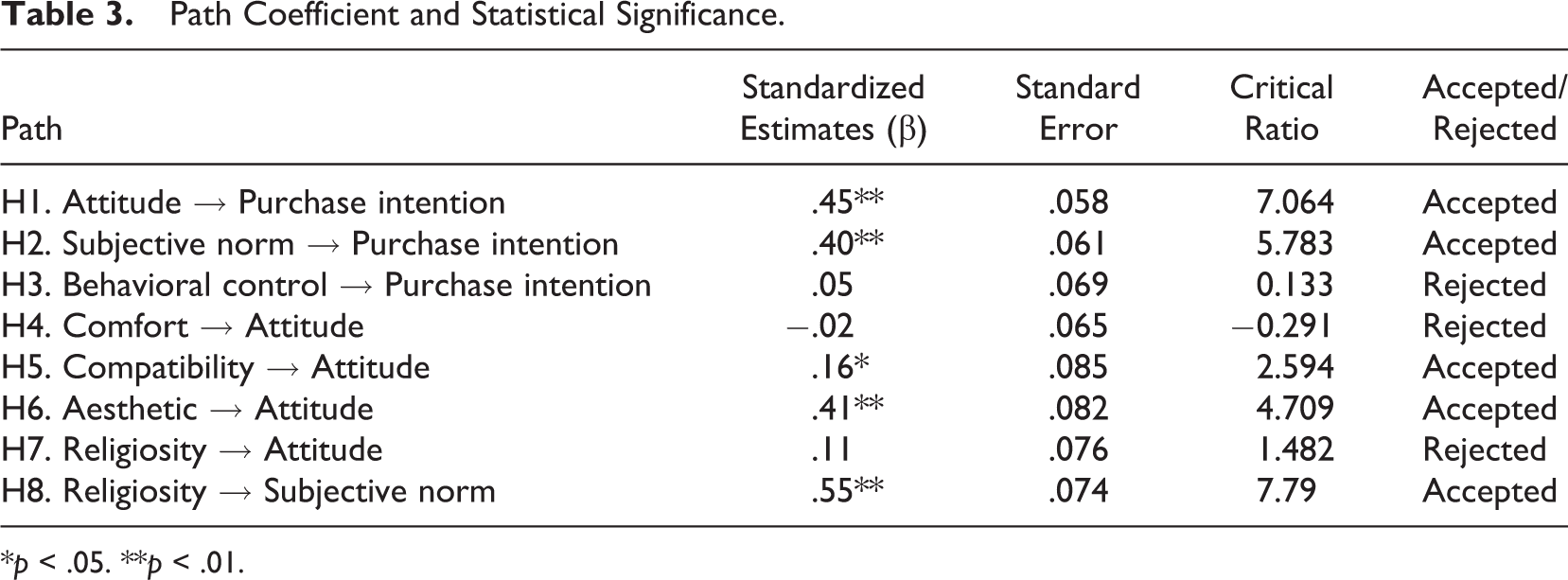
*p < .05. **p < .01.
Conclusions and Implications
The phenomenon of pro-hijab activewear, from a consumer perspective, is not well understood; a very limited number of researchers have examined how veiled women with Islamic religiosity perceive current modest activewear. Veiled Muslim women living in the United States were recruited, and the study examined their attitudes toward currently available activewear. The researchers identified antecedents that influenced attitudes toward purchasing current activewear, from the perspective of the FEA attributes (perceived aesthetic attributes, perceived comfort, perceived compatibility) and examined the effects of attitude, subjective norm, and perceived behavioral control on purchase intention. Religiosity was also considered a factor that influences purchase intention of modest activewear, due to the proscribed dress code (hijab) for Muslim women, viewed as a form of religious commitment that expresses norms regarding modesty (Paulsell, 2011).
The results of the study have important practical and theoretical implications. Consistent with the results of previous studies (Chattaraman & Rudd, 2006; Hwang et al., 2016; Lamb & Kallal, 1992), in our study, we indicated that perceived aesthetic attributes and perceived compatibility of FEA attributes of clothing are important factors influencing the attitudes toward purchase intention. Perceived aesthetic attributes are the strongest predictor of attitude, confirming this as an important criterion in consumers’ activewear selection decisions. This indicates that although veiled Muslim women cover their bodies in garments with modest features, they still want aesthetically pleasing activewear when engaging in physical activities, unlike some assumptions that religious people are not concerned with fashion; the apparel industry should acknowledge the growing number of fashion-conscious veiled women. Modest activewear needs to be attractive and fashionable, within the domain of covering body shape and skin. Product developers and retailers should continue to emphasize elements of design (e.g., line, color, shape) to define and develop aesthetically pleasing modest activewear. Perceived compatibility was also significant in predicting consumers’ attitudes toward purchasing modest activewear. This indicates that design attributes of activewear should be compatible and coordinate well with other modest clothing and hijab to be appropriate for Muslim women’s lifestyles. This aligns with previous researchers (Ko et al., 2009) and reaffirms that Muslim women are expected to observe the practice of concealing their bodies as an affirmation of their religious identity through wearing modest clothing (Byng, 2010; Killian, 2003). Previous researchers have found that for Muslim women, especially immigrants to Western countries, religion is the most important aspect of their identity and is communicated visually by wearing modest clothing (Predelli, 2004). Thus, the perceived compatibility attribute is an important clothing factor that influences veiled women’s attitudes toward purchasing activewear.
Perceived comfort was not significant in predicting consumers’ attitudes, conflicting with the results of previous studies (Frith & Gleeson, 2004; Hwang et al., 2016). A reasonable explanation is that veiled women may not emphasize the utilitarian aspects of clothing, such as physical comfort and mobility, whereas hedonic aspects of clothing, such as visual impact (perceived aesthetic attributes) and compatibility with current lifestyle, are important factors influencing their attitudes toward purchase intention, as found in this study. Western brands usually place a higher value on comfort, but we found that industry practitioners should emphasize the visual impact and aesthetic features to present modest values, since Muslim women’s perceptions of hedonic values are greater and significant, compared to utilitarian aspects of garments.
Although we found that hedonic values in FEA clothing attributes have significant effects on attitude, religiosity did not significantly influence Muslim women’s attitudes toward purchasing modest activewear. The insignificant effect of religiosity on attitude may be due to the lack of variation in modesty in the modest activewear, while there are some variations in aesthetic factors such as colors, textures, and styles. This indicates multiple features related to clothing, and Muslim women may place more emphasis on FEA factors compared to their religious commitment when examining activewear. Religiosity directly influences the subjective norm, indirectly influencing the purchase intention of modest activewear. Similar to previous findings (Graafland, 2017; Mas’od & Chin, 2014), religiosity positively influences the subjective norm toward purchasing modest activewear. This indicates that devout Muslim women with more salient religious commitment have higher perceptions of how others in the religious community expect them to behave. Veiled Muslim women express varying degrees of religiosity through the type of veiling they choose, from partial to full covering of their bodies, including the hijab as well as the niqab (a veil that cloaks the hair, neck, shoulders, and face entirely, except the eyes; Benhabib, 2002). Thus, more devout Muslim women may not purchase fitted leggings, although they fall under the general umbrella of modest clothing, since they have a higher perception of how others expect them to wear clothing and express greater modesty. Thus, it is suggested that retailers provide a range of modest activewear that can cater to both devout and casual veiled Muslim women.
From the proposed model, subjective norm and attitude significantly influenced purchase intention toward modest activewear, whereas perceived behavioral control was not significant in predicting consumers’ purchase intention. Inconsistent with the findings of previous researchers (Jin & Kang, 2011), Muslim women’s ability to purchase modest activewear in terms of resources (e.g., cost or time) does not influence their intentions to purchase. This may be due to the limited options available in accessing modest activewear designs in the U.S. market. Although the proposed model was initially developed based on the TPB model, we found that the TRA by Ajzen and Fishbein (1980) applies to Muslim women since the relationship between perceived behavioral control and purchase intention was not significant: TRA includes attitude and subjective norm as determinants of behavioral intention, excluding perceived behavioral control. Retailers targeting veiled Muslim women should focus on product development to enhance modest features of activewear: If the design features meet their needs, Muslim women would still purchase the clothing regardless of the convenience of the purchasing process. In addition, the effects of subjective norm have β values similar to attitude, suggesting that subjective norm is an important contributor influencing women’s purchase intention. This supports the findings of Paulsell (2011), who reported that Muslim women choose to wear modest clothing to publicly claim their Muslim identity or to be recognizable to other Muslims. The design attributes of modest activewear must also be accepted by the Muslim community (family members and friends) and not just appealing to the purchaser.
The theoretical contribution to the TRA model relative to the study’s findings is the extension of this model to include a religiosity construct for Muslim women’s evaluations of current modest activewear. In addition, FEA clothing attributes were incorporated into the model as significant factors influencing attitudes toward purchase intention. Furthermore, this study is an initial attempt to systematically understand Muslim women’s purchase behaviors toward modest clothing; the extended TRA model was applied to a national sample, which can contribute to existing TRA literature. The theoretical and practical implications of this study contribute to the growing body of research on Muslim consumers’ purchasing behavior and to the growing market in the modest activewear sector of the apparel industry.
Limitations and Future Research
The current study has certain limitations that suggest opportunities for future research. Although 328 veiled women were sampled, from a good distribution of geographic locations, the researchers recognize that the samples in this study were not representative of all female veiled women in the United States, which limits the generalizability of the findings. Muslim women with varying income and educational levels should be also recruited to verify the findings. Considering that the topic is a nascent field, future researchers may employ qualitative research methods with in-depth interviews to identify important perceived attributes considered by veiled women in adopting modest activewear. Because the perceived aesthetic variable was found to be the most influential FEA clothing attribute affecting attitude toward purchasing activewear, future researchers could focus on defining the design elements of modest activewear and how veiled women define modesty. Future researchers may also extend this model and compare how the extent of religiosity (low vs. high) differs on consumers’ perceptions of both TRA variables and FEA clothing attributes.
Footnotes
Declaration of Conflicting Interests
The author(s) declared no potential conflicts of interest with respect to the research, authorship, and/or publication of this article.
Funding
The author(s) received no financial support for the research, authorship, and/or publication of this article.
