




Abstract
Ensuring police use their authority justly is a persistent concern. Yet, there is little agreement on the most effective mechanisms for promoting accountability. The present study seeks to contribute to a growing body of research on mediation of police disputes by assessing variation in levels of satisfaction among officers and citizens. Using data collected by the Denver Office of the Independent Monitor, the study assesses the degree to which mediation produced differential levels of satisfaction. The study finds that both police and civilian participants in the mediation program were significantly more satisfied than individuals who participated in traditional complaint processing. In addition, the study finds that mediation is likely to have even stronger effects on satisfaction for Latino complainants, and female police officers. Implications and suggestions for future research are discussed.
Introduction
Ensuring police use their authority in a just and reasonable manner is a persistent concern. Failure of police to act justly threatens the very core of democratic principles, and calls into question the legitimacy of policing—weakening public support and the authority with which police exercise social control (Liederbach, Taylor, & Kawucha, 2007; Sunshine & Tyler, 2003; Tyler, 2003). Thus, a great deal is at stake in ensuring that police are accountable. Yet, there is little agreement on the most effective mechanisms for promoting accountability.
The dominant view within policing holds that internal mechanisms of investigating allegations of misconduct are sufficient; however, numerous instances of systemic failure with police internal investigations can be found (Prenzler & Ronken, 2001). Given this, serious questions have been raised about the perceived legitimacy of internal mechanisms, with many viewing these as an “inside job” (Liederbach et al., 2007). Even the police have concerns about the processing of complaints (De Angelis & Kupchik, 2007). Therefore, any adequate model of oversight must be perceived as legitimate by both police and citizens.
Given concerns among police and citizens, alternative models have been sought out. One promising innovation is the use of mediation to resolve police complaints (Bartels & Silverman, 2005; Berger 2000; Clemmons & Rosenthal, 2008; Walker & Archbold, 2001; Walker, Archbold, & Herbst, 2002). Mediation emerged from a broader trend toward restorative justice and alternative dispute resolution (ADR; Bartels & Silverman, 2005; Berger, 2000; Walker et al., 2002). These efforts seek to deformalize responses to police complaints by informally working toward mutual understanding. In doing so, mediation offers a chance for officers and citizens to discuss their interpretations of disputes.
Some published studies have evaluated police mediation (Bartels & Silverman, 2005; Buchner, Bobb, Root, & Barge, 2008; Dobry, 2001; Hill, Cooper, Young, & Hoyle, 2003; Maguire & Corbett 1991; Walker et al., 2002), finding higher levels of satisfaction with mediation relative to traditional processes. Yet these relatively few studies have not clarified what determines satisfaction. This research seeks to contribute to a small but growing body of research on mediation of police disputes by assessing what factors explain levels of satisfaction among officers and citizens. In addition, this article aims to contribute to the broader literature on community-oriented policing (COP), alternative dispute resolution (ADR), restorative justice, and reintegrative shaming by examining the effects of informal methods for addressing deviance within institutional contexts.
Traditional Complaint Process
Historically, citizens have been forced to redress grievances against police through adversarial channels (Brereton, 2000), especially complaints made directly to departments and handled by internal affairs. This process suffers from a number of limitations, which detract from its legitimacy and has been heavily criticized by both internal and external observers (Finn, 2001; Walker, 2001). Externally, the primary criticism is that investigations are conducted by potentially biased actors (Waters & Brown, 2000). It has been recognized that there are fundamental tensions between the interests of “police power” and democratic societies (Dubber, 2005). Internal investigations are commonly approached from a police worldview that can oftentimes be more concerned with risk management than public interest (Ericson & Haggerty, 1997). Similarly, criminological research demonstrates that a culture of solidarity and loyalty among officers provides for a resistance to investigations and outside scrutiny (Herbert, 1998). This may complicate internal investigations where there is a strong adherence to the “blue code of silence.” (Skolnick & Fyfe, 1993). These obstacles to perceived transparency and objectivity can deter many complainants from the outset, although leaving the public with lingering doubts about the effectiveness of internal investigations (Liederbach et al., 2007).
Overall, research suggests a clear pattern of dissatisfaction with formal processes among citizens and police (Bayley, 1996; Carter, 1996; Landau, 1996; Maguire & Corbett, 1991; Perez, 1994; Waters & Brown, 2000). Subsequent studies have found that complainants felt their concerns were not taken seriously (de Guzman, 2008; Perez, 1994), or that the process is likely to let police off too easily and not serve as an effective deterrent (Finn, 2001).
In addition to concerns about objectivity, frustrations with the process and outcomes of traditional processing have been widely noted. For instance, one study found a negative correlation between decisions against complainants and satisfaction (Prenzler, 2004). The length of time to resolve complaints may also fuel dissatisfaction (Maguire & Corbett, 1991). Hill et al. (2003) found that citizens whose complaints were not sustained were significantly more likely to feel dissatisfied, duped, and misled. The strong association with dissatisfaction is particularly important given the fact that both police departments and civilian review boards only sustain between 10% and 13% of all complaints (Buchner et al., 2007; Walker, 2005).Officers are likely to have their own concerns about traditional complaint processes. Immersed in a subculture that can place a disproportionate emphasis on loyalty, officers are often skeptical of administrative and public interests (Reuss-Ianni, 1983). High levels of officer dissatisfaction with formal complaint processes have been supported by the empirical research. Similar to citizens, officer satisfaction seems to be determined by their confidence in the objectivity of the complaint process and efficiency concerns (De Angelis, 2009; De Angelis & Kupchik, 2007). DeAngelis and Kupchik (2007) found that officers who had greater trust in the administration and internal affairs had higher levels of satisfaction with the traditional complaint process. In contrast, officers were less satisfied when they felt that the complaint process did a poor job of screening out frivolous complaints, felt investigations often occurred for no reason, and perceived the process as being tipped in favor of civilians (Sviridoff & McElroy, 1988). Unlike civilians, complaint outcomes do not seem to have an effect on officer satisfaction (De Angelis & Kupchik, 2007). This is likely attributable to the fact that very few complaints against officers are sustained, making the time to deal with complaints more consequential than the outcomes.
Since citizens may view internal investigations as biased, it has been argued that complaint investigations are best handled, or at least reviewed, by entities that hold some prospect of neutrality. This has primarily come in the form of citizen oversight and review initiatives (Walker, 2001). However, these efforts to involve nonpolice actors in the complaint handling process has been criticized because they are often structured in a manner which renders them largely symbolic and powerless (Prenzler & Ronken, 2001). Moreover, these types of initiatives have the potential to exacerbate line officer concerns about the complaint investigation process. Thus, to be successful, new complaint handling initiatives, such as mediation, must be implemented in ways that are attentive to both internal and external threats to legitimacy, and take into account the concerns that both citizens and officers tend to have about complaint handling processes.
Mediation of Complaints Against Police
Recognizing the limitations of traditional processes, there has been movement toward less adversarial and less formal methods (Walker & Archbold, 2000; Walker et al., 2002). Mediation is one example, which involves parties meeting in a neutral setting with the aid of a professional mediator. This allows participants to explore the facts of the case and the emotional and psychological consequences for participants (Dobry, 2001). The desired outcome is to get the parties to a point of mutual understanding concerning the actions of the parties that led to the complaint (Clemmons & Rosenthal, 2008; Walker et al., 2002).
Mediation is not a new concept. It has been effectively used in a wide variety of settings including contract issues, divorces, employee grievances, and neighborhood disputes (Clemmons & Rosenthal, 2008; Hensler, 2003). Mediation has been a primary component of restorative justice in which offenders are held accountable for actions by acknowledging the harm caused to the victim and the community (Lightfoot & Umbreit, 2004). However, the use of mediation in handling citizen complaints against the police is a relatively new phenomenon. As such, only a handful of departments have attempted to implement mediation.
Mediation is posited to have a number of benefits (Berger, 2000). First and foremost, mediations that are held in a neutral forum may alleviate citizen and officer concerns about internal bias. Second, mediation has the potential to allow parties to informally, efficiently, and civilly settle disputes without resorting to costly and time-consuming formal mechanisms (Walker et al., 2002). Third, consistent with principles of community-oriented policing, it provides an opportunity for personal interaction and development of understanding between police and citizens. This is supported by studies suggesting a strong desire for face-to-face contact among both officers and complainants (Bartels & Silverman, 2005; Walker & Archbold, 2000; Waters & Brown, 2000). Finally, mediation supports the desire of many citizens for moderate sanctions for minor transgressions, versus a high stakes game in which the officer’s career is at stake (Bartels & Silverman, 2005; Walker & Archbold, 2000).
Even though there are strong benefits, mediation also potentially presents a number of complications. First, it is uncertain whether complainants perceive mediation as more independent or neutral than the traditional complaint process. Any formal, governmental process for resolving disputes runs the risk of being perceived as exclusionary (Hill et al., 2003; Young, Hoyle, Cooper, & Hill, 2005). This is likely to be of particular concern to those from historically disadvantaged communities, or with past negative experiences with police (Bartels & Silverman, 2005). Moreover, complainants from such backgrounds may not feel comfortable directly confronting an officer about wrong-doing for fear of further mistreatment. Second, a number of studies have suggested that some complainants may feel mediation is too lenient (Bartels & Silverman, 2005; Finn, 2001). Third, there is some evidence that complainants may feel any formal process is too much effort. Taken together, these concerns may reduce the receptiveness of some complainants to mediation, despite its potential benefits.
Mediation is also likely to confront a number of obstacles from the police perspective. Specifically, police may be resistant to placing themselves on an equal footing with complainants (Bartels & Silverman, 2005; Dobry, 2001). Considering the historical difficulty of institutionalizing police reforms related to disciplinary process (see Walker, 2005), this can be a particular obstacle for sustaining any new complaint handling initiative, such as mediation (Terrill, 1990). Inasmuch as a department embraces mediation, there remains the possibility that it might be used inappropriately. Hill et al. (2003) suggest officers are likely to use mediation to avoid penalties or formal records, as opposed to seeking authentic reconciliation with the complainant. It has further been suggested that mediation might serve as a bureaucratic dumping ground if not carefully monitored (Goldsmith, 2000). These potential hazards present threats similar to those of traditional procedures in regard to perceived legitimacy.
Only a handful of studies have examined mediation of police complaints. Maguire and Corbett’s (1991) study of thirty complainants in three jurisdictions within the United Kingdom was one of the earliest to include mediation. This study found that approximately half (53%) of complainants would have been willing to meet with an officer face-to-face, while only 20% of officers supported the idea. In a more recent study, Young et al. (2005) examined the effects of mediation using a quasi-experimental case study of two comparable jurisdictions in the United Kingdom. The study found complainants who participated in traditional complaint processes (meeting with an appointed officer) were much more likely to report negative views, believed officers would behave the same in the future, and had lower satisfaction than those who participated in restorative justice. Confirming these suspicions among citizens, officers who participated in traditional process were significantly less likely to feel they learned something and change behavior. In contrast, those officers and citizens that participated in restorative justice conferences felt they had learned something and were likely to change. Finally, although both officers and citizens were generally more satisfied with the restorative process, the differences appeared to be much less notable for officers.
In the United States, Walker et al. (2002; Walker & Archbold, 2000) indicate that only 16 active mediation programs existed in 2000. Thus, only a few studies assessing benefits of mediation have been conducted in the United States. Bartels and Silverman (2005) analyzed data from New York’s CCRB (Citizen Complaint and Review Board) program. They found that citizens who participated in mediation were significantly more likely to be satisfied (on 9 out of 11 measures) and have greater trust in police after mediation than those who went through the traditional process. Although their data did not permit comparison between officers undergoing traditional and alternative processes, officers who participated in mediation reported “above average” satisfaction (> 2.5 on a 5 point Likert-type scale). All officers who responded (all of whom had participated in mediation) indicated that they would participate in mediation again. Interestingly, citizens were less inclined to participate in subsequent mediations than officers.
In a recent evaluation of the first year of a mediation program in Pasadena, California, Buchner et al. (2007) examined six cases that were referred for mediation. They find that of the six cases referred, only three were successfully mediated. Among the three cases successfully mediated, levels of satisfaction were high, despite initial reluctance on the part of both officers and complainants. They attribute the relatively low usage of mediation to the fact that only 19% of citizens were aware that a mediation program even existed. Unfortunately, data on those who declined mediation or pursued alternative means of resolution were not presented for comparison. Clearly, given the limited sample and exclusion of nonparticipants, it is difficult to make generalizations from such a small-scale study.
Taken together, the existing research on mediation seems to indicate that mediation has the potential to serve as a viable alternative to traditional handling processes. Despite the potential benefits, a number of issues plague the existing research. First, early studies were limited to assessing the willingness of police departments and oversight agencies to adopt mediation as an alternative method for resolving police complaints. Although important for their contribution in explaining potential obstacles, they tell us very little about outcomes. Second, more recent studies have suffered from restricted samples, low response rates and a high risk of selection and response bias—only including those who successfully participated. As such, the generalizability of these studies is tentative pending replication. Third, past studies often rely on perceptual rather than direct measures of outcomes. Fourth, because data for comparison groups are not available, studies can only make weak inferences about differences. For example, Bartels and Silverman (2005) are only able to infer high satisfaction based on officers who went through mediation. Therefore, as Young et al. (2005) suggest, satisfaction may tell us more about inadequacies of formal processes than the virtues of alternative mechanisms. The present study seeks to overcome some of these limitations by analyzing survey data collected from an evaluation of a mediation program operated by the Office of the Independent Monitor in Denver, Colorado.
Considering the proposed benefits of mediation and drawing on Walker et al.’s (2002) recommended research questions, we assess levels of satisfaction with mediation compared with traditional complaint processing. We hypothesize the following:
Hypothesis 1: When comparing matched subjects across treatment and control conditions, levels of satisfaction among citizens will be significantly higher for those who participate in mediation.
Hypothesis 2: When comparing matched subjects across treatment and control conditions, levels of satisfaction among police will be significantly higher for those who participate in mediation.
Method
The data for this article were drawn from surveys administered as part of a larger evaluation of police oversight in Denver, Colorado. The oversight agency, the Office of the Independent Monitor (OIM), was implemented in 2005 as a hybrid monitor/auditor oversight agency responsible for monitoring the Denver Police Department (DPD) and Denver Sheriff Department (DSD). Staffed by three attorneys, an analyst, a community ombudsman, an office manager, and an advisory board of seven volunteer citizens, the agency has a number of oversight responsibilities. First, the OIM monitors and participates in the investigation of citizen complaints, internal complaints, and critical incidents (e.g., officer-involved shootings, in-custody deaths) involving uniformed members of the DPD and DSD. Second, the OIM is responsible for making recommendations to the Police Chief (DPD), Director of Corrections (DSD), and Manager of Safety (who are responsible for discipline within the Police and Sheriff Departments) regarding the handling of complaints, findings, and discipline, as well as other systemic policy and training issues. Finally, the OIM is charged with ensuring transparency and accountability in the disciplinary process by publicly reporting on patterns of complaints, findings, and discipline resulting from the internal investigations process.
Following its implementation, one of the early organizational goals of the OIM was to establish a police-community complaint mediation program. Created in December 2005, the mediation process is focused on resolving complaints against Denver police officers by diverting eligible complaints out of the traditional complaint investigations process. The mediation program is designed to use professionally facilitated, face-to-face meetings to help sensitize officers to community perspectives and to provide an environment within which community members can learn about police procedure, policies, and viewpoints. To that end, the program generally focuses on cases that may have been the result of a breakdown in communication to give community members and involved officer(s) a chance to develop a mutual understanding of the circumstances that led to the complaint (Clemmons & Rosenthal, 2008).
In the current process, all citizen complaints are received by either the OIM or the Denver Police Department’s Internal Affairs Bureau (IAB). After a complaint is received, IAB makes an initial screening decision about how to handle a complaint, with the OIM providing input on the decision. In cases where the community member alleges a serious violation, IAB can choose to assign the case to a sergeant for a full formal administrative and/or criminal investigation (approximately 10%-13% of the time). If the allegations are less serious, IAB may choose to send the complaint to the police officer’s supervisor for informal resolution through officer counseling, debriefing or retraining (13%-15%). Finally, IAB may decline the case (60%-75%) if the complainant fails to identify misconduct, offers false or trivial allegations, complains about something that is outside of the department’s jurisdiction, or is untimely in the filing of their complaint.
Once a complaint has been received, the OIM and IAB discuss whether the case can be diverted to mediation. Although many police mediation programs categorically exclude complaints involving certain allegations (e.g., racial bias), the OIM widely employs mediation across complaint types. Although many of the OIM’s mediated cases involve allegations of discourtesy (80%) and/or policy or procedural issues (16%), the OIM will also mediate allegations relating to racially disparate treatment or how force was used (5% and 6% respectively). Only complaints that involve significant misconduct, or would result in substantial discipline such as dismissal, demotion, or a substantial suspension, are excluded from mediation.
If both the OIM and IAB agree a case is suitable for mediation, then the OIM works with an independent mediation vendor, Community Mediation Concepts (CMC), to arrange a mediation. If either the complainant or officer opts not to participate in mediation, then the case is returned to the regular complaint process for investigation, informal resolution, or decline. If both the citizen and police officer(s) agree, then CMC works with the parties to schedule the mediation. Prior to mediation, all involved parties sign a “good faith agreement” to maintain confidentiality in relation to the details of the mediation. Mediations are usually held in a municipal conference room, and the officers are allowed to be on duty and in uniform. If a complainant drops out of the mediation process, or does not participate in good faith, the case is referred back to IAB to be declined. If an officer drops out, or does not participate in good faith, then the complaint is returned to the regular complaint process for investigation.
Citizen and Officer Surveys
To measure the effect of the OIM on the attitudes of both citizens and officers, surveys were administered to complainants and officers who were party to a complaint. Separate set of surveys were administered to officers and complainants who went through the traditional complaint investigation process. As the surveys and modes of delivery were different, the surveys are discussed separately below.
Officers and community members who went through the regular investigation process received anonymous mailed surveys with questions relating to satisfaction with the complaint process, outcomes, perceptions of procedural fairness, and demographic information. Questions were adapted from previous survey evaluations of police officer and complainant attitudes (De Angelis, 2008; Independent Police Review Division, 2004; Kreisel, 1998; Tyler, 1990; Tyler & Wakslak, 2004). For community members, a 60 item survey was mailed to individuals that had a complaint closed in the 2 years prior to the implementation of the OIM (August 2003 to August 2005) or who filed a complaint in the 2 years after the implementation of the OIM (September 2005 to September 2007). Community members who filed multiple complaints were surveyed only once. Of the 1,688 community members with a valid postal address, 324 completed and returned the survey (19.2%). This response rate is consistent with those observed in other surveys of police complainants (De Angelis, 2009; Waters & Brown, 2000).
A similar 72 item survey instrument was administered to all Denver Police Officers through their department mailbox in the fall of 2005. Of the 1,500 officers that received surveys, 648 were completed and returned (43%). So as to maintain independence between the officers who had a complaint investigated through the traditional process and those who went through mediation, only those officers who indicated they had been the subject of a nonmediated complaint in the previous three years (2003-2005) were included in the dataset used in the present analysis (n = 368). Officers who participated in mediation were examined with the survey instrument and procedures discussed below.
Officers and community members that participated in the mediation program received their surveys at the end of the mediation session. Like the surveys administered to participants in the traditional complaint investigation process, the mediation survey included questions designed to measure satisfaction with the mediation, perceptions of procedural fairness, and demographic information. Unlike the traditional process surveys, the mediation instrument was reasonably short (23 items) and was treated as confidential, but not anonymous (i.e., names were not included, but surveys were completed with the mediator and other parties to the complaint present). For the present study, surveys from all officers and complaints that completed their mediations in December 1, 2005 through December 31, 2010 were included in the analysis. Altogether, 281 citizens and 299 officers in the mediation condition completed surveys, which accounts for 99% of both officers and complainants that participated in mediation during that time period.
Overall, the demographic characteristics of respondents were similar between mediation and traditional groups, though the presence of missing data for the mediation surveys made it difficult to compare between the respondent pools. Demographic information was missing for roughly one quarter of the officers and community members who went through mediation because the OIM did not include demographic items on the mediation survey instrument for the first year and a half of the mediation program. For complainants where demographic information was known, however, mediation respondents had a higher proportion of African Americans and a lower proportion of Whites than respondents who went through the traditional investigation process (see Table 1). The proportion of Latino/Hispanics in both respondent pools was almost identical. In addition, complainants who went through mediation were younger than respondents from the traditional process. A quarter of mediation respondents were over age 45, as compared with half of the respondents that went through the traditional process. There was also a notable difference in the types of complaints between processes—80% of mediation complainants reported a discourtesy allegation, while only 66% of traditional complainants reported a discourtesy allegation. Similarly, 6% of mediation respondents reported an excessive force allegation as opposed to only 28% of traditional complainants. There did not appear to be a substantial difference between the mediation and traditional respondents in terms of gender.
Demographic Comparison of Citizens and Officers.

The citizen and officer population counts for allegations are identical as both parties are linked to the same pool of allegations. In addition, complainants can make more than one allegation. Thus, percentages sum to more than 100%.
Officers that participated in mediation included a higher proportion of African Americans and a lower proportion of Whites. Officer mediation respondents also included a somewhat higher proportion of females than the traditional process respondents did. Finally, officer respondents who went through mediation tended to be somewhat younger.
Measures
Dependent variables
The primary dependent variables for this study were five items measuring key elements of complainant and officer satisfaction with the complaint process. The wording of the items varied slightly between the traditional and mediation surveys to reflect the differences in complaint handling processes across conditions. The measures used 5-point Likert-type response categories (1 = Very dissatisfied, 2 = Dissatisfied, 3 = Neither, 4 = Satisfied, 5 = Satisfied) and asked complainants and officers “How satisfied were you” with: (see Table 2 for descriptive statistics).
Fairness (Traditional: “That you were treated fairly?”/Mediation: “That the mediator was fair?”)
Information (Traditional: “That the complaint process was clearly explained to you?”/Mediation: “With the information provided to you prior to participating in the mediation?”)
Motives (Traditional: “That Denver is serious about investigating police misconduct?”/Mediation: “That the mediator was genuinely interested in resolving the complaint?”)
Outcome (Traditional: “With the outcome that you received?”/Mediation: “With the outcome of the mediation?”)
Process (Traditional: “With the complaint process in general?”/Mediation: “With the mediation process in general?”)
Descriptive Statistics for Variables Included in OLS Models.
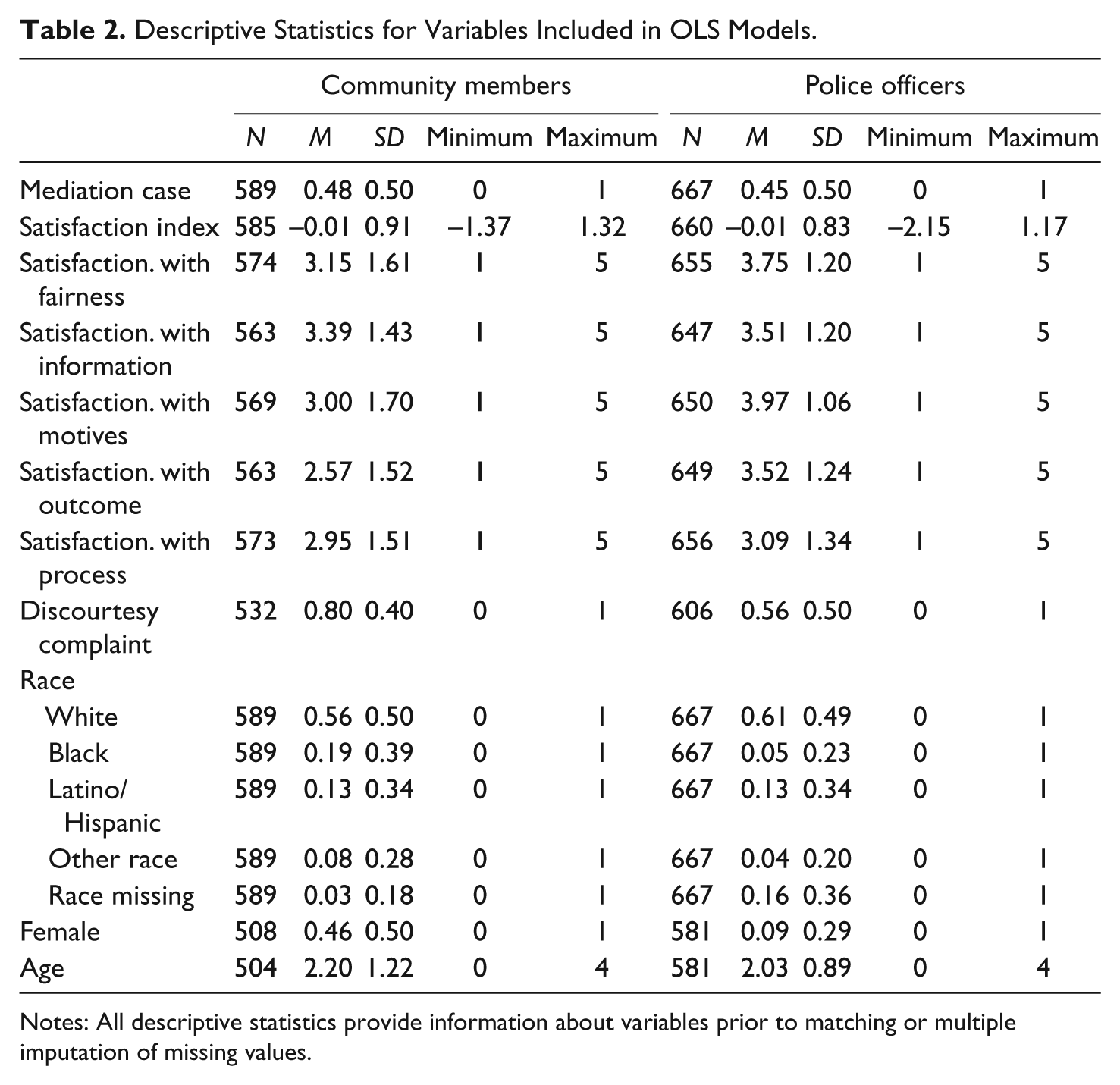
Notes: All descriptive statistics provide information about variables prior to matching or multiple imputation of missing values.
Confirmatory factor analyses indicated that all items loaded strongly onto a single dimension. As such, the items were combined into a summated and standardized scale measuring overall satisfaction. The reliability of the satisfaction index was strong for both officers (α = .88) and citizens (α = .95).
Independent variables
Our central independent variable of interest (Mediation) was a dichotomous measure indicating whether the complainant or officer respondent had a complaint resolved through the traditional investigation process or mediation (0 = Traditional; 1 = Mediation). Initially, we had intended to construct a series of binary variables to compare the effect of mediation versus traditional complaint handling with different outcomes (i.e., complaints that were fully investigated or declined). However, we found that there were no substantial differences in patterns of satisfaction within the traditional complaint process for those officers and complainants whose complaints were declined versus those that resulted in a full investigation (whether sustained or not). As a result, we opted to simplify the measure and focus on the effect of mediation versus all other forms of traditional complaint handling.
In addition to measuring whether the complainant/officer went through mediation, we also included a number of demographic and case type measures as controls. Race was coded as a series of dummy variables (Black, Latino/Hispanic, Other) with White serving as the reference category. Gender was captured through the use of a binary measure (Male = 0, Females = 1) and age was measured as an ordinal variable grouping the respondents into five age categories (0 = under 24, 1 = 25 to 34, 2 = 35 to 44, 3 = 45 to 54, and 4 = 55 and above). Finally, we also sought to examine whether case type had an effect on satisfaction by measuring whether the respondent’s complaint included a discourtesy allegation (0 = Complaint did not include a discourtesy allegation; 1 = Complaint included a discourtesy allegation).
Analytical Strategy
In assessing our hypotheses, we initially examined crosstabs and bivariate correlations for all the cases in our dataset. However, we faced two important issues that reduced the usefulness of this approach—(a) The presence of missing data in the mediation surveys; and, (b) The assignment of respondents to mediation versus the traditional investigation process was not random and was likely conditioned by a number of unobserved factors.
With regard to the missing data for mediation surveys, we were able to retroactively reconstruct some demographic data. Community members generally self-report their race/ethnicity when they file a complaint, and 74.6% of co-complainants shared the same race. Since the mediation respondent’s case number was written on their survey (but not their name), we were able to retrospectively reconstruct race/ethnicity information for most complainants and co-complainants with missing data by reviewing their case file. Unfortunately, we were unable to use this strategy in relation to gender and age for cases where there was more than one complainant, as co-complainants do not tend to share the same gender or age (i.e., the vast majority co-complainants were spouses). Similarly, most complaints involved more than one officer, and the named officers did not tend to share race/ethnicity, age, and gender in common. As a result, we could not use this approach to meaningfully reduce the percentage of missing data for officers.
To overcome the problem of missing data in our multivariate models caused by the missing demographic data, we opted to use multiple imputation (MI). Traditional methods of resolving missing data such as listwise deletion, pairwise deletion, mean substitution and regression-based single imputation have a variety of undesirable effects and likely result in biased estimates and standard errors (Graham, Cumsille, & Elek-Fisk, 2003; Graham & Hofer, 2000; Little & Rubin, 1987; Schafer & Graham, 2002). As a result, Monte Carlo-based techniques using repeated simulation to develop estimates and confidence intervals for incomplete multivariate data have become the preferred practice (Allison, 2000; Little & Rubin, 1987; Rubin 1996; Schafer & Graham, 2002). In this article, we used MICE (multivariate imputation through chained equations) developed by van Buuren, Boshuizen, and Knook (1999) and further developed by Royston (2009). Using this approach within Stata, coefficients for predicting missing values were calculated using bootstrap procedures, and five imputed datasets were produced. This technique capitalizes on covariation between the known variables, and introduces randomness through the bootstrapping procedures, providing better estimates of standard errors and a more realistic pattern of imputed data. Parameter estimates were then created by averaging across the imputed data sets using the “estsimp” procedure in Stata (see Royston, 2009 for a more detailed description of this approach).
As mentioned above, the second issue was the effect of selection bias in assignment. Although an experimental design and random assignment would have been preferred, the organizational actors responsible for implementing the mediation program felt that they could not ethically use random assignment as a method for assigning officers and complainants to mediation. To manage the problem of non-random assignment, we adopted the use of Coarsened Exact Matching (CEM) (Blackwell, Iacus, King, & Giuseppe, 2009; Iacus, King, & Porro, 2008) and used STATA’s “estsimp” command developed by Gary King (a component of the CLARIFY package). CEM is a matching method that allows estimation of causal effects without some of the drawbacks of other matching techniques. In particular, CEM is a monotonic imbalance bounding (MIB) method of matching that is less dependent on modeling decisions, more resistant to measurement error, and typically allows users to retain more cases than other forms of case matching (Blackwell et al., 2009). CEM achieves these advantages by allowing coarsening of variables, matching cases within multiple strata and then averaging effects across these strata to derive weights. This is superior to other methods that require matching on individual variables with uncoarsened scores because requiring such exact matches often significantly reduces the sample of matched cases. As such, CEM allows for the retention of a larger sample of matched cases to examine treatment effects (SATT) using imputed data and weights, while simultaneously controlling for effects of any treatment/nontreatment imbalance.
Therefore, to reduce the risk of selection effects, we performed coarsened exact matching using age, gender, race/ethnicity and interactions between mediation × race/ethnicity and mediation × gender. After matching, we had 589 citizen respondents with 281 assigned to mediation and 308 to traditional process. For officers, we had 667 cases with 299 assigned to mediation and 368 assigned to the traditional complaint process. Examination of balance indicators suggested that while balance was improved with the CEM weights, significant imbalance remained. As such, it was necessary to examine the treatment effects including covariates rather than conducting a simple t-test or single variable regression with the weighted variables.
Using the weights generated from the CEM procedures and the “estsimp” procedures for averaging across imputed datasets, we used ordinary least squares regression to predict satisfaction. We estimated separate models for citizens and officers. Our initial models regressed mediation, case type, and demographics on our general satisfaction index. We also estimated a series of follow-up models that examined the predictors of the individual components of the general satisfaction index (i.e., Fairness, Information, Motives, Outcome, and Process). However, we found no substantive differences between the models predicting the overall satisfaction index and the models predicting the individual components of that composed that index. As a result, we report only the models predicting the satisfaction index. Finally, given the relatively limited development of the literature, we also tested for interaction effects between mediation × race and mediation × gender.
Findings
Preliminary analysis of the distribution of satisfaction across categories without including controls revealed some interesting patterns (see Table 3). The percentage of respondents satisfied with all aspects of the complaint process was notably higher for those who participated in mediation than it was for those who underwent the traditional process. Furthermore, a number of patterns of interest emerged when considering demographic information. A higher percentage of White complainants were satisfied than either African American or Latino complainants. For example, 14% of White nonmediation complainants were satisfied with fairness of the process, whereas only 7% of African American nonmediation complainants were satisfied. Men also reported higher levels of satisfaction than women, and younger non-mediation respondents reported higher levels of satisfaction with almost all elements of the process than older complainants.
Percentage of Community Members Reporting Satisfaction between Mediation and Non-Mediation Cases.
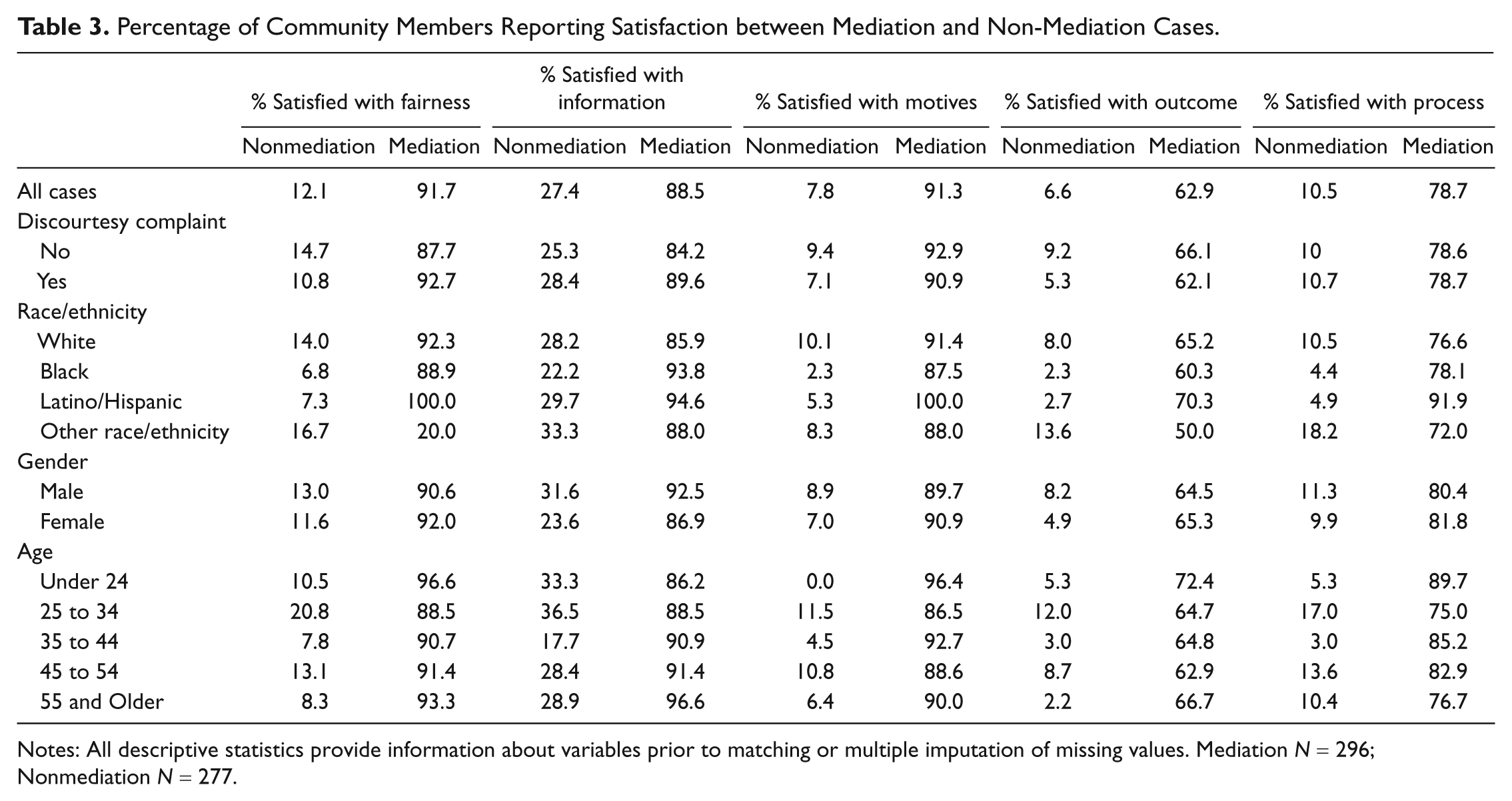
Notes: All descriptive statistics provide information about variables prior to matching or multiple imputation of missing values. Mediation N = 296; Nonmediation N = 277.
For officers, patterns of satisfaction were similar to complainants, though the gap in satisfaction between officers exposed to different complaint processes was not quite as wide (See Table 4). On the whole, however, officers who went through the mediation process reported higher levels of satisfaction than those that did not. For example, 46% of officers reported being satisfied or very satisfied with the non-mediation process as compared with 96% of the officers who went through the mediation process. Like complainants, officers who went through the non-mediation process exhibited some demographic variation, whereas officers undergoing mediation did not. Latino officers who went through the traditional process consistently reported lower levels of satisfaction than White officers, whereas African American officers consistently reported higher levels of satisfaction with the nonmediation process. Similarly, female officer respondents who went through the traditional process reported lower levels of satisfaction as compared with their male counterparts.
Percentage of Officers Reporting Satisfaction between Mediation and Nonmediation Cases.

Notes: All descriptive statistics provide information about variables prior to matching or multiple imputation of missing values. Mediation n=299; Non-Mediation n=368. The age category “Under 24” was excluded from this table due to the small number of cases (n=13).
Multivariate Models
Given the issues with missing information and selection bias, we developed a series of ordinary least squares (OLS) models testing effects the general satisfaction index using coarsened exact matching (CEM) and multiple imputation (MICE). To test hypotheses 1 & 2, we developed separate predictive models for officers and citizens.
For citizen complainants, OLS models indicate that mediation significantly improved satisfaction, even after performing multiple imputation and controlling for selection bias through case matching (see Table 5). For our model predicting the satisfaction index, whether or not a respondent went through mediation was by far the strongest predictor among our independent variables (increasing overall satisfaction by 1.43 standard scores). There were, however, other significant (though weaker) predictors of satisfaction for complainants that persisted even after matching and controlling for the effects of mediation. African Americans were notably less likely to report satisfaction, though these did not achieve significance at the traditional level of .05. Similarly, being Latino resulted in substantively lower satisfaction with motives (though this was significant at the .05 level). Interestingly, examination of interaction effects suggested that underlying tendencies toward dissatisfaction among Latinos was largely reversed for those undergoing mediation. There was a strong positive interaction effect for mediation × Latino, which indicates that participating in mediation produced greater satisfaction for Latino complainants than for Whites, African Americans, and other race/ethnicities. The varying slopes for mediation on the satisfaction index across racial/ethnic groups, holding other factors constant at their mean, are illustrated in Figure A.
OLS Regression Models of Predicting Satisfaction Index Among Citizen Complainants and Officers.
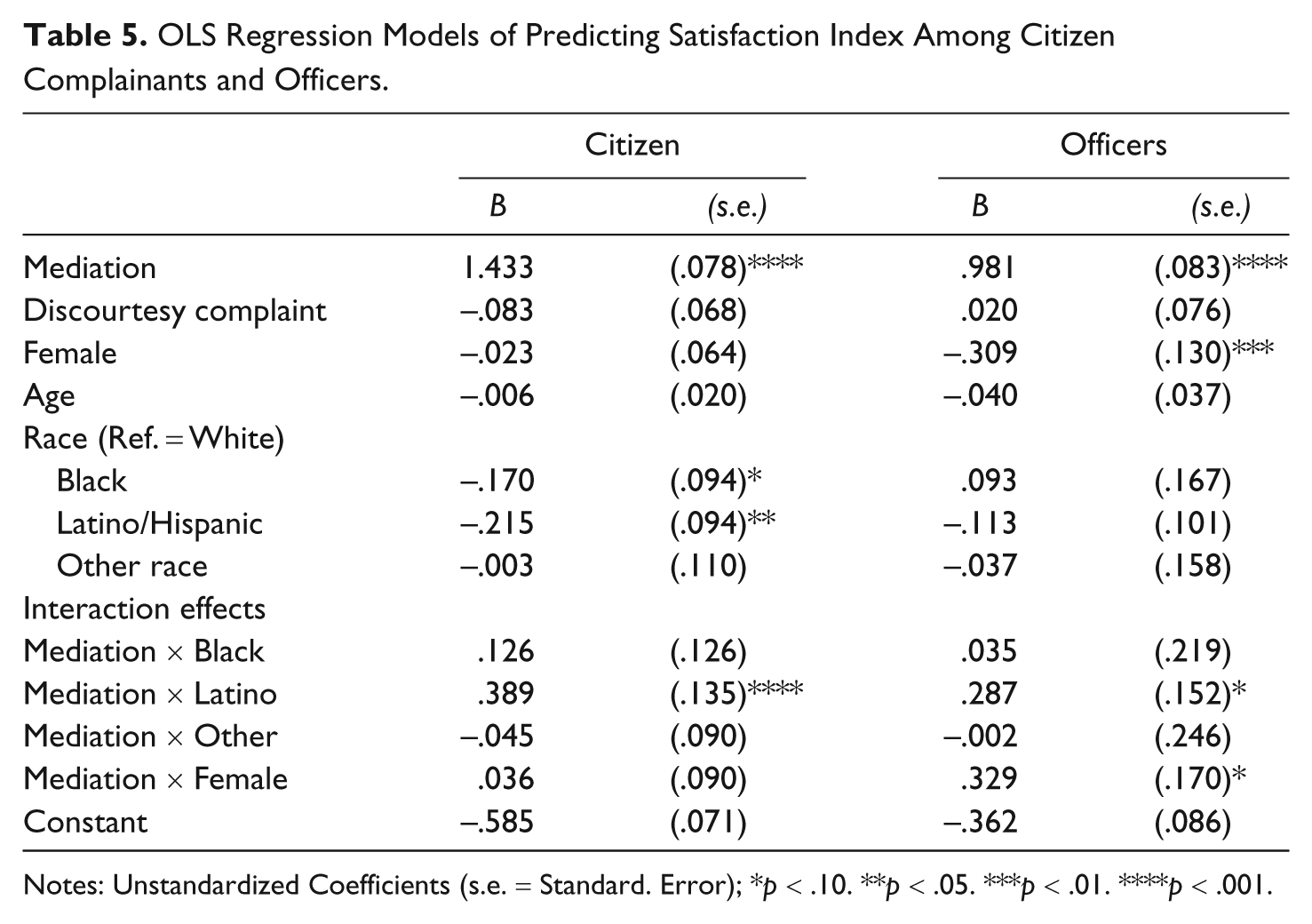
Notes: Unstandardized Coefficients (s.e. = Standard. Error); *p < .10. **p < .05. ***p < .01. ****p < .001.
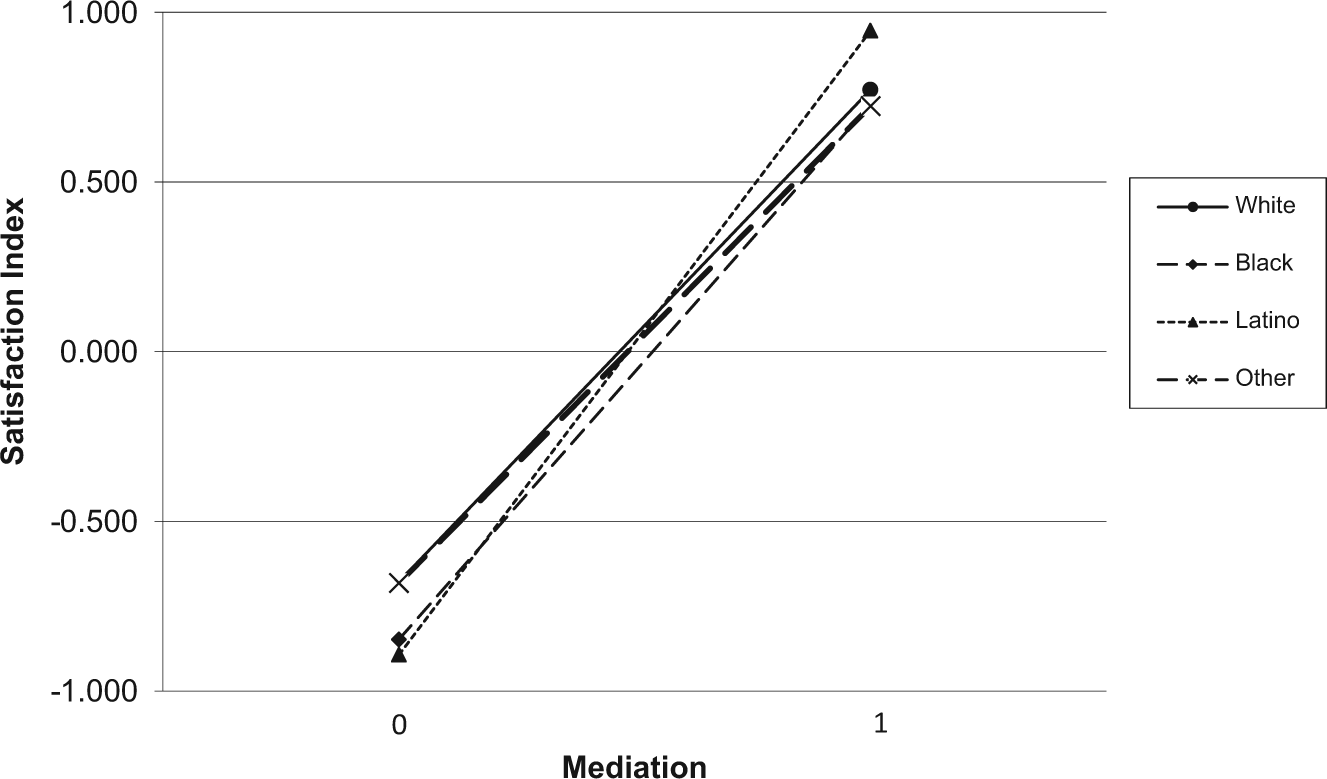
Interaction effects by citizen ethnicity holding all other IVs constant.
Like citizen complainants, participating in mediation for officers was also strongly predictive of satisfaction with significant effects across all components and for the index (see Table 5). Interestingly, and consistent with the bivariate data, levels of satisfaction seemed to be somewhat higher for officers than citizens (as indicated by the y-intercept). Unlike complainants, the race/ethnicity of officers was not a significant predictor of satisfaction, though we did observe a substantive interaction effect between mediation and Latino (sig. <.10), which paralleled the one observed among citizens. The more pertinent predictor of satisfaction for officers was gender. Being female predicted significantly lower levels of satisfaction with fairness, motives, and the general satisfaction index. Likewise, there was an interaction effect between mediation and gender, indicating that participating in mediation led to larger gains in satisfaction for females than for males (p < .10) (see Figure B).
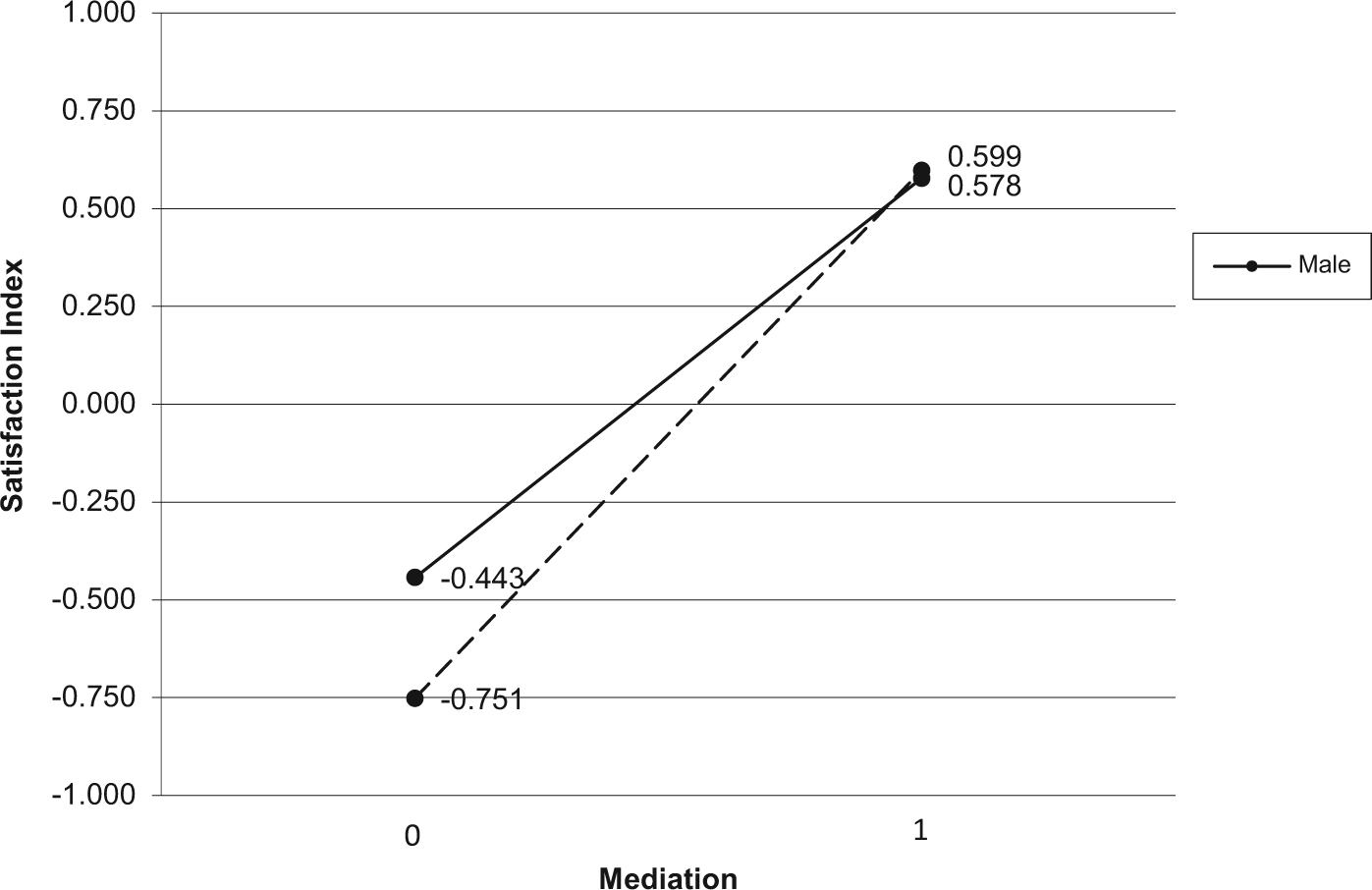
Interaction effect of officer gender and mediation holding all other IVs constant.
Discussion
Overall, our findings provide strong support for our hypotheses. In relation to our first hypothesis, mediation was indeed more effective at promoting satisfaction among complainants than the traditional investigatory process, which replicates the findings of earlier exploratory studies on mediation (Bartels & Silverman, 2005; Hill et al., 2003). This finding also supports the existing research on complainant goals for filing complaints—that is, complainants are more interested in receiving an apology or having their feelings or views acknowledged than they are in having officers severely punished (De Angelis, 2009; Maguire & Corbett, 1991; Prenzler & Ronken, 2001; Walker & Archbold, 2000). In our data, it was clear that having complaints resolved through mediation was far more satisfying experience for complainants than the traditional process.
One question that our research could not answer was whether complainants bring different goals to the process, and whether there are other means of resolving complaints that would be more satisfying. For example, roughly 38% of complainants who went through mediation indicated that they were either neutral or dissatisfied with regard to the outcome on their complaint. Although this percentage is substantially lower than the 93.4% of traditional complainants that were either neutral or dissatisfied with the outcome on their complaint, our research does not indicate what other type of outcome those neutral/dissatisfied mediation participants would have preferred. And, indeed, we are aware of no research that has examined expectations that complainants have at the beginning of the complaint process and whether the handling of their complaint met their expectations. We hope that future research can delve more deeply into the expectations/goals that complainants bring to the process and the extent to which mediation (and other forms of complaint handling) can achieve those expectations/goals.
In relation to our second hypothesis, it was found that officers who went through mediation, like complainants, reported much higher levels of satisfaction. Yet, we also found that the gap in satisfaction was much more narrow for officers than it was for complainants. Overall, this pattern indicated to us that mediation has a larger effect on complainant satisfaction than it does on officer satisfaction. Although this finding has not been previously demonstrated by empirical research, it is not entirely surprising. In almost all jurisdictions, only a small percentage of complaints result in a sustained findings (Walker, 2001). To a certain extent, this pattern is the result of the nature of police complaints, which often involve “he said/she said” circumstances that can be very difficult to prove (Livingston, 2004). Put another way, it is clear that officers benefit from the structure of the traditional, adversarial process, and this benefit is likely related to officer’s higher rates of satisfaction with traditional methods of handling complaints.
In addition to our general finding that mediation is more satisfying for complainants and officers, we also observed that it may have larger benefits for some groups than others. Among complainants, we found noticeable interaction effects between mediation and race/ethnicity. That is, mediation increased satisfaction more for Latino and African American complainants than it did for White complainants. For officers, we observed similar interactions with regard to gender, with mediation having stronger benefits for female than for male officers. We are not suggesting that mediation programs should be structured differently for different groups, or that access to mediation should be conditioned on demographic characteristics. Instead, findings seem to indicate that some subgroups may bring different concerns, which result in differential satisfaction across mechanisms. This is consistent with evidence in the broader literature on dispute resolution, which suggests that both females and Latinos prefer to resolve disagreements through interpersonal interaction (Gabrielidis, Stephan, Ybarra, Dos Santos Pearson, & Villareal, 1997; Holt & Devore, 2005). Future researchers should explore why mediation may have a differential effect on the attitudes and desires of different groups, and especially disadvantaged groups both within and outside of the police.
Our analysis raises a number of additional policy and research questions. For example, even though our research indicates that mediation is effective at increasing officer and complainant satisfaction, it does not suggest how these benefits might be more broadly extended. Mediation programs require significant staffing resources to operate effectively, and cannot be used to resolve all complaints. So, one pressing policy issue is whether there are ways of transferring some of the benefits of mediation to other parts of the complaint process, without incurring the overall costs. Some jurisdictions may use other informal resolutions that are less resource intensive than mediation, but may provide some of the same benefits as mediation. These types of approaches may include informal conferences between police officer supervisors and complainants, and informal officer counseling for less serious complaints. We hope that future research can explore whether one type of informal resolution is more effective than others, and under what circumstances.
Even though we observed a strong effect of mediation on satisfaction, it is important to note that our data had a number of significant limitations. Our data had a substantial percentage of missing demographic data and the assignment of complainants and officers to mediation was not random. And even though we used relatively sophisticated techniques to limit the damage caused by these data problems (multiple imputation and coarsened exact matching), it is still unknown how much these issues affected our findings. In addition, there were differences across survey instruments and methods of delivery, and the response rate of traditional complainants was substantially lower than that for mediation participants. Thus, complainants who responded to the traditional survey may have been more extreme in their views than those who did not respond to the survey. Likewise, as mediation surveys were completed in the presence of the mediator and other party to the complaint, responses may have been biased toward being more favorable. Thus, it is possible that the disparity in satisfaction between mediation and nonmediation complainants we observed might be overstated in this study. Finally, it is likely that omitted variables effecting satisfaction had a hidden influence on our multivariate models. For example, it is likely that there are other individual level characteristics (e.g., education, immigrant status, complaint or criminal history, officer length of service or assignment) or case characteristics (e.g., case processing time, case seriousness) that influence satisfaction with the complaint process. Unfortunately, we were not able to take such factors into consideration in the present study. Taken together, these issues indicate that caution should be used when attempting to generalize based on our findings. It is not clear that the pattern of attitudes we observed reflect those of officers or complainants in other jurisdictions or across different time periods.
Despite our data’s limitations, it seems clear that this study provides a leap forward in our understanding of the effect that mediation has on the attitudes of complainants and officers. Moreover, our findings confirm previous anecdotal, exploratory research and demonstrate that mediation can be a highly effective method for resolving police complaints and ensuring officer and complainant satisfaction. Even so, we are hopeful that future researchers will employ more rigorous experimental and pre/post research designs and assess whether the mediation effects we observed in this study hold under conditions of random assignment.
Footnotes
Declaration of Conflicting Interests
The author(s) declared no potential conflicts of interest with respect to the research, authorship, and/or publication of this article.
Funding
The author(s) received no financial support for the research, authorship, and/or publication of this article.