



Abstract
Studies surrounding the effectiveness of veterans’ treatment courts (VTCs) are now emerging. Absent from this scholarship is an examination of the presence of procedural justice within VTCs and the influence of procedural justice on future criminal behavior of VTC clients. To begin this dialogue, this study surveys 41 clients enrolled in two VTCs in a Southern state. We explore client perceptions of procedurally just treatment by their judge and assigned supervision officer. Using an average follow-up time of 20 months, this study also examines the effects of perceptions of procedural justice on recidivism of court clients. Results find VTC clients perceive their judge and supervision officer treat them in a procedurally just manner. Interestingly, perceptions of procedural justice during interactions did not result in reduced recidivism among the current sample. Policy and program implications along with recommendations for future research are provided.
Introduction
Military veterans encounter unique challenges when returning from active duty. Studies find these men and women may experience stress stemming from re-engagement with civilian life and from the lingering, deleterious effects of combat experiences (Montgomery & Olson, 2018). Certain military experiences, particularly engaging in combat and duty-related injuries, can traumatize individuals both physically and mentally resulting in post-traumatic stress disorder (PTSD) symptomology, mental illness, substance use disorders, and maladaptation (Blodgett et al., 2015; Department of Veterans Affairs, 2012; Finlay et al., 2015; May et al., 2017; Maynard et al., 2017). An ongoing confluence of these negative consequences and worsening symptoms can result in these veterans making poor decisions that lead to arrest and involvement in the criminal justice system. Because of their prior combat and related military experiences, these veterans present complex criminogenic and treatment needs, and may have distinct interactions in the criminal justice system.
A concern that society is failing to support returning veterans adequately has resulted in the development of resources specific to veterans involved in the justice system (henceforth justice-involved veterans; Baldwin, 2015; Russell, 2009). Building on the drug court model in recognizing a similar approach may be effective for justice-involved veterans, veterans’ treatment courts (VTCs) were established (Russell, 2009; Smith, 2012). Although substantial research concludes participation and completion of treatment through a drug court significantly reduces recidivism (Gottfredson et al., 2003; Mitchell et al., 2012; Wilson et al., 2006), the effectiveness of VTCs is less clear (Baldwin & Brooke, 2019; Hartley & Baldwin, 2019; Smith, 2012). Components of drug courts credited as contributing to positive behavioral change include 10 key components summarized by the National Association of Drug Court Professionals (Bureau of Justice Assistance, 2004). Included within these key components are a coordinated strategy that addresses identification and inclusion of individuals into a stage-progression program to combat substance use, which involves structure and mandatory intensive treatment. Significant research has been conducted in these areas of substance use issues. A key component of specialized courts less often discussed is the impact of using a non-adversarial, therapeutic approach to guide behavioral change (Ahlin & Douds, 2019; Kaiser & Holtfreter, 2016). Arguably, such an approach employs a procedural justice framework during interactions with court participants (Bureau of Justice Assistance, 2004).
Simply stated, procedural justice focuses on the fairness of the process that individuals encountering legal authorities experience, including quality of treatment and quality of decision making (Sunshine & Tyler, 2003; Thibaut & Walker, 1975; Tyler, 2006; Tyler & Folger, 1980). Research in problem-solving courts (e.g., drug, mental health, and domestic violence courts) suggests a correlation between perceptions of procedural justice and increased satisfaction with the court, increased program compliance, reduced drug use, and reduced criminal behavior (Canada & Watson, 2013; Gottfredson et al., 2007; Gover et al., 2007; Henry, 2011; McIvor, 2009; Poythress et al., 2002; Wales et al., 2010). Researchers, however, have not yet examined these relationships in the context of VTCs.
To fill this knowledge gap, this study examines perceptions of procedural justice among VTC participants and the relationship of these perceptions with recidivism. Specifically, we utilize data from two VTCs in a Southern state and measure client perceptions stemming from their interactions with their judge and assigned supervision officer. In addition, we examine how clients’ perceptions of procedural justice are related to recidivism.
Literature Review
VTCs
Need for veteran-specific treatment
There are currently over 18.2 million veterans living in the United States (Department of Veterans Affairs, 2019), with an additional 1.3 million individuals serving in our armed forces (Department of Defense, 2019). Furthermore, over 1.9 million Americans were deployed in Operation Enduring Freedom (OEF) and Operation Iraqi Freedom (OIF) (Institute of Medicine, 2013). Given this widespread involvement of the general population in military service, researchers are increasingly interested in understanding the short- and long-term effects of military service (Institute of Medicine, 2013; Montgomery & Olson, 2018). Of concern are the high rates of mental illness, PTSD, traumatic brain injury (TBI), and drug addiction among veterans returning from active duty (Finlay et al., 2015; Seal et al., 2009, 2011). Specifically, studies estimate that of Iraq and Afghanistan veterans who sought health care through the Department of Veterans Affairs (VA), 37% have been diagnosed with a mental health disorder, including 22% with PTSD and 17% with depression (Seal et al., 2009). Of new users of VA health care between 2001 and 2010, 11% were diagnosed with substance use disorders (Seal et al., 2011).
Just as troubling is the number of justice-involved veterans. An estimated 181,500 veterans are incarcerated in correctional facilities across the United States (Bronson et al., 2015). Studies find incarcerated veterans are more likely to have a mental health disorder than non-veteran prisoners (48% vs. 36%, respectively) and be diagnosed with PTSD (23% vs. 11%, respectively). Although concerns of mental illness and drug addiction are not limited to veterans, the military experiences of veterans provide a unique situational context that could affect their subsequent criminal involvement. Upon enlistment, service members become engrained in military culture leaving civilian life and mores behind. Undoubtedly, this military ethos influences post-discharge life experiences. Some individuals find these deep-rooted norms difficult, if not impossible, to abandon upon return to civilian life (Ahlin & Douds, 2016; Brown, 2008; Hollingshead, 1946). These factors underscore the distinctive needs of veterans, particularly those who become involved in the justice system, in addressing addiction and other criminogenic behaviors.
Development of VTCs
First developed in Anchorage, Alaska, in 2004, VTCs are one of the newest problem-solving courts implemented in the United States (Atkin-Plunk & Sloas, 2018; Baldwin & Rukus, 2015; Russell, 2009; Smith, 2012). Between midyear 2012 and midyear 2014, the number of VTCs operating throughout the United States was more than doubled from 104 to 220. The most recent inventory of programs finds 461 operational VTCs or dockets in the United States with variation in approach and program criteria (Flatley et al., 2017). VTCs are based on the drug and mental health court model and provide an alternative to incarceration for military veterans who become involved in the criminal justice system, typically due to drug use and/or mental health issues (Russell, 2009).
To guide the operation of VTCs, Russell (2009) outlined 10 Key Components of VTCs. In the past decade, organizations and VTCs have widely adopted and publicized the 10 Key Components as being the essential framework for the VTC model (Justice for Vets, 2019). These components were adapted from the drug court model and endorse the use of a non-adversarial, therapeutic, team approach to case processing. Many courtroom actors and veterans support resources play an integral role in the operation of VTCs, including the judge, prosecutor, defense attorney, supervision officer, veteran justice outreach (VJO) officer (i.e., VA employed individuals who serve as a liaison between the VA and VTC; Baldwin, 2015), the VA, veteran peer mentors, and community-based organizations. These individuals work together to hold veterans accountable while providing intensive treatment to address the specific needs of each veteran. Ongoing, regular judicial interaction with the veteran also characterizes VTCs (Baldwin, 2015; Douds et al., 2017; Justice for Vets, 2019). In some instances, the judge may also be a veteran (Russell, 2009). In addition to ongoing judicial interaction, VTC clients are also typically required to complete a term of supervision (e.g., probation, often intensive supervision probation), resulting in a high level of interaction with their supervision officer as well (Baldwin, 2015). Similar to other problem-solving courts, VTCs are designed to be less punitively oriented than traditional courts and instead provide a balanced approach to sanctioning justice-involved veterans where they focus on healing and restorative principles while holding clients accountable for their criminal offense (Atkin-Plunk & Sloas, 2019; Baldwin & Rukus, 2015).
Effectiveness of VTCs
With the rapid implementation of VTCs across the United States, research specific to VTC effectiveness is emerging. Although the majority of these studies tend to be limited in scope, descriptive, or anecdotal in nature, findings suggest that VTC participation can lead to reduced recidivism rates, among other prosocial changes (Hartley & Baldwin, 2019; Holbrook & Anderson, 2011; Johnson et al., 2016; Knudsen & Wingenfeld, 2016; Russell, 2009; Shannon et al., 2017; Slattery et al., 2013; Smith, 2012; Tsai et al., 2018). For example, Smith (2012) found that graduates of the Alaska Veterans Court had lower recidivism rates compared with the overall recidivism rate in Alaska. Furthermore, Hartley and Baldwin (2019) found participants in a large urban VTC were significantly less likely to be rearrested during the 3-year follow-up period compared with a control group of probationers who were eligible for the VTC but opted out. Anecdotally, 1-year post-inception of the well-known Buffalo VTC, Russell (2009) reported that in addition to no recidivism among the graduates, they also experienced positive life changes, such as reuniting with family and friends, gaining stable employment and residency, remaining drug free, and successfully addressing mental health issues. Furthermore, using national data on almost 8,000 VTC participants, Tsai and colleagues (2018) found VTC participants to have low reincarceration rates while experiencing gains in housing, employment, and VA benefits during program enrollment. Despite the evidence favoring these courts, whether VTCs adhere to key concepts, such as just treatment of clients, which are purported to result in positive change among the clients has not been adequately assessed in the literature.
Procedural Justice
Procedural justice is a multifaceted concept that focuses on the perceived fairness of the process and procedures used to arrive at an outcome (Lind & Tyler, 1998; Tyler, 2006; Tyler & Huo, 2002; Walker et al., 1979). Over time, researchers have suggested that many factors influence whether an individual believes authorities treat them in a procedurally just manner, including honesty, ethicality, trustworthiness, being given a voice, and being treated with respect (Casper et al., 1988; Tyler, 1988, 1989, 2006). Ultimately, research suggests that these dimensions fall into two broad categories: quality of decision making of the authority figure and quality of treatment (Reisig et al., 2007; Tyler & Huo, 2002; Tyler & Smith, 1997).
Scholars are increasingly acknowledging the importance of procedural justice in the field of criminal justice. The implications are vast, as research suggests that individuals who perceive that legal authorities (e.g., police officers, lawyers, judges, correctional officers) treat them fairly hold more positive attitudes toward those authorities and are more willing to comply with the law and/or directives of the authorities (Maguire et al., 2019; Sunshine & Tyler, 2003; Tyler, 2006). Essentially, if individuals perceive the procedures used in a legal situation to be fair, the outcome an individual receives is more likely to be perceived as fair, even if the outcome of the encounter is unfavorable to the individual (Leventhal, 1980). As Sunshine and Tyler (2003) assert, “people are more accepting of and cooperative with authorities when they are treated with fairness and respect” (p. 536).
Procedural Justice in VTCs
Similar to other problem-solving courts, VTCs utilize a non-adversarial, therapeutic approach to case management, which arguably employs aspects of procedural justice. Although untested, it is possible that the effects of this model are more pronounced in VTCs, given the military ethos that veterans undoubtedly import to the courtroom. Within the authoritarian military culture, service members are socialized to abide by the chain of command and follow orders (Ahlin & Douds, 2016). VTCs embrace this military culture and recognize the unique experiences and cultural needs of participants. Along with the accountability and structure of VTCs, this is a prime reason participants seek treatment through VTCs and remain engaged in the court (Ahlin & Douds, 2016). Given the focus of respect, fairness, honesty, and trust in both the VTC and procedural justice models, it can be argued that these models closely align and contribute to the therapeutic nature of VTCs.
In a courtroom environment, perceptions of procedural justice are likely to occur when individuals have an opportunity to state their case (Tyler, 1987) and when those individuals believe the judge listens to and considers their argument before making a decision (Casper et al., 1988). To date, several studies have examined the impact of procedural justice in problem-solving courts. Although this research is limited to drug courts (Atkin-Plunk & Armstrong, 2016; Atkin-Plunk et al., 2019; Gottfredson et al., 2007; Henry, 2011; McIvor, 2009), mental health courts (Canada & Watson, 2013; Poythress et al., 2002; Wales et al., 2010), and domestic violence courts (Gover et al., 2007), findings suggest that problem-solving court clients perceive court authorities treat them in a procedurally just manner (Atkin-Plunk & Armstrong, 2016; Atkin-Plunk et al., 2019; Canada & Watson, 2013; Gover et al., 2007; McIvor, 2009; Poythress et al., 2002) and that increased perceptions of procedural justice are related to reduced recidivism of court clients (Gottfredson et al., 2007; Henry, 2011; Wales et al., 2010).
Despite the high levels of interaction between problem-solving court clients and legal authorities besides the judge (e.g., supervision officer), the majority of research examining procedural justice in the context of problem-solving courts examines court clients’ perceptions of their judge and does not consider other legal authorities for which clients are in close contact (Atkin-Plunk & Armstrong, 2016; Atkin-Plunk et al., 2019; Gottfredson et al., 2007; Gover et al., 2007; Henry, 2011; McIvor, 2009; Poythress et al., 2002; Wales et al., 2010). To date, only one known study has examined problem-solving court clients’ perceptions of procedural justice of legal authorities beyond the judiciary. Specifically, Canada and Watson (2013) examined how the mental health court team working group, including the judge, caseworker, and probation officer, affected client perceptions of fair treatment. They found that procedural justice perceptions were multifaceted and that the entire team, not solely the judge, affects client perceptions.
Given the similarities between VTCs and other problem-solving courts, it is likely that VTC clients also perceive court authorities (e.g., judge, supervision officer) treat them in a procedurally just manner. Although previously untested, this could result in reduced recidivism. In the context of VTCs, if veterans encounter legal authorities who treat them in a procedurally just or fair manner, it is possible that they will be more likely to comply with orders and refrain from future criminal behavior. Moreover, it is feasible that VTC participants are primed to perceive their treatment in the VTC as procedurally just given their military background and the VTC structure. 1
Current Study
Focusing specifically on participants in VTCs, this study provides a descriptive examination of two VTCs in a Southern state, client perceptions of procedural justice in these VTCs, and the relationship between perceptions of judicial procedural justice, supervision officer procedural justice, and recidivism. Despite the explicit importance of procedural justice in problem-solving courts, to date, there is no known research regarding procedural justice in VTCs on client outcomes and limited research that examines problem-solving court clients’ perceptions of how their supervision officer treats them. While the research on procedural justice in other problem-solving courts notes positive effects on client outcomes, it is important to recognize that the unique challenges veterans face may result in different experiences in VTCs. With this study, we will provide a baseline for future discussions on procedural justice in VTCs.
Method
Survey Administration
The lead author surveyed clients across multiple days in two VTCs. In both courts, the VTC coordinator introduced the researcher to participants at the conclusion of the court session and after the presiding judge left the courtroom. The researcher then explained the purpose of the study, which she described to participants as measuring perceptions of their interactions with their judge and supervision officer. Participants were informed of the voluntary and confidential nature of the survey. The researcher then handed out the self-administered surveys. Participants who were interested in completing the survey signed a consent form, filled out the survey, and returned both to manila envelopes near the researcher prior to leaving the courtroom. All courtroom actors, including the judge, were aware of the research and its purpose. The appropriate Institutional Review Board reviewed and approved all procedures and methods.
VTC Characteristics
Both Veteran Treatment Court A and Court B were established to assist justice-involved veterans who were experiencing drug addiction, mental health problems, or other issues related to their military involvement, such as PTSD or TBI. To be eligible to participate in either of the courts studied, an individual must be (a) a current member of the U.S. armed forces or veteran who has an honorable or general discharge; (b) charged with an eligible felony (excluded felonies include murder, sexual offenses, delivery of a controlled substance, and aggravated kidnapping); (c) a legal resident or citizen of the United States; (d) a resident of the county in which the VTC is located or the surrounding counties; (e) suffering from a mental illness/disorder, brain injury, or substance use that is related to the criminal offense; and (f) eligible for VA services. To provide further contextualization, the courts are located over 200 miles apart, and at the time of the study, neither court utilized mentoring but had plans to establish peer mentoring.
Veteran Treatment Court A
Court A is an urban, county-wide court that began serving clients in 2009. Additional eligibility criteria in Court A require the participant be a first-time felony offender and/or not previously been terminated or graduated from the VTC. Court A is a four-phase program in which clients receive intensive supervision and treatment. Participants are required to submit to random drug testing and frequently appear before their judge. During Phase I (i.e., orientation phase), which lasts approximately 30 days, clients attend court twice a month, meet with their supervision officer, and begin treatment. During the 90- to 120-day Phase II, or treatment phase, participants appear in court twice a month, meet with their supervision officer, attend and successfully complete core treatment, and attend additional needs-specific treatment. During Phase III, the transitional phase, clients appear in court monthly, continue to meet with their supervision officer, and attend therapy and other support activities. Phase III is designed to last approximately 180 days. Phase IV is a specialized aftercare component that clients attend upon graduation and lasts 120 to 180 days. During this final phase, clients appear in court quarterly, meet with their supervision officer, attend supportive counseling, and remain alcohol/drug free and medication compliant. If a client successfully completes this VTC program, any pending criminal charge against the client could be dismissed.
Veteran Treatment Court B
Court B, which was established in 2011, is also located in an urban area and serves participants county-wide. Clients in Court B are on either a diversion track (not adjudicated) or adjudicated/deferred track. All clients must have 1 to 2 years of probation remaining on their sentence and comply with the general terms of their probation and treatment conditions as well as submit to random drug testing. Diversion track clients appear in court monthly, while the deferred track clients only appear in court to address non-compliance issues.
Participant Characteristics
At the time of the study, 109 clients were enrolled in Courts A and B. Of those enrolled, researchers were able to contact 88 clients (80.7%) during the data collection period. Despite a lack of compensation, 41 clients completed the survey, resulting in a 46.6% response rate of those who the researcher was able to contact and a 37.6% response rate for all docket clients. As indicated in Table 1, the typical VTC client who completed the survey in Court A was a 36-year-old male, with a limited criminal history (three prior arrests). The average survey respondent had been involved in the VTC for over 10 months (313 days) and had appeared before the judge 17 times prior to completing the survey. Most Court A respondents became involved in the court due to an assault and drug possession charge, 42% and 32%, respectively. Court B participants were similarly situated to Court A participants, although with some significant differences. Court B clients were approximately 34 years old, predominantly Caucasian or Hispanic males, and averaged less than two prior arrests. The average Court B survey respondent had been involved in the court for about 7.5 months (227 days) and had appeared before their judge only 5 times. In addition, most Court B participants were brought into the court on assault or driving while intoxicated (DWI) charges, 41% and 50%, respectively. Interestingly, during the 20-month follow-up period, official records showed low recidivism rates across both Courts A and B (16% and 23%, respectively).
Participant Descriptive Statistics by Court (N = 41).
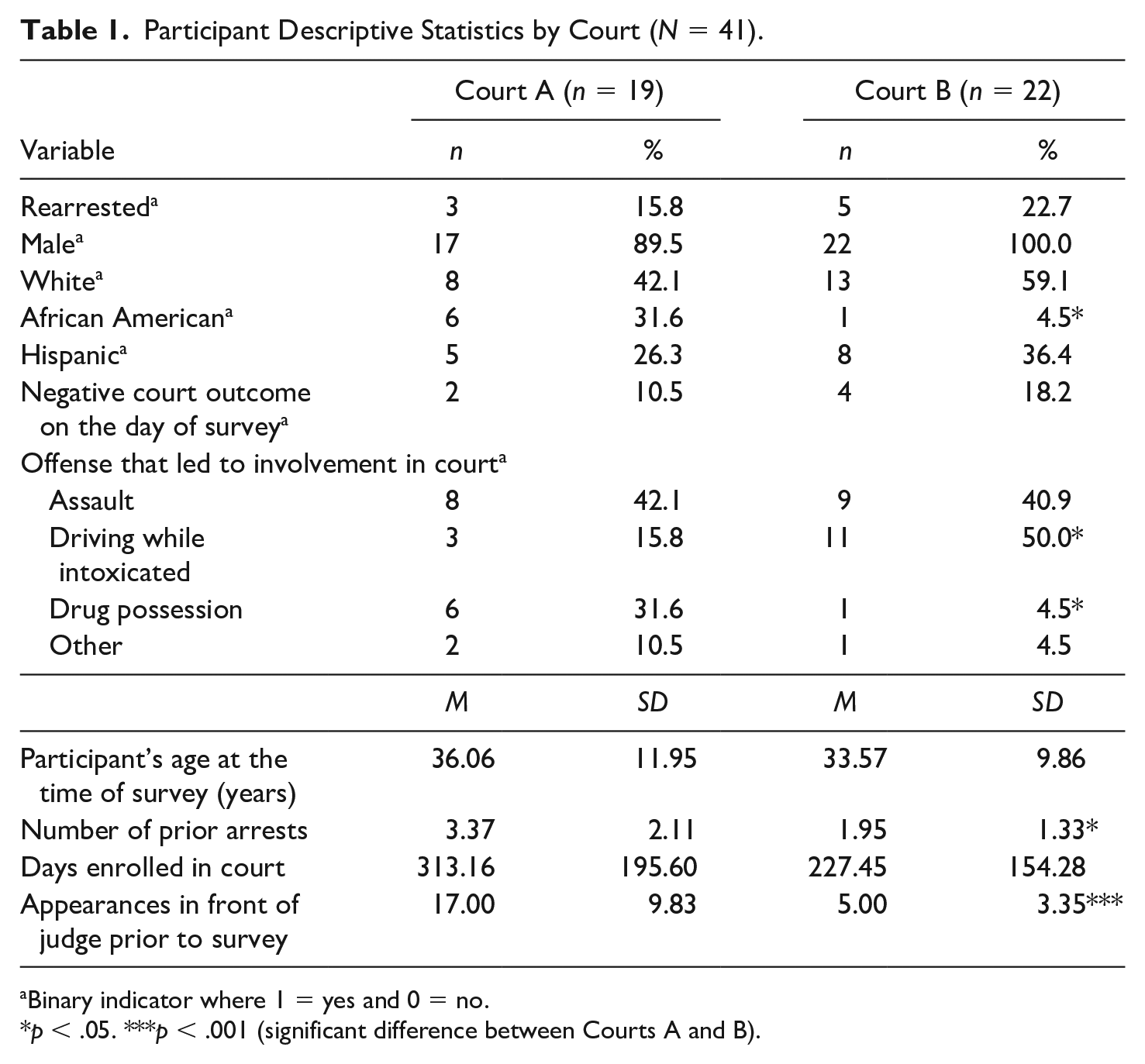
Binary indicator where 1 = yes and 0 = no.
p < .05. ***p < .001 (significant difference between Courts A and B).
Measures
Perceptions of judicial procedural justice
The Perceptions of Judicial Procedural Justice index was comprised of 12 items adapted from Henderson et al. (2010). Items in this index queried respondents regarding their encounter with a specific individual (i.e., the judge) instead of general perceptions in the court, and items were adaptable to reference the VTC judge. Perceptions of Judicial Procedural Justice items were based on a 4-point Likert-type scale, with response options including never, seldom, sometimes, and always. The 12-item index reflected overall fairness, quality of decision making, and quality of treatment VTC clients experienced. Questions included the following: “How often does your judge in the veteran court treat you fairly?” and “How often does the judge in the veteran court make decisions based on facts and not their personal biases or opinions?” Questions were coded such that higher scores indicate greater perceptions of judicial procedural justice.
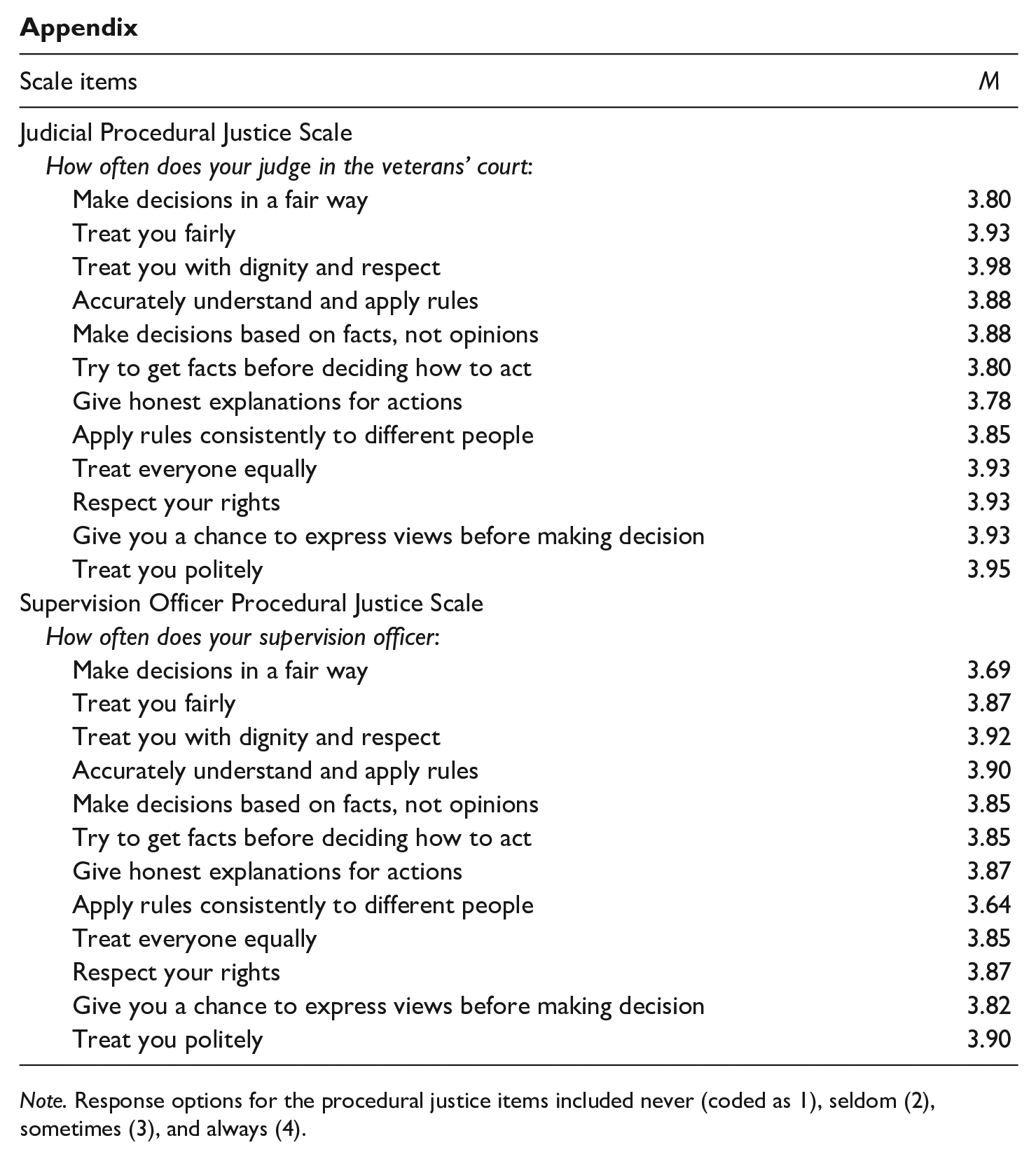
To compute the Perceptions of Judicial Procedural Justice score we summed the items and divided by 12 (the number of items in the index). One participant did not answer one of the items on the index. In the case with missing data, the completed items were summed and divided by the total number of items answered. 2 A reliability analysis indicated that the index demonstrated strong internal consistency (α = .920). See the appendix for all index items.
Perceptions of supervision officer procedural justice
A Perceptions of Supervision Officer Procedural Justice index was created to examine VTC clients’ perceptions of their encounter with their supervision officer. This index was developed using the same 12 items as the Judicial Procedural Justice index. However, the term “supervision officer” replaced the term “judge.” As with the Judicial Procedural Justice index, items on the Perceptions of Supervision Officer Procedural Justice index were based on a 4-point Likert-type scale. To compute the scores, we summed the items and divided by 12. Higher scores indicated greater perceptions of supervision officer procedural justice.
Two VTC clients did not answer any of the supervision officer procedural justice questions. Of the remaining 39 who did, there were no missing data. A reliability analysis indicated that the index demonstrated strong internal consistency (α = .953). See the appendix for all index items.
Recidivism
The outcome variable of interest in this study is recidivism. We operationalized recidivism as rearrest for a new crime subsequent to survey completion. The second author pulled recidivism data from the official Department of Public Safety website. The official records do not provide information on out-of-state arrests. Therefore, arrest data are limited to in-state arrests. Due to the location of these VTCs, we do not anticipate this data parameter had a substantial impact on the results. The time between survey completion and follow-up recidivism verification ranged from 1.5 years (552 days) to almost 2 years (642 days), with the average follow-up time being approximately 20 months (605 days).
Court experiences
A variety of measures examine the VTC clients’ courtroom experiences, including number of days enrolled in court, number of appearances before the judge, and outcome received in court on the day of the survey. The VTC coordinator in each court provided all courtroom experience data to the researchers. Number of days enrolled in court was calculated as the survey date minus the date the veteran was admitted into the court. Number of days enrolled in court and number of appearances before the judge are included as measures because veterans who have been enrolled in the court longer or have more appearances before the judge may have more positive (or negative) perceptions of procedural justice. Outcome received in court on the day of the survey was operationalized as a positive (i.e., incentive) or negative (i.e., infraction or sanction) outcome.
Demographics
A number of demographic variables were also used in the analysis, including age, race, prior arrests, and offense that led to court involvement. Age is calculated as the age of the veteran on the day they took the survey. Race is operationalized as White, Black, or Hispanic (coded as 1 for White and 0 for non-White). The second author obtained prior arrest data from the state’s Department of Public Safety website. Prior arrests was measured as the number of times the veteran had been arrested prior to completing the survey, including the arrest that resulted in the veteran being placed in the VTC. On the survey, the veteran self-reported the offense that led to involvement in the VTC. The three most common charges leading to court involvement were assault (including aggravated assault, simple assault, assault on a family member, and assault with a deadly weapon), DWI, and drug use/possession.
Analytic Strategy
The lead author coded and entered all survey, courtroom, and recidivism data into IBM Statistical Package for the Social Sciences, Version 22. Due to the descriptive nature of this study, we begin by providing a comparison of the participants enrolled in Courts A and B. This provides contextual background for the subsequent analyses. We then provide a descriptive overview of the VTC clients’ perceptions of procedural justice. Next, we utilize the Pearson correlations and independent-samples t tests to examine whether the demographic/courtroom experiences significantly relate to the procedural justice measures. Finally, we utilize chi-square test for independence to determine whether relationships exist between the demographic variables and courtroom experiences and perceptions of procedural justice.
Results
As indicated in Table 1, few significant differences existed between clients in the two courts, despite the different court locations. Court A, for example, had significantly more African American clients compared with Court B. In addition, Court A clients were significantly less likely to become involved in the VTC due to a DWI (16% vs. 50%) and more likely to become involved due to drug possession (31.6% vs. 4.5%) as compared with clients in Court B, respectively. Clients from Court A had significantly more prior arrests as compared with clients in Court B (3.37 vs. 1.95) and significantly more court appearances (17 vs. 5). Eligibility requirements for each court are the likely explanation for these differences. Court A, for instance, allowed individuals with long criminal histories and those convicted of aggravated assault to participate in the VTC, while Court B did not allow individuals with lengthy criminal histories or those convicted of aggravated offenses to participate. In addition, Court A required more frequent court appearances, as often as semi-monthly, even when the participant was compliant with court mandates. In contrast, Court B only required clients to appear monthly or not at all if they were compliant with terms and conditions. Despite these differences, there was no significant difference in recidivism rates between clients in the two courts.
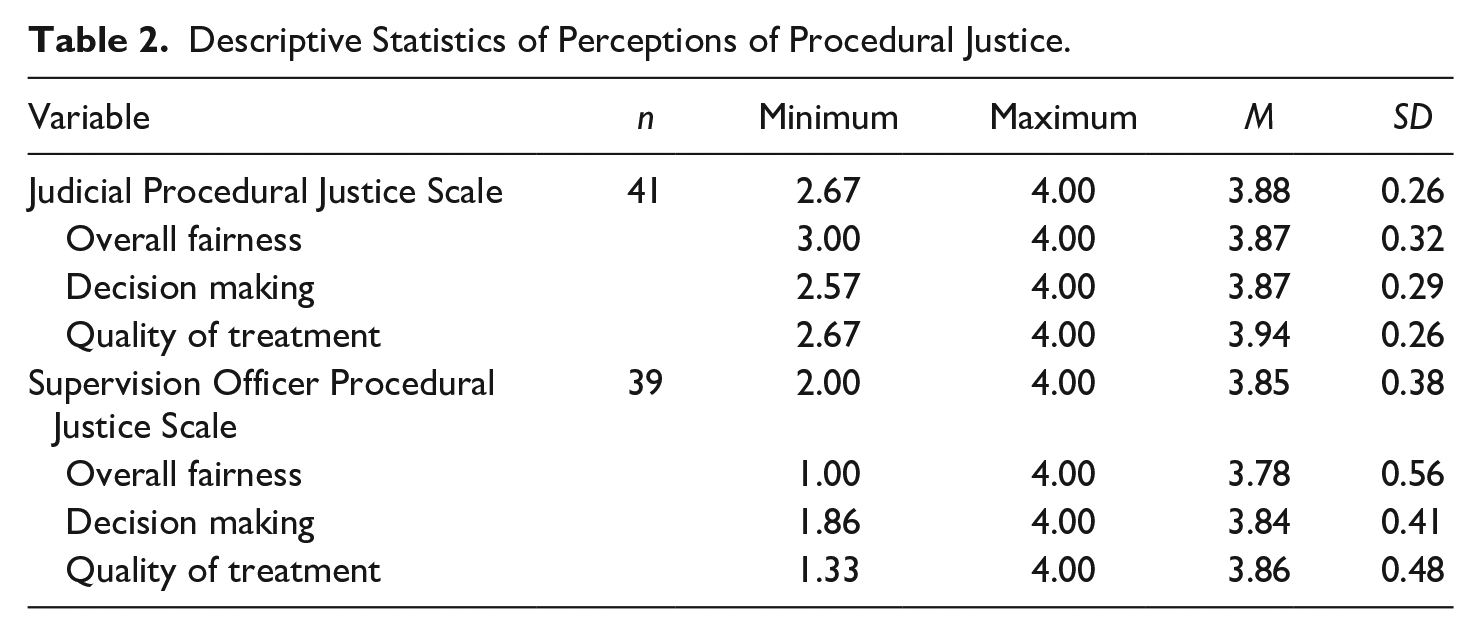
Descriptive statistics for the perceptions of procedural justice are presented in Table 2. 3 As indicated in Table 2, the average Judicial Procedural Justice Scale score was 3.88 (out of 4) with a standard deviation of 0.263, indicating that the VTC clients feel their judge treats them in a procedurally just manner nearly all the time. Similar findings emerge regarding clients’ perceptions of their supervision officer. Specifically, the average Supervision Officer Procedural Justice Scale score was 3.85 (out of 4) with a standard deviation of 0.377, indicating very high perceptions of supervision officer procedural justice among VTC clients in this sample. Indeed, VTC clients feel their supervision officers treat them in a procedurally just manner nearly all the time.
Descriptive Statistics of Perceptions of Procedural Justice.
Next, we conduct the Pearson correlations (Table 3) and independent-samples t tests (Table 4) to examine whether the demographic/courtroom experiences significantly relate to the procedural justice measures. Table 3 indicates that no statistically significant relationships emerged between demographic/courtroom experience variables and the procedural justice scales. Specifically, age, number of prior arrests, days enrolled in the VTC, and number of court appearances are not related to client perceptions of judicial nor supervision officer procedural justice.
Correlation Matrix.
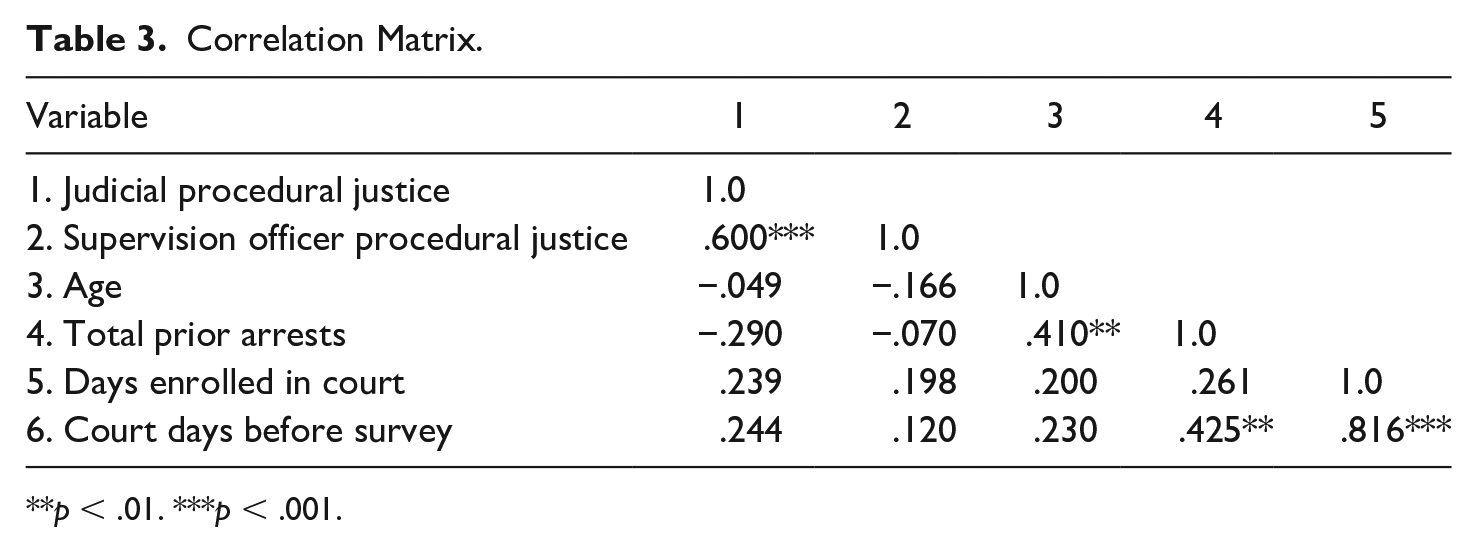
p < .01. ***p < .001.
The t-Test Results for Perceptions of Procedural Justice by Demographic Characteristics and Courtroom Experiences.
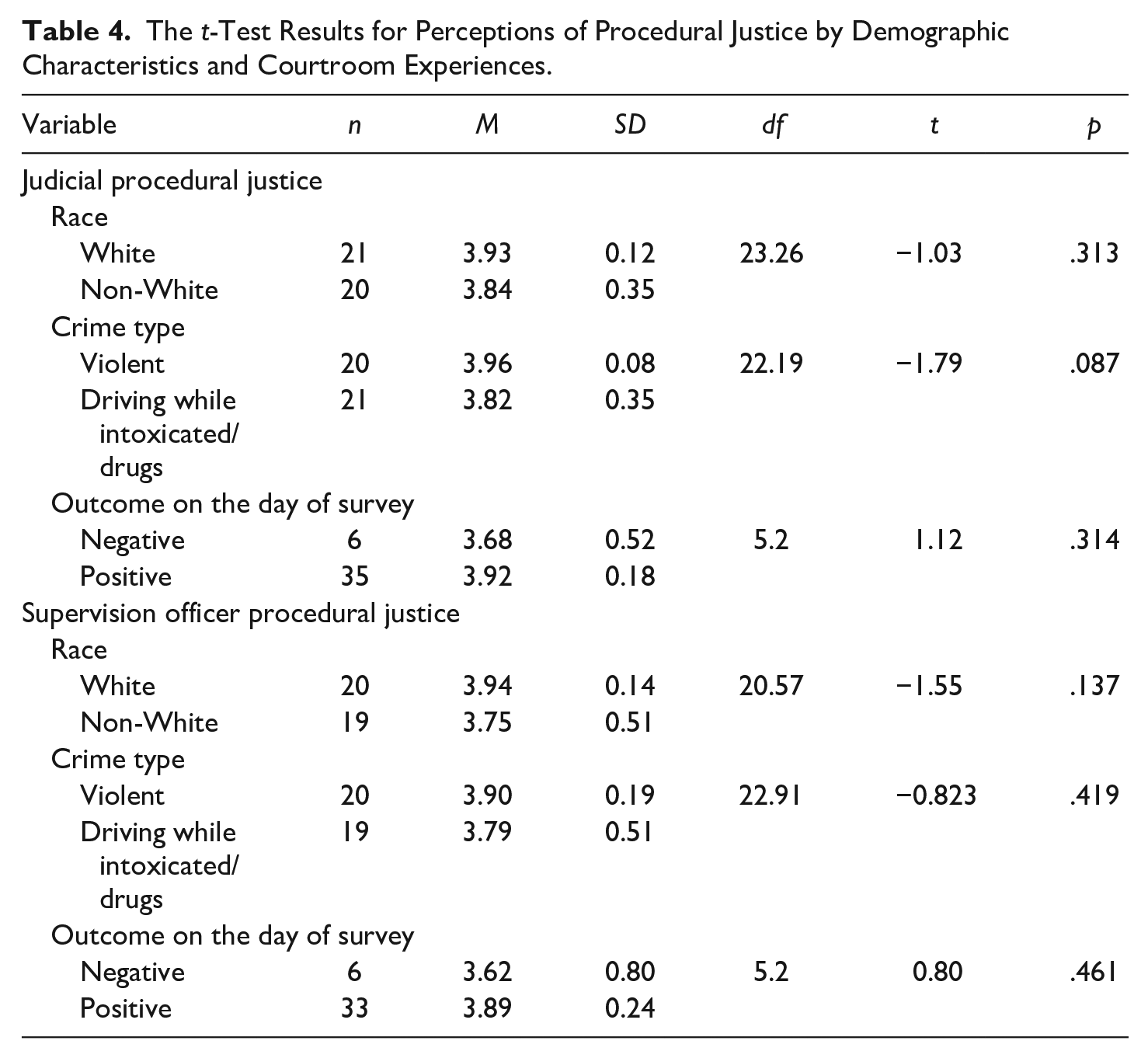
An independent-samples t test was used to examine the relationship between client race, crime type, and outcome the VTC client received on the day of the survey and perceptions of procedural justice. Table 4 illustrates that perceptions of procedural justice did not differ based on race nor crime type. In addition, no significant differences emerged between those who received a negative outcome on the day of the survey (i.e., sanction) and those who received a positive outcome on the day of the survey (i.e., incentive) on perceptions of procedural justice.
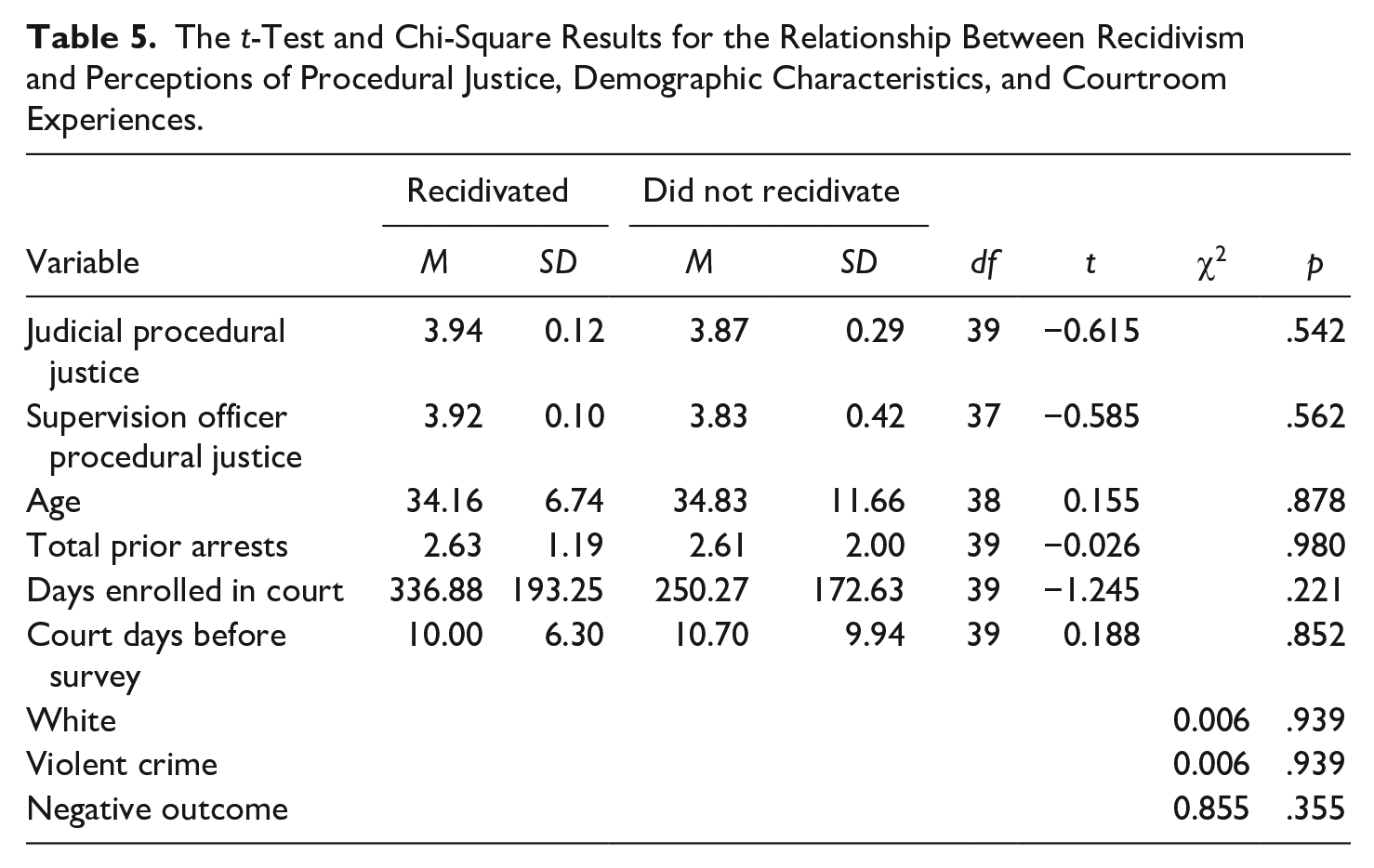
In the final step of the analysis, we conducted independent-samples t tests and chi-square test for independence to examine the relationship between recidivism and VTC clients’ perceptions of procedural justice, demographic characteristics, and courtroom experiences. As can be seen in Table 5, results from the independent-samples t tests and chi-square test for independence indicate that neither perceptions of judicial nor supervision officer procedural justice are related to VTC client recidivism. Interestingly, demographic characteristics typically found to be related to recidivism (e.g., age, prior arrests, crime type) were also not significantly related to recidivism in the current sample.
The t-Test and Chi-Square Results for the Relationship Between Recidivism and Perceptions of Procedural Justice, Demographic Characteristics, and Courtroom Experiences.
Discussion
Based on a survey of clients in two VTCs in a Southern state, we provide a baseline examination of client perceptions of judicial and supervision officer procedural justice and its relationship to recidivism. Previous research finds that procedurally just treatment within drug, mental health, and domestic violence courts contributes to positive behavioral change of court clients (Canada & Watson, 2013; Gottfredson et al., 2007; Gover et al., 2007; Henry, 2011; McIvor, 2009; Poythress et al., 2002; Wales et al., 2010). To date, however, no studies have examined procedural justice in VTCs, and only one known study has examined problem-solving court clients’ perceptions of procedural justice of legal authorities beyond the judiciary (Canada & Watson, 2013). This study concentrated on understanding the role of procedural justice in VTCs. Due to the similar structure of VTCs to other problem-solving courts (e.g., non-adversarial, therapeutic approach), it is logical that procedural justice would be present in VTCs and play a role in recidivism reduction.
While our results showed that less than 20% of the sample of VTC clients were rearrested during the almost 2-year follow-up period, judicial and supervision officer procedural justice was consistently unrelated to recidivism. The lack of significant impact of procedural justice perceptions could be a result of limited power in the analysis given the few participants who recidivated (n = 8). Notably, demographic characteristics (age, prior arrests, crime type) commonly correlated with recidivism were also found to be unrelated to recidivism in our current sample of justice-involved veterans. It is possible that significant relationships between procedural justice and recidivism did not emerge because of the consistently high perceptions of procedural justice and little variation found within the variables. Specifically, VTC clients felt their judge and supervision officer treated them in a procedurally just manner nearly all the time. It is important to note that the judges in both courts were veterans themselves, which could have contributed to a halo effect of justice. Long-standing research suggests that the experiences of military veterans, including the norms and viewpoints (e.g., authoritarian rule, structured environment), tend to be deeply ingrained and can be difficult to abandon upon return to civilian life (Ahlin & Douds, 2016; Brown, 2008; Hollingshead, 1946). This can accentuate the distinguishing needs of justice-involved veterans. Therefore, it is possible that the highly structured environment of the VTCs, along with the shared military experience between court clients and the judge, resulted in the high perceptions of procedural justice but were not sufficient to explain the recidivism among those clients who did fail.
Procedural justice theory posits that individuals’ views of legal authorities are based on a combination of their experiences with authorities and on the current situational context (Tyler, 2006). It seems that the previous military experiences of the VTC clients, particularly their experiences following authoritative command, contribute to the high perceptions of their judge and supervision officer. Recall the average reported procedural justice rating was on average exceptionally high, 3.88 out of 4, and yet not significantly related to recidivism. Thus, perceptions of procedural justice may be a necessary component of a VTC or ingrained because of the military culture, but an insufficient singular component to affect the likelihood of recidivism in VTCs.
Other studies find high average perceptions of procedural justice among participants. See, for example, Atkin-Plunk and Armstrong (2016) who reported an average perceived procedural justice score of 3.84 (out of 4) among drug court clients. Similarly, this study did not find procedural justice perceptions to be associated with the likelihood of recidivism. In comparison, Fessinger et al.’s (2020) study of family treatment drug court (FTDC) parent participants reported relatively positive perceptions of procedural justice with an average of 4.31 (out of 5) and a positive relationship with outcomes measures. Fessinger et al. suggested that because FTDC parents perceived the court process to be fair, they were more likely to participate in court-ordered services in a consistent manner than control group parents and as a result experienced more positive outcomes (i.e., family reunification). Furthermore, Penner, Viljoen, Douglas, and Roesch’s (2014) study of procedural justice perceptions among youth reported a relatively lower average of procedural justice perception scores, just 2.63 out of 4. Although perceptions of procedural justice were on average lower among these youth, Penner et al. found short-term reductions of recidivism (i.e., 3 months) among youth who had high procedural justice perceptions (compared with those who had less positive perceptions) over and above the influence of other risk factors. In conclusion, this study finds that positive perceptions of procedural justice among VTC clients alone are insufficient in reducing future recidivism rates.
Program and Policy Implications
Although results from this study did not find perceptions of judicial nor supervision officer procedural justice to reduce recidivism to a statistically significant degree, program and policy implications remain. The low recidivism rate of clients in our study and high perceptions of procedural justice lend additional credence to the utility of VTCs. Indeed, VTCs are a viable option for providing justice-involved veterans with intensive services while also holding them accountable for their behavior. Based on our findings, it appears that clients experience procedurally justice treatment related to their participation in the VTC. Thus, and as aligning with the Ten Key Components of VTCs (Justice for Vets, 2019; Russell, 2009), VTCs should employ training and education that supports and encourages the use of procedurally just methods, such as treating clients with dignity and respect and ensuring that clients are given a voice during their interactions with court authorities. Furthermore, VTCs should seek to maximize the interactions between the VTC team and court participants. As previously mentioned, Court A required frequent interactions between court clients and the judge, while Court B limited judicial interaction once a month or only to when participants were non-compliant with court orders. Moreover, recently, Baldwin and Brooke (2019) issued a call to critically examine the VTC concept (e.g., underlying assumptions, policies, practices). Despite this call, VTCs will continue operation. Thus, it is imperative for practitioners and policy makers alike to ensure that VTC operations are following best practices and targeting high-risk individuals who are most in need of treatment services.
Limitations and Directions for Future Research
To provide context to the merits of the results, it is necessary to discuss the limitations of the present study. Primarily, our study was limited to two VTCs in a Southern state, comprised of a small sample size (n = 41) and had a 46.6% response rate of those who the researcher was able to contact and a 37.6% response rate for all docket clients. This limits the generalizability of our findings. Although the research team ensured that the judge was not present in the courtroom during survey administration, it is possible that veterans with negative perceptions of their judge were not inclined to engage in activity beyond those that are court required and therefore did not complete the survey. This would explain the positive-leaning distribution of procedural justice perceptions. The low response rate could also be because court sessions were held in the afternoon and clients needed to promptly leave court to fulfill familial and employment obligations. In addition, our focus here was on perceptions of procedurally justice treatment of the clients, which was only one dimension of court implementation. As a reviewer pointed out, many other differences between the courts may have existed. Regardless, researchers should take caution when generalizing the findings in this study to other VTCs.
To improve the generalizability of this research, future researchers should replicate this study with a larger sample size from multiple VTCs. The low number of individuals who recidivated in this study could have resulted in limited power in the analysis masking statistically significant differences that would have been evident with a larger sample. In addition, this study did not examine how perceptions of procedural justice relate to satisfaction with court authorities nor with obligation to obey authorities (sometimes referred to as legitimacy). Examining these intermediate outcomes could provide insights into the reasons for the low levels of VTC client recidivism. Future researchers should examine the mechanisms through which procedural justice might lead to reduced recidivism. Furthermore, there is a need for research that examines how VTC clients respond to the entire VTC team, including the attorneys, VJO, and treatment providers. Researchers should also explore the impact of having a judge who is also a military veteran presiding over VTCs, as they possibly have an instrumental influence on VTC clients.
Conclusion
This study examined VTC clients’ perceptions of judicial and supervision officer procedural justice and how these perceptions relate to recidivism. Despite the importance of procedural justice in other problem-solving courts in reducing recidivism (Gottfredson et al., 2007; Henry, 2011; Wales et al., 2010), we find no significant relationship between VTC client perceptions of procedural justice and recidivism. Results did suggest that VTC clients perceived that their judge and supervision officer treated them in a procedurally just manner nearly all the time, which speaks to the non-adversarial, therapeutic approach that is present in VTCs.
Footnotes
Appendix
| Scale items | M |
|---|---|
| Judicial Procedural Justice Scale | |
| How often does your |
|
| Make decisions in a fair way | 3.80 |
| Treat you fairly | 3.93 |
| Treat you with dignity and respect | 3.98 |
| Accurately understand and apply rules | 3.88 |
| Make decisions based on facts, not opinions | 3.88 |
| Try to get facts before deciding how to act | 3.80 |
| Give honest explanations for actions | 3.78 |
| Apply rules consistently to different people | 3.85 |
| Treat everyone equally | 3.93 |
| Respect your rights | 3.93 |
| Give you a chance to express views before making decision | 3.93 |
| Treat you politely | 3.95 |
| Supervision Officer Procedural Justice Scale | |
| How often does your |
|
| Make decisions in a fair way | 3.69 |
| Treat you fairly | 3.87 |
| Treat you with dignity and respect | 3.92 |
| Accurately understand and apply rules | 3.90 |
| Make decisions based on facts, not opinions | 3.85 |
| Try to get facts before deciding how to act | 3.85 |
| Give honest explanations for actions | 3.87 |
| Apply rules consistently to different people | 3.64 |
| Treat everyone equally | 3.85 |
| Respect your rights | 3.87 |
| Give you a chance to express views before making decision | 3.82 |
| Treat you politely | 3.90 |
Note. Response options for the procedural justice items included never (coded as 1), seldom (2), sometimes (3), and always (4).
Declaration of Conflicting Interests
The author(s) declared no potential conflicts of interest with respect to the research, authorship, and/or publication of this article.
Funding
The author(s) received no financial support for the research, authorship, and/or publication of this article.
