



Abstract
In Australia, incarceration rates have steadily increased since the 1980s, providing an imperative for crime prevention. We explored the extent to which Australian justice sector policies were aimed at preventing crime, using a framework for “primary, secondary and tertiary” crime prevention. We analyzed policies and legislation (n = 141) across Australian jurisdictions (a census was undertaken from May to September 2016, with policies spanning from 1900 to 2022). We found a strong focus on tertiary crime prevention, with recidivism rather than root causes of crime problematised. We also found little focus on primary crime prevention, despite some high-level cross sectoral strategies designed to prevent crime. In this paper, we will use the framework of Bacchi’s “what’s the problem?” approach, considering levels of crime prevention, social determinants of health, and discourses surrounding crime. We discuss policy implications and make suggestions for policy reform and accountability mechanisms to reduce crime and incarceration.
Keywords
Introduction
Incarceration rates have fluctuated (Australian Bureau of Statistics, 2001), but Australia currently has the highest incarceration rate since federation (Australian Bureau of Statistics, 2001, 2019). Over recent decades, the imprisonment rate has steadily increased (see Table 1) (Australian Bureau of Statistics, 2018b), since 1985 by 130% (Leigh, 2019), and from 2013 to 2018, the number of people in full-time custody in Australia increased by 39% (Australian Bureau of Statistics, 2018a). The average imprisonment rate (221 per 100,000) in Australia is now higher than that of Victoria in its early colonial days (210 per 100,000 in 1870 (Millar & Vedelago, 2019, June 27). The rate of imprisonment of Aboriginal and Torres Strait Islander people in Australia is much higher than that of other Australians (Australian Bureau of Statistics, 2017, 2018b; Leigh, 2019) (see Table 2). There is also a strong association between people with mental health disorders and imprisonment rates (Australian Institute of Health and Welfare, 2015; Baldry, 2014; Victorian Government, 2019).
Imprisonment Rates Per 100,000 People in Australia From 2003 to 2018.
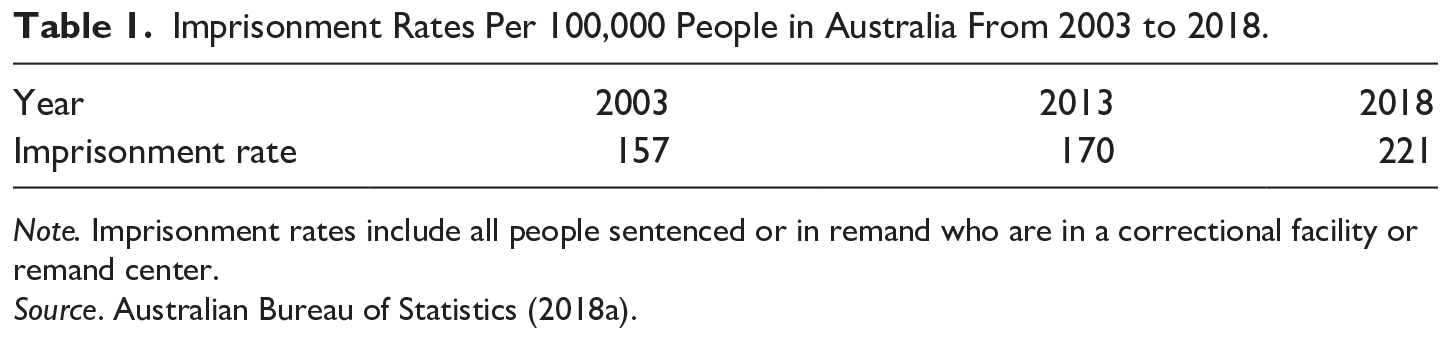
Note. Imprisonment rates include all people sentenced or in remand who are in a correctional facility or remand center.
Imprisonment Rate Per 100,000 of Adult Population, by Sex and Aboriginal and Torres Strait Islander (ATSI) Status in Australia, March 2019.

Even the Australian jurisdictions with the lowest imprisonment rate increases (VIC and TAS) have doubled their imprisonment rate since the 1980s (Leigh, 2019); however, differences across jurisdictions are still evident and can be explained by local penal practices and cultures (Tubex et al., 2016) and the extent of mental health treatment services provided.
Overall increases in incarceration rates across jurisdictions have been attributed to the increasingly punitive nature of prison reforms over recent years, high remand rates in some jurisdictions (Tubex et al., 2016), higher reporting rates, stricter policing practices, tougher sentencing laws, and more stringent bail laws (Leigh, 2019). The overrepresentation of Aboriginal and Torres Strait Islanders in the corrections system has been explained (a) institutionalized racism and the structural racialisation of punishment and (b) structural disadvantage leading to a greater involvement in crime (Tubex et al., 2016).
Prevention of crime is imperative given the pressures on the criminal justice system from higher rates of incarceration, the personal and taxpayer costs of incarceration (Bushnell, 2017), and the personal and social costs of crime (Mayhew, 2003). The purpose of this research was to understand the extent to which Australian justice sector policies focus on the prevention of crime, and address social determinants of health (Commission on Social Determinants of Health, 2008) which overlap with identified social determinants of incarceration (Australian Law Reform Commission, 2017). The social determinants of health refer to the conditions (such as housing, employment, and educational opportunities) that shape people’s lives and affect their health and these conditions are shaped by the distribution of power and resources (Commission on Social Determinants of Health, 2008). Social determinants of incarceration identified in Australia include low education and unemployment, poor health and disability, insecure housing and homelessness, child protection and youth justice contact, harmful use of alcohol, family violence, intergenerational trauma, colonization, discrimination and racism, disconnection from culture and community, and displacement from the land and the cycle of incarceration (Australian Law Reform Commission, 2017).
The research question was To what extent do Australian justice sector policies address the social determinants of health and crime prevention? The research focus at the policy level was considered important because of the high and growing rates of incarceration in Australia, and scope for policy to address crime prevention and the determinants of incarceration (Australian Law Reform Commission, 2017).
The criminal justice sector has a long established model of primary, secondary, and tertiary crime prevention (Australian Institute of Criminology, 2003a; Brantingham & Faust, 1976; Cameron & Laycock, 2002). Crime prevention has been narrowly focused upon neighborhood and environmental design initiatives such as “Crime Prevention Through Environmental Design,” often delivered through local governments (Clancey et al., 2016), without addressing fundamental issues, for example, those related to the effects of colonization and Indigenous disadvantage. In addition, since the mid-1980s policies became more punitive and imprisonment rates started to increase in Australia (Tubex et al., 2016).
Brantingham and Faust (1976) explain that primary crime prevention focuses predominately on modifying environments to stop crime before it starts. It addresses both the social conditions and situational factors that may lead to crime. Situational measures address factors such as building and neighborhood design (“International Crime Prevention Through Environmental Design Association,” 2019), controls on alcohol sale and outlets, or use of surveillance technologies. Other strategies include public safety campaigns (e.g., violence prevention), investment in mental health and alcohol and other drug strategies, and investment in welfare and public housing. Primary and secondary crime prevention mainly involves the Departments of Justice/Attorney General, working with other sectors, and the police, while tertiary crime prevention also involves these stakeholders along with Courts and Corrections systems.
Secondary crime prevention involves early intervention initiatives with individuals, population groups and communities considered to be at elevated risk of committing crime, (Cameron & Laycock, 2002). Community-led and community-based responses (e.g., youth crime prevention camps and community based policing) are some examples. Justice reinvestment is another initiative, which aims to reduce imprisonment by addressing the causes of offending and redirecting public funding from prisons to rebuilding human resources, community cohesion and physical infrastructure in communities where there are high rates of incarceration (Evans, 2018; Tucker & Cadora, 2003).
Tertiary crime prevention focusses on those who have already offended or become victims of crime to prevent reoffending or repeat victimization and divert current offenders away from imprisonment (Australian Institute of Criminology, 2003a; Brantingham & Faust, 1976). Strategies include diversionary courts and treatment, education and rehabilitation for prisoners (Heseltine et al., 2011; Howells et al., 2004), deterrence (Australian Institute of Criminology, 2003b), fines, cautions, community-based orders, or restorative justice programs
In Australia, Sarre (2017) has suggested a range of effective justice sector strategies for reducing crime, including primary crime prevention measures. However, policy and research has previously focused on tertiary crime prevention initiatives and their evaluation, for example, drug treatment courts where much of the research comes from the United States, or rehabilitation programs, finding little evidence for their effectiveness (Heseltine et al., 2011; Howells et al., 2004).
When it comes to interventions aimed at addressing youth violence, one systematic review demonstrated that interventions that targeted indicated and selected populations were more effective than universal or “primary” prevention approaches, and tertiary interventions were the most effective interventions (Limbos et al., 2007). Studies often referred to youth who have already committed crimes—and in those cases a targeted approach (e.g., case work intervention) rather than general population based primary prevention—may be more effective, or it may be easier for studies to demonstrate outcomes (e.g., through randomized controlled trials).
Policy research on crime prevention has been limited. One policy study found that all councils had adopted Crime Prevention Through Environmental Design (CPTED); however, there has been little analysis of their effectiveness, and they often focus on secondary rather than primary prevention (Clancey et al., 2016). However, multiple reviews on youth justice initiatives have found that interventions which target only the physical environment have limited effect (Abt, 2017). Another study focusing on remote Indigenous communities found that Australian crime prevention policies are too narrowly focused on crime prevention rather than broader issues such as social and economic development concerns of the community (e.g., alcohol and drugs, gambling, mental health and suicide prevention), social and cultural factors (respectful family/community values), and a strengths-based approach (Georg & Manning, 2019).
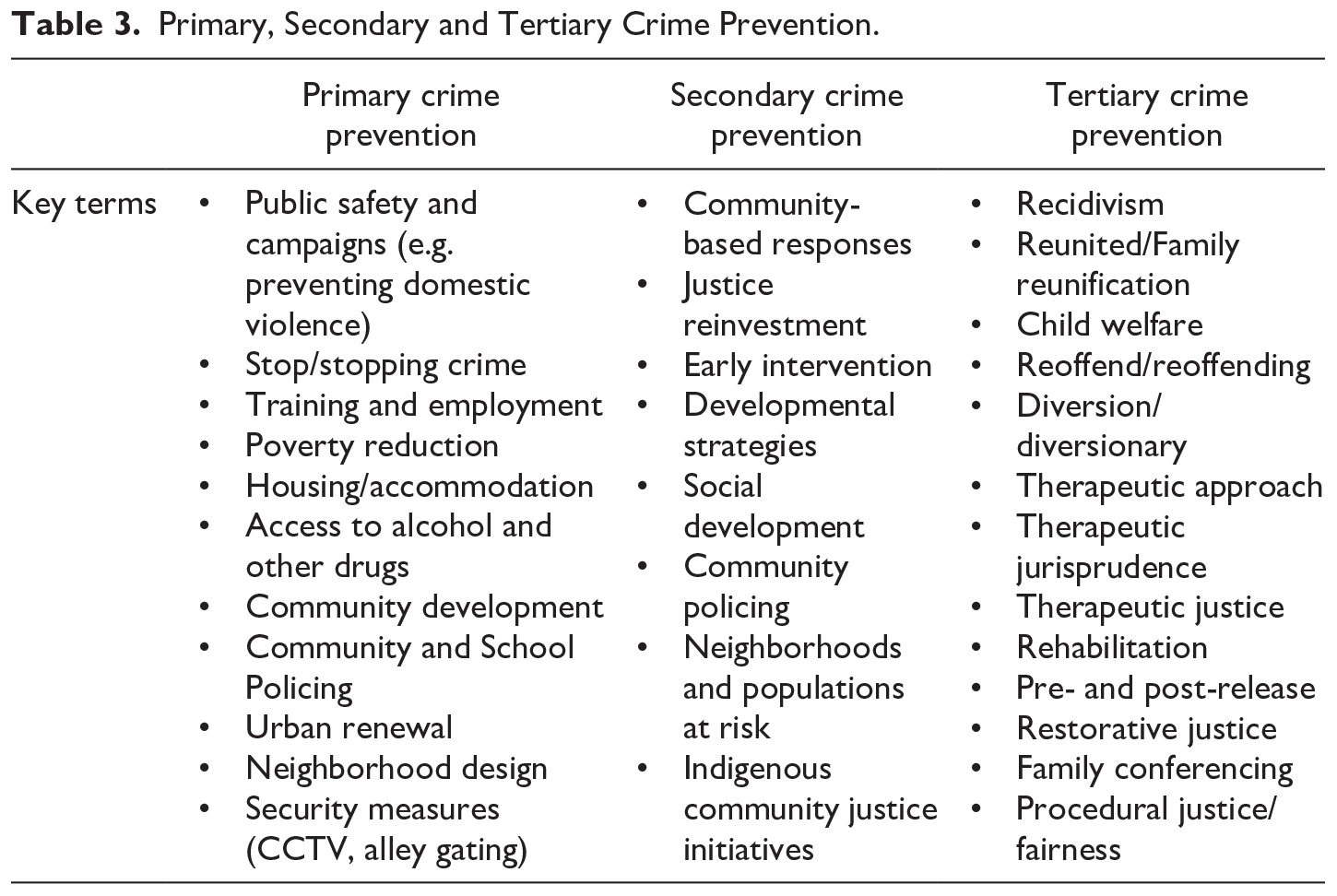
To examine the extent to which justice sector policies focus on crime prevention, we built upon the three types of crime prevention previously identified, listed key terms, and examples of strategies associated with each type (see Table 3). Under tertiary prevention, we included “suppression” to account for the role of law enforcement (i.e., deterrence through caution or threats of arrest/incarceration and detention) as well as “rehabilitation” for offenders (Abt, 2017).
Primary, Secondary and Tertiary Crime Prevention.
In analyzing the approach taken within policies, we will utilize Bacchi’s (1999) critical constructivist ‘what’s the problem?’ approach which distinguishes problems from their “representation” within policy debates and policy. The issue lies in not who is at the policy making table and who gets to make their claims heard, but the way in which discourses may shape the representation of problems and solutions and be reflected in policies.
Methods
Stage 1: Qualitative Thematic Document Analysis
This paper draws on data from qualitative thematic document analysis (see Baum et al., 2018 for details). The policy analysis involved a systematic procedure for collecting the appropriate policy documents (Bowen, 2009), and reading, coding, synthesizing, theming, and theorizing about the data (Corbin & Strauss, 2008; Liamputtong & Ezzy, 2006). Current strategic policy, selected current legislative documents, and the most recent annual report from all criminal justice sector departments in all nine federal state and territory governments were collected between March and September 2016. One hundred and forty-one justice documents were collected, which spanned current legislation dated 1900 to 2016 to current policies spanning 2010 to 2022. To be considered strategic policy, the documents needed to include the goals, objectives, and strategies of a relevant department regarding a specific area of policy responsibility. This criterion excluded documents such as operational guidelines and technical descriptions of sectoral processes. Legislation was only included in instances where it addressed an area of sectoral responsibility for which there was no strategic policy. A list of all of the legislation and policies included in our analysis is in Online Appendix A. We understood the criminal justice sector as incorporating the functions of the Department of Justice/Attorney General, courts, policing, and corrections. However, many policies were cross-departmental, for example, the Mingu-Ghadaba Koori Inclusion Action Plan (Victorian Government, 2012).
For consideration of the social determinants of health within policies, a detailed coding framework (Baum et al., 2018) and NVivo 11 software assisted the analysis. Key words associated with social determinants of health were considered (e.g., social exclusion, housing, employment, education, built or natural environment, transport, welfare systems). The coding framework guided examination of the framing of each document, its goals, objectives, strategies, and the values that were articulated throughout. In particular, the coding focused on analyzing how and whether the content of the documents would progress health, wellbeing, and equity through action on the social determinants of health/crime. Each document was read at least twice by one member of the research team to ensure a high level of familiarity with the content, which facilitated detailed coding. Following the coding process, a document summary was written to explain whether (and if so how) the content of each document aligned with the coding framework, to identify the main themes in the document and to highlight the dominant focus being applied (e.g., a focus on structural change, an emphasis on the need to modify the behaviors of individuals, and/or an emphasis on crime prevention and offender rehabilitation etc.). In the document summary, silences were identified where no aspect of the document could be coded into a category within the framework. In addition, silences were identified when the strategic intent of the objectives and/or proposed strategies of the document did not align with the stated goals, leaving some aspects either completely or partially ignored within the proposed actions. The coding results and document summaries were peer reviewed during regular research team meetings. This facilitated questioning of whether the intent was to strengthen individuals, strengthen communities, improve living and working conditions, or address socioeconomic inequities.
We also considered the policies in terms of a primary, secondary, and tertiary crime prevention framework developed, and created key terms associated with these categories, used in our coding framework (see Table 3). Searches of key words associated with these levels of crime prevention (see Table 3) were undertaken and appropriate passages saved and coded, and the frequency of terms was considered along with the way in which crime prevention strategies were being discussed (or omitted). A crime prevention lens was applied to the findings to determine the extent to which current policy goals, objectives, and strategies aligned with primary, secondary, and tertiary crime prevention. The research project was approved by Flinders University’s Social and Behavioral Research Ethics Committee.
Results
First, we consider our results in terms of the types of crime prevention and the social determinants of health identified within policies. There was limited discussion of social determinants such as housing and employment within policies, and our focus became the levels of crime prevention within and across jurisdictions. We found that policies were primarily focused upon tertiary prevention strategies, with limited discussion of primary and secondary prevention.
Primary Prevention
Social determinants
Factors such as housing, education, and employment were frequently referred to in policies from every jurisdiction. However, rehabilitation for existing offenders/prisoners was the focus rather than structural change to prevent crime. The Australian Capital Territory (ACT) had the most explicit statement on diversion and articulation of levels of crime prevention:
Primary prevention programs are based on early intervention and prevention to respond to issues or problems before they escalate. In the ACT the work of the Child and Family Centres, and specific initiatives like the Family Support Program and Schools as Communities are examples.
ACT Blueprint for Youth Justice in the ACT 2012-22
Intersectoral coordination was frequently recognized as an important strategy and current partnerships were often highlighted throughout policies (e.g., with the health, employment and housing sectors). There were many examples of intersectoral activity occurring between justice and other sectors mainly about tertiary crime prevention (e.g., drug treatment courts work closely with the health sector), with some on secondary crime prevention (e.g., neighborhood justice centers).
Income and poverty
There were limited references to income (and poverty) in the policies—four states and territories did not make any reference to poverty or poverty reduction (ACT, Northern Territory [NT], Queensland [QLD], New South Wales [NSW]), while other states referred to these terms minimally in justice sector (e.g., Victoria) or related policies (e.g., South Australian [SA] Department for Community and Social Inclusion policy). A Tasmanian (TAS) policy contained one of the strongest statements on the social determinants and referred to poverty; however, the recognition of structural disadvantage slipped throughout the policy. The following quote illustrates the drift from structural factors to a focus on individuals:
Tasmanians who come into contact with the corrections system have often experienced intergenerational poverty and unemployment. Many have low levels of education, and may suffer from mental illness and/or substance abuse issues.
Tasmania Breaking the Cycle
Many policies commenced by referring to social factors that lead to crime, framed as issues that the justice sector had to cope with the fallout from. Aside from Victoria, there was rarely discussion of strategic intersectoral efforts involving the justice sector to prevent failure of other systems.
Neighborhood and community initiatives
Only a few policies mentioned neighborhood strategies (28 policies), and WA policies made no reference. Where they did exist, neighborhood strategies focused on the physical environment and surveillance, rather than community development. Justice reinvestment strategies were limited. Neighborhoods were mentioned as follows: (a) problems and the level of perceived safety within neighborhoods, (b) linking offenders to neighborhood centers as part of tertiary crime prevention, or (c) the Neighborhood Watch initiative. Victorian neighborhood crime prevention policy also referred to strengthening communities through building social capital:
Neighbourhood crime prevention . . . focuses on strengthening communities and building social capital and is closely related to the concept of community capacity building. Communities with high levels of trust and resident involvement generally have lower crime levels, higher feelings of safety and are more capable of addressing local crime problems.
Victorian community crime prevention framework
Situational factors leading to crime were referred to in the ACT, NSW, NT, SA and VIC. Strategies most often related to the use of surveillance to deter crime. SA had a strong particularly strong focus on surveillance initiatives through its “WatchSA” program, where police engaged with the community to enhance community preparedness and public safety. Initiatives for structural change, such as urban design initiatives, and/or building code regulation were mentioned less often. Five jurisdictions referred to CPTED: VIC, ACT, NSW, TAS and NT. An example is:
Roper Gulf Regional Council has commenced the “Right Path Projec,” in Ngukurr . . . . this project will see a network of new footpaths and bicycle paths with lighting, as well as parks and gardens installed throughout Ngukurr community.
NT Corrections Annual Report 2014-15
Community development
Eleven policies (in NSW, WA, and VIC) made a direct reference to the term community development, mainly in reference to collaborations with Aboriginal and Torres Strait Islander communities. For example, the Victorian Community Crime Prevention Framework and the Victorian Aboriginal Justice Agreement phase 3:
Support the development of local strategies to address identified crime prevention issues, promote well-planned responses to problems that identify achievable outcomes, build the capability of communities to successfully implement local crime prevention responses, support communities to mobilise resources to implement identified responses.
Victorian community crime prevention framework
Public safety and community policing
Public safety was frequently mentioned (42) across jurisdictions: SA frequently referred to public safety (11 policies), while WA and national policy referred to public safety in only one policy. Public safety was primarily mentioned in relation to policing policies, including community policing efforts and reducing alcohol-related violence. In NSW, for example, the focus was on police patrols, safe driving and reducing anti-social behavior and were measured in terms of drivers exceeding the prescribed concentration of alcohol, injury crashes, and fatal crashes and public perceptions of safety (NSW Police Force 2014–2015 Annual Report). The QLD Police Service annual report (2015–2016) and ACT policing business plan emphasized a collaborative approach to achieving public safety. SA referred to neighborhood policing teams working in partnership with communities in “high risk” neighborhoods. The NT Police Annual Report 2014–2015 referred to community development strategies including those in schools.
Domestic and family violence strategies
Domestic and family violence policies, strategies and programs were evident in all jurisdictions; however, they were often “downstream” approaches and support for victims rather than prevention strategies. Only SA mentioned public safety in relation to addressing domestic and family violence:
Domestic and Family Violence Framework DCS is committed to reducing the incidence of domestic and family violence, and taking a proactive approach in this endeavour. DCS contributes to the vision for a safer community, in line with its public safety mandate.
SA DCS Annual Review 2015-16
Access to alcohol and other drugs
Restricting access to alcohol and other drugs through public sector policies is a proven method of reducing crime (Gray et al., 2000) but was not an essential element of primary crime prevention strategies. There was far greater focus on rehabilitation for offenders with alcohol and other drugs issues than limiting access to alcohol and other drugs. Of policies identified, only a QLD policy specifically mentioned restricting access to alcohol and other drugs for offenders:
The policy aims to: minimise the supply of and access to drugs and alcohol to Queensland offenders through continued efforts in detection, deterrence and intelligence.
Queensland Drug and Alcohol policy
Secondary Crime Prevention
Many of the youth justice initiatives were secondary crime prevention. The NT used a therapeutic framework for “Youth Boot Camps” for young people (aged 12–17 years) considered to be at risk of crime. Queensland’s “Transition to Success” was a good example of a program for young people who had difficulty engaging with mainstream education, training, and employment. The NSW Department of Justice had a partnership with Tribal Warrior, which provides interventions and mentoring to Aboriginal youth in “high risk” housing estates. In NSW, the pilot community policing project targeted Aboriginal youth considered to be at risk of offending. Victoria was using a community development approach in its Aboriginal justice agreement phase 3 to work with Koori youth in grant funded project-based initiatives:
Frontline programs aim to prevent at-risk Koori youth from contact with the criminal justice system, through initiatives that encourage youth to build positive and healthy lives, through leadership, sport, arts, education, training and community development.
Victorian Aboriginal justice agreement phrase 3
Many of the good initiatives in secondary and tertiary crime prevention in this study were pilot projects, projects that had not yet commenced, or were part of “reform” rather than routine strategies or community development initiatives sustained over time. Victoria promoted local, place-based approaches to crime and violence prevention as part of policy (VIC Community Crime Prevention Framework).
Reconciliation Action Plans (RAPs)
While a number of jurisdictions (VIC, ACT, TAS, SA, NSW, WA, and national) had specific Aboriginal justice sector strategies, only four jurisdictions had Reconciliation Action Plans (RAPs) referred to in 11 justice sector policies (SA, WA, VIC, and national policy), with half of these being in SA. Queensland and the NT had few specific justice sector policies relating to Aboriginal and Torres Strait Islanders. One goal of a RAP is “to develop opportunities within your organisation or services to improve socio-economic outcomes for Aboriginal and Torres Strait Islander peoples and communities” (Reconciliation Australia, 2019). One of the aims of the WA RAP was to reduce recidivism among the Aboriginal population and increase employment rates within its justice sector. SA policy stated,
Our Reconciliation Action Plan reflects AGD’s commitment to reconciliation and equal opportunity. It focuses on developing cultural competency, building awareness and supporting local networks, and providing increased opportunities and support to Aboriginal peoples.
SA AGD Annual Report 2014-15
Early intervention
Early intervention was referred to in 40 policies, in all jurisdictions. Often early intervention referred to youth strategies or to addressing domestic and family violence. Aside from the ACT, NSW, TAS, and VIC, there was limited reference made to specific early intervention strategies across policies, although some jurisdictions had “Early Intervention” units, and other states were engaging in early intervention through policing strategies (TAS, NSW). Early intervention was also discussed in relation to child protection, children and youth at risk of offending and domestic violence interventions—WA referred to early intervention in terms of AOD interventions and the need for a cross government approach (with few details on strategy). A greater need for community-based responses was recognized in NSW and TAS, and a NSW pilot project aimed at early intervention with Aboriginal youth had been developed. The ACT’s Blueprint for Youth Justice (2012–2022) stressed the need to address “the underlying causes of offending by children and young people.”
Justice reinvestment
Only SA, NSW, and the ACT referred to justice reinvestment. NSW had the first justice reinvestment project in Australia, Maranguka Justice Reinvestment (KPMG, 2018), and was also researching justice reinvestment (NSW DoJ Annual Report 2014–2015). The ACT had a specific Justice Reinvestment Strategy with budgeted activities, although this was not yet articulated within policy, but justice reinvestment theory was mentioned within its BluePrint for Youth Justice in the ACT. SA referred to the intention to deliver two justice reinvestment projects (SA AGD Annual Report 2014–2015):
Justice reinvestment, funded in the 2014-15 budget, is about developing a smarter, more cost-effective approach to improving criminal justice outcomes by reducing crime, improving public safety and strengthening communities.
ACT Justice Investment Strategy
Tertiary Crime Prevention
Therapeutic jurisprudence
The extent to which states referred to “therapeutic jurisprudence” (Australian Institute of Judicial Administration, 2019) or “therapeutic justice” varied. The term “therapeutic” was referred to in 29 national and state policies; on closer examination, VIC and ACT policies most featured therapeutic jurisprudence strategies and QLD had limited reference to therapeutic approaches. Most commonly, “therapeutic” referred to programs and treatment strategies for adult prisoners (e.g., for drug dependence, mental health), prisoner rehabilitation programs (e.g., violence prevention), diversionary courts, and Aboriginal justice programs. Therapeutic approaches were also used in relation to children involved in child protection orders, and programs for children and young people (e.g., on community and detention orders), but NSW was one of the few states to refer to trauma-based counseling for juvenile justice offenders. Victoria had the most therapeutic justice programs, albeit in limited locations, but adopted a multi-sectoral approach to service provision through its Neighborhood Justice Centers. Programs referred to in policy for which there was demonstrated evidence included the drug treatment courts (e.g., NSW, VIC, SA, WA) and therapeutic communities for prisoners, although some states had defunded drug courts (e.g., NT).
Diversionary approaches
Diversionary approaches were referred to in 45 policies, in all except federal policy. Initiatives covered under diversionary approaches are outlined in Table 4.
Diversionary Approaches.
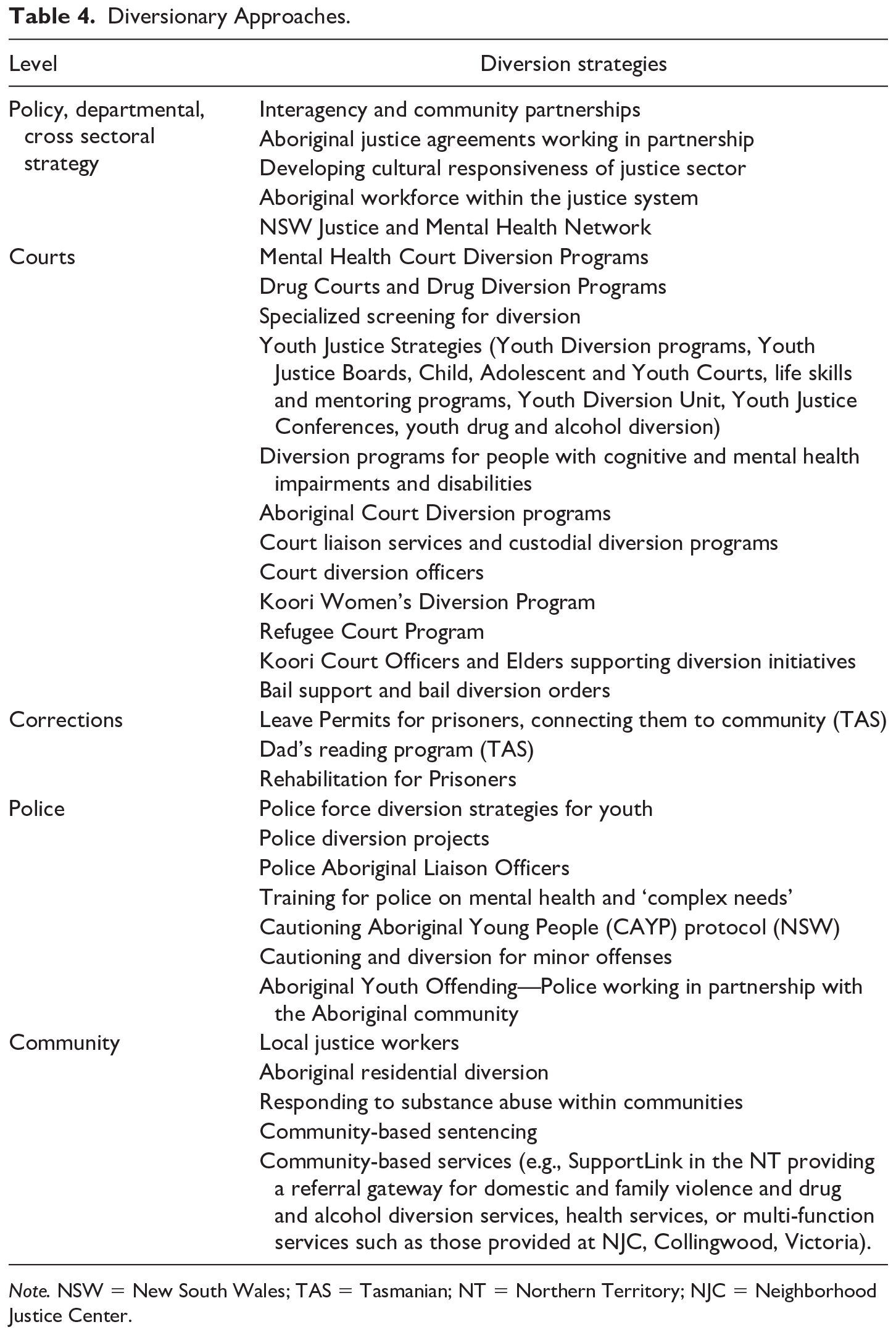
Note. NSW = New South Wales; TAS = Tasmanian; NT = Northern Territory; NJC = Neighborhood Justice Center.
Some policies also recognized provision of appropriate community support to people with intellectual and psychiatric disabilities and acquired brain injury as a diversionary approach (e.g. NSW Attorney General & Justice Disability Plan 2014-16). Others recognized the need for more resources, especially for Aboriginal and Torres Strait Islanders, such as housing, rehabilitation, alcohol, and other drugs and mental health services (e.g., VIC Aboriginal justice agreement).
The best strategic example of addressing forensic mental health issues was the NSW Health Justice and Forensic Mental Health Network (J&FMHn). The NSW J&FMHn focused on diversion and post-release transition programs for those with mental health problems exiting courts or corrections, including an Integrated Care Service and Community Integration Team, Connections program and adolescent and Aboriginal diversion programs. However, the programs’ effectiveness was unclear in terms of recidivism outcomes:
J&FMHn provides a range of specialist services including; primary health, population health, drug & alcohol, mental health, women’s health, dental & oral health, Aboriginal health and haemodialysis. In addition to these specialist services, J&FMHn plays a key role in diverting patients with mental illness away from the courts and into community-based health services, supporting continuity of care in the community post release.
NSW Justice & Forensic Mental Health Network Strategic Plan 2013 to 2017
Victoria had a Neighborhood Justice Division and had established the Neighborhood Justice Center (NJC) (the Victorian multi-functional NJC service at Collingwood) working within a community justice model, a first in Australia (although 1 of 50 such centers internationally) (Government of Victoria, 2019):
The community justice, place-based approach adopted by the NJC in Collingwood provides a multi-jurisdictional court that includes housing, employment assistance, drug, alcohol and mental health treatment services together in one location. Analysis of the current NJC model demonstrates its effectiveness in reducing the economic costs of crime, including direct and indirect costs to the community.
Victorian DJR Annual Report 2015–2016
Recidivism, reoffending, rehabilitation, pre- and post-release
Fifty-eight policies in all jurisdictions referred to “rehabilitation,” 25 policies referred to “recidivism” while the terms “reoffend” or “reoffending” were found in 28 policies, with the strongest focus in NSW, VIC, and SA. Eleven policies referred to “pre-release” strategies, such as pre-release centers and support, although one jurisdiction (ACT) did not refer to “pre-release.” Fifteen policies referred to “post-release” strategies, although national policy and one jurisdiction (ACT) did not refer to this phrase, and other jurisdictions referred to pre-release planning units and centers and services (NSW, NT, TAS, SA, WA). Notably, the state with the highest rate of imprisonment and recidivism for Aboriginal Australians (WA), only mentioned “post-release” in two policies (on just four occasions), and these policies were a drug strategy and plan. None of the national policies referred to recidivism.
Most policies referred to goals on reducing reoffending. References to recidivism sometimes reported on increased rates within jurisdictions (e.g., ACT, NSW), but most states did not report on recidivism rates. In some cases, activity on reducing recidivism was categorized as part of “corrections reform” (NT Corrections Annual Report 2014–2015) rather than as routine. Many of the programs aimed at reducing recidivism had been evaluated in terms of process outcomes (e.g., participation rates) rather than longer term outcomes.
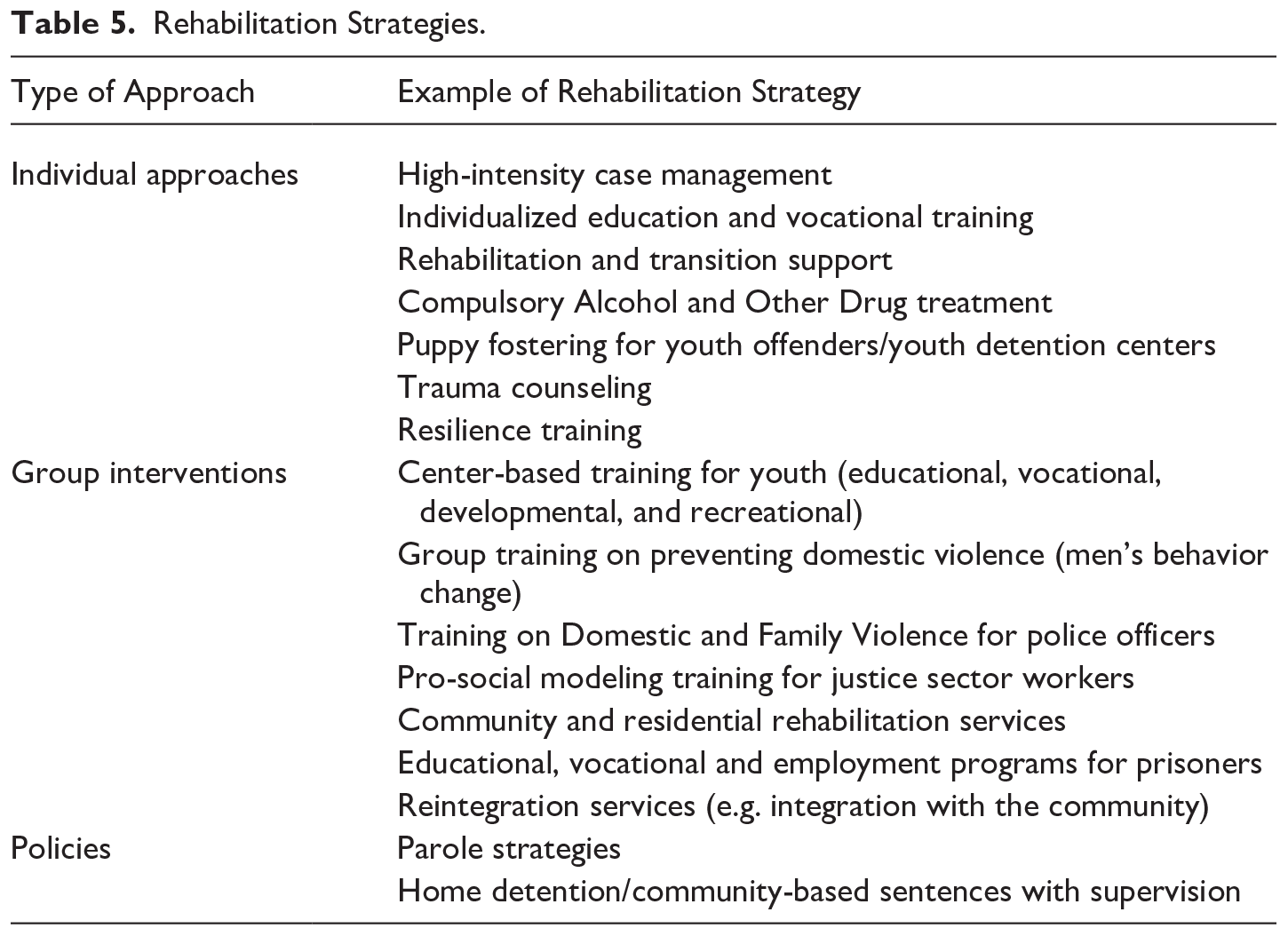
The goal of reducing reoffending through pre- and post-release rehabilitation strategies was frequently mentioned (see Table 5). There was a strong focus on individualized strategies, focused upon education and capacity building, behavioral change and skills building, while others stressed control through means other than imprisonment (e.g., home detention). High-intensity behavioral change and case management interventions and trauma counseling were considered part of reducing recidivism. For example, NSW recognized the high numbers of Aboriginal and Torres Strait Islanders in the criminal justice system and endeavored to offer counseling and maintain connections to offenders’ communities. SA was offering a “boot camp” for young re-offenders (SA Courts CAA Annual Report 2014–2015). A NSW research project evaluated a project for youth on community-based orders involving justice sector caseworkers, modeling positive values, and behaviors (Trotter, 2009) (NSW DoF Multicultural Plan 2015-18). NSW also focussed on individualized assessment to predict and prevent recidivism for violent offenders (NSW DJR Annual Report 2014–2015). Overall, rehabilitation programs were not effective as recidivism rates were not reduced.
Rehabilitation Strategies.
Private and non-government sector
In NSW, SA, WA, and VIC, private and community-based services were being contracted to work on post-release strategies and reducing recidivism (sometimes with a “pay by results” approach). Private corporations were also running prisons and, in some cases, held responsible for recidivism rates through their contracts with government:
The [boot camp] model includes a pay-by-results component for the service provider . . .
SA Courts CAA Annual Report 2014–2015
Additional benefits include . . . a commitment by the Department and Serco to implement performance benchmarks which will provide financial incentives to improve performance in areas such as recidivism rates and program completion by prisoners.
WA Dept of Attorney General 2016
Most policies explicitly referred to collaboration with community groups and non-government organizations to reduce recidivism. Victoria had established an Aboriginal Justice Forum focusing on prevention, early intervention, diversionary strategy, reducing reoffending, and strengthening connection to country and culture. NSW was focusing on supporting multicultural communities (e.g., Sudanese, Arabic, and Vietnamese offenders) through post-release strategies.
Training and employment
Employment was frequently referred to (92 policies), but in different ways including government employment strategies for justice sector staff and initiatives for offenders. The Departments of Justice/AGD and police forces often had an explicit Aboriginal and Torres Strait Islander Employment and Retention Strategy, The WA’s Reconciliation Action Plan (RAP) aimed to increase the number of Aboriginal people employed in the Department of Correctional Services and the cultural competence of all staff.
All jurisdictions (except for WA) made extensive references to employment strategies for offenders. Sometimes programs were offered to youth prior to re-entering the community or as part of intensive case management (e.g., the ReBoot Trial in SA). SA and the NT were the only two jurisdictions to mention specific partnerships with the tertiary education sector to develop educational initiatives for ex-offenders. SA also aimed at system change for female offenders through a collaborative and intersectoral Ministerial workgroup involving the business sector and including employment, higher education, and skills. The NT had a Correctional Industries Advisory Council which supported businesses providing employment to prisoners. There was limited reporting on the success of employment programs; NSW reported on a successful program and the NT reported low participation rates in an employment program:
While participation in employment programs, including Sentenced to a Job is subject to eligibility, there were major disruptions during the transition to the new DCC and slow business economy in Alice Springs, resulting in low numbers of prisoners’ participation in employment programs.
NT Corrections Annual Report 2014–2015
While fines and cautionary approaches are part of tertiary crime prevention, it was recognized in NT policy that non-payment of fines may lead to other issues with the justice sector, losing access to a driver’s license and ultimately employment. One employment strategy in the NT tackled this issue by ensuring that those in the program paid fines and commenced driver’s license training.
Homelessness, housing, and accommodation
Housing and accommodation were referred to frequently (70 policies). Unstable housing and its impact upon reoffending was best articulated in the Victorian Aboriginal Justice Agreement Phase 3. However, notably, pre- and post-release strategies rarely focused upon homelessness or housing. However, temporary or diversionary supported accommodation was sometimes provided during transition (e.g., NT, ACT, NSW, VIC) or for those who had not yet been sentenced (e.g., SA), or linking people to housing occurred (e.g., VIC, QLD), but there was little reference to strategies for working with the housing sector to ensure ongoing stable housing, except in Victoria. However, some partnerships were being developed for housing offenders and ex-prisoners (e.g., SA, TAS, VIC), for example, the SA Integrated Housing Exits Program aimed to assess housing for those with a prison sentence under 12 months. New South Wales policy referred to a long-term accommodation support program as well as the Housing and Accommodation Support Initiative (HASI) which provided support for offenders with mental health issues leaving correctional facilities. Housing was also mentioned in strategies for women and children who were victims of domestic and family violence (e.g., ACT). Notably, WA policies made very limited reference to accommodation strategies for ex-prisoners, although a case work approach was taken in a pilot project for Aboriginal families (Strong Families Collaborative Case Management).
Five jurisdictional policies noted problems with access to housing. These included NT which noted a barrier to a case management program for ex-offenders was the severe shortage of accommodation, VIC noted the shortage of housing for Koori offenders, NSW noted calls to the Bail Assistance Line were frequently seeking assistance with accommodation, and TAS policy noted the severe shortage in housing for ex-prisoners and parolees and had worked with Housing Tasmania to ensure that exiting prisoners were on their priority list for housing.
Child welfare, family reunification, and family conferencing
We found little reference to child development or parenting programs as a method of reducing crime and intergenerational incarceration, or support for children of offenders. Some policies recognized the role of families in promoting rehabilitation, particularly for young offenders. However, there was limited reference made to “child welfare” goals or outcomes in any of the policies, except for within specific relevant legislation (e.g., Victorian Government’s Children Youth and Families Act, 2005; WA Government’s Young Offenders Act, 1994; Commonwealth Government’s Family Law Act, 1975; NSW Government’s Child Welfare Act, 1939). In addition, searches for the terms “reunified” or “family reunification” did not yield results in any of the policies. These results appear significant given that, internationally, diversionary strategies, and courts, such as drug treatment courts/children’s courts, often have child welfare (Gifford et al., 2014), and family reunification (Harwin et al., 2013) as goals. There was only one reference to family conferencing as part of a youth justice strategy (ACT). NSW and TAS were among the few jurisdictions that highlighted the parental role of offenders and discussed child welfare outcomes and intergenerational offending. ACT and NSW policy referred to collaboration with other services to support children of offenders’ families.
This plan will . . . include measures such as Family Group Conferencing and the embedding of a family centred approach at Bimberi Youth Justice Centre. Family engagement needs to sit across all services providers (both government and non-government).
ACT Blueprint for Youth Justice in the ACT 2012–2022
Restorative justice
There were just 17 policies that referred to restorative justice approaches, and of these 9 were in the ACT, where they were most developed, followed by QLD and NSW. WA and federal policy did not refer to restorative justice approaches, and Victorian policy only stated an intention to explore these approaches.
Procedural fairness
Only 10 policies referred to procedural fairness, mainly policies referring to policing and complaints or in legislation, but NT, TAS, QLD made no reference to procedural fairness in any policies. Limited focus on procedural justice was salient given that this is considered important for trust within the justice system, and trust is a crucial issue for Aboriginal and Torres Strait Islanders due to institutional racism, a history of negative experiences within and failures of the justice system.
Discussion
Our discussion first considers the differences and similarities between justice sector literature and research and the content of the policies examined. We also consider why these similarities and differences may exist, along their consequences. We also suggest what should be done to ensure a greater focus on primary and secondary crime prevention and recidivism outcomes. We use the following lenses: problem representation and the presence and absence of issues; current neo-liberal trends within the justice sector, and an alternative human rights framework, integral to the social determinants of Indigenous health.
Consistency and Mismatches With Current Literature and Research
We identified a number of “silences” (Bacchi, 1999) in the policies in terms of the representations of problems and strategies. These included limited reference to primary crime prevention or measures addressing social determinants of incarceration such as housing, employment, income and poverty reduction; and very limited attention on building positive social capital, procedural justice, or accountability and monitoring of strategies (e.g., recidivism rates, housing stability, and employment rates of ex-offenders). In particular, the relationships between housing, employment, and welfare strategies of government and incarceration rates were not featured. The vicious cycle between child protection issues, placement in out of home care for children and youth, offending, and imprisonment (particularly for Aboriginal and Torres Strait Islanders) (Segal et al., 2019) was not addressed through policy.
While recidivism and funding spent on prisons in Australia has increased, there was a notable silence regarding the possible determinants of this within policy documents. Individualized treatment programs were seen as the solution (Government of Western Australia, 2014), rather than addressing underlying social and economic factors.
The high rates of incarceration for Aboriginal and Torres Strait Islander populations (especially youth) were problematised in some jurisdictions, and several specific crime prevention strategies including community development strategies in Victoria were evident as a response. The Reconciliation Action Plans appeared to be a vehicle for focusing on issues such as Indigenous employment rates in the justice sector and recidivism rates (while not leading to reduction of these rates, but not all jurisdictions had developed these).
Most crime prevention strategies were geared toward tertiary prevention strategies such as diversionary courts and rehabilitation programs for offenders. In all Australian jurisdictions, the challenge of preventing crime (as a policy problem) was mainly conceived as one of changing the behaviors of “flawed” individuals already in the criminal justice system, thereby leading to a predominant focus on tertiary crime prevention strategies rather than primary or secondary crime prevention. In addition, tertiary crime prevention focused on short-term rehabilitation support post-release and diversionary strategies. Some of these strategies aimed at reducing recidivism were thwarted by lack of access to social determinants (e.g., housing). The focus on problematic individuals (and conditions, such as mental health) rather than social conditions contributing to crime was generally consistent with our previous research where we found that health policy has shifted away from a focus on the social determinants of health (Fisher et al., 2016).
There was largely consistency between the current justice sector literature and our policy analysis—in the past there was a much stronger focus on primary crime prevention and the three levels of crime prevention (Brantingham & Faust, 1976). The focus on tertiary crime prevention is consistent with evidence that funding is shifting away from social determinants (such as education and housing) to prison spending in some states of Australia (Millar & Vedelago, 2019).
Few jurisdictions specifically referred to therapeutic jurisprudence, which provides the theoretical background to diversionary courts. The ACT and Victoria appeared to be ahead when it came to therapeutic justice and diversionary measures. However, they also stood out in terms of primary crime prevention strategies, including those that considered neighborhood strategies. Lower increases in imprisonment in Tasmania have been explained by progressive approaches taken by the justice sector (which, importantly, have bipartisan support). These include mental health courts and drug diversion, policing that diverts youth and responds to domestic and family violence, a lack of punitive “law and order” political discourse, as well as rehabilitation, appropriate training and recruitment of those working in the sector, and “leave permits” for prisoners (geared toward contributing to the community (White, 2015). Tasmania was one of the few jurisdictions to refer to prisoners as parents and have a “storybooks Dad” program, where fathers who were incarcerated could read to their children (White, 2015). However, this jurisdiction also has among the highest spending per prisoner—and very small numbers imprisoned (500) when compared to other states (White, 2015). Also noteworthy is one main prison site (with 3 levels of security on 1 site), and the fact that prisons are publicly owned (White, 2015), both factors making intersectoral collaboration with other policy sectors easier.
This disparity across jurisdictions in types of crime preventions, and levels of increases in incarceration rates, suggests policy incoherence and issues with the state/commonwealth policy divide raised by previous research (Battams & Baum, 2010; Fisher et al., 2016). It is also consistent with the findings of Tubex et al. (2016) who attribute these differences in incarceration rates to the different penal cultures; trends regarding political responses to social, economic and cultural changes; and differences in judicial practices.
Consistent with previous findings (Heseltine et al., 2011; Howells et al., 2004) we found that there was limited reporting on the results of diversionary approaches and their impact upon recidivism and other social outcomes. More outcome evaluation of programs aimed at preventing crime and reducing recidivism, and greater transparency on recidivism rates through regular monitoring and reporting (including in annual reports of justice departments) is required.
Factors Explaining the Current Situation
An important contributing factor to a shift away from primary and secondary crime prevention toward tertiary crime prevention in policy is Australian public discourse on a perceived need to be “tough on crime” and embrace of this approach by politicians (Millar & Vedelago, 2019; Tubex et al., 2016). The politicization of justice sector policies (Tubex et al., 2016), and public perceptions about community safety—which can mismatch reality (Davis & Dossetor, 2010)—have had an influence on criminal justice policies and reforms and their increasing punitiveness (Tubex et al., 2016).
Public spending on prisons has also led to less spending on other areas within the justice system, in particular policing and the courts (Bushnell, 2019). While spending on policing is higher than spending on prisons, prison spending is increasing (as a percentage increase of money spent) at a faster rate than spending on policing (Bushnell, 2019).
An alternative to the public and political discourse on the need to be “tough on crime” would be the adoption of a more compassionate, human rights based discourse on imprisonment and recidivism, particularly when it comes to Aboriginal and Torres Strait Islanders who have the worst incarcerations rates in the world, and for people with mental health conditions and disabilities who are over-represented in our prison system. In this study, imprisonment and recidivism rates were not framed within a human rights discourse within policies
Implications
Consistent with neo-liberalism and worldwide strategies of contracting out risk beyond government (Dean, 1999), the prison system is increasingly being privatized in Australia. Multinational corporations such as Serco, Broadspectrum, G4S and GEO Group run prisons and prison services, and Serco have just been granted the contract for remand centers in SA (Washington, 2019). Some of these same services are also providing security services within detention centers and hospitals, for example on mental health wards.
This privatization has implications for recidivism, as private providers are being made responsible for recidivism outcomes and yet may have a perverse incentive to keep people within prisons. Private providers are not well placed to engage in intersectoral collaboration with other sectors (e.g., the mental health or housing sectors) or even with other partners in their own sectors (a myriad of non-governmental organizations [NGOs] receiving services from the justice sector). There needs to be a “coordination function” for intersectoral collaboration and better governance and accountability mechanisms within the increasingly privatized systems.
There has been concern for the safety, effectiveness, and human rights issues within private prisons, both in Australia (Australian Associated Press, 2019) and in the United States (Laughland, 2016). Queensland has recently announced an end to private prisons following a damning report on the state’s two privately run prisons (Australian Associated Press, 2019). In the United States, under Obama’s presidency, policy shifted to cease contracting out federal prisons to private providers, as private prisons were found to be less safe and effective than federally run prisons; however, this policy has more recently been overturned (Zapotosky, 2017). In addition, human rights issues were concerns as it was discovered that “low risk” inmates at private prisons were nine times more likely to be placed on lockdown and put in solitary confinement than others in the federal system (Laughland, 2016).
Similar concerns have been raised about human rights abuses and placement in solitary confinement within publicly run youth detention centers in Australia. The resultant Royal Commission (Australian Government, 2017) found that youth detention centers were not fit for accommodating or rehabilitating children or young people, and that children were subject to “verbal abuse, physical control and humiliation, including being denied access to basic human needs such as water, food and the use of toilets”). The Commission recommended that the age of criminal responsibility be raised to 12 years old and that children under 14 only be imprisoned for serious crimes (Australian Government, 2017). Australian law in all jurisdictions still enables the imprisonment of children as young as 10 years old (although ACT has just agreed to raise the age of criminal responsibility to 14 years), a subject of advocacy at the United Nations Human Rights Council in Geneva (Hoosan, 2019).
Lack of public housing and transition support resulting in homelessness is a driver of recidivism; however, there is evidence of community resistance to providing ex-prisoners with appropriate public housing which can be a barrier to doing so (Nielson, 2018; Willis, 2018). An international review has similarly demonstrated the punitive approach taken to supporting families and children in Australia (child protection rather than family support model) and lack of preventive services to families (Nett et al., 2012).
Community attitudes and the politicization of the justice sector must change if we are to affect the increasing punitiveness of justice (and related) sector policies. Studies have found that perceptions of crime levels, education, and reliance on tabloid/commercial media for news and information is linked to punitive attitudes (Spiranovic et al., 2012). Punitiveness is also associated with some community members perceptions about Indigenous Australians (Brookman & Wiener, 2015).
What Needs to Happen?
Keeping people out of prison is good for health and the justice sector has a key role to play in primary crime prevention, as well as health and community sector policies and services that may impact on the justice sector. A greater focus on primary crime prevention is required, especially for child development and domestic and family violence, better funding for education, housing and mental health services, and neighborhood policies and strategies which include community development to build positive social capital. The adoption of a human rights discourse on incarceration, recidivism and imprisonment rates is necessary, especially in relation to young Aboriginal and Torres Strait Islanders. Tailored rehabilitation for Aboriginal and Torres Strait Islander offenders is also required.
A greater focus on the parental role of offenders, especially for Indigenous communities where connection to families/communities is so important, is necessary. The need to focus on child and parent sensitive policy and practice in the alcohol and other drugs sector for child wellbeing and protection has previously been highlighted (Battams et al., 2010; Battams & Roche, 2011), and a similar approach could be taken in the justice sector to prevent intergenerational disadvantage. In addition, a greater focus on prevention in the child wellbeing and protection sector (e.g., greater investment in parenting programs) is necessary, as Australia takes a punitive approach in this sector (Nett et al., 2012). Such policies and programs would be consistent with a preventive and strengths-based approach to working with families and communities.
Provision of adequate community based mental health treatment services is also an important part of primary crime prevention, while mental health courts are an important tertiary prevention strategy. While this research indicated some good examples within states of links between the mental health and justice sectors (e.g., NSW, VIC), there is a greater need for more strategic approaches to mental health across jurisdictions.
Better funded strategic intersectoral collaboration, with specific coordination roles to encourage working across sectors and cross sectoral accountability mechanisms will be important. Introducing Indigenous incarceration and recidivism rates into “Closing the Gap” goals and monitoring processes could be one national accountability mechanism, especially because these relate to other goals being monitored. For example, incarceration has a negative impact on employment and health outcomes (Reeve & Bradford, 2014). There is greater scope for the justice sector to work with other sectors to ensure the appropriate provision of resources such as public housing or justice reinvestment strategies (that may involve the development of social capital). Neighborhood justice centers and diversionary approaches to mental health and alcohol and other drugs (Mental Health Tribunals and Family/Drug Treatment Courts) are beneficial models of tertiary crime prevention that could be better supported and evaluated in terms of their capacity to prevent future crime.
Our research also suggests that we need to not only focus on policies and programs that might work, but also the process by which justice sector policies have become politicized and more punitive, along with community attitudes that have contributed to this situation. Strategies for providing accurate information to—and educating the public about—crime and its prevention, and confronting racism, would help to address the current situation of high and growing incarceration rates. If all such changes were instituted, then incarceration and recidivism rates would likely reduce, and health and wellbeing improved.
Conclusion
Our analysis of Australian justice sector policies found that most crime prevention strategies were geared toward tertiary prevention strategies such as diversionary courts and rehabilitation programs. There is very little emphasis on primary and secondary crime prevention strategies in Australia. There is scant reference to measures addressing social determinants of incarceration such as housing, employment, income and poverty reduction and building positive social capital, along with procedural justice, justice reinvestment, and accountability and monitoring of justice sector strategies. A greater focus on primary crime prevention through whole of government strategies is required, and better recognition of the links between housing, employment, justice, child wellbeing and protection, health and welfare outcomes. A primary prevention approach in “other sectors” (e.g., child protection and mental health) is also required. Rethinking “recidivism” as the problem behind imprisonment rates—to be addressed by private providers—is necessary. Heavy investment in private providers has failed to achieve the justice sector outcomes desired, with incarceration rates continuing to increase. As there is a strong punitive focus in “tough on crime” public debates, a shift to a human rights discourse on incarceration is also essential to address the high and growing rates of Aboriginal and Torres Strait Islanders incarcerated in Australia.
Supplemental Material
sj-docx-1-cjp-10.1177_0887403420979178 – Supplemental material for Reducing Incarceration Rates in Australia Through Primary, Secondary, and Tertiary Crime Prevention
Supplemental material, sj-docx-1-cjp-10.1177_0887403420979178 for Reducing Incarceration Rates in Australia Through Primary, Secondary, and Tertiary Crime Prevention by Samantha Battams, Toni Delany-Crowe, Matthew Fisher, Lester Wright, Michael McGreevy, Dennis McDermott and Fran Baum in Criminal Justice Policy Review
Footnotes
Declaration of Conflicting Interests
The author(s) declared no potential conflicts of interest with respect to the research, authorship, and/or publication of this article.
Funding
The author(s) disclosed receipt of the following financial support for the research, authorship, and/or publication of this article: This research was funded by an Australian Research Council (ARC) (grant: DP160100244) between 2016 and 2019.
Supplemental Material
Supplemental material for this article is available online.
Authors’ Note
We wish to dedicate this paper to the memory of our late and esteemed colleague, Professor Dennis McDermott, who was committed to social justice and reducing the high incarcerations rates of Aboriginal and Torres Strait Islander people.

Author Biographies
References
Supplementary Material
Please find the following supplemental material available below.
For Open Access articles published under a Creative Commons License, all supplemental material carries the same license as the article it is associated with.
For non-Open Access articles published, all supplemental material carries a non-exclusive license, and permission requests for re-use of supplemental material or any part of supplemental material shall be sent directly to the copyright owner as specified in the copyright notice associated with the article.
