



Abstract
Given contemporary efforts to prevent adolescents from experiencing the negative consequences of incarceration, it is critical to assess the impact of juvenile transfer. Relative to a potential deterrent effect on the recidivism of transferred juveniles, empirical evidence regarding their institutional experience is lacking. Drawing on record data from those admitted to adult and juvenile systems in a Midwestern state from 2011 to 2014, this study compared the correctional experience of teenage males housed in an adult prison with young adults and teenagers housed in juvenile residential facilities. After controlling for individual profiles using the propensity score analysis, youth in adult facilities had similar or more access to institutional programs but also exhibited relatively higher involvement in misconduct based on official reports. The implications for correctional policies and practices for transferred and incarcerated youth are discussed.
Introduction
All U.S. states maintain mechanisms to waive youth from juvenile court jurisdiction to criminal courts. At its peak during the 1990s, more than half of transferred and convicted youth were sentenced to terms of incarceration (Brown & Langan, 1998). Although an increasing number of states are reducing the use of transfer, most currently continue to allow teenage offenders to be processed and housed in adult facilities (Furdella & Puzzanchera, 2015). While research on the juvenile transfer’s deterrent effect has shown a null or mixed effect on recidivism (Bishop & Frazier, 2000; Fagan, 1996; Jensen & Metsger, 1994; McGowan et al., 2007), an increasing number of researchers have studied the factors that condition the impact of transfer (e.g., Augustyn & McGloin, 2018; Loughran et al., 2010; Trulson et al., 2020). Inconclusive findings about the effect of transfer may be due to heterogeneous conditions or sanctions that youth experience in the correctional system after sentencing (Zane et al., 2016). This suggests that gaps remain in our understanding of adult confinement conditions experienced by transferred and incarcerated youths, and it is important to address relevant research questions in a variety of sites and samples.
The justice systems for adults and juveniles are governed by distinct models of justice in the United States. Comparative studies indicate that, consistent with its founding principles, the juvenile justice system provides a more treatment-oriented and positive environment to facilitate behavioral change in the correctional stage. On the contrary, adult correctional facilities are generally perceived to be relatively punitive and unsafe by youths (Bishop et al., 1998; Forst et al., 1989; Lane et al., 2002). Results are inconclusive in terms of program participation; some scholars have found greater program availability in adult facilities (Fagan & Kupchik, 2011; Kupchik, 2007), while juveniles in adult prisons have reported a lack of work programs, counseling services, and medical resources in others (Ng et al., 2012). Scholars have questioned whether the adult correctional system could have detrimental effects because it lacks appropriate services and support, exposes youth to higher rates of violence, and isolates youths from their natural peer groups (Griffin et al., 1998).
The research on juvenile transfer is moving beyond simply considering a deterrent effect and toward examining the conditioning variables that might generate heterogeneous findings. This study addresses a portion of this gap in the research by assessing what happens to juveniles after they are transferred and incarcerated—relative to others who have remained in the juvenile justice system and slightly older early adults who are also incarcerated. Two domains of institutional experience are examined: treatment program participation and institutional misbehavior. The study has benefited from the unique opportunity to analyze a sample of teenage males incarcerated in adult prisons and make comparisons across systems. Using propensity score weighting and integrative data analysis approaches, the experiences of youth housed in adult facilities are assessed and interpreted in the context of similarly situated samples with comparable characteristics.
Review of Literature
Models of Justice and Incarceration of Juvenile Offenders
Differences in confinement conditions in correctional facilities can be understood in the models of justice that govern the juvenile and adult justice systems. Owing to progressive era reformers’ efforts and cultural shifts in the 19th century, the juvenile justice system relies on a separate model of justice that places greater emphasis on lenient punishment and rehabilitation compared to the criminal justice model (Bernard & Kurlychek, 2010). Transfer is the point at which the juvenile and adult systems intersect. The assumptions of immaturity and reduced culpability associated with age are relaxed in the transfer decision because there is a perceived need for retribution and incapacitation. This process produces what Kupchik (2006) describes as a hybrid “sequential model of justice” in the adult court (p. 2). In his work, the handling of transferred cases follows the criminal justice model in the initial proceedings, whereas consideration of reduced blame and immaturity, which constitutes the traditional juvenile justice approach, appears during the sentencing phase. Still, it is uncertain whether the same phenomenon can be found in the correctional context, where adult prisons fully impose the criminal justice orientation on transferred youths.
According to the principles of juvenile justice, youth facilities should be more therapeutic compared to adult prisons (Bernard & Kurlychek, 2010). Nonetheless, the degree of punitiveness is not clearly defined between these two systems; a continuum of punitiveness exists across models of justice, especially if the deep-end of the juvenile system is the point of comparison. Incarceration is the last resort for most serious juvenile offenders, and residential facilities on the deep-end of the juvenile justice system are likely to be more restrictive compared to community-based institutions targeting low-risk adults. In a similar vein, juvenile residential facilities are not completely immune from the risk of removing youths from their communities and severing ties with prosocial people they might have in their lives.
Likewise, there are several reasons that the models of justice could overlap across systems in practice. It is possible that certain juvenile delinquents require stricter structure in the correctional facility while nonviolent, first-time adult offenders respond better to a less-restrictive environment. A deep-end juvenile facility may maintain tighter security compared to a low-risk institution for adults. Also, organizational contexts can shape the implementation of stated goals. Justice system officials’ perceptions of offenders, budget allocations, and orientations of agency and facility leadership can affect the actual implementation of those declared aims. Recent studies show that youths incarcerated in adult prisons are not disadvantaged in obtaining access to programs (Fagan & Kupchik, 2011; Kupchik, 2007), which reflects some blending of juvenile justice priorities in the adult system.
The transfer system was introduced as part of the measures to increase punishment of serious juvenile offenders by sending them into the adult system (Feld, 2017). The consequence was the creation of a juvenile system within the adult system. Coupled with the recent trend to implement statewide reforms to expand rehabilitation in criminal justice systems, the correctional conditions for youths in the adult system are expected to demonstrate mixed models of justice (i.e., a hybrid of juvenile and adult justice models). However, this creates the need to investigate the extent to which this has brought about changes to actual correctional practices and whether such improvements in services within adult prisons are impacting incarcerated juveniles.
Experiences of Youths in Juvenile and Adult Correctional Facilities
Incarceration in an adult correctional facility is the most serious outcome a transferred youth can face. The Juvenile Justice and Delinquency Prevention Act (JJDPA) of 1974 requires that juveniles are separated by sight and sound from adult offenders at all stages of the criminal justice process. However, the extent of compliance varies by state and youth transferred to adult courts do not fall under the protection of this requirement. Compliance has been monitored more carefully following the 2018 reauthorization of the JJPDA act. Still, the reauthorized act protects juveniles who are treated as adults while waiting for trial or other legal processes; transferred, waived, or certified juveniles who are incarcerated postsentencing are not covered by the requirement (Office of Juvenile Justice and Delinquency Prevention [OJJDP], 2019). Moreover, the use of separate housing is merely one of numerous domains that can affect incarcerated youths’ institutional experience. A relatively small body of literature directly compares the correctional experience of youths within adult correctional facilities. These studies show that the conditions faced by youths in adult prisons differ from those in the juvenile facilities in terms of institutional settings, treatment programs and resources, and institutional misbehavior and safety (Bishop et al., 1998; Fagan & Kupchik, 2011; Forst et al., 1989; Kupchik, 2007; Lane et al., 2002).
Research on overall conditions of juvenile and adult correctional facilities has typically shown that youths in juvenile facilities report more positive experiences compared to their counterparts in adult facilities. Forst et al. (1989) made the first attempt to directly gauge the perceptions of youth in training schools and adult correctional facilities. Overall, youths in juvenile training schools reported having received greater assistance from the staff, having participated in treatment programs that helped them meet various needs, and having more favorable opinions about the conditions compared to the youths in an adult facility. Bishop and colleagues (1998) took a similar approach and interviewed juveniles who were dispositioned in juvenile courts relative to those who were sentenced in criminal courts as adults in Florida. Youths reported negative perceptions of adult prison by using expressions such as “derisive” or “cynical about my potential for change” (p. 133). Kupchik’s comparative studies used data from a state that implemented a blended approach to incarcerating transferred juveniles. The adult facilities were almost 10 times larger in capacity (more than 1,000 versus approximately 100), had a much greater inmate-staff ratio (17:1 versus 2:1), and did not completely separate teenagers from older inmates (Kupchik, 2007). Self-reporting by youth in the juvenile facility was more positive and thus confirmed previous observations. Juvenile facilities were better at facilitating staff involvement in problem-solving, counseling, decision-making, and goal setting for youths (Kupchik, 2007). Fagan and Kupchik (2011) assessed the experiences in both a relative and absolute sense by using samples from two adjacent states in which similarly aged juveniles can be sent to either juvenile or adult facilities due to the differing ages of criminal responsibility. Youths in adult facilities gave lower ratings for procedural justice and positive interactions compared to the other two types (Fagan & Kupchik, 2011). This review of the relationship between the conditions in each facility and juvenile experiences provides context for our study and guidance for the interpretation of our results.
Research on treatment programs and resources in juvenile and adult correctional systems provides mixed evidence. Lane and colleagues (2002) compared “deep-end” juvenile facilities with more lenient options in the juvenile system in conjunction with adult sanctions in Florida. Respondents perceived the deep-end juvenile programs to be more beneficial compared to both lower-end juvenile programs and adult prisons. The major complaints were related to the lack of programs available for them, negative staff attitudes, and feelings of being unsafe. In contrast, in two studies conducted by Kupchik, adult institutions were rated more highly for service availability. Youth incarcerated in adult facilities reported higher ratings for having access to institutional services; for example, a greater proportion of them were assigned a caseworker, received counseling, and participated in drug treatment in adult facilities (Kupchik, 2007). Likewise, ratings of service availability by far exceeded those of juveniles both in blended juvenile institutions and traditional juvenile institutions (Fagan & Kupchik, 2011). Not losing sight of the idea that juvenile facilities provide a better learning option for teenage offenders, these studies implied that it is possible that treatment and services can mitigate the negative experience in adult facilities.
Behavior management style is another key dimension that distinguishes the two systems. In Bishop and colleagues (1998), youths understood that the main concern of staff members in adult prison was to maintain control and order rather than to be helpful or positive toward them. Youths who experienced both juvenile and adult prisons felt that fear and violence was more prevalent in adult facilities. The youth sample in Fagan and Kupchik (2011)’s study was more likely to feel threatened and in danger in adult facilities. In fact, youths in adult facilities reported higher levels of psychological distress and fear (Fagan & Kupchik, 2011). Lafree (1999) interviewed juvenile violent offenders who were on probation or parole, confined in juvenile facilities, or incarcerated in adult prisons in New Mexico. Disciplinary reports were most prevalent among adult prison respondents; an average of 14.4 reports were filed in the adult system. This number was substantially higher than the prevalence found in the juvenile system (7.8) or among those on juvenile probation (1.9). The most common reasons for disciplinary reports in the juvenile system were assaults and fighting. On the contrary, refusal to obey an order was the most frequent charge in the adult system (Lafree, 1999). It seems that the differential focus in juvenile and adult system is reflected in the disciplinary records; the adult prison’s primary concern is to maintain order, and it is possible that staff members in adult prisons react more harshly to defiant juvenile-related attitudes.
Taken together, these studies support the notion of potentially meaningful differences in correctional experiences between juvenile residential facilities and adult prisons. The evidence shows that juvenile facilities provide more therapeutic environments. Consequently, perceptions toward correctional environments were generally favorable toward juvenile institutions. Nevertheless, in recent comparative works, the evidence was less definite as to whether the conditions are necessarily distinct in juvenile correctional institutions or whether it is possible to provide youths with necessary services in adult institutions. The evidence on how youth respond to the two types of facilities behaviorally is also underdeveloped, and it is unclear whether youth fare appreciably worse in adult facilities in that regard. This study will add to the understanding of youths’ correctional experiences when they are confined in adult prison by using recently collected official data. To that end, we comparatively analyze institutional records of treatment program participation and misconduct, then interpret the findings in the context of this recent research, aiming to promote a broader understanding of the juvenile and adult justice systems’ missions.
Current Study
This study was designed to compare the correctional experiences of youths in both juvenile and adult correctional facilities. The selected research setting allowed us to compare youths in juvenile residential facilities, youths in adult prison, and young adult inmates in adult prison under a single state system. The state maintains mandatory and discretionary judicial transfer laws and blended sentencing, 1 and incarceration in adult facilities is the strictest outcome that can be imposed on transferred youth. The adult system is under the supervision of the state’s Department for Rehabilitation and Correction. At the time of data collection, transferred and incarcerated juveniles were all confined in a single medium-security facility through the Youthful Offender (YO) program. These juveniles were housed in a closed compound that separated them from contact with the general adult population. Treatment programs for the YO groups were selected from within the pool of options that were available for the general adult population.
With this structural context, this study examined whether teenage males in adult prison, after controlling for individual differences based on available measures, had different programming opportunities and exhibited different rates of disciplinary problems compared to adults in prisons or juveniles in youth residential facilities. Informed by the models of justice framework and existing empirical evidence, we expect that youths are less likely to have received any form of treatment or programs that matched their criminogenic needs in adult prison (Hypothesis 1). Similarly, consistent with the well-established inverse relationship between age and misconduct (e.g., Kuanliang et al., 2008; Steiner et al., 2014; Valentine et al., 2015) and the findings about youths’ adjustment and experiences in adult facilities documented in the comparison studies given above, we expect that youths in the adult facilities will have the highest likelihood of recorded misconduct relative to the comparison groups (Hypothesis 2).
Hypothesis 1: After controlling for individual differences, juveniles in adult prison are less likely to have received treatments and programs than adults in adult prisons or juveniles in juvenile facilities.
Hypothesis 2: After controlling for individual differences, juveniles in adult prisons will have higher rates of misconduct than adults in adult prisons or juveniles in juvenile facilities.
Two steps were taken to adequately produce comparative estimates. First, the data for juveniles and adults in the criminal justice system, as well as the juvenile system, were compiled using integrative data analysis. Pooling the data drawn from different existing data sources introduces unique challenges. Integrative data analysis offers a data preparation and analytical framework that allows for a systematic assessment of between-sample differences across data sources. It is distinguishable from a simple data merging in that potential sample-specific heterogeneity is evaluated and addressed, and therefore, this can increase analytical robustness (Curran & Hussong, 2009; Hussong et al., 2013). By combining the data set collected under the systems of a single state during a similar timeframe, possible heterogeneity due to geographic region and history was ruled out. Potential heterogeneity due to measurement was resolved by recoding the variables in a way that maximized conceptual compatibility and by conducting sensitivity analyses (Hussong et al., 2013). Examples include measurements of educational achievement and learning difficulties, which are discussed in the Measures section below.
Second, individual characteristics, such as risk level or demographic traits, were controlled for in the analysis through propensity score weighting for multiple groups (McCaffrey et al., 2013; Ridgeway et al., 2006). Two comparison groups consisting of same-aged individuals in juvenile facilities and young adults in the adult facilities were weighted and compared. Our goal was to comparatively assess the extent to which adult and juvenile institutions addressed criminogenic needs and recorded justice-involved youths’ misconduct. The key strength of this study comes from the data that contained similarly situated samples with generally comparable characteristics.
Method
Data and Sample
The process of integrating the data from the state adult correctional system with the data from the juvenile correctional system is described below. The source for the adult system data was a state-level study concerning the effectiveness of correctional programs. The data included the records of 105,945 inmates admitted to the state prison system (Latessa et al., 2015). Data for juveniles confined in a medium-security institution through the Youthful Offender program were retrieved first (n = 473; aged 15–17 years old), and the young adult inmates between 18 and 24 years old were selected from the same facility (n = 1,512). This group represents the adult inmate population in the immediately adjacent range and similar developmental stage who are confined in the same correctional setting as the incarcerated juveniles. Research indicates that brain development and social maturation continues into young adulthood (Gogtay et al., 2004; Icenogle et al., 2019; Steinberg & Icenogle, 2019); older inmates might be too different in terms of behavior styles and perception of surroundings to make a proper comparison and were thus not included in the sample. Females were rarely processed and incarcerated in adult prisons, and the analytical sample was limited to male youths and young adults. All possible cases of young adults in the same facility were selected to secure enough comparable cases in the propensity score analysis.
The juvenile system data came from a statewide assessment of disproportionate minority contact (DMC) in the juvenile justice system. The correctional system portion of the original DMC data included a stratified, random sample of 1,514 youth selected from a pool of 2,975 youth confined in state residential facilities from 2010 to 2014 (Sullivan et al., 2016). Among 1,514 individuals, 435 cases were selected in the final sample on two grounds: the age range was limited to 15 to 17 years old to match the age of the youths in adult prison; and treatment/program and disciplinary records had to be available. 2 The final sample for each group was youth in adult prison (Youthful Offenders, YO) = 473, young adults (YA) = 1,512, juveniles in juvenile facilities (Juv) = 435, which led to an analytical sample of 2,420 cases. Table 1 illustrates the composition of these three groups. Statistical (in)differences in the distribution of matching covariates and outcome variables across groups are also illustrated in the table. The typical case of teenagers in adult prison (YO) can be described as a moderate-risk non-Hispanic or black youth incarcerated for a violent offense. Comparatively, the young adults had a greater proportion of low-risk, white inmates incarcerated for property- or drug-related offense. Juvenile facility residents in our sample were racial minorities with moderate-risk level committed for a violent offense. These three groups showed contrasts in terms of sentence length, security levels, and offense types (matching covariates) as well as in terms of treatment access and misconduct rates (outcome variables).
Distribution and Statistical Difference in Study Variables Against Youthful offenders (n = 2,420).
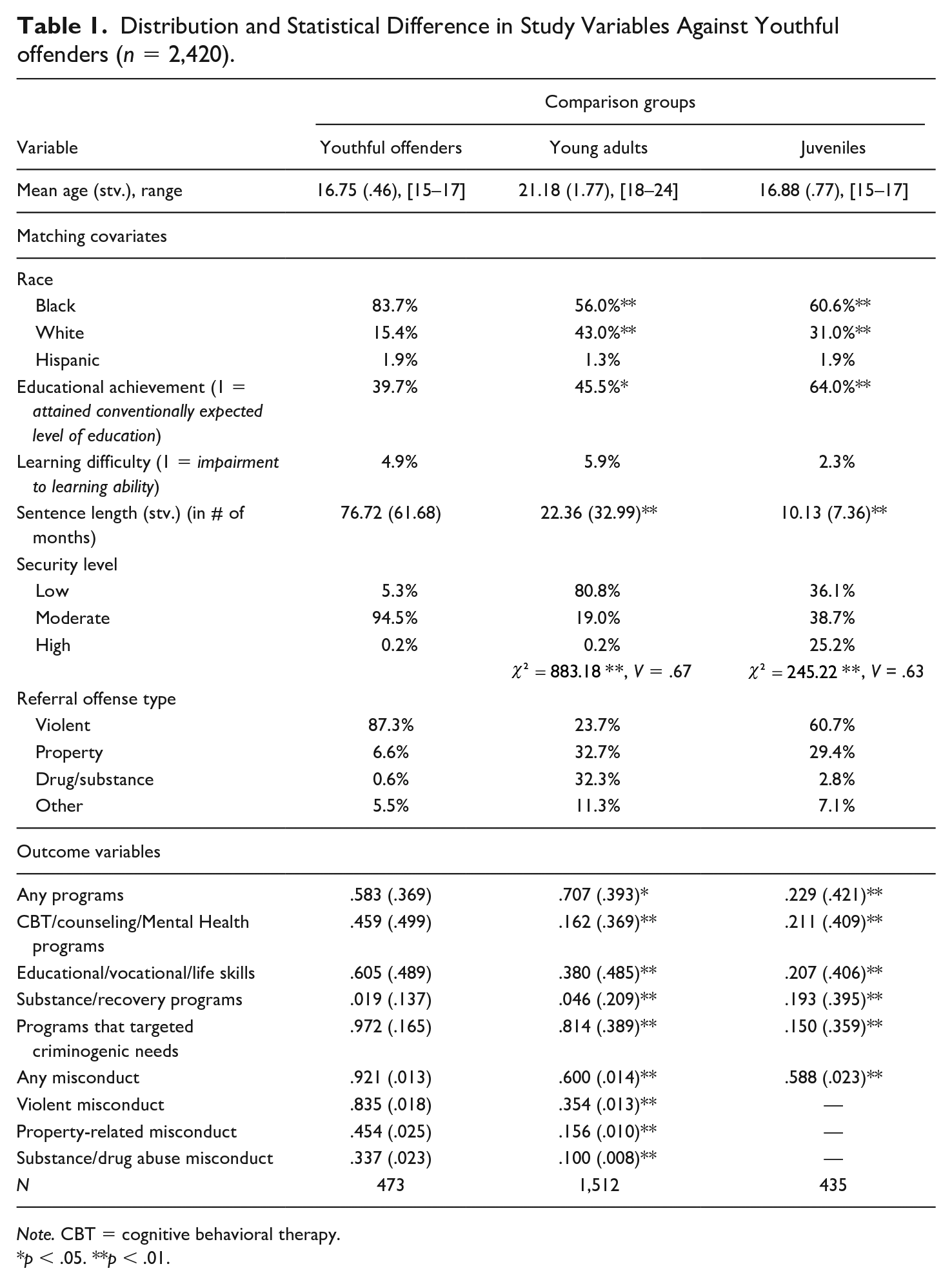
Note. CBT = cognitive behavioral therapy.
p < .05. **p < .01.
Measures
Independent variable: Confinement of youth in adult prisons
The focus of the research is whether the correctional experiences of youth differ in juvenile facilities versus adult prisons, and whether the adult prison setting is experienced differently by young adults and teenage inmates. Based on this notion, two sets of comparisons could be made against the treatment group: (a) teenage inmates (youthful offenders; YO) in adult prison versus young adults in adult prison and (b) teenage inmates in adult prison versus juveniles in juvenile facilities. The treatment condition, teenage inmates in adult prison, was coded as “1” in each subset, while respective comparison groups were coded as “0.”
Outcome variables
Two core dimensions of institutional experience, (a) treatment program access and (b) behavior problems, were used as outcome variables. Research concerning effective correctional intervention suggests that individuals should be assessed on criminogenic needs, and treatment programs should aim to reduce those needs (Andrews & Dowden, 2006; Dowden & Andrews, 1999). Therefore, access to the programs that matched identified criminogenic needs (education/employment, marital/family, associates/social, substance abuse, community functioning, personal, and attitudes) was reviewed. 3 Program referral was measured as the likelihood of participating in several programs: (a) any type of programs listed in (b) to (c); (b) cognitive behavioral therapy (CBT)/counseling/mental health programs; (c) educational/vocational/life skill programs; and (d) substance abuse and recovery programs. The outcome variable was coded as “1” if a case had started or was referred to one or more programs that matched with identified criminogenic needs. Other cases that failed to receive programs appropriate for their criminogenic needs were coded as “0.” It may be useful to additionally examine treatment completion, but such information was available only in the adult data.
The second dimension of the study focused on differences in behavioral problems across institutions. The misconduct variables measured whether youths or young adults was found responsible for committing any disciplinary infraction (Yes = 1, No = 0). Two considerations were made in constructing the measures of misconduct. First, we examine prevalence of recorded misbehavior through the use of dichotomous variables rather than incidence (i.e., frequency). Steiner and Wooldredge (2009b) suggest that prevalence is a useful indicator of prison misconduct that is less biased than incidents. Second, we analyze different types of misconduct, in addition to the general indicator of all types, to account for potentially distinct relationship with covariates (Steiner & Wooldredge, 2013). Combined, the dependent variables capture the prevalence of any, violent, property-related, and drug/alcohol-related rule infractions of teenage males and young adults in adult prison. This approach has been frequently used by previous research on inmate misconduct (e.g., Lugo et al., 2019; Pompoco et al., 2017). We were not able to categorize the types of misbehavior for the juvenile system sample; thus we compare the prevalence of “any” misconduct records for the YO versus juvenile comparison. Although official data of misconduct is not free from limitations (e.g., official records underestimate the prevalence of misconduct compared to self-report data; Steiner & Wooldredge, 2014), we focus on the fact that both adult and juvenile system data sets consistently provided misconduct information based on official records and allowed an effective integration.
Matching covariates
We used several covariates to balance the group differences shown in Table 1 above. Race has been found to be a significant predictor of victimization, misconduct, and access to medical service in correctional facilities (Fagan & Kupchik, 2011; Ng et al., 2012). Therefore, the effect of being black or Hispanic was considered.
Other variables that were not available uniformly across data sets are described below. The set of items that assess the same construct were identified and integrated based on the integrative data analysis framework (Hussong et al., 2013). Educational achievement and learning difficulty are related to the eligibility of certain programs and impact the likelihood of successful completion of services. Educational achievement was measured by an inmate’s attainment (or not) of the level that was conventionally expected at his age. A value of “1” was assigned if a high school diploma or GED was earned at the time of admission for adults and if a youth was at or above the grade level appropriate for his age at admission (0 = not at appropriate education level). Learning difficulty was introduced to capture one’s learning capacity more specifically. If the educational achievement is used to determine appropriate level of educational program, learning ability is related to one’s responsivity to correctional programs and decisions to place one in special-needs programs. An adult was flagged for learning difficulty if the standard reading score was lower than the level of beginning basic literacy, which indicates very limited reading/writing ability; a youth was flagged if he was clinically diagnosed with a learning disorder. 4
Institutional services are allocated differentially depending on the phase of sentence, security level, or offense type. Offense types were categorized into violent, property, drug/alcohol-related offense, and others. Three dummy indicators that identify the first three types of offenders were included in the propensity score models. Due to differences in the range of sanctions available in each system, it is expected that the groups exhibit varying distributions of sentence length. Yet, individuals are managed and classified relatively among their respective group, and it was necessary to capture if one’s sentence length was longer or shorter than what is typical in the group. Raw values were used in the descriptive analysis to illustrate between-group differences and then were converted into z-scores to obtain a standardized length relative to group mean (Adeyemi, 2011). An inmate’s security level determines his physical security requirements, level of supervision, and access to institutional services. Individuals were assigned three ordinal levels of risk: low, medium, and high based on various factors including criminal history, education/employment records, mental/emotional stability, and gang affiliation. 5 Inclusion of these variables was also important for the analysis of misconduct. Rates of rule infractions can be impacted by preprison characteristics and controlling for these was useful for us to rule out the importation factors on misconduct.
Researchers have found that the strength of the social bond to conventional society is related to the likelihood of misconduct in prison (Steiner et al., 2014; Steiner & Wooldredge, 2009a, 2009b). Following this perspective, an indicator of family-related criminogenic needs was included additionally in the propensity score analysis for the misconduct part. Inmates who did not place substantial value on being with his family and the support gained from them were flagged for family-related criminogenic needs at the intake risk assessment (1 = Yes, 0 = No). Their odds of being involved in institutional misbehavior are expected to be higher than those who do not have such needs.
Analytic Plan
This study used propensity score weighting, in which estimated propensity scores were incorporated in the analysis as sampling weights (Hirano & Imbens, 2001). Weighting fits the interest of this study because substantial differences in the characteristics of youths in the adult and juvenile systems were expected, and estimates must therefore be adjusted for those pre-existing differences. Matching, compared to weighting, is less desirable when the common support region is not well-established, and a significant number of youths in adult prisons could have been excluded from the analytical sample due to a lack of matching cases (Guo & Fraser, 2014).
The analysis was performed in three steps: (a) propensity score estimation; (b) balance assessment; and (c) treatment effect estimation with weighted regression models. The propensity score that predicts the group membership (treatment) based on identified covariates was estimated using generalized boosted modeling (GBM). GBM uses a machine learning–based iterative algorithm that produces a series of regression trees until the best balance between the treated and control groups is achieved (Guo & Fraser, 2014; McCaffrey et al., 2004). McCaffrey et al. (2013) demonstrated the applicability of propensity score weighting when comparing multiple groups using GBM. Following their suggestion, balance was assessed using standardized bias and Kolmogorov–Smirnov (KS) statistics; estimates smaller than .20 were considered balanced. In the instances where imbalance remained after weighting, a doubly robust estimation approach was used in the final step where variables with remaining imbalance were entered as control variables in the weighted regression models (Bang & Robins, 2005; Hullsiek & Louis, 2002; McCaffrey et al., 2013).
Youth incarcerated in adult prison can be understood as the primary “treatment” in this study. Comparing this treatment group to each comparison group assessed potential differences between adult prison and juvenile residential facilities for individuals of similar ages. This objective was best met using average treatment effect among the treated (ATT) that quantifies the impact of juvenile versus adult systems on offenders in different settings. The alternative, average treatment effect (ATE), assumes that treatment is globally eligible for the entire population included in the study. This was not appropriate as the young adults, due to their age, could not have been sent to juvenile facilities. Propensity scores were generated using the toolkit for weighting and analysis of nonequivalent groups (twang) package (Ridgeway et al., 2006), and weighted regression analysis was conducted using the svy function in Stata 15.1.
Propensity Score Estimation and Balance Assessment
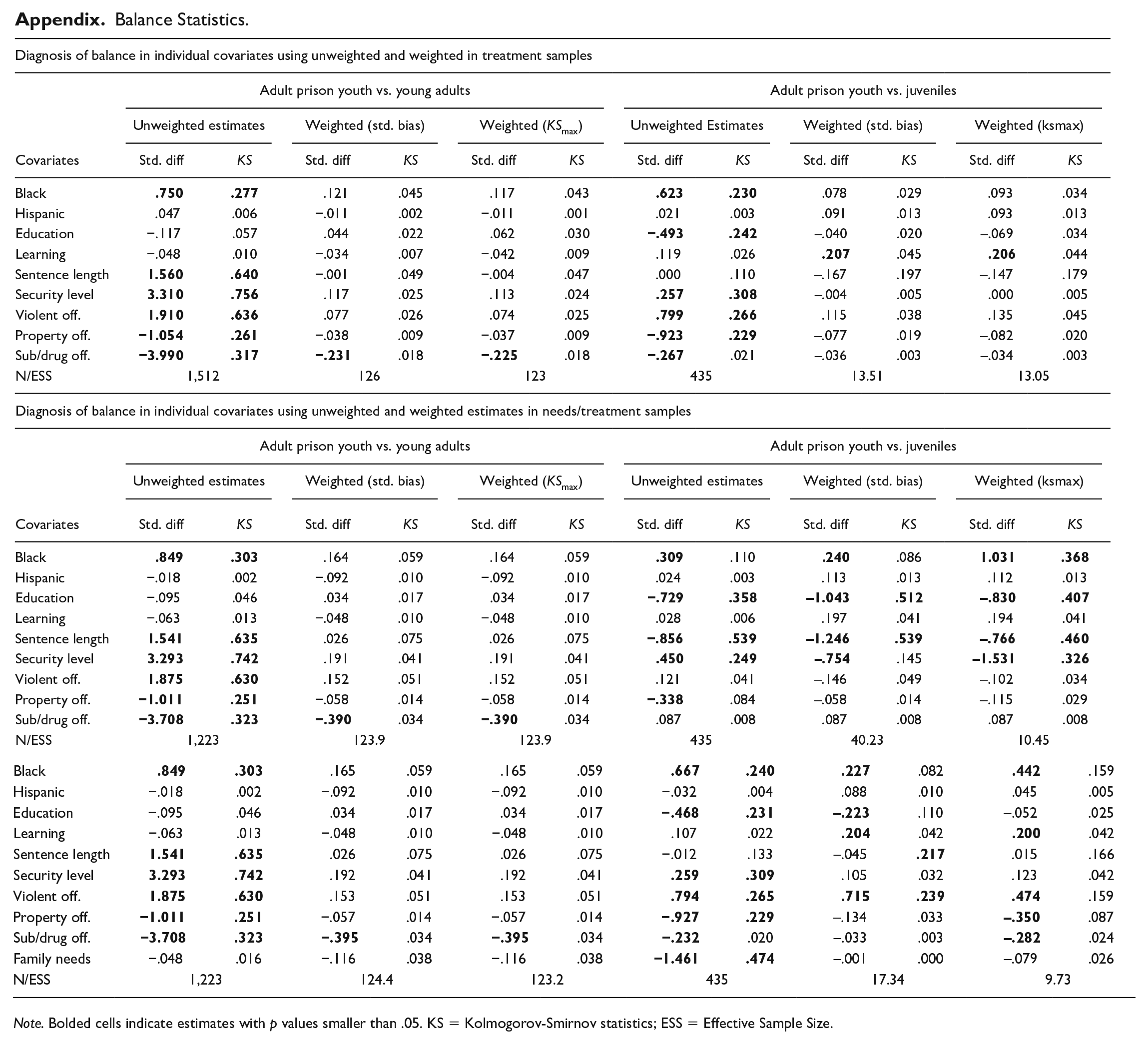
Propensity scores weights that minimized the difference between the youthful offender group, and the comparison groups were produced through a series of GBM estimations. For the institutional program models, a total of seven covariates were used: (a) race (black/non-black); (b) ethnicity (Hispanic/non-Hispanic); (c) educational achievement; (d) learning difficulty; 6 (e) sentence length; (f) security or risk level; and (g) offense type. An additional covariate, family-related criminogenic needs, was added in the propensity score estimation process for the misconduct model. As mentioned previously, the propensity score was estimated using GBM with two stopping rules specified: minimize the mean standardized bias or minimize the maximum KS value. Full results, including balance statistics, are available in the Appendix.
For the pair of subsets prepared for the institutional program models, six covariates were initially out of balance (i.e., black, sentence length, security level, violent offense, property offense, and sub/drug offense). Models converged at around 1,200 iterations for YO versus YA and at around 2,400 iterations for YO versus juveniles, which is less than the maximum number of iterations (5,000) recommended by McCaffrey et al. (2013). Applying the weights to the covariates resulted in reducing substantial amount of bias. The standardized difference of one variable, that of the substance/drug-related offense indicator, 7 remained greater than the cutoff at .20 for both sets of models. The balance was achieved with all other remaining variables, regardless of the stopping method (std. bias or the KS statistic). The weights produced by the first method were chosen, as those were associated with smaller loss in weighted sample sizes.
The second pair of comparisons was made using the samples associated with one or more criminogenic needs on the record. Approximately 81% of the young adult sample (n = 1,223) qualified and was used in the analysis. 8 Propensity score models converged with less than 900 iterations for the young adults, and applying the weights effectively reduced the imbalance of covariates that were out of balance before weighting. The sole exception was the substance/drug offense indicator, of which the bias was reduced by 90% but was still imbalanced. The juvenile pair reached the best balance at around 4,900 iterations, effectively eliminating one of the four covariates that was out of balance. Proportions of black youth or young adults, educational attainment, sentence length, and security level still had imbalances that were controlled for again in the treatment estimation (Bang & Robins, 2005). The first stopping method (based on std. bias) led to smaller reduction in the effective sample size 9 and better balance for both sets of estimates, and the corresponding weights were thus used in the next step.
Another set of propensity scores was generated to add another variable, a family-related needs indicator, to the list of covariates. This variable represents the strength of an inmate’s social bond to his family, which is often found to be related to the odds of institutional misconduct. The best balance was achieved at around 903 iterations for both stopping methods for the first pair. This process effectively reduced the imbalance of variables that were out of balance, except for the substance/drug offender indicator. The propensity score estimation model for the YO and juvenile pair obtained the best balance at 2,278 iterations with the first stopping method and at 1,013 iterations with the other method. However, the weights based on the first method were eventually used as the reduction in the effective sample size was smaller.
Results
Evaluation of the Effect of Incarceration on Correctional Experiences
The treatment effects of juvenile status in adult prisons were estimated with a series of weighted regression analyses. The regression models included a dummy indicator of treatment group (Youthful offenders = 1, comparison group = 0), propensity score as weights, and outcome variables (Yes = 1, No = 0) in addition to substance/drug-related offender indicator variable for the doubly robust estimation. The first five rows of Table 2 show the weighted averages of treatment recipients across groups. Based on the weighted estimates, the likelihoods of starting or obtaining a referral to different types of programs were not significantly different for youthful offenders and young adults in adult prison. Educational/vocational/life skills program was the only type in which youthful offenders and young adults significantly differed after weighting (t = 2.92, p < .01). The youths in adult prison, regardless of criminogenic needs, had similar levels of access to any of the institutional, counseling/mental health, and other types of programs and greater access to educational/vocational/life skill programs compared to young adults (any = −.079, ns; CBT = .054, ns; Ed = .166, p < .01; Sub = .002, ns). Conversely, the youth in the adult system had greater levels of access to correctional programs compared to delinquents of the same age confined in juvenile facilities (any = .399, p < .01; CBT = .291, p < .01; Ed = .470, p < .01).
Group Means and Weighted Differences in the Means of Youth Offenders (YO) With Young Adults (YA) and Juveniles in Juvenile Facilities (Juv.).
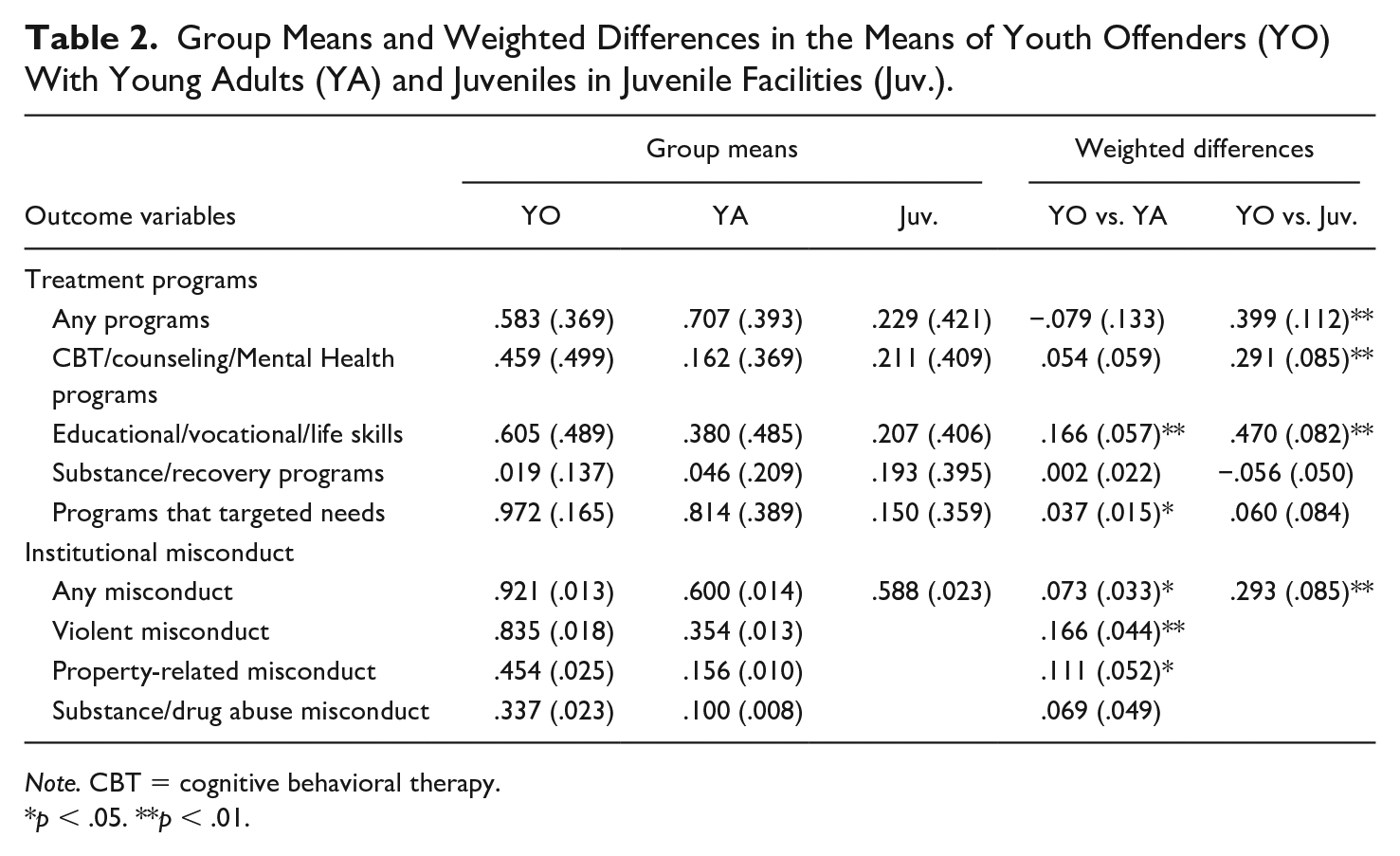
Note. CBT = cognitive behavioral therapy.
p < .05. **p < .01.
The likelihood of starting or obtaining a referral to the programs that target appropriate criminogenic needs is shown in the fifth row of Table 2. The result indicates that the youthful offenders were more likely to start or obtain a referral to those programs, compared to the young adult inmates in the same institution (t = 2.32, p <.05). The result was different for the other comparison: youths in adult prison did not differ significantly from those in juvenile facilities in terms of the likelihood of starting or obtaining a referral to the programs that targeted appropriate criminogenic needs (t = .072, ns).
As the lower left part of Table 2 indicates, youth offenders had a greater proportion of different types of detected misconduct compared to young adults in the same facility. What is noticeable in the table below is that a very large proportion of youths engaged in institutional misbehavior (.921), especially in the case of violent misconduct (.835). Corresponding estimates of these outcome variables for the young adults were much smaller, and the difference was statistically significant even after the propensity scores were applied (any = .073, p < .05; viol = .166, p < .01; prop = .111, p < .05). An exception was found with substance/drug abuse-related misbehavior. The likelihood of misconduct was not significantly different when between-group differences were taken into account (.069, t = 1.40, ns). Comparison of misconduct was limited to general involvement in the other pair because the juvenile data set did not specify types of rule infractions. Again, a greater proportion of youths had records of disciplinary infractions in adult prison compared to the same-aged youth in juvenile facilities (.921 versus .588), and the difference was statistically significant after weighting (t = 3.45, p <.01). Even when relevant covariates were controlled, housing teenagers in the adult prison was associated with a higher rate of detected misconduct. 10
Discussion
Research on transfer has primarily focused on determinants of the transfer decision or the transfer-recidivism relationship. There has been less emphasis on what happens after sentencing and before reentry. This study sought to address this gap by examining the correctional experiences of transferred juveniles. The primary purpose was to put correctional experience in context by making comparisons between young adults confined in adult prison and juveniles housed in juvenile residential facilities. The results of the propensity score weighting analysis based on institutional data showed that teenagers had more access to programs compared to juveniles in juvenile residential facilities and had similar levels of access with young adult inmates. They did worse, however, in terms of misconduct based on official records. These findings are discussed in the context of shifting climates in the correctional system.
According to the model of justice framework, a greater level of access to institutional programs was expected to be found in the juvenile system. If each model of justice holds in the correctional stage, youth offenders in the adult system would be less likely to receive correctional services compared to same-aged offenders in the juvenile system. Contrary to the hypothesis, the youthful offender group either did not differ on the likelihood of treatment involvement (substance/recovery programs) or had greater levels of involvement (educational/vocational skills) relative to both comparison groups. The youthful offender group in the adult system therefore was not disadvantaged in terms of getting needs-matching programs.
On the contrary, the youthful offenders in adult prison did worse in terms of institutional misbehavior compared to the other groups. Given the inverse relationship between age and misbehavior combined with the correctional setting that is less favorable to adolescents, youths in the adult setting were at the greatest risk of disciplinary problems compared to other groups. The results indicated that juveniles faced greater odds of disciplinary problems when they were confined in the adult system and when the personal characteristics were controlled. The difference was most notable for violent misconduct. 11 This finding aligns with previous studies in which it was shown that teenage inmates had higher rates of misconduct, experienced more abuse, and attempted suicide more frequently in adult correctional facilities (Daniel, 2006; Kolivoski & Shook, 2016; Kuanliang et al., 2008).
These results suggest that the youth unit has become more like the juvenile system in terms of the way youth are treated. Youths were provided with similar levels of access to programs or often a greater range of services, in the adult prison. The increasing emphasis on rehabilitation in the correctional system seems to have contributed to an environment that mimics the juvenile facility within the adult prison. The statewide efforts to improve institutional environment might have reached the transferred population, as well, and triggered attempts to compensate for housing teenagers in prison with offering more programs. The selected state has recently taken initiatives to support rehabilitation as a guiding correctional philosophy. For example, a series of legislative policies was introduced in 2011 and 2012 to facilitate the use of risk assessment tools and diversion programs for nonviolent offenders. Also, the state correctional department established a plan in 2011 that emphasized the significance of evidence-based correctional programs, the targeted reduction of criminogenic needs, and a rehabilitative approach in offender supervision. In fact, one of the reports on the facility noted concerns that adult inmates may not be receiving sufficient attention because the staff were handling the juvenile unit’s special needs (Correctional Institution Inspection Committee [CIIC], 2011). 12 Kupchik (2006) observed the “sequential model of justice” in which criminal justice court actors relied on the components of juvenile justice models during the sentencing stage. Likewise, the adult correctional facility might have adopted a more rehabilitative approach in treating incarcerated juveniles.
This finding could also be attributable to the greater resources available in the adult system. It serves a larger and more diverse population for a longer period (more than 50,000 versus approximately 500 in the juvenile system in the study state), and consequently, must provide a greater range of services. The facility in the study was, in fact, noted as excellent in programming quality, access to medical staff, and mental health services (CIIC, 2011). For both groups in the adult facility, more than 80% of the inmates were receiving services that matched their criminogenic needs. This finding is encouraging, given the recent evidence from a statewide study on prison treatment plans and recividism, in which those who completed programs that addressed their assessed needs, especially personal/emotional needs and community functioning, were less likely to be re-incarcerated after release (Long et al., 2019).
At the same time, youths in adult prison were more likely to be involved in disciplinary problems. It is possible that the high misconduct rates are due, in part, to selection effects that remained after the weighting process. While propensity score analysis can be a powerful tool, it is not entirely exempt from omitted variable biases. In fact, as shown in the descriptive statistics, the YO group was composed of disproportionately high-risk, violent offenders. Nevertheless, after controlling for some aspects of the presumed selection effect, youths in adult prisons still had the highest rates of recorded misconduct across the three groups. This finding suggests that the conditions of confinement could be still more challenging for the teenagers. More than 90% of youth offenders in adult prison engaged in misconduct compared to less than 60% in juvenile facilities. If it is the case that youth misconduct rises as a result of conditions found in adult facilities, then this confirms what we know about the relationship between exposure to violent prison contexts (i.e., being confined in a space with a high level of violence) and maladjustment (i.e., behavioral and mental health problems) (Steiner & Meade, 2016). To the degree that this confirmation is robust, it raises concerns about undermining rehabilitation efforts. It might also make long-term behavioral change among youths confined in adult facilities more difficult.
These findings are important because, while the rehabilitative aspects of the adult system have undergone enhancements, the juvenile model of justice is inherently more conducive to minimizing the developmental costs of incarceration. It is possible that the nature of the setting in the adult system may offset some of the programming’s potential positive effects. In the comparative studies reviewed earlier, youths appreciated the relatively more positive and growth-oriented juvenile institutions even though the service availability was either similar or greater in the adult system (Bishop et al., 1998). In the same study, the youths who were processed in both systems perceived the adult correctional system to be more violent (Bishop et al., 1998). Likewise, even though institutional services were available to a greater extent, youths reported higher levels of distress in adult facilities compared to juvenile institutions (Fagan & Kupchik, 2011). Juvenile institutions, in general, may be more aware of youths’ developmental characteristics and make deliberate attempts to incorporate those in their management systems (Mulvey & Schubert, 2012). The staff at adult facilities may not be as accustomed to interacting with the adolescent population compared to staff in the juvenile system. This issue could be exacerbated when considering that transferred juveniles are, especially after reductions in transfers in recent years, composed of the most violence-prone and challenging cases at peak or near-peak ages for offending.
Moreover, this study also questions the practice of incarcerating youths in adult prisons as the results indicated complicated consequences both for the transferred youths and for adult inmates in the same facility. As the criminal court did worse in making developmentally sensitive decisions during the sentencing stage for the transferred juveniles, even under the hybrid model of justice, this study confirms the idea that “recreating the juvenile system within the adult system” is unlikely to be entirely successful at the correctional stage without concerted efforts to address all aspects of their experiences (Bernard & Kurlychek, 2010, p. 193). Harsher punishment is part of the intended consequence of transfer. The current practice may also be preserving the juvenile justice system by removing youth deemed to be beyond rehabilitation. On the contrary, this study confirmed what Mears (2003) identified as the unintended consequences of transfer. Reflected in the racial composition, it was clear that minority youth were disproportionately represented in the transferred and incarcerated population.
Several policy implications can be drawn from our findings. First, it was encouraging the importance of evidence-based practices has gained increasing recognition. The literature suggests that even youth who have committed serious offenses are responsive to evidence-based treatments and services (Howell et al., 2013; Lipsey & Wilson, 1998), and juveniles in secure facilities found intensive treatment programs to be helpful (Bishop et al., 1998; Lane et al., 2002). If the practice of confining transferred youth in adult prisons is to be maintained, it is important that the systematic effort to enhance rehabilitation continues to reach the youth unit. Second, it will be worthwhile to develop policies to better manage incarcerated youths’ involvement in reported misconduct. Institutional misconduct could hinder rehabilitation for those directly involved in it and promote maladjustment in those who have to live in violent contexts (Adams, 1992; Steiner & Meade, 2016). It is important to note that we are not encouraging incarcerating youth in adult prisons based on greater program availability. Rather, the results have raised the possibility that providing many programs is not by itself sufficient to facilitate adjustment among youth in adult prisons. But in cases where justice decision-makers see it as necessary, staff should undertake attempts to reduce violence and misbehavior among youth in adult facilities. To prevent losing any potential benefits from greater resources in the adult system, future behavior management policies should recognize physical and psychological challenges associated with youthfulness and should acknowledge the unique composition and needs of the transferred juvenile group.
Readers should keep in mind the nature of data and sample, which involved official records from male inmates housed in residential correctional agencies in a single state, when interpreting the findings. Standard limitations of propensity score analysis and use of official records apply to this study. Due to limitations in the data, we were not able to include all covariates associated with possible differences across the groups. Thus, our findings are not entirely free from potential omitted variable bias. Still, several steps—integrative data analysis and, propensity score analysis, supplemented with doubly robust estimation—were taken to maximize the utility of available data to test the study hypotheses. We also controlled for the risk level, which was calculated by combining factors that could reflect selection effects. Our findings are important for future research, which seeks to expand the current scope to different states and jurisdictions. In addition, the interrelated nature of institutional treatment and misconduct should be examined in the next step. Examining the interplay between treatment and misconduct among incarcerated youths would make significant contributions to the literature because it is possible that providing services helps reduce misbehavior, or the misconduct may hinder the effectiveness of services. Finally, it will be useful to examine treatment completion, in addition to participation and program availability, and its impact on institutional adjustment and postrelease recidivism.
Conclusion
This study revealed that the youth in adult prison, who mostly come from racial minority groups, higher risk, violent offenders, were not completely disadvantaged in gaining access to necessary programs. Even so, they were more likely to be involved in officially reported misbehavior in the adult setting. These findings support the findings of previous studies that found more positive perceptions from the juvenile correctional system with institutional record data. Although the adult system may do better in providing necessary services, it is not certain the youth residents are fully benefiting from it. The effect of recent movement in the adult correctional system to expand its rehabilitative approach, which was traditionally stronger in the juvenile justice system, seem to have reached the transferred youth. There is a need to improve management of misbehavior of the youthful population in adult facilities.
Footnotes
Appendix
Balance Statistics
| Diagnosis of balance in individual covariates using unweighted and weighted in treatment samples | ||||||||||||
|---|---|---|---|---|---|---|---|---|---|---|---|---|
| Adult prison youth vs. young adults | Adult prison youth vs. juveniles | |||||||||||
| Unweighted estimates | Weighted (std. bias) | Weighted (KSmax) | Unweighted Estimates | Weighted (std. bias) | Weighted (ksmax) | |||||||
| Covariates | Std. diff | KS | Std. diff | KS | Std. diff | KS | Std. diff | KS | Std. diff | KS | Std. diff | KS |
| Black |
|
|
.121 | .045 | .117 | .043 |
|
|
.078 | .029 | .093 | .034 |
| Hispanic | .047 | .006 | −.011 | .002 | −.011 | .001 | .021 | .003 | .091 | .013 | .093 | .013 |
| Education | −.117 | .057 | .044 | .022 | .062 | .030 |
|
|
–.040 | .020 | –.069 | .034 |
| Learning | −.048 | .010 | −.034 | .007 | −.042 | .009 | .119 | .026 |
|
.045 |
|
.044 |
| Sentence length |
|
|
−.001 | .049 | −.004 | .047 | .000 | .110 | –.167 | .197 | –.147 | .179 |
| Security level |
|
|
.117 | .025 | .113 | .024 |
|
|
–.004 | .005 | .000 | .005 |
| Violent off. |
|
|
.077 | .026 | .074 | .025 |
|
|
.115 | .038 | .135 | .045 |
| Property off. |
|
|
−.038 | .009 | −.037 | .009 |
|
|
–.077 | .019 | –.082 | .020 |
| Sub/drug off. |
|
|
|
.018 |
|
.018 |
|
.021 | –.036 | .003 | –.034 | .003 |
| N/ESS | 1,512 | 126 | 123 | 435 | 13.51 | 13.05 | ||||||
| Diagnosis of balance in individual covariates using unweighted and weighted estimates in needs/treatment samples | ||||||||||||
| Adult prison youth vs. young adults | Adult prison youth vs. juveniles | |||||||||||
| Unweighted estimates | Weighted (std. bias) | Weighted (KSmax) | Unweighted estimates | Weighted (std. bias) | Weighted (ksmax) | |||||||
| Covariates | Std. diff | KS | Std. diff | KS | Std. diff | KS | Std. diff | KS | Std. diff | KS | Std. diff | KS |
| Black |
|
|
.164 | .059 | .164 | .059 |
|
.110 |
|
.086 |
|
|
| Hispanic | −.018 | .002 | −.092 | .010 | −.092 | .010 | .024 | .003 | .113 | .013 | .112 | .013 |
| Education | −.095 | .046 | .034 | .017 | .034 | .017 |
|
|
|
|
|
|
| Learning | −.063 | .013 | −.048 | .010 | −.048 | .010 | .028 | .006 | .197 | .041 | .194 | .041 |
| Sentence length |
|
|
.026 | .075 | .026 | .075 |
|
|
|
|
|
|
| Security level |
|
|
.191 | .041 | .191 | .041 |
|
|
|
.145 |
|
|
| Violent off. |
|
|
.152 | .051 | .152 | .051 | .121 | .041 | –.146 | .049 | –.102 | .034 |
| Property off. |
|
|
−.058 | .014 | −.058 | .014 |
|
.084 | –.058 | .014 | –.115 | .029 |
| Sub/drug off. |
|
|
|
.034 |
|
.034 | .087 | .008 | .087 | .008 | .087 | .008 |
| N/ESS | 1,223 | 123.9 | 123.9 | 435 | 40.23 | 10.45 | ||||||
| Diagnosis of balance in individual covariates using unweighted and weighted estimates in misconduct samples | ||||||||||||
| Adult prison youth vs. young adults | Adult prison youth vs. juveniles | |||||||||||
| Unweighted estimates | Weighted (std. bias) | Weighted (KSmax) | Unweighted estimates | Weighted (std. bias) | Weighted (ksmax) | |||||||
| Covariates | Std. diff | KS | Std. diff | KS | Std. diff | KS | Std. diff | KS | Std. diff | KS | Std. diff | KS |
| Black |
|
|
.165 | .059 | .165 | .059 |
|
|
|
.082 |
|
.159 |
| Hispanic | −.018 | .002 | −.092 | .010 | −.092 | .010 | −.032 | .004 | .088 | .010 | .045 | .005 |
| Education | −.095 | .046 | .034 | .017 | .034 | .017 |
|
|
|
.110 | –.052 | .025 |
| Learning | −.063 | .013 | −.048 | .010 | −.048 | .010 | .107 | .022 |
|
.042 |
|
.042 |
| Sentence length |
|
|
.026 | .075 | .026 | .075 | −.012 | .133 | –.045 |
|
.015 | .166 |
| Security level |
|
|
.192 | .041 | .192 | .041 |
|
|
.105 | .032 | .123 | .042 |
| Violent off. |
|
|
.153 | .051 | .153 | .051 |
|
|
|
|
|
.159 |
| Property off. |
|
|
−.057 | .014 | −.057 | .014 |
|
|
–.134 | .033 |
|
.087 |
| Sub/drug off. |
|
|
|
.034 |
|
.034 |
|
.020 | –.033 | .003 |
|
.024 |
| Family needs | −.048 | .016 | −.116 | .038 | −.116 | .038 |
|
|
–.001 | .000 | –.079 | .026 |
| N/ESS | 1,223 | 124.4 | 123.2 | 435 | 17.34 | 9.73 | ||||||
Note. Bolded cells indicate estimates with p values smaller than .05. KS = Kolmogorov-Smirnov statistics; ESS = Effective Sample Size.
Acknowledgements
The authors would like to thank John Wooldredge, Sarah Manchak, and Aaron Kupchik for their insightful comments on previous drafts of this paper
Author Note
An earlier version of this paper was presented at the annual conference of the American Society of Criminology in 2019.
Declaration of Conflicting Interests
The author(s) declared no potential conflicts of interest with respect to the research, authorship, and/or publication of this article.
Funding
The author(s) received no financial support for the research, authorship, and/or publication of this article.
