




Abstract
The paper examines the links between the consciousness of sustainable consumption and middle-income class affiliation. It contributes to two contemporarily important issues, namely sustainable consumption and the role of the middle-income class in sustainable development from the perspective of the economic processes in a post-socialist state. Considering consumption as the determinant for socioeconomic stratification, it is assumed that sustainable consumption consciousness is positively related to income-class affiliation. In the present study, two econometric models, namely logit models, were estimated regarding differences between objective and subjective middle-income class affiliations. The study is based on data collected in the middle-income class in Poland in 2021. The results of the study show that the probability of sustainable consumption consciousness is higher when individuals classify themselves as lower middle-income class based on their cognitive frame, not knowing what the income thresholds for the income classes in Poland are. It means that subjective evaluation of one’s material position matters for sustainable consumption consciousness more than objective class belonging. As economic policy recommendations, it is suggested that educational programs be designed to inform people about income class thresholds to avoid underestimation of their income situation, along with dedicated actions to develop discernment about sustainable consumption behaviors.
Keywords
Introduction
This paper examines consciousness of sustainable consumption (CSC) in the context of an increasing focus on sustainable lifestyles. The authors argue that awareness of sustainable consumption must be seen in the context of broader debates surrounding the development of sustainable ways of living in a micro-perspective that contributes to sustainable development at the macro level and the global conceptualization of sustainable development. To develop effective initiatives, it is crucial to identify the CSC and analyze sustainable consumption in different contexts. 1
An increase in sustainable consumption lifestyles contributes to sustainable development. 2 Each country’s sustainable development depends on consumption patterns. 3 With respect to sustainable development goal no. 12 (ensure sustainable consumption and production patterns), the middle-income classes, which contribute mostly through consumption, are at the center of attention. 4 From the economic perspective, the middle-income classes play a fundamental role in creating consumer demand and economic growth. 5 They also profoundly influence socioeconomic stability. 6 Moreover, unlike western Europe and the United States, where the erosion of the middle class can be observed, 7 the size of the middle-income class in selected post-socialist states has increased during the past several years, when the economic criterion of the share in the income of the middle 60% in income distribution is considered. 8 For example, in Poland, in these economic terms, the share of the middle-income class in income distribution increased from 51% in 2005 to 55% in 2021. 9 The increase in the middle-income class’s share in income distribution makes consumption patterns more important. 10 It also influences consumption growth. 11 Therefore, the middle-income class has extensive power to demand sustainable products and services. Hence, it may push production into a more sustainable dimension and play a vital role in achieving sustainable development. 12 For a successful incorporation of sustainable consumption patterns, it is crucial to enrich the consciousness of middle-income class members. According to the theory of planned behavior, attitudes, together with subjective norms and perceived behavior control, determine intentions, which in turn help predict real behaviors. 13 Hence, the CSC under favorable, situational conditions may be manifested in sustainable consumption behavior. 14 That perspective is used in this article. However, the researchers also analyze the attitude-behavior gap in the context of sustainability. 15 In addition, people may develop some sustainable practices but not link them directly to sustainability, and in this case, consciousness does not play a role. 16
The main aim of this paper is to identify and evaluate the relationships between middle-income class affiliation and CSC. Given that with the increase in household income, we observe not only an increase in consumption expenditure but also changes in consumption patterns in all income groups of households in Poland, in the article we assume that CSC is positively related with income-class affiliation. 17 However, considering consumption as the determinant of the standard of living and the criterion for socioeconomic stratification, as well as a way of communicating the identity of individuals in society, we aim to identify and explore the links between middle-income class belonging and CSC from an economic position. 18 From this economic perspective, we consider the middle class as the middle-income class, using income criteria for membership. However, through an in-depth analysis, we find the differences between objective and subjective income-class affiliations (OCA and SCA, respectively), and we identify the links between both approaches to middle-class belonging and CSC. OCA is based on the material standard of living reported by the respondent, and SCA is based on the respondent’s perception of her/his position in income-class stratification.
To achieve the aim of the paper, Pearson’s chi-square test of independence and binary logistic regression were applied. Pearson’s chi-square test of independence enables us to test whether the CSC and OCA or SCA are related to each other. In turn, the probability of CSC depending on socio-demographic characteristics and OCA and SCA, respectively, was modeled by logit regression. For binary regression, 1 was considered as CSC (in logit regression, considered as success) and 0 as no consciousness (failure or no event). The data were obtained through a computer-assisted web interview (CAWI) method. The questionnaire survey, including 1,200 respondents, was completed in Poland in 2021.
The analysis aimed to answer the following research questions:
Our study contributes to the literature in several ways. First, despite the fact that previous analyses identified differences in OCA’s and SCA’s impact on well-being, there were no studies regarding how those differences influence behaviors in different areas (e.g., sustainable consumption). 19 The answers to the research questions enable us to confirm or reject previous results of a stronger impact of SCA than OCA on well-being but from the perspective of sustainable consumption. Moreover, the literature makes clear that sustainable consumption, quality of life, and well-being are intertwined. 20 Income as one of the individual-related factors of sustainable consumption has been analyzed, but these analyses are very rare. 21 What also makes our study novel is the analysis of Poland as one of the post-socialist central European states, for which middle-income class (middle class in economic terms) analyses are very rare, in contrast to sociological approaches to the middle class. Poland is an example of a country where the middle class has evolved since the end of Communist rule at the end of the 1980s. 22 This class is still in the process of creation. 23 The middle class has become a topic of special interest in the process of systemic transformation both because of a conviction that the middle class is a fundamental element of the social structure in capitalist economies 24 and due to its essential role in creating inclusive institutions that secure private property, ensure market openness, and stimulate entrepreneurship development. 25 The forced egalitarianism of the previous regime and the lack of an ideology like the “American Dream” to motivate constant upward mobility, which made success the main criterion of value, accompanied the formation of a middle class in Poland with the development of the capitalist labor market. 26 In addition, social status and criteria of class positioning became connected to a greater extent to one’s material standard of living in Poland after 1989. 27 Middle-class life strategies are based on competition, resulting in comparisons to other members of the same group. 28 Focusing more on an individual effort to increase one’s income than on education, related earlier to affiliation with the intelligentsia, makes the analysis of class stratification from the economic point of view very important, particularly when the differences between objective and subjective classifications of the middle class are considered. Moreover, a growing share of Polish society identifies with the middle class, with an increase from 59% in 2004 (access to the European Union) to 76% in 2019. 29 Unlike other post-socialist countries, Poland is classified as a group of countries where the middle class is large but not very affluent, with reference to Organization for Economic Co-Operation and Development (OECD) countries. 30 In addition, with regard to lifestyles, Polish society exhibits a short-term orientation when making economic decisions, strong collectivism with concern for the opinion of others, and at the same time a low level of social capital. 31
The middle class is a broad topic discussed in the literature from different angles. However, most studies focus on the conceptualization of this class from a sociological perspective, 32 focusing on the occupational class of the head of the family, 33 or from a historical perspective on middle-class formation. 34 However, the problems of the middle classes in scholarly literature are more often focused on affluent Western countries with a longer tradition of capitalism than Poland. 35 Even though middle-class problems in times of systemic transformation in Poland have been broadly analyzed from the perspective of sociological change in social stratification, 36 the economic perspective of middle-class affiliation and its links to CSC have not been studied for the Polish economy.
Moreover, sustainable consumption is commonly taken as the object of analysis. However, usually, researchers analyze only one selected sector (e.g., food, transport, clothes) or one phase of consumption (e.g. purchasing on the market, disposal). 37 Usually India, Vietnam, or China is selected, if the middle class and sustainable consumption are considered. 38 Therefore, given that, to the best of the authors’ knowledge, the literature does not address the research problem of the relationships between income class affiliation of individual consumers in economic terms (objective and subjective) and CSC in Poland, our analysis of OCA’s and SCA’s links with CSC fills this gap.
Theoretical Framework
Sustainable Consumption Consciousness and Sustainable Consumption
The CSC is defined as attitudes toward sustainable consumption or an intention and disposition to prefer consuming sustainable products and services. 39 Aware consumers search for harmony between satisfying needs and negative external effects. 40 However, striving to satisfy infinite needs and sustainability may be perceived as opposites. Despite the fact that they are controversial, they can coexist. 41 Consumers exhibiting concern about the consequences of consuming pursue sustainability. That concern may be related to environmental aspects but also to social or economic areas. 42 Lim proposed the model of a sustainability pyramid, in which the environmental, social, and economic dimensions of sustainability are included. 43
Environmental sustainability for consumer practices was already highlighted during the United Nations Conference on Environment and Development on 14 June 1992 in Rio de Janeiro. In its sustainability action plan (Agenda 21), in chapter 4, entitled Changing Consumption Patterns, the following objective was established: “to promote patterns of consumption and production that reduce environmental stress and will meet basic needs of humanity.” 44 In other words, sustainable consumption is oriented to benefit the environment and others, including future generations. 45 Environmental concern is also reflected in the definition proposed two years later by the Oslo Symposium on Sustainable Production and Consumption Patterns in 1994. In this case, sustainable consumption was understood as “the use of goods and services that respond to basic needs and bring a better quality of life, while minimizing the use of natural resources, toxic materials, and emissions of waste and pollutants over the life cycle, so as not to jeopardize the needs of future generations.” 46 Generally, sustainable consumption is defined as acts of satisfying needs by acquiring, using, and disposing of goods and services in such a way that the environmental and socioeconomic consequences are reduced as much as possible, now and for the future. 47
Consumers who are concerned about environmentally friendly consumption are more likely to commit themselves to reducing environmental pressure in the use phase of the products and services. 48 Moreover, it is worth highlighting that consuming is also connected to acquiring and disposing of goods. 49 It is possible for consumers to demonstrate environmental awareness at each stage of consumption, not just limited to use or market-based purchase. Each of the three phases must be considered an equally important element in sustainable consumption. 50 Hence, sustainable consumers focused on the environmental dimension of sustainability make careful choices when making a purchase, using, and disposing of products, including the impact on the availability of materials from the environment or altering the structure and dynamics of the biosphere. 51 However, it is worth noting that consumers may engage in sustainable practices but not relate them to the environmental dimension or even to sustainable consumption. This phenomenon, with the additional characteristic that this action is not related to market transactions, is named quiet sustainability and was analyzed by Joe Smith, Tomáš Kostelecký, and Petr Jehlička. 52 Researchers have demonstrated that quiet sustainability practices may be caused by the pleasure of the activities, desire for self-realization and achievement, or the establishment of social relations. The environmental dimension in a sustainable consumption context is commonly analyzed. That dimension of sustainable consumption is also named green consumption. 53 The circular economy in which the cycles reduce the use of virgin natural resources by expanding the use time of products, decrease energy usage and pollution from the production of new products, and restrict production and post-consumer volumes of waste is highlighted in environmental aspects of sustainable consumption. 54
Pro-environmental consumption behaviors such as recycling, resource and energy preservation, and climate protection are examined in the literature. 55 In addition, different socio-demographic variables are considered as significant factors in sustainable consumption behaviors. 56
Among individual factors, income has been analyzed as a characteristic in the profile of sustainable consumers and in the environmental dimension. 57 Generally, it is believed that higher incomes allow for concerns toward environmental causes. 58 Furthermore, low-income consumers face the challenge of fulfilling everyday necessities. 59 Axel Franzen and Dominikus Vogl in their research emphasized that more affluent consumers should be more concerned about the environmental consequences of consuming than the less wealthy. 60 They argued for a positive income effect by pointing out that more affluent people have fewer economic challenges and may pay attention to other concerns. In addition, Martha Starr pointed out two interesting aspects in the context of income. 61 Buying sustainable products and services with environmental attributes may be perceived as a luxury. She highlights the ability to pay for consuming in a sustainable way. Tomasz Zalega identified among young people in Poland. 62 On the other hand, these practices may be more time-consuming than money-consuming. 63 Examples of time-intensive behaviors are recycling, self-provisioning food, or public transportation usage. However, probit analysis showed that income positively affects the probability of buying ethically (also including environmental issues). 64
Given that pro-environmental behavior (sustainable consumption) depends on monthly disposable income in Poland (age, gender, and place of residence were other factors), we argue that CSC is related to class affiliation (because people often underrate their material situation—objective class affiliation is higher than subjective). 65 We test the hypothesis that objective affiliation with the middle class increases the probability of CSC to a greater extent than the probability of SCA.
Objective and Subjective Affiliation with the Middle-Income Class
The criteria for middle-class belonging are not clearly defined. The two common ways to conceptualize the middle class are based either on occupational position (usually used by sociologists) or income (traditionally used by economists). From a sociological perspective, the middle class is often defined by mechanisms of exclusion with respect to education and skills, 66 professional activity, 67 and participation. 68 In addition, more attention is paid to experience based on meritocratic rules. Belonging to the middle class requires fulfilling simultaneously two criteria: income (achieving an income higher than the average income in the country) and participation (playing an important role in the economic, cultural, social, scientific, political, or artistic life in a particular country). 69 Savage 70 and his co-authors. 71 consider three capital dimensions in the conceptualization of the middle class, namely economic, social, and cultural.
However, in the economic approach adopted in the present study, the criteria adopted for class classification are often income-based. Middle-income class identification is based on middle-income groups—that is, groups located in the middle of the income distribution, neither poor nor rich—specifically households falling between the third and eight deciles in income distribution. 72 There is, however, no consensus regarding the criteria for income class stratification, 73 and therefore these are arbitrarily imposed by the researcher. 74 In the present study, the middle class will be defined from an economic perspective as the middle-income class by taking the disposable income per person in the household to be between 60% and 200% of the median. 75 Another economic conceptualization of the middle-income class stratum considers the income groups between the third and the eighth deciles or those with an equivalized disposable income between 75 and 200 percent of the median income. 76 While considering disposable income per person in a household belonging to a middle-class criterion, it is important that all members of the household are included in the middle-income group, not just those who reach a particular level of education and income or have a specific occupation as the head of the family. 77
Ambiguous approaches to defining the middle class, based on different criteria of belonging, result in discrepancies between the actual state based on income (objective) and the perceived rank of individuals in income distribution (subjective). Subjective perception does not necessarily coincide with objective criteria of class position, such as household income per person. When individual perceptions of belonging to the middle-income group differ from those of other members of the middle class based on reported income, individuals may think they are worse off than their reference group and hence feel relatively deprived, even if they are better off in absolute measures of income. 78 If this is the case, it is expected that individuals’ perceptions of belonging to the middle-income class tend to be a stronger predictor of subjective well-being than how individuals are ranked compared to others based on objective measures. 79 Ada Ferrer-i-Carbonell concludes that the income of the reference group is about as important as one’s own income for individual happiness and that individuals are happier with an income larger than the income of the reference group. 80
The realization that individuals consider social comparisons when evaluating their income and therefore in placing themselves in terms of social stratification draws on behavioral theory and the relative income hypothesis. 81 Daniel Kahneman and Amos Tversky state in their prospect theory that individuals evaluate options with regard to specific reference points (e.g., the income of similar others) rather than in absolute terms. 82 According to the relative income hypothesis, economic decisions are based not only on individual income but also on relative income (relative to those in the income class of the population with which one identifies). 83 It follows that households with low incomes relative to the economic group to which they perceive they belong within the class stratification will consume a larger share of their income to “keep up with the Joneses,” while households with high incomes relative to the economic group will save more and consume less. 84 In the context of consumer behavior, individuals feel relatively deprived when their own status level is below the status of similar people. 85
Therefore, in the present study, we check whether the CSC followed by consumption decisions is related to middle-income class affiliation and find out whether subjective and objective class affiliations matter in this case.
Data and Methods
Data Collection
The data were collected in August 2021 among 1,200 respondents all over Poland. The 1,200 respondents represent a cross-section of Polish society, including factors such as age, gender, and place of residence. 86 In the whole sample, respondents aged 18–34 years constituted 25.22%, respondents aged 35–64 years 51.90%, and respondents aged 65 years or older 22.88%. Considering the gender of the respondents, 48% were men and 52% were women. With regard to the place of residence, there were five categories of respondents: respondents living in a village constituted 40.14%, respondents from small cities (up to 20,000 citizens) 13.02%, respondents from medium cities (20,000–100,000 citizens) 19.25%, respondents from big cities (100,000–500,000 citizens) 16.03%, and respondents from very big cities (500,000 citizens and above) 11.55%. Moreover, the respondents were chosen based on income groups in the following way: 800 from the middle-income class, 200 from the low-income class, and 200 from the high-income class. The thresholds of the middle-income group were initially set at 75%–200% of the median disposable income per person in a household in Poland in 2019.
The interview was conducted using the CAWI method by DRB Polonia, commissioned by Nicolaus Copernicus University in Toruń, based on the survey prepared by the authors of the study. The survey fulfilled all ethical requirements. The respondents’ consent to participate in the survey was preceded by the interviewer providing reliable information on the scope, purpose, and possibility of refusing to participate in the study and the anonymity of the answers provided. Anonymity means that the results gathered during the research were used solely for collective statistical analyses and were not identified with a given respondent.
The survey questionnaire consisted of 56 questions, among which 11 were used in the present study. Selected questions and the names of the variables are provided in the Appendix.
Measurements
A logistic regression analysis was undertaken to explain the relationship between a dependent dichotomous variable and independent variables. 87 The logistic regression analysis was carried out in SPSS Imago Pro software. The enter logistic regression variable selection method was used, such that all the independent variables were simultaneously entered into the analysis. 88 To identify and evaluate the relationships between middle-class affiliation and the CSC, CSC_binary, OCA, and SCA measurements were used.
All the questionnaire items (questions) referring to sustainable aspects were measured on a five-point Likert scale ranging from “1 = strongly disagree” to “5 = strongly agree.” Likert type date are treated as an ordinal approximation of continuous variables. 89
The dependent variable, named Consciousness for Sustainable Consumption index (CSC_index), was built. CSC_index is a synthetic measure including the mean of three items concerning attitudes toward sustainable consumption:
“I prefer to spend more but buy products and services that are produced with respect for the environment.”
“I believe it is worth buying products and services that are produced with respect for the environment.”
“Pro-environmental behavior is important to me because it increases my life satisfaction.”
The value of CSC_index varies between 1 and 5, with a dominant value of 3.67, a mean of 3.57, and a median of 3.67 (Figure 1).
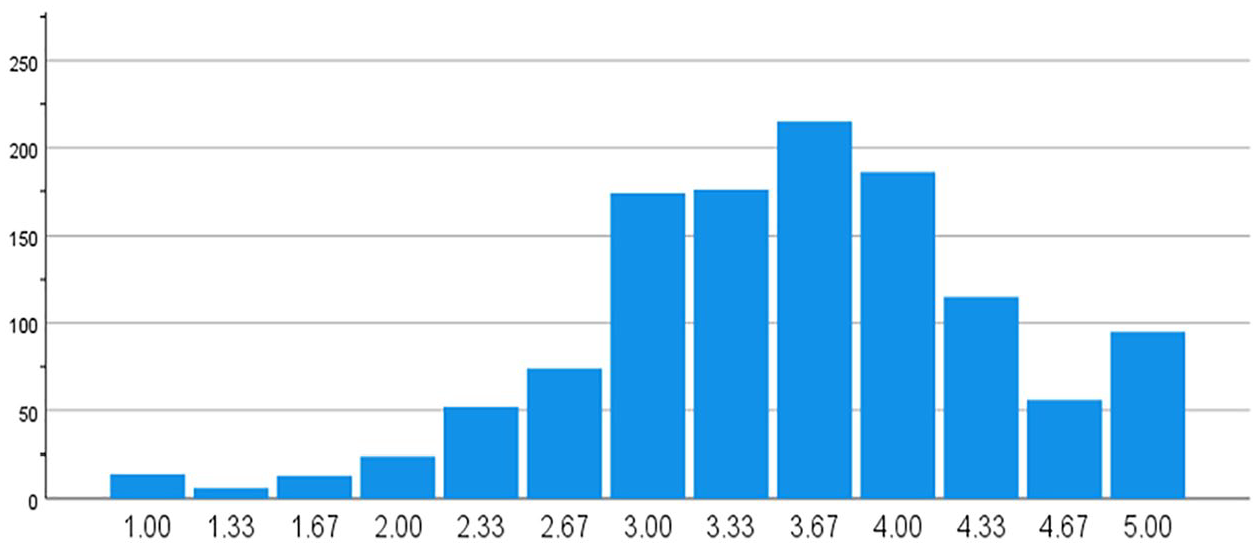
Frequency distribution of consciousness of sustainable consumption index
In our binary logistic regression models (logit regression), CSC_index is treated as a single binary variable (CSC_binary). Hence, CSC_binary is labeled “0” when the respondent is unconscious of sustainable consumption (failure) and “1” when the consumer is conscious of sustainable consumption (success). The threshold was defined as the mean (3.57) of the synthetic measure (CSC_index), which means that values under the mean of CSC_index are labeled “0” (44.4% of observations), and those over the mean are labeled “1” (55.6% of observations). In other words, CSC_binary = 1 if respondents are classified as conscious, and CSC_binary = 0 when they are unconscious of sustainable consumption.
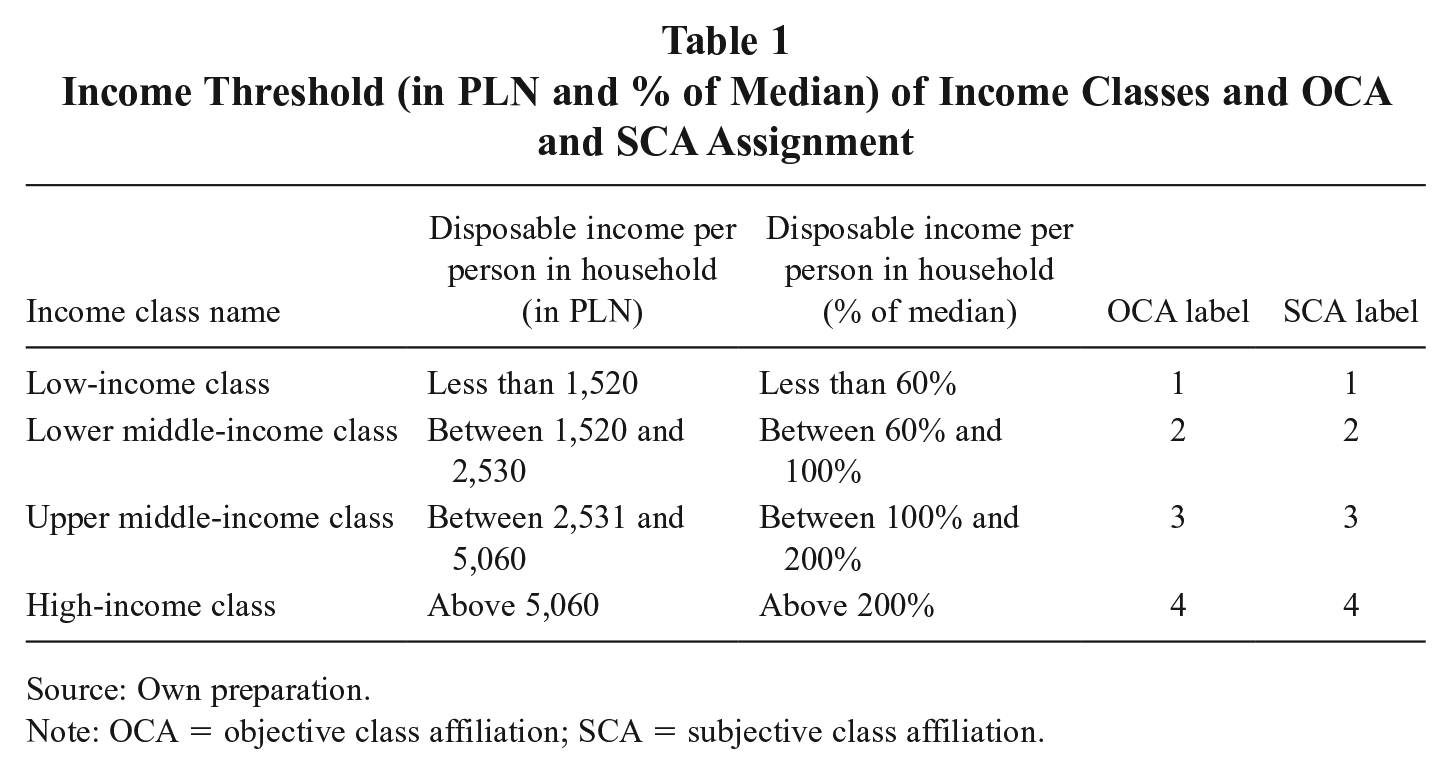
Income-class affiliation, according to the definition used, was characterized according to two approaches (objective and subjective). Objective income-class affiliation (OCA) was measured with an ordinary scale based on the question “What is the disposable income per person in your household?” The respondents were asked to choose a particular range of disposable income per person in the household. The labels and the income class characteristics, both in PLN and as a percentage of the median, are presented in Table 1. In this article, middle-income class is represented by taking the disposable income per person in the household falling between 60% and 200% of its median as a criterion. 90 Another economic conceptualization of the middle-income class stratum considers the income groups between the third and the eighth decile or those with an equivalized disposable income between 75% and 200% of the median income. 91 In Poland, the median disposable income per person was 2,530 PLN in 2019. 92 Therefore, the thresholds for the middle-income class in PLN were set as the monthly disposable income per person in the household, falling between 1,520 PLN and 5,060 PLN. Households with income below 60% are low-income class, and those above 200% are from the high-income class. To conduct a more profound analysis, the middle-income class was divided into two income-related groups: lower middle-income class (60%–100% of median income) and upper-middle (100%–200% of median income), that is, 1,520–2,530 PLN and 2,531–5,060 PLN, respectively (Table 1). 93
Income Threshold (in PLN and % of Median) of Income Classes and OCA and SCA Assignment
Source: Own preparation.
Note: OCA = objective class affiliation; SCA = subjective class affiliation.
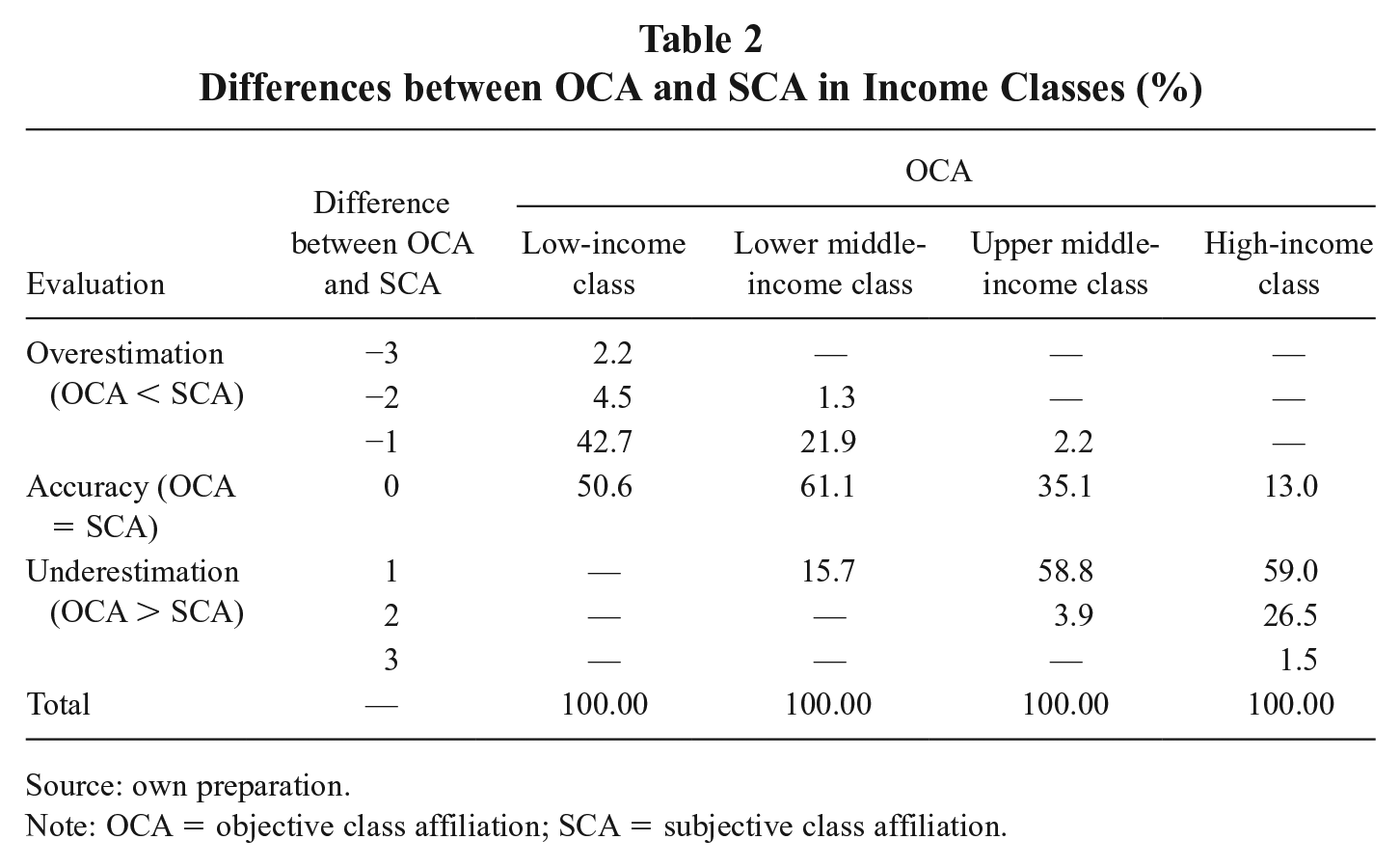
Subjective class affiliation (SCA) was measured based on the question “In society, income classes are usually distinguished according to disposable income per person in household. What would you call the class to which you belong?” SCA was labeled from 1 to 4 based on the particular income class names (Table 2).
Differences between OCA and SCA in Income Classes (%)
Source: own preparation.
Note: OCA = objective class affiliation; SCA = subjective class affiliation.
Comparison of the frequencies of the distribution between OCA and SCA in the different income classes revealed this general relationship: the higher their income group, the more individuals underestimated their position in the income group (except for the low-income group, members of which were not able to underestimate their position) (Figure 2). Consistent results for OCA and SCA were shown only in 13% of the high-income class members, 35% of upper middle-income class members, and 61% of lower middle-income class members (Table 2).
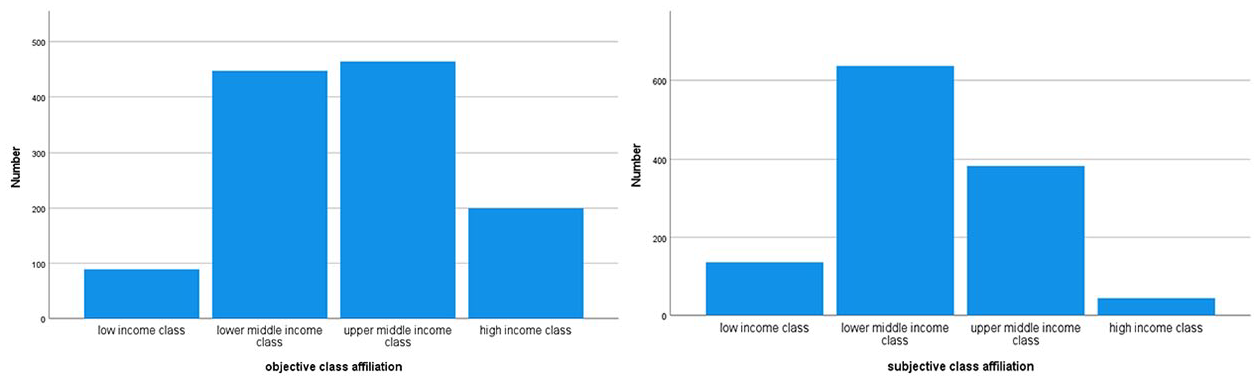
Frequency of distribution of objective class affiliation and subjective income-class affiliation regarding selected income classes
The members of both middle-income classes had the possibility to place themselves in the middle, but also in a lower or higher income class. It should be noted that more of them underestimated their relative position (SCA) than overestimated it (SCA) in comparison to OCA (Table 2). Twenty-three percent of lower middle-income class members overvaluated their place in income distribution, and 16% underestimated it. Moreover, it was the income class with the highest accuracy result between OCA and SCA. In the upper middle-income class, as much as 63% underestimated their position, placing themselves in the lower middle-income class (59%) but also in the low-income class (4%). Only 2% of the upper middle-income class overvaluated their position, placing themselves in the high-income class (Table 2).
Results and Discussion
To test whether sustainable consumption consciousness and class affiliation are related, the Pearson’s chi-square test of independence is used. 94 Both cases (CSC_binary and OCA, CSC_binary and SCA) obtained a chi-squared probability of less than the critical point 0.05. The null hypothesis that the CSC_binary is independent of OCA and CSC_binary is independent of SCA is rejected. In turn, the alternative hypothesis corresponds to the variables (CSC_binary and OCA; CSC_binary and SCA) and is accepted. It means that CSC_binary and OCA and CSC_binary and SCA are related to each other. They respectively gave the following results: chi-square = 61.48, df = 3, p < .001, and chi-square = 21.31, df = 3, p < .001.
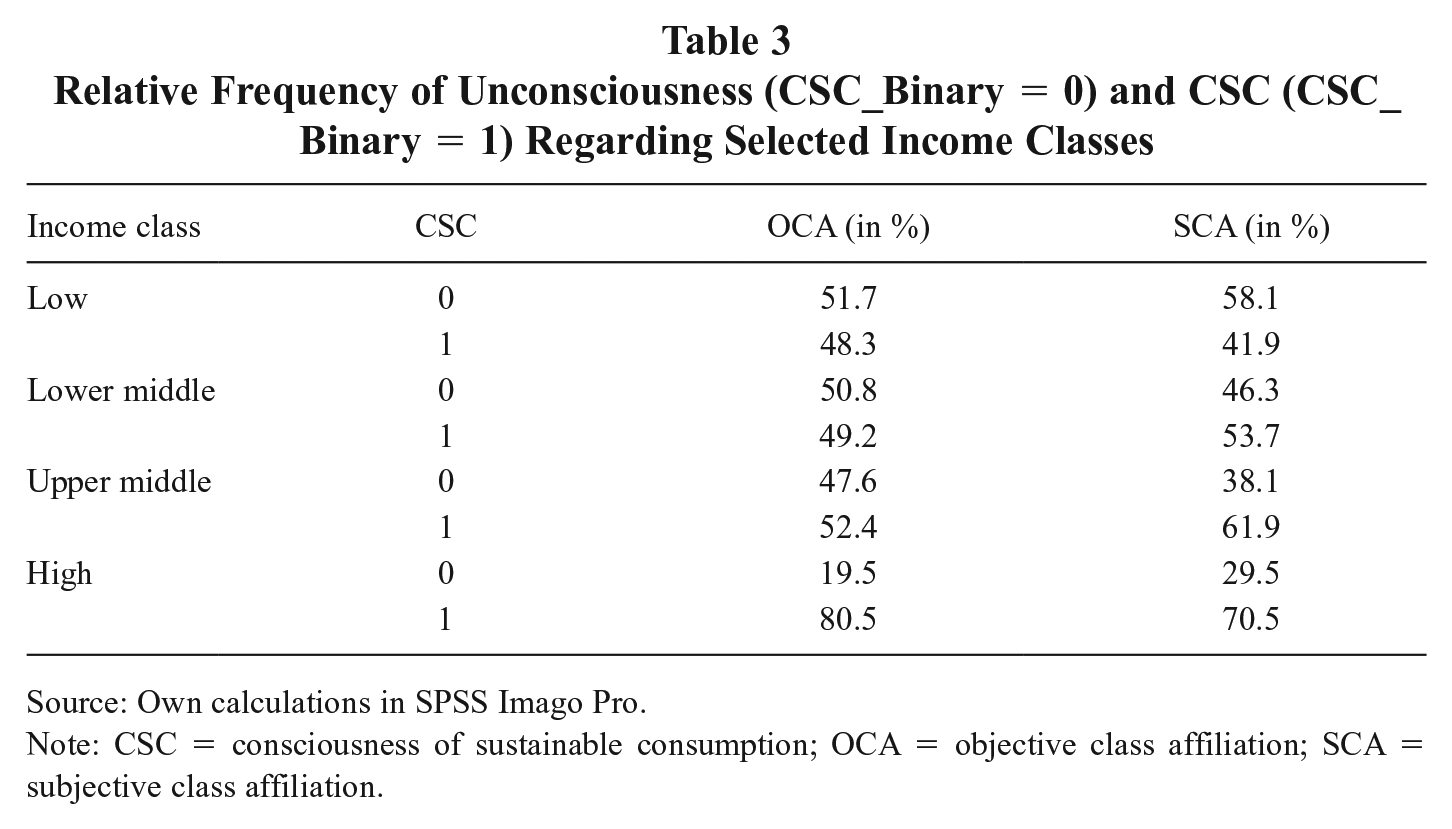
Analyzing the distribution of unconsciousness and consciousness for sustainable consumption regarding objective class affiliation, it is seen that the distribution of unconscious consumers increases in particular income groups when moving to the lower objective income class. More consumers are characterized as not aware of sustainable consumption in low as well as in lower middle-income class (Figure 3, Table 3).
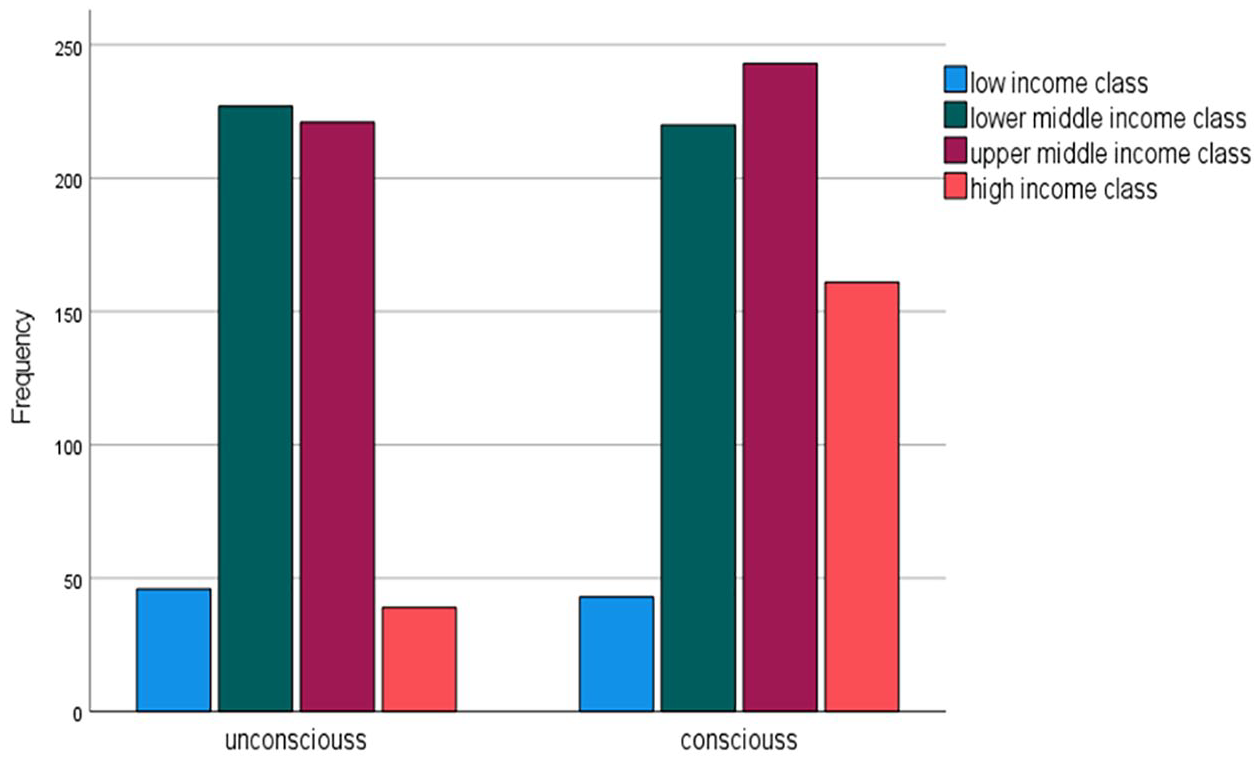
Distribution of unconsciousness (CSC_binary = 0) and consciousness (CSC_binary = 1) for sustainable consumption regarding objective class affiliation (OCA)
Relative Frequency of Unconsciousness (CSC_Binary = 0) and CSC (CSC_Binary = 1) Regarding Selected Income Classes
Source: Own calculations in SPSS Imago Pro.
Note: CSC = consciousness of sustainable consumption; OCA = objective class affiliation; SCA = subjective class affiliation.
However, in the lower middle-income class, the share of the unconscious is only slightly bigger, at 227 unconscious consumers and 220 conscious. This gives relative frequencies of 50.8% and 49.2%, respectively. In turn, a larger share of conscious consumers is noticed in upper-middle and high income classes. Interestingly, the prevalence of consciousness increases with respect to the upper-middle and high income classes (Table 3).
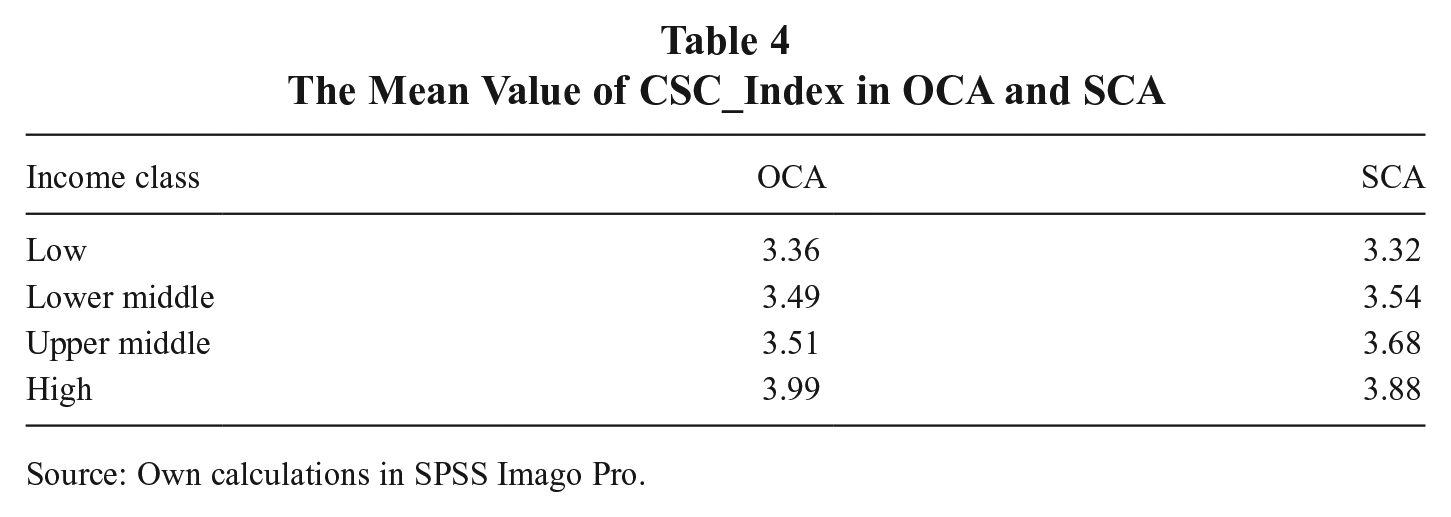
As with objective class affiliation, when it comes to the subjective one, the share of conscious consumers increases with respect to the more affluent class (Figure 3, Table 3). Considering SCA, even in the lower middle-income class the domination of conscious consumers is apparent: 53.7% are labeled as conscious, and 46.3% as unconscious (Table 3, Figure 3). In addition, the disparity between the share of conscious and unconscious consumers within particular groups is more noticeable than in objective class affiliation, except for the high-income class (Table 3). When it comes to the upper-income class (OCA as well as SCA), it is also noticeable when the mean value of CSC_index in each group is considered (Table 4). These findings comply with the research of the British Council (2020), Franzen and Vogl (2013), and Starr (2009), which highlighted the positive income effect on sustainable behaviors. Analyzing the means value of CSC_index in the particular groups of objective class affiliation (OCA), it can be seen that the value varies from 3.36 to 3.99, and in the case of SCA, from 3.32 to 3.88. In addition, it is also apparent in the distribution of unconsciousness and consciousness for sustainable consumption (CSC_binary = 0, CSC_binary = 1) that consciousness in middle class (lower and upper) is higher if SCA is considered (Tables 3 and 4, Figures 3 and 4).
The Mean Value of CSC_Index in OCA and SCA
Source: Own calculations in SPSS Imago Pro.
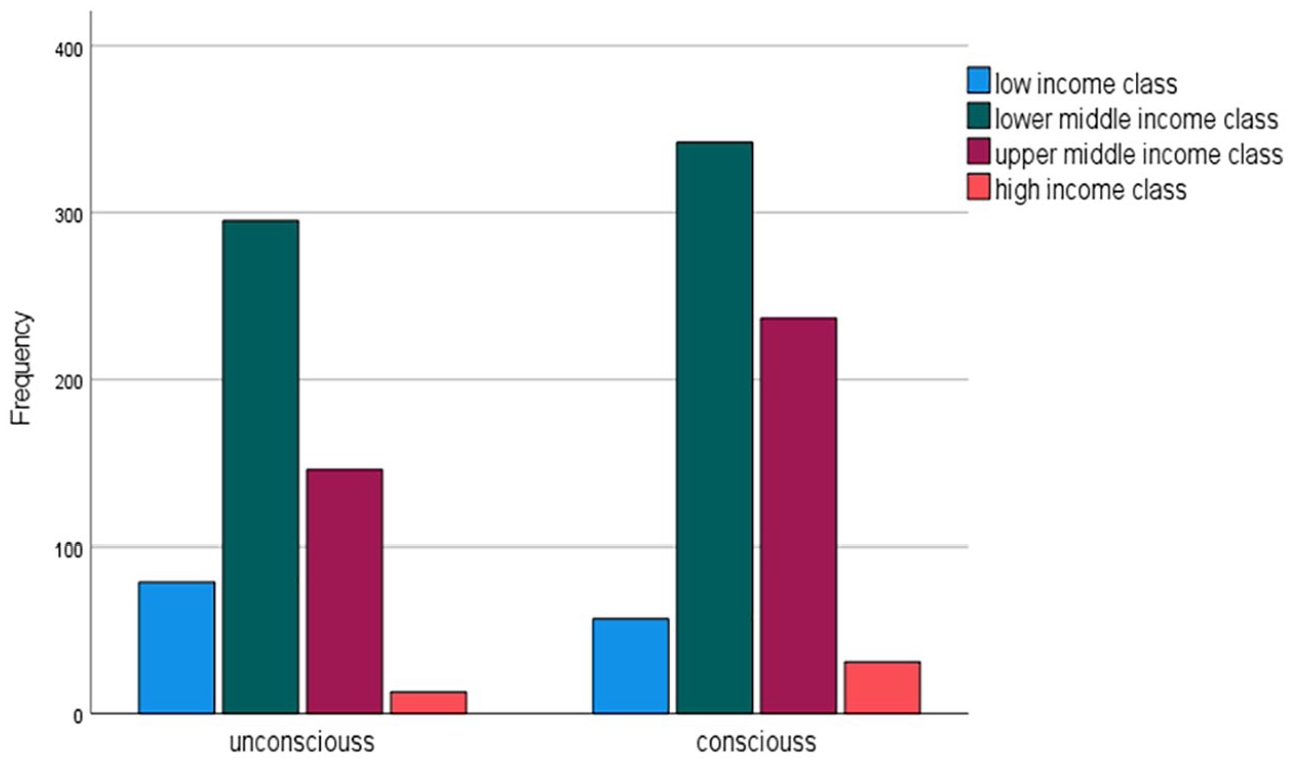
Distribution of unconsciousness (CSC_binary = 0) and consciousness for sustainable consumption (CSC_binary = 1) regarding subjective class affiliation (SCA)
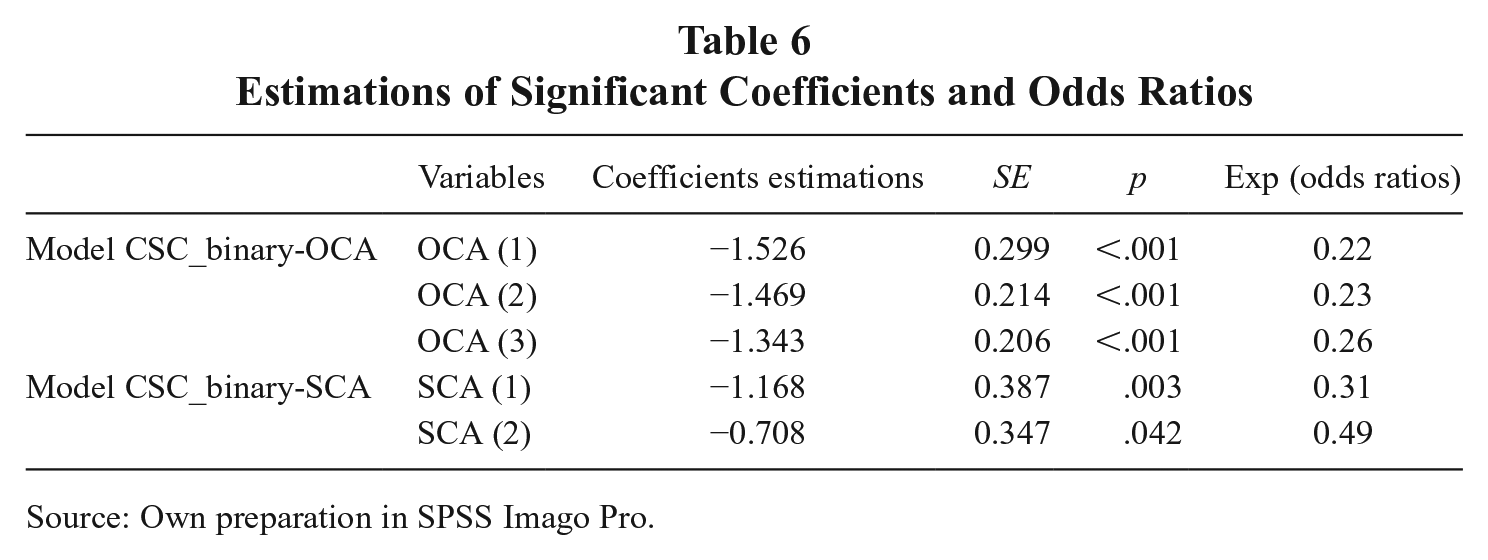
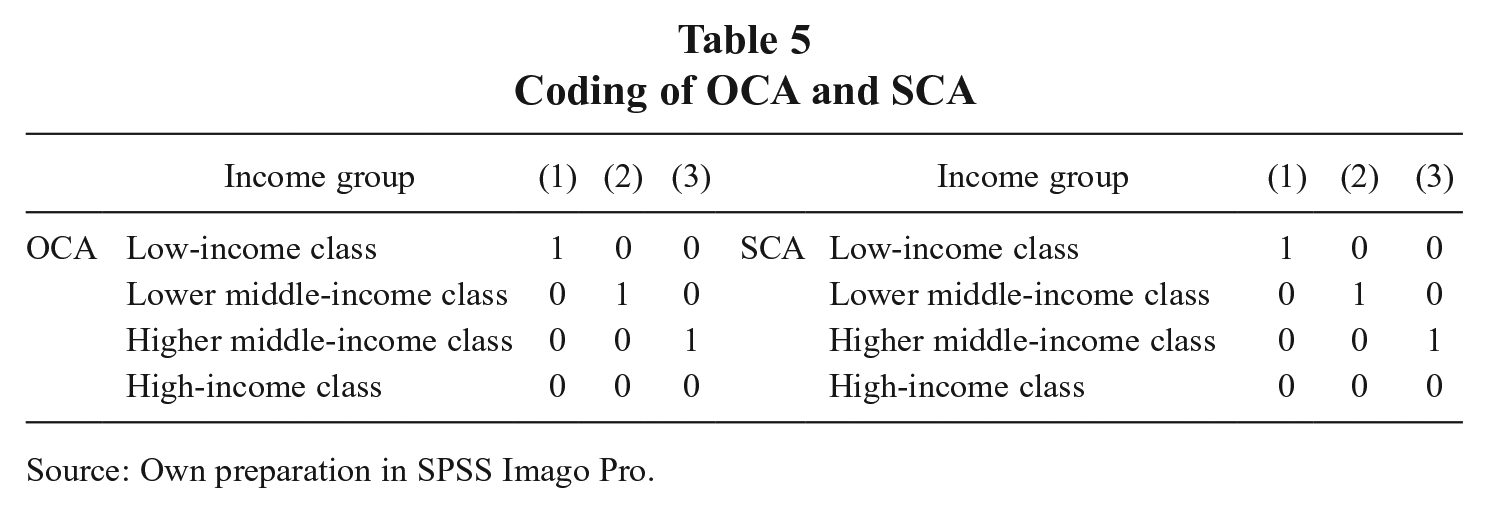
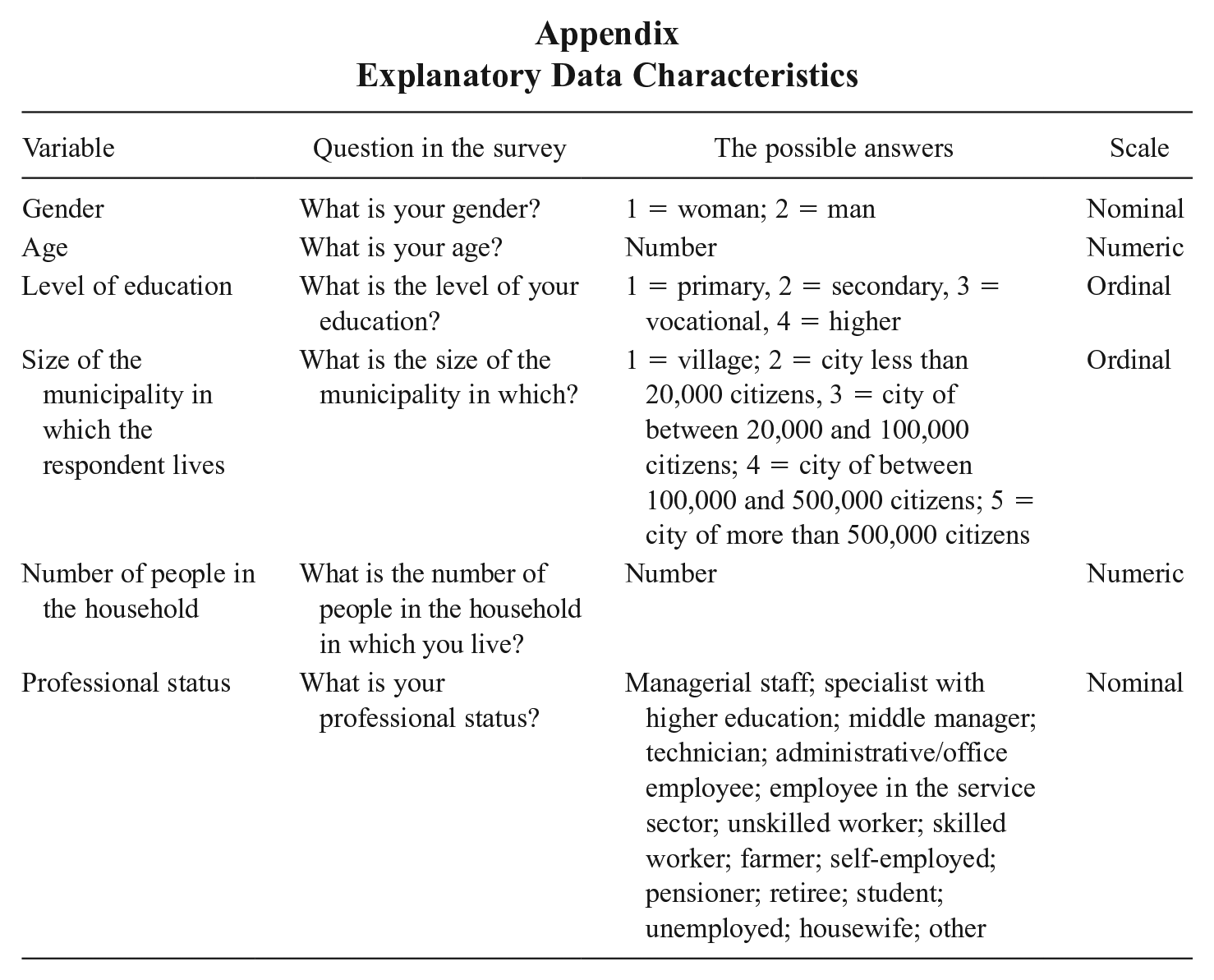
Due to the correlation between OCA and SCA to identify the differences in how OCA and SCA influence the CSC_binary, two logit models were estimated (CSC_binary-OCA and CSC_binary-SCA), including separately OCA and SCA. The reference category for each variable was the high income class (Table 5). In both models, this set of explanatory variables was included: gender, age, level of education, size of the municipality in which the respondent lives, number of people in the household, and professional status. The list of the explanatory variables’ characteristics is available in the appendix. However, interestingly, only OCA and SCA significantly affected the probability of the CSC_binary. The results of the models’ estimations are presented in Table 6.
Estimations of Significant Coefficients and Odds Ratios
Source: Own preparation in SPSS Imago Pro.
Coding of OCA and SCA
Source: Own preparation in SPSS Imago Pro.
The models fulfilled the statistical requirements, particularly the chi-squared test for the coefficients in the model—chi-squared statistics = 89.14 (p < .01) for model CSC_binary-OCA and chi-squared statistics = 46.72 (p = .011) for model CSC_binary-SCA—as well as David Hosmer and Stanley Lemeshow’s test—chi-squared statistics = 6.11 (p = .635) for model CSC_binary-OCA and chi-squared statistics = 7.07 (p = .529) for model CSC_binary-SCA. 95
When OCA is considered, belonging to the middle class decreases the probability of CSC in comparison to high-class members. What is more, diversity between two middle-income classes was identified in this matter. Affiliation with the lower middle-income class (because of lower disposable income per person in the household) decreases the probability of CSC to a higher extent than being classified in the higher middle-income class (by 77% and 74%, respectively) in comparison to high-income class members. The lowest probability of CSC is among low-income class members, individuals whose disposable income per person in the household is lower than 1,520 PLN. The model’s results (CSC_binary-OCA) proved that objective affiliation with the middle class significantly affects the probability of CSC and that the probability of CSC increases with OCA. Taking into account the fact that OCA is entirely based on disposable income per person in the household, the probability of CSC increases with this income.
The SCA of middle-income class members is taken into consideration, and only affiliation with the lower middle-income class significantly decreases the probability of CSC (by 51%) in relation to those whose subjective affiliation was with the high-income class. In addition, subjective classification as low-income class members decreases the probability of CSC more—by 69%. The results of the model (CSC_binary-SCA) proved that subjective affiliation with the middle class significantly affects the probability of CSC and that the probability of CSC increases with subjective income class affiliation. However, taking into account the fact that SCA is entirely based on the subjective evaluation of one’s place in income distribution, the better the subjective evaluation and affiliation with a higher income class, the higher the probability of CSC.
Having regard for the differences between objective and subjective income class affiliation (Figure 1, Table 2) and particularly recognizing that most respondents from the upper middle-income class underestimated their income-class position in society (63% underestimated, 2% overestimated, and 35% correctly classified when differences between OCA and SCA were analyzed), the differences between how SCA and OCA affect the probability of CSC were also revealed. Based on affiliation with the lower middle-income class, subjective affiliation with this class decreases the probability of CSC to a lower extent than OCA. It means that the probability of CSC is higher when individuals classify themselves in the lower middle-income class based on their cognitive frame, not knowing what the income thresholds for the income classes in Poland are. Similar results were obtained for the low-income class. However, because the results for SCA (3)—subjective affiliation with the higher middle-income class—were not statistically significant, they cannot be compared. In general, the results showed that the way individuals classify themselves in income distribution not only plays an important role for CSC but also decreases CSC to a lower extent than OCA. It means that subjective evaluation of one’s material position matters for sustainable consumption consciousness. The present results indirectly relate to the conclusions of Ferrer-i-Carbonell 96 and of Dorrit Posel and Daniela Casale, 97 who revealed the more important role of SCA than OCA but in relation to well-being.
Conclusions
We have focused on the middle-income class as the group in which consciousness and sustainable behaviors play crucial roles in achieving sustainable development. 98 In this article, we have shown that sustainable consumption consciousness and objective as well as subjective class affiliation are related. This provides a starting point for seeking answers to further research questions (RQ2, RQ3, and RQ4).
We determined that affiliation with the middle-income class increases the probability of sustainable consumption consciousness, considering objective as well as subjective measures. However, considering that consumer behavior is greatly influenced by the perceived behavior of other people 99 and that people tend to compare their material situation to relevant others, 100 we analyzed whether SCA influences CSC more than OCA. What is interesting is that considering either the distribution of unconsciousness and consciousness for sustainable consumption regarding objective and subjective income-class affiliation or the mean value of unconsciousness and consciousness in both class affiliation measures, consciousness in the middle-income class (lower and upper) is higher if SCA is considered. That difference between the OCA’s and SCA’s relationships with CSC is also established by findings that most respondents underestimated their income-class position in society, particularly in the upper middle-income class.
Given the background of central and eastern Europe countries, such as Poland, which transitioned from Communist regimes to democracy and market economies, and the fact that society experienced comprehensive and fundamental change, the pressure to keep up with a rising standard is even stronger than in other countries. 101 Social status and class affiliation, even for the highly educated, have become more related to increasing the material standard of living 102 and consumption orientation. 103 In addition, access to modern technologies, including the Internet, creates a feeling of relative deprivation by exposing the lifestyles of famous and rich people. 104 Many representatives of the middle class feed on the illusion that they can afford an elite standard of living, resulting in frustration. 105
Given the results of the study, revealing the phenomenon of underestimation of one’s subjective place in class stratification, it is suggested that people be educated about general economic statistics, such as the median disposable income per person in the household in different income classes in society. The most common point of reference for income comparison in Poland is the gross average wage, announced in the media. However, that is much higher than the median disposable income per person in the household (4,918 PLN and 2,530 PLN in 2019, respectively), which results in a misleading reference point when individuals place themselves in income classes. Therefore, well-established educational programs designed to inform people about income class thresholds to avoid underestimation of their income situation demonstrate that the display of comparative information can significantly affect their behavior. 106 Moreover, if people are informed that others are engaged in environmentally friendly behavior, they are more likely to behave in such a way. 107 Also, consumers’ behavior may well depend on what they believe that relevant others (other members of the income group to which they feel they belong) are doing. 108 It means that if people learn that they consume less sustainably than similarly situated others, their CSC may increase because of “keeping up with the Joneses.”
Recognizing the decrease in the probability of conscious consumers with regard to the lower income class and the fact that, respondents underestimate their income-class position in society, it is necessary to promote and educate about the consequences of consuming, sustainable consumption advantages, and available sustainable behaviors. In other words, it is necessary to take dedicated actions to develop discernment about sustainable consumption and to encourage consciousness in sustainable behaviors. The goal can be reached by removing barriers to achieving sustainable behaviors or, in the long term, sustainable consumption patterns.
In turn, sustainable consumption patterns may start the ball rolling, 109 because social practices may have a significant influence on individual consumer decisions. 110 Individual sustainable patterns may sustain incentives for similar others in the middle-income group. Because of the identified differences between OCA’s and SCA’s relationships with CSC, we aim to explore how the underestimation of one’s position in income class stratification (negative difference between OCA and SCA) affects the CSC in future research. Also, considering the link between sustainable consumption and well-being, 111 another direction of future research from the perspective of the present results is to explore the role played by affiliation with income classes (both subjective and objective, as well as differences between OCA and SCA) in the relationship between sustainable consumption and well-being, particularly when SCA is identified as a stronger predictor of well-being. 112
Footnotes
Appendix
Explanatory Data Characteristics
| Variable | Question in the survey | The possible answers | Scale |
|---|---|---|---|
| Gender | What is your gender? | 1 = woman; 2 = man | Nominal |
| Age | What is your age? | Number | Numeric |
| Level of education | What is the level of your education? | 1 = primary, 2 = secondary, 3 = vocational, 4 = higher | Ordinal |
| Size of the municipality in which the respondent lives | What is the size of the municipality in which? | 1 = village; 2 = city less than 20,000 citizens, 3 = city of between 20,000 and 100,000 citizens; 4 = city of between 100,000 and 500,000 citizens; 5 = city of more than 500,000 citizens | Ordinal |
| Number of people in the household | What is the number of people in the household in which you live? | Number | Numeric |
| Professional status | What is your professional status? | Managerial staff; specialist with higher education; middle manager; technician; administrative/office employee; employee in the service sector; unskilled worker; skilled worker; farmer; self-employed; pensioner; retiree; student; unemployed; housewife; other | Nominal |
