




Abstract
Inclusion of students with disabilities has been practiced and advocated for more than two decades in the United States. This practice involves the placement of students with disabilities in a general education classroom for part or all of the day, and the primary instructor is a general education teacher in collaboration with a special education teacher. The authors reviewed coursework related to inclusion provided to pre-service elementary teachers during their teacher preparation programs. A total of 109 elementary education bachelor’s degree programs were examined to determine the number of course hours devoted to inclusion, instruction, and management of students with disabilities. Results suggest that many teacher preparation programs provide instruction related to characteristics of disabilities and some form of classroom management; however, few programs offer courses specifically related to differentiation of instruction for students with disabilities or collaboration between general and special education teachers.
Inclusion of students with disabilities in the general education classroom has been a goal for education reformers for many decades (Dunn, 1968; Will, 1986). The inclusion movement began as an attempt to create equality in education for students with disabilities and integration into the school community. Over the past 30 years, landmark litigation, political events, and parental advocacy have shaped the current system of inclusive practices in the United States (McLeskey, Rosenberg, & Westling, 2010).
Inclusion in the general education classroom gained momentum during the 1980s (Will, 1986) and continued into the 2000s with passages of legislative mandates. For example, amendments to the Individuals With Disabilities Education Improvement Act (IDEIA, 2004) and the No Child Left Behind Act (NCLB, 2001) mandated that students with disabilities learn and make progress on content specifically connected to the general education curriculum and state standards. Results of these mandates have accelerated the placement of students with disabilities in general education classrooms and intensified the need for educator training and collaboration in an effort to improve achievement of all students (Salend & Duhaney, 1999; Scruggs, Mastropieri, & McDuffie, 2007). In the mid-1980s, approximately 25% of students with disabilities received education in the general education classroom. Recent reports indicate that over 50% of students with disabilities spend most (80% or more) of their day in the general education classroom (U.S. Department of Education, National Center for Education Statistics, 2012). Furthermore, elementary students with disabilities are more likely to be served in general education settings than secondary school age students (Turnbull, Turnbull, & Wehmeyer, 2010).
Increases in the number of students with disabilities served in inclusive educational settings have placed pressure on teachers to meet the needs of a more diverse group of learners (Hanushek & Raymond, 2003). Federal mandates through NCLB and IDEIA have set specific standards related to highly qualified teachers and require states to ensure that all teachers of core academic subjects be highly qualified. This means that all teachers must have full certification in their respective area(s) of teaching, hold at least a bachelor’s degree, and pass a state-administered test on core academic subject knowledge. For special education teachers, this means that they must have full certification in special education and the core academic area in which they teach (e.g., language arts, math). In addition, educators are required to assess all students’ progress in meeting general education standards and use the resulting data to improve instruction (Pierangelo & Giuliani, 2006; Salend & Duhaney, 1999).
Meeting the needs of diverse abilities requires teachers to have attitudes and skills that can lead to positive changes in students’ academic and social behavior. Scholars suggest that teachers can impact these changes by having confidence in their teaching efficacy, being willing to implement innovations, having favorable attitudes toward students with disabilities, and exhibiting competencies in skills needed to meet the needs of all students (Burstein, Sears, Wilcoxen, Cabello, & Spagna, 2004; Cawley, Hayden, Cade, & Baker-Kroczynski, 2002; Rosenberg, Westling, & McLeskey, 2011). Teachers who proactively accept responsibility to lead an inclusive classroom are more likely to display receptivity toward inclusion as well as improve their quality of instruction, differentiated teaching practices and engagement in collaboration activities (Jordan & Stanovich, 2001; Soodak, Podell, & Lehman, 1999).
Competency in meeting the needs of students in inclusive classrooms requires knowledge in the core content areas from general education coupled with the ability to collaborate, develop, plan, and deliver individualized lessons for students receiving special education services, thus maximizing learning opportunities for all students (Kratochwill, Volpiansky, Clements, & Ball, 2007). Acquisition of effective teaching competencies begins in teacher education programs. These programs are responsible for providing basic skills to teachers that will assist them in meeting their students’ academic and social needs. Some of the basic skills that researchers and scholars identify as needed for successful inclusion and that can be developed in teacher preparation programs are suggested in the following section.
Basic Skills Needed for Successful Inclusion
It would be difficult to address all of the specific knowledge and skills elementary teachers must demonstrate to include students with disabilities successfully, however it is possible to identify general areas of knowledge and skills. For the purpose of this article, the authors identified four global categories needed to prepare successful elementary education teachers 1 to include children with disabilities in the general education environment. These categories are supported by findings of Idol (2006), who noted that practicing teachers recommended the need for more professional development in each of the categories. First, teachers should possess a basic knowledge of the characteristics of students with disabilities and an understanding of their role and responsibility in the special education process (J. Smith & Hilton, 1997; Winn & Blanton, 2005). Second, teachers must understand how to differentiate instruction to meet the needs of students with various abilities (Bateman & Bateman, 2002; Romi & Leyser, 2006). A third global know-ledge base is effective classroom management strategies to promote academic engagement and pro-social behavior while minimizing disruptions to the learning environment (Oliver & Reschly, 2007; Reitz & Kerr, 1991; Romi & Leyser, 2006). Finally, to do this well, elementary teachers need to learn strategies to communicate and collaborate effectively with special education teachers (Brownell, Ross, Colon, & McCallum, 2005; Friend & Bursuck, 2012; Vaughn, Schumm, Jallad, Slusher, & Saumell, 1996).
Characteristics of Disabilities
Elementary teachers are vital in serving students at risk of disabilities and providing inclusive practices to students with disabilities. Often, the identification of learning disabilities (LD), mild intellectual disabilities, and emotional and behavioral disabilities (EBD) occur during the early- to mid-elementary years. For this reason, elementary teachers must have a basic understanding of the special education process (i.e., pre-referral procedures such as Response to Intervention [RtI], assessments, and individualized planning) to begin to differentiate between an educational disability and a student needing more or different instruction. In addition, since many students with disabilities are educated in the general education classroom, elementary educators need to have a grasp of the characteristics of each disability group to gain a general understanding of the disability as well as the inclusive practices to use in their classrooms to serve students successfully. During teacher preparation programs, students can learn basic characteristics of various disabilities, their role in the processes by which to assist students who may have a disability, and most importantly a positive attitude in working with students with disabilities and their families (Burstein et al., 2004).
Differentiating Instruction
Mandates legislated by NCLB (2001) and IDEIA (2004) require that all students should be exposed to and assessed on the general education curriculum. To comply with these mandates, modifications and adaptations to the curriculum must be made to increase the likelihood of all students being successful. Differentiation of instruction and universal design for learning (UDL) are terms that are used when referring to these changes. Teachers need the ability to alter instruction to meet student needs, interests, and abilities (Tomlinson, 2001). Effective teachers should possess the ability to differentiate a lesson so that all students have access to the curriculum. The task of differentiation is not easily mastered and requires opportunities to practice (Bateman & Bateman, 2002). Teacher preparation programs can provide students with opportunities to learn how to differentiate their lessons to meet the needs of a variety of disabilities (Kozleski, Pugach, & Yinger, 2002). Courses related to differentiation can include theoretical and practical application of how the content can be modified or adapted for students with disabilities.
Classroom and Behavior Management
Teachers report that issues related to challenging student behavior are the most stressful part of their professional lives (He & Cooper, 2011; Scott, Park, Swain-Bradway, & Landers, 2007). Furthermore, because many teachers feel unprepared to manage misbehavior effectively (Clunies-Ross, Little, & Kienhuis, 2008), they often request assistance related to behavior management (Gallup, 1998). The feeling of unpreparedness can be compounded by the inclusion of students with EBD, who often present multiple behavioral challenges. Furthermore, students at risk of disabilities or who have other disabilities engage in a wide range of challenging behaviors. Teachers’ understanding of effective management techniques, as well as with multi-tiered systems of support (i.e., RtI) is vital to successful inclusion. As a result of this growing need to meet the requirements of inclusive practices for students with behavioral difficulties, adequate pre-service instruction in classroom management practices is crucial (Oliver & Reschly, 2010). During teacher preparation, students can learn practical principles for teaching classroom expectations effectively and ways to address challenging student behavior to minimize classroom disruptions.
Collaboration
The goal of increased achievement among all students has transformed educational practice, taking teaching from a solitary enterprise to one in which general and special educators are mutually involved and collaboration is at the forefront (Bessette, 2008). Effective collaboration between general and special education teachers requires that all teachers work together to meet the diverse needs of students with and at risk of disabilities (Arthaud, Aram, Breck, Doelling, & Bushrow, 2007). The collaborative process involves a complex set of interpersonal and professional skills ranging from regular communication to co-teaching partnerships. Co-teaching is defined as a general educator and a special educator sharing responsibility for planning, delivering, and evaluating instruction for a wide range of students, including students with disabilities (Kloo & Zigmond, 2008). Co-teaching is considered one of the most popular service delivery models for increasing instructional equity for students with disabilities in heterogeneous classrooms (Bessette, 2008). Given the popularity of this model, teacher preparation programs can prepare students to learn basic skills of how to collaborate, write and implement lesson plans, provide interventions, and carry out differentiated instruction.
Teacher Education and Inclusion: Rationale for the Current Study
The literature addressing inclusion in pre-service teacher education published over the past two decades shows the widespread concern expressed by scholars. Historically, teacher education programs have not been responsive to the inclusion movement. Teachers interviewed by M. K. Smith and Smith (2000) reported a paucity of inclusion training among general education teachers in their pre-service preparation. Patton and Braithwaite (1990) noted the need for better training in inclusive practices for general education teachers. Kearney and Durand (1992) emphasized a need for improved coursework related to inclusive practices. Other findings of the period suggest that general education teachers found their preparation coursework to be lacking in information related to working with students with disabilities (Phillips, Allred, Brulle, & Shank, 1990). Fender and Fiedler (1990) noted that most of the courses related to students with disabilities included content on disability characteristics, but little on methodologies for inclusive practices. In a synthesis of over 30 years of teacher perception research regarding inclusion, Scruggs and Mastropieri (1996) observed that of 10,560 teachers surveyed, only one fourth to one third reported having sufficient training to carry out inclusion successfully.
In light of these concerns expressed decades ago, the authors undertook a review of the current state of inclusion coursework being taught in teacher education to address the question of whether changes have taken place with regard to inclusion practices being used in elementary education. It is clear that teaching in today’s classroom requires a wide range of skills and dispositions to meet a diverse student population. Elementary education teachers must have knowledge of characteristics of disabilities, the special education process, strategies to differentiate instruction and assess student learning, and effective collaborative skills to successfully include students with disabilities in their classroom and meet the federal policy mandates of NCLB and IDEA. This puts additional responsibility on teacher education programs to equip pre-service teachers with a greater range of skills and competencies when they enter the teaching field (McTighe & Brown, 2005).
Currently, the teacher education literature does not address the extent to which pre-service elementary school teachers receive preparation in these critical special education areas. The present study attempted to examine the present state of elementary teacher preparation after nearly two decades of inclusive practices. If the field of education is going to continue to embrace inclusion, it is important to look at how resources are allocated in the preparation of future teachers. It also is important to examine practices and determine if teacher preparation programs are meeting the needs of our future teachers and providing a safe learning environment for all students (Oliver & Reschly, 2010).
Method
Sampled Universities
A total of 109 colleges and universities (henceforth referred to as universities) offering initial certification in elementary education were selected for evaluation. Universities from all 50 states within the United States and the District of Columbia were considered for inclusion in the review. Beyond geographical boundaries of the review, universities were evaluated that made up the scope of university mission from Baccalaureate Colleges through Research Universities—Very High Research Activity.
Selection of Universities
Table 1 presents the number of universities evaluated by Carnegie classification. Of the selected universities, 70 (64%) were accredited by the National Council for Accreditation of Teacher Education (NCATE). Inclusion in the study required that the university offer a bachelor’s degree in elementary education with initial certification. Master’s programs, 5th-year programs, and elementary education/special education combined programs were not reviewed. Prior to data collection, the researchers focused on ensuring representation within differing geographical regions of the United States and the breadth and scope of the university mission. To accomplish this goal, the researchers divided the United States into the four geographical regions used by the United States Census (see Table 1). A spreadsheet was created that incorporated each of the 4 areas with accompanying states. Next, the Carnegie Classification website’s (http://classifications.carnegiefoundation.org/) database was accessed to develop the primary list of universities. Classifications selected through the database included the six categories identified in Table 1. The primary search criteria for selecting universities from the Carnegie database consisted of the geographic areas of the universities and the Carnegie classification. A total of 140 universities were examined (20 universities per Carnegie classification). There were 31 universities selected that did not offer a bachelor’s degree in elementary education with initial certification. Owing to a lack of resources, researchers were not able to collect data from every teacher education program within the United States; however, attempts were made to include a representative sample from each classification in all geographic regions.
Number of Universities by Geographic Region and Carnegie Classification.
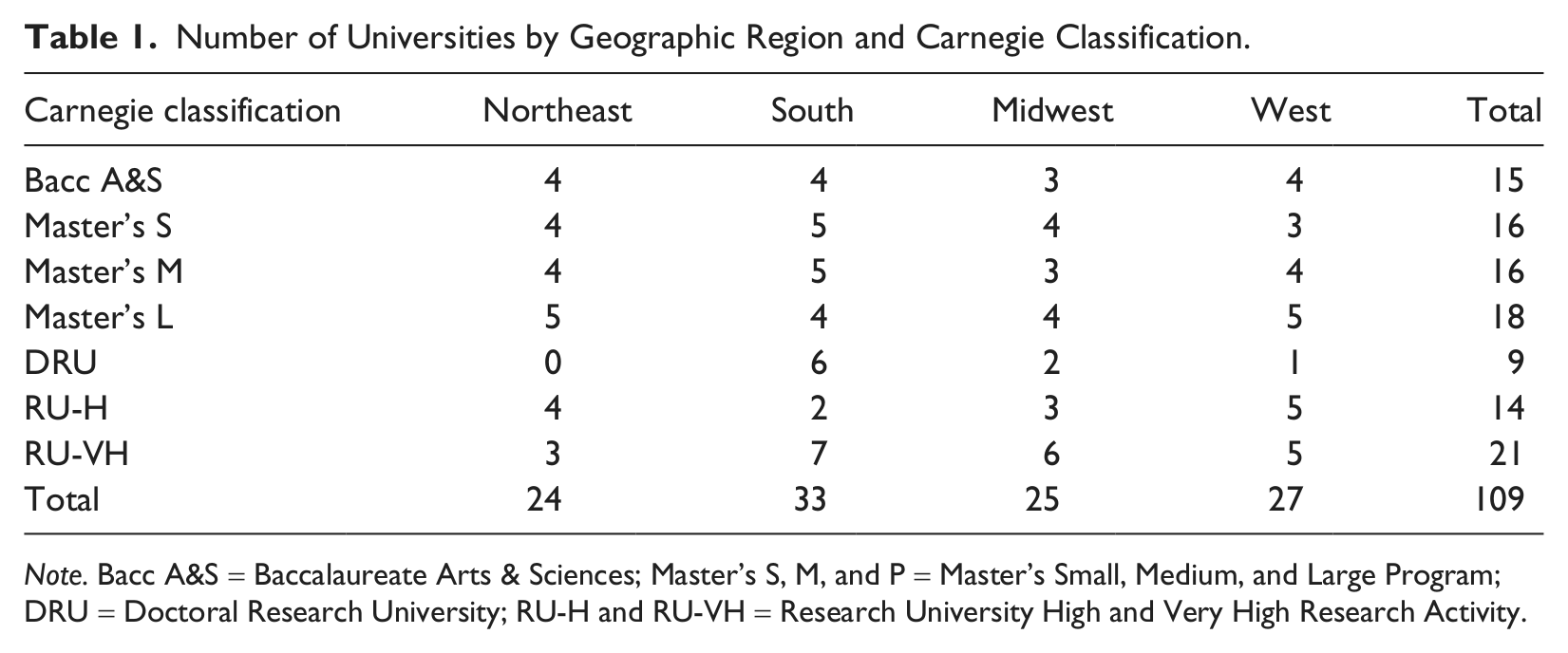
Note. Bacc A&S = Baccalaureate Arts & Sciences; Master’s S, M, and P = Master’s Small, Medium, and Large Program; DRU = Doctoral Research University; RU-H and RU-VH = Research University High and Very High Research Activity.
University websites were then examined to determine if the university offered a bachelor’s degree with initial certification in elementary education. Universities that did not offer this degree were removed. For universities that offered the degree, the university catalog (or bulletin) was referenced through html or pdf format. The college or school that housed the elementary education program was located and the required coursework was examined.
Analysis of Curricula
Information on required courses needed for the completion of an elementary education degree was sought through websites and university catalogs. Only courses required for graduation in elementary education were examined. Elective courses were not included in the review, because it is not guaranteed that students will take these prior to graduation. For each area identified below, if course descriptions listed multiple course objectives that included the target areas, then the course was not counted in the data analysis. The rationale for this exclusion is that it is impossible to predict how a professor will integrate varying content into a course. For example, in a math methods course, the professor may discuss differentiation for 1 of 48 contact hours. Although the topic of differentiation was breached, it is not likely that a pre-service teacher would have enough skill to be able to differentiate math lessons effectively. Conversely, learning about differentiation for 45 of 48 contact hours should greatly increase the ability to perform the task. Course names and catalog descriptions were analyzed to determine the number of credit hours related to the following four areas: (a) characteristics of disabilities as it relates to special education, (b) differentiation of instruction/inclusive practices, (c) classroom and behavior management, and (d) collaboration. The criteria for each course are described below.
Characteristics of disabilities
The course title or description had to focus on the special education components of disabilities. For instance, a course description needed to mention disabilities within the context of a school environment. Example course titles were Introduction to Disability, Special Education, or Educating Exceptional Learners. Courses related to child development were not included, because they do not specifically focus on special education population and practices.
Differentiation of instruction or inclusive practices
Course titles or descriptions had to focus on preparing future elementary teachers to use methods and strategies for differentiating the curriculum for students with disabilities. An example course description was a course that mentioned students would learn how to utilize UDL to reach students of varying ability levels, including students with disabilities. Courses related to “culturally” or “linguistically” diverse populations were not included in the analysis, because they do not specifically focus on students with disabilities.
Classroom behavior management
Any required course (i.e., general education, elementary education, or special education) related to classroom management was examined for course titles or descriptions that mentioned managing student behavior, with management being the primary focus of the course. If the description mentioned managing student behavior within a list of multiple course objectives, the course was not included in the analysis. The rationale for exclusion of multiple course objectives is that managing behavior is a complex task that requires more than one fourth of a course focus.
Collaboration
Courses were included if the title or description mentioned that students would learn collaborative strategies between general and special education teachers. Courses that addressed collaboration with supervising teachers were not included in the analysis because it is expected that pre-service teachers would collaborate with their supervising teachers.
Following the identification of appropriate courses, course credit hours were entered into the spreadsheet. Once all universities and courses had been identified, measures of central tendency and standard deviations were performed to determine the overall credit hours specifically focused on training future elementary teachers material related to inclusion of students with disabilities. Universities that offered zero (0) credit hours were included in the measures of central tendency to reflect the average credit hours accurately.
Inter-Rater Reliability
To assess the accuracy of data collection, the authors collected inter-rater reliability data by identifying 40 (37%) of the universities and independently identifying and coding the courses and number of credit hours. Inter-rater reliability was determined by total agreement measures. A total of six data points (i.e., total credit hours, education credit hours, and credit hours for the four course types listed hereinbefore) were collected for each university. Comparisons were made between reviewers and agreements were divided by total number of data points. For example, if the authors agreed on 5 of the 6 data points, inter-rater reliability was 83%. Inter-rater reliability for the sample in the study was 89% (ranging from 50% to 100%).
Results
Credit Hours
The minimum number of hours required for graduation for this study averaged 124.39 (SD = 8.47) credit hours. Of these credit hours, an average of 59.80 (SD = 13.31) credit hours were solely dedicated to teacher education requirements for initial certification (see Table 2).
Measures of Central Tendency and Range of Credit Hours for Sample.
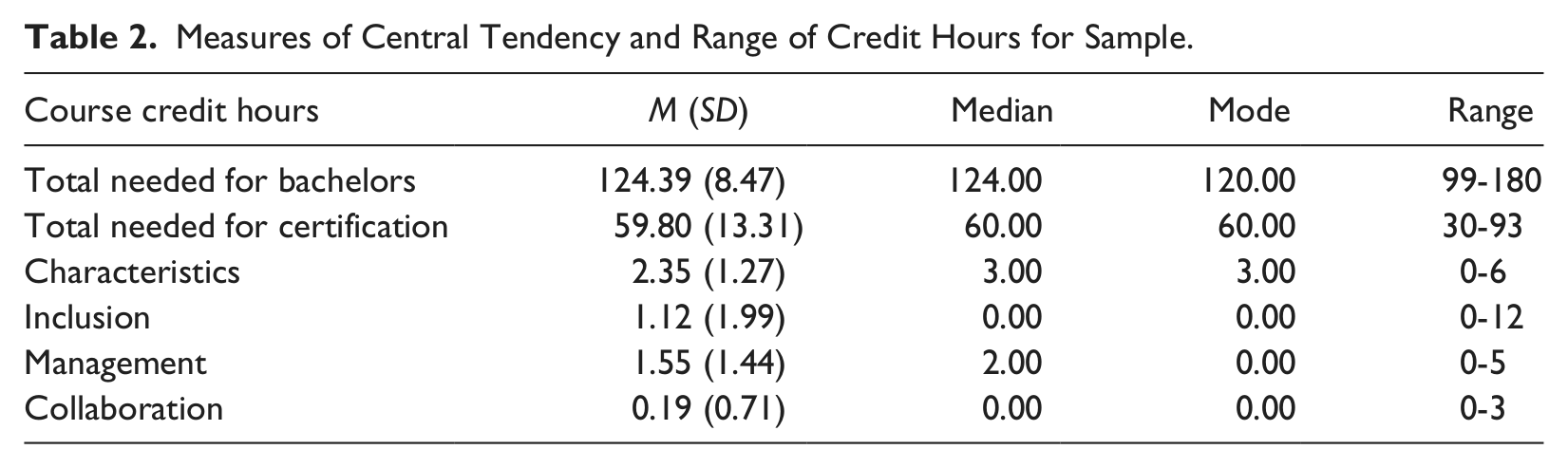
Credit hours assigned for characteristics of disabilities averaged 2.35 (SD = 1.27). This accounted for 3.9% of the credit hours students took to become certified in elementary education. Four universities (4%) offered more than 3 credit hours on the topic of disability characteristics. Seventy-three (67%) universities required 3 credit hours of this type of course information, while 21 (19%) did not require any credit hours devoted to this subject.
Inclusion of students with disabilities or differentiation of instruction for disabilities accounted for an average of 1.12 (SD = 1.99) credit hours. This type of course comprised an average of 1.9% of education coursework for future elementary educators. Seven universities (6%) offered more than 3 credit hours explicitly focused on inclusion in the general education classroom. Twenty-nine universities (27%) offered at least 3 credit hours related to inclusion of students with disabilities, while 73 (67%) universities did not offer a course on this topic.
Management of student behavior courses averaged 1.55 (SD = 1.44) credit hours. Management of specific courses comprised 2.6% of education coursework. Three universities (3%) offered more than 3 credit hours on the topic of classroom behavior management. Universities that offered at least 3 credit hours devoted to management made up 41% (n = 45), while universities that offered zero credit hours made up 40% (n = 44).
Credit hours devoted to collaboration between general education and special education teachers made up an average of .19 (SD = .71) credit hours, making up less than 0.3% of education coursework. Only 6 (6%) of universities offered 3 credit hours devoted to collaboration. A total of 101 (93%) universities did not offer courses specific to collaboration.
Geography, Carnegie Classification, and NCATE Accreditation
Figures 1 and 2 present data graphically related to the credit hours offered by Carnegie classification and geographical location, respectively. From review of the figures, it is clear that most universities across classifications and regions required a course related to characteristics of disabilities. Universities included in the sample required between 4 (bachelors arts and sciences) and 6.14 (Research University—High Research Activity) credit hours related to inclusion of students with disabilities in the general education classroom. Within these hours, one third to one half of required courses is related to characteristics of students with disabilities.
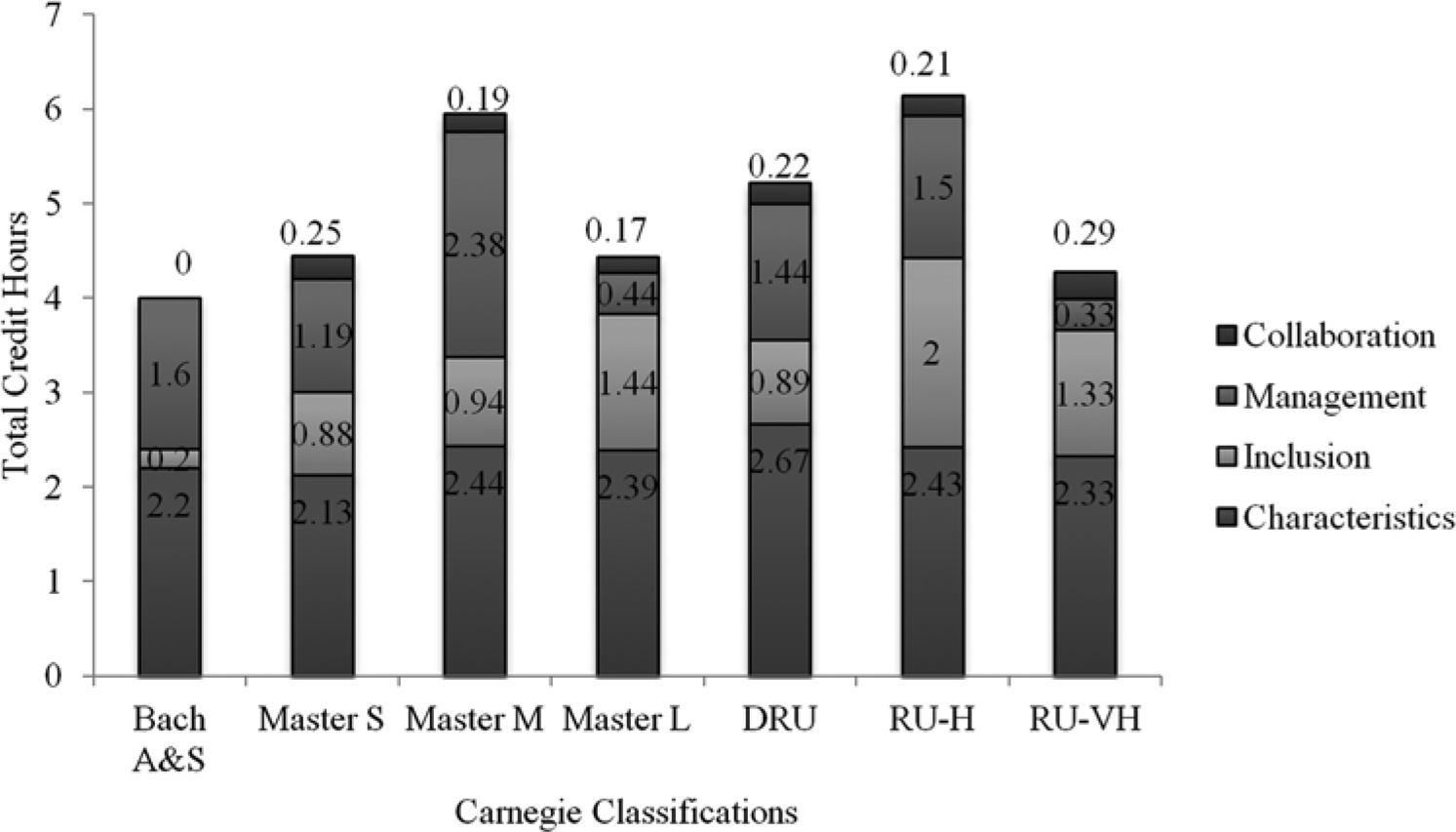
Mean credit hours for coursework by Carnegie Classification.
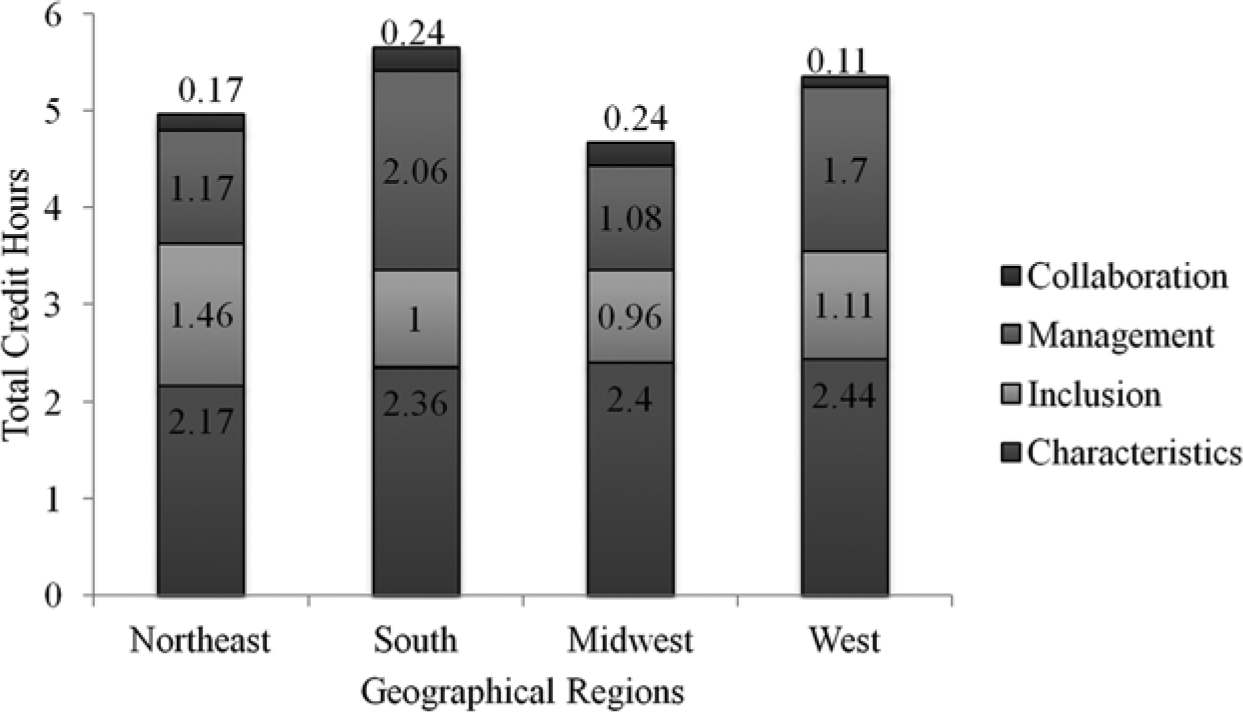
Mean credit hours for inclusion courses by geographical regions.
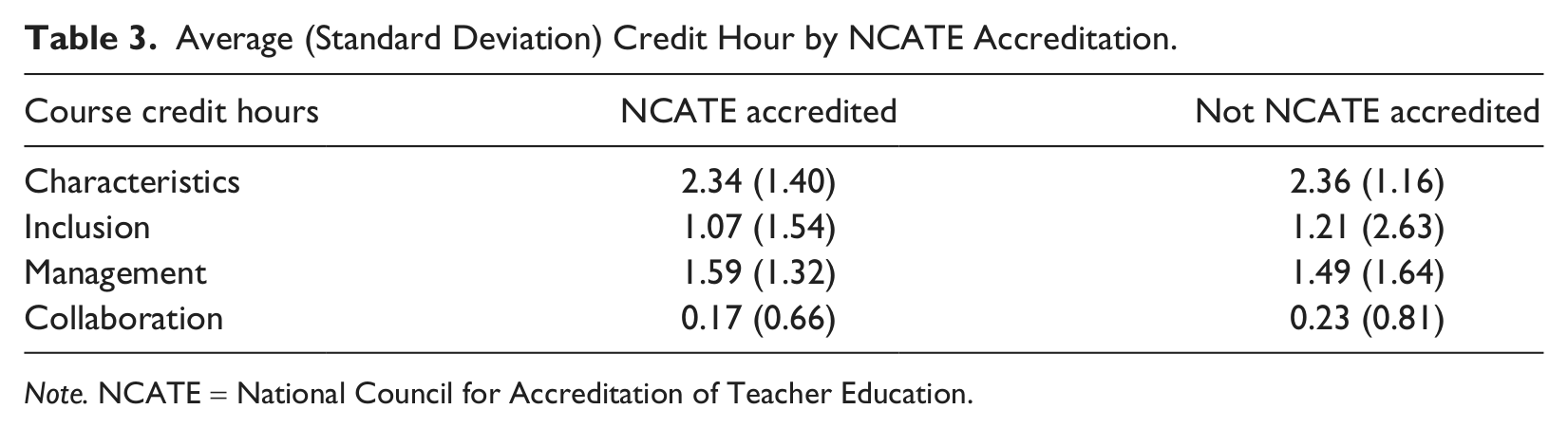
Figure 2 shows a range of 4.68 (Midwest) to 5.66 (South) credit hours related to inclusion of students with disabilities. The greatest variation among geographical regions involves classroom behavior management course credit. Universities in the Midwest region required an average of 1.08 credit hours, while the South region required 2.06 credit hours. Again, the bulk of the credit hours are made up of courses related to characteristics of disabilities. Table 3 shows the average credit hours based on NCATE accreditation.
Average (Standard Deviation) Credit Hour by NCATE Accreditation.
Note. NCATE = National Council for Accreditation of Teacher Education.
Discussion
Inclusion of students with disabilities has been a topic of inspiration, passion, and contention for many years. Schools and school districts are placing students with disabilities in classrooms with general education teachers at high rates (U.S. Department of Education, National Center for Education Statistics, 2012). The current study sought to determine the explicit training with respect to including students with disabilities that general education teachers received at the pre-service level. Across our sample, nearly half of the university course credits needed to earn a bachelor’s degree were dedicated to teacher preparation. Of that proportion, between 7% and 10% (7 credits) of education-specific coursework was dedicated to issues related to educating students with disabilities in inclusive settings. It is evident that many university teacher preparation programs in elementary education are allocating minimal coursework to issues related to disabilities and may not be adequately preparing their graduates for entry into today’s inclusive schools. Considering the average coursework related to inclusion was less than 7 credit hours of work (see Figures 1 and 2), this may be one explanation why teachers experience burn-out and frustration related to their job and 30% are likely to leave the profession within 3 years (Plash & Piotrowski, 2006).
Characteristics of Disabilities
Harvey, Yssel, Bauserman, and Merbler (2010), in their survey of higher education faculty at 145 institutions, found that 35% of faculty noted a course related to characteristics of disabilities. Two thirds (67%) of the reviewed Universities required at least 3 credit hours of a “Characteristics of Disabilities” type of course. This is good news; the current study’s findings show almost twice the number of institutions as the Harvey et al. (2010) study. Powers (1992) showed that requiring even one special education course significantly improved attitudes and instructional competencies in pre-service teachers. However, many universities are not requiring courses dedicated to characteristics of students with disabilities, special education law, identification, or eligibility. Consequently, pre-service teachers in nearly a third of the reviewed programs received no required content on special education despite an NCATE Standard 4: Diversity requirement that programs prepare future educators in the area of educating diverse learners.
One common concern expressed by special educators about general educators is that they may not understand students with disabilities or their role and responsibility in providing education to students with disabilities. In a qualitative study by Prather-Jones (2011), one participant reported that working with general education teachers was the most difficult part of her job. Others reported that when general education teachers understood and accepted students with disabilities, they felt more supportive in their role as a special educator. How general education teachers treated students with disabilities translated to collegial support for the special educators. While one stand-alone course in special education may not be sufficient to address all of the skills and competencies required to educate students with disabilities in the general education classroom, it may be an important first step in preparing pre-service teachers.
Differentiating Instruction
Only 27% of the reviewed universities offered at least 3 credit hours explicitly related to inclusion of students with disabilities. This is surprising given that differentiating instruction benefits all learners, not just students with disabilities. Furthermore, teachers report that their confidence levels are increased when they are exposed to techniques that address inclusion in the classroom (Destefano, Shriner, & Lloyd, 2001). Unfortunately, based on this review, very few courses are dedicated to this topic. A significant component of differentiating instruction is designing lessons that have clear learning objectives and knowing the interests and preferences of students (Tomlinson, 2008). As noted earlier, it is important for general education teachers to understand and accept students with disabilities and to effectively differentiate the delivery of instruction, so they can convey understanding and show acceptance of students with disabilities.
Classroom Management
Less than half (41%) of the Universities required a 3-credit course on classroom behavior management. Managing disruptive and challenging behavior is one of the most stressful aspects of teaching. However, in many teacher preparation programs, students are not receiving training on classroom management and there is little evidence to show that classroom behavior management content has been given the same amount of contact time (i.e., 3 credit hours) with pre-service teachers as other subjects (e.g., reading). Furthermore, instructors of these classes may be teaching broad material, similar to a survey course, within their own levels of comfort (Stewart-Wells, 2000; e.g., within their philosophy of management) instead of evidence-based practices in managing classrooms, similar to a methods course. Communicating high expectations, utilizing behavior-specific praise, and implementing antecedent and reinforcement strategies have found to be critical skills for successful classroom management (Allday et al., 2012; Higgins & Moule, 2009; Stichter, Lewis, Richter, Johnson, & Bradley, 2006). Without competency and expertise to manage a classroom and address disruptive behavior effectively, teachers find the demands of students who exhibit problem behavior challenging and stressful (Emmer & Stough, 2001; Kaufman & Moss, 2010) Furthermore, students who demonstrate low academic performance are often at a greater risk for behavioral difficulties (Oliver & Reschly, 2010).
Collaboration
Of all the areas of reviewed courses, universities were least likely to require a course on collaboration. Only 6% of the Universities in our sample required a course on collaboration, despite the growing popularity of co-teaching as a model for addressing the instructional and behavioral needs of a wide range of learners. In the co-teaching model, the knowledge that one teacher brings can address the deficits of the other and vice versa. While this model is becoming more prevalent, the current study indicates that very few universities are preparing teachers adequately to teach using this collaborative model. Furthermore, the separation between teacher education and special education departments (i.e., separate departments, course requirements, and field experiences) does not present a model of effective collaboration (Arndt & Liles, 2010). Results from this study are similar to those of Harvey et al. (2010) in that they noted that 10% of faculty reported a course related to collaboration.
Limitations
A random sample of university teacher education programs was reviewed, which does not adequately represent the breadth of elementary education programs in the United States. For example, a number of universities that offer dual certification in elementary education and special education however, these universities were not included in our sample. A second limitation is that course syllabi were not examined. It is possible that courses cover some of the knowledge bases addressed in this study. While the authors acknowledge that students may have some exposure to the content in these knowledge bases, addressing such complex topics in a broader course simply cannot provide practice to mastery for pre-service teacher candidates.
Future Directions
Based on results of the current study, it is clear that most elementary education preparation programs are not offering extensive coursework on working in inclusive environments. Currently, we do not know exactly how many classes or credits would be ideal to result in adequate preparation for pre-service elementary education teachers working with students with disabilities in inclusive settings. However, our findings do suggest that one reason practicing teachers continue to report feeling unprepared to address the academic and behavioral challenges presented in inclusive settings (He & Cooper, 2011; Jung, 2007; Scruggs & Mastropieri, 1996) may lie in the number and type of courses offered related to inclusion of students with disabilities. Further study is warranted to identify specific topics that all teachers need to master to provide effective instruction to all students.
Perhaps the answer is not necessarily more classes, but also applied experiences in the fieldwork in inclusive classrooms with students with disabilities. Jung (2007) found that guided field experiences improved student teacher confidence in working with students with disabilities. Determining the effects of integrated fieldwork with students with disabilities would assist universities in providing better pre-service training for teachers in inclusive settings.
Future studies should critically examine course syllabi in relation to course title and description. It may be that courses incorporate issues focused on the needs of students with disabilities in these courses, but may not be named. In addition, the course title may name disability-specific content, but not provide enough depth in coverage. Reviewing multiple syllabi of one course, by different professors, would also provide insight into variations among instructors based on instructor knowledge and skill of the content.
Conclusion
Inclusion of students with disabilities in general education classes is much practiced. The purpose of this study was not to promote or criticize the practice of inclusion; rather, it was to bring to light the possible disconnect between what pre-service teachers are taught and what they face as practicing teachers. If inclusion as a placement for students with various disabilities is to be carried out successfully, teacher preparation will have to change to meet the needs of their graduates. Kerr and Nelson (2010) argue that the concept of “full inclusion” should be replaced by one of “supported inclusion,” in which students with disabilities and their classroom teachers have access to ongoing supports that meet their needs. Sharma, Forlin, and Loreman (2008) concluded, “the content and the pedagogy of a program are by far the most significant predictors of pre-service teachers’ attitudes, sentiments, and concerns about inclusion.” (p.783) Providing future elementary education students with sound knowledge and practice related to understanding disability within the context of school, differentiating instruction for various abilities, successfully managing students’ behavior, and working together with colleagues to meets student needs can only assist in making teachers stronger candidates when they enter the field, and more likely to work together effectively in meeting the needs of diverse learners.
Footnotes
Acknowledgements
The authors would like to thank Dr. C. Michael Nelson for his feedback on the manuscript.
Declaration of Conflicting Interests
The author(s) declared no potential conflicts of interest with respect to the research, authorship, and/or publication of this article.
Funding
The author(s) received no financial support for the research, authorship, and/or publication of this article.