



Abstract
Changing legal requirements, economic demands, accountability, and student demographics focus the need for reform among personnel preparation programs. Although redesign efforts in general and special education teacher preparation programs have increased, little evidence from research describes enhancement initiatives. In this article, the authors report the findings of an investigation of contextual variables related to reforming teacher preparation as reported by project personnel at Institutions of Higher Education (IHEs) who were awarded 325T priority grants by the Office of Special Education Programs (OSEP) during a 5-year period. This study employed a sequential mixed-methods design, which included (a) the administration of a survey to all project directors and (b) interviews with a purposive sample of project directors. From the analysis, results and future implications are included.
Redesigning Personnel Preparation: What We Have Learned
Over the past few decades, teacher education has faced a multitude of reforms aimed at increasing accountability for student achievement–results-driven accountability. To address the goal of school reform based on student results, recent initiatives have occurred concomitantly. Multiple reports after the publication of A Nation at Risk (National Commission on Excellence in Education, 1983) provided the catalyst for a national discussion about teacher knowledge, standards, and assessments. The Carnegie Forum on Education and the Economy (1986) published A Nation Prepared: Teachers for the Twenty-First Century that significantly expanded the view of effective teachers to include that “Teachers must think for themselves if they are to help others think for themselves, be able to act independently and collaborate with others, and make critical judgment” (p. 25). The Carnegie Task Force recommended the creation of a National Board for Professional Teaching Standards (NBPTS) to review and recommend revisions to standards and competencies for teachers while the National Council for the Accreditation of Teacher Education (NCATE) was similarly influenced by the larger push for increased accountability. The resulting revisions, known as NCATE 2000, shifted the national accreditation processes and judgments for the first time from a set of process standards that strived to standardize the content of teacher education curriculum and faculty and student qualifications to a set of standards that required a systematic assessment system that would measure candidate performance and provide results for a variety of stakeholders. The parallel and sometimes coordinated work among members of the teacher education organizations (e.g., NBPTS, Interstate Teacher Assessment and Support Consortium [InTASC], American Association of Colleges for Teacher Education [AACTE], and NCATE) resulted in a consensus of teacher knowledge and skills that was unprecedented in teacher education. For the first time, the teaching profession clarified and developed assessment systems considered by most to be essential for a profession (Darling-Hammond, 2001, 2004; Goodlad, 1990; Holmes Group, 1986). This body of knowledge to be learned and applied across multiple educational settings included specialized knowledge, extended internships, certifications, and professional autonomy for decision making. The focus had clearly changed from standardization of content and personnel to performance-based assessment systems that impact results (Ingersoll & Scannell, 2002).
In addition, special education teacher preparation continues to evolve to address contextual, political, and philosophical realities of service delivery for students with disabilities. This preparation has progressed from knowledge, skills, and competencies for teachers working in specialized, clinical settings to collaborative, inclusive classrooms. Legislative mandates have been the impetus for increased inclusion of students with disabilities, which in turn, requires collaboration between and among general and special education teachers. General education teacher preparation programs have responded to this reality in a variety of ways including increasing content on students with disabilities as well as exposure to working with students with disabilities and providing instruction to meet those needs. Nearly a decade ago, Pugach (2005) advocated for seamless preparation, explaining, “This work can be enriched immeasurably if it is conducted in joint fashion, in teams comprised of teacher educators from special and general teacher education, across content areas and multicultural education” (p. 578). Although the number of collaborative teacher preparation programs has increased, little evidence describing the collaborative work and enhancements exists. A key step in the process is understanding the context, including both the current realities and future directions (Brownell, Griffin, Leko, & Stephens, 2011). Given the shifting landscape in which education is enacted and the call for collaboration across disciplines as an effective strategy to improve student outcomes, this is the essential first step to critical self-study at the higher education level including institutional and program factors as well as individual propensity for engaging in purposeful collaboration. As posited by Pugach, Blanton, and Correa (2011), “to what extent are long-standing differences between special and general education continuing to operate, even at the level of subtext, as collaborative programs are developed?” (p. 195).
Background and Purpose of the Study
The purpose of the 325T priority, funded by the Office of Special Education Programs (OSEP), was to redesign and restructure teacher preparation programs to assure program graduates will meet state and federal requirements as highly qualified teachers (HQT) in special education and will implement evidence-based practices (EBP) within redesigned, inclusive teacher preparation programs. In addition, the primary focus was to improve learning outcomes of students with high-incidence disabilities (HID) in schools and districts not meeting federal targets for Adequate Yearly Progress (AYP). Seventy-six Institutions of Higher Education (IHEs) were awarded funding under the 325T priority (Cohort 1: 22 in 2007, Cohort 2: 20 in 2008, Cohort 3: 12 in 2009, Cohort 4: 9 in 2010, and Cohort 5: 13 in 2011) during the 5-year period of competitive grant awards.
The Collaboration for Effective Educator Development, Accountability, and Reform (CEEDAR) Center was funded to provide technical assistance to State Education Agencies (SEA), IHEs, and Local Education Agencies (LEA) to increase alignment in professional learning systems (i.e., certification/licensure, preparation, program evaluation) to enhance learning opportunities for teachers and leaders. As part of the Center’s knowledge development activities, the authors were charged with identifying salient lessons learned and best practices used to reform teacher preparation among the 325T grantees. The rich experiential knowledge of the 325T project personnel at the various IHEs was solicited to gain insights related to contextual factors that both facilitated and impeded reform efforts. Specifically, the following research questions were addressed:
Method
To gain their perspectives, this study employed a sequential (QUAN–QUAL) mixed-methods design (Onwuegbuzie & Teddlie, 2003), which included (a) the administration of a survey to all project directors and (b) interviews with a purposive sample of project directors.
Participants
For the quantitative phase of the study, project personnel from all 76 funded (active or closed) 325T projects were invited to participate in this study via email. The 325T grantees represent a diverse national representation, institution type, program size, and project focus. Projects were awarded to public and private IHEs in urban, rural, and suburban communities in every region of the continental United States and in Hawaii. Institutions range in size from under 5,000 to well over 50,000. Project directors focused on increasing preparation in EBP at the elementary and secondary levels with various additional foci (e.g., Science, Technology, Engineering, and Math [STEM]; literacy; English language learner [ELL]; urban schools; culturally responsive pedagogy; and dual licensure) and with different outcomes for completers (i.e., bachelor’s, master’s, initial certification, post-baccalaureate certification). The qualitative phase of this study involved semi-structured interviews with 12 project directors. The project directors were purposefully identified for interview to represent (a) each cohort, (b) each region of the country, and (c) varied institutional size.
Instruments
Survey
The survey, a combination of Likert-type and open-ended questions, addressed redesign efforts of teacher preparation programs. Content for the survey aligned with the stated program components from the 325T competition, as outlined by OSEP. Using constructs and evaluation components of the 325T competition, a survey entitled, 325T Program Improvement Grants Best Practices Review Survey, was developed. In this survey, participants were asked to respond to items organized in the following three sections:
Section 1
The first section included a series of 69 statements indicating the extent to which project directors agreed that their project had (a) been aligned with state licensure requirements (9 items); (b) improved their program’s organizational structure and instructional deliver (7 items); (c) improved curriculum and course content (9 items); (d) improved support for teacher candidates (11 items); (e) developed and implemented a comprehensive program evaluation (17 items); (f) found program components to be useful (7 items); and (g) identified factors that were challenging and/or barriers to full implementation (9 items) using a Likert-type rating scale.
Section 2
This section included a set of three open-ended questions regarding specific resources that supported project goals, project accomplishments, and additional comments.
Section 3
This section included a demographic profile, including institution size, setting, focus of training, and year of awarded funding.
After the initial development of the survey, an external consultant with expertise in statistical analyses and survey research reviewed the instrument for clarity. When revisions were completed, the draft survey was sent to personnel at OSEP for review and approval. The approved survey was uploaded into an electronic survey software program, Survey Monkey, for dissemination and data collection. Administration of the survey to a pilot sampling of seven project directors provided the researchers with feedback regarding clarity of questions and time of completion. Feedback from participants in the pilot sample stated that no revisions were needed in the survey regarding either the logistics for completion or content.
Interviews
The authors, based on preliminary analysis of the survey results, developed a semi-structured interview protocol. The interview protocol, the OSEP 325T Best Practice Review and Lessons Learned Interview, was designed to gather information across a variety of topics regarding the implementation of the 325T projects. The 11 prompts pertained to the contextual factors impacting redesign efforts, including roles and responsibilities, collaborative processes, stakeholder involvement, resources, pedagogy, sustainability, and recommendations.
Procedures
Phase 1: Survey
A cover letter was electronically mailed to each of the seventy-six 325T project directors, with an electronic link to the survey requesting completion within 2 weeks. At the end of the 2-week period, a second electronic mail message was sent to all 76 project directors as a reminder to complete the survey within the following 2 weeks. A third and final request was sent asking for completion within 1 week.
Phase 2: Interviews
The researchers recruited participants to assure variability as previously described. The study was introduced in an email communication and information regarding the intent was reviewed to obtain consent to participate. The three researchers each conducted telephone interviews with four project directors. Each interview lasted between 35 and 75 minutes and was audio-recorded for transcription and analysis. In addition, each researcher kept notes during interview process.
Data Analyses
Survey
Descriptive analyses were completed through Survey Monkey software for each of the multiple-choice questions of the survey. For the open-ended questions, the researchers reviewed the print transcriptions of the narratives. Verification strategies for assuring reliability and validity of the findings were employed during the data analyses processes as established prior to initiating this research (Morse & Richards, 2002). Data collected through each of the open-ended questions were checked. Using the transcription from each of the responses, categories for analysis were generated and defined by the researchers who independently examined the data. For each issue/question, the responses were reviewed for common ideas and themes (Strauss & Corbin, 1990)and used to develop an initial list of categories using guidelines suggested by Miles and Huberman (1994) for data analysis and reduction. The researchers strategically designed a plan to maximize collaborative analysis. Nielsen (2012) explained the benefits to such a process:
Collaborative analysis performed by a (small) group of researchers may well create the advantage to the researchers informing, influencing, and justifying through a dialogue with each other how they can arrive at a joint analysis. Differences in perceiving the data can then be viewed as opportunity for learning rather than merely a source of reduced reliability. (p. 6)
The analyses of these data served to inform the subsequent follow-up interview questions for the second phase of this research.
Interviews
The interviews were transcribed verbatim and the transcriptions were imported as media files into Dedoose (2013) for coding and analysis. Dedoose, a collaborative, cross-platform application for the management, integration, and analysis of quantitative and qualitative data, was employed to organize, interpret, and analyze the interview content.
The research team collaboratively developed the coding scheme through an iterative process. First, broad categories of content related to “roles,” “sustainability,” “collaboration,” “challenges,” and “resources” were developed and applied to interview excerpts. Next, a more specific set of codes for content related to “resistance to change,” “impact,” and “macro-level challenges” were then developed and applied. During the process of validating the coding system, all members of the team independently coded a sample interview. Acceptable levels of inter-rater agreement were achieved before the remaining interviews were coded. To ensure inter-coder agreement, the team communicated regularly to negotiate and resolve issues. Each transcript was read and coded by two of the researchers who had not conducted that particular interview. It was agreed that when the second reviewer coded a completed transcript, the reviewer would read the entire manuscript, reviewing each coded excerpt to determine agreement of coding. Reviewers found that, in some instances, an excerpt warranted an additional code; hence, the code(s) were added. The second review was conducted, following an inter-leaving coding process (Nielsen, 2012), to serve as a quality control to ensure that all comments were coded. Codes were applied and data were analyzed by coder, transcript, excerpt, and code application using Dedoose. For example, each user could determine what an individual coder coded, what code(s) were applied to a particular excerpt of text, the frequency of a code’s use, and the co-occurrence of particular codes.
Results
Survey
As previously noted, the survey was administered using Survey Monkey, which allowed participants to access it electronically and simplified the data organization and preliminary analysis.
Demographics
Forty-five of the seventy-six 325T project directors completed the survey, for an overall return rate of 62.5%. Descriptive analyses of Section 3 of the 325T Program Improvement Grants Best Practices Review Survey (demographics) summarized the characteristics of the institutions of the respondents. Data were collected and disaggregated by individual questions, cohort, type, and size of institution. Respondents represented each of the five cohorts funded, with Cohort 2 (2007-2008) having the largest participation (33% of total responses) followed by Cohort 3 (23.1%); Cohort 1 (17.9%); Cohorts 5 and 6 (10.3%); and Cohort 4 (5.1%). Participants responded from rural, suburban, and urban settings, with 57.5% employed at urban, 25.5% at suburban, and 15% at rural IHEs. Twenty-two percent of respondents represented a Historically Black College or University (HBCU). The reported foci of the teacher education reforms from the 325T projects were similar, with slightly more graduate programs (55%) than undergraduate programs (52%) undergoing reforms. It should be noted that multiple selections for this question were allowed.
Quantitative Analysis
Descriptive analyses of the multiple-choice questions of the 325T Program Improvement Grants Best Practices Review Survey were completed. Participants most strongly agreed with questions directly related to program improvement of specific course enhancements and assessments. Results also indicated implementation of redesign activities from content revisions within syllabi to continuous program improvement. Ninety-eight percent of respondents agreed and strongly agreed that their redesigned syllabi reflected revisedstate certification requirements and standards to assure graduates met the current requirements of “HQT.” One hundred percent of respondents strongly agreed and agreed that multiple courses now included EBP to meet the needs of students with HID. Implementation ofEBPs extended into clinical learning, as 97% of respondents reported enhancements in clinical experiences, as well. Within the domain of program evaluation, 100% of respondents reported that data are systematically collected, analyzed, and used within continuous program improvement efforts.
Responses to questions that included additional collaborative educational partners varied. Within the domain of active participation within state networks, 75% of respondents reported an existence of active policy networks of IHEs within their states (see Figure 1). Although input to policy development was reported by 73% of respondents, organizational structures to sustain IHE input into policy development was reported as 50%.

State licensure or certification requirements alignment.
The organizational structure and instructional delivery included multiple faculty and courses impacted by reform efforts. One hundred percent of respondents strongly agreed and agreed that multiple courses were enhanced during implementation of the 325T projects (see Figure 2). Structures to sustain and continuously enhance organizational delivery through collaborative research were reported as less than 60% agreement, however
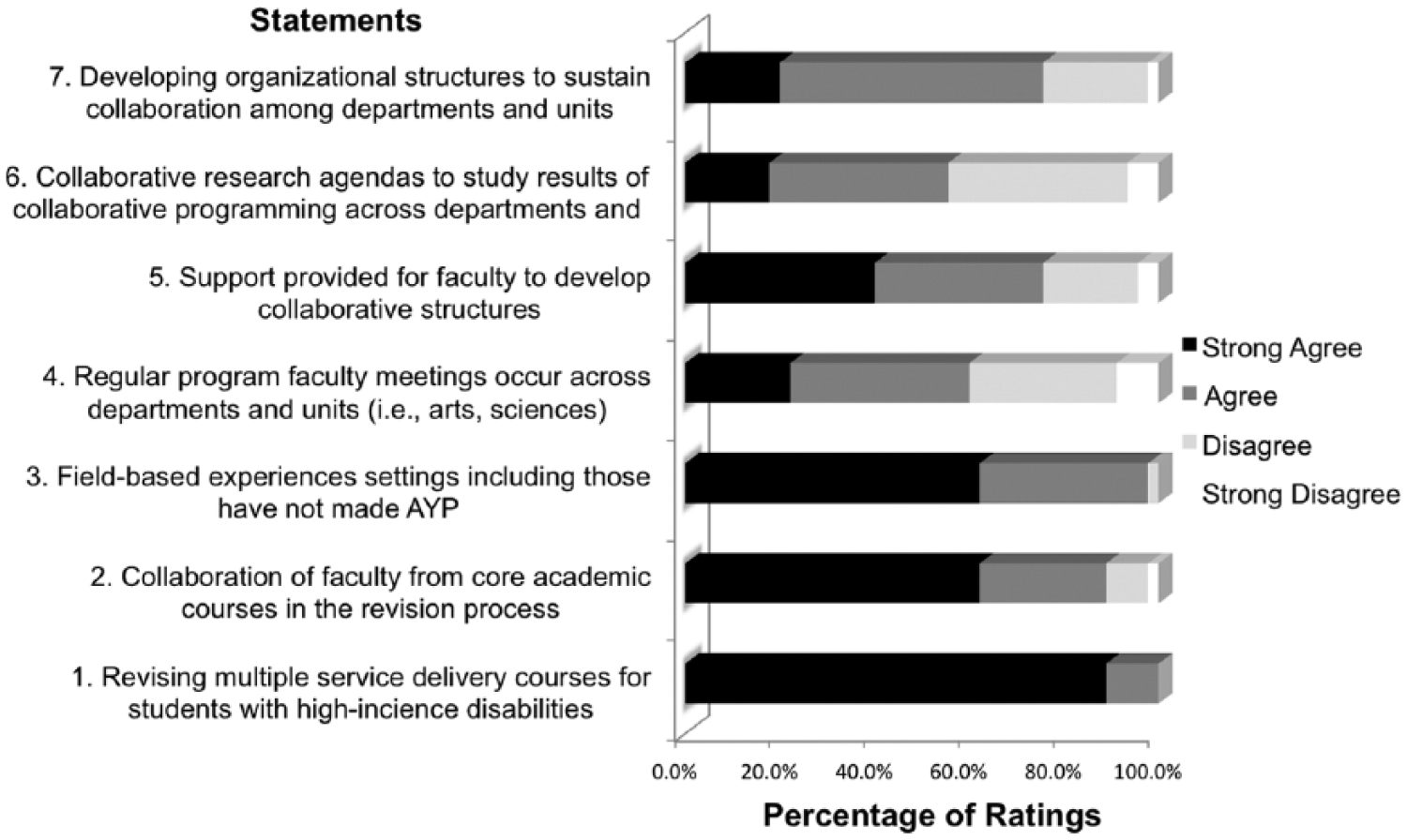
Organizational structure and instructional delivery.
The domain of improvement in both curriculum and course content in special and general education was reported with the highest levels of agreement and strong agreement across each of the questions. Indicators including course content with EBPs, IRIS content modules, and inclusive practices were each reported by more than 95% of respondents (see Figure 3). Collaboration with faculty in arts and sciences was reported as 57%.
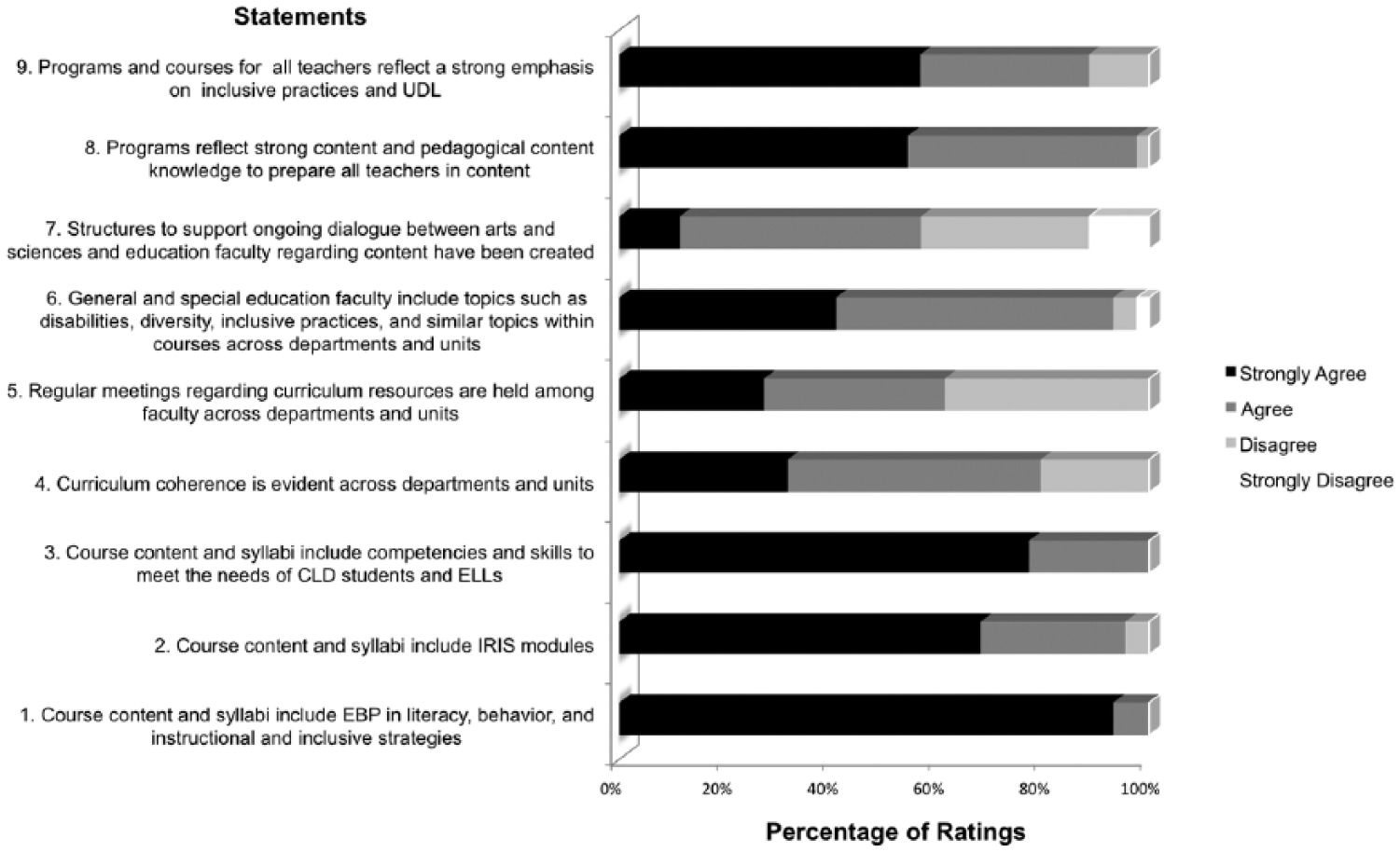
Curriculum and course content improvements.
Within the domain of improved student support during the transition from preservice courses to clinical experiences, although extended clinical learning and field experiences was reported at 97% agreement, collaborative structures were reported with much less agreement (see Figure 4). For example, regular meetings for beginning teachers were reported by only 35% of respondents and new teacher mentoring systems were reported by less than 50% of respondents.
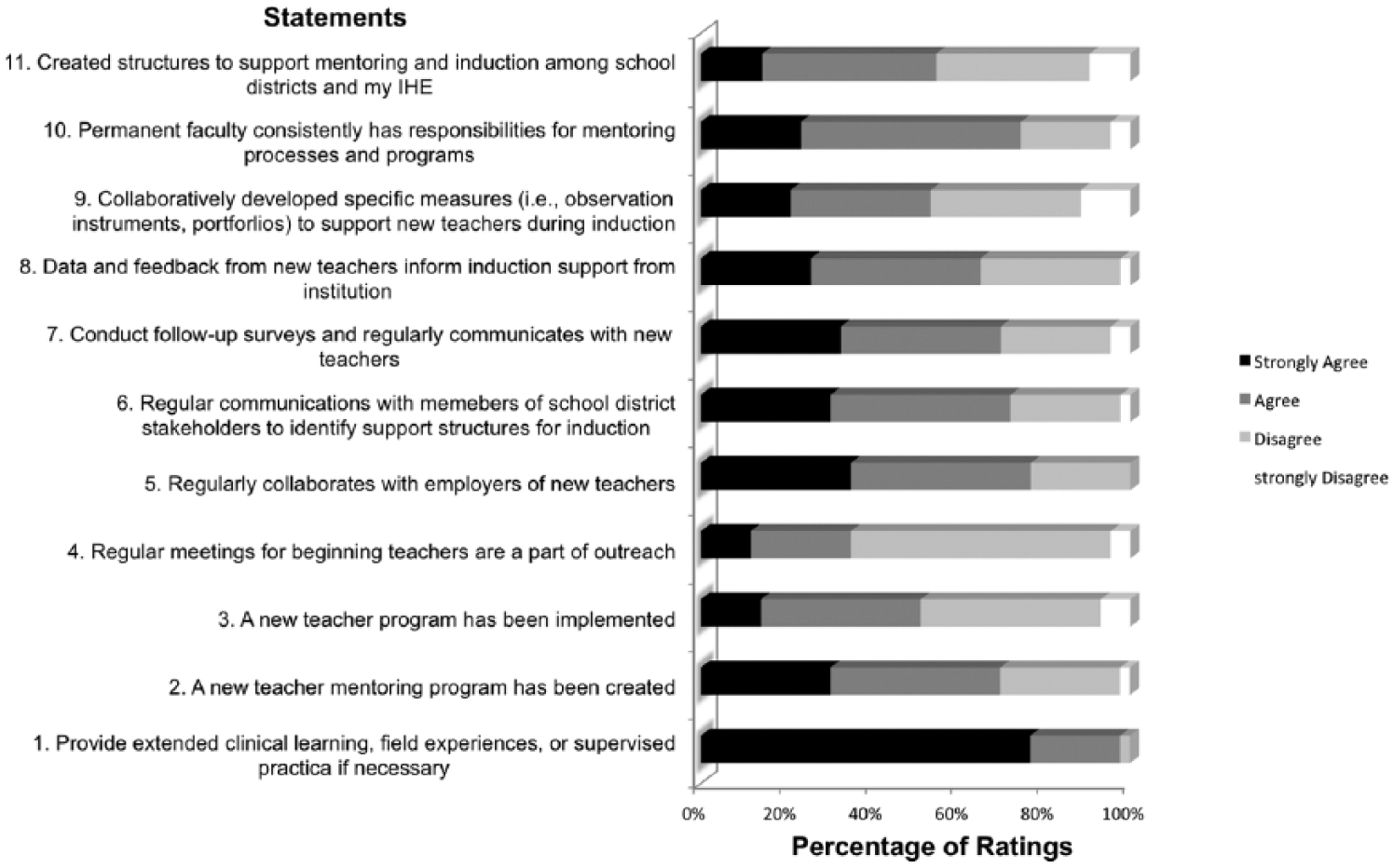
Support for teacher candidates.
One hundred percent of respondents agreed that data are systematically collected, analyzed, and used to inform continuous program improvement, as well as used to address program goals (see Figure 5). In addition, 98% of respondents agreed that results from ongoing data collection inform proposed changes to programs. These data sources, however, do not appear to include information regarding faculty knowledge of EBPs (as reported at 70%) and P-12 student data (as reported at 56%) at the same levels of agreement.
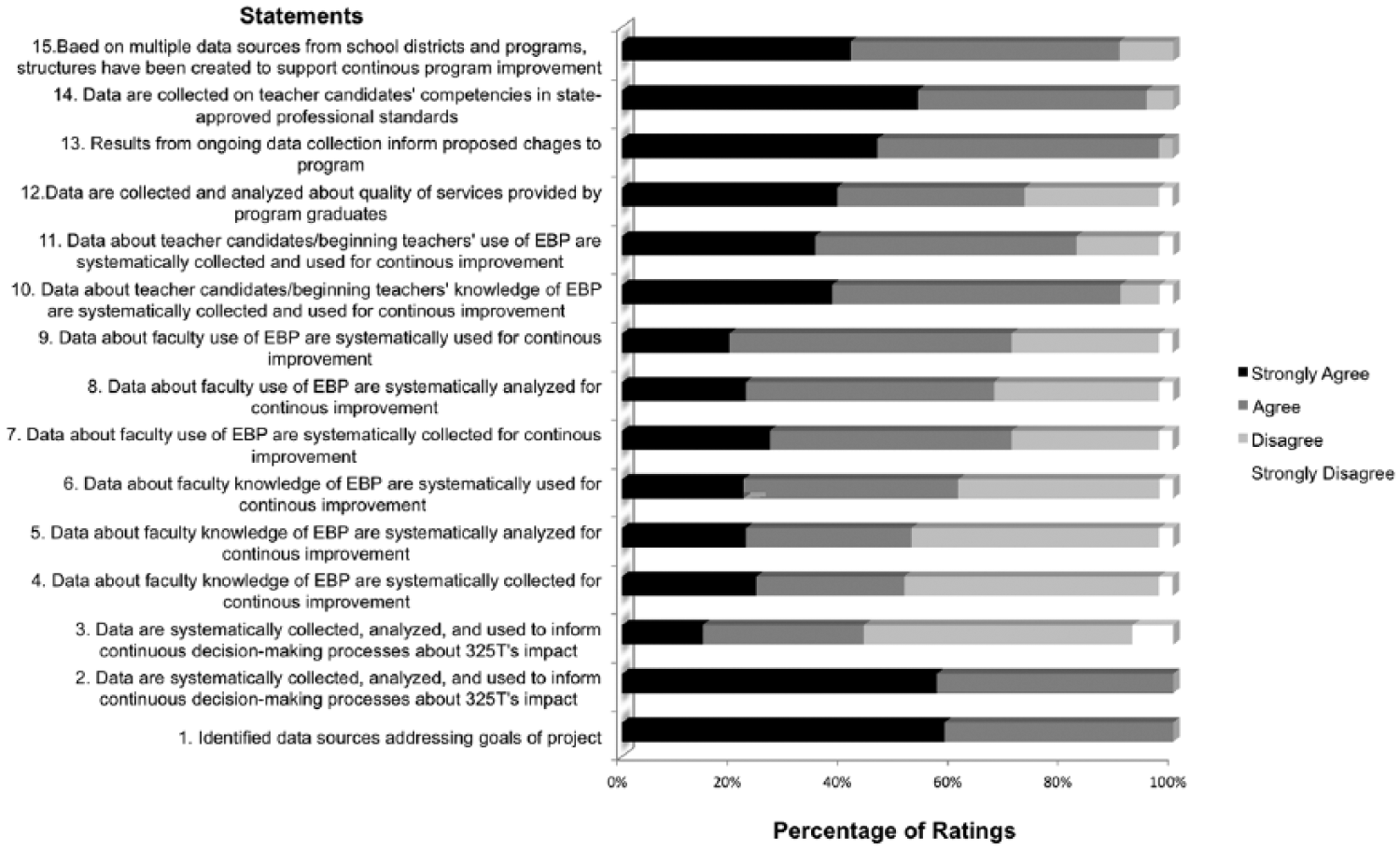
Comprehensive program evaluation improvements.
Program support to initiate and sustain the completion of 325T project goals and activities were reported from multiple sources with varying levels of agreement. Several examples and percentage of agreement include resources for other federal projects (95%), meetings with other grantees at national professional meetings (90%), and contacts with OSEP project personnel (80%).
The last section of the Likert-type questions within the survey addressed perceived challenges and barriers to full implementation of the goals and activities of the 325T program improvement grants. A change in personnel was identified as the greatest challenge, with an agreement of 56% of respondents. Legislative and policy revisions were reported by 46% of respondents as another challenge to 325T program improvement efforts. In contrast, lack of technical support was identified by only 5% of respondents.
Qualitative Analysis of Interviews
The survey findings informed the development of the semi-structured interviews. Specifically, questions were designed to gain more insight into the extent to which project goals were met, what lessons were learned throughout the reform process, and what processes facilitated implementation.
Interview Analyses
The interviews yielded 143 pages of transcripts and 1,286 applications of 25 codes and sub-codes. The greater frequency of some codes was expected because of the nature of the questions (e.g., project goals). Table 1 shows the weight or frequency of each code. The following themes emerged: (a) collaboration, (b) program coherence, (c) resources, (d) hindrances to redesign, and (e) impact and sustainability.
Code Application.

Note. PI = principal investigator; SEA = State Education Agencies; LEA = Local Education Agencies.
Collaboration
Collaboration across multiple stakeholders, including teacher candidates, colleagues within the program, colleagues across departments, colleagues at other IHEs, partners in school districts, and colleagues at SEAs, was a prominent theme. Several specific exemplars included support for collaborative structures provided and collaboration across disciplines that resulted in revised courses. In some instances, collaboration was already a vital part of the professional work within settings; other participants discussed that collaboration was a challenge and was a stated goal for their project. Working with colleagues within programs and across programs was central to change efforts and this often involved program leaders, department chairs, and deans. One project director talked about the process:
On the core team that we put together, there was representation from every area. So, there were people whose expertise was in special education, people whose expertise is in reading, and people whose expertise is in ESOL and general education . . . we met once a month to discuss how things were going with the project and what our next steps were and what we were going to work on . . . then disseminated that to other faculty.
External partnerships were forged across institutions, as well. Faculty from various IHEs developed consortia with other 325T grantees in their state. Some faculty members were already a part of state-organized higher education groups. Participants described these networks as invaluable support systems and opportunities to further develop ideas. One project director shared “The collaboration, I think, is the best part of the grant. The five institutions have such a good relationship now with other faculty members that we know that we are there for each other for support even when the grant funding ends.”
Despite the overarching theme of collaboration, barriers to collaboration were described. One project director shared, “By far, the greatest area of resistance actually to change has been with special education faculty.” Resistance to collaboration and redesign was described often. In addition, leadership support to develop and enhance collaborative relationships was described as critical, particularly when faculty participation was a challenge. At times, institutional and program leadership support was passive rather than active. Conversely, when leaders were involved, they were often connected to the work and served as advocates and liaisons with state agencies (e.g., connecting SEA licensure offices with program revisions). This was especially evidenced when creating systems to ensure closer networking relationships with state departments of education to co-construct policy, as opposed to involvement that focused solely to responding to policies and mandates.
Program coherence
Alignment within the redesigned personnel preparation programs, as well as alignment with other content disciplines to meet revised and current state and professional competencies, was a clearly defined theme. This included evidence-based practices that foster inclusive education (e.g., universal design for learning, differentiated instruction, strategy instruction, cooperative learning, and accommodations) from initial awareness in syllabi to demonstration by teacher candidates within clinical settings. Considerations for planning for dual licensure options were also described by respondents as discussions of competencies across courses and experiences included both faculties from special and general education.
Access to professional resources, websites, and strategies was often described as an essential component to the redesign efforts. Respondents reported use of resources available through the federally- funded centers and projects. Each interviewee discussed the IRIS Center resources and their use within course redesign, especially related to EBPs, in both special and general education courses. One project director said, “Almost in all of our classes, we incorporated some of the IRIS modules. . . . we published a paper on incorporating UDL into one of our methods classes.” When asked about the use of other federally-funded Centers, resources such as Doing What Works, What Works Clearinghouse, the Monarch Center, and other Technical Assistance and Dissemination centers were described.
Resources
Effective professional development was consistently described as integral to deepen educators’ content knowledge and skills to provide effective instruction and to assess student progress among faculty members of both special and general education. Newly-revised expectations and competencies required learning, resources, and support for faculty and instructional personnel(e.g., expertise in culturally responsive pedagogy, EBPs, content- specific standards). At times, project funds supported external consultants to facilitate faculty professional development in specific areas (e.g., literacy content, STEMstandards, culturally responsive pedagogy) and other consultants to facilitate the reform process. One project director noted, “Hearing from a colleague that has walked-the-talk of dual licensure provided just the shot-in-the-arm that our faculty needed.” Other professional development opportunities and consultants were provided continuously through multiple formats: professional learning communities (PLCs), shared information from experts in the field, book studies, and lesson studies.
The resources of federal funding facilitated achievement of multiple goals within the redesign efforts. Funds were used primarily for course reassignments to faculty, which provided time for faculty to collaborate and complete curriculum reviews, planning, and redesign. Furthermore, many project directors believed it was incentive for faculty to participate and have “the time and space so that we could really think outside the box.” In some cases, rather than releasing personnel from courses, funds were used to support administrative staff such as project coordinators or outreach specialists. One project director reviewed the roles of the coordinator that included monitoring data, managing daily activities, and ensuring faculty felt supported. Simply stated, “It really took having one person whose responsibility was to solely work on this (redesign) project to move it forward.”
Finally, each interviewee discussed time as a necessary resource. As mentioned, interviewees were provided time allocations through reassigned time for project personnel, time added with the employment of a project coordinator, or rededicated time through retreats and meetings. Just as importantly, interviewees were thoughtful about their spending and wanted to use project funds in ways that would have long-term use and impact, including leveraging resources across projects and from within their IHE.
Hindrances to redesign
Contextual challenges to redesign were evident from individuals to socio-political factors. As was mentioned, some faculty members, both special and general education, were resistant to change as related to program improvement. This was common across interviewees. In addition, faculty wanted more meaningful engagement with members from the SEA. Interactions reportedly varied from passive attendance to a lack of interaction. One interviewee stated, “The assistant state superintendent attended several of the partnership meetings, which were conducted monthly. The meetings presented the grant activities and gave an update.” Another interviewee discussed that in her state, “higher education is not really involved in the decision-making . . . it’s happening to us, not with us.”
At the program and institutional levels, however, factors hindering redesign varied due to institutional context. For example, institutional issues, particularly for small schools, included a lack of infrastructure. As one respondent noted, “We did encounter a lot of institutional barriers, so everything from how to set up a grant account to how to manage our budget were challenges.” Another concern was having few partner schools that could provide appropriate field placements and teacher mentors for teacher candidates.
Impact and sustainability
Systems for data collection to measure outcomes for continuous improvement were developed, described, and conducted at various levels of analyses. Teacher candidate knowledge and skills, as well as impact on K-12 student learning, were described as integral to determining impact of the redesigned program. One participant shared that they received “accolades from local districts that our candidates are entering the field more like second-year teachers.”
Faculty were concerned that project accomplishments such as initial professional development efforts may not sustain after funding ceases. Therefore, project funds spent on faculty professional development, infrastructure, and resources were viewed as investments in the ongoing development of the collaboration and continued program renewal. Faculty knowledge and skills translated to shared expertise that benefited teacher candidates across a variety of program areas. To sustain these efforts, structural alignment occurred within various institutions. For example, “We’ve adopted a UDL format lesson plan across the curriculum. All special education, elementary, and secondary courses began a UDL-based lesson planning format which was definitely not easy at all.” By leveraging support from the college, an even greater impact was made. A participant described a center that was a result of the program redesign:
We also opened a tutoring center for our candidates to support them in their reading competency assessment, which is required of special education teachers in this state, as well as to provide . . . writing support. The third prong is in the math/science [specialization] as we have a math/science tutor who supports students in the content that they are required to know for the assessment that they must take to get into the secondary program.
Another example of sustainability involved a number of projects that created professional development for mentor teachers within the public schools. One project focused almost exclusively on preparing mentors who were prepared with the same knowledge and skills that teacher candidates received. A project director shared, “We’re setting up online training modules for our mentor teachers in the school districts.” At the school level, one grantee explained that she intended “ . . . to work with the school districts to see if there’s a way that teachers can get professional development recertification hours for their involvement even though this was part of their work day.”
Although the project goals varied, interviewees shared a common focus to prepare HQT skilled in EBPs. Their collective experiences and knowledge suggest that collaboration at multiple levels is critical and can alleviate some of the challenges that these participants faced. Furthermore, ongoing communication and shared vision can influence higher education across an entire state or change a culture within a college or school of education. The economy has affected funding and it is necessary to leverage resources as much as possible, but this can only happen through collaboration. A project director summed it up, “We’ve been working very collaboratively with all of the existing structures and processes, so they can be sustained over time.”
Discussion
The purpose of this research was to investigate the programmatic enhancements and contextual variables that impacted program redesign efforts among universities and colleges toward providing collaborative programs of teacher preparation in special and general education focused on implementation of EBPs as a result of federal investments from the OSEP. The 325T Program Enhancement projects, awarded to faculty at 76 universities and colleges, appear to have directly impacted program revisions and enhancements at the national, state, and university levels. Faculty supported by the 325T projects focused on substantive redesign efforts including evidence-based instructional practices, collaborative programming, and the infusion of technology for communication, course delivery, and assessment within special and general education. Professional development resources in UDL, co-teaching, technology, and accommodations, among others, have been developed and disseminated within individual IHEs and across grant projects. In addition, partnerships within urban schools and school districts provided opportunities to co-construct professional development, course delivery, and resources to enhance professional communities of learners. Survey results and subsequent interviews focused on program redesign efforts, coherence, hindrances, and sustainability issues among faculty and school district personnel. Research and data discussed will serve as the basis for projected revisions to state certifications and procedures. Another direct result of this research was to inform the continued program reform efforts through technical assistance provided by the CEEDAR Center.
Given the apparent convergence of policy and practice to enhance collaboration within preservice teacher education programs in both special and general education,questions remained as to the resulting structures (Pugach et al., 2011). This research illuminates program components and redesign efforts by faculty engaged in this collaborative work. Project personnel enhanced the preparation of teachers in the areas of special and general education through the continued collaboration among faculty, sharing of evidence-based instructional practices and resources, and program development and evaluation activities, especially related to the stated goals of this 325T project within personnel preparation institutions. “Collaboration has assumed a prominent role in twenty-first century society” (Friend & Cook, 2013, p. xvii) and was prominent in this personnel preparation work. Collaboration by faculty within colleges and universities, within states, and with other 325T project directors was described at varying levels of engagement. Grantees established and adhered to regular, ongoing meeting schedules to ensure the goals were being addressed. Active participation from leadership within the IHE (e.g., associate deans or chairs serving as co-principal investigators [PI]), when it was reported, allowed project directors to leverage resources and have more active roles within their institutions, and in some instances, within states. Funding and resources provided course releases and materials to support collaborative efforts for course redesign and enhancement in general and special education. This was most critical for small programs at teaching-focused institutions that required substantial course loads. Funds were also used to provide professional development for faculty. U.S. Department of Education (USDOE) resources provided necessary content for program enhancements such as IRIS Center modules, Doing What Works resources, and materials on the National Center to Inform Policy and Practice (NCIPP) website. Faculty took advantage of professional development from technical assistance centers such as the Monarch Center and the Center for Applied Special Technology (CAST).
Specific contextual variables that hindered redesign efforts were similar to results reported in other studies. Unsupportive administrative structures, lack of leadership, and differences in faculty members’ knowledge and views have been reported as hindrances by previous studies (McKenzie, 2009; Miller & Stayton, 2006). This research identified similar hindrances including limited communications with relevant SEA units which often led to a lack of knowledge, clarity, and readiness to implement policy changes. In some instances, changes in leadership (i.e., department chair, dean) within the institution hindered progress if the project was initiated during another leader’s tenure. Resistance from faculty to engage in the reform efforts and/or change particular courses was a common barrier that faculty felt could be an ongoing issue, but one that they did not see as insurmountable. Also, a lack of appropriate field placements with knowledgeable mentors was not commonplace, but was described as potentially problematic to program coherence.
Previous barriers to program redesign, however, included time, incentives, and lack of knowledge among faculty (McKenzie, 2009; Miller & Stayton, 2006) and were not described as hindrances to current program redesign efforts, as federal funding was provided and used for reassigned time, personnel, and vetted resources available from multiple federal sources. These issues, however, impacted sustainability of redesign efforts to be proactively solved to sustain the work at the same level. As federal funding from the 325T awards was finite, much of initial revision work also identified additional factors and structures to assure sustainability. Project personnel leveraged institutional resources (e.g., technology infrastructure, learning systems, existing collaborative structures), policy mandates and structures, and other external funds from the SEA or USDOE to assure sustainability. For example, systems of course and program revisions and alignments, as well as evaluation methods, were developed and connected to institutional accountability and reporting systems, such as NCATE and state accreditation.
Implications for Redesign of Personnel Preparation Programs
Legislative mandates and policies have been the impetus for increased accountability and inclusion of students with disabilities, which in turn requires collaboration between and among general and special education teachers. Teacher preparation programs have responded to this reality in a variety of ways including increasing content pertaining to students with disabilities and providing instruction in EBP in preservice courses and during clinical experiences. These approaches, however, have not necessarily had the anticipated outcomes of sustained, coherent programmatic change. To this end, numerous policy and research initiatives have been instituted with the goal to redesign teacher education programs toward more collaborative approaches across general and special educator preparation (Blanton, Pugach, & Florian, 2011).
As with research conducted in school improvement, the question is not if we, as a field, know enough to do this work, but how we feel that we have not done it so far (Edmonds, 1979). Clearly, communication and collaboration are essential and must be carefully planned and consistently implemented for progress to continue. All stakeholders (e.g., policymakers within SEAs; administrators and faculty from different departments and colleges in IHEs; personnel within school districts) must share the vision and responsibilities for developing and accomplishing collaborative program goals (Little, Cramer, & McHatton, in press). Brownell, Sindelar, Kiely, and Danielson (2010) maintained a key outcome for enhanced personnel preparation is production of teachers who possess and use EBPs with fidelity across general and special education. Cornelius and Nagro (2014) maintained that the use of EBPs will ensure that special education preservice teachers “learn methods that have shown to be effective through empirical research” (p. 134), resulting in teachers who are better able to positively impact student achievement. Guided by the seminal work of Gersten and colleagues (2005) and Horner and colleagues (2005), the Council for Exceptional Children (2014) developed a framework for categorizing the evidence base of practices in special education. These standards for EBPs in special education identify quality indicators essential for methodologically sound, trustworthy instructional practices and interventions. A comprehensive review of the curriculum and individual courses is essential foundational progression and may be more than is required for accreditation purposes. Those collaborative efforts, however, require faculty involvement. Are we ready to participate in these redesign efforts related to our work, our courses, and our programs?
In addition, it is critical to work closely with colleagues within SEAs, especially as teacher effectiveness is operationalized and measured through mandated policies and procedures. Teacher educators should be involved in conceptualizing new regulations. Issues such as statewide teacher evaluation systems have a profound effect on teacher education curricula revisions. School district personnel are also important collaborators. Strategic relationships with local school districts are essential to continually examine the design of field experience structures and internship opportunities to maximize this potential and impact on teacher preparation (Little, Hunt, & Powell, 2013). Partnering in meaningful ways is increasingly complex, but necessary, given the accountability demands to assure improved learning outcomes for all students. Beginning with the end in mind increases the likelihood that goals will be met. A plan for sustaining efforts has to be considered from the beginning. Sugai, Anderson, and McNulty (2012) explained that engaging in this work calls for a commitment to the “science of implementation.” This work is tension-filled, complex, and emotional as it calls into question long-held beliefs about what was “always done” and a realization of personal limitations while trying to support others (e.g., educators, policymakers, families, communities) in their work. This work is not linear and it is never finished.It requires ongoing dialogue, collaboration, and clear, shared visions. Contextual factors affecting teacher preservice education are beyond the control of the teacher and teacher educator (e.g., P-12 student achievement, teacher effectiveness ratings, ratings of university programs). Although collaborative teacher education research and practice pose enormous challenges (Brownell et al., 2011) within the larger context of stakeholders, the results of this research demonstrate specific exemplars of programmatic enhancements that have moved beyond rhetoric and took action across disciplines and stakeholders to prepare teachers who are highly effective in working with all learners through continued collaboration.
Footnotes
Authors’ Note
Copies of the survey and interview instruments are available upon request from the corresponding author. The findings presented do not necessarily reflect the perspective of the Office of Special Education Programs (OSEP) or Collaboration for Effective Educator Development, Accountability, and Reform (CEEDAR) Center staff, nor should endorsement be assumed.
Declaration of Conflicting Interests
The author(s) declared no potential conflicts of interest with respect to the research, authorship, and/or publication of this article.
Funding
The author(s) disclosed receipt of the following financial support for the research, authorship, and/or publication of this article: Support for this research was provided, in part, from the Collaboration for Effective Educator Development, Accountability, and Reform (CEEDAR) Center (OSEP Project H325A12003).