



Abstract
Mixed-reality simulation is a technology-based tool used to augment preservice teacher education in special education; as such, researchers have conducted several studies to assess mixed-reality simulation for its effectiveness and efficacy. Though these researchers have concluded that mixed-reality simulation can be an effective tool, there is limited information regarding a synthesis of the study characteristics (e.g., participants’ demographic information, amount of time, skills taught using simulation, and participants’ perceptions). Understanding these components is critical to the continued success and growth of using mixed-reality simulation in special education coursework. We identified and synthesized eight mixed-reality simulation studies with a total of 256 participants from 2005 to 2021. Together, the eight studies suggest that mixed-reality simulation is a valuable practice-based experience for preservice special educators. Implications for practice and future research are discussed.
In previous decades, instructional technology has been a supplemental tool to use in the classroom. As technology has advanced, teaching has become intertwined with the daily use of technology such as Chromebooks, iPads, and virtual reality (Chatterji, 2018; Gray & Lewis, 2021). Technology has changed the way we communicate, teach, and learn. Though these changes are apparent in K-12 classrooms, there is a need for the same change in special education teachers’ preservice teacher (PST) coursework (Dieker et al., 2014; Rock et al., 2016). Special education teacher preparation programs can embed technology into all stages of education, from initial instruction (e.g., content acquisition podcasts; Kennedy et al., 2016) to reflective practices (e.g., structured video analysis; Nagro, 2020) and performance feedback (e.g., bug-in-the-ear coaching; Coogle et al., 2016). This is especially important as courses are delivered through various modalities such as face-to-face, online synchronous, online asynchronous, and hybrid (i.e., HyFlex). At the same time, special education teachers are responsible for implementing a wide range of academic and behavioral practices to provide students with disabilities with opportunities to learn (McLeskey et al., 2017). The importance of providing them with opportunities to practice these skills during their preservice education experiences cannot be understated. We need technology tools that improve PSTs’ knowledge, skills, and self-efficacy. One tool that can be embedded across modalities is a mixed-reality simulation (MRS; McLeskey et al., 2017).
The use of MRS is gaining momentum in special education teacher preparation (Hirsch et al., 2023) and has been the focus of teacher education organizations (American Association of Colleges for Teacher Education, n.d.). However, we need a better understanding of how MRS is incorporated into teacher preparation experiences. Therefore, we synthesized how MRS is included in special education teacher preparation. In what follows, we situate our review within the current literature. To start, we provide an overview of preservice teacher education and MRS. Subsequently, we present a concise summary of prior MRS reviews within the field of education (Hirsch et al., 2023).
Preservice Special Education Teacher Education and Mixed-Reality Simulation
Traditionally, PSTs receive training within their university preparation program in a theory-to-practice framework (Darling-Hammond, 2006). Thus, early in a teacher preparation program, PSTs learn key pedagogical, behavioral, and developmental concepts through their coursework. Then at the end of their program, PSTs are expected to apply that knowledge in their student teaching field placement. However, the theory-to-practice method may not fully prepare teachers to enter the classroom environment and effectively teach students (Peercy & Troyan, 2017). For example, teacher preparation programs often lack consistency in creating high-quality student teaching field placements. This occurs for a variety of reasons including a lack of incentive or training to mentor PSTs and a lack of data sharing between partner sites and preparation programs, leading to suboptimal placement matches (Bastian et al., 2022; Goldhaber et al., 2018; St. John et al., 2018). Furthermore, there is no current definition of what constitutes field experience, which also contributes to the inconsistencies in the quality of placements (Nagro & deBettencourt, 2017). However, it is broadly agreed that university coursework should include multiple quality, practice-based opportunities to provide PSTs with the requisite knowledge and skills to enter the teaching profession (Grossman et al., 2009). The features of high-quality, practice-based opportunities for special education teacher preparation programs are modeling, spaced learning, varied learning opportunities, coaching, feedback, and reflection (Benedict et al., 2016). While live role-play with peers is often the default form of practice for PSTs, MRS environments, such as those provided through the Mursion® platform (e.g., TeachLivE™), offer an opportunity for PSTs to practice discrete teaching skills with avatars in highly controlled environments and receive feedback.
This paper focuses on MRS; however, it is essential to distinguish the difference between MRS, simulations, and virtual reality. Simulations are simplified but accurate, valid, and dynamic models of reality implemented as a system used in learning complex skills (Sauvé et al., 2007). In contrast, virtual reality is a term used to describe a collection of diverse technologies with interactive means, which psychologically and physically immerse learners in a simulated learning environment (Ersozlu et al., 2021). The use of simulations as a training method has become a standard tool for providing skills practice in fields such as medicine and aviation; however, this technology has recently surfaced in education as a method for teacher preparation (Kaufman & Ireland, 2016). Simulation to prepare school personnel has been used in education since the 1970s (Cruickshank & Broadbent, 1970). It is widely popular because simulation allows participants to encounter problem situations, try decisions, perform actions, experience the results, and modify their behavior without risking harm to actual students (Kaufman & Ireland, 2016). As a result, simulated virtual learning environments that include artificial intelligence and immersive technologies have gained considerable attention from educational researchers. This technological advancement has led to the development of the MRS (Ersozlu et al., 2021). In 2005, an interdisciplinary team developed TeachLivE™ (Dieker et al., 2015). The virtual environment technology includes the synchronous use of blending human and avatar interaction as a feature to impact teacher practice. This innovative technology became known as MRS, as it differs from virtual reality by combining human and technological knowledge to create superficially authentic scenarios (Dieker et al., 2008).
Three main components identified for the effective use of MRS include a (a) sense of real presence or suspension of disbelief, (b) cyclical process of action, feedback, and debriefing, and modified action, and (c) personalized learning experience through flexible environments focused on assessing and teaching the specific new skills needed by the learner (Dieker et al., 2014). In MRS environments, a traditional classroom (i.e., whiteboards, desks, and avatar students) is projected on a screen. The avatar students have personalities that resemble real-life students with whom teachers interact daily (e.g., passive, outgoing, off-task, and excited). MRS also provides a unique practice space and standardized assessment platform that allows teacher educators the opportunity to observe PSTs interacting with “students” in ways that would be challenging to replicate in a university classroom while also providing feedback and opportunities for the PSTs to engage in “do-overs” (Dieker et al., 2014). PSTs also have the ability to practice decision-making and observe peers (Zimmer et al., 2020). The structured learning experience provides PSTs with the chance to teach lessons, manage the classroom, and practice teaching skills with these avatars before entering the field and working with real students (Dieker et al., 2014).
MRS allows participants to develop mastery of teaching skills while learning from their mistakes which aids in an increased sense of self-efficacy (Gundel et al., 2019). PSTs have opportunities to attempt a specific skill set on more than one occasion and receive feedback without repercussions for the student. Repetition of practice is considered a “virtual rehearsal” (Dieker et al., 2014, p. 24). This skill rehearsal provides time for the PSTs to reflect on their practices. The PSTs can replay a video of their performance to reflect in greater depth. In addition, teacher educators can give timely feedback during or after the lesson to assist PSTs in developing the targeted skills. In turn, incorporating MRS in teacher preparation programs provides PSTs with the opportunity to gain confidence through mastery-developing experiences that they find valuable. For example, PSTs who participated in the simulator reported feeling more confident integrating skills after their experience than PSTs who practiced in the classroom (McKown et al., 2021). PSTs participating in MRS consistently rated their learning experiences as positive and beneficial (Domingo & Bradley, 2018; Hudson et al., 2019). Participants also felt MRS provided more meaningful social interaction and reduced anxiety (Domingo & Bradley, 2018).
MRS in Teacher Preparation Literature
Mikeska et al. (2021) conducted a qualitative analysis of responses given by simulation researchers about simulation-related prompts who attended a conference on simulation in mathematics and science education. Mikeska et al. (2021) sought to understand (a) how simulations are defined and used, (b) how simulations work, and (c) the evidence that is and should be collected about the use of simulations in preparing K-12 mathematics and science teachers. The researchers used a general qualitative inductive analysis approach (Creswell, 2009; Maxwell, 2013) to determine relevant trends and themes in the 21 participant responses. The researchers found 95% of participants used simulations to approximate practice or rehearse skills. Furthermore, they found that simulations are typically used to teach a specific teaching skill or strategy. The qualitative inductive analysis revealed that simulations varied in the theories of action (i.e., how the simulations support teacher learning) and the grounding theories (i.e., the type of theoretical framework used to support their research). In addition, most participants reported that data were collected primarily through written or verbal reflections (82%) or observations of simulated teaching (55%). The primary claims made from this data collection were that the data allowed the researchers to learn about how teachers work with students, areas of teacher development, and the efficacy of using simulations (Mikeska et al., 2021).
Given the increase in research focused on using MRS in teacher education, Ersozlu et al. (2021) completed an analysis of this research with the specific aim of providing descriptive insight into how the research is conducted. The researchers analyzed 47 TeachLivE conference proceedings, 23 journal articles, 20 thesis dissertations, and 12 conference proceedings between 2012 and 2017. In the 23 journal articles included in this review, the researchers found that TeachLivE studies mainly focus on PST skill development (n = 13, 56%). Studies in this review had a high frequency of quantitative research methods (n = 10, 43%), and the majority collected data through surveys (n =7, 41%) and observations (n = 5, 29%). Although this review provides initial insights into how MRS is utilized in teacher preparation, a more thorough understanding of the technical aspects of what makes an MRS program successful is needed.
Purpose
MRS is an innovative technology for teacher educators to provide PSTs with opportunities to practice skills and develop expertise (Driver & Zimmer, 2022). Despite the increased use of MRS to provide PSTs practice-based opportunities (e.g., Domingo & Bradley, 2018; Hudson et al., 2019; McKown et al., 2021) and prior systematic reviews on MRS (Ersozlu et al., 2021), there has not been a synthesis of MRS research within the context of special education teacher preparation. Thus, there is a need to synthesize the relevant literature to inform practitioners and researchers on current MRS practices situated in the context of special education teacher preparation. Therefore, we sought to address Ersozlu and colleagues’ (2021) identified limitations by examining the technical and skill acquisition components of MRS specifically within the context of special education teacher preparation programs. The following questions guided our study:
What are the characteristics of the participants in the MRS studies, and at what point in their preparation program are they participating in MRS?
What research methods are utilized in MRS studies with PSTs in special education coursework?
What components of MRS are used to train PSTs participating in these studies (e.g., duration, course simulation is embedded in, type of skill practiced)?
How do researchers assess the social validity of using MRS in special education teacher preparation?
To what extent did MRS studies address the Council for Exceptional Children’s (CEC, 2014) quality indicators (QIs)?
Method
Data Collection
Search Procedures and Inclusion Criteria
Figure 1 provides an overview of our search procedures. First, we conducted an electronic search using the following databases: EBSCO, ERIC, Education Research Complete, Education Fulltext, EconLit, Business Source Complete, Social Sciences Fulltext, SocIndex, APA PsycArticles, APA PsycINFO, & Professional Development Collection. We used the following MRS in teacher preparation-related search terms in each database using Boolean indicators (e.g., “or,” “and”): (Simulation) or (Mixed Reality) or (Augmented Reality) or (Simulator) or (TeachLivE) or (Mursion) AND (preservice teachers) or (teacher candidates) or (teacher preparation) or (undergraduate students) AND (special education) or (students with disabilities) or (general education). Furthermore, the search was limited to doctoral dissertations and articles published in peer reviewed journals between 2005 and 2021. We chose 2005 as one of the bounds of the search, as that was when MRS technology was first developed (Dieker et al., 2015).
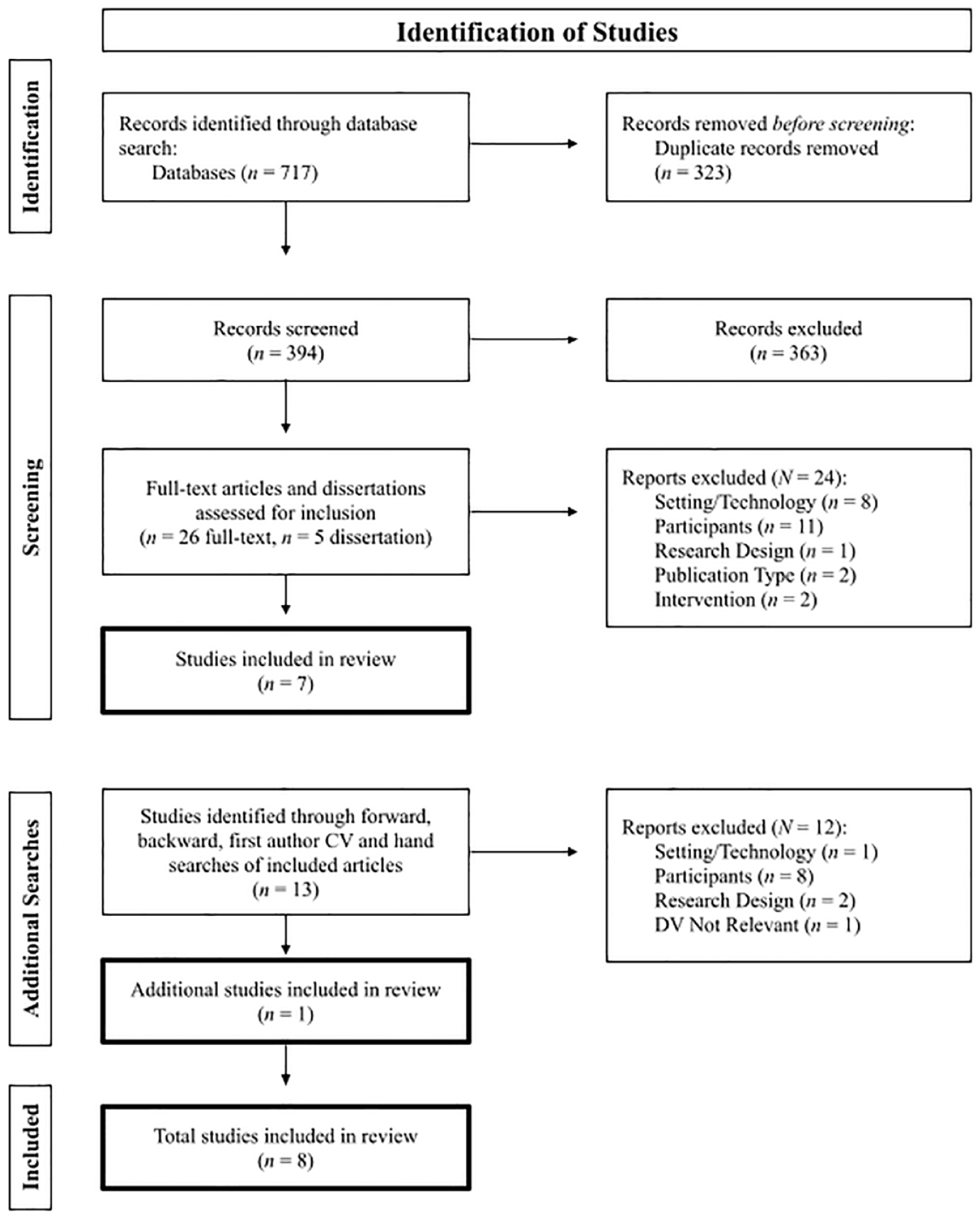
Systematic Review Process.
Studies considered for this review encompassed the following six criteria. First, because we sought to synthesize rigorous research, we limited the corpus to “published in a peer-reviewed journal” or “doctoral dissertation database.” Second, participants in the studies had to be PSTs (undergraduate level) enrolled in a special education course. Thus, we excluded studies with graduate-level participants who are certified teachers and in-service teachers (e.g., Vince Garland et al., 2016). Third, studies had to utilize either Mursion or TeachLivE technology for their simulation. Fourth, research designs had to employ experimental methodology using a quantitative research design (i.e., group contrast, pretest–posttest comparison, or single-case research design). Fifth, the study had to utilize MRS to examine specific teaching skills or strategies (e.g., classroom management skills, discrete behavioral skills, academic skills, collaboration skills, or teacher reports of self-efficacy following the simulation experience). Sixth, studies had to be published in a journal or dissertation database between 2005 and 2021 in English.
The database search returned 717 results. Following the removal of duplicates, 367 articles remained for review. Next, we searched the Dissertations and Theses Global database, using the same Boolean indicators and timeframe. The search excluded any master’s theses. This search yielded an additional 27 studies. Next, we reviewed the titles and abstracts of 394 studies (articles and dissertations), and 31 initially met our criteria. We then read each identified study to determine eligibility for inclusion. We determined that seven studies (five articles and two dissertations) were eligible for inclusion following this evaluation. An ancestral search, forward search, and first author curriculum vitae search of the included studies yielded one additional study. Given that four studies were published in Teacher Education and Special Education, we conducted a hand search of the journal; no additional articles were identified. A total of eight studies (six articles and two dissertations) were included in this review. Two authors reviewed and independently screened 100% of articles during the initial retrieval through the database search, backward search, forward search, and first author curricula vitae search. Interrater reliability was 95.7% during the first round of the electronic search, 96.9% during the full article inclusion phase, and 100% for the backward, forward, and first-author searches. Due to multiple articles published in the same journal meeting the inclusion criteria for this review, two authors also independently screened 100% of the Teacher Education and Special Education articles for the hand search between 2005 and 2021. The two authors independently coded 33% of the articles in the hand search with 100% interrater reliability.
Coding Procedures
We created an online codebook to capture data related to the primary research questions. Two authors independently coded all the studies using a Google Form. Please contact the corresponding author for a copy of the codebook. For studies using a mixed-method research design, only the information pertaining to the quantitative portion was included. In brief, to determine the participant characteristics, we coded each study for the following variables: (a) age, (b) gender, (c) year in the teacher preparation program at the time of the study, (d) if the simulation was conducted as a part of the course, the course that the simulation was embedded in, and (e) area of work the participants planned to enter (i.e., special education, general education, and other). To determine the critical components of the MRS, we coded each study for the following variables: (a) specific skills that the participants practiced in the simulator, (b) type of skill or focus of the simulation (e.g., behavior, academic instruction, and collaboration); (c) duration of each simulation session; and (d) number of simulation sessions. To determine the critical social validity components of each of the included MRS studies, we coded each article’s method section to determine whether the authors assessed social validity and the type of measure used to assess participant social validity (e.g., rating scales and interviews). In addition, we coded information on the participant’s report on the overall social validity of the study interventions. Throughout the process, disagreements were reviewed and discussed. Interrater agreement (IRR) was calculated by dividing the number of agreements by the number of possible agreements. Across all studies, the IRR was 91.4% for demographics, descriptive characteristics, MRS components, and social validity.
We coded each study for the presence or absence of quality indicators (QIs) for intervention studies in special education. Specifically, we applied the Council for Exceptional Children (CEC) standards to assess the research rigor of each study (CEC, 2014). Each of the following standards outline-specific QIs, with some specific for group comparison and single-subject studies: (1) context and setting, (2) participants, (3) intervention agent, (4) description of practice, (5) implementation fidelity, (6) internal validity, (7) outcome measures/dependent variables, and (8) data analysis. We used an Excel-based spreadsheet to code each study (Lane et al., 2014). Initially, two studies were coded simultaneously, providing time to calibrate. The final six studies were coded individually, initial agreement was 87% and discrepancies were discussed between authors until 100% agreement was obtained. A copy of the codebook is available upon request of the corresponding author.
Results
The eight studies that met the inclusion criteria were conducted from 2012 through December 2021 involving 256 preservice teachers who completed MRS as part of special education coursework. The earliest were the dissertations in 2012 and 2014. The remaining studies were published between 2017 and 2021. Results were synthesized by participants and location, dependent variable (e.g., outcome measures, design type, intervention fidelity, course, and skills), study characteristics (e.g., duration and quantity of sessions), and social validity.
Participants Demographics
Results for the first research question (What are the characteristics of the participants in the MRS studies, and at what point in their preparation program are they participating in MRS?) are available in Table 1.
Study Summaries of Special Education Mixed-Reality Simulation.

Age and Year in Program
Five studies (62.5%) included undergraduate-level participants, with four at the junior level (Accardo & Xin, 2017; Hudson et al., 2018, 2019; Walters et al., 2021) and one at the senior level (Krach & Hanline, 2018). One study included participants in graduate-level course work leading to certification (Larson et al., 2020). Two studies (25%) did not report the age or the program year of the participants (Enicks, 2012; Peterson, 2014). Six studies (75%) included only participants in special education majors (Enicks, 2012; Hudson et al., 2018, 2019; Krach & Hanline, 2018; Peterson, 2014; Walters et al., 2021), and two (25%) were a combination of special education and general education majors (Accardo & Xin, 2017; Larson et al., 2020). One study had eight participants (Peterson, 2014), two studies had 62 participants (Accardo & Xin, 2017; Larson et al., 2020), while the other six studies had between 19 and 30 participants (Enicks, 2012; Hudson et al., 2018, 2019; Krach & Hanline, 2018; Walters et al., 2021). The participants’ ages ranged from 18 to 50 years, but the majority of the participants were between 18 and 30 years.
Gender
Of the eight studies included, six (75%) reported the gender of their participants. The participants predominantly identified as female. For example, all participants in Krach and Hanline’s (2018) study identified as female. Furthermore, four studies had 90% of participants or more identified as female (Hudson et al., 2018, 2019; Larson et al., 2020; Walters et al., 2021). Only the study by Accardo and Xin (2017) had most of their participants identify as male (47%).
Race and Ethnicity
Of the eight studies included, six (75%) reported the race and ethnicity of their participants. Across studies, many participants identified as White or Caucasian, with six studies including 77% or more participants who identified as White or Caucasian (Accardo & Xin, 2017; Hudson et al., 2018, 2019; Krach & Hanline, 2018; Larson et al., 2020; Walters et al., 2021). Two studies included participants who identified as Asian at 7% and 16% (Hudson et al., 2019; Larson et al., 2020, respectively). Six studies included participants who identified as African American or Black (range: 3-8%; Accardo & Xin, 2017; Hudson et al., 2018, 2019; Krach & Hanline, 2018; Larson et al., 2020; Walters et al., 2021). Three studies reported Latinx or Hispanic (range: 3% -9.5%; Accardo & Xin, 2017; Krach & Hanline, 2018; Walters et al., 2021). Two studies included participants who identified as American Indian (3.5%; Hudson et al., 2019) and Native American or Alaska Native (2%; Larson et al., 2020). One study included participants who identified as multiracial (3%; Walters et al., 2021).
Location
The reported locations include one large southeastern university (Walters et al., 2021), one southeastern university (Hudson et al., 2018), one large mid-Atlantic public university (Larson et al., 2020), one small southwestern university (Peterson, 2014), and one mid-sized midwestern university (Enicks, 2012). The other three studies (37.5%) did not report location.
Research Components
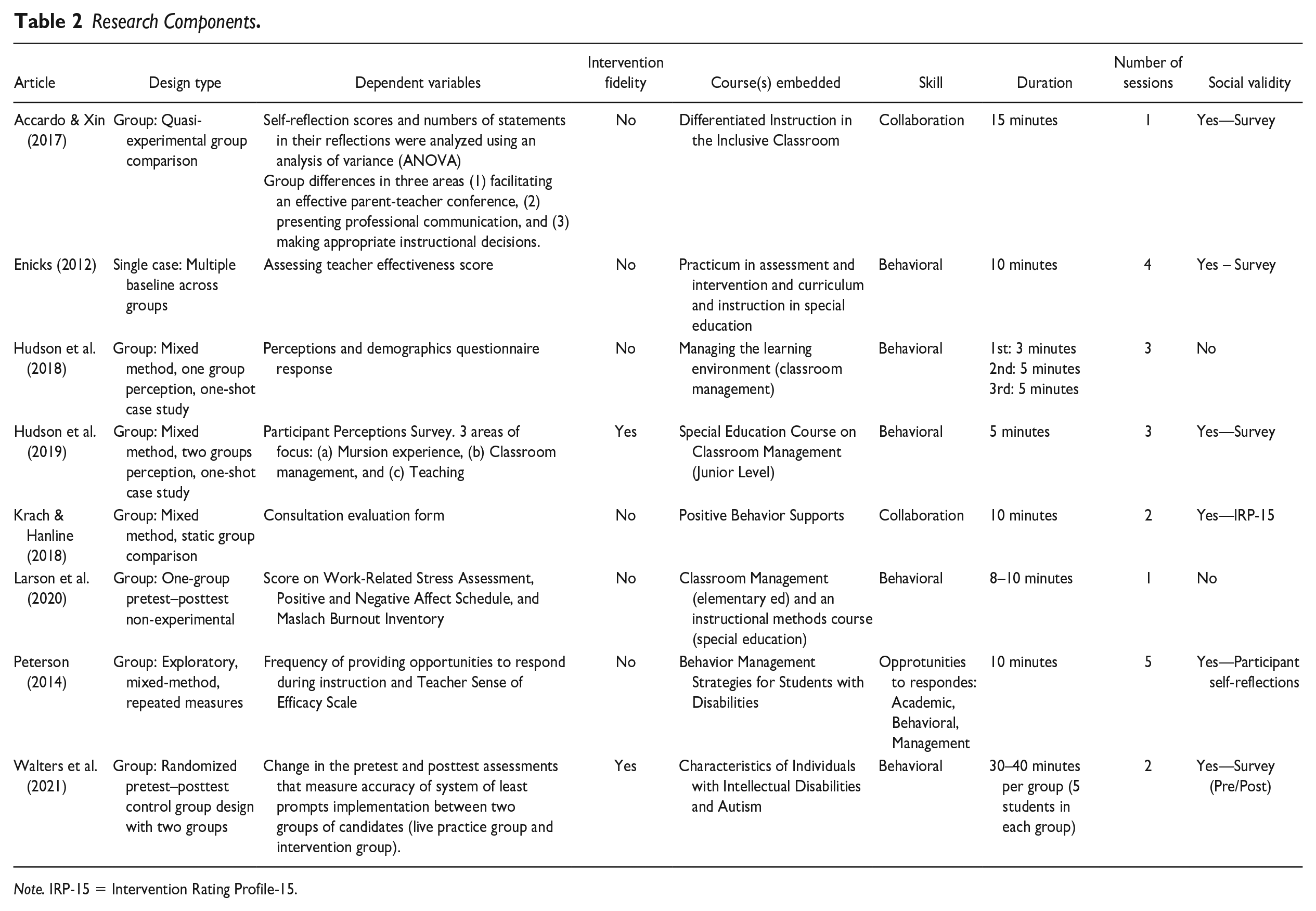
Results for the second research question (What research methods are utilized in MRS studies with preservice teachers in special education coursework?) are available in Table 2.
Research Components.
Note. IRP-15 = Intervention Rating Profile-15.
Design
Seven studies (87.5%) implemented a group design: group comparison (Accardo & Xin, 2017), pretest–posttest design (Larson et al., 2020; Walters et al., 2021), and mixed-methods designs (Hudson et al., 2018, 2019; Krach & Hanline, 2018; Peterson, 2014). Two (66%) of the three mixed-methods studies incorporated a one-shot case study design (Hudson et al., 2018, 2019) to compare qualitative and quantitative results. One mixed-method study (Krach & Hanline, 2018) compared group perceptions with a static group comparison design. One study used a multiple baseline across groups design (Enicks, 2012). Two studies (25%) reported intervention fidelity (Hudson et al., 2019; Walters et al., 2021).
Dependent Variables
In terms of the dependent variables (see Table 2, Figure 2), the majority of the studies (63%) described participants’ self-report (e.g., self-reflection, perceptions, and knowledge). Examples of the self-reporting dependent variables include the Teacher’s Sense of Efficacy Scale (TSES; Tschannen-Moran & Hoy, 2001) and the Maslach Burnout Inventory (Maslach et al., 1996). Peterson (2014) employed the TSES (Tschannen-Moran & Hoy, 2001), which includes three subscales: student engagement, instruction, and classroom management. The reliabilities of the three subscales range from .87 to .91. Larson et al. (2020) utilized the Maslach Burnout Inventory’s Emotional Exhaustion scale. This scale has a .90 alpha. In another study, Accardo and Xin (2017) used teacher candidates’ self-reflection scores, which utilized a rubric with three focus areas: (1) facilitating an effective parent-teacher conference, (2) presenting professional communication, and (3) making appropriate instructional decisions. Their analysis also included the number of statements in participant reflections using an analysis of variance (ANOVA) to compare group differences (Tschannen-Moran & Wollfolk, 2021).
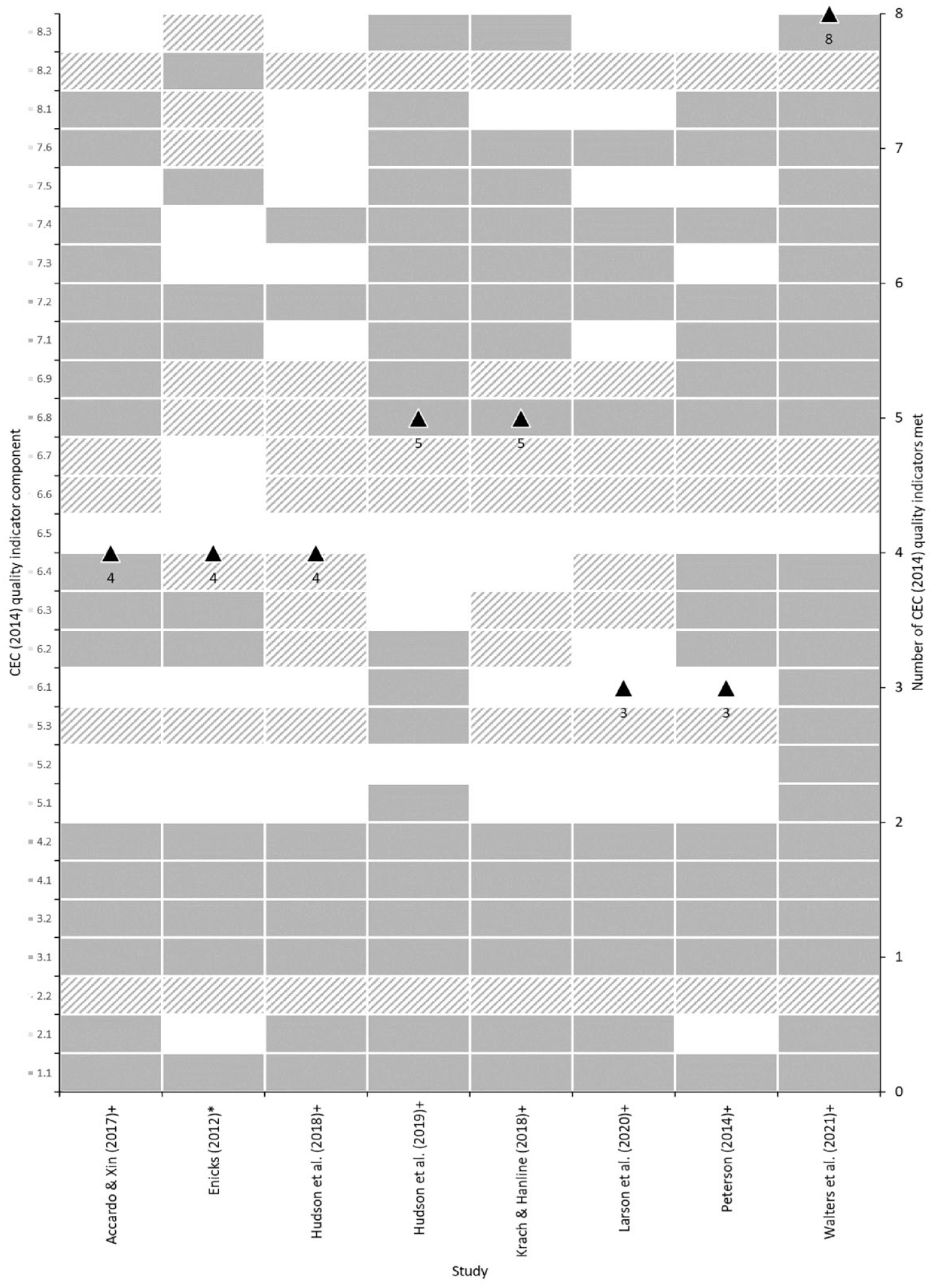
Analysis of Studies by the Council for Exceptional Children (CEC, 2014) Quality Indicators (QI).
One single case study observed students, Enicks (2012) evaluated participants using an adapted version of the Assessing Teacher Effectiveness (ATE) observation tool. They reported a 90% or greater interobserver agreement. Two group studies measured the accuracy of the implementation of the specific practices and relied on direct observation (Peterson, 2014; Walters et al., 2021). Interrater reliability is presented in the forthcoming section on QIs.
Simulation Components
All included studies incorporated MRS in a course related to special education. The studies reported the following courses: characteristics of intellectually disabled and autism (Walters et al., 2021), classroom management (Hudson et al., 2018, 2019; Larson et al., 2020), positive behavior strategies (Krach & Hanline, 2018), differentiated instruction in the inclusive classroom (Accardo & Xin, 2017), behavior management (Peterson, 2014), and a combination of practicum in assessment and intervention and instruction in special education (Enicks, 2012).
The skills practiced by participants in the simulator included classroom management and behavior skills (62.5%; Enicks, 2012; Hudson et al., 2018, 2019; Larson et al., 2020; Walters et al., 2021), collaboration skills (25%; Accardo & Xin, 2017; Krach & Hanline, 2018), and a combination of instructional strategies such as opportunities to respond (e.g., academic, behavioral, management; 12.5%; Peterson, 2014). The time spent in the simulation varied from 3 to 40 minutes per session, with the number of sessions ranging from one to five. One dosage ranged from 3 minutes in the first session to 5 minutes for the second and third sessions (Hudson et al., 2018). One study had a duration of 5 minutes with three sessions (Hudson et al., 2019). One study had a duration of 8 to 10 minutes with one session (Larson et al., 2020). Three studies (37.5%) had a duration of 10 minutes but varied in the number of sessions. The first of these three studies had two sessions (Krach & Hanline, 2018), the second had four sessions (Enicks, 2012), and the third had five sessions (Peterson, 2014). One study had a duration of 15 minutes with one session (Accardo & Xin, 2017). The final study had a duration of 30 to 40 minutes (five students per group) with two sessions (Walters et al., 2021).
Social Validity
Six of the studies (75%) reported social validity results. Three studies used a researcher-created survey (Accardo & Xin, 2017; Enicks, 2012; Walters et al., 2021), one used the Intervention Rating Profile-15 (IRP-15; Krach & Hanline, 2018), and one used the participant self-reflection (Peterson, 2014). One study included responses to the Participant Perceptions Survey (Hudson et al., 2019). The Participant Perceptions Survey had three areas of focus: (a) Mursion experience, (b) classroom management, and (c) teaching (Hudson et al., 2019).
Quality Indicators
Figure 2 summarizes the CEC’s (2014) QIs. All eight studies included in this review met QI 1.0 Context and Setting, QI 3.0 Intervention Agent, and QI 4.0 Description of Practice. In addition, two of the eight studies met QI 5.0 Implementation Fidelity (Hudson et al., 2019; Walters et al., 2021). It is important to note QI 7.0 Dependent Variable rates the appropriateness of how measures are applied to gauge the effect of practice as well as the adequacy of psychometrics. Specifically, QI 7.5 reports reliability. Four (50%) of the studies met the QI 7.5 subcategory (Enicks, 2012; Hudson et al., 2019; Krach & Hanline, 2018; Walters et al., 2021). For more details on specific subcategories, see Figure 2.
Given that only one study (Walters et al., 2021) met all of the QIs, we opted not to move forward with coding the effects of the eight included studies (Lane et al., 2009).
Discussion
Teacher educators have called for innovative practice-based strategies to integrate theory, explicit instruction, and experiences in practicing teaching skills (Darling-Hammond, 2006; Grossman et al., 2009; Leko et al., 2015). Such opportunities provide teacher candidates with the tools to apply what they are learning by practicing teaching, along with accompanying feedback and the opportunity to retry a practice. Traditionally, this was done in isolation as preservice educators provided the theory in the university classroom, and the practice occurred in the K-12 setting (Darling-Hammond, 2006). By contrast, MRS marries the two and allows teacher educators to design experiences for teacher candidates’ learning and practice to occur together, which can be adapted to meet the teacher candidate’s needs. MRS is a relatively new technology for education, and the field is beginning to integrate MRS into coursework. We designed this study to synthesize the research related to MRS within the context of special education teacher preparation programs between 2010 and 2021. We provided a high-level overview of past usage and research while, at the same time, examining areas identified as limitations in Ersozlu et al. (2021).
Although this review provides a summary of MRS related to special education teacher education, we recognize several limitations. First, as with most systematic literature reviews, we recognize that we excluded other studies based on our inclusion criteria. For example, we may have excluded valuable research conducted with participants classified as graduate-level students and certified educators. We excluded qualitative and nonexperimental MRS studies (e.g., Driver et al., 2018) and studies outside of the context of special education teacher preparation (Ely et al., 2018). Although these studies are important, we wanted to synthesize a sample of studies with similar research designs, topics, and participants. Future reviews could expand the inclusion criteria to include qualitative research. Furthermore, we recognize that many teacher educators are utilizing MRS in the classroom but not conducting research alongside their simulations (see Mursion, 2023). Therefore, we caution readers that this review does not reflect all MRS that occurs within preservice teacher education.
Second, our analysis captured the study characteristics and the QIs (CEC, 2014). Studies were not evaluated for effect sizes or other statistics as this review’s goal was to examine current practices. In addition, we had a very small corpus (N = 8). In the same vein, although we noted favorable outcomes related to MRS, only one of the studies met the QI requirements related to evaluating the effect of the practice as per the CEC (2014). Earlier research on other practices (i.e., function-based interventions; Lane et al., 2009) noted similar limitations.
Third and finally, although we clearly defined our constructs and methodical procedures, we did not pre-register this study and recognize that as a limitation. We anticipate future researchers will be able to address these limitations by replicating the search using open-science principles (Cumming et al., 2023). Despite these limitations, we believe the present study offers several implications for MRS implementation and future research.
Key Findings and Implications for Practice
First, although several articles have been published on MRS, we could only identify eight empirical studies that assessed the effectiveness of MRS within the context of special education PST training. Given the importance of providing PSTs in special education with rich and immersive opportunities to practice skills (e.g., classroom management, collaboration, and behavior management), questions remain about MRS. The eight studies met the “5-3-20” rule outlined by Horner and colleagues (2005), which called for evidence-based practices to include at least five studies conducted by at least three research teams, with a minimum of 20 participants. Although we identified several studies that evaluated the use of MRS, more information is warranted as the researchers employed various MRS topics, and many of the included studies were not experimental. We anticipate this number will significantly increase given the COVID-19 pandemic and expansion of Mursion (American Association for Teacher Educators, n.d.; Driver & Zimmer, 2022).
In regard to the university and participant demographics, location and participants’ race were reported in five and six studies, respectively. Of the five locations, the majority were in the Southeast region of the United States. Furthermore, the majority of participants (range: 77%-96%) were Caucasian/White. Our findings align with the demographics of United States public school teachers (80% were White in 2021; U.S. Department of Education, 2022). At the same time this highlights that MRS is a resource that may be common for resource rich institutions and less common for other institutions as the costs associated with MRS may be a barrier. Resources such as Branch Alliance for Educator Diversity are working to close this gap by providing Minority Serving Institutions with resources such as MRS.
Interestingly, most MRS research is related to instructional, or classroom management strategies related to behavior. This finding was not surprising given the long-standing critical need for teachers to prevent and respond to challenging behavior. Accardo and Xin (2017) and Krach and Hanline (2018) were the only two studies to evaluate MRS within the context of professional collaboration. More research on other critical skills in teacher education is warranted (e.g., culturally responsive teaching practices, co-teaching, collaboration, parent conferences, and IEP meetings). Furthermore, all MRS occurred during the junior year and beyond. Similarly, this is not surprising, given the typical undergraduate course sequence.
Regarding dosage and duration, the amount of time using MRS varied from 3 minutes for a single session (Hudson et al., 2018) to two sessions for up to 40 minutes each (Walters et al., 2021). Given the relative promise of MRS, we recommend that future researchers begin to evaluate the cost-effectiveness of the tool. As researchers consider how many sessions are warranted, it would be advantageous to consider the role of generalization and maintenance. We found that none of the studies included in this review examined the generalization of the skills to authentic classroom settings. Previous work, that did not meet inclusion criteria for this review, found that MRS may be an effective training space for novice teachers. However, the extent to the generalization of those skills was limited to the specific types of experiences they had in the MRS (Dawson & Lignugaris/Kraft, 2017).
Another important implication of this work is the overall quality of the MRS research outlined by CEC (2014). When looking at the QI information, 12%, or one of the eight included studies, met 100% of QIs, indicating high quality and methodical research practices. Most studies did not meet the expectations of QI 5, implementation fidelity. This lack of assessing and reporting fidelity, particularly when discussing adherence to measures and dosage, leaves questions about the consistency of implementation. The lack of implementation fidelity reporting also caused six of the eight studies not to meet the QI 6 indicator, systematically manipulating the independent variable. Findings from this review, indicate the majority of studies relied on participant self-report. Thus, only 37% of studies included implementation of the specific practice. Moving forward, we strongly encourage researchers to measure the implementation of the specific practice either inside or outside of MRS and pay close attention to Moore et al.’s (2009) Evaluation Framework, which focuses on the impact on participants’ satisfaction, knowledge, confidence, and practice. Moving beyond the simulator, it is important to evaluate the effects of MRS on PST’s implementation of practices in authentic settings with K-12 students.
Considerations for Teacher Educators and Future Research
MRS offers PSTs an opportunity to practice skills in a safe environment that does not put others at risk (i.e., K-12 students) while at the same time allowing the PSTs the opportunity to implement a variety of instructional practices. Due to the logistical and methodological challenges in observing preservice teachers in live classrooms and the inability to control the differences between those classrooms effectively, there is limited evidence about the effects of particular educational practices (Bell et al., 2018). However, consistency of delivery can be achieved through the replication of sessions for all candidates, focusing on specific teaching skills. MRS is an advantageous and critical component in teacher preparation programs because of the opportunities for developing confidence in educator skills before implementing those in an actual classroom.
Though MRS is a promising technology tool for preservice training, integration into coursework requires thorough planning to ensure meaningful practice. Successfully implementing MRS into PST training requires considerations beyond the teaching scenario that PST will engage in; teacher trainers will also need to consider many logistical aspects. Some examples of these logistical components would include the duration of the simulation, the number of sessions, if PST will participate individually or as a group, how feedback will be provided, and how much total time with the simulator will be needed. Driver and Zimmer (2022) provide a comprehensive guide for integrating MRS into teacher preparation with a focus on special education. Notably, this guide provides insight into designing scenarios, working with a simulation specialist, participant schedules, introductory sessions, and incorporating reflection.
Teacher educators must consider integrating technology to provide high-quality, targeted, practice-based learning opportunities for PSTs. The use of MRS has been described as a transformational model for the development of special educators (Rock et al., 2016), and research on MRS in teacher preparation has found favorable outcomes in terms of the effect of MRS on PSTs skill acquisition (e.g., Walters et al., 2021). MRS is an innovative solution allowing preservice special education teachers to practice critical discrete skills without the risk of harm to students.
In regard to research, the use of technology to generate simulations can provide a standardized context vital for research across large populations of preservice teachers, which could, in turn, inform policy design (Cohen et al., 2020). Future research should also examine whether the gains in skill PSTs make from practice in MRS environments generalizes to teaching in a real classroom. Researchers should seek to address the gaps identified in our preliminary literature review. For example, most research has focused on classroom and behavior management skills. Little is known about the impact of MRS on PST acquisition of skills such as culturally responsive teaching practices, co-teaching, and functional behavioral assessments. In response to the findings of this analysis and the shift in teacher education to being more technology-focused, future research should examine how MRS impacts other high-leverage practices and related skills.
Conclusion
MRS is gaining popularity with preservice special education programs, and it will be essential that studies are reviewed to understand how to embed this promising technology in coursework. In this literature review, we synthesized studies to understand better the integration of MRS in special education programs and participants’ perceptions. Moreover, our study was the first review of MRS with preservice special education programs. We found various dosages with both the frequency of sessions and the individual length of time of each simulator session. MRS is an encouraging tool as it provides participants with opportunities to practice teaching specific skills which may not otherwise be available. Though MRS presents as a promising tool for instruction, much is still to be learned about its practical usage in areas such as which skills should be practiced and at what dosage.
Footnotes
Declaration of Conflicting Interests
The author(s) declared no potential conflicts of interest with respect to the research, authorship, and/or publication of this article.
Funding
The author(s) received no financial support for the research, authorship, and/or publication of this article.
