



Abstract
Objective:
To review and assess the effectiveness of physical activity interventions delivered in faith-based organizations.
Data Source:
We searched the Cochrane Library, DoPHER, EMBASE, LILACS, MEDLINE, PsycINFO, WHO ICTRP, and Clinicaltrials.gov databases until January 2016, without restriction of language or publication date.
Study Inclusion and Exclusion Criteria:
Randomized and nonrandomized controlled trials investigating physical activity interventions for adults delivered in faith-based organizations.
Data Extraction:
Two independent reviewers extracted data and assessed study methodological quality.
Data Synthesis:
We used relative risk and mean difference with 95% confidence interval to estimate the effect of the interventions on measures of physical activity, physical fitness, and health.
Results:
The review included 18 studies. Study participants were predominantly female, and the majority of trials were conducted in the United States. Study heterogeneity did not allow us to conduct meta-analyses. Although interventions delivered in faith-based organizations increased physical activity and positively influenced measures of health and fitness in participants, the quality of the evidence was very low.
Conclusion:
Faith-based organizations are promising settings to promote physical activity, consequently addressing health disparities. However, high-quality randomized clinical trials are needed to adequately assess the effectiveness of interventions delivered in faith-based organizations.
Keywords
Introduction
Physical activity is a protective health behavior associated with a reduced risk of all-cause mortality, 1 chronic diseases, including heart disease, type 2 diabetes, and many cancers. 2 Although the benefits of physical activity are well established, the majority of the population does not meet current physical activity guidelines of 150 minutes of moderate to vigorous physical activity (MVPA) per week. 3 In 2008, insufficient levels of physical activity accounted for 9% of global premature mortality, 6% of coronary heart disease, 7% of type 2 diabetes, 10% of breast cancer, and 10% of colon cancer worldwide. 4 Therefore, physical activity programs are a promising strategy to promote health.
Physical activity programs that are enjoyable and culturally appropriate are more likely to have high adherence, and accessibility to health programs influences adherence, especially for minorities and uninsured populations. Faith-based organizations (organizations with religious components in their self-identity, organization, and decision-making) 5 appear to have the ability to reach those in need of interventions. 6 Faith-based organizations have been widely used to deliver health programs associated with a number of health outcomes, 6 -8 especially in the United States. Faith-based organizations have been suggested by the Centers for Diseases Control and Prevention to promote social support for physical activity, thus being a promising setting to promote physical activity behavioral change. 9
Faith-based organizations can implement physical activity programs in 2 primary ways. Although many programs include religious or spiritual components (eg, prayers, Bible studies, faith, messages of love, and health messages enriched with scripture contents), 8 others simply use the setting to deliver a program without faith components. The current review considers “faith-based” programs (those integrating faith components) and “faith-placed” programs (those only using the setting for delivery). 6,7 Several factors make these programs promising to promote health behavior change, including a familiar setting, psychosocial factors (eg, self-efficacy, locus of control, motivation, social support, and social networks), or environmental factors (eg, accessibility to a location and sports facilities). Also, behavior change theories, models, or constructs can be integrated when planning and implementing a physical activity program, such as the transtheoretical model, socioecological model, cognitive theory, and social cognitive theory. 10
Reviews of interventions delivered in faith-based organizations suggest that these interventions can have a positive impact on participants’ health. 6,8 A review of physical activity interventions conducted in 2012 7 concluded that interventions delivered in faith-based organizations show promise for increasing physical activity participation and promoting health, but the authors did not account for bias of the included studies or assess measures of health and fitness.
This review will update findings on the effectiveness of physical activity interventions delivered in faith-based organizations. Furthermore, we will account for measures of health and physical fitness and assess the risk of bias of included studies.
Methods
Data Sources
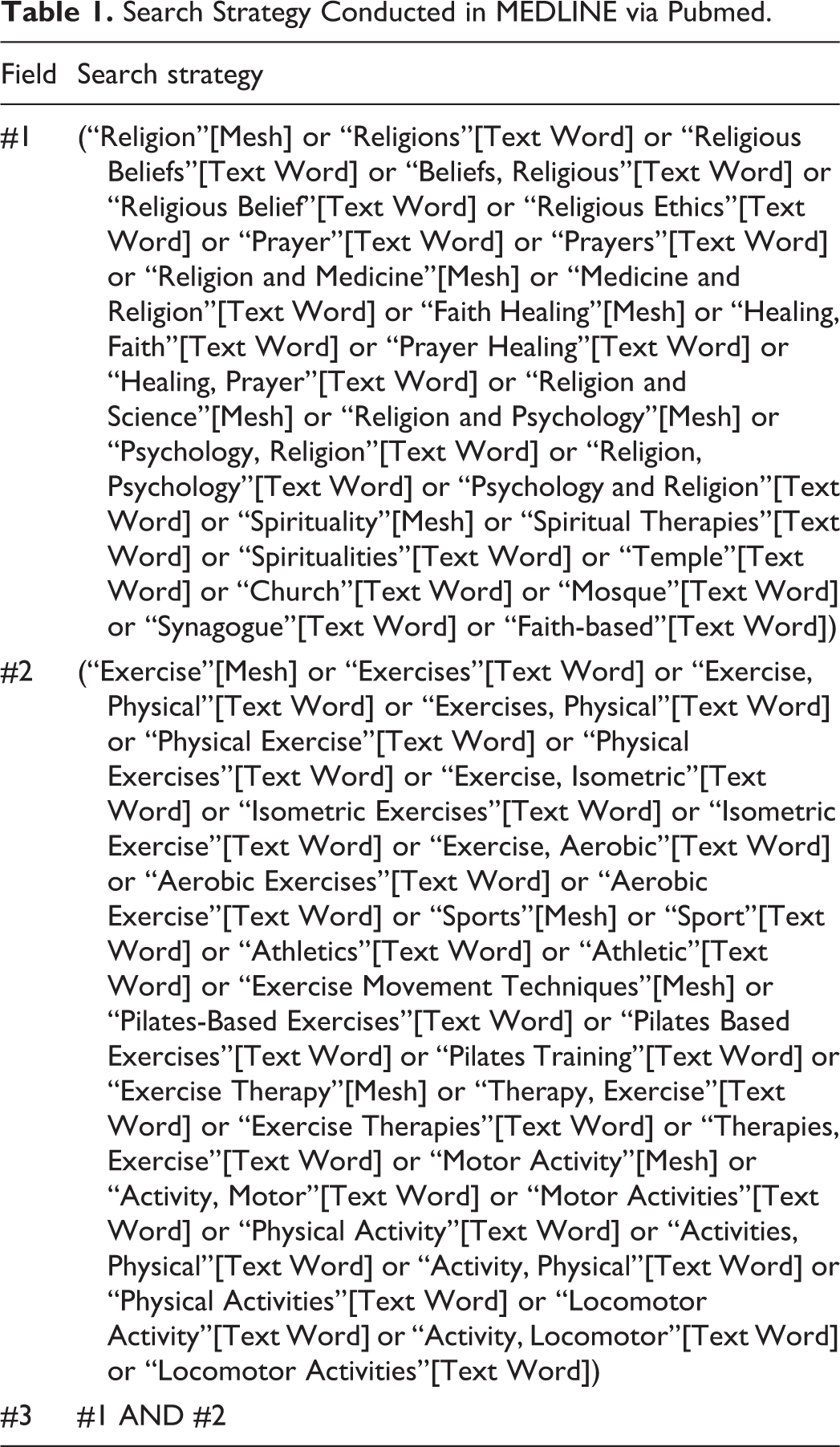
To identify potential studies, we searched the following electronic databases: Cochrane Central Register of Controlled Trials (CENTRAL), Database of Promoting Health Effectiveness Reviews (DoPHER), EMBASE, LILACS, MEDLINE, PsycINFO, International Clinical Trials Registry Platform from the World Health Organization (http://apps.who.int/trialsearch/), and Clinicaltrials.gov. Studies were included independent of publication status, year of publication, and language. We also searched reference lists of included studies, and, when necessary, we contacted authors of primary studies for further information. Table 1 shows a sample electronic search strategy. We conducted searches during March 2015, with a final update in January 2016.
Search Strategy Conducted in MEDLINE via Pubmed.
Inclusion and Exclusion Criteria
Our review included randomized controlled trials (RCTs) and non-RCTs with a control or comparison group. Trial participants were 18 years of age or older and able to participate in physical activity interventions. Participants were included independent of gender, ethnicity, or presence of chronic diseases. We included interventions delivered in faith-based organizations containing at least 1 active physical activity component, that is, any type of physical activity conducted (ie, group dance classes, walking groups, or strength training sessions). Comparison groups were physical activity interventions delivered in a secular setting or participants from faith-based organizations who did not participate in a physical activity intervention.
Primary outcomes of interest were changes in physical activity level (self-reported or objectively measured) and measures of physical health; that is, health variables related to physical activity (ie, body mass index [BMI], blood pressure, body weight, and cholesterol levels). Secondary outcomes were measures of physical fitness, adherence to the intervention, and adverse events related to the intervention. We also collected qualitative data from process measures related to the implementation of programs, when available.
Data Extraction
Two review authors (M.T.P. and G.M.J.P.) independently screened titles and abstracts and assessed the full text of selected abstracts applying the inclusion criteria mentioned earlier. They extracted data from included studies using a standard data extraction form, previously piloted to assure that it captured relevant information. These data were entered into a Microsoft Excel spreadsheet and verified.
Data Synthesis
We assessed the risk of bias using the Cochrane Collaboration’s Risk of Bias Tool. 11 We judged studies as at “high risk,” “low risk,” or “unclear risk” of bias for each domain. When needed, we solved disagreements through discussion in consensus meetings. For treatment effect, we summarized dichotomous data using relative risk (RR), with 95% confidence intervals (CIs). We handled continuous data as mean differences (MDs) with 95% CIs. We assessed physical activity results according to the Grading of Recommendations, Assessment, Development, and Evaluation (GRADE) approach, 12 which is a system for rating the quality of a body of evidence in systematic reviews, to help the evidence-based decision-making process. We also analyzed treatment effects considering the clinical relevance of the result, that is, we tried to verify whether the physical activity change would influence participants’ health. Our review protocol is registered on the International prospective register of systematic reviews PROSPERO (CRD42015019534). 13
Results
We identified 9888 references and assessed the title and abstracts of 9096 references after removing duplicates. We selected 80 references and assessed the full text of these studies. We excluded 47 studies that did not meet the inclusion criteria. The reasons for exclusions were interventions with inadequate physical activity components for our review, other study designs, or programs delivered in secular settings. Finally, 18 studies were included 14 -31 in the review (Figure 1). One study was classified as “ongoing”; 15 for this reason, we presented its available characteristics but we did not assess data. In cases where we could not calculate measures of effects, we reported results as presented by primary authors. We present results narratively due to considerable clinical and methodological heterogeneity among studies. This heterogeneity impeded us from conducting meta-analyses of outcomes.

Flow diagram of the review process of physical activity interventions delivered in faith-based organizations.
Nine studies were non-RCTs 19,20,25 -31 and 9 were RCTs, 14 -18,21,22 -24 all randomized at the cluster level. We present general characteristics of the studies in Tables 2 and 3. Most programs were conducted in the United States, 14 -18,21 -27,30,31 3 were conducted in New Zealand, 19,28,29 and 1 was conducted in Australia 20 . One study 25 compared delivering an intervention in a faith-based organization versus a secular setting, whereas all other studies investigated physical activity programs delivered in faith-based organizations compared to a control, comparison, or minimal intervention groups. Three studies were faith placed, 19,20,23 whereas all others were faith based. 14 -17,18,21,22,24 -31 Study participants were primarily African Americans 14,18,21 -24,27,30,31 ; other ethnicities included Hispanics, 15,16 caucasians, 17 Tongans, 29 and Samoans. 28 Most studies targeted only women, 14,15,17,20,24,25,27,31 and others had primarily female participants, except for 1 study with 85.7% male participants. 22 Hypertension, 14,22,23,30,31 diabetes, 18,28,29 and obesity 14,19,23 -26,30 were the most prevalent comorbidities at baseline, that is, affecting more than 50% of the samples.
Characteristics of Included Studies: Randomized Controlled Trials (RCTs).

Abbreviations: ACSM, American College of Sports Medicine; BMI, body mass index; CDC, Centers for Disease Control and Prevention; CHAMPS, Community Healthy Activities Model Programs for Seniors Institute for Health & Aging; MVPA, moderate to vigorous physical activity; PA, physical activity; VO2 max, maximum rate of oxygen consumption; YMCA, Young Men’s Christian Association; 7-DAI: 7-Day Activity Interview.
Characteristics of Included Studies: Non-RCTs.
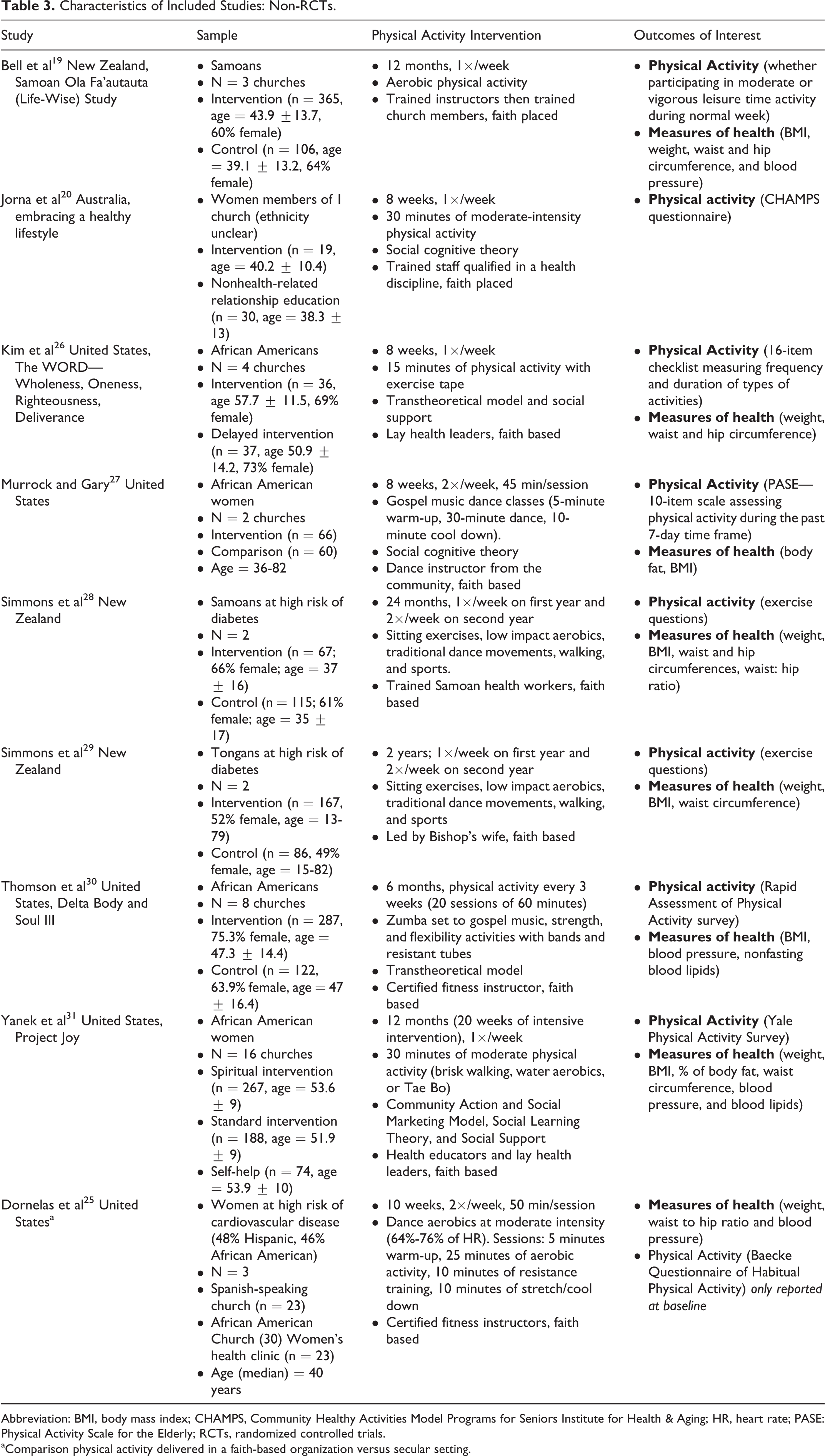
Abbreviation: BMI, body mass index; CHAMPS, Community Healthy Activities Model Programs for Seniors Institute for Health & Aging; HR, heart rate; PASE: Physical Activity Scale for the Elderly; RCTs, randomized controlled trials.
aComparison physical activity delivered in a faith-based organization versus secular setting.
Assessment of Bias
We assessed the risk of bias of 17 studies because the study by Arredondo et al 15 is ongoing. Selection bias was unclear in 8 studies 14,16 -18,21 -24 and high in 9 studies. 19,20,25 -31 Due to the nature of physical activity interventions, it is impossible to blind participants from their allocation to the intervention or control group. From that standpoint, we judged performance bias as not applicable with the exception of interventions delivered by the principal investigator, 14,17 where performance bias might occur. Detection bias was low in 2 studies 23,24 with blinded assessors, unclear in 10 studies, 16,18,20 -22,25 -27,30,31 and high risk in 5 studies. 14,17,19,28,29 Attrition bias was low in 2 studies 18,28 and unclear in 7 studies 14,17,19,20,23,24,26 because studies did not provide information for losses and withdrawals. Attrition was considerable from baseline to follow-up measures (higher than 20%) in 8 studies. 16,21,22,25,27,29,30,31 Six studies had low risk of reporting bias, 17 -21,31 and all other studies presented reporting issues; thus, we classified them as high risk of reporting bias. 14,16,22 -29 Four studies did not have additional issues; therefore, they were low risk for other sources of bias. 16,21,22,27
We found potential threats to validity in most studies. Nonrandomized studies were exposed to bias due to their study design. 19,20,25 -31 Major baseline imbalances were identified in 3 studies. 14,17,26 We identified the following additional sources of bias: first, studies lacked a true control group. 18,23,24,26,28,31 Second, in 1 study, participants were required to pay a fee to attend exercise classes. 20 Also, contamination bias potentially occurred in 1 study because intervention and control churches were in close proximity to each other (about 5 km apart). 29 Finally, 1 study was conducted in a region where previous interventions were conducted (Delta Body and Soul I and II). In this case, the same participants could have been recruited by similar studies more than once. 30 We summarize the risk of bias for all included studies in Figures 2 and 3.
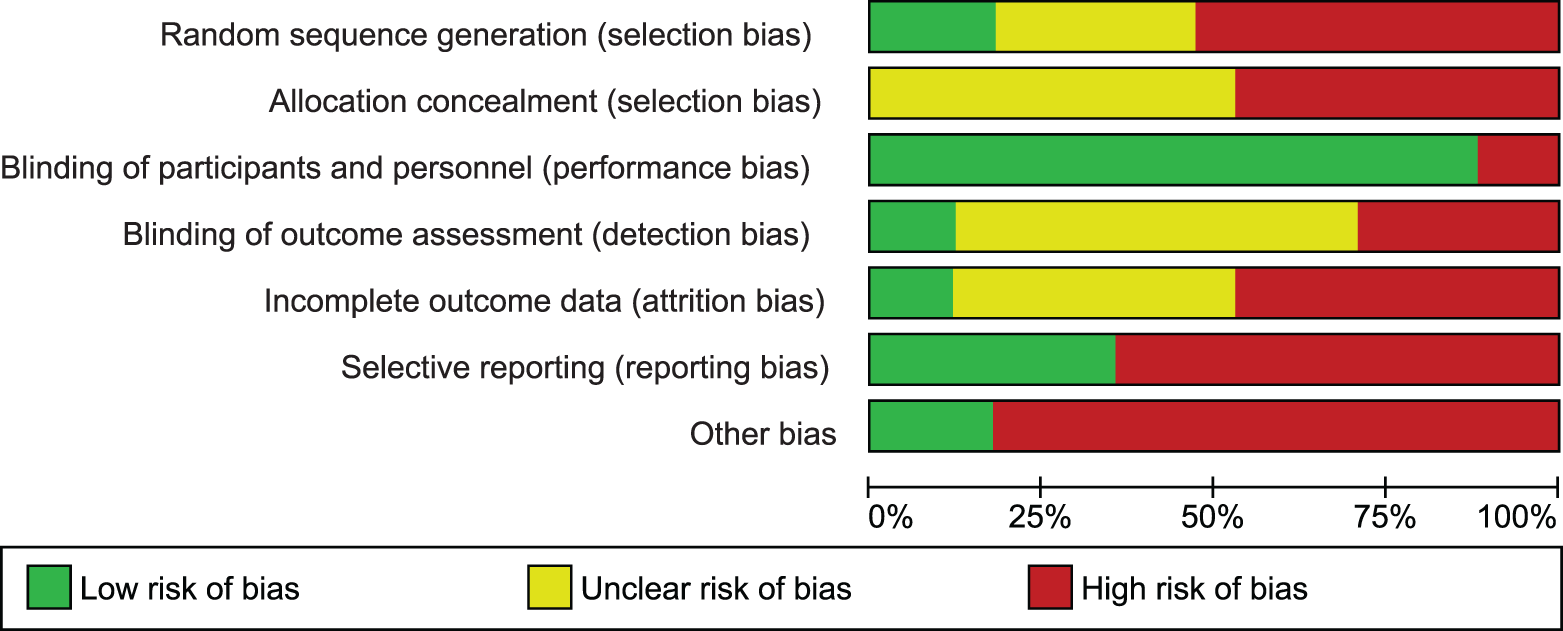
Risk of bias summary for each risk of bias item presented in percentages across all included studies.

Risk of bias graph for each risk of bias item for each included study.
Measures of Physical Activity, Physical Health, and Physical Fitness
Physical activity
We present measures of changes in physical activity, physical health, and physical fitness in Table 4. Fourteen studies reported on changes in physical activity. 14,17 -22,24,26 -31 Authors measured physical activity in various ways and using various tools/questionnaires. They also reported it differently, for example, physical activity was reported in time exercising in different intensities (light, moderate, and vigorous), total physical activity, leisure physical activity time, or percentage of participants meeting recommendations. We focused on changes in total physical activity and MVPA because those intensities have a greater impact on participants’ health. 3 Five studies 14,19,20,26,30 found significant changes in physical activity outcomes favoring the intervention, but only Bell et al 19 found significance in participation of MVPA (RR: 0.66, 95% CI: 0.46 to 0.96) and in participation in vigorous leisure time (RR: 1.85, 95% CI: 1.16-2.25), but it was unclear if the questionnaire used in this study was a validated tool. Overall, the quality of evidence for physical activity outcome was very low according to the GRADE approach.
Measures of Changes in Physical Activity, Physical Health, and Physical Fitness.

Abbreviations: BMI, body mass index; C, control; CDC, Centers for Disease Control and Prevention; CI, confidence interval; I, intervention; HDL, high-density lipoprotein; LDL, low-density lipoprotein; MD, mean difference; METs, metabolic equivalent of task; NA, not available; PASE, Physical Activity Scale for the Elderly; RR, relative risk.
aValues statistically significant for P < .05.
bValues favoring the intervention.
cValues were adjusted by primary studies, thus results might be slightly different in values.
Physical health
Studies reported various measures of physical health. Seven studies reported body weight, 19,18,23,26,28,29,31 and 2 of those found that the intervention did not result in weight loss. 18,29 From the studies, which found that the intervention influenced body weight, Bell et al 19 reported weight loss when the analysis was adjusted for baseline and sociodemographic characteristics (P = .039). The following 3 studies found that the intervention resulted in weight loss: Kim et al 26 (MD: −2.78, 95% CI: –4.64 to –0.92 lbs); Yanek et al 31 (MD: –1.93, 95% CI: −3.24 to –0.62 lbs), and Simmons et al 28 (MD: −3.10, 95%CI: −5.50 to −0.70 kg). Additionally, Woods et al 23 noted a loss of 5 pounds in intervention participants.
Body mass index was reported by 7 studies. 19,21,23,27,28,30,31 Changes favoring the intervention was seen by Yanek et al 31 (MD: −0.31, 95% CI: −0.53 to −0.09) and Woods et al. 23 Three studies measured percentage of body fat. 27,23,31 Murrock and Gary 27 found a decrease favoring interventions (MD: −2.20, 95% CI: −4.39 to −0.01), whereas Woods et al 23 reported a decrease of 3.5% in intervention participants (P < .03). Several studies reported body circumference measures. Five studies reported waist circumference, 19,26,28,29,31 and Yanek et al 31 found a decrease favoring interventions (MD: −0.65, 95% CI: −1.10 to −0.21 inches). Three studies measured hip circumference, 19,26,29 and Simmons et al 28 found a decrease favoring interventions (MD: −6.00, 95% CI: −10.73 to −1.27 cm). In addition to anthropometric data, 8 studies reported metabolic-related outcomes to indicate health benefits. Six studies assessed blood pressure 18,19,22,23,30,31 and 2 studies measured blood lipids, 30,31 but there were no changes favorable to interventions.
Physical fitness
Three studies assessed physical fitness. 14,17,23 Two studies found changes in cardiorespiratory fitness favoring interventions. 14,23 Intervention group participants 14 walked more yards (MD: 108.17, 95% CI: 21.74 to 194.60) when compared to control participants, and intervention group participants performed better on the 6-minute walk test compared to the control group participants. 23
Intervention adherence
Measures of adherence to the physical activity intervention were reported by most studies. 14,18 -20,23 -25,27 -31 Studies measured adherence as percentages of participants who attended intervention, 14,18,24 number of sessions attended, 23,27 and average number of participants per class. 19,25,28,31 Some studies only measured adherence in a subsample of participants. 28,29 Adherence to the intervention varied across studies, ranging from 81.8% 14 to 24.3%. 24
Adverse events
Adverse events did not appear to be a concern. Although 1 study 18 reported 2 participant deaths (caused by a stroke and by an advanced chronic obstructive pulmonary disease), authors noted that it was not related to the intervention. Murrock and Gary 27 attributed intervention group attrition rates to participants’ health concerns. Other studies did not report adverse events.
Discussion
Our review of physical activity interventions delivered in faith-based organizations included 18 studies. Although some of the interventions showed promise for increasing physical activity and measures of physical health and fitness, overall the low quality of scientific evidence available to date does not allow firm conclusions on the effectiveness of such interventions. Using the GRADE approach, we rated the physical activity data available for this review as very low quality. Two studies reported positive changes, but one of these studies did not present full data 30 and the other assessed physical activity participation with a questionnaire that lacked information about adequate validation. 19 Also, both programs provided less than the recommended amount of physical activity deemed necessary to provide meaningful benefits to cardiovascular and musculoskeletal fitness 3 : The Bell et al intervention involved weekly sessions 19 and the Thomson et al intervention involved 1 session every 3 weeks. 30 Of note, these programs included nutrition classes in addition to a physical activity intervention. 19,30 Thus, it is difficult to disentangle whether physical activity was sufficient to promote the behavior change alone or if additional components influenced effectiveness.
Participants who engaged in physical activity in faith-based organizations benefited from anthropometric changes. Interventions were somewhat effective in promoting decreases in body weight, BMI, body fat, and waist and hip circumference. Although the reported anthropometric changes were statistically significant, readers should interpret this finding with caution, as the magnitude of change was small and unlikely to result in significant health benefits. However, the results point to a positive direction, and future studies could potentially promote changes with clinically significant impacts on participants’ health. Interventions assessed in this review did not benefit blood lipids or blood pressure. But studies that assessed blood lipids and blood pressure offered physical activity sessions only once a week 31 or every 3 weeks, 30 a frequency unlikely to significantly benefit cardiovascular fitness. 3
Engaging in physical activity can produce positive changes in measures of physical fitness, including cardiorespiratory endurance, muscular endurance, muscular strength, body composition, and flexibility. 32 Our review noted 3 studies that reported physical fitness outcomes. 14,17,23 Only Anderson found benefits to cardiorespiratory fitness but did not improve muscle strength, 14 despite offering weekly strength classes for 10 weeks. This frequency of strength training was likely insufficient to show benefits, as the American College of Sports Medicine (ACSM) recommends strength training 2 to 3 times per week to improve and maintain muscle fitness. 3 This example highlights one of the complexities of delivering and evaluating physical activity interventions, as the amount of exercise (intensity and frequency) necessary to produce meaningful fitness improvements varies among individuals and depends on their baseline activity levels. Although measures of fitness increase the robustness of a physical activity program in terms of delivery (valuable feedback for participants and researchers) and evaluation (to assess the effectiveness of the intervention), we were concerned that many studies did not assess physical fitness.
Primary studies reported no adverse events related to the intervention, and only 1 study reported health concerns as reason for participant’s attrition. 27 Based on these studies, physical activity interventions delivered in faith-based organizations appear to be safe for participants. Adherence across programs varied substantially; but given the variability in interventions and program delivery, it is not possible to draw conclusions about adherence to physical activity interventions in faith-based organizations; also, because most interventions included additional components, it is uncertain whether adherence would have been different if programs offered only physical activity.
Our review had positive aspects and limitations. We conducted a comprehensive search for studies, and 2 reviewers independently assessed studies and extracted data to minimize errors. We assessed risk of bias and calculated measures of effects from primary studies whenever possible. The high clinical and methodological heterogeneity found between studies did not allow us to conduct meta-analyses of outcomes. Also, because interventions differed greatly from one another, it was challenging to adequately assess the risk of bias. Due to the nature of the intervention (physical activity), double blinding was not applicable, and we judged blinding as low risk of bias for all studies, understanding that it would not cause selection bias. We encountered incomplete correspondence with trial authors, and as a consequence, our review lacked additional information. We came across studies that met our inclusion criteria, but we were unable to extract data for them. 27,16 The inclusion of nonrandomized studies could be a strength or weakness in our review: Including these studies allows readers to be aware of the relevant literature, but the lack of randomization decreases confidence in results from these studies.
Regarding the generalizability of evidence, readers should note that the reviewed studies included primarily middle-aged women (mean age 49.2 years); therefore, our review findings may not apply to interventions in men or younger/older populations. In addition, the majority of the interventions were conducted in US faith-based organizations, and findings may not apply to interventions conducted in other countries. Differences in intervention programming, delivery, and focus of the interventions are also important to note. Many interventions included components other than physical activity (eg, nutrition classes and motivation calls); in some cases, community volunteers helped set up programs, and local leaders actively participated in the planning and development of programs. Researchers applied different theories and constructs for behavior change. Readers should consider these aspects when interpreting our results and while planning a physical activity program in faith-based organizations.
Our results corroborate and update an earlier comprehensive review 7 showing that faith-based organizations show potential as a promising setting for physical activity interventions. Although the literature on physical activity interventions in faith-based organizations is growing, our review found many sources of bias in the included studies, underscoring the need for more rigorous research in this area.
Conclusion
Faith-based organizations are promising, low-cost settings to promote physical activity that can help members overcome barriers to adopting new health behaviors and consequently address health disparities. We identified modest improvements in physical activity levels, physical health, and physical fitness. There is a need for high-quality randomized clinical trials to adequately assess the effectiveness of interventions delivered in faith-based organizations. We recommend more rigorous study designs, physical fitness measures, validated evaluation criteria, and comprehensive reporting to help advance our understanding of promoting physical activity in faith-based organizations. We recommend the use of fewer components in interventions to control for potential confounding factors. Studies conducted outside the United States with diverse ethnicities, balanced in gender and focusing on younger and older age-groups, would help provide better evidence of effectiveness of physical activity programs in faith-based organizations. These findings inform public health practitioners developing faith-based physical activity programs about characteristics and effectiveness available in the literature.
So What? Implications for Health Promotion Practitioners and Researchers
What is already known on this topic?
Physical activity is an important behavior to prevent disease and to promote health. A previous review 6 showed that physical activity programs in faith-based organizations are promising.
What does this article add?
Our results update the literature in this area. We performed a broader search of studies, judged the quality of evidence by assessing various sources of study bias, and calculated measures of effects of interventions. Physical activity programs did not promote major changes in physical activity behavior. Yet, they promoted positive changes in measures of health and cardiorespiratory fitness, and we did not identify serious adverse events. All findings of this review had a low quality of evidence.
What are the implications for health promotion practice or research?
Interventions in faith-based organizations have the potential to improve health outcomes and physical fitness, but there is limited evidence about the effectiveness to change physical activity behavior. There is a need for more rigorous research to identify best practices. New research should aim to reduce sources of bias to allow for a better evaluation of the effectiveness the intervention. Additionally, researchers should preferentially use physical fitness outcomes to reflect effects of physical activity interventions.
Footnotes
Acknowledgments
The authors thank Sheila Kealey for providing great assistance revising the final version of the manuscript.
Declaration of Conflicting Interests
The author(s) declared the following potential conflicts of interest with respect to the research, authorship, and/or publication of this article: E.A. Principal Investigator of “Faith in Action,” an ongoing cluster randomized faith-based intervention; M.T.P. collaborated with “Faith in Action” study as research assistant.
Funding
The author(s) disclosed receipt of the following financial support for the research, authorship, and/or publication of this article: The study was supported by CAPES Foundation, Ministry of Education of Brazil, Brasília – DF 70040-020, Brazil, providing a Doctoral “sandwich” study abroad scholarship for M.T.P.