




Abstract
Purpose:
A student-specific definition of basic needs for higher education is warranted to inform programs and policies for underserved students. The purpose of this study was to: 1) explore how students define basic needs, 2) understand experiences of housing insecurity, and 3) understand experiences of food insecurity within the context of housing insecurity.
Design:
Qualitative research elicited student perceptions of basic needs and experiences of housing and food insecurity.
Setting:
Focus group discussions were conducted at 5 University of California campuses between February and March 2019.
Participants:
Undergraduate (n = 37) and graduate (n = 21) students were recruited from campus basic needs centers.
Methods:
Each student completed a brief survey. Researchers conducted 11 focus groups using a semi-structured interview guide. Transcripts were coded to identify themes.
Results:
Students were female (76%), age 23.6 (SD = 5.8) years; 46% were Pell grant recipients; and 52% were first-generation college students. Most had experienced food insecurity (98%) and 26% had experienced homelessness. Eight themes were identified: 1) students define basic needs as more than minimal food and shelter and as the responsibility of students and the university, 2) students encounter multifaceted housing insecurity issues, 3) affording rent is a priority that most often leads to experiencing food insecurity, 4) transportation barriers interfere with meeting students’ basic needs to succeed as students, 5) students with nontraditional characteristics, graduate students, and out-of-state students face unique challenges in meeting basic needs, 6) limited financial aid and lack of financial aid guidance are barriers to meeting basic needs, 7) fees contribute additional challenges to students meeting basic needs, and 8) additional university basic needs services are essential.
Conclusion:
A student-informed definition of basic needs included food, housing, mental health, sleep, hygiene, and transportation. This understanding of basic needs can inform future research, programs, and policy to address housing insecurity in higher education.
Keywords
Purpose
While basic needs is an established concept, it is relatively unfamiliar and understudied in the context of higher education. The term traditionally refers to food, shelter, and clothing, and more recent definitions also include sanitation, education, and healthcare access. 1 To date, research in higher education has primarily focused on food insecurity. In multiple studies, food insecurity among post-secondary students has been documented at above 30% and likely closer to 44% in the United States. 2 -6 A student-informed definition of basic needs beyond food insecurity can be used to develop a framework for research and evaluation to quantify the basic needs challenges students face. Better understanding student basic needs has critical implications as it informs policy and programs needed for underserved students in higher education.
Housing is a basic need that is gaining attention in higher education as affordable housing becomes increasingly scarce. 7 -9 A recent review identified homelessness and housing insecurity as a major concern. 10 College students may be especially vulnerable to housing insecurity for several reasons. With rising tuition, fees, and cost of living, today’s students face a significantly increased cost of college attendance. 11,12 More of today’s students also have nontraditional characteristics, such as being from a low-income background, racial/ethnic group, first generation in their family to attend college, female, and being older. 13 -16 Such students are less likely to have the resources, such as family financial support, needed to cope with rising costs than higher income students and may not be well equipped to navigate university systems. 15,16 However, academic institutions are just starting to understand the extent to which students experience housing insecurity. 10
Researchers have used various metrics to estimate student housing insecurity and homelessness. The Hope Center adapted a 6-point housing insecurity module from the U.S. Survey of Income and Program Participation (SIPP) that was developed for U.S. households and includes questions on difficulty paying rent, crowding, and frequent moves. 5,17 This measure was used in a survey of a convenience sample of students in multiple states in 2018, and found that during the previous year 36% of undergraduate students experienced issues related to housing insecurity, and 12% of community college students and 9% of undergraduate students had experienced homelessness. 5 The Hope Center study defined homelessness as being evicted or thrown out of one’s home, not knowing where one would sleep at night, staying in a shelter, or in a place not meant for housing. 5 Researchers from the 23-campus California State University (CSU) system developed a module to assess homelessness based on combined definitions from the Housing and Urban Development (HUD, for adults) and the U.S. Department of Education McKinney Vento Act (for youth). 18,19 The module included questions about precarious housing experiences in the last 12 months and 30 days, such as: living in a camper, couch surfing, on campus in a non-residential space, in a hotel/motel, in transitional housing, in a treatment center, outside, or in another indoor area not meant for habitation. Affirmative responses to any item in the module was considered an experience of homelessness. Based on this measure, approximately 11% of undergraduate and graduate (CSU) students experienced homelessness at least once in the previous year. 6 The University of California (UC) system has used a single item to assess whether students experienced homelessness in the last year, which the survey defined as “not having stable or reliable housing, (e.g., living on the street, in vehicles, motels, short-term rentals, campgrounds, single occupancy facilities, or couch surfing in other people’s homes for temporary sleeping arrangements),” a definition based on that of HUD and the McKinney Vento Act. 9 Using this item, in 2017 UC researchers estimated that 5% of undergraduate and graduate students experienced homelessness at least once in the previous year. 9 The issue with the UC survey item is that students may not consider themselves as homeless given the associated stigma. 20 The lack of a clear and consistent definition of homelessness that is culturally sensitive to college students likely contributes to differences in prevalence estimates. Furthermore, without a measure of housing insecurity developed for college students (rather than general households), identifying students at risk for homelessness or housing insecurity will continue to be difficult. 10
In comparison to food insecurity, fewer studies have documented housing insecurity and homelessness among college students, despite housing being a critical basic need. 10 Furthermore, whether students have other basic needs, and whether lacking one/more basic need relates to another has largely not been examined. For example, an integrative framework to guide universities seeking to support the needs of today’s “new-traditional” student has been explored. 21 This framework included “foundational needs” defined as the basic needs required for higher education success, which included examples such as childcare, financial aid, and flexible class scheduling. 21 Although it is unclear how these concepts were identified as foundational or basic needs, the report posed the question what are the foundational needs of students, and how can they be met? This highlights the need to better understand the concept of basic needs for students for higher education success to optimize university programs that address students’ basic needs. Therefore, the current study aimed to gain a better understanding of students’ basic needs, particularly regarding housing, among University of California undergraduate and graduate student college students. The goals of this study were to explore student perceptions of: 1) the concept of basic needs, 2) experiences of housing insecurity, and 3) food insecurity in the context of housing insecurity. Research findings will allow researchers to better conceptualize and quantify the extent to which students’ basic needs are met, which can inform effective interventions, programs and policies in higher education.
Design
Eleven focus group sessions with 3-8 students each were conducted across 5 campuses in February and March of 2019. A total of 58 students participated. Participants included undergraduate and graduate students, with the majority of graduate student participants attending UCI and UCSF.
Setting
This study was conducted at 5 UC campuses: Berkeley (UCB), Irvine (UCI), Merced (UCM), Santa Cruz (UCSC), and San Francisco (UCSF). These campuses were selected to reflect a diversity of student experiences: UCSC likely had the highest prevalence of homelessness in the UC system (per institutional data and unpublished work); UCI represented southern California; UCM is located in a rural area; UCSF serves graduate and professional students; and UCB serves predominantly undergraduates. UCSF and UCB are among the cities with the highest cost of living in the nation.
Participants
Study participants were recruited from each campus’s basic needs center or food pantry. Basic needs staff and volunteers at each site connected with students through social media, fliers, listserv emails, and snowball sampling. Students were eligible if: 1) 18 years of age or older; 2) currently enrolled in a UC undergraduate or graduate program; and 3) utilized the basic needs center on their campus (to ensure that the sample had experienced basic needs issues, e.g., housing, food and personal hygiene assistance). Students received a meal and a $20 gift card as an incentive for participating. Each participant provided written informed consent. This study was approved by the Institutional Review Board at the University of California, Davis.
Methods
Each student signed an informed consent form and completed an online demographic survey. The survey included the USDA 6-item short form food insecurity module, 22 which assessed if a student had experienced problems with reduced diet quality, quantity, variety and desirability in the last 12 months. Students completed a 10-item module adapted from CSU on experiences of homelessness (described in the introduction) in the last 12 months. 17 Also, students reported on the UC single item of homelessness since attending UC, with response options ranging from the following time periods since attending UC: during summer while taking classes, during summer while not taking classes and/or during winter break. Students for whom neither parent completed a 4-year degree were categorized as first-generation based on student’s self-report of parental education. Students who identified themselves as financially independent provided their annual household income, and students who self-reported as dependents reported their parent or guardians’ annual household income.
Each session was led by a facilitator and included a notetaker, and all discussions were audio-recorded. Participants were given a number that they repeated each time they spoke in order to identify the speaker on the audio-recording. Each focus group lasted approximately 90 minutes and was conducted in a private location on campus, in most cases close to the basic needs center or food pantry. Focus group discussions were later transcribed verbatim. The facilitator led the focus group using a semi-structured focus group guide on basic needs and housing insecurity experiences (Figure 1). Students were asked to reflect on their definition of basic needs, their personal struggles regarding housing and food, and the impact of any housing and food issues on their health and academic performance. The focus group facilitator also asked the students about their current housing situation and the reasons for being in this situation. Figure 1 includes details on the focus group discussion guide. A total of 11 focus groups were conducted, which included 3 at UCB, 3 at UCI, 2 at UCM, 2 at UCSF, and one at UCSC. The total number of focus groups was determined by data saturation, when the content became thematically repetitive, and the emergent themes overlapped with those raised in prior focus group discussions. 23

Semi-structured focus group guide on basic needs and housing insecurity experiences used with 58 students at the University of California
Data Analysis
Two authors (E.E. and S.M.) employed an integrated approach using an inductive (ground-up) development of codes and themes and a deductive framework for organizing the codes according to the literature and interview guide. 23 This process involved an initial identification of themes from the transcripts, reviewing focus group notes, audio recordings, and written transcriptions to develop a coding scheme. After finalizing the preliminary coding scheme, 2 authors (E.E. and L.M.) independently used Atlas.ti Version 8.4.2 (2019, Scientific Software Development GmbH, Berlin) to code quotations within transcripts, indicate potential patterns that emerged from the focus groups, and added to and refined the coding scheme. Different codes could be applied to the same segment of dialogue. To minimize bias, the third author (L.M.) had no prior experience studying student housing insecurity. After E.E. and L.M. independently coded all transcripts, S.M. reviewed all coding for discrepancies and worked with E.E. and L.M. to reach consensus on coding discrepancies. Investigator triangulation from multiple coders increased the analytic dependability. 24
Results
Student Participants
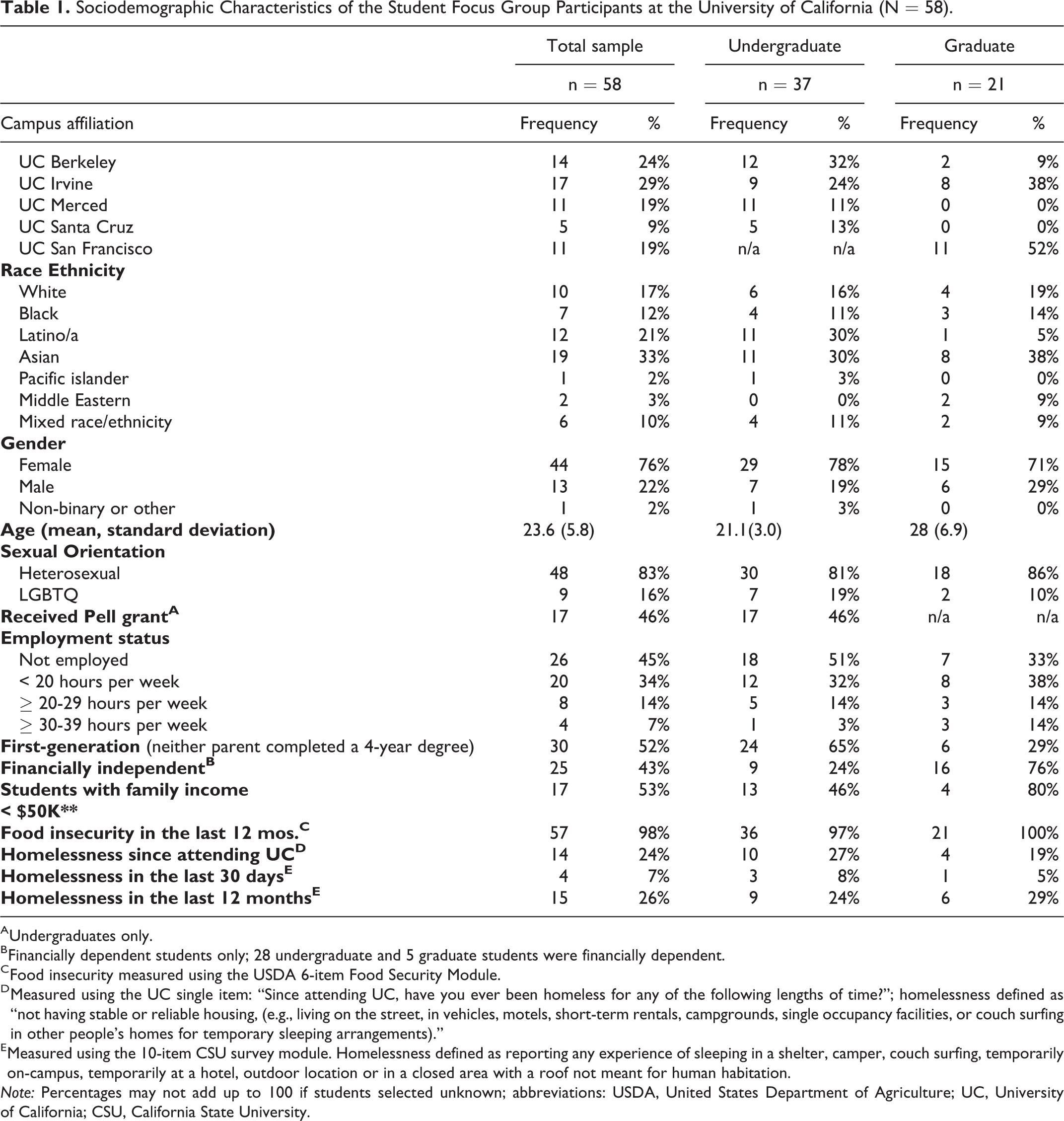
A total of 58 students participated in 11 sessions. Participants ranged from 18 to 54 years old with an average age of 23 and were predominantly female (76%). The focus groups included undergraduate (64%) and graduate or professional students (36%). Students self-identified as Asian (33%), Latino/a (21%), White (17%) or Black (12%). Student characteristics are summarized in Table 1.
Sociodemographic Characteristics of the Student Focus Group Participants at the University of California (N = 58).
A Undergraduates only.
B Financially dependent students only; 28 undergraduate and 5 graduate students were financially dependent.
C Food insecurity measured using the USDA 6-item Food Security Module.
D Measured using the UC single item: “Since attending UC, have you ever been homeless for any of the following lengths of time?”; homelessness defined as “not having stable or reliable housing, (e.g., living on the street, in vehicles, motels, short-term rentals, campgrounds, single occupancy facilities, or couch surfing in other people’s homes for temporary sleeping arrangements).”
E Measured using the 10-item CSU survey module. Homelessness defined as reporting any experience of sleeping in a shelter, camper, couch surfing, temporarily on-campus, temporarily at a hotel, outdoor location or in a closed area with a roof not meant for human habitation.
Note: Percentages may not add up to 100 if students selected unknown; abbreviations: USDA, United States Department of Agriculture; UC, University of California; CSU, California State University.
Among the undergraduate students in the sample, 45% received a Federal Pell Grant as part of their financial aid package (available to students of low-income backgrounds). Of the 33 participants considered dependents per financial aid, 52% came from families that earned less than $50 k in the last year; 43% were financially independent. More than half of the participants (52%) came from households in which neither parent had completed a 4-year degree, i.e. first-generation college students. Using the UC’s single item on homelessness, 26% of students experienced an extreme housing situation that qualified as homelessness since attending UC. Responses to the 10-item module developed by CSU indicated that 7% of students had experienced homelessness in the last 30 days and 24% in the last 12 months.
Themes
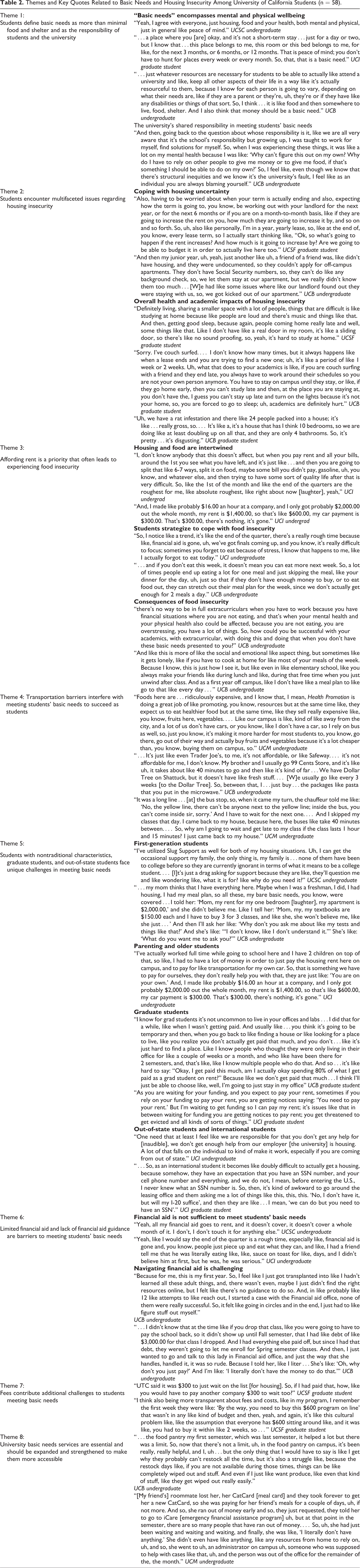
Eight themes emerged from the focus group discussions: 1) Students define basic needs as more than minimal food and shelter and as the responsibility of students and the university; 2) Students encounter multifaceted issues regarding housing insecurity, 3) Affording rent is a priority that most often leads to experiencing food insecurity, 4) Transportation barriers interfere with meeting students’ basic needs to succeed as students, 5) Students with nontraditional characteristics, out of state students, and graduate students face unique challenges meeting their basic needs; 6) Limited financial aid and lack of financial aid guidance are barriers to meeting basic needs, 7) Fees contribute additional challenges to students meeting basic needs, and 8) University basic needs services are essential and should be expanded and strengthened to make services more easily accessible. For most themes, subthemes were also identified. Table 2 includes key quotes for each theme.
Themes and Key Quotes Related to Basic Needs and Housing Insecurity Among University of California Students (n = 58).
Theme 1: Students Define Basic Needs as More Than Minimal Food and Shelter and as the Responsibility of Students and the University
“Basic Needs” encompasses mental and physical wellbeing
When students were asked to define the concept of basic needs, some students felt that it meant the bare minimum to survive. Most students described basic needs as having sufficient resources to be the best version of themselves so that they could succeed academically. This included having stable, affordable and safe housing and regular access to food. When referring to housing security, students spoke about having a place that was “safe enough to sleep uninterrupted.” Students described stable housing as a basic need that supported their mental health as they did not need to constantly worry about their next move or affording rent. Consequently, students identified mental health and wellbeing as important basic needs, which students often referred to as having a sense of stability or “peace of mind.” Some students also referred to hygiene and a place to shower as components of basic needs.
The university’s shared responsibility in meeting students’ basic needs
While some students acknowledged their responsibility in meeting their basic needs, many students discussed the university as responsible for helping them to meet their basic needs. Some students felt ashamed or blamed themselves when they were unable to meet their basic needs. Others struggled between feeling gratitude to the “prestigious” university for accepting them and disappointment that the material and financial support provided by the university was insufficient to meet their basic needs. Their feelings of indebtedness prevented them from asking for more assistance from the university.
Theme 2: Students Encounter Multifaceted Issues Regarding Housing Insecurity
Coping with housing uncertainty
Students described how uncertainty regarding housing contributed to stress. The uncertainty included frequent searches for new housing and moves, constant worry about affording rent and/or rent increases or having to live a long distance from campus in exchange for more affordable housing. Some students on short-term leases (monthly or 6-month contracts) were susceptible to frequent rent increases. Annual UC housing contracts contributed to instability as students were not guaranteed campus housing the following year. Students who received housing after being on a waitlist struggled to coordinate timing between leases to avoid paying 2 rents at once or be without housing in between leases.
Homelessness, mostly discussed as couch surfing, further contributed to student stress and worry. Living temporarily with other students usually occurred while in between campus housing contracts. Several students described precarious living situations such as sleeping in a car or campus building. Students at UCSC described the Snail Movement, an organized group of students who live and sleep in their vehicles as their primary residence. These students are requesting overnight safe parking on campus as a way to cope with unaffordable housing.
Overall health and academic impacts of housing insecurity
Many students spoke about the negative impacts of housing insecurity on their physical and mental health, social wellbeing, and academic performance. These consequences were often interrelated and compounded each other. Many students discussed the issue of limited on-campus housing and the lack of affordable housing near campus, which students coped with by moving further from campus to find more affordable housing. This trade-off imposed long commutes that cost time, money, exhaustion, and stress. Students described feeling too tired to complete assignments after a long commute and being on campus or at work all day. Long commutes also limited time available for studying. An undergraduate from UCI described the academic and health impacts of a long commute as follows: “So my first year here I commuted from Los Angeles, which is really difficult because I was intimidated by the higher rent and I didn’t want to share a bedroom with someone just to pay like $800.00 or $1,000.00 a month. Uh, so, it was really hard on me, my grades started slipping, uh, I was spending the whole day here; I would get here after traffic, so like about 10:00 or 11:00 in the morning, I would leave here like 10:00 or 11:00 o’clock at night and I get home to L.A. and I’d be exhausted, uh, just to avoid living here and paying rent here.”
Some students discussed living in small spaces or in crowded housing (i.e., doubled or tripled up) to make rent more affordable. The constant flow of people coming in and out on different schedules created challenges for both studying and sleeping, especially for students sleeping in a living room or common area. Other challenges included limited kitchen access and unsanitary bathroom conditions. Students described accepting challenging living conditions, such as mold, broken or lack of heating, and rodents, in order to avoid rent increases or to stay under the radar in cases of overcrowding.
Crowding was not limited to off-campus housing. Students discussed university housing shortages and over-enrollment. For example, students reported 3 to 4 students living in a single dorm room, which resulted in a lack of personal space to study or constantly bumping into each other with little room to navigate. One student mentioned living in a converted closet with a structural column in the center of the room for $1800/month. Kitchen access was another common issue related to on-campus housing. Although residence halls typically contained small kitchens, students considered kitchens inaccessible as they were shared with hundreds of other students and poorly equipped for cooking.
For many, working while studying full-time was necessary to afford housing. However, this double workload interfered with academic performance and further compounding their stress, which in turn made it harder to concentrate on academics.
Theme 3: Affording Rent Is a Priority That Most Often Leads to Experiencing Food Insecurity
Below, we describe students’ experiences of food insecurity in the context of students putting housing (i.e., struggling to afford rent) before food.
Housing and food are intertwined
Given expensive rent, students had little money left over for food, especially after paying other housing expenses. A UCI undergraduate succinctly stated, “…sometimes I don’t get to eat, because you know, I have to pay rent, and it’s either rent or food,” which illustrates how prioritizing rent impacts food security. For some students, food insecurity was an issue after paying rent on the first of the month, and for others, food insecurity occurred at the end of the quarter or semester term when financial aid ran out. Students generally felt that the quality, variety and quantity of their diet was poor given reliance on free food or limited items from the food pantry. Students described free food as not always healthful and food sold on or near campus as either unhealthy but more affordable, or healthy but less affordable. For example, one student commented that sliced oranges sold for $3.79 at the student market. Several students noted having to constantly tradeoff between affording rent, eating and other priorities such as seeking medical services (to avoid medical bills) and physical health.
Students strategize to cope with food insecurity
Some students shared that friends supported each other by grocery shopping together and splitting the costs. Friends and housemates supported each other by going to the campus food pantry and selecting different food items so that they would end up with a variety of foods. Students affirmed that free food offered at events and markets was another way of meeting their dietary needs and scheduled free food events into their calendars. Other students coped over the short-term with food insecurity by skipping meals to make food last longer or rationing food, such as stretching a single meal into 2 or 3 meals.
Students living in residence halls discussed choosing the most affordable campus meal plan, which was approximately equivalent to 11 meals per week. Under such circumstances, students would either overeat at one sitting or when possible stretch their “meal swipes” (i.e., ID/meal card) into several meals by taking leftovers. The latter, however, was risky given rules that prohibit students taking food from the dining facility.
Consequences of experiencing food insecurity
Students discussed multiple impacts of food insecurity. Some students experienced physical signs of hunger including sickness, fatigue and sleepiness that made it hard to focus on studying. The psychosocial impact of hunger included student experiences of loneliness from not having the shared experience of eating at the dining hall or eating out with friends. The missed opportunities also included not joining student organizations because meetings often involved eating at a restaurant or attending events that were unaffordable. They described embarrassment when they had to decline student club events due to the cost.
Theme 4: Transportation Barriers Interfere With Meeting Students’ Basic Needs to Succeed as Students
More affordable housing comes with transportation challenges. Students living off-campus to avoid high rent relied on public or personal transportation. Students who relied on public transportation expressed the need for more affordable and more consistent transportation because available options were limited, expensive and/or unreliable. For example, some bus routes operated on an hourly basis and did not have enough capacity. Students spoke of stressful competition to board overcrowded buses to get to class on time. One student described missing class when the bus was full. Public transit was also unreliable. Students discussed waiting 30-50 minutes for the next bus or losing additional time finding alternate transit if the bus failed to arrive. Medical students spoke about limited transportation options when they ended their hospital shifts at odd hours (e.g., 2:00 AM), and their only options were services like Lyft, which were expensive.
Students also revealed that limited transportation options contributed to food insecurity given the need for affordable grocery stores close to campus. This was especially true for students with long commutes who discussed staying on campus all day without healthy and affordable food options nearby. Similarly, students living on campus and who relied on public transportation experienced long travel times to affordable grocery stores. One student shared that their travel time for affordable groceries was 40 minutes each way.
Theme 5: Students With Nontraditional Characteristics, Graduate Students, and Out-of-State Students Face Unique Challenges in Meeting Basic Needs
Below we discuss the unique experiences of students with nontraditional characteristics (first-generation students, student parents, older students), graduate students, and out-of-state including international students.
First-generation Students
Some first-generation students discussed the obligation of financially supporting their family back home. First-generation students also reported receiving little guidance on how to budget financial aid or navigate the university system. Families of some first-generation students did not understand the high cost of student living (including tuition, books, food and rent) nor the time demands of academic study. First-generation students especially struggled between feeling grateful for being accepted with a financial aid package to a UC school and guilt or shame for needing to ask for even more support.
Parenting and older students
Parenting students described the hardship of working to support their child while enrolled as a student. Additionally, students with children discussed the difficulty of finding housing to accommodate their family. Both parenting and older students felt that the housing system was not designed for their needs. Older students at one campus spoke of the challenge of being ineligible and/or deprioritized for some on-campus dorm housing due to their age (over 25 years old). 19 Older students, unable to get on-campus residence hall housing, reported living far from campus and having to spend more time commuting.
Graduate students
Housing leases often did not align with graduate student stipend schedules. Many graduate students raised concerns about owing rent on the first day of the month at the beginning of the fall term but not receiving stipends until a month into fall term. Students also discussed the lack of funding in the summer, which made it harder to pay for housing and food during the summer months. The most common issue, however, was that graduate student funding, such as a fellowship or a job as an instructor or researcher, was insufficient to cover basic needs. Some stated that their funding restricted their total work hours, so students could not compensate by working additional hours or finding second jobs.
Out-of-state students and international students
Out-of-state and international students faced several unique challenges. Not having families nearby often meant a weaker safety net for meeting basic needs. One out-of-state undergraduate student from UCI expressed that there’s “no one looking over my shoulder to make sure I’m eating today.” Students who lived near their family discussed feeling fortunate to be able to eat meals at home on the weekend while their peers from out-of-state who did not have proximal family support struggled more with food insecurity. Leasing agencies required students to provide a social security number and/or a credit history for housing applications, which international students do not have.
Theme 6: Limited Financial Aid and Lack of Financial Aid Guidance Are Barriers to Meeting Students’ Basic Needs
Financial aid is not sufficient
Both undergraduate and graduate students stated that their financial aid did not cover the cost of attendance. For some, the cost-of-living estimated by the University as an upper limit for financial aid was lower than their actual yearly costs, so the maximum financial aid was insufficient. Some full-time students described working several jobs to supplement financial aid or working extra hours when financial aid ran out toward the end of the term, which conflicted with exams. Students consistently expressed the need for additional funding to cover the true cost of attendance.
Students from low-income families added that they were unable to rely on their families for financial support. Instead, students reported feeling pressure to send money home to help their families meet their basic needs. Unable to qualify for grants and financial aid, middle-class students also discussed struggling with college affordability. Middle-class students shared not being eligible for work-study jobs to help offset the high cost of living.
Navigating financial aid is challenging
When reaching out for financial aid assistance, some students felt that university staff were insensitive to their financial struggles and sometimes experienced hostile interactions with administrators. Some students also described the staff and faculty as being out of touch with the experience of low-income students. For example, one student with a long commute was advised to buy a car, which was an unrealistic option.
Additionally, students shared that their relationship with financial aid administrators was tense when they did not want to take out loans or maximize their existing loans. Some students considered taking out loans to be financially irresponsible. Students with loans discussed feeling trapped into accepting debt and constantly worried about their ability to pay back loans after graduating. A couple of students used credit cards to avoid or supplement their student loans. Generally, students had a limited understanding of how to navigate and maximize campus financial resources such as financial aid and loans. A disabled student discussed choosing between keeping their disability allowance or accepting scholarships, which is an example of a lack of administrative coordination. Some students spoke about difficulty managing their finances because financial aid packages were often late, which created undue stress.
Theme 7: Fees Contribute Additional Challenges to Students Meeting Basic Needs
Many students discussed often-unanticipated fees that challenged their financial security. Students who paid for tuition and campus housing on credit cards faced fees from the university for using a credit card instead of paying by bank transfer, which burdened already precarious finances. Some students struggled to pay fees to enter multiple housing waitlists required to ensure that housing was obtained. Students also spoke about difficulty paying fees for shuttles to university housing. Students with cars faced unaffordable parking fees. Students with existing medical insurance explained struggling to waive UC health insurance, an additional fee.
Theme 8: University Basic Needs Services Are Essential and Should be Expanded and Strengthened to Make Services Easily Accessible
Many agreed that campus basic needs programs were essential, specifically the campus food pantry and other free food programs. Students stated that the food pantry was in high demand and lacked variety at the end of the day or week. Students noted that the location and hours were problematic. Food pantry hours tended to overlap with classes and were inconveniently located on campus. Students suggested keeping the pantry open longer hours to increase accessibility. Students also discussed that basic needs information was sometimes unclear or not well communicated, which created barriers to accessing services.
Summary and Conceptualization of the Threats to Housing Security
Figure 2 shows a conceptual diagram of how concepts connected in student discussions regarding their housing situation. For instance, housing insecurity was a consequence of unaffordable housing, leading to overcrowding and challenges with studying and sleeping, which further compounded mental stress. In addition, the high cost of housing led students to work multiple jobs and/or too many hours, which also added to their stress. Sometimes not being able to cover housing costs resulted in an unstable living situation or, in extreme cases, in homelessness (defined in several ways, such as couch surfing or sleeping in a campus lab or a car). To cope with high housing costs, students lived far from campus, which contributed to long and expensive commutes and social isolation, further compounding stress. Isolation also resulted from not having money to attend campus events, minimizing commute costs by coming to campus only on days when classes were in session, or saving money by eating at home instead of with friends. The mental stress that loomed over students when they faced challenges in meeting their basic needs ultimately impacted their ability to perform academically and further compounded stress levels.

Conceptual diagram of how concepts connected in student discussions regarding their housing situation. (Note: Issues related to housing insecurity are presented in green. Situations stemming from housing issues are presented in blue. Homelessness is presented in pink and is the most severe case of housing insecurity.)
Discussion
In the current study, we identified 8 themes that were central to students’ basic needs. First, students provided clear concepts about what they defined as basic needs for higher education. Our findings suggest that there is a need to address more than food and housing to ensure that students have their basic needs met to succeed as students. Furthermore, housing security included safety and adequate space to sleep and study as well as freedom from worry regarding affording a place to live. On the contrary, we found that students experienced housing insecurity due to high rents that further contributed to student food insecurity. These findings highlight the importance of financial aid and university basic needs programs as more students from low-income and underrepresented groups, often referred to as nontraditional, participate in higher education. Below, we discuss how these findings can be used to improve basic needs security for students in higher education.
Previous definitions of basic needs have focused only on food and housing security, 6 with the exception of an exploratory work that defined students’ “foundational needs” as the basic needs required for academic success, which included financial aid and childcare. 21 The present study is the first qualitative study to explore the concept of basic needs among students in higher education. We found that students define basic needs in a more comprehensive way, starting with safe and secure housing and sufficient and healthful food as the most important basic needs, followed by peace of mind, sleep, affordable and reliable transportation, and hygiene. Peace of mind has been described as an indicator of affective well-being. 20 Most definitions of basic needs are limited to an essential list, and do not state who is responsible for ensuring that one’s basic needs are met. 1 In this study, students also identified the university as being responsible for helping them meet their basic needs. These findings contribute to a more comprehensive definition of student basic needs and can be used to better assess the extent to which students’ basic needs are being met. Furthermore, these findings can be used to inform how to define and track basic needs and thereby inform policy focusing on student basic needs to encompass a wider range of programs (e.g., student transportation, hygiene).
These findings also raise the importance of making housing affordable for students, which could also indirectly mitigate food insecurity and ensure other basic needs are met. California has faced a major housing crisis characterized by high rents and home prices. Prior to the coronavirus pandemic, the median home price was nearly 3 times the national average, with rents being 50% higher. 25 In 2018, only 30% of adults in California could afford to buy a home compared to the 53% of the population that can afford a home nationally. 25 Further, Californians are 4 times more likely to live in crowded housing due to the high cost of housing than the rest of the U.S, which has been documented by the California Legislative Analyst Office. 25 Increasing housing costs have also displaced residents; from 2016 to 2017, the total number of individuals experiencing homelessness increased by 14% in California. 26,27 In 2018, according to the U.S. Department of Housing and Urban Development, California accounted for 30% of all Americans individuals experiencing homelessness. 27 Of those who experienced homelessness in California, 9% were unaccompanied young adults between the ages of 18 and 24 years. 27 These findings raise the critical need to advocate for the development of affordable student housing in addition to raising the Federal Pell Grant to align with the current cost of living, which once covered cost of attendance, but today merely covers tuition and fees.
Unlike with food insecurity, for which there are existing USDA measures that are widely used, there is no standard way to measure housing insecurity. 28 The Hope Center captured housing insecurity as a wide array of housing problems, such as difficulty paying rent, moving frequently, or being worried about housing, using a measure not standardized or validated for use in higher education. 16 Rather this measure was developed to assess how changes to federal assistance programs potentially impact participants’ housing security. 29 Furthermore, lack of a standardized definition for housing instability is highlighted as a social determinants of health topic area within Healthy People 2030. 28 In the current study, students described housing security as safe and stable housing, with a place to shower, sleep, and personal space to study all while free of housing-related stress and worry about paying rent. It is logical that the latter definition overlaps with concepts that students defined as basic needs given that housing security is synonymous with safe and secure housing. In addition, in the present study, access to kitchen facilities for meal preparation and storage were important, and lacking kitchen access may further contribute to food insecurity among students. As academic institutions begin to document the extent of housing insecurity and homelessness, further research will require the development of standardized assessment tools to measure housing security among students across diverse higher education samples (e.g., students at public and private universities and community colleges, and in undergraduate and graduate programs).
To date, published studies of student basic needs focus primarily on food insecurity, and reports mainly speak to the prevalence of food and housing insecurity, 2,6 but not to the interconnectedness of the two. Our research explored student food insecurity in the context of housing insecurity and revealed that food insecurity and housing insecurity are intertwined. We found that students prioritized rent to avoid eviction and potential homelessness. Because housing took precedence over food, students in this study skipped meals or ate less healthily. Similarly, in a recent qualitative study on food insecurity, university students prioritized paying for rent over food, which also contributed to food insecurity. 30 In addition, we found that the food pantry and free food at campus events were important sources for accessing food, as food for purchase on campus was unaffordable. While campus food pantries were never established to be long-term solutions for students experiencing food insecurity, they have become a common food source given that students, by law, cannot apply for CalFresh unless they meet specified exemptions. 31 We also found that students living on or near campus without transportation had limited access to affordable food outlets. Universities could support students by having more affordable food options on campus or provide campus operated or subsidized city transportation to affordable grocery markets. In addition, campus policies for affordable, healthy and nutritious food vendors are important for all students whether on campus to attend classes or living on campus. For example, the University of California San Diego recently contracted with a grocery chain to open an on-campus store. Similar efforts can be made to bring affordable grocery outlets to campuses.
In this study, some students, particularly first-generation students, had limited knowledge of how to navigate and maximize campus financial aid resources. Among UC undergraduates, 41% of students are the first in their family to attend a 4-year college, 32 meaning that these students lack parental experiential guidance to assist them in their academic endeavors. Furthermore, student parents, who were often older, lacked sufficient financial and housing support because the system was not designed to serve them. One in 5 undergraduate students today are parents, and in addition to lacking sufficient support, they lack affordable childcare for their dependents. 33,34 A deeper understanding of the unique experiences of students who are at the intersection of multiple identities (e.g., a low-income, parenting student or low-income, first-generation) is required to address their basic needs in order to have and retain a demographically rich student population in higher education. Applying an intersectionality lens could provide valuable information by identifying structures of oppression (e.g., classism, sexism) within higher education that limit students from their full potential. 22 This is imperative given that more students today are nontraditional. To this point, this study and others have used the term nontraditional to describe students who are unlike traditional students of over 30 years ago who were more likely to enroll in a 4-year university immediately after high school, were dependents who studied full-time without need for employment. 35 This is no longer the case as students are more diverse and some are at the intersection of multiple identities. As such, moving away from the traditional vs nontraditional language to healthy and constructive terms, such as intersectional identities, is essential.
Moreover, in this study, many students reported that financial aid failed to meet basic needs. Indeed, the cost of college attendance (e.g., tuition and fees, food, housing, transportation, books) has steadily increased over the last 30 years and the Federal Pell Grant has not kept pace with the cost of living. 36 For example, the Pell Grant once covered the full cost of attendance (in-state), but today covers 40% of tuition and fees for the average Pell Grant recipient. In 2017-2018, only 27% of students qualified for the maximum Pell Grant, which covered 60% of tuition and fees, but only 29% of tuition and fees, and room and board. 36 In this study, students lacked information up front on the real cost of attendance, which highlights the need for better strategies (i.e., college outreach in high school) to prepare students to navigate the cost of higher education. Second and foremost, as education systems strive for success among diverse students (not just diversity in the number of students enrolled), it is essential to strengthen university systems structurally so that they can competently meet the needs of students from all backgrounds, including students with intersectional identities. Future research is needed to address ways to improve structural competency and structural inequalities in higher education. 37 In this way we will move toward inclusive learning environments and belongingness.
Study Strengths and Limitations
This study had several limitations. First, a majority of participants were female, which means that the discussions may have reflected female perspectives more than male perspectives. Also, the issue of conformity and/or stigma around housing and food insecurity may have limited some students from expressing their true experiences or opinions in group settings. 30 Future studies could benefit from a better understanding of stigma in relation to student basic needs. This study used a convenience sample of UC students who received basic needs services (e.g., housing assistance, food pantry). Despite this limitation, this sampling method was ideal for reaching the target population. As such, this was not a representative sample and findings may not be generalizable to other institutions of higher education. Lastly, while focus group facilitators moderated the conversations to elicit perspectives from all participants, focus groups can result in bias if more vocal individuals dominate the conversation and if individuals refrain from sharing differing views due to social pressure. 38
Despite these limitations, this study is unique in providing insights to inform future research directions and potential programs and policy to ensure that the basic needs of students in higher education are addressed. The strengths of this study also include diverse and targeted recruitment. Five UC campuses were intentionally selected to represent a diversity of UC students. We recruited students from food pantries and basic needs centers on 5 UC campuses. This targeted recruitment was done for 2 purposes. Hosting these sessions at food pantries and basic needs hubs that students frequent was meant to create a safe space for students to share their experiences. Anecdotally, students have agreed that having these spaces on campus increased their sense of belonging (unpublished food pantry evaluations). Targeted sampling also ensured inclusion of students most at risk of housing and food insecurity to reflect upon the meaning of basic needs and increase the content validity of survey questions tested on housing insecurity.
Conclusion
College students face economic and social barriers to degree completion. Low-income students are more likely not to complete their degree, and among those who do, food insecurity, long commutes, and unstable living conditions can undermine their academic performance and wellbeing. 15,24,39 Education cannot be ‘a great equalizer’ if academic systems do not demonstrate structural equity for all students. Yet, despite efforts to reduce disparities in university admissions, students still have unequal experiences meeting their basic needs while attending college, and this imbalance makes academic success not equally achievable. Future progress toward equity will require moving beyond minimal food and housing to a more holistic and comprehensive definition of basic needs and interventions to ensure basic needs of students are met. This shift will ensure that all students can effectively navigate the university system and successfully complete their education.
So What?
What is already known on this topic?
Student food insecurity has been recognized as a public health issue in higher education, but less is known about student housing insecurity and other student basic needs insecurities.
What does this article add?
This study builds on food insecurity research and extends to other student basic needs, including housing security. The findings provide a student informed definition of basic needs, which includes, in addition to food and housing, transportation, hygiene, mental health and sleep.
What are the implications for health promotion practice or research?
The findings demonstrate the need for multi-faceted basic needs programs that go beyond food and housing on college campuses. The student-informed definition of basic needs in higher education can provide new directions for research.
Footnotes
Authors’ Note
Suzanna M. Martinez: Dr. Martinez was the principal investigator of the study, substantially contributed to the acquisition of data and data collection methods, conceptualized and designed the current study, data analysis, drafted the initial manuscript, and contributed substantially to the interpretation of the data. She has read and approved the final version. Erin Esaryk: Ms. Esaryk contributed to the acquisition of data, contributed to the literature review, contributed to study methods and the data analysis, and revised the article critically for intellectual content on several occasions. She has read and approved the final version. Laural Moffat: Ms. Moffatt contributed to the literature review, contributed to study methods and the data analysis, and revised the article critically for intellectual content on several occasions. She has read and approved the final version. Lorrene D. Ritchie: Dr. Ritchie contributed to the acquisition of data, provided important feedback on data interpretation, revised the article critically for important intellectual content. She has read and approved the final version. This study was approved by the Institutional Review Board at UC Davis (1330859-2).
Acknowledgments
This study was funded by the UC Global Food Initiative. Special thanks to UC Campus Basic Needs Committees at UC Irvine, UC Santa Cruz, UC San Francisco, UC Berkeley, and UC Merced and the UC Systemwide Basic Needs Committee Co-Chairs (Tim Galarneau and Ruben E. Canedo). Extended thanks to California State University researchers (Rashida Crutchfield, Jennifer Maguire, and Aydin Nazmi), and Gale Sheean-Remotto, Eli Jimenez and Danielle Lee. And gratitude to Christopher Paguio and Celery Design Collaborative for their illustration and graphic design.
Declaration of Conflicting Interests
The author(s) declared no potential conflicts of interest with respect to the research, authorship, and/or publication of this article.
Funding
The author(s) disclosed receipt of the following financial support for the research, authorship, and/or publication of this article: This study was funded by the University of California Global Food Initiative.
